






You are currently viewing a new version of our website. To view the old version click .

Nanomaterials

Nanomaterials is an international, interdisciplinary, peer-reviewed, open access journal published semimonthly online by MDPI, and that publishes reviews, regular research papers, communications, and short notes that are relevant to any field of study that involves nanomaterials with respect to their science and applications.
The Spanish Carbon Group (GEC) and The Chinese Society of Micro-Nano Technology (CSMNT) are affiliated with Nanomaterials and their members receive discounts on the article processing charges.
Indexed in PubMed | Quartile Ranking JCR - Q2 (Physics, Applied | Chemistry, Multidisciplinary | Materials Science, Multidisciplinary | Nanoscience and Nanotechnology)

All Articles (21,450)

Copper is a promising alternative to conventional plasmonic materials, though its practical use is hindered by a strong tendency to oxidize. Through systematic analysis of its vibrational, optical, morphological, structural, and surface potential properties, we confirmed the stability of copper (Cu) particles and highlighted the role of functional groups in modulating their oxidation susceptibility. Oxidation kinetics at 150 °C, in the presence of antioxidants and capping agents, as well as long-term colloidal stability, appear closely tied to the degradation of these stabilizers, which correlates with particle aggregation. Notably, precursor chemistry significantly affects oxidation behavior. Varying concentrations of polyvinylpyrrolidone (PVP) demonstrate a positive correlation with particle size control and thermal stability, indicating that PVP enhances oxidation resistance under the tested conditions. Our findings underscore most importantly the metallic phase’s stability after exposure to air at a temperature of 150 °C, drawing attention to a possible precursor and capping agent combination that can result in oxidation-stable Cu particles, positioning them as cost-effective candidates for replacing more expensive plasmonic metals across diverse applications.
10 December 2025

Schematic representation of the sequential protocol for Cu particle synthesis, characterization, and stability evaluation. The workflow outlines the stepwise process beginning with synthesis via chemical reduction (CR) and microwave-assisted (MW) methods using nitrate and sulphate precursors.
Multimodal Magnetic Nanoparticle–Quantum Dot Composites

  • Kareem Ouhalla Knipschild,
  • Vera Kuznetsova and
  • Aoife Kavanagh
  • + 6 authors

Multimodal nanocomposites that combine optical and magnetic functionalities are of great interest for applications such as imaging and temperature sensing. Ternary CuInS2 (CIS)-based quantum dots (QDs) offer low toxicity, strong near-infrared (NIR) emission, and high photostability, making them promising for optical nanothermometry and imaging. In this study, CIS QDs were synthesized using an aqueous cysteine-mediated approach. Manganese ferrite (MnFe2O4) nanoparticles were prepared as the magnetic component due to their non-toxicity and superparamagnetic properties. To integrate both functionalities, QDs and magnetic nanoparticles (MNPs) were encapsulated in silica and then combined to form multimodal CIS/MnFe2O4/SiO2 nanocomposites. The structure and morphology of the materials were characterized by TEM and XRD, while their optical properties were examined using UV–Vis, photoluminescence (PL) spectroscopy. This design ensured optical isolation, preventing fluorescence quenching while maintaining colloidal stability. The obtained composites exhibited PL in the NIR region and a thermosensitivity of 2.04%/°C. TEM analysis confirmed uniform silica shell formation and successful integration of both components within the composite. The materials also retained the superparamagnetic behavior of MnFe2O4, making them suitable for combined optical and magnetic functionalities. These results demonstrate the potential of CIS/MnFe2O4/SiO2 nanocomposites as multifunctional platforms for optical imaging, temperature monitoring, and magnetically modulated effects.
10 December 2025

Laser-Ablated Gold Nanoparticles as Tunable Contrast Agents for Preclinical Imaging

  • Yulia Finogenova,
  • Vsevolod Skribitsky and
  • Alexey Lipengolts
  • + 7 authors

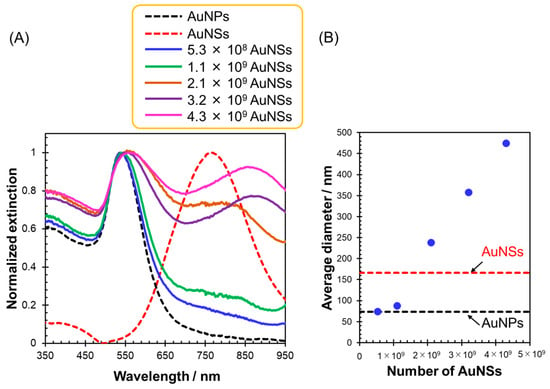
Femtosecond laser-ablated gold nanoparticles (AuNPs) offer a unique platform for developing novel cost-effective contrast agents due to their ultraclean, surfactant-free synthesis and precisely tunable surface properties. This study developed three computed tomography (CT) contrast agents from a single stock solution of laser-ablated AuNPs, functionalized with polyethylene glycol (PEG-2kDa, PEG-4kDa), or lipoic acid with bovine serum albumin (BSA). The primary objective was to evaluate the safety and functional efficacy of these coated AuNPs in healthy and tumor-bearing mice. After a single intravenous injection (690 ± 30 mg Au/kg), all formulations were well tolerated with no acute toxicity observed. PEGylated AuNPs demonstrated long blood half-life (18 ± 2 h for PEG-2kDa; 37 ± 2 h for PEG-4kDa), making them suitable for cardiovascular imaging up to 24 h post-injection. BSA-AuNPs had a rapid blood clearance (T1/2 = 2.8 ± 0.9 h), permitting cardiovascular assessment during the first 3 h, and provided intense, persistent contrast in abdominal organs, enabling liver imaging from 5 min and spleen imaging from 1 h post-injection. In a Ca755 mammary adenocarcinoma model, PEGylated AuNPs selectively accumulated in the tumor stroma and fibrous septa, allowing for precise tumor margin delineation and analysis of internal architecture. The findings establish that a single AuNP stock can be used to produce specialized contrast agents for specific imaging applications.

10 December 2025

This work presents a facile mechano-thermal route for the synthesis of carbon-decorated, hollow, mesoporous α-Fe2O3 microspheres. Comprehensive characterization (XRD, XPS, FT-IR, SEM/EDX, TGA, zeta-potential) confirmed the formation of phase-pure hematite with nanoscale crystallites (~19 nm), substantial residual surface carbon (~40 wt%) consistent with Fe–O–C linkages, and a positive surface charge (+15.9 mV). The hierarchical hollow/mesoporous architecture enables fast ion transport and provides extensive interior binding sites, resulting in rapid Pb(II) uptake that reaches 92% removal in ≈15 min at pH 5.0. The adsorption follows a Langmuir isotherm (qmax ≈ 70.6 mg/g) and pseudo-second-order kinetics, indicative of chemisorption coupled to efficient mass transfer into internal sites. The composite also exhibits antibacterial activity against Escherichia coli and Staphylococcus aureus, demonstrating its potential for simultaneous mitigation of heavy metal contaminants and pathogens.

10 December 2025

News & Conferences

Issues

Open for Submission

Editor's Choice

Reprints of Collections

Design and Applications of Heterogeneous Nanostructured Materials
Reprint

Design and Applications of Heterogeneous Nanostructured Materials

Editors: Hongbo Ju, Bingyang Ma, Manuel António Peralta Evaristo, Jicheng Ding, Filipe Daniel Fernandes
Synthesis and Application of Nanoparticles in Novel Composites
Reprint

Synthesis and Application of Nanoparticles in Novel Composites

Editors: Edgar O'Rear, Fernando Esteban Florez

Get Alerted

Add your email address to receive forthcoming issues of this journal.

XFacebookLinkedIn
Nanomaterials - ISSN 2079-4991