
Skip to Content
  • 2.3
    Impact Factor
  • 5.4
    CiteScore
  • 18 days
    Submission to First Decision
  • 3 days
    Acceptance to Publication

Mathematics

Mathematics is a peer-reviewed, open access journal which provides an advanced forum for studies related to mathematics, and is published semimonthly online by MDPI. The Committee on Mathematical Logic of the Chinese Mathematical Society (CML-CMS) and the International Society for the Study of Information (IS4SI) are affiliated with Mathematics and their members receive a discount on article processing charges.

Get Alerted

Add your email address to receive forthcoming issues of this journal.

All Articles (29,726)

  • Article
  • Open Access

A Stochastic Online Augmented Lagrangian Method for PMSM Control

  • Xianqi Zhang,
  • Zewei Wang and
  • Zikang Han
  • + 1 author

This paper presents a PMSM-specific specialization of the model-based stochastic augmented Lagrangian method for field-oriented voltage control of permanent-magnet synchronous motors (PMSMs). Considering the stochasticity and dynamics inherent to motor-control problems, we take the d-q voltages as decision variables and formulate the motor-control problem as a stochastic online optimization problem. After the realized samples and observed system states are obtained, we compute the voltages using an augmented Lagrangian candidate update followed by projection onto the tightened one-step feasible set when nonempty. Numerical experiments show that the proposed algorithm tracks the speed reference in the tested scenarios. Compared with the conventional PI method, the proposed approach yields improved speed tracking and fewer observed current-limit exceedances in these scenarios.

Mathematics

29 November 2026

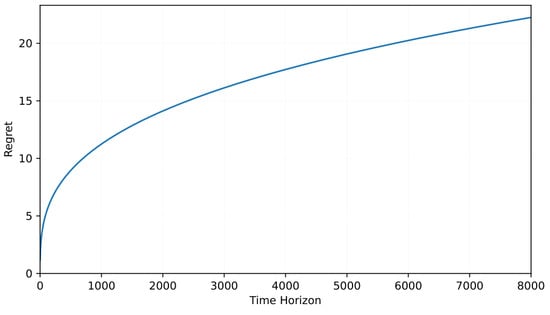
Finite-horizon fitted scaling of the cumulative same-state objective-gap diagnostic. The smooth curve is the dense evaluation of the fitted law 
  
    
      R
      T
    
    =
    c
    
      T
      p
    
  
.
  • Article
  • Open Access

This study presents a generalized Helfrich-type variational framework for constructing smooth, curvature-controlled joining surfaces between nanoscale geometries. The framework extends classical minimal surface approaches by incorporating spontaneous curvature, endpoint slope penalties, and second-derivative regularization into a unified formulation. The joining surface is represented as an axisymmetric surface generated by a numerically computed profile curve. A generalized Helfrich-type energy functional is formulated and minimized numerically using finite difference discretization and MATLAB’s fminunc optimization routine. Numerical experiments examine how different spontaneous curvature values affect the computed joining geometries and corresponding objective values. The results show that spontaneous curvature influenced both the shape and energy of the joining surfaces. For the investigated configurations, the computed total objective value increased from 13.008269 to 23.664192 as the spontaneous curvature parameter varied from 0 to 0.5, primarily due to the bending energy contribution. Grid refinement tests, an analytical catenoid benchmark, and multi-start optimization experiments provide additional evidence of numerical consistency. The regularization and slope penalty terms are included to discourage rapid profile variations and promote approximate tangent continuity, respectively. Three-dimensional surface reconstructions further illustrate the geometric flexibility of the proposed framework. The methodology provides a computational basis for investigating curvature-controlled nanostructure joining, while its conclusions remain limited to the tested configurations.

Mathematics

29 November 2026

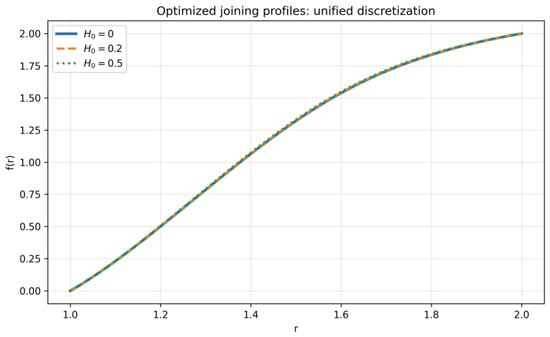
Optimized joining profiles for different values of the spontaneous curvature parameter, 
  
    H
    0
  
.
  • Article
  • Open Access

This paper proposes a relative damage severity assessment method for localized rolling bearing raceway defects based on pre-impact low-frequency cumulative energy distribution. By using the main high-frequency impact as a temporal reference, multiple quantile features are extracted and fused to construct a dimensionless damage severity indicator without explicitly identifying weak entry and exit events. The proposed method is evaluated using two experimental datasets involving different bearing types and operating conditions. Comparisons with representative vibration-based indicators and parameter sensitivity analysis are conducted to assess its performance and stability. The mean Spearman correlation coefficients obtained from the two datasets are 0.950 and 0.938, respectively, demonstrating the effectiveness of the proposed indicator in characterizing relative damage severity.

Mathematics

28 November 2026

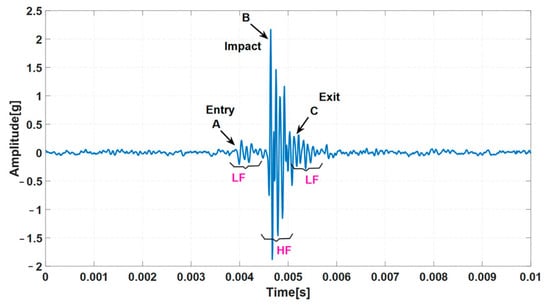
Calculation of localized damage dimensions based on the entry and exit instants of the rolling element. Reproduced from Ref. [22]. © 2022 IOP Publishing Ltd.
  • Article
  • Open Access

The entropy of Akaike weights over candidate return distributions is read as distributional uncertainty, but nested candidates make it partly a count of redundant parameterizations. We propose a correction with no free similarity-scale parameter: the order-one similarity-sensitive diversity of the weights, with the similarity of two fitted candidates given by their Bhattacharyya affinity raised to the sample size, which, by Le Cam’s inequalities, bounds the error of a test between the two densities on a sample of that size. We prove its main properties, including the exact effect of recomputing weights after candidates are added, and verify it on a positive control. On 6180 rolling 250-observation windows of 50 instruments in five asset classes (2015–2025), padding a 25-candidate list with twelve nested Student t models raises the median log naive count by 0.393 and the corrected count by 0.0312, a ratio of 0.0794 (95% interval [0.0651, 0.0943]). The result holds under GARCH filtering, weekly aggregation, a second padding and twelve alternative lists; volatility clustering lowers the effective sample size of the underlying tests by about a fifth. Candidates with similar fitted densities can still imply very different tail probabilities, so the count summarizes similarity in the body of the distribution, not tail fit.

Mathematics

28 November 2026

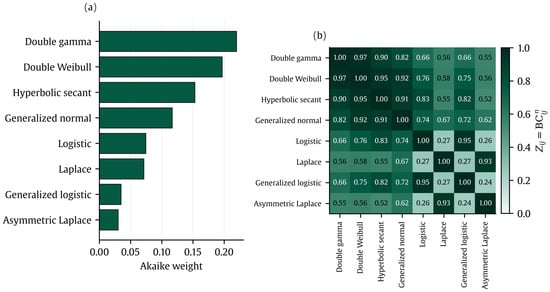
One estimation window and its evidence-indexed similarity. (a) Akaike weights of the eight leading candidates of list B for the 250-observation window of the ACWI fund ending on 30 December 2015, the window whose log ratio of naive to corrected count is closest to the fund’s median. (b) Similarity 
  
    
      Z
      
        i
        j
      
    
    =
    
      BC
      
        i
        j


        n


 among the same candidates, with 
  
    BC
    
      i
      j
    
  
 the Bhattacharyya affinity of the fitted densities and 
  
    n
    =
    250
  
; values near one mark pairs that no test on a sample of this size separates with useful power.

Featured Articles of Last Quarter

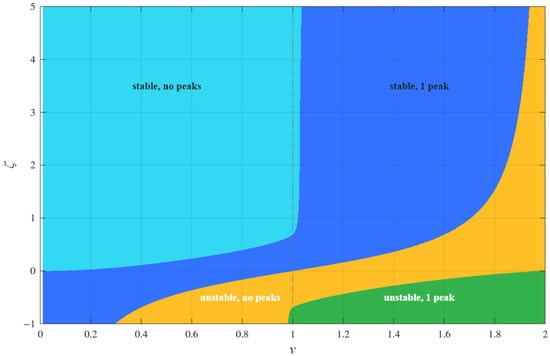
Stability and resonance of (2).
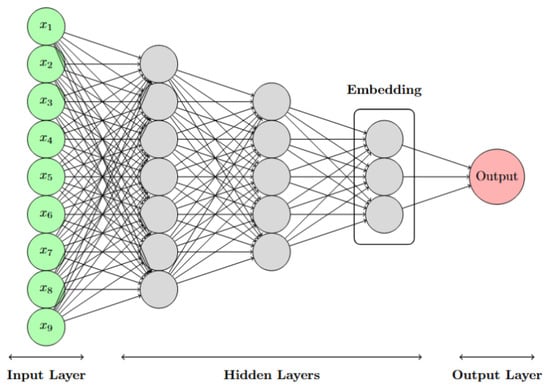
ANN with 3rd hidden layer being the embedding layer.
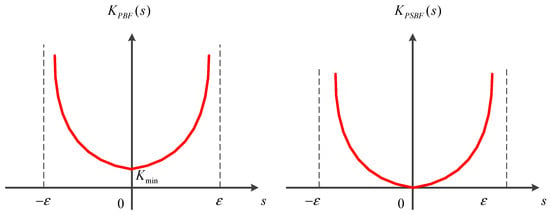
Barrier functions: 


        K
      
      
        P
        B
        F


        s


 and 


        K
      
      
        P
        S
        B
        F


        s


.

Highly Accessed Articles

News & Conferences

Latest Issues

Open for Submission

Journal Sections

XFacebookLinkedIn
Mathematics - ISSN 2227-7390