

You are currently viewing a new version of our website. To view the old version click .

Materials

Materials is an international peer-reviewed, open access journal on materials science and engineering published semimonthly online by MDPI.
The Spanish Materials Society (SOCIEMAT), Manufacturing Engineering Society (MES) and Chinese Society of Micro-Nano Technology (CSMNT) are affiliated with Materials and their members receive discounts on the article processing charges.
Indexed in PubMed | Quartile Ranking JCR - Q2 (Metallurgy and Metallurgical Engineering | Physics, Applied | Physics, Condensed Matter)

All Articles (54,063)

Studies on the Influence of Compaction Parameters on the Mechanical Properties of Oak Sawdust Briquettes

  • Dominik Wilczyński,
  • Krzysztof Talaśka and
  • Krzysztof Wałęsa
  • + 8 authors

The paper presents research on the compaction process of oak sawdust as a proposal for the management of post-production waste. The variable input parameters whose influence was studied were the particle size of the sawdust, the compaction force, the temperature of the compaction process, and the moisture content of the sawdust. The results obtained were used to determine the density of the briquette and the value of its Young’s modulus obtained from each test sample. The interaction between the input parameters as variables in the tests and the determined values of density and Young’s modulus was analyzed using ANOVA. The highest density value was recorded for the lowest particle size, the highest compaction force and compaction temperature, and a moisture content of 9%. The highest Young’s modulus E value was recorded for a moisture content of 9%, a compaction force of 25 kN, a temperature of 25 °C, and a particle size of S < 1 mm. Variance analysis enabled the optimal selection of compaction process parameters, where the main criterion in general terms was to minimize the energy consumption of the compaction process. The best mechanical properties of the briquette can be obtained for process settings of F = 5 kN, M = 20%, T = 25 °C, S = 2.5–5 mm.

29 December 2025

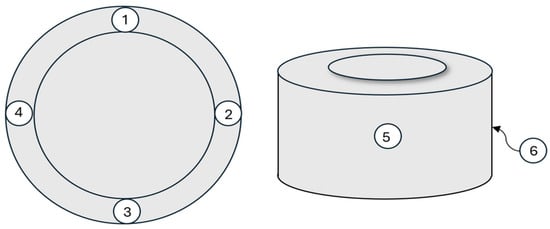
General view of laboratory sieve shaker (model LPzE-2e, manufactured by Multiserw-Morek, Brzeźnica, Poland).

This paper presents the results of a further stage of the authors’ research into the lateral torsional buckling of hot-rolled bisymmetric I-beams, spatially elastically restrained at the support nodes, i.e., against: (1) warping, (2) rotation in the lateral torsional buckling plane and (3) rotation in the main bending plane My. The analysis considered the entire range of variation in node stiffness, from free support in bending My and full freedom of warping and rotation in the lateral torsional buckling plane, to full restraint of the beam at the nodes. The authors introduced a general approximation formula (AF) for the critical moment of lateral torsional buckling Mcr, simultaneously considering the three elastic fixity indexes for basic and frequently occurring loading schemes in engineering practice. In order to facilitate the calculations, the authors have included the full sequence of formulas for the successive components of the critical moment, derived in the authors’ previous papers. The ability to more accurately consider the actual conditions of the spatial elastic restraint of the beam at the nodes leads to a more accurate calculation of Mcr. The results obtained were compared with FEM (LTBeamN software, v. 1.0.3) by performing a large number of calculations and numerical simulations. The agreement of the AF/FEM results was achieved at a level sufficient from the engineering point of view (mean value 1.006, standard deviation 0.028, coefficient of variation 2.8%). Detailed calculations were carried out for different section types (I, H) and different combinations of fixity index values. The application of approximation formulas in practical calculations is demonstrated on an example. The formulas derived in the paper can be used, among other things, to verify the correctness of FEM calculations, including the correct modelling of elastic support restraints, which is important in design practice.

29 December 2025

Usage of Silver Nanoparticles in Orthodontic Appliances

  • Meigan Niu,
  • Janet Jisoo Lee and
  • Geelsu Hwang
  • + 4 authors

Orthodontic treatment, offering significant benefits for oral function and facial aesthetics, is in high demand among both adolescent and adult populations. Orthodontic appliances pose challenges for maintaining oral hygiene and increase the risk of dental and periodontal diseases. With advances in dental materials and the use of nanoparticles, a significant amount of research has focused on modifying orthodontic appliances with nanoparticles to reduce bacterial adhesion and biofilm formation. Silver nanoparticles are one of the most popular antibacterial materials in medical research. This article presents current evidence on silver nanoparticle-incorporated orthodontic appliances, including brackets, molar bands, archwires, elastomeric ligatures, mini-implants, and acrylic retainers. Silver nanoparticles and modified silver nanoparticles exhibit robust antibacterial activity when applied to the surfaces of orthodontic appliances. However, there are exceptions in which, on a few orthodontic appliances, the silver nanoparticle incorporation actually increased biofilm formation. Moreover, a silver nanoparticle incorporation may introduce adverse effects, such as cytotoxicity, and increase surface roughness. It is also worth noting that most of the studies were conducted in vitro. Long-term clinical studies are necessary to evaluate the stability, safety, and clinical efficacy of silver nanoparticle-incorporated orthodontic appliances under real-world conditions.

29 December 2025

In this study, using the newly designed high-entropy alloy TiCoCrFeMn as an example, mathematical models for determining the true hardness from microhardness measurements in the regime dominated by elastic deformation were analyzed. It was found that the PSR model, which accounts for the variability in the elastic component of the applied indenter load, provides the best agreement with macroscopic hardness measurements. Analysis of the load variation law revealed a correlation between the Young’s modulus and the Meyer coefficient, which formed the basis for developing a model for determining this material parameter from microhardness measurements. The proposed methodology, applicable to small laboratory specimens, was shown to be consistent with the results obtained from crack-length measurements.

29 December 2025

News & Conferences

Issues

Open for Submission

Editor's Choice

Reprints of Collections

Advances in Computation and Modeling of Materials Mechanics
Reprint

Advances in Computation and Modeling of Materials Mechanics

Editors: Hai Huang, Abduljabar Alsayoud, Yucheng Lan
Recent Researches in Polymer and Plastic Processing
Reprint

Recent Researches in Polymer and Plastic Processing

Editors: Joanna Izdebska-Podsiadły

Get Alerted

Add your email address to receive forthcoming issues of this journal.

XFacebookLinkedIn
Materials - ISSN 1996-1944