
Topical Advisory Panel applications are now closed. Please contact the Editorial Office with any queries.
Journal Description
Fire
Fire
is an international, peer-reviewed, open access journal about the science, policy, and technology of fires and how they interact with communities and the environment, published monthly online by MDPI.
- Open Access— free for readers, with article processing charges (APC) paid by authors or their institutions.
- High Visibility: indexed within Scopus, SCIE (Web of Science), AGRIS, PubAg, and other databases.
- Journal Rank: JCR - Q1 (Forestry) / CiteScore - Q1 (Forestry)
- Rapid Publication: manuscripts are peer-reviewed and a first decision is provided to authors approximately 16.9 days after submission; acceptance to publication is undertaken in 2.7 days (median values for papers published in this journal in the second half of 2025).
- Recognition of Reviewers: reviewers who provide timely, thorough peer-review reports receive vouchers entitling them to a discount on the APC of their next publication in any MDPI journal, in appreciation of the work done.
- Paper Types: in addition to regular articles we accept Perspectives, Case Studies, Data Descriptors, Technical Notes, and Monographs.
- Journal Cluster of Ecosystem and Resource Management: Forests, Diversity, Fire, Conservation, Ecologies, Biosphere and Wild.
Impact Factor:
2.7 (2024);
5-Year Impact Factor:
3.0 (2024)
Latest Articles
A Spatial Multi-Criteria Framework to Define Priorities in Wildfire Management Programs
Fire 2026, 9(2), 90; https://doi.org/10.3390/fire9020090 - 18 Feb 2026
Abstract
►
Show Figures
The intensification of wildfires in Portugal has highlighted the urgent need for technical tools capable of supporting more effective risk mitigation decisions. In particular, the lack of explicit criteria for prioritizing the implementation of wildfire mitigation programs has contributed to reactive and fragmented
[...] Read more.
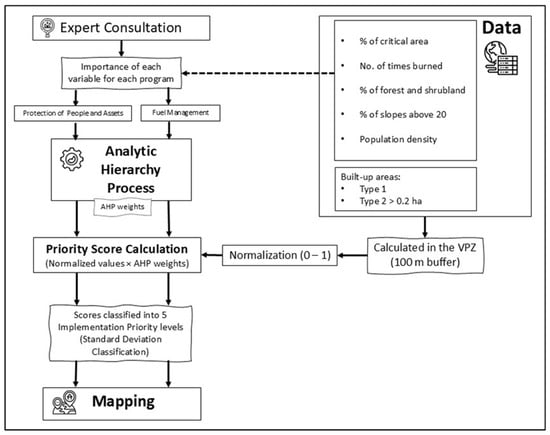
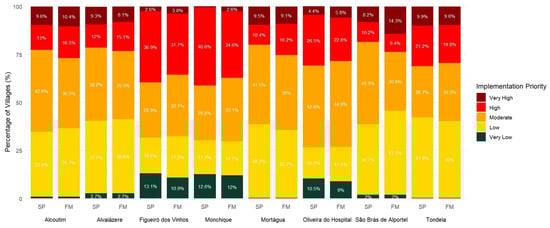
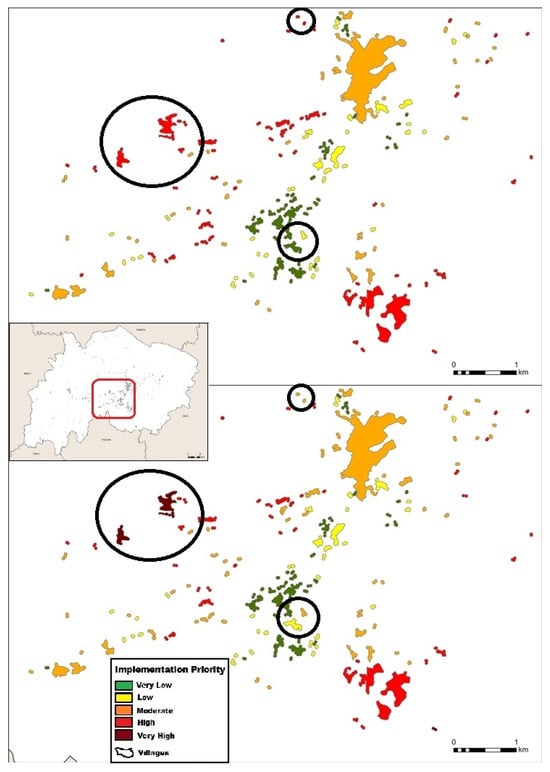
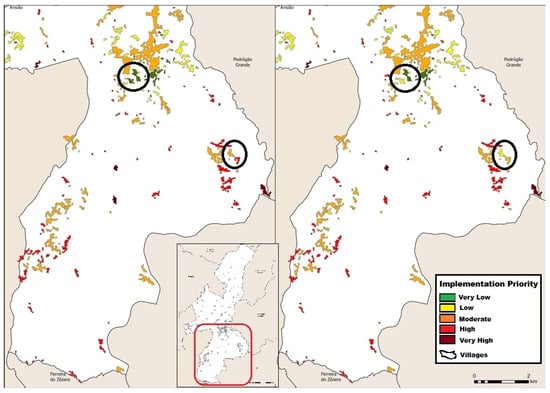
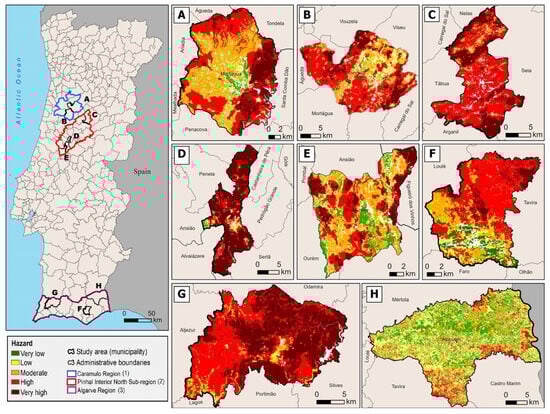
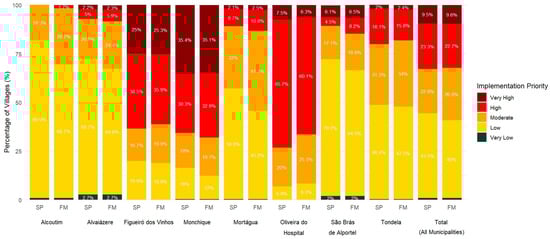
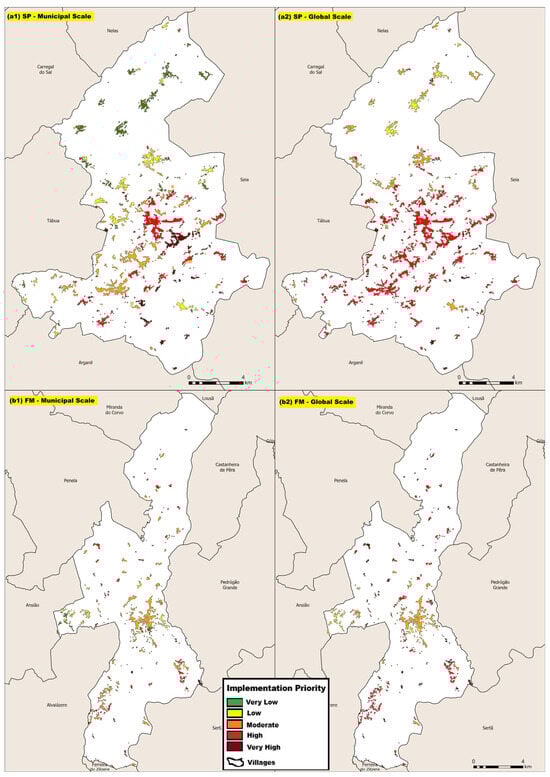
The intensification of wildfires in Portugal has highlighted the urgent need for technical tools capable of supporting more effective risk mitigation decisions. In particular, the lack of explicit criteria for prioritizing the implementation of wildfire mitigation programs has contributed to reactive and fragmented interventions that are often misaligned with actual levels of hazard and exposure. This study proposes a spatially explicit methodology for classifying and ranking villages in wildfire-prone territories under two operational programs: Protection of People, Assets and Fuel Management. The framework was applied to eight municipalities across three Portuguese regions with high wildfire recurrence, using a multi-criteria decision analysis approach (AHP) integrated with geospatial data. Five physical and social variables were considered: critical area, vegetation cover, fire history, slope, and population density. Expert-derived weights were incorporated into two program-specific models. Implementation priority levels were generated using standard deviation classification at both municipal and regional scales. The results reveal marked territorial contrasts and strong intra-municipal variability, particularly in heterogeneous landscapes. A high degree of convergence between the two programs was observed (79–90%), although 10–21% of villages shifted between priority classes. The dual-scale analysis shows how a small number of high-hazard municipalities disproportionately shape the overall priority structure. The proposed framework supports more transparent, consistent, and risk-informed prioritization, strengthening territorial wildfire governance and complementing national mitigation programs such as “Safe Villages” and “Safe People” and “Condominium of Villages”.
Full article
Open AccessArticle
Comparative Evaluation of Single, Binary, and Ternary Biodiesel Blends of CSOME, NOME, and OPOME for Performance and Emission Optimization in a CI Engine
by
Ganesh G. Naik, Hanumant M. Dharmadhikari and Ioannis E. Sarris
Fire 2026, 9(2), 89; https://doi.org/10.3390/fire9020089 - 18 Feb 2026
Abstract
Biodiesel’s application in compression–ignition engines is mostly limited by the type of methyl esters it contains rather than the total amount of feedstocks. In order to modify the fatty acid methyl ester (FAME) profile for better combustion and emissions, cottonseed (CSOME), neem (NOME),
[...] Read more.
Biodiesel’s application in compression–ignition engines is mostly limited by the type of methyl esters it contains rather than the total amount of feedstocks. In order to modify the fatty acid methyl ester (FAME) profile for better combustion and emissions, cottonseed (CSOME), neem (NOME), and orange peel oil methyl esters (OPOMEs) were carefully mixed. Fuel chemistry was examined using Gas Chromatography–Mass Spectrometry (GC-MS) and Fourier Transform Infrared (FTIR), which confirmed variations in oxygenated functional groups, saturation levels, and volatility. In a single-cylinder CI engine, diesel, single, binary, and ternary biodiesel mixes were tested over 25–100% load at compression ratios of 17 and 18, both with and without 10% EGR. The ester-optimized ternary blend HBO70 delivered the best overall performance at CR 18 with EGR, exhibiting only a 0.61% reduction in BTE while achieving significant reductions in smoke (44%), PM (51%), NOx (30%), HC (11%), CO (10%), and specific fuel consumption (SFC) (6.8%). Regression analysis confirmed a temperature- and oxygen-controlled NOx–PM trade-off, demonstrating that ester-profile optimization is an excellent way to achieve cleaner and more efficient CI engine operation.
Full article
Open AccessArticle
Thermo-Responsive Hydroxypropyl Methylcellulose and Sodium Alginate Composite Hydrogels and Their Fire Extinguishing Properties
by
Xiaodong Pei, Jiahui Chen, Huafeng Liu, Liang Wang, Zhendong Miao, Yujie Yuan, Jialin Xi, Chenglin Li, Chenhao Tian and Yanzhao Liu
Fire 2026, 9(2), 88; https://doi.org/10.3390/fire9020088 - 16 Feb 2026
Abstract
►▼
Show Figures
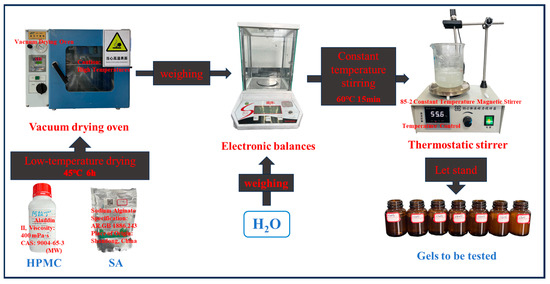
To effectively prevent and control coal spontaneous combustion, a novel heat-sensitive hydrogel for mine fire prevention and extinguishment was developed using hydroxypropyl methylcellulose (HPMC) and the organic flame-retardant, sodium alginate (SA). The hydrogel was prepared through single-factor variable control and material compounding. First,
[...] Read more.
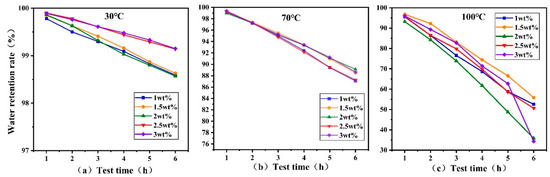
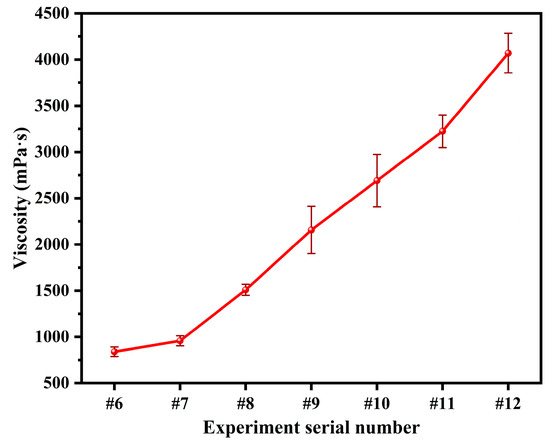
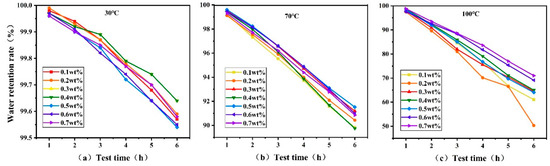
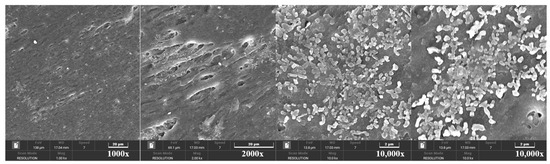
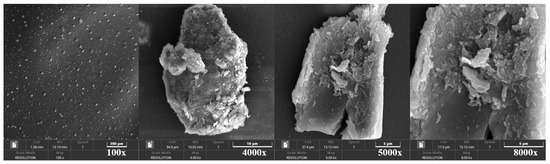
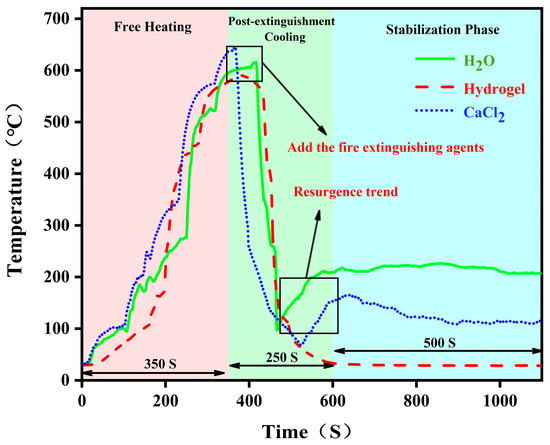
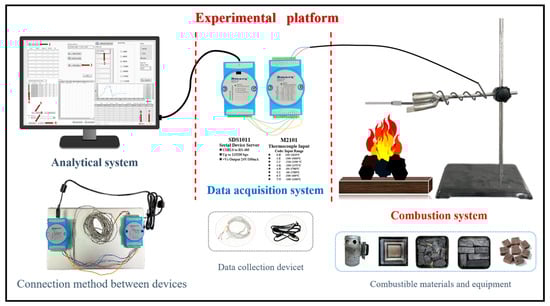
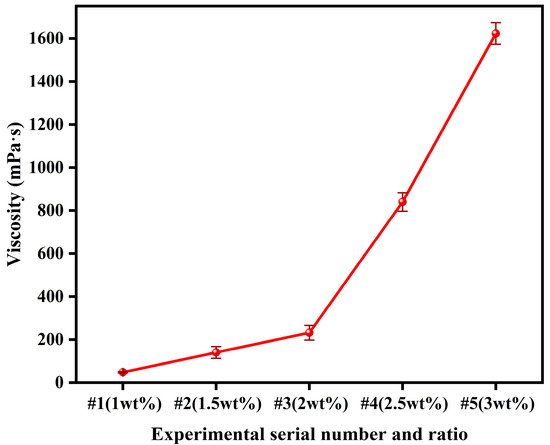
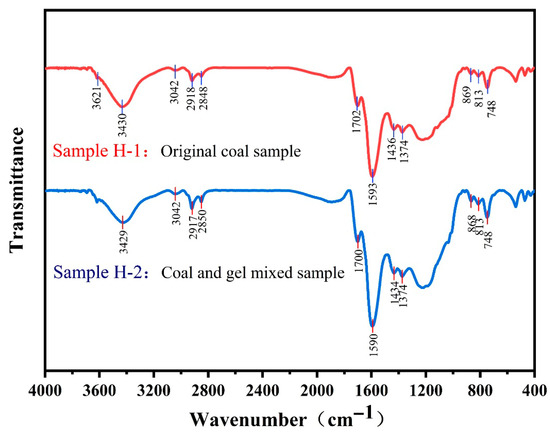
To effectively prevent and control coal spontaneous combustion, a novel heat-sensitive hydrogel for mine fire prevention and extinguishment was developed using hydroxypropyl methylcellulose (HPMC) and the organic flame-retardant, sodium alginate (SA). The hydrogel was prepared through single-factor variable control and material compounding. First, the optimal formulation of the hydrogel was determined using analytical instruments and techniques, including a viscometer, vacuum drying oven, and the inverted test tube method. Subsequently, its microstructural characteristics were examined using scanning electron microscopy (SEM) and infrared spectroscopy (FTIR). Finally, a fire suppression test platform was established to perform comparative experiments, verifying the hydrogel’s fire prevention, extinguishing, and cooling performance. Experimental results demonstrated that the optimal hydrogel formulation consists of 2.5 wt% HPMC and 0.3 wt% SA. At this ratio, the hydrogel exhibits excellent fluidity and water retention, ensuring prolonged coverage and wetting of coal surfaces. The gel undergoes a sol–gel phase transition at 58 °C, enabling it to fill voids, bind and reinforce coal particles, and reduce exposed surface area. After drying, the hydrogel forms a uniformly smooth surface capable of both coating the coal body and encapsulating individual coal particles. Following the hydrogel treatment, the coal sample retains its original functional groups, indicating that no chemical reactions occur during mixing. Compared with traditional inhibitors, the hydrogel demonstrates superior fire suppression performance, more effectively covering and encapsulating burning coal. It rapidly reduces the temperature to 28 °C by the cooling effect of water evaporation from the hydrogel, and it maintains thermal stability, achieving outstanding fire-extinguishing efficiency.
Full article

Figure 1
Open AccessArticle
Evacuation Patterns of Occupant Groups in Super High-Rise Building Stairwells Under Different Visibility Conditions
by
Zongjun Xia, Xinyi Hu, Xiaodan Li, Jing Li, Yangyang Wang, Huiqin Wang, Xiaozheng Zhao and Bi Li
Fire 2026, 9(2), 87; https://doi.org/10.3390/fire9020087 - 15 Feb 2026
Abstract
Stairwells constitute critical escape routes for emergency evacuation during building disasters. The spread of fire smoke and the failure of lighting systems can significantly reduce visibility within stairwells, thereby adversely affecting evacuation speed. This issue is particularly pronounced in super high-rise buildings. In
[...] Read more.
Stairwells constitute critical escape routes for emergency evacuation during building disasters. The spread of fire smoke and the failure of lighting systems can significantly reduce visibility within stairwells, thereby adversely affecting evacuation speed. This issue is particularly pronounced in super high-rise buildings. In this study, a typical super high-rise building was selected as the experimental site. The variation laws of key parameters such as evacuation time, speed, and heart rate were investigated for groups with different gender proportions in stairwells under different visibility conditions. The experimental results show that: First, collaboration within multi-person groups can effectively mitigate the adverse impact of reduced visibility on evacuation speed. Second, different gender proportions within groups affect evacuation speed, with groups having a higher proportion of males demonstrating relatively faster evacuation speed. Third, under identical visibility conditions, the heart rates of multi-person groups during evacuation are generally lower than those of individual groups; in low-visibility environments, the heart rates of members within the same group are significantly higher than those under normal visibility conditions. Accordingly, this study proposes a mixed-gender group evacuation strategy under low-visibility conditions. The findings provide empirical data support for the formulation of emergency evacuation response strategies in super high-rise buildings.
Full article
(This article belongs to the Section Fire Risk Assessment and Safety Management in Buildings and Urban Spaces)
Open AccessArticle
Fire Behavior and Propagation of Twin Wildfires in a Mediterranean Landscape: A Case Study from İzmir, Türkiye
by
Kadir Alperen Coskuner, Georgios Papavasileiou, Theodore M. Giannaros, Akli Benali and Ertugrul Bilgili
Fire 2026, 9(2), 86; https://doi.org/10.3390/fire9020086 - 14 Feb 2026
Abstract
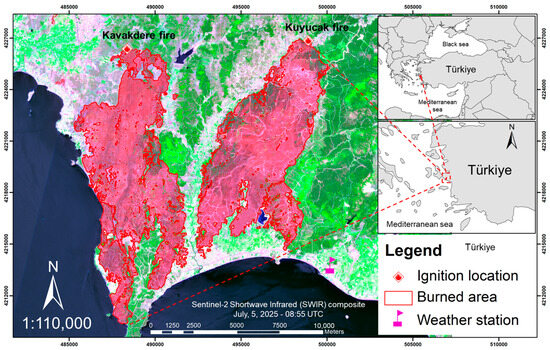
Twin wildfires burned over 9500 ha in Seferihisar, İzmir, western Türkiye, on 29—30 June 2025 under extreme fire weather conditions. This study reconstructs the spatiotemporal progression of the fires and examines the drivers of contrasting behaviors and burn severity. Multi-source datasets—Sentinel-2 imagery, VIIRS/MODIS
[...] Read more.
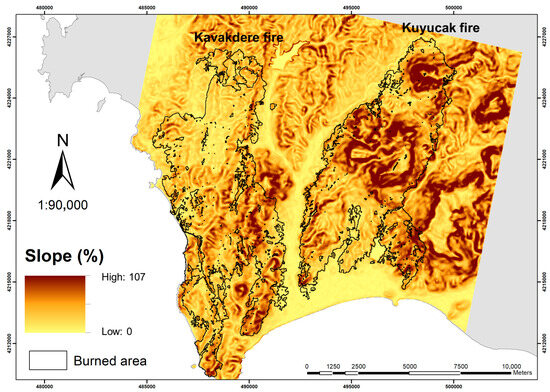
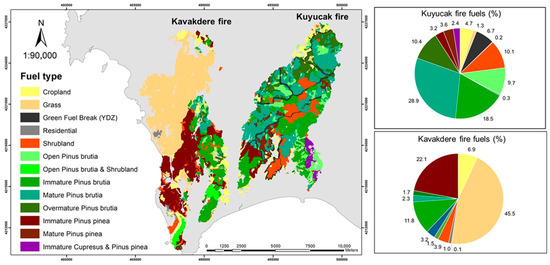
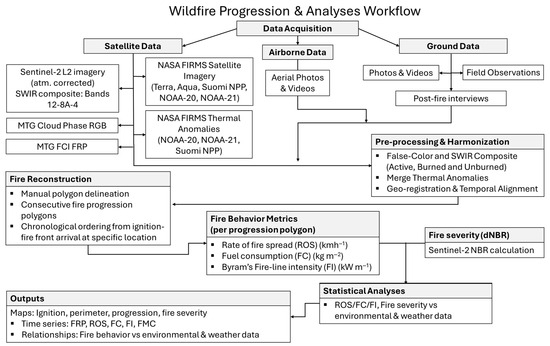
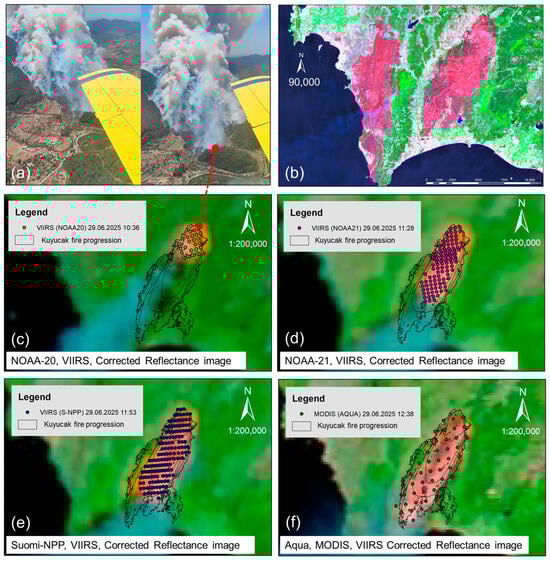
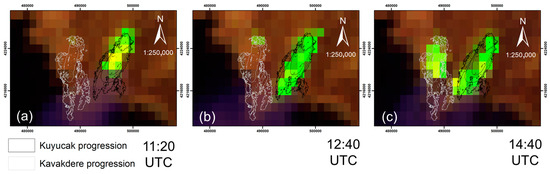
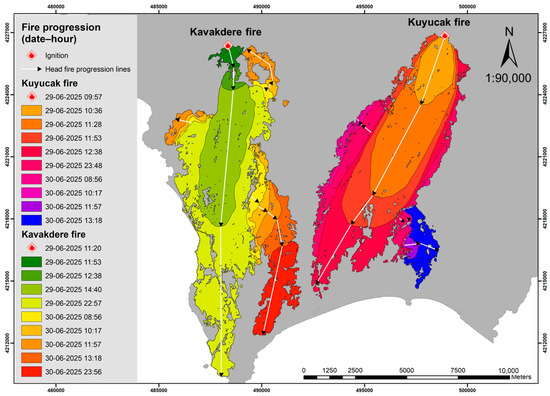
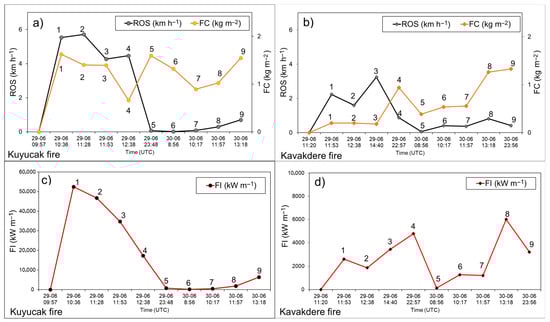
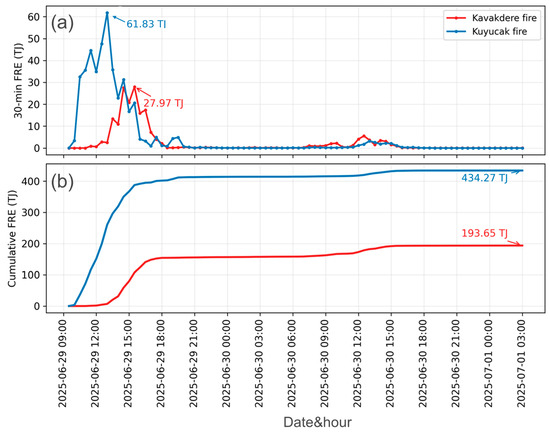
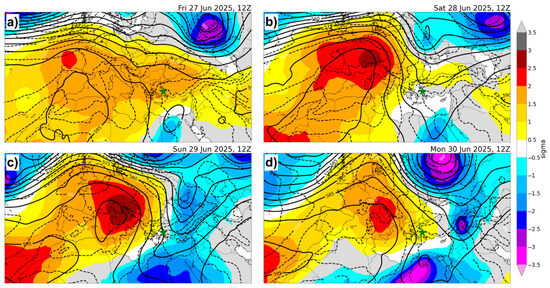
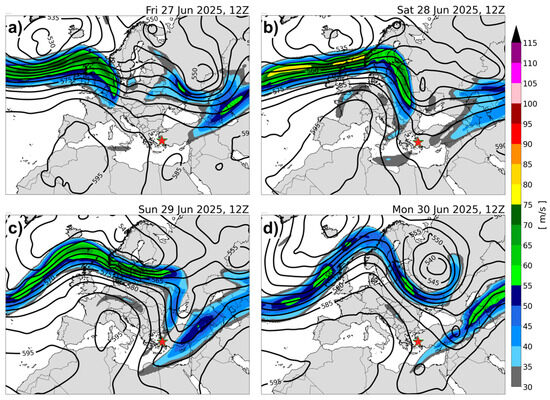
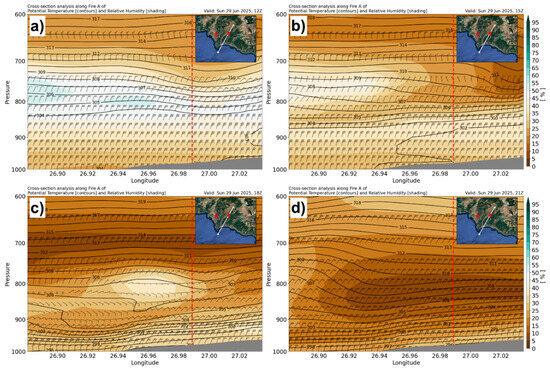
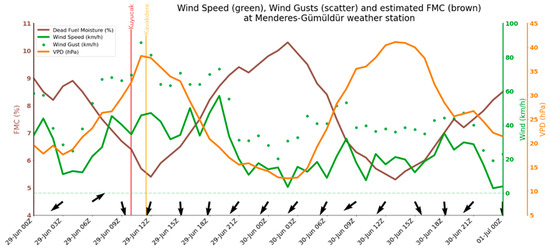
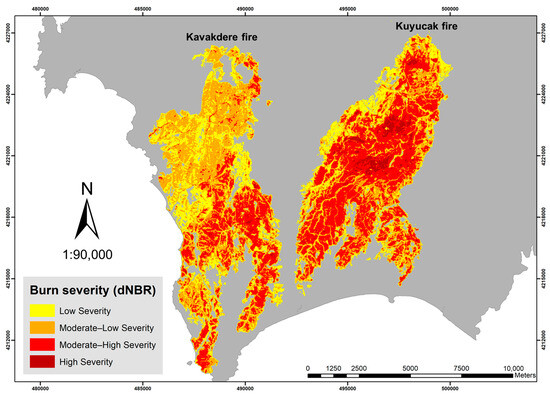
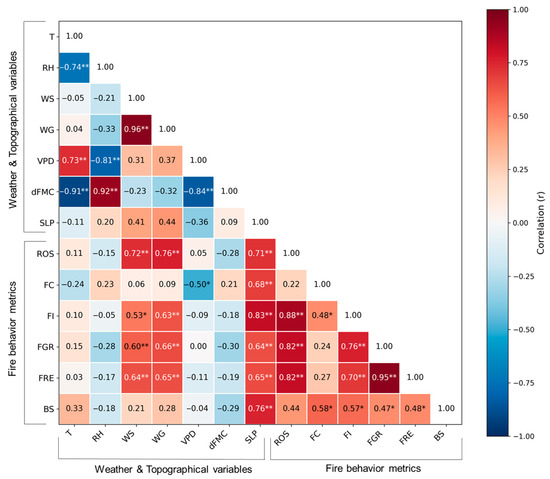
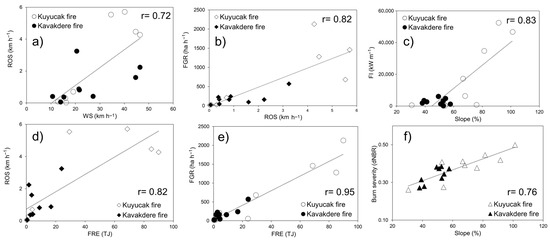
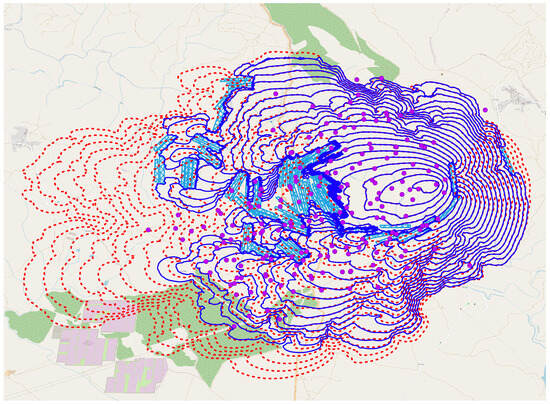
Twin wildfires burned over 9500 ha in Seferihisar, İzmir, western Türkiye, on 29—30 June 2025 under extreme fire weather conditions. This study reconstructs the spatiotemporal progression of the fires and examines the drivers of contrasting behaviors and burn severity. Multi-source datasets—Sentinel-2 imagery, VIIRS/MODIS thermal detections, MTG images and thermal detections, aerial photos, and ground data—were integrated to delineate progression polygons and compute rate of spread (ROS), fuel consumption (FC), and fire-line intensity (FI). Kuyucak fire showed rapid early growth, burning 3554 ha in 2.5 h (mean ROS of 5.0 km h−1; mean FI of 37,789 kW m−1), driven by strong northeasterly winds of 40–50 km h−1, steep terrain, dense Pinus brutia fuels, and very low dead fine-fuel moisture (<6%). Kavakdere fire advanced more slowly (mean ROS of 1.6 km h−1) across open grassland and cropland, yielding lower FC and FI. Synoptic analysis revealed a strong pressure-gradient-induced northeasterly wind regime linked to a mid-tropospheric geopotential height dipole between Central Europe and the Eastern Mediterranean, while WRF simulations indicated a dry boundary layer and enhanced low-level winds during peak spread. Sentinel-2 dNBR burn severity mapping showed substantial spatial variability tied to fuel and topography contrasts. Findings demonstrate how twin ignitions under similar weather conditions can produce divergent outcomes, underscoring the need for terrain- and fuel-aware strategies during extreme Mediterranean fire outbreaks.
Full article
(This article belongs to the Special Issue Advances in Remote Sensing for Burned Area Mapping)
►▼
Show Figures

Figure 1
Open AccessArticle
A Land Cover Recognition-Based Method for Wildfire Early Warning in Transmission Corridor Areas
by
Changzheng Deng, Weiyi Li, Bo Chen and Zechuan Fan
Fire 2026, 9(2), 85; https://doi.org/10.3390/fire9020085 - 14 Feb 2026
Abstract
►▼
Show Figures
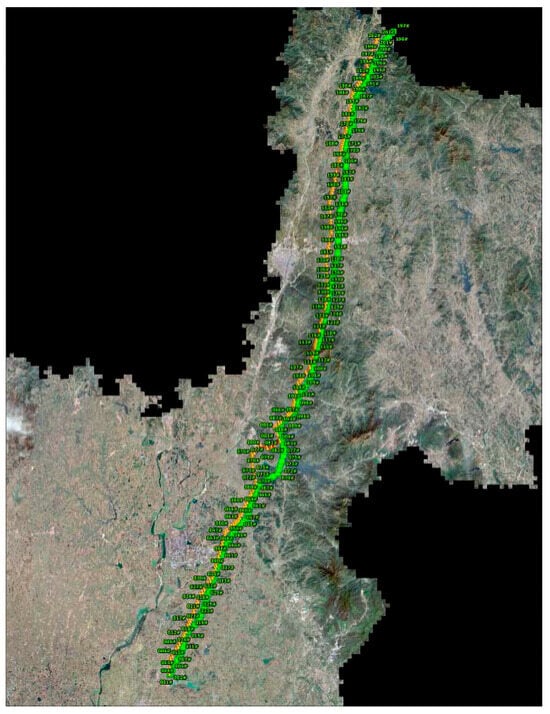
To improve the accuracy of wildfire risk identification in areas adjacent to power transmission corridors, this study proposes a wildfire early warning method that integrates refined land cover segmentation and multimodal feature deep learning. First, an improved bi-branch semantic segmentation network (BuildFormer++) is
[...] Read more.
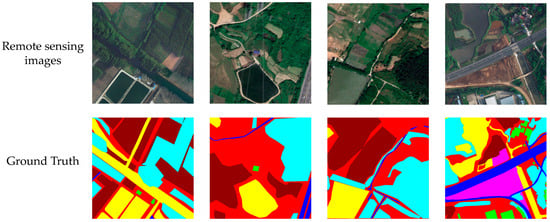
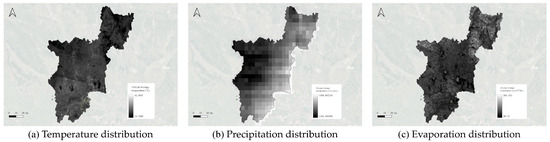
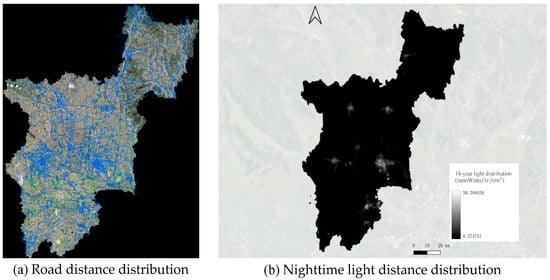
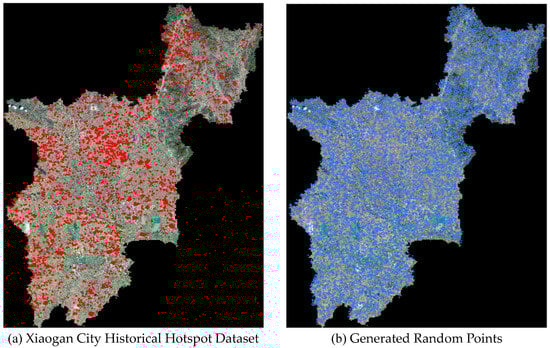
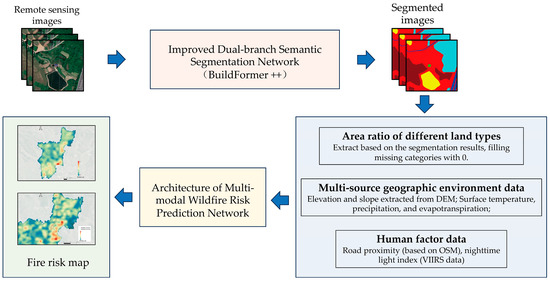
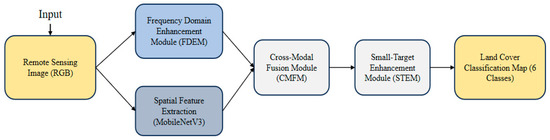
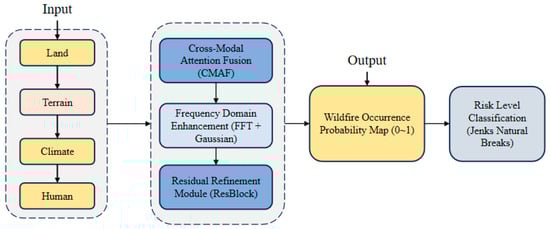
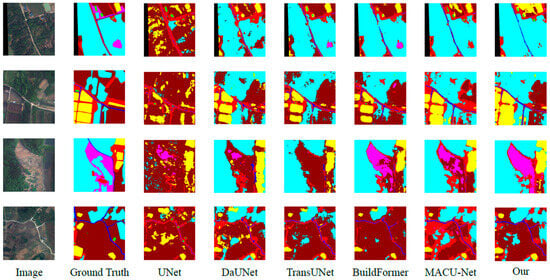
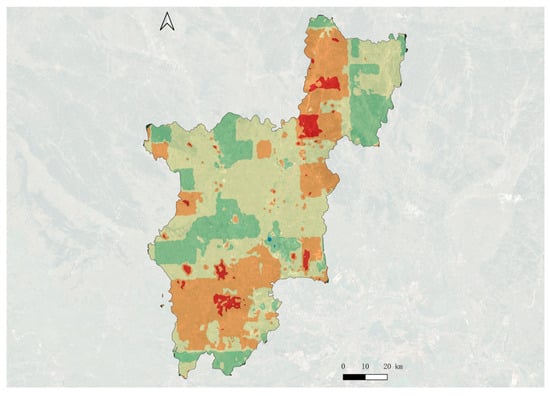
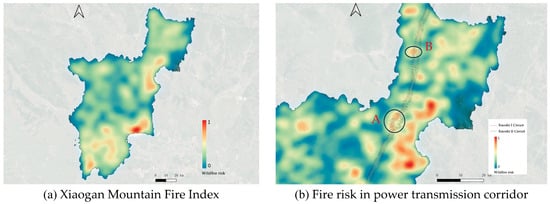
To improve the accuracy of wildfire risk identification in areas adjacent to power transmission corridors, this study proposes a wildfire early warning method that integrates refined land cover segmentation and multimodal feature deep learning. First, an improved bi-branch semantic segmentation network (BuildFormer++) is used to perform refined classification of high-resolution remote sensing images, extracting six types of land cover information, including forest and cultivated land. Second, a multi-dimensional feature set integrating land cover, topography, climate, and human activities is constructed and input into a multimodal wildfire point prediction network for deep feature fusion and probabilistic modeling. Experimental results show that the proposed segmentation network achieves a mean intersection–union ratio (mIoU) of 40.68% in the semantic segmentation task; the early warning model achieves an accuracy of 85.37%, an F1 score of 93.15%, and an ROC-AUC of 85.42% in risk prediction, significantly outperforming comparative methods. The “refined segmentation–feature fusion–risk prediction” framework constructed by this method can provide reliable technical support for the operation and maintenance safety and fire prevention of power transmission corridors.
Full article

Figure 1

Open AccessArticle
DC Series Arc Fault Detection in Photovoltaic Systems Using a Hybrid WDCNN-BiLSTM-CA Model
by
Liang Zhou, Manman Hou, Zheng Zeng, Jingyi Zhao, Chi-Min Shu and Huiling Jiang
Fire 2026, 9(2), 84; https://doi.org/10.3390/fire9020084 - 12 Feb 2026
Abstract
Arc fault is the dominant cause of fire in photovoltaic (PV) systems, making its accurate identification crucial for PV fire prevention. This study investigates the influence of voltage (200, 300, and 400 V) and current (3, 5, 7, 9, and 11 A) on
[...] Read more.
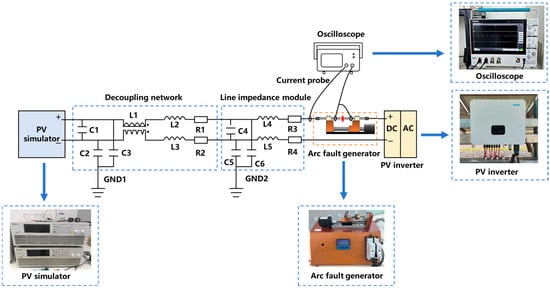
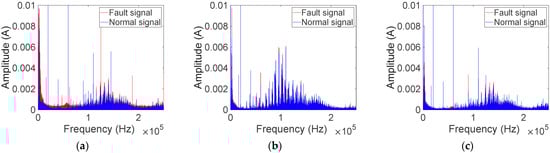
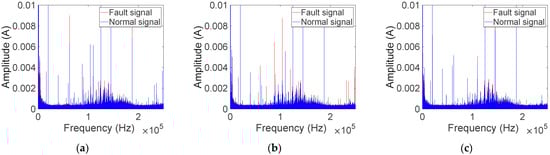
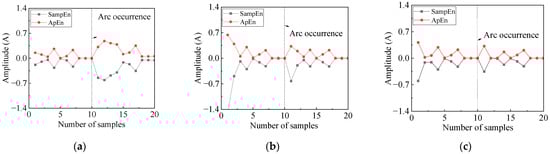
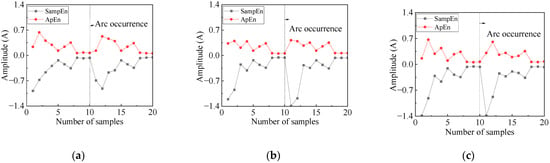
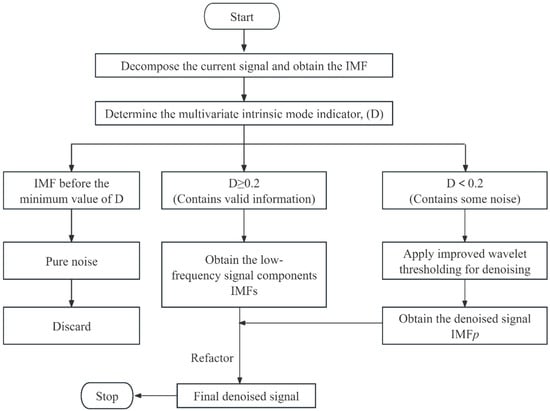
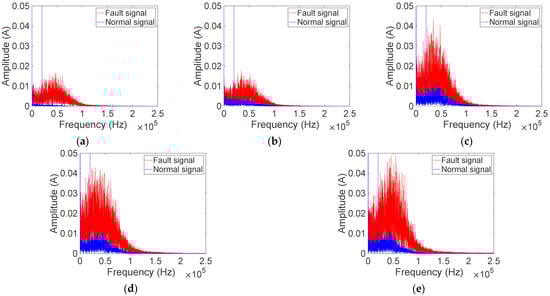
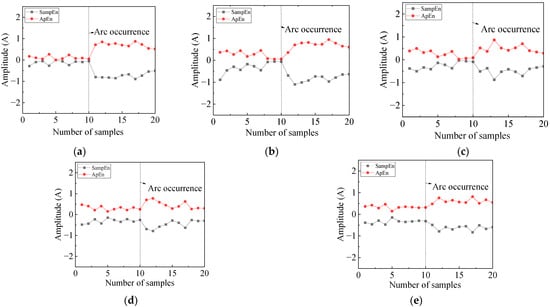
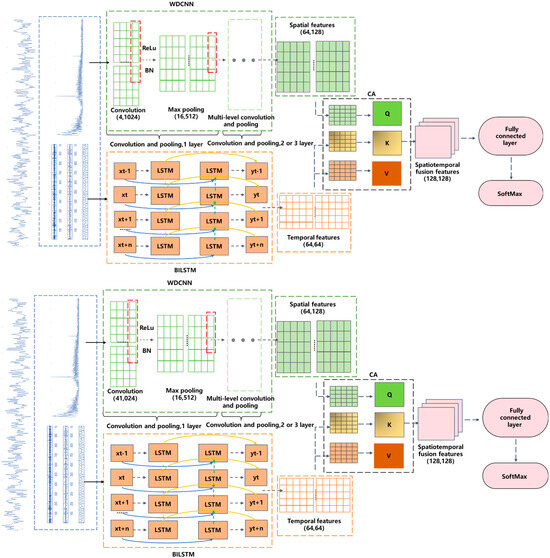
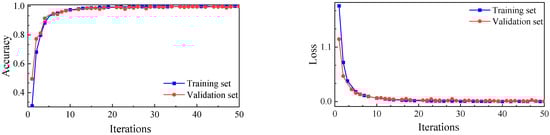
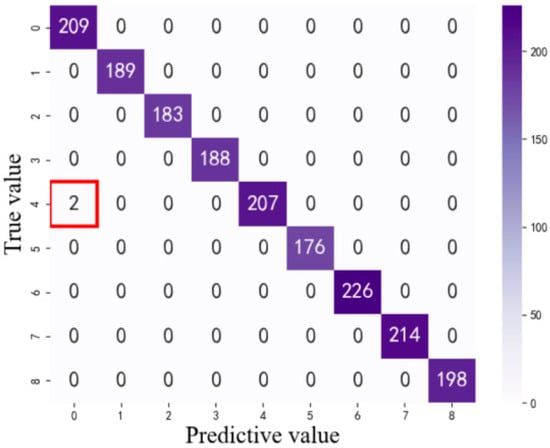
Arc fault is the dominant cause of fire in photovoltaic (PV) systems, making its accurate identification crucial for PV fire prevention. This study investigates the influence of voltage (200, 300, and 400 V) and current (3, 5, 7, 9, and 11 A) on the DC series arc fault characteristics in PV systems obtained through experimental analysis. The results show that voltage variation has a negligible impact on arc fault behavior, while higher current levels substantially increase noise in the arc fault signals. To effectively mitigate noise, this paper proposes a denoising method that combines an improved moss growth optimization algorithm (IMGO) with improved complete ensemble empirical mode decomposition featuring adaptive noise (ICEEMDAN). It is found that the IMGO-ICEEMDAN denoising algorithm can effectively diminish noise in current signals, broaden characteristic frequency bands, and ameliorate arc feature discernibility. Subsequently, an integrated multi-scale spatiotemporal model is developed to extract arc fault features from the denoised signals. The model employs wide deep convolutional neural networks (WDCNNs) and bidirectional long short-term memory (BiLSTM) networks for parallel feature extraction, supplemented by a cross-attention (CA) module to optimize feature integration. The proposed WDCNN-BiLSTM-CA model ultimately achieves a detection accuracy of 99.89%, demonstrating superior detection performance over conventional methods, such as CNN-GRU and 1DCNN-LSTM models. This work provides a reliable framework for arc fault detection and fire risk reduction in PV systems.
Full article
(This article belongs to the Special Issue Photovoltaic and Electrical Fires: 2nd Edition)
►▼
Show Figures

Figure 1
Open AccessArticle
Beta Test of an Alcohol Awareness and Prevention Intervention for the U.S. Fire Service
by
Nattinee Jitnarin, Christopher K. Haddock, Christopher M. Kaipust, Walker S. C. Poston, Brittany S. Hollerbach, Maria D. H. Koeppel, Sara A. Jahnke and Raul Caetano
Fire 2026, 9(2), 83; https://doi.org/10.3390/fire9020083 - 12 Feb 2026
Abstract
►▼
Show Figures
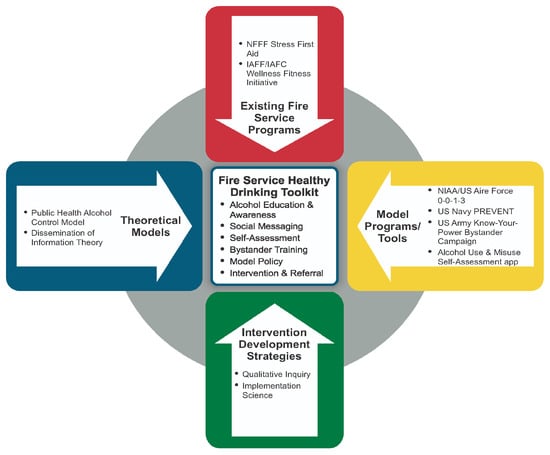
Firefighters face elevated risks of alcohol misuse due to occupational stress, trauma exposure, and cultural norms within the fire service. This beta test study evaluated the feasibility, acceptability, and preliminary outcomes of From Bottle to Nozzle, a digitally delivered alcohol awareness and prevention
[...] Read more.
Firefighters face elevated risks of alcohol misuse due to occupational stress, trauma exposure, and cultural norms within the fire service. This beta test study evaluated the feasibility, acceptability, and preliminary outcomes of From Bottle to Nozzle, a digitally delivered alcohol awareness and prevention intervention tailored for firefighters. Fifty fire service personnel were invited to participate; 46 consented and completed baseline questionnaires, and 22 completed the full program. The intervention consisted of five self-paced online modules incorporating multimedia content, quizzes, and self-assessments that addressed alcohol history, fire service culture, risk-reduction strategies, communication, and health effects. Pre- and post-intervention assessments measured changes in alcohol-related knowledge, alcohol use, motivation to reduce drinking, and usability. Reinforcement messages were delivered via text and email. Alcohol-related knowledge improved significantly post-intervention, particularly in the general and total knowledge domains. Moderate drinkers showed reductions in drinking days and AUDIT scores. Among heavy drinkers, overall consumption declined slightly, though binge-drinking episodes increased. Changes in motivation to reduce drinking were mixed. Usability ratings were high, with an 80% module completion rate and favorable feedback on program brevity and format, though navigation and video length were noted as challenges. From Bottle to Nozzle demonstrated strong feasibility and acceptability. While knowledge gains were robust, behavioral outcomes were mixed, highlighting the need for larger controlled studies with extended follow-up.
Full article

Figure 1
Open AccessArticle
Developing an Integrated Command-and-Control Training Environment for Fire and Rescue Services: From GIS and UAV Data to Virtual Reality Simulation
by
Dušan Hancko, Danica Kačíková and Andrea Majlingova
Fire 2026, 9(2), 82; https://doi.org/10.3390/fire9020082 - 12 Feb 2026
Abstract
Effective command-and-control (C2) decision-making during emergency response relies on timely access to spatially accurate information. It also requires a clear understanding of evolving incident conditions. Traditional fire-service training methods provide limited opportunities to rehearse complex, high-risk, and large-scale incidents under realistic yet safe
[...] Read more.
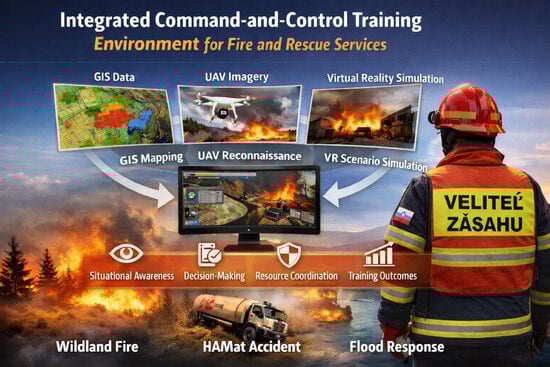
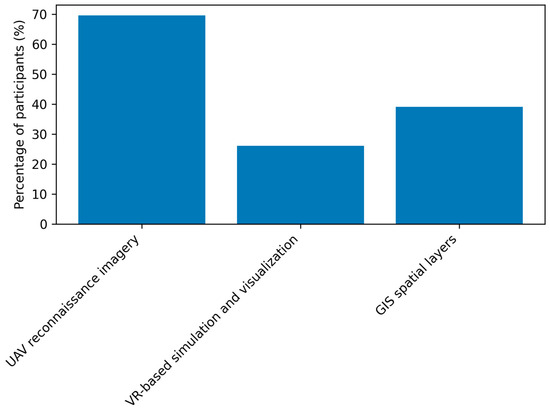
Effective command-and-control (C2) decision-making during emergency response relies on timely access to spatially accurate information. It also requires a clear understanding of evolving incident conditions. Traditional fire-service training methods provide limited opportunities to rehearse complex, high-risk, and large-scale incidents under realistic yet safe conditions. This exploratory pilot study presents the design and experimental evaluation of an integrated training environment that combines geographic information system (GIS) data, unmanned aerial vehicle (UAV) imagery, and immersive virtual reality (VR) simulations to support C2 training for fire-service incident commanders. The system was assessed through scenario-based exercises involving 23 active incident commanders across three representative emergency scenarios: wildland fire, hazardous materials transport accident, and flood response. The training scenarios were based on real geographic areas in central Slovakia, using authentic terrain, land-cover, infrastructure, and hydrological GIS layers to ensure spatial realism of the simulated emergency environments. Pre-training and post-training questionnaires were used to evaluate perceived training realism, preparedness for command tasks, decision-making confidence, and the perceived usefulness of digital spatial information tools. Results indicate a substantial post-training increase in perceived realism and preparedness, with strong positive correlation between these variables (Spearman ρ = 0.71, p < 0.001). Participants reported improved confidence in assessing incident conditions, prioritizing operational tasks, and allocating resources under dynamically evolving scenarios. The study evaluates perceived spatial situational understanding derived from multi-source spatial information integration rather than directly measured situational awareness using standardized psychometric instruments. UAV imagery was found to be particularly valuable for rapid incident size-up, while GIS layers primarily supported spatial planning, hazard delineation, and resource coordination; VR served as a unifying platform for fusing these information sources into a coherent operational picture. Scenario-specific differences in tool usefulness were observed, reflecting the spatial and risk characteristics of each incident type. Overall, the findings indicate that integrated GIS–UAV–VR environments provide a realistic and scalable complement to traditional fire-service command training, enhancing spatially supported decision-making and preparedness for complex emergency response. Given the single-group pretest–posttest design, limited sample size, absence of a control group, and reliance on perceived evaluation measures, the results should be interpreted as indicative rather than as generalizable evidence of training effectiveness.
Full article
(This article belongs to the Section Fire Research at the Science–Policy–Practitioner Interface)
►▼
Show Figures

Graphical abstract
Open AccessArticle
In Situ Synthesis of SiO2/Polyimide Aerogels with Improved Thermal Safety via Introducing Methyltrimethoxysilane
by
Zhi Li, Fang Zhou, Kai Shen, Miao Liu, Yumin Duan, Jiahui Chen, Shuai Li and Haoxuan Yu
Fire 2026, 9(2), 81; https://doi.org/10.3390/fire9020081 - 12 Feb 2026
Abstract
Polyimide aerogels (PIAs) possess enormous application potential in high-temperature thermal insulation scenarios. As high-efficiency thermal insulation materials, their thermal safety and thermal insulation performance are of crucial importance. Currently, poor dimensional stability, high-temperature pyrolysis, and severe shrinkage remain the key factors restricting their
[...] Read more.
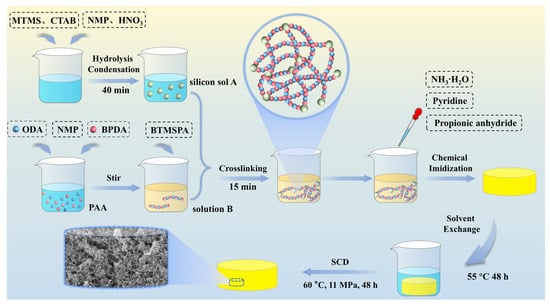
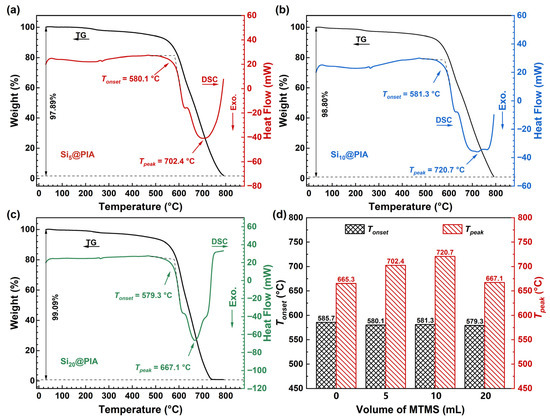
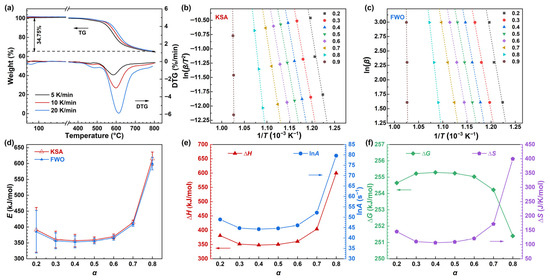
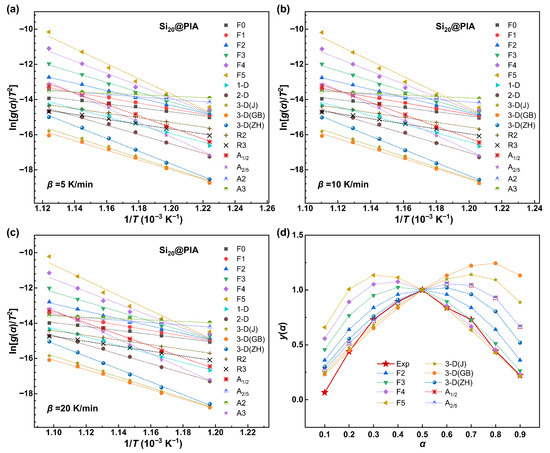
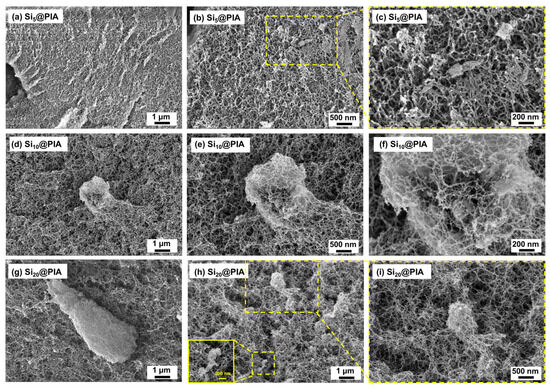
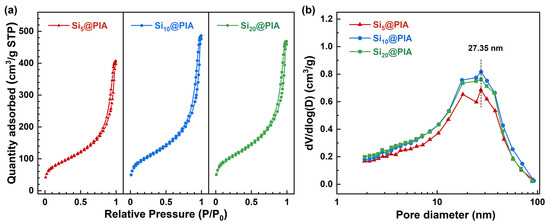
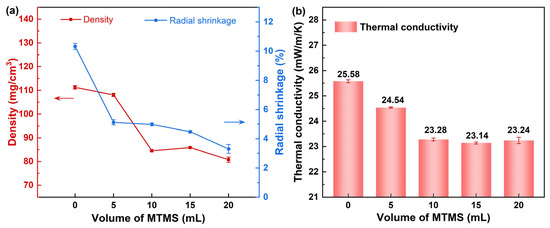
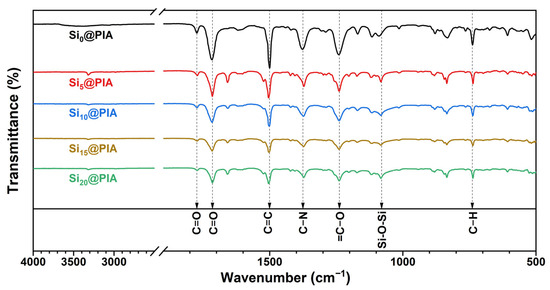
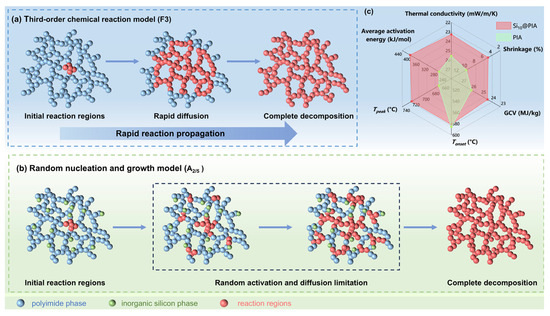
Polyimide aerogels (PIAs) possess enormous application potential in high-temperature thermal insulation scenarios. As high-efficiency thermal insulation materials, their thermal safety and thermal insulation performance are of crucial importance. Currently, poor dimensional stability, high-temperature pyrolysis, and severe shrinkage remain the key factors restricting their development and practical application. In this work, we employ an in situ co-gelation synthesis strategy, where methyltrimethoxysilane (MTMS) is introduced as the silica precursor to fabricate SiO2/polyimide aerogels (Si@PIAs). This strategy enhances the interfacial bonding strength between the organic and inorganic phases, enabling their complementation of strengths. Experimental results demonstrate that the incorporation of the inorganic SiO2 phase endows Si@PIAs with higher thermal safety, superior thermal insulation performance, lower density, and reduced shrinkage. Among them, Si10@PIA performs best with a density of 85 mg/cm3, a thermal conductivity of 23.28 mW/(m·K), and a heat flow peak temperature of 720.7 °C. More importantly, pyrolysis analysis reveals that the pyrolysis process of Si@PIAs shifts to a randomized nucleation and growth model (n = 2/5) with the mechanism function g(α) = [−ln(1 − α)]5/2. Compared with pure PIAs, Si@PIAs possess stronger resistance to pyrolysis, lower gross calorific value, and improved thermal safety. This study provides theoretical and practical guidance for the development of high-performance aerogel materials, promoting their application in lithium-ion battery separators, high-temperature insulation, and fire-resistant materials.
Full article
(This article belongs to the Special Issue Advanced Analysis of the Mechanism of Biomass Pyrolysis and Oxidation)
►▼
Show Figures

Figure 1
Open AccessArticle
Impact of Combustible Linings in the Simulated Fluid Dynamics of a Compartment Fire
by
Ignacio Calderón, Agustín H. Majdalani and Wolfram Jahn
Fire 2026, 9(2), 80; https://doi.org/10.3390/fire9020080 - 12 Feb 2026
Abstract
The increasing use of engineered timber in modern architecture raises critical concerns about fire safety, particularly when combustible linings are exposed within compartments. Classical compartment fire framework, largely derived from non-combustible enclosures, may not adequately capture the dynamics introduced by materials such as
[...] Read more.
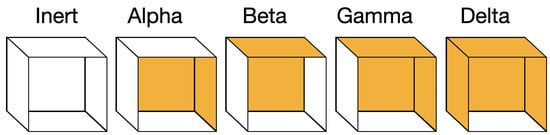
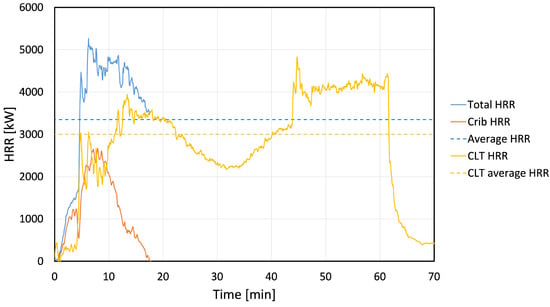
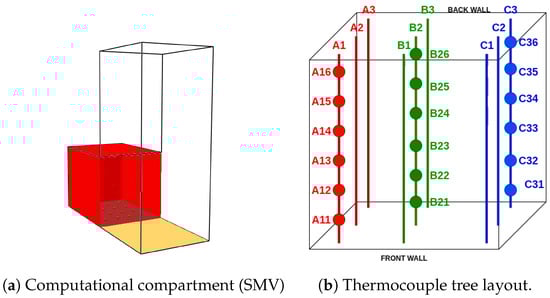
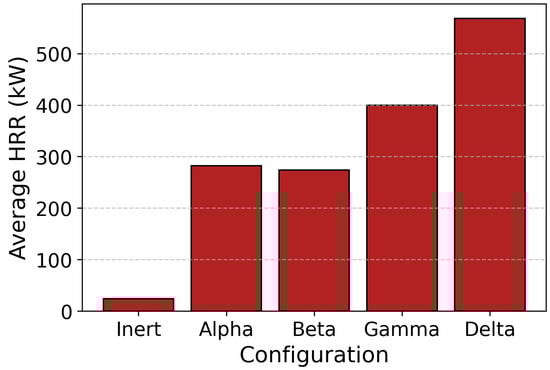
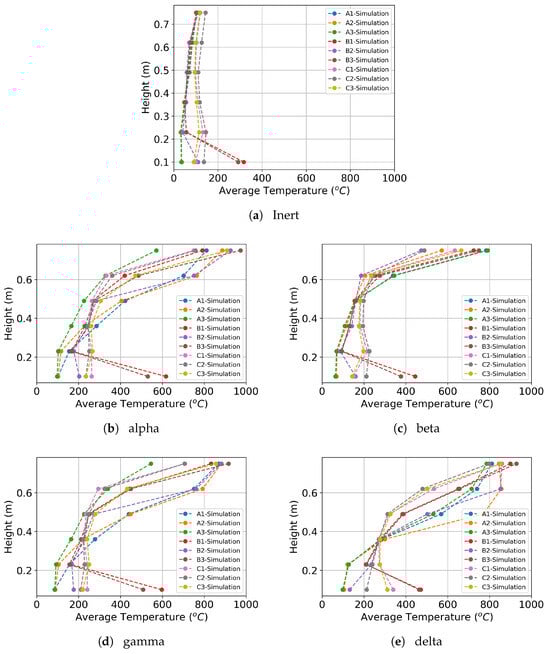
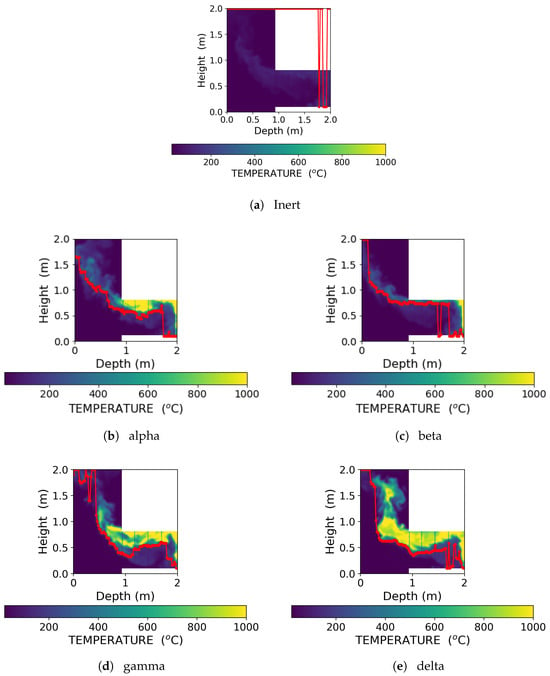
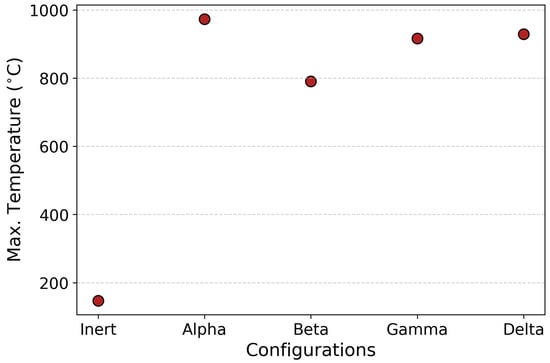
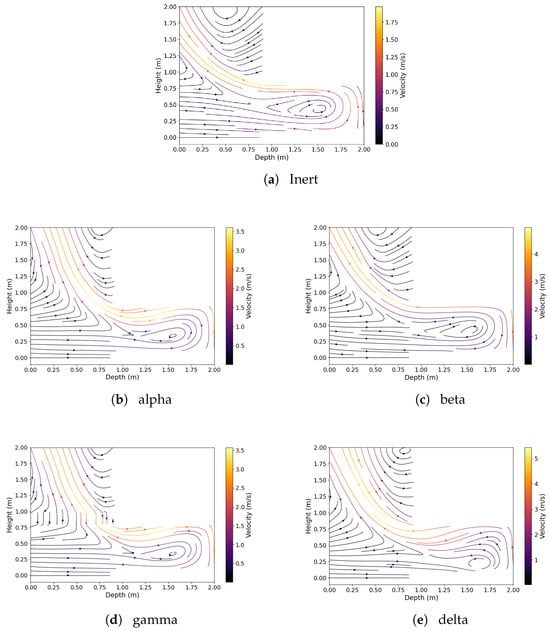
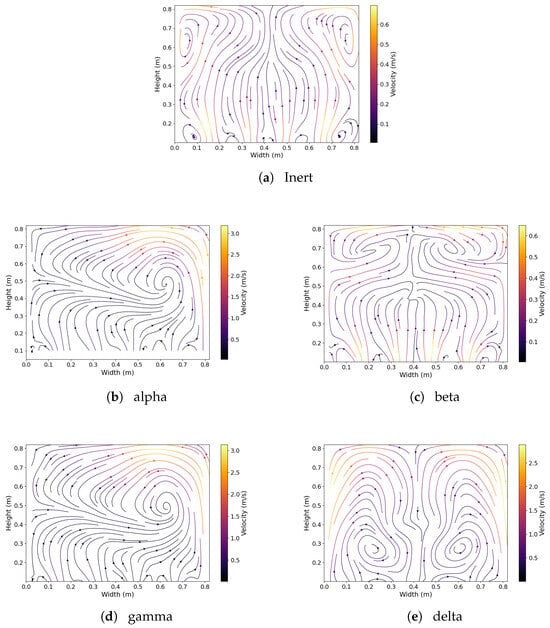
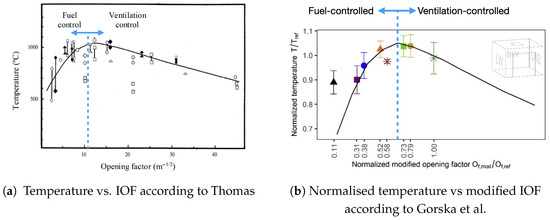
The increasing use of engineered timber in modern architecture raises critical concerns about fire safety, particularly when combustible linings are exposed within compartments. Classical compartment fire framework, largely derived from non-combustible enclosures, may not adequately capture the dynamics introduced by materials such as cross-laminated timber (CLT). This study investigates how combustible linings influence the fluid dynamic fields of compartment fires derived from the thermal field using CFD simulations informed by experimental data. A series of configurations, from inert to fully lined compartments, were analysed to isolate the effect of burning boundaries. Results show a progressive intensification of fire conditions with additional combustible surfaces: upper-layer temperatures approach 900 °C, smoke layers thicken, and stratification becomes more pronounced. Velocity fields are similarly affected, with peak inflow and outflow velocities doubling compared to the inert case and new vortical structures emerging near burning walls. These findings highlight that exposed CLT significantly amplifies radiative and convective heat feedback, modifying both temperature distributions and flow patterns in ways not captured by the traditional framework based on the inverse opening factor. This underscores the need for performance-based fire design approaches integrating both thermal and fluid dynamic perspectives, ensuring safe implementation of timber in modern construction.
Full article
(This article belongs to the Special Issue Combustion and Fire Safety of Wood: From Built Environments to Forests)
►▼
Show Figures

Figure 1
Open AccessCommunication
Observations of Vorticity-Driven Lateral Spread in a Wildfire
by
Rick McRae
Fire 2026, 9(2), 79; https://doi.org/10.3390/fire9020079 - 10 Feb 2026
Abstract
Video footage of a recent California wildfire confirmed that dangerous fire spread can lead to unsurvivable foreground conditions. This process thus needs enhanced awareness across the wildfire sector. The fire moved sideways, downwind of a ridgeline, and formed dense, rapidly spreading spot-fires. Effective
[...] Read more.
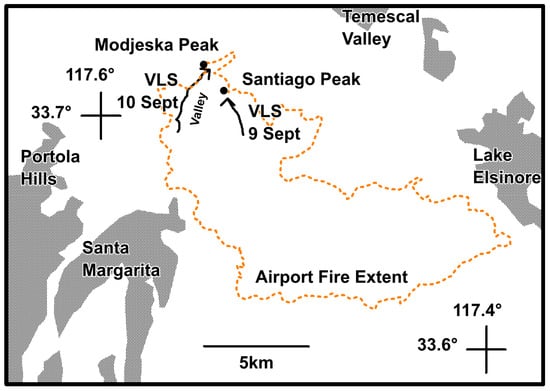
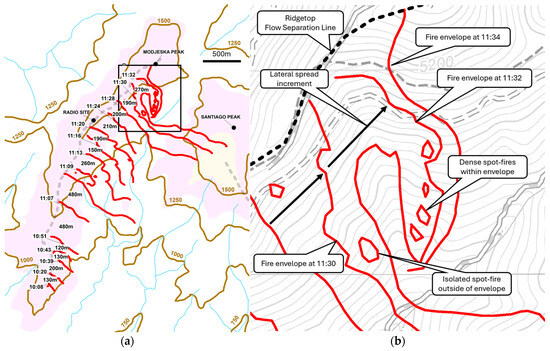
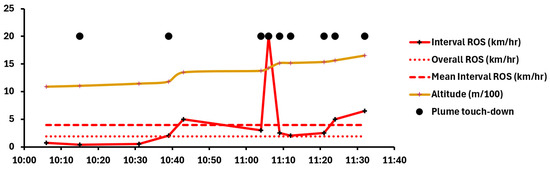
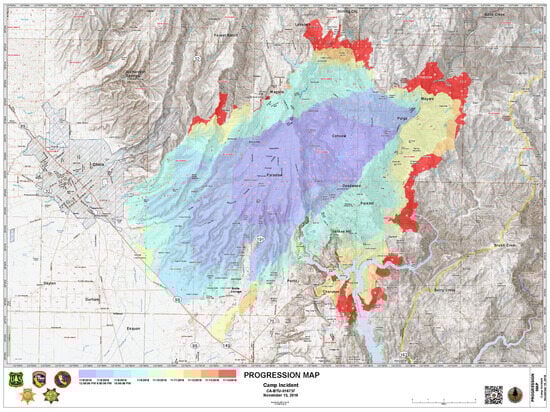
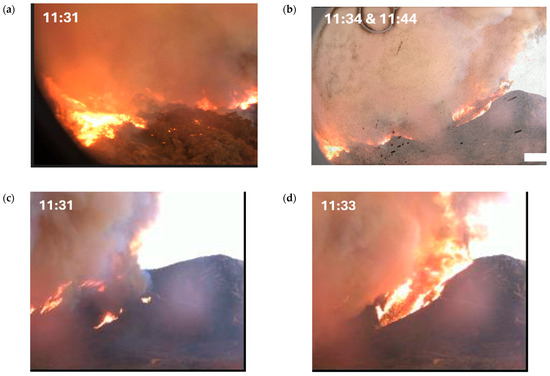
Video footage of a recent California wildfire confirmed that dangerous fire spread can lead to unsurvivable foreground conditions. This process thus needs enhanced awareness across the wildfire sector. The fire moved sideways, downwind of a ridgeline, and formed dense, rapidly spreading spot-fires. Effective lateral rates-of-spread up to 20 km h−1 were measured. This is discussed in detail. A HPWREN camera system was installed on Santiago Peak in California. The Airport Fire, on two consecutive days, burned past the cameras by means of vorticity-driven lateral spread (VLS). This provided the most complete sets of time-series observations of VLS on a landscape-scale. Some remarkable measurements are derived from the observations. The overall lateral rate-of-spread averaged at 1.9 km h−1. Around plume touch-down events, that speed rose to 4 km h−1, but also peaked at 20 km h−1. The effective downwind spread of the overall fire envelope was 45 km h−1. A major spot-fire had a slope-affected headfire rate-of-spread of 15 km h−1 (equivalent to c. 2 km h−1 on flat ground) and a burn rate of 60 ha h−1. The implications for fireground safety are extreme. An emphasis must be placed on predicting these events, as any burnover entrapments may well be unsurvivable. Avoiding a burnover requires good predictive capability, and observations such as these are critical for calibration.
Full article
(This article belongs to the Topic Disaster Risk Management and Resilience)
►▼
Show Figures

Figure 1
Open AccessArticle
Analysis of Smoke Spreading Pattern and Fire Safety in T-Type Subway Interchange Station
by
Lu Qu, Yuru Wang and Yue Zhai
Fire 2026, 9(2), 78; https://doi.org/10.3390/fire9020078 - 10 Feb 2026
Abstract
This study analyzes the flow and dispersion characteristics of fire smoke within the complex spatial structure of a T-type subway interchange station to clarify the impact of geometric parameter variations on the smoke spread timeline and evacuation environment. A three-dimensional numerical model of
[...] Read more.
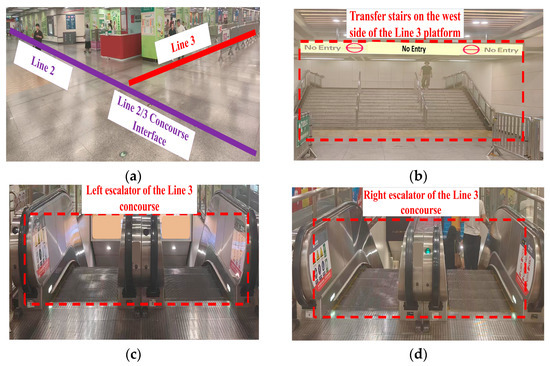
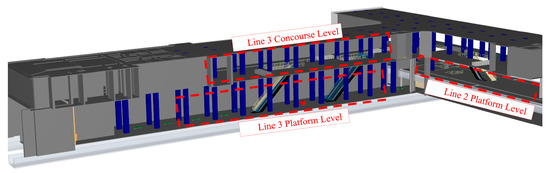
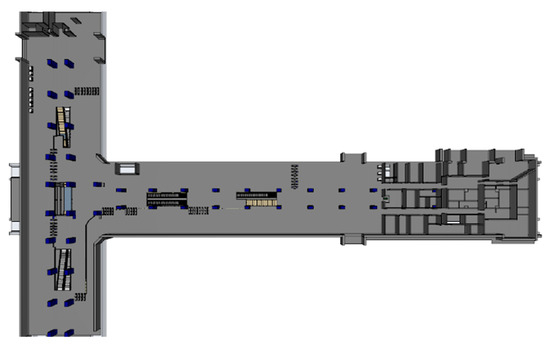
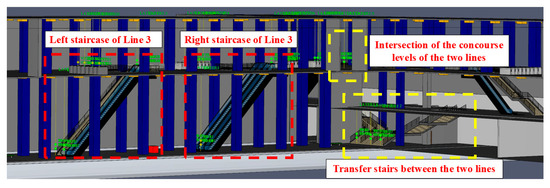
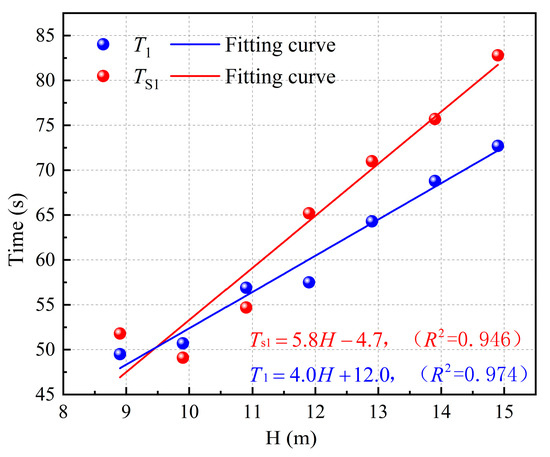
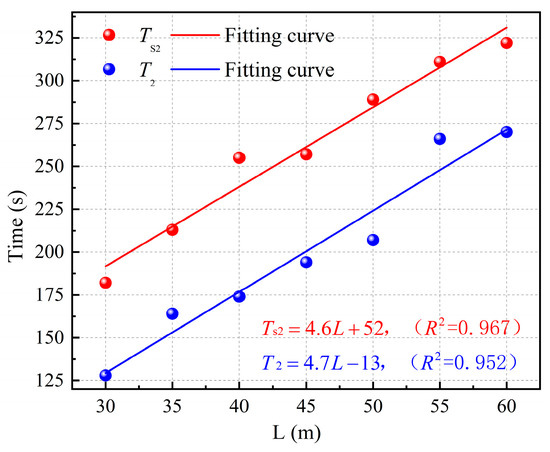
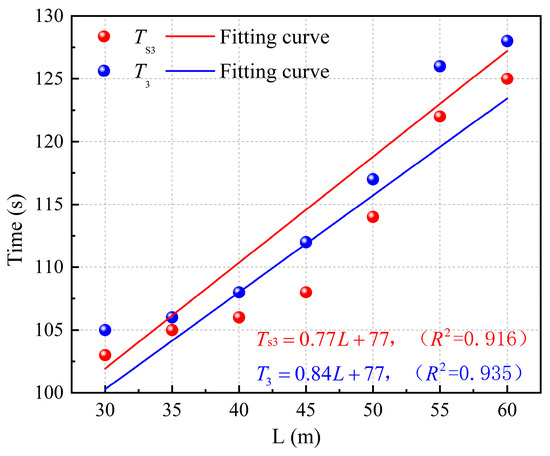
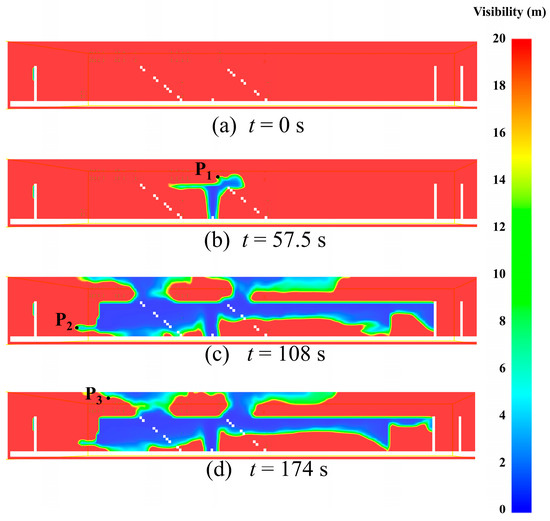
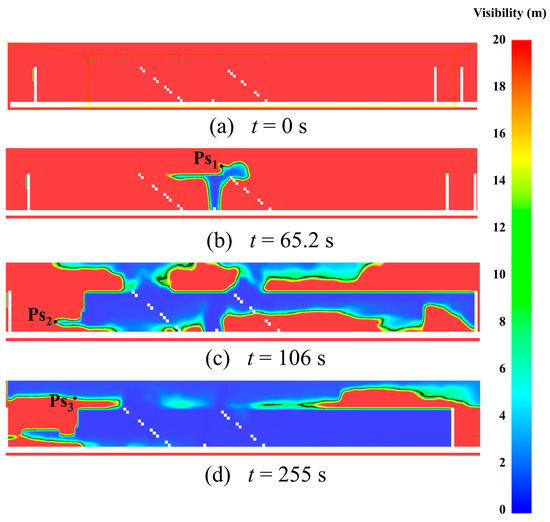
This study analyzes the flow and dispersion characteristics of fire smoke within the complex spatial structure of a T-type subway interchange station to clarify the impact of geometric parameter variations on the smoke spread timeline and evacuation environment. A three-dimensional numerical model of a typical T-type interchange station was constructed based on field survey data, with key variables defined as the height difference ( ) between the platform and concourse layers and the horizontal distance ( ) from the fire source to the track intersection. Through the simulation of multiple fire scenarios, the relationship between the smoke front arrival time ( ) and the critical danger time ( ) at key evacuation nodes was quantified in relation to the structural parameters. The results demonstrated significant linear correlations between vertical smoke spread and horizontal diffusion to adjacent tracks with and , respectively. Conversely, smoke intrusion at the transfer stairway exhibited nonlinear behavior driven by geometric constraints. The study notably highlights the dual effect of the height difference ( ) on smoke spread. Significantly, the study highlights the dual effect of the height difference ( ) on evacuation safety. While an increased height difference delays the initial vertical ascent and enlarges the smoke reservoir capacity, thereby extending the available safe egress time, it simultaneously elongates the physical evacuation path. Consequently, a trade-off emerges between the dispersion delay benefit and the increased evacuation distance. Strategies proposed based on the model analysis include the control of the vertical height difference to 11 m, the installation of smoke barriers, and the optimization of the smoke control system in the transfer corridors. These findings provide a theoretical basis and quantitative evidence for the optimization of smoke control systems and emergency evacuation design in T-type subway interchange stations.
Full article
(This article belongs to the Section Fire Risk Assessment and Safety Management in Buildings and Urban Spaces)
►▼
Show Figures

Figure 1
Open AccessReview
Wildfire Smoke Implications on Immune Homeostasis
by
Davide Frumento and Ștefan Țãlu
Fire 2026, 9(2), 77; https://doi.org/10.3390/fire9020077 - 10 Feb 2026
Abstract
Wildfires have emerged as a critical environmental and public health challenge globally, with their rising frequency and severity largely attributed to climate change. Although wildfire smoke is well recognized for its detrimental effects on respiratory and cardiovascular health, a growing body of evidence
[...] Read more.
Wildfires have emerged as a critical environmental and public health challenge globally, with their rising frequency and severity largely attributed to climate change. Although wildfire smoke is well recognized for its detrimental effects on respiratory and cardiovascular health, a growing body of evidence indicates that its immunological impacts are equally consequential. Composed of a complex mixture of particulate matter, volatile gases, and organic chemicals, wildfire smoke can disrupt immune homeostasis through multiple, interconnected pathways. Recent findings underscore the susceptibility of natural killer (NK) cells—key effectors of the innate immune system—to wildfire smoke-induced dysregulation. This review synthesizes current knowledge on the immunotoxicological effects of wildfire smoke with a specific focus on NK cell biology. It examines how both acute and chronic smoke exposures alter NK cell frequency, phenotype, and cytotoxic function, and explores the mechanistic contributions of inflammation, oxidative stress, and pollutant-mediated receptor modulation. Furthermore, the review considers potential long-term consequences of NK cell impairment, including heightened vulnerability to viral infections, diminished tumor surveillance, and broader disruptions in innate–adaptive immune crosstalk. Collectively, the evidence highlights the need for targeted research to delineate the pathways by which wildfire smoke compromises NK cell-mediated immunity and to inform strategies for mitigating these risks in exposed populations.
Full article
(This article belongs to the Special Issue Wildfire Smoke Effects on Public Health)
Open AccessReview
A Review of Fire and Explosion Hazards in Sustainable Lithium-Ion Battery Recycling Industries
by
Dejian Wu
Fire 2026, 9(2), 76; https://doi.org/10.3390/fire9020076 - 9 Feb 2026
Abstract
The extensive integration of lithium-ion batteries (LIBs) into modern technologies—including portable electronics, electric vehicles (EVs), and battery energy storage systems (BESSs)—has created a critical dependency on the supply of raw materials. The ongoing shift toward clean mobility is expected to further intensify this
[...] Read more.
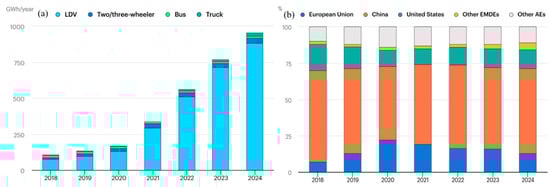
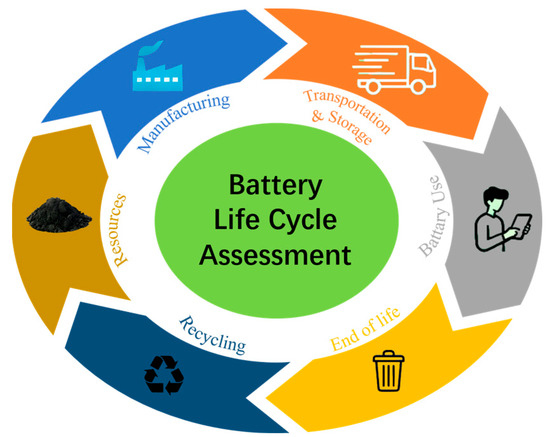
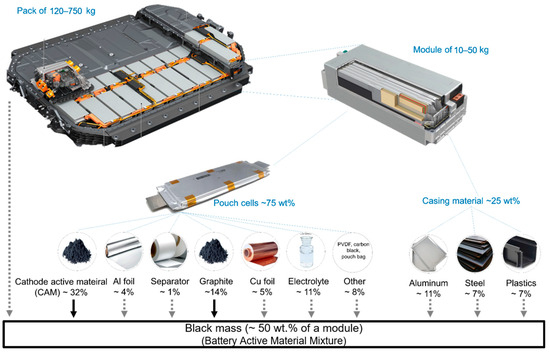
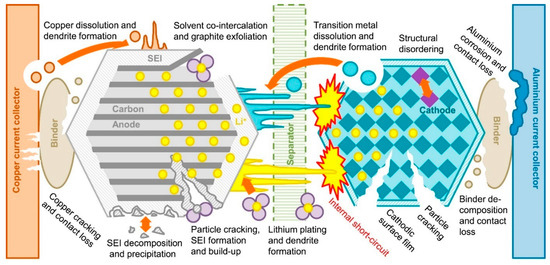
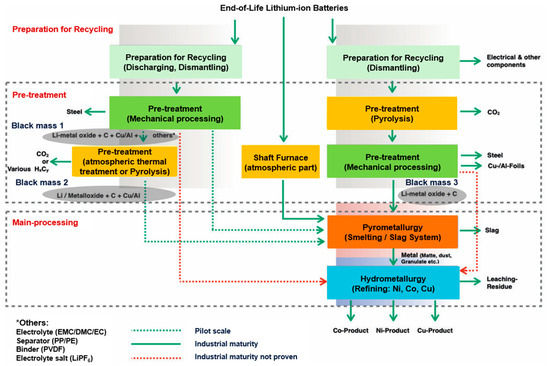
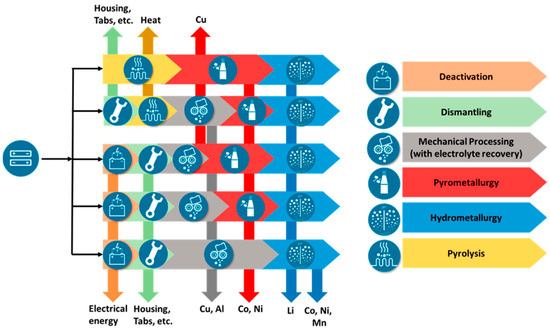
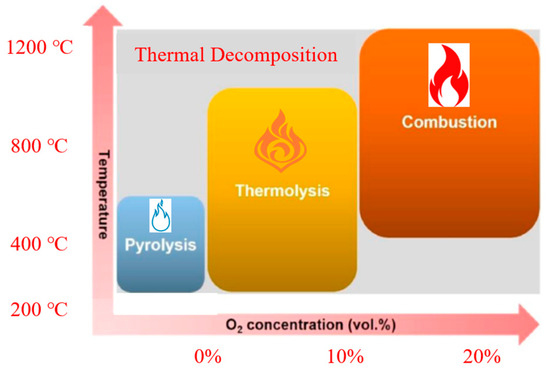
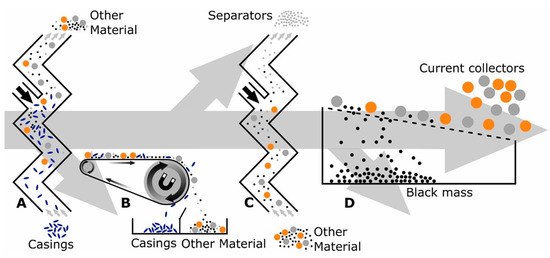
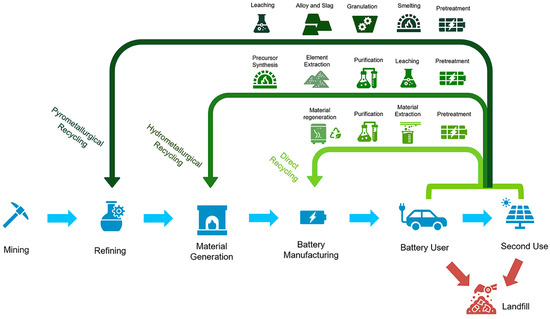
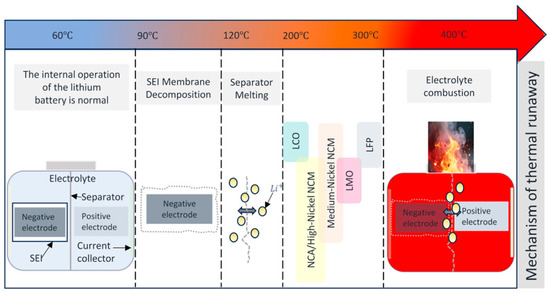
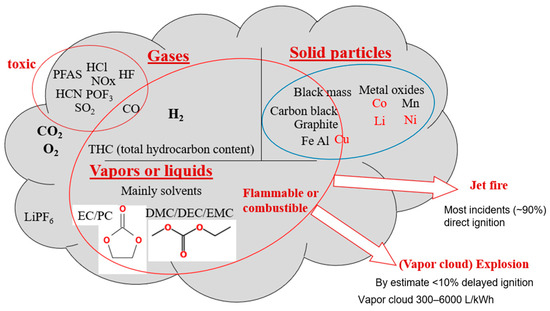
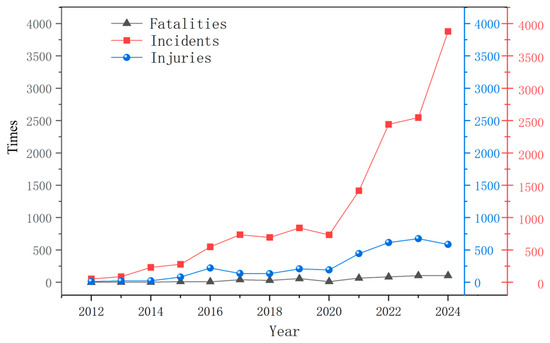
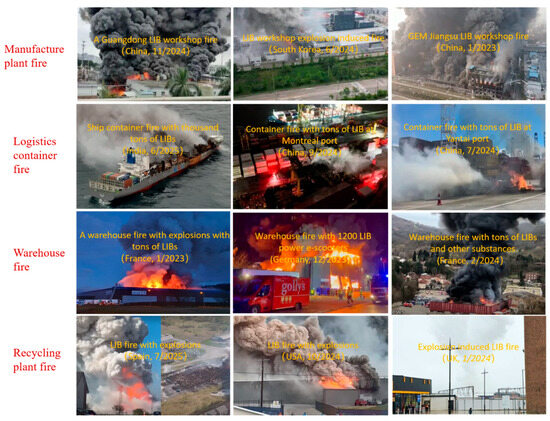
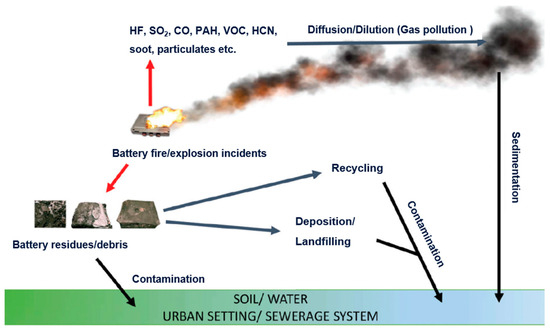
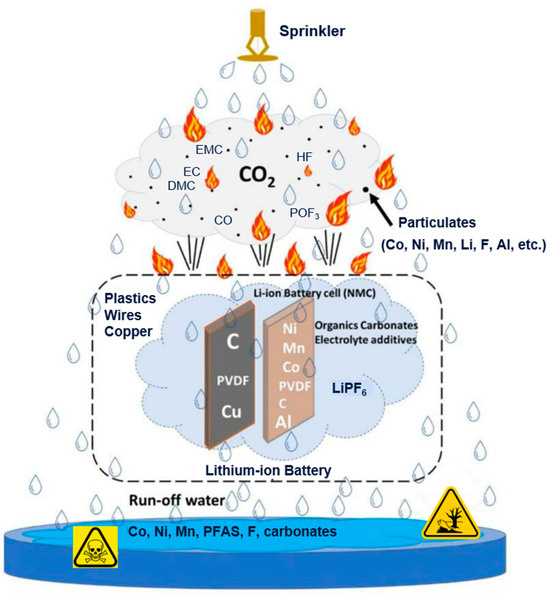
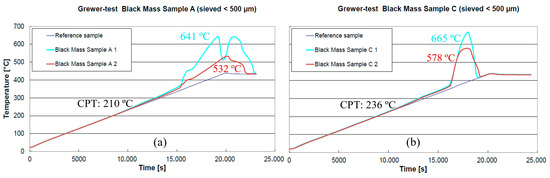
The extensive integration of lithium-ion batteries (LIBs) into modern technologies—including portable electronics, electric vehicles (EVs), and battery energy storage systems (BESSs)—has created a critical dependency on the supply of raw materials. The ongoing shift toward clean mobility is expected to further intensify this demand. This trend coincides with a projected increase in battery waste: over the next decade, millions of tons of EV and BESS batteries will reach their end-of-life (EOL), alongside the generation of considerable manufacturing scrap. Recycling is essential for recovering critical materials and reducing dependency on primary mining, thereby benefiting the circular economy and environmental sustainability. However, EOL-LIBs are more prone to thermal runaway due to defects and aging-induced degradation, which can lead to fire and explosion incidents, as well as associated environmental and health hazards. Such incidents have been increasingly reported in recent years during transportation, storage, handling, and illegal disposal, resulting in potential loss of life, property damage, and ecological degradation. To ensure the safe design and operation of the battery recycling industry, this work provides an updated overview of the health, safety and environment (HSE) hazards posed by EOL-LIBs and the safety measures required to mitigate these hazards. First, this work outlines the structures, components, and aging mechanisms of LIBs. Second, it summarizes the state-of-the-art recycling pathways and relevant process risks, such as deactivation, dismantling, and mechanical and thermal pretreatments. Third, it reviews recent safety incidents initiated by thermal runaway of EOL-LIBs and recycling intermediates like black mass, with an emphasis on storage and handling. Fourth, recommendations for future work regarding the safe storage and processing of EOL batteries are provided. Finally, conclusions and perspectives on future research directions are presented. Continued research and development in this field are essential to improve recycling methods, optimize processes, and ensure the safe and sustainable management and legislation of EOL lithium-ion batteries.
Full article
(This article belongs to the Special Issue Fire and Explosion Hazards in Energy Systems)
►▼
Show Figures

Figure 1
Open AccessArticle
Laboratory Assessment of Post-Treatment Vegetation Flammability According to Treatment Methods Used in Southeastern France
by
Arthur Boschet and Anne Ganteaume
Fire 2026, 9(2), 75; https://doi.org/10.3390/fire9020075 - 9 Feb 2026
Abstract
►▼
Show Figures
Fuel reduction, through various methods, is commonly used in fire prevention, but its effect on mitigating the flammability of the treated vegetation is rarely studied. This work aimed, therefore, to assess, at the laboratory scale, how flammability changed from untreated to treated vegetation,
[...] Read more.
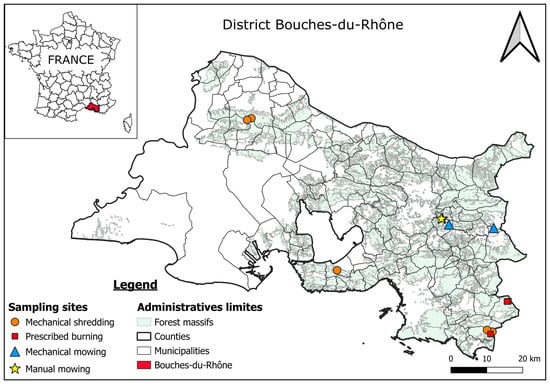
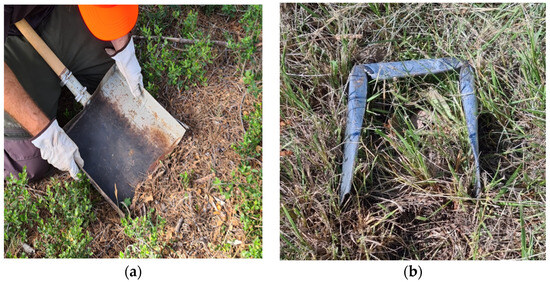
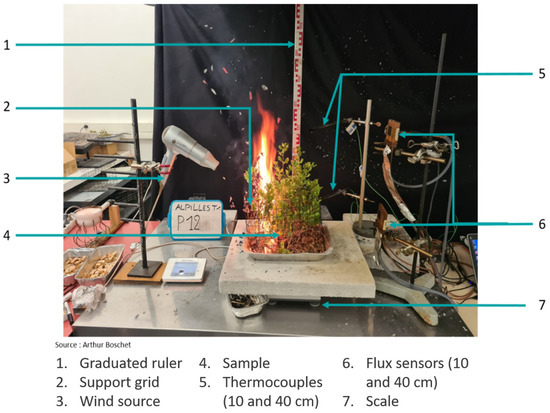
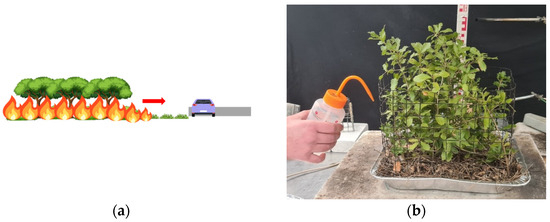
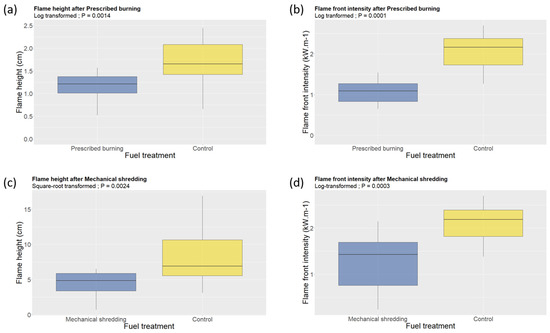
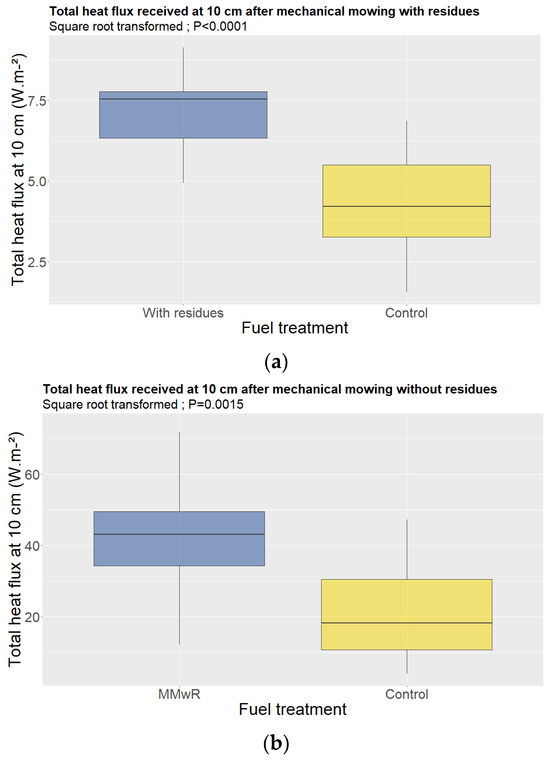
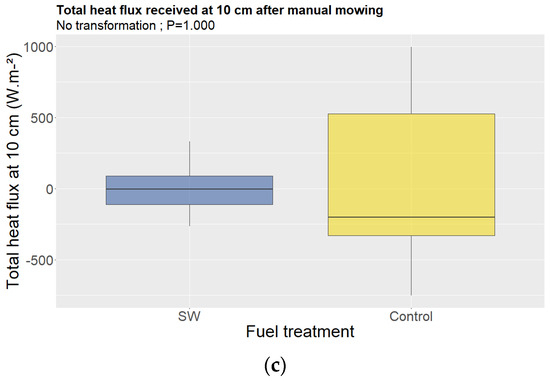
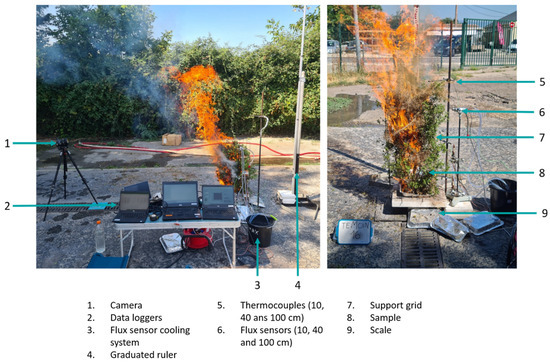
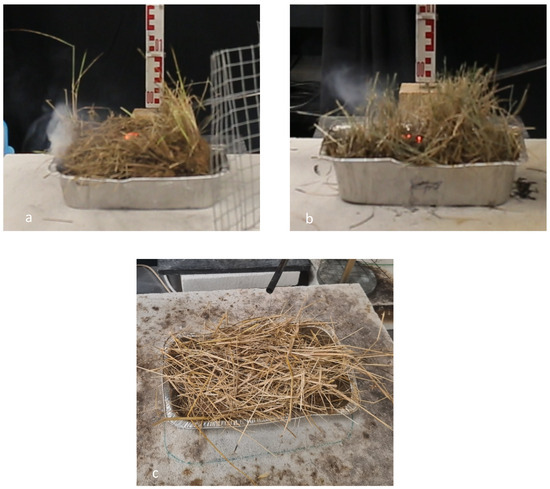
Fuel reduction, through various methods, is commonly used in fire prevention, but its effect on mitigating the flammability of the treated vegetation is rarely studied. This work aimed, therefore, to assess, at the laboratory scale, how flammability changed from untreated to treated vegetation, which would give an initial estimate of the efficiency of these treatments implemented in southeastern France, as in other countries. The methods studied were mechanical shredding and prescribed burning for woody plants as well as mechanical (with or without residues left) and manual mowing (with residues) for roadside grasses. We investigated their effects, comparing the treated vegetation’s flammability to that of a control during laboratory burnings, and testing both ignition capacity and flame front propagation. Mechanical shredding, and especially prescribed burning, led to a decrease in the treated vegetation flammability mainly due to the reduction in fuel load. Surprisingly, mechanical mowing resulted in an overall increase in flammability in contrast to manual mowing. The structure of the treated grass, which was more conducive to fire after mechanical mowing, mainly explained this difference. This study provided new insights on the effectiveness of fuel treatment methods, highlighting a more significant effect on flammability mitigation with prescribed burning at the laboratory scale. Moreover, the inability of mechanical mowing to decrease treated grass flammability should be accounted for. These laboratory results, mostly in line with those of similar previous studies, have to be combined with data obtained at a larger scale in the field to confirm or refute the tendencies highlighted in the current work.
Full article

Figure 1

Open AccessCommunication
Modeling of Lean Hydrogen Flames in Vertical Hele-Shaw Cells: The Boussinesq Limit
by
Leonid Kagan, Jorge Yanez, Mike Kuznetsov and Gregory Sivashinsky
Fire 2026, 9(2), 74; https://doi.org/10.3390/fire9020074 - 8 Feb 2026
Abstract
Ultra-lean near-limit hydrogen flames evolving in narrow gaps of Hele-Shaw cells may undergo a possibly unexpected propagation mode by breaking the reaction front into isolated flamelets forming fractal-like structures. The combined effect of diffusive-thermal instability and intense heat losses act as two main
[...] Read more.
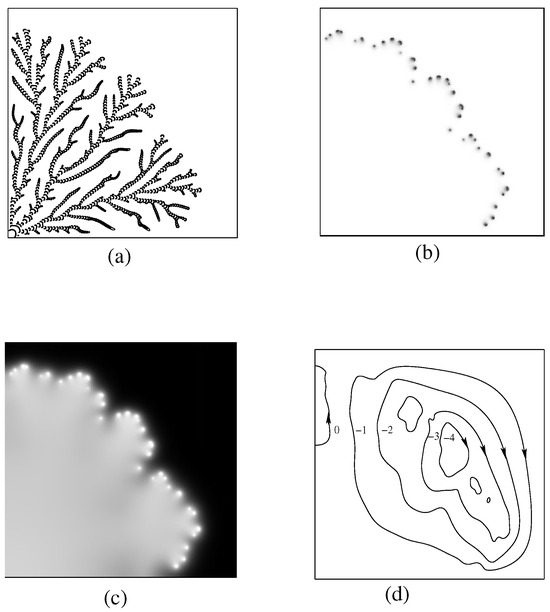
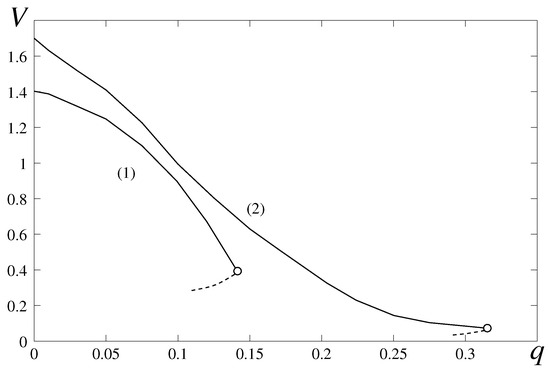
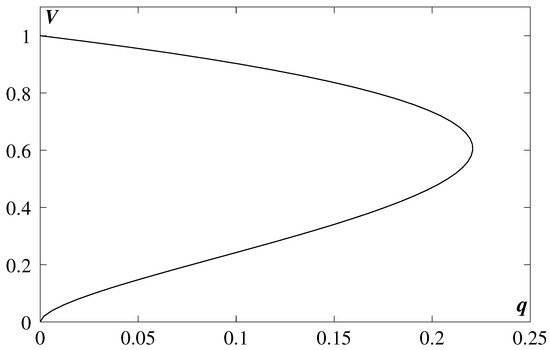
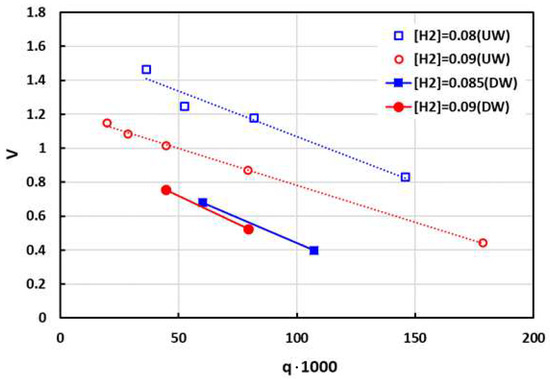
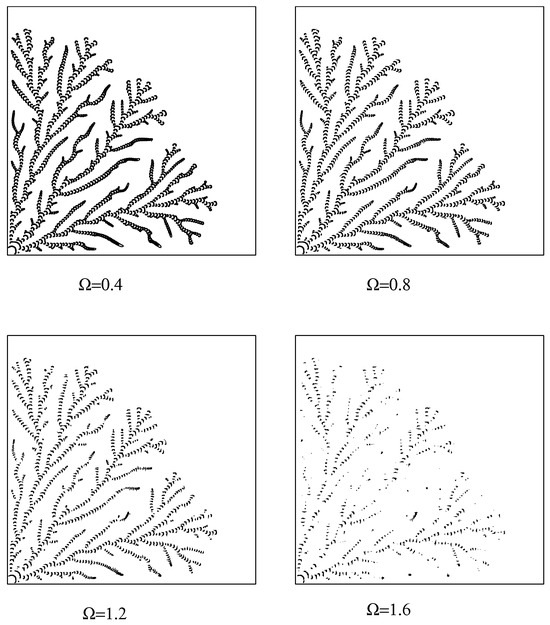
Ultra-lean near-limit hydrogen flames evolving in narrow gaps of Hele-Shaw cells may undergo a possibly unexpected propagation mode by breaking the reaction front into isolated flamelets forming fractal-like structures. The combined effect of diffusive-thermal instability and intense heat losses act as two main mechanisms that explain experimental observations. The current study offers an extension of the earlier buoyancy-free reaction–diffusion model over the Boussinesq formulation, accounting for the buoyancy effect present in recent experimental studies of vertical Hele-Shaw burners. It is found that for upward-propagating flames, the bouyancy markedly expands the limits of propagation ability and reduces the limits for downward-propagation.
Full article
(This article belongs to the Section Mathematical Modelling and Numerical Simulation of Combustion and Fire)
►▼
Show Figures

Figure 1
Open AccessArticle
Pore-Scale Research on Spontaneous Combustion of Coal Pile Utilizing Lattice Boltzmann Method
by
Yongyu Wang, Man Zhang, Xingpeng Wu, Dongfeng Zhu, Kaihua Lu, Sheng Xue and Junjie Hu
Fire 2026, 9(2), 73; https://doi.org/10.3390/fire9020073 - 8 Feb 2026
Abstract
Spontaneous combustion of coal piles threatens the production and transportation safety of coal mining, which is attracting more and more attention. To understand the underlying physics, conducting pore-scale research on the spontaneous combustion of coal piles is critical. To enable pore-scale research, a
[...] Read more.
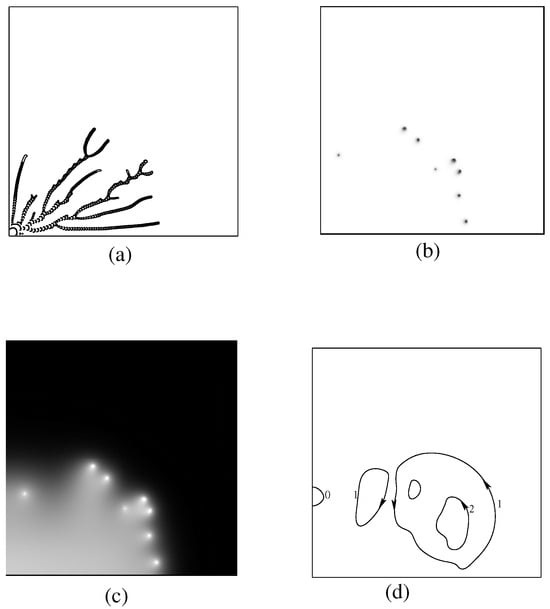
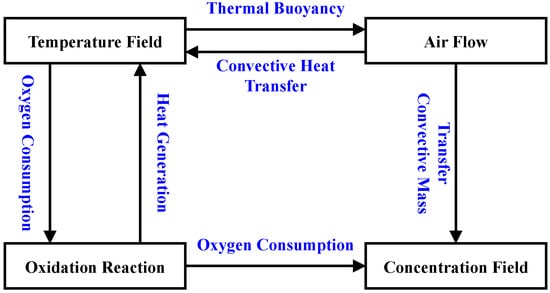
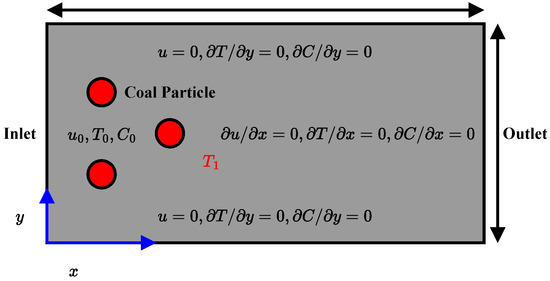
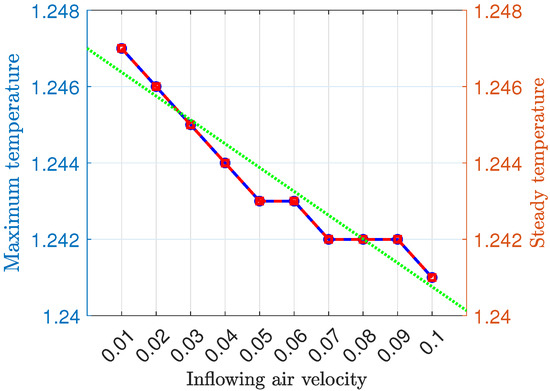
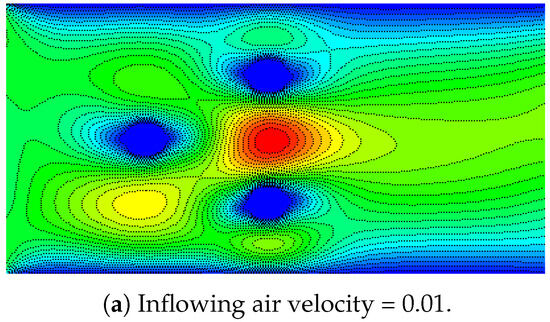
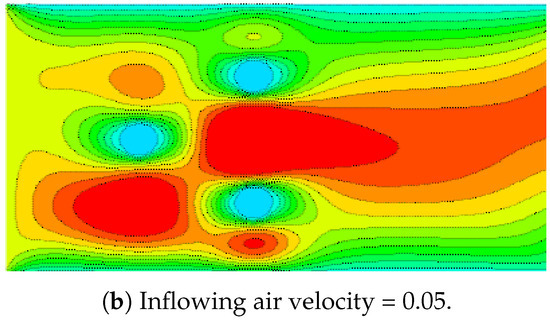
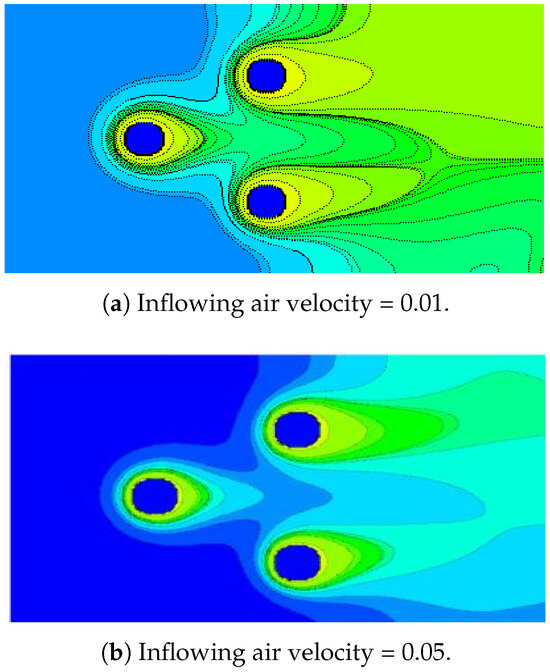
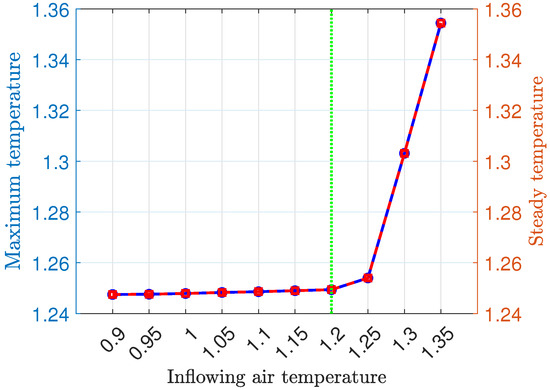
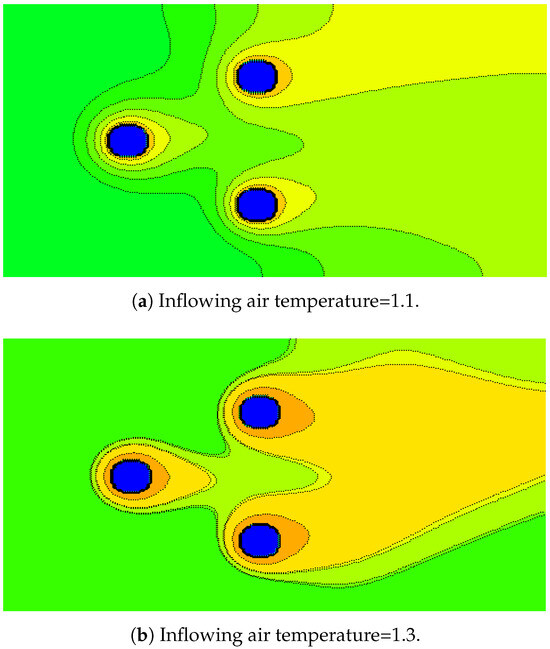
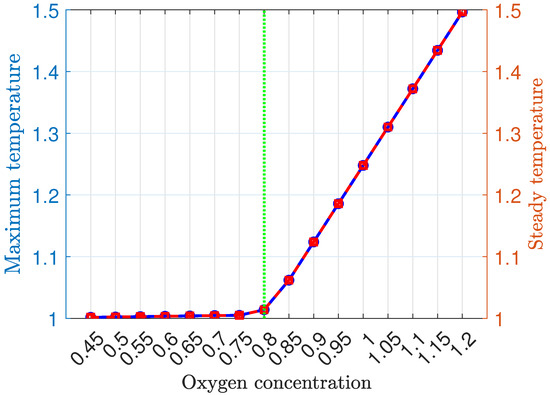
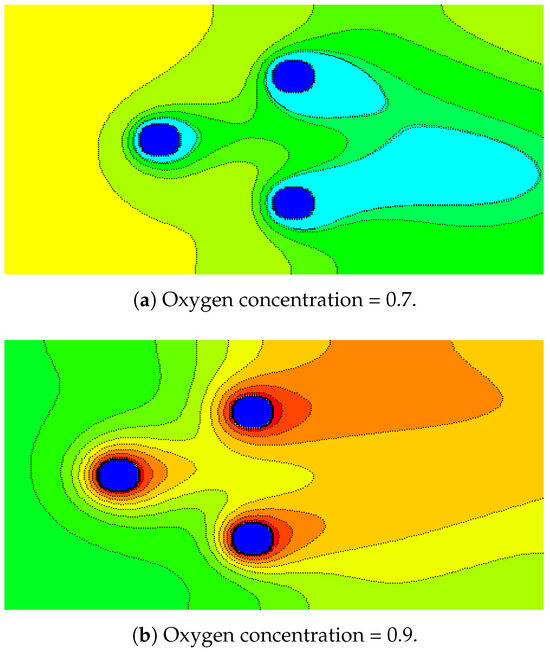
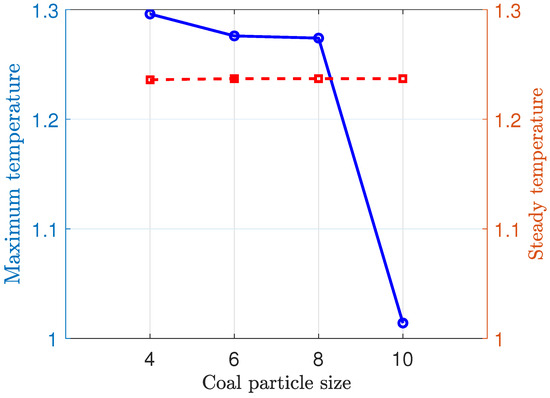
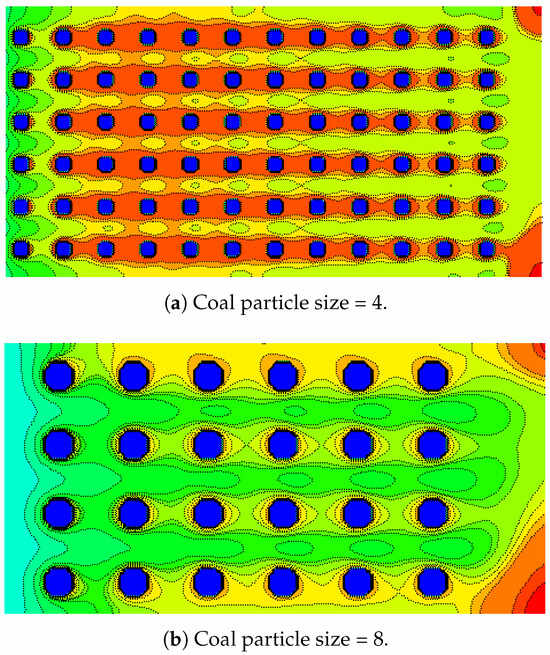
Spontaneous combustion of coal piles threatens the production and transportation safety of coal mining, which is attracting more and more attention. To understand the underlying physics, conducting pore-scale research on the spontaneous combustion of coal piles is critical. To enable pore-scale research, a pore-scale model of the spontaneous combustion of a coal pile is described, and governing equations are introduced. To understand the competition between airflow, heat–mass transfer, and oxidation reaction, the lattice Boltzmann method (LBM) is utilized, which offers distinct advantages in handling complex pore geometries, multi-physics coupling, and reactive transport at the pore scale. The present model integrates, for the first time in a pore-scale LB framework, airflow driven by thermal buoyancy, convective heat and mass transfer, and Arrhenius-type oxidation kinetics within a realistic coal pile geometry. After the numerical method is validated, the effects of inflowing air velocity, inflowing air temperature, oxygen concentration, and coal particle size are discussed. With an increase in inflowing air velocity, convective heat transfer is enhanced, and the coal pile maximum temperature decreases monotonically. According to the Arrhenius equation, with an increase in the inflowing air temperature and oxygen concentration, the oxidation reaction is accelerated, and the coal pile maximum temperature increases. When the size of the coal particle increases, the oxidation reactive area decreases, and the coal pile maximum temperature decreases, while the steady temperature is not affected.
Full article
(This article belongs to the Special Issue Fire/Explosion Risk Assessment and Loss Prevention of Hazardous Materials, Mines and Natural Gas, 2nd Edition)
►▼
Show Figures

Figure 1
Open AccessArticle
Dynamic Assessment of Reconnaissance Requirements for Fire Response in Large-Scale Hazardous Chemical Logistics Warehouses
by
Boyang Qin, Chaoqing Wang, Dengyou Xia, Jianhang Li, Changqi Liu, Jun Shen, Jun Yang and Zhiang Chen
Fire 2026, 9(2), 72; https://doi.org/10.3390/fire9020072 - 7 Feb 2026
Abstract
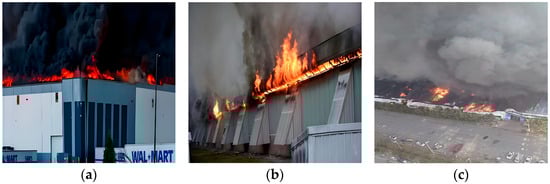
At present, large-scale hazardous chemical logistics warehouses are characterized by complex structural layouts, diverse stored materials, and high operational risks, which pose significant challenges to fire emergency response. The awareness of hazardous material inventory, orderliness, and timeliness of on-site reconnaissance directly determine the
[...] Read more.
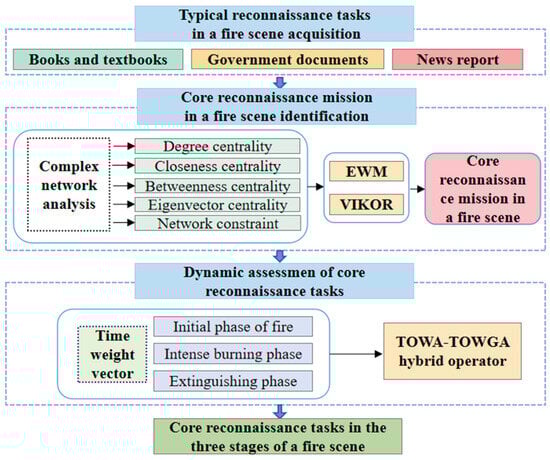
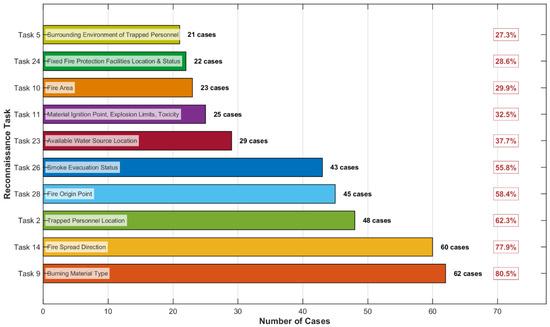
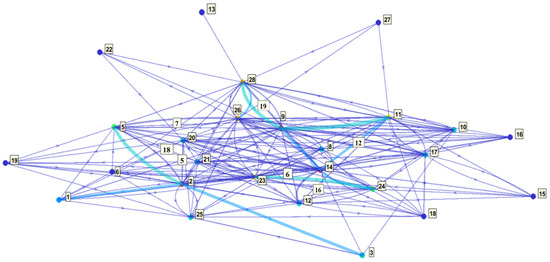
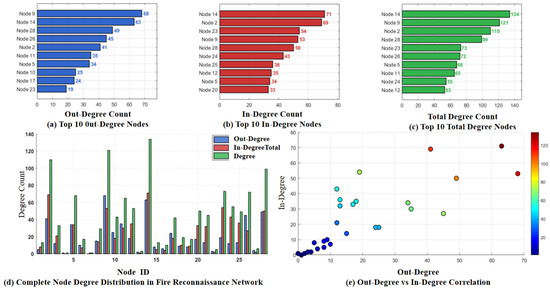
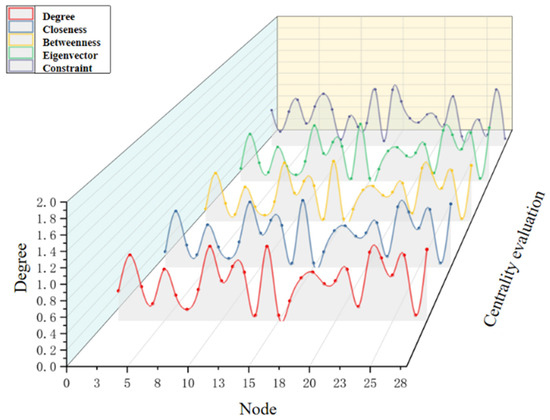
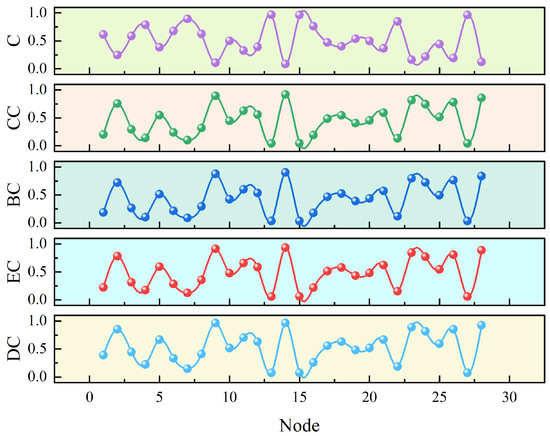
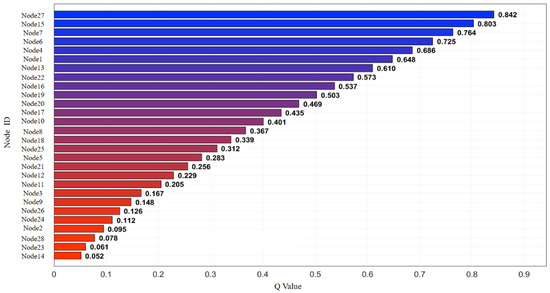
At present, large-scale hazardous chemical logistics warehouses are characterized by complex structural layouts, diverse stored materials, and high operational risks, which pose significant challenges to fire emergency response. The awareness of hazardous material inventory, orderliness, and timeliness of on-site reconnaissance directly determine the efficiency and safety of firefighting and rescue operations. In response to these challenges, this study, based on 77 fire cases involving hazardous chemical logistics warehouses, proposes an evaluation framework that integrates a TOWA–TOWGA hybrid operator with complex network analysis. Accordingly, a fire scene core reconnaissance task identification model is developed. The new model is capable of identifying key reconnaissance tasks while capturing the dynamic evolutionary patterns of fire development across three distinct stages. The research findings demonstrate that identifying the fire’s spread direction, locating accessible water sources, and pinpointing the fire’s ignition point constitute the core tasks throughout the entire fire emergency response cycle. The priority ranking of these core tasks exhibits distinct temporal variability as the fire evolves dynamically. This model enables the accurate identification of key reconnaissance tasks and critical operational pathways, thereby providing robust theoretical support and a solid practical foundation for fire rescue teams to optimize resource allocation strategies and formulate science-based reconnaissance protocols.
Full article
(This article belongs to the Special Issue Fire and Explosion Hazards in Energy Systems)
►▼
Show Figures

Figure 1
Open AccessArticle
Beyond Static Barriers: Modelling the Effects of Water Drop Suppression on Wildfire Spread
by
Leonardo Martins, António Maia and Pedro Vieira
Fire 2026, 9(2), 71; https://doi.org/10.3390/fire9020071 - 6 Feb 2026
Abstract
Wildfire suppression is often represented in fire spread simulators as static barriers that completely stop fire propagation and are placed at the start of the simulation. Recent works have begun to simulate barriers introduced at different time frames, but these normally act as
[...] Read more.
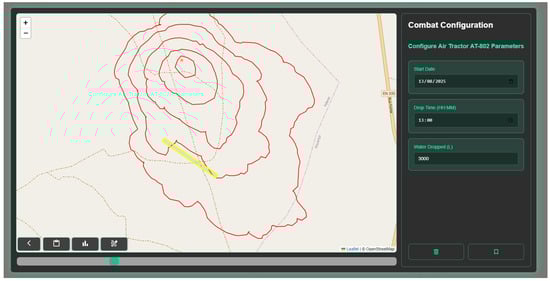
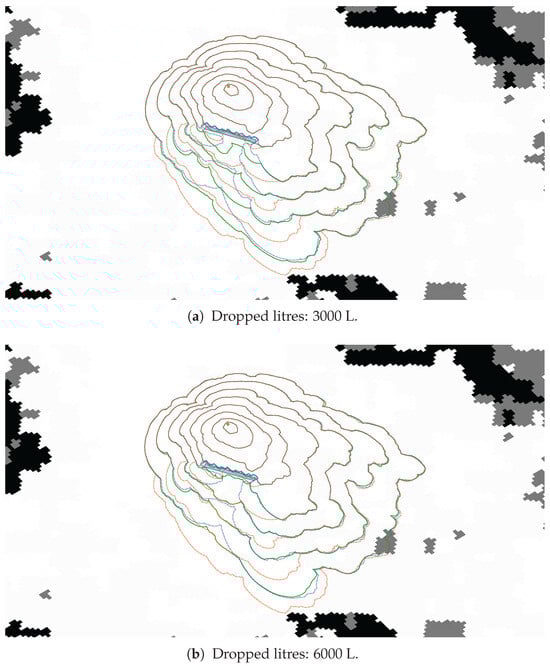
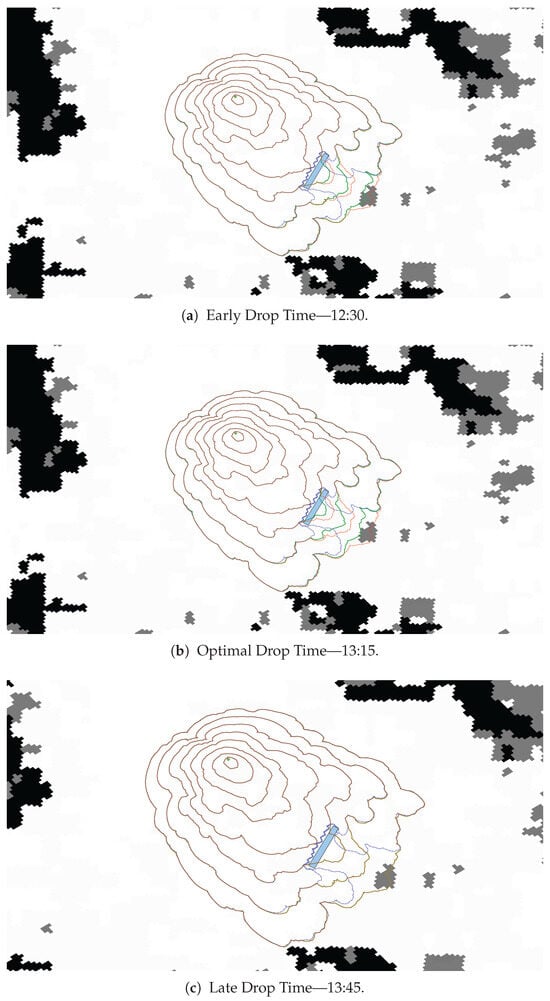
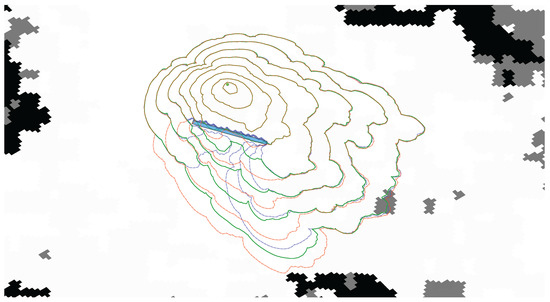
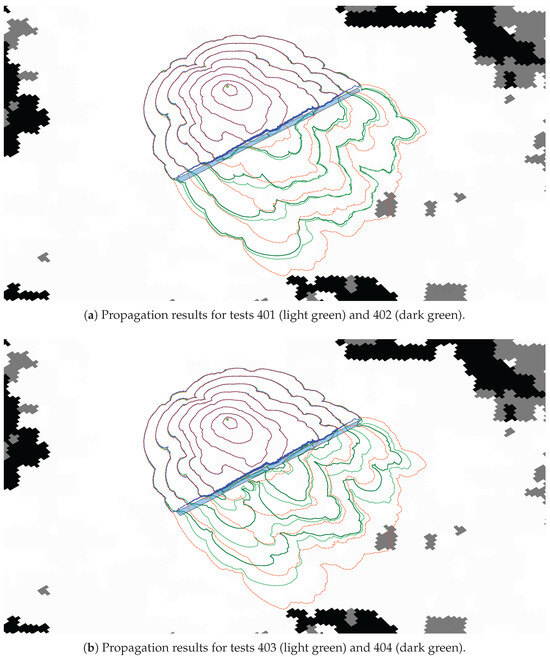
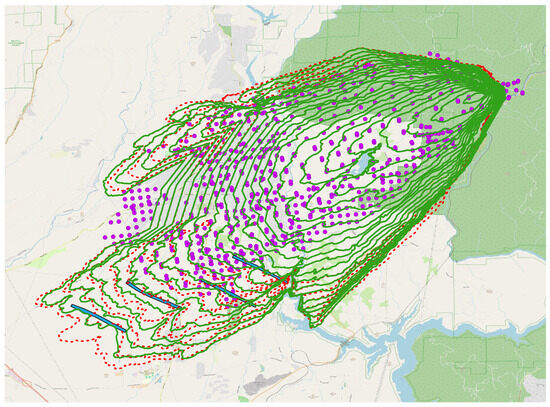
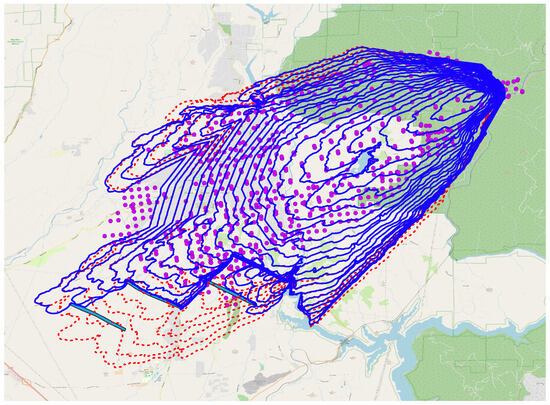
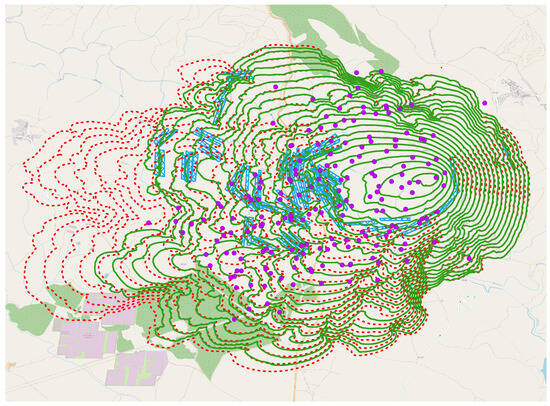
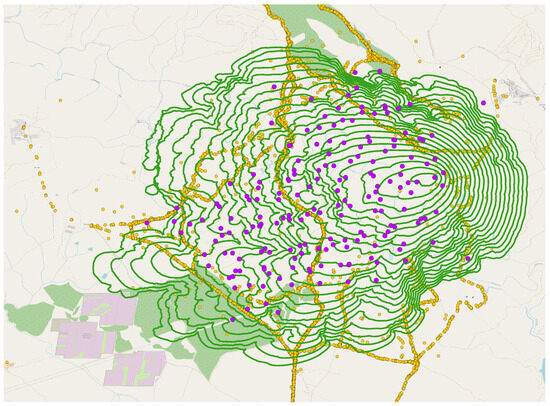
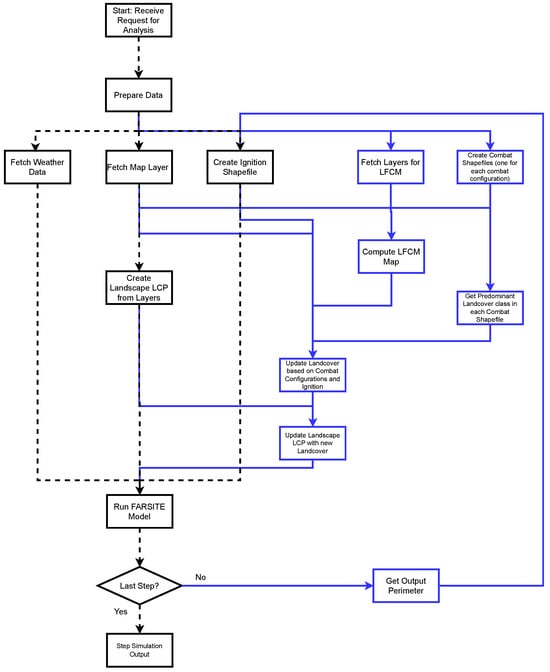
Wildfire suppression is often represented in fire spread simulators as static barriers that completely stop fire propagation and are placed at the start of the simulation. Recent works have begun to simulate barriers introduced at different time frames, but these normally act as static barriers. In reality, many water-based suppression tactics (aerial and ground) only slow the fire spread by temporarily increasing fuel moisture and cooling the fuel bed. To address this limitation, we present a new simulation feature: the Dynamic Water Barrier. Unlike static barriers, this representation captures the temporal transient effect of water application, since it is modeled using a simplified water load and evaporation dynamics to estimate changes in live fuel moisture content (LFMC). Implemented using the Fire Area Simulator (FARSITE), the Dynamic Water Barrier reduces the rate of spread and fireline intensity, delaying but not fully preventing fire propagation, providing a transient influence of water-based suppression. The approach was tested on one North American (NA) and one Portuguese fire, where suppression missions were available. The dynamic barriers led to reductions in Relative Area Difference, reaching 0.234 for the Portuguese fire and 0.006 for the NA fire, outperforming the scenario of no combat and having a comparable performance with the full static barrier (RAD 0.108 and 0.024, respectively), while limiting the creation of unburned areas behind the firefront. Although the validation is limited, these findings illustrate the potential to improve tactical decision support and dynamic suppression planning in wildfire management, requiring further studies of other fires and controlled fire suppression missions.
Full article
(This article belongs to the Special Issue Integrative Approaches to Wildland Fire Research: From Fundamental Fuel Behavior to Advanced Technological Solutions)
►▼
Show Figures

Figure 1
Journal Menu
► ▼ Journal Menu-
- Fire Home
- Aims & Scope
- Editorial Board
- Reviewer Board
- Topical Advisory Panel
- Instructions for Authors
- Special Issues
- Topics
- Sections & Collections
- Article Processing Charge
- Indexing & Archiving
- Editor’s Choice Articles
- Most Cited & Viewed
- Journal Statistics
- Journal History
- Journal Awards
- Conferences
- Editorial Office
Journal Browser
► ▼ Journal BrowserHighly Accessed Articles
Latest Books
E-Mail Alert
News
Topics
Topic in
AI, BDCC, Fire, GeoHazards, Remote Sensing
AI for Natural Disasters Detection, Prediction and Modeling
Topic Editors: Moulay A. Akhloufi, Mozhdeh ShahbaziDeadline: 31 March 2026
Topic in
Buildings, Climate, Fire, Sustainability, Water, Infrastructures
Disaster Risk Management and Resilience
Topic Editors: M. Amin Hariri-Ardebili, Sissy NikolaouDeadline: 31 July 2026
Conferences
Special Issues
Special Issue in
Fire
Turbulent Spray Combustion: Mechanism Research and Modeling
Guest Editor: Jianfeng ZouDeadline: 18 February 2026
Special Issue in
Fire
Fire Numerical Simulation, Second Volume
Guest Editors: Yanming Ding, Kazui Fukumoto, Jiaqing ZhangDeadline: 26 February 2026
Special Issue in
Fire
Clean Combustion and New Energy
Guest Editor: Huaming DaiDeadline: 28 February 2026
Topical Collections
Topical Collection in
Fire
Diversity Leaders in Fire Science
Collection Editors: Alistair M. S. Smith, Natasha Ribeiro, Tiago Miguel Ferreira, Grant Williamson, Christine Eriksen
Topical Collection in
Fire
Rethinking Wildland Fire Governance: A Series of Perspectives
Collection Editors: Alistair M. S. Smith, Stephen D. Fillmore