

Abstract
Firefighters face elevated risks of alcohol misuse due to occupational stress, trauma exposure, and cultural norms within the fire service. This beta test study evaluated the feasibility, acceptability, and preliminary outcomes of From Bottle to Nozzle, a digitally delivered alcohol awareness and prevention intervention tailored for firefighters. Fifty fire service personnel were invited to participate; 46 consented and completed baseline questionnaires, and 22 completed the full program. The intervention consisted of five self-paced online modules incorporating multimedia content, quizzes, and self-assessments that addressed alcohol history, fire service culture, risk-reduction strategies, communication, and health effects. Pre- and post-intervention assessments measured changes in alcohol-related knowledge, alcohol use, motivation to reduce drinking, and usability. Reinforcement messages were delivered via text and email. Alcohol-related knowledge improved significantly post-intervention, particularly in the general and total knowledge domains. Moderate drinkers showed reductions in drinking days and AUDIT scores. Among heavy drinkers, overall consumption declined slightly, though binge-drinking episodes increased. Changes in motivation to reduce drinking were mixed. Usability ratings were high, with an 80% module completion rate and favorable feedback on program brevity and format, though navigation and video length were noted as challenges. From Bottle to Nozzle demonstrated strong feasibility and acceptability. While knowledge gains were robust, behavioral outcomes were mixed, highlighting the need for larger controlled studies with extended follow-up.
1. Introduction
Alcohol misuse remains a significant concern in the fire service, with firefighters exhibiting substantially higher rates of heavy and binge drinking compared to the general population [1,2,3]. While the fire service fosters strong camaraderie and peer support, it also reinforces norms that encourage excessive drinking, making alcohol consumption a deeply ingrained social activity [3,4]. Reports of alcohol-related misconduct, on-duty impairment, and emergency response failures highlight the potential risks of heavy drinking, reinforcing the need for targeted, evidence-based interventions [5,6,7].
Research consistently indicates alarmingly high levels of alcohol use among firefighters. A study of 112 firefighters from a single department found that 58% reported binge drinking [8], a prevalence substantially higher than the national 30-day binge drinking rate of 20% among U.S. adults [2]. Similarly, 29% of firefighters screened positive for alcohol use disorders using the Michigan Alcoholism Screening Test [9], and nearly 40% of women firefighters in a national survey (N = 1913) reported binge drinking in the past month [10]. Findings from a multi-region survey of 656 career firefighters revealed that over 50% reported heavy or binge drinking in the past 30 days, with 9% admitting to driving while intoxicated [2]. A national observational study of 1002 firefighters across 20 fire departments found similar rates of binge drinking, with 50.2% reporting binge drinking episodes and 72.5% of binge drinkers engaging in multiple episodes within a month [1]. Notably, these drinking patterns persisted even in departments with well-established wellness programs, highlighting the ineffectiveness of existing alcohol education efforts.
Firefighting is an inherently stressful and traumatic profession, and alcohol use is frequently employed as a coping mechanism. Studies indicate that chronic occupational stress, trauma exposure, and shift work schedules contribute to higher rates of alcohol misuse among firefighters [4,11]. Research on firefighter mental health has shown that depression rates range from 11% to 27%, and PTSD prevalence may reach as high as 22% in metropolitan fire departments [12]. A study of firefighters responding to the Oklahoma City bombing found that 25% met the criteria for alcohol use disorder, with many reporting alcohol as a primary coping strategy [13,14]. Beyond individual responses, organizational and cultural factors within the fire service further shape drinking behaviors. The firehouse environment, characterized by strong social bonding, extended time spent together, periods of shared downtime, and paramilitary traditions, can normalize or reinforce problematic drinking behaviors, particularly in off-duty or social contexts [15]. Peer drinking norms strongly predict individual alcohol consumption, suggesting that firefighters may experience implicit pressure to conform to group behaviors even when aware of alcohol-related health risks [16]. Workplace culture plays a central role in regulating drinking practices, and research in other high-risk occupations, such as assembly workers and restaurant employees, demonstrates that occupational norms substantially influence patterns of alcohol use [17]. Together, these cultural and structural influences may help to explain why improvements in alcohol-related knowledge do not always translate into immediate behavioral change, particularly among heavier drinkers.
Alcohol misuse among firefighters also carries serious occupational and public safety implications. Excessive drinking has been associated with higher injury rates, vehicle accidents, lost workdays, and on-duty impairment [18]. Media reports frequently highlight firefighter alcohol-related incidents, including cases where firefighters have been terminated for alcohol consumption [5,6,7]. Additionally, alcohol misuse has been linked to increased suicide risk among firefighters, emphasizing the urgent need for preventative interventions that address both individual behaviors and the broader occupational context in which alcohol use occurs [19].
Despite the widespread prevalence and severe consequences of alcohol misuse in the fire service, no evidence-based, fire service-specific interventions currently exist. Traditional workplace wellness programs have been ineffective in reducing heavy drinking among firefighters, underscoring the need for a tailored, culturally responsive approach [1]. The proposed intervention seeks to fill this gap by developing an evidence-based, fire service-focused program to address problem drinking. This initiative aligns with Recommendation #18 of the Fire Service Research Agenda’s High-Priority Recommendations, which calls for targeted research on firefighter alcohol misuse [20].
This study describes the development and beta testing of the Fire Service Healthy Drinking Toolkit (FSHDT), an awareness and prevention intervention designed to reduce unhealthy alcohol use among firefighters. The FSHDT aims to educate firefighters about the negative impact of alcohol on their health and occupational functioning and to motivate them to reduce heavy drinking and minimize negative outcomes. Additionally, the FSHDT provides fire departments with practical, evidence-based tools to support responsible alcohol use, enhance firefighter well-being, and improve operational safety. The intervention includes educational resources on alcohol effects and consumption, tailored social messaging, self-assessment screening tools, bystander intervention training, and behavioral strategies to promote healthier drinking behaviors.
2. Materials and Methods
This study reports the results of a beta test of the Fire Service Healthy Drinking Toolkit [FSHDT] intervention, which is tailored to firefighters as a necessary step in reducing alcohol use. The study aimed to evaluate the effectiveness of the intervention, obtain qualitative feedback to refine its content, and provide data for the planning phase of a randomized controlled trial. The study is reported in accordance with the Strengthening the Reporting of Observational Studies in Epidemiology (STROBE) checklist [21]. The Pacific Institute for Research and Evaluation approved the study protocol (Reference Number: 1506608-20, 8 February 2022).
2.1. Participants and Recruitment
A beta test was conducted to examine the implementation, acceptability, and preliminary impact of the FSHDT intervention in a sample of career fire departments in the Kansas City metropolitan area from May to August 2022. We distributed information about the project to over 70 career departments. Among the career fire departments that volunteered to participate, we selected one department with at least 40 personnel to ensure an adequate sample size for the study.
Once the fire department agreed and volunteered to participate, we visited each crew on all shifts at each firehouse. The investigator team met with each crew around their kitchen table and provided the background of the PIRE and NDRI-USA research teams, the support from national fire service organizations, and the project’s background and goals. The team also presented an overview of the study procedures, including maintaining confidentiality, and emphasized the importance of the research for the larger fire service, as well as described the study protocol and what was involved in participation. Fifty firefighters were present at the meetings and were eligible to enroll in the study; 46 (92%) volunteered and consented at baseline. Note that the intervention focuses on education, awareness, and norm-shifting; firefighters were asked to participate regardless of their drinking patterns. They were expected to complete all the components of the educational program.
2.2. Intervention
2.2.1. Intervention Development Process
The Fire Service Healthy Drinking Toolkit (FSHDT) was developed through formative qualitative research with a cohort of firefighters and fire service leaders, as well as a review and adaptation of existing evidence-based alcohol interventions in response to themes identified in the formative work.
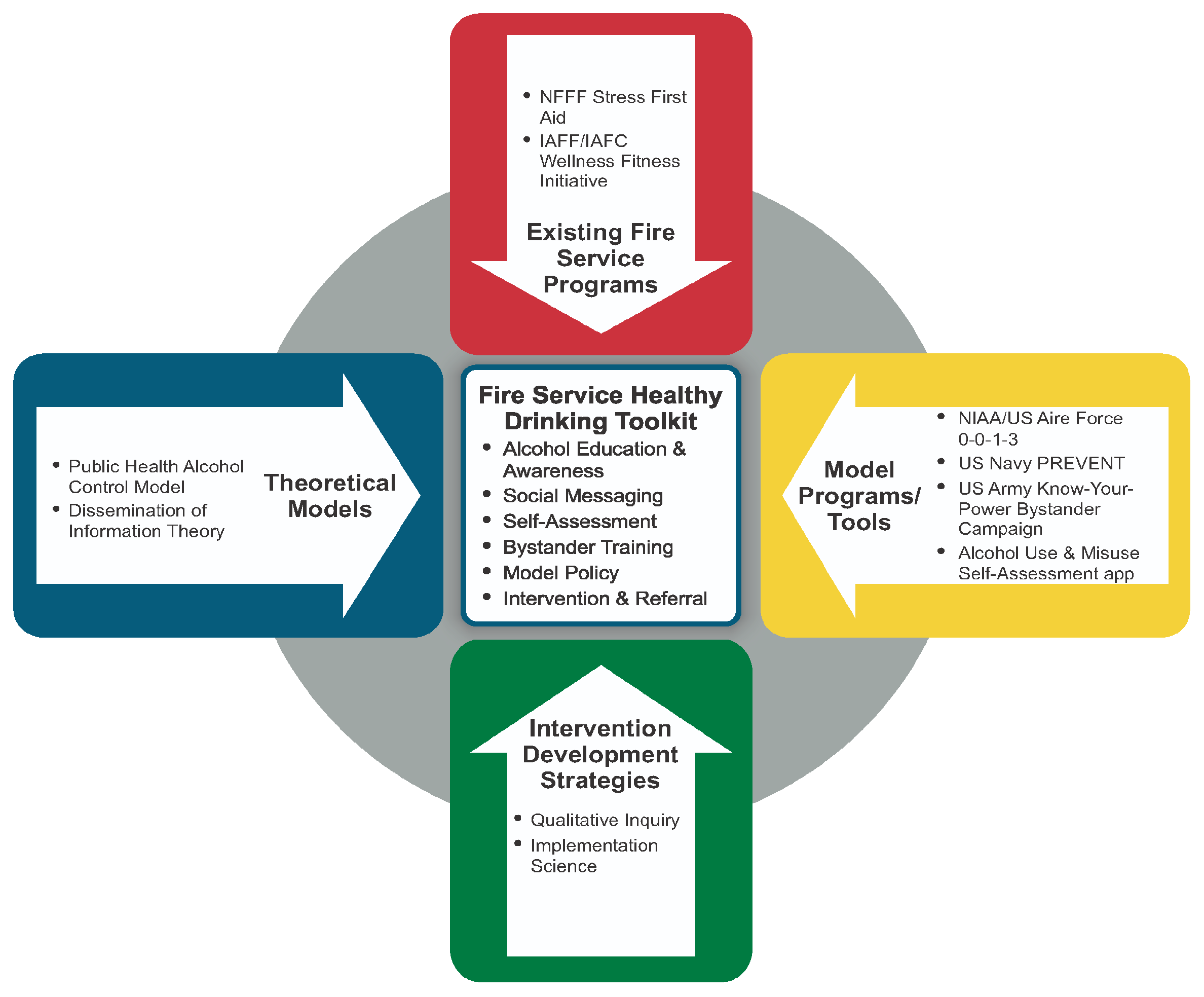
Formative interviews. We conducted 48 semi-structured interviews with firefighters and fire service leaders nationwide to explore and identify methods to address alcohol misuse in the fire service. We employed qualitative inquiry [22], a widely used technique, to guide the development of culturally appropriate alcohol intervention in the fire service. The interview questions were designed to capture broad themes related to alcohol use in the fire service, including fire service policies regarding drinking on and off the job, responses to firefighters’ drinking, and best approaches for alcohol education and prevention among fire service personnel. The resulting themes were used to guide participant feedback and translated into intervention components, as outlined in Figure 1.
Figure 1.
Fire service alcohol intervention development model.
Identifying and adopting evidence-based interventions from existing fire service programs and other alcohol education programs/tools. We harnessed the expertise of our team in behavioral and substance use interventions to identify and adapt relevant evidence-based alcohol interventions for use with firefighters in response to themes identified in our formative qualitative work. Through literature review and team discussion, we designed an intervention that corporates the language and content of existing foundational fire service programs to bolster acceptance and dissemination [23,24], theoretical models that provide educational material compatible with the values and needs of the fire service [25,26], and model programs and tools used with similar occupational groups that provides prevention efforts and strategies in similar culture to fire service [27] (Figure 1).
2.2.2. Intervention Components
The primary purpose of the FSHDT intervention is to raise awareness about the impact of alcohol on health and on the occupational functioning of firefighters, to shift norms about alcohol in this occupation, and to discourage heavy and binge drinking. Firefighters, regardless of their drinking patterns, were asked to participate. Thus, the intervention was not specifically targeted to firefighters with alcohol use disorder, although education about alcohol intervention was provided along with encouragement to seek care. Participants were expected to complete the following components of the educational program: online alcohol education and awareness, a monograph titled “Alcohol & The Fire Service,” and social messaging.
Online alcohol education and awareness. The core of the intervention was a web-based alcohol educational platform titled From Bottle to Nozzle, specifically designed for firefighters. The platform delivered a series of five interactive modules that combined multimedia elements, including text, video, knowledge checks, and self-assessments, to engage users and reinforce learning. Each module was projected to be completed in around 20–45 min, depending on the topic. The platform was accessible on desktop and mobile devices, allowing participants to complete the training at their own pace.
Module 1. History of Alcohol/Alcohol 101 provides an overview of alcohol’s origins, tracing its use from ancient civilizations to modern society. It introduces foundational knowledge about alcohol as a substance, including its classification, cultural significance, and common patterns of use.
Module 2. Alcohol in the Fire Service explores the unique cultural and occupational factors that influence alcohol use among firefighters. It highlights the role of stress, tradition, and social dynamics within the fire service that may contribute to risky drinking behaviors.
Module 3. Personal Protective Behaviors focuses on individual strategies to reduce alcohol-related harm. It introduces practical tools such as setting limits, pacing drinks, and refusal skills to support safer alcohol use.
Module 4. How to Talk to Someone about Alcohol offers guidance on how to have open and supportive conversations about alcohol use. It focuses on helping firefighters discuss their own drinking concerns with someone they trust, such as a peer, friend, or supervisor.
Module 5. Alcohol and Health explores the short- and long-term health impacts of alcohol, including effects on the brain, liver, heart, and overall physical and mental health. It also highlights how alcohol can interfere with sleep, recovery, and job performance, key factors for firefighters’ health and job readiness.
Alcohol and Fire Service monograph. Each participant was given a digital copy of the “Alcohol & The Fire Service” monograph (https://science-alliance.org/alcohol-monograph, (accessed on 16 December 2025)) that they could download or print. Although their comprehension of the material was not formally assessed, we asked firefighters to provide feedback on the content for future revisions. The material in the monograph complements and reinforces the content covered in the online training platform.
Social messaging. During the intervention, each participant received five texts and four email messages, reinforcing the information provided on the online training platform and in the monograph. These messages were delivered under the general theme “What firefighters need to know about alcohol” and included content such as “Alcohol can increase the health risks firefighters face, such as cancer, heart disease, poor sleep, and obesity” and “Focus on drink quality and not quantity”.
2.3. Beta Test and Evaluation
Each firefighter was provided with introductory information on what to expect from the intervention, and their voluntary consent to use the survey data collected to facilitate our understanding of the effectiveness of the FSHDT intervention. Participants completed comprehensive assessments at baseline and a 2-week follow-up (pre vs. post). Pre-post assessments evaluated the outcomes, including demographic and occupational status, alcohol use patterns, attitudes toward drinking, knowledge about alcohol, and norms about drinking in their department. We also conducted interviews with a subsample of 10 interested participants to gather their perceptions of the intervention, satisfaction with the educational materials, thoughts on the intervention content, degree of completion of components, and suggestions for improvement.
2.3.1. Measures
Demographics. Standard individual demographic (e.g., age, race/ethnicity) and occupational history (e.g., current rank and position, years of service) data were collected.
Alcohol Use Assessment. Alcohol use was evaluated using modified questions from previously validated assessments [1,2,28]. Participants reported drinking in the past 30 days, the average number of drinks consumed per day, the frequency of binge drinking (4+ drinks consumed per occasion), and the peak number of drinks consumed on any occasion. Consuming two drinks or fewer was classified as moderate drinking, whereas consuming more than two drinks was categorized as heavy drinking. In addition, alcohol use behaviors were assessed using the Alcohol Use Disorder Identification Test (AUDIT), a 10-item self-report questionnaire developed by the World Health Organization to identify hazardous and harmful patterns of alcohol use [29]. Item responses were summed to produce a total score, with higher scores indicating greater risk for high-risk drinking and potential alcohol dependence.
Pre- and Post-test Assessment. The pre- and post-tests included 19 knowledge questions (a mix of True/False and multiple-choice questions) assessing participants’ knowledge, confidence, and drinking norms in the fire service, which were modified from our previous surveys [3]. The 17 knowledge questions assessed general knowledge of alcohol and its impact on sleep and health. A score of 1 was given for each correct response and 0 for each incorrect response; therefore, the possible total knowledge composite score ranged from 0 to 17. An alcohol confidence question assessed firefighters’ confidence in predicting their abstinence from alcohol for the next month. It was based on a 4-point Likert scale, where lower numbers indicate greater confidence in abstaining, while higher numbers suggest anticipated difficulty (1 = very easy to 4 = very difficult). The drinking norm question assessed participants’ perceptions of alcohol consumption in their social circles. They were asked to estimate the percentage of firefighters in their department who consume alcohol, ranging from none (0) to about 25% (1), 50% (2), 75% (3), and 100% or almost all (4). The higher numbers indicated that most respondents reported that a high proportion of their firefighter friends drink [3,30].
Motivation Relative to Alcohol Use. Firefighters’ motivation to change their alcohol use behavior was assessed using the Alcohol Ladder [31], an adaptive version of the Contemplation Ladder [32]. Participants rated their motivation on an 8-point scale, ranging from 1 (I do not have a problem with drinking, and I do not intend to cut down) to 8 (I have decided to quit drinking alcohol and plan never to drink again), with each point corresponding to a statement reflecting different stages of readiness for change. Higher scores indicate greater motivation to reduce or quit alcohol use. Future intentions to use alcohol moderation strategies were measured using the Alcohol Reduction Strategies (ARS)-Future Intention scale [33,34]. Participants rated their likelihood of engaging in 31 alcohol reduction strategies during their next 10 drinking occasions in their typical drinking location. Responses were recorded on a 5-point scale, ranging from 1 (Not at all likely) to 5 (Extremely likely). The 31 items were averaged to create a composite score reflecting participants’ intention to practice moderate drinking, with higher scores indicating greater use of these strategies (alpha = 0.94).
Acceptability, Usability, and Satisfaction. Items were designed to evaluate the acceptability, usability, and satisfaction of the intervention’s components, including the online educational modules, monographs, and social messaging. Acceptability was measured through participants’ impressions of the content’s relevance, clarity, appropriateness, and perceived usefulness. Usability focused on participants’ experiences with the intervention’s ease of navigation and functionality. Satisfaction was assessed by measuring participants’ overall satisfaction with the intervention, including perceived value, using a 5-point Likert scale. Additionally, subsample interviews included questions that explored participants’ experiences with the From Bottle to Nozzle materials. Topics addressed included compatibility with their personal values and those of their colleagues, as well as the broader fire service culture; the simplicity and ease of use of the materials; the impact of the intervention on themselves and their department; and suggestions or recommendations for improving the intervention.
2.3.2. Data Analysis
Data cleaning and analysis were performed using RStudio 2024.12.0 Build 467 [35]. Appropriate descriptive statistics were calculated based on the variable’s level of measurement. Means and standard deviations (reported as Mean ± SD) were computed for continuous variables with ratio or interval scaling. For categorical variables with nominal or ordinal scaling, frequency counts and percentages were reported. To assess differences between pre- and post-intervention scores, paired-sample t-tests were used for normally distributed data, while the Wilcoxon signed-rank test was used when normality assumptions were not met. Given the exploratory nature of this beta test and the small sample size, comparisons among drinking groups and between program completers and non-completers were conducted descriptively to assess potential baseline differences rather than establish statistical equivalence.
3. Results
3.1. Baseline Characteristics
A total of 50 fire service personnel were invited to participate in the study, with 46 consenting and completing the baseline questionnaires. All 46 participants were invited to register and access the online alcohol educational and awareness program, of whom 27 (58.7%) registered and enrolled. Participants’ characteristics are presented in Table 1. All participants were male (N = 46; note that approximately 96% of career firefighters are male [36]), predominantly White (n = 45; 97.8%), with a mean age of 40.1 years (SD = 8.5). On average, they had served in the fire service for 15.4 years (SD = 7.9). Most participants were classified as alcohol drinkers, with 45.7% categorized as moderate drinkers and 43.4% as heavy drinkers. Of the enrolled participants, 81.5% (22/27) completed the online program and the follow-up assessment and were classified as program completers. Participant characteristics, including age, marital status, education, rank, and years in the fire service, were generally similar between program completers and non-completers, suggesting no notable demographic differences between groups.
Table 1.
Demographic characteristics of participants: M ± SD or N (% *).
3.2. Quantitative Findings
3.2.1. Alcohol Use
Following the intervention, the proportion of firefighters who reported consuming at least one alcoholic beverage in the past 30 days slightly decreased from 89.1% to 84.8% (Table 2). Among moderate drinkers, the average number of drinking days declined from 9.6 (SD = 7.9) to 5.6 (SD = 4.1), while the average drinks per drinking day increased slightly from 1.5 (SD = 0.6) to 2.0 (SD = 1.0). Binge drinking episodes increased from 0.5 (SD = 0.9) to 0.8 (SD = 1.1), and AUDIT scores decreased from 4.6 (SD = 2.1) to 3.7 (SD = 1.7). Among heavy drinkers, the average number of drinking days decreased slightly from 12.4 (SD = 7.6) to 11.4 (SD = 7.2), and drinks per drinking day dropped from 4.3 (SD = 1.3) to 3.8 (SD = 1.6). However, the number of binge drinking episodes rose from 2.5 (SD = 3.6) to 3.8 (SD = 5.3). AUDIT scores declined from 8.4 (SD = 4.2) to 7.5 (SD = 3.5). For the abstinent group, there were no drinkers at baseline, but one participant reported abstaining from alcohol at follow-up. This participant reported one drinking day and five drinks on that day before abstaining, with an AUDIT score increasing from 3.5 to 6.0 after the intervention. Comparison between program completers and non-completers did not reveal notable differences in alcohol use behaviors, suggesting similar patterns across groups.
Table 2.
Participants’ alcohol use: M ± SD or N (%).
3.2.2. Motivation Relative to Alcohol Use
Motivation to change alcohol use behavior varied across drinking groups following the intervention (Table 3). Among abstinent participants, motivation scores declined from 5.3 (SD = 2.9) at baseline to 1.0 (SD = 0) at follow-up, reflecting a reduced perceived need for change, likely associated with recent abstinence. Among moderate and heavy drinkers, motivation scores remained relatively stable, with modest decreases from 2.4 to 2.2 and from 2.9 to 2.6, respectively. Notably, a greater proportion of moderate drinkers reported having no problem with drinking and no intention to cut down post-intervention (47.6% to 53.8%), alongside a modest increase in those indicating an intention to reduce drinking (14.3% to 23.1%). Among heavy drinkers, the proportion expressing an intention to cut down increased (10.0% to 35.7%), although many continued to report no intention to change. Few participants selected categories reflecting strong readiness to quit across groups. ARS-Future Intention scores, which evaluate the likelihood of engaging in alcohol moderation strategies, increased slightly among moderate and heavy drinkers, suggesting modest improvement in behavioral intentions despite limited overall changes in motivation. Comparison between program completers and non-completers did not indicate notable differences in motivation to change alcohol use behaviors or ARS-Future Intention scores, suggesting similar motivational patterns across groups. Overall, these findings indicate mixed intervention effects on readiness to change, with a more pronounced shift among healthy drinkers toward contemplating behavioral change.
Table 3.
Motivation relative to alcohol use: M ± SD or N (%).
3.2.3. Alcohol Knowledge
Table 4 presents the results from the pre- and post-test assessments of alcohol knowledge, confidence, and perceived drinking norms. Overall, the findings suggest positive trends in alcohol-related knowledge following the intervention. Alcohol General Knowledge scores increased from pre-test (M = 1.9, 32% correct) to post-test (M = 2.9, 48% correct). Similarly, Overall Alcohol Knowledge improved from 61% correct at pre-test (M = 10.4) to 69% correct at post-test (M = 11.7), reflecting a consistent upward pattern in k knowledge acquisition. More modest increases were observed in Alcohol and Sleep Knowledge (74% to 77% correct) and Alcohol and Health Knowledge (79% to 84% correct). Although these changes were smaller in magnitude, they followed a direction consistent with improved knowledge. Alcohol Confidence scores declined slightly from pre-test (M = 1.9) to post-test (M = 1.6), indicating no clear improvement in perceived confidence related to alcohol reduction or moderation. Perceptions of Drinking Norms remained relatively stable across time points. Comparison between program completers and non-completers did not indicate differences in Alcohol General Knowledge, Alcohol and Sleep Knowledge, or Overall Alcohol Knowledge scores. However, program completers showed higher follow-up scores regarding Alcohol and Health Knowledge. No notable differences were observed between program completers and non-completers in Alcohol Confidence or perceived drinking norms.
Table 4.
Participants’ alcohol knowledge: M ± SD or N (%).
3.2.4. Acceptability, Usability, and Satisfaction of the Intervention
Twenty-two firefighters (47.8%) completed both the online education program and the two-week follow-up questionnaires, while 6.5% completed the program partially. Table 5 presents firefighters’ responses for each training module. More than 80% of participants enrolled in the online training successfully completed it, and over 90% reported satisfaction with the intervention and its components.
Table 5.
Participants’ response rate for training modules.
Participants described the From Bottle to Nozzle intervention as easy to navigate, straightforward, and requiring minimal time to complete. Regarding the online education modules, they appreciated the short, informative videos that effectively conveyed key messages. One firefighter noted, “I like the setup. Different types, short durations and to the point.” Opinions on program improvements varied, with some participants offering no feedback and others suggesting expanded content on topics they found personally interesting. Two firefighters mentioned that the materials seemed more tailored to moderate and heavy drinkers. The monograph, designed to supplement the online training modules, was fully read by 13% of participants, another 13% read most of it, and 27% read some sections. Among those who read any portion of the monograph, 70% reported being likely or extremely likely to apply the knowledge or skills discussed. However, participants provided minimal feedback on this component.
To reinforce key lessons from the training and monograph, four emails and five text messages were sent throughout the intervention. More than one-third of participants did not read any emails, while 19% read only some. Email engagement declined over time, with seven firefighters opening the first email and only one opening the final email. In contrast, text message engagement was significantly higher, with 58% of firefighters reading all messages and 10% reading most of them. Nearly all participants reported opening the texts they received. Participants appreciated the concise and accessible format of the text messages, stating “Got your attention because most of us look at our text messages out of habit” and “They were concise, easy to read tidbits.” Feedback on improving email and text message content was inconsistent, with some participants requesting more frequent messages and others suggesting fewer.
3.3. Qualitative Findings
In addition to survey responses, we conducted interviews with ten firefighters to collect feedback on their experience with the intervention. Their responses provided valuable insights into the usability of the platform, the effectiveness of the training content, and areas for potential improvement. Several firefighters reported challenges with the online training platform. Some experienced login difficulties that prevented them from accessing the training materials, while others found it difficult to locate specific courses due to the platform’s organization. The sequence of training modules was also unclear to some participants, suggesting a need for a more structured or guided learning path. Despite these technical challenges, most firefighters provided positive feedback regarding the content and structure of the training. Many found the material informative and relevant to their needs, stating that it met their expectations and addressed key concerns related to alcohol use and intervention strategies. The statistical information presented during the training was particularly well received, reinforcing the importance of the topic. Several firefighters noted that learning about the definition and measurements of a standard drink was especially valuable. Overall, participants expressed satisfaction with the training and indicated that they would recommend the program to their peers. While the content was well-received, some firefighters raised concerns about the length and repetitiveness of certain videos. The 20 min video, in particular, was perceived as too long, and participants suggested that shortening it would improve engagement and retention. Some also noted that certain concepts were reiterated too frequently, and recommended refining the material to improve clarity while minimizing redundancy.
4. Discussion
The beta test of the From Bottle to Nozzle alcohol awareness and prevention program yielded a mix of promising outcomes and areas needing refinement. Quantitative data indicated moderate success in reducing alcohol consumption among moderate drinkers, including reductions in both drinking frequency and AUDIT scores. Among heavy drinkers, however, results were more nuanced; although overall alcohol use declined, binge drinking episodes increased. Knowledge gains were evident across several domains, particularly in general and total alcohol knowledge, whereas changes in confidence to reduce drinking and perceived drinking norms were minimal. Program engagement was strong, with over 80% of participants completing all modules and reporting high satisfaction with the format, especially the brief videos. Still, qualitative feedback pointed to several usability issues, including difficulty navigating the platform, unclear module sequencing, and concerns about video redundancy. Participants also found text message reminders more effective than emails, highlighting the importance of delivering content in a mobile-optimized format.
Exploratory comparisons between program completers and non-completers provided additional insight into engagement and potential mechanisms of change. Demographic characteristics, baseline alcohol use, motivation to change, and perceived drinking norms were generally similar between groups, suggesting that completion was not driven by clear differences in readiness or drinking severity. Nonetheless, program completers showed a more favorable pattern at follow-up, including higher alcohol- and health-related knowledge and greater intentions to engage in alcohol moderation strategies, as reflected in ARS-Future Intention scores. Although these findings should be interpreted cautiously, given the small sample size, they are consistent with exposure-based models of behavior change, which emphasize the role of sustained engagement in shaping knowledge and behavioral intentions [37,38]. Moreover, modest increases in future intentions, even without clear changes in motivation, are consistent with harm-reduction approaches that emphasize gradual changes in readiness or behavior over time [39]. Together, these findings suggest that future iterations of From Bottle to Nozzle should focus on tailoring content for heavy drinkers, improving digital usability, condensing video materials, and enhancing motivation strategies to support behavior change more effectively. Intervention participants reported high acceptability and usability, and survey data indicated positive trends in knowledge improvement, particularly in general and overall alcohol knowledge. Significant gains in these areas suggested that the educational components of the program successfully enhanced participants’ factual knowledge about alcohol, which aligns with prior research demonstrating the effectiveness of structured alcohol education programs [40,41]. However, no significant changes were observed in alcohol and sleep knowledge or alcohol and health knowledge, indicating that these topics may require more targeted educational strategies to reinforce learning [42,43,44].
Despite increased knowledge, alcohol confidence and perceived drinking norms remained unchanged, indicating that while firefighters gained information, their self-assurance in applying this knowledge and their perceptions of social drinking behaviors were not significantly influenced. This aligns with research suggesting that knowledge-based interventions alone may be insufficient to drive changes in attitudes, confidence, and behavioral norms related to alcohol consumption [45]. Behavioral theories, such as the Theory of Planned Behavior, emphasize that knowledge is only one component of behavior change and that perceptions, social influences, and self-efficacy also play critical roles [46]. Future interventions should consider incorporating behavioral change strategies to complement knowledge achievement, such as motivational interviewing or social norm interventions, which have been effective in previous alcohol prevention efforts [47,48,49].
Encouragingly, the intervention had some positive effects on actual drinking behavior. While the proportion of firefighters consuming alcohol did not significantly decline, there was a notable and statistically significant decrease in drinking frequency, as evidenced by a reduced number of days of alcohol consumption per month. Furthermore, participants’ overall risk for hazardous drinking, as measured by AUDIT scores, decreased significantly, indicating reduced risk for alcohol dependence and related harms [50]. However, these benefits were not mirrored in drinking quantity per occasion or binge drinking frequency, which underscores the complexity of changing drinking habits and highlights the need for more targeted interventions addressing these behaviors [51]. In addition, stratified results indicated modest intervention effects, particularly among moderate drinkers, who showed reductions in drinking days and AUDIT scores, despite a slight increase in drinks per occasion and binge episodes. Heavy drinkers showed minimal change in drinking frequency and AUDIT scores, with an increase in binge drinking episodes, suggesting limited impact on high-risk behaviors. One abstinent participant reported post-intervention drinking, highlighting potential relapse risk. Overall, while the intervention may reduce alcohol-related risk among moderate drinkers, more intensive strategies may be needed to address persistent heavy drinking within the fire service.
Changes in participants’ motivations related to alcohol use behavior indicated nuanced shifts. Although overall motivation scores declined slightly, a greater proportion of firefighters reported a clear intention to reduce their drinking, including individuals who did not view their drinking as problematic. This pattern is consistent with prior evidence suggesting that structured educational interventions can facilitate readiness for behavior change by increasing contemplation or intention among previously ambivalent participants [52]. In addition, prior research has shown that firefighter alcohol use is associated with occupational exposures such as incident frequency, cumulative stress, mental health symptoms, workplace culture, and broader indicators of well-being, including sleep disruption and job satisfaction [53,54,55,56,57]. Although these factors were not directly examined in this present beta test, future studies should incorporate occupational exposure metrics, mental health indicators, and organizational climate measures to better understand how these contextual factors interact with alcohol use and intervention responsiveness.
The From Bottle to Nozzle intervention also demonstrated strong acceptability and usability among firefighters, with participants finding the program straightforward, easy to navigate, and informative. The structured format, particularly the use of short, engaging videos, was well received and contributed to high satisfaction rates, consistent with findings that short-form, interactive content improves retention among adult learners [58]. However, some participants experienced technical challenges, including login difficulties, module navigation issues, and unclear sequencing, suggesting the need for a more intuitive platform design and a guided learning path to enhance accessibility and engagement [59].
The findings also highlight the importance of communication strategies in reinforcing key messages. While text messages were highly effective, email engagement declined over time, reinforcing anecdotal evidence that firefighters rarely read emails. This suggests that emails are not an optimal method for delivering intervention content to firefighters, aligning with studies showing that text-based interventions have higher engagement rates than email-based interventions [60]. Future interventions should consider minimizing reliance on emails and instead leveraging mobile-based reinforcement methods, such as text messages or app notifications, to sustain engagement and reinforce learning.
Although the training content was well received, feedback on the video length and repetition highlights opportunities for refinement. Some participants found longer videos disengaging and recommended shortening or breaking them into smaller segments to improve retention. Research on e-learning suggests that microlearning approaches, which deliver content in small, focused segments, are more effective for adult learners [61,62]. Additionally, reducing redundant content while maintaining clarity could further enhance participant engagement without compromising educational impact. Future iterations of the intervention should focus on improving platform usability, refining content delivery, and optimizing reinforcement strategies. Incorporating interactive elements, such as quizzes or discussion forums, may further improve knowledge retention and application [63,64]. Furthermore, tailoring the program to address a broader range of drinking behaviors may increase its relevance to all firefighters, not just those at higher risk. By integrating these improvements, From Bottle to Nozzle can better support firefighters in developing healthier alcohol-related behaviors and decision-making strategies.
5. Strengths and Limitations
While the From Bottle to Nozzle intervention demonstrated high acceptability and usability, several limitations should be considered when interpreting the findings. First, the sample size was relatively small, with only 22 firefighters completing the intervention and follow-up assessments. A larger sample size would provide greater statistical power and more generalizable conclusions regarding the program’s effectiveness [65]. Another limitation is the reliance on self-reported data, which may be subject to social desirability bias—participants may have overreported engagement with the intervention or underreported alcohol-related behaviors [66]. Self-reporting in alcohol research is widely recognized as being vulnerable to bias, particularly in workplace settings where individuals may fear judgment [67]. Objective measures, such as biometric alcohol screenings or behavioral tracking tools, could provide more accurate assessments of intervention impact.
Given the beta test nature of this study, the design did not include a control group, and follow-up assessments were limited to a short time frame. As a result, observed changes cannot be causally attributed to the intervention, and longer-term impacts remain unknown. Although short-term knowledge gains were observed, future research should incorporate longer follow-up periods and a controlled study design to assess whether improvements are sustained and translate into meaningful behavior change [68]. Broader implementation efforts should also consider expanding recruitment across departments and incorporating more intensive or personalized strategies to better support individuals with high-risk drinking patterns.
Despite these limitations, the From Bottle to Nozzle intervention demonstrated several notable strengths. First, it had a high completion rate, with over 80% of enrolled participants finishing the program. This suggests that the format was accessible, engaging, and well-suited to firefighters’ work schedules and learning preferences. Short, focused video modules contributed to this success, aligning with effective adult learning strategies research [58]. Another strength was using multiple communication channels to reinforce key concepts, including text messages and emails. The high engagement with text message reminders suggests that mobile-based reinforcement may be an effective tool for maintaining participant engagement [60]. Studies show that text-based interventions outperform email-based strategies in promoting health-related behavior change, particularly in time-sensitive professions [69]. Additionally, the program incorporated qualitative feedback from firefighters, allowing for direct insights into user experiences and areas for improvement. This participant-centered approach ensures that future iterations of the intervention can be refined based on firefighters’ preferences and needs.
Given these findings, future interventions should consider integrating interactive or behaviorally focused strategies to complement knowledge gains and enhance overall learning outcomes. For example, motivational interviewing, peer discussions, and real-world application exercises may help strengthen participants’ confidence and shift their perceptions about drinking norms [45]. Incorporating follow-up reinforcement sessions or multimodal educational approaches [e.g., videos, interactive quizzes, or real-life case studies] also could improve retention and application of knowledge over time [70]. Overall, while this intervention was successful in increasing factual knowledge about alcohol, further refinement is needed to enhance its impact on confidence, perceptions, and attitudes toward alcohol use. Future studies should explore longitudinal effects, assess behavioral outcomes, and examine individual differences to better understand the long-term effectiveness of alcohol education programs.
6. Conclusions
The From Bottle to Nozzle intervention effectively improved alcohol-related knowledge among firefighters but had a limited impact on drinking norms and confidence, highlighting the need for behavioral strategies beyond education. Future iterations should integrate motivational interviewing, peer support, and scenario-based training to enhance confidence and behavioral change. Additionally, improving platform usability, incorporating interactive learning, and refining content delivery may optimize engagement and retention. Long-term follow-up assessments are needed to evaluate the sustainability of knowledge gains, while expanding the intervention to a larger firefighter population will improve generalizability. These refinements will strengthen From Bottle to Nozzle as a targeted intervention that supports healthier alcohol-related decisions and a safer fire service community.
Author Contributions
Conceptualization, N.J., C.K.H. and R.C.; Methodology, C.K.H. and R.C.; Software, N.J.; Validation, N.J. and C.K.H.; Formal Analysis, N.J.; Investigation, N.J., C.K.H., C.M.K., B.S.H. and M.D.H.K.; Resources, N.J., C.K.H. and R.C.; Data Curation, N.J.; Writing—Original Draft Preparation, N.J.; Writing—Review and Editing, N.J., C.K.H., C.M.K., W.S.C.P. and R.C.; Visualization, N.J.; Supervision, C.K.H. and R.C.; Project Administration, N.J. and B.S.H.; Supervision, C.K.H., W.S.C.P., S.A.J. and R.C.; Funding Acquisition, C.K.H. and R.C. All authors have read and agreed to the published version of the manuscript.
Funding
This research was funded by the Assistance to Firefighters Grants program managed by the Federal Emergency Management Agency in the Department of Homeland Security (EMW-2018-FP-00593).
Institutional Review Board Statement
The study was conducted in accordance with the Declaration of Helsinki and approved by the Institutional Review Board (or Ethics Committee) of the Pacific Institute for Research and Evaluation and NDRI-USA, Inc. (protocol/reference number: 1506608-20; date of approval: 8 February 2022).
Informed Consent Statement
Informed consent was obtained from all subjects involved in the study.
Data Availability Statement
The data presented in this study are available on request from the corresponding author. The data cannot be shared publicly because participants did not consent for the collected information to be shared.
Acknowledgments
The authors would like to thank all participating firefighters for their time and input in support of this study, which aims to improve firefighter health and readiness.
Conflicts of Interest
Author Nattinee Jitnarin, Christopher K. Haddock, Walker S. C. Poston, Brittany S. Hollerbach, Maria D. H. Koeppel and Sara A. Jahnke were employed by the company NDRI-USA, Inc. The remaining authors declare that the research was conducted in the absence of any commercial or financial relationships that could be construed as a potential conflict of interest.
References
- Haddock, C.K.; Day, R.S.; Poston, W.S.C.; Jahnke, S.A.; Jitnarin, N. Alcohol Use and Caloric Intake From Alcohol in a National Cohort of U.S. Career Firefighters. J. Stud. Alcohol. Drugs 2015, 76, 360–366. [Google Scholar] [CrossRef]
- Haddock, C.K.; Jahnke, S.A.; Poston, W.S.C.; Jitnarin, N.; Kaipust, C.M.; Tuley, B.; Hyder, M.L. Alcohol use among firefighters in the Central United States. Occup. Med. 2012, 62, 661–664. [Google Scholar] [CrossRef]
- Haddock, C.K.; Jitnarin, N.; Caetano, R.; Jahnke, S.A.; Hollerbach, B.S.; Kaipust, C.M.; Poston, W.S. Norms about Alcohol Use among US Firefighters. Saf. Health Work. 2022, 13, 387–393. [Google Scholar] [CrossRef]
- Jahnke, S.A.; Poston, W.S.C.; Haddock, C.K. Perceptions of Alcohol use among US Firefighters. J. Subst. Abus. Alcohol. 2014, 2, 1012. [Google Scholar]
- Akin, S. Drinking at Volunteer Firehouses Beginning to Dry up 2014 [Updated 2014/04/29/T13:43:35+00:00]. Available online: https://www.claimsjournal.com/news/east/2014/04/29/248127.htm (accessed on 3 November 2025).
- Freeman, A. Ardmore Firefighter Arrested in Durant on Hit and Run Charges 2018. Available online: https://www.kxii.com/content/news/Ardmore-firefighter-arrested-in-Durant-on-hit-and-run-charges-469622203.html (accessed on 3 November 2025).
- Justine, L. Michigan Firefighter Suspended for Allegedly Driving Fire Truck While Drunk 2021 [Updated 25 February 2021]. Available online: https://www.mlive.com/news/2021/02/michigan-firefighter-suspended-for-allegedly-driving-fire-truck-while-drunk.html (accessed on 3 November 2025).
- Carey, M.G.; Al-Zaiti, S.S.; Dean, G.E.; Sessanna, L.; Finnell, D.S. Sleep Problems, Depression, Substance Use, Social Bonding, and Quality of Life in Professional Firefighters. J. Occup. Environ. Med./Am. Coll. Occup. Environ. Med. 2011, 53, 928–933. [Google Scholar] [CrossRef]
- Boxer, P.A.; Wild, D. Psychological distress and alcohol use among fire fighters. Scand. J. Work. Environ. Health 1993, 19, 121–125. [Google Scholar]
- Haddock, C.K.; Poston, W.S.C.; Jahnke, S.A.; Jitnarin, N. Alcohol Use and Problem Drinking among Women Firefighters. Womens Health Issues 2017, 27, 632–638. [Google Scholar] [CrossRef]
- Jahnke, S.A.; Poston, W.S.C.; Jitnarin, N.; Haddock, C.K. Health Concerns of the U.S. Fire Service: Perspectives from the Firehouse. Am. J. Health Promot. 2012, 27, 111–118. [Google Scholar] [CrossRef]
- Corneil, W.; Beaton, R.; Murphy, S.; Johnson, C.; Pike, K. Exposure to traumatic incidents and prevalence of posttraumatic stress symptomatology in urban firefighters in two countries. J. Occup. Health Psychol. 1999, 4, 131–141. [Google Scholar]
- North, C.S.; Tivis, L.; McMillen, J.C.; Pfefferbaum, B.; Cox, J.; Spitznagel, E.L.; Bunch, K.; Schorr, J.; Smith, E.M. Coping, functioning, and adjustment of rescue workers after the Oklahoma City bombing. J. Trauma. Stress. 2002, 15, 171–175. [Google Scholar] [CrossRef]
- North, C.S.; Tivis, L.; McMillen, J.C.; Pfefferbaum, B.; Spitznagel, E.L.; Cox, J.; Nixon, S.; Bunch, K.P.; Smith, E.M. Psychiatric Disorders in Rescue Workers After the Oklahoma City Bombing. Am. J. Psychiatry 2002, 159, 857–859. [Google Scholar] [CrossRef]
- Rosenquist, J.N.; Murabito, J.; Fowler, J.H.; Christakis, N.A. The Spread of Alcohol Consumption Behavior in a Large Social Network. Ann. Intern. Med. 2010, 152, 426–433. [Google Scholar] [CrossRef]
- Litt, D.M.; Stock, M.L.; Lewis, M.A. Drinking to Fit in: Examining the Need to Belong as a Moderator of Perceptions of Best Friends’ Alcohol Use and Related Risk Cognitions Among College Students. Basic. Appl. Soc. Psych. 2012, 34, 313–321. [Google Scholar] [CrossRef]
- Delaney, W.P.; Ames, G. Work Team Attitudes, Drinking Norms, and Workplace Drinking. J. Drug Issues 1995, 25, 275–290. [Google Scholar] [CrossRef]
- Taylor, B.; Rehm, J. The relationship between alcohol consumption and fatal motor vehicle injury: High risk at low alcohol levels. Alcohol. Clin. Exp. Res. 2012, 36, 1827–1834. [Google Scholar] [CrossRef]
- Martin, C.E.; Vujanovic, A.A.; Paulus, D.J.; Bartlett, B.; Gallagher, M.W.; Tran, J.K. Alcohol use and suicidality in firefighters: Associations with depressive symptoms and posttraumatic stress. Compr. Psychiatry 2017, 74, 44–52. [Google Scholar] [CrossRef]
- National Fallen Firefighters Foundation. 2021 National Fire Service Research Agenda: Recommendations Report; National Fallen Firefighters Foundation: Emmitsburg, MD, USA, 2022. [Google Scholar]
- von Elm, E.; Altman, D.G.; Egger, M.; Pocock, S.J.; Gøtzsche, P.C.; Vandenbroucke, J.P. The Strengthening the Reporting of Observational Studies in Epidemiology (STROBE) Statement: Guidelines for reporting observational studies. Int. J. Surg. 2014, 12, 1495–1499. [Google Scholar] [CrossRef]
- Butler, C.R.; O’Hare, A.M.; Kestenbaum, B.R.; Sayre, G.G.; Wong, S.P.Y. An Introduction to Qualitative Inquiry. J. Am. Soc. Nephrol. 2021, 32, 1275–1278. [Google Scholar] [CrossRef]
- International Association of Firefighters. The Fire Service Joint Labor Management Wellness-Fitness Initiative; Division of Occupational Health Safety and Medicine: Washington, DC, USA, 2022.
- Jahnke, S.A.; Watson, P.; Leto, F.; Jitnarin, N.; Kaipust, C.M.; Hollerbach, B.S.; Haddock, C.K.; Poston, W.S.C.; Gist, R. Evaluation of the Implementation of the NFFF Stress First Aid Intervention in Career Fire Departments: A Cluster Randomized Controlled Trial. Int. J. Environ. Res. Public Health 2023, 20, 7067. [Google Scholar] [CrossRef]
- Babor, T.F.; Caetano, R. Evidence-based alcohol policy in the Americas: Strengths, weaknesses, and future challenges. Rev. Panam. Salud Publica 2005, 18, 327–337. [Google Scholar] [CrossRef][Green Version]
- Dearing, J.W.; Cox, J.G. Diffusion Of Innovations Theory, Principles, And Practice. Health Aff. 2018, 37, 183–190. [Google Scholar] [CrossRef]
- Elliman, T.D.; Shannahoff, M.E.; Metzler, J.N.; Toblin, R.L. Prevalence of Bystander Intervention Opportunities and Behaviors Among U.S. Army Soldiers. Health Educ. Behav. 2018, 45, 741–747. [Google Scholar] [CrossRef]
- Vander Weg, M.W.; DeBon, M.; Sherrill-Mittleman, D.; Klesges, R.C.; Relyea, G.E. Binge drinking, drinking and driving, and riding with a driver who had been drinking heavily among Air National Guard and Air Force Reserve Personnel. Mil. Med. 2006, 171, 177–183. [Google Scholar] [CrossRef]
- Saunders, J.B.; Aasland, O.G.; Babor, T.F.; de la Fuente, J.R.; Grant, M. Development of the Alcohol Use Disorders Identification Test (AUDIT): WHO Collaborative Project on Early Detection of Persons with Harmful Alcohol Consumption—II. Addiction 1993, 88, 791–804. [Google Scholar] [CrossRef]
- Burns, S.; Crawford, G.; Hallett, J.; Jancey, J.; Portsmouth, L.; Hunt, K.; Longo, J. Consequences of Low Risk and Hazardous Alcohol Consumption among University Students in Australia and Implications for Health Promotion Interventions. Open J. Prev. Med. 2015, 5, 1–13. [Google Scholar] [CrossRef]
- Hogue, A.; Dauber, S.; Morgenstern, J. Validation of a contemplation ladder in an adult substance use disorder sample. Psychol. Addict. Behav. 2010, 24, 137–144. [Google Scholar] [CrossRef]
- Biener, L.; Abrams, D.B. The Contemplation Ladder: Validation of a measure of readiness to consider smoking cessation. Health Psychol. 1991, 10, 360–365. [Google Scholar] [CrossRef]
- Bonar, E.E.; Hoffmann, E.; Rosenberg, H.; Kryszak, E.; Young, K.M.; Ashrafioun, L.; Kraus, S.W.; Bannon, E.E. Development of a questionnaire to assess university students’ intentions to use behavioral alcohol-reduction strategies. J. Am. Coll. Health 2012, 60, 395–402. [Google Scholar] [CrossRef][Green Version]
- Rosenberg, H.; Hoffmann, E.; Kraus, S.W.; Kryszak, E.; Young, K.M.; Ashrafioun, L.; Pavlick, M.; Bannon, E.E. Measuring university students’ self-efficacy to use drinking self-control strategies. Psychol. Addict. Behav. 2011, 25, 155–161. [Google Scholar]
- RStudio Team. RStudio: Integrated Development for R 2024.12.1 Build 563 ed.; RStudio, PBC: Boston, MA, USA, 2024. [Google Scholar]
- Fahy, R.; Evarts, B.; Stein, G. US Fire Department Profile 2020; National Fire Protection Association (NFPA): Quincy, MA, USA, 2022. [Google Scholar]
- Michie, S.; van Stralen, M.M.; West, R. The behaviour change wheel: A new method for characterising and designing behaviour change interventions. Implement. Sci. 2011, 6, 42. [Google Scholar] [CrossRef]
- Prochaska, J.O.; DiClemente, C.C. Stages and processes of self-change of smoking: Toward an integrative model of change. J. Consult. Clin. Psychol. 1983, 51, 390–395. [Google Scholar] [CrossRef]
- Marlatt, G.A.; Witkiewitz, K. Harm reduction approaches to alcohol use: Health promotion, prevention, and treatment. Addict. Behav. 2002, 27, 867–886. [Google Scholar] [CrossRef]
- Marel, C.; Madden, E.; Wilson, J.; Teesson, M.; Mills, K.L. Effectiveness of online training for improving knowledge, attitudes, and confidence of alcohol and other drug workers in relation to co-occurring mental health conditions. Drugs: Educ. Prev. Policy 2023, 30, 115–123. [Google Scholar] [CrossRef]
- Scott-Sheldon, L.A.J.; DeMartini, K.S.; Carey, K.B.; Carey, M.P. Alcohol Interventions for College Students Improves Antecedents of Behavioral Change: Results from a Meta-Analysis of 34 Randomized Controlled Trials. J. Soc. Clin. Psychol. 2009, 28, 799–823. [Google Scholar] [CrossRef]
- Biwer, F.; Egbrink MGAo Aalten, P.; de Bruin, A.B.H. Fostering Effective Learning Strategies in Higher Education—A Mixed-Methods Study. J. Appl. Res. Mem. Cogn. 2020, 9, 186–203. [Google Scholar] [CrossRef]
- Cabral-Gouveia, C.; Menezes, I.; Neves, T. Educational strategies to reduce the achievement gap: A systematic review. Front. Educ. 2023, 8, 1155741. [Google Scholar] [CrossRef]
- Kusi Amponsah, A.; Björn, A.; Bam, V.; Axelin, A. The Effect of Educational Strategies Targeted for Nurses on Pain Assessment and Management in Children: An Integrative Review. Pain. Manag. Nurs. 2019, 20, 604–613. [Google Scholar] [CrossRef]
- Miller, W.R.; Rollnick, S. Motivational Interviewing: Helping People Change, 3rd ed.; Guilford Press: New York, NY, USA, 2013. [Google Scholar]
- Ajzen, I. The theory of planned behavior. Organ. Behav. Hum. Decis. Process. 1991, 50, 179–211. [Google Scholar] [CrossRef]
- Lewis, M.A.; Neighbors, C. Social norms approaches using descriptive drinking norms education: A review of the research on personalized normative feedback. J. Am. Coll. Health 2006, 54, 213–218. [Google Scholar] [CrossRef]
- Miller, W.R.; Rose, G.S. Toward a theory of motivational interviewing. Am. Psychol. 2009, 64, 527–537. [Google Scholar] [CrossRef]
- Morgenstern, J.; Kuerbis, A.; Houser, J.; Levak, S.; Amrhein, P.; Shao, S.; McKay, J.R. Dismantling motivational interviewing: Effects on initiation of behavior change among problem drinkers seeking treatment. Psychol. Addict. Behav. 2017, 31, 751–762. [Google Scholar] [CrossRef]
- Higgins-Biddle, J.C.; Babor, T.F. A review of the Alcohol Use Disorders Identification Test (AUDIT), AUDIT-C, and USAUDIT for screening in the United States: Past issues and future directions. Am. J. Drug Alcohol. Abus. 2018, 44, 578–586. [Google Scholar] [CrossRef]
- Kaner, E.F.; Beyer, F.R.; Muirhead, C.; Campbell, F.; Pienaar, E.D.; Bertholet, N.; Daeppen, J.B.; Saunders, J.B.; Burnand, B. Effectiveness of brief alcohol interventions in primary care populations. Cochrane Database Syst. Rev. 2018, 2018, CD004148. [Google Scholar] [CrossRef]
- Miller, W.R.; Rollnick, S. Motivational Interviewing: Preparing People for Change, 2nd ed.; Guilford Press: New York, NY, USA, 2002. [Google Scholar]
- Tomaka, J.; Magoc, D.; Morales-Monks, S.M.; Reyes, A.C. Posttraumatic Stress Symptoms and Alcohol-Related Outcomes Among Municipal Firefighters. J. Trauma. Stress. 2017, 30, 416–424. [Google Scholar] [CrossRef]
- Jitnarin, N.; Jahnke, S.A.; Poston, W.S.C.; Haddock, C.K.; Kaipust, C.M. Posttraumatic stress disorder (PTSD) and mental health comorbidity in firefighters. J. Workplace Behav. Health 2022, 37, 147–168. [Google Scholar] [CrossRef]
- Kim, J.I.; Min, B.; Lee, J.-H.; Park, H.; Kim, J.-H. Patterns of comorbid PTSD, depression, alcohol use disorder, and insomnia symptoms in firefighters: A latent profile analysis. J. Affect. Disord. 2024, 356, 338–345. [Google Scholar] [CrossRef]
- Smith, L.J.; Gallagher, M.W.; Tran, J.K.; Vujanovic, A.A. Posttraumatic stress, alcohol use, and alcohol use reasons in firefighters: The role of sleep disturbance. Compr. Psychiatry 2018, 87, 64–71. [Google Scholar] [CrossRef]
- Smith, L.J.; Bartlett, B.A.; Tran, J.K.; Gallagher, M.W.; Alfano, C.; Vujanovic, A.A. Sleep Disturbance Among Firefighters: Understanding Associations with Alcohol Use and Distress Tolerance. Cogn. Ther. Res. 2019, 43, 66–77. [Google Scholar] [CrossRef]
- Knowles, M.; Iii, E.; Swanson, R.; Robinson, P. The Adult Learner: The Definitive Classic in Adult Education and Human Resource Development; Routledge: London, UK, 2020. [Google Scholar]
- Brown, A.; Green, T. The Essentials of Instructional Design; Routledge: London, UK, 2019. [Google Scholar]
- Fjeldsoe, B.S.; Marshall, A.L.; Miller, Y.D. Behavior change interventions delivered by mobile telephone short-message service. Am. J. Prev. Med. 2009, 36, 165–173. [Google Scholar] [CrossRef]
- Taylor, A.-d.; Hung, W. The Effects of Microlearning: A Scoping Review. Educ. Technol. Res. Dev. 2022, 70, 363–395. [Google Scholar] [CrossRef]
- Sankaranarayanan, R.; Leung, J.; Abramenka-Lachheb, V.; Seo, G.; Lachheb, A. Microlearning in Diverse Contexts: A Bibliometric Analysis. TechTrends 2023, 67, 260–276. [Google Scholar] [CrossRef]
- Clark, R.; Mayer, R.; Thalheimer, W. E-Learning and the Science of Instruction: Proven Guidelines for Consumers and Designers of Multimedia Learning. Perform. Improv. 2003, 42, 41–43. [Google Scholar] [CrossRef]
- Fenteng, A. Online Learning: A Cognitive Tool for Learning, an Alternative to Traditional Learning Style. Psychology 2023, 14, 676–686. [Google Scholar] [CrossRef]
- Cohen, J. A power primer. Psychol. Bull. 1992, 112, 155–159. [Google Scholar] [CrossRef]
- Krumpal, I. Determinants of Social Desirability Bias in Sensitive Surveys: A Literature Review; Springer: Berlin/Heidelberg, Germany, 2013; pp. 2025–2047. [Google Scholar]
- Del Boca, F.K.; Darkes, J. The validity of self-reports of alcohol consumption: State of the science and challenges for research. Addiction 2003, 98, 1–12. [Google Scholar] [CrossRef]
- Hustad, J.T.; Barnett, N.P.; Borsari, B.; Jackson, K.M. Web-based alcohol prevention for incoming college students: A randomized controlled trial. Addict. Behav. 2010, 35, 183–189. [Google Scholar] [CrossRef]
- Head, K.J.; Noar, S.M.; Iannarino, N.T.; Grant Harrington, N. Efficacy of text messaging-based interventions for health promotion: A meta-analysis. Soc. Sci. Med. 2013, 97, 41–48. [Google Scholar] [CrossRef]
- Moro, C.; Smith, J.; Stromberga, Z. Multimodal Learning in Health Sciences and Medicine: Merging Technologies to Enhance Student Learning and Communication. Adv. Exp. Med. Biol. 2019, 1205, 71–78. [Google Scholar]
Disclaimer/Publisher’s Note: The statements, opinions and data contained in all publications are solely those of the individual author(s) and contributor(s) and not of MDPI and/or the editor(s). MDPI and/or the editor(s) disclaim responsibility for any injury to people or property resulting from any ideas, methods, instructions or products referred to in the content. |
© 2026 by the authors. Licensee MDPI, Basel, Switzerland. This article is an open access article distributed under the terms and conditions of the Creative Commons Attribution (CC BY) license.



