Article

Comparative Evaluation of Single, Binary, and Ternary Biodiesel Blends of CSOME, NOME, and OPOME for Performance and Emission Optimization in a CI Engine

by
Ganesh G. Naik
1,2,*,
Hanumant M. Dharmadhikari
1 and
Ioannis E. Sarris
3,*
1
Department of Mechanical Engineering, Marathwada Institute of Technology, Chhatrapati Sambhaji Nagar 431010, Maharashtra, India
2
Department of Mechanical Engineering, Dr D. Y. Patil Institute of Engineering, Management and Research, Akurdi, Pune 411035, Maharashtra, India
3
Department of Mechanical Engineering, University of West Attica, 12210 Athens, Greece
*
Authors to whom correspondence should be addressed.
Submission received: 3 January 2026 / Revised: 31 January 2026 / Accepted: 16 February 2026 / Published: 18 February 2026

Abstract

Biodiesel’s application in compression–ignition engines is mostly limited by the type of methyl esters it contains rather than the total amount of feedstocks. In order to modify the fatty acid methyl ester (FAME) profile for better combustion and emissions, cottonseed (CSOME), neem (NOME), and orange peel oil methyl esters (OPOMEs) were carefully mixed. Fuel chemistry was examined using Gas Chromatography–Mass Spectrometry (GC-MS) and Fourier Transform Infrared (FTIR), which confirmed variations in oxygenated functional groups, saturation levels, and volatility. In a single-cylinder CI engine, diesel, single, binary, and ternary biodiesel mixes were tested over 25–100% load at compression ratios of 17 and 18, both with and without 10% EGR. The ester-optimized ternary blend HBO70 delivered the best overall performance at CR 18 with EGR, exhibiting only a 0.61% reduction in BTE while achieving significant reductions in smoke (44%), PM (51%), NOx (30%), HC (11%), CO (10%), and specific fuel consumption (SFC) (6.8%). Regression analysis confirmed a temperature- and oxygen-controlled NOx–PM trade-off, demonstrating that ester-profile optimization is an excellent way to achieve cleaner and more efficient CI engine operation.

1. Introduction

The transportation and energy sectors are facing more pressure to move away from diesel fuels made from fossil fuels because of worries about climate change, strict rules on emissions, and the fact that oil supplies are running out [1,2]. In this situation, biodiesel has become a good alternative because it is renewable, readily degrades in the environment, and contains oxygen, which usually leads to cleaner burning than regular diesel fuel [3,4,5]. Biodiesel produced from non-edible and waste-derived feedstocks is particularly attractive, as it enhances energy security while avoiding competition with food resources [6]. Among these feedstocks, CSOME, NOME, and OPOME have attracted interest due to their various physicochemical and combustion-related properties, safety features, and regional availability [7,8,9]. The quantity of blended biodiesel feedstocks has a lesser impact on the combustion behaviour and emission characteristics of biodiesel-fueled compression ignition (CI) engines than the fuel’s chemical makeup, particularly the fatty acid methyl ester (FAME) profile [10,11]. Gas Chromatography–Mass Spectrometry (GC–MS) and Fourier Transform Infrared (FTIR) spectroscopy have thus become essential instruments for chemical characterization of biodiesel fuels. Ester chain length, degree of saturation, and oxygen content strongly influence ignition delay, flame temperature, heat release rate, and pollutant formation. CSOME typically exhibits a higher cetane number and improved oxidative stability, contributing to shorter ignition delay and stable combustion [12]. NOME has a relatively high oxygen content, which helps accelerate oxidation reactions and reduces the amount of incomplete combustion byproducts, but it can also lead to higher nitrogen oxide (NOx) emissions. OPOME derived from citrus waste is reported to have lower viscosity (typically 3.5–4.2 mm2/s) and higher volatility than many non-edible biodiesels, which enhances spray atomization and contributes to a 15–30% reduction in smoke opacity relative to diesel under comparable operating conditions [13,14]. Nevertheless, when such biodiesels are used individually, trade-offs between thermal efficiency and emissions are often observed, limiting their applicability in modern compression–ignition engines [15,16]. Transesterification significantly improves the suitability of raw oil by reducing density and viscosity by 30–45%, while increasing volatility and cetane number to values typically above 50, thereby improving ignition quality [17,18,19]. Despite these improvements, biodiesel generally has a calorific value 5–12% lower than diesel, which can increase specific fuel consumption and marginally reduce brake thermal efficiency [20].
To address these limitations, blending strategies have been widely investigated to tailor fuel properties and combustion behaviour [21,22,23,24]. Recent studies emphasize that performance gains depend less on the number of blend components (single, binary, or ternary) and more on achieving an optimal balance of ester characteristics that govern ignition delay, combustion temperature, and emission formation [25,26,27,28]. FTIR analysis has consistently confirmed successful transesterification through the presence of ester functional groups, including C=O stretching near 1740 cm−1, C–O stretching between 1160–1240 cm−1, and aliphatic C–H vibrations around 2850–2950 cm−1 [29,30,31,32]. These spectral features correlate with improved oxidation behaviour and reduced incomplete combustion products. FTIR has also been employed to detect residual glycerides and free fatty acids, which influence ignition stability and emissions [33,34].
GC–MS analysis further enables detailed profiling of fatty acid methyl esters (FAMEs), revealing that fuels enriched in C16:0, C18:0, C18:1, and moderate C18:2 content typically offer a favourable balance between ignition quality and emissions [32,35,36]. Higher saturation levels are associated with increased cetane numbers and 10–25% reductions in HC and CO, whereas excessive unsaturation can elevate NOx emissions by 5–15% due to higher local combustion temperatures. The inherent oxygen in biodiesel promotes soot oxidation, leading to 20–50% reductions in PM and smoke, but may also advance ignition and elevate NOx formation [37,38]. Recent findings indicate that NOx formation is governed not only by peak temperature but by a coupled interaction of thermal, dilution, and chemical kinetics [39,40].
Studies using FTIR have confirmed that oxygenated species enhance late-cycle soot oxidation, lowering PM and smoke even when NOx rises slightly. When combined with EGR, NOx reductions of 15–30% are typically achieved through charge cooling and increased heat capacity, although excessive EGR can suppress oxidation and raise PM and HC by 5–20% [41,42]. Both experimental and GC-MS-based investigations show that ester chain length and unsaturation strongly influence heat release rate, cylinder pressure, and combustion phasing [32,43]. Shorter, oxygen-rich esters improve combustion stability and reduce smoke, whereas longer polyunsaturated esters can prolong ignition delay and increase cycle-to-cycle variability [30,44]. These findings collectively indicate that fuel design based on ester chemistry, combined with an optimized compression ratio and EGR, is more effective for managing the NOx–PM trade-off than feedstock mixing alone. However, despite extensive work on CSOME, NOME, OPOME, and their blends, a detailed understanding of how ester properties govern combustion stability and emissions under varying compression ratios and EGR—particularly at high loads—remains limited [45,46].
In this study, we examine fuels made from CSOME, NOME, and OPOME from the perspective of a well-balanced mix of methyl esters, rather than the number of blends used. We examine how these fuels perform in a compression–ignition engine across different compression ratios and EGR settings. By combining performance, combustion, and emission data with an understanding of how NOx and PM form, we aim to identify fuel and engine combinations that offer greater efficiency while reducing the trade-offs in emissions. However, there is limited research on the use of regression analysis to study ternary biodiesel blends made from CSOME, NOME, and OPOME across various compression ratios and EGR levels. To understand how these variables are connected, we usually use the Pearson correlation coefficient ( r ). This tool helps us determine the strength and direction of the relationship between two variables [47].
To calculate the value, use the following formula shown in Equation (1):
r =   C o v X ,   Y σ X   σ Y  
where
C o v X ,   Y   = covariance between X and Y.
σ X   and   σ Y  = standard deviations of X and Y, respectively.
The interpretation of r is given in Table 1.

Research Gaps and Motivation

Despite extensive work on biodiesel blends, most existing studies treat them primarily as single- or multi-feedstock fuels, without explicitly correlating engine behaviour with quantified FAME profiles. We lack an integrated analysis linking FTIR functional groups, GC–MS ester composition, and in-cylinder combustion dynamics, leading to a limited mechanistic discussion on how ester chemistry governs the NOx–PM trade-off under EGR and varying compression ratios. Thus, there remains a clear need for ester-profile-driven fuel design, supported by rigorous FTIR and GC–MS characterisation, to systematically optimise CI engine performance and emissions.

2. Materials and Methods

2.1. Biodiesel Production and Fuel Preparation

CSOME, NOME, and OPOME were produced via an alkali-catalysed transesterification process using methanol and potassium hydroxide (KOH) as the catalyst with a molar ratio of 6:1. Prior to transesterification, the raw oils were filtered and preheated to remove moisture and impurities. The reaction was conducted at a controlled temperature of 60 °C and under agitation to ensure high conversion efficiency. After the transesterification, the crude biodiesel was left to settle for about 24 h to allow the glycerol to separate. It was then washed several times with warm distilled water to remove any leftover catalyst and methanol. After production, the biodiesel samples were carefully dried to eliminate residual moisture. The resulting methyl esters were then evaluated in accordance with ASTM D6751 to confirm their suitability for operation in compression–ignition engines. Standard fuel properties—including density, kinematic viscosity, calorific value, cetane number, and flash point—were measured and compared with the specification limits summarized in Table 2. The results confirmed that all fuels satisfied the required standards, indicating that the observed variations in engine performance and emission characteristics were primarily attributable to differences in ester composition and blending ratio rather than inconsistencies in fuel quality.

2.2. Blend Design and Classification Strategy

The biodiesel fuels were prepared by blending individual methyl esters in carefully controlled volume fractions to systematically modify ester composition and evaluate their effect on combustion characteristics and emission behaviour. The single-component fuels (C100, N100, and O100) corresponded to neat CSOME, NOME, and OPOME, respectively. Binary blends (HBCN50, HBCO50, and HBNO50) were formulated in equal proportions (50:50) to investigate the combined influence of two ester types, while ternary blends (HB, HBC70, HBN70, and HBO70) incorporated all three esters in either balanced or ester-dominant ratios. This structured blending approach was adopted to isolate the roles of ignition quality, fuel-bound oxygen, and volatility in governing combustion, engine performance, and emission formation, rather than to introduce blending complexity. The detailed blend compositions are provided in Table 3.

2.3. Diesel–Biodiesel Test Fuel Preparation

After preparing the biodiesel blends, each test fuel was formulated by mixing 30% biodiesel with 70% diesel. This biodiesel limit ensured stable engine operation and compatibility with the fuel injection system, while avoiding issues associated with neat biodiesel, such as injector clogging, filter blockage, and cold-start difficulties. Keeping the diesel fraction constant minimized variations in heating value, allowing combustion and emission differences to be attributed primarily to changes in methyl ester composition. All blends were freshly prepared, mechanically homogenized, visually checked for phase stability, and stored in sealed containers prior to testing.

2.4. Fourier Transform Infrared (FTIR) Analysis

Fourier Transform Infrared (FTIR) spectroscopy was employed to identify the dominant functional groups present in CSOME, NOME, OPOME, and their representative binary and ternary blends. The analysis was carried out using an FTIR spectrometer operating in the mid-infrared region from 4000 to 500 cm−1 with a spectral resolution of 4 cm−1. Prior to analysis, liquid fuel samples were placed directly on the Attenuated Total Reflectance (ATR) crystal, and background correction was performed to eliminate atmospheric interference. FTIR spectra were used to confirm the successful conversion of raw oils into methyl esters by identifying characteristic ester functional groups, particularly the strong carbonyl (C=O) stretching vibration in the range of 1730–1750 cm−1 and alkyl C–H stretching bands between 2850 and 3000 cm−1. The presence and relative intensity of oxygen-containing functional groups were examined to assess qualitative differences in ester structure among the fuels. Although FTIR does not provide quantitative fatty acid composition, it serves as a rapid diagnostic tool to verify ester formation and to support subsequent GC–MS-based compositional analysis.

2.5. Gas Chromatography–Mass Spectrometry (GC–MS) Analysis

GC–MS analysis was performed to quantify the FAME composition of CSOME, NOME, OPOME, and the ternary blends using a gas chromatograph–mass spectrometer (GCMS-QP2010 Plus, Shimadzu Corporation, Kyoto, Japan) equipped with a capillary column (HP-5MS, 30 m × 0.25 mm × 0.25 µm, Shimadzu Corporation, Kyoto, Japan). High-purity helium (99.999%) was used as the carrier gas. Compounds were identified by retention time and electron-ionization mass spectra matched with standard libraries, and their relative abundances were obtained from normalized peak areas. The analysis provided detailed information on ester chain length, degree of saturation, and oxygenated species, which was used to interpret differences in combustion behaviour, heat release, and emissions. Linking GC–MS-derived ester profiles with engine results supports a composition-driven evaluation of biodiesel fuels rather than simple blend classification.

2.6. Experimental Setup, Including Engine and Exhaust Emission Measurement

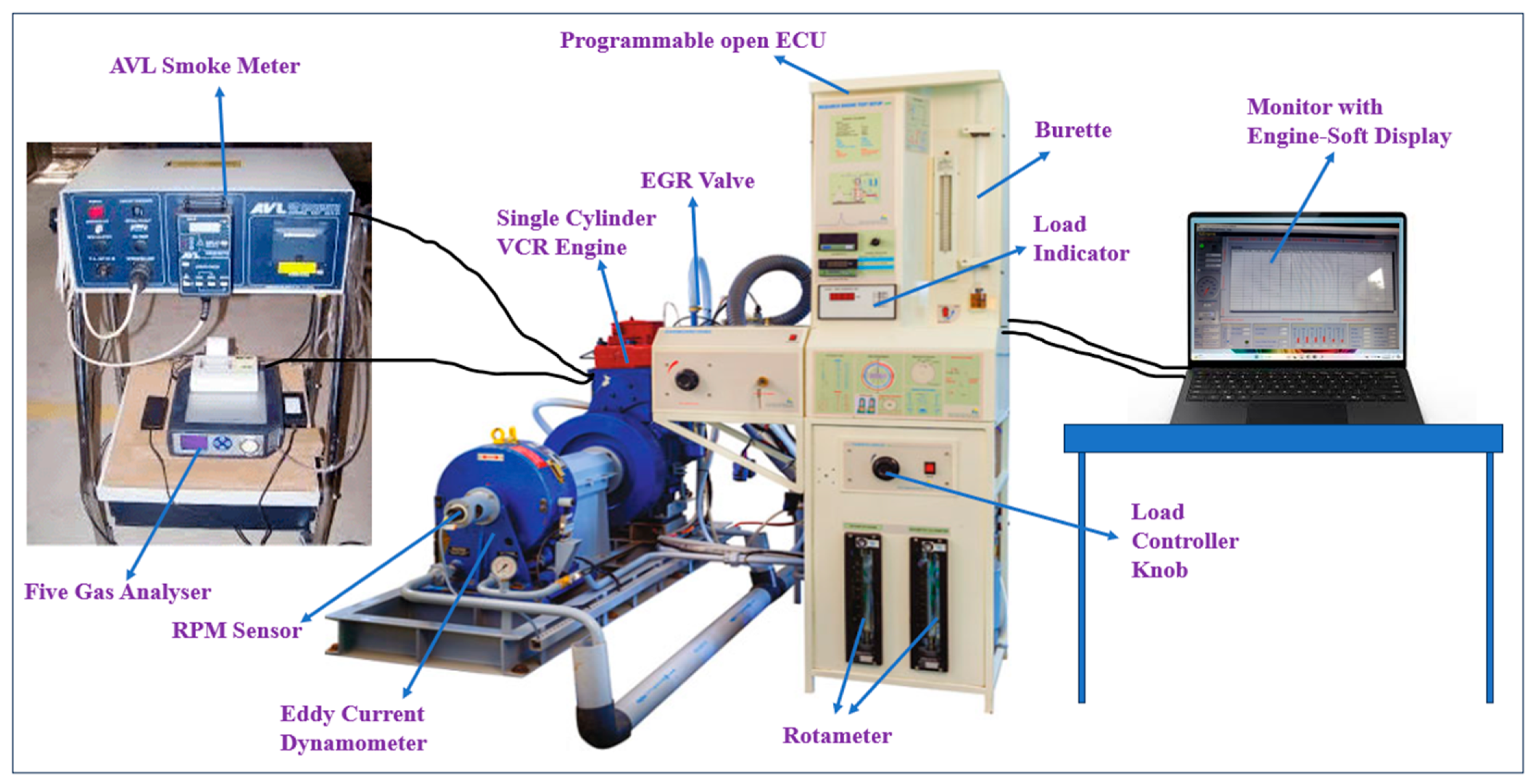
Figure 1 illustrates the Kirloskar CRDI Variable Compression Ratio (VCR) engine test rig (Code 244), with the experimental setup specifications shown in Table 4; it is a single-cylinder, four-stroke, water-cooled CI engine used for research and teaching. The engine has a bore of 87.5 mm, a stroke of 110 mm, and a displacement of 661 cc and delivers a maximum power of 3.5 kW at 1500 rpm. The experimental engine is equipped with a variable compression ratio (VCR) mechanism that enables continuous adjustment to the compression ratio from 12 to 18 without modifying the combustion chamber geometry or shutting down the engine. This is achieved through a specially designed tilting-cylinder block mechanism that alters the effective clearance volume. The CR is adjusted manually by varying the cylinder block’s tilt angle while the engine is running, enabling real-time control during experimentation.
It includes an EGR system with a controllable range of 0–20% for emission studies. Equipped with a 350-bar piezo pressure sensor, NI USB-6210 data acquisition system (16-bit, 250 kS/s), and rotameters for coolant and calorimeter flow, it provides precise performance and combustion analysis. All experiments were conducted at a constant engine speed of approximately 1500 rpm under four load conditions corresponding to brake torques ranging from about 5.7 to 22.4 N·m for both CR 17 and CR 18.
Engine load was measured using a 0–50 kg strain-gauge load cell, while exhaust emissions were monitored with an AVL 437 smoke meter and a five-gas analyser (CO, HC, CO2, O2, NO). Tests were conducted at 1500 rpm over 0–100% load and at compression ratios of 17 and 18, with and without 10% EGR supplied via a controlled recirculation system. The engine was operated under steady-state conditions, and each test was repeated thrice with the averaged results reported. Performance parameters were calculated from speed, fuel flow, and power data, while combustion behaviour was evaluated using in-cylinder pressure and heat release analysis. Regression and correlation analyses were used to assess NOx–PM trade-offs, showing that ternary blends, particularly HB and HBO70, achieved lower NOx emissions without excessive PM formation.

2.7. Uncertainty and Error Analysis

Before starting the experiment, all measuring tools were checked and adjusted according to the manufacturer’s instructions and international guidelines. To measure engine performance and fuel combustion, we used a piezoelectric pressure sensor (Model: GH14D, AVL List GmbH, Combustion: Range 350 Bar with low-noise cable) mounted flush with the combustion chamber, a crankshaft position sensor (Resolution 1 Deg, Speed 5500 RPM with TDC pulse), a fuel flow meter, and an engine output measurement device. For checking exhaust emissions, we used an instrument that analyses gases using light and a device that measures smoke. To study the fuel’s composition, we used a specialised instrument, a GC-MS, which was calibrated with known standards.
Uncertainty analysis was performed using the root-sum-square (RSS) method. The combined uncertainty U of a derived parameter was calculated using Equation (2).
U = i = 1 n R x i   u x i 2  
The overall uncertainty in emission measurements (FTIR and smoke opacity) was estimated as ±1.5%, while performance parameters such as BTE and SFC also showed a combined uncertainty of ±1.5%. Combustion parameters, including cylinder pressure and net heat release rate, exhibited a lower uncertainty of ±1.2% due to the high resolution of pressure and crank angle measurements. The uncertainty associated with GC–MS analysis was minimised through repeated measurements and remained within acceptable analytical limits. Since all measured and derived values fell within the estimated uncertainty bounds, the experimental data are considered reliable, and the conclusions drawn are robust.

3. Results and Discussion

3.1. FTIR Analysis

FTIR analysis of single, binary, and ternary biodiesel blends is shown in Table 5 and Table 6, and Table 7, respectively. The FTIR spectra of binary and ternary biodiesel blends exhibit the characteristic ester carbonyl (C=O) absorption band in the range of 1735–1745 cm−1, confirming the dominance of fatty acid methyl esters in the final fuel. Compared to single biodiesels, blended fuels show a moderate transmittance intensity of the C–H and C=O bands due to spectral superposition, indicating a balanced hydrocarbon and oxygenated functional group environment. Notably, the ternary blend HBO70 exhibited relatively higher transmittance in oxygenated ester-related bands, supporting improved combustion efficiency and reduced incomplete combustion emissions observed during engine testing.

3.2. GC-MS Analysis

GC-MS analysis and derived ester distribution for testing fuels are shown in Table 8. GC-MS analysis of the three-component biodiesel mixtures revealed significant differences in the distribution of fatty acid methyl esters, depending on the blend proportions. The blend with equal parts (HB) had a higher amount of polyunsaturated esters, which is linked to higher combustion temperatures. As more OPOME and NOME were added to HBN70 and HBO70, the proportion of polyunsaturated fatty acid methyl esters went down, while the amount of monounsaturated esters increased. HBO70 had a well-balanced mix, with about 23% saturated, 38% monounsaturated, and 34% polyunsaturated methyl esters. This mix helped keep the peak combustion temperature in check while still having enough oxygenated esters for full combustion. This explains why there were large drops in NOx (30%), PM (51%), and smoke (44%) despite only small changes in combustion pressure and heat release.

3.3. Emission Characteristics

3.3.1. Nitrogen Oxides

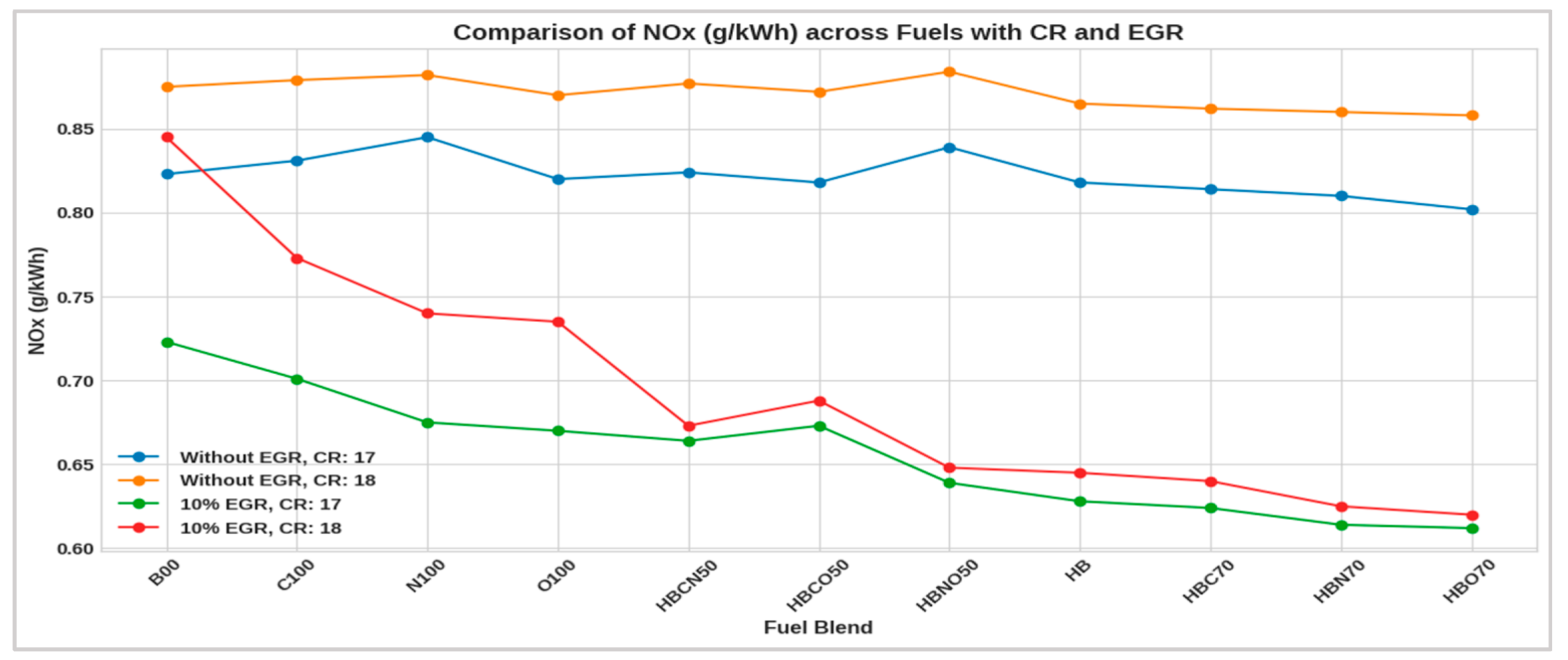
As shown in Figure 2, average NOx emissions increased with the compression ratio under non-EGR conditions due to higher in-cylinder temperatures that intensified the thermal NO (Zeldovich) mechanism. At CR 18, diesel and single biodiesel fuels exhibited higher NOx values (0.83–0.88 g/kWh) compared to CR 17 (0.70–0.82 g/kWh). The introduction of 10% EGR significantly reduced NOx for all fuels, with reductions of 18–25% at CR 18 and 15–20% at CR 17; for example, diesel NOx decreased from 0.87 to 0.72 g/kWh, while HBO70 reached the lowest level (0.61 g/kWh). These reductions result from oxygen dilution, increased heat capacity of the intake charge, and kinetic suppression of NO-forming reactions. FTIR confirmed lower NO/NO2 under EGR, while GC-MS showed OPOME-rich ternary blends contained more C16:0 and C18:1 esters, promoting smoother combustion and limiting thermal NO formation. Consequently, ternary blends achieved a superior NOx–PM trade-off.

3.3.2. Particulate Matter (PM)

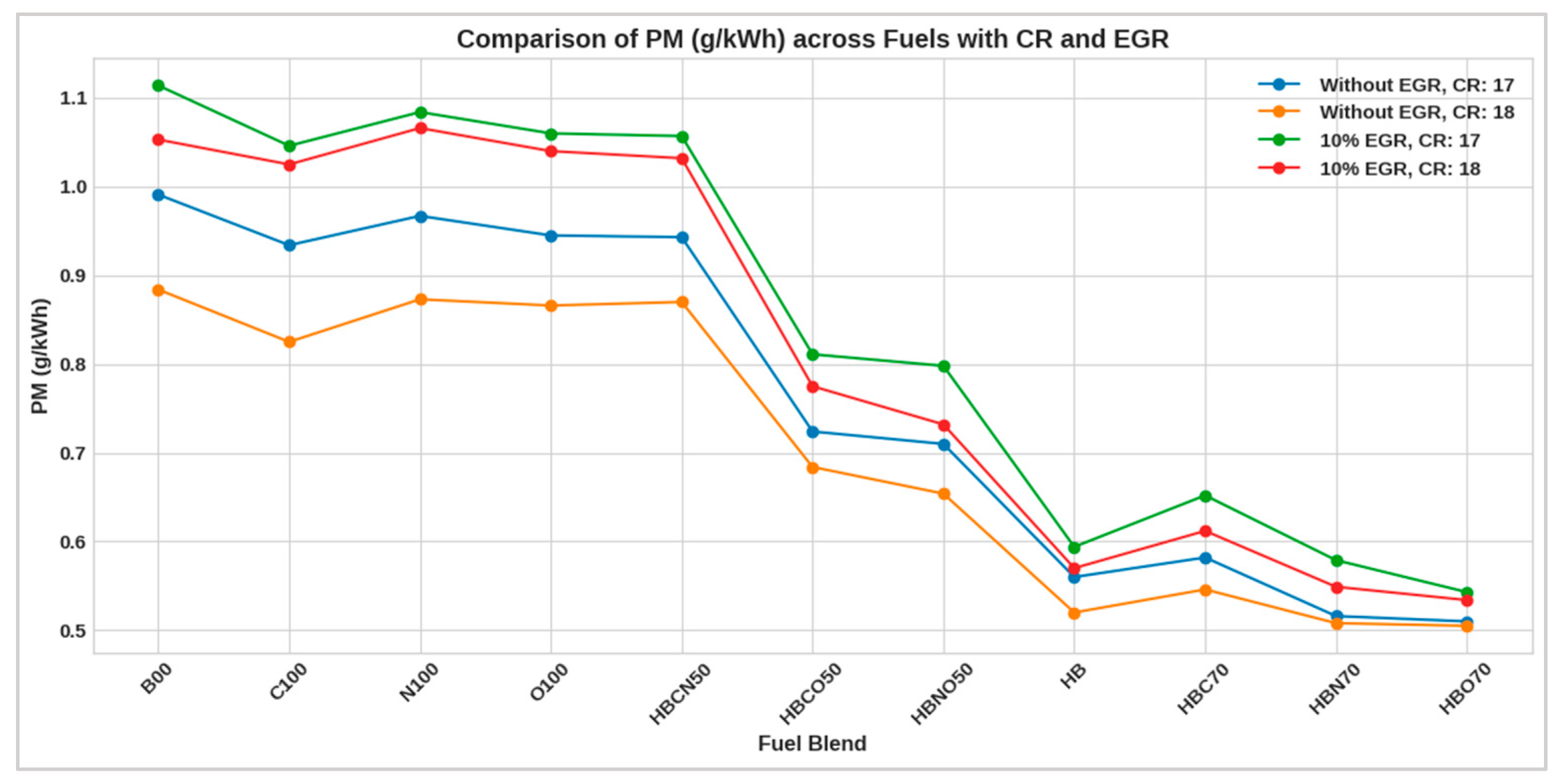
As shown in Figure 3, average PM emissions are strongly influenced by fuel oxygen content, molecular structure, and EGR-induced dilution. Under non-EGR conditions, increasing the compression ratio from CR 17 to CR 18 reduced PM emissions for all fuels due to higher in-cylinder temperatures that promoted soot oxidation. Diesel PM decreased from approximately 0.99–1.00 g/kWh (CR 17) to 0.88–0.89 g/kWh (CR 18), while single biodiesel fuels showed PM levels of 0.94–1.08 g/kWh at CR 17 and 0.83–0.88 g/kWh at CR 18. With 10% EGR, PM increased moderately due to oxygen dilution and reduced local flame temperatures; however, the increase was limited in ternary blends. Notably, HBO70 exhibited the lowest PM values, ranging from 0.53 to 0.55 g/kWh with EGR and 0.50 to 0.52 g/kWh without EGR, compared to diesel (1.05–1.12 g/kWh with EGR at CR 17). This improved PM suppression is attributed to the higher fraction of short-chain saturated and monounsaturated methyl esters in OPOME-rich blends, which reduce aromatic precursor formation and inhibit soot nucleation. FTIR analysis further supports this trend by showing reduced C–H aliphatic bands and enhanced carbonyl (C=O) stretching, indicating more complete combustion [35].

3.3.3. Unburned Hydrocarbon Emissions

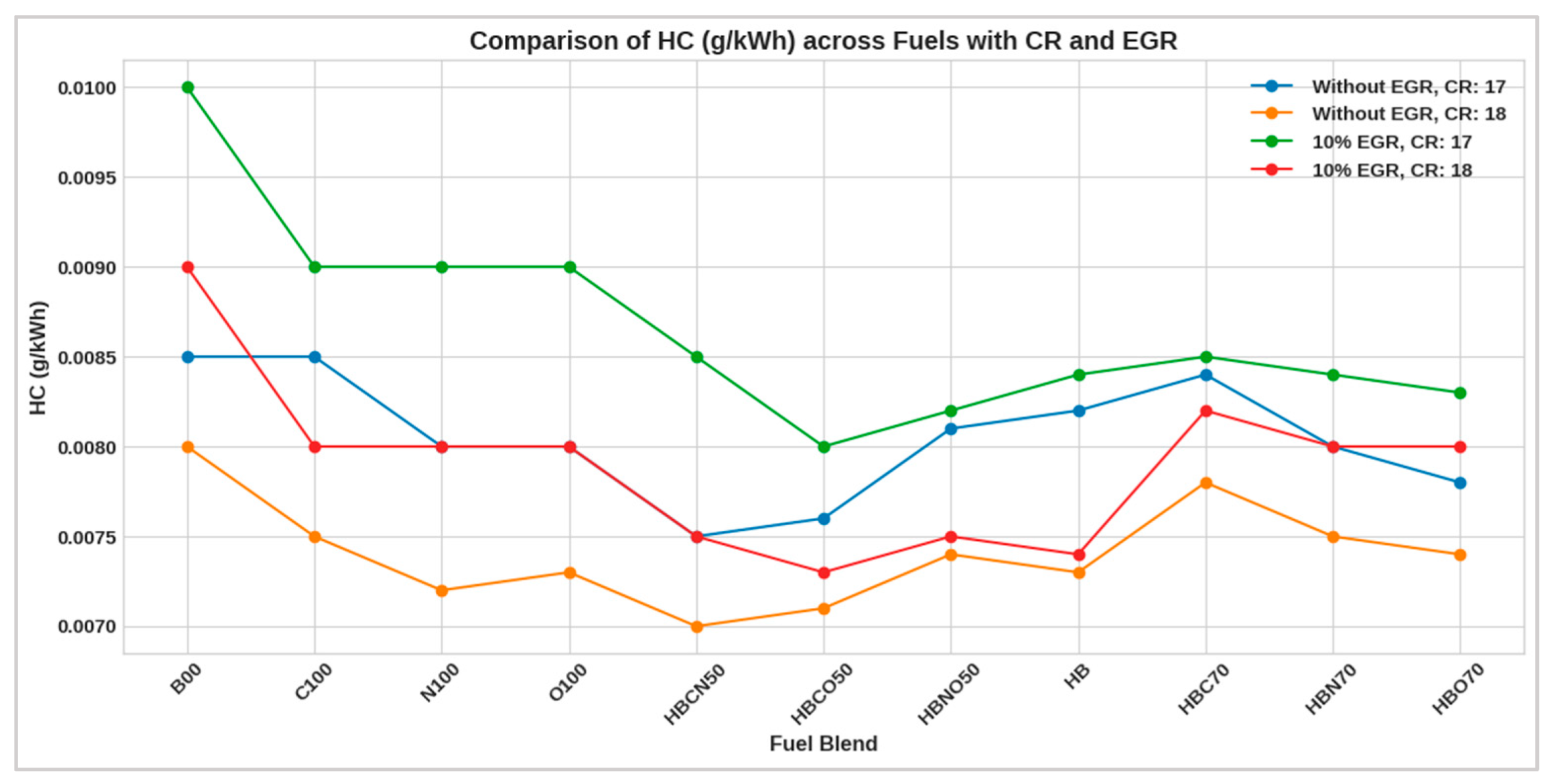
As illustrated in Figure 4, unburned hydrocarbon (HC) emissions are governed by fuel oxygen content, volatility, molecular structure, and the dilution effects of EGR. Under non-EGR conditions, increasing the compression ratio from CR 17 to CR 18 reduced HC emissions for all fuels due to higher in-cylinder temperatures that enhanced oxidation of fuel-rich zones; for example, diesel HC decreased from 0.0085 to 0.0080 g/kWh, while biodiesel fuels decreased from 0.0072 to 0.0080 g/kWh at CR 18. With 10% EGR, HC emissions increased moderately (diesel reaching 0.010 g/kWh at CR 17) due to oxygen dilution and reduced flame temperatures that slow oxidation kinetics. However, ternary blends, particularly HBCN50 and HBO70, consistently exhibited the lowest HC levels (0.0070–0.0080 g/kWh) even under EGR.
FTIR analysis supports this behaviour by showing reduced aliphatic C–H stretching intensity and enhanced carbonyl (C=O) absorption, indicating more complete oxidation of hydrocarbons (ASTM E1252). Complementarily, GC-MS results revealed that OPOME-rich blends contain higher proportions of short-chain saturated and monounsaturated methyl esters (C16:0, C18:1), which improve fuel volatility, spray–air mixing, and late-cycle oxidation, thereby suppressing HC formation. This combined spectroscopic and compositional evidence confirms that the intrinsic molecular structure of ternary blends effectively mitigates HC emissions, even under EGR-diluted combustion conditions [43,49].

3.3.4. Smoke Opacity

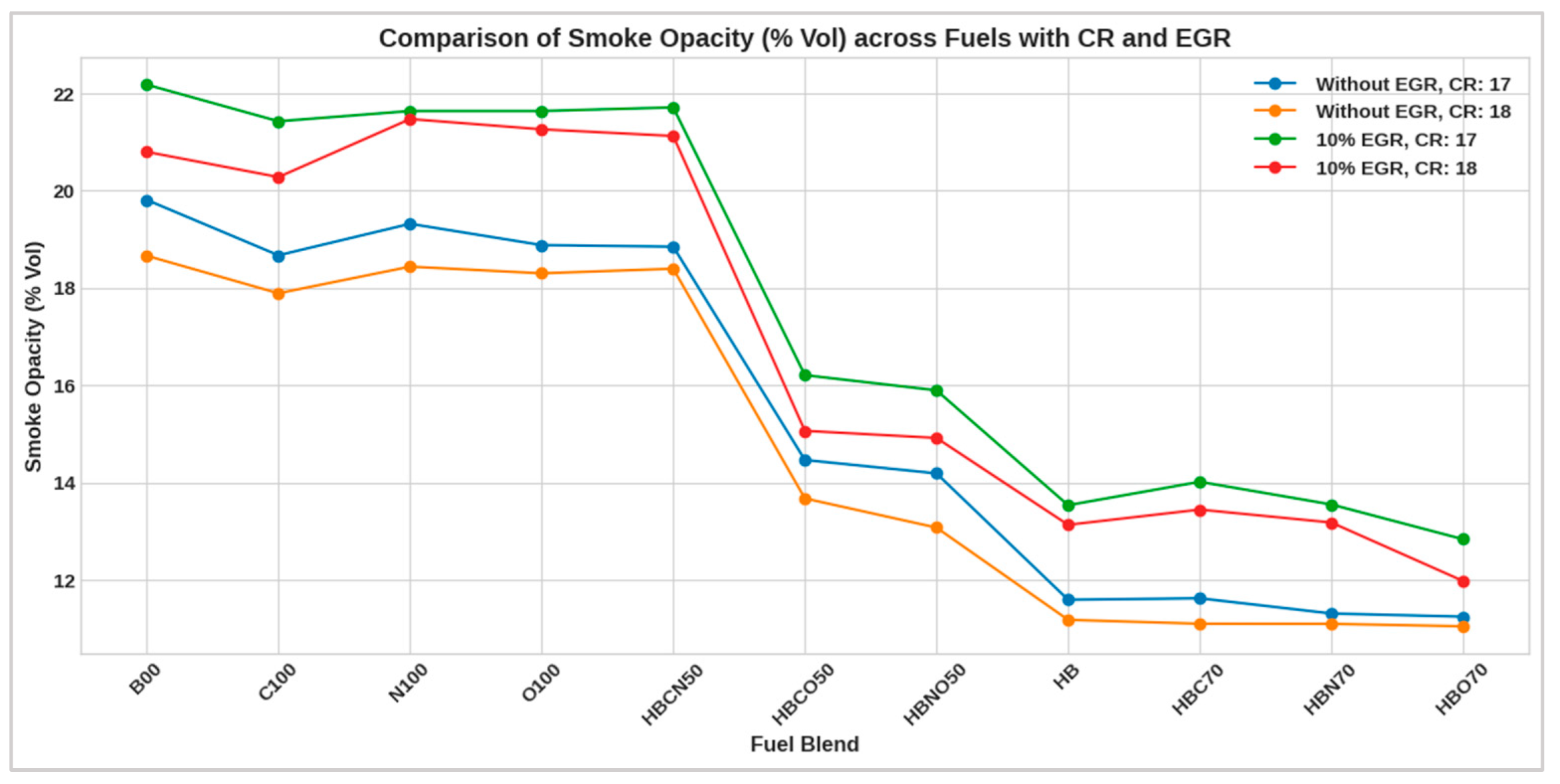
Figure 5 shows that smoke opacity is governed by fuel oxygen content, molecular structure, combustion temperature, and EGR dilution. Under non-EGR conditions, increasing the compression ratio from CR 17 to CR 18 reduced smoke for all fuels due to enhanced soot oxidation; diesel smoke decreased from 19.8–20.0% vol to 18.5–18.7% vol, while biodiesel fuels ranged between 18.0 and 19.5% vol at CR 18. With 10% EGR, smoke increased because oxygen dilution and lower local temperatures weakened soot burnout, with diesel reaching 22.0% vol (CR 17) and 20.5% vol (CR 18). However, ternary blends, particularly HBO70 and HB, exhibited the lowest smoke opacity, ranging from 11.0–12.0% vol without EGR to 12.0–13.5% vol with EGR, representing a nearly 40–45% reduction compared to diesel. FTIR spectra showed reduced aliphatic C–H bands and stronger carbonyl (C=O) stretching, while GC-MS confirmed higher fractions of short-chain saturated and monounsaturated methyl esters (C16:0, C18:1) in OPOME-rich blends, suppressing aromatic growth and soot nucleation [32].

3.3.5. Carbon Monoxide Emissions

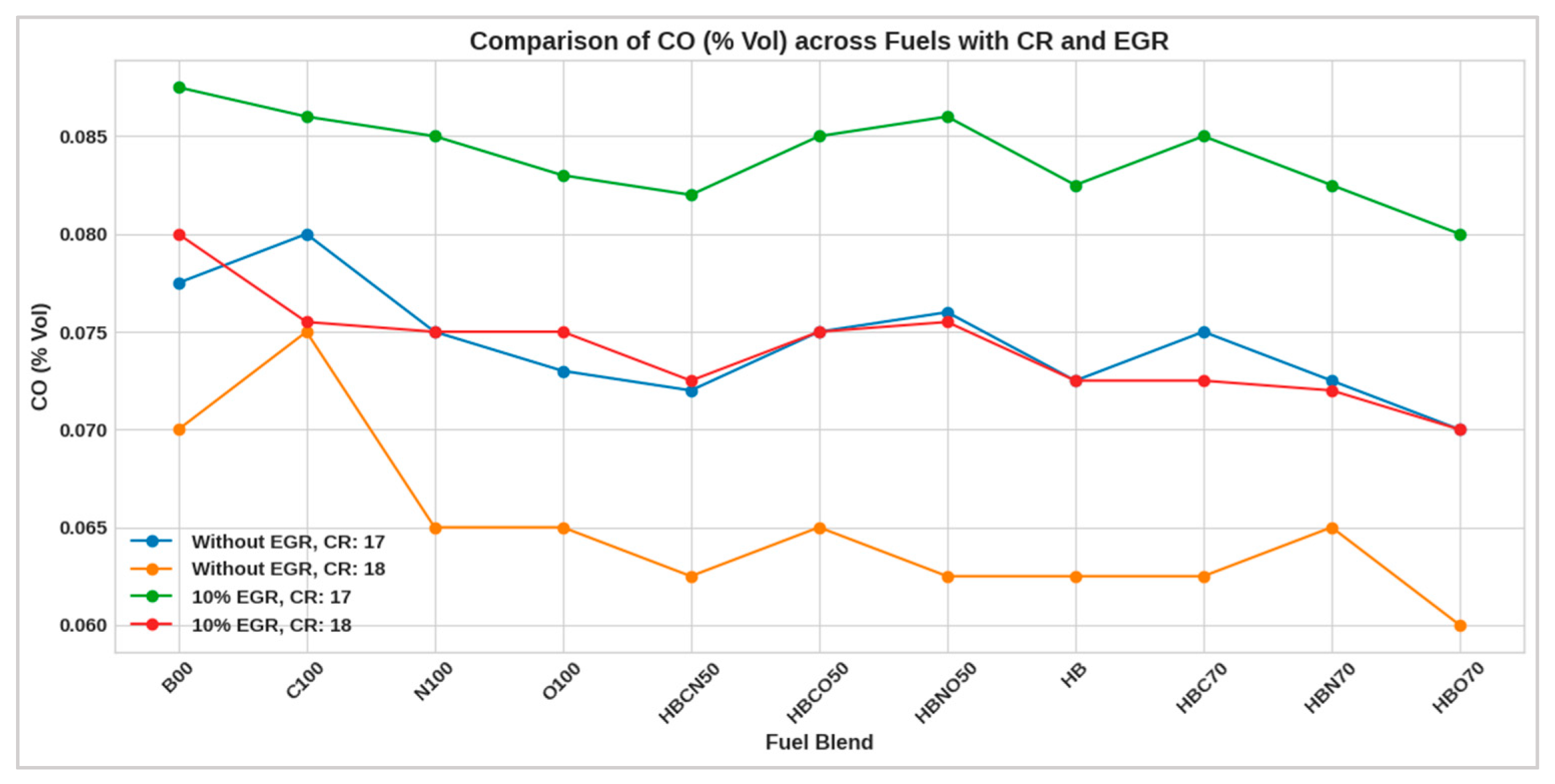
Figure 6 indicates that CO emissions decrease with increasing compression ratio due to enhanced oxidation and shorter ignition delay but increase with 10% EGR because of reduced oxygen availability and lower flame temperatures. Among all fuels, the ternary blend HBO70 consistently produced the lowest CO emissions under both conditions. GC–MS results show that HBO70 is rich in low-molecular-weight, unsaturated methyl esters, which improve atomization and promote faster oxidation, while FTIR analysis confirms higher oxygenated functional groups that support CO-to-CO2 conversion. These compositional effects partly offset the dilution and thermal impacts of EGR, consistent with mechanistic studies that decouple temperature, dilution, and kinetic effects on pollutant formation.

3.4. Performance Characteristics

3.4.1. Brake Thermal Efficiency

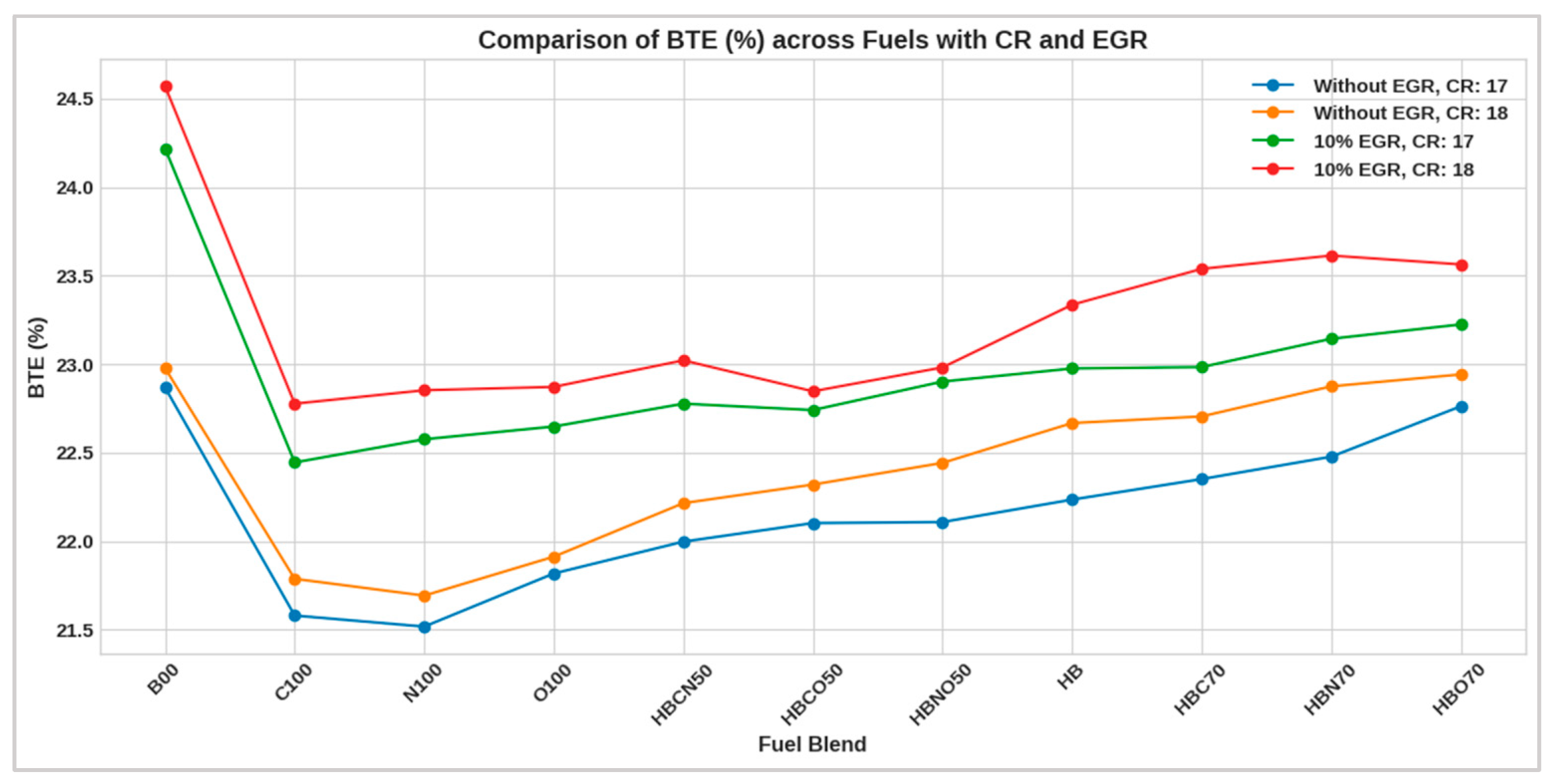
Figure 7 shows that brake thermal efficiency (BTE) is strongly influenced by compression ratio, EGR level, and fuel molecular structure. Under non-EGR conditions, increasing the compression ratio from CR 17 to CR 18 improved BTE for all fuels due to higher in-cylinder pressure and enhanced combustion efficiency; diesel BTE increased from about 22.9% (CR 17) to 23.0% (CR 18), while biodiesel fuels ranged from 21.7 to 22.9% at CR 18.
The application of 10% EGR led to a modest reduction in BTE because of oxygen dilution and slower combustion kinetics; however, the penalty was smaller for ternary blends. Notably, HBO70 and HB exhibited the highest BTE values, maintaining 23.5–23.6% at CR 18 with EGR, compared to 22.8% for diesel. FTIR analysis revealed stronger carbonyl (C=O) absorption and reduced unburned hydrocarbon signatures for ternary blends, indicating more complete oxidation. Complementarily, GC-MS results showed higher proportions of short-chain saturated and monounsaturated methyl esters (C16:0, C18:1) in OPOME-rich blends, which improve fuel volatility, spray–air mixing, and heat release phasing. These combined effects explain the superior thermal efficiency of ternary blends, even under EGR-diluted combustion.

3.4.2. Specific Fuel Consumption

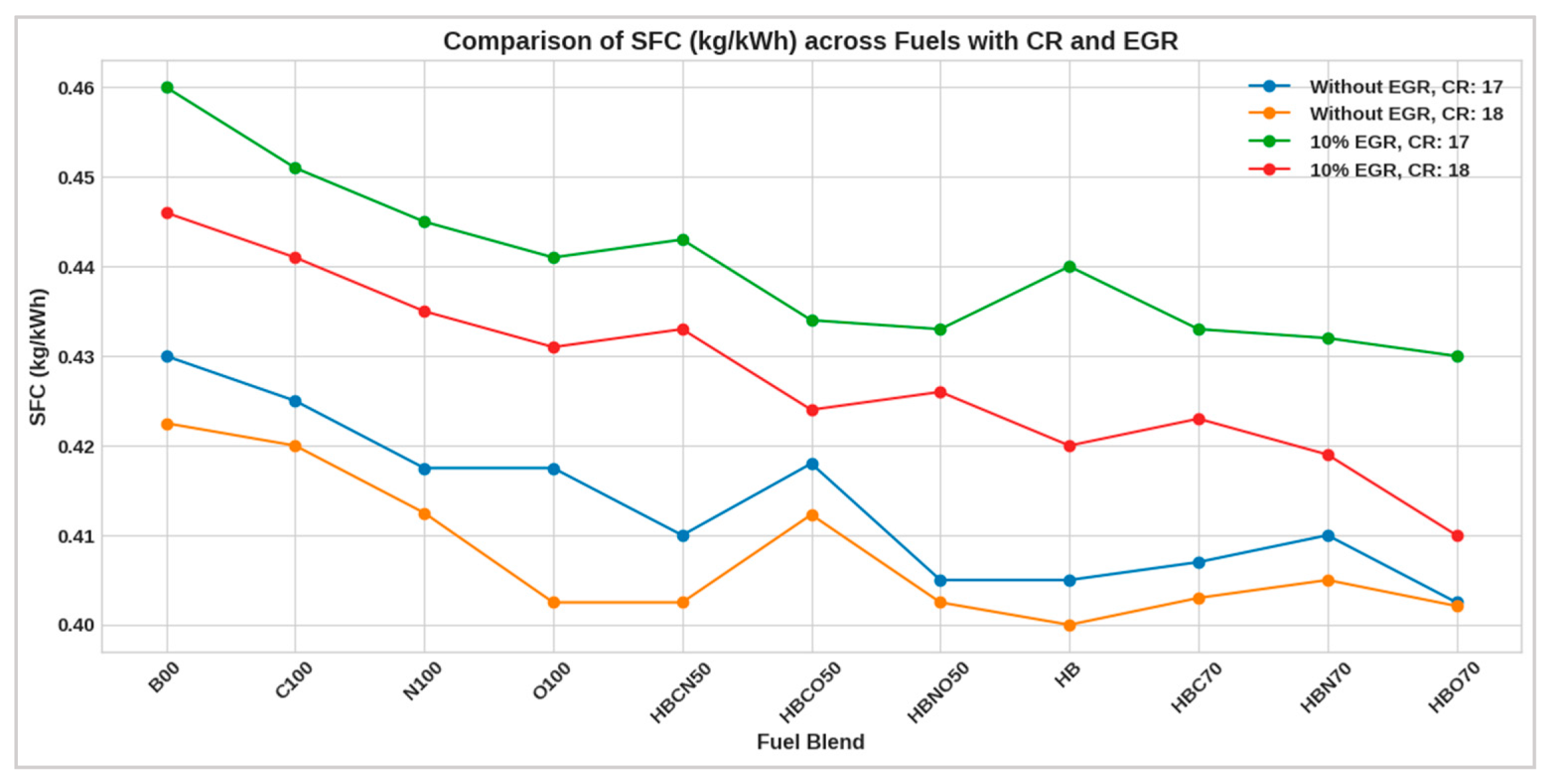
Figure 8 illustrates that the average SFC is governed by combustion efficiency, fuel oxygen content, and EGR dilution. Under non-EGR conditions, increasing the compression ratio from CR 17 to CR 18 consistently reduced SFC for all fuels due to improved thermal efficiency and more complete combustion; diesel SFC decreased from approximately 0.430 kg/kWh (CR 17) to 0.422 kg/kWh (CR 18), while biodiesel fuels showed SFC values in the range of ~0.402–0.418 kg/kWh at CR 18. With 10% EGR, SFC increased because oxygen dilution and reduced flame temperature slowed combustion, with diesel SFC rising to 0.460 kg/kWh at CR 17 and 0.446 kg/kWh at CR 18. However, ternary blends—particularly HBO70 and HB—exhibited the lowest SFC, ranging from 0.402 to 0.410 kg/kWh at CR 18, even under EGR, compared to higher values for diesel. FTIR spectra confirmed reduced unburned hydrocarbon signatures and stronger carbonyl (C=O) absorption for ternary blends, indicating more complete oxidation. GC-MS analysis further showed that OPOME-rich blends contain higher proportions of short-chain saturated and monounsaturated methyl esters (C16:0, C18:1), which enhance volatility, spray–air mixing, and heat release efficiency, explaining the superior fuel economy of ternary blends even under EGR-diluted combustion conditions.

3.5. Combustion Characteristics

3.5.1. Cylinder Pressure (CP)

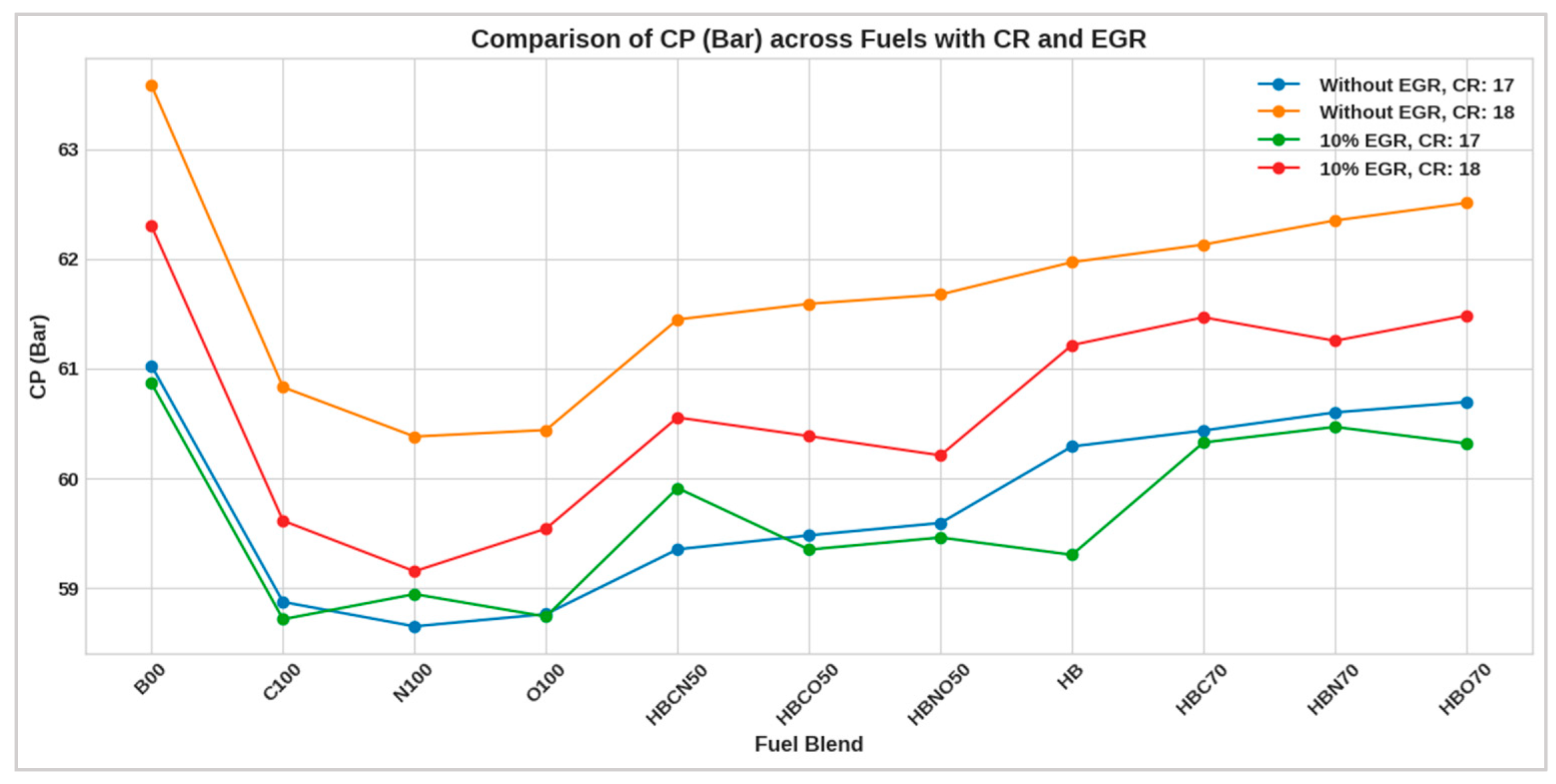
Figure 9 shows the comparison of average/peak cylinder pressure (CP) for diesel and biodiesel blends at CR17 and CR18, with and without 10% EGR. Without EGR, CP increases from approximately 58.5–60.8 bar at CR17 to 60.4–63.6 bar at CR18, while the application of 10% EGR reduces CP to about 58.7–60.5 bar (CR17) and 59.2–62.3 bar (CR18) across all fuels. Binary and ternary blends exhibit CP values closer to diesel than single biodiesel fuels under all operating conditions [33,39,50].
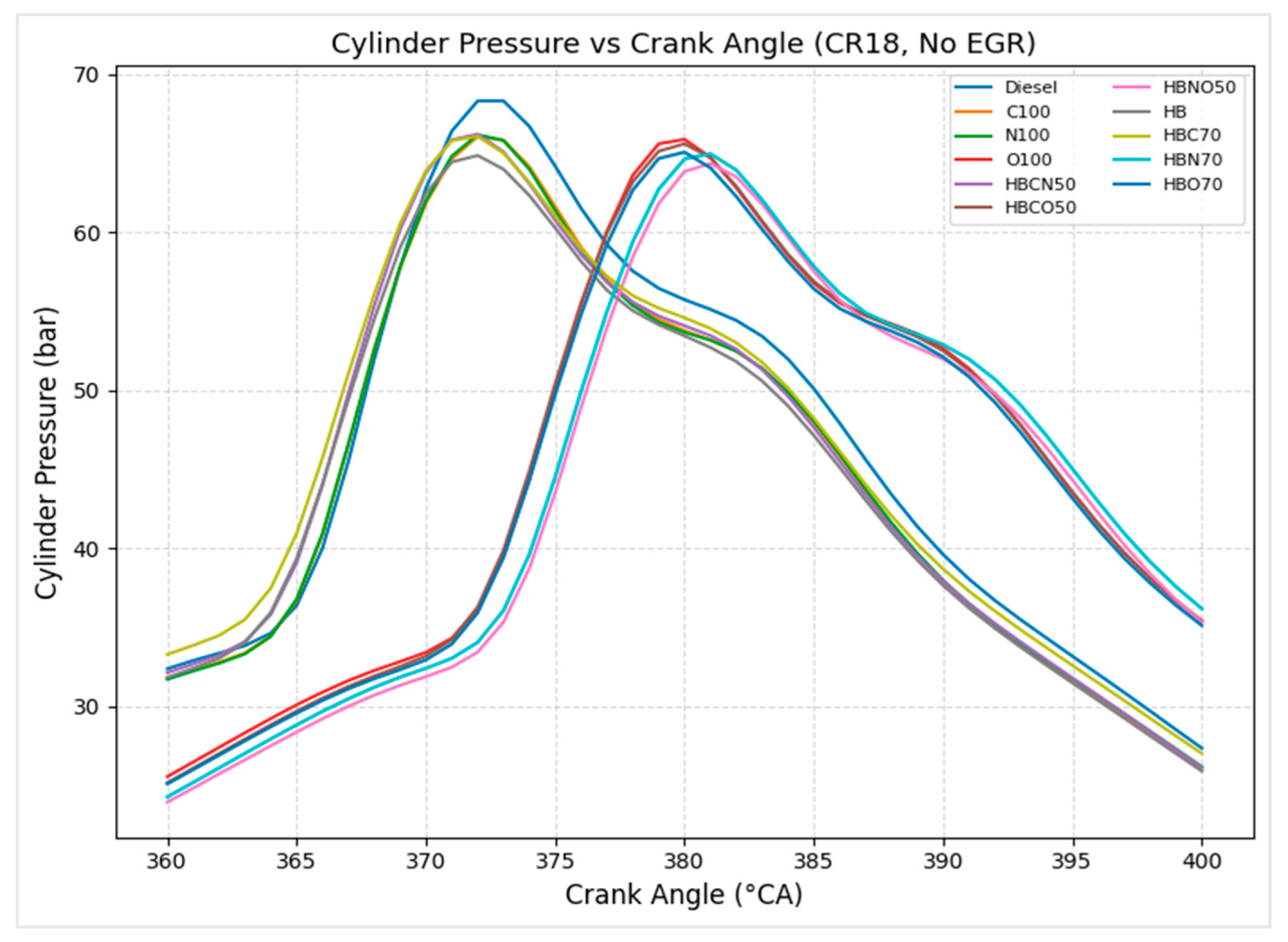
Figure 10 illustrates the crank-angle-resolved in-cylinder pressure for diesel and biodiesel blends at CR18 without EGR. Diesel (B00) shows an earlier pressure rise and the highest premixed combustion peak of about 68.3 bar at 372–373 °CA, whereas C100 and N100 exhibit slightly delayed pressure development with lower peak values of approximately 66.1–66.2 bar, attributed to higher viscosity and longer ignition delay. O100 shows reduced pressure during early combustion (36 bar at 372 °CA) but maintains higher pressure during the expansion phase, indicating diffusion-controlled combustion. Binary blends (HBCN50 and HBCO50) demonstrate improved pressure characteristics with peak values around 66.2–66.3 bar, while ternary blends (HB, HBC70, HBN70, and HBO70) show pressure profiles closest to diesel, characterized by a smoother pressure rise and sustained expansion pressure, with HBC70 reaching a peak of about 66.1 bar. These trends align with results from FAME composition analysis using GC-MS and FTIR, indicating that oxygenated groups in the fuel increase the amount of oxygen available during combustion and improve combustion completeness. This confirms that mixing three types of biodiesel can be an effective alternative to regular diesel.
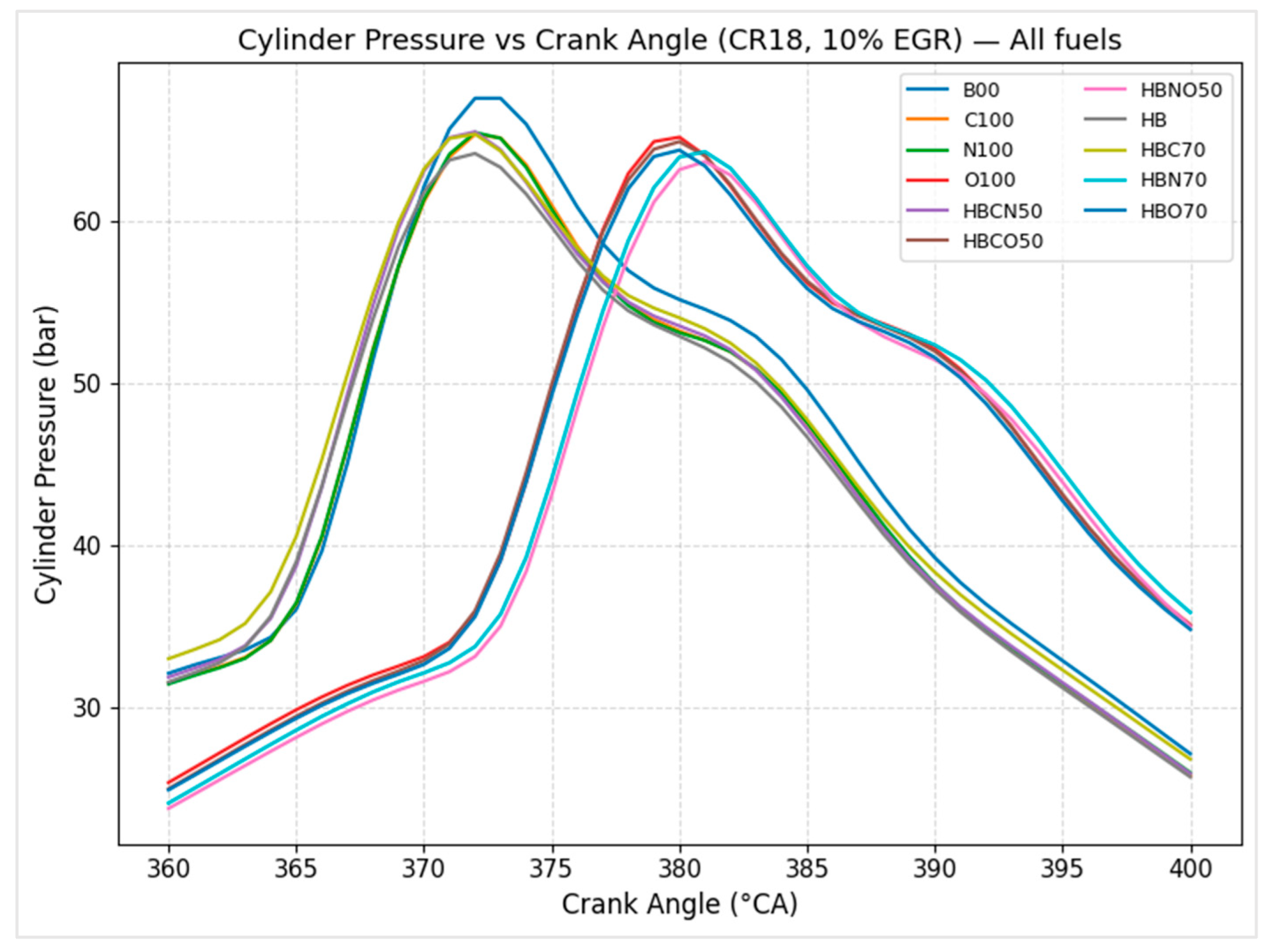
Figure 11 shows how the pressure inside the engine cylinder changes with the crankshaft angle for diesel and biodiesel mixtures at a compression ratio of 18 with 10% EGR.
Pure diesel (B00) shows a rapid pressure rise and the highest combustion peak, reaching about 65–66 bar near 372–373 degrees of crank angle, indicating better ignition quality even with EGR. Single biodiesel fuels (C100, N100, and O100) exhibit slightly lower pressure peaks, around 63–65 bar, and a slightly slower pressure increase, due to longer ignition delays and the cooling effect of EGR. Binary blends (HBCN50, HBCO50, and HBNO50) perform better, reaching peak pressures of about 64–65 bar and exhibiting more stable combustion than pure biodiesels. Ternary blends (HB, HBC70, HBN70, and HBO70) behave very similarly to diesel, with smoother pressure rise and steady pressure during expansion, reaching peak pressures of 64–66 bar. This shows that specially formulated biodiesel blends can help reduce pressure loss from EGR while maintaining stable combustion.

3.5.2. Net Heat Release Rate (NHR)

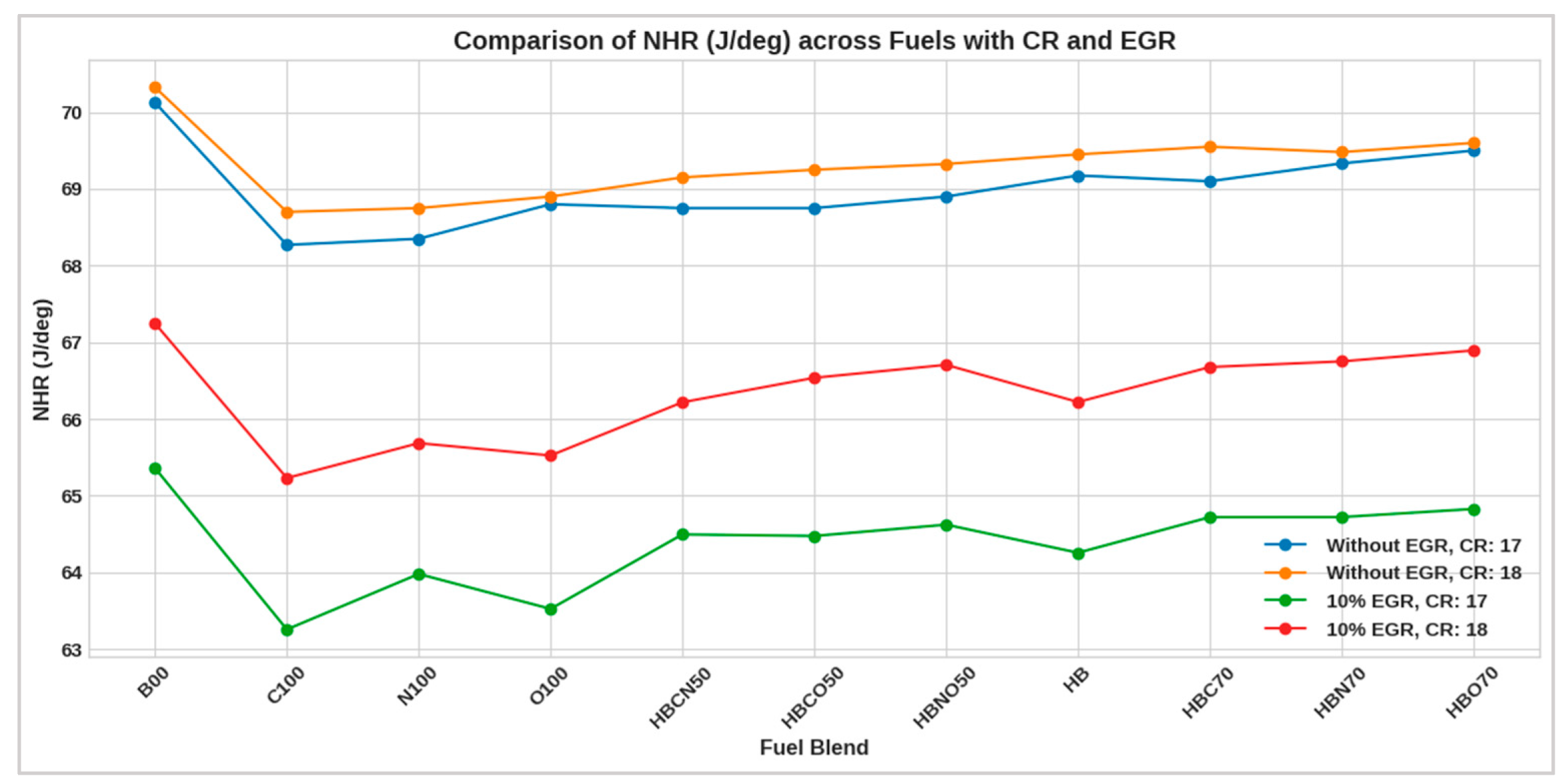
The NHR is measured in units of J per degree, where “deg” stands for one degree of crank angle (°CA). In this study, NHR is defined as the crank angle measured from the top dead centre (TDC) of the compression stroke, which is set to 0 °CA. Therefore, the reported NHR (J/deg CA) indicates the amount of chemical energy released per degree of crank angle rotation relative to TDC. This allows for a direct comparison of combustion timing and strength across different fuels, compression ratios, and EGR conditions. Figure 12 indicates the average net heat release rate (NHR) for diesel and biodiesel blends at CR17 and CR18, with and without 10% EGR. At CR18 without EGR, NHR is highest, varying from approximately 68.3 to 69.6 J/deg, while the introduction of 10% EGR reduces NHR to about 66.2–67.0 J/deg due to charge dilution and lower in-cylinder temperature. At CR17, lower NHR levels are observed (63.3–65.0 J/deg), with EGR further decreasing values by about 1–1.5 J/deg, confirming the combined influence of compression ratio and EGR on combustion intensity.
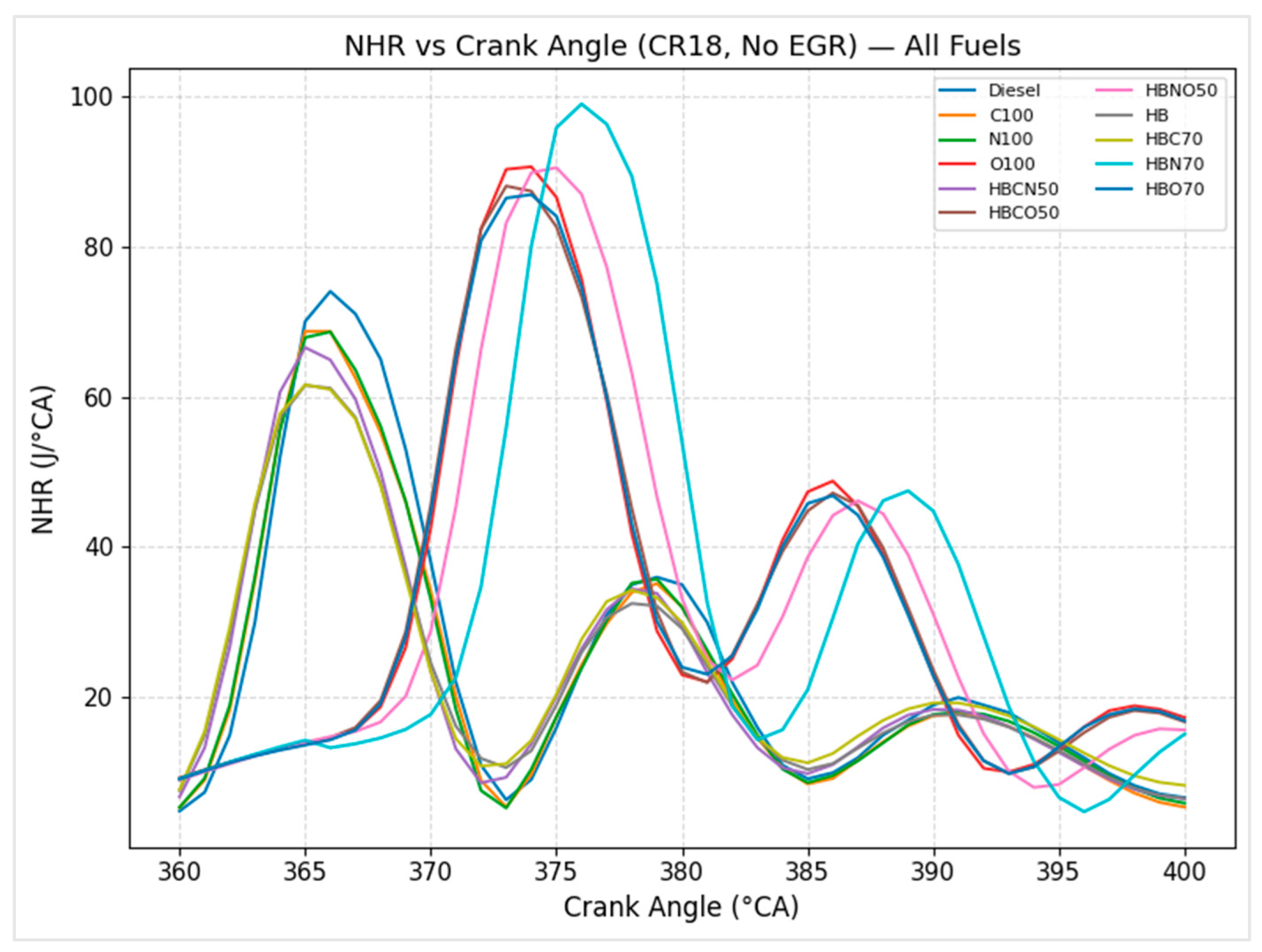
Figure 13 shows the variation in the net heat release rate (NHR) with crank angle for diesel and biodiesel blends at CR18 without EGR. Diesel exhibits an early, sharp premixed combustion peak of approximately 72–74 J/deg near 365–366 °CA, followed by a secondary, diffusion-controlled peak of about 45–48 J/deg around 385–386 °CA. Single biodiesel fuels exhibit slightly delayed premixed peaks with magnitudes of roughly 65–70 J/deg, while binary blends exhibit higher, broader peaks in the range of 85–90 J/deg near 373–375 °CA, indicating improved combustion intensity. Ternary blends show the strongest heat release behaviour, with maximum premixed peaks reaching approximately 95–100 J/deg around 375–376 °CA and sustained secondary peaks of 45–50 J/deg, reflecting enhanced fuel–air mixing and more complete combustion compared to single and binary biodiesel fuels
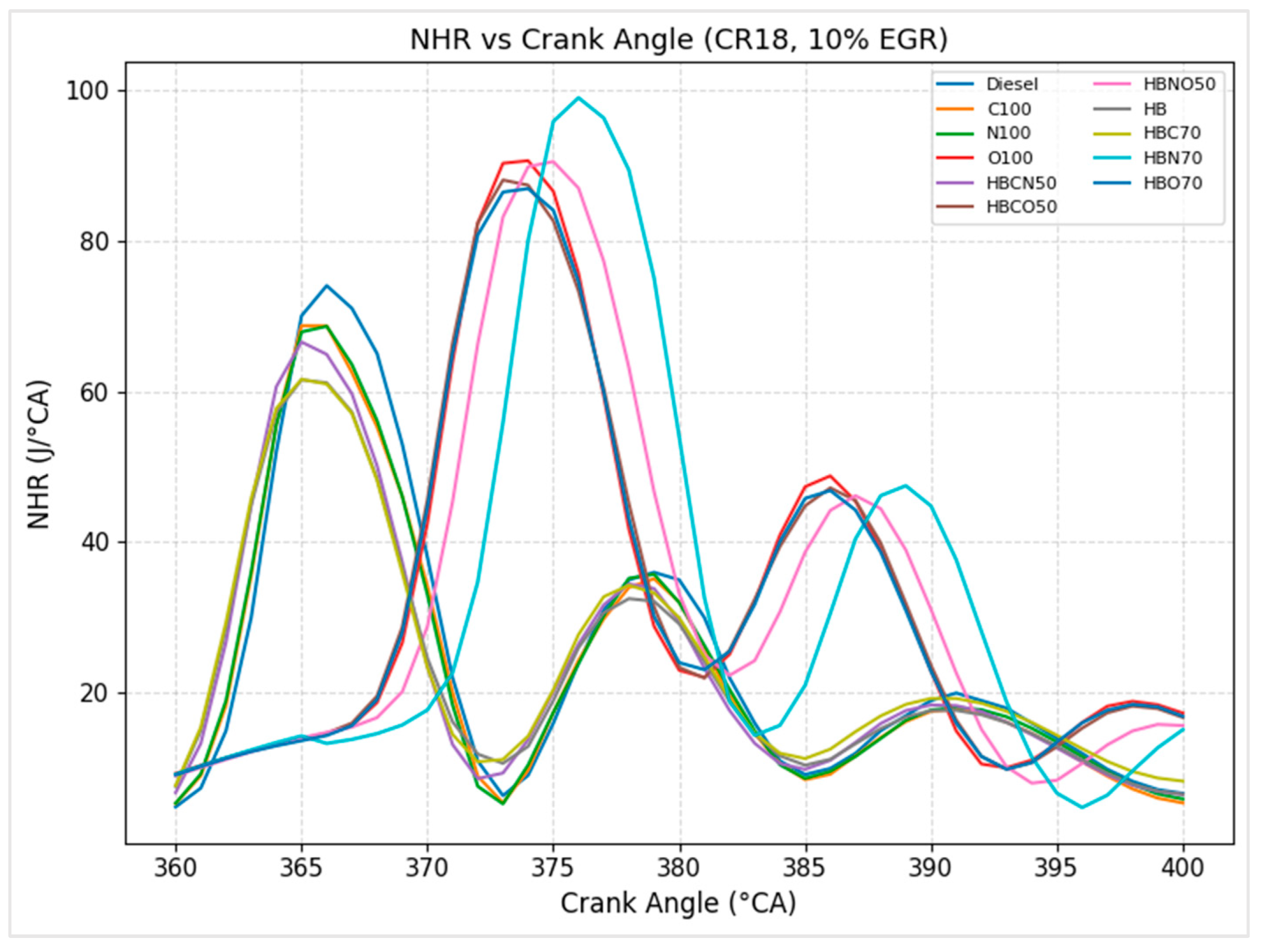
Figure 14 illustrates the variation in net heat release rate (NHR) with crank angle for diesel–biodiesel blends at CR18 with 10% EGR.
Diesel (B00) exhibits an early premixed combustion peak of about 65 J/deg near 366 °CA, while single biodiesels (C100 and N100) show slightly reduced peaks of 60–61 J/deg, indicating the suppressing effect of EGR on combustion intensity. O100 displays a delayed but stronger premixed peak of ~79–80 J/deg around 373–374 °CA, whereas binary and ternary blends attain higher and broader premixed peaks in the range of 72–80 J/deg at 372–375 °CA, reflecting improved combustion despite EGR dilution. The secondary diffusion-controlled heat release is significantly higher in binary and ternary blends (35–43 J/deg) than in diesel (13–15 J/deg), indicating sustained combustion due to fuel-bound oxygen. Overall, EGR smoothens the NHR profiles and lowers early heat release, yet blended biodiesel fuels—especially ternary mixtures—maintain superior combustion stability relative to neat diesel.

4. Regression and Correlation Analysis

Experiments were conducted on a single-cylinder VCR CRDI engine at constant speed and varying load (0–100%).
Fractional factorial design and ANOVA were used for optimization. Results show that ternary blends generally outperform single and binary fuel blends in emissions and stability, though CP, NHR, and BTE are slightly lower than those of diesel. Overall, ternary biodiesel blends demonstrate improved combustion behaviour and reduced NOx and PM due to synergistic fuel effects.

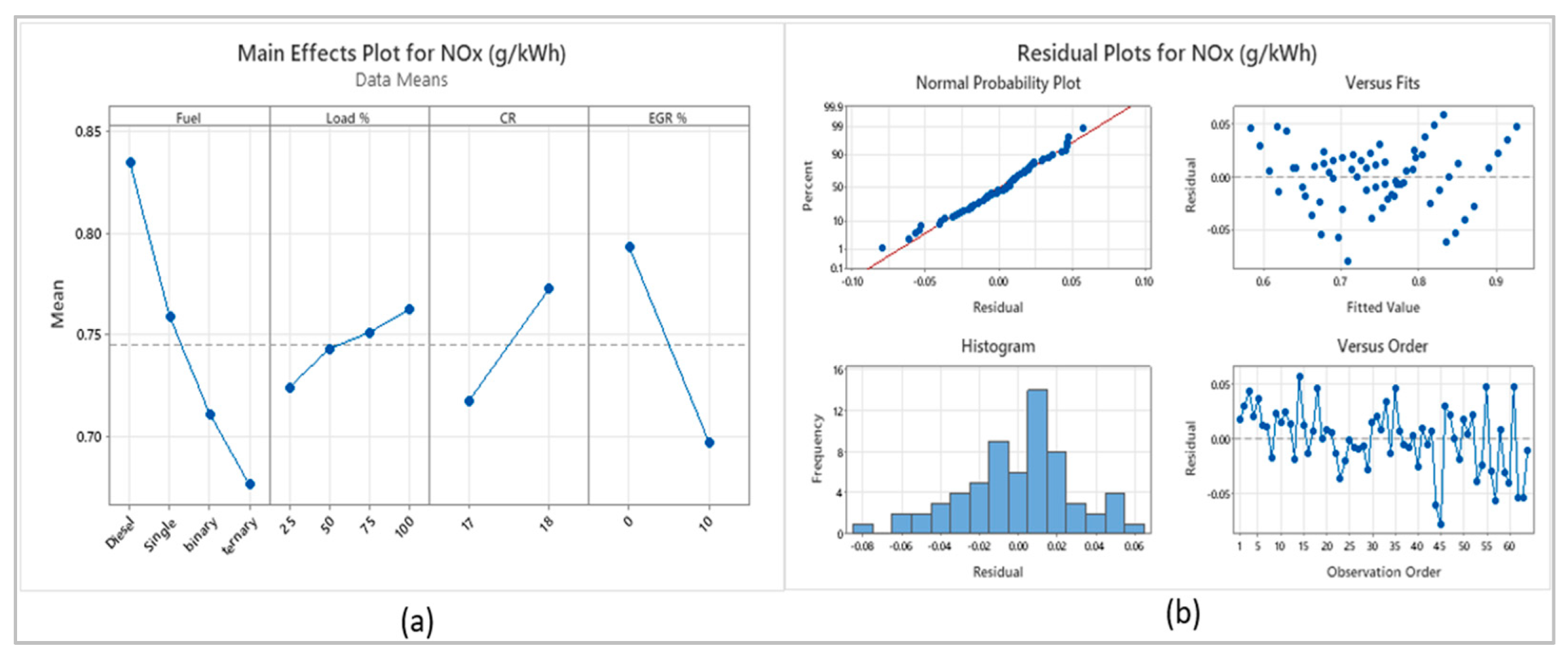
4.1. Main Effect Plots for NOx

The main effect plot (Figure 15a) for NOx indicates that fuel type has the strongest influence, with NOx decreasing progressively from diesel to ternary biodiesel blends. NOx increases with engine load and CR due to higher in-cylinder temperatures, while the application of 10% EGR significantly reduces NOx compared to zero EGR. The residual diagnostics in Figure 15b confirm the adequacy of the regression model: the normal probability plot shows residuals that closely follow a straight line, the histogram is approximately symmetric, and the residuals-versus-fits and observation-order plots show random scatter without systematic patterns. These trends indicate normality, constant variance, and independence of errors, validating the reliability of the NOx prediction model.

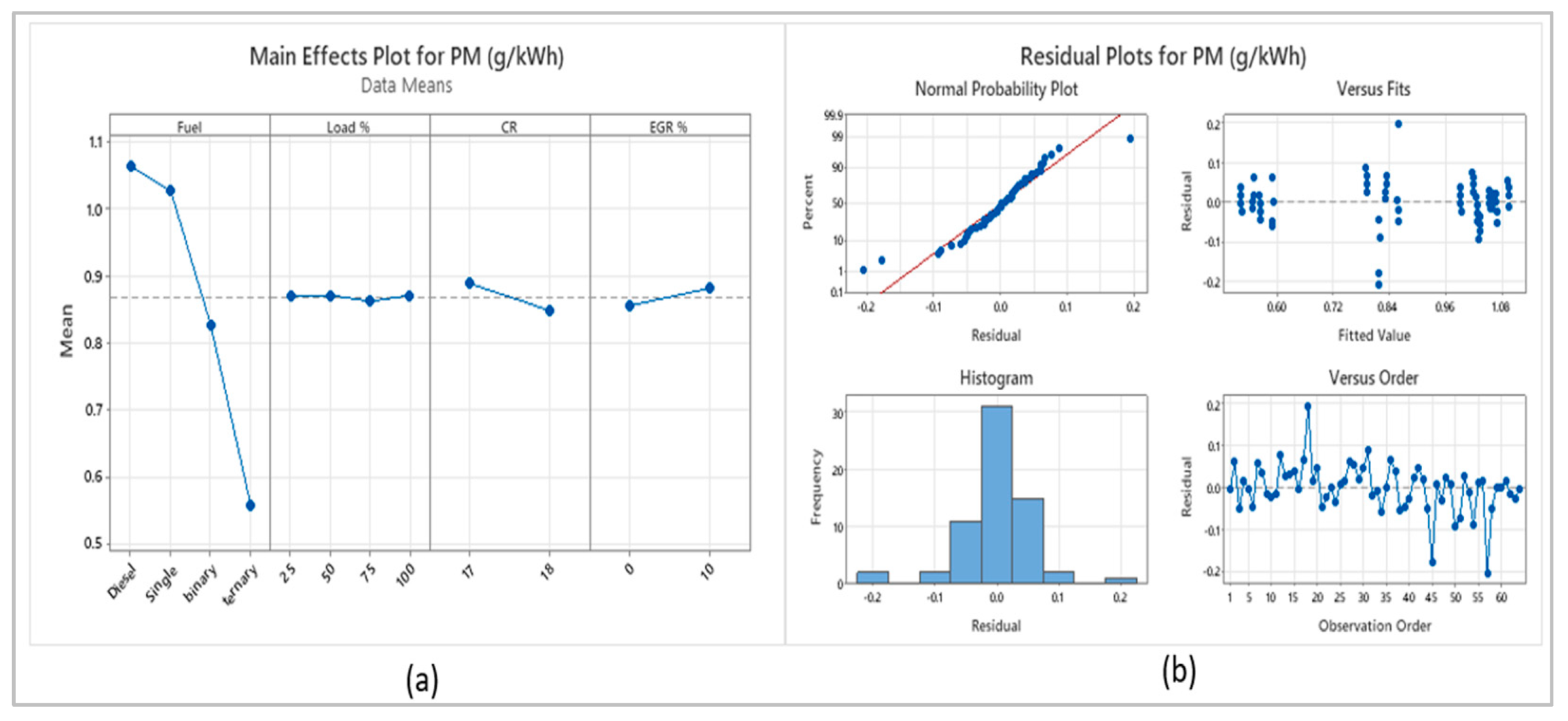
4.2. Main Effect Plots for PM

The main effect plot (Figure 16a) for PM shows that fuel type has the most dominant influence, with PM emissions decreasing markedly from diesel to single, binary, and ternary biodiesel blends, indicating improved soot oxidation due to higher fuel oxygen content. Load has a comparatively minor effect on PM, showing only marginal variation across the tested range, while increasing CR slightly reduces PM due to enhanced combustion efficiency. The application of 10% EGR results in a small increase in PM compared to zero EGR, attributed to reduced oxygen availability and lower combustion temperatures. The residual plots in Figure 16b confirm the robustness of the PM model: residuals follow a near-linear trend in the normal probability plot, the histogram is approximately symmetric, and the residuals versus fitted values and observation order are randomly distributed. These diagnostics indicate normality, homoscedasticity, and independence of errors, validating the adequacy and predictive reliability of the PM regression model.

4.3. Main Effect Plots for BTE

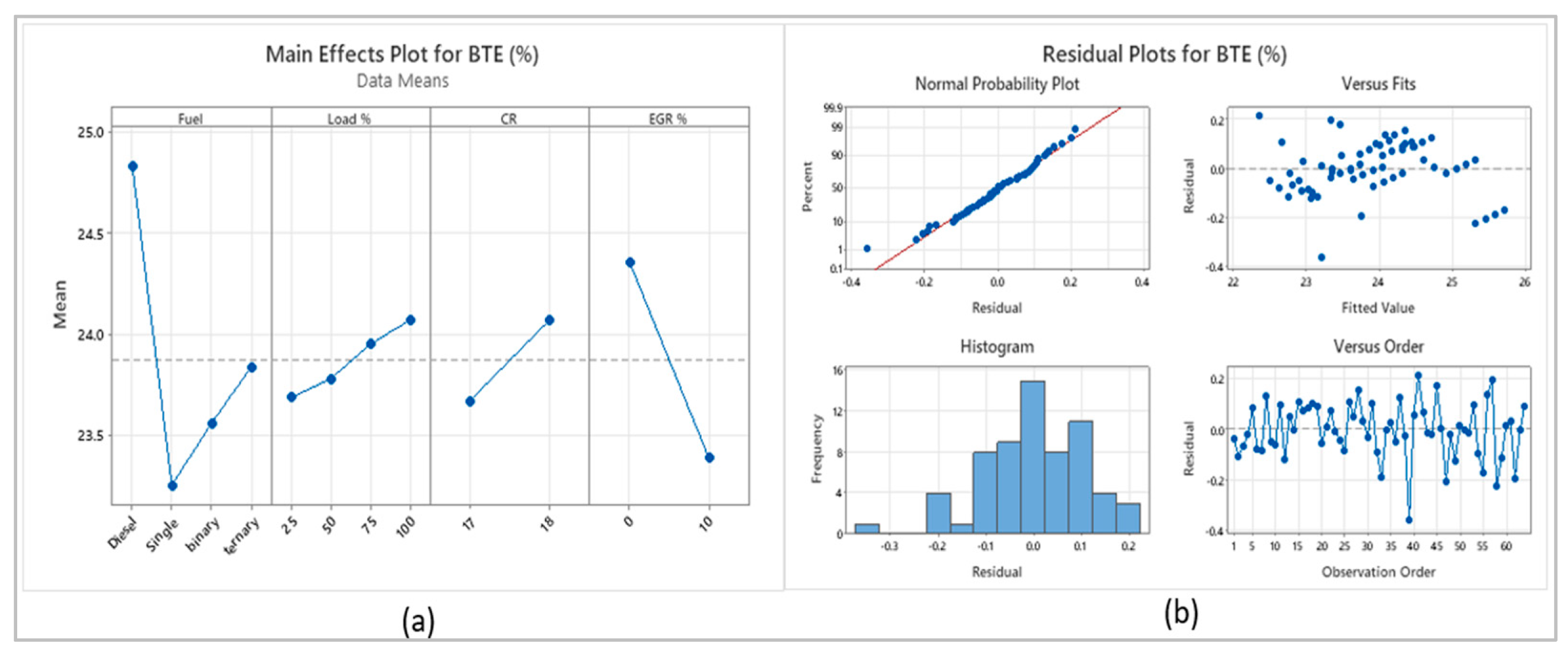
The main effect plot (Figure 17a) for BTE indicates that fuel type significantly influences BTE, with diesel exhibiting the highest BTE, followed by a reduction with the single biodiesel blend and a gradual improvement with binary and ternary blends due to improved combustion stability and oxygen availability. BTE increases consistently with load as a larger fraction of the fuel energy is converted into useful work at higher engine loads. An increase in CR from 17 to 18 further enhances BTE by improving thermodynamic efficiency and promoting more complete combustion. In contrast, applying 10% EGR results in a noticeable reduction in BTE compared to zero EGR, due to charge dilution and reduced oxygen concentration, which slows combustion. The residual plots in Figure 17b confirm the adequacy of the BTE model: the normal probability plot shows residuals that closely follow a straight line, the histogram indicates an approximately normal distribution, and the residuals-versus-fitted values and observation-order plots exhibit random scatter without discernible patterns. The observed trends support the assumptions of normality, constant variance, and independence, thereby confirming that the regression model effectively captures the influence of engine parameters on BTE.

4.4. Effect of Fuel Type and Engine Operating Parameters on NOx Emissions

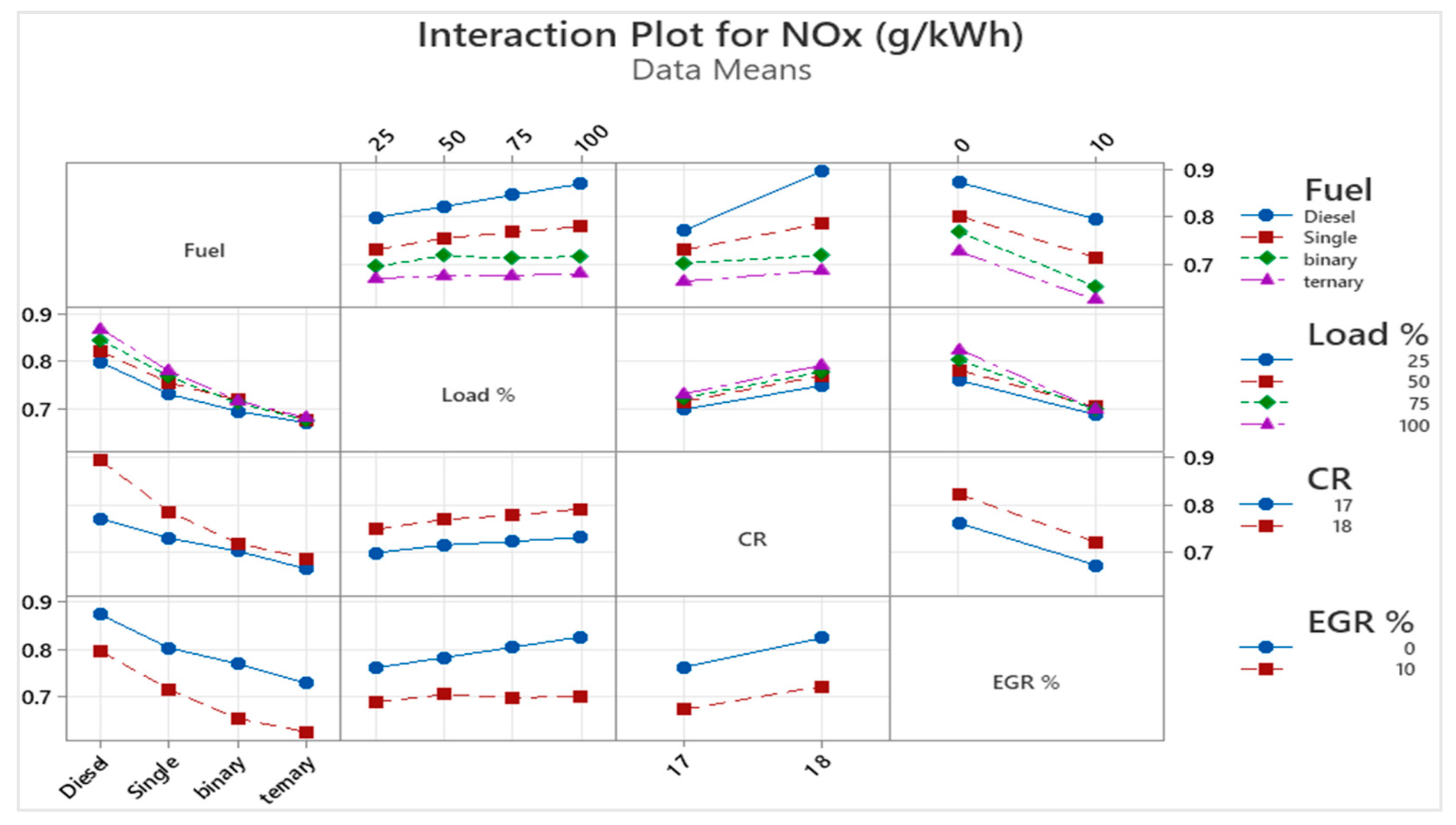
Figure 18 shows that the type of fuel, load, compression ratio, and EGR all have a significant effect on NOx emissions, both individually and in combination.
Diesel always produces the most NOx, but single, binary, and especially ternary biodiesel blends produce less NOx because they burn more evenly and do not reach as high a temperature at their maximum points. NOx increases with load and a higher CR (17 to 18) for all fuels, since combustion temperatures are higher. However, biodiesel blends show a smaller increase than diesel. Using 10% EGR lowers NOx emissions under all conditions by adding oxygen and increasing charge heat capacity. The effects are higher at high load and CR. In general, ternary biodiesel blends with optimal CR and moderate EGR produce the least NOx. This shows how important it is to manage both fuel and engine parameters.

4.5. Effect of Fuel Type and Engine Operating Parameters on PM Emissions

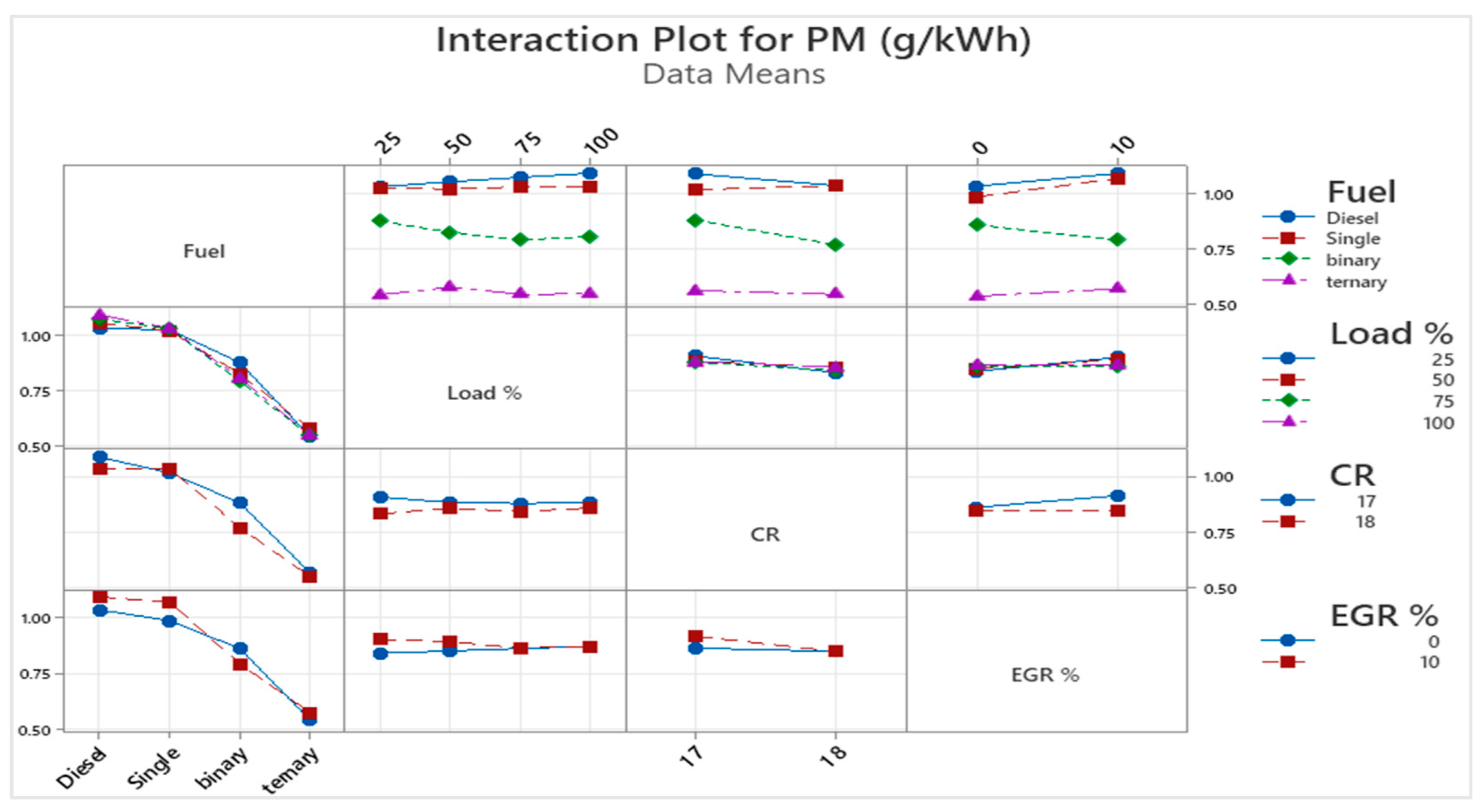
Figure 19 demonstrates that particulate matter emissions are significantly influenced by fuel type, load, compression ratio, and exhaust gas recirculation, along with notable interaction effects. Diesel generates the highest particulate matter (PM) across all conditions, whereas single, binary, and particularly ternary biodiesel blends exhibit progressively lower PM levels. The decrease is attributable to the oxygen concentration in biodiesel, which enhances combustion and soot oxidation. PM emissions decrease with increasing load and CR from 17 to 18, particularly for biodiesel blends, as higher temperatures facilitate soot combustion. The incorporation of 10% EGR marginally elevates PM levels due to oxygen dilution; however, this impact is negligible for biodiesel fuels. The lowest PM emissions are achieved with ternary blends at elevated compression ratios, underscoring the need to optimize both fuel and engine parameters.

4.6. Effect of Fuel Type and Engine Operating Parameters on BTE

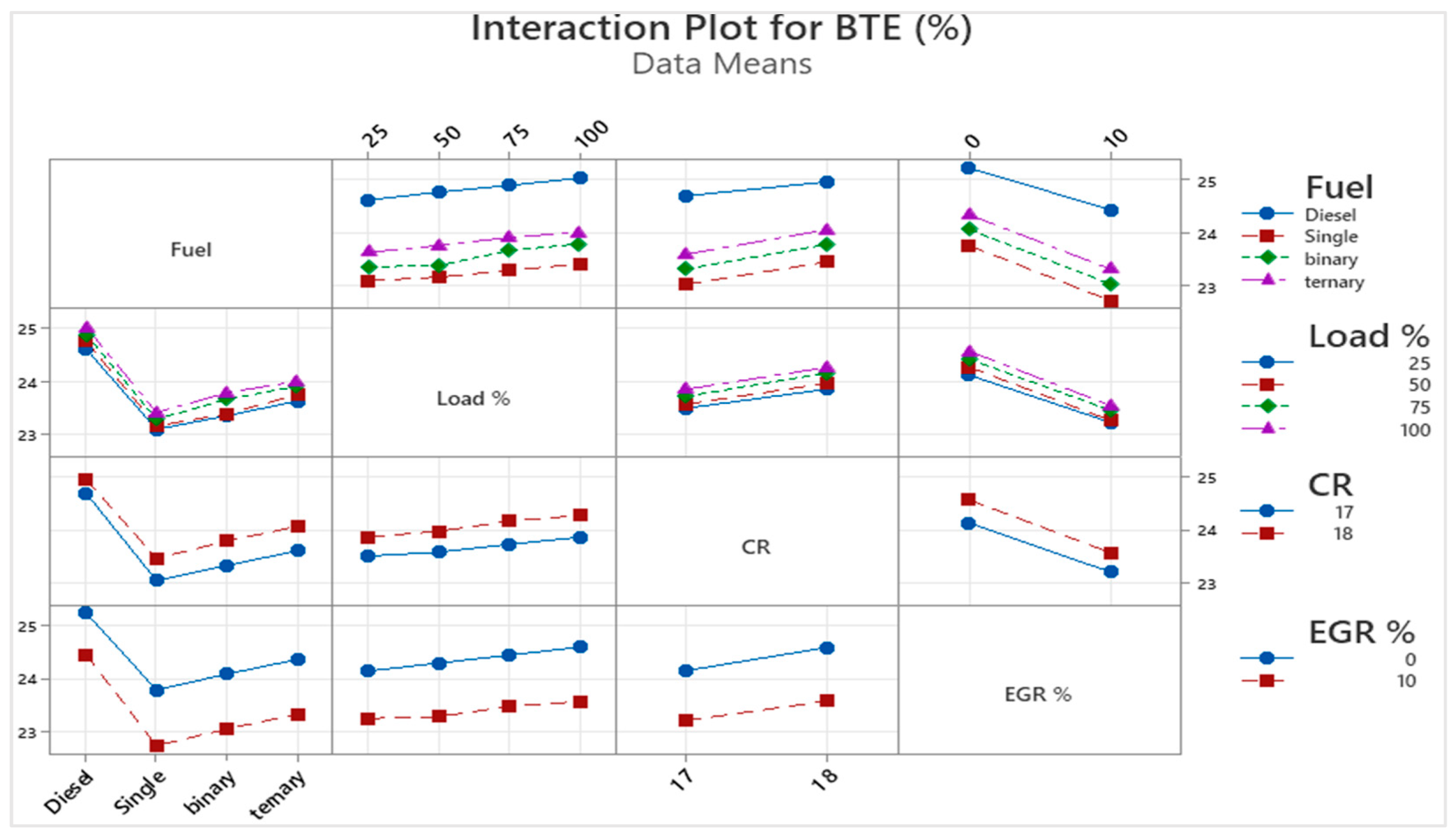
Figure 20 demonstrates how fuel type, load, compression ratio, and EGR all substantially impact BTE. The ternary blend achieves the best BTE among biodiesel blends due to increased combustion from synergistic oxygenated components, whereas diesel exhibits the highest BTE due to its higher calorific value. Biodiesel blends show somewhat lower efficiency. For all fuels, BTE rises with load and with higher CR (17 to 18) due to improved combustion and energy use; biodiesel blends gain more from higher CR. Due to oxygen dilution and slower combustion, applying of 10% EGR results in a slight decrease in BTE. The usefulness of ternary biodiesel blends for CI engines is supported by their competitive efficiency and minimal performance loss when combined with higher CR.

4.7. Correlation: NOx (g/kWh), PM (g/kWh)

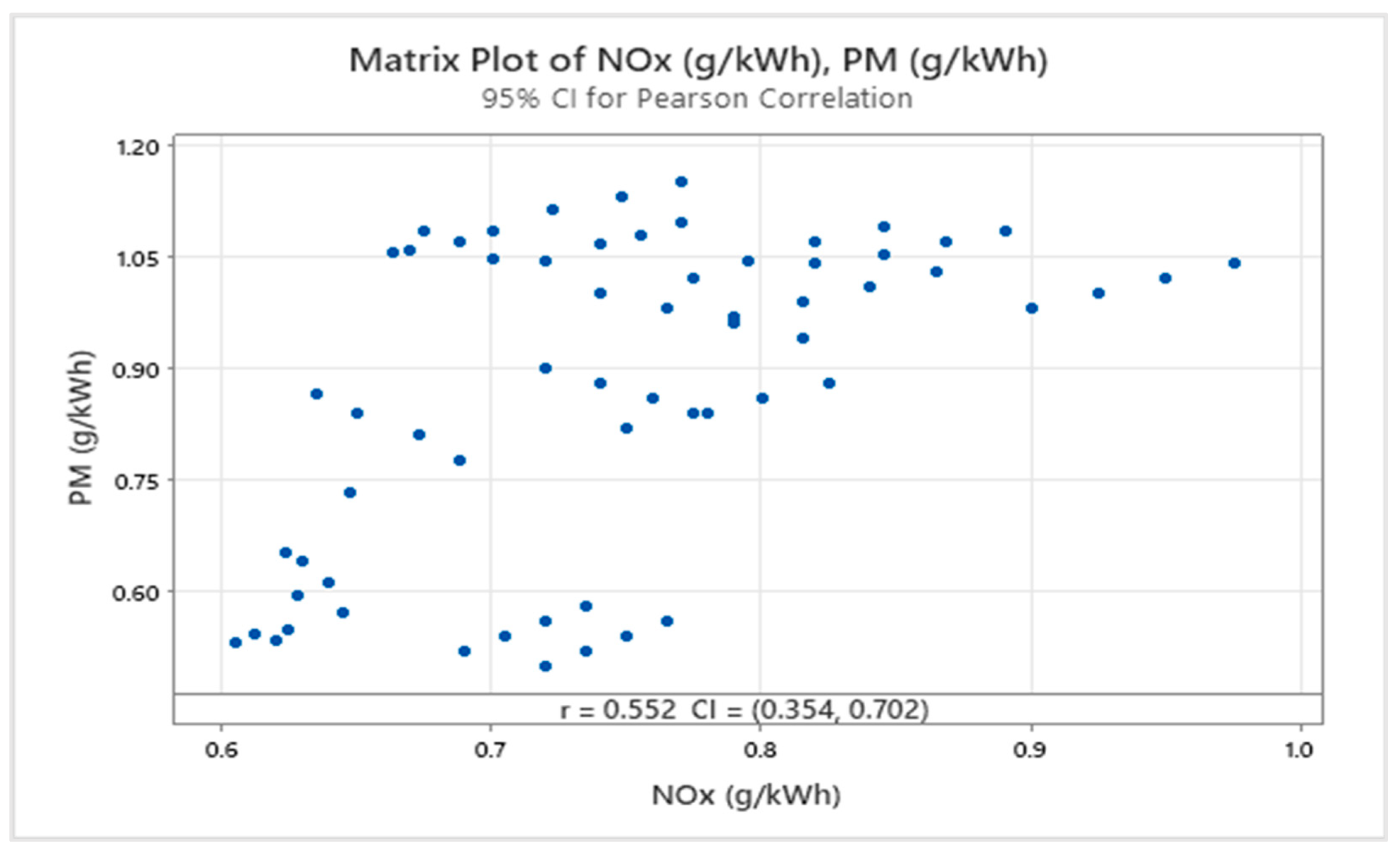
A moderate, statistically significant positive correlation (r = 0.552, 95% CI: 0.354–0.702) between NOx and PM emissions is seen in Figure 21, suggesting that conditions that promote higher combustion temperatures tend to enhance both emissions. However, because of their disparate production procedures, the discernible scatter in the data confirms that the relationship is not strictly linear. Oxygenated fuels can partially decouple the NOx–PM trade-off, as shown by the presence of low-PM spots at moderate NOx levels, especially for biodiesel blends. Overall, the plot shows that by choosing the right fuel and optimizing engine parameters, NOx and PM may be reduced simultaneously.

4.8. Regression Equation

The regression equations quantify the individual influence of fuel type, load, CR, and EGR on engine responses. For NOx (see Equation (3)), positive coefficients for diesel, higher load, CR 18, and EGR 0 indicate increased NOx formation under these conditions, whereas binary and ternary blends, CR 17, and 10% EGR show negative coefficients, confirming their effectiveness in NOx reduction. For PM (see Equation (4)), diesel and single biodiesel increase PM, whereas a strong negative coefficient for the ternary blend highlights its superior soot-reduction capability; PM is further reduced at CR 18, while the effect of load is marginal. For BTE (see Equation (5)), positive coefficients for diesel, higher load, CR 18, and EGR 0 indicate improved efficiency under these conditions, whereas single, binary, and ternary blends and EGR 10 slightly reduce BTE due to increased viscosity and dilution effects. Overall, the equations clearly demonstrate the trade-off between efficiency and emissions and validate the experimental trends observed for biodiesel blends and EGR operation.
N O x   g k W h = 0.74509 + 0.08928 × d i e s e l + 0.01359 × S i n g l e 0.03397 × b i n a r y 0.06891   t e r n a r y 0.02097 × L o a d 25 % 0.00203 × L o a d 50 % + 0.00591 × L o a d 75 % + 0.01709 × L o a d 100 % 0.02753 × C R 17 + 0.02753 × C R 18 + 0.04787 × E G R 0 0.04787 × E G R 10
P M   g k W h = 0.86775 + 0.1944 × d i e s e l + 0.1589 × S i n g l e 0.0420 × b i n a r y 0.3112   t e r n a r y + 0.0021 × L o a d 25 % + 0.0025 × L o a d 50 % 0.0067 × L o a d 75 % + 0.0022 × L o a d 100 % + 0.02031 × C R 17 0.02031 × C R 18 0.01322 × E G R 0 + 0.01322 × E G R 10
B T E   % = 23.8703 + 0.9634 × d i e s e l 0.6184 × S i n g l e 0.3116 × b i n a r y 0.0334   t e r n a r y 0.1853 × L o a d 25 % 0.0922 × L o a d 50 % + 0.0784 × L o a d 75 % + 0.1991 × L o a d 100 % 0.2012 × C R 17 + 0.2012 × C R 18 + 0.4859 × E G R 0 0.4859 × E G R 10
The statistical performance metrics in Table 9 indicate that the developed regression models exhibit good-to-excellent predictive capability across all engine responses. The high R2 values (82–98%) show that a substantial portion of the variability in emissions, performance, and combustion parameters is captured by the models. The close match between R2, adjusted R2, and predicted R2 across all responses shows that the model is strong and not overfitting. Emission factors like NOx and PM can be predicted with very small errors, while HC and smoke opacity show slightly lower R2 values, suggesting greater variation in the experimental results for these parameters. Performance and combustion factors such as BTE, SFC, CP, and NHR are predicted very well by the model, with high R2 values and small prediction errors. Overall, the low error rates confirm that these regression models are suitable for reliably predicting and optimizing the performance and emissions of CI engines using biodiesel blends.

4.9. Optimization Results

Table 10 explains the objective functions and constraints used to optimize multiple responses in a CI engine. Parameters related to combustion and performance, such as NHR and CP, are set to be maximized to ensure efficient and stable combustion, and BTE is also maximized with a higher weight to highlight its importance for overall energy conversion efficiency. On the other hand, emission and fuel consumption factors like CO, SFC, smoke opacity, PM, HC, and NOx are set to be minimized to meet emission standards and improve fuel economy. BTE, PM, and NOx are given higher priority and weight (2) because they are key in balancing engine performance with strict emission controls, while the other responses are given equal but lower priority (weight and importance = 1). The lower, target, and upper limits set for these responses show a realistic balance between better performance, efficient combustion, and lower emissions, ensuring the optimization leads to a practical and balanced operating condition. Compared to diesel operation, the optimized ternary biodiesel condition (100% load, CR = 18, and 10% EGR) still provides a very good balance between engine performance and emission control, as shown in the multi-response optimization results in Table 11.
While the combustion metrics NHR and CP decline by 0.71% and 1.57%, respectively, under these improved settings, BTE reduces by 0.61%, remaining within acceptable bounds and suggesting stable combustion behaviour. The emission and fuel economy features, on the other hand, show significant improvements. Smoke opacity is reduced by 44.02%, PM by 50.78%, NOx by 30.34%, HC by 11.11%, and CO by 10.26%. Additionally, there is a 6.82% drop in SFC, showing better fuel efficiency. Overall, the optimized ternary biodiesel setup greatly lowers emissions with only small effects on performance, proving it can be a cleaner and more efficient alternative to regular diesel fuel in compression–ignition engines.

5. Conclusions and Future Scope

5.1. Conclusions

In a single-cylinder compression–ignition engine operating at compression ratios of 17 and 18, with and without 10% EGR, the performance, combustion, and emission characteristics of CSOME, NOME, and OPOME biodiesel blends were studied in their single, mixed, and combined forms. The results show that ternary blends, which combine these blends, generally yield better emissions than diesel and other blends, with significant reductions in smoke (44%), PM (51%), NOx (30%), HC (11%), CO (10%), and SFC (6.8%). Among the tested fuels, HB and HBO70 had lower levels of hydrocarbons and particulate emissions because they contain more oxygen, burn more effectively, and have a better fatty acid mix. Analysis using GC-MS showed that these ternary blends contain oxygenated compounds and a good balance of saturated and unsaturated fatty acid methyl esters, which help them burn more completely and reduce soot and unburned hydrocarbons. FTIR analysis also showed that these blends contain more ester groups, such as C=O and C–O, and lack harmful groups, which helps them burn more efficiently and produce cleaner exhaust. Even though using biodiesel increases nitrogen oxide emissions, adding 10% EGR helps reduce them. Ternary blends had a better balance between nitrogen oxide and particulate matter emissions. Regression and correlation analysis showed a strong link between nitrogen oxides and particulate matter, confirming that the models developed are reliable. Even though the brake thermal efficiency, specific fuel consumption, and net heat release of ternary blends were slightly lower than those of diesel, the results suggest that HB and HBO70 can be good alternatives to diesel, offering better emission performance with only slight efficiency losses.

5.2. Future Scope

To better understand how combustion affects engines and reduces NOx emissions, future studies should explore more advanced and flexible EGR methods, as well as AI-based tools for adjusting engine settings and fuel mix in real time. More testing is needed to determine how long ternary biodiesel blends last, including how deposits form, how parts wear down, and how engine oil breaks down. Research should also explore how well post-treatment systems like DOC, DPF, and SCR work with these fuels, how engines perform when starting cold or during sudden changes in driving conditions, and how efficient they are in multi-cylinder and hybrid compression–ignition engines. Using biodiesel made from non-food sources and waste materials can improve sustainability and support the goals of a circular economy. Future work will focus on CFD-based in-cylinder simulations using GC–MS-derived surrogate fuel models to elucidate spray, combustion, and emission formation mechanisms under varying compression ratio and EGR conditions.


Author Contributions

Conceptualization, G.G.N. and H.M.D.; methodology, G.G.N. and H.M.D.; validation, G.G.N.; formal analysis, G.G.N.; investigation, G.G.N.; resources, G.G.N.; data curation, G.G.N. and H.M.D.; writing—original draft preparation, G.G.N.; writing—review and editing, G.G.N., H.M.D. and I.E.S.; visualization, G.G.N. and I.E.S.; supervision, H.M.D. and I.E.S.; project administration, H.M.D. All authors have read and agreed to the published version of the manuscript.

Funding

This work is supported in part by the European Union’s programming for research and innovation Horizon Europe under the Marie Skłodowska-Curie Action grant agreement No. 101179991–VERDEDRIVE-HORIZON-MSCA-2023-SE-01-01.

Institutional Review Board Statement

Not applicable.

Informed Consent Statement

Not applicable.

Data Availability Statement

Data are contained within the article.

Acknowledgments

The experimental investigations were carried out in the Internal Combustion Engines Laboratory at Apex Innovations, Sangli, Maharashtra, India. The authors gratefully acknowledge the technical support and research infrastructure provided by the Research Centre at M.I.T., Chhatrapati Sambhaji Nagar, Maharashtra, India, and Indian Biodiesel Pvt. Ltd., Baramati, Maharashtra, India. I.E.S. acknowledges the support by the European Union’s programme for research and innovation Horizon Europe under the Marie Skłodowska—Curie Action grant agreement No101179991–VERDEDRIVE-HORIZON-MSCA-2023-SE-01-01. Views and opinions expressed are, however, those of the author(s) only and do not necessarily reflect those of the European Union or European Research Executive Agency. Neither the European Union nor the granting authority can be held responsible for them.

Conflicts of Interest

The authors declare no conflicts of interest.

Abbreviations

The following abbreviations are used in this manuscript:
CSOMECottonseed Oil Methyl Ester
NOMENeem Oil Methyl Ester
OPOMEOrange Peel Oil Methyl Ester
FTIRFourier Transform Infrared Spectroscopy
SFCSpecific Fuel Consumption
CICompression Ignition
EGRExhaust Gas Recirculation
GC-MSGas Chromatography–Mass Spectroscopy

References

  1. Demirbas, A. Progress and recent trends in biodiesel fuels. Energy Convers. Manag. 2009, 50, 14–34. [Google Scholar] [CrossRef]
  2. Lapuerta, M.; Armas, O.; Rodríguez-Fernández, J. Effect of biodiesel fuels on diesel engine emissions. Prog. Energy Combust. Sci. 2008, 34, 198–223. [Google Scholar] [CrossRef]
  3. Balaji, G.; Suresh Kumar, K.; Cheralathan, M. Experimental mitigation of NOx emission in exhaust gases of CI engine fuelled with methyl ester of cottonseed oil blend. Int. J. Ambient Energy 2020, 41, 1352–1356. [Google Scholar] [CrossRef]
  4. Kale, B.; Borikar, V.N.; Hatwalne, P.A.; Nimbalkar, V.M. Experimental Investigation of Combustion and Emission Characteristics of Variable Compression Ratio Compression Ignition Engine Using Cotton Seed Oil Biodiesel Blends. IRA-Int. J. Technol. Eng. 2017, 7, 34. [Google Scholar] [CrossRef][Green Version]
  5. Yesilyurt, M.K.; Cesur, C.; Aslan, V.; Yilbasi, Z. The production of biodiesel from safflower (Carthamus tinctorius L.) oil as a potential feedstock and its usage in compression ignition engine: A comprehensive review. Renew. Sustain. Energy Rev. 2020, 119, 109574. [Google Scholar] [CrossRef]
  6. Deep, A.; Kumar, N.; Gupta, D.; Sharma, A.; Patel, J.S.; Karnwal, A. Potential Utilization of the Blend of Orange Peel Oil Methyl Ester and Isopropyl Alcohol in CI Engine; SAE Technical Paper; 2014-01-2778; SAE International: Warrendale, PA, USA, 2014. [Google Scholar] [CrossRef]
  7. Ganesan, N.; Masimalai, S. Experimental investigation on a performance and emission characteristics of single cylinder diesel engine powered by waste orange peel oil biodiesel blended with antioxidant additive. Energy Sources Part A Recovery Util. Environ. Eff. 2020, 42, 1412–1423. [Google Scholar] [CrossRef]
  8. Ismaila, S.S.; Sani, Y.; Sani, A.A.; Yakasai, S.M.; Momoh, H.; Mohammed, S.E. Determination of fatty acids and physicochemical properties of neem (Azadrachta indica L.) seed oil extracts. Dutse J. Pure Appl. Sci. 2022, 8, 149–160. [Google Scholar] [CrossRef]
  9. Mohanty, D.K.; Anantha Padmanabha, H.S. Performance and Emission Characteristics of CRDI Engine Fuelled with Cotton Seed Oil Blended Biodiesel. J. Mines Met. Fuels 2023, 71, 1329–1335. [Google Scholar] [CrossRef]
  10. Dhar, A.; Agarwal, A.K. Effect of Karanja biodiesel blend on engine wear in a diesel engine. Fuel 2014, 134, 81–89. [Google Scholar] [CrossRef]
  11. Nandi, S.; Bhattacharyya, R.; Das, S. Oil to Biodiesel from Two Potential Sources—A 360 degree Comparative Study. Asian J. Appl. Sci. Technol. 2020, 4, 91–99. [Google Scholar] [CrossRef]
  12. Naik, G.G.; Dharmadhikari, H.M. Methods for reducing NOx and PM emissions in compression ignition engine: A review. Mater. Today Proc. 2023, 72, 1406–1412. [Google Scholar] [CrossRef]
  13. Ashok, B.; Nanthagopal, K.; Arumuga Perumal, D.; Babu, J.M.; Tiwari, A.; Sharma, A. An investigation on CRDi engine characteristic using renewable orange-peel oil. Energy Convers. Manag. 2019, 180, 1026–1038. [Google Scholar] [CrossRef]
  14. Deep, A.; Kumar, R.; Kumar, N. Studies on the use of orange peel oil and ethanol in an unmodified agricultural diesel engine. Energy Sources Part A Recovery Util. Environ. Eff. 2019, 41, 1817–1827. [Google Scholar] [CrossRef]
  15. Chaudhary, A.; Panchal, S.H.; Surana, A.; Sreekanth, M.; Ismail, S.; Feroskhan, M. Performance, emission and combustion characteristics of various biodiesel blends. J. Therm. Anal. Calorim. 2022, 147, 2455–2479. [Google Scholar] [CrossRef]
  16. Musthafa, B.; Prabhahar, M. Case Studies in Thermal Engineering Experimental and numerical analysis of performance and emission characteristics of CI engine using Juliflora-Gulmohar biodiesel/blends and ANN prediction using MATLAB. Case Stud. Therm. Eng. 2025, 72, 106338. [Google Scholar] [CrossRef]
  17. Kanwar, R.; Rahul, G. Performance, emission, combustion and economics analysis of CI engine fueled with mixed oil biodiesel blends from waste cooking oil and pongamia oil. Discov. Appl. Sci. 2025, 7, 609. [Google Scholar] [CrossRef]
  18. Rastogi, A.; Shaban, M.; Saxena, S.; Singh, T. Neem Biodiesel: An Alternative Fuel. Innovare J. Eng. Technol. 2021, 9, 18–21. [Google Scholar] [CrossRef]
  19. Singh, M.; Anjum, F.; Yadav, V.; Sheikh, M.Y.; Mathur, Y.B. Analysis of Combustion on Compression Ignition Diesel Engine fuelled with blends of Neem Biodiesel. Int. Res. J. Eng. Technol. 2017, 4, 1442–1454. [Google Scholar]
  20. Raman, R.; Garg, A.; Said, Z.; Barmavatu, P.; Caliskan, H.; Garg, A. Experimental assessment of hydrogen enrichment and ZnO nanoparticle additives on the performance and emissions of a UTO biodiesel-fuelled CRDI diesel engine. Int. J. Hydrogen Energy 2025, 198, 152575. [Google Scholar] [CrossRef]
  21. Kaisan, M.U.; Anafi, F.O.; Nuszkowski, J.; Kulla, D.M.; Umaru, S. Exhaust emissions of biodiesel binary and multi-blends from Cotton, Jatropha and Neem oil from stationary multi cylinder CI engine. Transp. Res. Part D Transp. Environ. 2017, 53, 403–414. [Google Scholar] [CrossRef]
  22. Pawar, R.; Jagadale, K.; Gujar, P.; Barade, V.; Solankure, B. A comprehensive review on influence of biodiesel and additives on performance and emission of diesel engine. Chem. Eng. Trans. 2018, 65, 451–456. [Google Scholar] [CrossRef]
  23. Qi, D.H.; Chen, H.; Geng, L.M.; Bian, Y.Z. Effect of diethyl ether and ethanol additives on the combustion and emission characteristics of biodiesel-diesel blended fuel engine. Renew. Energy 2011, 36, 1252–1258. [Google Scholar] [CrossRef]
  24. Sudarsanam, M.; Jayaprabakar, J.; Rao, Y.K.S.S.; Venu, H.; Thirugnanasambandam, A.; Yadav, A.S.; Alam, T.; Sharma, A. Experimental investigation on a diesel engine using waste cooking oil biodiesel-alcohol-diesel ternary blends with Al2O3 nanoparticles. Sci. Rep. 2025, 15, 42979. [Google Scholar] [CrossRef]
  25. Kannan, M.; Sathish Babu, R.; Sathish, S. Experimental investigations on the performance and emission characteristics of CI engine fuelled with biodiesel from neem oil. Int. J. Ambient Energy 2022, 43, 2351–2359. [Google Scholar] [CrossRef]
  26. Mourshed, M.; Ghosh, S.K.; Islam, M.W. Experimental investigation of cotton (Gossypium hirsutum) seed oil and neem (Azadirachta indica) seed oil methyl esters as biodiesel on DI (Direct Injection) engine. Int. J. Ambient Energy 2022, 43, 1772–1782. [Google Scholar] [CrossRef]
  27. Nabi, N.; Akhter, S.; Shahadat, M.Z. Improvement of engine emissions with conventional diesel fuel and diesel—Biodiesel blends. Bioresour. Technol. 2006, 97, 372–378. [Google Scholar] [CrossRef] [PubMed]
  28. Syed Sadiq Nawaz, I.; Asokan, M.A. Optimization and experimental investigation of compression ignition diesel engine performance and emission characteristics with gulmohar biodiesel/diesel blends using response surface methodology. Eng. Res. Express 2024, 6, 045564. [Google Scholar] [CrossRef]
  29. Dengiso, T.; Ramayya, V.; Babu, R. Effects of graphene oxide nanoparticles on the performance and emissions of marine microalgae-derived biodiesel-diesel blends in a diesel engine. Energy Convers. Manag. X 2025, 28, 101259. [Google Scholar] [CrossRef]
  30. Hariram, V.; Sathishbabu, R.; Godwin John, J.; Vijayakumar, K.; Sangeeth Kumar, E.; Kamakshi Priya, K. Enhanced combustion and emission characteristics of diesel-algae biodiesel-hydrogen blends in a single-cylinder diesel engine. Results Eng. 2025, 26, 104676. [Google Scholar] [CrossRef]
  31. Maseko, N.N.; Enke, D.; Owolawi, P.A.; Iwarere, S.A.; Oluwafemi, O.S.; Pocock, J. Usage of Silica Xerogel from African Sugarcane Leaves as a Catalyst in Biodiesel Production through Transesterification. ACS Omega 2025, 10, 28032–28042. [Google Scholar] [CrossRef]
  32. Tanwar, D.; Sharma, D.; Mathur, Y.P. Production and Characterization of Neem Oil Methyl Ester. Int. J. Eng. Res. Technol. 2013, 2, 1896–1903. [Google Scholar]
  33. Sharma, A.; Pali, H.S.; Kumar, M.; Singh, N.K.; Singh, Y.; Singh, D. Study the effect of optimized input parameters on a CRDI diesel engine running with waste frying oil methyl ester-diesel blend fuel with ZnO nanoparticles: A response surface methodology approach. Biomass Convers. Biorefinery 2023, 13, 13127–13152. [Google Scholar] [CrossRef]
  34. Usman, M.H.; Kamaroddin, M.F.; Sani, M.H.; Dabai, A.I.; Aliero, A.S.; El-Rayyes, A. Maximizing harvesting of Chlorella vulgaris via calcium oxide nanoparticle-modified fungal pellet using response surface methodology. Biochem. Eng. J. 2025, 219, 109700. [Google Scholar] [CrossRef]
  35. Megiso, T.D.; Ancha, V.R.; Nallamothu, R.B. Graphene oxide-doped marine microalgal biodiesel-diesel blends for enhanced performance and emission reduction in compression ignition engines: An experimental approach. Environ. Sci. Pollut. Res. Int. 2026, 33, 384–403. [Google Scholar] [CrossRef] [PubMed]
  36. Zia, U.; Ahmad, M.; Alsahli, A.A.; Faiz, I.; Sultana, S.; Caicedo, A.V.; Mussagy, C.U.; Mustafa, A. Integrating environmental remediation with biodiesel production from toxic non-edible oil seeds (Croton bonplandianus) using a sustainable phyto-nano catalyst. Biomass Bioenergy 2024, 190, 107406. [Google Scholar] [CrossRef]
  37. Ahmed, B.M.; Luo, M.; Elbadawi, H.A.M.; Mahmoud, N.M.; Sui, P.C. Experimental Study of 2-Ethylhexyl Nitrate Effects on Engine Performance and Exhaust Emissions of Diesel Engine Fueled with Diesel–2-Methylfuran Blends. Energies 2025, 18, 98. [Google Scholar] [CrossRef]
  38. Pandey, S.; Diwan, P.; Sahoo, P.K.; Thipse, S.S. The effect of exhaust gas recirculation and premixed fuel ratio on combustion and emissions in a partial homogeneous charge compression ignition-direct injection engine fueled with bioethanol and diesel. Biofuels 2015, 6, 357–367. [Google Scholar] [CrossRef]
  39. Yang, R.; Liu, J.; Liu, J. Investigation of the formation mechanisms of nitrogen-based pollutants in ammonia-diesel dual-fuel engines by decoupling dilution, thermal, and kinetic effects. J. Energy Inst. 2025, 120, 102125. [Google Scholar] [CrossRef]
  40. Zhang, H.; Zhou, L.; Huang, X. Upgrading MnO2@CuO with GO as a superior heterogeneous nanocatalyst for transesterification of dairy waste oils to biodiesel through electrolysis procedure. Mater. Today Sustain. 2023, 24, 100607. [Google Scholar] [CrossRef]
  41. Agarwal, S.; Yadav, A.; Mudgal, A.; Khan, S. Comparative evaluation of diesel engine performance and emission characteristics using carbon nanotubes & graphene oxide in ternary fuel (jojoba biodiesel-diesel-methanol) blends. Next Res. 2025, 2, 100141. [Google Scholar] [CrossRef]
  42. Fayad, M.A.; Dhahad, H.A. Effects of adding aluminum oxide nanoparticles to butanol-diesel blends on performance, particulate matter, and emission characteristics of diesel engine. Fuel 2021, 286, 119363. [Google Scholar] [CrossRef]
  43. Suresh, R.; Ashwin, R.; Uppuluri, K.; Mohan Raj, T. Experimental Investigation and Operating Characteristics of LHR Engine Using Pongamia Pinnata and Azadirachta Indica Biodiesel Blend with Industrial Waste Additive; SAE International: Warrendale, PA, USA, 2025; Volume 28. [Google Scholar] [CrossRef]
  44. Sarkar, M.; Daimari, J.; Basumatary, S.; Kumar, K.J.; Das, R.; Deka, A.K. Sustainability Utilization of Musa acuminata blossom peel waste mediated heterogeneous catalyst for biodiesel production from sesame oil. RSC Sustain. 2024, 2, 1930–1935. [Google Scholar] [CrossRef]
  45. Durairaj, R.B.; Anderson, A.; Mageshwaran, G.; Britto Joseph, G.; Balamurali, M. Performance and Emission characteristics of cotton seed and neem oil biodiesel with CeO2 additives in a single-cylinder diesel engine. Int. J. Ambient Energy 2019, 40, 396–400. [Google Scholar] [CrossRef]
  46. Mishra, D.; Kumar, N.; Chaudhary, R. Effect of orange peel oil on the performance and emission characteristics of diesel engine fueled with quaternary blends. Energy Sources Part A Recovery Util. Environ. Eff. 2023, 45, 650–660. [Google Scholar] [CrossRef]
  47. Varis, J. Studying Dependencies Between Performance Measures to Enable More Proactive Operations Management in Software Development. Master’s Thesis, Tampere University, Industrial Engineering and Management, Tampere, Finland, 2022. [Google Scholar]
  48. Czabadai, L.Á.; Topa, Z.; Áldorfai, G. Territorial examination of the income status of Hungarian cities’ and towns’ inhabitants. Visegr. J. Bioecon. Sustain. Dev. 2017, 6, 64–68. [Google Scholar] [CrossRef][Green Version]
  49. Jain, S.; Sharma, M.P. Prospects of biodiesel from Jatropha in India: A review. Renew. Sustain. Energy Rev. 2010, 14, 763–771. [Google Scholar] [CrossRef]
  50. Miya, M.; Venkateswarlu, K. An experimental investigation on CRDI diesel engine coupled with EGR using cotton seed biodiesel. Int. J. Ambient Energy 2022, 43, 4870–4877. [Google Scholar] [CrossRef]
Figure 1. CRDI VCR engine test rig with EGR and emission measurement facility.
Fire 09 00089 g001
Figure 2. Comparison of average NOx (g/kWh) across fuels with CR and EGR.
Fire 09 00089 g002
Figure 3. Comparison of average PM (g/kWh) across fuels with CR and EGR.
Fire 09 00089 g003
Figure 4. Comparison of average HC (g/kWh) across fuels with CR and EGR.
Fire 09 00089 g004
Figure 5. Comparison of average smoke opacity (% Vol) across fuels with CR and EGR.
Fire 09 00089 g005
Figure 6. Comparison of CO (% Vol) across fuels with CR and EGR.
Fire 09 00089 g006
Figure 7. Comparison of average BTE (%) across fuels with CR and EGR.
Fire 09 00089 g007
Figure 8. Comparison of average SFC (kg/kWh) across fuels with CR and EGR.
Fire 09 00089 g008
Figure 9. Comparison of CP (Bar) across fuels with CR and EGR.
Fire 09 00089 g009
Figure 10. Cylinder Pressure vs. Crank Angle (CR18, No EGR).
Fire 09 00089 g010
Figure 11. Cylinder Pressure vs. Crank Angle (CR18, 10% EGR).
Fire 09 00089 g011
Figure 12. Comparison of average NHR (J/deg CA) across fuels with CR and EGR.
Fire 09 00089 g012
Figure 13. NHR vs. Crank Angle (CR18, No EGR).
Fire 09 00089 g013
Figure 14. NHR vs. Crank Angle (CR18, 10% EGR).
Fire 09 00089 g014
Figure 15. (a) Main effect plots, (b) residual plots for NOx.
Fire 09 00089 g015
Figure 16. (a) Main effect plots, (b) residual plots for PM.
Fire 09 00089 g016
Figure 17. (a) Main effect plots, (b) residual plots for BTE.
Fire 09 00089 g017
Figure 18. Interaction plot for NOx.
Fire 09 00089 g018
Figure 19. Interaction plot for PM.
Fire 09 00089 g019
Figure 20. Interaction plot for BTE.
Fire 09 00089 g020
Figure 21. Correlation matrix plot of NOx and PM.
Fire 09 00089 g021
Table 1. Interpretation of r [48].
Value of r1+0.7 to +0.9+0.4 to +0.6+0.1 to +0.30−0.1 to −0.3−0.4 to −0.6−0.7 to −0.9−1
Strength and directionPerfect positive correlationStrong positive correlationModerate positive correlationWeak positive correlationNo correlationWeak positive correlationModerate negative correlationStrong negative correlationPerfect negative correlation
Table 2. Comparative analysis of key fuel properties.
FuelDensity (kg/m3)Viscosity (mm2/s)CV (MJ/kg)CNFlash Point (°C)
Diesel (B00)8283434958
C10087554053160
N10089853852149
O1008904384983
HBCN508483.641.550.592
HBCO508463.541.65085
HBNO508493.541.249.582
HB8473.641.35086
HBC708503.741.65195
HBN708523.74150.893
HBO708463.441.449.880
Table 3. Various biodiesel fuel blends prepared using three methyl esters.
Blend NameBlend TypeCompositionRatio (v/v or %)
[CSOME: NOME: OPOME]
C100Single Biodiesel100% CSOME100:00:00
N100Single Biodiesel100% NOME00:100:00
O100Single Biodiesel100% OPOME00:00:100
HBCN50Binary BlendCSOME + NOME50:50:00
HBCO50Binary BlendCSOME + OPOME50:00:50
HBNO50Binary BlendNOME + OPOME00:50:50
HBTernary BlendCSOME + NOME + OPOME (Equal Ratio)33:33:34
HBC70Ternary Blend70% CSOME + 20% NOME + 10% OPOME70:20:10
HBN70Ternary Blend70% NOME + 10% CSOME + 20% OPOME10:70:20
HBO70Ternary Blend70% OPOME + 20% CSOME + 10% NOME20:10:70
Table 4. Experimental setup specifications.
ParticularsSpecification/Details
EngineCRDI VCR Engine Test (Computerised) Code 244
ManufacturerKirloskar
Cylinders1
Bore × Stroke Length87.5 × 110
Cooling SystemWater-Cooled
Strokes4
Cubic Capacity661 cc
Rated Power3.5 KW @ 1500 rpm
CR Range12–18
EGR Facility/RangeAvailable, 0–20%
Table 5. FTIR Analysis of Single Biodiesel Blends.
Frequency Range (cm−1)% TransmittanceFunctional Group
NeemCottonNeemCotton
NON100O100CSOC100NON100CSOC100N100C100O100
723–819731–81072381672359775995C-HC-HC-H
1163–11901170–11979141339116569756226C-NC-NC=H
1458–15101436–14651377–14611401146576765642C-HC-HC-H
17101741–17651679164817417836600.1C=OC=OC=C
1710–17452854–28821098–1746-28504242-4C=OO-HC=O
2926–30022926–300528542940-218419-C-HC-HC-H
Table 6. FTIR Analysis of Binary Biodiesel Blends.
Frequency Range (cm−1)HBCN50HBCO50HBNO50Functional GroupSignificance
725–815726870C–H bendingLong-chain methyl esters
1165–1195716669C–O/C–NEster linkage, oxygenated structure
1440–1470746972C–H stretchingAlkyl chain vibration
1738–1745484446C=O (ester)Fatty acid methyl ester confirmation
2850–2880413840C–H stretchingFuel volatility and ignition
2925–3000767274C–H asymmetricCombustion stability
Table 7. FTIR Analysis of Ternary Biodiesel Blends.
Frequency Range (cm−1)HBHBC70HBN70HBO70Functional GroupSignificance
725–81070737174C–H bendingBalanced hydrocarbon structure
1165–119068716972C–O/C–NOxygenated ester content
1450–147071747275C–H stretchingImproved air–fuel mixing
1735–174545474649C=O (ester)Optimized ester dominance
2850–288039414043C–H stretchingControlled ignition delay
2925–300073767478C–H asymmetricStable combustion
Table 8. GC-MS Analysis and Derived Ester Distribution for Testing Fuels.
FuelSingle FuelBinary FuelTernary Fuel
FAMECSOMENOMEOPOMEHBCN50HBCO50HBNO50HBHBC70HBN70HBO70
Palmitic (C16:0)24.618.913.221.818.616.918.619.820.417.2
Stearic (C18:0)3.111.44.17.34.97.55.25.766
Oleic (C18:1)20.842.328.631.624.835.233.131.434.837.6
Linoleic (C18:2)48.211.641.734.145.236.536.836.233.132.4
Linolenic (C18:3)1.212.11.61.81.42.42.42.31.7
Others (≤C14, ≥C20)2.12.810.33.64.72.52.83.22.25.1
Total100100100100100100100100100100
Derived Ester Distribution
Saturated FAME (SFA, %)27.730.317.329.123.524.424.926.827.623.2
Monounsaturated FAME (MUFA, %)20.842.328.631.624.835.233.131.434.837.6
Polyunsaturated FAME (PUFA, %)49.412.643.836.247.937.839.238.635.434.1
Table 9. Statistical performance metrics.
ResponseR2 (%)R2 Adj (%)R2 Pred (%)Error (%)
NOx89.1087.5185.230.002
HC81.9079.2675.490.0860
Smoke90.0188.5586.471.55
PM92.4891.3989.820.003
SFC94.8094.0492.960.0001
BTE98.2698.0197.650.0134
CP95.7595.1394.230.0908
NHR97.6297.2796.780.0510
Table 10. Response optimization.
ResponseObjectiveLowerTargetUpperWeightImportance
NHR (J/deg)Maximum62.467.95 11
CP (Bar)Maximum58.7264.4 11
BTEMaximum22.4525.55 22
CO (% Vol)Minimum 0.0650.08811
SFC (kg/kWh)Minimum 0.410.4611
Smoke Opacity (% Vol)Minimum 11.823.111
PM (g/kWh)Minimum 0.51.1522
HC (g/kWh)Minimum 0.0060.0111
NOx (g/kWh)Minimum 0.6050.97522
Table 11. Optimum variable setting, optimum responses, and comparison with diesel fuel.
Multiple Response OptimizationOptimum Response (Ternary)FitDiesel% Change
VariableSettingBTE (%)24.6024.75−0.61
FuelTernaryNHR (J/deg)69.870.3−0.71
Load %100CP (Bar)62.5063.5−1.57
CR18Smoke Opacity (% Vol)11.9821.4−44.02
EGR %10PM (g/kWh)0.5341.085−50.78
HC (g/kWh)0.0080.009−11.11
NOx (g/kWh)0.620.89−30.34
CO (% Vol)0.070.078−10.26
SFC (kg/kWh)0.410.44−6.82
Disclaimer/Publisher’s Note: The statements, opinions and data contained in all publications are solely those of the individual author(s) and contributor(s) and not of MDPI and/or the editor(s). MDPI and/or the editor(s) disclaim responsibility for any injury to people or property resulting from any ideas, methods, instructions or products referred to in the content.