

Journal Description
Entropy
Entropy
is an international and interdisciplinary peer-reviewed open access journal of entropy and information studies, published monthly online by MDPI. The International Society for the Study of Information (IS4SI) and Spanish Society of Biomedical Engineering (SEIB) are affiliated with Entropy and their members receive a discount on the article processing charge.
- Open Access— free for readers, with article processing charges (APC) paid by authors or their institutions.
- High Visibility: indexed within Scopus, SCIE (Web of Science), Inspec, PubMed, PMC, Astrophysics Data System, and other databases.
- Journal Rank: JCR - Q2 (Physics, Multidisciplinary) / CiteScore - Q1 (Mathematical Physics)
- Rapid Publication: manuscripts are peer-reviewed and a first decision is provided to authors approximately 20.9 days after submission; acceptance to publication is undertaken in 3.4 days (median values for papers published in this journal in the first half of 2026).
- Recognition of Reviewers: Reviewers whose reports are timely and of high quality receive an APC discount voucher for a future publication in an MDPI journal. Become a reviewer.
- Companion journals for Entropy include: Foundations, Thermo and Complexities.
- Journal Cluster of Atomic, Molecular, and Optical (AMO) Physics: Entropy, Photonics, Atoms, Lights, Optics, Physics and Quantum Beam Science.
Impact Factor:
2.1 (2025);
5-Year Impact Factor:
2.3 (2025)
Latest Articles
Quantum Nonseparability Without Nonlocality: A ψ-Ontic Holistic Account of Entangled Measurement
Entropy 2026, 28(9), 1009; https://doi.org/10.3390/e28091009 - 9 Sep 2026
Abstract
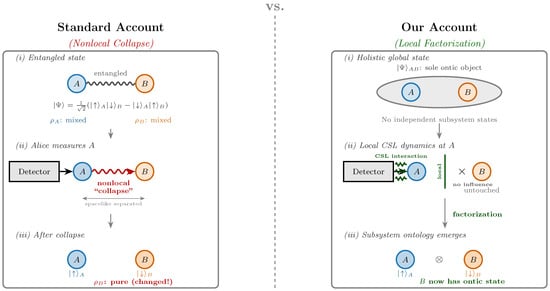
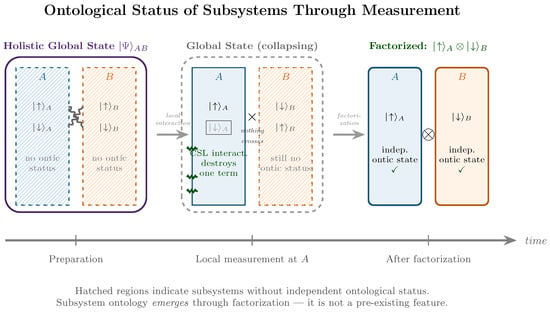
The standard interpretation of quantum measurement on entangled systems holds that measuring one particle nonlocally collapses the wavefunction of its spacelike-separated partner. We argue that this conclusion rests on a false presupposition: that subsystems of entangled systems possess independent ontic states. If the
[...] Read more.
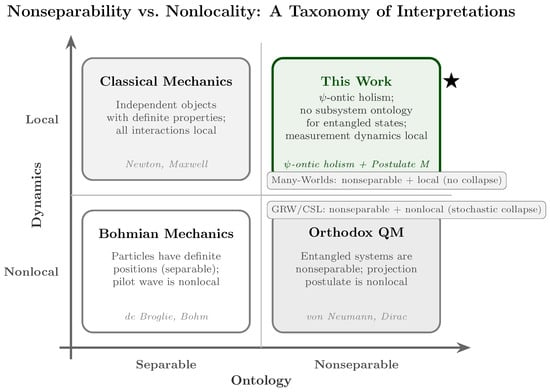
The standard interpretation of quantum measurement on entangled systems holds that measuring one particle nonlocally collapses the wavefunction of its spacelike-separated partner. We argue that this conclusion rests on a false presupposition: that subsystems of entangled systems possess independent ontic states. If the global wavefunction is the sole ontic object ( -ontic holism), then for entangled systems, there is no “state of B” to be affected by measurement at A. Measurement is a local dynamical process—concretely modeled by continuous spontaneous localization—that destroys one local wavefunction component at the measurement site; the global state factorizes as a consequence, and subsystem ontology emerges for the first time. The transition of the distant particle’s reduced density matrix from mixed to pure reflects this emergence of separability, not a physical change at the distant location. The framework satisfies no-signaling and embraces the contextuality required by the Kochen–Specker and GHZ theorems. We are explicit about its relation to Bell’s theorem: Bell local causality (factorizability) fails, as it must in any empirically adequate theory, but the failure is confined to outcome independence and is identified with the nonseparability of the global ontic state, while parameter independence—and with it the locality of the dynamics—holds exactly. Decoherence provides the mechanism by which the global wavefunction factorizes and classical separability emerges. The apparent nonlocality of quantum mechanics is thus reinterpreted as nonseparability: the fundamental ontology is holistic, but the dynamics are local.
Full article
(This article belongs to the Special Issue Quantum Measurement)
►
Show Figures
Open AccessEditorial
Complexity of Social Networks
by
Zi-Ke Zhang, Junming Huang, Xiaoke Xu and Quanhui Liu
Entropy 2026, 28(9), 1008; https://doi.org/10.3390/e28091008 - 9 Sep 2026
Abstract
Research on social networks now sits at a productive intersection between network science and computational social science [...]
Full article
(This article belongs to the Special Issue Complexity of Social Networks)
Open AccessArticle
Localized Covariant Quantities Appear to Underlie Quantum Circuits
by
Ken Wharton, Roderick Sutherland, Titus Amza and James Saslow
Entropy 2026, 28(9), 1007; https://doi.org/10.3390/e28091007 - 9 Sep 2026
Abstract
Although entangled state vectors cannot be fully described in terms of variables localized in space and time, any given entanglement experiment can be built from basic quantum circuit components with well-defined locations. We analyze such quantum circuits and present evidence that the local
[...] Read more.
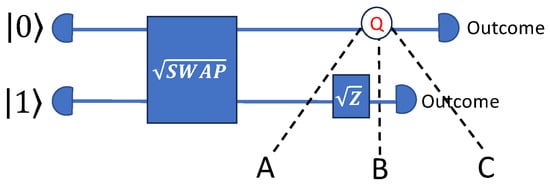
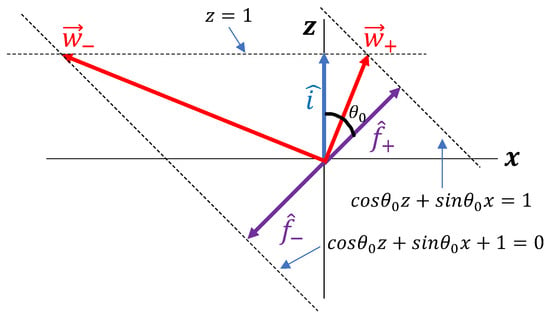
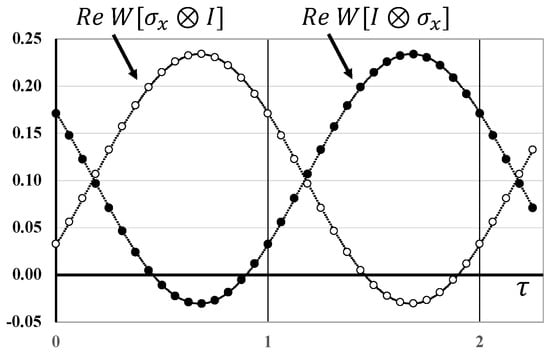
Although entangled state vectors cannot be fully described in terms of variables localized in space and time, any given entanglement experiment can be built from basic quantum circuit components with well-defined locations. We analyze such quantum circuits and present evidence that the local weak values comprise a covariant tensor associated with each individual qubit. Even if the state is massively entangled, these tensors do not evolve or collapse when other qubits are measured or pass through distant circuit elements. They can therefore be viewed from different reference frames without contradiction. Furthermore, their evolution through any circuit always obeys covariant dynamical rules. Weak values are subject to both past and future constraints, so the covariant quantities can only be determined by considering the entire circuit “all-at-once”, as in action principles, incorporating the future measurement basis to avoid the standard no-go theorems. Because these results hold for a set of universal quantum gates, this work lends support to the claim that any quantum circuit can be assigned a realistic, lower-level description compatible with our understanding of classical spacetime.
Full article
(This article belongs to the Special Issue Time in Quantum Mechanics)
►▼
Show Figures

Figure 1
Open AccessArticle
Improved Differential Cryptanalysis of the Ultra-Lightweight Block Cipher PICO
by
Yu Wang, Zhuofeng Liang, Ting Fan and Tao Zhou
Entropy 2026, 28(9), 1006; https://doi.org/10.3390/e28091006 - 8 Sep 2026
Abstract
PICO is an ultra-lightweight substitution–permutation network block cipher designed for resource-constrained devices such as Internet of Things terminals and edge agents. For fixed endpoints, summing the characteristic probabilities over an enumerated finite weight window gives a verifiable lower bound on the differential probability.
[...] Read more.
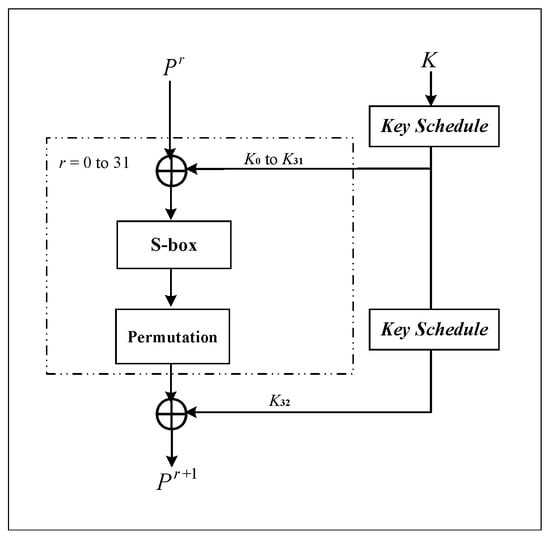
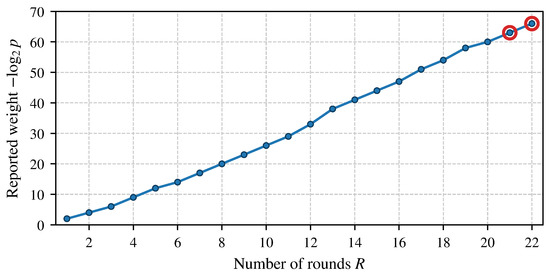
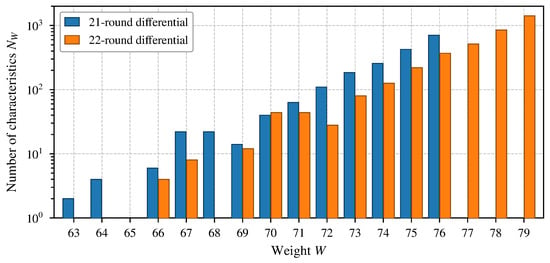
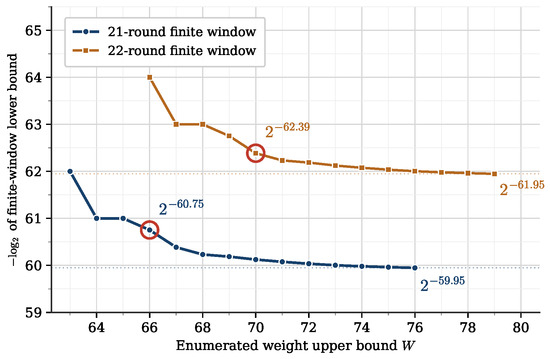
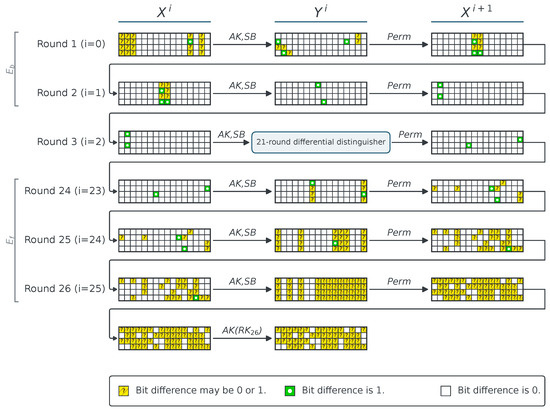
PICO is an ultra-lightweight substitution–permutation network block cipher designed for resource-constrained devices such as Internet of Things terminals and edge agents. For fixed endpoints, summing the characteristic probabilities over an enumerated finite weight window gives a verifiable lower bound on the differential probability. We use a PICO-specific workflow that combines mixed-integer linear programming bounds on active substitution boxes, exact-weight Boolean satisfiability search, optional Matsui pruning, and fixed-endpoint enumeration. For the selected endpoints, enumeration over and gives finite-window lower bounds of and for 21 and 22 rounds, respectively. We prepend two rounds and append three rounds to the 21-round differential distinguisher. The resulting 26-round analysis is an analytical equivalent-round-key filtering-and-ranking procedure for a 108-bit tuple. The verified 21-round finite-window probability input is a factor of larger than the previously reported input, increasing the expected right-tuple support at fixed S under the analytical accounting. For the illustrative choice , the analytical resources are chosen plaintexts, a normalized substitution-box filtering workload of equivalent 26-round encryptions, and stored plaintext–ciphertext records. This setting is not tied to a demonstrated success probability and does not establish an equal-success complexity advantage over prior work.
Full article
(This article belongs to the Section Information Theory, Probability and Statistics)
►▼
Show Figures

Figure 1

Open AccessArticle
Category-Native Solomonoff Approximation: From Algorithmic Geometry to Kernels, Operators, and Induction
by
Boumediene Hamzi and Marcus Hutter
Entropy 2026, 28(9), 1005; https://doi.org/10.3390/e28091005 - 8 Sep 2026
Abstract
Solomonoff induction mixes all computable explanations with description-length weights, but it is incomputable. This theory-and-position paper argues that practical approximation must be category-native: one should first declare the mathematical category in which a computable shadow will live, then use that category’s native
[...] Read more.
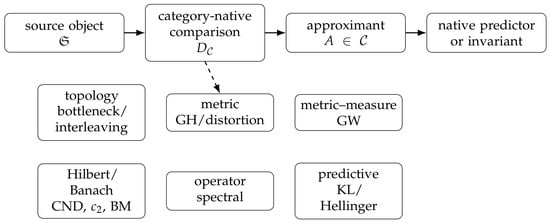
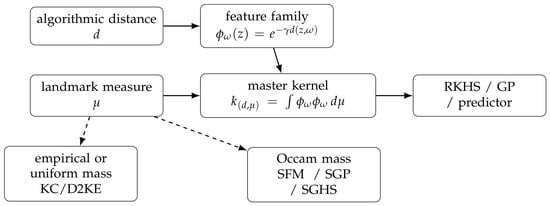
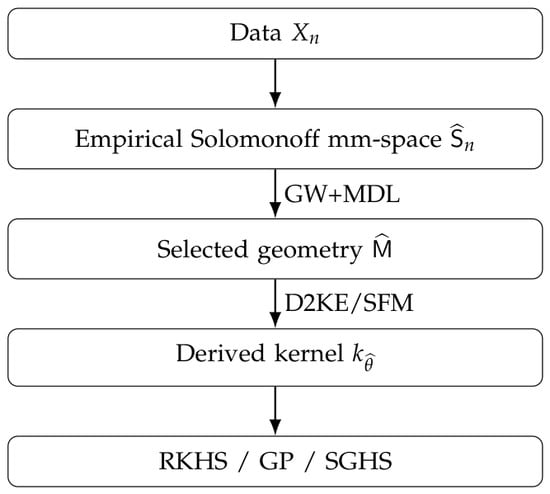
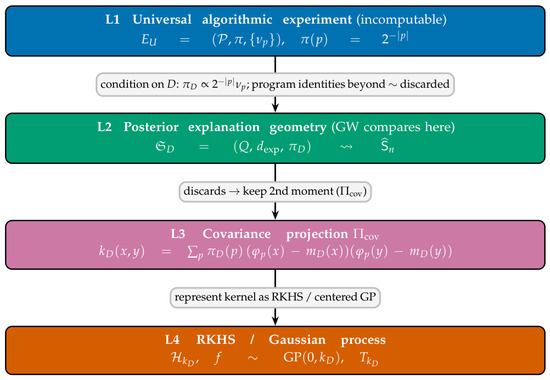
Solomonoff induction mixes all computable explanations with description-length weights, but it is incomputable. This theory-and-position paper argues that practical approximation must be category-native: one should first declare the mathematical category in which a computable shadow will live, then use that category’s native comparison functional, complexity code, and inductive object. The proposal is not an omnibus theorem asserting that all categories are equivalent. It is a research architecture that separates comparison, representation, and prediction and makes the information lost by each projection explicit. The metric–measure branch supplies the developed realization. Compression data define an empirical Solomonoff space; Gromov–Wasserstein (GW) distance supplies relational distortion; minimum description length (MDL) controls candidate complexity; and distance-to-kernel embedding produces a positive-semidefinite predictor. For finite or countable coded classes, we prove existence and stability results, a held-out validation oracle inequality, a Kolmogorov–Solomonoff kernel unification, conditional empirical-GW consistency, and a coding-redundancy bound. Stronger learning-oracle statements remain conditional on marked/predictive selection, candidate-family adequacy, and kernel stability. Topological, Banach/Barron, graph, tree, and operator branches are presented as a constructional and testable research programme, with their maturity stated explicitly.
Full article
(This article belongs to the Section Information Theory, Probability and Statistics)
►▼
Show Figures

Figure 1
Open AccessArticle
TF-STNet: A Time–Frequency Dual-Branch Spatiotemporal Network for NWP-to-Station Bias Correction
by
Zhao Wang, Shuai Chen, Yunbo Yang, Bo Wang, Bihe Xu and Yangliao Geng
Entropy 2026, 28(9), 1004; https://doi.org/10.3390/e28091004 - 8 Sep 2026
Abstract
Accurate station-scale weather forecasts support renewable-energy and transportation operations, yet gridded numerical weather prediction (NWP) is affected by representativeness errors and regional biases when transferred to irregularly distributed stations. We propose TF-STNet, a time–frequency dual-branch spatiotemporal network for NWP-to-station bias correction. A station-centered
[...] Read more.
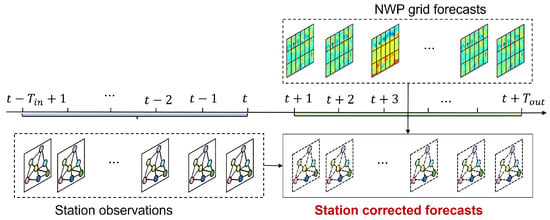
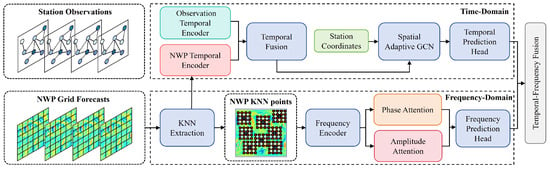
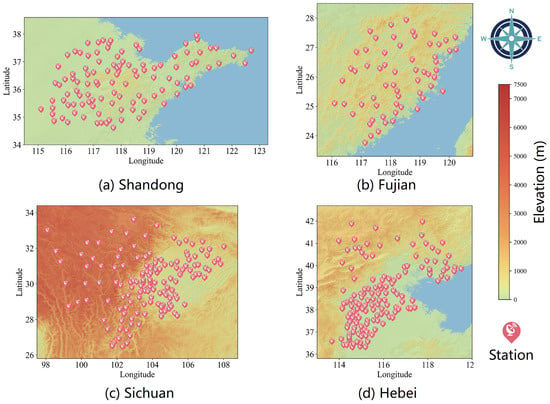
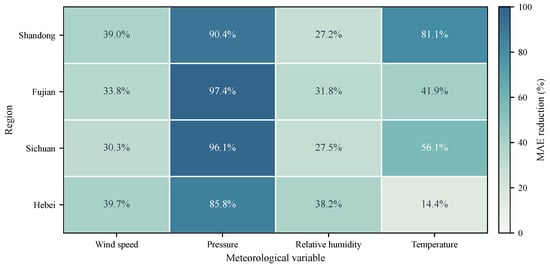
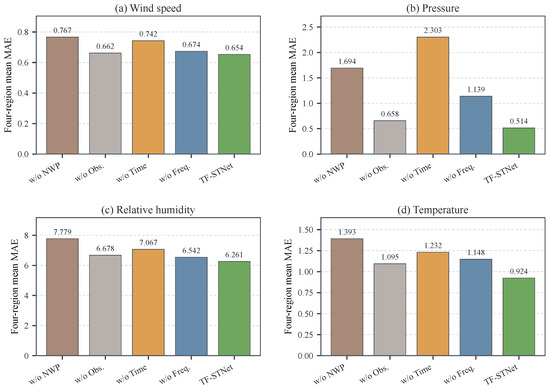
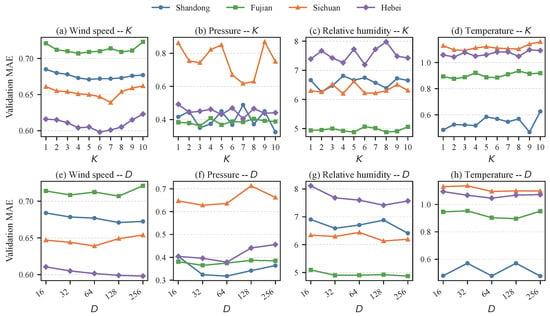
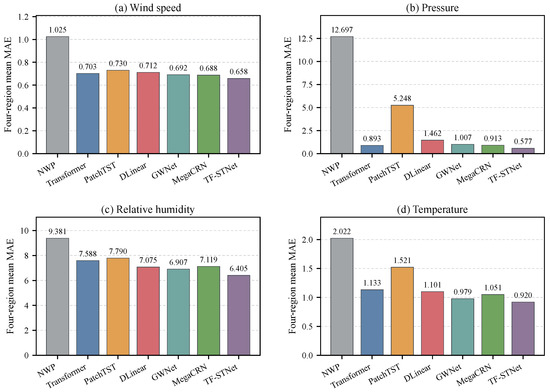
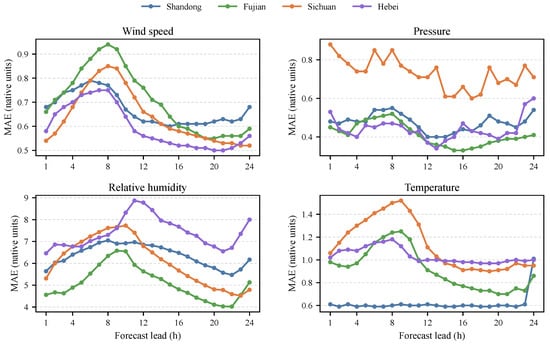
Accurate station-scale weather forecasts support renewable-energy and transportation operations, yet gridded numerical weather prediction (NWP) is affected by representativeness errors and regional biases when transferred to irregularly distributed stations. We propose TF-STNet, a time–frequency dual-branch spatiotemporal network for NWP-to-station bias correction. A station-centered K-nearest-neighbor (KNN) operator retains multiple local NWP trajectories. The time-domain pathway separately encodes recent observations and future NWP, aligns them over the forecast horizon using gated dilated causal convolutions, and propagates lead-resolved states through a coordinate-conditioned directed station graph. The frequency-domain pathway learns spectral weights and applies separate attention to amplitude and phase across neighboring NWP cells. Prediction-level fusion combines the two station forecasts by variable, station, and lead time. The evaluation uses hourly data for wind speed, pressure, relative humidity, and temperature from 455 stations in Hebei, Shandong, Fujian, and Sichuan. Across five independent runs on 16 region–variable tasks, TF-STNet achieves the lowest mean absolute error (MAE) in 15 tasks and the highest Pearson correlation coefficient (PCC) in 15 tasks; its pressure MAE reduction relative to the strongest learned comparator ranges from 16.2% to 57.4% across the four regions. It has lower MAE than raw NWP in seven of eight high-wind or rapid-change event tests and than simple pressure model-output-statistics corrections in all four regions. The Shandong–temperature task and the Hebei–high-wind case illustrate the limits of the present point-forecast formulation.
Full article
(This article belongs to the Topic AI and Computational Methods for Modelling, Simulations and Optimizing of Advanced Systems: Innovations in Complexity, 2nd Edition)
►▼
Show Figures

Figure 1
Open AccessArticle
Aftershock Production in Mean Field Avalanche Models with Static Fields
by
Jordi Baró
Entropy 2026, 28(9), 1003; https://doi.org/10.3390/e28091003 - 8 Sep 2026
Abstract
Advanced seismic hazard assessment frameworks rely on stochastic models which include aftershock production in the form of branching or self-exciting point processes. Such empirical constructs are based on debated statistical laws observed across catalogs of natural seismicity, which lack a derivation from first
[...] Read more.
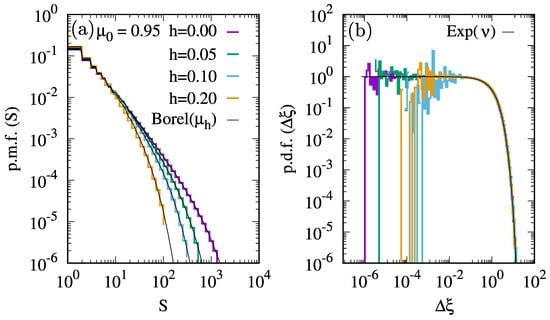
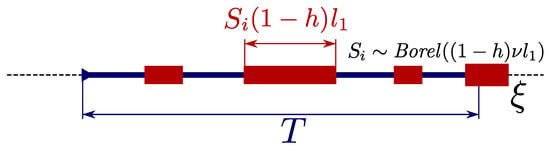
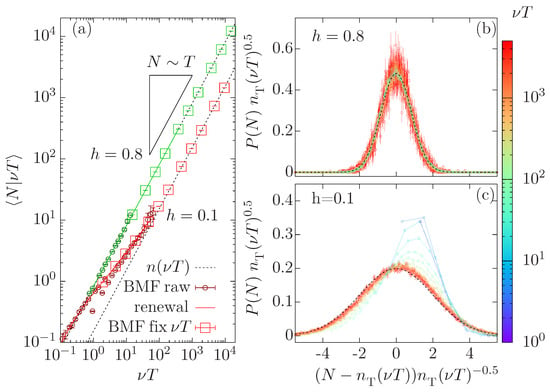
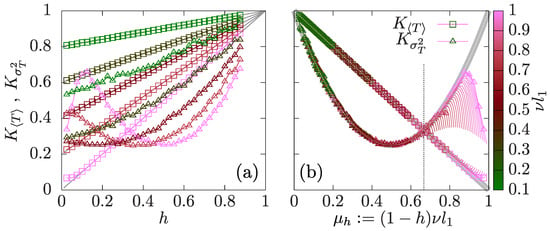
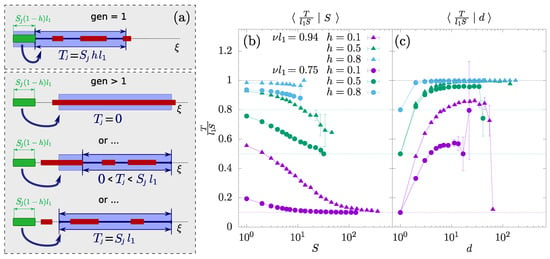
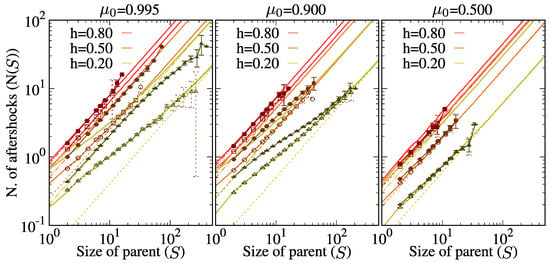
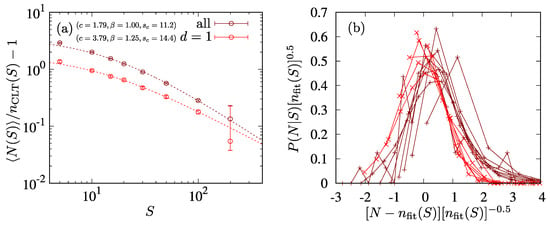
Advanced seismic hazard assessment frameworks rely on stochastic models which include aftershock production in the form of branching or self-exciting point processes. Such empirical constructs are based on debated statistical laws observed across catalogs of natural seismicity, which lack a derivation from first principles. Here, we derive the statistics of aftershock production in a generalized mean-field model of avalanche dynamics with static random thresholds and bimodal relaxation. The number of direct aftershocks is statistically characterized as a renewal counting process accounting for Borel-distributed refractory intervals. At the large-number limit, the expected number of aftershocks is proportional to the size of the parent event with a characteristic scale linearly depending only on the branching parameter governing refractory intervals, whereas the variance follows a distinct parabolic dependence with the same parameter. This model provides a rationale for the overdispersion in aftershock production observed in field data with respect to the Poissonian offspring numbers of standard Hawkes models, but it cannot explain the ubiquity of self-similar aftershock production found in catalogs and lab experiments.
Full article
(This article belongs to the Section Statistical Physics)
►▼
Show Figures

Figure 1

Open AccessArticle
Modeling and Control Design of Port-Hamiltonian Systems in Discrete-Time
by
Alessandro Macchelli
Entropy 2026, 28(9), 1002; https://doi.org/10.3390/e28091002 - 7 Sep 2026
Abstract
This paper aims to describe a synthesis procedure for discrete-time, energy-based regulators for continuous-time port-Hamiltonian systems. The methodology consists of three steps. The first deals with the definition of a discrete-time approximation of the plant, which is subsequently employed in the development of
[...] Read more.
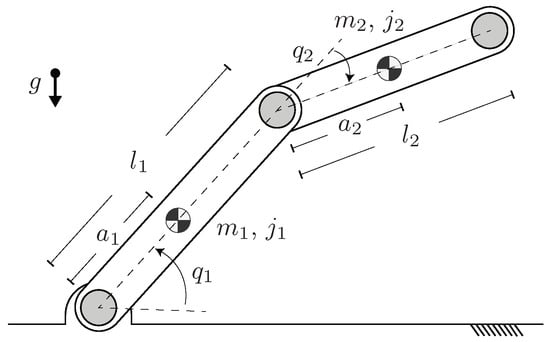
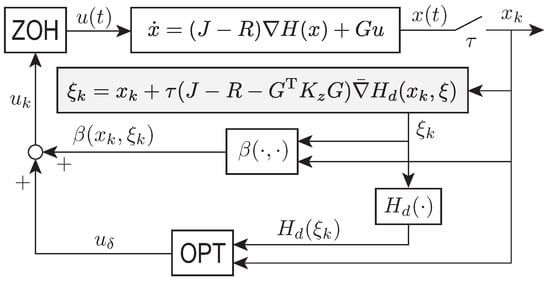
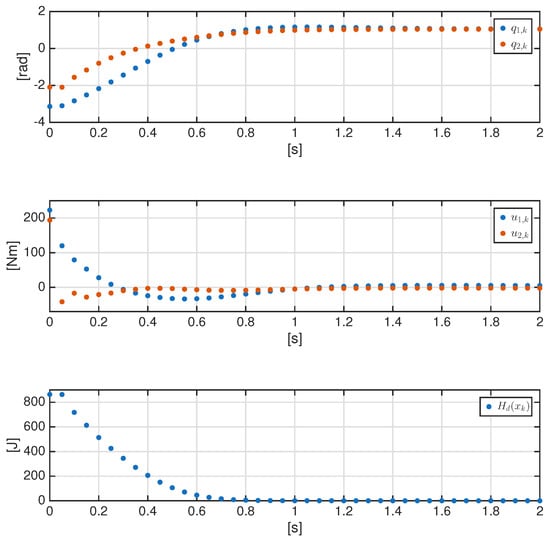
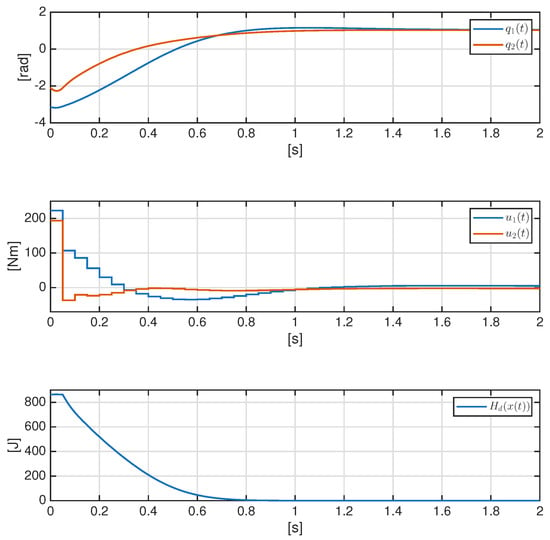
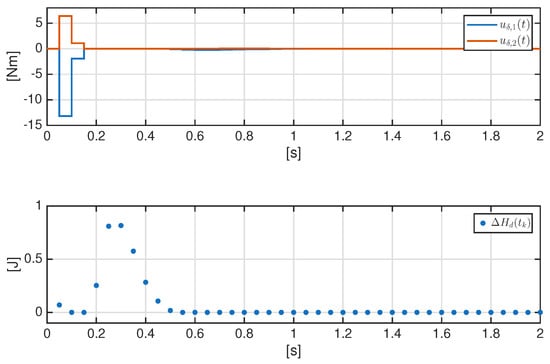
This paper aims to describe a synthesis procedure for discrete-time, energy-based regulators for continuous-time port-Hamiltonian systems. The methodology consists of three steps. The first deals with the definition of a discrete-time approximation of the plant, which is subsequently employed in the development of the control law. The discrete-time model is obtained from the continuous-time dynamics by replacing the gradient of the Hamiltonian function with a discrete gradient. In this way, passivity, with the energy as storage function, is preserved, although the resulting state equation is in implicit form. The second step concerns the control synthesis and extends the continuous-time energy-shaping plus damping injection design technique to the proposed class of discrete-time port-Hamiltonian systems. Finally, the last step addresses the interconnection between the digital controller and the continuous-time plant. The coupling is implemented via a zero-order hold and relies on the solution of an optimization problem that determines the “best” and “minimal” correction to be applied to the nominal control action in order to achieve the same performance as that obtained when the regulator is connected in closed loop with the discrete-time model of the plant. This is the reference scenario used to develop and tune the control law. The complete procedure (time discretisation, control design, and coupling implementation) is illustrated through an example.
Full article
(This article belongs to the Special Issue Port-Hamiltonian Methods)
►▼
Show Figures

Figure 1
Open AccessArticle
Time-Frequency Feature Extraction and Modal Component Reconstruction for Structural Dynamic Monitoring Using MTM-eNTFT
by
Ling’ai Li, Junwei Wang and Chi Zhang
Entropy 2026, 28(9), 1001; https://doi.org/10.3390/e28091001 - 7 Sep 2026
Abstract
Field-measured structural responses are often noisy, multicomponent, nonstationary, and finite in length, complicating dominant-frequency identification, component extraction, and time-frequency characterization. This study develops an MTM-assisted Normal Time-Frequency Transform procedure with multiscale permutation entropy (MPE)-guided endpoint extension, termed MTM-eNTFT, to improve target-frequency-band determination and
[...] Read more.
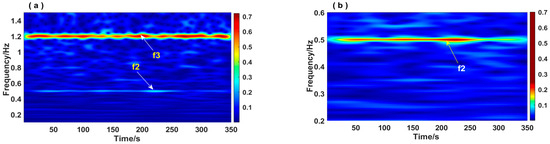
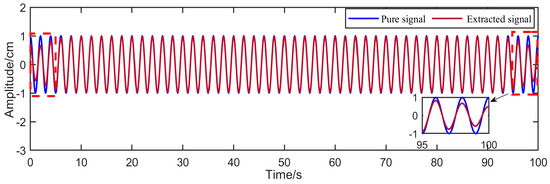
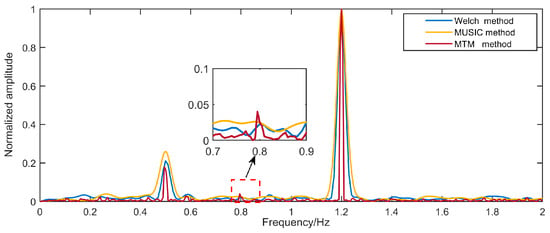
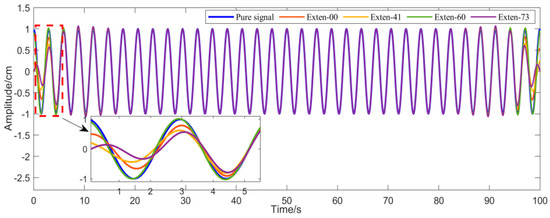
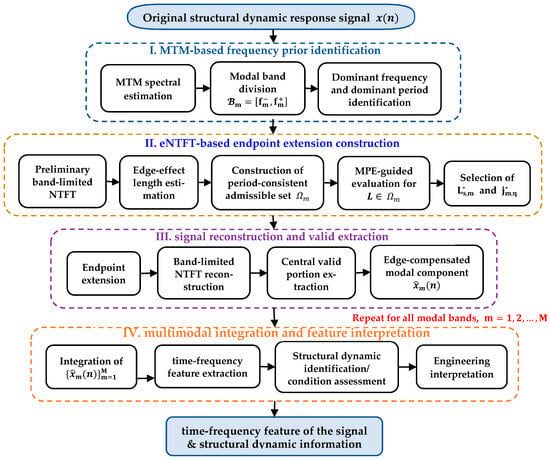
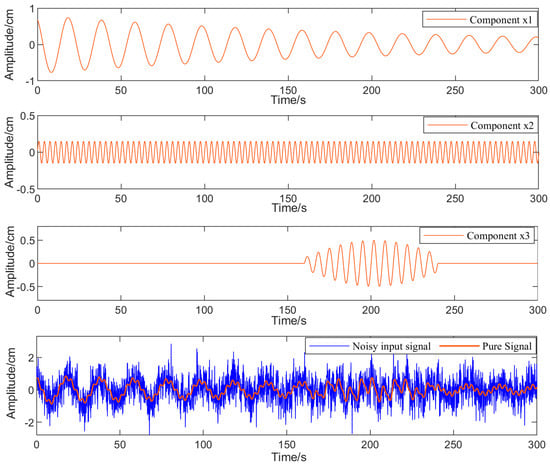
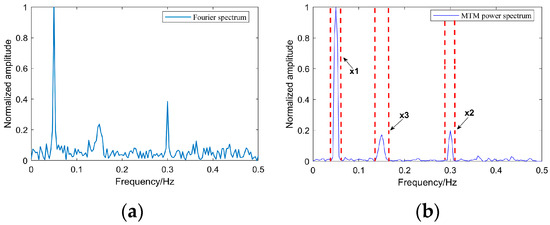
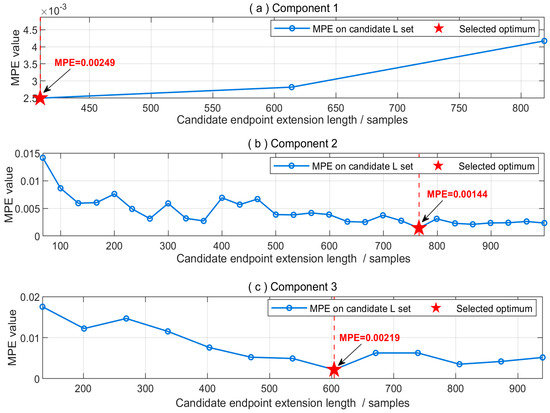
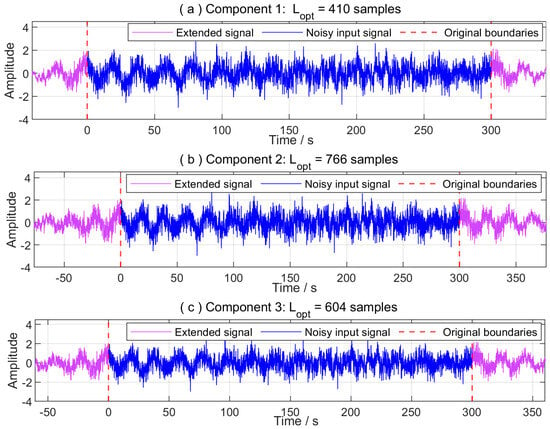
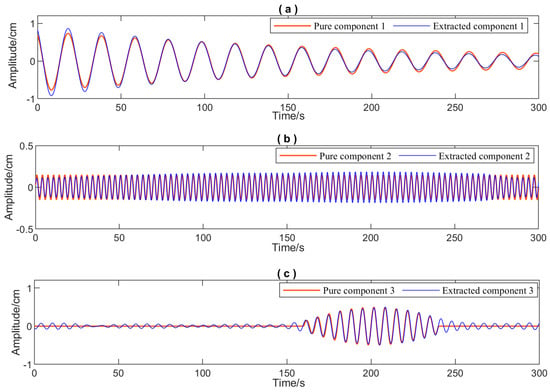
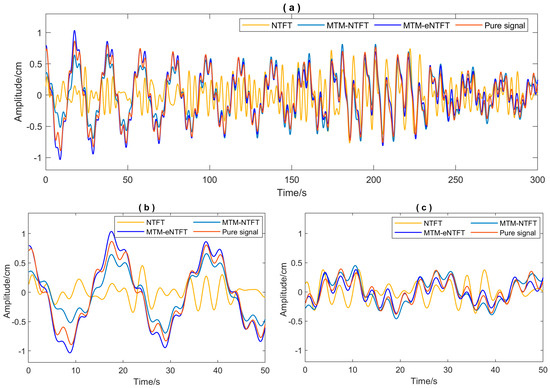
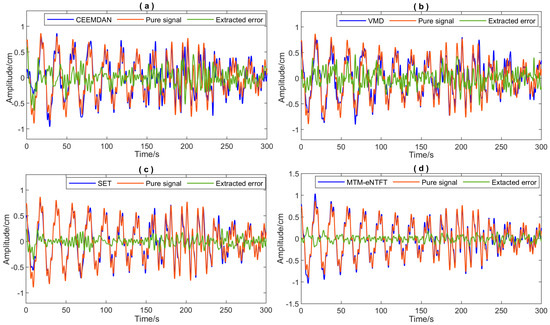
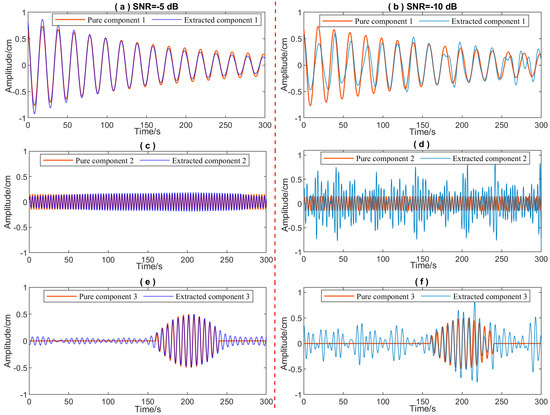
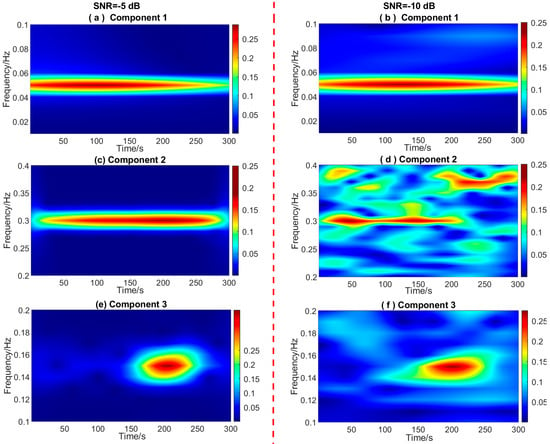
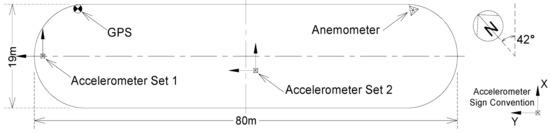
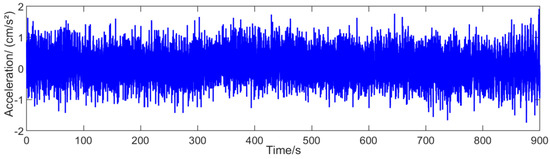
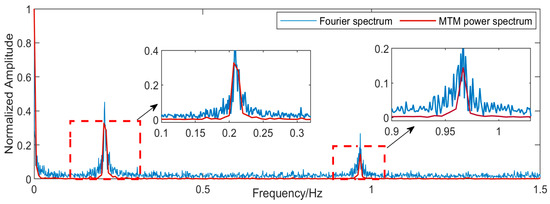
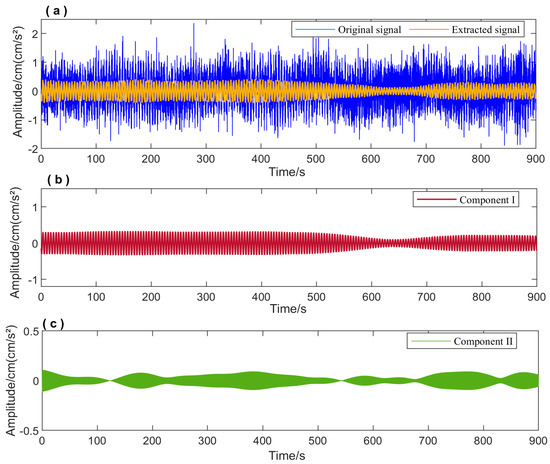
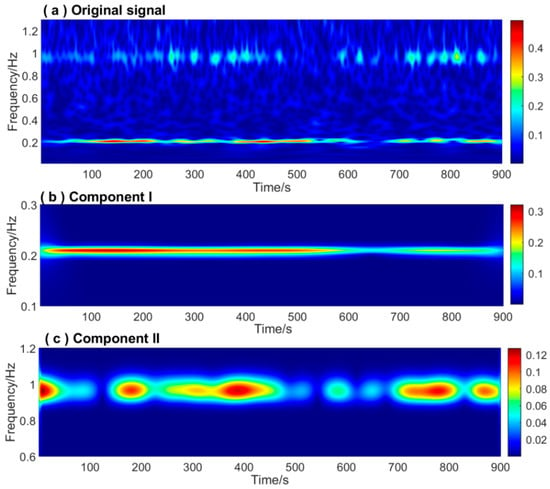
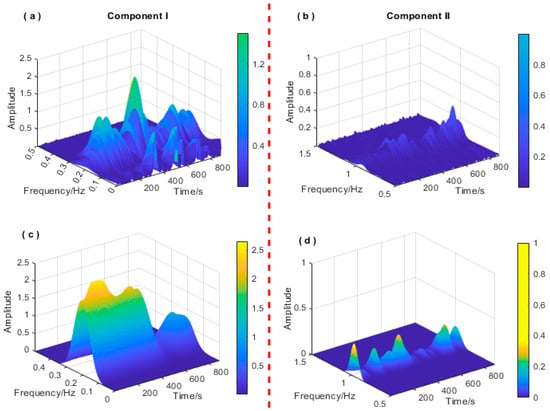
Field-measured structural responses are often noisy, multicomponent, nonstationary, and finite in length, complicating dominant-frequency identification, component extraction, and time-frequency characterization. This study develops an MTM-assisted Normal Time-Frequency Transform procedure with multiscale permutation entropy (MPE)-guided endpoint extension, termed MTM-eNTFT, to improve target-frequency-band determination and mitigate boundary-related reconstruction errors. Multitaper spectral estimation is used to determine stable target-frequency regions, while MPE-guided endpoint extension is used before band-limited NTFT reconstruction. Under the investigated simulation conditions, MTM-eNTFT provides more accurate component reconstruction, better noise suppression, and smaller boundary-related reconstruction errors than conventional NTFT, CEEMDAN, VMD, and SET. The reconstructed signal yields an RMSE below 0.08, a Pearson correlation coefficient over 0.98, and an SNR improvement of about 19 dB relative to the noisy input. The method is also applied to a selected continuous 15-min X-direction acceleration record acquired at a roof-corner sensor of a 68-storey building in Hong Kong during a high-wind event. Two dominant frequency components centered at approximately 0.208 and 0.965 Hz are extracted. Their energy increases between approximately 130 and 460 s, possibly indicating a temporary increase in the measured dynamic response. The results indicate the applicability of MTM-eNTFT to component extraction and time-frequency characterization of noisy finite-length structural-response records.
Full article
(This article belongs to the Section Multidisciplinary Applications)
►▼
Show Figures

Figure 1

Open AccessArticle
Budget-Prioritized Dynamic Regrouping for Edge Federated Services Under Workload Drift and Privacy-Budget Constraints
by
Li Zhao, Long Chen and Zhongyi Chen
Entropy 2026, 28(9), 1000; https://doi.org/10.3390/e28091000 - 7 Sep 2026
Abstract
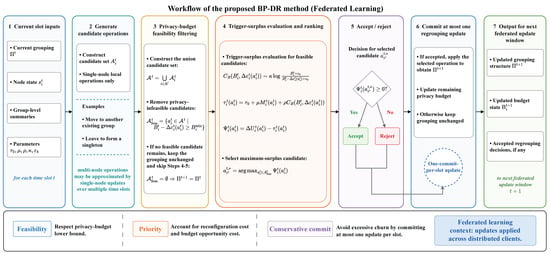
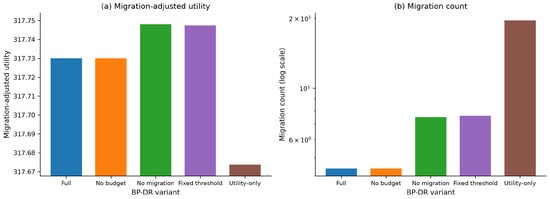
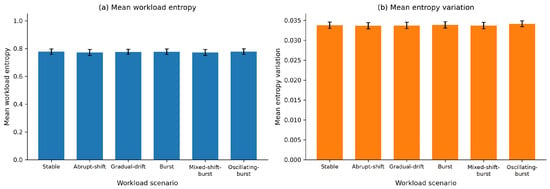
Federated learning enables model training in edge and distributed service environments without directly sharing raw data. In long-running edge federated services, fixed collaboration structures may become inefficient under workload drift, whereas frequent regrouping can incur migration overhead, group churn, and additional privacy-budget consumption.
[...] Read more.
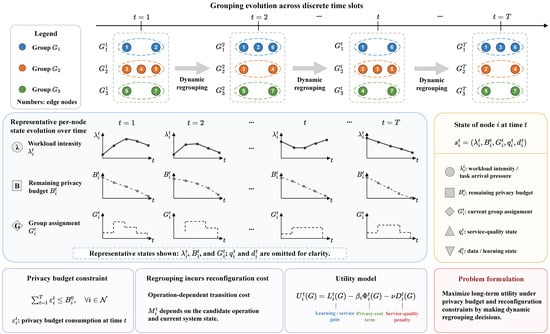
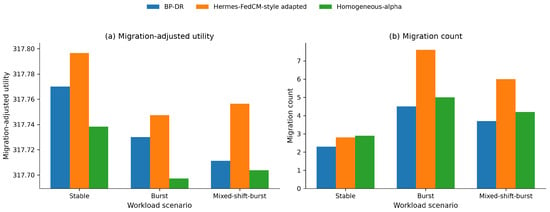
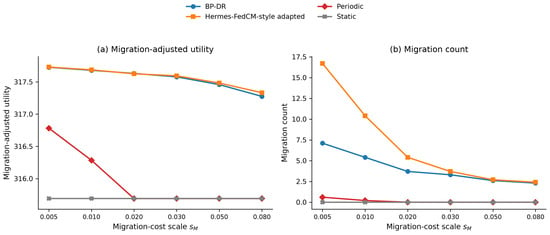
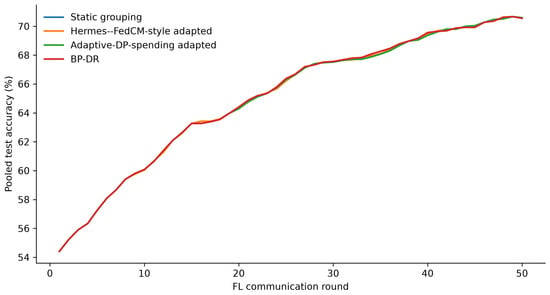
Federated learning enables model training in edge and distributed service environments without directly sharing raw data. In long-running edge federated services, fixed collaboration structures may become inefficient under workload drift, whereas frequent regrouping can incur migration overhead, group churn, and additional privacy-budget consumption. This paper studies budget-prioritized dynamic regrouping under workload drift, privacy-budget constraints, and migration or reconfiguration cost. We formulate a dynamic regrouping problem that jointly captures workload pressure, remaining privacy budget, service utility, and regrouping cost. We propose Budget-Prioritized Dynamic Regrouping (BP-DR), a triggered local method that evaluates single-node candidate operations and commits at most one regrouping operation per time slot. A candidate is accepted only when it is privacy-budget feasible and its utility improvement exceeds a threshold combining an anti-oscillation margin, migration or reconfiguration cost, and privacy-budget opportunity cost. We derive this trigger from a one-step local comparison and establish its monotonicity with respect to migration or reconfiguration cost and remaining privacy budget. Trace-driven experiments based on Alibaba Cluster Trace 2018 show that BP-DR maintains competitive migration-adjusted utility while controlling regrouping activity across dynamic and stress-test settings. FLamby Fed-Heart-Disease validation further shows similar learning performance across the compared methods while demonstrating the integration of BP-DR with group-aware federated training.
Full article
(This article belongs to the Section Multidisciplinary Applications)
►▼
Show Figures

Figure 1
Open AccessArticle
Multi-Dimensional Behavioral Signature Analysis for Video Bullet Comment Steganography Detection
by
Yitong Liu and Hongwei Zhao
Entropy 2026, 28(9), 999; https://doi.org/10.3390/e28090999 - 7 Sep 2026
Abstract
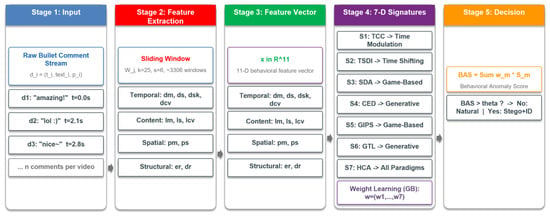
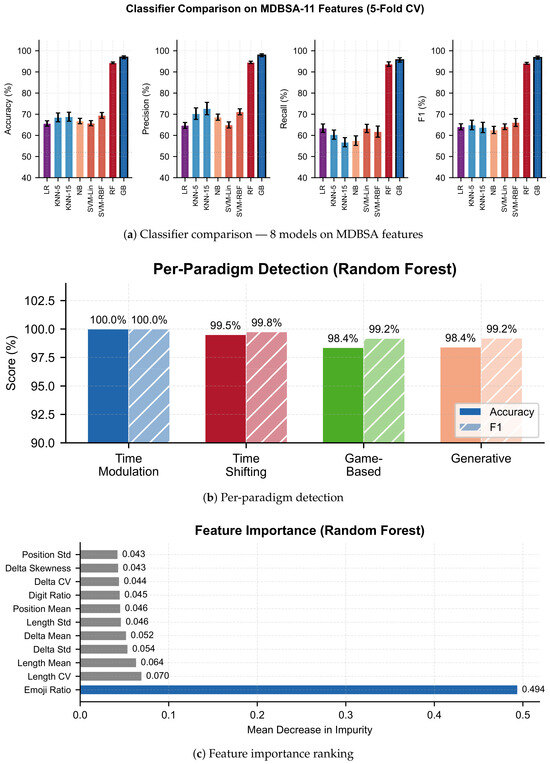
The proliferation of bullet comment systems on video-sharing platforms has created novel opportunities for covert communication. Recent research has demonstrated multiple bullet comment-based steganographic paradigms: time modulation, time attribute shifting, live broadcast game-based channels, and generative stegotext via frame comments. This paper presents
[...] Read more.
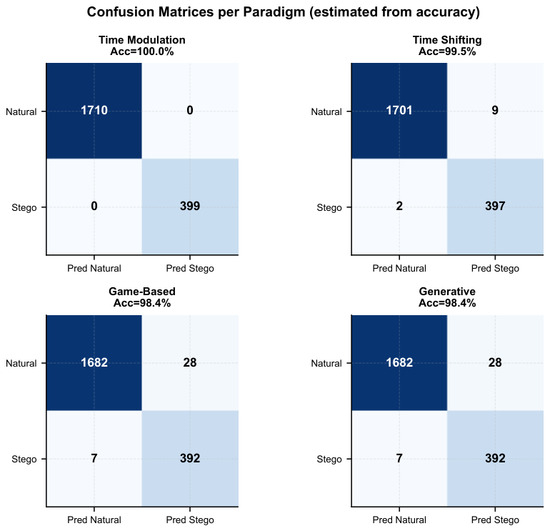
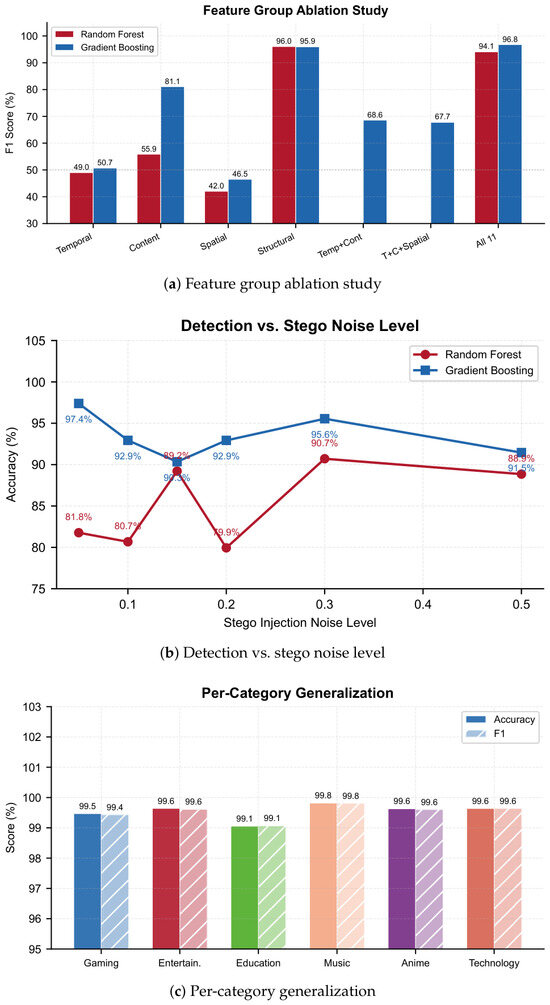
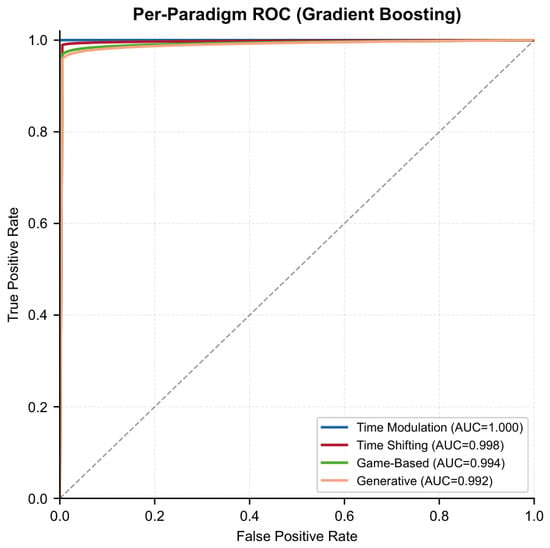
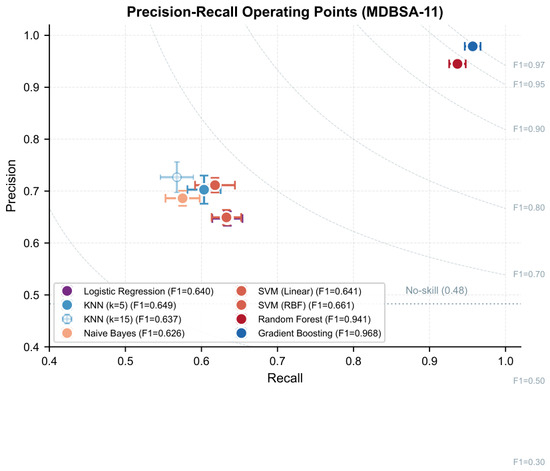
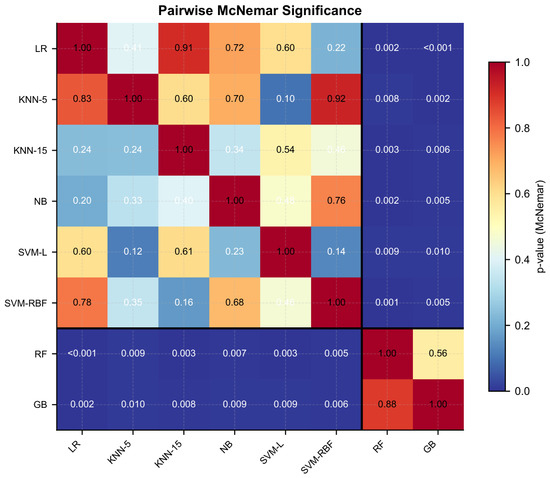
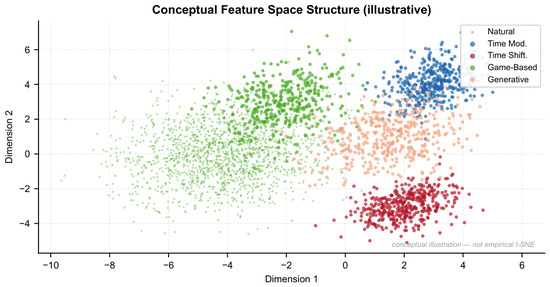
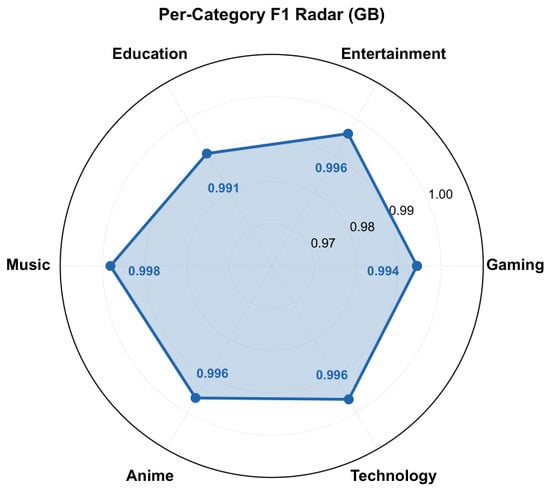
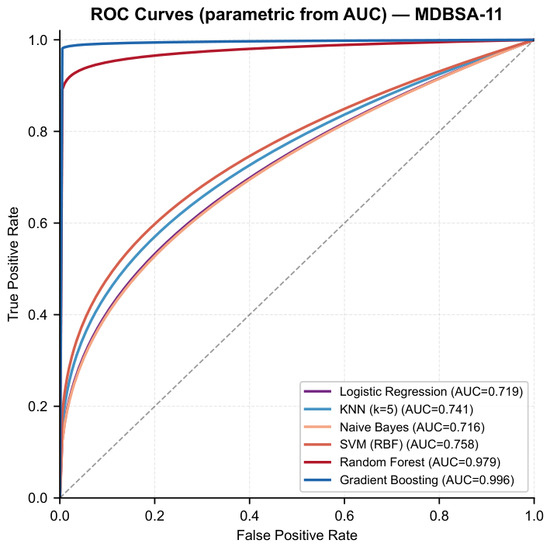
The proliferation of bullet comment systems on video-sharing platforms has created novel opportunities for covert communication. Recent research has demonstrated multiple bullet comment-based steganographic paradigms: time modulation, time attribute shifting, live broadcast game-based channels, and generative stegotext via frame comments. This paper presents Multi-Dimensional Behavioral Signature Analysis (MDBSA), a unified detection framework integrating seven behavioral dimensions to systematically characterize anomalies from four documented bullet comment steganographic paradigms. We construct a synthetic benchmark spanning six video categories with controlled steganographic injection; extract features capturing temporal, spatial, content, and structural patterns; and evaluate it using GroupKFold cross-validation to prevent data leakage from overlapping sliding windows. On this synthetic benchmark, MDBSA features combined with Gradient Boosting achieve 96.9% accuracy (F1 = 96.8%, AUC = 0.996), compared with 65.6% for logistic regression on the same features. Per-paradigm detection rates on the benchmark range from 98.4% to 100.0%.
Full article
(This article belongs to the Section Signal and Data Analysis)
►▼
Show Figures

Figure 1
Open AccessArticle
On the Role of Entropy Flux and Entropy Production in the Modeling of Shape Memory Alloys
by
Claudio Giorgi and Angelo Morro
Entropy 2026, 28(9), 998; https://doi.org/10.3390/e28090998 - 7 Sep 2026
Abstract
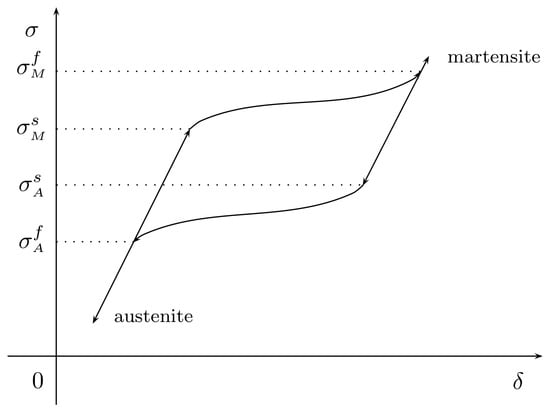
A thermodynamically consistent model of shape memory alloys is developed for a body in a uniaxial setting under a tensile stress. The evolution properties are described using the temperature, the martensite fraction, and the stress as independent variables. The innovative approach is based
[...] Read more.
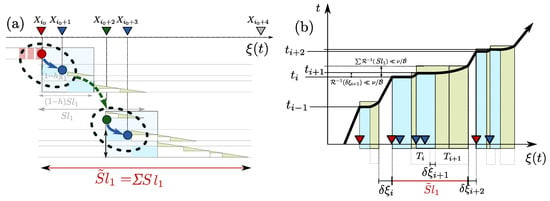
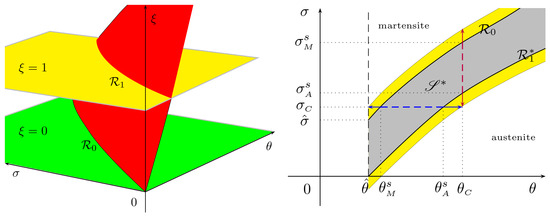
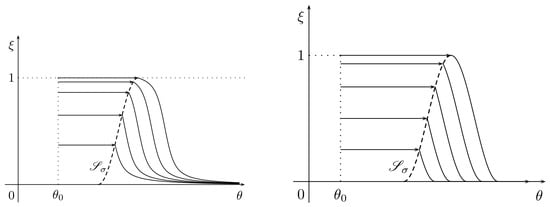
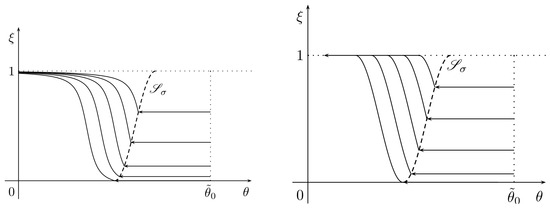
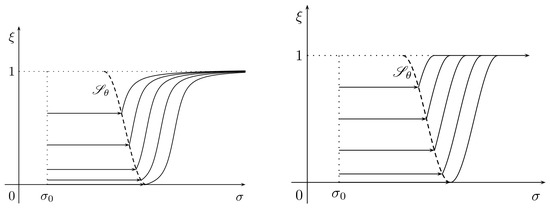
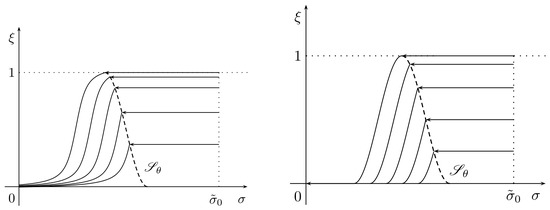
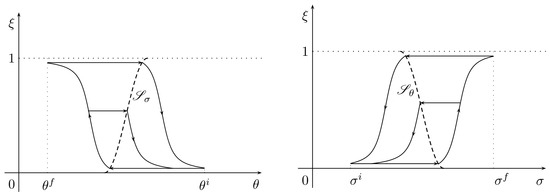
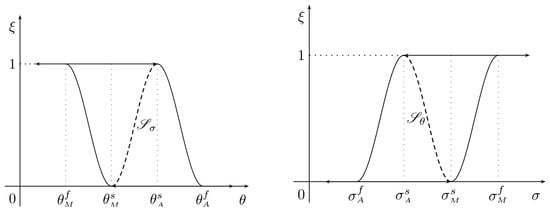
A thermodynamically consistent model of shape memory alloys is developed for a body in a uniaxial setting under a tensile stress. The evolution properties are described using the temperature, the martensite fraction, and the stress as independent variables. The innovative approach is based on a general form of the Clausius–Duhem inequality (really, an equality) where the entropy flux and the entropy production rate are given by constitutive functions. Thermodynamic restrictions and a suitable splitting of the entropy and deformation functions transform the Clausius–Duhem inequality into an evolutionary partial differential equation. As a result, both temperature-induced and stress-induced phase transitions and their related hysteretic loops are carefully modelled by properly choosing the free energy, dynamic functions, and the entropy production rate. Furthermore, a region of equilibrium states follows from a stationary condition on the free energy. Next, a generalization is given by letting the constitutive function depend on appropriate gradients within a Lagrangian and an Eulerian formulation. Both formulations are allowed by the occurrence of the extra-entropy flux that turns out to be proportional to the pertinent rates of temperature, stress, and mass fraction.
Full article
(This article belongs to the Section Thermodynamics)
►▼
Show Figures

Figure 1
Open AccessArticle
An Upwind Interior Penalty DG Scheme for Solute Transport in 2D Variable-Order Mobile–Immobile Model
by
Leilei Wei, Lijie Liu and Xindong Zhang
Entropy 2026, 28(9), 997; https://doi.org/10.3390/e28090997 - 6 Sep 2026
Abstract
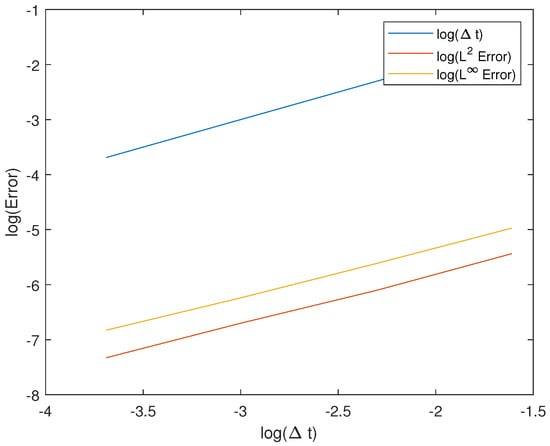
This paper develops and rigorously analyzes a fully discrete upwind interior penalty discontinuous Galerkin (IPDG) scheme for simulating solute transport in two-dimensional variable-order fractional mobile–immobile media. The temporal variable-order Caputo derivative is discretized via a Grünwald–Letnikov approximation in conjunction with a first-order backward
[...] Read more.
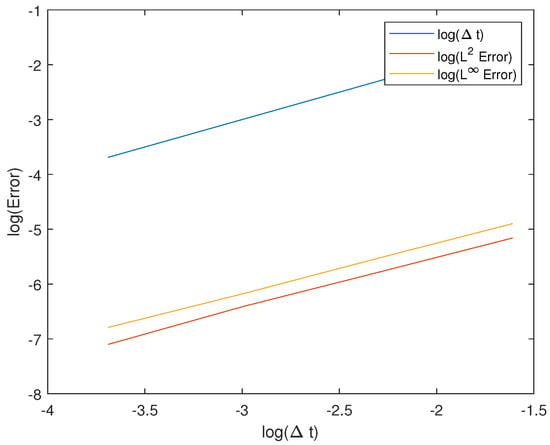
This paper develops and rigorously analyzes a fully discrete upwind interior penalty discontinuous Galerkin (IPDG) scheme for simulating solute transport in two-dimensional variable-order fractional mobile–immobile media. The temporal variable-order Caputo derivative is discretized via a Grünwald–Letnikov approximation in conjunction with a first-order backward difference, while the spatial discretization employs an IPDG method featuring an upwind numerical flux for the convection term and a penalty formulation for the diffusion operator. Under the physically relevant assumption of a divergence-free velocity field, we establish the unconditional stability of the proposed scheme. A comprehensive error analysis in the norm yields a convergence rate of , explicitly linking the polynomial degree k, solution regularity s, and the penalty variant . Numerical experiments in two dimensions are conducted to verify the accuracy and robustness of the proposed scheme in simulating anomalous transport phenomena in subsurface environments.
Full article
(This article belongs to the Section Statistical Physics)
►▼
Show Figures

Figure 1
Open AccessArticle
Symmetrization and Fock Space
by
Andreas Schlatter
Entropy 2026, 28(9), 996; https://doi.org/10.3390/e28090996 - 6 Sep 2026
Abstract
The assertion that quantum states of same-type particles have to be symmetrized because they are indistinguishable has led to a debate in the foundations of quantum mechanics around topics like “thisness” of particles and “surplus structure” in spaces of quantum states. We analyze
[...] Read more.
The assertion that quantum states of same-type particles have to be symmetrized because they are indistinguishable has led to a debate in the foundations of quantum mechanics around topics like “thisness” of particles and “surplus structure” in spaces of quantum states. We analyze the underlying mathematical notions and find that a central issue lies in the a priori identification of n-particle Fock space with the n-fold tensor product of single-particle spaces and the corresponding failure to recognize that multi-particle quantum states are ultimately the result of actions of Hamiltonians.
Full article
(This article belongs to the Special Issue Quantum Mereologies and Quantum Inspired Set Theories and Logics)
Open AccessArticle
Novel Image Encryption Scheme Based on Fireworks Algorithm and Reversible Convolution
by
Yaru Liang, Bo Peng, Renxin Liu, Huamao Zhou, Nanrun Zhou and Xingtong Wu
Entropy 2026, 28(9), 995; https://doi.org/10.3390/e28090995 - 6 Sep 2026
Abstract
As information technology evolves rapidly, image data is exposed to growing risks of security breaches and privacy leaks during transmission and storage. Therefore, image encryption has attracted significant attention as an effective protection measure. Nevertheless, most chaos-driven image encryption schemes suffer from inferior
[...] Read more.
As information technology evolves rapidly, image data is exposed to growing risks of security breaches and privacy leaks during transmission and storage. Therefore, image encryption has attracted significant attention as an effective protection measure. Nevertheless, most chaos-driven image encryption schemes suffer from inferior chaotic randomness, making them prone to cryptanalytic cracking in practice. To solve this problem, a new image encryption scheme is proposed by integrating the fireworks algorithm with a convolution operation. First, the original image is permuted via the Arnold transform and an improved permutation strategy. Then, the classical Logistic map is iterated to generate an initial pseudo-random sequence, which is further optimized by the fireworks algorithm. Finally, a reversible convolution operation is integrated with a bit-level diffusion mechanism to achieve image encryption. Experimental results confirm that the proposed scheme exhibits superior performance in terms of statistical analysis, robustness analysis, and image-quality assessment, and it possesses remarkable security against various cryptanalytic attacks.
Full article
(This article belongs to the Section Signal and Data Analysis)
Open AccessArticle
Shannon Capacity and Related Graph Invariants for Lexicographic Products
by
Igal Sason
Entropy 2026, 28(9), 994; https://doi.org/10.3390/e28090994 - 5 Sep 2026
Abstract
This paper studies the Shannon capacity of lexicographic products of finite simple graphs, together with the Lovász theta function and the fractional Haemers number. The Shannon capacity is proved to be supermultiplicative under lexicographic products in either order, and these products are compared
[...] Read more.
This paper studies the Shannon capacity of lexicographic products of finite simple graphs, together with the Lovász theta function and the fractional Haemers number. The Shannon capacity is proved to be supermultiplicative under lexicographic products in either order, and these products are compared with the strong product. We explicitly construct three countably infinite families of lexicographic powers based on the Schläfli graph, the McLaughlin graph, and its second subconstituent; in each family, pairing each member with its complement yields strict supermultiplicativity and arbitrarily large multiplicative gaps. Bounds and exact-capacity criteria for lexicographic products are derived, and the resulting upper bounds are shown to be incomparable. The capacities of lexicographic products involving Kneser graphs, their complements, and q-analogues of Kneser graphs are determined. It is also shown that a lexicographic product with a complete outer factor preserves the Shannon capacity of an arbitrary inner factor. The capacities of iterated lexicographic powers are determined, including those of self-complementary graphs that are vertex-transitive or strongly regular. Elementary, self-contained proofs are also given for three known results: the multiplicativity of the Lovász theta function and the fractional Haemers number under lexicographic products, and the equality of the fractional and ordinary Lovász theta functions. Finally, an open problem concerning the Shannon capacities of lexicographic and strong products is posed.
Full article
(This article belongs to the Section Information Theory, Probability and Statistics)
Open AccessArticle
Error Estimation of Signed Networks Based on Expectation-Maximization Algorithm
by
Ruochen Zhang, Zijie Jia and Jiarui Fan
Entropy 2026, 28(9), 993; https://doi.org/10.3390/e28090993 - 5 Sep 2026
Abstract
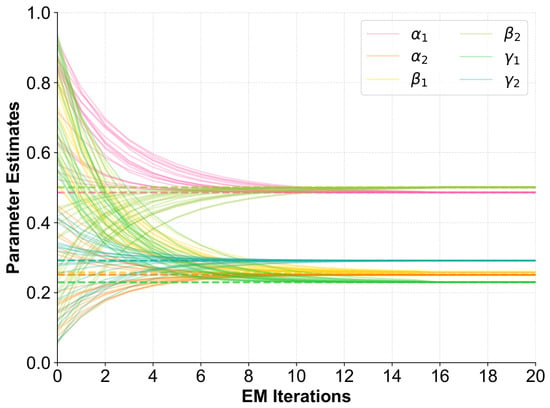
Data obtained from experiments and surveys in human social systems are inevitably influenced by systematic measurement errors, and network data are no exception. Despite the prevalence of error in social network data, current research often lacks rigorous estimation of its expected precision, which
[...] Read more.
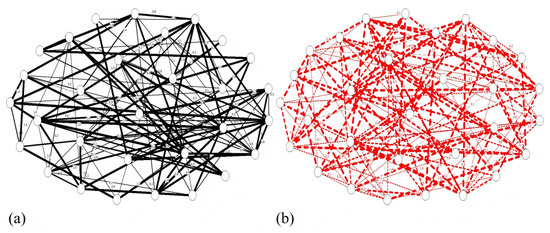
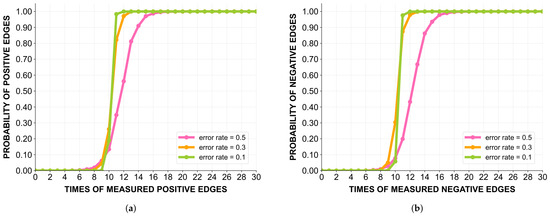
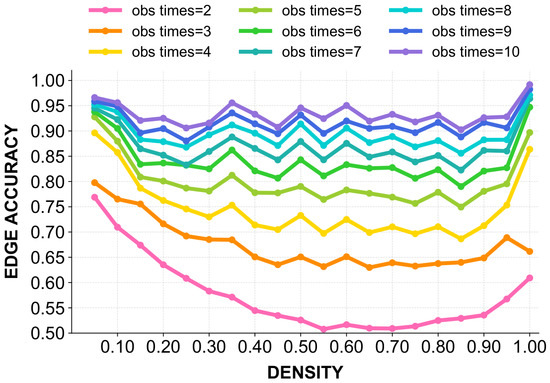
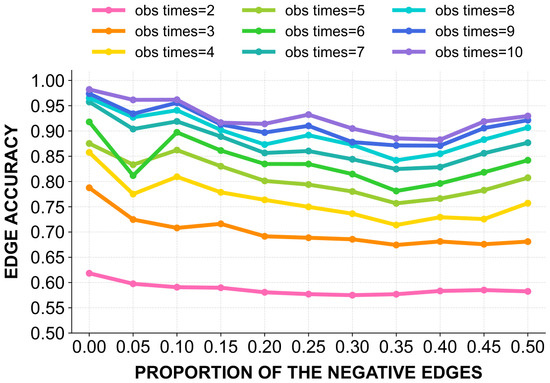
Data obtained from experiments and surveys in human social systems are inevitably influenced by systematic measurement errors, and network data are no exception. Despite the prevalence of error in social network data, current research often lacks rigorous estimation of its expected precision, which may lead to biased conclusions. Signed networks, which encode both positive and negative relationships, constitute an important component of network science, and conducting measurement error analysis on them can substantially enhance the accuracy of social network analysis. This paper proposes a set of error measurement tools based on the Expectation-Maximization (EM) algorithm, specifically designed to estimate errors in signed network data. We extend traditional experimental error estimation to the network domain, derive a general error estimation method for signed networks, and validate its scientific validity and practical utility through extensive simulation experiments on both synthetic and real-world networks. The experiments reveal that network density and the ratio of positive to negative edges significantly influence the posterior probability distribution of the adjacency matrix. Specifically, as density increases, edge estimation accuracy exhibits a U-shaped trend, and the proportion of negative edges shows a nonlinear relationship with accuracy. The proposed method is applicable to repeatedly measured signed networks and provides a reliable framework for reconstructing network structures as faithfully as possible.
Full article
(This article belongs to the Special Issue Statistical Approaches for Modeling Human Social Systems)
►▼
Show Figures

Figure 1
Open AccessArticle
A Robust Masked Painter Framework for Gene Selection in Binary Classification of High-Dimensional Functional Genomic Data
by
Sehran Hassan, Alamgir, Hasnain Iftikhar, Asma Gul, Abdur Rehman and Paulo Canas Rodrigues
Entropy 2026, 28(9), 992; https://doi.org/10.3390/e28090992 - 4 Sep 2026
Abstract
High-dimensional gene expression datasets in chemometric and biomedical research present significant challenges for machine learning because the number of genes greatly exceeds the number of available samples, increasing the risk of overfitting and reducing classification reliability. Existing gene selection methods are often sensitive
[...] Read more.
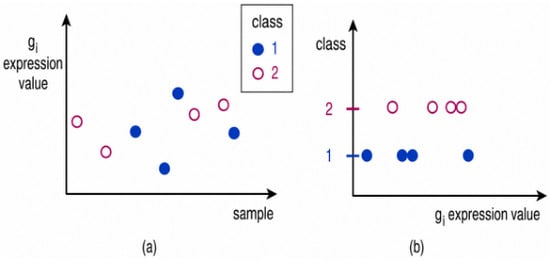
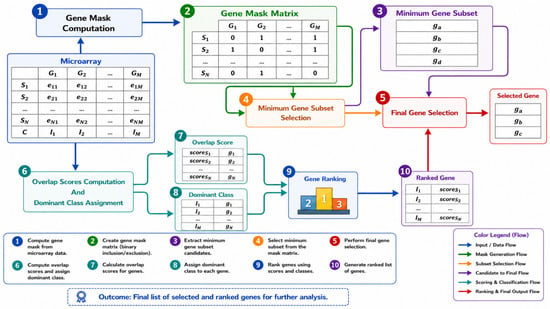
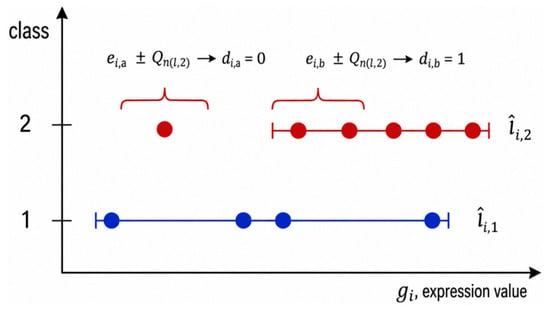
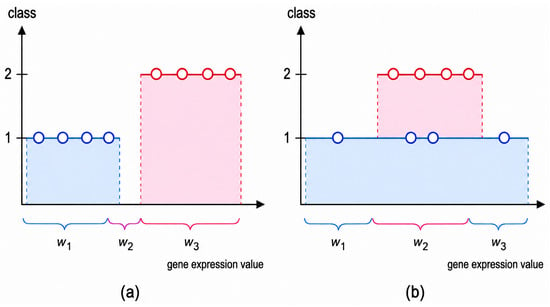
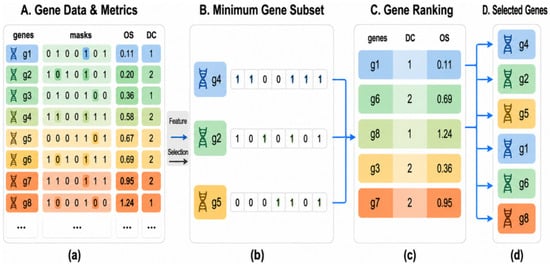
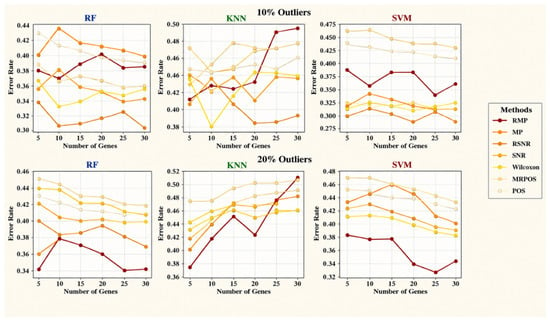
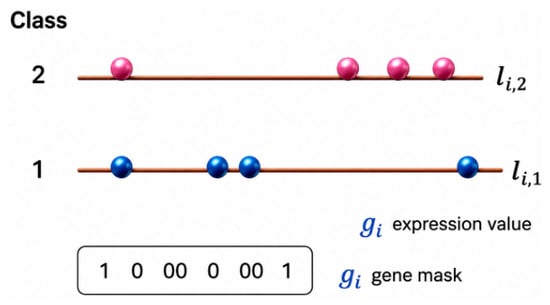
High-dimensional gene expression datasets in chemometric and biomedical research present significant challenges for machine learning because the number of genes greatly exceeds the number of available samples, increasing the risk of overfitting and reducing classification reliability. Existing gene selection methods are often sensitive to noise and outliers, leading to unstable feature subsets and degraded classification performance. To address these limitations, this study proposes a Robust Masked Painter (RMP) framework that integrates robust measures of location and dispersion, namely the Median and the Rousseeuw & Croux statistic ( ), for reliable gene selection. The proposed framework operates in two stages. First, we identify informative genes using a round-robin strategy with a greedy search algorithm and robust core intervals to reduce the influence of noise and outliers. Second, Dominant Class (DC) analysis and Overlapping Scores (OS) further refine the selected gene subset by minimizing class overlap. We evaluate the proposed method on four publicly available gene expression datasets and compare it with several established feature selection methods using Random Forest, K-Nearest Neighbors, and Support Vector Machine classifiers. We assess classification performance using the Classification Error Rate. Experimental results and simulation studies demonstrate that the proposed RMP framework consistently outperforms competing methods by selecting highly informative genes that improve classification accuracy, robustness, and generalization.
Full article
(This article belongs to the Special Issue Data Science, Statistics, and Entropy)
►▼
Show Figures

Figure 1
Open AccessArticle
Entropy Production During Star Formation: An Analytic Thermodynamic Framework from the Main Sequence to Compact Remnants
by
Javier Martín-Torres and María-Paz Zorzano
Entropy 2026, 28(9), 991; https://doi.org/10.3390/e28090991 - 4 Sep 2026
Abstract
►▼
Show Figures
The transformation of a diffuse molecular cloud into a star necessarily increases the entropy of the universe, chiefly through the radiation emitted as gravitational binding energy is released. We present a compact, fully closed-form thermodynamic model of this process: the Sackur–Tetrode equation gives
[...] Read more.
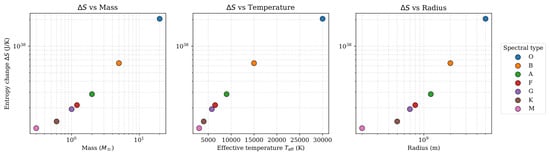
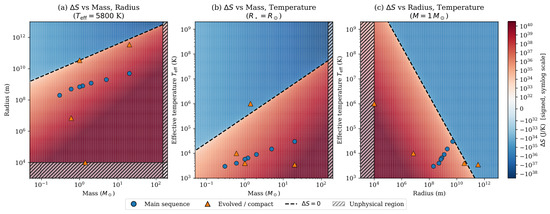
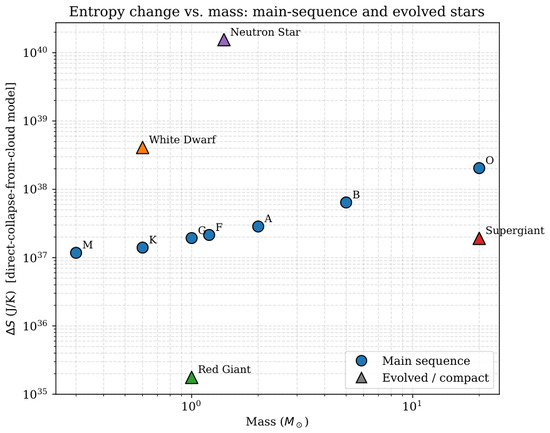
The transformation of a diffuse molecular cloud into a star necessarily increases the entropy of the universe, chiefly through the radiation emitted as gravitational binding energy is released. We present a compact, fully closed-form thermodynamic model of this process: the Sackur–Tetrode equation gives the entropy of the initial cloud and, generously, of the stellar material itself, while the released gravitational potential energy is converted into a radiation-entropy term , the factor of one-half following from the virial theorem for a self-gravitating star in hydrostatic equilibrium. For a solar-type star we obtain , consistent with independent literature estimates of stellar and interstellar entropy. Extending the calculation across the main sequence (O through M) gives , rising from for a M dwarf to for a O star. We then map the full parameter space to locate the locus of —the formal boundary of thermodynamic feasibility for a single monolithic collapse—and show that every real main-sequence star lies deep in the entropy-producing region, with the boundary itself displaced to radii and masses far outside the stellar regime. Applying the same closed-form model to representative red giants, supergiants, white dwarfs and neutron stars (not as a model of their true formation, but as a diagnostic of how compactness controls radiative entropy production) shows that is set primarily by the compactness of the final configuration, so that degenerate remnants—if they were assembled by a single collapse from a diffuse cloud—would be substantially larger entropy sources than main-sequence stars, while extended giants are comparatively modest ones. The same closed-form machinery gives direct access to a full thermodynamic feasibility map, something that would otherwise require a large grid of numerical simulations to reconstruct, and we compare our results throughout with the current literature on stellar and cosmic entropy rather than with ad hoc benchmarks.
Full article

Figure 1
Open AccessArticle
A Transformer-Based Spatiotemporal Fusion Network for Automatic Modulation Classification
by
Mingdong Xu, Guina Zhao, Yanrong Zhang, Dequan Zheng and Jinlong Liu
Entropy 2026, 28(9), 990; https://doi.org/10.3390/e28090990 - 4 Sep 2026
Abstract
Automatic modulation classification (AMC) suffers from performance degradation under low signal-to-noise ratio (SNR) conditions, where modulation characteristics are affected by noise and signals belonging to the same modulation family exhibit similar feature representations. To address these challenges, this paper proposes a Transformer-based spatiotemporal
[...] Read more.
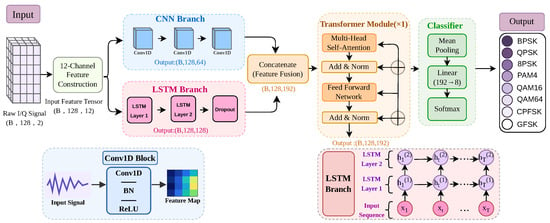
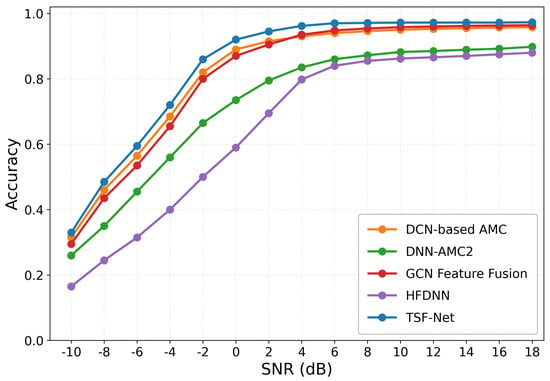
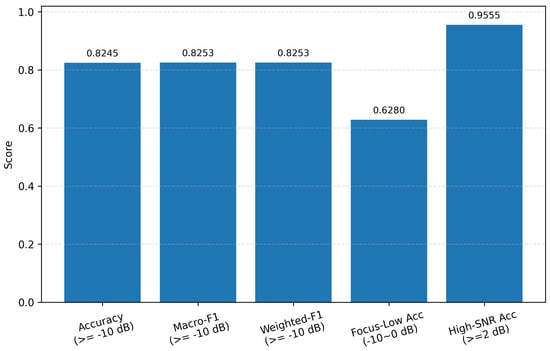
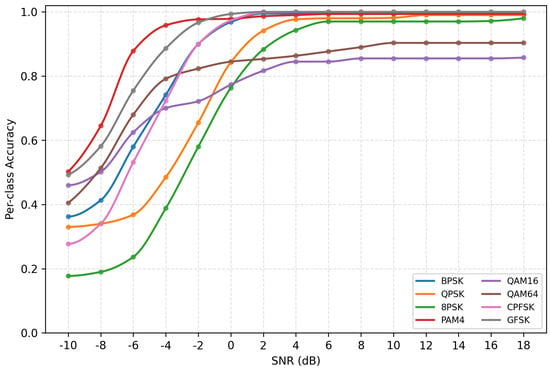
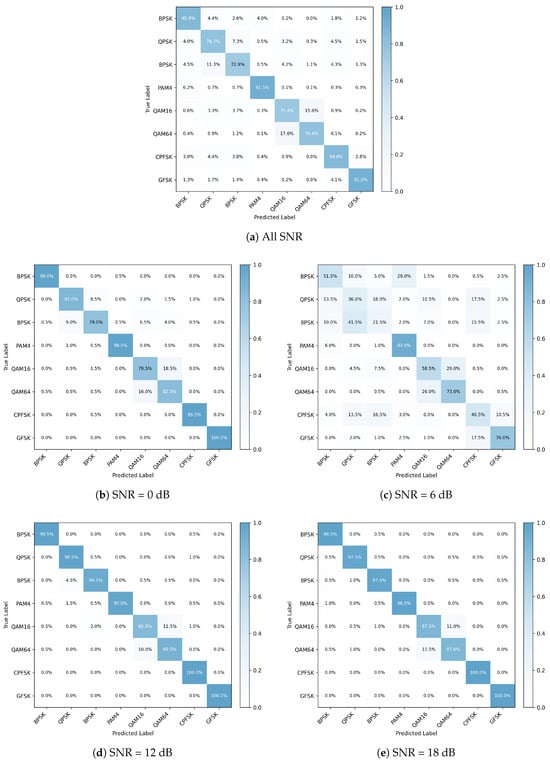
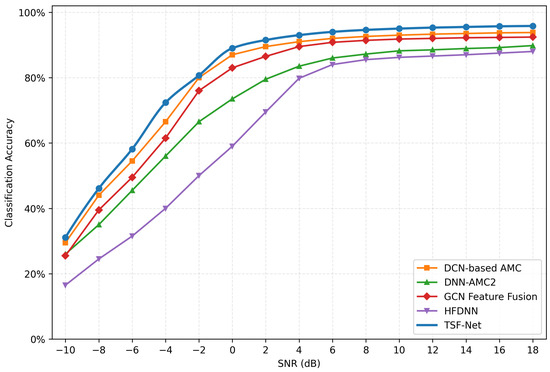
Automatic modulation classification (AMC) suffers from performance degradation under low signal-to-noise ratio (SNR) conditions, where modulation characteristics are affected by noise and signals belonging to the same modulation family exhibit similar feature representations. To address these challenges, this paper proposes a Transformer-based spatiotemporal fusion network that jointly exploits local spatial waveform characteristics and temporal dependency information while leveraging the global context modeling capability of the Transformer to integrate complementary multi-dimensional features. The proposed architecture improves feature representation capability under different SNR conditions. Experimental results demonstrate that the proposed method achieves improved classification performance compared with comparative approaches under different SNR conditions. In particular, it achieves an overall classification accuracy of 82.45% over the SNR range from to 18 dB, and an average accuracy of 95.55% at SNRs of 2 dB and above, showing improved classification performance in the low-to-medium SNR transition region.
Full article
(This article belongs to the Section Information Theory, Probability and Statistics)
►▼
Show Figures

Figure 1
Journal Menu
► ▼ Journal Menu-
- Entropy Home
- Aims & Scope
- Editorial Board
- Reviewer Board
- Topical Advisory Panel
- Video Exhibition
- Instructions for Authors
- Special Issues
- Topics
- Sections & Collections
- Article Processing Charge
- Indexing & Archiving
- Editor’s Choice Articles
- Most Cited & Viewed
- Journal Statistics
- Journal History
- Journal Awards
- Society Collaborations
- Conferences
- Editorial Office
Journal Browser
► ▼ Journal Browser-
arrow_forward_ios
Forthcoming issue
arrow_forward_ios Current issue - Vol. 28 (2026)
- Vol. 27 (2025)
- Vol. 26 (2024)
- Vol. 25 (2023)
- Vol. 24 (2022)
- Vol. 23 (2021)
- Vol. 22 (2020)
- Vol. 21 (2019)
- Vol. 20 (2018)
- Vol. 19 (2017)
- Vol. 18 (2016)
- Vol. 17 (2015)
- Vol. 16 (2014)
- Vol. 15 (2013)
- Vol. 14 (2012)
- Vol. 13 (2011)
- Vol. 12 (2010)
- Vol. 11 (2009)
- Vol. 10 (2008)
- Vol. 9 (2007)
- Vol. 8 (2006)
- Vol. 7 (2005)
- Vol. 6 (2004)
- Vol. 5 (2003)
- Vol. 4 (2002)
- Vol. 3 (2001)
- Vol. 2 (2000)
- Vol. 1 (1999)
Highly Accessed Articles
Latest Books
E-Mail Alert
News
Topics
Topic in
AI, Applied Sciences, Computers, Electronics, Entropy, Future Internet, Information, IoT, Sensors, Telecom
Advances in Sixth Generation and Beyond (6G&B)
Topic Editors: Luis Javier García Villalba, Ana Lucila Sandoval OrozcoDeadline: 31 October 2026
Topic in
Entropy, IJMS, International Journal of Topology, MAKE, Mathematics, Quantum Reports, Symmetry
Topological, Quantum, and Molecular Information Approaches to Computation and Intelligence
Topic Editors: Michel Planat, Edward A. RietmanDeadline: 31 December 2026
Topic in
Entropy, Quantum Reports, Symmetry, Universe, Physics
Quantum Systems and Their Applications
Topic Editors: Chao Zheng, Jim FreericksDeadline: 28 February 2027
Topic in
Entropy, Future Internet, Healthcare, Sensors, Data
Communications Challenges in Health and Well-Being, 2nd Edition
Topic Editors: Dragana Bajic, Konstantinos Katzis, Gordana GardasevicDeadline: 20 March 2027
Conferences
Special Issues
Special Issue in
Entropy
Entropy-Based Fault Diagnosis: From Theory to Applications
Guest Editors: Xiaoan Yan, Ling Xiang, Jinde Zheng, Zhi-Xin YangDeadline: 15 September 2026
Special Issue in
Entropy
Phase Transitions in Complex and Nonequilibrium Systems: From Criticality to Topological and Active Matter
Guest Editors: Edson Denis Leonel, Diego Fregolent Mendes de Oliveira, Chris G. AntonopoulosDeadline: 15 September 2026
Special Issue in
Entropy
Causal Graphical Models and Their Applications, 2nd Edition
Guest Editors: Luis Enrique Sucar, Ruben Sanchez-RomeroDeadline: 15 September 2026
Special Issue in
Entropy
Mathematical Modeling in Systems Biology, 2nd Edition
Guest Editor: Pavel KraikivskiDeadline: 17 September 2026
Topical Collections
Topical Collection in
Entropy
Advances in Applied Statistical Mechanics
Collection Editor: Antonio M. Scarfone
Topical Collection in
Entropy
Wavelets, Fractals and Information Theory
Collection Editor: Carlo Cattani
Topical Collection in
Entropy
Foundations of Statistical Mechanics
Collection Editor: Antonio M. Scarfone