


Tumor Microenvironment and Signaling Pathways in Prostate Cancer: From Immune Modulation to Targeted Therapies
This special issue belongs to the section "Cell Microenvironment".
Special Issue Information
Dear Colleagues,
Despite significant therapeutic advances, prostate cancer remains a leading cause of cancer-related mortality in men worldwide. A deeper understanding of the biological mechanisms driving disease initiation, progression and treatment resistance is essential for the development of more effective therapies and clinically relevant biomarkers. Equally important is the creation of experimental models that better reflect the complexity of human disease, enabling improved patient stratification and treatment selection.
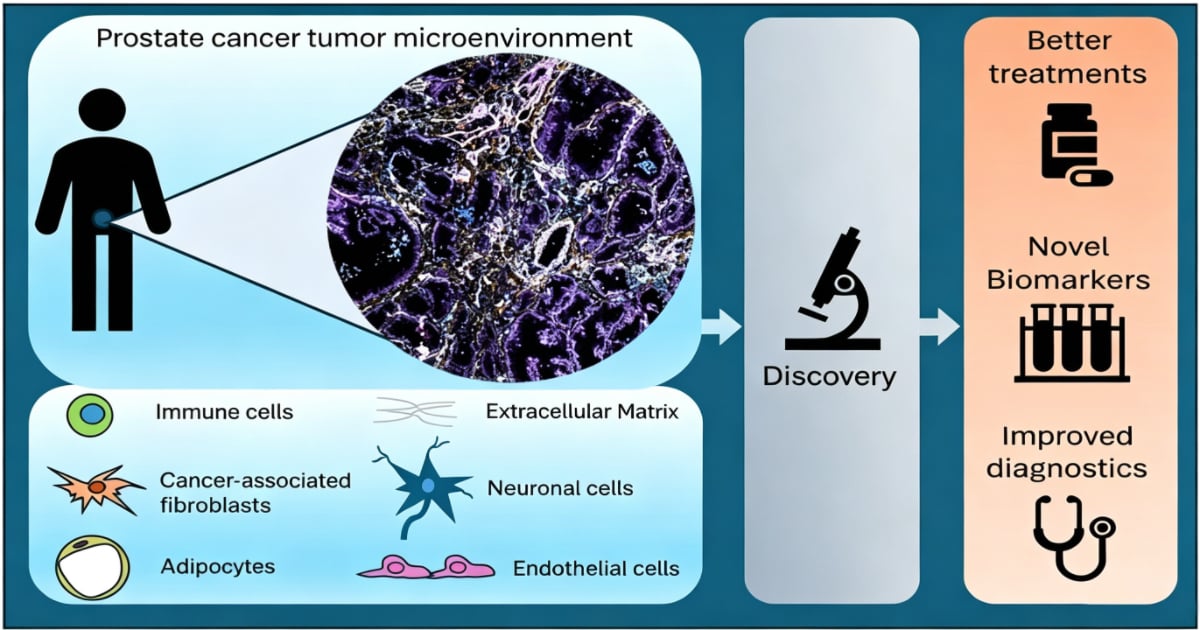
The tumour microenvironment (TME) has emerged as a key regulator of prostate cancer biology, influencing tumour growth, immune evasion, metastatic spread, and therapeutic response. Recent technological advances, including single-cell and spatial omics, high-resolution imaging, and sophisticated ex vivo and in vivo models, have transformed our ability to investigate the cellular and molecular interactions within the tumour ecosystem. These approaches are providing unprecedented insights into the dynamic crosstalk between tumour, stromal, immune, and vascular cells.
As a result, research into the prostate cancer microenvironment has become a rapidly expanding and highly impactful field. Understanding how microenvironmental factors shape disease progression and therapeutic vulnerability offers significant opportunities for discovering novel biomarkers, therapeutic targets, and precision medicine strategies, with important implications for both fundamental cancer biology and clinical practice.
This Special Issue aims to present and disseminate the most recent advances related to the prostate cancer microenvironment and its role in disease progression, therapeutic response, and clinical outcomes. We welcome original research articles, reviews, communications, and perspectives that address molecular, cellular, translational, and clinical aspects of prostate cancer-microenvironment interactions.
Topics of interest for publication include, but are not limited to, the following:
- Tumor-stroma interactions in prostate cancer
- Cancer-associated fibroblasts and stromal remodeling
- Immune microenvironment and immune evasion mechanisms
- Tumor-associated macrophages, myeloid cells, and lymphocyte biology
- Extracellular matrix dynamics and mechanobiology
- Angiogenesis, lymphangiogenesis, and vascular remodeling
- Bone metastatic niche and organ-specific microenvironments
- Microenvironment-mediated therapeutic resistance
- Biomarkers derived from tumor microenvironment components
- Single-cell, spatial transcriptomic, and multi-omics approaches
- Microbiome and inflammatory signaling in prostate cancer
- Novel therapeutic strategies targeting the tumor microenvironment
- Preclinical models and translational studies of prostate cancer-microenvironment interactions
- Clinical implications and precision oncology approaches related to the tumor microenvironment.
Dr. Helen B. Pearson
Guest Editor
Manuscript Submission Information
Manuscripts should be submitted online at www.mdpi.com by registering and logging in to this website. Once you are registered, click here to go to the submission form. Manuscripts can be submitted until the deadline. All submissions that pass pre-check are peer-reviewed. Accepted papers will be published continuously in the journal (as soon as accepted) and will be listed together on the special issue website. Research articles, review articles as well as communications are invited. For planned papers, a title and short abstract (about 250 words) can be sent to the Editorial Office for assessment.
Submitted manuscripts should not have been published previously, nor be under consideration for publication elsewhere (except conference proceedings papers). All manuscripts are thoroughly refereed through a single-anonymized peer-review process. A guide for authors and other relevant information for submission of manuscripts is available on the Instructions for Authors page. Cells is an international peer-reviewed open access semimonthly journal published by MDPI.
Please visit the Instructions for Authors page before submitting a manuscript. The Article Processing Charge (APC) for publication in this open access journal is 2700 CHF (Swiss Francs). Submitted papers should be well formatted and use good English. Authors may use MDPI's English editing service prior to publication or during author revisions.
Keywords
- prostate cancer
- tumour microenvironment
- fibroblasts
- cancer-associated fibroblasts
- immune cells
- extracellular matrix
Benefits of Publishing in a Special Issue
- Ease of navigation: Grouping papers by topic helps scholars navigate broad scope journals more efficiently.
- Greater discoverability: Special Issues support the reach and impact of scientific research. Articles in Special Issues are more discoverable and cited more frequently.
- Expansion of research network: Special Issues facilitate connections among authors, fostering scientific collaborations.
- External promotion: Articles in Special Issues are often promoted through the journal's social media, increasing their visibility.
- Reprint: MDPI Books provides the opportunity to republish successful Special Issues in book format, both online and in print.
Published Papers


Cells - ISSN 2073-4409