



Next Issue
Volume 8, December
Previous Issue
Volume 8, October


Heritage, Volume 8, Issue 11 (November 2025) – 51 articles
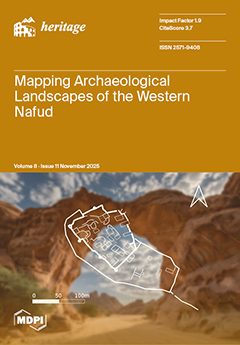
Cover Story (view full-size image): This article presents the results of a remote sensing survey of the western Nafud region of northern Arabia, encompassing parts of modern Saudi Arabia and Jordan. The study offers new insights into the distribution and patterns of archaeological structures that can be utilised for both research and heritage management. The survey also documented, for the first time, several regionally significant sites, including a substantial fortified settlement and associated structures south of the modern city of Tabuk. View this paper
  • Issues are regarded as officially published after their release is announced to the table of contents alert mailing list.
  • You may sign up for e-mail alerts to receive table of contents of newly released issues.
  • PDF is the official format for papers published in both, html and pdf forms. To view the papers in pdf format, click on the "PDF Full-text" link, and use the free Adobe Reader to open them.
Order results
Result details
Section
Select all
Export citation of selected articles as:
13 pages, 1458 KB  
Article
The 1 April 2471 b.C. Eclipse and the End of the Fourth Egyptian Dynasty
by Giulio Magli
Heritage 2025, 8(11), 492; https://doi.org/10.3390/heritage8110492 - 20 Nov 2025
Viewed by 357
Abstract
On 1 April 2471 b.C., an impressive, unpredictable phenomenon occurred over the Delta of the Nile: a total solar eclipse, with the totality band almost centred on the sacred city of Buto, and the “capital” Memphis on the verge of the totality. This [...] Read more.
On 1 April 2471 b.C., an impressive, unpredictable phenomenon occurred over the Delta of the Nile: a total solar eclipse, with the totality band almost centred on the sacred city of Buto, and the “capital” Memphis on the verge of the totality. This date is compatible with existing chronologies for the reign of Pharaoh Shepseskaf, who adopted a clamorous symbolic break with respect to the tradition of “solarized” kings started by Khufu. Indeed, his tomb was not built in view from Heliopolis and was not a pyramid, but a kind of unique monument resembling the symbolic shrine at Buto. The aim of the present paper is to investigate in a systematic way the possibility that the origin of this historical and architectural passage, which marks the end of the Fourth Dynasty, can be identified precisely in the 2471 b.C. eclipse, therefore furnishing a new astronomical anchor for the chronology of the Old Kingdom. Full article
Show Figures

Figure 1

15 pages, 2174 KB  
Review
Assessing the Evolution of Research on Mediterranean Coastal Cultural Heritage Under Climate Extremes and Crisis: A Systematic Literature Review (2000–2024)
by Aliki Gkaifyllia, Ourania Tzoraki, Isavela Monioudi and Thomas Hasiotis
Heritage 2025, 8(11), 491; https://doi.org/10.3390/heritage8110491 - 20 Nov 2025
Viewed by 295
Abstract
Mediterranean coastal cultural heritage sites are increasingly threatened by the impacts of climate change, including sea-level rise, coastal erosion, and extreme weather events, which endanger both their physical integrity and their cultural and economic value. Safeguarding these vulnerable cultural assets requires approaches that [...] Read more.
Mediterranean coastal cultural heritage sites are increasingly threatened by the impacts of climate change, including sea-level rise, coastal erosion, and extreme weather events, which endanger both their physical integrity and their cultural and economic value. Safeguarding these vulnerable cultural assets requires approaches that integrate technological innovation with effective governance and management strategies. This study presents a systematic review of research published between 2000 and 2024, conducted in accordance with PRISMA guidelines to ensure methodological rigor and transparency. Searches were conducted in Scopus, Web of Science, and Google Scholar, limited to English-language studies explicitly addressing coastal cultural heritage in the Mediterranean. A total of 77 studies were analyzed using bibliometric and spatial techniques to examine thematic trends, methodological orientations, and regional patterns. Results reveal a sharp rise in scholarly output after 2014, with Italy, Greece, and Cyprus emerging as dominant contributors. The literature demonstrates a strong emphasis on tangible cultural heritage, particularly archaeological sites and monuments, while cultural landscapes and nature–culture systems receive comparatively limited attention. Methodologically, the field is dominated by digital and technology-driven tools such as GIS, remote sensing, 3D documentation, and climate modelling, with socially grounded and participatory approaches appearing in less than 5% of studies. More than 70% of the reviewed works adopt case study designs, which constrain comparative and generalizable insights. In contrast, a predominance of future-oriented assessments highlights a persistent lack of present-day monitoring and baseline data. Collectively, these findings clarify the paper’s exclusive focus on coastal cultural heritage, underscore the need to broaden geographical coverage, integrate socio-institutional dimensions with environmental diagnostics, and prioritize empirical, present-focused approaches. In this direction, future research will advance an integrated framework for assessing coastal vulnerability at both site-specific and regional scales, supporting proactive and evidence-based conservation planning. Full article
Show Figures

Figure 1

19 pages, 4363 KB  
Article
The Lithic Journey of Jerusalem Stone: New Evidence of Ancient Quarries
by Adi Sela Wiener, Laura Medeghini and Gabriele Favero
Heritage 2025, 8(11), 490; https://doi.org/10.3390/heritage8110490 - 19 Nov 2025
Viewed by 508
Abstract
Jerusalem’s prominent building material of limestone and dolostone, which is commonly known as “Jerusalem stone”, characterizes the city’s architecture and built environment. The distinctive stone was quarried from the Jerusalem landscape, prepared as building stone, and transported to building sites, a process referred [...] Read more.
Jerusalem’s prominent building material of limestone and dolostone, which is commonly known as “Jerusalem stone”, characterizes the city’s architecture and built environment. The distinctive stone was quarried from the Jerusalem landscape, prepared as building stone, and transported to building sites, a process referred to in this paper as the “lithic journey”. While these ancient quarries have been identified in previous studies, new evidence identifies the characteristics and the spatial distribution of these quarries and the connections between them. This study examined over one hundred archeological reports resulting from mainly salvage excavations conducted in the last decade (2012–2024), which has enabled the creation of updated mapping. Data collected from the Hadashot Arkheologiyot: Excavations and Surveys in Israel (HA-ESI), are included in a database that classifies quarry types, building material provenance, and specific characteristics of the ancient quarries that supplied Jerusalem’s building stones. The resulting expanded dataset of this open-access, online resource broadens our understanding of the quarry landscape and the continuous use of stone in the city’s building culture, while also offering an understanding of Jerusalem’s urban development and the design of Jerusalem’s cityscape from antiquity to the present day, as well as contribute to the city’s heritage management. Full article
Show Figures

Figure 1

17 pages, 5193 KB  
Article
A Case of Developmental Dysplasia of the Hip with Dislocation from Ancient Rome
by Flavio De Angelis, Laura Filograna, Andrea Battistini, Flavia Chirico, Silvia Iorio, Alessandro Carini, Michele Papa, Valentina Gazzaniga, Cristina D’Agostini, Guglielmo Manenti and Francesco Garaci
Heritage 2025, 8(11), 489; https://doi.org/10.3390/heritage8110489 - 19 Nov 2025
Viewed by 303
Abstract
This study focuses on an individual from the southeastern area of the Roman Suburbium in Late Antiquity (3rd–5th centuries CE), whose skeleton was found in a multiple burial alongside five others. Osteological and CT imaging analyses revealed a significant developmental defect in the [...] Read more.
This study focuses on an individual from the southeastern area of the Roman Suburbium in Late Antiquity (3rd–5th centuries CE), whose skeleton was found in a multiple burial alongside five others. Osteological and CT imaging analyses revealed a significant developmental defect in the left hip, characterized by a shallow, flattened acetabulum and a hypoplastic or aplastic femoral head, with no evidence of infection or postmortem alteration. This rare condition provides a compelling case study demonstrating the effectiveness of an integrated diagnostic approach combining traditional osteology with advanced imaging techniques. Despite prior research into orthopedic pathologies in Roman Imperial and Late Antique populations, no comparable cases have been documented, highlighting a notable gap in the bioarchaeological literature regarding congenital skeletal defects. This case contributes to a broader understanding of disability in ancient communities and raises important questions about social recognition and support for individuals with physical impairments in the past. However, limitations exist due to the absence of certain skeletal elements, which restricts a full assessment of compensatory biomechanical adaptations, such as load redistribution through the trunk or upper limbs. Nevertheless, the findings underscore the growing importance of refining diagnostic standards to better identify and interpret evidence of disability in historical populations. Full article
(This article belongs to the Special Issue Advanced Analysis of Bioarchaeology, Skeletal Biology and Evolution)
Show Figures

Figure 1

12 pages, 273 KB  
Article
The Digitization of Human Skeletal Collections: New Challenges and Perspectives
by Maria Giovanna Belcastro, Rita Sorrentino, Davide Mameli, Annalisa Pietrobelli, Teresa Nicolosi, Valentina Mariotti, Carla Figus, Elisa Lodolo, Laura Forni, Stefano Ratti, Antonio Rosas, Luis Francisco Ríos Frutos, Antony Colombo, Melania Maglio, Lucia Martini, Gregorio Marchiori, Gianluca Giavaresi and Milena Fini
Heritage 2025, 8(11), 488; https://doi.org/10.3390/heritage8110488 - 19 Nov 2025
Viewed by 521
Abstract
Human skeletal remains are a crucial source for understanding biocultural and evolutionary processes. Yet, their study and management are challenged by social, religious, and political factors, placing them in a ‘grey area’ within cultural heritage. Human skeletal collections often carry colonial legacies, raising [...] Read more.
Human skeletal remains are a crucial source for understanding biocultural and evolutionary processes. Yet, their study and management are challenged by social, religious, and political factors, placing them in a ‘grey area’ within cultural heritage. Human skeletal collections often carry colonial legacies, raising ethical concerns and new challenges for research, curation, and public engagement in academic and museum institutions. In this context, digitization offers expanding opportunities for public exhibition and definition of human remains as part of our culture, while ensuring long-term preservation. Virtual approaches serve also as a useful tool to investigate human variability from evolutionary, bioarchaeological, and forensic perspectives. Moreover, digital access fosters interdisciplinary collaboration and research by enabling global scholarly engagement beyond physical limitations. Through the CHANGES project, we have initiated the digitization of the Documented Human Osteological Collections (DHOC) of the University of Bologna—one of Italy’s largest collections—making these resources available via the 3D data repository MorphoSource. This contribution provides updates on newly digitized material and reports on access requests received to date. We conclude by considering the emerging responsibilities of anthropologists in the use of virtual human skeletal collections, promoting best practices for the management of the anthropological digital twins. Full article
(This article belongs to the Special Issue History, Conservation and Restoration of Cultural Heritage)
21 pages, 11661 KB  
Article
Al-Madafah in Sweida, Southern Syria: An Exploration of Architectural Heritage and Socio-Cultural Significance
by Bushra Yaroub Alarbeed, Harshit Sosan Lakra, Komal Raj Aryal and Nimesh Chettri
Heritage 2025, 8(11), 487; https://doi.org/10.3390/heritage8110487 - 19 Nov 2025
Viewed by 523
Abstract
Al-Madafah (the guesthouse) is a cornerstone of the cultural and social fabric of Sweida Province in southern Syria. Rooted in the Druze community’s history following their settlement in Jabal al-Arab in the 17th century, these structures have served as spaces for hospitality, cultural [...] Read more.
Al-Madafah (the guesthouse) is a cornerstone of the cultural and social fabric of Sweida Province in southern Syria. Rooted in the Druze community’s history following their settlement in Jabal al-Arab in the 17th century, these structures have served as spaces for hospitality, cultural exchange, political resistance, and community cohesion. Despite their significance, scholarly research on Madafahs in Sweida remains limited. This article examines their architectural design, socio-cultural roles, and historical evolution to uncover this understudied tradition and advance conservation efforts for this heritage. Combining archival research, case studies, and oral histories from residents and experts, this study employs narrative analysis to decode the cultural meanings embedded in these spaces. Findings reveal that Madafahs are more than architectural landmarks; they serve as living embodiments of resilience, cultural pride, and communal identity, fostering social cohesion, while their basalt stone construction reflects Jabal al-Arab’s vernacular heritage. Historically, they hosted revolutionary activities against colonial rule. Today, urbanisation and economic pressures threaten their traditional role, yet they endure as symbols of continuity. This study highlights Madafahs as valuable heritage sites and cradles for narratives of magnanimity and defiance. Collaborative efforts between stakeholders and policymakers could revitalise these spaces, ensuring that their legacy persists amid modern challenges. Full article
Show Figures

Figure 1

16 pages, 1031 KB  
Article
Heritage-Aware Generative AI Workflow for Islamic Geometry in Interiors
by Ayman Fathy Ashour and Wael Rashdan
Heritage 2025, 8(11), 486; https://doi.org/10.3390/heritage8110486 - 18 Nov 2025
Viewed by 392
Abstract
Recent text to image systems can synthesize Islamic heritage elements with high visual fidelity, but their outputs rarely translate into fabricable geometry or integrate into interiors without substantial redrawing. We present an end-to-end workflow that links historically grounded precedent retrieval, controllable tileable generation, [...] Read more.
Recent text to image systems can synthesize Islamic heritage elements with high visual fidelity, but their outputs rarely translate into fabricable geometry or integrate into interiors without substantial redrawing. We present an end-to-end workflow that links historically grounded precedent retrieval, controllable tileable generation, semantic segmentation and vectorization, and geometry-aware mapping into Computer-Aided Design (CAD) environments. Contributions include the following: (i) a license-audited dataset schema and a retrieval classifier for common Islamic motif families and architectural elements; (ii) precedent retrieval via a ResNet 50 and Vision Transformer (ViT) embedding pipeline; (iii) a Low-Rank Adaptation (LoRA) tuned diffusion model that generates tileable motifs with motif/region controls; (iv) a raster-to-vector pipeline that enforces curve closure and minimum feature widths for CNC/laser fabrication; and (v) a rubric and domain metrics (symmetry coherence, seam/tileability error, spline closure and junction valence, UV distortion, feature width compliance) that quantify “depth of integration” beyond surface texture. Quantitative metrics and blinded expert ratings compare the workflow against strong parametric baselines, while scripts translate images to fabrication-ready vectors/solids across walls, ceilings, partitions, floors, and furniture. Cultural safeguards cover calligraphy handling, regional balance audits, and provenance/credit. The workflow advances heritage-aware generative design by carrying imagery across the last mile into buildable detail and by providing practical checklists for adoption in interior architecture and conservation. Full article
Show Figures

Figure 1

32 pages, 21706 KB  
Article
Seismic Risk Assessment and Sustainable Geotechnical Solutions for Building Heritage: A Case Study in Southeastern Sicily
by Angela Fiamingo, Ettore Mangione, Glenda Abate and Maria Rossella Massimino
Heritage 2025, 8(11), 485; https://doi.org/10.3390/heritage8110485 - 18 Nov 2025
Viewed by 241
Abstract
The protection of historic buildings in seismic-prone regions is a critical challenge requiring strategies that balance structural safety with cultural preservation. This study proposes an integrated methodological framework for assessing seismic risk in heritage contexts by combining Geographic Information System (GIS)-based large-scale analyses [...] Read more.
The protection of historic buildings in seismic-prone regions is a critical challenge requiring strategies that balance structural safety with cultural preservation. This study proposes an integrated methodological framework for assessing seismic risk in heritage contexts by combining Geographic Information System (GIS)-based large-scale analyses with detailed Finite Element Method (FEM) simulations. At the urban scale, the framework is applied to more than 70 buildings in the historic center of Bronte (Eastern Sicily, Italy) to evaluate Soil–Structure Interaction (SSI) effects and identify priority areas for mitigation. At a detailed scale, the approach is validated through an in-depth investigation of the San Giovanni Evangelista bell-tower, a representative historic structure within the study area. For this case, sustainable Geotechnical Seismic Isolation (GSI) systems using well-graded Gravel–Rubber Mixtures (wgGRMs) are numerically tested as a low-impact retrofitting strategy. The results demonstrate that combining large-scale mapping with detailed structural modeling provides both broad urban insight and accurate site-specific evaluations, offering a replicable decision-support tool for seismic risk reduction in heritage environments. Additionally, wgGRMs-based GSI system significantly reduces seismic accelerations and drifts, offering a low-impact, sustainable retrofitting solution that reuses waste materials and fully preserves architectural integrity. Full article
(This article belongs to the Special Issue History, Conservation and Restoration of Cultural Heritage)
Show Figures

Figure 1

38 pages, 621 KB  
Article
Virtual Museums as Meaning-Modeling Systems in Digital Heritage
by Huining Guan, Pengbo Chen and Cheeyun Lilian Kwon
Heritage 2025, 8(11), 484; https://doi.org/10.3390/heritage8110484 - 18 Nov 2025
Viewed by 699
Abstract
This article frames the virtual museum as a meaning-modeling system within digital heritage and proposes an operational semiotic method for analysis. Grounded in Modeling Systems Theory and informed by Adorno’s non-identity, we construct a twelve-category coding matrix that combines three modeling levels with [...] Read more.
This article frames the virtual museum as a meaning-modeling system within digital heritage and proposes an operational semiotic method for analysis. Grounded in Modeling Systems Theory and informed by Adorno’s non-identity, we construct a twelve-category coding matrix that combines three modeling levels with four organizational forms. Applying this matrix to five heterogeneous cases (web, VR, and 3D environments), we derive three quantitative ratios that summarize each system’s profile: the Abstraction Ratio (degree of conceptual mediation), the Connectivity Ratio (degree of interlinking and systematic organization), and the Object Primacy Score (degree of object-centered representation). Exploratory clustering on these ratios reveals three recurrent patterns of virtual-heritage mediation: Network-Symbolic, Concept-Dominant, and Object-Preserving. The results articulate how different curatorial and technical choices redistribute attention between objects, contexts, and concepts, and how these redistributions affect the subject–object balance in digital settings. The contribution is twofold: a transparent, reproducible coding protocol that enables cross-case comparison, and an interpretive lens that relates quantitative patterns to critical concerns in heritage, including authenticity, legibility, and over-standardization. We conclude with implications for curators and designers seeking to align immersive interfaces with heritage values while preserving the irreducible remainder of the object. Full article
(This article belongs to the Special Issue Past for the Future: Digital Pathways in Cultural Heritage)
Show Figures

Figure 1

38 pages, 12996 KB  
Article
Street and Urban Muralism in Public Art: Conservation Between Evolution and Research in the Methods of the Istituto Centrale per Il Restauro
by Paola Mezzadri, Sara De Angelis, Rebecca Picca Orlandi, Michela Renna and Giancarlo Sidoti
Heritage 2025, 8(11), 483; https://doi.org/10.3390/heritage8110483 - 17 Nov 2025
Viewed by 409
Abstract
This paper presents an overview of a research line developed at the Istituto Centrale per il Restauro within the CHANGES (Cultural Heritage Active Innovation for Next-Gen Sustainable Society) project, funded under the Italian National Recovery and Resilience Plan. The research was developed in [...] Read more.
This paper presents an overview of a research line developed at the Istituto Centrale per il Restauro within the CHANGES (Cultural Heritage Active Innovation for Next-Gen Sustainable Society) project, funded under the Italian National Recovery and Resilience Plan. The research was developed in different phases: a first one dedicated to the study of the deep background and the state of the art in the ICR background: history, methodologies and research in the field; a second phase was dedicated to the selection of a specific urban art mural, as a key study with conservation problems connected to some of the principal preservation treatments related to the outdoor context; the mural was also identified as a beloved icon in the public space with a profound socio-cultural meaning for the community. Nido di Vespe, created in 2014 by the artist Lucamaleonte is part of a broader artistic project called M.U.Ro-Museum of Urban Art of Rome, an open-air public art museum located in the Quadraro district in Rome, designed by the artist Diavù. A third phase focused on the research in ICR laboratories, specifically addressing: cleaning, reintegration, and protection strategies adapted to dynamic outdoor environments. A multi-step cleaning system based on polyvinyl alcohol-borax semi-interpenetrated hydrogels loaded with nanostructured fluids was developed to selectively remove spray-paint vandalism while preserving the chemically similar original pictorial layers. The reintegration phase investigated acrylic and urea-aldehyde resins as binders to produce compatible, reversible, and UV-traceable retouching and infilling materials. For surface protection, multilayer coating systems incorporating nanoparticles with antimicrobial, photocatalytic, and UV-stabilizing properties were formulated to enhance durability and chromatic stability. Laboratory tests on mock-ups simulating typical street and urban art materials and morphologies showed satisfactory results, while diagnostic investigations on Nido di Vespe provided the reference data to calibrate the experiments with real mural conditions. Cleaning tests demonstrated promising removal efficiency, influenced by the chemical composition, thickness of the overpainted layers, and surface roughness. The reintegration system met the expected performance requirements, as the tested binders provided good results and allowed the development of compatible, reversible, and distinguishable solutions. Protective coatings showed good results in terms of chromatic stability and surface integrity; however, the long-term behavior of both reintegration, cleaning, and protection systems requires further evaluation. The results achieved so far support the development of sustainable and flexible conservation strategies for the conservation of contemporary street and urban murals and will guide the future application of the selected materials and methodologies in pilot conservation interventions on the mural chosen as a meaningful case study within the broader research. Full article
(This article belongs to the Special Issue History, Conservation and Restoration of Cultural Heritage)
Show Figures

Figure 1

36 pages, 1870 KB  
Review
Environmental Archaeology Through Tree Rings: Dendrochronology as a Tool for Reconstructing Ancient Human–Environment Interactions
by Lucian Dinca, Cristinel Constandache, Gabriel Murariu, Maria Mihaela Antofie, Tiberiu Draghici and Iulian Bratu
Heritage 2025, 8(11), 482; https://doi.org/10.3390/heritage8110482 - 17 Nov 2025
Viewed by 865
Abstract
Dendrochronology, the study of tree-ring growth patterns, is a powerful tool for reconstructing past human–environment interactions. This review examines its role within archaeology, focusing on how tree-ring studies contribute to dating wooden artifacts, reconstructing past climates, and understanding timber use in historical buildings [...] Read more.
Dendrochronology, the study of tree-ring growth patterns, is a powerful tool for reconstructing past human–environment interactions. This review examines its role within archaeology, focusing on how tree-ring studies contribute to dating wooden artifacts, reconstructing past climates, and understanding timber use in historical buildings and cultural heritage. To explore these applications, we conducted a bibliometric analysis of studies indexed in Web of Science. Our results reveal a marked increase in dendrochronological research over the past 15 years, alongside a broadening of its impact across related fields such as anthropology and environmental sciences. We classify the literature into major thematic areas, including methodological developments, historical and environmental disruptions, art and architecture, mining history, and the ancient timber trade. By highlighting both the advantages and limitations of dendrochronology—such as issues of reference coverage, the need for non-destructive sampling, and the importance of interdisciplinary collaboration—we show how this approach extends beyond archaeology to illuminate wider cultural and environmental contexts. Ultimately, our findings demonstrate the significance of dendrochronology not only for understanding ancient civilizations and cultural heritage, but also for tracing the complex interactions between humans and natural resources across time. Full article
(This article belongs to the Section Cultural Heritage)
Show Figures

Figure 1

21 pages, 3799 KB  
Article
Public Acceptance Mechanisms of Han Dynasty Cultural Symbols in Landscape Design: An Empirical Study Based on the Cognition–Attitude–Behavior Model
by Weidi Zhang and Xinyue Cai
Heritage 2025, 8(11), 481; https://doi.org/10.3390/heritage8110481 - 16 Nov 2025
Viewed by 451
Abstract
As traditional culture finds increasingly widespread application in visual communication and public landscapes, the public’s acceptance mechanisms for cultural symbols have emerged as a critical issue affecting cultural sustainability. In the context of globalization and digitalization, balancing cultural authenticity with dissemination efficiency has [...] Read more.
As traditional culture finds increasingly widespread application in visual communication and public landscapes, the public’s acceptance mechanisms for cultural symbols have emerged as a critical issue affecting cultural sustainability. In the context of globalization and digitalization, balancing cultural authenticity with dissemination efficiency has become a core issue in driving cultural innovation and sustainable utilization. Grounded in the Cognition–Attitude–Behavior model, this study examines how cognition, attitude, and behavior interact in shaping public responses to Han Dynasty cultural symbols in contemporary landscape design. The research adopts a three-stage framework—comprising theoretical construction, data collection, and analytical validation—and uses the Han Yangling National Archaeological Site Park as a representative Han cultural context. A total of 172 valid questionnaires were analyzed to reveal the cognitive and emotional mechanisms through which the public engages with Han cultural symbols in modern landscapes. Results indicate that cognition not only exerts a direct positive influence on behavioral intention but also plays a significant mediating role through affective attitudes, validating the pivotal mediating function of attitudes in the cultural symbol acceptance process. These findings provide empirical evidence and practical strategies for the contemporary dissemination of traditional cultural symbols and the sustainable utilization of cultural heritage. Full article
(This article belongs to the Section Cultural Heritage)
Show Figures

Figure 1

12 pages, 4571 KB  
Article
Micro-Raman Study of Chinese Iron-Based Brown Wares Produced During Song Dynasty (960–1279 CE): Probing Crystals in the Glazes
by Tian Wang, Zilong He, Senwei Xia, Philippe Sciau, Anding Shao, Zhao Ren, Fen Wang, Jianfeng Zhu, Ying Wang, Qiang Li and Hongjie Luo
Heritage 2025, 8(11), 480; https://doi.org/10.3390/heritage8110480 - 15 Nov 2025
Viewed by 314
Abstract
Brown glazed wares, as some of the famous Song wares, attract significant attention nowadays due to the glaze containing a large amount of metastable ε-Fe2O3, a promising multiple-functional electromagnetic material. In this work, typical fragments were systematically analyzed by [...] Read more.
Brown glazed wares, as some of the famous Song wares, attract significant attention nowadays due to the glaze containing a large amount of metastable ε-Fe2O3, a promising multiple-functional electromagnetic material. In this work, typical fragments were systematically analyzed by micro-Raman spectroscopy combined with scanning electron microscopy as well as X-ray fluorescence. Abundant ε-Fe2O3 crystals were observed in the glaze surfaces, with the exception of numerous hematite crystals detected in the surfaces of fragments excavated in Hunyuan kilns (Shanxi province). The correlative analyses of Raman and XRF data indicate that relatively high SiO2 and low CaO contents in the system may benefit ε-Fe2O3 precipitation, and the crystallization temperature may range from 1150 to 1200 °C. In addition, various crystals were detected in the glazes, including magnetite, magnesioferrite, zircon, anatase, pseudobrookite, rutile, cordierite, cristobalite, quartz, and mullite. Full article
Show Figures

Figure 1

19 pages, 4627 KB  
Article
Evaluating Earth Construction Techniques on Ancient Architecture: An Exploratory Use of Empirical Field Tests in West Asia (Tell Zurghul/Nigin)
by Licia De Vito and Luca Volpi
Heritage 2025, 8(11), 479; https://doi.org/10.3390/heritage8110479 - 15 Nov 2025
Viewed by 303
Abstract
The research empirically evaluates ancient earth construction techniques through the analysis of archaeological adobe samples from Tell Zurghul/Nigin, south-eastern Iraq, dating from the mid-5th to mid-3rd millennium BCE. Simple, non-standardised empirical field tests were employed to obtain preliminary material characterisations, valuable for pilot [...] Read more.
The research empirically evaluates ancient earth construction techniques through the analysis of archaeological adobe samples from Tell Zurghul/Nigin, south-eastern Iraq, dating from the mid-5th to mid-3rd millennium BCE. Simple, non-standardised empirical field tests were employed to obtain preliminary material characterisations, valuable for pilot assessments and gaining further significance when compared with quantitative analytical results. Their application evaluates the functionality of these tests while integrating archaeological insights with material science, underscoring the importance of multidisciplinary collaboration in earthen heritage conservation. Sixteen samples—fifteen archaeological and one modern—were analysed to assess raw material composition, grain size, clay behaviour, organic content, cohesion in wet and dry states, and surface adhesion. Results demonstrate notable homogeneity in material composition across the time span, primarily fine sands with minimal clay or silt. This suggests favourable drainage, minimal shrinkage, and reduced cracking but limited cohesion, implying a potential need for stabilisers such as plastic clays or fibres in construction. These findings inform conservative strategies for the preservation and restoration of earthen structures at the site. Full article
(This article belongs to the Section Archaeological Heritage)
Show Figures

Figure 1

25 pages, 944 KB  
Systematic Review
The Authenticity Challenge in Digital and Social Media in Cultural Tourism: A Systematic Literature Review
by Nattapong Manlee and Kittichai Kasemsarn
Heritage 2025, 8(11), 478; https://doi.org/10.3390/heritage8110478 - 14 Nov 2025
Viewed by 432
Abstract
Contemporary cultural tourism faces a critical digital authenticity paradox where social media engagement necessitates platform integration, yet algorithms prioritize engagement-driven content over culturally accurate heritage representations. This systematic review develops an initial framework addressing authenticity preservation challenges through systematic analysis of platform-mediated heritage [...] Read more.
Contemporary cultural tourism faces a critical digital authenticity paradox where social media engagement necessitates platform integration, yet algorithms prioritize engagement-driven content over culturally accurate heritage representations. This systematic review develops an initial framework addressing authenticity preservation challenges through systematic analysis of platform-mediated heritage representation. Following PRISMA guidelines, researchers searched Scopus and ScienceDirect databases for peer-reviewed articles published 2020–2025 using search terms: “Cultural Tourism” AND “Heritage Tourism” AND “Photograph” AND “Social media” AND “Authenticity.” Inclusion criteria encompassed English-language journal articles and conference papers in social sciences, business, management, and humanities. VOSviewer software facilitated bibliometric analysis through keyword co-occurrence mapping with minimum three-occurrence threshold. From 68 articles, analysis revealed five thematic clusters: Ecosystem Tourism, Social Media and Technology, Tourism Management, Authenticity, and Photography & Storytelling, informing an integrated Input-Process-Integration-Output framework. Input encompasses cultural contexts and authenticity evaluation criteria; Process integrates social media dynamics with tourism management strategies; Integration synthesizes authentic contexts through platform-adapted digital storytelling; Output addresses platform-mediated tourist experiences. The framework establishes systematic relationships between heritage preservation and digital platform mechanisms, providing methodological innovation while addressing algorithmic optimization conflicts with heritage preservation, offering practical guidance for tourism organizations navigating Instagram, TikTok, Facebook, and emerging platforms while preserving authentic cultural representation. Full article
Show Figures

Figure 1

22 pages, 2717 KB  
Article
Examining a Primary Education Approach Using Digital Storytelling: Chinese Industrial Heritage as a Vehicle to Support Learning
by Xin Bian, Andre Brown and Bruno Marques
Heritage 2025, 8(11), 477; https://doi.org/10.3390/heritage8110477 - 14 Nov 2025
Viewed by 576
Abstract
Digital storytelling has emerged as an innovative approach that integrates technology with education, demonstrating growing research and practical value in cultural heritage preservation. This study focuses on China’s industrial heritage and conducts empirical research with primary school students (Years 1–6) to examine how [...] Read more.
Digital storytelling has emerged as an innovative approach that integrates technology with education, demonstrating growing research and practical value in cultural heritage preservation. This study focuses on China’s industrial heritage and conducts empirical research with primary school students (Years 1–6) to examine how digital storytelling enhances engagement in industrial heritage education in particular, but also how industrial heritage reflects and links to wider cultural and historical issues. The research analyzes six key educational dimensions: learning interest, functional preferences, content comprehension, supervisory expectations, creative expression, and willingness to participate. Hypothesis testing revealed significant positive correlations among these dimensions (p < 0.05), and the overall regression model explained 51% of the variance in students’ willingness to participate (R2 = 0.51). Grade-level analysis further demonstrated distinct developmental patterns: younger students preferred gamified interactions with parental supervision, middle-grade students gradually shifted toward personalized learning approaches, and senior students focused more on value-driven and inquiry-based content. A temporary decline in interest and willingness around Year 5 highlighted a key transitional period requiring targeted scaffolding for abstract and creative learning tasks. Based on these insights, the study innovatively proposes a “Sapling Growth” educational framework that systematically combines digital storytelling technology with children’s cognitive development patterns. This progressive three-stage instructional design achieves dynamic alignment between teaching content and students’ cognitive abilities. The framework integrates cultural depth with interactive features, establishing a theoretical pathway to enhance learning processes, strengthen cultural identity, and promote sustainable industrial heritage preservation, while providing a foundation for interdisciplinary integration across educational technology, cultural heritage conservation, and child development fields. Full article
(This article belongs to the Special Issue Progress in Heritage Education: Evolving Techniques and Methods)
Show Figures

Figure 1

32 pages, 43281 KB  
Article
Bridging the Provenance Knowledge Gap Between 3D Digitization and Semantic Interpretation
by Anaïs Guillem, Violette Abergel, Roxane Roussel, Florent Comte, Anthony Pamart and Livio De Luca
Heritage 2025, 8(11), 476; https://doi.org/10.3390/heritage8110476 - 14 Nov 2025
Viewed by 430
Abstract
In Notre-Dame de Paris’ digital twin, the massive data is characterized by its variability in terms of production and documentation. The question of provenance appears as the missing link in digital heritage data and a fortiori in the provenance of knowledge. The problem [...] Read more.
In Notre-Dame de Paris’ digital twin, the massive data is characterized by its variability in terms of production and documentation. The question of provenance appears as the missing link in digital heritage data and a fortiori in the provenance of knowledge. The problem can be formulated as follows: the heterogeneity of data means variability as multi-device, multitemporal, multiscalar, with spatial granularity, and multi-layered and semantic complexity. The objective of this article is to improve the quality and consistency of paradata and to bridge the practical gap between mass 3D digitization and mass data enrichment in the data lineage of cultural heritage digital collections. FAIR principles, provenance, and context are keys in the data management workflows. We propose an innovative solution to integrate provenance and context seamlessly into these workflows, enabling more cohesive and reliable data enrichment. In this article, we use both conceptual modeling and quick prototyping: we posit that existing conceptual models can be used as complementary modules to document the provenance and context of research activity metadata. We focus on three models, namely the W7, the PROV ontology, and the CIDOC CRM. These models express different aspects of data and knowledge provenance. The use case from Notre-Dame de Paris’ research demonstrates the validity of the proposed hybrid modular conceptual modeling to dynamically manage the Provenance Level of Detail in cultural heritage data. Full article
Show Figures

Figure 1

19 pages, 418 KB  
Article
Accessibility as a Shared Cultural Responsibility: The Entre Luces Project at the Pablo Gargallo Museum
by Joanna Molek, Ruben Castells Vela, Gianluca Olcese and Anna Siri
Heritage 2025, 8(11), 475; https://doi.org/10.3390/heritage8110475 - 13 Nov 2025
Viewed by 235
Abstract
In the context of museums’ transformation into active social agents, the Entre Luces (Between Lights) project, developed at the Pablo Gargallo Museum in Zaragoza, serves as a compelling example of accessibility understood as a shared cultural responsibility. Implemented within a listed [...] Read more.
In the context of museums’ transformation into active social agents, the Entre Luces (Between Lights) project, developed at the Pablo Gargallo Museum in Zaragoza, serves as a compelling example of accessibility understood as a shared cultural responsibility. Implemented within a listed heritage building, where structural modifications were not possible, the project deliberately shifted the focus from architectural accessibility to communicative, cognitive, and sensory dimensions, placing the quality of the cultural experience at the centre. The study employed a qualitative case study design based on document analysis, participant observation, and semi-structured interviews with museum staff, educators, and members of disability organisations. Through a participatory and iterative co-design process, curators, educators, vocational students, and disability organisations collaborated to develop inclusive solutions. People with disabilities were not regarded as passive users but as co-authors of the process: they contributed to the creation of tactile replicas, audio descriptions, sign language resources, braille, pictograms, and motion-activated audio systems. The project generated three main outcomes. It expanded cultural participation among people with diverse disabilities, enriched the sensory and emotional experience of all visitors, and initiated an institutional transformation that reshaped staff training, interpretive approaches, and the museum’s mission towards inclusivity. Entre Luces demonstrates that even small and medium-sized museums can overcome heritage constraints and promote cultural equity and social innovation through inclusive and sensory-based approaches. Full article
Show Figures

Figure 1

25 pages, 1596 KB  
Article
Nobody’s Listening: Evaluating the Impact of Immersive VR for Engaging with Difficult Heritage and Human Rights
by Rozhen K. Mohammed-Amin, Maria Economou, Akrivi Katifori, Karo K. Rasool, Tabin L. Raouf, Niyan H. Ibrahim, Roza A. Radha and Kavi O. Ali
Heritage 2025, 8(11), 474; https://doi.org/10.3390/heritage8110474 - 13 Nov 2025
Viewed by 546
Abstract
Immersive virtual reality (VR) offers promising approaches for engaging with difficult heritage and human rights issues, potentially fostering deeper emotional connections than traditional media. This paper presents a mixed-methods evaluation of Nobody’s Listening, a VR experience documenting the Yazidi genocide in Iraq [...] Read more.
Immersive virtual reality (VR) offers promising approaches for engaging with difficult heritage and human rights issues, potentially fostering deeper emotional connections than traditional media. This paper presents a mixed-methods evaluation of Nobody’s Listening, a VR experience documenting the Yazidi genocide in Iraq (2014–2017). Employing a historical empathy framework, the study analyses pre- and post-experience surveys, interviews, and observational data from 127 non-Yazidi participants across five Iraqi cities. It contributes a replicable framework for evaluating immersive heritage experiences, assessing how VR can foster emotional engagement, raise human rights awareness, and inspire positive action. Findings reveal substantial impact across cognitive, emotional, and behavioral domains: 85% reported increased awareness of the genocide, 71% gained new knowledge of Yazidi culture, and over 80% experienced intense emotional reactions, including empathy, grief, and shock. When describing what impressed them most, 57% demonstrated historical empathy (including contextualization, perspective taking, and affective connection). Notably, 92% believed justice had not been served, with many expressing intentions to support advocacy. Our findings suggest that VR’s impact in post-conflict contexts stems not solely from immersion, but from resonance with participants’ own trauma histories—activating empathy through analogical recognition and collective memory. The study offers key design and ethical principles, including cultural specificity, survivor testimony, community consultation, and trauma-informed evaluation. These insights contribute to inclusive heritage interpretation, reconciliation, and human rights education. Full article
(This article belongs to the Special Issue Digital Museology and Emerging Technologies in Cultural Heritage)
Show Figures

Graphical abstract

19 pages, 2444 KB  
Review
Connecting Guarani Culture to Space—An Intangible Heritage in the Solar System Science and Education Framework: A Review
by Jesús Martínez-Frías, Estelvina Rodríguez-Portillo, Tatiana Wieczorko Barán, Victor Daniel Vera Gamarra, Gabiota Teresita Mendoza and Clara Inés Villalba Alderete
Heritage 2025, 8(11), 473; https://doi.org/10.3390/heritage8110473 - 12 Nov 2025
Viewed by 772
Abstract
Humanity is opening up to cosmos in all its dimensions and areas of knowledge. In this context, Paraguay, due to its multicultural uniqueness and two official languages (Spanish and Guaraní), represents an emblematic example of how legends, traditions and its rich mythology are [...] Read more.
Humanity is opening up to cosmos in all its dimensions and areas of knowledge. In this context, Paraguay, due to its multicultural uniqueness and two official languages (Spanish and Guaraní), represents an emblematic example of how legends, traditions and its rich mythology are important in their sociocultural translation to space. They coexist as a link between the past and the future. Guarani traditions, mythology, their relationship with nature and their translation into cosmos are amazing and complex aspects of indigenous cultural heritage, which are still present in many Paraguayan initiatives. This article compiles and integrates the cultural information about this topic, which is dispersed in different sources, and frames it in its corresponding context. Likewise, it unequivocally confirms how this intangible heritage is crucial as a living roadmap and a contemporary challenge that should be preserved as it guides individuals, communities and initiatives to implement earth and space science and education. Guaraní cultural heritage offers valuable insights into how indigenous worldviews continue to shape contemporary ecological and cultural practices in our modern intersection pathway to the cosmos. Full article
Show Figures

Figure 1

38 pages, 6265 KB  
Review
Towards the Definition of Guidelines for the Conservation of Mural Paintings in Hypogea
by Sara Iafrate, Manuel Giandomenico, Roberta Cucchietti, Chiara Russo, Marco Bartolini, Lucia Conti, Sara De Angelis, Vanessa Fontani, Alma Kumbaric, Giancarlo Sidoti, Marco Tescari and Giorgio Sobrà
Heritage 2025, 8(11), 472; https://doi.org/10.3390/heritage8110472 - 10 Nov 2025
Viewed by 627
Abstract
Preventive conservation and restoration of mural paintings in hypogean environments is a significant challenge. These types of settings are particularly difficult to manage due to their peculiar morphological and microclimatic features. Since its foundation in 1939, the Central Institute for Restoration (Istituto Centrale [...] Read more.
Preventive conservation and restoration of mural paintings in hypogean environments is a significant challenge. These types of settings are particularly difficult to manage due to their peculiar morphological and microclimatic features. Since its foundation in 1939, the Central Institute for Restoration (Istituto Centrale per il Restauro—ICR) within the Italian Ministry of Culture has been engaged in the prevention and safety of these unique cultural heritage assets. Starting from a holistic analysis of vulnerability and hazards specific to hypogean environments, this study examines the main risks and corresponding conservation strategies. Particular attention is given to the impact of residual risk on restoration decision-making, with the aim of defining logistical and operational requirements to carry out sustainable and enduring interventions in these complex settings. The compatibility and durability of restoration materials under hypogean conditions are also examined. Furthermore, thanks to funding provided by the PNRR CHANGES project, a few research directions are proposed to address unresolved issues through the investigation and assessment of innovative products and methodologies. This review aims to lay the foundation for the development of guidelines incorporating protocols for the conservation and restoration of mural paintings in hypogean contexts, with particular attention to the needs and constraints imposed by these specific environments. Full article
(This article belongs to the Special Issue History, Conservation and Restoration of Cultural Heritage)
Show Figures

Figure 1

17 pages, 2243 KB  
Article
Life at the Tilery: Animal and Human Footprints on Ceramic Building Materials from Bracara Augusta, Portugal
by Cherie K. Walth
Heritage 2025, 8(11), 471; https://doi.org/10.3390/heritage8110471 - 10 Nov 2025
Viewed by 196
Abstract
This study provides one of the largest samples of ceramic building materials with prints that has been analyzed. These tiles were recovered from Braga and date between the 1st and 7th centuries CE. There were 152 tiles examined with 420 prints from humans, [...] Read more.
This study provides one of the largest samples of ceramic building materials with prints that has been analyzed. These tiles were recovered from Braga and date between the 1st and 7th centuries CE. There were 152 tiles examined with 420 prints from humans, dogs, cats, sheep, and goats. All prints were measured to provide data to estimate the morphological aspects of the animals found. The most common prints were from dogs that were small and medium in size. Only a few cat prints were present, but this helps us to understand the spread of this domesticated animal. The presence of sheep and goats suggests small settlements and farms once existed near the tilery. The human prints included both bare foot and shoe prints. The age, sex, and stature of the human prints were estimated, and indicate that women and children were present in the tile drying area. The children were 1 to 10 years of age. The stature of the adult females averaged 151.2 cm, which compares favorably with stature estimates from other areas of Portugal during the Roman period. Animal prints on CBM are commonly found but rarely published. Providing this data can aid future research on the comparability of the environment and animals around different tileries in the Roman world. Full article
Show Figures

Figure 1

23 pages, 7279 KB  
Article
The Complex Life of Stone Heritage: Diagnostics and Metabarcoding on Mosaics from the Archaeological Park of Baia (Bacoli, Italy)
by Alessandro De Rosa, Giorgio Trojsi, Massimo Rippa, Antimo Di Meo, Matteo Borriello, Pasquale Rossi, Paolo Caputo and Paola Cennamo
Heritage 2025, 8(11), 470; https://doi.org/10.3390/heritage8110470 - 10 Nov 2025
Viewed by 361
Abstract
This study investigates the biodeterioration of mosaic surfaces in a semi-confined archaeological environment along the Phlegraean coast (Baiae, Italy), focusing on the interaction between salt efflorescence and phototrophic biofilms. A multi-analytical approach was employed, integrating in situ observations with ex situ analyses, including [...] Read more.
This study investigates the biodeterioration of mosaic surfaces in a semi-confined archaeological environment along the Phlegraean coast (Baiae, Italy), focusing on the interaction between salt efflorescence and phototrophic biofilms. A multi-analytical approach was employed, integrating in situ observations with ex situ analyses, including SEM/EDS, FTIR spectroscopy, and metabarcoding (16S and 18S rRNA), to characterize both abiotic and biotic alteration patterns. Results highlight subtle traces of spatial differentiation: samples from the more exposed sector showed a more consistent colonization by halotolerant and halophilic taxa, particularly among Halobacteria and Rubrobacter, along with abundant sodium, chloride, and sulfate signals suggestive of active salt crystallization. Protected areas exhibit a comparable presence of salts with less diverse halophilic communities that vary along a vertical gradient of light exposure. The integration of chemical and biological data supports a model in which salt stress and biofilm development are co-dependent and synergistic in driving surface degradation. These findings emphasize the need for context-specific conservation strategies that account for the combined action of environmental salinity and microbial communities on historical materials. Full article
(This article belongs to the Special Issue History, Conservation and Restoration of Cultural Heritage)
Show Figures

Figure 1

22 pages, 4829 KB  
Article
Material Vulnerability: Analytical Approaches to the Identification and Characterization of Alterations and Deterioration Processes in Translucent Paper
by Rosa Gutiérrez Juan, Rosario Blanc García, Rafael Lorente Fernández and Ana M. López Montes
Heritage 2025, 8(11), 469; https://doi.org/10.3390/heritage8110469 - 7 Nov 2025
Viewed by 412
Abstract
Research in the field of cultural heritage has grown due to the need to preserve cultural assets that serve as witnesses to history and culture. In conservation and restoration, research on traditional papers is extensive, but translucent papers have received less attention. These [...] Read more.
Research in the field of cultural heritage has grown due to the need to preserve cultural assets that serve as witnesses to history and culture. In conservation and restoration, research on traditional papers is extensive, but translucent papers have received less attention. These documents, of proteinaceous, cellulosic, or synthetic origin, achieve transparency through processes that modify their structure, which makes them more vulnerable to aging. Their degradation is aggravated by inadequate storage and handling, posing challenges because they do not respond well to conventional treatments. This study analyzes these issues using documents from the late nineteenth and primarily the twentieth century, sourced from the Provincial Historical Archive of Granada and the Archive of the Higher Technical School of Architecture in Granada. Through visual, photographic, and bibliographic study, a theoretical and graphic catalogue of the most significant deteriorations has been developed. Concurrently, a physicochemical analysis was applied using techniques such as colorimetry, X-ray Fluorescence Spectroscopy (XRF), and Fourier-Transform Infrared Spectroscopy (FTIR). These tools make it possible to relate the material composition of the documents to their state of preservation. This work provides deeper knowledge about the degradation mechanisms of these supports and lays the foundations for the development of specific restoration strategies for this documentary typology. Full article
(This article belongs to the Special Issue Deterioration and Conservation of Ancient Writing Supports)
Show Figures

Graphical abstract

28 pages, 5654 KB  
Article
Imagining Ancient Towns Through “Seeding Strategy”: Place Symbols and Media Construction on the Xiaohongshu Platform
by Xiaowei Wang and Hongfeng Zhang
Heritage 2025, 8(11), 468; https://doi.org/10.3390/heritage8110468 - 7 Nov 2025
Viewed by 372
Abstract
Focusing on mediatized urban images, this examination of Jiangnan water towns analyzes 1000 user-generated posts on Xiaohongshu through word frequency statistics, content categorization, and textual interpretation to demonstrate how “Seeding Strategy” transforms the symbolic representation and cultural identity of ancient towns. The results [...] Read more.
Focusing on mediatized urban images, this examination of Jiangnan water towns analyzes 1000 user-generated posts on Xiaohongshu through word frequency statistics, content categorization, and textual interpretation to demonstrate how “Seeding Strategy” transforms the symbolic representation and cultural identity of ancient towns. The results reveal that mediatized conceptions of water towns operate within a four-dimensional symbolic framework—natural, cultural, interactive, and Sentiment symbols—shaped by user co-creation and local cultural assets. Through photo-taking and check-ins, users convert historic towns from static geographical locations into dynamic media environments with visual and emotional resonance. Platform algorithms amplify engaging content, reinforcing spatial imaginaries. The concept of “symbolic effects on media platforms” elucidates how local culture is reconstructed and disseminated within digital frameworks, offering theoretical insights and practical recommendations for cultural tourism branding and cross-platform place research in the digital age. Full article
Show Figures

Figure 1

24 pages, 12006 KB  
Article
Interdisciplinary Approaches to the Knowledge of Ancient Monuments: Integrating Archaeological, Archaeometric, and Historical Data to Reconstruct the Building History of the Benedictine Monastery of Catania
by Roberta Occhipinti, Maura Fugazzotto, Cristina Maria Belfiore, Lucrezia Longhitano, Gian Michele Gerogiannis, Paolo Mazzoleni, Pietro Maria Militello and Germana Barone
Heritage 2025, 8(11), 467; https://doi.org/10.3390/heritage8110467 - 6 Nov 2025
Viewed by 313
Abstract
The Monastery of San Nicolò l’Arena in Catania, a UNESCO World Heritage site, embodies a complex architectural and historical stratigraphy, reflecting successive construction phases, functional changes, and the impact of catastrophic events, including the 1669 lava flow and the 1693 earthquake. As part [...] Read more.
The Monastery of San Nicolò l’Arena in Catania, a UNESCO World Heritage site, embodies a complex architectural and historical stratigraphy, reflecting successive construction phases, functional changes, and the impact of catastrophic events, including the 1669 lava flow and the 1693 earthquake. As part of the CHANGES project, this study combines historical–archaeological research with non-invasive in situ scientific analyses to investigate the materials and the conservation state of the monumental complex. Stratigraphic analysis identified multiple masonry and plaster units, allowing the reconstruction of five main construction phases and related functional changes. Portable X-ray Fluorescence (pXRF), Diffuse Reflectance Infrared Fourier Transform Spectroscopy (DRIFT), and handheld optical microscopy provided rapid insights into the chemical and mineralogical composition of plasters and mortars, highlighting lime-based binders with variable aggregate, including volcanic clasts, sand, and cocciopesto. In situ diagnostic analyses allowed us to distinguish pre- and post-earthquake materials, while historical data contextualized construction phases and functional transformations. The integration of archaeological and scientific approaches proved to be complementary: historical evidence guides the selection of analytical targets, while diagnostic results enrich and validate the interpretation of the building’s evolution. This interdisciplinary methodology establishes a robust framework for the understanding and valorization of complex cultural heritage sites. Full article
(This article belongs to the Special Issue History, Conservation and Restoration of Cultural Heritage)
Show Figures

Figure 1

19 pages, 12357 KB  
Article
Ecological Wisdom Study of the Han Dynasty Settlement Site in Sanyangzhuang Based on Landscape Archaeology
by Yingming Cao, He Jiang, MD Abdul Mueed Choudhury, Hangzhe Liu, Guohang Tian, Xiang Wu and Ernesto Marcheggiani
Heritage 2025, 8(11), 466; https://doi.org/10.3390/heritage8110466 - 6 Nov 2025
Viewed by 408
Abstract
This study systematically investigates settlement sites that record living patterns of ancient humans, aiming to reveal the interactive mechanisms of human–environment relationships. The core issues of landscape archeology research are the surface spatial structure, human spatial cognition, and social practice activities. This article [...] Read more.
This study systematically investigates settlement sites that record living patterns of ancient humans, aiming to reveal the interactive mechanisms of human–environment relationships. The core issues of landscape archeology research are the surface spatial structure, human spatial cognition, and social practice activities. This article takes the Han Dynasty settlement site in Sanyangzhuang, Neihuang County, Anyang City, Henan Province, as a typical case. It comprehensively uses ArcGIS 10.8 spatial analysis and remote sensing image interpretation techniques to construct spatial distribution models of elevation, slope, and aspect in the study area, and analyzes the process of the Yellow River’s ancient course changes. A regional historical geographic information system was constructed by integrating multiple data sources, including archeological excavation reports, excavated artifacts, and historical documents. At the same time, the sequences of temperature and dry–wet index changes in the study area during the Qin and Han dynasties were quantitatively reconstructed, and a climate evolution map for this period was created based on ancient climate proxy indicators. Drawing on three dimensions of settlement morphology, architectural spatial organization, and agricultural technology systems, this paper provides a deep analysis of the site’s spatial cognitive logic and the ecological wisdom it embodies. The results show the following: (1) The Sanyangzhuang Han Dynasty settlement site reflects the efficient utilization strategy and environmental adaptation mechanism of ancient settlements for land resources, presenting typical scattered characteristics. Its formation mechanism is closely related to the evolution of social systems in the Western Han Dynasty. (2) In terms of site selection, settlements consider practicality and ceremony, which can not only meet basic living needs, but also divide internal functional zones based on the meaning implied by the orientation of the constellations. (3) The widespread use of iron farming tools has promoted the innovation of cultivation techniques, and the implementation of the substitution method has formed an ecological regulation system to cope with seasonal climate change while ensuring agricultural yield. The above results comprehensively reflect three types of ecological wisdom: “ecological adaptation wisdom of integrating homestead and farmland”, “spatial cognitive wisdom of analogy, heaven, law, and earth”, and “agricultural technology wisdom adapted to the times”. This study not only deepens our understanding of the cultural value of the Han Dynasty settlement site in Sanyangzhuang, but also provides a new theoretical perspective, an important paradigm reference, and a methodological reference for the study of ancient settlement ecological wisdom. Full article
Show Figures

Figure 1

27 pages, 5936 KB  
Article
Holistic–Relational Approach to the Analysis, Evaluation, and Protection Strategies of Historic Urban Eight Views: A Case Study of ‘Longmen Haoyue’ in Chongqing, China
by Weishuai Xie, Junjie Fu, Ruolin Chen and Huasong Mao
Heritage 2025, 8(11), 465; https://doi.org/10.3390/heritage8110465 - 6 Nov 2025
Viewed by 977
Abstract
Eight Views is a time-honored East Asian cultural-landscape paradigm in which eight emblematic natural—cultural scenes fuse regional character, historical memory, and aesthetic ideals into a coherent narrative. It encodes the collective memory and identity of a city (or garden/region), a premodern ‘mental map’ [...] Read more.
Eight Views is a time-honored East Asian cultural-landscape paradigm in which eight emblematic natural—cultural scenes fuse regional character, historical memory, and aesthetic ideals into a coherent narrative. It encodes the collective memory and identity of a city (or garden/region), a premodern ‘mental map’ or proto- ‘city brand’. In China, the historic Urban Eight Views are rooted in local environments and traditions and constitute significant, high-value landscape heritage today. Yet rapid urbanization has inflicted severe physical damage on these ensembles. Coupled with insufficient holistic and systemic understanding among managers and the public, this has led, during development and conservation alike, to spatial insularization, fragmentation, and even disappearance, alongside widening divergences in cultural cognition and biases in value judgment. Taking Longmen Haoyue in Chongqing, one of the historic Urban Eight Views, as a case that manifests these issues, this study develops a holistic–relational approach for the urban, historical Eight Views and explores landscape-based pathways to protect the spatial structure and cultural connotations of the heritage that has been severely damaged and is in a state of disappearance or semi-disappearance amid modernization. Methodologically, we employ decomposition analysis to extract the historical information elements of Longmen Haoyue and its internal relational structure and corroborate its persistence through field surveys. We then apply the FAHP method to grade the conservation value and importance of elements within the Eight Views, quantitatively clarifying protection hierarchies and priorities. In parallel, a multidimensional corpus is constructed to analyze online dissemination and public perception, revealing multiple challenges in the evolution and reconstruction of Longmen Haoyue, including symbolic misreading and cultural decontextualization. In response, we propose an integrated strategy comprising graded element protection and intervention, reconstruction of relational structures, and the building of a coherent cultural-semantic and symbol system. This study provides a systematic theoretical basis and methodological support for the conservation of the urban historic Eight Views cultural landscapes, the place-making of distinctive spatial character, and the enhancement of cultural meanings. It develops an integrated research framework, element extraction, value assessment, perception analysis, and strategic response that is applicable not only to the Eight Views heritage in China but is also transferable to World Heritage properties with similar attributes worldwide, especially composite cultural landscapes composed of multiple natural and cultural elements, sustained by narrative traditions of place identity, and facing risks of symbolic weakening, decontextualization, or public misperception. Full article
(This article belongs to the Section Cultural Heritage)
Show Figures

Figure 1

21 pages, 6016 KB  
Article
Statistical Learning Improves Classification of Limestone Provenance
by Rok Brajkovič and Klemen Koselj
Heritage 2025, 8(11), 464; https://doi.org/10.3390/heritage8110464 - 6 Nov 2025
Viewed by 339
Abstract
Determining the lithostratigraphic provenance of limestone artefacts is challenging. We addressed the issue by analysing Roman stone artefacts, where previously traditionalpetrological methods failed to identify the provenance of 72% of the products due to the predominance of micrite limestone. We applied statistical classification [...] Read more.
Determining the lithostratigraphic provenance of limestone artefacts is challenging. We addressed the issue by analysing Roman stone artefacts, where previously traditionalpetrological methods failed to identify the provenance of 72% of the products due to the predominance of micrite limestone. We applied statistical classification methods to 15 artefacts using linear discriminant analysis, decision trees, random forest, and support vector machines. The latter achieved the highest accuracy, with 73% of the samples classified to the same stratigraphic member as determined by the expert. We improved classification reliability and evaluated it by aggregating the results of different classifiers for each stone product. Combining aggregated results with additional evidence from paleontological data or precise optical microscopy leads to successful provenance determination. After a few samples were reassigned in this procedure, a support vector machine correctly classified 87% of the samples. Strontium isotope ratios (87Sr/86Sr) proved particularly effective as provenance indicators. We successfully assigned all stone products to local sources across four lithostratigraphic members, thereby confirming local patterns of stone use by Romans. We provide guidance for future use of statistical learning in provenance determination. Our integrated approach, combining geological and statistical expertise, provides a robust framework for challenging provenance determination. Full article
Show Figures

Figure 1

18 pages, 4308 KB  
Article
Study of Medieval Artistic Stained Windows: The Case of the Rose Window of Sant’Ambrogio Chapel in the Basilica of San Petronio in Bologna—Italy
by Giovanni Bartolozzi, Americo Corallini, Cristina Fornacelli, Elisa Gualini, Marcello Picollo and Barbara Salvadori
Heritage 2025, 8(11), 463; https://doi.org/10.3390/heritage8110463 - 5 Nov 2025
Viewed by 573
Abstract
Within the framework of an extensive conservation project involving multiple stained-glass windows of the Basilica of San Petronio in Bologna, Italy, this study reports the results of the diagnostic campaign on the rose window depicting Sant’Ambrogio between two angels holding the coats of [...] Read more.
Within the framework of an extensive conservation project involving multiple stained-glass windows of the Basilica of San Petronio in Bologna, Italy, this study reports the results of the diagnostic campaign on the rose window depicting Sant’Ambrogio between two angels holding the coats of arms of the Marsili family. The rose window is located in the homonymous chapel and, based on recent studies attributing the cartoon to the Bolognese painter Biagio Pupini, who was active in San Petronio from 1519, is dated to the early sixteenth century. No evidence was found regarding the workshop responsible for the production of the stained-glass window. The window showed no significant conservation issues, either in the glass elements or in the lead cames. However, the extensive degradation of the grisaille—likely caused by a low-quality mixture, improper firing, or aggressive cleaning—resulted in the loss of the original drawing. This study presents the results of non-invasive investigations on the glass tiles of the rose windows and the analyses of deposits present on their surfaces. Fiber Optic Spectroscopy (FOS) in transmittance, X Ray Fluorescence (XRF), and Hyper Spectral Imaging (HIS) in transmittance were used to investigate the glass composing the rose window. Fourier Transform Infrared Spectroscopy (FT-IR) was applied to study deposit samples collected from the external surface of the window. Additionally, only four glass samples, obtained from hidden areas or already detached fragments, were analyzed using Scanning Electron Microscope with Energy-Dispersive Spectroscopy (SEM-EDS). In addition, a photographic processing method is described, which enabled the recovery of the ghost image, the faint trace or imprint left by the grisaille on the glass during firing, allowing the conservators to faithfully reintegrate the original drawing. Full article
Show Figures

Graphical abstract

Previous Issue
Next Issue
Back to TopTop
