
Article

The 1 April 2471 b.C. Eclipse and the End of the Fourth Egyptian Dynasty
Department of Mathematics, Politecnico di Milano, 20133 Milano, Italy
Heritage 2025, 8(11), 492; https://doi.org/10.3390/heritage8110492
Submission received: 14 October 2025 / Revised: 16 November 2025 / Accepted: 17 November 2025 / Published: 20 November 2025

Abstract

On 1 April 2471 b.C., an impressive, unpredictable phenomenon occurred over the Delta of the Nile: a total solar eclipse, with the totality band almost centred on the sacred city of Buto, and the “capital” Memphis on the verge of the totality. This date is compatible with existing chronologies for the reign of Pharaoh Shepseskaf, who adopted a clamorous symbolic break with respect to the tradition of “solarized” kings started by Khufu. Indeed, his tomb was not built in view from Heliopolis and was not a pyramid, but a kind of unique monument resembling the symbolic shrine at Buto. The aim of the present paper is to investigate in a systematic way the possibility that the origin of this historical and architectural passage, which marks the end of the Fourth Dynasty, can be identified precisely in the 2471 b.C. eclipse, therefore furnishing a new astronomical anchor for the chronology of the Old Kingdom.

1. Introduction

As is well known, the division of the history of Egypt into dynasties comes from the Hellenistic historian Manetho. It is not a division along distinct bloodlines, but rather a framework based on discontinuities, or on events that the author perceived as such. In spite of its late origin, this division catches key historical and also architectural changes in the history of Egypt, and one of these key moments by all means is that which occurred with the last ruler of the Fourth Dynasty, Shepseskaf, and the subsequent advent of the Fifth Dynasty. The details of this passage are not clear from the point of view of the royal bloodline, which might have been unaltered, but the differences between the Fourth and the Fifth Dynasty are striking and are clearly marked by the Shepseskaf reign.
This king made groundbreaking choices for his funerary monument, which appear as an explicit refusal of the solar tradition established by his predecessors. The reasons behind such a break have never been satisfactorily explained. It is the aim of the present paper to analyse in full detail the possibility that it was a total solar eclipse, occurred over the Delta of the Nile on 1 April 2471 b.C. (all dates in the present paper are in proleptic Julian) to trigger this interesting and fascinating turnaround in the history of ancient Egypt.

2. The Available Historical Information on Shepseskaf’s Reign

Shepseskaf was the successor of Menkaura, the builder of the third Giza pyramid. His reign is certainly to be located between the end of the 26th century and the mid of the 25th century b.C. and should have lasted four to seven years (a detailed discussion about the chronology of the king’s reign will be given in Section 4). Information about Shepseskaf is scarce; we have, however, his tomb, and in the Old Kingdom the pharaoh’s tomb was a fundamental symbol of his divine rights as ruler. These monuments are, therefore, also an indirect but substantial source of information on their builders. Further, we have two main epigraphical sources. The first is the (fragmentary) stela of the king’s decree concerning the architectural completion and the offering to be made in the Menkaura complex at Giza, found in the Menkaura funerary temple [1,2]. The second is the surviving text in the registers of the royal annals, the so-called Palermo stone [3]. I use here the most recent translation, due to the fact that the Wilkinson [4] text (partly lost) refers to the first regnal year. The king “appears, he who unites Upper and Lower Egypt” and performs a series of ritual acts: he “circumambulates the wall; (presides to a) diadem-festival; creates two (images) of Wepwawet” (Wepwawet, or Upuaut, depicted as a jackal on a boat, was the God “opener of the ways” of afterlife). The text proceeds with the king “following the gods who unite the two lands” and a vacancy, after which there is a word which probably means “provisioners” (in charge of delivering to temples). Then, the act of “choosing the location of the pyramid” is mentioned, together with the name given to the monument (from Snefru onward each pyramid received a name, for instance “Khafra is great” or “Menkaura is divine”). The name of the Shepseskaf pyramid was Heritage 08 00492 i001. Breasted [3], and also recently Wilkinson [4], translate this “literally”—that is, with the meaning of the object represented in the hieroglyph—as “The Pyramid (called) fountain of Shepseskaf”, but the correct meaning is rather “The Pyramid (called) Shepseskaf is purified”. Finally, the king ordered what must have been a donation of a quantity of 20 (but we do not know of what) to “shrine of Upper and Lower Egypt”.
Mention of the ceremonies performed in the first year is common to the annals, although the “Diadem” one is barely attested; the “obsession” for the two lands of Egypt is also common, although perhaps here is exaggerated, and the statement about the two statues is rather unusual. However, what is really surprising is the explicit mention of the act of choosing the location of the pyramid. As far as I know, indeed this the unique text not only of the Palermo stone but of all the Old Kingdom, in which the act of choosing the place for the pyramid of a Pharaoh is explicitly mentioned. Why? The reason is probably that the choice in question represents a complete breakthrough with respect to the tradition established by all four predecessors of the king, and furthermore that the shape of the monument also represents a complete breakthrough with respect to the tradition established by all the five Fourth Dynasty predecessors of the king. In addition, it will remain a unique case later on. We shall now discuss these points in detail, starting from the choice of the place. To do this, we need to recall briefly the topography of the Fourth Dynasty pyramids fields.
The founder of the Fourth Dynasty, Snefru, built his two pyramids in Dahshur. These two pyramids were probably conceived as a unitary project, forming—when seen from Saqqara—a huge two-mountain hieroglyph Heritage 08 00492 i002, a sign associated with the cult of the dead see the early dynastic necropolis in Abydos [5]. With his son, Khufu, we attest to a solarization of the divine nature of the Pharaoh. Khufu will indeed build his pyramid on the Giza plateau, in plain view from Heliopolis (the main theological centre of the cult of Ra), and will make an explicit reference to the sun cult with the spectacular hierophany occurring at Giza at the summer solstice re-creating the “solarized” version of the double mountain sign, Akhet Heritage 08 00492 i003 [6,7,8]. The successors of Khufu (Djedefra, Khafra, Menkaura) will all adopt the suffix -Ra in their name and construct their pyramids in view of Heliopolis as well, at Abu Roash and Giza, respectively [6,9,10,11]. It should be noted that a further pyramid which is almost certainly a Fourth Dynasty project was left at the very first stage of construction in Zawiet el Arian, again in view of Heliopolis. The king who commissioned this project is unknown (sometimes a king called Bikeris in Greek sources is advocated, but there is no mention of him in Egyptian lists). The only information we have on the owner comes from some drawings made by the excavator Barsanti, who copied crude inscriptions he found on some blocks (the site has been unreachable for many years, being inside a military base) [12]. In the drawings, the cartouche of a king appears, with two symbols still visible inside: one is Ka, the other is a sketchy thing which has been interpreted in various ways but, at least in the present author’s view, may be -špṣ Heritage 08 00492 i004. Thus, the solution for the “mysterious” owner of this “Great Pit” can be that this was a pyramid initiated by Shepseskaf, but almost immediately abandoned for the reasons we are going to try to explain.
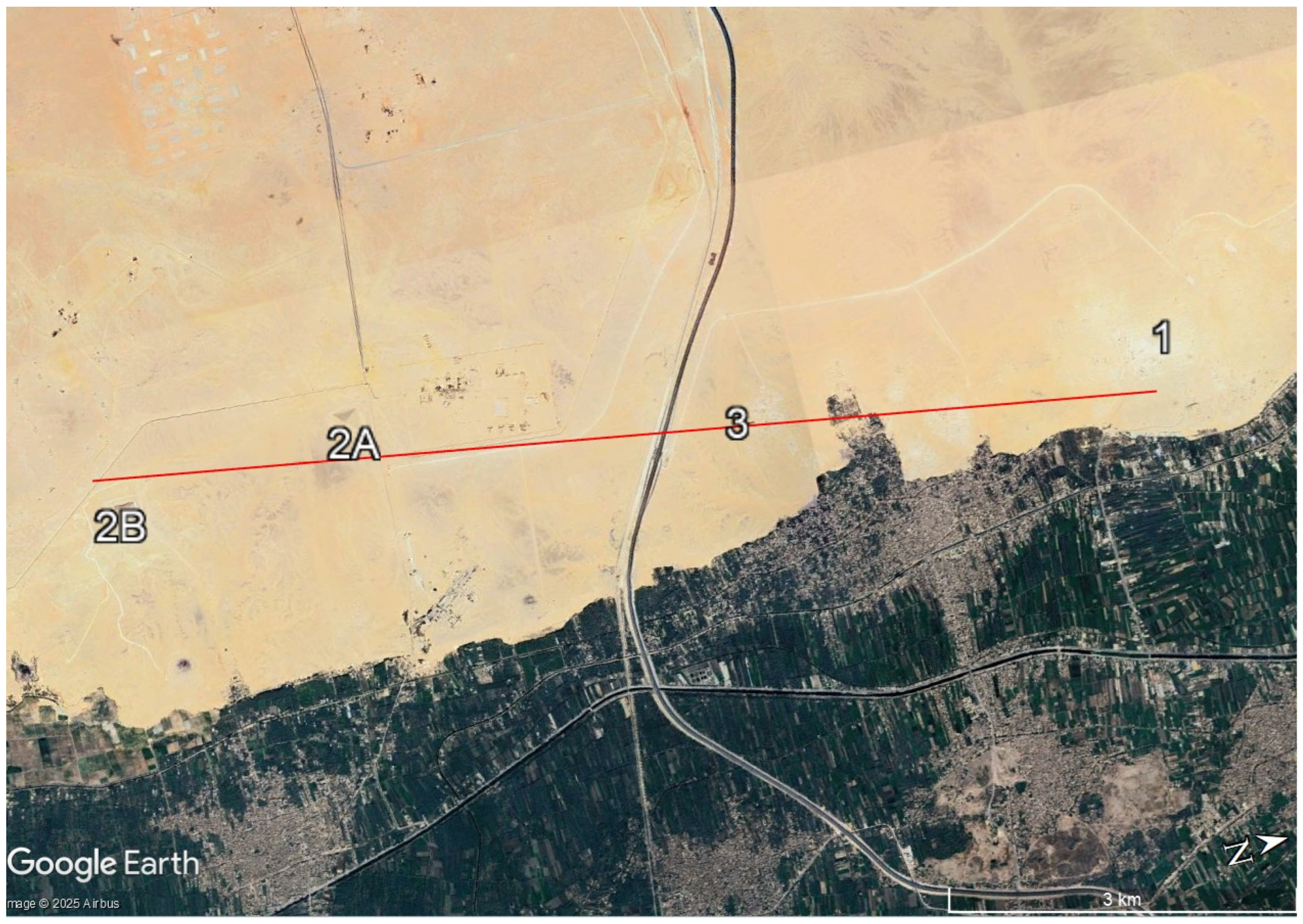
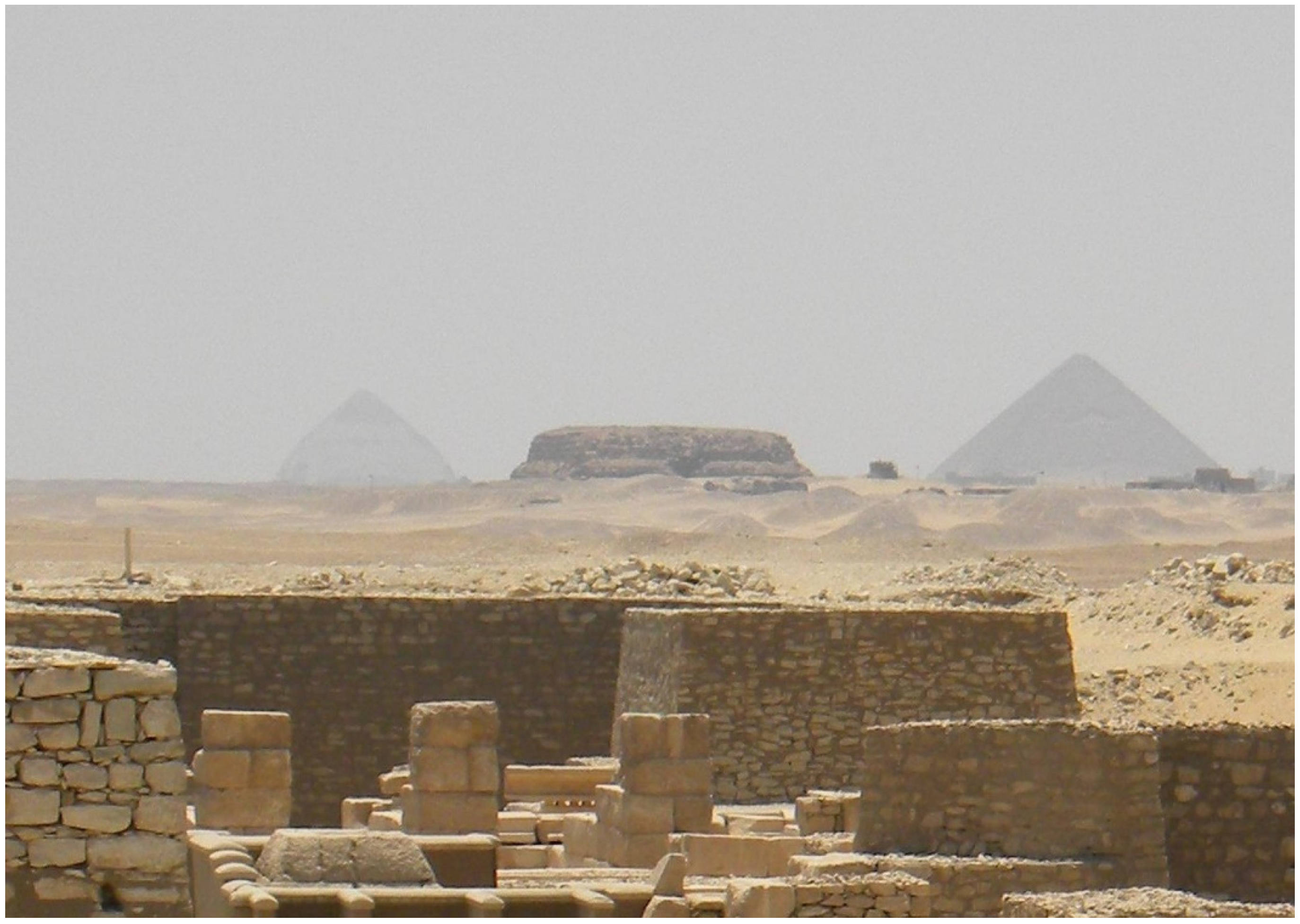
All these topographical relationships are barely recognisable today due to pollution and modern buildings but can be easily reconstructed using virtual globe software like Google Earth Pro 7.3. This is also helpful to understand the peculiar position of the tomb of the king. The place chosen by Shepseskaf is a plateau located to the south of Saqqara, on the way to Dahshur and non-intervisible with Heliopolis. This area was, at that time, virgin soil (the pyramids visible today are of the end of the Fifth and of the Sixth Dynasty). The symbolic signal is very clear: staying close to the ancient tradition of the Third Dynasty (the Step Pyramid of Djoser) but “midway” also to the “pre-solar” roots of the Fourth (the Bent and the Red pyramids of Snefru). Further, as put in evidence some years ago [10], the peculiar shape of the monument (to be discussed below) implies that it was conceived to “own” the horizon, exactly as the monuments of the king’s predecessors in Giza and Dahshur were. In fact, it was deliberately located in such a way that the line of sight from the Saqqara central field (to fix ideas, say, from the entrance area of the Step Pyramid) frames the king’s tomb as a sort of regular baseline for the double-mountains symbol created at the horizon by the two giant pyramids of Snefru. This is very clearly visible on satellite images (Figure 1) while today, due to haze and pollution, the effect is still spectacular especially when viewed from Saqqara South, as shown in Figure 2.
All in all, although the placement of the pyramids did also depend on practical aspects such as the availability of stone [13], the case of Shepseskaf is one of the clearest examples of a monument placed exactly where the king wanted it to be. The idea was to “complete” the landscape of power built by Snefru, establishing his own power in this way and conveying a message of order and return.
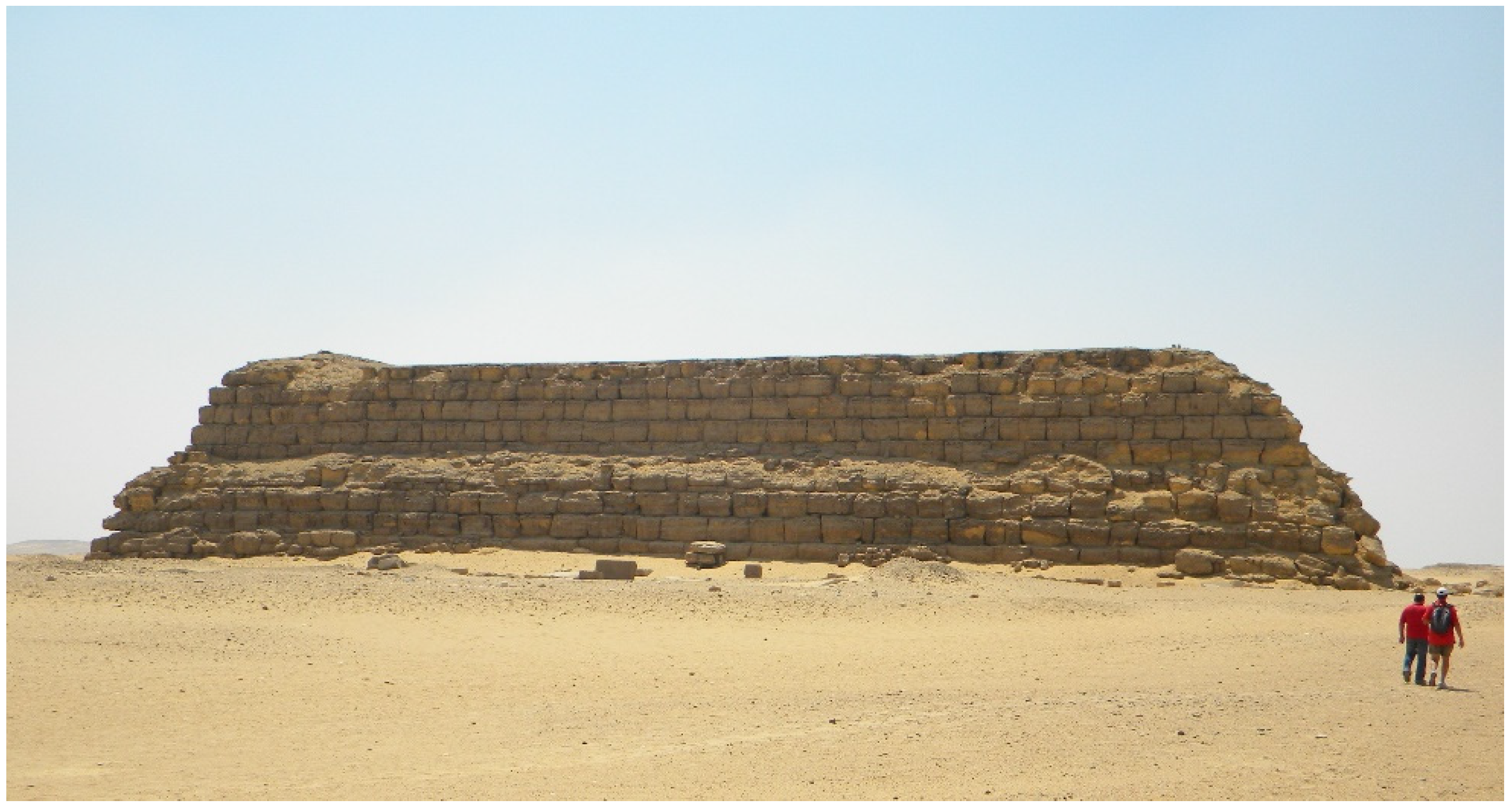
Let us now analyse the shape, which at a distant sight may resemble a Mastaba, so that it is traditionally called Mastabat Faraun. When the monument is approached by walking through the desert from the Saqqara village, it is easily seen that the analogy with a Mastaba is an illusory effect (Figure 3). The building is indeed rectangular in plan, but it is enormous and made of extremely regular courses of huge stones. It is 99.6 metres long and 74.4 metres broad today, but it was certainly meant to measure 200 × 150 cubits including the casing, which was in granite for the lower courses. The sides are very well orientated to the cardinal points (I measured them to be within half of a degree of true north with a precision magnetic compass corrected for magnetic deviation, but a measure with a more accurate instrument would certainly be worth making). The walls are 18 metres high and slope inward at 70°; their top was raised up at the two lateral ends thanks to two low vertical walls (today barely recognisable). All in all, the body of the building was clearly constructed by a royal architect with the accuracy and the refined techniques employed for (and exclusively for) the Fourth Dynasty royal pyramids (for a more detailed description see [14]).
As far as the interior is concerned, I was granted the permission of visiting it (the whole area is closed to the public) several years ago by the Egyptian authorities (former SCA) and I can testify that it is really a Fourth Dynasty royal monument inside as well. As in all Old Kingdom pyramids, the entrance is in the north face, from which a descending corridor enters the funerary apartments. These apartments have nothing to do with those of a standard Mastaba tomb; instead, they bear resemblance in plan to the apartments of Menkaura’s pyramid, and are made of perfectly joined, huge granite blocks (the closest correspondence with this masonry can be found in the Osireion in Abydos). Scattered pieces of what seems to be the king’s coffin, of a very hard stone, lie in the antechamber (it is difficult to imagine who—and also when, how, and why—managed the task of destroying it).
All in all, the unprecedented and unequalled shape of the Shepseskaf tomb is really an enigma. Several solutions have been proposed to explain it:
(1)
It has been proposed that it was a temporary backup for the king’s tomb while he was finishing Menkaura’s complex [15]—but this blatantly conflicts with the raffinate interiors.
(2)
Another proposed solution is that the king may have lacked full legitimacy for some reason (maybe ascending the throne through marriage or overruling a more legitimate heir) and therefore choose a “modest” monument. It suffices, however, to visit it to see that the tomb is not “modest” at all, so that the choice was probably not due to economic reasons.
(3)
Quirke [16] puts forward the idea that what we see are the remains of an unfinished step pyramid later adjusted as a mastaba; however, the basis is not square in plan, there is no trace of any adjustment, and it is very clear that the original project was (essentially) finished.
(4)
In 1936, Hassan [17] put forward the idea that Shepseskaf may have deliberately chosen from the very beginning to build an original monument to differentiate it from the pyramids, because these were too much associated with the Sun cult, and this is the idea that will be pursued in the present paper.
Another problem is understanding the reasons that dictated the specific choice of such a peculiar shape. As mentioned, the similarity with a Mastaba tomb is only apparent, and the solution must be elsewhere. A possible solution is that the tomb resembles a giant sarcophagus. In reality, there exist several sarcophagi of the Old Kingdom whose lids have raised tops, and in the Giza tomb ST11, belonging to the Fifth Dynasty overseer Nikauhor, the monument is designed with the sarcophagus hieroglyph Heritage 08 00492 i005. (which, however, also means “tomb”). This interpretation, however, is problematic: as far as we know pharaohs’ sarcophagi did not have raised tops during the Fourth Dynasty, while the ceiling of the funerary chamber of Shepseskaf, similar to what can be seen in Menkaura pyramid, is itself shaped into a curved “coffin” profile.
Another possibility is that the tomb resembles a specific, sacred building; this proposal has been put forward by Lehner ([18], p. 139) who writes that it “certainly took the form of a Buto shrine”. Of course, we cannot be “certain”, but the idea is attractive. The form of these archaic edifices (probably made of perishable materials) is known from the corresponding hieroglyph, representing an arched roof building with side poles Heritage 08 00492 i006. Buto was an important cult centre, located in the delta. The Cobra-goddess Wadjet was worshipped there; together with the vulture God Nekhbet of Upper Egypt, they formed the “two ladies” Heritage 08 00492 i007, the patrons of the kingship. Scant remains of the ancient settlement at Buto have so far been found, but sample excavations have shown that the site was already inhabited in pre-dynastic times and that it was a fairly important sacred place, being the northern counterpart of Hierakonpolis; the shrine hieroglyph is testified since the early dynastic and, during the Fifth and Sixth dynasties, a symbolic funerary procession to Buto is depicted in several Mastabas [19] (interestingly enough, very recent excavations at Buto identified a sixth-century b.C. building which, at least according to the archaeologists in charge of the site, might be identified as an “astronomical observatory”).
All in all, although we cannot be sure that the Buto shrine was the model for the king’s tomb, the idea that the king may have replicated a hieroglyph, rather than an existing building, should not come as a surprise. Indeed, the interplay between symbolic hieroglyphs and architecture is typical of the way the Egyptians conceived writing, as magisterially put in evidence by Assmann [20,21]. According to Assmann, the very idea of creation was tied up with writing in the Egyptian’s mind; in a sense, the pyramid of a king was a “sign” within a “written” sacred landscape. With the Fourth Dynasty, the pyramids become “gigantic hieroglyphs”, as Lehner [18] puts it; first the double-mountain sign with Snefru, and then an icon of glory—Akhet, the Sun between the two mountains—with Khufu [22].
All in all, the tomb of the king speaks to us—both in its placement not in view from Heliopolis, and in its unique shape, possibly connected to a sacred place in the Delta—about a strong break operated by Shepseskaf with respect to the solar cult; this is confirmed by the simple fact that, contrary to all his three predecessors (Djedefra, Khafra, Menkaura), he declined to have a particle Heritage 08 00492 i008 -Ra in his name. The almost traumatic relevance that this break must have had can be seen also a posteriori, by the complexity of the process of restoration and renewal initiated by his successor: the founder of the Fifth Dynasty, Userkaf.
Userkaf’s relationships with the royal family are yet unclear, as well as the role played in his accession by Queen Khentkaues I, owner of the huge funerary monument located in Giza close to Menkaura’s causeway [23]. Her dynastic position is unsure but she was probably a daughter of Menkaura and wife of Shepseskaf. In any case her monument clearly resembles Shepseskaf one under many respect (although we cannot be sure if it was endowed with raised top ends as well) and was placed along the prolongation of the Pyramid of Khufu east side in such a way as to create—together with the Khufu and Khafra pyramids—a visual effect from the Menkaura Valley Temple very similar to that created by the Shepseskaf tomb and the two Snefru pyramids as viewed from Saqqara. The political programme of return to the solar tradition operated by Userkaf is documented, although through the medium of tales, in the later Westcar Papyrus, where the new generation of kings starting with Userkaf is credited to be of a direct lineage of the Sun God, who—is said—made pregnant the wife of one of his priests.
From the architectural point of view, Userkaf devised a complex way of reconciling all the previous traditions within his funerary project, re-introducing the pyramid as a tomb but operating an explicit recall to the Sun and Heliopolis with a second building. The tomb is in the Saqqara central field, thus “taking at distance” the Fourth Dynasty Snefru tradition and actually staying as close as possible to the Step Pyramid. The interior apartments are made of huge blocks, but the pyramid is modest in dimensions and quality with respect to the Fourth Dynasty projects. The second building—usually called the Sun Temple—is in a hitherto virgin area, that of Abu Gorab. It is a new kind of religious ensemble, structured as a pyramid complex (that is, endowed with a Valley building and a causeway) but centred on a rectangular enclosure with a central mound, later substituted by an obelisk, both being clear references to Heliopolis and to the Sun cult. In reality, Abu Gorab is the last area of the west bank intervisible from Heliopolis, before the block of the view created by the outcrop of the Cairo citadel [9]. The following kings, starting with Sahura, will inaugurate a new Necropolis in nearby Abusir and render these choices a constant of the dynasty (for complete references and details on the topography of the Sun Temples see [24]).
With the founding of the new necropolis, a lineage of kings “sons of Ra” was definitively established and was to endure for three generations. The Shepseskaf break was not without consequences, though: the structure of the state remained stable, but the members of the royal family ceased to be the unique holders of the highest offices of the state. In the meanwhile, however, the renewed and enhanced role of Ra as the “state God” helped to maintain the primacy of the ruler. As Assmann observed, in the Old Kingdom, the religious world was perceived as a global interaction between the community and the gods, with the Sun God in a prominent role. This interaction perpetuated Maat, the Cosmic Order, the king being the mediator and the keeper of such order; by necessity, the funerary monuments of the kings formed an equally ordered landscape. For these reasons, the above described break perpetuated by Shepseskaf—a break visible in the throne name, in the location and shape of its tomb, and also in other details, such as the maniacal attention for the duality of Upper and Lower Egypt in the royal annals, and the name of the tomb which attributes a rather uncommon adjective for a king—must have had a very important, inescapable motivation.
On the other end, as already mentioned, the transition from Menkaura to Shepseskaf—although yet unclear in full detail—does not appear as traumatic, as well as that from him to Userkaf. Essentially, what can be seen in the epigraphic documents are changes concerning the high offices in state administration, traditionally carried out by members of the royal family, which start to be attributed to persons of non-royal origin [25], indicating increasing weakness in the royal power. This might eventually be chalked up to a political crisis for the monarchy, but it looks difficult to attribute to it groundbreaking architectural and religious choices. So, we are left with the problem of understanding the break itself. It is the aim of the present paper to investigate a possible solution: the idea that the king’s motivation likely originated in a sudden, unpredictable perturbation of the cosmic order involving the Sun, seen as an omen impossible to keep as a secret. Clearly, a total solar eclipse fits well with this description.

3. Materials and Methods

We are thus led to search if a total solar eclipse occurred in Lower Egypt on a date compatible with Shepseskaf’s first year. Notice that we do not expect the totality path to necessarily cover the location of the king’s tomb, since the symbolic reasons for its placement discussed above are quite clear and refer to the refusal of the solar tradition; rather, we expect the eclipse to cover the Delta and, in particular, Buto.
Unfortunately, we cannot expect to find texts describing such an event. Indeed, regarding eclipses, some mechanism of avoidance must have been in action in ancient Egypt, since there is no known text where an eclipse description can be explicitly and unambiguously identified. References to eclipses may, however, be present in allusive form; for instance, as repeatedly noticed in the literature, the frequent and curious image of the winged sun bears an impressive resemblance to the total eclipse fares [26,27,28]. Furthermore, there are texts whose interpretation points to eclipse descriptions; for instance, in the dedication to Tutankhamen on a stela of Huy, overseer of Nubia, we can read “I see the darkness during the daylight (that) you have made, illumine me so that I may see you”. Further, in a recent study of seven consecutive spells of the Coffin Texts (a collection of the spells which were inscribed in wooden coffins during the Middle Kingdom) what seems to be a series of rather clear references to the motion of the Moon and the description of a solar eclipse has been individuated [29]. The text mentions a snake who “turns its eye against Ra, and there occurs a stoppage in the crew, and a great astonishment within the journey.” However, it should be noted that the interpretation of these texts is based on much later sources. Last but not least, there is the distinct possibility that events of political and religious nature occurred in dependence on omens due to eclipses. A famous and much studied example is that mentioned in a Hittite text from the 9th or 10th regnal year of King Mursili II, recording “a sign from the Sun God”. It probably refers to a total solar eclipse that occurred on 24 June 1312 b.C. (see a complete discussion in [30]); the dating of this event is crucial for a series of issues also about the Egyptian New Kingdom chronology. In the specific case of Egypt, an important case is the solar eclipse occurred on 14 May 1338 b.C., whose path of totality crossed Middle Egypt [31]. In that period (but with the habitual difficulties in establishing the exact regnal years, see complete discussion in [30]) falls the foundation by Akhenaten—the pharaoh who introduced the monotheistic cult of the Sun Disk—of his new capital in Amarna, Middle Egypt. A series of very convincing hints coming from the texts on the foundation stelae of the town show that it was this eclipse that triggered the groundbreaking choice made by the King. In particular, the texts on the foundation stelae mention a direct message from the Sun Disk to the Pharaoh and seem to aim at putting into a good light what might be otherwise interpreted as a bad omen. The way in which the eclipse was accommodated in the theological framework eludes us, but the sky visible during the totality should have played a role: the sun was located in that part of the ecliptic which lies between Gemini and Taurus. This is the section of the path of the sun which is the closest possible to the celestial region pertaining to Osiris–Orion; furthermore, Sirius—which had undergone a heliacal setting a few days before and was therefore in its invisibility period—was visible during the eclipse, almost at culmination to the south [11].
All in all, in the absence of written texts, to investigate the possible role of an eclipse in triggering Shepseskaf choices we must resort to the calculations of historical solar eclipses. In reality, the mechanics of the alignments of the Sun, the Moon and the Earth can be calculated back in time in a relatively easy way and with high accuracy. In other words, we can be sure about when the three celestial bodies were aligned in the past (recall that the orbital plane of the Moon is tilted about 5° with respect to the ecliptic, so that solar/lunar eclipses can only occur when the new/full Moon is close to a node). However, the Earth does not rotate with constant speed, so the problem of calculating past solar eclipses relies in the identification of the totality band, that is, in establishing where on the Earth the umbra of the Moon was actually projected and so the considered eclipse was seen as total. The task of the researchers working in this fascinating field is thus to estimate the parameter—usually denoted by ∆T—which affects the position and timing of the totality band. This parameter measures the cumulative effect of the rotational change and can be calibrated using historical sources; it should be noted, however, that the last registered event we are aware of is of the 8th century b.C., and therefore all calculations for eclipses that predate this event are based on extrapolation. Nevertheless, the estimate of ∆T has been, in the last 20 years or so, continuously improved, and we have a quite reliable formula today [32,33,34,35,36,37,38,39]. This formula is based on the best fit of an impressive amount of data, and expresses ∆T as a parabolic function of the elapsed time (of course, as for any experimental data, on ∆T there is an uncertainty, say ∆, which increases back in time and affects the position of the totality band).

4. Results

There are three eclipses with the totality in Lower Egypt which may overlap the Shepseskaf regnal years according to the most accepted chronologies [40]. These eclipses occurred on 23 June 2484 b.C., on 4 January 2471 b.C., and on 7 November 2463 b.C. (a further one on 25 August 2460 b.C. passed to the east of the Delta) [32]. However:
(1)
The path of the totality of the 2484 b.C. eclipse crossed only a small portion of the Delta close to the sea, with Buto on the verge of the totality and the “capital” Memphis at 93%.
(2)
The path of the totality of the 2463 b.C. eclipse did not cross the Delta at all but passed to the west of the Nile, crossing the Fayum; the capital Memphis was in the 96% zone.
We are thus left with the eclipse of 1 April 2471 b.C. The path of this eclipse was first already calculated in an essentially correct way by Kudlek and Mickxer in 1971; consequently, the eclipse is listed as an event of possible political relevance by Sellers [28] in 1992 and first mentioned in possible direct connection with Shepseskaf in [13], without, however, deepening the analysis.
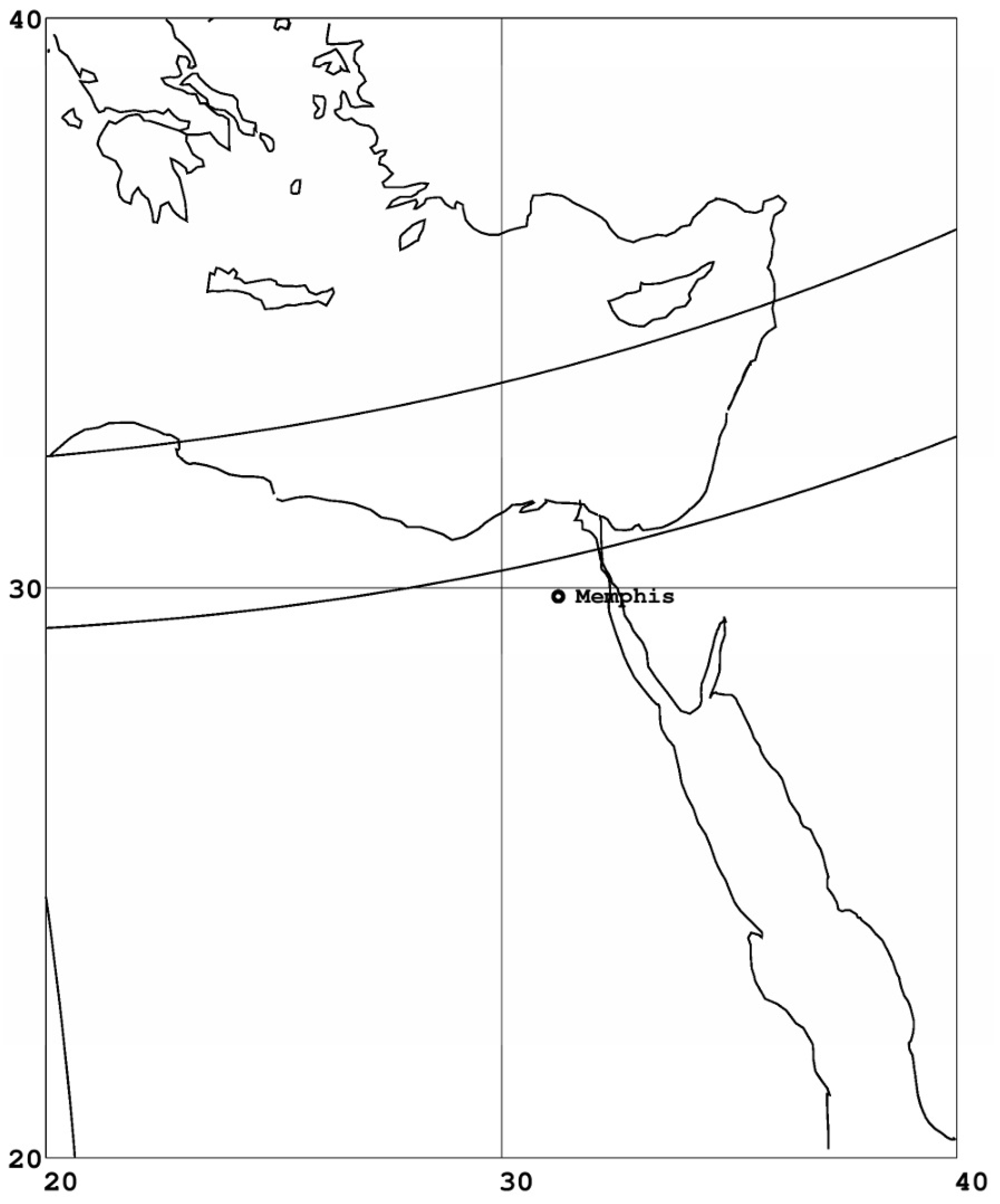
For this eclipse, the best estimate for ∆T gives ∆T ≈ 16 h 11 min, and the part of the calculated totality path crossing over Egypt is shown in Figure 4.
The 1 April 2471 b.C. eclipse really had impressive characteristics. The path passed over the whole Delta, with Buto very near the midline of the totality and Memphis almost inside the totality band (99% of obscuration). Memphis was probably the main residence of the Pharaoh; it was so close to the totality band that brilliant stars could actually be seen, and we cannot exclude that it was actually inside the band. This holds even more true for Heliopolis, 30 km further north.
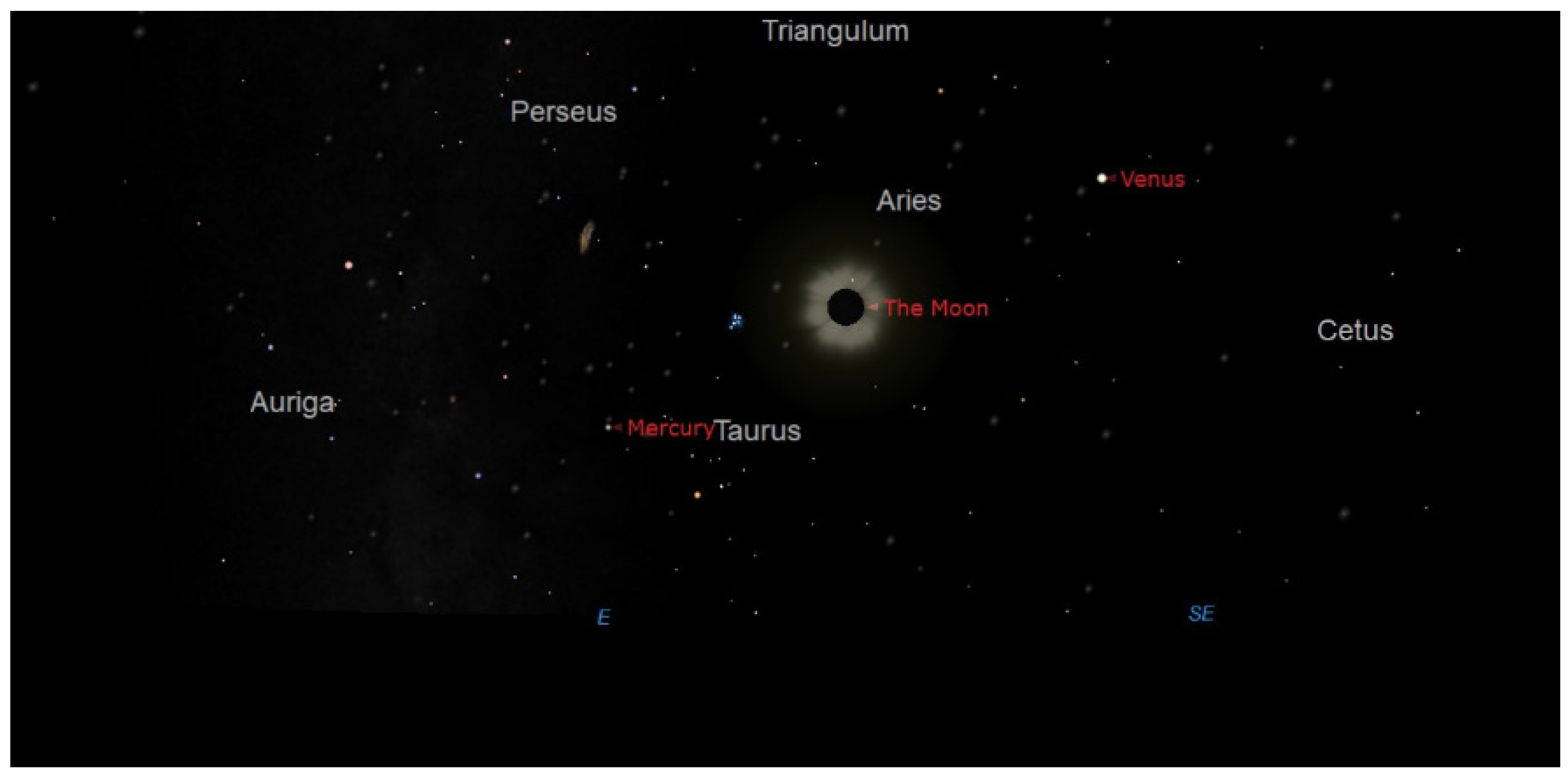
On that day, the Sun rose already dramatically eclipsed, with the phenomenon reaching the totality around 7.59 a.m. (see Figure 5). Our star had a declination of −4° (the spring equinox was still to come, occurring on 11 April p. Julian). The eclipsed Sun was between Aries and Taurus, and brilliant stars like the decans Aldebaran and Capella were visible. Arcturus was also probably visible at setting. The Pleiades were so close to the eclipsed Sun that I would venture to suppose that they might have been seen as well, although their magnitude is low (as an asterism, it is between 3.5 and 4). Impressively visible were the two planets Venus and Mercury, in a sort of symmetric configuration along the ecliptic, with the coupled Sun/Moon in the middle. The eclipse totality lasted a terrifying amount of time: almost seven minutes (eclipses cannot last more than about 7 min 30 s).
For the sake of completeness, and to allow the reader to evaluate the limits of the proposals put forward in the present paper, it is important to note that this description holds if ∆T was equal or close to its expected value. It is, however, possible to analyse how much the uncertainty on this parameter eventually affects the position and timing of the totality band, and therefore the proposed scenario (see graphs in [40]). It turns out that the totality coverage of Lower Egypt remains essentially the same—with the beginning of the totality shifting towards sunrise—for the entire interval of values between ∆T-d and ∆T. In the case, instead, of a positive increment, the totality band starts to bend northward, eventually up to the point of living Egypt; although unlikely, at the present status of knowledge, it is impossible to exclude this last possibility categorically.

5. Discussion

The above-described scenario provides a reasonable explanation for the enigmatic and ground-breaking behaviour of the Pharaoh Shepseskaf: the sudden arrival of an awesome omen in the form of a total solar eclipse. This led the king to the refusal of the “solarized” tradition of the pyramids of his predecessors in the choice of the shape of the tomb, which may have been inspired by the shrine of Buto because the sacred centre was fully involved by the totality band, and the return to the pre-solar tradition for the placement of the tomb itself, completely invisible from Heliopolis. However, there is yet a critical point which must be carefully addressed: the compatibility of the eclipse date (which, as we have seen, is certain) with the chronology of the king’s reign.
From the very beginning it should be said that, in the absence of astronomical anchors (Sothic dates) for the Old Kingdom, the chronology is rather unsure and still a subject of debate: the length of each single reign is subject to some uncertainty on its own, and the beginning of each regnal period has to be considered as only approximate within each chronology. To be safe, we can say that dates can vary some tens of years.
In Table 1, four among the most accepted chronologies for the Fourth Dynasty are reported: (1) Baines and Malek [41], (2) von Beckerath [42], (3) Shaw [43], (4) Hornung, Krauss and Warburton [44] (the asterisks in the table signal a short reign attributed to “Bikeris”).
Thus, we see that the eclipse is placed with respect to Shepseskaf’s first year as follows:
(1)
It fits very well in both of the two “medium” chronologies (Baines and Malek and Von Beckerath), with a discrepancy of only +1 year/−10 years, respectively.
(2)
In the “low” chronology (Shaw), −29 years are needed.
(3)
In the “high” chronology, +32 years are needed.
It is important to stress that all these chronologies are subjected to the above-mentioned uncertainty, and therefore the fact that the Baines and Malek chronology misses only one year is not of special importance here. What is really important for the present paper is that, in all four chronologies, the allowance does not exceed the reasonable uncertainty. In addition, very strong hints exist pointing to the planning of the Khufu pyramid—and thus to Khufu’s first year—in 2550 b.C. with the impressive uncertainty of only 10 years; these hints come from the measure of the alignment of this pyramid to the cardinal points [45]. If this astronomical dating of Khufu is accepted, then also the dating of Shepseskaf (the fourth successor to Khufu) becomes easier to allocate and—as a matter of fact—both the “low” and the “high” chronologies of columns (3) and (4)—which are the most “unfavourable”—are excluded.

6. Conclusions

The bulk of the chronology of ancient Egypt is based on registered astronomical observations of lunar dates and of heliacal risings of Sirius. These observations (leaving aside the problems which occur in analysing them, for a complete and up-to-date discussion see [28]) actually furnish astronomical anchors on which specialists can rely in dating the regnal periods of each pharaoh. Unfortunately, the first available registrations of Sothic dates come from the Middle Kingdom, so no Sothic anchor is yet available for the Old Kingdom (for a possible exception see [45]). However, astronomy can also be of help in ways which differ from astronomical registrations, one example being the dating of the alignment of the Khufu pyramid already mentioned. If definitive proof can be found, the results of the present paper—which arise as well from the interplay between architecture and astronomy, although not in the sense of astronomical alignments—can be considered as giving a new and quite accurate estimate for the regnal years of an Old Kingdom pharaoh. Only further research can, however, be of help in proving—or disproving—the theses presented here with respect to less radical solutions for the king’s choices. For instance, in the future, texts might be discovered filling the present lack of written evidence; finding new texts from the Old Kingdom is more than possible, as recently confirmed by the discovery of the so-called Red Sea Scrolls, which were written during the construction of the Khufu pyramid [46]. Further information may also come from planned excavations of the temples of the Pharaoh Shepseskaf’s tomb complex.

Funding

This research received no external funding.

Data Availability Statement

The raw data supporting the conclusions of this article will be made available by the authors on request.

Conflicts of Interest

The author declares no conflicts of interest.

References

  1. Jéquier, G. Le Mastabat-el-Faraoun et le culte funéraire de Shepseskaf. Comptes Rendus Séances L’Académie Inscr. Belles-Lett. Année 1925, 69, 251–261. [Google Scholar] [CrossRef]
  2. Reisner, G.A. Mycerinus: The Temples of the Third Pyramid at Giza; Harvard University Press: Cambridge, MA, USA, 1931. [Google Scholar]
  3. Breasted, J.H. Ancient Records of Egypt; University of Chicago Press: Chicago, IL, USA, 1906; Volume 2. [Google Scholar]
  4. Wilkinson, T.A.H. Royal Annals of Ancient Egypt: The Palermo Stone and Its Associated Fragments; Kegan Paul International: London, UK; New York, NY, USA, 2000. [Google Scholar]
  5. Belmonte, J.A.; Magli, G. Astronomy, architecture, and symbolism: The global project of Sneferu at Dahshur. J. Hist. Astron. 2015, 46, 173–205. [Google Scholar] [CrossRef]
  6. Lehner, M. A contextual approach to the Giza pyramids. Arch. Orientf. 1985, 31, 136–158. [Google Scholar]
  7. Magli, G. Akhet Khufu: Archaeo-astronomical Hints at a Common Project of the Two Main Pyramids of Giza, Egypt. Nexus Netw. J. Archit. Math. 2008, 11, 35–50. [Google Scholar] [CrossRef][Green Version]
  8. Shaltout, M.; Belmonte, J.A.; Fekri, M. On the orientation of ancient Egyptian temples: (3) Key points at lower Egypt and Siwa Oasis, Part II. J. Hist. Astron. 2007, 38, 413–442. [Google Scholar] [CrossRef]
  9. Jeffreys, D. The Topography of Heliopolis and Memphis: Some cognitive aspects. In Beitrage zur Kulturgeschichte Ägyptens, Rainer Stadelmann Gewidmet (Mainz); Meretseger Books: Dubai, United Arab Emirates, 1998; pp. 63–71. [Google Scholar]
  10. Magli, G. Topography, astronomy and dynastic history in the alignments of the pyramid fields of the Old Kingdom. Mediterr. Archaeol. Archaeom. 2010, 10, 59–74. [Google Scholar]
  11. Magli, G. Architecture, Astronomy and Sacred Landscape in Ancient Egypt; Cambridge University Press: Cambridge, UK, 2013. [Google Scholar]
  12. Barsanti, A.; Maspero, G. Fouilles de Zaouiét el-Aryân (1904-1905-1906). Ann. Serv. Antiq. L’Egypte 1907, 7, 201–210. [Google Scholar]
  13. Barta, M. Location of Old Kingdom pyramids in Egypt. Camb. Archaeol. J. 2005, 15, 177–191. [Google Scholar] [CrossRef]
  14. Hamilton, K. Mastaba el-Faraun, a Laymans Guide; 2018. Available online: https://www.researchgate.net/publication/322682584_Mastaba_el-Faraun_a_laymans_guide (accessed on 9 November 2025).
  15. Verner, M. Contemporaneous Evidence for the Relative Chronology of Dyns. 4 and 5. In Ancient Egyptian Chronology; Hornung, E., Krauss, R., Warburton, D.A., Eds.; Brill: Leiden, The Netherlands; Boston, MA, USA, 2006; pp. 124–143. [Google Scholar]
  16. Quirke, S. The Cult of Ra; Thames and Hudson: London, UK, 2001. [Google Scholar]
  17. Hassan, S. Excavations at Gîza II, 1930–1931; Faculty of Arts of the Egyptian University & Government Press: Cairo, Egypt, 1936. [Google Scholar]
  18. Lehner, M. The Complete Pyramids; Thames and Hudson: London, UK, 1999. [Google Scholar]
  19. Abd-Alghafour, Y.M.; Eissa, A.; Al-nadi, M. Representation of ‘SAw’ and ‘Pr-nw’ Shrines in the Funeral Procession in Some Non-Royal Mastabas During the Fifth and Sixth Dynasties; Faculty of Archaeology-Cairo University: Cairo, Egypt, 2023. [Google Scholar]
  20. Assmann, J. The Search for God in Ancient Egypt; Cornell University Press: New York, NY, USA, 2001. [Google Scholar]
  21. Assmann, J. Creation Through Hieroglyphs: The Cosmic Grammatology of Ancient Egypt in Jerusalem Studies in Religion and Culture; Brill: New York, NY, USA, 2007. [Google Scholar]
  22. Magli, G. The Giza ‘written’ landscape and the double project of King Khufu. Time Mind 2016, 9, 57–74. [Google Scholar] [CrossRef]
  23. Verner, M. The Pyramids: The Mystery, Culture, and Science of Egypt’s Great Monuments; Grove Press: New York, NY, USA, 2002. [Google Scholar]
  24. Magli, G. Satellite-Aided Analysis of the Position of the Sun Temples and the Dynastic History of the Vth Egyptian Dynasty. Heritage 2023, 6, 7156–7169. [Google Scholar] [CrossRef]
  25. Bárta, M. Abusir Paradigm’ and the Beginning of the Fifth Dynasty. In The Pyramids Between Life and Death Acta Universitatis Upsaliensis 36; Hein, I., Billing, N., Meyer-Dietrich, E., Eds.; Uppsala Universitet: Uppsala, Sweden, 2016; pp. 51–74. [Google Scholar]
  26. Rowe, A. Newly identified monuments in the Egyptian Museum showing the deification of the dead together with brief details of similar objects elsewhere. ASAE 1940, 40, 1–67. [Google Scholar]
  27. Brewer, B. Eclipse; Earth View: Seattle, WA, USA, 1991. [Google Scholar]
  28. Sellers, J. The Death of Gods in Ancient Egypt; Penguin: London, UK, 1992. [Google Scholar]
  29. Priskin, G. The Ancient Egyptian Book of the Moon: Coffin Texts Spells; Archaeopress Publishing: Oxfordshire, UK, 2019. [Google Scholar]
  30. Belmonte, J.A.; Lull, J. Astronomy of Ancient Egypt: A Cultural Perspective; Springer Nature: Cham, Switzerland, 2024. [Google Scholar]
  31. McMurray, W. Dating the Amarna Period in Egypt: Did a Solar Eclipse Inspire Akhenaten? 2005. Available online: https://www.egyptologyforum.org/EMP/DAPE.pdf (accessed on 8 November 2025).
  32. Morrison, L.V.; Stephenson, F.R. Historical Values of the Earth’s Clock Error Δ and the Calculation of Eclipses. J. Hist. Astron. 2004, 35, 327–336. [Google Scholar] [CrossRef]
  33. Morrison, L.V.; Stephenson, F.R.; Hohenkerk, C.Y.; Zawilski, M. Addendum 2020 to ‘Measurement of the Earth’s rotation: 720 BC to AD 2015’. Proc. R. Soc. A 2021, 477, 20200776. [Google Scholar] [CrossRef]
  34. Morrison, L.V.; Stephenson, F.R. Historical eclipses and the variability of the Earth’s rotation. J. Geodyn. 2001, 32, 247–265. [Google Scholar] [CrossRef]
  35. Espenak, F. Five Millennium Canon of Solar Eclipses: −1999 to +3000. 2006. Available online: http://eclipse.gsfc.nasa.gov/SEcat5/SEcatalog.html (accessed on 9 November 2025).
  36. Gautschy, R. Sonnenfinsternisse und ihre chronologische Bedeutung: Ein neuer Sonnenfinsterniskanon für Altertumswissenschaftler. Klio 2012, 94, 7–17. [Google Scholar] [CrossRef]
  37. Stephenson, F.R.; Morrison, L.V.; Hohenkerk, C.Y. Measurement of the Earth’s rotation: 720 BC to AD 2015. Proc. R. Soc. A Math. Phys. Eng. Sci. 2016, 472, 20160404. [Google Scholar]
  38. Hayakawa, H.; Murata, K.; Sôma, M. The Variable Earth’s Rotation in the 4th–7th Centuries: New ΔT Constraints from Byzantine Eclipse Records. Publ. Astron. Soc. Pac. 2022, 134, 094401. [Google Scholar] [CrossRef]
  39. Hayakawa, H.; Sôma, M.; Kinsman, J.H. Analyses of a datable solar eclipse record in Maya Classic period monumental inscriptions. Publ. Astron. Soc. Jpn. 2021, 73, L31–L36. [Google Scholar] [CrossRef]
  40. Gautschy, R. Canon of Solar Eclipses from 2501 BC to 1000 AD. Available online: https://www.gautschy.ch/~rita/archast/solec/solec.html (accessed on 9 November 2025).
  41. Baines, J.; Malek, J. The Cultural Atlas of the World: Ancient Egypt; Oxford University Press: Oxford, UK, 1981. [Google Scholar]
  42. Von Beckerath, J. Chronologie des Pharaonischen Ägypten; Phillip von Zabern: Mainz, Germany, 1997. [Google Scholar]
  43. Shaw, I. The Oxford History of Ancient Egypt; Oxford University Press: Oxford, UK, 2000. [Google Scholar]
  44. Hornung, E.; Krauss, R.; Warburton, D.A. Ancient Egyptian Chronology; Brill: Leiden, The Netherlands, 2006. [Google Scholar]
  45. Gautschy, R.; Habicht, M.E.; Galassi, F.M.; Rutica, D.; Rühli, F.J.; Hannig, R. A New Astronomically Based Chronological Model for the Egyptian Old Kingdom. J. Egypt. Hist. 2017, 10, 69–108. [Google Scholar] [CrossRef]
  46. Lehner, M.; Tallet, P. The Red Sea Scrolls: How Ancient Papyri Reveal the Secrets of the Pyramids; Thames & Hudson: London, UK, 2022. [Google Scholar]
Figure 1. Satellite image showing the line of sight from the entrance area of the Step Pyramid (1) to the Snefru Pyramids (2A,2B) crossing the Shepseskaf Tomb (3). The numbering of the monuments is in chronological order. (Image courtesy Google Earth pro, drawings by the author).
Heritage 08 00492 g001
Figure 2. View of the southern horizon from Saqqara South. Image: author.
Heritage 08 00492 g002
Figure 3. The Shepseskaf tomb, a view from the east. Image: author.
Heritage 08 00492 g003
Figure 4. The path of the totality of the 1 April 2471 b.C. eclipse (calculations and drawing courtesy of Hisashi Hayakawa).
Heritage 08 00492 g004
Figure 5. A digital simulation of the eastern sky as viewed from Buto, Egypt during the totality of the 1 April 2471 b.C. eclipse. Image: author, elaboration with Starry Night.
Heritage 08 00492 g005
Table 1. Chronology of the Fourth Dynasty.
King1234
Snefru2575–25512589–25542543–25102613–2589
Khufu2551–25282554–25312509–24832589–2566
Djedefra2528–25202531–25222482–2475 *2566–2558
Khafra2520–24942522–2496 *2472–24482558–2532
Menkaura2494–24722489–24612447–24422532–2503
Shepseskaf2472–24652461–24562442–24362503–2498
Disclaimer/Publisher’s Note: The statements, opinions and data contained in all publications are solely those of the individual author(s) and contributor(s) and not of MDPI and/or the editor(s). MDPI and/or the editor(s) disclaim responsibility for any injury to people or property resulting from any ideas, methods, instructions or products referred to in the content.