






Skip Content
You are currently on the new version of our website. Access the old version .

Journal of Fungi

Journal of Fungi is an international, peer-reviewed, open access journal of mycology published monthly online by MDPI.
The Medical Mycological Society of the Americas (MMSA) and Spanish Phytopathological Society (SEF) are affiliated with the Journal of Fungi, and their members receive discounts on the article processing charges.
Indexed in PubMed | Quartile Ranking JCR - Q1 (Mycology)

All Articles (6,303)

Cordycepin is a key active component of Cordyceps militaris, but the molecular mechanism underlying temperature-regulated biosynthesis remains unclear. In this study, Cordyceps militaris strain KN-1 was used as experimental material, with low-temperature (15 °C), control (20 °C), and high-temperature (25 °C) treatments applied during the fruiting body stage. Transcriptomics, untargeted metabolomics, weighted gene co-expression network analysis (WGCNA), and Reverse Transcription quantitative PCR (RT-qPCR) validation were integrated to elucidate the molecular mechanism of temperature-mediated cordycepin biosynthesis. The results showed that 25 °C increased fruiting body cordycepin content by 84%, while 15 °C reduced it. Transcriptomic analysis identified differentially expressed genes (DEGs) enriched in transmembrane transport and fatty acid metabolism, and untargeted metabolomics revealed differential metabolites (DAMs) enriched in lipids and organic acids, indicating that temperature primarily affects Cordyceps militaris membrane function. WGCNA showed that the MEblue module was positively correlated with cordycepin (r = 0.93), with Major Facilitator Superfamily (MFS) members accounting for the highest proportion (47.1%) that may affect cordycepin transmembrane transport. Multi-omics analysis indicated that high temperature promotes cordycepin accumulation through the synergistic regulation of multiple pathways: upregulating genes in the pentose phosphate pathway, purine metabolism, and cordycepin biosynthetic gene cluster (Cns1Cns3), increasing protective agent pentostatin content, downregulating cordycepin-degrading genes, and enhancing cordycepin transmembrane transport. This study clarifies the molecular mechanism of temperature-mediated cordycepin accumulation, providing a theoretical basis for improving cordycepin production via temperature regulation, optimizing Cordyceps militaris strain quality, and facilitating efficient industrial production.
7 February 2026

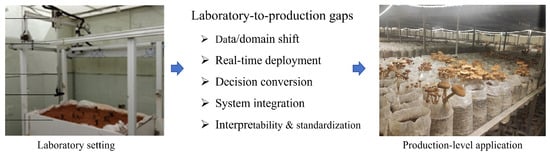
(A) Morphologies of fruiting bodies cultured at 15 °C (low temperature) for 5 d (a), 10 d (b), and 15 d (c); cultured at 20 °C (control) for 5 d (d), 10 d (e), and 15 d (f); and cultured at 25 °C (high temperature) for 5 d (g), 10 d (h), and 15 d (i); (B) fruiting body yield; (C): cordycepin content in fruiting bodies. Significant differences among groups are indicated by different lowercase letters (p < 0.05).

Species of the ascomycetous genus Cladobotryum (Hypocreales, Hypocreaceae) are ecologically and economically important mycoparasites that cause cobweb disease in cultivated and wild mushrooms. Despite their significance as fungal pathogens and producers of bioactive metabolites, the taxonomy of Cladobotryum remains unresolved due to extensive morphological plasticity, complex teleomorph–anamorph connections, and the presence of cryptic species. This study employs an integrative approach combining micro- and macromorphological characterization, multi-locus phylogeny (ITS, rpb2, and tef-1a), and comparative genomics to clarify the taxonomic position of the Greek isolate Cladobotryum sp. ATHUM 6904, previously designated as an unclassified red-pigmented (URP) strain. Phylogenetic analyses demonstrated that URP strains form a distinct, well-supported clade closely related to C. tenue and C. rubrobrunnescens, yet genetically and morphologically distinct from both. Comparative genomic analyses of isolate ATHUM 6904 and the ex-type strains of C. tenue and C. rubrobrunnescens revealed pronounced divergence in transposable element content, mitochondrial genome architecture, gene order, orthologous gene composition, secondary metabolite biosynthetic potential, and overall genomic distance. Micro- and macromorphological comparisons further supported the differentiation of isolate ATHUM 6904 from both reference species. Based on the combined molecular, morphological, and genomic evidence, the Greek isolate ATHUM 6904 is described as a novel species, Cladobotryum rhodochroum sp. nov.
6 February 2026

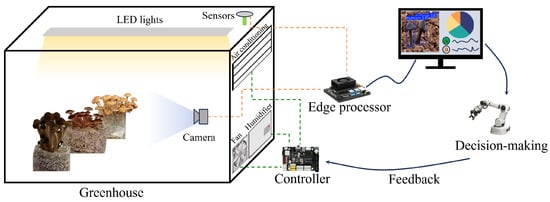
Maximum-likelihood phylogenetic tree of Cladobotryum/Hypomyces strains based on the concatenated ITS, rpb2, and tef-1a regions. Branch support values are shown at supported nodes as ultrafast bootstrap (UFBoot). The analysis was performed in IQ-TREE v2.1.3 under the TN + F + R3 substitution model. The tree is rooted with the fungicolous isolate Fusarium sp. as the outgroup, and branch lengths represent substitutions per site. C. rubrobrunnescens, C. tenue, and URP clades are highlighted. The strain ATHUM 6904, designated as the holotype of C. rhodochroum nov. sp., is indicated in blue. The strains of the species of interest are shown in different colors, i.e., light orange, rose, and plum for C. rubrobrunnescens, C. tenue, and the ‘Unidentified Red-Pigmented’ (URP) cluster, respectively, to which the new species C. rhodochroum be-longs.

Although RNA sequencing (RNA-seq) enables rapid transcriptome profiling, functional annotation of fungal transcriptomes remains challenging. Existing tools prioritize broad taxonomic coverage, and reference genomes are scarce for non-model species. This study aimed to develop a fungal-specific functional annotation workflow to support rapid and accurate functional analyses downstream of RNA-seq, independent of reference genome availability. To evaluate the workflow, RNA-seq data from 57 samples of Lentinula edodes strain H600 (shiitake mushroom) were retrieved, along with full-length transcript sequencing (Iso-Seq) data and corresponding RNA-seq data from 20 samples of Phakopsora pachyrhizi (Asian soybean rust) from public databases. The workflow successfully annotated over 96% of protein-coding transcripts and demonstrated applicability to Iso-Seq data. Functional enrichment analyses revealed higher-resolution functional detection than existing annotation tools. Furthermore, integrating homology searches against fungal-specific databases with expression pattern-based annotations highlighted the workflow’s utility for target identification in genome editing and other applications. Overall, the results of this study highlight the potential of the developed workflow in facilitating the discovery of functionally important transcripts and their translation into biotechnological applications.

6 February 2026

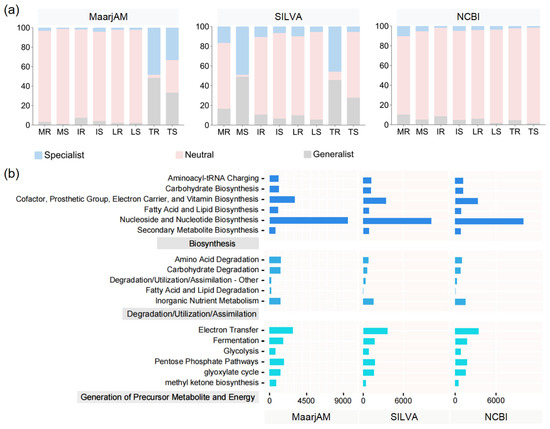
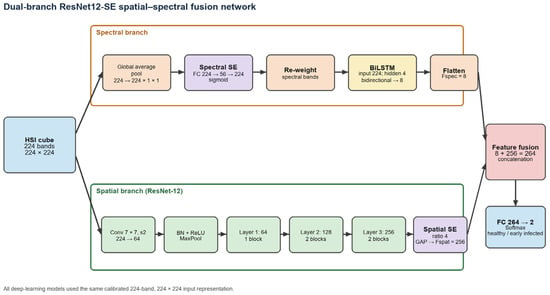
Overview of the annotation table generation including functional annotation. RNA-seq, RNA sequencing; GO, Gene Ontology. Dashed lines indicate optional steps.

Protein phosphorylation modification plays a role in cells’ response to oxidative stress, a key factor leading to postharvest browning of Flammulina filiformis. However, the molecular mechanism by which protein phosphorylation contributes to postharvest browning of F. filiformis remains unclear. This study aimed to characterize the basal phosphoproteomic landscapes associated with variations in different browning phenotypes of F. filiformis. Using data-independent acquisition (DIA) mass spectrometry, we comprehensively profiled the phosphorylation dynamics in susceptible-to-browning (SB) and resistant-to-browning (RB) cultivars at harvest and after 24 h storage. We identified 84,244 phosphorylation sites on 4494 phosphoproteins, with the SB cultivar displaying more altered sites (21,195) than the RB (16,087). Functional enrichment analysis revealed that the differential phosphorylation was significantly implicated in kinases and energy metabolism pathways. Notably, the SB cultivar exhibited a more pronounced phosphorylation profile on key proteins involved in ATP synthesis and glycolysis. Protein–protein interaction (PPI) network analysis further indicated a kinase-mediated regulatory network targeting core energy metabolism components, including ATP synthase and 6-phosphofructokinase. This distinct phosphosignature in the SB cultivar correlated with its more severe browning phenotype and a sharper decline in ATP content during storage. Our findings suggest that divergent phosphorylation-mediated regulation of energy metabolism is strongly associated with the differential postharvest browning susceptibility between these two cultivars, providing a valuable molecular resource for future functional studies.

5 February 2026

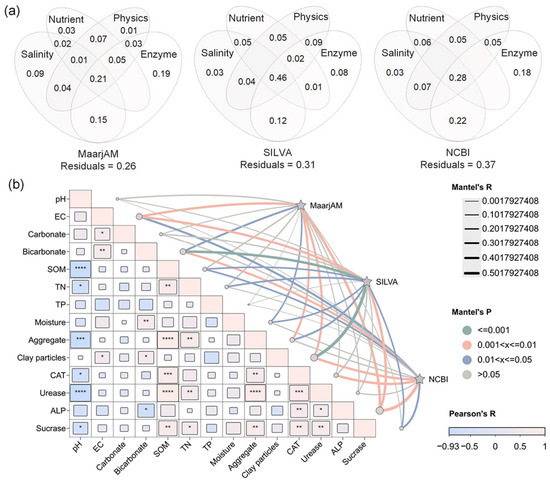
Characterization of phosphorylation in F. filiformis during postharvest storage. (a) Visual degradation (discoloration and deterioration) in SB and RB F. filiformis fruiting bodies pre- and post-24 h storage. (b) upregulated and downregulated phosphorylation sites in two cultivars. (c) Venn diagram of shared phosphorylation sites with significant changes between two cultivars during storage. (d) Principal component analysis (PCA) for all samples. SBh, susceptible-to-browning phenotype at 0 h; RBh, resistant-to-browning phenotype at 0 h; SBph, susceptible-to-browning phenotype after 24 h postharvest; RBph, resistant-to-browning phenotype after 24 h postharvest.

News & Conferences

Issues

Open for Submission

Editor's Choice

Get Alerted

Add your email address to receive forthcoming issues of this journal.

XFacebookLinkedIn
J. Fungi - ISSN 2309-608X