3.2. The Structural and Immunological Characteristics of Pneumocystis jirovecii β-Glucans Are Examined and Contrasted with Those of Dietary β-Glucans
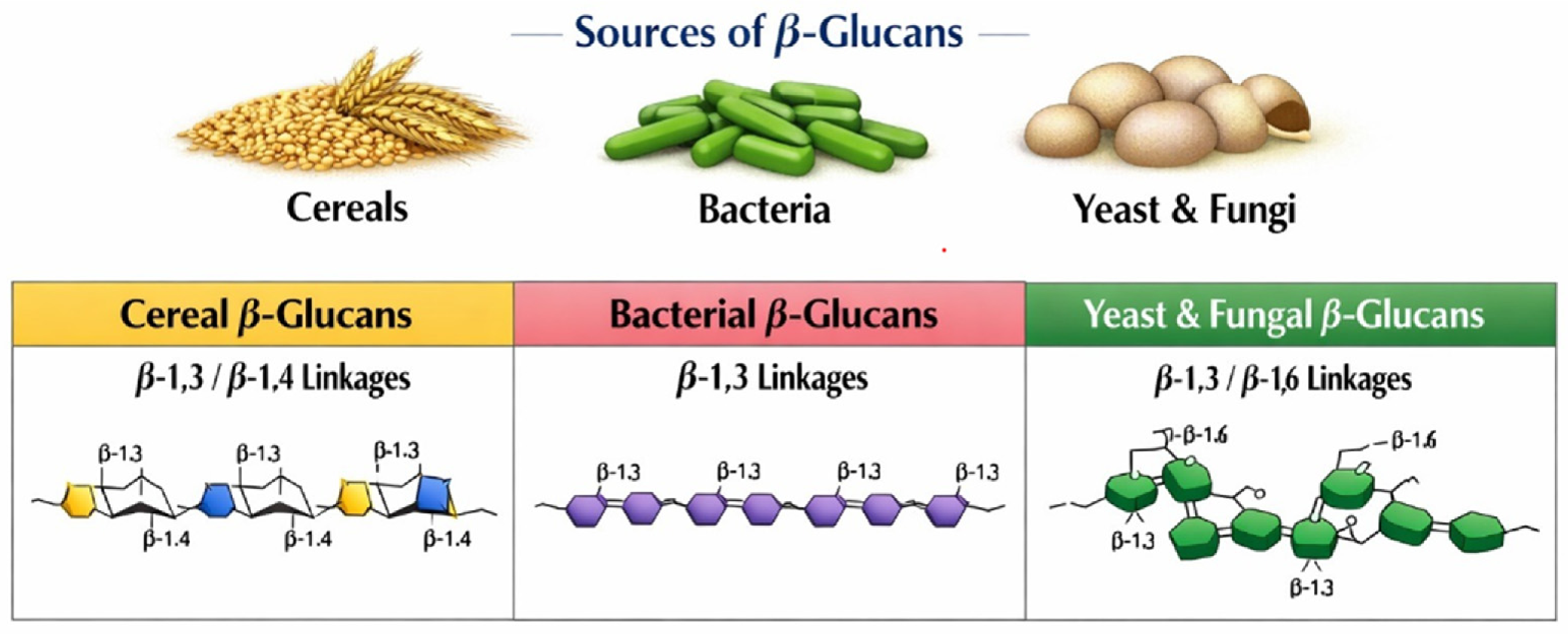
Beta-glucans are non-starch polysaccharides found in the cell walls of fungi, plants (oats, barley), yeast, and bacteria. Their structural heterogeneity (
Figure 1) directly dictates their solubility, binding affinity, and subsequent biological activities [
20]. These glucose polymers differ in structure depending on their origin (
Figure 1), with cereal β-glucans containing β-(1,3) and β-(1,4) linkages, while fungal β-glucans have β-(1,3) and β-(1,6) bonds [
20].
The frequency and length of side chains vary wildly. Yeast-derived glucans feature complex, frequent branching, while fungal glucans (like lentinan) possess specific branching ratios (1 branch per 3 backbone residues). Polymetric chains range from low molecular weight oligosaccharides (a few kilodaltons) to high molecular weight polymers exceeding 10
6 Daltons. Finally, in solution, these polymers organize into distinct triple helices, single helices, or random coils depending on their primary structure and solvent environment (
Figure 2) [
20].
The specific physical geometry of the molecule alters its physiological mechanisms and clinical impact. High molecular weight and a triple-helix conformation are critical for receptor cross-linking. For instance, linear structures (cereals) do not trigger the Dectin-1 immune pathway because they lack the specific spatial fit for binding. Also, it generates highly viscous gels in the gastrointestinal tract. This gel layer delays gastric emptying and slows glucose absorption. In the same line, the ratio of tri- to tetra-saccharides (DP3/DP4 units) in the linear chain determines polymer flexibility and water solubility. High molecular weight linear chains optimize entanglement, effectively lowering LDL cholesterol and postprandial glucose spikes. Highly soluble glucans are easily processed for intravenous or oral supplements, whereas insoluble glucans act primarily as dietary fiber or particulate adjuvants. Purely linear glucans (like curdlan) are highly insoluble due to dense inter-chain hydrogen bonding [
20].
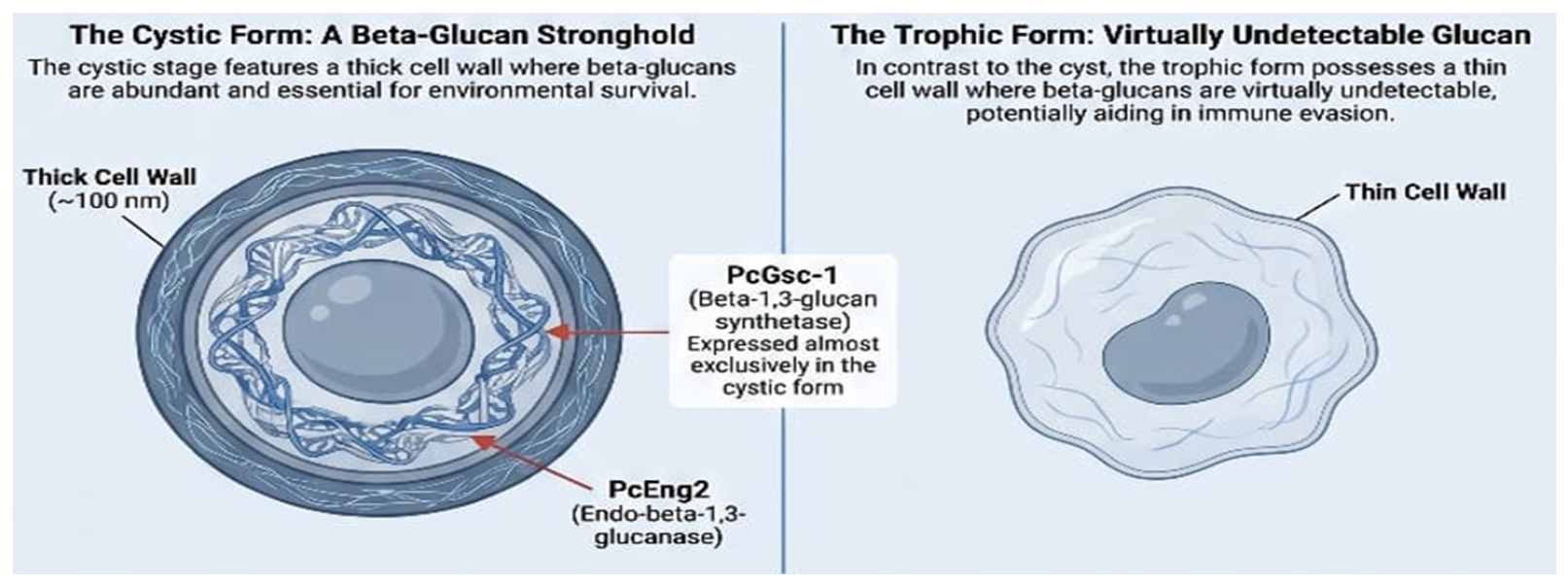
P. jirovecii β-glucans have a distinctive molecular architecture with a highly branched network of β-1,3 and β-1,6 bonds, together with a minimal presence of α-glucans and chitin, components that are more common in other environmental fungi and in polysaccharides of dietary origin [
2]. This composition undergoes fluctuations throughout the microorganism’s life cycle: cysts, which constitute the infective form, exhibit the highest proportion of these polysaccharides and function as the primary stimulus for immune activation, while trophic forms are nearly devoid of β-glucans (
Figure 3) and possess significantly diminished immunogenicity [
2,
10,
11]. This structural and functional differentiation is essential to the recognition process by the innate immune system, particularly through its interaction with receptors such as Dectin-1 and EphA2. The activation of these receptors triggers proinflammatory signaling cascades and cytokine production [
3,
4].
One study examined the effect of glucan structure on recognition and binding by murine recombinant Dectin-1 with a library of natural product and synthetic (1-->3)-beta/(1-->6)-beta-glucans as well as no glucan polymers. Although Dectin-1 is highly specific for lineal (1-->3)-beta-D-glucans, it does not recognize all glucans equally. Dectin-1 differentially interacted with (1-->3)-beta-D-glucans over a very wide range of binding affinities (2.6 mM–2.2 pM). One of the most striking observations that emerged from this study was the remarkable high-affinity interaction of Dectin-1 with certain glucans (2.2 pM). These data also demonstrated that synthetic glucan ligands interact with Dectin-1 and that binding affinity increased in synthetic glucans containing a single glucose side-chain branch. In the same line, the authors observed differential recognition of glucans derived from saprophytes and pathogens. They found that glucan derived from a saprophytic yeast was recognized with higher affinity than glucan derived from the pathogen
Candida albicans. Structural analysis demonstrated that glucan backbone chain length and (1-->6)-beta side-chain branching strongly influenced Dectin-1 binding affinity [
21].
Dietary β-glucans, derived from cereals, yeasts, or edible fungi, generally have simpler structures, with a reduced degree of branching and variable proportions of β-1,3 and β-1,4 bonds. Moreover, these polysaccharides are frequently linked to other cell wall components, such as α-glucans, proteins, or polysaccharide-protein complexes, which modulate their bioavailability and interaction with immune receptors. Consequently, their immunological recognition is often integrated into immunometabolic regulation circuits, which are predominantly associated with the gut-microbiota axis [
4,
22].
These structural differences result in markedly different functional profiles. While dietary β-glucans are predominantly associated with immunomodulatory, metabolic, and potentially cardioprotective effects—mediated in part by microbial fermentation, the generation of metabolites with anti-inflammatory activity, and the modulation of innate immunity—β-glucans from
P. jirovecii configure a signaling pattern characterized by more pronounced inflammatory activation, with the ability to amplify both local and systemic responses [
2,
3,
4,
22].
This finding underscores the notion that the biological impact of β-glucans is not solely determined by their chemical composition, but rather by a complex interplay between molecular structure, exposure context, and predominant biological compartment [
4,
22].
Overall, the high affinity for receptors associated with proinflammatory signaling, the complex β-1,3/β-1,6 branching, and the relative absence of structural components with a buffering effect give
P. jirovecii β-glucans a particularly efficient profile for inducing amplified immune responses [
2]. This phenomenon stands in contrast to the effects of dietary β-glucans, which have been traditionally associated with regulatory and potentially cardioprotective effects that are mediated by microbiota and modulation of innate immunity [
4,
21]. This functional differentiation provides a framework for understanding fungal β-glucans effects. Their exposure could contribute to systemic inflammatory processes and vascular dysfunction [
2,
3,
4,
22].
β-glucans from yeast can induce trained immunity in in vitro and in vivo models, enhancing host defense against pathogens. Despite, intraperitoneal doses of β-glucans in mammals have shown to induce trained immunity, the training effects of orally administering β-glucans are uncommon reported [
23,
24,
25,
26]. For example, in turbot, intraperitoneal injection of 50 μL of yeast β-glucan (20 mg/mL) significantly reduced mortality after bacterial infection [
23]. Similarly, intraperitoneal administration of 0.1 mg of zymosan (a β-glucan-rich cell wall preparation) into mice markedly increased myeloperoxidase activity and prevented peritonitis for up to 5 weeks [
24]. In weaned rabbits, intraperitoneal injection of β-glucan (50 mg/kg) 6 and 4 days before weaning significantly reduced post-weaning diarrhea rates [
25]. Finally, newborn goats stimulated with two doses (day −7 and −4) of β-Dh (50 mg/kg) and challenged (day 0) with LPS showed an increase in respiratory burst activity, IL-1β, IL-6, and TNFα production in plasma, and transcription of the macrophage surface markers [
26].
3.3. Inflammatory Pathways That Are Activated by Pneumocystis jirovecii β-Glucans and Their Possible Contribution to a Proatherogenic Phenotype
P. jirovecii β-glucans have been shown to possess a high capacity to activate pattern recognition receptors in macrophages and pulmonary epithelial cells [
2,
3]. This activation triggers multiple inflammatory pathways, which, although initially oriented towards antifungal defense, can acquire systemic projection and promote processes involved in atherogenesis [
2,
3,
4].
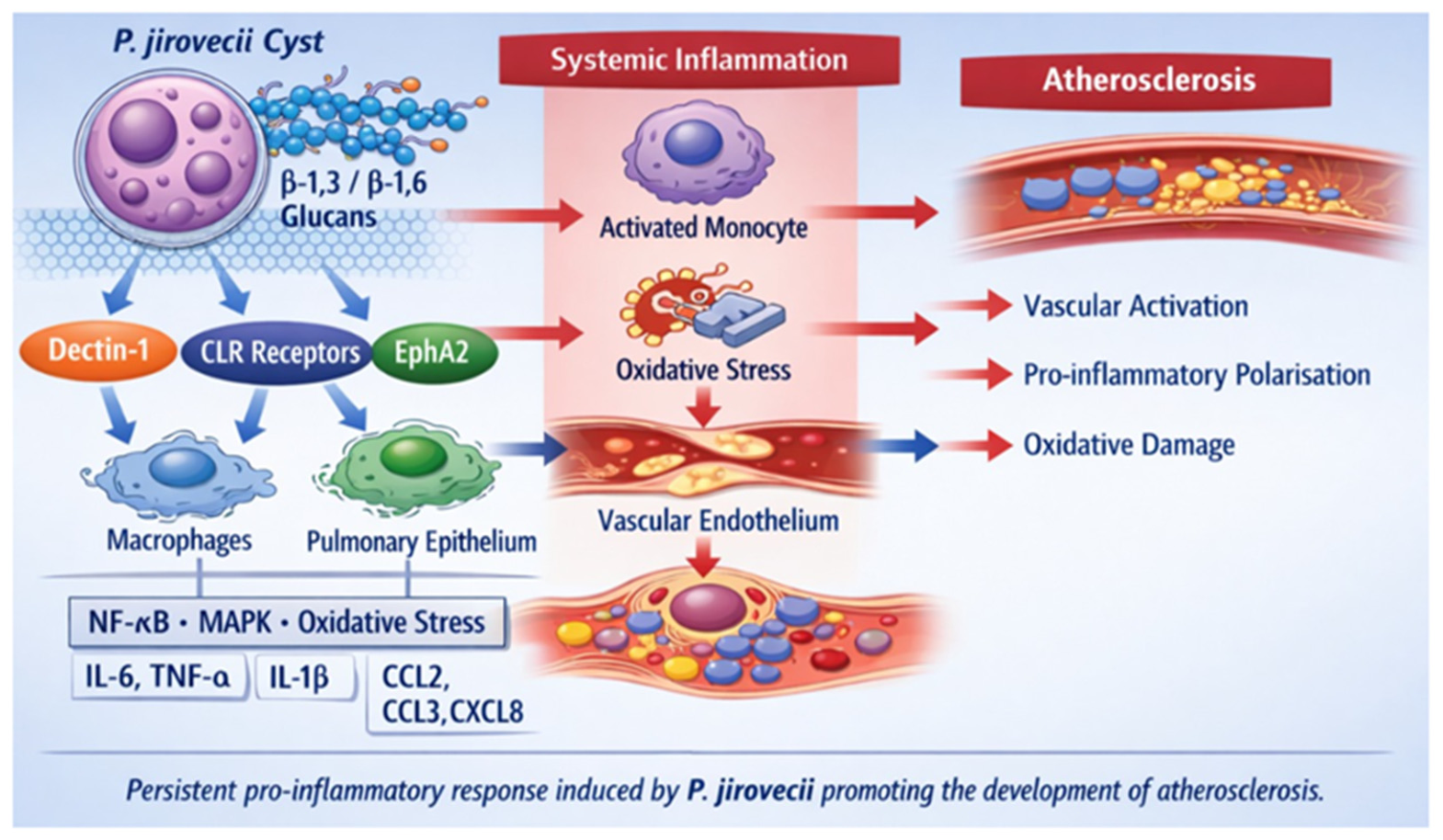
Based on the accumulated evidence, we hypothesized a sequence of key events (
Figure 4). In macrophages, highly branched β 1,3/β 1,6 glucans of the cyst wall may engage Dectin-1 which constitutes a central axis of recognition. Binding to the extracellular domain of this receptor induces phosphorylation of its ITAM-like motif. This leads to the recruitment of Syk with subsequent activation of the CARD9–BCL10–MALT1 complex. This cascade ultimately leads to the activation of NF-κB and MAPK, which in turn promote the expression of IL-6, TNF-α, IL-1β, and various chemokines, including CCL2, CCL3, and CXCL8. At the same time, other pattern recognition receptors including C type lectin receptors (CLRs), and the tyrosine kinase receptor EphA2 can also be involved. The release of immune mediators both amplify the local inflammatory response and promote monocyte mobilization and their polarization toward proinflammatory profiles, a process closely linked to the early stages of atherosclerotic development [
27,
28,
29]. The resulting inflammatory response extends beyond the pulmonary compartment, promoting endothelial dysfunction, monocyte activation, and oxidative damage—key processes contributing to the development of atherosclerosis [
2,
3,
4,
27,
28,
29].
Moreover, in the lung epithelium, β-glucans have been shown to activate EphA2, a tyrosine kinase receptor involved in the recognition of fungal components. This activation triggers intracellular signaling pathways such as NF-κB [
3]. This axis has been demonstrated to promote the production of IL-6, CXCL8, and other mediators that facilitate functional communication between the epithelium and immune cells, thereby contributing to the maintenance of a persistent inflammatory state (
Figure 4) [
2,
3,
4,
29]. This epithelial-immune circuit is especially relevant in prolonged colonization scenarios, where repeated stimulation can lead to low-grade chronic inflammatory signaling with potential systemic consequences [
1,
2,
3,
4,
29].
An additional component of this response corresponds to the activation of pathways dependent on lactosylceramide, a glycosphingolipid that acts as a signaling platform in the cell membrane. The interaction of β-glucans with these pathways has been shown to promote the activation of NADPH oxidase and the generation of reactive oxygen species, contributing to the establishment of a state of oxidative stress and the amplification of proinflammatory pathways [
2,
3,
4,
27,
28,
29]. This mechanism, described in fungal recognition models, enhances endothelial dysfunction. It also promotes monocyte activation, two central processes in atherogenic progression [
1,
2,
3,
4,
27,
28,
29].
The convergent activation of Dectin-1/CARD9, CLRs, EphA2, and lactosylceramide pathways leads to a sustained inflammatory response. This response is characterized by the production of IL-6, TNF-α, and multiple chemokines, along with other cytokines with modulatory functions, such as IL-10 or IL-23. The participation of these latter cytokines may adjust the intensity and profile of the response rather than simply amplifying it [
2,
3,
4,
27,
28,
29]. These mediators both sustain the antifungal response and might promote a proatherogenic phenotype. The promotion of a proatherogenic phenotype would be achieved through the following mechanisms: endothelial activation, inflammatory recruitment and polarization of monocytes/macrophages, and increased oxidative stress. Consequently, the induction of signaling by β-glucan in the pulmonary compartment might have some effects beyond this organ, thereby contributing to systemic processes associated with vascular inflammation and the development of atherosclerosis [
1,
2,
3,
4,
27,
28,
29].
3.4. The Effects of β-Glucans on Cardiovascular Risk, with a Particular Focus on the Contrast Between Dietary Effects and Systemic Fungal Exposure
β-glucans have been the subject of extensive research as a potential modulator of cardiovascular risk. Dietary β-glucans predominantly induce regulatory immune interactions rather than intense inflammatory responses [
4,
19]. Consequently, their cardiometabolic impact is linked to modulation of the gut microbiota and regulation of lipid metabolism. They also attenuate systemic inflammation, mechanisms that converge in an overall cardioprotective profile [
13,
14,
22].
In the gastrointestinal microbiota, dietary β-glucans act as fermentable substrates. They promote the growth of short-chain fatty acid-producing bacteria, including
Faecalibacterium,
Roseburia, and
Bifidobacterium. These metabolites, particularly butyrate and propionate, exert anti-inflammatory effects. They reinforce intestinal barrier integrity and modulate metabolic pathways involved in lipid and carbohydrate homeostasis [
4,
20]. These changes are associated with reductions in LDL-C and triglycerides, improved insulin sensitivity, and decreased circulating inflammatory markers, as well as slower progression of atherosclerotic lesions in experimental models [
14,
22].
Conversely, circulating fungal β-glucans have high affinity for proinflammatory receptors. These include Dectin-1, CLRs, and EphA2 thereby facilitating their recognition by the innate immune system [
2,
3,
4]. Upon entering the circulation, these polysaccharides activate the Syk–CARD9–NF-κB axis, thereby promoting the production of proinflammatory cytokines, such as IL-6, TNF-α, and IL-1β, as well as various chemokines, and stimulating the activation of circulating monocytes [
27,
28,
29]. This response, initially directed toward antifungal defense, may persist systemically following antigen exposure during chronic infection, thereby promoting a proatherogenic phenotype characterized by sustained inflammation and vascular activation [
2,
3,
4,
14,
27,
28,
29].
Furthermore, fungal β-glucans contribute to endothelial dysfunction by activating lactosylceramide-dependent pathways. This leads to reactive oxygen species generation which, in turn, has been demonstrated to promote the expression of endothelial adhesion molecules, monocyte recruitment, and the progression of atherosclerotic lesions [
2,
3,
4,
27,
28,
29]. In contrast to dietary β-glucans, which modulate the inflammatory response into a regulatory profile, circulating fungal β-glucans have been observed to amplify systemic inflammation and oxidative stress. These phenomena are two processes closely linked to vascular vulnerability [
1,
2,
3,
4,
27,
28,
29].
From an integrative perspective, intestinal exposure to dietary β-glucans has been associated with protective metabolic and anti-inflammatory signals; however, systemic exposure to fungal β-glucans in invasive infections or persistent colonization scenarios may promote low-grade chronic inflammation, endothelial dysfunction, and a molecular environment conducive to atherogenesis [
2,
3,
4,
14,
22,
29]. This distinction is especially important when interpreting inflammatory biomarkers and exploring emerging mechanisms of vascular inflammation associated with subclinical infections [
2,
3,
4,
14,
29].
3.5. The Serum Persistence of (1→3)-β-D-Glucan in Pneumocystis jirovecii, Encompassing Its Progression from Chronic Colonization to Systemic Inflammation and Vascular Dysfunction
Serum (1→3)-β-D-glucan is a widely used biomarker for diagnosing invasive fungal infections, including
P. jirovecii pneumonia. However, it is not found in all fungal species and cannot be used to identify infections by
Cryptococcus,
Blastomyces (yeast form), or
Zygomycetes such as
Absidia,
Mucor, or
Rhizopus since these genera either do not produce β-D-glucan or produce low levels that might lead to false negatives [
30].
The primary clinical diagnostic limitation of β-D-glucan testing is its high susceptibility to both analytical and biological noise. Because the test operates as a functional kinetic bioassay—traditionally relying on the Limulus amebocyte lysate cascade triggered by the G factor—it frequently identifies β-D-glucan from non-fungal origins. This diagnostic noise leads to elevated false-positive rates, which complicates clinical decision-making and limits the test’s positive predictive value [
30].
β-D-glucan is a structural component of cellulose. Transient, false-positive elevations frequently occur from standard medical supplies like sterile gauze, cotton swabs, hemodialysis cellulose membranes, and non-β-D-glucan-free collection tubes. In addition, patients undergoing chemotherapy, or those with severe mucosal barrier injury (e.g., mucositis, gut ischemia), can experience microbiome-derived β-D-glucan translocation into the bloodstream. This triggers a positive result in the absolute absence of a systemic fungal infection. In addition, certain bacterial infections—specifically hypermucoid strains like
Pseudomonas aeruginosa or
Streptococcus pneumoniae—produce linear or cyclic glucans that trigger the assay. Finally, intravenous amoxicillin-clavulanate, piperacillin-tazobactam, and human blood products (fractionated albumin or immunoglobulins) similarly feed into the background noise [
30].
Clinicians should also be cautious of scenarios that may lead to false-positive results. Awareness of the factors that can contribute to such non-Invasive Fungal Disease (IFD)-related findings can enhance the planning and interpretation of β-D-glucan assays and support investigational strategies, such as serial sampling and β-D-glucan clearance evaluation, to assess the likelihood of contamination and improve patient care.
However, beyond its diagnostic value, the magnitude and, in particular, the persistence of its positivity could reflect a state of immunologically active exposure to fungal β-glucans with possible systemic consequences. This consideration is especially important in scenarios of chronic or subclinical colonization by
P. jirovecii, in which the absence of overt clinical manifestations does not preclude the existence of persistent low-grade inflammatory stimulation [
2,
6,
28].
Montes Cano et al. demonstrated that colonization by
P. jirovecii can exhibit dynamic patterns. These include cycles of acquisition, loss, and accelerated recolonization by different genotypes, even in individuals without overt clinical disease [
26]. These cycles may cause fluctuations in β-glucan release into the pulmonary compartment. This can result in persistent or intermittent serum positivity. This, in fact, reinforces the hypothesis of sustained antigenic exposure with the capacity to modulate systemic inflammation [
2,
6,
28,
31,
32].
Several studies have documented that patients with
P. jirovecii pneumonia, as well as colonized individuals—particularly the elderly, individuals with chronic obstructive pulmonary disease, pulmonary fibrosis, or mild immunosuppression—may have serum concentrations of (1→3)-β-D-glucan that are elevated and sustained even after clinical resolution of the respiratory episode [
2,
6]. This finding suggests that β-glucans may translocate from the pulmonary compartment to the systemic circulation. This process could be sustained over time, either due to persistence of the microorganism, slow replacement of cell wall components, or alterations in the alveolar–capillary barrier associated with chronic inflammation [
2,
6,
28,
33].
Pathophysiologically, circulating β-glucans are not merely passive markers of exposure, but rather active immunological stimuli capable of interacting with pattern recognition receptors expressed on immune and vascular cells, including Dectin-1, various CLRs, and EphA2 [
2,
3,
4,
27,
28,
29]. Sustained activation of these signaling axes can drive a chronic proinflammatory state, characterized by the production of cytokines such as IL-6, TNF-α, and IL-1β, as well as the release of chemokines that promote the recruitment and activation of circulating monocytes [
2,
3,
4,
27,
28,
29,
30,
31,
32,
33].
This state of low-grade systemic inflammation is highly relevant to vascular biology. Chronic exposure of the endothelium to inflammatory mediators derived from β-glucan-induced activation may be associated with endothelial dysfunction, increased expression of adhesion molecules such as VCAM-1, ICAM-1, and E-selectin, and alterations in the bioavailability of nitric oxide [
2,
14,
27]. These alterations promote the adhesion and transmigration of monocytes to the arterial intima, a pivotal event in the initial phases of atherogenesis [
2,
14,
28,
33].
It has been proposed that circulating β-glucans may influence platelet activation and coagulation, either directly or indirectly through systemic inflammation and oxidative stress. In this context, the activation of the endothelium and myeloid cells may promote a procoagulant environment, characterized, among other changes, by an increase in tissue factor expression [
2,
14,
28,
33].
3.6. Experimental Models to Explore a Potential Causal Link Between Pneumocystis jirovecii β-Glucans and Atherosclerosis
Evidence from animal studies provides strong mechanistic support for a causal link between
Pneumocystis jirovecii and atherogenesis. Early work demonstrated that
Pneumocystis cell wall β glucans can stimulate alveolar macrophages to release arachidonic acid and its metabolites, initiating inflammatory cascades relevant to vascular injury [
34]. Subsequent murine and in vitro studies confirmed that β glucans induce dendritic cell activation and costimulatory molecule expression, thereby amplifying systemic inflammation [
35]. These findings highlight a biologically plausible mechanism by which chronic fungal exposure could accelerate endothelial dysfunction and plaque formation.
In humans, the evidence is more indirect. β glucans from
Pneumocystis have been shown to stimulate calcium-dependent signaling and IL 8 secretion in airway epithelial cells, linking colonization to persistent inflammatory responses [
36]. While serum β glucanemia has been associated with systemic low-grade inflammation and endothelial activation, no prospective studies have yet demonstrated a direct progression from
P. jirovecii colonization to cardiovascular events. Thus, while the human data support a biologically plausible association, they remain insufficient to establish causality.
Taken together, results obtained in animal models provide strong mechanistic evidence for a causal relationship, whereas human studies highlight associations consistent with atherogenic pathways but not yet definitive. This dual perspective underscores the need for translational and longitudinal research to clarify whether
P. jirovecii colonization contributes significantly to cardiovascular disease in humans. The establishment of a causal relationship between systemic exposure to
P. jirovecii β-glucans and the progression of atherosclerosis necessitates the development of experimental models that coherently integrate immunological, vascular, and metabolic components. Given that
P. jirovecii is a strictly human fungus that cannot be cultured by conventional methods, available approaches must focus on the controlled administration of purified β-glucans or on models that reproduce their key immunobiological effects [
2,
3,
4,
27,
28,
29,
30,
31,
32,
33,
34,
35,
36,
37]. A “humanized mouse” (mouse with human immune system) might be a future direction to bridge the gap between
P. murina models and human pathology.
Nevertheless, this constraint does not preclude the utilization of complementary methodologies. The utilization of models employing
Pneumocystis carinii in rats and
P. murina in mice, which are extensively employed in preclinical research, facilitates the analysis of responses elicited by the entire microorganism. These models provide a comparative framework for examining the contribution of β-glucans to pulmonary and systemic inflammation. In this context, several reviews emphasize that β-glucans, as abundant components of the
Pneumocystis cell wall, interact with multiple receptors of the innate immune system and activate proinflammatory signaling networks that cannot be reproduced using axenic cultures of
P. jirovecii [
2,
3,
4,
27,
28,
29,
30,
31,
32,
33]. Conversely, the integration of animal models with elevated physiological intricacy, such as porcine models of atherosclerosis, has the potential to enable the assessment of vascular and metabolic ramifications within a cardiovascular system that more closely resembles that of humans. This development offers a way for the exploration of the association between exposure to fungal β-glucans and atherosclerotic progression with enhanced precision [
31,
32,
33,
34,
35,
36,
37].
3.7. Murine Models of Atherosclerosis
Genetically modified murine models, particularly ApoE
−/− and LDLR
−/− mice, have been extensively validated as platforms for studying atherogenesis and the interaction between systemic inflammation and vascular biology [
37]. In this context, the repeated administration of
P. jirovecii β-glucans—either via intratracheal or by parenteral routes—would facilitate the evaluation of their impact on the burden and composition of atherosclerotic plaques, immune cell infiltration, and the expression of inflammatory and oxidative stress markers in the arterial wall [
2,
21,
22,
23,
24,
25,
26,
27,
28,
29,
30,
31,
32,
33,
34,
35,
36,
37,
38,
39].
Similarly, in studies to assess exposure to the complete microorganism, infection models with
P. murina or
P. carinii can be utilized. These models facilitate complementary exploration of the contribution of the
Pneumocystis-induced inflammatory response to vascular dysfunction and the progression of atherosclerosis, integrating both β-glucan-mediated signaling and the participation of other components of the fungal wall [
2,
3,
4,
23,
24,
25,
26,
27,
28,
29,
30,
31,
32,
33,
34,
35,
36,
37,
39].
In this regard, robust activation of the NLRP3 inflammasome and NETosis-associated pathways has been described in mice infected with
P. murina, with the generation of intense pulmonary inflammatory responses and local microvascular alterations [
30]. In accordance with this observation, murine models of chronic respiratory diseases have demonstrated that
Pneumocystis infection exacerbates perivascular inflammation and immune cell infiltration around the vessels. This finding suggests a possible convergence with mechanisms involved in endothelial dysfunction and chronic vascular disease progression [
31,
32,
33,
39,
40].
3.10. Methodological Limitations and Considerations
Recent evidence in mouse models demonstrates that animals pre-treated with dietary β-glucans exhibit significantly higher survival rates and a lower bacterial load when exposed to infections caused by
Staphylococcus aureus,
Candida albicans or parasites. Furthermore, it has been observed that they enhance the recruitment of NK (Natural Killer) cells and promote the apoptosis of neoplastic cells in experimental cancer models [
2].
It is important to note that microorganisms in the caecum and colon ferment dietary β-glucans, exponentially increasing the concentration of short-chain fatty acids (SCFAs) such as acetate, propionate and butyrate. The increase in SCFAs optimizes the integrity of the intestinal barrier by increasing the expression of tight junction proteins such as occludin, preventing bacterial translocation and reducing inflammation. However, few studies on the impact of dietary β-glucans in animal models have been reported [
2].
Despite taxonomic barriers, rodent models are the gold standard for studying
Pneumocystis pneumonia. The broad immunological mechanisms—such as the requirement of CD4+ T cells to clear infection—are functionally analogous. The murine model (
P. murina) is extensively used to study host–pathogen interactions and immune reconstitution [
2,
3,
11,
41]. Also, studies from rodent-specific
Pneumocystis species (like
Pneumocystis carinii in rats or
P. murina in mice) to humans—who are exclusively infected by
Pneumocystis jirovecii—is a common but highly nuanced practice. While rodent models remain indispensable for immunological and pre-clinical research, strict biological differences limit direct clinical translation [
2,
3,
11,
41].
Notwithstanding their value, these models are subject to inherent limitations. The extrapolation of findings from murine models to human subjects necessitates caution, particularly within the context of antifungal immunity. Furthermore, the structural heterogeneity of β-glucans, in conjunction with variations in dosage, route of administration, and duration of exposure, can exert a substantial influence on experimental outcomes. In this regard, the standardization of
P. jirovecii β-glucan preparations and the detailed characterization of their structure emerge as critical requirements for the reproducibility and proper interpretation of studies [
2,
33,
39,
40].
A main concern is the bias to extend mechanistic plausibility toward implicit clinical applicability. While experimental studies demonstrate that β-glucans activate inflammatory pathways implicated in atherogenesis, this evidence is largely derived from in vitro and animal models. There is currently no clinical or epidemiological evidence showing that P. jirovecii colonization or β-glucan exposure influences the development or progression of atherosclerotic disease in humans.
3.12. The Pathophysiological and Clinical Implications of Pneumocystis jirovecii β-Glucans in Atherogenic Inflammation
An integrative review of the extant literature was conducted, and the evidence supports a pathophysiological model in which
P. jirovecii β-glucans function not only as markers of fungal exposure but also as active mediators of systemic inflammation with potential vascular repercussions. In contrast to dietary β-glucans, whose immunometabolic effects are frequently linked to modulatory and potentially cardioprotective profiles,
P. jirovecii β-glucans possess structural characteristics that promote sustained activation of proinflammatory pathways, particularly in scenarios of persistent colonization or active infection [
2,
33,
39,
40].
From a pathophysiological perspective, the activation of receptors such as Dectin-1, other C-type lectins (CLRs), and EphA2 constitutes a central axis in the transduction of signals induced by highly branched β-glucans. The interplay between Syk-CARD9-NF-κB-dependent signaling and the activation of MAPK, STAT3, and oxidative stress-related pathways has been demonstrated to promote the production of key cytokines and chemokines, including IL-6, TNF-α, IL-1β, and CXC chemokine ligand 8 (CXCL8). This process has been shown to modulate both pulmonary innate immunity and the systemic inflammatory response. The prolonged presence of these signals has the potential to induce alterations in the plasticity of monocytes and macrophages, leading to a proinflammatory phenotype. This process is intricately associated with the progression of atherosclerotic lesions [
2,
33,
39,
40].
In this context, the lung emerges as a key immune node from which inflammatory signals can be amplified and disseminated systemically. In vulnerable populations, such as older adults, individuals with chronic lung disease, or those with mild immunosuppression, subclinical colonization by
P. jirovecii has the potential to generate chronic low-grade inflammatory stimulation. This stimulation can be sufficient to sustain systemic inflammation, oxidative stress, and endothelial activation in the absence of obvious infectious manifestations [
32,
33,
40,
41]. This scenario is particularly salient in the context of atherosclerosis, a chronic inflammatory disease in which persistent endothelial activation, monocyte recruitment, and vascular dysfunction play a pivotal role [
1,
32,
33,
41].
Within the interpretative framework outlined, serum positivity for (1→3)-β-D-glucan assumes a more intricate dimension. Beyond its diagnostic utility in invasive fungal infections, the magnitude and duration of its elevation could reflect immunologically relevant exposure to circulating β-glucans, with the capacity to modulate vascular biology [
5,
33]. The potential correlation between prolonged levels of β-D-glucan, endothelial activation, coagulation alterations, and atherosclerotic plaque progression gives rise to clinical inquiries that exceed the scope of infectious diseases and extend into the domain of cardiovascular medicine [
5,
33,
39,
41].
The comparison with dietary β-glucans underscores the significance of origin and structural properties in determining biological effects. While β-glucans from cereals and edible fungi have a weaker interaction with the immune system and exert beneficial effects mediated, in part, by the gut microbiota and metabolic modulation, β-glucans from
P. jirovecii lack structural elements that limit their immune recognition and show a high affinity for proinflammatory receptors. This functional divergence underscores the need to avoid simplistic interpretations that equate all β-glucans as biologically equivalent entities [
2,
33,
39,
41].
From an experimental perspective, murine models of atherosclerosis, in vitro endothelial systems, and integrated omics approaches offer tools to move from observational associations to pathophysiological inferences. The ability to analyze specific pathways, such as those dependent on Dectin-1/CARD9 or lactosylceramide, will facilitate the identification of critical signaling nodes susceptible to intervention and elucidate the extent to which exposure to fungal β-glucans directly contributes to vascular inflammation [
26,
33,
39,
41].
However, it must be acknowledged that this review is subject to inherent limitations, primarily due to its narrative nature and the heterogeneity of the available studies. A significant proportion of the extant evidence derives from experimental models or observational studies with limited sample sizes; consequently, extrapolation to human populations should be done with caution. Additionally, the standardized quantification of
P. jirovecii β-glucans and the distinction between transient and persistent exposure remain significant methodological challenges [
2,
33,
39,
41].
To date, clinical evidence does not allow for definitive conclusions regarding a potential causal relationship between exposure to
P. jirovecii β-glucans and the occurrence of cardiovascular events. However, the available experimental models provide a sufficient framework for the controlled evaluation of this hypothesis [
33,
39,
40,
41].
Concurrently, numerous studies have documented a high prevalence of
P. jirovecii colonization in various populations, including individuals with HIV, patients with COPD, infants, and notably, the general population. The near ubiquity of the detection of
Pneumocystis in the lungs of infants who died of sudden death syndrome suggests that subclinical exposure is a widespread phenomenon and potentially relevant from a pathophysiological point of view [
32,
33,
41,
42].
Pneumocystis colonization acts as a highly reactive catalyst when combined with smoking or diabetes. Smoking damages mucosal cilia and hinders lung clearance; this creates an ideal environment for
Pneumocystis to colonize and persist [
42]. Hyperglycemia impairs basic immune functions, compromising T-lymphocyte and natural killer (NK) cell activity. This allows
Pneumocystis to maintain a higher subclinical fungal burden. Diabetes also produces advanced glycation end-products (AGEs), which cause tissue stiffness and inflammation. The combination of AGE-induced stress and
Pneumocystis-induced IL-1 activation creates a severe, dual-source inflammatory environment that accelerates vascular and systemic complications [
43].
In the same line,
Pneumocystis colonization directly accelerates and worsens the classic lipid-driven vascular damage pathway. It moves the needle from “stable” dyslipidemia to aggressive tissue damage through several specific mechanisms. In dyslipidemia, macrophages process oxidized LDL (oxLDL) via scavenger receptors (like CD36), eventually transforming into plaque-forming foam cells. In this context, constant fungal engagement triggers the downstream release of IL-1β, TNF-α, and monocyte chemotactic protein-1 (MCP-1). Local and circulating MCP-1 recruits more monocytes to the vascular intima, while TNF- α upregulates scavenger receptors on those cells. This causes them to engulf oxLDL at an accelerated rate, dramatically speeding up foam cell formation [
44].
Pneumocystis cell wall components stimulate macrophages and neutrophils to produce high amounts of reactive oxygen species (ROS). When this heavy local ROS production spills into systemic circulation, it directly oxidizes native circulating LDL into its highly atherogenic, cytotoxic oxLDL form, worsening existing dyslipidemia [
44].
Beyond fueling the lipid pathway,
Pneumocystis drives separate, parallel cellular damage mechanisms that compound cardiovascular and tissue risk.
Pneumocystis colonization characteristically shifts the local immune environment toward a chronic Th17 and Th1 response, marked by high levels of IL-17 and IL-23 [
2]. This specific cytokine profile functions independently of cholesterol. It acts directly on the vascular endothelium, increasing the expression of VCAM-1 and prompting smooth muscle cell proliferation—the structural root of arterial wall thickening [
33].
The coexistence of frequent fungal colonization and atherosclerotic disease of high prevalence does not, in itself, imply a causal relationship. However, it does establish a biologically plausible scenario that justifies systematic investigation. In this regard, prospective studies assessing the presence of
P. jirovecii or its immunoactive components in patients with atherosclerosis, together with longitudinal monitoring of colonization, would constitute a reasonable methodological approach to explore this potential immunobiological interaction [
31,
33,
41,
42].
In fact, with advances in antiretroviral therapy, most deaths in people with HIV are now attributable to noncommunicable illnesses, especially cardiovascular disease. A recent review examined the epidemiology and clinical features of cardiovascular disease, with particular emphasis on coronary heart disease in the context of HIV infection, highlighting a substantially increased risk of myocardial infarction even when HIV infection is well controlled [
45]. In this context,
P. jirovecii remains one of the most important pathogens in people living with HIV [
5]. Based on the hypothesis presented in this document, it would be worthwhile to conduct studies on atherosclerosis in people living with HIV in whom colonization by
P. jirovecii is significant.



 ,
,