




Next Issue
Volume 12, December
Previous Issue
Volume 12, October


Vet. Sci., Volume 12, Issue 11 (November 2025) – 89 articles
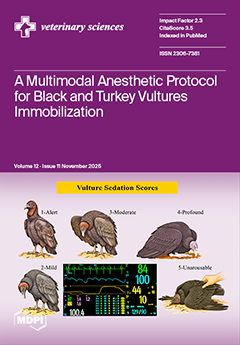
Cover Story (view full-size image): This study evaluated a DMBK (dexmedetomidine, midazolam, butorphanol, ketamine) and isoflurane protocol for immobilizing 11 Black and 4 Turkey Vultures for procedures like electroretinography. DMBK premedication produced profound sedation but was insufficient for intubation, requiring isoflurane mask induction. Vultures were mechanically ventilated at a median 1.4% end-tidal isoflurane. Physiological responses were similar between species. Remote monitoring was effective. The protocol provided safe and effective anesthesia for successful ERG procedures. View this paper
  • Issues are regarded as officially published after their release is announced to the table of contents alert mailing list.
  • You may sign up for e-mail alerts to receive table of contents of newly released issues.
  • PDF is the official format for papers published in both, html and pdf forms. To view the papers in pdf format, click on the "PDF Full-text" link, and use the free Adobe Reader to open them.
Order results
Result details
Section
Select all
Export citation of selected articles as:
10 pages, 1169 KB  
Article
Genetic Characterization of the First Case of Lumpy Skin Disease in Singapore, 2022
by Eileen Y. Koh, Adrian K. S. Tan, Yin Cheong Aden Ip, Clara Lau, Jasmine Ong, Oi Wing Ng, Jing Chen, Christine Lee, Suria Fabbri, Juline Chua, Samyuktha Balakumar, Kelvin Ho, Wai Kwan Wong, Brian Z. Y. Tan, Charlene Judith Fernandez, Siow Foong Chang and Him Hoo Yap
Vet. Sci. 2025, 12(11), 1108; https://doi.org/10.3390/vetsci12111108 - 20 Nov 2025
Viewed by 264
Abstract
Lumpy Skin Disease (LSD) is a transboundary viral disease of wild and domesticated ruminants, and notifiable to the World Organisation for Animal Health (WOAH). LSD has spread rapidly in the cattle population across the African, European and Asian continents since 1929. Following recent [...] Read more.
Lumpy Skin Disease (LSD) is a transboundary viral disease of wild and domesticated ruminants, and notifiable to the World Organisation for Animal Health (WOAH). LSD has spread rapidly in the cattle population across the African, European and Asian continents since 1929. Following recent outbreaks in the Southeast Asia region, Singapore observed its first occurrence of LSD in a local dairy cattle farm in March 2022. LSD was confirmed in dairy cattle exhibiting clinical signs with quantitative real-time PCR and sequencing with MinION Nanopore. Analyses of the assembled whole viral genomes also revealed high phylogenetic relatedness to LSD recombinant strains. It remains unclear how the virus was introduced into Singapore, given the absence of known vectors and strict import regulations in place. This highlights the importance of biosurveillance, and laboratory diagnostic readiness to manage outbreaks and prevent the spread of transboundary diseases. Full article
Show Figures

Figure 1

10 pages, 793 KB  
Article
Development and Validation of a Droplet Digital PCR Assay for Detection of Feline Herpesvirus Type-1
by Yaxi Zhou, Danni Wu, Mengle Tang, Zihan Ye, Erkai Feng, Haili Zhang, Guoliang Luo, Zhenjun Wang, Chunxia Wang, Lina Liu and Yuening Cheng
Vet. Sci. 2025, 12(11), 1107; https://doi.org/10.3390/vetsci12111107 - 20 Nov 2025
Viewed by 418
Abstract
Feline herpesvirus type-1 (FHV-1), a double-stranded DNA virus, which is a highly infectious upper respiratory tract infection of felids, particularly in kittens. Droplet digital PCR (ddPCR) provides an absolute quantification method with high sensitivity and accuracy. This study aimed to develop a highly [...] Read more.
Feline herpesvirus type-1 (FHV-1), a double-stranded DNA virus, which is a highly infectious upper respiratory tract infection of felids, particularly in kittens. Droplet digital PCR (ddPCR) provides an absolute quantification method with high sensitivity and accuracy. This study aimed to develop a highly sensitive and accurate ddPCR assay for the detection of FHV-1. We designed primers and a probe targeting the FHV-1 glycoprotein D (gD) gene and evaluated the assay’s limit of detection (LOD), sensitivity, repeatability, and specificity in comparison to quantitative real-time PCR (qPCR). The developed ddPCR assay demonstrated a strong linear dynamic range (R2 ≥ 0.99) and an exceptionally low LOD of 0.18 copies/μL, which was significantly more sensitive than the method qPCR (LOD ~10 copies/μL). Additionally, the assay exhibited high specificity with no cross-reactivity against other common feline pathogens (feline calicivirus, FCV; feline panleukopenia virus, FPV; feline infectious peritonitis virus, FIPV; Bordetella bronchiseptica and Chlamydia felis) and displayed outstanding repeatability (inter-run CV < 1.35). When applied to 118 clinical samples, the ddPCR assay achieved a significantly higher positive detection rate (27.4%) compared to qPCR (14.8%). In conclusion, we have successfully established a reliable ddPCR assay for the absolute quantification of FHV-1, providing a superior tool for laboratory diagnosis and research. Full article
Show Figures

Figure 1

18 pages, 278 KB  
Review
Role of Diet as a Predisposing Factor for Dilated Cardiomyopathy in Dogs: A Narrative Review
by Léa Mornard, Anna Carolina Massara Brasileiro and Mário Marcondes-Santos
Vet. Sci. 2025, 12(11), 1106; https://doi.org/10.3390/vetsci12111106 - 20 Nov 2025
Viewed by 914
Abstract
In 2018, the Food and Drug Administration (FDA) reported cases of dilated cardiomyopathy (DCM) in dogs, including breeds without known genetic predisposition, fed diets containing a high proportion of legumes or potatoes, many labeled grain-free. Despite concerns, grain-free diets remain increasingly popular. This [...] Read more.
In 2018, the Food and Drug Administration (FDA) reported cases of dilated cardiomyopathy (DCM) in dogs, including breeds without known genetic predisposition, fed diets containing a high proportion of legumes or potatoes, many labeled grain-free. Despite concerns, grain-free diets remain increasingly popular. This narrative review focuses on the peer-reviewed literature and summarizes recent studies evaluating the effects of grain-free diets on canine cardiac health, with emphasis on taurine deficiency, metabolic alterations, and emerging hypotheses extending beyond nutritional inadequacy. These findings suggest a strong link between diet and DCM, particularly regarding legumes. Dogs of various breeds showed larger left ventricular diameters, reduced systolic function, and increased premature ventricular complexes when fed non-traditional, grain-free, legume-rich diets compared to those on traditional, low-legume diets. Many affected dogs improved clinically and functionally with dietary changes and treatment, suggesting nutritional DCM could be reversible. Though mechanisms remain unclear, the research highlights the potential roles of legumes, particularly peas, in the gut microbiota and fiber-related bile acid metabolism. This review also distinguishes taurine-deficiency-related DCM as a separate form, with certain breeds, notably Golden Retrievers, being more susceptible. Overall, further studies are required to better understand the role of nutrition in canine cardiac health. Full article
16 pages, 630 KB  
Article
Genetic Analysis of Stayability and its Relationships with Production, Conformation, Fertility and Health Traits in Holstein Cattle
by Honghong Hu, Zhaodi Xu, Liyun Han, Zhixuan Qiao, Yi Wang, Yikun Jia, Tong Mu and Yun Ma
Vet. Sci. 2025, 12(11), 1105; https://doi.org/10.3390/vetsci12111105 - 19 Nov 2025
Viewed by 326
Abstract
The objectives of this study were to estimate genetic parameters for stayability in Chinese Holstein cattle and to estimate its genetic correlations with routinely collected traits. Although knowledge and genetic breeding technologies for dairy cattle have advanced, the lifespan of dairy cows has [...] Read more.
The objectives of this study were to estimate genetic parameters for stayability in Chinese Holstein cattle and to estimate its genetic correlations with routinely collected traits. Although knowledge and genetic breeding technologies for dairy cattle have advanced, the lifespan of dairy cows has been declining, mainly due to increased production stress and associated health problems. This makes the genetic improvement of Holstein cattle crucial for sustainable production. Stayability is an indicator trait reflecting longevity, measured as the survival probability of dairy cows at specific stages. To evaluate temporal differences in herd retention, we defined 7 stayability traits as the ability of cows to remain in the herd for 36 (S36), 42 (S42), 48 (S48), 54 (S54), 60 (S60), 72 (S72), and 84 (S84) months after first calving. Data from 56,630 cows between 2011 and 2020 across 14 dairy farms in Ningxia were considered for stayability analyses. Survival analysis using non-parametric methods showed that cattle with sterility had the longest survival time, while those with abomasal displacement had the shortest survival time. The heritability estimates (±standard error) for S36, S42, S48, S54, S60, S72 and S84 were 0.048 ± 0.006, 0.063 ± 0.006, 0.074 ± 0.007, 0.099 ± 0.007, 0.115 ± 0.007, 0.088 ± 0.007, 0.118 ± 0.008, respectively. The genetic and phenotypic correlations among stayability traits ranged from 0.382 to 0.975 and from 0.090 to 0.799, respectively. Furthermore, the approximate genetic correlations between stayability and routinely collected traits (8 production, 20 conformation, 13 fertility, 13 health traits) were assessed. Stayability showed low to moderate genetic correlations with most of these traits. In summary, developing a selection index that incorporates stayability is expected to improve the longevity of dairy cows. All unfavorable genetic relationships observed between stayability and other routinely collected traits should be accounted for in a selection index, thereby enhancing the lifespan of Holstein cattle while maintaining or improving productive performance. Full article
(This article belongs to the Special Issue Advances in Animal Genetics and Sustainable Husbandry)
Show Figures

Figure 1

13 pages, 4878 KB  
Article
SideCow-VSS: A Video Semantic Segmentation Dataset and Benchmark for Intelligent Monitoring of Dairy Cows Health in Smart Ranch Environments
by Lei Yao, Jin Liu, Weinan Hong, Fanrong Kong, Zipei Fan, Lin Lei and Xinwei Li
Vet. Sci. 2025, 12(11), 1104; https://doi.org/10.3390/vetsci12111104 - 19 Nov 2025
Viewed by 344
Abstract
Accurate and non-invasive monitoring of dairy cows is a cornerstone of precision livestock farming, paving the way for proactive health management and earlier disease detection. The development of robust, AI-driven diagnostic tools, however, is hindered by a dual challenge: scarce realistic video datasets [...] Read more.
Accurate and non-invasive monitoring of dairy cows is a cornerstone of precision livestock farming, paving the way for proactive health management and earlier disease detection. The development of robust, AI-driven diagnostic tools, however, is hindered by a dual challenge: scarce realistic video datasets and a lack of standardized benchmarks for deep learning models. To confront these issues, this study puts forward SideCow-VSS, a video semantic segmentation dataset comprising 921 side-view clips with dense, pixel-level annotations of dairy cows under variable on-farm conditions. We systematically evaluated eight deep learning architectures, from classic convolutional neural networks to state-of-the-art Transformers. The evaluation highlighted a clear performance trade-off: the Mask2Former model with a Swin-L backbone yielded the highest mIoU at 97.32%, making it well-suited for detailed morphological analysis. In contrast, the lightweight PIDNet-s model achieved the fastest inference speed of 59.5 FPS, demonstrating its potential for real-time behavioral alerting systems. This work delivers a foundational resource and quantitative framework to inform model selection, accelerating the creation of computer vision systems for automated health monitoring and adopting preventive strategies against key metabolic and immunological disorders in dairy production. Full article
Show Figures

Figure 1

14 pages, 1150 KB  
Article
Hematology Reference Values for the Iberian Ribbed Newt (Pleurodeles waltl) Under Human Care
by Carmen Peñas Rodríguez, Manuel Fuertes-Recuero, Teresa Encinas Cerezo, Manuel de la Riva-Fraga, Andrés Montesinos Barceló and Pablo Morón-Elorza
Vet. Sci. 2025, 12(11), 1103; https://doi.org/10.3390/vetsci12111103 - 19 Nov 2025
Viewed by 296
Abstract
The Iberian ribbed newt (Pleurodeles waltl) is a salamander in the Salamandridae family. Endemic to the Iberian Peninsula and North Africa, it is not commonly found in zoological institutions or wildlife rescue centers. As in other species, routine blood analysis of [...] Read more.
The Iberian ribbed newt (Pleurodeles waltl) is a salamander in the Salamandridae family. Endemic to the Iberian Peninsula and North Africa, it is not commonly found in zoological institutions or wildlife rescue centers. As in other species, routine blood analysis of amphibians under human care is highly recommended, forming an essential component of preventive medicine and effective clinical management. However, despite the great utility of hematological parameters for the diagnosis and prevention of diseases in amphibians, the lack of reliable reference values for many species severely limits their clinical use. The aim of this study is to establish preliminary reference values (RV) for the main hematological parameters in the Iberian ribbed newt. Blood samples were taken from healthy adult individuals (n = 30), females (n = 9) and males (n = 21) maintained under controlled conditions in two zoological institutions. A complete hematological analysis was conducted, which included measurements of hematocrit, total erythrocyte and leukocyte counts, as well as a leukocyte differential. The reference intervals were established according to the guidelines provided by the American Society for Veterinary Clinical Pathology (ASVCP) for sample sizes between 20 and 40 individuals. No significant sex-related differences were detected in the hematological parameters analyzed. Despite the broad reference ranges obtained, these preliminary data provide an essential foundation for the clinical assessment and preventive medical management of P. waltl under human care. Expanding the dataset through collaboration with additional institutions will further refine and improve the accuracy and clinical utility of these reference values. Full article
(This article belongs to the Special Issue Advances in Zoo, Aquatic, and Wild Animal Medicine)
Show Figures

Figure 1

13 pages, 1807 KB  
Article
Quantitative Conspicuity of Pancreatic Canine Insulinoma: A Comparison of Dynamic 4D CT and Dual-Source, Dual-Energy Bolus-Triggered Multiphase CT Imaging
by Veronica Camosci, Claudia Canton, Laura Ventura and Giovanna Bertolini
Vet. Sci. 2025, 12(11), 1102; https://doi.org/10.3390/vetsci12111102 - 19 Nov 2025
Viewed by 442
Abstract
The aim of this retrospective study was to compare lesion conspicuity—the visibility of a lesion relative to surrounding tissue—and CT characteristics of pancreatic insulinomas in dogs using multiphase dual-energy CT (DECT) and dynamic 4D perfusion CT. Seventy dogs with insulinomas, confirmed either cytologically [...] Read more.
The aim of this retrospective study was to compare lesion conspicuity—the visibility of a lesion relative to surrounding tissue—and CT characteristics of pancreatic insulinomas in dogs using multiphase dual-energy CT (DECT) and dynamic 4D perfusion CT. Seventy dogs with insulinomas, confirmed either cytologically or histologically, or with clinical and imaging findings consistent with the diagnosis, were included. Forty dogs underwent perfusion CT and 30 underwent multiphase DECT on a dual-source, dual-energy CT scanner (192 × 2 detector configuration). Imaging evaluations focused on arterial and portal phases for DECT, and early arterial, late arterial, pancreatic, and portal venous phases for perfusion CT. Tumor conspicuity was quantified using the tumor-to-pancreas ratio (TPR) and contrast-to-noise ratio (CNR), while time-to-peak (TTP) enhancement was recorded for both tumors and pancreatic parenchyma. Perfusion CT demonstrated significantly higher TPR and CNR values compared to DECT (p < 0.001), indicating improved tumor visibility. The late arterial phase of perfusion CT, although not statistically significant, showed the highest median TPR and CNR. Mean TTP for tumors was 38.8 s, slightly earlier than the pancreatic parenchyma (41.25 s). In conclusion, perfusion CT appears to enhance visualization of insulinomas in dogs, particularly between 34 and 44 s after contrast injection, aligning with the late arterial phase of perfusion CT. Full article
Show Figures

Figure 1

15 pages, 1043 KB  
Article
Exposure of Wild Ruminants to Toxoplasma gondii in Alpine Ecosystems, NE Spain
by Alejandra Escudero, Maria Puig Ribas, Sonia Almería, Hojjat Gholipour, Lola Pailler-García, Natalia Sastre, Jordi Ruiz-Olmo, Santiago Palazón, Ferran Sayol, Johan Espunyes, Xavier Fernández Aguilar and Oscar Cabezón
Vet. Sci. 2025, 12(11), 1101; https://doi.org/10.3390/vetsci12111101 - 18 Nov 2025
Viewed by 290
Abstract
Toxoplasma gondii is a protozoan parasite with a complex life cycle that involves warm-blooded animals as intermediate hosts and felids as definitive hosts. Its epidemiology in alpine ecosystems remains poorly understood. This study presents the first long-term investigation of T. gondii exposure in [...] Read more.
Toxoplasma gondii is a protozoan parasite with a complex life cycle that involves warm-blooded animals as intermediate hosts and felids as definitive hosts. Its epidemiology in alpine ecosystems remains poorly understood. This study presents the first long-term investigation of T. gondii exposure in wild ruminants in the Pyrenees (NE Spain), where definitive hosts are scarce. Pyrenean chamois (Rupicapra pyrenaica; n = 1045) and mouflon (Ovis aries musimon; n = 115) sera collected between 2001 and 2024 were tested (Modified Agglutination Test, ELISA-IDvet, ELISA-IDEXX) for the presence of T. gondii antibodies. Sera from 53 chamois and 27 mouflon foetuses and hearts and brains from 38 chamois and 35 mouflon foetuses were analysed for the presence of antibodies and parasite’s DNA, respectively. Moreover, heart and brain (n = 3) and faeces (n = 91) from Pyrenean wildcats (Felis silvestris) were analysed for parasite’s DNA. Seroprevalence was overall low (chamois: 5.24%; mouflon: 1.74%). In multivariate analyses performed in chamois, seroprevalence variation was mainly associated with geographic origin and the diagnostic method used, with little influence of the individual traits of sex or age. No antibodies or T. gondii DNA were detected in chamois or mouflon foetuses. However, chamois did not show a clear age-related increase in exposure to T. gondii, as would be expected if indirect horizontal transmission were the predominant route. In contrast, T. gondii DNA was detected in brain and faecal samples from wildcats, confirming their role as definitive hosts in this ecosystem. Overall, our results reinforce the hypothesis that alpine ecosystems are environments with low T. gondii oocyst contamination and that the parasite most probably relies on sylvatic cycles. These results suggest that wild ruminants, such as chamois and mouflon, could serve as effective sentinels of changes in the extent of this parasite under ongoing environmental and ecological changes. Full article
Show Figures

Figure 1

20 pages, 1558 KB  
Review
Swine-Derived Probiotics and Their Metabolites as an Alternative to Veterinary Antibiotics
by Mengshi Zhao, Bihong Chen, Song Peng, Guiheng Mei, Meiqin Li, Fengqiang Lin, Tiecheng Sun and Zhaolong Li
Vet. Sci. 2025, 12(11), 1100; https://doi.org/10.3390/vetsci12111100 - 18 Nov 2025
Viewed by 584
Abstract
The intensive development of livestock and poultry farming has heavily relied on antibiotics, leading to widespread antimicrobial resistance and posing serious threats to food safety and public health. As the industry transitions towards reduced antibiotic use and sustainable animal production, probiotics and their [...] Read more.
The intensive development of livestock and poultry farming has heavily relied on antibiotics, leading to widespread antimicrobial resistance and posing serious threats to food safety and public health. As the industry transitions towards reduced antibiotic use and sustainable animal production, probiotics and their metabolites have garnered attention as functional alternatives. Probiotics are typically administered in the form of microecological preparations by mixing them into feed or water, offering advantages in cost-effectiveness and ease of use, with demonstrated efficacy in promoting animal health. Swine-derived probiotics, in particular, demonstrate host-specific advantages due to their natural adaptation to the porcine gastrointestinal environment, which improves intestinal colonization, pathogen inhibition, and immune modulation. Their metabolites, including short-chain fatty acids, bacteriocins, and exopolysaccharides, further contribute to these benefits through antimicrobial, anti-inflammatory, and barrier-strengthening effects. Recent studies have demonstrated improvements in average daily gain (18–22%) and feed conversion ratio (12–15%), along with a reduction in diarrhea incidence (up to 40–45%) in weaned piglets supplemented with certain probiotic consortia. It should be noted, however, that part of the supporting evidence is derived from in vitro or non-porcine models, and practical outcomes in swine may vary depending on husbandry conditions, probiotic strain, and husbandry conditions. This review systematically summarizes the isolation and identification of swine-derived probiotics, the active components and functions of their metabolites, and the mechanisms of action and application effects of these metabolites as antibiotic-alternative feed additives. It primarily focuses on innovative research advances in probiotic metabolites for enhancing antibacterial activity and improving pig growth performance. Furthermore, the review discusses the prospects for commercial applications and future research directions, aiming to provide theoretical foundations and technical references for green and healthy farming practices. Full article
Show Figures

Figure 1

18 pages, 993 KB  
Article
Comparative Prediction of Methane Production In Vitro Using Multiple Regression Model and Backpropagation Neural Network Based on Cornell Net Carbohydrate and Protein System
by Guanghui Yu, Zenghui Li and Ruilan Dong
Vet. Sci. 2025, 12(11), 1099; https://doi.org/10.3390/vetsci12111099 - 18 Nov 2025
Viewed by 220
Abstract
Methane (CH4) produced by methanogenic archaea during the rumen fermentation of feed carbohydrates leads to global warming and total energy loss. This study aims to compare the accuracy of multiple linear regression (MLR) models and backpropagation neural network (BPNN) in predicting [...] Read more.
Methane (CH4) produced by methanogenic archaea during the rumen fermentation of feed carbohydrates leads to global warming and total energy loss. This study aims to compare the accuracy of multiple linear regression (MLR) models and backpropagation neural network (BPNN) in predicting ruminal CH4 production of the carbohydrate (Carbs) components of the Cornell Net Carbohydrate and Protein System (CNCPS) in mixed rations of beef cattle with different concentrate-to-forage (C/F) ratios. Two datasets were established using the in vitro fermentation method of Menke and Steingass. One of the datasets contained 60 mixed rations with C/F ratios of 30:70, 40:60, 50:50, 60:40, 70:30, 80:20, and 90:10, respectively, which were used to develop CH4 prediction models. Another dataset included 10 mixed rations with the same C/F ratios, which were used to validate and compare the accuracy of the prediction models. Results indicated that there was a significant multiple regression relationship between CH4 production and the Carbs-components (CA (sugars), CB1 (starch and pectin), CB2 (available cell wall), CC (unavailable cell wall)) of CNCPS (r2 = 0.91, p < 0.0001). An optimal BPNN model with 2 hidden-layer neuron nodes was established with the same variables (r2 = 0.93, p < 0.0001). The findings demonstrated that both MLR and BPNN models (p < 0.0001) were suitable for predicting CH4 production using the Carbs components (CA, CB1, CB2, CC) of CNCPS. However, compared with the MLR model, the BPNN model has a greater coefficient of determination (r2) value and concordance correlation coefficient (CCC), and a lower root mean square prediction error (RMSPE), demonstrating better prediction performance. Full article
(This article belongs to the Special Issue Comparative and Functional Anatomy in Veterinary and Animal Sciences)
Show Figures

Figure 1

14 pages, 738 KB  
Article
Evaluating the Role of Social Media in Veterinary Anatomy and Clinical Education: A Student-Based Study
by Ebru Eravci Yalin, Simge Özüner, Zeynep Nilüfer Akçasız, Sevim Güllü and Ozan Gündemir
Vet. Sci. 2025, 12(11), 1098; https://doi.org/10.3390/vetsci12111098 - 18 Nov 2025
Viewed by 243
Abstract
Social media is increasingly present in higher education, particularly in fields that rely on visual learning such as veterinary anatomy and clinical sciences. This study investigated how veterinary students perceived the use of social media for educational and professional purposes, with specific attention [...] Read more.
Social media is increasingly present in higher education, particularly in fields that rely on visual learning such as veterinary anatomy and clinical sciences. This study investigated how veterinary students perceived the use of social media for educational and professional purposes, with specific attention to its role in learning anatomy and observing clinical procedures. An online cross-sectional survey was administered to students across different academic levels at a veterinary faculty. The questionnaire included demographic questions and eight Likert-scale items addressing the educational value of social media, its role in accessing learning materials, engagement with professional visuals, and ethical concerns regarding the sharing of clinical or surgical content. Data were analyzed using one-way ANOVA and post hoc Tukey tests to assess differences by academic year, age group, and daily social media usage. Analysis showed that students in earlier academic years generally held more favorable views on the use of social media for accessing learning materials and understanding complex subjects. Students in advanced years expressed greater ethical concern, particularly about sharing surgical or clinical videos online. Daily social media usage showed limited influence on general perceptions, though some variation appeared in topic-specific responses. The results suggest that veterinary programs may benefit from structured educational components on digital professionalism and responsible media use to better align student engagement with ethical standards and educational objectives. Full article
Show Figures

Figure 1

11 pages, 320 KB  
Article
Assessment of Bicarbonate Deficiency in Feline Acute and Chronic Kidney Disease
by Francesca Perondi, Matilde Vernaccini, Silvia Morelli, Veronica Marchetti and Ilaria Lippi
Vet. Sci. 2025, 12(11), 1097; https://doi.org/10.3390/vetsci12111097 - 18 Nov 2025
Viewed by 411
Abstract
Bicarbonate deficiency is a common complication of acute kidney injury (AKI) and chronic kidney disease (CKD), resulting from impaired renal bicarbonate handling. It promotes bone demineralization and calcium–phosphate (CaxP) imbalance. In dogs, elevated CaxP has been linked to increased frequency and severity of [...] Read more.
Bicarbonate deficiency is a common complication of acute kidney injury (AKI) and chronic kidney disease (CKD), resulting from impaired renal bicarbonate handling. It promotes bone demineralization and calcium–phosphate (CaxP) imbalance. In dogs, elevated CaxP has been linked to increased frequency and severity of bicarbonate deficiency. This 10-year study evaluated the prevalence and degree of bicarbonate deficiency in 618 cats diagnosed with AKI, acute-on-chronic kidney disease (ACKD), and CKD, and its association with azotemia and mineral imbalance. A retrospective analysis was conducted on serum biochemical profiles, including creatinine, urea, ionized and total calcium, phosphate, CaxP, and bicarbonate. Cats with incomplete datasets or receiving sodium bicarbonate therapy were excluded. According to IRIS guidelines, bicarbonate deficiency was defined as <16 mmol/L and categorized as moderate (12–16 mmol/L) or severe (<12 mmol/L). Deficiency was found in 45% of cats, of which 63% were moderate and 37% severe. Prevalence was higher in AKI (58%) and ACKD (60%) compared to CKD (38%) (p = 0.002). Negative correlations between bicarbonate and creatinine, phosphate, and CaxP were detected in AKI and CKD, while in ACKD, only creatinine and phosphate correlated. Deficiency increased with disease severity in AKI (p = 0.0145) and CKD (p < 0.0001). Cats with CaxP > 70 mg2/dL2 had higher deficiency rates (p < 0.0001). However, 21% with elevated CaxP had normal bicarbonate, suggesting mineral imbalance may occur independently of acidosis. Full article
(This article belongs to the Special Issue Advances in Veterinary Nephrology and Urology of Small Animals)
Show Figures

Figure 1

15 pages, 675 KB  
Article
Radiofrequency Wave Sensing for Rapid Animal Health Monitoring: A Proof-of-Concept Study
by Aftab Siddique, Ramya Kota, Goutham Kumar Isai, Davia Brown, Oreta Samples, Niki Whitley, Phaneendra Batchu, Thomas H. Terrill and Jan van Wyk
Vet. Sci. 2025, 12(11), 1096; https://doi.org/10.3390/vetsci12111096 - 18 Nov 2025
Viewed by 381
Abstract
Anemia caused by gastrointestinal parasitism is a major constraint to small ruminant productivity, particularly in low-resource production systems where diagnostic tools and veterinary access are limited, with use of FAMACHA as a biological reference This study evaluated the potential of radio-frequency non-destructive technique [...] Read more.
Anemia caused by gastrointestinal parasitism is a major constraint to small ruminant productivity, particularly in low-resource production systems where diagnostic tools and veterinary access are limited, with use of FAMACHA as a biological reference This study evaluated the potential of radio-frequency non-destructive technique (RF-NDT) wave-derived features as non-invasive biomarkers for anemia detection in goats, using FAMACHA© scores as a biological reference. Variable clustering of the top ten frequencies revealed distinct patterns across health states. Healthy (FAMACHA© 1) animals were characterized by a single frequency cluster centered at 8.43 GHz, which explained 93.7% of variation, whereas moderately affected animals (FAMACHA© 2) shifted to 9.33 GHz with reduced uniformity (88.7%). Borderline animals (FAMACHA© 3) required two clusters (9.89 and 8.23 GHz), explaining 91.0% of variation, indicating increasing tissue heterogeneity with anemia progression. Regression analysis demonstrated strong predictive power, with Linear Regression achieving R2 = 1.00 and Random Forest R2 = 0.79 (RMSE = 0.07), Support Vector Regression underperformed (R2 = 0.31). Classification models confirmed the feasibility of categorical anemia detection. The Multilayer Perceptron achieved the highest accuracy (0.84), F1-score (0.83), and ROC-AUC (0.94), outperforming Support Vector Machine (accuracy 0.67, F1 = 0.67) and K-Nearest Neighbors (accuracy 0.60, F1 = 0.61). These findings establish proof-of-concept that RF waves capture physiologically meaningful dielectric signatures linked to anemia, reflecting hemoglobin concentration, hydration, and microcirculatory function. The integration of RF sensing with machine learning offers a rapid, and non-invasive scalable diagnostic approach. Future work should expand validation across breeds and environments, optimize sensor design, and embed neural classifiers for field-ready deployment. Full article
Show Figures

Figure 1

23 pages, 519 KB  
Review
A Comprehensive Review: Molecular Diagnostics and Multi-Omics Approaches to Understanding Bovine Respiratory Disease
by Stephanie O’Donoghue, Sinéad M. Waters, Derek W. Morris and Bernadette Earley
Vet. Sci. 2025, 12(11), 1095; https://doi.org/10.3390/vetsci12111095 - 17 Nov 2025
Viewed by 447
Abstract
Bovine respiratory disease (BRD) is a multifactorial syndrome and a leading cause of morbidity and economic loss in global cattle production. Next-generation sequencing (NGS) platforms, including Illumina and Oxford Nanopore Technologies (ONT), have enabled high-resolution profiling of the bovine respiratory microbiome and virome, [...] Read more.
Bovine respiratory disease (BRD) is a multifactorial syndrome and a leading cause of morbidity and economic loss in global cattle production. Next-generation sequencing (NGS) platforms, including Illumina and Oxford Nanopore Technologies (ONT), have enabled high-resolution profiling of the bovine respiratory microbiome and virome, revealing novel viral contributors such as bovine rhinitis A virus (BRAV) and influenza D virus (IDV). Transcriptomic approaches, including RNA sequencing (RNA-Seq) and microRNA (miRNA) profiling, provide insights into host immune responses and identify potential biomarkers for disease prediction. Traditional diagnostic methods—culture, ELISA, and immunohistochemistry—are increasingly complemented by PCR-based and metagenomic techniques, improving sensitivity and specificity. Despite technological progress, gaps remain in virome characterization, miRNA function, and the integration of multi-omics data. Standardized protocols and longitudinal studies are needed to validate microbial signatures and support field-deployable diagnostics. Advances in bioinformatics, particularly network-based integrative pipelines, are becoming essential for harmonizing multi-omics datasets and revealing complex host–pathogen interactions. The objective of this comprehensive review was to synthesize current understanding of the bovine transcriptomic response to BRD as well as the respiratory microbiome and virome, emphasizing how advanced sequencing technologies have transformed microbial profiling and molecular diagnostics in BRD. Full article
(This article belongs to the Section Anatomy, Histology and Pathology)
Show Figures

Figure 1

14 pages, 2829 KB  
Article
A Hydroxynaphthol Blue-Based Loop-Mediated Isothermal Amplification Assay for Closed-Tube Detection of the Streptomycin Resistance Gene aadA1 in Salmonella
by Yuxiang Shen, Yeqing Zheng, Meiquan Li, Yanli Du, Heng Yang, Fangjie Li, Bin Wang and Xiao Wang
Vet. Sci. 2025, 12(11), 1094; https://doi.org/10.3390/vetsci12111094 - 17 Nov 2025
Viewed by 349
Abstract
The aadA1 gene, which confers resistance to streptomycin, is typically located within class Ⅰ integrons. This genetic context enables its dissemination among diverse Gram-negative bacteria, such as Salmonella, and facilitates its potential transfer to humans through the food chain or into agricultural [...] Read more.
The aadA1 gene, which confers resistance to streptomycin, is typically located within class Ⅰ integrons. This genetic context enables its dissemination among diverse Gram-negative bacteria, such as Salmonella, and facilitates its potential transfer to humans through the food chain or into agricultural environments via manure. Hence, the detection of aadA1 genes is crucial for surveillance, understanding transmission dynamics, and informing strategies to mitigate the spread of resistant bacteria. Conventional aadA1 detection relies on time-consuming or equipment-intensive molecular assays like PCR or qPCR. In this study, we developed and optimized a closed-tube, hydroxynaphthol blue (HNB) -based loop-mediated isothermal amplification (LAMP) assay to detect Salmonella aadA1 gene and performed evaluation and validation against conventional PCR. The LAMP assay demonstrated high specificity and sensitivity, with a detection limit of 1 pg (190 copies) of genomic DNA per reaction, which is tenfold higher than that of conventional PCR. In parallel testing of 40 Salmonella DNA samples, the optimized LAMP assay achieved a detection rate of 100.0% for the aadA1 gene in streptomycin-resistant isolates, compared to 96.3% by conventional PCR. Among the streptomycin-susceptible isolates, the LAMP assay also showed a higher detection rate (38.5%) for the aadA1 gene, compared to 23.1% by conventional PCR. Consequently, the LAMP assay developed in this study for detecting the aadA1 gene offers a combination of simplicity, speed, visual readout, high specificity, and sensitivity, making it particularly suitable for rapid field detection in antimicrobial resistance surveillance programs. Full article
(This article belongs to the Section Veterinary Microbiology, Parasitology and Immunology)
Show Figures

Figure 1

25 pages, 3465 KB  
Article
Effects of Bacteroides fragilis and Enterococcus faecium Administration as Probiotic Candidates: Impact on Growth Performance, Organ Indices, and Gut Microbiota Balance in Mice
by Mohamed Osman Abdalrahem Essa, Cheng Cheng, Liang Chen, Geng-Yu Chi, Layla Ahmed Mohammed Abdelhadi, Huda Ahmed Hassan, Saniya Yaqoob, Saber Y. Adam, Hosameldeen Mohamed Husien, Ahmed A. Saleh and Darong Cheng
Vet. Sci. 2025, 12(11), 1093; https://doi.org/10.3390/vetsci12111093 - 17 Nov 2025
Viewed by 475
Abstract
This research was conducted to evaluate the safety and effects of two probiotic candidate strains, Enterococcus faecium (E. faecium) and B. fragilis (BF), which were isolated from healthy sheep, on various factors such as intestinal structure, growth performance, organ [...] Read more.
This research was conducted to evaluate the safety and effects of two probiotic candidate strains, Enterococcus faecium (E. faecium) and B. fragilis (BF), which were isolated from healthy sheep, on various factors such as intestinal structure, growth performance, organ indices, and gut microbiota in female C57BL/6J mice. A total of fifty mice were categorized into five groups: BF108, BF109, EF108, EF109, and a control group. The results indicated that mice in the EF108 and BF109 groups experienced a significant increase in body weight by day 28 compared to the control group (p < 0.05). Additionally, the liver index in the BF108 and EF108 groups was significantly lower (p < 0.05) than that of the control group. The length of the colon was also significantly greater (p < 0.05) in the EF109 and BF109 groups relative to the control group. According to the linear discriminant analysis effect size (LEfSe), the presence of probiotics led to an increased relative abundance of Pediococcus acidilactici in the EF109 and BF109 groups, while Lactiplantibacillus plantarum was the most prevalent strain in the EF108 and BF108 groups. Finally, Spearman correlation analysis demonstrated a positive association between Bacillota and Bacteroidota as well as Verrucomicrobiota. Additionally, Bacteroidota displayed positive relationships with Verrucomicrobiota and Planctomycetota, while showing a negative correlation with Actinomycetota and Gemmatimonadota, supporting its potential use as next-generation probiotics. In summary, our results indicate probiotics may have a role in promoting intestinal health by enhancing intestinal shape and histological characteristics. Full article
Show Figures

Figure 1

12 pages, 543 KB  
Article
Pregnancy-Associated Glycoproteins Identification in Skopelos Goat Milk by Means of Mass Spectrometry
by Efterpi Bouroutzika, Ekaterini K. Theodosiadou, Stavros Proikakis, Irene Valasi and George Th. Tsangaris
Vet. Sci. 2025, 12(11), 1092; https://doi.org/10.3390/vetsci12111092 - 17 Nov 2025
Viewed by 350
Abstract
The proteins most frequently associated with pregnancy are the pregnancy-associated glycoproteins (PAGs), which are abundantly expressed placental products in species belonging to the order Cetartiodactyla. Multiple PAG isoforms are expressed across different species and stages of gestation, with their expression influenced by factors, [...] Read more.
The proteins most frequently associated with pregnancy are the pregnancy-associated glycoproteins (PAGs), which are abundantly expressed placental products in species belonging to the order Cetartiodactyla. Multiple PAG isoforms are expressed across different species and stages of gestation, with their expression influenced by factors, such as breed and bodyweight. These proteins can be detected in both blood and milk samples using ELISA or RIA assays, serving as early indicators of pregnancy. The present study aimed to detect PAGs in caprine milk through a non-invasive, high-throughput, mass-spectrometry-based proteomic approach. Milk samples were collected from 20 Skopelos breed goats at 20 and 45 days post-mating. Following appropriate processing for whey protein extraction, the samples underwent tryptic digestion to generate peptides for LC-MS/MS analysis. The proteomic investigation identified five distinct PAGs (caPAG2 on day 20 and caPAG3, caPAG5, caPAG6, and caPAG12,on day 45 post-mating) annotated to Capra hircus, along with 22 additional proteins associated with the fetal–maternal interface, pregnancy progression, and immune-related pathways. These findings demonstrate that LC-MS/MS provides a non-invasive, sensitive, and reliable method for detecting PAGs in caprine milk during the early stages of pregnancy (day 20, as the presence of caPAG2 revealed), applicable to both individual animals and flock-level monitoring. Full article
(This article belongs to the Section Veterinary Reproduction and Obstetrics)
Show Figures

Figure 1

17 pages, 1831 KB  
Article
Evaluation of a Multimodal Anesthetic Protocol for Immobilization in Black Vultures (Coragyps atratus) and Turkey Vultures (Cathartes aura)
by Alejandro Vargas Araya, Jeff C. Ko, Tomohito Inoue, Shane Guenin, Tyler C. Hunt, Patrice E. Baumhardt and Esteban Fernández-Juricic
Vet. Sci. 2025, 12(11), 1091; https://doi.org/10.3390/vetsci12111091 - 16 Nov 2025
Viewed by 350
Abstract
Anesthetic protocols for non-invasive immobilization of Black Vultures (Coragyps atratus) and Turkey Vultures (Cathartes aura) for procedures lasting up to two hours are lacking. This study directly evaluated the safety and efficacy of a multimodal anesthetic protocol in 11 [...] Read more.
Anesthetic protocols for non-invasive immobilization of Black Vultures (Coragyps atratus) and Turkey Vultures (Cathartes aura) for procedures lasting up to two hours are lacking. This study directly evaluated the safety and efficacy of a multimodal anesthetic protocol in 11 Black Vultures and 4 Turkey Vultures undergoing electroretinography (ERG). Vultures were anesthetized with intramuscular dexmedetomidine (5 μg/kg), midazolam (0.2 mg/kg), butorphanol (0.2 mg/kg), and ketamine (5 mg/kg) (DMBK), followed by isoflurane induction and maintenance. All vultures were mechanically ventilated to maintain consistent end-tidal CO2. Monitored parameters included sedation and recovery quality, heart and respiratory rates, hemoglobin oxygen saturation, non-invasive blood pressure, body temperature, and end-tidal concentrations of CO2, isoflurane, and oxygen. All vultures achieved profound sedation with smooth induction and a median isoflurane maintenance concentration of 1.4% for approximately two hours. Recovery was rapid and uneventful. Heart rates ranged from 60 to 119 beats/min. Mean arterial blood pressure averaged 149 mmHg in Black Vultures and 158 mmHg in Turkey Vultures, with Turkey Vultures showing significantly higher diastolic pressure. A second-degree heart block was detected in one Black Vulture but required no treatment. All ERG procedures were completed successfully. The DMBK protocol provided profound sedation in both species, maintained key cardiorespiratory parameters, including heart rate and arterial blood pressure, within a clinically acceptable range throughout isoflurane maintenance, and enabled uneventful rapid recovery. These findings support DMBK with the cardiorespiratory monitoring system as a safe and effective regimen for anesthetizing vultures and likely other similarly sized raptors requiring non-invasive immobilization. Full article
(This article belongs to the Section Veterinary Surgery)
Show Figures

Figure 1

9 pages, 743 KB  
Brief Report
The Concentration and Duration of Lipopolysaccharide Stimulation Produce Different Cytokine Responses in an Ex Vivo Whole Blood Model in Horses
by Natalie Mitlyng, Kallie J. Hobbs, Bethanie L. Cooper and M. Katie Sheats
Vet. Sci. 2025, 12(11), 1090; https://doi.org/10.3390/vetsci12111090 - 16 Nov 2025
Viewed by 409
Abstract
Lipopolysaccharide (LPS) is frequently used in equine research to model clinical endotoxemia; however, there is no standardized protocol for inducing cytokine production in equine whole blood. To address this knowledge gap, the goal of this study was to compare the cytokine responses elicited [...] Read more.
Lipopolysaccharide (LPS) is frequently used in equine research to model clinical endotoxemia; however, there is no standardized protocol for inducing cytokine production in equine whole blood. To address this knowledge gap, the goal of this study was to compare the cytokine responses elicited by three different LPS stimulation protocols. Whole blood was collected from six healthy horses (aged 5–30 years; mixed breeds and genders) from the North Carolina State University teaching herd (IACUC #23-412). Sixty milliliters of heparinized blood were aseptically drawn and divided into 15 mL aliquots. Samples were stimulated with LPS at concentrations of 100 ng/mL, 1000 ng/mL, or using a two-hit model (500 ng/mL initially and again at 1.5 h). Incubation occurred at 37 °C on an orbital shaker for time points ranging from 1.5 h to 24 h. Cytokine concentrations were measured using the Cornell Equine Cytokine and Chemokine Panel and were compared to non-stimulated controls. LPS stimulation induced the production of TNF-α, IL-1β, IL-10, CCL5, and CCL11 in a time- and concentration-dependent manner. Notably, reliable and robust cytokine responses were observed only after 12 h of stimulation with either 1000 ng/mL or the two-hit 500/500 ng/mL protocol. These findings suggest that both the concentration and duration of LPS exposure significantly influence cytokine expression in equine whole blood. Therefore, the optimal stimulation protocol may vary depending on the specific cytokine of interest, and careful consideration of these variables is essential for designing reproducible and physiologically relevant ex vivo models of equine endotoxemia. Full article
Show Figures

Figure 1

15 pages, 435 KB  
Article
Effects of Lidocaine Alone Versus Lidocaine–Dexmedetomidine Infusion on Pulmonary Gas Exchange and Respiratory Mechanics During Isoflurane Anesthesia in Horses
by Ludovica Chiavaccini, Raiane A. Moura, Tatiana Moreira Batista P. R. Azevedo, Chiara De Gennaro, Enzo Vettorato, Marta Romano and Diego A. Portela
Vet. Sci. 2025, 12(11), 1089; https://doi.org/10.3390/vetsci12111089 - 16 Nov 2025
Viewed by 510
Abstract
Dexmedetomidine improves pulmonary function in dogs and humans, but evidence in horses is scarce. This study evaluated dexmedetomidine infusion on oxygenation and respiratory mechanics in anesthetized horses. Twenty horses undergoing elective surgery were included in a prospective, non-randomized, observational study. Horses received either [...] Read more.
Dexmedetomidine improves pulmonary function in dogs and humans, but evidence in horses is scarce. This study evaluated dexmedetomidine infusion on oxygenation and respiratory mechanics in anesthetized horses. Twenty horses undergoing elective surgery were included in a prospective, non-randomized, observational study. Horses received either lidocaine alone (1.3 mg/kg over 15 min, then 3 mg/kg/hour; LIDO) or combined with dexmedetomidine (1.75 μg/kg over 15 min, then 1.75 μg/kg/hour; DL). Respiratory mechanics, gas exchange, and cardiovascular variables were recorded at baseline, post-loading, and after 30, 60, and 90 min. Data were analyzed using mixed-effects linear models with horse as a random effect and time and treatment and their interaction as fixed effects (p ≤ 0.05). Peak inspiratory pressure increased over time with both treatments but was lower with DL at 90 min (−1.26 mmHg, p = 0.046). There was no evidence that arterial oxygen pressure or oxygenation ratio improved over time with DL (p > 0.75). Shunt fraction did not significantly change over time or between treatments (Wald χ2 = 4.77, p = 0.85). Heart rate with DL decreased from baseline (p ≤ 0.001) but remained higher than LIDO overall (p = 0.001). Dexmedetomidine infusion showed no benefit on oxygenation or respiratory mechanics in anesthetized horses. Full article
(This article belongs to the Special Issue Emerging Trends in Veterinary Anesthesia and Analgesia)
Show Figures

Figure 1

14 pages, 280 KB  
Article
Anthelmintic Resistance to Pour-On Eprinomectin Against Gastrointestinal Strongyles and Effects on Production Parameters in Early-Lactating Dairy Goats
by Luisa Rambozzi, Benedetta Torsiello, Roberta Formisano, Mario Pasquetti, Anna Rita Molinar Min, Mauro Giammarino, Luca Battaglini, Martina Sangrali and Manuela Renna
Vet. Sci. 2025, 12(11), 1088; https://doi.org/10.3390/vetsci12111088 - 15 Nov 2025
Viewed by 519
Abstract
Gastrointestinal strongyle infections are a common challenge in dairy goat farming, potentially impacting animal health and milk production. We, therefore, conducted a study to evaluate the efficacy of pour-on eprinomectin (EPM) in early-lactating dairy goats naturally infected with gastrointestinal strongyles and to verify [...] Read more.
Gastrointestinal strongyle infections are a common challenge in dairy goat farming, potentially impacting animal health and milk production. We, therefore, conducted a study to evaluate the efficacy of pour-on eprinomectin (EPM) in early-lactating dairy goats naturally infected with gastrointestinal strongyles and to verify the related effects on milk yield and quality. A total of 42 pluriparous Camosciata delle Alpi goats, from two farms (F1 and F2), were involved in the trial. In each farm, the goats were divided into two groups: untreated (CONTROL) or treated (EPM, 1 mg/kg BW). Following the treatment, faeces were individually collected weekly for one month, subjected to copromicroscopic analysis, a faecal egg count reduction (FECR) test, and coproculture; according to the same time schedule, individual milk yield was recorded, and individual milk samples were collected and analysed (fat, protein, lactose, and somatic cell count). Data were statistically analysed by a mixed-model procedure for repeated measures over time. The low efficacy of EPM was demonstrated at all experimental times; overall FECR percentages (90% CI lower and upper bounds) were 39.00% (30.12–50.53) for F1 and 38.82% (30.08–50.10) for F2. Coprocultures allowed the identification of larvae of the genera Haemonchus, Teladorsagia, and Trichostrongylus. Goats treated with EPM showed a lower prevalence of Teladorsagia and Trichostrongylus larvae, and higher prevalence of Haemonchus larvae, compared with CONTROL goats (p < 0.001). The treatment did not significantly improve milk yield or overall milk composition. Full article
15 pages, 13069 KB  
Article
Integrated Metabolomic and Transcriptomic Analysis Decodes Heat Stress-Induced Metabolic Shifts in Gilt Granulosa Cells
by Peng Tang, Xiangyu Si, Xun Xie, Xiaomei Liu, Jianzhen Huang, Yun Shi and Chao Yin
Vet. Sci. 2025, 12(11), 1087; https://doi.org/10.3390/vetsci12111087 - 14 Nov 2025
Viewed by 321
Abstract
While previous studies have extensively demonstrated that summer heat stress (HS) impairs oocyte quality via follicular granulosa cell (GC) mediation, the molecular mechanisms underlying HS-induced GC-mediated oocyte damage—particularly at the multi-omics level—remain poorly understood. This study integrated metabolomic and transcriptomic analyses of GCs [...] Read more.
While previous studies have extensively demonstrated that summer heat stress (HS) impairs oocyte quality via follicular granulosa cell (GC) mediation, the molecular mechanisms underlying HS-induced GC-mediated oocyte damage—particularly at the multi-omics level—remain poorly understood. This study integrated metabolomic and transcriptomic analyses of GCs from gilts under seasonal thermal stress (winter CON vs. summer HS) to elucidate GC-mediated regulatory networks affecting oocyte quality. Non-targeted metabolomics identified 45 differentially accumulated metabolites (DAMs, p < 0.05), with 69% being lipids/lipid-like molecules enriched in pathways such as glycerophospholipid metabolism, choline metabolism, linoleic acid metabolism, the adipocytokine signaling pathway, and the sphingolipid signaling pathway. Parallel transcriptomics revealed 9085 differentially expressed genes (DEGs, Padj < 0.05), of which the predominant genes were associated with lipid metabolism, hormone synthesis, and cellular senescence pathways. Cross-omics integration highlighted significant correlations between DAMs and DEGs, particularly for lysoPC(20:4) and 1-hexadecyl-2-eicosatrienoyl-sn-glycero-3-phosphocholine, which showed co-regulation with 69 and 48 genes, respectively. Notably, candidate genes like TMEM94, SLIT3, DACT3, and CEBPD, were identified as key regulators of GCs metabolic reprogramming. This study demonstrates for the first time that in vivo HS compromises oocyte developmental competence by disrupting the GC metabolic activities, particularly through lipid metabolism and associated pathways. The identified metabolic signatures and regulatory genes offer mechanistic insights into seasonal infertility and potential biomarkers for thermo-protective strategies in swine reproduction. Full article
Show Figures

Graphical abstract

10 pages, 813 KB  
Article
Endemic Circulation of Cluster 19 African Swine Fever Virus in Serbia and Bosnia and Herzegovina
by Dimitrije Glišić, Šejla Goletić Imamović, Sofija Šolaja, Ilma Terzić, Ajla Hodžić Borić, Teufik Goletić and Vesna Milicevic
Vet. Sci. 2025, 12(11), 1086; https://doi.org/10.3390/vetsci12111086 - 14 Nov 2025
Viewed by 366
Abstract
African swine fever (ASF) is a highly fatal viral disease of domestic pigs and wild boar that continues to threaten pig production across Europe. Genotype II African swine fever virus (ASFV) has been present in Serbia since 2019 and was first confirmed in [...] Read more.
African swine fever (ASF) is a highly fatal viral disease of domestic pigs and wild boar that continues to threaten pig production across Europe. Genotype II African swine fever virus (ASFV) has been present in Serbia since 2019 and was first confirmed in Bosnia and Herzegovina in 2023, yet recent genetic data from the region have been lacking. This study aimed to update the genetic characterization of ASFV strains circulating in Serbia between 2023 and 2025 and to provide the first sequence data from Bosnia and Herzegovina. A total of 110 isolates were analyzed by partial sequencing of seven genomic regions recommended by the European Union Reference Laboratory. Good-quality sequences were obtained for at least two loci per isolate. All isolates belonged to genotype II and were classified as CVR variant I, IGR-II, O174L-I, MGF I, K145R-I, and ECO2-II, corresponding to cluster 19. No novel genetic changes were identified in the sequenced fragments. These findings indicate the stable, endemic circulation of cluster 19 in both domestic pigs and wild boar, maintained through ecological and human-mediated transmission at the wildlife–livestock interface. The detection of cluster 19 in Bosnia and Herzegovina underscores transboundary spread and highlights the need for continued molecular surveillance and regional cooperation. Full article
Show Figures

Figure 1

17 pages, 1793 KB  
Article
ESBL-Producing E. coli in Captive Black Bears: Molecular Characteristics and Risk of Dissemination
by Xin Lei, Mengjie Che, Yuxin Zhou, Shulei Pan, Xue Yang, Siyu Liu, Iram Laghari, Mingyue Wu, Ruilin Han, Xiaoqi Li, Lei Zhou, Guangneng Peng, Haifeng Liu, Ziyao Zhou, Kun Zhang and Zhijun Zhong
Vet. Sci. 2025, 12(11), 1085; https://doi.org/10.3390/vetsci12111085 - 14 Nov 2025
Viewed by 519
Abstract
The emergence and global dissemination of extended-spectrum β-lactamase (ESBL)-producing Escherichia coli (ESBL-E. coli) represent a major public health concern. However, the characterization and capacity for horizontal gene transfer (HGT) of ESBL-E. coli in captive black bears remain substantially understudied. In [...] Read more.
The emergence and global dissemination of extended-spectrum β-lactamase (ESBL)-producing Escherichia coli (ESBL-E. coli) represent a major public health concern. However, the characterization and capacity for horizontal gene transfer (HGT) of ESBL-E. coli in captive black bears remain substantially understudied. In the present study, 19 ESBL-E. coli strains were successfully identified (13.38%, 19/142). A total of 11 sequence types (STs) were identified from 19 ESBL-E. coli strains using MLST. This included eight known types (ST10, ST2690, ST208, ST695, ST4160, ST540, ST3865 and ST2792) and three new STs. Antimicrobial susceptibility testing demonstrated that all 19 ESBL-E. coli exhibited high resistance to KZ (100.00%), CRO (78.95%), and CTX (73.68%). Polymerase chain reaction (PCR) screening for 14 β-lactam antibiotic resistance genes (ARGs) and their variants revealed that blaCTX-M was the most prevalent, followed by blaSHV, blaTEM, and blaDHA. Furthermore, eight β-lactamase variants were detected, including five blaCTX-M variants (blaCTX-M-15, blaCTX-M-3, blaCTX-M-14, blaCTX-M-55, and blaCTX-M-27) and one variant each of blaSHV-1, blaTEM-1, and blaDHA-14. Conjugation assays revealed that eight ESBL-E. coli strains were capable of conjugative transfer. Five plasmid types (IncFII, IncW, IncFrepB, IncY, and IncHI1) and three mobile genetic elements (MGEs) (IS26, ISEcp1, and trbC) were identified as co-transferred with blaCTX-M. ESBL-E. coli poses a potential threat to captive black bears and may lead to further transmission. Consequently, the implementation of continuous surveillance and targeted interventions is imperative to prevent the transmission of ESBL-E. coli. Full article
Show Figures

Figure 1

21 pages, 2401 KB  
Article
Evaluation of Pathogenetic and Immunological Properties of a Vietnamese Isolate of Porcine Reproductive and Respiratory Syndrome Virus of Vietnam in Experimentally Infected Piglets
by Hiep Van Dang, Anh Duc Truong, Nhu Thi Chu, Hoai Thi Phan, Hieu Minh Nguyen, Quoc Khanh Dam, Linh Phuong Nguyen, Kien Van Le, Hao Thi Vu, Le Thi Hai Vo, Tuong Dinh Nguyen, Ha Thi Thanh Tran and Hoang Vu Dang
Vet. Sci. 2025, 12(11), 1084; https://doi.org/10.3390/vetsci12111084 - 14 Nov 2025
Viewed by 460
Abstract
This study aimed to evaluate the pathogenic potential of the 2024 Vietnam PRRSV genotype 2 (NA01/2024, isolate). Fifteen 6-week-old piglets were intramuscularly inoculated with 1 × 105.5 TCID50/mL of PRRSV, while fifteen control piglets remained uninfected. Blood and nasal swabs [...] Read more.
This study aimed to evaluate the pathogenic potential of the 2024 Vietnam PRRSV genotype 2 (NA01/2024, isolate). Fifteen 6-week-old piglets were intramuscularly inoculated with 1 × 105.5 TCID50/mL of PRRSV, while fifteen control piglets remained uninfected. Blood and nasal swabs were collected every 3 days until 21 days post-infection (dpi). Necropsies were performed on piglets at 6, 15, and 21 dpi. Infected piglets exhibited fever, blue ear, weight loss, respiratory distress, diarrhea, and leucopenia between 3 and 12 dpi. PRRSV was detected in serum and nasal secretions up to 21 dpi, peaking between 6 and 9 dpi. Seroconversion began at 6 dpi, with the highest antibody titers at 21 dpi. Virus load was highest in lung tissues at all intervals, while the spleen and lymph nodes showed higher viral load at later stages. Routine blood tests indicated a slight decrease in red blood cells, hemoglobin, and reticulocytes, along with a notable increase in monocytes in infected piglets. Cytokine levels (IFN-γ, IL-6, and IL-10) in serum and lung tissues were significantly higher in infected piglets compared to controls. Additionally, the PRRSV infection triggered innate immune responses, including cytokines, growth factors, and chemokines in whole blood and tissues such as IFN-α, IFN-β, TNF-α, IL-1β, etc. These findings highlight the pathogenicity of the Vietnam PRRSV NA01/2024 isolate and its impact on the immune response, providing insights into PRRSV infection mechanisms and strategies for prevention and control. Full article
(This article belongs to the Section Veterinary Microbiology, Parasitology and Immunology)
Show Figures

Figure 1

16 pages, 1283 KB  
Article
Antibiotic Resistance to Critically Important Antimicrobials and Virulence Genes in Enterococcus faecalis Strains Isolated from Eurasian Griffon Vultures (Gyps fulvus) and Their Association with Mobile Genetic Elements
by Ana Isabel Vela, Carlos Serna, María Ugarte-Ruiz, Aránzazu Buendia, Almudena Casamayor, Johan Manuel Calderón Bernal, Lucas Domínguez, María Dolores Cid and José Francisco Fernández-Garayzábal
Vet. Sci. 2025, 12(11), 1083; https://doi.org/10.3390/vetsci12111083 - 14 Nov 2025
Viewed by 392
Abstract
The phenotypic resistance of 56 Enterococcus faecalis isolates from Eurasian griffon vultures was subjected to surveillance testing with the microdilution method using a standardized panel of antimicrobials. Isolates were also characterized by MLST. Additionally, the genome of 19 isolates with phenotypic resistance to [...] Read more.
The phenotypic resistance of 56 Enterococcus faecalis isolates from Eurasian griffon vultures was subjected to surveillance testing with the microdilution method using a standardized panel of antimicrobials. Isolates were also characterized by MLST. Additionally, the genome of 19 isolates with phenotypic resistance to linezolid, ciprofloxacin, chloramphenicol and/or high-level resistance to gentamicin were sequenced to determine their antimicrobial resistance (ARGs) and virulence-associated genes and to identify mobile genetic elements (MGEs). Most isolates (82.1%) exhibited non-wild-type phenotypes to six antimicrobial agents, and multidrug resistance (MDR) was detected in 34% of the isolates. Most MDR isolates (53%) belonged to ST16, ST116 and ST35. ARGs were localized on the chromosome as well as on various MGEs previously reported in human, food and livestock isolates, suggesting that vultures may acquire antibiotic-resistant bacteria (ARBs) and/or ARGs as a consequence of anthropogenic pollution. Overall, 22 virulence-associated genes encoding cell surface and secreted factors were identified, some of which were located on MGEs that also carried ARGs. The significant proportion of E. faecalis isolates recovered from vultures that exhibited MDR phenotypes and harbored MGEs carrying ARGs and virulence-associated genes is cause for concern, since vultures may act as spreaders of these genes to the environment, domestic animals and humans. Full article
Show Figures

Figure 1

30 pages, 603 KB  
Review
Equine Herpesvirus Infections: Treatment Progress and Challenges in Horses and Donkeys
by Muhammad Zahoor Khan, Yanfei Ji, Xuewei Fan, Yihong Liu, Wenqiang Liu and Changfa Wang
Vet. Sci. 2025, 12(11), 1082; https://doi.org/10.3390/vetsci12111082 - 13 Nov 2025
Viewed by 1154
Abstract
Equine herpesvirus (EHV) infections represent a significant global veterinary and economic challenge affecting both horses and donkeys across all inhabited continents. This narrative review comprehensively examines the nine distinct EHV species (EHV-1 through EHV-9), their taxonomic classification within Alphaherpesvirinae and Gammaherpesvirinae subfamilies, and [...] Read more.
Equine herpesvirus (EHV) infections represent a significant global veterinary and economic challenge affecting both horses and donkeys across all inhabited continents. This narrative review comprehensively examines the nine distinct EHV species (EHV-1 through EHV-9), their taxonomic classification within Alphaherpesvirinae and Gammaherpesvirinae subfamilies, and their diverse host tropism patterns. The complex molecular pathogenesis involves sophisticated viral glycoproteins (gK, gB, gC, gH, gM, gL, gG, gD, gI, gE) that orchestrate cellular invasion, immune evasion, and intercellular transmission. Clinical manifestations vary considerably, ranging from respiratory diseases and reproductive failures to severe neurological disorders, with EHV-1 demonstrating the most severe presentations including myeloencephalopathy. Global distribution analysis reveals widespread circulation across Europe, Asia, Africa, the Americas, and Oceania, with species-specific clinical patterns. Current therapeutic options remain largely supportive, with experimental compounds like berbamine and cepharanthine, celastrol, blebbistatin, and hyperoside showing promise in preclinical studies. Vaccination programs demonstrate limited effectiveness, failing to prevent transmission at population levels despite inducing individual immune responses. The sophisticated immune evasion strategies employed by EHVs, including the “Trojan horse” mechanism utilizing infected leukocytes, highlight the complexity of host–pathogen interactions and underscore the urgent need for innovative prevention and treatment strategies. Full article
Show Figures

Figure 1

14 pages, 1278 KB  
Article
Prognostic Performance of ATT and mGCS Scores in Dogs and Cats with Traumatic Injury
by Avital Neimann, Tomer Weingram and Martin Kožár
Vet. Sci. 2025, 12(11), 1081; https://doi.org/10.3390/vetsci12111081 - 13 Nov 2025
Viewed by 631
Abstract
Trauma is a major cause of morbidity and mortality in dogs and cats. While prognostic tools are well-established in human medicine, few guidelines exist in veterinary trauma care. The Animal Trauma Triage (ATT) score and modified Glasgow Coma Scale (mGCS) are used to [...] Read more.
Trauma is a major cause of morbidity and mortality in dogs and cats. While prognostic tools are well-established in human medicine, few guidelines exist in veterinary trauma care. The Animal Trauma Triage (ATT) score and modified Glasgow Coma Scale (mGCS) are used to assess illness severity, but their clinical utility in veterinary patients remains undervalued. This study aimed to evaluate the prognostic value of ATT and mGCS scores and their association with organ dysfunction and survival in polytraumatized veterinary patients. We hypothesized that multi-organ failure (MOF) is more prevalent in non-survivors and correlates with higher ATT and lower mGCS scores. A prospective observational study was conducted for 30 patients (20 dogs and 10 cats) admitted to two veterinary hospitals. Clinical data, trauma scores, and outcomes were collected and analyzed. The overall survival rate was 83.3%; blunt trauma accounted for 80% of cases. Non-survivors (n = 5) had higher respiratory rates at admission (p = 0.01). The ATT score accurately predicted all fatalities, while the mGCS score showed limited prognostic value. MOF was the leading cause of death in 60% of non-survivors. ATT appears to be a more reliable tool for outcome prediction, enabling improved triage, resource allocation, and early intervention in veterinary trauma cases. Full article
Show Figures

Figure 1

21 pages, 2041 KB  
Article
Early-Warning System for Antimicrobial Resistance in Campylobacter in the Broiler Production Chain from High-Level Indicators—A Graph-Based Machine Learning and Bayesian Approach
by Szilveszter Csorba, Krisztián Vribék, Máté Farkas, Edith Alice Kovács, Dániel Pfeifer, Miklós Süth, Orsolya Strang, Andrea Zentai and Zsuzsa Farkas
Vet. Sci. 2025, 12(11), 1080; https://doi.org/10.3390/vetsci12111080 - 12 Nov 2025
Viewed by 648
Abstract
Forecasting antimicrobial resistance (AMR) is critical for public health, yet most models neglect the interconnected nature of agricultural systems. Focusing on ciprofloxacin resistance in Campylobacter jejuni—a leading foodborne pathogen in poultry—this study aims to develop a probabilistic framework for identifying high-risk environmental [...] Read more.
Forecasting antimicrobial resistance (AMR) is critical for public health, yet most models neglect the interconnected nature of agricultural systems. Focusing on ciprofloxacin resistance in Campylobacter jejuni—a leading foodborne pathogen in poultry—this study aims to develop a probabilistic framework for identifying high-risk environmental conditions. We employed a graph-based machine learning and Bayesian approach, integrating and discretizing data from international databases. An exploratory classification with XGBoost and SVC was followed by core analysis using a Generalized Naive Bayes (GNB) model for feature selection and a Bayesian Network (BN) to uncover conditional dependencies. The GNB model identified pesticides, land use, and precipitation as key features. The BN revealed a complex web of interactions, showing that resistance probability is highly context-dependent. Precipitation was a critical effect modifier; for example, expanded land use correlated with an 18.3% increase in resistance probability during dry conditions but a 73.7% decrease during wet periods. Scenarios with low and high precipitation were associated with high risk, indicating multiple environmental pathways. Our results demonstrate that Bayesian networks can effectively model the complex, non-linear relationships driving AMR. Ciprofloxacin resistance emerges from system-wide interactions rather than isolated factors. This approach provides a valuable framework for generating hypotheses and supports the development of early-warning systems for targeted antimicrobial stewardship in poultry production. Full article
Show Figures

Figure 1

27 pages, 764 KB  
Article
Novel Recombinase Polymerase Amplification Assay Is Sensitive for Detection of Macrolide Resistance Genes Relevant to Bovine Respiratory Disease Management in Feedlot Calves
by Tara Funk, Lianne McLeod, Cheyenne C. Conrad, Rahat Zaheer, Simon J. G. Otto, Cheryl L. Waldner and Tim A. McAllister
Vet. Sci. 2025, 12(11), 1079; https://doi.org/10.3390/vetsci12111079 - 12 Nov 2025
Viewed by 383
Abstract
Macrolides are crucial for the management and treatment of bovine respiratory disease (BRD). However, antimicrobial resistance (AMR) threatens the efficacy of these and other antimicrobials. We developed real-time recombinase polymerase amplification (RPA) assays targeting three clinically relevant macrolide antimicrobial resistance genes (ARGs)—msrE [...] Read more.
Macrolides are crucial for the management and treatment of bovine respiratory disease (BRD). However, antimicrobial resistance (AMR) threatens the efficacy of these and other antimicrobials. We developed real-time recombinase polymerase amplification (RPA) assays targeting three clinically relevant macrolide antimicrobial resistance genes (ARGs)—msrE-mphE and erm42—in ≤30 min using extracted DNA. A set of 199 deep nasopharyngeal swabs (DNPS) collected from feedlot calves near the time of arrival were selected based on bacterial culture (BC) results for Mannheimia haemolytica, Pasteurella multocida, and Histophilus somni and antimicrobial susceptibility testing (AST) for tulathromycin, tilmicosin, tildipirosin, or gamithromycin. Samples were also tested for the same targets using RPA and polymerase chain reaction (PCR). In samples that were culture-positive for one or more macrolide-resistant BRD-associated bacteria (n = 101), msrE-mphE and/or erm42 were detected in 95% of cases using RPA. The remaining 98 samples were either culture-negative, or the recovered bacteria were macrolide-susceptible: 43% of these were RPA-positive for at least one macrolide ARG. Together with BC-AST and PCR, Bayesian latent class modelling estimated the clinical sensitivity of RPA for macrolide ARGs to be 95% and specificity to be 58%, with moderate agreement between RPA and BC-AST (κ = 0.52) or PCR (κ = 0.55). The estimated sensitivity of the RPA multiplex assay for the targeted macrolide ARGs was very good, although estimated specificity was limited. However, Sanger sequencing confirmed RPA detection of msrE-mphE in BC-AST/PCR-negative samples (n = 23), reflecting the presence of this locus in non-target bacteria, as well as potential ARG variants among BRD bacteria. These findings support the potential of RPA for rapid ARG detection from extracted DNA. Continued assay optimization and evaluation for detection of respiratory bacteria and ARGs will further enhance its diagnostic utility. Full article
Show Figures

Figure 1

Previous Issue
Next Issue
Back to TopTop
