




Next Issue
Volume 16, December
Previous Issue
Volume 16, October


Genes, Volume 16, Issue 11 (November 2025) – 150 articles
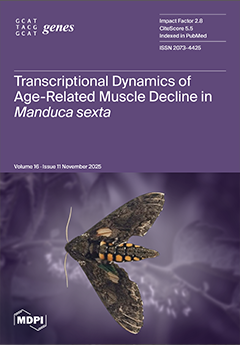
Cover Story (view full-size image): Muscle aging is a multifactorial process characterized by progressive disruption of system-wide physiological homeostasis. Sarcopenia, the age-related loss of muscle mass and function, impairs mobility across metazoans. The hawk moth (Manduca sexta) serves as a powerful model due to its short, defined lifespan and flight muscle analogy to vertebrate skeletal muscle. To elucidate the dynamic molecular mechanisms underlying muscle aging, we performed high-resolution time-series RNA sequencing on flight muscle from early adulthood to advanced age. Our analysis revealed transcriptional remodeling in pathways regulating mitochondrial respiration, oxidative stress response, and proteostasis. These findings highlight conserved signatures of muscle aging and establish M. sexta as a complementary model for studying muscle aging. View this paper
  • Issues are regarded as officially published after their release is announced to the table of contents alert mailing list.
  • You may sign up for e-mail alerts to receive table of contents of newly released issues.
  • PDF is the official format for papers published in both, html and pdf forms. To view the papers in pdf format, click on the "PDF Full-text" link, and use the free Adobe Reader to open them.
Order results
Result details
Section
Select all
Export citation of selected articles as:
26 pages, 1797 KB  
Review
Reprogramming Fibrosis: How Protein PTMs Reshape the IPF Proteome
by Yunze Li, Wei Kong, Hanqi Zhang, Xinfeng Wei, Junxuan Yi, Mingwei Wang, Shunzi Jin and Duo Yu
Genes 2025, 16(11), 1392; https://doi.org/10.3390/genes16111392 - 20 Nov 2025
Viewed by 606
Abstract
Idiopathic pulmonary fibrosis (IPF) is a fatal and progressive lung disorder. Its pathological process involves persistent epithelial damage, ongoing inflammation, and dysregulated tissue repair. Currently, there are no effective treatment methods to improve patient survival. However, post-translational modifications (PTMs) have gradually garnered widespread [...] Read more.
Idiopathic pulmonary fibrosis (IPF) is a fatal and progressive lung disorder. Its pathological process involves persistent epithelial damage, ongoing inflammation, and dysregulated tissue repair. Currently, there are no effective treatment methods to improve patient survival. However, post-translational modifications (PTMs) have gradually garnered widespread attention. They are the processes by which various chemical groups are added to or removed from proteins’ amino acid side chains or the N- or C-terminal ends of the polypeptide chain following synthesis. Additionally, they can regulate the energy supply of cells, regulate the cell cycle, and affect important signaling pathways such as TGF-β. This review systematically summarizes different categories of PTMs, organizes the PTMs involved in various injury stages of IPF, outlines the roles of different cells throughout the process, and analyzes future clinical diagnosis and treatment strategies as well as intervention targets for IPF, providing guiding significance for the systematic intervention of IPF in the future. Full article
(This article belongs to the Special Issue Genetics and Genomics of Lung Diseases)
Show Figures

Graphical abstract

2 pages, 568 KB  
Correction
Correction: Marszałek-Kruk et al. Treacher Collins Syndrome: Genetics, Clinical Features and Management. Genes 2021, 12, 1392
by Bożena Anna Marszałek-Kruk, Piotr Wójcicki, Krzysztof Dowgierd and Robert Śmigiel
Genes 2025, 16(11), 1391; https://doi.org/10.3390/genes16111391 - 20 Nov 2025
Viewed by 232
Abstract
Error in Figure [...] Full article
(This article belongs to the Section Genetic Diagnosis)
Show Figures

Figure 2

11 pages, 2005 KB  
Article
High Allelic Heterogeneity in Kazakhstani Patients with Neurofibromatosis Type 1: Results from the First Molecular Study
by Zhannat Idrissova, Farida Rakhimbekova, Madina Orazgaliyeva, Madina Zhaksybek, Kristina Kovaleva, Saltanat Abdikerim, Aizhan Ormankyzy and Petr Vasiluev
Genes 2025, 16(11), 1390; https://doi.org/10.3390/genes16111390 - 19 Nov 2025
Viewed by 416
Abstract
Background/Objectives: This study presents the first molecular characterization of NF1 gene variants in Kazakhstani patients, expanding regional understanding of neurofibromatosis type 1 (NF1). The NF1 gene encodes neurofibromin, a tumor suppressor protein that regulates the MAPK signaling pathway; its inactivation results in [...] Read more.
Background/Objectives: This study presents the first molecular characterization of NF1 gene variants in Kazakhstani patients, expanding regional understanding of neurofibromatosis type 1 (NF1). The NF1 gene encodes neurofibromin, a tumor suppressor protein that regulates the MAPK signaling pathway; its inactivation results in NF1, a multisystem disorder with pigmentary and tumor manifestations. Methods: A total of 60 pediatric and young adult patients of University Clinic Aksai were selected based on Legius criteria and studied clinically; genetic variants of NF1 gene were determined with AmpliSeq for Illumina Myeloid Panel (next generation sequencing). Results: Pathogenic or likely pathogenic (with some variants of unknown significance) were detected in 58 of 60 (96.7%) patients. Among them, 27 (46.6%) carried point variants, 21 (36.2%) had genomic deletions, 3 (5.2%) had duplications, 3 (5.2%) insertions, and 4 (6.9%) had exon–intron splicing site variants. Notably, all patients with duplication insertions and splicing variants presented with plexiform neurofibromas. Conclusions: The study defines the first variant spectrum in a Kazakhstani population, confirming genotype–phenotype correlations consistent with European cohorts (l.). These data highlight the predominance of structural and splicing alterations in patients with plexiform neurofibromas and support the integration of molecular testing into clinical management of NF1 in Kazakhstan. Full article
(This article belongs to the Section Human Genomics and Genetic Diseases)
Show Figures

Figure 1

18 pages, 4030 KB  
Article
Integrated Bioinformatics and Machine Learning for Ascertainment and Validation of Biomarkers for Screening Breast Disease
by Qi Wang, Saisai Yang, Yao Zhang, Chengyu Piao, Xin Liu and Xiuhong Wu
Genes 2025, 16(11), 1389; https://doi.org/10.3390/genes16111389 - 18 Nov 2025
Viewed by 454
Abstract
Background: This research sought to screen potential biomarkers in diagnosing breast diseases and elucidating their immune-related mechanisms. Methods: Three datasets were attained from the Gene Expression Omnibus (GEO) database. LIMMA package and weighted gene co-expression network analysis (WGCNA) were used to ascertain differentially [...] Read more.
Background: This research sought to screen potential biomarkers in diagnosing breast diseases and elucidating their immune-related mechanisms. Methods: Three datasets were attained from the Gene Expression Omnibus (GEO) database. LIMMA package and weighted gene co-expression network analysis (WGCNA) were used to ascertain differentially expressed genes (DEGs) and key modules in benign breast disease (BBD) and breast cancer (BC). The intersecting genes underwent functional enrichment analysis. Three machine learning (ML) methods (encompassing LASSO regression, random forest, and support vector machine recursive feature elimination (SVM-RFE)) were implemented to select core genes. The diagnostic performance of the core genes was evaluated by comparing their expression levels, plotting receiver operating characteristic (ROC) curves, and constructing a Nomogram. The TCGA-BRCA dataset was used to estimate the prognostic capability of the core genes among individuals with BC. Finally, the IC infiltration was ascertained utilizing the CIBERSORT algorithm. Results: In total, 2579 DEGs were identified in BBD. WGCNA exhibited that the 1652 genes in green and pink modules were strongly correlated with BBD. In BC, 2742 DEGs were identified. The turquoise and red modules contained 7286 genes exhibiting strong correlations with BC. After intersecting, 41 common genes were obtained, which were predominantly enriched in immune and inflammation regulation pathways. Through integrated screening with three ML algorithms, Arrestin Domain Containing 1 (ARRDC1) and ATPase Sarcoplasmic/Endoplasmic Reticulum Ca2+ Transporting 2 (ATP2A2) were identified as core genes. The ROC curve exhibited that the AUC for the two genes was greater than 0.8. The calibration curve of the nomogram signified a strong alignment between the anticipated risk and detected results. Survival analysis in TCGA-BRCA showed that the high expression of the two genes exhibited a significantly positive association with unfavorable prognosis. Immune infiltration analysis further demonstrated the dysregulation of multiple immune cells in patient samples. Conclusions:ARRDC1 and ATP2A2 are strongly linked to BBD and BC. These findings might enhance our comprehension of the pathogenesis and progression of both BBD and BC, offering prospective biological biomarkers and therapeutic targets for clinical treatment. Full article
(This article belongs to the Section Bioinformatics)
Show Figures

Figure 1

13 pages, 1398 KB  
Article
Distinct Morphokinetic Signature of Human Embryos with Chromosomal Mosaicism
by Margarita Ruseva, Sophia Zlatanova, Stefka Nikolova, Teodora Tihomirova, Dimitar Parvanov, Rumiana Ganeva, Maria Handzhiyska, Jinahn Safir, Dimitar Metodiev, Maria Pancheva, Maria Serafimova, Blaga Rukova, Rada Staneva, Georgi Stamenov and Savina Hadjidekova
Genes 2025, 16(11), 1388; https://doi.org/10.3390/genes16111388 - 18 Nov 2025
Viewed by 490
Abstract
Objectives: This study aimed to determine whether chromosomal mosaicism in blastocysts is associated with a distinct morphokinetic signature. Methods: Preimplantation genetic testing for aneuploidy (PGT-A) was performed on 182 human embryos via trophectoderm biopsy on day 5 and analyzed by next-generation sequencing. Embryos [...] Read more.
Objectives: This study aimed to determine whether chromosomal mosaicism in blastocysts is associated with a distinct morphokinetic signature. Methods: Preimplantation genetic testing for aneuploidy (PGT-A) was performed on 182 human embryos via trophectoderm biopsy on day 5 and analyzed by next-generation sequencing. Embryos were classified as euploid (n = 55), mosaic (n = 39: 21 low-grade, 18 high-grade), or aneuploid (n = 88), of which 18 with concurrent mosaicism. Prior to biopsy, embryos were cultured in a time-lapse system (EmbryoScope), and 12 morphokinetic parameters were assessed, including pronuclei fading (tPNf), cleavage times (t2–t9), morula formation (tM), blastulation start (tSB), and full blastocyst formation (tB). These parameters were compared according to ploidy status. Results: Patients with euploid and mosaic embryos were comparable in terms of maternal age, ART indication and embryo quality (p > 0.05). In contrast, aneuploid embryos were obtained from older patients and had lower morphological grades. Mosaic embryos showed delayed tPNf (24.8 ± 6.5 vs. 22.8 ± 2.3 h, p = 0.03) and t2 (27.6 ± 6.6 vs. 25.4 ± 2.5 h, p = 0.02) compared to euploid embryos, mainly attributable to low-grade mosaic embryos. Whole-chromosome mosaicism, but not segmental mosaicism, was associated with delayed embryo development at several intermediate cleavage time points (t3, t4, t6, t7 and t9). Aneuploid embryos showed significant delays at later stages versus euploid embryos, particularly aneuploid embryos with mosaicism at t7 (56.6 ± 8.3 vs. 52 ± 5.6 h, p = 0.02), t8 (59.1 ± 9.6 vs. 54.8 ± 6.7 h, p = 0.04), tM (90.3 ± 7.7 vs. 83.6 ± 8.2 h, p = 0.006) and tB (113.0 ± 11.6 vs. 106.6 ± 8.9 h, p = 0.03). Conclusions: Mosaic embryos exhibit delays in early development (tPNf, t2) but reach later morphokinetic milestones at rates similar to euploid embryos. In contrast, aneuploid embryos, especially those with mosaicism, exhibit marked developmental delays at later stages (t7, t8, tM, tB). Full article
(This article belongs to the Section Human Genomics and Genetic Diseases)
Show Figures

Figure 1

19 pages, 7269 KB  
Article
MeJA Elicitation on Flavonoid Biosynthesis and Gene Expression in the Hairy Roots of Glycyrrhiza glabra L.
by Yutao Zhu, Bohan Wang, Bingyi Xue, Runqian Wang, Ganlin Tang, Tao Zhu, Mei Zhao, Taotao Li, Chunli Liao, Huamin Zhang, Dongxiao Liu, Jianhua Chen and Lianzhe Wang
Genes 2025, 16(11), 1387; https://doi.org/10.3390/genes16111387 - 18 Nov 2025
Viewed by 487
Abstract
Background/Objectives: Licorice (Glycyrrhiza glabra L.) is a highly important medicinal plant that is widely used in China owing to its active ingredients. Its main active components are flavonoids, including liquiritigenin, liquiritin and licochalcone A. The hairy roots (HRs) induced by Agrobacterium rhizogenes [...] Read more.
Background/Objectives: Licorice (Glycyrrhiza glabra L.) is a highly important medicinal plant that is widely used in China owing to its active ingredients. Its main active components are flavonoids, including liquiritigenin, liquiritin and licochalcone A. The hairy roots (HRs) induced by Agrobacterium rhizogenes are a commonly used chassis in synthetic biology to enhance the production of active compounds in medicinal plants. Methods: A biosynthesis system to acquire the active ingredients of G. glabra was established using an HR culture system. It employed a transcriptome analysis to identify the change in gene expression following treatment with methyl jasmonate (MeJA). Results: After 28 days of suspension culture, the biomass of HRs increased by approximately 34.5-fold and reached 1.83 g/100 mL flask. Treatment with MeJA significantly increased the contents of liquiritigenin, liquiritin, and glabridin in the HRs. The transcriptome data indicated that MeJA activated the flavonoid biosynthetic pathway genes in the HRs, which was largely consistent with the qRT-PCR results. Furthermore, the overexpression of the GgCHS6 gene substantially increased the content of flavonoids in HRs. Conclusions: Collectively, this study established an HR system to biosynthesize the active ingredients of G. glabra using metabolic engineering and genetic engineering techniques and provides several valuable candidate genes for further functional study. Full article
(This article belongs to the Section Plant Genetics and Genomics)
Show Figures

Figure 1

15 pages, 829 KB  
Article
The Role of VEGFA in T2DM-Nephropathy: A Genetic Association Study and Meta-Analysis
by Maria Tziastoudi, Christos Cholevas, Constantinos Zorz, Efthimios Dardiotis, Evangelia E. Tsironi, Maria Divani, Theodoros Eleftheriadis and Ioannis Stefanidis
Genes 2025, 16(11), 1386; https://doi.org/10.3390/genes16111386 - 17 Nov 2025
Viewed by 422
Abstract
Background: Diabetic nephropathy (DN) is a leading cause of end-stage renal disease, arising from complex interactions between metabolic, hemodynamic, and genetic factors. Among candidate genes, vascular endothelial growth factor A (VEGFA) has been extensively investigated due to its role in [...] Read more.
Background: Diabetic nephropathy (DN) is a leading cause of end-stage renal disease, arising from complex interactions between metabolic, hemodynamic, and genetic factors. Among candidate genes, vascular endothelial growth factor A (VEGFA) has been extensively investigated due to its role in endothelial homeostasis and microvascular complications of diabetes. The present study aimed to examine the association of VEGFA polymorphisms with DN in a Greek population and to perform a comprehensive meta-analysis of available evidence. Methods: A case–control study was conducted, including 197 patients with type 2 diabetes mellitus (T2DM) and DN, 155 diabetic patients without nephropathy, and 246 healthy controls. Ten tagging single-nucleotide polymorphisms (SNPs) across VEGFA were genotyped. Statistical analyses employed the generalized odds ratio (ORG). To contextualize these findings, a meta-analysis of 13 eligible studies was performed, encompassing 7520 cases, 6951 diabetic controls, and 1718 healthy controls. Results: Of the tested variants in the present case–control study, only rs833070 was significantly associated with DN across all comparisons. Nine VEGFA variants were evaluated in meta-analysis, with rs2146323 showing a protective effect (allelic OR = 0.85; 95% CI: 0.76–0.95), while other variants yielded non-significant associations. Conclusions: Overall, the data suggest that VEGFA polymorphisms, particularly rs833070 and rs2146323, contribute to genetic susceptibility to DN, although population-specific differences and heterogeneity across studies remain substantial. Future research in large, ethnically diverse cohorts with functional analyses is warranted to clarify causal mechanisms and enable the integration of VEGFA genetic variation into risk stratification and personalized therapeutic strategies. Full article
(This article belongs to the Special Issue Genetic Epidemiology of Multifactorial Diseases)
Show Figures

Figure 1

16 pages, 2800 KB  
Article
Structural Conservation and Transcriptional Plasticity of atp2a1 in Acrossocheilus fasciatus Under Temperature and Flow Acclimation
by Ye Chen, Yongyao Guo, Peihao Cai, Zhangjie Chu and Bo Zhao
Genes 2025, 16(11), 1385; https://doi.org/10.3390/genes16111385 - 15 Nov 2025
Viewed by 481
Abstract
Background/Objectives: The sarcoplasmic reticulum Ca2+-ATPase 1 (Atp2a1) is a key regulator of calcium homeostasis and muscle relaxation, yet its roles in fish remain poorly understood. Methods: We investigated the structural characteristics, phylogenetic relationships, and transcriptional regulation of atp2a1 in Acrossocheilus fasciatus [...] Read more.
Background/Objectives: The sarcoplasmic reticulum Ca2+-ATPase 1 (Atp2a1) is a key regulator of calcium homeostasis and muscle relaxation, yet its roles in fish remain poorly understood. Methods: We investigated the structural characteristics, phylogenetic relationships, and transcriptional regulation of atp2a1 in Acrossocheilus fasciatus, a stream-dwelling cyprinid sensitive to environmental fluctuations. Results: Bioinformatic analyses revealed that the 991-aa Atp2a1 protein is highly conserved among teleosts but exhibits divergence from mammals in the Cation_ATPase_N domain and transmembrane regions TM3, TM9, and TM10. Phylogenetic analysis clustered A. fasciatus most closely with Onychostoma macrolepis. Tissue-specific qRT-PCR demonstrated predominant expression in skeletal muscle, followed by testis, brain, heart, and gill. Promoter prediction identified binding motifs for KLF9, CTCF, MAZ, KLF5, ONECUT3, and HOXB13. qRT-PCR analysis showed that long-term cold acclimation (16 °C vs. 24 °C) markedly downregulated atp2a1 expression (ANOVA, p < 0.05, n = 3), whereas moderate flow velocity (2 BL·s−1 vs. 0 BL·s−1) significantly upregulated it (ANOVA, p < 0.05, n = 3). Alternative splicing analysis based on RNA-seq data further revealed a corresponding decrease and increase in skipped exon (SE) inclusion under cold and flow conditions, respectively (Padj < 0.05). Conclusions: These results further raise the possibility that the regulatory complexity of atp2a1 contributes to adaptation of teleosts under fluctuating environments. Full article
(This article belongs to the Section Bioinformatics)
Show Figures

Graphical abstract

23 pages, 4371 KB  
Article
Molecular Characterization and Functional Effect on Canine Peripheral Blood Mononuclear Cells of an Uncharacterized Major Egg Antigen EGR-01664 from Echinococcus granulosus
by Juncheng Huang, Xinwen Bo, Xuke Chen, Jiaxin Zhao, Jianan Zhao, Linying Wei, Yanyan Zhang, Yan Sun and Zhengrong Wang
Genes 2025, 16(11), 1384; https://doi.org/10.3390/genes16111384 - 14 Nov 2025
Viewed by 357
Abstract
Background: Cystic echinococcosis (CE) is a globally distributed zoonosis triggered by the larval stage of Echinococcus granulosus (E. granulosus), impacting humans and an extensive array of mammalian intermediate hosts. EGR-01664 is the major egg antigen of E. granulosus, but almost [...] Read more.
Background: Cystic echinococcosis (CE) is a globally distributed zoonosis triggered by the larval stage of Echinococcus granulosus (E. granulosus), impacting humans and an extensive array of mammalian intermediate hosts. EGR-01664 is the major egg antigen of E. granulosus, but almost nothing is currently known about the function of EGR-01664 from E. granulosus. Methods: This study aimed to investigate the E. granulosus EGR-01664 gene (GenBank ID: 36337379), and the recombinant EGR-01664 protein was expressed successfully. Next, the transcription of the EGR-01664 gene across various developmental stages of E. granulosus was analyzed. Its spatial expression patterns in adult worms and protoscoleces were characterized using both quantitative PCR (qPCR) and immunofluorescence assays. Furthermore, the immunomodulatory effects of rEGR-01664 on cell proliferation, nitric oxide production, and cytokine secretion were examined by co-culturing the recombinant protein with canine PBMCs. Results: The rEGR-01664 could be recognized by sera from dogs infected with E. granulosus. Immunofluorescence assay (IFA) localization revealed the protein’s presence in the epidermis of protoscoleces, the adult epidermis, and some parenchymal tissues. qPCR revealed that EGR-01664 mRNA levels were significantly higher in protoscoleces compared to adults (p < 0.0001). At a concentration of 20 μg/mL, rEGR-01664 could significantly activate the transcription and expression of IL-10, TGF-β1, IL-17A, and Bax in canine PBMCs. However, with an increase in concentration, it inhibited the expression of IFN-γ, Bcl-2, GSDMD, IL-18, and IL-1β. These results suggest that the EGR-01664 gene plays a crucial role in the development, parasitism, and reproduction of E. granulosus. In vitro studies have shown that rEGR-01664 protein regulates the immune regulation function of canine PBMCs, suggesting its potential as a vaccine adjuvant or immunotherapy target. Conclusions: EGR-01664 may modulate canine PBMC functions to regulate host immune responses, thereby facilitating our understanding of how E. granulosus EGR-01664 contributes to the mechanism of parasitic immune evasion. Full article
(This article belongs to the Section Animal Genetics and Genomics)
Show Figures

Figure 1

19 pages, 3237 KB  
Article
Genome-Wide Association Study and Candidate Gene Analysis of Seed Shattering Trait in Psathyrostachys juncea
by Yuru Lv, Lan Yun, Yixin Mu, Bohua Li, Xiaodi Jia and Miaomiao Jia
Genes 2025, 16(11), 1383; https://doi.org/10.3390/genes16111383 - 14 Nov 2025
Viewed by 448
Abstract
Background: Seed shattering enhances ecological adaptation in perennial grasses but severely limits harvestable seed yield in forage crops. Psathyrostachys juncea is an important perennial forage species in arid and cold regions, yet the genetic basis of its seed shattering remains largely unknown. Here [...] Read more.
Background: Seed shattering enhances ecological adaptation in perennial grasses but severely limits harvestable seed yield in forage crops. Psathyrostachys juncea is an important perennial forage species in arid and cold regions, yet the genetic basis of its seed shattering remains largely unknown. Here we asked which genomic regions and biological pathways underlie natural variation in seed shattering in P. juncea, and whether cellulose synthase (CESA)-mediated cell-wall formation contributes to abscission-zone strength. Results: We evaluated seed shattering in a diverse association panel of P. juncea across four environment–-year combinations and performed a genome-wide association study (GWAS) using genotyping-by-sequencing single-nucleotide polymorphism (SNP) markers. The analysis identified 36 significant SNP loci distributed on multiple chromosomes, consistent with a highly polygenic and environment-responsive architecture. Candidate-gene annotation highlighted pathways related to cell-wall biosynthesis, hormone signaling and sugar transport. Notably, in the BT23SHT environment a cluster of association signals on chromosome 3D co-localized with several genes annotated as cellulose synthase (CESA). Abscission-zone transcriptome profiling and qRT-PCR at 7, 14, 21 and 28 days after heading revealed that CESA genes, including TraesCS3D02G010100.1 located near the lead SNP Chr3D_3539055, showed higher early expression in low-shattering lines and a decline toward baseline in high-shattering lines. Comparative analyses placed P. juncea CESA proteins within a broadly conserved but lineage-divergent framework among grasses. Conclusion: Together, these results define the genetic landscape of seed shattering in P. juncea and nominate cellulose-biosynthetic genes on chromosome 3D as promising targets for marker-assisted selection of low-shattering, high-seed-yield forage cultivars. Full article
(This article belongs to the Section Molecular Genetics and Genomics)
Show Figures

Figure 1

16 pages, 1499 KB  
Article
A Plot Twist: When RNA Yields Unexpected Findings in Paired DNA-RNA Germline Genetic Testing
by Heather Zimmermann, Terra Brannan, Colin Young, Jesus Ramirez Castano, Carolyn Horton, Alexandra Richardson, Bhuvan Molparia and Marcy E. Richardson
Genes 2025, 16(11), 1382; https://doi.org/10.3390/genes16111382 - 13 Nov 2025
Viewed by 382
Abstract
Background: Germline genetic variants impacting splicing are a frequent cause of disease. The clinical interpretation of such variants is challenging for many reasons including the immense complexity of splicing mechanisms. While recent advances in splicing algorithms have improved the accuracy of splice prediction, [...] Read more.
Background: Germline genetic variants impacting splicing are a frequent cause of disease. The clinical interpretation of such variants is challenging for many reasons including the immense complexity of splicing mechanisms. While recent advances in splicing algorithms have improved the accuracy of splice prediction, predicting the nature and abundance of aberrant splicing remains challenging. As RNA testing becomes more mainstream in the clinical diagnostic setting, the complexities of interpretation are coming to light. Methods: Data from patients undergoing concurrent DNA and RNA testing were retrospectively reviewed for unusual splicing impacts to underscore some of these complexities and serve as exemplars in how to avoid pitfalls in the interpretation of sequence variants. Results: Seven rare variants with unusual splicing impacts are presented: a variant at a consensus donor nucleotide position lacking a splice impact (NF1 c.888+2T>C); a mid-exonic missense variant creating a novel donor site and a cryptic acceptor site resulting in pseudo-intronization (BRIP1 c.727A<G p.Ile243Val); one variant creating a spliceosome switch from U12 to U2 (LZTR1 c.2232G>A p.Ala744Ala); two variants that would be expected to result in nonsense-mediated-mRNA-decay triggering splicing impacts that obviated nonsense-mediated-decay (APC c.1042C>T p.Arg348Ter and BRCA2 c.6762del; c.6816_6841+1534del); and two variants causing splicing impacts through pyrimidine tract optimization (NF1 c.5750-184_5750-178dup and ATM c.3480G>T p.Val1160Val). Conclusions: Paired DNA and RNA testing revealed unexpected splice events altering variant interpretation, expanding our knowledge of clinically important splicing mechanisms and highlighting the benefit of RNA testing. Full article
Show Figures

Figure 1

13 pages, 966 KB  
Case Report
Clinical and Molecular Clues to Diagnosing Hereditary Hyperferritinemia-Cataract Syndrome: Case Report and Literature Review
by Barbora Ludikova, Lucie Sochorcova, Damjan Jaksic, Katarina Hlusickova Kapralova and Monika Horvathova
Genes 2025, 16(11), 1381; https://doi.org/10.3390/genes16111381 - 13 Nov 2025
Viewed by 477
Abstract
Background: Hereditary hyperferritinemia-cataract syndrome (HHCS) is a rare autosomal dominant disorder characterized by persistently elevated serum ferritin and early-onset bilateral cataracts in the absence of systemic iron overload. It is caused by pathogenic variants in the iron-responsive element (IRE) of the FTL [...] Read more.
Background: Hereditary hyperferritinemia-cataract syndrome (HHCS) is a rare autosomal dominant disorder characterized by persistently elevated serum ferritin and early-onset bilateral cataracts in the absence of systemic iron overload. It is caused by pathogenic variants in the iron-responsive element (IRE) of the FTL gene, leading to dysregulated L-ferritin synthesis. Methods: We evaluated a 12-year-old Czech girl with markedly elevated serum ferritin identified incidentally during workup for abdominal pain. Clinical assessment included biochemical, radiological, ophthalmological, and genetic testing of the proband and available family members. Results: Magnetic resonance imaging excluded systemic iron overload, while ophthalmological evaluation revealed bilateral cataracts. Family history indicated multiple affected relatives across three generations. Genetic testing confirmed a heterozygous FTL c.-168G>C variant. Additional screening for common HFE variants revealed heterozygous H63D in several family members, with no impact on ferritin or hepcidin levels. Beyond this case, we provide a comprehensive review of HHCS, including molecular mechanisms, an updated overview of reported FTL mutations, and ophthalmological features that distinguish HHCS cataracts from other congenital cataracts. Conclusions: This report underscores the translational relevance of combining molecular diagnostics, clinical evaluation, and family screening to improve recognition and management of HHCS, and to prevent misdiagnosis and unnecessary iron-depletion therapy. Full article
(This article belongs to the Section Genetic Diagnosis)
Show Figures

Figure 1

16 pages, 3641 KB  
Article
SLC30A3 as a Zinc Transporter-Related Biomarker and Potential Therapeutic Target in Alzheimer’s Disease
by Ruyu Bai, Zhiyun Cheng and Yong Diao
Genes 2025, 16(11), 1380; https://doi.org/10.3390/genes16111380 - 13 Nov 2025
Viewed by 591
Abstract
Background: Alzheimer’s disease (AD) is a progressive neurodegenerative disorder with unclear pathogenic mechanisms. Dysregulated zinc metabolism contributes to AD pathology. This study aimed to identify zinc metabolism-related hub genes to provide potential biomarkers and therapeutic targets for AD. Methods: We performed an integrative [...] Read more.
Background: Alzheimer’s disease (AD) is a progressive neurodegenerative disorder with unclear pathogenic mechanisms. Dysregulated zinc metabolism contributes to AD pathology. This study aimed to identify zinc metabolism-related hub genes to provide potential biomarkers and therapeutic targets for AD. Methods: We performed an integrative analysis of multiple transcriptomic datasets from AD patients and normal controls. Differentially expressed genes and weighted gene co-expression network analysis (WGCNA) were combined to identify hub genes. We then conducted Gene Set Enrichment Analysis (GSEA), immune cell infiltration analysis (CIBERSORT), and receiver operating characteristic (ROC) curve analysis to assess the hub gene’s biological function, immune context, and diagnostic performance. Drug-gene interactions were predicted using the DrugBank database. Results: We identified a single key zinc transporter–related hub gene, SLC30A3, which was significantly downregulated in AD and demonstrated potential diagnostic value (AUC 0.70–0.80). Lower SLC30A3 expression was strongly associated with impaired synaptic plasticity (long-term potentiation, long-term depression, calcium signaling pathway, and axon guidance), mitochondrial dysfunction (the citrate cycle and oxidative phosphorylation), and pathways common to major neurodegenerative diseases (Parkinson’s disease, AD, Huntington’s disease, and amyotrophic lateral sclerosis). Furthermore, SLC30A3 expression correlated with specific immune infiltrates, particularly the microglia-related chemokine CX3CL1. Zinc chloride and zinc sulfate were identified as potential pharmacological modulators. Conclusions: Our study systematically identifies SLC30A3 as a novel biomarker in AD, linking zinc dyshomeostasis to synaptic failure, metabolic impairment, and neuroimmune dysregulation. These findings offer a new basis for developing targeted diagnostic and therapeutic strategies for AD. Full article
(This article belongs to the Section Neurogenomics)
Show Figures

Figure 1

13 pages, 2306 KB  
Article
Inflammation-Mediated Lipid Metabolism in Endocrine Autoimmune Diseases: A Genetic Distance-Based PRS Approach Integrating HLA Region
by Fenghuixue Liu, Yifei Ren, Wenhua Liu, Qi Chen, Ping Yin and Peng Wang
Genes 2025, 16(11), 1379; https://doi.org/10.3390/genes16111379 - 12 Nov 2025
Viewed by 515
Abstract
Background: Endocrine autoimmune diseases (AIDs) exhibit special polygenic characteristics in human leucocyte antigen (HLA) region. Current understanding of their association with lipid metabolism remains constrained by imprecise polygenic risk score (PRS) modeling. Advanced analytical approaches are needed to elucidate the association between [...] Read more.
Background: Endocrine autoimmune diseases (AIDs) exhibit special polygenic characteristics in human leucocyte antigen (HLA) region. Current understanding of their association with lipid metabolism remains constrained by imprecise polygenic risk score (PRS) modeling. Advanced analytical approaches are needed to elucidate the association between genetic susceptibility and lipid metabolic dysregulation. Methods: We proposed a genetic distance-based clumping gPRS to account for linkage disequilibrium in the HLA region. gPRS and pathway gPRS were constructed for individuals diagnosed with type I diabetes (T1D), Graves’ disease (GD), Hashimoto thyroiditis (HT) and Addison’s disease (AD) in the UK Biobank, with sex considered as a stratification factor. Latent correlations between gPRS and phenotypes were explored using Kendall’s tau test, two-trait LD score regression (LDSC) and gene annotation. Results: Lipid metabolism served an important function through immune and inflammatory biomarkers across multiple traits. Males with low genetic risk tended to have lower high-density lipoprotein cholesterol level, while the correlation presented the opposite pattern in females. Increased genetic susceptibility to AIDs was associated with elevated levels of low-density lipoprotein cholesterol, triglycerides in low-density lipoprotein (LDL) and very-low-density lipoprotein (VLDL) across all traits. Moreover, levels of polyunsaturated fatty acids, including omega-3 and omega-6, decreased with higher PRS in males and females, while those of monounsaturated fatty acids exhibited an increasing trend. Conclusion: Our study constructed more precise polygenic risk scores of AIDs, highlighting inflammation-mediated lipid metabolism as a potential pathogenic mechanism in endocrine AIDs, offering valuable insights into shared etiology for future comprehensive investigations. Full article
(This article belongs to the Section Human Genomics and Genetic Diseases)
Show Figures

Graphical abstract

14 pages, 265 KB  
Article
The G Allele and GG Genotype of the Junctional Cadherin 5 Associated (JCAD) Is a Biomarker Predicting Myocardial Infarction in Slovenian Subjects with Type 2 Diabetes Mellitus
by Miha Tibaut and Danijel Petrovič
Genes 2025, 16(11), 1378; https://doi.org/10.3390/genes16111378 - 11 Nov 2025
Viewed by 433
Abstract
Background: Patients with type 2 diabetes mellitus (T2DM) have a two- to fourfold higher risk of myocardial infarction (MI), yet genetic determinants of this excess risk remain incompletely defined. The JCAD (junctional cadherin 5 associated; formerly KIAA1462) locus has been implicated in [...] Read more.
Background: Patients with type 2 diabetes mellitus (T2DM) have a two- to fourfold higher risk of myocardial infarction (MI), yet genetic determinants of this excess risk remain incompletely defined. The JCAD (junctional cadherin 5 associated; formerly KIAA1462) locus has been implicated in coronary artery disease through genome-wide association studies, but data in diabetic populations are scarce. Objectives: To assess whether the rs3739998 polymorphism of JCAD is associated with MI in Slovenian subjects with T2DM and to explore its relationship with coronary disease burden and coronary artery calcium (CAC). Methods: We performed a retrospective cross-sectional association study of 1471 Slovenian subjects with T2DM: 387 with prior MI and 1084 without clinical evidence of coronary artery disease. Genotyping for JCAD rs3739998 was performed using a fluorescence-based competitive allele-specific PCR (KASPar). A coronary computed tomographic angiography (CCTA) substudy (n = 146) evaluated the number of diseased coronary arteries, stenosis severity, and CAC score. Results: The GG genotype was more frequently observed in MI cases compared to controls in unadjusted analysis (OR 1.37; p = 0.05) but association was lost with adjustment for confounders (GG vs. CC, aOR 1.63, p = 0.09). The G allele was also more prevalent among cases (OR 1.18; p = 0.05, unadjusted analysis). In the CCTA substudy, no significant associations were observed between rs3739998 and the number of diseased vessels, stenosis grade, or CAC. Conclusions: In a Slovenian T2DM cohort, the JCAD rs3739998 G allele and GG genotype showed a nominal association with prior MI that did not persist after multivariable adjustment. There was no clear relationship with anatomic disease burden or CAC, underscoring the need for replication in larger cohorts and functional studies to clarify the mechanism and clinical utility. Full article
(This article belongs to the Section Human Genomics and Genetic Diseases)
15 pages, 569 KB  
Systematic Review
Genetic Assessment and Clinical Correlates in Severe Hypertriglyceridemia: A Systematic Review
by Carmine De Luca, Paola Ciciola, Guido D’Errico, Maria Donata Di Taranto, Giuliana Fortunato, Carina Gross, Jonathan Garn, Gabriella Iannuzzo, Matteo Di Minno and Ilenia Calcaterra
Genes 2025, 16(11), 1377; https://doi.org/10.3390/genes16111377 - 11 Nov 2025
Viewed by 775
Abstract
Background: Severe hypertriglyceridemia (SHTG) is associated with acute pancreatitis, metabolic dysfunction, and increased cardiovascular risk. Its genetic architecture ranges from rare biallelic variants causing familial chylomicronemia syndrome (FCS) to more prevalent polygenic or multifactorial chylomicronemia syndromes (MCS). Methods: We systematically reviewed [...] Read more.
Background: Severe hypertriglyceridemia (SHTG) is associated with acute pancreatitis, metabolic dysfunction, and increased cardiovascular risk. Its genetic architecture ranges from rare biallelic variants causing familial chylomicronemia syndrome (FCS) to more prevalent polygenic or multifactorial chylomicronemia syndromes (MCS). Methods: We systematically reviewed scientific literature up to 2025 for studies reporting genetic data, clinical features, or therapeutic outcomes in adults with triglycerides (TG) ≥ 500 mg/dL. Extracted data were synthesized for genotype, polygenic risk score (PRS), TG levels, metabolic comorbidities, hepatic steatosis, pancreatitis, and treatment response. Results: Ten studies (n = 2521) were included. FCS due to biallelic LPL, APOC2, GPIHBP1, or LMF1 variants accounted for <5% of cases and showed extreme TG elevations (>2800 mg/dL) with pancreatitis prevalence (>70%). APOA5, APOC3, and APOB variants were associated with intermediate TG levels and high rates of metabolic dysfunction-associated steatotic liver disease (MASLD). Polygenic hypertriglyceridemia represented ~70–80% of cases, with TG ≈ 2200 mg/dL and pancreatitis prevalence 15–20%, largely modulated by metabolic triggers. MASLD was present in >70% of polygenic cases, supporting a “two-hit” model where hepatic overproduction of TG-rich lipoproteins amplifies TG excess. Interventional trials demonstrated TG reductions with APOC3 antisense therapy (70–80%) and ANGPTL3 inhibition (50–55%), while GLP-1RA significantly reduced hepatic fat (30–35%) and resolved NASH in up to 59% of patients. Conclusions: SHTG displays a genotype–phenotype gradient: FCS is linked to recurrent pancreatitis, whereas polygenic/MCS forms are closely associated with MASLD and metabolic dysfunction. These findings support a precision-medicine approach integrating genetic testing and PRS-guided strategies—prioritizing APOC3/ANGPTL3 inhibitors for FCS and combined TG-lowering plus metabolic therapies for MCS—to reduce pancreatitis recurrence and liver disease. Full article
(This article belongs to the Section Genetic Diagnosis)
Show Figures

Figure 1

16 pages, 2526 KB  
Article
Genome-Wide Screening for MYB Transcription Factors Involved in Flavonoid Glycoside Biosynthesis in Carthamus tinctorius L.
by Xiaohan Yu, Bin Xian, Lijun Peng, Xunjian Wu, Juncheng Zhang, Yuanyuan Li, Yueying Hu and Jiang Chen
Genes 2025, 16(11), 1376; https://doi.org/10.3390/genes16111376 - 11 Nov 2025
Viewed by 455
Abstract
Background: Safflower (Carthamus tinctorius L.) is a multipurpose crop with both medicinal and economic values. Flavonoid glycosides are the core bioactive components of this species for preventing and treating cardiovascular and cerebrovascular diseases, yet their specific regulatory mechanisms remain insufficiently systematically elucidated. [...] Read more.
Background: Safflower (Carthamus tinctorius L.) is a multipurpose crop with both medicinal and economic values. Flavonoid glycosides are the core bioactive components of this species for preventing and treating cardiovascular and cerebrovascular diseases, yet their specific regulatory mechanisms remain insufficiently systematically elucidated. Methods: Based on the whole-genome data of Carthamus tinctorius L., key MYB transcription factors regulating the flavonoid glycoside biosynthesis pathway in safflower were screened and verified via MeJA treatment. Results: A total of 202 MYB transcription factors were identified, and 18 candidate genes were screened out. Further analysis showed that four genes (HH_019113, HH_009268, HH_009443 and HH_029380) were extremely significantly positively correlated with flavonid glycoside biosynthesis genes. After MeJA treatment, RT-qPCR analysis showed that their expression levels were significantly different. Conclusions: With the objective of elucidating the biosynthesis mechanism of flavonoid glycosides in safflower and exploring key regulatory genes, this study identified four MYB transcription factors that regulate flavonoid glycoside biosynthesis, providing new insights into elucidating the biosynthesis mechanism of flavonoid glycosides in safflower and offering targets for the construction of its molecular regulatory network and the improvement of medicinal quality and molecular breeding technology Full article
(This article belongs to the Section Plant Genetics and Genomics)
Show Figures

Figure 1

20 pages, 354 KB  
Review
Analysis of Human Degraded DNA in Forensic Genetics
by Irena Zupanič Pajnič
Genes 2025, 16(11), 1375; https://doi.org/10.3390/genes16111375 - 11 Nov 2025
Cited by 1 | Viewed by 1317
Abstract
Upon an organism’s death, enzymatic DNA repair ceases, exposing the genome to destructive factors such as free cellular nucleases and proliferating microorganisms, which can cause DNA loss. DNA preservation is highly dependent on environmental conditions, and less favorable environments accelerate degradation. Despite this, [...] Read more.
Upon an organism’s death, enzymatic DNA repair ceases, exposing the genome to destructive factors such as free cellular nucleases and proliferating microorganisms, which can cause DNA loss. DNA preservation is highly dependent on environmental conditions, and less favorable environments accelerate degradation. Despite this, advanced extraction and analytical methods now enable the study of poorly preserved and degraded DNA. DNA typing is a foundation of forensic genomics, enabling the identification of individuals and the individualization of biological evidence through the generation of unique genetic profiles. Although DNA is relatively stable, environmental exposure initiates its degradation into progressively shorter fragments, complicating analysis. The extent of DNA preservation in biological evidence depends on numerous factors, and this review focuses on the environmental factors—including temperature, humidity, ultraviolet radiation, pH, chemical agents, and microbial activity—as the most influential variables. In samples with degraded DNA, the maximum amplicon length achievable through polymerase chain reaction (PCR) is inherently limited. This review discusses genetic markers and analytical strategies improvements that enable the examination of highly degraded samples, particularly when conventional short tandem repeat (STR) typing fails. In these situations, successful identification requires targeting short DNA fragments, which are more likely to persist. Single-nucleotide polymorphisms (SNPs) are a valuable alternative, as their high allelic variability and short amplicon requirements make them more amenable to amplification from fragmented templates than STRs. Advances in next-generation sequencing (NGS) technologies have further enhanced this capacity by enabling high-resolution SNP profiling, thereby improving outcomes in challenging forensic cases. Full article
(This article belongs to the Special Issue Advances and Challenges in Forensic Genetics)
12 pages, 1619 KB  
Article
Transcript Patterns of Bovine CYP21A2 and Its Pseudogene in Adrenal and Ovarian Tissues
by Jakub Wozniak, Monika Stachowiak, Marek Switonski and Joanna Nowacka-Woszuk
Genes 2025, 16(11), 1374; https://doi.org/10.3390/genes16111374 - 11 Nov 2025
Viewed by 380
Abstract
Background: The cytochrome P450 family 21 subfamily A member 2 gene (CYP21A2) encodes 21-hydroxylase, a key enzyme in adrenal steroid biosynthesis. Despite its physiological importance, the diversity of CYP21A2 transcript variants and their tissue-specific expression in domestic animals, including cattle, remains [...] Read more.
Background: The cytochrome P450 family 21 subfamily A member 2 gene (CYP21A2) encodes 21-hydroxylase, a key enzyme in adrenal steroid biosynthesis. Despite its physiological importance, the diversity of CYP21A2 transcript variants and their tissue-specific expression in domestic animals, including cattle, remains largely unexplored. This study aimed to characterize CYP21A2 transcription in adrenal glands and ovaries and assess the potential transcriptional activity of its pseudogene, CYP21A1P. Methods: CYP21A2 transcription was investigated in adrenal and ovarian tissues of 12 healthy cows using semi-quantitative PCR and Sanger sequencing. Real-time PCR was performed to confirm expression levels. Melting curve analysis and electrophoresis were used to validate distinct amplicons corresponding to different transcript variants. Extended amplicons were sequenced to identify transcripts corresponding to reference sequences and potential pseudogene products. Results: A single transcript variant (NM_001013596.1) was consistently detected in adrenal glands, whereas ovaries expressed two variants: NM_001013596.1 and XM_024983378.2. Semi-quantitative analysis showed significantly higher CYP21A2 expression in adrenal glands compared to ovaries (p < 0.01). In ovarian samples, the NM_001013596.1 variant was more abundant than the XM_024983378.2 (p < 0.01). Sanger sequencing revealed two products matching CYP21A2 reference transcripts and an additional, longer product containing sequence motifs specific to the pseudogene CYP21A1P, indicating its transcriptional activity. Conclusions: These results provide the first evidence of tissue-specific expression and differential abundance of CYP21A2 transcript variants in cattle and suggest the transcription of the CYP21A1P pseudogene. The findings reveal the complexity of CYP21A2 expression in steroidogenic tissues and suggest potential regulatory roles for transcript and pseudogene variants in bovine physiology. Full article
(This article belongs to the Section Animal Genetics and Genomics)
Show Figures

Figure 1

23 pages, 460 KB  
Systematic Review
Human Breast Milk miRNAs: Investigation of Association Between Breastfeeding Children and Maternal Obesity in Obesity Development in Offspring
by Marina Chondrogianni, Maria Lithoxopoulou, Athina Ververi, Alexandros Lampropoulos, Alexandros Sotiriadis and Eystratios Kolibianakis
Genes 2025, 16(11), 1373; https://doi.org/10.3390/genes16111373 - 11 Nov 2025
Viewed by 635
Abstract
Background/Objectives: Human breast milk is a mammary gland secretion with a dynamic composition, containing important bioactive factors for infant growth. Epigenetic factors, like microRNAs, are found in breast milk and can regulate gene expression and, thus, infant growth. Obesity is, among others, a [...] Read more.
Background/Objectives: Human breast milk is a mammary gland secretion with a dynamic composition, containing important bioactive factors for infant growth. Epigenetic factors, like microRNAs, are found in breast milk and can regulate gene expression and, thus, infant growth. Obesity is, among others, a major global health concern with long-term consequences, making its prevention during early life a public health priority. Maternal lifestyle factors, including diet and body weight status, may influence infant growth patterns and susceptibility to obesity. The aim of this review is to explore the hypothesis that miRNA content in breast milk might be influenced by maternal obesity, eventually affecting the obesity risk in offspring. Methods: This systematic review was carried out in line with the PRISMA 2020 statement and included observational (cohort) studies that met the inclusion criteria and compare the expression of miRNAs in OW/OB lactating mothers and associate this to the obesity development in the offspring. Results: According to the included studies, the most common miRNAs are miR-148a, miR-30 family, and miR-let7 family, with miR-30b and miR-let7a among the most discussed that participate in adipogenesis. Some of these miRNAs secreted in breast milk pass on a genetic predisposition for obesity to the next generation, while others provide a protective role against obesity in the offspring. Conclusions: Eventually, even though individual miRNAs may fluctuate, the overall miRNA profile remains stable. The findings underscore the importance of balanced maternal nutrition and optimal health during lactation, both for supporting healthy infant development and for potentially reducing the risk of obesity later in life. Full article
(This article belongs to the Section RNA)
Show Figures

Graphical abstract

12 pages, 572 KB  
Article
Pharmacogenetic Analysis of TPMT and NUDT15 in a European Pediatric Cohort with IBD and Autoimmune Diseases: Frequency Data and Clinical Relevance
by Anna Pau, Ilaria Galliano, Alice Ponte, Anna Clemente, Maddalena Dini, Cristina Calvi, Paola Montanari, Antonio Pizzol, Stefano Gambarino, Pier Luigi Calvo and Massimiliano Bergallo
Genes 2025, 16(11), 1372; https://doi.org/10.3390/genes16111372 - 11 Nov 2025
Viewed by 662
Abstract
Background/Objectives: Thiopurines remain a cornerstone in the management of inflammatory bowel disease (IBD) and gastrointestinal immune diseases but are associated with significant interindividual variability in efficacy and toxicity, mainly influenced by polymorphisms in Thiopurine S-methyltransferase TPMT and Nudix Hydrolase 15 NUDT15. This study [...] Read more.
Background/Objectives: Thiopurines remain a cornerstone in the management of inflammatory bowel disease (IBD) and gastrointestinal immune diseases but are associated with significant interindividual variability in efficacy and toxicity, mainly influenced by polymorphisms in Thiopurine S-methyltransferase TPMT and Nudix Hydrolase 15 NUDT15. This study aimed to assess the frequency of TPMT and NUDT15 variants in a pediatric cohort and evaluate their clinical impact to support a pharmacogenetic-guided approach to thiopurine therapy. Methods: Eighty-three pediatric patients with IBD and other autoimmune diseases were genotyped for clinically relevant TPMT and NUDT15 variants using two HRM-PCR assays and were confirmed with sequencing. Variant frequencies were compared to expected population data, and clinical records were reviewed to assess thiopurine dosing, tolerance, and adverse events. Results: Among the cohort, six carried heterozygous TPMT variants *1/*3A, while 2 carried the NUDT15 *1/*9 diplotype, with frequencies higher than expected. Among patients with TPMT variant alleles, some needed dose reductions or treatment discontinuation due to adverse effects, while others tolerated standard dosing without significant issues. Notably, no significant differences in adverse reactions were observed between NUDT15 *1/*9 carriers and wild-type patients. Conclusions: Our results confirm the clinical relevance of TPMT and NUDT15 genotyping to personalize thiopurine therapy in pediatric IBD. Routine implementation of rapid genetic testing, combined with therapeutic drug monitoring and a structured management algorithm, may optimize treatment outcomes and minimize preventable toxicity. Full article
(This article belongs to the Section Human Genomics and Genetic Diseases)
Show Figures

Figure 1

15 pages, 2531 KB  
Article
Germline Variant Call Accuracy in Whole Genome Sequence Data from Canine Formalin-Fixed Paraffin-Embedded Tissue Samples
by Vidhya Jagannathan and Tosso Leeb
Genes 2025, 16(11), 1371; https://doi.org/10.3390/genes16111371 - 11 Nov 2025
Viewed by 440
Abstract
Background/Objectives: Fresh frozen (FF) samples are routinely used to isolate high-molecular-weight intact genomic DNA. However, when FF samples are not available, archived formalin-fixed paraffin-embedded (FFPE) tissue samples often represent the only available material in clinical research. Due to formaldehyde-induced degradation of nucleic acids [...] Read more.
Background/Objectives: Fresh frozen (FF) samples are routinely used to isolate high-molecular-weight intact genomic DNA. However, when FF samples are not available, archived formalin-fixed paraffin-embedded (FFPE) tissue samples often represent the only available material in clinical research. Due to formaldehyde-induced degradation of nucleic acids they pose special challenges for genetic investigations. In this study we compare whole-genome sequencing results on intact DNA versus fragmented DNA derived from FFPE samples of three dogs. Methods: We prepared matched libraries from FF and FFPE samples of three dogs affected by an inherited disease, EFNB3-related congenital mirror movement disorder 1 (CMM1). Paired-end short-read sequencing data were obtained on an Illumina sequencer and analyzed with adapted workflows for FF or FFPE data, respectively. Results: The data between FF and FFPE samples were largely consistent. FF data showed a superior variant call accuracy, as expected. However, the data quality from the FFPE samples was sufficient to correctly identify the causal variant in EFNB3. Conclusions: This pilot study demonstrates the feasibility of using FFPE samples from dogs for whole-genome sequencing and the detection of germline variants. Using FFPE samples in the analysis of suspected inherited diseases in domestic animals may represent a valuable approach in veterinary genetics if no other samples are available. Full article
(This article belongs to the Special Issue Advances in Veterinary Genetics and Genomics)
Show Figures

Figure 1

24 pages, 27293 KB  
Article
Canine Neuronal Ceroid Lipofuscinosis-like Disorder Associated with Sequence Variants in AP3B1 and TRAPPC9
by Alexander Then, Rebecca Welly, Garrett Bullock, Lucie Chevallier and Martin L. Katz
Genes 2025, 16(11), 1370; https://doi.org/10.3390/genes16111370 - 11 Nov 2025
Viewed by 595
Abstract
Background/Objectives: A Petit Bleu de Gascogne (PBDG) dog presented with a progressive neurological disorder characterized by hind-limb weakness, anxiety and hallucinatory episodes, lip smacking, progressive vision loss, muscle atrophy, and ataxia. Magnetic resonance imaging revealed diffuse brain atrophy. The dog was euthanized at [...] Read more.
Background/Objectives: A Petit Bleu de Gascogne (PBDG) dog presented with a progressive neurological disorder characterized by hind-limb weakness, anxiety and hallucinatory episodes, lip smacking, progressive vision loss, muscle atrophy, and ataxia. Magnetic resonance imaging revealed diffuse brain atrophy. The dog was euthanized at approximately 23 months of age due to the progression of neurological signs. A study was undertaken to identify the molecular genetic basis of the disorder in this dog. Methods: Microscopic analyses were performed to characterize the disease pathology and whole-genome sequencing was performed to identify the molecular genetic basis of the disorder. Results: The proband exhibited pronounced accumulations of autofluorescent intracellular inclusions in the brain, retina, and heart with ultrastructural appearances similar to those of lysosomal storage bodies that accumulate in the neuronal ceroid lipofuscinosis (NCLs), a group of progressive neurodegenerative disorders. Whole-genome sequence analysis of DNA from the proband identified homozygous missense variants in AP3B1 and TRAPPC9 that encode proteins involved in sorting and transport of proteins through the Golgi apparatus to lysosomes. Screening of unaffected PBDGs for these variants identified dogs that were homozygous for either variant, but no other dogs that were homozygous for both. Conclusions: These findings raise the possibility that the disease involves the combined influence of the two variants, and that the proteins encoded by these genes interact within the Golgi apparatus to mediate protein sorting and transport to lysosomes. An alteration in this interaction could underlie the NCL-like lysosomal storage disorder observed in the proband. Full article
Show Figures

Figure 1

14 pages, 2540 KB  
Article
Dystrophin-Deficient Muscular Dystrophy in a Family of Shiba Inu Dogs with a Complex Deletion Encompassing DMD Exon 5
by Laura Mcleay, Simone Hardinge, Katie M. Minor, Steven G. Friedenberg, Jonah N. Cullen, Ling T. Guo and G. Diane Shelton
Genes 2025, 16(11), 1369; https://doi.org/10.3390/genes16111369 - 11 Nov 2025
Viewed by 465
Abstract
Background: Two Shiba Inu littermates presented for investigation of marked and persistent elevation of creatine kinase activities. Method and Results: Histopathology of muscle biopsy samples revealed a dystrophic phenotype and immunostaining confirmed an absence of dystrophin protein in both cases. Whole genome sequencing [...] Read more.
Background: Two Shiba Inu littermates presented for investigation of marked and persistent elevation of creatine kinase activities. Method and Results: Histopathology of muscle biopsy samples revealed a dystrophic phenotype and immunostaining confirmed an absence of dystrophin protein in both cases. Whole genome sequencing of one affected dog revealed a complex deletion in the DMD gene encompassing exon 5. Screening of 27 related dogs confirmed an X-linked inheritance. The variant was identified in three related male dogs. One littermate died from cardiac arrest and the other littermate had no clinical myopathic signs at the time of the manuscript’s preparation. An additional related male dog reportedly died suddenly during grooming. Conclusion: This study adds a new breed to the canine dystrophinopathy spectrum having a ~17 kb deletion that encompasses exon 5 of DMD. This same exon 5 deletion has been identified in human dystrophin-deficient muscular dystrophy patients. Full article
(This article belongs to the Special Issue Hereditary Traits and Diseases in Companion Animals)
Show Figures

Figure 1

19 pages, 535 KB  
Review
Nutrigenomics and Epigenetics in the Dietary Management of Inflammatory Bowel Diseases
by Patrycja Musz, Gabriela Ryś, Weronika Fic, Aneta Sokal-Dembowska and Sara Jarmakiewicz-Czaja
Genes 2025, 16(11), 1368; https://doi.org/10.3390/genes16111368 - 11 Nov 2025
Viewed by 789
Abstract
Inflammatory bowel diseases (IBD), including Crohn’s disease (CD) and ulcerative colitis (UC), are chronic diseases with complex aetiology involving genetic, immunological, and environmental factors and intestinal microbiota disorders. Mutations in genes such as NOD2, ATG16L1, IRGM, TLR4, and IL23R disrupt the functioning of [...] Read more.
Inflammatory bowel diseases (IBD), including Crohn’s disease (CD) and ulcerative colitis (UC), are chronic diseases with complex aetiology involving genetic, immunological, and environmental factors and intestinal microbiota disorders. Mutations in genes such as NOD2, ATG16L1, IRGM, TLR4, and IL23R disrupt the functioning of the intestinal barrier and the immune response, increasing susceptibility to chronic inflammation. Recent studies indicate that interactions between diet, gene expression, and epigenetic mechanisms play a key role in modulating the course of IBD, e.g., DNA methylation, histone modifications, and microRNA activity. The use of bioactive dietary components in combination with epigenome modulation is a promising tool in the treatment of IBD, enabling the reduction in chronic inflammation, improving intestinal barrier function, and supporting the immune response. Full article
(This article belongs to the Section Epigenomics)
Show Figures

Figure 1

28 pages, 873 KB  
Review
Curing Sickle Cell Disease by Allogeneic Hematopoietic Stem Cell (HSC) Transplantation Toward In Vivo HSC Gene Therapy
by Rina Kansal
Genes 2025, 16(11), 1367; https://doi.org/10.3390/genes16111367 - 11 Nov 2025
Viewed by 1398
Abstract
Sickle cell disease comprises a group of prevalent inherited disorders defined by an underlying sickle cell allele that forms sickle hemoglobin. The incidence of this disease is rising, with more than 500,000 children born with it globally. The disease carries significant morbidity and [...] Read more.
Sickle cell disease comprises a group of prevalent inherited disorders defined by an underlying sickle cell allele that forms sickle hemoglobin. The incidence of this disease is rising, with more than 500,000 children born with it globally. The disease carries significant morbidity and mortality. Its only curative treatment was an allogeneic hematopoietic stem cell (HSC) transplant (HSCT) until late 2023, when two one-time gene therapies were approved for treating patients aged 12 years or older with severe sickle cell disease. This work aims to inform readers about these two gene therapies: one lentiviral-based and the other nonviral. The latter is based on the Nobel Prize-winning discovery of clustered, regularly interspaced, short, palindromic repeats (CRISPR)/CRISPR-associated (Cas)9 proteins and single-guide RNA (sgRNA)-based genome editing. Both approved gene therapies require an autologous HSCT with ex vivo genetically edited autologous hematopoietic stem and progenitor cells. Therefore, access to these gene therapies is limited to specialized centers with expertise in HSCTs. This review is meant for students, researchers, and clinical practitioners. It explains the basis for both approved gene therapies, their mechanisms of action, differences, risks, and other lentiviral-based and CRISPR-Cas9-based ex vivo gene therapies for sickle cell disease in clinical development. Additionally, it discusses the current state of preclinical studies for in vivo HSC gene therapy for sickle cell disease, which utilize advanced genome editing technologies developed after CRISPR-Cas9-sgRNA-based genome editing. In vivo HSC gene therapy, after it is clinically developed, would eliminate the need for an HSCT in receiving gene therapy and vastly increase access for numerous patients worldwide, even in low-income countries with the most significant disease burden. Full article
Show Figures

Figure 1

15 pages, 921 KB  
Article
Genomic Characterization of Predominant Delta Variant (B.1.617.2 and AY.120 Sub-Lineages) SARS-CoV-2 Detected from AFI Patients in Ethiopia During 2021–2022
by Musse Tadesse Chekol, Dejenie Shiferaw Teklu, Adamu Tayachew, Wolde Shura, Admikew Agune, Aster Hailemariam, Aynalem Alemu, Mesfin Wossen, Abdulhafiz Hassen, Melaku Gonta, Neamin Tesfay, Tesfu Kasa and Nigatu Kebede
Genes 2025, 16(11), 1366; https://doi.org/10.3390/genes16111366 - 11 Nov 2025
Viewed by 378
Abstract
Background: The Delta variant of SARS-CoV-2 virus, one of the alarming variants of concern (VOC) with a distinct mutation characteristic, was immensely detrimental and a significant cause of the prolonged pandemic waves. This study aimed to analyze the genetic characteristics of the [...] Read more.
Background: The Delta variant of SARS-CoV-2 virus, one of the alarming variants of concern (VOC) with a distinct mutation characteristic, was immensely detrimental and a significant cause of the prolonged pandemic waves. This study aimed to analyze the genetic characteristics of the predominant Delta variant in acute febrile illness (AFI) patients in Ethiopia. Method: Nasopharyngeal swab samples were collected from AFI patients in four hospitals from February 2021 to June 2022 and tested for SARS-CoV-2 by using RT-qPCR. Of 101 positive samples, 48 stored specimens were re-tested, and 26 with sufficient RNA quality (Ct < 30) were sequenced using whole-genome sequencing to identify variants of concern, specific virus lineages and mutation features. Result: Delta variants (21J clade) were found predominant among all the sequenced SARS-CoV-2 isolate (80.8%, 21/26). AY.120 (46.2%) and B.1.617.2 (26.9%) were the predominant sub-lineages of the Delta variant. Omicron (21k, Pango BA.1.1/BA.1.17/BA.1) and Alpha (20I, Pango B.1.1.7) variants accounted for 11.5% and 7.7% of the total sequenced samples. Phylogenetic analysis showed evidence of local transmission and possible multiple introductions of SARS-CoV-2 VOCs in Ethiopia. The number of mutations increases dramatically from Alpha (~35 avg) to Delta (~42 avg) to Omicron (~56 avg). The Delta variant revealed a spike mutation on L452R and T478K and P681R, and was characterized by the double deletion E156-F157- in Spike protein. Conclusions: The findings are indicative of a gradual change in the genetic coding of the virus underscoring the importance of ongoing genomic surveillance to track the evolution and spread of SARS-CoV-2 and other emerging virus. Full article
(This article belongs to the Section Microbial Genetics and Genomics)
Show Figures

Figure 1

8 pages, 7313 KB  
Case Report
Prenatal Diagnosis of 6q Terminal Deletion Associated with Coffin–Siris Syndrome: Phenotypic Delineation and Review
by Christian Peña-Padilla, David Alejandro Martínez-Ceccopieri, Evelin Montserrat García-Hernández, Lucina Bobadilla-Morales and Jorge Román Corona-Rivera
Genes 2025, 16(11), 1365; https://doi.org/10.3390/genes16111365 - 10 Nov 2025
Viewed by 405
Abstract
Chromosome 6q deletion syndrome is a rare entity that has a highly variable clinical presentation and size of deletions. The most frequent manifestations of 6q terminal deletion are intellectual disability, facial dysmorphism, brain structural anomalies, and congenital heart defects. The phenotype is not [...] Read more.
Chromosome 6q deletion syndrome is a rare entity that has a highly variable clinical presentation and size of deletions. The most frequent manifestations of 6q terminal deletion are intellectual disability, facial dysmorphism, brain structural anomalies, and congenital heart defects. The phenotype is not clinically recognizable, except in those who harbor a terminal 6q deletion that includes the ARID1B gene, in whom features similar to Coffin–Siris syndrome (CSS) can be observed. We report the case of a female newborn with a prenatal diagnosis of a terminal deletion on 6q25.1q27, which encompasses the ARID1B gene, and who was diagnosed with CSS during the neonatal period. From our review, we found that facial gestalt, hypertrichosis, and fifth fingernail aplasia/hypoplasia, along with other features, such as vertebral defects and cystic hygroma (or webbed neck), correlated with the presence of a CSS causally related to 6q25.3 small deletions that include the ARID1B gene. Full article
(This article belongs to the Section Genetic Diagnosis)
Show Figures

Figure 1

9 pages, 480 KB  
Case Report
A Novel STAG2 Frameshift Variant in Mullegama–Klein–Martinez Syndrome with Complex Conotruncal Heart Defect
by Hua Wang
Genes 2025, 16(11), 1364; https://doi.org/10.3390/genes16111364 - 10 Nov 2025
Viewed by 371
Abstract
Background: Mullegama–Klein–Martinez syndrome (MKMS; OMIM #301022) is an X-linked cohesinopathy caused by pathogenic variants in STAG2, which encodes a subunit of the cohesin complex responsible for chromosomal segregation and transcriptional regulation. Individuals typically present with developmental delay, microcephaly, dysmorphic features, and variable [...] Read more.
Background: Mullegama–Klein–Martinez syndrome (MKMS; OMIM #301022) is an X-linked cohesinopathy caused by pathogenic variants in STAG2, which encodes a subunit of the cohesin complex responsible for chromosomal segregation and transcriptional regulation. Individuals typically present with developmental delay, microcephaly, dysmorphic features, and variable congenital anomalies, though complex cardiac malformations are uncommon. Case Presentation: We report a female infant presenting on the first day of life with complex congenital heart disease, including pulmonary atresia, double-outlet right ventricle, large subaortic ventricular septal defect, and patent ductus arteriosus. She exhibited intrauterine growth restriction, mild craniofacial dysmorphism, and left upper-extremity hypotonia. Stepwise genetic evaluation revealed a de novo likely pathogenic STAG2 frameshift variant, c.2972_2975dup (p.His992Glnfs*11), identified by rapid trio whole-exome sequencing. This variant truncates the C-terminal domain critical for cohesin binding. A 3D structural model generated by SWISS-MODEL demonstrated disruption of β-strand and loop conformations within this domain, consistent with loss of cohesin complex stability. Conclusions: This case expands the phenotypic spectrum of STAG2-related MKM and highlights the role of STAG2 in cardiac development. Recognition of such presentations supports the inclusion of STAG2 in the differential diagnosis for complex congenital heart disease and underscores the diagnostic utility of rapid trio exome sequencing in neonatal care. The utility of 3D protein modeling to illustrate structural consequences of truncating variants provides valuable insight into variant pathogenicity and supports precision diagnosis in cohesinopathies. Full article
(This article belongs to the Section Human Genomics and Genetic Diseases)
Show Figures

Figure 1

14 pages, 1984 KB  
Article
An Integrative Multi-Source Evidence Framework for Prioritizing Virulence-Associated Pathways in Metarhizium brunneum
by Jingyi Wen, Wei Wei, Jing Li, Hua Bai, Narisu and Rui Wang
Genes 2025, 16(11), 1363; https://doi.org/10.3390/genes16111363 - 10 Nov 2025
Viewed by 322
Abstract
Background: The entomopathogenic fungus Metarhizium brunneum (M. brunneum) is an effective biocontrol agent against various vector arthropods such as ticks, mosquitoes, and flies. However, its virulence mechanisms remain poorly understood, which hinders its broader application. This study aims to establish an [...] Read more.
Background: The entomopathogenic fungus Metarhizium brunneum (M. brunneum) is an effective biocontrol agent against various vector arthropods such as ticks, mosquitoes, and flies. However, its virulence mechanisms remain poorly understood, which hinders its broader application. This study aims to establish an integrative framework for prioritizing virulence-related pathways in M. brunneum to aid in the development of more effective biocontrol strategies. Methods: A multidimensional virulence pathway scoring framework was developed using publicly available protein annotation data of M. brunneum. This approach integrates protein pathway enrichment, Gene Ontology (GO) functional analysis, PHI-base virulence factor mapping, and literature-derived evidence. A total of 20 pathways were evaluated, and a scoring system was applied based on protein coverage, Gene Ontology Biological Process (GO-BP) support, PHI-base hits, and literature support. Results: Among the 20 pathways evaluated, five pathways, including MAPK signaling, apoptosis, endocytosis, carbon metabolism, and biosynthesis of secondary metabolites received the highest priority scores. These pathways were identified as key virulence-related candidates, supported by both functional annotation and existing biological evidence. Conclusions: The proposed framework provides a reliable and scalable strategy for prioritizing virulence pathways in entomopathogenic fungi. It offers a solid foundation for subsequent transcriptomic validation, target screening, and functional characterization. This framework can also be applied to other fungi, contributing to the development of optimized biocontrol formulations. Full article
(This article belongs to the Section Molecular Genetics and Genomics)
Show Figures

Figure 1

Previous Issue
Next Issue
Back to TopTop
