Next Issue
Volume 17, April
Previous Issue
Volume 17, February


Forests, Volume 17, Issue 3 (March 2026) – 110 articles

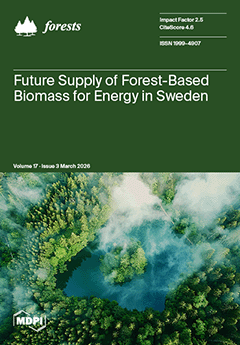
Cover Story (view full-size image): The purpose of this study is to analyse whether increases in biomass supply can be expected to continue up to 2050 in Sweden, when the goal of net-zero GHG emissions should be met, taking new priorities in relevant national and EU policies into account. The methodology applied is scenario analysis, including various assumptions regarding such policy implications. The results show that the supply of forest-based biomass (residues, by-products, and low-value trees) has the potential to continue to increase up to 2050, with an increment that is equivalent to some additional 8% of today’s total energy supply in Sweden, in a scenario which combines both biodiversity goals and timber production in the national forest policy. However, if either biodiversity or timber production is further prioritised, the increase in biomass supply may be 40% lower or 40% higher, respectively. View this paper
  • Issues are regarded as officially published after their release is announced to the table of contents alert mailing list.
  • You may sign up for e-mail alerts to receive table of contents of newly released issues.
  • PDF is the official format for papers published in both, html and pdf forms. To view the papers in pdf format, click on the "PDF Full-text" link, and use the free Adobe Reader to open them.
Order results
Result details
Section
Select all
Export citation of selected articles as:
16 pages, 2113 KB  
Article
Local Tree Cover and Regional Climate Hierarchically Shape Ant Communities in Mediterranean Dehesas
by Francisco Jiménez-Carmona and Joaquín L. Reyes-López
Forests 2026, 17(3), 397; https://doi.org/10.3390/f17030397 - 23 Mar 2026
Viewed by 167
Abstract
Mediterranean dehesas are open agroforestry systems in which tree configuration and climatic regime condition the organisation of biodiversity. In these landscapes, ants are commonly used as ecological indicators, although the relative importance of local versus regional factors in structuring their communities remains poorly [...] Read more.
Mediterranean dehesas are open agroforestry systems in which tree configuration and climatic regime condition the organisation of biodiversity. In these landscapes, ants are commonly used as ecological indicators, although the relative importance of local versus regional factors in structuring their communities remains poorly defined. Ant assemblages were sampled using pitfall traps at 15 farms in southern Spain, and the influence of environmental variables defined at two spatial scales was analysed: microhabitat, distinguishing between areas under tree canopy and open areas, and farm as a unit representative of the regional context. The multivariate analyses applied (dbRDA, PERMANOVA and variance partitioning) reveal a hierarchical organisation of community assemblages. At the local scale, community variation was primarily explained by structural attributes of the tree layer, particularly canopy cover and distance to trees. At the farm scale, environmental predictors explained a modest proportion of community variation, with strong overlap among climatic, vegetation and structural variables. Overall, the structure of ant communities in dehesas follows a scale-dependent pattern, in which climate sets the regional framework and tree structure modulates assemblage organisation at a fine scale. Full article
(This article belongs to the Section Forest Biodiversity)
Show Figures

Figure 1

25 pages, 5222 KB  
Review
Medicinal Potential and Bioactive Phytochemicals with Pharmacological Relevance of a Mexican Oyamel, Abies religiosa (Kunth) Schltdl. et Cham., Forest: A Review
by Diana Perla Fuentes-Pérez, Natalia Mendez-Arreola, Candy Anzaldo-Reyes, María del Carmen Arista-Álvarez, Aurelio Nieto-Trujillo, Gabriel Alfonso Gutiérrez-Rebolledo, Alicia Monserrat Vazquez-Marquez, María Guadalupe González-Pedroza, Armando Sunny, Angélica Román-Guerrero, Carmen Zepeda-Gómez and María Elena Estrada-Zúñiga
Forests 2026, 17(3), 396; https://doi.org/10.3390/f17030396 - 23 Mar 2026
Viewed by 273
Abstract
Oyamel forest, Abies religiosa (Kunth) Schltdl. et Cham., is a high-mountain ecosystem that contains abundant biodiversity, contributes to supporting traditional medicine, and represents a reservoir of medicinal plants. Despite this medicinal relevance, the potential of the flora of the Mexican Oyamel forest from [...] Read more.
Oyamel forest, Abies religiosa (Kunth) Schltdl. et Cham., is a high-mountain ecosystem that contains abundant biodiversity, contributes to supporting traditional medicine, and represents a reservoir of medicinal plants. Despite this medicinal relevance, the potential of the flora of the Mexican Oyamel forest from Santuario del Agua Presa Corral de Piedra (SAPCP), Mexico, has been scarcely studied. This review focused on identifying the flora of the SAPCP which has been reported as medicinal resource in the literature through the recovery of ethnomedicinal uses and their proven pharmacological effects. In addition, phytochemical reports of the SAPCP medicinal flora and their pharmacological activities were integrated and analyzed to estimate their medicinal potential. The results showed that the SAPCP forest represents an important source of medicinal plants, with 39% of the total species reporting at least one ethnomedicinal use belonging to different taxonomic families, but mainly included Asteraceae, Lamiaceae, Rosaceae, and Solanaceae. The most commonly observed ethnomedicinal uses among all the species were against inflammation, infections, diarrhea, and diabetes, while antioxidant, antidiabetic, and anti-inflammatory effects were predominantly proven as pharmacological effects. The phytochemical results revealed a great diversity of secondary metabolites, although flavonoids, phenolic acids, and triterpenes were observed in a major number of species, many of which have been proven to exert anti-inflammatory, antidiabetic, and antibacterial effects through several action mechanisms. In conclusion, these results highlight the importance of sustainable management and the conservation of forest species, as they provide a reservoir of medicinal species that produce bioactive metabolites. Full article
(This article belongs to the Special Issue Medicinal and Edible Uses of Non-Timber Forest Resources)
Show Figures

Graphical abstract

27 pages, 2535 KB  
Article
Management Effects on Biomass Partitioning in Fast-Growing Poplar in Brandenburg
by Lisa Schulz-Nielsen, Josafat-Mattias Burmeister, Cäcilia Fiege, Rico Richter and Ralf Pecenka
Forests 2026, 17(3), 395; https://doi.org/10.3390/f17030395 - 23 Mar 2026
Viewed by 257
Abstract
Woody biomass crops are increasingly considered a promising alternative to conventional agricultural systems due to their potential for sustained carbon sequestration under accelerating climate change. Optimizing management practices in such systems is therefore critical to enhance biomass production and carbon storage. In this [...] Read more.
Woody biomass crops are increasingly considered a promising alternative to conventional agricultural systems due to their potential for sustained carbon sequestration under accelerating climate change. Optimizing management practices in such systems is therefore critical to enhance biomass production and carbon storage. In this study, we investigated how management influences biomass allocation in four poplar plots differing in planting density, variety, and harvest-rotation design during their 6th and 7th year of growth. Biomass stocks were quantified for crown, stem, coarse roots, and fine roots. Management effects were most pronounced in aboveground biomass, whereas belowground responses were less consistent. The highest aboveground biomass was observed in the high-density system within the first rotation (MxHD1), reaching 55.32 Mg ha−1 in 2024 and 94.91 Mg ha−1 in 2025. Belowground biomass ranged from 8.12 to 18.35 Mg ha−1 across plots and years. The root:shoot ratio declined with increasing shoot basal diameter and was highest in the year following harvest. Based on these data, we developed general and management-specific allometric models to predict aboveground and belowground biomass from diameter at breast height. Including management factors improved prediction accuracy, supporting more precise quantification of biomass allocation under different cultivation strategies. Full article
Show Figures

Figure 1

23 pages, 3464 KB  
Article
Exploratory Analysis of Global TNFD Adoption and Strategic Implications for the Forestry and Environmental Sector
by Soongil Kwon, Hyewon Kim and Chiung Ko
Forests 2026, 17(3), 394; https://doi.org/10.3390/f17030394 - 23 Mar 2026
Viewed by 268
Abstract
The Taskforce on Nature-related Financial Disclosures (TNFD) refers to both the international organizing body and the disclosure framework it developed. Throughout this article, the term TNFD is used to encompass both the organization and the framework to ensure precision while maintaining conciseness. TNFD [...] Read more.
The Taskforce on Nature-related Financial Disclosures (TNFD) refers to both the international organizing body and the disclosure framework it developed. Throughout this article, the term TNFD is used to encompass both the organization and the framework to ensure precision while maintaining conciseness. TNFD has emerged as a key mechanism for integrating nature-related risks and opportunities into corporate decision-making, extending the scope of existing environmental, social, and governance (ESG) and climate-related disclosures. As TNFD adoption remains at an early diffusion stage, empirical evidence on its global uptake and sectoral characteristics is still limited, particularly in nature-dependent industries such as forestry and environmental services. This study provides an exploratory mapping of global TNFD adoption patterns using the complete list of TNFD adopting organizations disclosed on the official TNFD platform as of June 2025. A total of 584 organizations across 54 countries were analyzed, with a focused examination of forestry- and environment-related entities. Rather than testing causal relationships, this research adopts a descriptive and structural analytical approach to identify geographic, institutional, and sectoral patterns of adoption. The results reveal a strong concentration of TNFD adoption in developed economies and corporate entities, while forestry-specific adopters remain limited in number. Notably, TNFD adoption does not appear to correlate with forest resource endowment, suggesting that governance capacity and financial disclosure readiness are more influential than ecological conditions. Based on these findings, the study discusses strategic implications for forestry and environmental organizations and proposes a conceptual framework for advancing nature-related financial disclosure in the sector. This research contributes an early-stage empirical foundation for understanding TNFD diffusion and offers practical insights for policymakers, corporations, and researchers seeking to operationalize nature-related disclosure frameworks. Full article
Show Figures

Figure 1

20 pages, 8457 KB  
Article
An Integrated Assessment of Legume Species Diversity and Soil Characteristics in Upper Amazonian Protected Forests
by Winston Franz Ríos-Ruiz, Marvin Barrera-Lozano, Juan Carlos Guerrero-Abad, Lily O. Rodríguez, Roger Cabrera-Carranza, Llimi Mori-Sánchez and Marco Antonio Nogueira
Forests 2026, 17(3), 393; https://doi.org/10.3390/f17030393 - 23 Mar 2026
Viewed by 227
Abstract
Legumes (Fabaceae) are key functional components of tropical forests due to their role in nitrogen fixation and nutrient cycling. This study provides an integrated assessment of forest legume diversity and its relationship with soil physicochemical properties across three protected areas in the Peruvian [...] Read more.
Legumes (Fabaceae) are key functional components of tropical forests due to their role in nitrogen fixation and nutrient cycling. This study provides an integrated assessment of forest legume diversity and its relationship with soil physicochemical properties across three protected areas in the Peruvian upper Amazon: the Alto Mayo Protected Forest (BPAM), the Cordillera Escalera Regional Conservation Area (ACR-CE), and the Shunté and Mishollo Forests Regional Conservation Area (ACR-BOSHUMI). Floristic studies were conducted in nine sectors ranging from 618 to 1729 m a.s.l. Soil samples were analyzed, and vegetation cover was quantified using high-resolution drone imagery with four vegetation indices derived from RGB data. We recorded eleven legume species from eight genera within the sampling plots, identifying Inga as the most frequent genus. Species diversity was highest in the ACR-CE, whereas BPAM showed lower richness and abundance. Multivariate analyses revealed that legume diversity was positively associated with higher soil pH, cation concentrations, and cation exchange capacity, but negatively associated with elevated Al3+ and Fe3+ levels. Vegetation indices effectively distinguished between vegetated and degraded areas, indicating higher legume occurrence in sites with greater canopy cover. These findings emphasize that soil fertility and vegetation structure are key drivers of legume diversity, with significant implications for conservation in the upper Amazon. Full article
(This article belongs to the Special Issue Exploring Biodiversity and Its Relationship with Forests)
Show Figures

Figure 1

21 pages, 4642 KB  
Article
Effects of Light Environment on Understory Herbaceous Diversity and Regeneration Across Degradation Gradients in Robinia pseudoacacia L. Stands
by Peizheng Xie, Jingkang Gao, Peiyao Lu, Peixia Ye, Shanshan Jin, Mengli Zhou, Eryan Guo and Dongfeng Yan
Forests 2026, 17(3), 392; https://doi.org/10.3390/f17030392 - 23 Mar 2026
Viewed by 247
Abstract
Light environments within plantation forests vary significantly with stand degradation. This study investigated how light-related factors change along degradation gradients in Robinia pseudoacacia L. (black locust) plantations and how these changes influence understory herbaceous vegetation and regeneration. An R. pseudoacacia plantation at the [...] Read more.
Light environments within plantation forests vary significantly with stand degradation. This study investigated how light-related factors change along degradation gradients in Robinia pseudoacacia L. (black locust) plantations and how these changes influence understory herbaceous vegetation and regeneration. An R. pseudoacacia plantation at the Zhongmu State-owned Forest Farm, ZhengZhou, China was studied across three degradation levels (least degraded, moderately degraded, and severely degraded). Integrated analyses were employed to assess light–vegetation relationships under different stand densities. The results indicated that canopy openness (CO), photosynthetically active radiation (PAR), and light transmittance increased significantly with increasing degradation severity, whereas the leaf area index (LAI) declined. Specifically, differences in LAI among degradation levels were observed in all density stands. CO, TDR, and PAR showed degradation-related differences in medium- and high-density stands, while other light variables varied under specific density–degradation combinations. Furthermore, herbaceous biomass declined, canopy cover showed a fluctuation trend, and species diversity increased. Significant correlations were observed between multiple light parameters and herbaceous attributes. Overall, variations in the light environment were closely associated with understory vegetation dynamics. Moderate degradation was linked to higher herbaceous diversity, whereas regeneration density exhibited a non-monotonic response across degradation levels, with the lowest value under moderate degradation rather than a continuous decline under severe degradation. Full article
(This article belongs to the Section Forest Ecology and Management)
Show Figures

Figure 1

22 pages, 3504 KB  
Article
Pinus sylvestris L. in Urban Forests of a Pollution Hotspot in Kazakhstan: Needle Phytochemistry, Bioactive Potential, and Implications for Phytoremediation
by Vladimir Kazantsev, Irina Losseva, Dmitriy Khrustalev, Artyom Savelyev, Azamat Yedrissov and Anastassiya Khrustaleva
Forests 2026, 17(3), 391; https://doi.org/10.3390/f17030391 - 22 Mar 2026
Viewed by 249
Abstract
(1) Research Highlights: This study provides the first integrated assessment of Scots pine (Pinus sylvestris L.) growing in the urban forests of Karaganda, Kazakhstan, a city consistently ranked among the most air-polluted cities globally. We examined the adaptive phyto-chemical response of needles [...] Read more.
(1) Research Highlights: This study provides the first integrated assessment of Scots pine (Pinus sylvestris L.) growing in the urban forests of Karaganda, Kazakhstan, a city consistently ranked among the most air-polluted cities globally. We examined the adaptive phyto-chemical response of needles to extreme technogenic stress and evaluated their dual potential as biological filters and renewable sources of bioactive compounds. (2) Background and Objectives: Urban forests are critical for mitigating air pollution; however, the biochemical responses of trees in heavily industrialized environments remain poorly understood. Karaganda faces severe atmospheric pollution from mining, metallurgy, and energy sectors, with particulate matter (PM) levels exceeding permissible limits by up to 20-fold. This study aimed to evaluate the state of Pinus sylvestris, a key component of local protective plantations, by studying heavy metal accumulation, anatomical localization of secondary metabolites, and the phytochemical profile and biological activity of needle extracts obtained using different extraction techniques. (3) Materials and Methods: Needles were collected from 15 trees across three sites in Karaganda’s industrial green zones. Heavy metal content (Pb, Cd, As, and Hg) was determined using atomic absorption spectroscopy and voltammetry. Anatomical–histochemical analysis localizes major metabolite classes. Liquid extracts were prepared using four methods, percolation (PER), vortex-assisted (VAE), microwave-assisted (MAE), and ultrasound-assisted (UAE) extraction, and analyzed by GC-MS. Antimicrobial activity was tested against S. aureus, B. subtilis, E. coli, and C. albicans using the disk diffusion method. The antioxidant capacity (water- and fat-soluble) was measured amperometrically. Statistical analysis was performed using one-way ANOVA with Tukey’s HSD test (p < 0.05). Results: Despite extreme ambient pollution, heavy metal concentrations remained below pharmacopoeial limits (Pb < 0.1, Cd < 0.05, As < 0.01, Hg < 0.001 mg/kg), indicating effective biofiltration without toxic accumulation. Histochemistry confirmed the active synthesis of protective phenolics, flavonoids, and essential oils in the mesophyll, epidermis, and schizogenic cavities. GC-MS identified 72 compounds in the PER extract, 70 (the VAE), 72 in (MAE), and 46 in (UAE). The PER extract exhibited the highest relative abundance of bioactive terpenoids: α-cadinol (5.24%), α-muurolene (4.32%), and caryo-phyllene (2.20%). UAE extracts exhibited elevated 5-hydroxymethylfurfural (6.90%), indicating degradation. Antimicrobial testing revealed that PER produced the largest inhibition zone against S. aureus (15.0 ± 1.0 mm), significantly exceeding that of the other methods (p < 0.001). PER extract also demonstrated the highest water-soluble antioxidant capacity (3600 ± 0.40 mg quercetin equiv./dm3) and substantial fat-soluble activity (1633 ± 0.23 mg gallic acid equiv./dm3). (4) Conclusions: Pinus sylvestris in Karaganda exhibits remarkable adaptive resilience, maintaining safe heavy metal levels while accumulating a rich repertoire of stress-induced secondary metabolites. Classical percolation optimally preserves this native phytocomplex, yielding extracts with superior antimicrobial and antioxidant properties. These findings support a dual-use model wherein urban pine plantations simultaneously serve as living biofilters and renewable sources of standardized bioactive extracts, a concept with direct implications for circular bioeconomy strategies in industrial regions worldwide. This supports the strategic importance of coniferous plantations for bioremediation and sustainable resource use in industrial regions. Full article

(This article belongs to the Section Forest Ecology and Management)
Show Figures

Graphical abstract

28 pages, 5551 KB  
Article
Nonmonotonic Elevational Patterns of Soil CO2 Flux Driven by Temperature Dominance and Moisture Thresholds in the Sejila Mountains, Tibetan Plateau
by Qiang Meng, Jingxia Liu, Peng Chen, Junzeng Xu, Qiang He, Yangzong Cidan, Ying Huang and Yi Huang
Forests 2026, 17(3), 390; https://doi.org/10.3390/f17030390 - 21 Mar 2026
Viewed by 241
Abstract
Understanding spatiotemporal variation in soil CO2 flux (FCO2) along elevational gradients is essential for predicting carbon–climate feedback in alpine ecosystems. However, how temperature- and moisture-related factors jointly regulate daily-scale FCO2 and how their contributions vary with elevation remain unclear, [...] Read more.
Understanding spatiotemporal variation in soil CO2 flux (FCO2) along elevational gradients is essential for predicting carbon–climate feedback in alpine ecosystems. However, how temperature- and moisture-related factors jointly regulate daily-scale FCO2 and how their contributions vary with elevation remain unclear, particularly in the Sejila Mountains (Southeastern Tibetan Plateau). We conducted continuous in situ measurements of daily-scale FCO2, air temperature (Ta), relative humidity (RH), soil temperature (ST, 0–10 cm), and volumetric soil water content (SW) across five elevational bands (3000–4200 m) in 2024–2025. Across both years, FCO2 showed a unimodal seasonal cycle and a robust nonmonotonic spatial pattern, with the highest efflux at 3000 and 4200 m and peak rates exceeding 5.0 µmol CO2 m−2 s−1. Cumulative carbon loss at 4200 m (909.90 g C m−2) exceeded that at mid-elevation sites. Linear mixed-effects models identified Ta as the most consistent positive predictor; the ST × SW interaction was not significant, indicating that temperature and moisture effects are largely additive at the daily scale. Piecewise regression revealed nonlinear SW thresholds (θ) in the FCO2 response, with θ varying nonmonotonically with elevation. Multiple linear regression further showed that thermal predictors (Ta, ST) explained substantially more variance than moisture predictors (RH, SW), and the relative importance of thermal drivers increased with elevation. These results challenge the common expectation of a monotonic decline in soil respiration with elevation and suggest that, when SW remains above critical thresholds, warming may amplify soil carbon losses at high elevations on the Tibetan Plateau. Full article
(This article belongs to the Section Forest Soil)
Show Figures

Figure 1

12 pages, 2416 KB  
Article
Associations Between the Leaf Microbiome and the Health of Irish Ash Trees Affected by Hymenoscyphus fraxineus
by Michael Andrew Stevenson, Neil Warnock, Kirsty Elizabeth McLaughlin, Johnathan Dalzell, Rhonda Swan, Thomas Fleming, James Trudgett, Archie Kelso Murchie, Allison Reid, Deacem Hamilton and Eugene Carmichael
Forests 2026, 17(3), 389; https://doi.org/10.3390/f17030389 - 21 Mar 2026
Viewed by 219
Abstract
Ash dieback, caused by the fungus Hymenoscyphus fraxineus, continues to threaten European ash (Fraxinus excelsior), yet the contribution of the leaf microbiome to disease severity remains poorly understood. We surveyed 133 ash trees across nine sites in Northern Ireland, using [...] Read more.
Ash dieback, caused by the fungus Hymenoscyphus fraxineus, continues to threaten European ash (Fraxinus excelsior), yet the contribution of the leaf microbiome to disease severity remains poorly understood. We surveyed 133 ash trees across nine sites in Northern Ireland, using canopy cover as a proxy for health, and characterised leaf-associated microbial communities using Pacific Biosciences (PacBio) long-read amplicon sequencing (full-length 16S and ITS) and QIIME2-based workflows. Many trees exhibited partial tolerance to ash dieback, with most maintaining stable canopy cover year-on-year, while fewer trees show a decline and a smaller portion showing improvement. Microbial communities were largely stable irrespective of ash health with little difference in alpha diversity (Shannon) or beta diversity (Bray–Curtis PERMANOVA) for either bacteria or fungi. Differential abundance and correlation analyses showed that H. fraxineus was, as expected, negatively associated with canopy cover. Only one fungal species, Papiliotrema flavescens, demonstrated a strong positive association with healthier trees, consistent with previous findings. These results indicate that Northern Ireland hosts a reservoir of ash trees displaying tolerance to ash dieback. While the leaf microbiome does not appear to drive this tolerance at the community level, one fungus, P. flavescens, was correlated with healthier ash. Full article
(This article belongs to the Section Forest Health)
Show Figures

Graphical abstract

17 pages, 1427 KB  
Article
Impact of Forest Operations Planning on Greenhouse Gas Emissions
by Dariusz Pszenny, Tadeusz Moskalik and Grzegorz Trzciński
Forests 2026, 17(3), 388; https://doi.org/10.3390/f17030388 - 20 Mar 2026
Viewed by 193
Abstract
This study investigates how key planning variables—the number of wood assortments, the geometric shape of clear-cut areas, and the extraction (forwarding) distance—influence greenhouse gas (GHG) emissions. Twelve plots formed a heterogeneous sample with similar site type and soil moisture conditions. A Komatsu 931 [...] Read more.
This study investigates how key planning variables—the number of wood assortments, the geometric shape of clear-cut areas, and the extraction (forwarding) distance—influence greenhouse gas (GHG) emissions. Twelve plots formed a heterogeneous sample with similar site type and soil moisture conditions. A Komatsu 931 harvester and a 855 forwarder, driven by the experienced operators, were used to ensure consistency in operator skill. For each plot, the isoperimetric quotient was computed to quantify how plot shape correlated with labor hours, fuel consumption, and the resulting volume of GHG emitted. The number of assortments extracted per plot ranged from three to fourteen product groups. The results show that plots with more complex shapes require significantly more operator time and fuel. Increasing the number of assortments amplifies handling time and fuel use. Longer extraction distances further exacerbate the emissions. These findings underscore the importance of integrating spatial geometry and wood assortment planning into harvest scheduling to enhance productivity and reduce the carbon footprint of forest operations. Recommendations for practitioners include prioritizing more compact treatment units, optimizing assortment grouping, and minimizing extraction distances as key strategies for precision forestry. Full article
Show Figures

Graphical abstract

21 pages, 4617 KB  
Article
Study on the Correlation Between FTIR Spectral Characteristics and Leaf Contents in Male and Female Plants of Idesia polycarpa
by Yigeng Zhu, Wenwen Zhong, Chen Chen, Zuwei Hu, Shasha Wang, Hanjian Hu, Yanhan Zhou, Tailin Zhong and Zhi Li
Forests 2026, 17(3), 387; https://doi.org/10.3390/f17030387 - 20 Mar 2026
Viewed by 178
Abstract
Idesia polycarpa Maxim. is an important woody oilseed species and is dioecious; however, systematic evidence for sex-specific differences in leaf physico-chemical traits and their spectral responses remains limited. In this study, mature female and male trees were investigated. Leaves were sampled throughout the [...] Read more.
Idesia polycarpa Maxim. is an important woody oilseed species and is dioecious; however, systematic evidence for sex-specific differences in leaf physico-chemical traits and their spectral responses remains limited. In this study, mature female and male trees were investigated. Leaves were sampled throughout the growing season (May–October), and FTIR-ATR spectra were acquired to derive peak height and peak area metrics for diagnostic bands. In parallel, leaf antioxidant enzyme activities (SOD, CAT, POD, and APX), biomass-related traits, leaf nutrient concentrations, and rhizosphere soil nutrient indices were measured. Differences between sexes, seasonal dynamics, and spectrum–trait coupling were evaluated using repeated-measures analysis and correlation analyses. The results showed that the positions of major absorption bands were largely consistent between sexes, indicating broadly similar chemical composition, whereas the male plants lacked an obvious band near 1671 cm−1 in May. Several spectral peak parameters were significantly correlated with leaf pH, leaf dry matter content, total phosphorus, and APX activity. Female and male plants exhibited month-dependent differences in enzyme activities, dry matter content, and leaf N and K, and leaf–soil nutrient linkages were also detected, suggesting sex-specific resource allocation patterns. Overall, FTIR-ATR peak metrics provide a rapid means to characterize seasonal variation in leaf physico-chemical properties of I. polycarpa and offer supporting evidence for studies of sexual dimorphism. Full article
(This article belongs to the Special Issue Forest Management: Silvicultural Practices and Management Strategies)
Show Figures

Graphical abstract

19 pages, 3171 KB  
Article
Beyond Time: Divergent Successional Trajectories Driven by Legacies and Edaphic Filters in a Tropical Karst Forest of Yucatan Peninsula, Mexico
by Aixchel Maya-Martinez, Josué Delgado-Balbuena, Ligia Esparza-Olguín, Yameli Guadalupe Aguilar-Duarte, Eduardo Martínez-Romero and Teresa Alfaro Reyna
Forests 2026, 17(3), 386; https://doi.org/10.3390/f17030386 - 20 Mar 2026
Viewed by 286
Abstract
Secondary succession in tropical forests is traditionally described as a linear process driven by time since disturbance. However, growing evidence suggests that recovery pathways depend strongly on historical and environmental contexts. We evaluated how disturbance legacies and edaphic constraints interact to shape successional [...] Read more.
Secondary succession in tropical forests is traditionally described as a linear process driven by time since disturbance. However, growing evidence suggests that recovery pathways depend strongly on historical and environmental contexts. We evaluated how disturbance legacies and edaphic constraints interact to shape successional trajectories in a tropical karst landscape of the Maya Forest, Mexico. We sampled 100 plots along a chronosequence, quantifying vegetation structure, floristic diversity, biomass (NDVI), disturbance legacies, and soil properties. Using unsupervised clustering (K-means) and multivariate ordination, we identified four contrasting ecological typologies that represent distinct successional states rather than transient stages. Our results show a pronounced dichotomy in vegetation dynamics following the abandonment of land-use practices: while some sites are experiencing diverse development due to positive forest legacies (Typology B), others remain stalled (Typology C), dominated by lianas, where biotic barriers inhibit tree regeneration despite decades of abandonment. Additionally, we documented an asynchronous recovery between floristic recovery and vertical development; in sites with edaphic constraints, forests reach high diversity and biomass but exhibit stunted growth (Typology D). This suggests that severe abiotic constraints—specifically high rockiness and shallow soils—limit the dominance of highly competitive species, thereby acting as a filter that maintains high levels of diversity despite structural limitations. Edaphic analysis confirmed that chemical fertility and physical constraints (rockiness and shallow depth) act as orthogonal filters. This explains the persistence of structurally constrained yet functionally mature forests as stable, edaphically determined outcomes. Overall, secondary succession in tropical karst is nonlinear and path-dependent, governed by a hierarchical filtering model where historical land use dictates community identity and physical substrate limits structural architecture. These findings highlight the need for trajectory-specific management and the abandonment of uniform expectations of forest recovery in karst landscapes. Full article
(This article belongs to the Special Issue Secondary Succession in Forest Ecosystems)
Show Figures

Figure 1

15 pages, 1645 KB  
Article
Phenotypic Trait Variation and Adaptation Strategies in Leaves of Pinus densata in Southeastern Xizang
by Chenfei Zhang, Chao Wang, Wenyan Xu, Rui Li and Jie Lu
Forests 2026, 17(3), 385; https://doi.org/10.3390/f17030385 - 20 Mar 2026
Viewed by 181
Abstract
To explore the variation in leaf phenotypic traits and environmental adaptation strategies of Pinus densata in southeastern Xizang, 15 plots were established across five regions—Gongbujiangda County (GB), Bomi County (BM), Bayi District (BY), Milin City (ML), and Lang County (LX)—and 11 leaf traits [...] Read more.
To explore the variation in leaf phenotypic traits and environmental adaptation strategies of Pinus densata in southeastern Xizang, 15 plots were established across five regions—Gongbujiangda County (GB), Bomi County (BM), Bayi District (BY), Milin City (ML), and Lang County (LX)—and 11 leaf traits were measured, including leaf length (LL), width (LD), area (LA), volume (LV), fresh weight (LFW), dry weight (LDW), tissue density (LTD), specific leaf area (SLA), and leaf greenness index (SPAD). Results showed that all traits except LL varied significantly among regions, with moderate variation overall; SPAD exhibited the highest coefficient of variation, while leaf water content was the most stable. Extensive correlations were detected among traits: leaf size and weight traits were positively intercorrelated and all negatively correlated with LTD, and SLA correlated negatively with LTD but positively with SPAD. Principal component analysis and hierarchical clustering further revealed that phenotypic variation aligned with the leaf economic spectrum and grouped the populations into three strategy types. Specifically, GB populations approached the “slow investment–return” end of the spectrum, BY and BM populations the “fast investment–return” end, while ML and LX occupied intermediate positions (transitional strategies), with ML leaning toward the slow end. These findings demonstrate that P. densata in southeastern Xizang has evolved diverse resource use and adaptation strategies through synergistic and trade-off relationships among leaf traits, enabling its persistence in complex high-altitude environments. Full article
(This article belongs to the Section Forest Ecology and Management)
Show Figures

Figure 1

19 pages, 815 KB  
Article
Research on the Impact and Mechanism of Forest Ecological Security on Forest Carbon Sinks: Evidence from 31 Provinces in China
by Xiuting Cai, Zien Gong, Hong Mi and Lu Liu
Forests 2026, 17(3), 384; https://doi.org/10.3390/f17030384 - 19 Mar 2026
Viewed by 223
Abstract
Amid the accelerating global pursuit of carbon neutrality, the regulatory role of forest ecological security in carbon sink function has emerged as a critical issue in achieving climate goals. This study developed a forest ecological security evaluation index system based on the Driving [...] Read more.
Amid the accelerating global pursuit of carbon neutrality, the regulatory role of forest ecological security in carbon sink function has emerged as a critical issue in achieving climate goals. This study developed a forest ecological security evaluation index system based on the Driving Force–Pressure–State–Impact–Response–Management (DPSIRM) framework. The forest ecological security comprehensive index for 31 Chinese provinces from 2007 to 2022 was calculated using the entropy weight method, and forest carbon sinks were estimated through the volume expansion method. Spatial econometric models and a mediation effect model were employed to empirically examine the impact of forest ecological security on forest carbon sinks and their underlying mechanisms. The results indicated the following: (1) Improvements in forest ecological security exerted significant positive direct and spatial spillover effects on forest carbon sinks. (2) The enhancing effect of forest ecological security on carbon sinks was significant in western regions, resource-based provinces, and economically underdeveloped areas. (3) Forest area transition and forest age structure transition served as key mediators in the relationship between forest ecological security and carbon sinks. In contrast, the mediating effects of forest species structure transition and forest origin structure transition were not significant, likely constrained by long-term ecological thresholds and socioeconomic inertia. Full article
(This article belongs to the Section Forest Ecology and Management)
Show Figures

Figure 1

21 pages, 4516 KB  
Article
Optimizing Urban Green Space Ecosystem Services for Climate Resilience: A Multi-Dimensional Assessment of Urban Park Cooling Effects
by Fengxia Li, Chao Wu, Haixue Chen, Xiaogang Feng and Meng Li
Forests 2026, 17(3), 383; https://doi.org/10.3390/f17030383 - 19 Mar 2026
Viewed by 241
Abstract
In the face of the dual challenges of global climate change and rapid urbanization, optimizing the ecosystem services of urban green spaces has become a key strategy for building resilient and sustainable cities. This is particularly crucial in ecologically fragile arid and semi-arid [...] Read more.
In the face of the dual challenges of global climate change and rapid urbanization, optimizing the ecosystem services of urban green spaces has become a key strategy for building resilient and sustainable cities. This is particularly crucial in ecologically fragile arid and semi-arid regions. To accurately assess the thermal regulation function of urban green spaces, this study selected 20 parks in Xi’an, China. Combining remote sensing and Geographic Information System (GIS) technology, we adopted four established cooling indicators—Park Cooling Area (PCA), Park Cooling Efficiency (PCE), Park Cooling Intensity (PCI), and Park Cooling Gradient (PCG)—to systematically evaluate the thermal regulation functions of urban parks and their landscape-driving mechanisms. The results indicated that the average cooling amplitude of the parks was 2.53 °C, with an effective influence distance reaching 323.9 m, exhibiting a significant spatial gradient decay. We found a non-linear trade-off between green space scale and efficiency: while large parks provided a wider absolute cooling range, small and medium-sized parks demonstrated higher efficiency per unit area. Furthermore, a blue-green synergistic configuration significantly enhanced the mitigation of the urban heat island effect. The study confirmed that Park Area (PA), Park Perimeter (PP), and the Normalized Difference Vegetation Index (NDVI) significantly promoted cooling effects, whereas landscape fragmentation inhibited ecological benefits. This study elucidates the comprehensive regulation mechanism of urban parks on the urban microclimate, providing planning guidance for implementing Nature-based Solutions (NbS) and achieving climate-adaptive development in arid and semi-arid cities within the context of urban renewal. Full article
Show Figures

Figure 1

30 pages, 5100 KB  
Article
A GIS–AHP-Based Spatial Decision Support System for Optimising Harvesting and Wood System Selection in the Chestnut Coppice Stands of Central Italy
by Aurora Bonaudo, Rodolfo Picchio, Rachele Venanzi, Luca Cozzolino and Francesco Latterini
Forests 2026, 17(3), 382; https://doi.org/10.3390/f17030382 - 19 Mar 2026
Viewed by 241
Abstract
Sustainable forest operations require operational planning tools that effectively integrate productivity, environmental conservation, and social acceptability, particularly within complex and environmentally sensitive forest systems. In Mediterranean small-scale forestry, harvesting decisions are frequently guided by expert judgment rather than by systematic and transparent planning [...] Read more.
Sustainable forest operations require operational planning tools that effectively integrate productivity, environmental conservation, and social acceptability, particularly within complex and environmentally sensitive forest systems. In Mediterranean small-scale forestry, harvesting decisions are frequently guided by expert judgment rather than by systematic and transparent planning frameworks. This reliance on subjective decision making can result in heterogeneous management practices and, in some cases, suboptimal operational outcomes. This study aims to validate a GIS-based Analytic Hierarchy Process (GIS–AHP) decision support system for the selection of harvesting and wood systems in the chestnut coppices of central Italy and to assess the robustness of its recommendations when expert judgments are provided by different stakeholder groups. The methodology integrates spatial data and multi-criteria analysis to evaluate the suitability of three extraction systems (forwarder, cable skidder, and cable yarder) and three wood systems (Cut-To-Length, Whole-Tree Harvesting, and Tree-Length) across 162 Forest Management Units (1332.5 ha), using weights elicited from four stakeholder categories (researchers, technicians, forest owners, and workers; n = 144). Results show statistically significant differences in mean suitability values among stakeholder groups for all systems; however, convergence at the operational decision level is high. The cable skidder is recommended over 94%–100% of the area depending on the stakeholder category, with full agreement among all groups in 87.7% of the Forest Management Units. For wood systems, Whole-Tree Harvesting is selected over 96.1% of the analysed area, with agreement in 95.1% of the Forest Management Units. Divergences are therefore limited and attributable to differences in AHP weighting structures. Overall, the findings demonstrate that the GIS–AHP approach provides stable and transferable recommendations despite variability in expert perspectives, supporting its applicability as a transparent and robust decision support tool for operational planning in chestnut coppices and similar Mediterranean forest systems. Full article
Show Figures

Figure 1

24 pages, 1412 KB  
Article
Extending the Value–Belief–Norm Model with Assigned Value: A Study on Visitors’ Pro-Environmental Behavior in Forest Ecosystems of National Parks
by Chenchen Han, Zhengsong Xu, Yechen Zhang and Yuanshuang Li
Forests 2026, 17(3), 381; https://doi.org/10.3390/f17030381 - 19 Mar 2026
Viewed by 285
Abstract
The environmentally responsible behavior (ERB) of visitors within forested national parks is critical for balancing biodiversity conservation and sustainable recreation. While the Value–Belief–Norm (VBN) model has been widely used to explain ERB, it has rarely incorporated context-specific value perceptions, such as assigned value. [...] Read more.
The environmentally responsible behavior (ERB) of visitors within forested national parks is critical for balancing biodiversity conservation and sustainable recreation. While the Value–Belief–Norm (VBN) model has been widely used to explain ERB, it has rarely incorporated context-specific value perceptions, such as assigned value. This study extends the VBN model by integrating this construct and examines its role in shaping visitors’ pro-environmental intentions. Taking Qianjiangyuan National Park in China as a case study, we incorporate visitors’ perception of the social value derived from the park’s forest-based ecosystem services into an expanded VBN framework. Data were analyzed using partial least squares structural equation modeling. The results show that assigned value positively influences ERB intention; pro-environmental personal norms are the strongest direct predictor (β = 0.426); and biospheric value, egoistic value, and personal norms significantly foster assigned value formation, whereas altruistic value shows no significant effect. These findings highlight the importance of integrating situational, forest-specific value perceptions into behavioral models and offer management insights for promoting ERB intention through value-congruent communication in forest recreation settings. Full article
(This article belongs to the Special Issue Forestry Economy Sustainability and Ecosystem Governance)
Show Figures

Figure 1

23 pages, 1650 KB  
Article
Beyond Commodities: Valuing the Contributions of Stewardship Practices in Sociobiodiversity-Based Bioeconomy
by Ana Carolina Mendes dos Santos, Giulia Mattalia, Wendell Medeiros-Leal, Noemi Spagnoletti and Sónia Maria Carvalho Ribeiro
Forests 2026, 17(3), 380; https://doi.org/10.3390/f17030380 - 19 Mar 2026
Viewed by 365
Abstract
Efforts to build a sociobiodiversity-based bioeconomy increasingly depend on recognizing and rewarding the stewardship practices carried out by Indigenous Peoples and Local Communities, and smallholder farmers. Yet, such practices, rooted in collective governance, traditional knowledge, and care for ecosystems, remain largely invisible in [...] Read more.
Efforts to build a sociobiodiversity-based bioeconomy increasingly depend on recognizing and rewarding the stewardship practices carried out by Indigenous Peoples and Local Communities, and smallholder farmers. Yet, such practices, rooted in collective governance, traditional knowledge, and care for ecosystems, remain largely invisible in market and policy frameworks. This study compares recognition mechanisms for stewardship practices worldwide (38 case studies) and in Brazilian projects supporting sociobiodiversity chains (384 projects) using an inductive typology of material and non-material recognition and Arnstein’s Ladder of Citizen Participation. Results show that 70% of cases combine multiple recognition forms, but their distribution and empowerment outcomes diverge. Globally, recognition mechanisms are more balanced, often codified in laws, participatory councils, and payment-for-ecosystem-service schemes that place communities on the upper rungs of Arnstein’s ladder, with co-management authority. In Brazilian projects, recognition remains predominantly material and focused on short-term interventions–capacity-building, equipment, and market access, corresponding to lower rungs of citizen participation. Overcoming this condition requires policies that couple economic incentives with institutionalized participation. Markets alone will not value the non-material elements that sustain sociobiodiversity. Implementing Brazil’s National Bioeconomy Strategy will therefore depend on public policies that reward both the products and the collective stewardship behind them. Full article
Show Figures

Figure 1

17 pages, 5404 KB  
Article
Coniferous Tree Species-Induced Shifts in Soil Total Nitrogen and pH Regulated Microbial-Derived Carbon Accumulation and Thus Promoted Soil Organic Carbon Sequestration
by Xiaolong Wei, Xiaolong Zhao, Yucheng Xiao, Rong Fan, Jinhua Li and Changming Zhao
Forests 2026, 17(3), 379; https://doi.org/10.3390/f17030379 - 18 Mar 2026
Viewed by 239
Abstract
Forest soil constitutes a critical reservoir within terrestrial carbon pools. Understanding the dynamics of soil organic carbon (SOC) in coniferous forests is crucial for enhancing ecosystem carbon sequestration capacity, yet systematic quantification of SOC characteristics and their driving factors remains limited across critical [...] Read more.
Forest soil constitutes a critical reservoir within terrestrial carbon pools. Understanding the dynamics of soil organic carbon (SOC) in coniferous forests is crucial for enhancing ecosystem carbon sequestration capacity, yet systematic quantification of SOC characteristics and their driving factors remains limited across critical bioclimatic zones. This study examined SOC features in topsoil and driving factors across eight representative coniferous forest types in Longnan—an ecologically significant transition region of northwestern China. SOC concentrations ranged from 31.76 to 80.86 g·kg−1, where Abies fargesii var. faxoniana exhibited significantly higher concentrations than other conifers. Fungal necromass dominated SOC formation (29%–45% contribution) versus minimal bacterial necromass inputs (3%–5%). Redundancy analysis identified that soil total nitrogen, C/N ratio, and tree evenness showed significant correlations with SOC concentrations and their fractions. Partial least squares path modeling revealed that tree species exerted a direct positive impact on soil total nitrogen, while having an adverse effect on soil pH. Lower soil pH and higher total nitrogen were associated with higher microbial-derived carbon and SOC concentrations. In contrast, plant-derived carbon exerted no direct influence on SOC concentrations, operating exclusively through microbial-derived carbon pathways. These results indicated that coniferous tree species-induced shifts in soil total nitrogen and pH facilitate the accumulation of microbial necromass carbon, rather than plant residues, and thus promote SOC sequestration. A. fargesii var. faxoniana can be regarded as a key strategic tree species for SOC sequestration and sustainable forest management, and its cultivation should be prioritized due to improvements in total nitrogen and microbial-derived carbon. Full article
(This article belongs to the Section Forest Soil)
Show Figures

Figure 1

15 pages, 2725 KB  
Article
Spatial Distribution Patterns of Forest Ecosystem Services in the Chinese Altai Mountains (2000–2020)
by Shuyi Xu, Shuixing Dong, Bomou Sun, Jihong Huang, Liping Wang, Wendong Wang, Zhongjun Guo, Yue Xu, Jie Yao, Yi Ding and Runguo Zang
Forests 2026, 17(3), 378; https://doi.org/10.3390/f17030378 - 18 Mar 2026
Viewed by 174
Abstract
Mountain forests within arid zones function as critical regional “water towers” and biodiversity hotspots, providing essential ecosystem services (ESs) such as carbon sequestration, water retention, soil conservation, and habitat maintenance. Despite their ecological significance, the spatiotemporal characteristics of these services remain insufficiently characterized. [...] Read more.
Mountain forests within arid zones function as critical regional “water towers” and biodiversity hotspots, providing essential ecosystem services (ESs) such as carbon sequestration, water retention, soil conservation, and habitat maintenance. Despite their ecological significance, the spatiotemporal characteristics of these services remain insufficiently characterized. For this study, focusing on the Altai Mountains in northwestern China, we employed the InVEST model using climate, land cover, and soil survey datasets (2000–2020) to quantify ES dynamics, then applied Spearman rank correlation to analyze their spatial interactions. Results indicated the following distinct spatiotemporal patterns: (1) Temporally, water retention capacity increased by 23.5% from 2000 to 2020, with the most rapid growth occurring between 2000 and 2010, whereas carbon storage experienced a slight decline of 1.9%. (2) Spatially, water retention followed a “high-North, low-South” distribution, while carbon storage and habitat quality were highly concentrated in the central mid-elevation zones (1400–2400 m). (3) Trade-off intensification: a significant negative correlation between water retention and carbon storage deepened over the study period, highlighting an escalating “water–carbon” conflict. The aforementioned findings suggest that future management should be focused on avoiding high-density afforestation in mid-elevation water-sensitive zones to prevent excessive evapotranspiration. Instead, spatially differentiated strategies—prioritizing water yield protection in high-altitude regions and stand structure optimization in mid-altitude forests—are essential for reconciling regional ecosystem service trade-offs. Full article
(This article belongs to the Special Issue Forest Ecosystem Services and Sustainable Management)
Show Figures

Figure 1

16 pages, 2692 KB  
Article
Effects of Moso Bamboo (Phyllostachys edulis) Forest Expansion on Soil Bacterial and Fungal Community Structure and Diversity in Subtropical China
by Zhiyuan Huang, Chunli Liang, Yang Yang, Wenting Li, Bo Deng and Gang Lei
Forests 2026, 17(3), 377; https://doi.org/10.3390/f17030377 - 18 Mar 2026
Viewed by 227
Abstract
The disorderly expansion of Moso bamboo (Phyllostachys edulis) into adjacent forests has become a serious ecological issue in southern China; however, the response of soil microbial communities remain unclear. This study investigated the succession patterns of bacterial and fungal communities through [...] Read more.
The disorderly expansion of Moso bamboo (Phyllostachys edulis) into adjacent forests has become a serious ecological issue in southern China; however, the response of soil microbial communities remain unclear. This study investigated the succession patterns of bacterial and fungal communities through high-throughput sequencing and soil physicochemical analysis across three expansion stages in subtropical China: mixed coniferous–broadleaf forests, bamboo–forest transition zones, and pure Moso bamboo stands. The results indicate that Moso bamboo expansion altered soil bacterial and fungal beta-diversity without changing alpha-diversity. Random forest and redundancy analyses revealed distinct microbial group drivers. Bacterial communities were driven by available phosphorus (37.1% explained variance), with expansion intensifying soil phosphorus limitation and selecting for groups adapted to low-phosphorus environments (e.g., Acidobacteria). Fungal communities were primarily influenced by bulk density (21.3% explained variance), as the bamboo rhizosphere system altered soil physical structure, resulting in a significant loss of ectomycorrhizal fungi (e.g., Russula) and a corresponding decline in Basidiomycota abundance. This study confirms that Moso bamboo expansion reorganizes the soil microbial ecosystem through two pathways: chemical nutrient limitation and physical space remodeling. By revealing the subterranean ecological consequences of Moso bamboo expansion, this study provides a theoretical foundation for sustainable management of subtropical forests. Full article
(This article belongs to the Special Issue Ecological Research in Bamboo Forests: 3rd Edition)
Show Figures

Figure 1

12 pages, 1409 KB  
Article
The Wood Density of Pure and Mixed Norway Spruce, Scots Pine, and Silver Birch Stands in Lithuania Using IML Resi
by Benas Šilinskas, Edgaras Linkevičius, Lina Beniušienė, Marius Aleinikovas, Inga Zeleniakienė, Mindaugas Škėma and Karol Tomczak
Forests 2026, 17(3), 376; https://doi.org/10.3390/f17030376 - 18 Mar 2026
Viewed by 255
Abstract
The transition from pure to mixed-species forest stands is increasingly promoted to enhance ecosystem stability and multifunctionality. The growth conditions may influence the physical and mechanical properties of wood. This study evaluated wood density in pure and mixed stands of silver birch, Norway [...] Read more.
The transition from pure to mixed-species forest stands is increasingly promoted to enhance ecosystem stability and multifunctionality. The growth conditions may influence the physical and mechanical properties of wood. This study evaluated wood density in pure and mixed stands of silver birch, Norway spruce, and Scots pine in Lithuania and analyzed its relationships with tree allometric parameters. Nine study plots representing pure (100%) and mixed (70/30%) stands were established under comparable site conditions. Wood density at breast height was assessed using resistance drilling (IML Resi PD500), and the increment core samples were analyzed with the LIGNOSTATION™ system. The mean values of wood density for silver birch differed by 11%, depending on the wood density determination method used. Differences between pure and mixed stands were insignificant and generally did not exceed 6%–10%. No consistent trend that was attributable to species mixing was identified. The combined data from pure and mixed stands indicate that the mean wood density, converted from microdrilling measurements, was highest in silver birch (546 kg m−3 ± 1.87 kg m−3), followed by Scots pine (476 kg m−3 ± 1.85 kg m−3) and Norway spruce (437 kg m−3 ± 1.66 kg m−3). Resistance drilling showed a moderate relationship with the core samples’ wood density (R2 = 0.59), supporting its suitability as a semi-nondestructive method. Diameter at breast height was the only tree parameter that was consistently significant across all predictive models. The combined model for all species explained up to 43% of wood density variation, while species-specific models had lower explanatory power. Overall, the results indicate that species mixing has a limited effect on wood density under the studied conditions and is unlikely to substantially alter wood quality in terms of wood density. Full article
(This article belongs to the Section Wood Science and Forest Products)
Show Figures

Figure 1

24 pages, 16629 KB  
Article
Analysis of Dust Retention Capacity in Typical Plant Communities Along Roadside Green Belts in Southern Xinjiang During Spring and Summer
by Fei Wang, Ruiheng Lv and Fengzhen Chang
Forests 2026, 17(3), 375; https://doi.org/10.3390/f17030375 - 17 Mar 2026
Viewed by 263
Abstract
Roadside green spaces function as critical ecological barriers in urban environments, and their plant communities play a key role in improving regional air quality. This study investigates typical roadside plant communities in southern Xinjiang, a region characterized by extreme aridity and frequent dust [...] Read more.
Roadside green spaces function as critical ecological barriers in urban environments, and their plant communities play a key role in improving regional air quality. This study investigates typical roadside plant communities in southern Xinjiang, a region characterized by extreme aridity and frequent dust storms. By quantifying indicators such as dust retention capacity at both individual and community levels, together with leaf surface microstructural characteristics, we evaluate the comprehensive dust retention performance of different community configuration patterns. The results show that: (1) Among the studied species, Juniperus chinensis ‘Kaizuca’ exhibited the highest dust retention capacity per unit leaf area, followed by Juniperus chinensis L. and Rosa rugosa Thunb. Among trees, Platanus acerifolia (Aiton) Willd showed the greatest dust retention capacity per individual plant; among shrubs, Rosa rugosa Thunb. performed strongly, and among herbaceous species, Lolium perenne L. exhibited relatively high dust retention capacity. (2) Leaf dust retention is governed by the synergistic effects of multiple traits, including leaf aspect ratio, stomatal aspect ratio, stomatal protrusion, stomatal density, wax layer characteristics, and surface roughness. Leaf aspect ratio exerts a significant positive direct effect on dust retention, whereas stomatal aspect ratio shows a significant negative direct effect. (3) At the community level, the multi-layered tree–shrub–herbaceous configuration dominated by Platanus acerifolia (Aiton) Willd exhibited the strongest dust retention capacity, making it the most effective configuration for roadside green spaces. Overall, this study provides a robust theoretical framework and empirical evidence for the scientific selection and optimized configuration of roadside vegetation in arid regions, thereby supporting the sustainable improvement of urban roadside air quality in southern Xinjiang. Full article
Show Figures

Figure 1

14 pages, 1063 KB  
Article
The Effects of Host Alternation on the Development of Spongy Moth (Lymantria dispar L.)
by Rudolf Hillebrand, Ferenc Lakatos and Katalin Tuba
Forests 2026, 17(3), 374; https://doi.org/10.3390/f17030374 - 16 Mar 2026
Viewed by 237
Abstract
The spongy moth is a significant Lepidopteran species across Europe, where it occurs in oak stands. Tree species composition has a crucial effect on larval development, population density, and outbreaks. Host switching is more likely to occur in a mixed forest than in [...] Read more.
The spongy moth is a significant Lepidopteran species across Europe, where it occurs in oak stands. Tree species composition has a crucial effect on larval development, population density, and outbreaks. Host switching is more likely to occur in a mixed forest than in a monospecific forest. We aimed to better understand the effect of host alternation on the development of the spongy moth. In a laboratory, we reared spongy moth larvae on either (a) Turkey oak (Quercus cerris L.) or (b) European hornbeam (Carpinus betulus L.) only or on host plants that were changed from Turkey oak to European hornbeam (c) in the early (L3) or (d) late (L5) larval instar. Both Q. cerris and C. betulus proved suitable hosts for the spongy moth larvae. However, the larvae fed exclusively on Turkey oak leaves had better developmental indicators than the others. The groups that switched hosts had weaker developmental indicators than the larvae fed only on Turkey oak but showed better development than the group reared only on Hornbeam leaves. The results of our laboratory research on host switching may offer valuable insights into the developmental dynamics of spongy moths in monospecific forests versus those with higher biodiversity. Full article
(This article belongs to the Section Forest Health)
Show Figures

Figure 1

19 pages, 6731 KB  
Article
Impact of Melatonin on Antioxidant Enzymes and Soluble Metabolites in Salt–Alkali-Stressed Poplar (Populus spp.): A Comparative Study of Pretreatment and Post-Treatment Effects
by Jiefei Nai, Wanpeng He, Tieming Ma, Xidong Han, Zhenxing Luo, Xinyu Li, Jiatong Sun and Xiyang Zhao
Forests 2026, 17(3), 373; https://doi.org/10.3390/f17030373 - 16 Mar 2026
Viewed by 218
Abstract
Melatonin plays a crucial role in modulating plant stress responses; however, its potential for mitigating salt–alkali stress remains incompletely understood. This study evaluates the efficacy of exogenous melatonin in alleviating moderate salt–alkali stress (120 mM) in poplar (Populus davidiana × P. bolleana [...] Read more.
Melatonin plays a crucial role in modulating plant stress responses; however, its potential for mitigating salt–alkali stress remains incompletely understood. This study evaluates the efficacy of exogenous melatonin in alleviating moderate salt–alkali stress (120 mM) in poplar (Populus davidiana × P. bolleana ‘Baicheng Shanxinyang No. 1’) seedlings, investigating both pre- and post-stress treatments across a concentration range of 0–1000 μM. Physiological and morphological parameters, including chlorophyll content, antioxidant enzyme activities, and osmolyte accumulation, were analyzed to assess stress responses. Under salt–alkali stress, seedlings exhibited elevated stress markers and osmolyte levels, reflecting activated stress responses. Melatonin at concentrations of 200–400 μM was the most effective in mitigating stress, significantly enhancing antioxidant enzyme activities such as superoxide dismutase (SOD) and catalase (CAT), restoring chlorophyll content, and reducing oxidative damage markers such as malondialdehyde (MDA). It also regulated osmotic balance in leaves, indicating improved cellular stability under stress. Notably, post-stress application required slightly higher melatonin concentrations to achieve comparable recovery, highlighting the critical influence of application timing. These findings provide valuable insights for optimizing melatonin use to improve poplar growth in saline–alkali environments and support molecular breeding efforts aimed at developing salt–alkali-tolerant poplar varieties. Full article
Show Figures

Figure 1

25 pages, 31730 KB  
Article
Mechanism-Driven Adaptive Combined Inversion of Forest Height Using P-Band PolInSAR Data
by Feifei Dai, Wangfei Zhang, Yongjie Ji and Han Zhao
Forests 2026, 17(3), 372; https://doi.org/10.3390/f17030372 - 16 Mar 2026
Viewed by 265
Abstract
Forest height is a key parameter for quantifying forest biomass and carbon stocks and serves as an important indicator of forest ecosystem health. The successful launch of the European Space Agency’s P-band Biomass satellite, which provides Polarimetric Interferometric Synthetic Aperture Radar (PolInSAR) data [...] Read more.
Forest height is a key parameter for quantifying forest biomass and carbon stocks and serves as an important indicator of forest ecosystem health. The successful launch of the European Space Agency’s P-band Biomass satellite, which provides Polarimetric Interferometric Synthetic Aperture Radar (PolInSAR) data for global high-precision forest height mapping, heralds a new era in global forest carbon monitoring. However, the accuracy of forest height inversion is significantly influenced by scattering mechanisms. This study investigates the impact of dominant scattering mechanisms on forest height inversion accuracy. Four classical algorithms were selected: the polarimetric phase center height estimation method (PPC), the complex coherence phase center differencing algorithm (CCPCD), the coherence amplitude inversion method (CAI), and the hybrid inversion method using both phase and coherence information. The Freeman–Durden three-component decomposition was employed to identify the dominant scattering mechanisms. The results show that (1) at P-band, inversion model performance exhibits strong coupling with scattering mechanisms, and no single algorithm achieves global robustness; (2) the hybrid inversion method using both phase and coherence information performs better in regions dominated by surface and double-bounce scattering, whereas the coherence amplitude inversion method (CAI) yields higher accuracy in volume-scattering-dominated regions; and (3) the adaptive joint inversion strategy based on scattering mechanisms achieved a root mean square error (RMSE) of 4.62 m and a coefficient of determination (R2) of 0.76 at P-band, representing an improvement of approximately 30% over the best single-model performance (RMSE = 6.51 m). This approach overcomes the accuracy limitations of single models in complex global forest scenarios and provides a valuable reference for scientific forest height inversion. Full article
(This article belongs to the Section Forest Inventory, Modeling and Remote Sensing)
Show Figures

Figure 1

24 pages, 4055 KB  
Article
Design and Experimental Study of Rope-Type Moso Bamboo Transportation Equipment
by Hang Zheng, Hongliang Huang, Wenfu Zhang, Xianglei Xue, Ning Ren, Zhaowei Hu, Jiefeng Zheng and Guohong Yu
Forests 2026, 17(3), 371; https://doi.org/10.3390/f17030371 - 16 Mar 2026
Viewed by 220
Abstract
To address the limitations regarding poor adaptability to complex forest environments as well as high installation and operational costs in existing mountain transportation equipment, a modular cable-type equipment for moso bamboo transportation was designed based on the terrain characteristics of steep bamboo forests [...] Read more.
To address the limitations regarding poor adaptability to complex forest environments as well as high installation and operational costs in existing mountain transportation equipment, a modular cable-type equipment for moso bamboo transportation was designed based on the terrain characteristics of steep bamboo forests and specific transportation requirements. This study first presents the overall structure and working principle of the transportation equipment. Next, a theoretical analysis and component selection were conducted for critical parts such as the wire rope, supporting components, wire-rope-driven devices, and hydraulic systems. Then, the static characteristics of the supporting components and the vibration characteristics of the wire rope were simulated and analyzed. Finally, performance testing of the equipment was conducted, focusing on transportation productivity and machine utilization. The results showed that the maximum deformation of the supporting components was 1.75 mm, occurring at the lower roller–rail contact region. During unloading, the first-order principal vibration amplitude of the wire rope had the greatest impact at the mid-span position, with a value of 0.27 m. The vibration frequency of the wire rope during operation is influenced by the its initial tension, load mass, and attachment distance, with the first-order frequency range approximately between 0.85 and 3.90 Hz. Within this frequency range, the bouncing excitation caused by moso bamboo does not induce resonance in the wire rope. The transportation productivity of the equipment was 2.61 tons per hour, with the machine utilization rate exceeding 95%. This study indicates that the designed cable-type equipment effectively meets the requirements for moso bamboo transportation in complex forest environments. Full article
(This article belongs to the Section Forest Operations and Engineering)
Show Figures

Figure 1

18 pages, 2964 KB  
Article
Factors Supporting a High Level of Understorey Plant Diversity in Ravine Forests (EU Priority Habitat Type)
by Lado Kutnar, Anže Martin Pintar, Aleksander Marinšek and Janez Kermavnar
Forests 2026, 17(3), 370; https://doi.org/10.3390/f17030370 - 16 Mar 2026
Cited by 1 | Viewed by 332
Abstract
In addition to being influenced by global drivers, forest herb-layer communities are also shaped by various local factors, such as topography, stand characteristics and soil properties. The responses of ground vegetation were studied in the ravine forests of a Natura 2000 site in [...] Read more.
In addition to being influenced by global drivers, forest herb-layer communities are also shaped by various local factors, such as topography, stand characteristics and soil properties. The responses of ground vegetation were studied in the ravine forests of a Natura 2000 site in eastern Slovenia. A high species richness of 218 plant species was observed in the herb layer, including some woody species. On average, 52.8 different plant species were recorded per plot. Species richness was significantly associated with topographic and forest stand factors, rather than soil characteristics. It was positively associated with altitude and the amount of deadwood and negatively associated with tree height. However, the main predictors for the species composition of the ground vegetation were tree layer cover and soil pH. Among the studied ravine forests, Tilia-dominated stands are characterised by the highest species diversity and the lowest herb-layer cover, indicating a composition of less competitive, site-specific species inhabiting sites with high resource heterogeneity and diverse microhabitats. To preserve the high level of biodiversity of heterogeneous ravine forests and to maintain their favourable conservation status, it is crucial to sustain the natural state of forest soils and stands by implementing appropriate management measures. Such measures may include close-to-nature forest management, which is already being implemented in the studied ravine forests. Full article
(This article belongs to the Special Issue Species Diversity and Habitat Conservation in Forest)
Show Figures

Figure 1

25 pages, 3332 KB  
Article
Forest Carbon Compensation Accounting and Zoning Optimization Path from the Perspective of Carbon Budget in Fujian Province
by Wanmei Chen, Youquan Ouyang, Wanyi Liu, Jixing Huang, Xiaoyan Hong, Jinhuang Lin and Guoxing Huang
Forests 2026, 17(3), 369; https://doi.org/10.3390/f17030369 - 16 Mar 2026
Viewed by 209
Abstract
Rapid urbanization has seriously interfered with the carbon sink function of forests, and has even led to an increased risk of forest carbon imbalance. It is important to explore the regional carbon compensation mechanism and zoning optimization path based on forest carbon accounting [...] Read more.
Rapid urbanization has seriously interfered with the carbon sink function of forests, and has even led to an increased risk of forest carbon imbalance. It is important to explore the regional carbon compensation mechanism and zoning optimization path based on forest carbon accounting to achieve the “dual carbon” goal and sustainable forest management in Fujian Province. Based on remote sensing and GIS technologies, this study measured forest carbon emissions and carbon sequestration of each county in Fujian Province, revealed spatial and temporal evolution of forest carbon budget during the period from 2000 to 2020, and calculated carbon compensation value of each county, so as to realize scientific accounting of forest carbon compensation, and then explored zoning optimization pathways of forest carbon compensation in Fujian Province. The results show the following: (1) From 2000 to 2020, the forest carbon budget in Fujian Province as a whole showed a spatial pattern of “coastal deficit, northwest surplus”, with obvious spatial imbalance characteristics, and showed a high growth trend of net carbon sequestration. (2) From 2000 to 2020, the average carbon compensation rate in Fujian Province was 7.92, and compensation zones were mainly concentrated in the economically developed southeast coastal regins such as Fuzhou, Quanzhou, Xiamen, Zhangzhou, and Putian, while compensation-receiving zones were mainly concentrated in northwestern mountainous areas such as Nanping, Ningde, and Longyan, which had a high forest coverage rate. (3) From 2000 to 2020, there was a significant difference in growth rates of compensation amounts and compensation-receiving amounts in Fujian Province. The cumulative increase in compensation amounts was 322.82%, while the cumulative increase in compensation-receiving amounts was only 17.5%. (4) Based on priority levels, the counties in Fujian Province are classified into six types of forest carbon compensation zones—potential compensation zones, secondary compensation zones, priority compensation zones, potential compensation-receiving zones, secondary compensation-receiving zones and priority compensation-receiving zones—and optimization paths of differentiated zones are explored. Full article
Show Figures

Figure 1

25 pages, 2446 KB  
Article
Fractal Analysis of Timber Prices: Evidence from the Polish Regional Timber Market
by Anna Kożuch, Dominika Cywicka and Agnieszka Jakóbik
Forests 2026, 17(3), 368; https://doi.org/10.3390/f17030368 - 16 Mar 2026
Viewed by 313
Abstract
Timber price dynamics are most often analysed using trends, seasonality, and classical measures of volatility, which describe the magnitude of fluctuations but only to a limited extent capture the temporal structure of the price-generating process. The aim of this study is to identify [...] Read more.
Timber price dynamics are most often analysed using trends, seasonality, and classical measures of volatility, which describe the magnitude of fluctuations but only to a limited extent capture the temporal structure of the price-generating process. The aim of this study is to identify the structural complexity and long-term memory of quarterly prices of WC0 pine timber in the regional timber market in Poland. The analysis is based on nominal net prices (PLN/m3) from 16 forest districts of the Regional Directorate of State Forests in Kraków over the period 2005–2024, with reference to nationally averaged timber prices. Long-term dependence is assessed using the Hurst exponent estimated by detrended fluctuation analysis (DFA) applied to log returns, while the geometric complexity of price trajectories is characterised by the fractal dimension and additionally validated using the Higuchi estimator. Cross-sectional results reveal substantial spatial heterogeneity in scaling properties, indicating the coexistence of persistent (trend-following) and corrective (anti-persistent) dynamics across forest districts. Rolling-window analysis (40 quarters) demonstrates temporal variability in price dynamics, with particularly pronounced shifts observed in 2019–2021. Cluster analysis based on time-varying Hurst exponent values identifies two groups of forest districts with distinct persistence trajectories, corresponding to more trend-dominated and corrective price dynamics. In contrast, national-level prices generally exhibit higher persistence than local prices, reflecting the effects of price aggregation. Overall, the results show that fractal analysis uncovers persistent spatial and temporal differences in timber price structures that remain invisible when relying solely on variance-based measures, with direct implications for the choice of planning horizons and timber sale strategies in regional markets. Full article
(This article belongs to the Section Forest Economics, Policy, and Social Science)
Show Figures

Figure 1

Previous Issue
Next Issue
Back to TopTop