Article

Analysis of Dust Retention Capacity in Typical Plant Communities Along Roadside Green Belts in Southern Xinjiang During Spring and Summer

1
College of Horticulture and Forestry, Tarim University, Alaer 843300, China
2
College of Hydraulic and Architectural Engineering, Tarim University, Alaer 843300, China
*
Author to whom correspondence should be addressed.
Forests 2026, 17(3), 375; https://doi.org/10.3390/f17030375
Submission received: 5 February 2026 / Revised: 4 March 2026 / Accepted: 12 March 2026 / Published: 17 March 2026

Abstract

Roadside green spaces function as critical ecological barriers in urban environments, and their plant communities play a key role in improving regional air quality. This study investigates typical roadside plant communities in southern Xinjiang, a region characterized by extreme aridity and frequent dust storms. By quantifying indicators such as dust retention capacity at both individual and community levels, together with leaf surface microstructural characteristics, we evaluate the comprehensive dust retention performance of different community configuration patterns. The results show that: (1) Among the studied species, Juniperus chinensis ‘Kaizuca’ exhibited the highest dust retention capacity per unit leaf area, followed by Juniperus chinensis L. and Rosa rugosa Thunb. Among trees, Platanus acerifolia (Aiton) Willd showed the greatest dust retention capacity per individual plant; among shrubs, Rosa rugosa Thunb. performed strongly, and among herbaceous species, Lolium perenne L. exhibited relatively high dust retention capacity. (2) Leaf dust retention is governed by the synergistic effects of multiple traits, including leaf aspect ratio, stomatal aspect ratio, stomatal protrusion, stomatal density, wax layer characteristics, and surface roughness. Leaf aspect ratio exerts a significant positive direct effect on dust retention, whereas stomatal aspect ratio shows a significant negative direct effect. (3) At the community level, the multi-layered tree–shrub–herbaceous configuration dominated by Platanus acerifolia (Aiton) Willd exhibited the strongest dust retention capacity, making it the most effective configuration for roadside green spaces. Overall, this study provides a robust theoretical framework and empirical evidence for the scientific selection and optimized configuration of roadside vegetation in arid regions, thereby supporting the sustainable improvement of urban roadside air quality in southern Xinjiang.

1. Introduction

Against the backdrop of growing global concern over atmospheric particulate pollution and the rapid expansion of urbanization and industrialization, airborne particulate matter has become a critical environmental issue threatening human health and urban ecosystems [1]. Fine particulate matter can remain suspended in the atmosphere for extended periods, adsorb toxic substances, and penetrate deep into the human respiratory system, thereby inducing respiratory and pulmonary diseases [2]. It significantly increases the incidence of chronic respiratory disorders and cardiovascular conditions such as hypertension [3], making particulate pollution a central concern in urban atmospheric environments [4]. In arid and semi-arid regions, frequent dust storms further elevate particulate concentrations, posing persistent risks to residents’ quality of life and urban air quality [5].
Plant communities provide essential ecological services, including cooling, humidification, and microclimate regulation, while also enhancing recreational spaces and human thermal comfort [6]. Roadside green spaces function as important ecological buffers in cities, and the dust retention capacity of their vegetation represents an effective natural mechanism for mitigating air pollution [7]. Previous studies have demonstrated that urban green spaces can substantially reduce airborne particulate concentrations through processes such as adsorption, interception, and deposition [8]. Consequently, the scientific and rational planning of green space structures to suppress dust and improve local air quality has become a key issue in contemporary urban ecological development [9,10].
Southern Xinjiang, located in China’s largest inland basin, contains the Taklamakan Desert—the largest desert in China, the world’s tenth-largest desert, and the second-largest shifting desert globally—at the center of the Tarim Basin. According to the 2024 Xinjiang Ecological Environment Status Bulletin and the National Economic and Social Development Statistical Bulletin, supplemented by data from the National Qinghai–Tibet Plateau Scientific Data Center, air quality in southern Xinjiang reached the “good” level for 88% of the year in 2024. However, days with air quality at or above the “light pollution” level accounted for 12%. Among polluted days, exceedances were dominated by coarse particulate matter (PM10), which accounted for 85.5% of all exceedance events. Existing research further indicates that dust storms are a major driver of elevated PM10 concentrations in this region [11]. Therefore, dust storms constitute a primary source of atmospheric particulate pollution in urban areas of southern Xinjiang [12].
Extensive research has explored the dust retention capacity of urban vegetation from multiple perspectives, including tree species composition, leaf microstructure, canopy characteristics, community scale, and configuration patterns, providing valuable insights for optimizing urban green space design. For example, studies in Xi’an (annual precipitation 500–690 mm) have shown that plant communities with higher canopy closure exhibit stronger particulate adsorption capacity [13]. Research in the Baramati region of India (annual precipitation ~1000 mm) has identified the Air Pollution Tolerance Index (APTI) as a key determinant of particulate retention potential in roadside vegetation [14]. Similarly, studies in Nanjing (annual precipitation ~1100 mm) have demonstrated that leaf surface roughness and nitrogen content are primary factors driving differences in dust retention among plant species [15]. For arid and hyper-arid regions of the Middle East, relevant studies have also made preliminary progress. Research conducted in Saudi Arabia has revealed the response patterns of leaf functional traits (leaf area and stomatal characteristics) of urban greening plants to particulate pollution in arid industrial areas, providing a basis for the screening of dust-tolerant plant species in arid environments [16]. Studies in Israel have quantified the dust retention capacity of semi-arid afforestation vegetation, reporting leaf dust deposition levels of 8.1–9.2 g/m2 during dust events and highlighting the high efficiency of coniferous species in intercepting fine particulate matter during dust storms [17]. Further, research in the United Arab Emirates has demonstrated that multilayer vegetation configurations can effectively reduce sand transport in desert cities, with the dust-mitigation effect closely related to the vertical structure of plant communities [18]. These findings indicate that existing research on plant dust deposition has largely focused on humid regions with high urbanization levels, where atmospheric particulate matter is dominated by PM2.5 and PM10. In contrast, the driving mechanisms and regulatory pathways underlying interspecific and intercommunity variations in plant dust retention capacity under extreme arid climates, particularly in the context of compounded pollution from natural windblown sand and anthropogenic particulate matter, remain to be systematically elucidated. Moreover, targeted research is still lacking on the dynamic patterns of dust retention, the associated micromechanisms, and the optimal configuration of roadside greening plants in oasis cities of southern Xinjiang, a region frequently subjected to severe dust storms.
In this context, the present study focuses on southern Xinjiang, a region characterized by extreme aridity, fragile ecosystems, and frequent spring dust storms [19]. We quantify the dust retention dynamics of typical roadside plant communities during the main growing season from May to August, with the following objectives: (1) to quantitatively evaluate dust retention capacity across different plant species at the levels of unit leaf area, individual plants, and plant communities; (2) to analyze leaf surface structural characteristics and elucidate the microstructural mechanisms underlying interspecific differences in dust retention capacity; and (3) to identify plant species with high particulate retention potential and optimize community configuration patterns for roadside green spaces.

2. Research Area and Methods

2.1. Study Area

Alaer City is located in Aksu Prefecture and is one of the core cities in southern Xinjiang, China (80°35′–81°58′ E, 40°22′–40°57′ N). The city lies at an average elevation of approximately 1011 m and is situated at the southern foothills of the Tianshan Mountains and the northern margin of the Tarim Basin (Figure 1).
It is located near the confluence of the Yarkant, Hotan, and Aksu rivers in the upper reaches of the Tarim River. Alaer City borders Shaya County to the east, Awati County to the west, the Taklamakan Desert to the south, and the Tianshan Mountains to the north. The administrative area of Alaer City covers approximately 6923.4 km2. The mean annual temperature is about 10.7 °C. The recorded extreme minimum temperature is −28 °C (with a minimum of −33.2 °C in the Fourth Brigade Reclamation Area), whereas the extreme maximum temperature reaches 35 °C (with temperatures up to 40 °C occurring every 5–10 years in the Shajingzi Reclamation Area). The region is characterized by low precipitation, minimal winter snowfall, and intense surface evaporation. Mean annual precipitation ranges from 40.1 to 82.5 mm, while mean annual evaporation ranges from 1876.6 to 2558.9 mm, far exceeding precipitation. Consequently, Alaer City exhibits a typical warm-temperate, extremely continental arid desert climate.
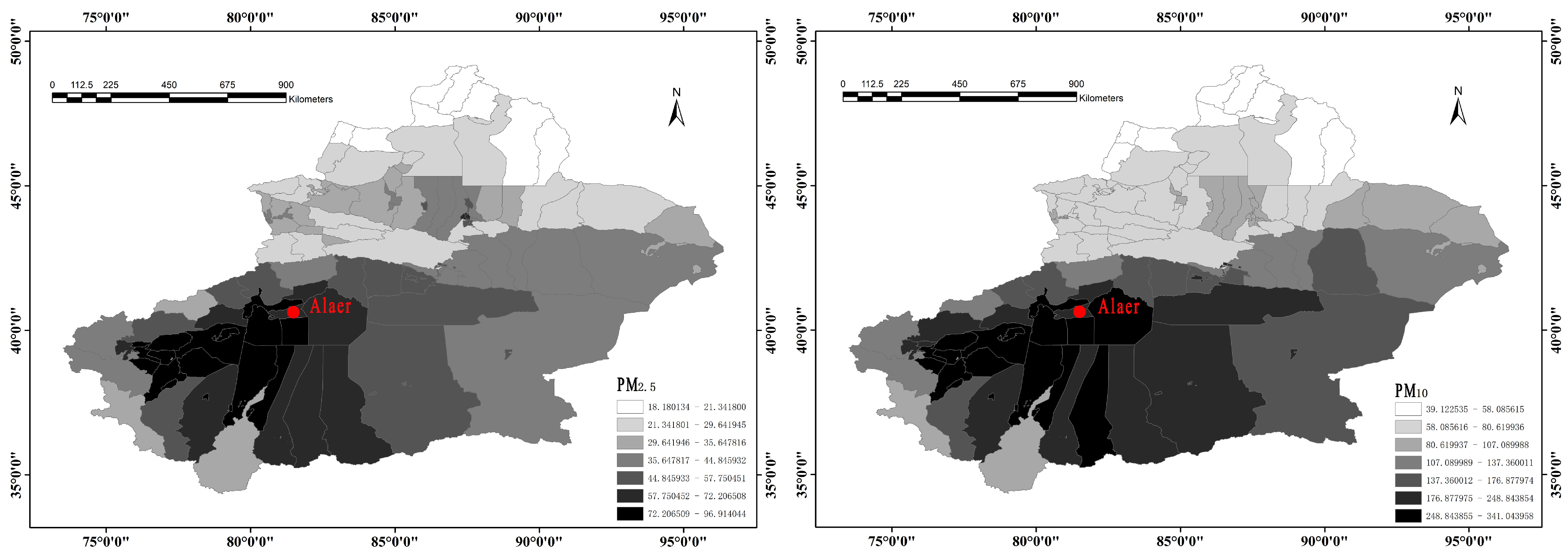
The study area is adjacent to the Taklamakan Desert and located at the northern edge of the Tarim Basin. Statistical data from Alaer City over the past decade (National Qinghai–Tibet Plateau Science Data Center) indicate that Alaer City has one of the highest average particulate matter concentrations among counties and cities in Xinjiang. Sandstorms occur frequently during spring and summer, particularly from May to August (Figure 2). Based on plant phenology, the experimental period was therefore defined as May–August 2025.

2.2. Plot Selection and Plot Layout

To elucidate the species composition of roadside green spaces in Alaer City and identify dominant tree species adapted to local arid and saline-alkali conditions, a systematic survey was conducted from March to April 2025 along 12 major urban thoroughfares within the built-up area of Alaer City. Employing standard field survey methods [20], we comprehensively analyzed the configuration characteristics and species composition patterns of the plant communities in these roadside green spaces. The survey results (Table 1) indicate that 14 tree species and 12 shrub species were recorded. Among them, the tree layer was dominated by Malus spectabilis (Aiton) Borkh., Fraxinus chinensis Roxb., and Platanus acerifolia (Aiton) Willd., with application proportions of 20.00%, 17.14%, and 17.14%, respectively, establishing them as the most extensively utilized and frequently occurring broadleaf species in local road greening. The shrub layer primarily consists of native, adaptable species such as Juniperus chinensis L., Platycladus orientalis (L.) Franco, Rosa chinensis Jacq., and Ulmus pumila ‘Jinye’. Drought tolerance [21,22] and salt-alkali resistance constitute the basis for the large-scale cultivation of Platanus acerifolia (Aiton) Willd. [23], Malus spectabilis (Aiton) Borkh. [24], and Fraxinus chinensis Roxb. [25] in Alaer.
Accordingly, this study focused on three representative tree species—Malus spectabilis (Aiton) Borkh., Fraxinus chinensis Roxb., and Platanus acerifolia (Aiton) Willd. Four major urban roads (Xingfu Road, Shengli Avenue, Kungang Avenue, and Banchao Avenue) were selected, and eight roadside green spaces representing three vegetation configuration patterns were established as study plots (Table 2). Typical roadside green space configurations in Alaer were selected, excluding extremely small saplings and unusually large old trees. Sample plots of 6 m × 10 m and 7 m × 10 m were established, and sampling was conducted from May to August. Data were collected twice monthly from April to July using instruments including a Plant Canopy Image Analyzer (LA-S, Hangzhou Wanshen Detection Technology Co., Ltd., Hangzhou, China), a diameter-at-breast-height (DBH) gauge, and a plant height meter, in order to calculate the average values of plant growth indicators.

2.3. Materials and Methods

2.3.1. Measurement of Leaf Dust Retention Capacity in Plant Communities

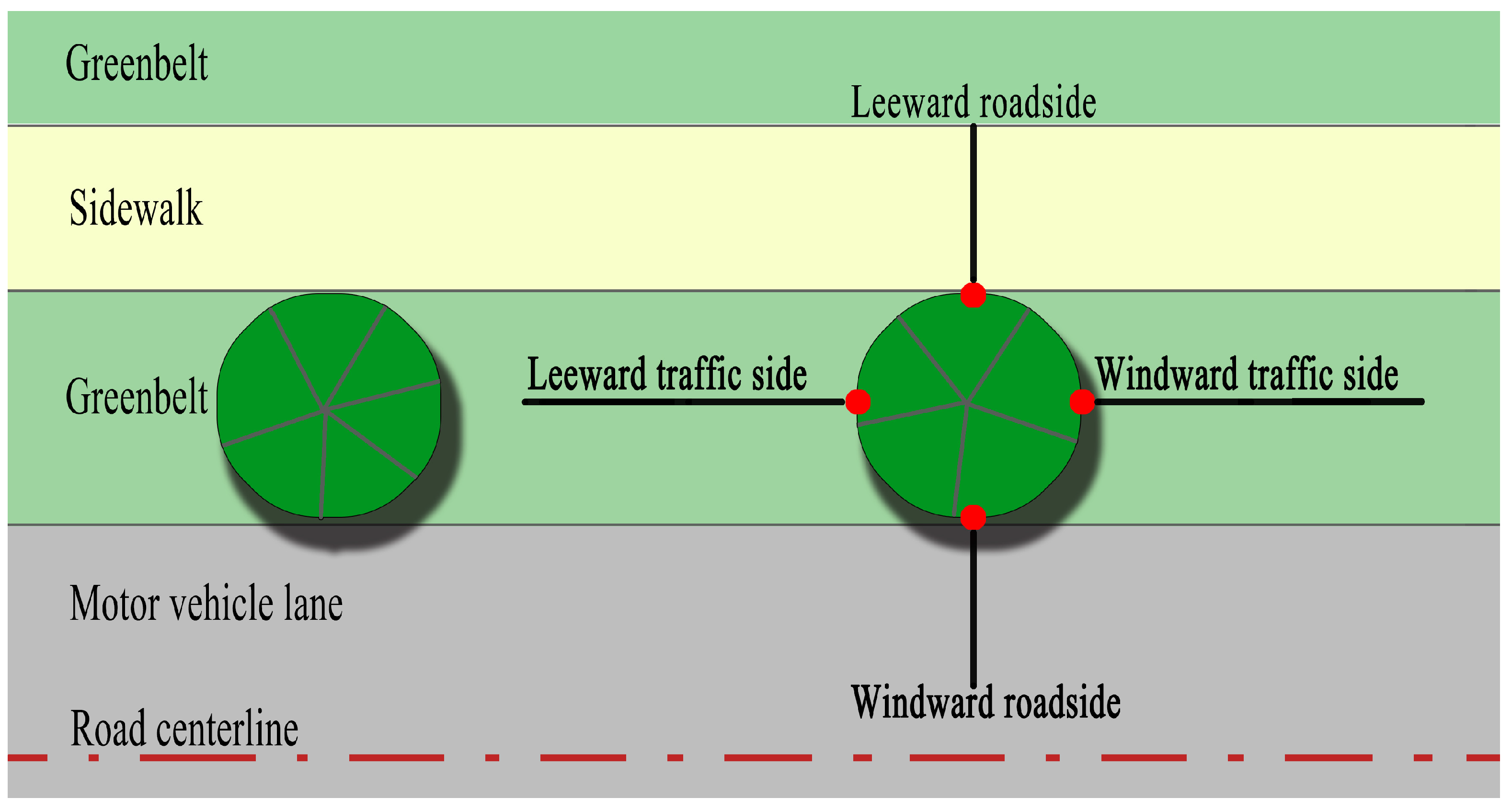
Sampling was conducted from May to August 2025 on clear, rain-free days with calm or weak wind conditions, and all sampling was completed within one day. Based on plant morphology and height within each plot, the canopy was divided into upper, middle, and lower layers for stratified sampling. Nine leaves were collected from each sampled plant, with equal numbers taken from the east, south, west, and north directions. Three replicates were established per species, and each replicate consisted of 36 leaves (Figure 3). Leaves were placed in polyethylene resealable bags and stored in a cooler for subsequent analysis. Vibration during collection and transportation was minimized to prevent particulate loss from leaf surfaces.
Leaf samples were soaked for at least 2 h to remove surface dust, then rinsed repeatedly with distilled water until all particulate matter was transferred into the soaking solution [26]. The solution was filtered under vacuum using pre-dried and weighed quantitative filter paper (M1). After filtration, the filter paper was dried at 60 °C for 24 h and weighed (recorded as M2). Leaf area was determined by scanning leaves and analyzing images using ImageJ software (Fiji, Version 2023.09.25) [27,28].
Dust retention capacity per unit leaf area was calculated as [29]:
X 1 = M 2 M 1 S
Total leaf area per plant was estimated as [30]:
R = exp(0.6031 + 0.2375H + 0.6906D − 0.0123S) + 0.1824
Dust retention capacity per plant was calculated as [31]:
X 2 = X 1 × R
where X1 is dust retention per unit leaf area (g·m−2); M1 and M2 are the masses of filter paper before and after filtration (g); S = πD(H + D)/2; R is total leaf area per plant; H is crown height; and D is mean crown width.

2.3.2. Scanning Electron Microscopy of Leaf Surface Structure

Fixed leaf samples were sequentially dehydrated in ethanol solutions of 30%, 50%, 70%, 85%, and 95%, followed by two 20 min treatments with absolute ethanol. Samples were then dried using a critical point dryer and sputter-coated with gold. Leaf microstructures were observed using a field-emission scanning electron microscope (Thermo Fisher Scientific, Apreo S, Waltham, MA, USA). Representative fields of view were selected, and micrographs were obtained [32].

2.3.3. Calculation of Dust Retention Capacity in Roadside Plant Communities

Representative roadside plant communities were selected, and vegetation information within 10 m × 6 m and 10 m × 7 m plots was recorded. Community dust retention capacity per unit area was calculated as the sum of dust retention capacity per plant multiplied by the number of individuals of each species, divided by plot area [33].

2.3.4. Calculation of Community Cooling and Humidification Rates

The cooling rate of plant communities was calculated as [34]:
T = T s T m T s × 100 %
The humidification rate was calculated as:
R H = R H s R H m R H s × 100 %
where Tₛ and RHₛ represent temperature and relative humidity at control points outside the green space, and Tₘ and RHₘ represent values within the green space.

2.3.5. Comprehensive Evaluation of Community Dust Retention Capacity

The entropy-based method has emerged as one of the most widely adopted approaches in academic research for the comprehensive evaluation of the ecological benefits of plant communities [35,36]. The specific steps are as follows:
Raw data were standardized as:
Z = x i j x i j ¯ σ
The proportion of the i-th community under the j-th indicator was calculated as:
p i j = x i j i = 1 m x i j
The entropy value of indicator j was calculated as:
e j = 1 ln m i = 1 m p i j ln p i j , 0 e j 1
The coefficient of variation was calculated as:
g j = 1 e j
The weight of indicator j was calculated as:
w j = g j i = 1 m g j
The comprehensive dust retention capacity score for community i was calculated as:
S i = j = 1 n w j x i j
Higher indicator weights indicate greater contributions to the overall evaluation, and higher composite scores represent stronger dust retention capacity performance of plant communities [37].

2.3.6. Statistical Analysis

Statistical analyses were performed using Excel 2014 (Microsoft Corp., Redmond, WA, USA) and SPSS 27 (IBM, Armonk, NY, USA). Origin 2024 (OriginLab, Northampton, MA, USA) was used for graphical visualization.

3. Results

3.1. Dust Retention Capacity per Unit Leaf Area

3.1.1. Differences in Dust Retention Capacity per Unit Leaf Area Among Plant Functional Types

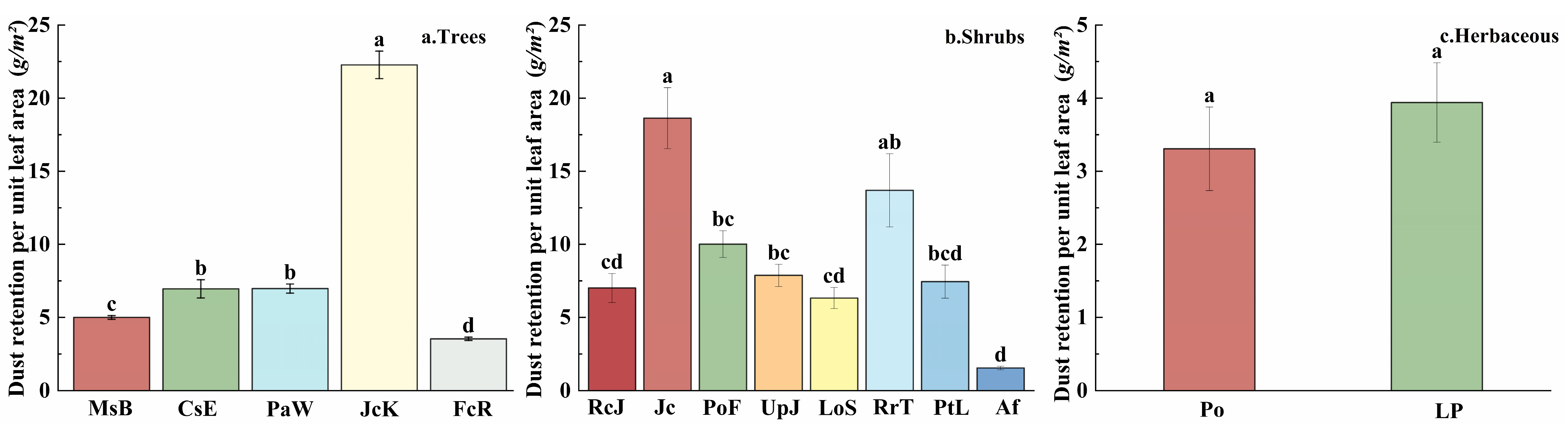
The dust retention capacity per unit leaf area of different plant species is presented in Figure 4. Significant interspecific differences were observed among tree species (Figure 4a) and shrubs (Figure 4b), whereas no significant differences were detected among herbaceous species (Figure 4c). The dust retention capacity per unit leaf area ranged from 1.53 to 22.28 g·m−2. Juniperus chinensis ‘Kaizuca’ exhibited the highest dust retention capacity (22.28 g·m−2), followed by Juniperus chinensis L. (18.63 g·m−2) and Rosa rugosa Thunb. (13.70 g·m−2). The subsequent ranking was Platycladus orientalis (L.) Franco, Ulmus pumila ‘Jinye’, Prunus triloba Lindl., Rosa chinensis Jacq., Platanus acerifolia (Aiton) Willd., Catalpa speciosa (Warder ex Barney) Engelm., Ligustrum obtusifolium Siebold & Zucc., Malus spectabilis (Aiton) Borkh., Lolium perenne L., Fraxinus chinensis Roxb., and Poa annua L., whereas Amorpha fruticosa L. exhibited the lowest dust retention capacity (1.53 g·m−2). Among trees, Juniperus chinensis ‘Kaizuca’ showed the strongest dust retention capacity; among shrubs, Juniperus chinensis L. performed best; and among herbaceous species, Lolium perenne L. exhibited the highest dust retention capacity.

3.1.2. Spatiotemporal Variation in Dust Retention Capacity per Unit Leaf Area

(1) Temporal variation.
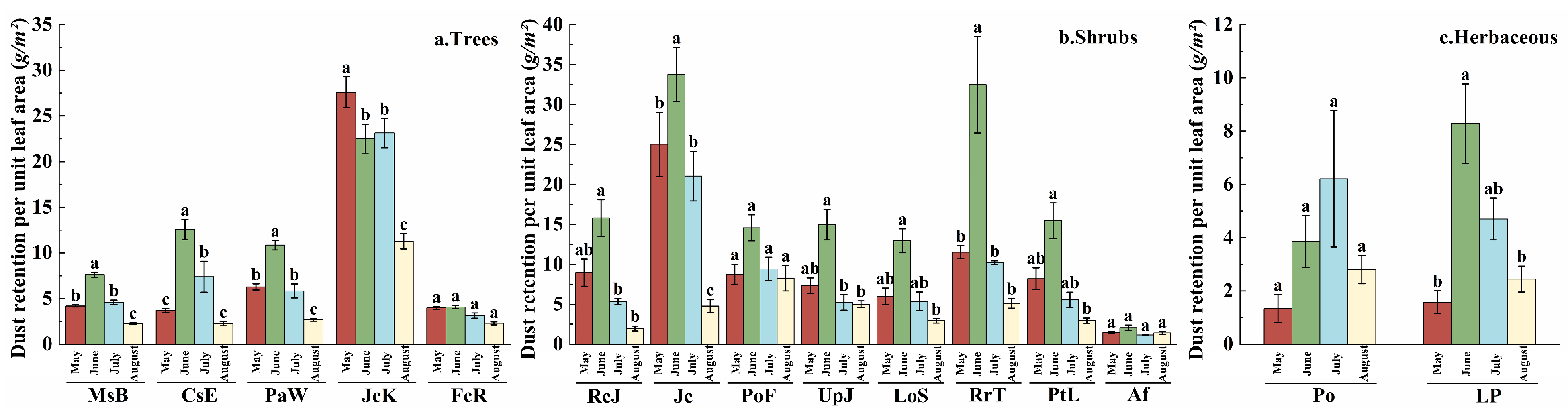
Significant temporal differences in dust retention capacity were observed among plant species from May to August (Figure 5). Cumulative data for the study period indicated that Juniperus chinensis ‘Kaizuca’ exhibited the highest dust retention capacity among tree species, while Juniperus chinensis L. showed the strongest capacity among shrubs. Among herbaceous species, Lolium perenne L. demonstrated higher dust retention than Poa annua L. For most species, dust retention in June was significantly higher than in other months. Overall, dust retention followed the pattern: June > May > July > August. By June, plant leaves are fully expanded and their surface characteristics have stabilized. During this period, dust storms increase in frequency, leading to peak dust deposition on leaf surfaces. By August, dust deposition declines as plants respond to high temperatures and drought by partially closing stomata to reduce water loss. In addition, light rainfall events during this time wash accumulated particulate matter from leaf surfaces. This pattern reflects an adaptive stress response jointly regulated by plant phenology, frequent sandstorms, and periodic light precipitation.
However, several species exhibited distinct seasonal patterns. For Catalpa speciosa (Warder ex Barney) Engelm., dust retention followed the sequence June > July > May > August, likely because May corresponds to the leaf expansion stage, during which dust interception capacity is relatively low [38]. For Juniperus chinensis ‘Kaizuca’, dust retention capacity followed the pattern May > July > June > August. As an evergreen species planted beneath tall Platanus acerifolia (Aiton) Willd. and Malus spectabilis (Aiton) Borkh., its canopy openness is extremely low, which restricts airflow and reduces particulate deposition [39]. For Poa annua L., dust retention capacity followed the sequence July > June > August > May, reflecting its slower early-season growth compared with Lolium perenne L. The retention efficiency follows the pattern: May > July > June > August. Poa annua L. exhibited slower growth in May and June compared to Lolium perenne L. [40], reflecting its slower early-season growth compared with Lolium perenne L.
(2) Spatial variation.
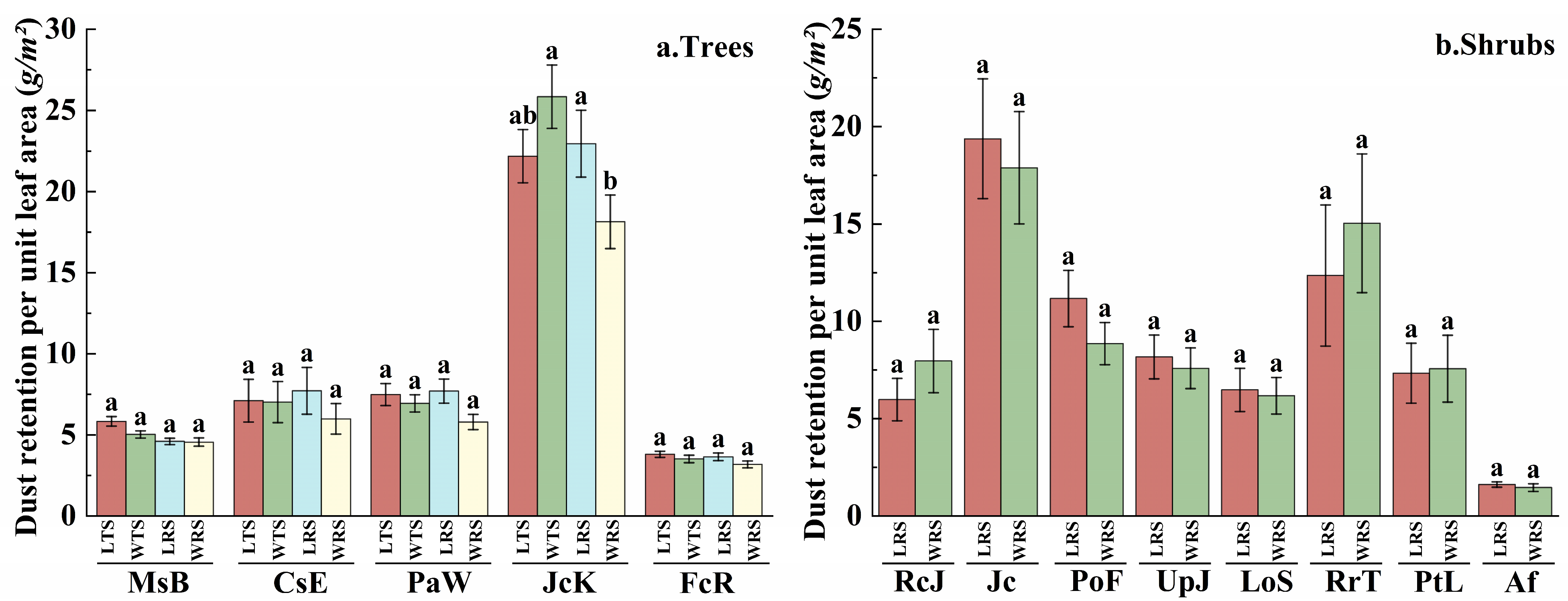
No significant differences in dust retention were detected among horizontal directions; however, overall dust retention capacity was higher on the leeward side of traffic than on the windward side, and higher on the leeward roadside than on the windward roadside (Figure 6). In contrast, Juniperus chinensis ‘Kaizuca’, Rosa rugosa Thunb., and Prunus triloba Lindl. exhibited higher dust deposition on the windward side than on the leeward side. This pattern may be attributed to their location within the central strip of roadside green belts, where plants are exposed to airflow vortices that enhance particulate deposition on the windward side [41].
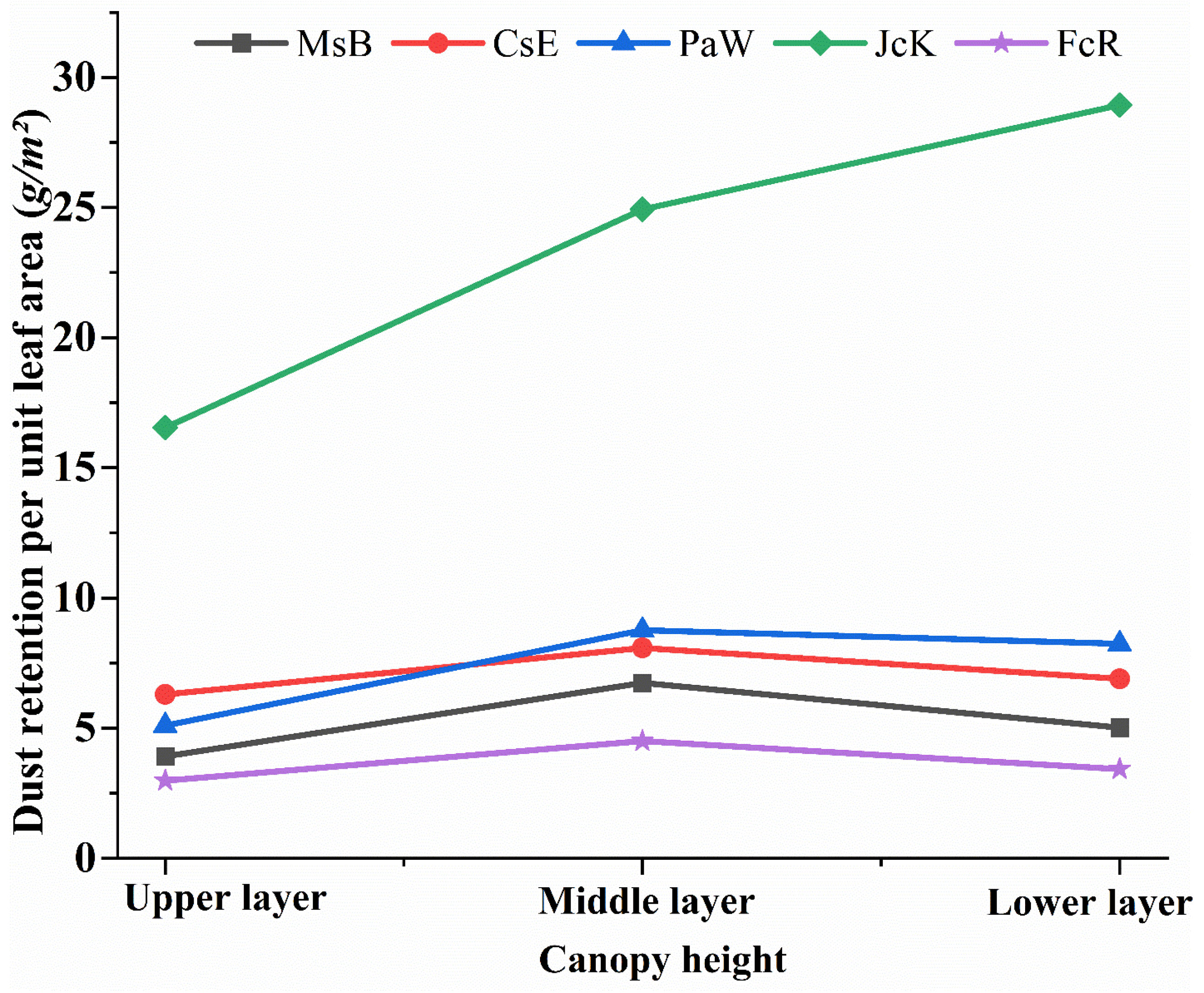
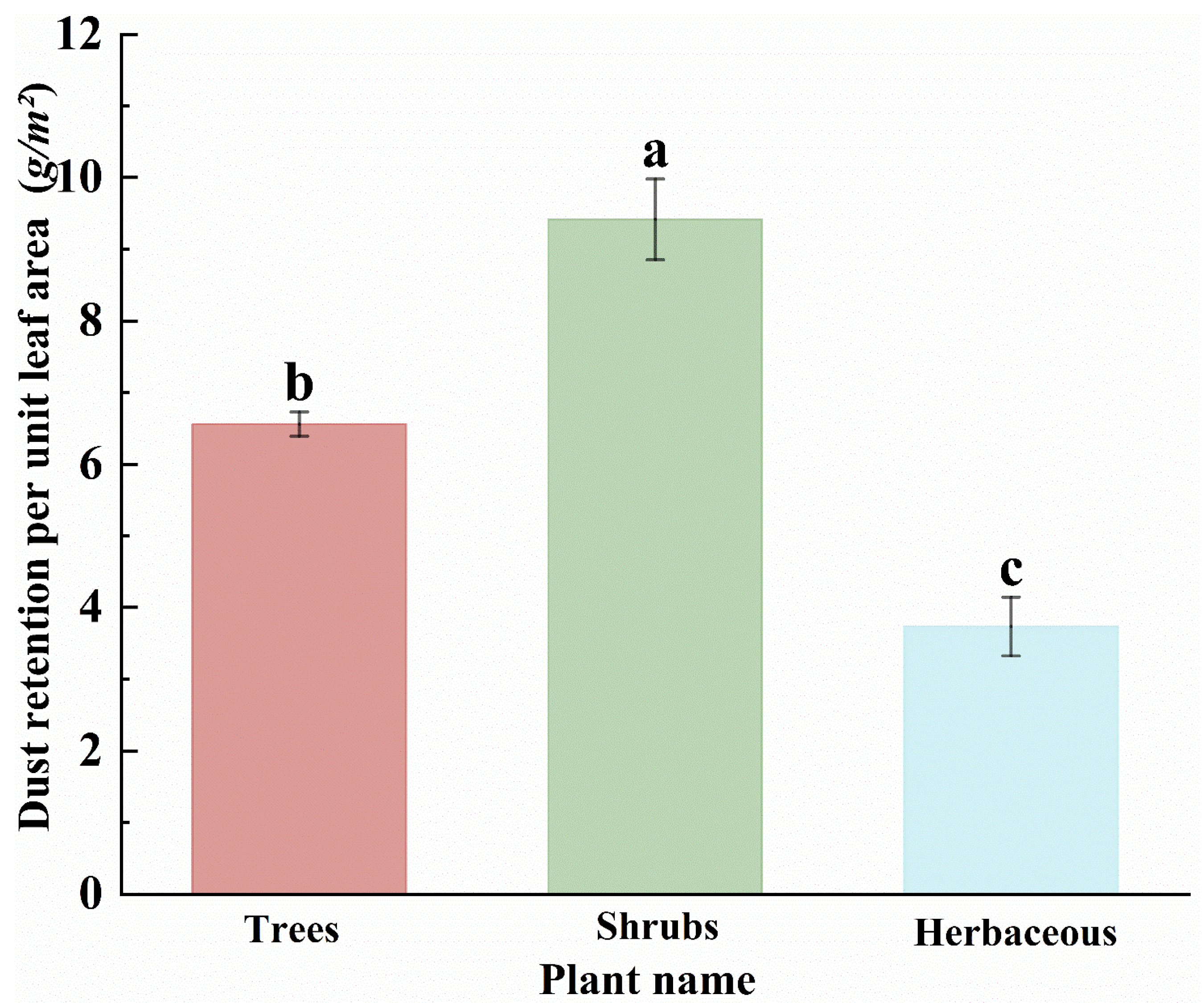
Vertical stratification significantly influenced dust retention in tree species. Except for Juniperus chinensis ‘Kaizuca’, most tree species exhibited the pattern: middle canopy layer > lower layer > upper layer (Figure 7). In contrast, Juniperus chinensis ‘Kaizuca’ showed the pattern: lower layer > middle layer > upper layer, primarily due to its pyramidal crown architecture. In most tree species, oval or rounded crowns promote greater dust accumulation in the middle canopy layer. In contrast, the dense lower foliage of Juniperus chinensis ‘Kaizuca’ is directly exposed to traffic-related dust, leading to higher particulate deposition in the lower layer [42]. Overall, dust retention capacity per unit leaf area differed significantly among plant functional types, following the pattern: shrubs > trees > herbaceous species (Figure 8) [43].

3.1.3. Relationships Between Leaf Surface Microstructure and Dust Retention Capacity

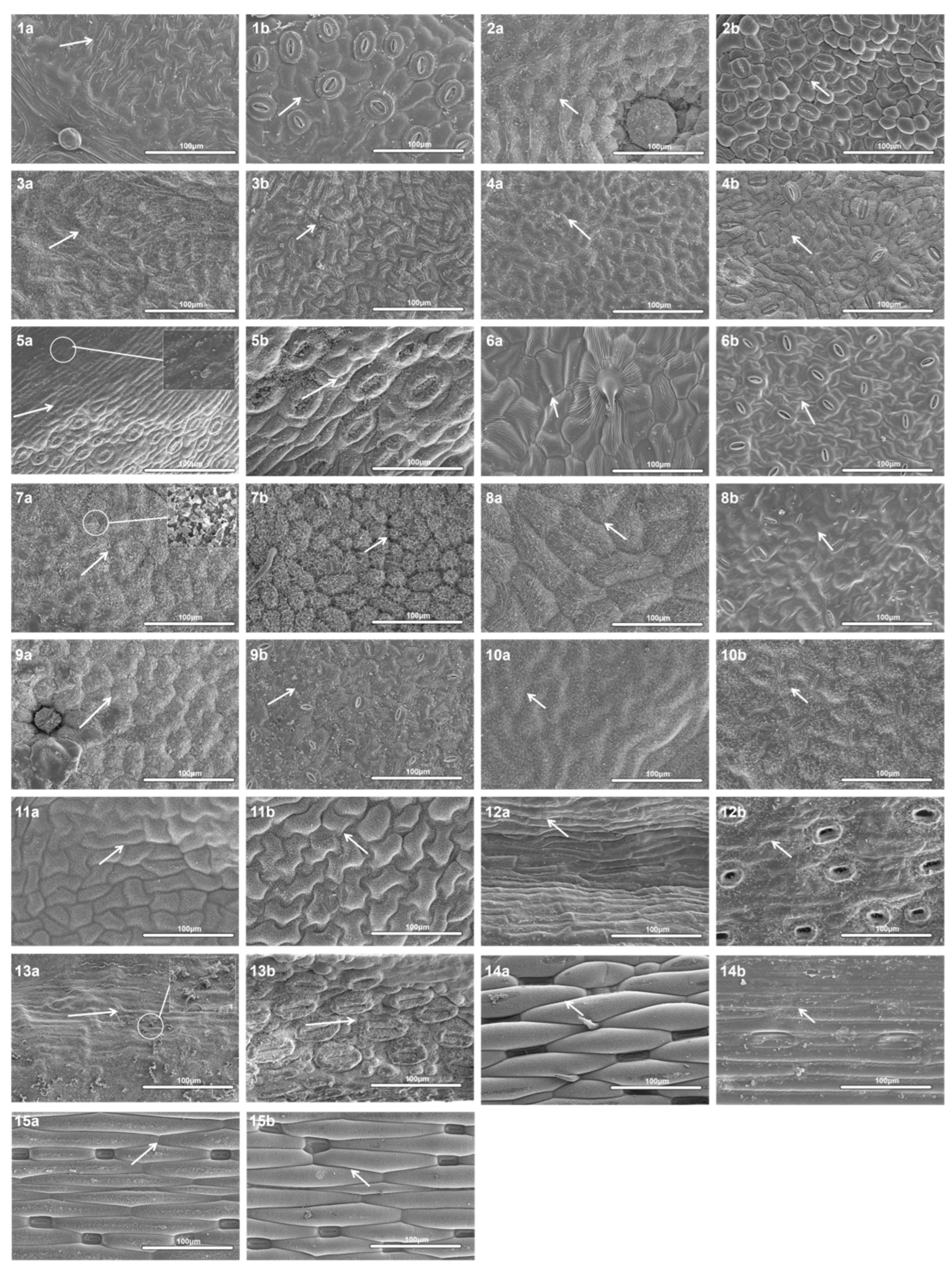
Analysis of leaf surface microstructural characteristics (Figure 9; Table 3) revealed pronounced interspecific differences in both macroscopic and microscopic features on the adaxial and abaxial leaf surfaces. Dust retention capacity was closely associated with leaf surface structure, reflecting the combined effects of multiple traits, including stomatal morphology and density, surface roughness, protrusions, wax layers, trichomes, and grooves. Among these factors, stomatal parameters play a dominant role in determining dust retention per unit leaf area, while surface roughness and groove width exert a secondary influence.
Leaves of Juniperus chinensis ‘Kaizuca’ (Figure 9(5)) and Juniperus chinensis L. (Figure 9(13)) were characterized by abundant trichomes, coarse wax crystals, and well-developed grooves. Dense pubescence and deep epidermal grooves effectively trapped particulate matter within stomatal cavities and surface depressions, resulting in the highest dust retention per unit area. Regardless of growth form, coniferous species exhibited a greater dust retention capacity than broadleaf species. Among the plant types analyzed, shrubs displayed the widest leaf groove, with Rosa rugosa Thunb. reaching 3.97 μm (Table 3). The abaxial epidermis exhibited numerous fine grooves and folds, forming irregular micro-concave structures that markedly increased surface roughness. A thin, adhesive wax layer with a finely granular texture further enhanced its dust retention capacity. Platycladus orientalis (L.) Franco displayed prominently raised stomata and a thick wax layer, which facilitated the adsorption of particulate matter along stomatal margins and within surface grooves, leading to relatively high dust retention. Shrubs exhibited a higher dust retention capacity per unit leaf area than trees or herbaceous plants. Tree species generally maintained high stomatal density, with Platanus acerifolia (Aiton) Willd. (Figure 9(1)) and Catalpa speciosa (Warder ex Barney) Engelm. (Figure 9(2)) reaching 314.49 and 442.62 mm−2, respectively. Most tree stomata were convex, which contributed to their moderate dust retention capacity. In contrast, herbaceous plants (Figure 9(14,15)) differed markedly from both trees and shrubs, exhibiting the narrowest stomatal grooves and the lowest stomatal density among the three groups, with a thin wax layer and sparse microstructural features. Their surfaces were more susceptible to particle erosion, resulting in the lowest dust retention capacity per unit leaf area.

3.2. Dust Retention Capacity of Individual Plants

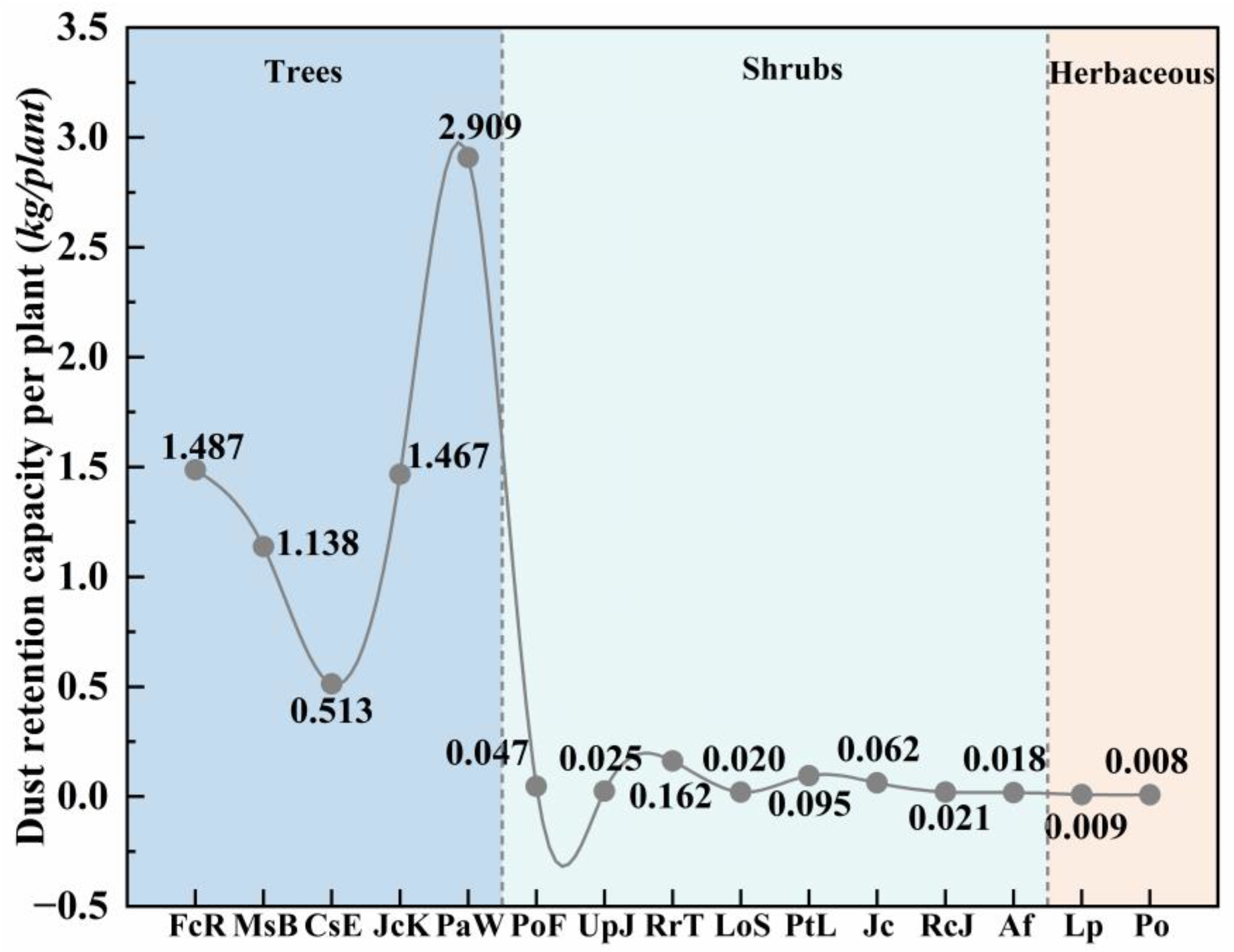
Significant differences in dust retention capacity were observed among individual plants (p < 0.05), with values ranging from 0.008 to 2.91 kg·plant−1 (Figure 10). Among tree species, Platanus acerifolia (Aiton) Willd. exhibited the highest dust retention capacity (2.909 kg·plant−1), followed by Fraxinus chinensis Roxb. (1.487 kg·plant−1), Juniperus chinensis ‘Kaizuca’ (1.467 kg·plant−1), and Malus spectabilis (Aiton) Borkh. (1.138 kg·plant−1). Catalpa speciosa (Warder ex Barney) Engelm. showed the lowest capacity (0.513 kg·plant−1). Among shrubs, Rosa rugosa Thunb. exhibited the highest dust retention capacity (0.161 kg·plant−1), followed by Prunus triloba Lindl., Juniperus chinensis L., Platycladus orientalis (L.) Franco, Ulmus pumila ‘Jinye’, Rosa chinensis Jacq., and Ligustrum obtusifolium Siebold & Zucc. Amorpha fruticosa L. exhibited the lowest capacity (0.018 kg·plant−1). Among herbaceous species, Lolium perenne L. showed relatively high dust retention (0.009 kg·plant−1), whereas Poa annua L. exhibited the lowest capacity (0.008 kg·plant−1).

3.3. Dust Retention Capacity of Plant Communities

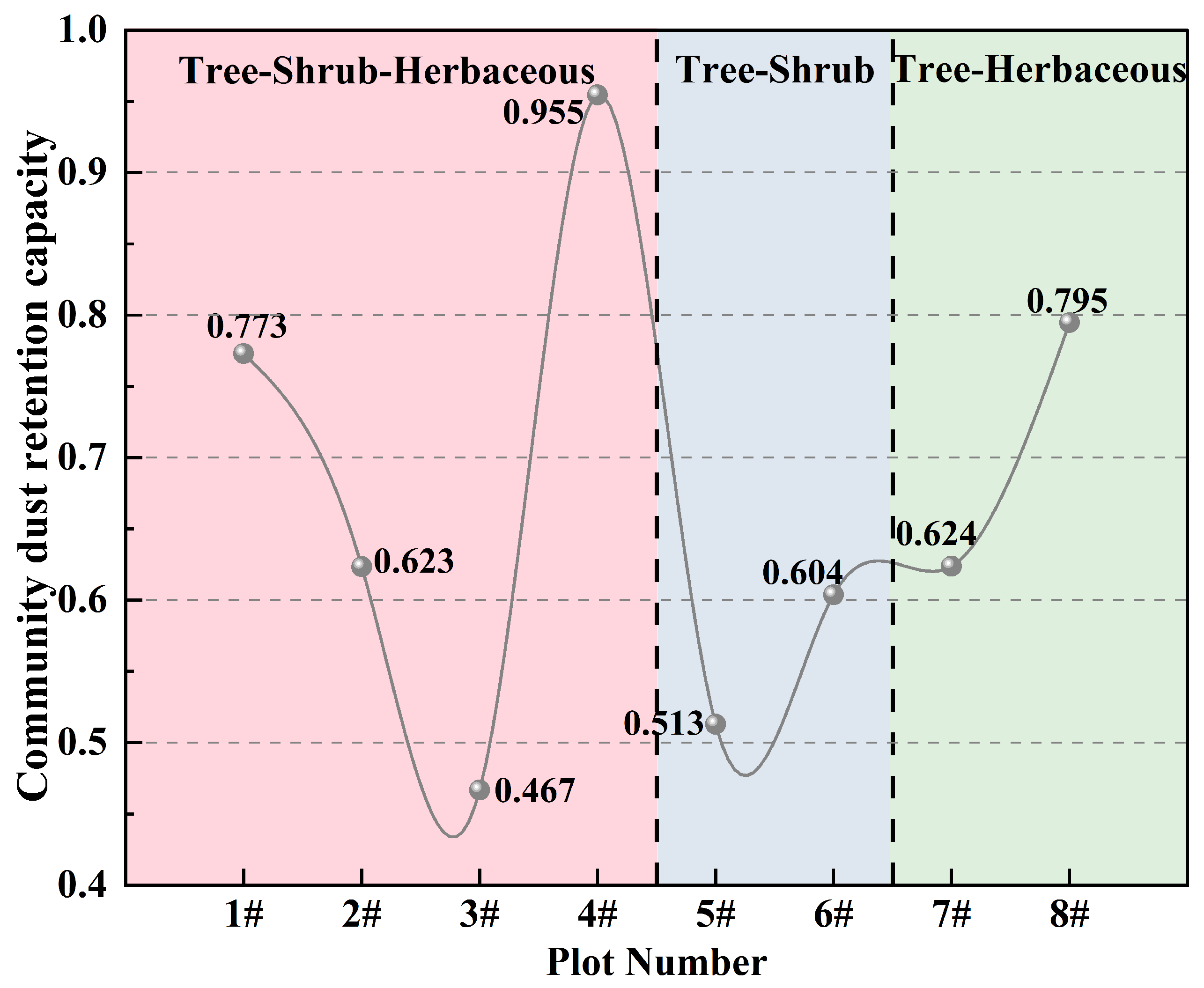
The dust retention capacities of different plant communities are presented in Figure 11. Community-level dust retention ranged from 0.467 to 0.955 kg·m−2. Community 4# exhibited the highest dust retention capacity (0.955 kg·m−2), followed by Communities 1#, 8#, 7#, 2#, and 6#, with values of 0.795, 0.773, 0.624, 0.623, and 0.604 kg·m−2, respectively. Communities 5# and 3# exhibited the lowest capacities, with values of 0.513 and 0.467 kg·m−2, respectively.
Comparative analysis of vegetation configuration patterns revealed that the tree–shrub–herbaceous and tree–herbaceous models exhibited higher dust retention capacities (0.704 and 0.709 kg·m−2, respectively), whereas the tree–shrub model showed lower dust retention (0.558 kg·m−2). Significant differences in dust retention were observed among the three configuration patterns. In the tree–herbaceous and tree–shrub–herbaceous models, shrubs and herbaceous plants occupy a larger proportion of the plot area and are distributed closer to the ground, enabling them to effectively intercept particulate matter generated by road traffic. Meanwhile, tree canopies capture a substantial proportion of airborne particles within the vertical airflow, thereby enhancing overall dust retention at the community level.

4. Discussion

Significant interspecific differences in dust retention per unit leaf area were observed, indicating that plant dust retention capacity arises from the synergistic effects of multiple morphological and structural traits. Although numerous studies have explored interspecific variation in dust retention, most have been conducted under humid climatic conditions. In contrast, this study focuses on the ecologically fragile region of southern Xinjiang, where dust storms occur frequently, and systematically investigates dust retention characteristics at both individual plant and community levels.

4.1. Dust Retention Capacity of Individual Plants

Path analysis is an effective method for elucidating the relationships between multiple independent variables and a dependent variable, typically implemented through stepwise regression analysis. In this process, independent variables are sequentially introduced into the regression model according to their statistical significance and relative contribution to the dependent variable, while variables with insignificant effects are eliminated. Thus, path analysis enables the identification and ranking of key factors influencing the dependent variable [44]. In this study, dust retention per unit leaf area was treated as the dependent variable, and leaf surface structural characteristics were used as independent variables. Path analysis (via stepwise regression) was applied to explore the mechanisms governing dust retention in different plant species. The results are presented in Table 4.
Previous studies have reported that dust retention capacity can differ by more than two- to threefold among tree species [45]. Here, the leaf surface structures of 15 plant species were examined using macroscopic observation and electron microscopy to clarify how leaf surface traits influence dust retention (Table 5). The results indicate that leaf aspect ratio and surface roughness are key factors promoting dust deposition [46,47]. A larger leaf aspect ratio may be associated with greater effective surface area and specific morphological features that facilitate stable particle adhesion. This finding is consistent with previous reports by Liu [48] and Wang [49]. Juniperus chinensis ‘Kaizuca’ and Juniperus chinensis L. exhibit narrow leaves with distinctive cuticular textures or dense pubescence. Their leaf surfaces are characterized by abundant trichomes, coarse wax crystals, and well-developed grooves. These features satisfy two critical conditions for dust retention—airflow modulation and increased attachment sites—thereby conferring high dust retention capacity. In contrast, Platanus acerifolia (Aiton) Willd., Malus spectabilis (Aiton) Borkh., and Fraxinus chinensis Roxb. possess broader leaves with relatively smoother surfaces. Airflow over such surfaces tends to be laminar, reducing particle collision frequency. Moreover, adhered particles are more easily removed by precipitation or strong winds, resulting in lower dust retention per unit leaf area [50]. These findings are consistent with previous studies by Kwak [51], Bridhikitti [52] and Gao [53].
Path analysis further revealed that stomatal aspect ratio exerts a significant negative direct effect on dust retention capacity: the more elongated the stomata, the lower the dust retention capacity. However, when interactions among traits were considered, stomatal aspect ratio exhibited a positive indirect effect mediated by stomatal protrusion. This suggests that elongated stomata alone are unfavorable for dust retention, but pronounced protruding structures can partially offset their negative influence. Groove width showed a significant positive direct effect on dust retention capacity, whereas surface roughness produced a negative indirect effect (−0.118). This indicates that excessively wide grooves may reduce overall surface roughness and, consequently, the number of effective particle attachment sites. Such trade-offs help explain inconsistencies reported in previous microstructural–functional studies. For example, Pu et al. emphasized the positive role of grooves [54], likely focusing on their direct reservoir function, whereas Huang et al. highlighted their negative effect [55]. Studies that identify roughness as the dominant factor emphasize surface adhesion capacity [56]. Correlation analysis confirms that groove morphology and roughness interact synergistically, suggesting that optimal dust retention depends on the coordinated configuration of these traits. Future research should quantitatively characterize the spatial geometric relationship between groove morphology and surface roughness at finer scales to further verify this trade-off mechanism.
The results for dust retention per unit leaf area of the same tree species across different roadside green-space plant communities (Table 6) indicate that the dust retention efficiency of the three tested tree species remains relatively stable regardless of habitat disturbance. Dust retention consistently follows the order: Platanus acerifolia (Aiton) Willd. (mean 6.977 g·m−2) > Malus spectabilis (Aiton) Borkh. (mean 4.399 g·m−2) > Fraxinus chinensis Roxb. (mean 3.534 g·m−2). Moreover, the minimum dust retention per unit leaf area of London plane (6.468 g·m−2) exceeded the maximum values recorded for crabapple (5.532 g·m−2) and Chinese ash (3.681 g·m−2). This stable interspecific ranking indicates that plant dust retention capacity is primarily determined by intrinsic species traits [57]. Even under similar phenological conditions, however, the dust retention capacity of the same species may exhibit significant intraspecific phenotypic variation due to differences in community structure and microenvironment [58].
As shown by the coefficient of variation (CV) for different life forms in Table 6, the environmental plasticity of dust retention capacity differs significantly d among plant life forms. Herbaceous plants exhibited the strongest plastic response [59], with a life-form-level CVreaching 25.80% (with Poa annua L. showing the highest species-level CV at 30.65%), indicating their dust retention capacity is highly sensitive to environmental variation [60]. Tree species demonstrated moderate plasticity, with a life-form-level CV of 11.59%. In contrast, shrubs exhibited the weakest environmental plasticity, with a life-form-level CV of only 11.03%. Moreover, dust retention levels remained highly stable across different habitats for most shrub species (e.g., Juniperus chinensis L., CV = 2.66%; Ulmus pumila ‘Jinye’, CV = 3.15%). These results confirm that shrub dust retention capacity is primarily governed by intrinsic species traits [29], whereas herbaceous species are more strongly influenced by environmental plasticity [61].
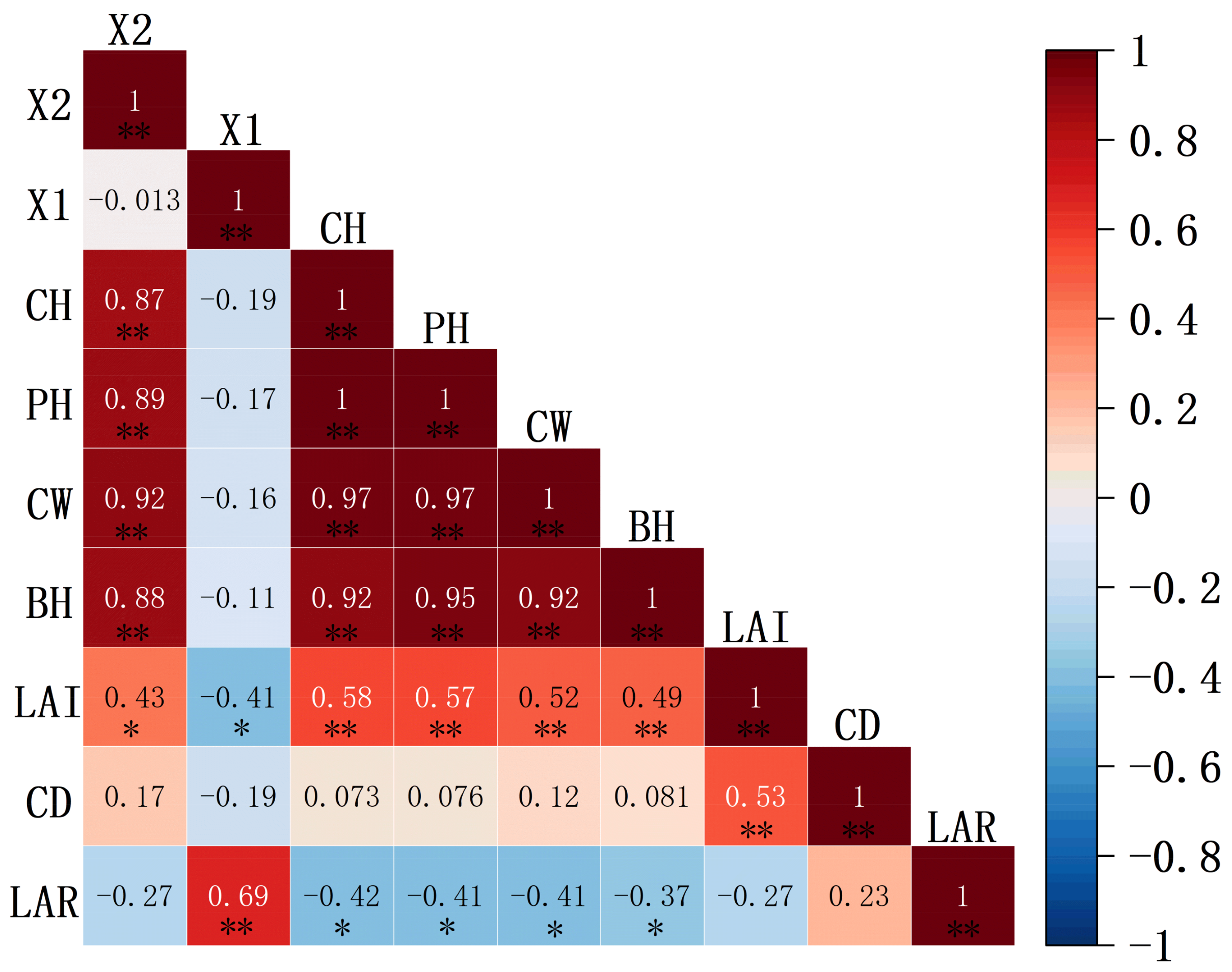
Growth characteristics of tree species—including tree height, crown height, crown width, and branch-free height—significantly influence total leaf area per tree [62], thereby affecting dust retention capacity at the individual level. This study demonstrates that dust deposition per plant is jointly determined by total leaf area and leaf area index (Figure 12), consistent with the findings of Tao [63] and Li [64]. Even when dust retention capacity per unit area is not maximal, plants with large size and extensive leaf area can exhibit high overall dust retention capacity [65]. Broadleaf species generally exhibit greater tree height, crown spread, and branch-free height than conifers, resulting in significantly higher dust retention capacity per individual tree [66]. Although Juniperus chinensis ‘Kaizuca’ shows high dust retention capacity per unit leaf area, its relatively small crown spread and total leaf area limit its overall dust retention capacity. Conversely, Platanus acerifolia (Aiton) Willd. exhibits moderate dust retention capacity per unit area but achieves high per-tree retention due to its broad canopy and abundant foliage. Compared with dust retention capacity per individual plant, total leaf area exerts a greater influence than dust retention capacity per unit leaf area. Therefore, when evaluating dust retention performance, tree species with large total leaf area should be prioritized.

4.2. Particulate Matter Retention Capacity of Plant Communities

The results indicate that plant communities with a multi-layered vertical structure composed of trees, shrubs, and herbaceous plants exhibit significantly higher dust retention capacity than single-layer green space configurations. Increased vertical stratification enhances dust retention effectiveness, consistent with previous studies [67]. The spatial structure and configuration of plant communities are critical determinants of atmospheric particulate matter deposition [68]. In tree–herb communities, dense foliage in both the tree and herbaceous layers is less susceptible to airflow disturbance, resulting in superior dust retention capacity. In shrub-dominated communities, shrubs are more vulnerable to wind and anthropogenic disturbance, leading to lower dust retention compared with tree–herb communities [69].
Significant differences in dust retention capacity were observed among plant communities, likely due to the combined effects of species composition and spatial configuration. Dust retention capacity at the individual-tree level is a key determinant of community-level performance. Using the entropy-weighted method, plant communities were comprehensively evaluated based on species diversity, configuration patterns, dust retention capacity, dust retention capacity per unit leaf area, dust retention capacity per individual plant, community cooling rate, and humidification rate (Table 7). Communities dominated by Platanus acerifolia (Aiton) Willd. (No. 4# and No. 6#) achieved significantly higher comprehensive scores than other communities. This result is consistent with previous findings by Sun [70] and Zhang [71]. Notably, in communities dominated by Malus spectabilis (Aiton) Borkh., plots 1# and 5# exhibited higher species richness than plots 2# and 7#, highlighting the influence of species richness and structural diversity on dust retention capacity, in agreement with Zhang [53] and Liu [72]. Tree–shrub–herb communities exhibited stronger dust retention than tree–herb communities. Within the study plots, Plot 2 outperformed Plot 7, and Plot 3 outperformed Plot 8, likely due to differences in wind speed and direction, which may cause particulate matter deposited on leaves to migrate into the shrub layer, combined with secondary dust resuspension from traffic.
Overall, this study identifies dominant species and clarifies particulate matter retention mechanisms in roadside green spaces at both individual and community scales. Community-level particulate matter retention depends not only on dust retention capacity per unit leaf area and per individual plant, but also on tree growth characteristics, community configuration patterns, species richness, and structural diversity. For urban roadside green spaces in arid regions of southern Xinjiang, it is recommended to adopt a spatial structure characterized by “vertical stratification and a mix of evergreen and deciduous species.” The canopy should be anchored by high dust-retention species such as Platanus acerifolia (Aiton) Willd., complemented by evergreen species such as Juniperus chinensis ‘Kaizuca’ to maintain dust retention during winter. Shrubs should include Juniperus chinensis L. and Rosa rugosa Thunb., with Lolium perenne L. as the herbaceous layer, forming a multi-layered tree–shrub–herb structure. Monoculture planting patterns should be avoided. Enhancing shrub layers and species diversity can maximize dust retention benefits while achieving optimal integration of aesthetic, ecological, and functional values.
This study employed the entropy-weighted method as an objective approach to evaluate community-level particulate matter retention. To improve the perceptual relevance of evaluation indicators, future studies should incorporate subjective assessment metrics, such as public satisfaction surveys and perceived health impacts. Such integration would yield results more closely aligned with societal needs. Additionally, the study did not account for variations in dust retention capacity associated with leaf lifespan—an inherent characteristic of plants—when assessing dust retention per unit leaf area and per individual plant. It also did not consider potential changes in dust retention capacity resulting from variations in the external air environment caused by traffic flow. Future research should further investigate the effects of these two factors on plant dust retention performance.
Furthermore, plant dust retention is a dynamic process influenced by environmental variability. Future research should integrate dynamic monitoring of leaf surface microstructure, environmental factors, and dust retention mechanisms. Establishing a long-term monitoring platform is recommended to track temporal changes in leaf microstructure (e.g., via scanning electron microscopy), real-time environmental parameters (wind speed, humidity, particulate composition and concentration, precipitation intensity), and dynamic variations in dust deposition and deposition rates.

5. Conclusions

Roadside green spaces function as critical ecological barriers in urban environments, with plant communities playing a key role in improving regional air quality. This study investigated typical roadside plant communities in southern Xinjiang, a region characterized by extreme aridity and frequent dust storms. By measuring dust retention at individual and community levels and analyzing leaf surface microstructure, we evaluated the comprehensive dust retention performance of different community configuration patterns. The main conclusions are as follows:
(1)
Spatiotemporal variation in dust retention capacity per unit leaf area: Juniperus chinensis ‘Kaizuca’ exhibited the strongest dust retention capacity, followed by Juniperus chinensis L. and Rosa rugosa Thunb. Dust retention followed the seasonal pattern June > May > July > August. Horizontally, both trees and shrubs showed higher dust retention on the leeward side of roads than on the windward side. Vertically, dust retention in trees followed the pattern middle layer > lower layer > upper layer. Leaf dust retention is governed by the combined effects of multiple factors, including leaf aspect ratio, stomatal aspect ratio, stomatal protrusion, stomatal density, wax layer characteristics, and surface roughness. Leaf aspect ratio exerted a significant positive direct effect, whereas stomatal aspect ratio showed a significant negative direct effect on dust retention.
(2)
Dust retention capacity per plant: Among trees, Platanus acerifolia (Aiton) Willd. exhibited the highest dust retention capacity, followed by Fraxinus chinensis Roxb., Juniperus chinensis ‘Kaizuca’, and Malus spectabilis (Aiton) Borkh. Among shrubs, Rosa rugosa Thunb. showed relatively high dust retention, followed by Prunus triloba Lindl., Juniperus chinensis L., Platycladus orientalis (L.) Franco, Ulmus pumila ‘Jinye’, Rosa chinensis Jacq., and Ligustrum obtusifolium Siebold & Zucc., whereas Amorpha fruticosa L. exhibited the lowest capacity. Among herbaceous species, Lolium perenne L. demonstrated relatively strong dust retention, while Poa annua L. showed the weakest performance. Per-plant dust retention is strongly influenced by total leaf area and leaf area index, leading to higher overall retention than that indicated by unit-area measurements alone.
(3)
Dust retention capacity of plant communities and configuration patterns: Tree–shrub–herb and tree–herb configuration patterns exhibited stronger dust retention than tree–shrub patterns. Community spatial structure and configuration are key determinants of atmospheric particulate matter deposition. Multi-layered communities centered on Platanus acerifolia (Aiton) Willd. achieved optimal synergy among dust retention, landscape aesthetics, and ecological functions. Employing spatial configuration such as a “sparse front-dense middle-layered rear” structure or a “staggered height arrangement with evergreen and deciduous species”, vegetation can gradually transition from low to high and form sparse to dense. Such configurations maintain adequate road visibility while forming an effective multi-layered dust interception barrier.
(4)
These findings provide empirical evidence and optimization strategies for plant selection and sustainable landscape design in roadside green spaces in southern Xinjiang and other arid regions. For other arid and semi-arid areas worldwide affected by aeolian dust, the dust retention mechanisms and community optimization strategies identified in this study offer valuable references for related research and green space design. It is important to note, however, that specific species selection should be localized according to native plant resources, climatic adaptability, and site conditions in the target region to ensure ecological suitability and long-term sustainability of vegetation configurations. By providing multi-scale insights into nature-based dust mitigation mechanisms in arid urban environments, this study contributes to the advancement of plant functional ecology, urban ecology, environmental science, landscape architecture, and environmental engineering.

Author Contributions

Conceptualization, F.W.; methodology, R.L.; software, F.C.; validation, F.W.; formal analysis, F.W.; investigation, F.C.; resources, F.W.; data curation, F.W.; writing—original draft preparation, F.W.; visualization, R.L.; project administration, R.L.; funding acquisition, R.L. All authors have read and agreed to the published version of the manuscript.

Funding

The research was supported by the Key Research and Development Program of the Xinjiang Uygur Autonomous Region (No. 2024B04031-2).

Data Availability Statement

The data that support the findings of this study are available from the corresponding author upon reasonable request.

Conflicts of Interest

The authors declare no conflicts of interest.

References

  1. Lelieveld, J.; Evans, J.S.; Fnais, M.; Giannadaki, D.; Pozzer, A. The Contribution of Outdoor Air Pollution Sources to Premature Mortality on a Global Scale. Nature 2015, 525, 367–371. [Google Scholar] [CrossRef] [Scilit] [PubMed]
  2. Schraufnagel, D.E.; Balmes, J.R.; Cowl, C.T.; De Matteis, S.; Jung, S.-H.; Mortimer, K.; Perez-Padilla, R.; Rice, M.B.; Riojas-Rodriguez, H.; Sood, A.; et al. Air Pollution and Noncommunicable Diseases. Chest 2019, 155, 409–416. [Google Scholar] [CrossRef] [Scilit] [PubMed]
  3. Wen, Z.; Ma, X.; Xu, W.; Si, R.; Liu, L.; Ma, M.; Zhao, Y.; Tang, A.; Zhang, Y.; Wang, K.; et al. Combined Short-Term and Long-Term Emission Controls Improve Air Quality Sustainably in China. Nat. Commun. 2024, 15, 5169. [Google Scholar] [CrossRef] [Scilit]
  4. Meo, S.A.; Salih, M.A.; Alkhalifah, J.M.; Alsomali, A.H.; Almushawah, A.A. Environmental Pollutants Particulate Matter (PM2.5, PM10), Carbon Monoxide (CO), Nitrogen Dioxide (NO2), Sulfur Dioxide (SO2), and Ozone (O3) Impact on Lung Functions. J. King Saud Univ. Sci. 2024, 36, 103280. [Google Scholar] [CrossRef] [Scilit]
  5. Hussein, T.; Li, X.; Al-Dulaimi, Q.; Daour, S.; Atashi, N.; Viana, M.; Alastuey, A.; Sogacheva, L.; Arar, S.; Al-Hunaiti, A.; et al. Particulate Matter Concentrations in a Middle Eastern City—An Insight to Sand and Dust Storm Episodes. Aerosol Air Qual. Res. 2020, 20, 2780–2792. [Google Scholar] [CrossRef] [Scilit]
  6. Edeigba, B.A.; Ashinze, U.K.; Umoh, A.A.; Biu, P.W.; Daraojimba, A.I. Urban green spaces and their impact on environmental health: A Global Review. World J. Adv. Res. Rev. 2024, 21, 917–927. [Google Scholar] [CrossRef] [Scilit]
  7. Wang, A.; Guo, Y.; Fang, Y.; Lu, K. Research on the Horizontal Reduction Effect of Urban Roadside Green Belt on Atmospheric Particulate Matter in a Semi-Arid Area. Urban For. Urban Green. 2022, 68, 127449. [Google Scholar] [CrossRef] [Scilit]
  8. Liu, Z.; Rieder, H.E.; Schmidt, C.; Mayer, M.; Guo, Y.; Winiwarter, W.; Zhang, L. Optimal Reactive Nitrogen Control Pathways Identified for Cost-Effective PM2.5 Mitigation in Europe. Nat. Commun. 2023, 14, 4246. [Google Scholar] [CrossRef] [Scilit]
  9. Tan, X.-Y.; Liu, L.; Wu, D.-Y. Relationship between Leaf Dust Retention Capacity and Leaf Microstructure of Six Common Tree Species for Campus Greening. Int. J. Phytoremediation 2022, 24, 1213–1221. [Google Scholar] [CrossRef] [Scilit]
  10. Nurmamat, K.; Halik, Ü.; Baidourela, A.; Aishan, T. Atmospheric Particle Distribution on Tree Leaves in Different Urban Areas of Aksu City, Northwest China. Nat. Environ. Pollut. Technol. 2022, 21, 1–9. [Google Scholar] [CrossRef] [Scilit]
  11. Park, S.H.; Gong, S.L.; Gong, W.; Makar, P.A.; Moran, M.D.; Zhang, J.; Stroud, C.A. Relative Impact of Windblown Dust versus Anthropogenic Fugitive Dust in PM2.5 on Air Quality in North America. J. Geophys. Res. Atmos. 2010, 115, 1–13. [Google Scholar] [CrossRef] [Scilit]
  12. Liu, J.; Ding, J.; Rexiding, M.; Li, X.; Zhang, J.; Ran, S.; Bao, Q.; Ge, X. Characteristics of Dust Aerosols and Identification of Dust Sources in Xinjiang, China. Atmos. Environ. 2021, 262, 118651. [Google Scholar] [CrossRef] [Scilit]
  13. Jiang, B.; Sun, C.; Mu, S.; Zhao, Z.; Chen, Y.; Lin, Y.; Qiu, L.; Gao, T. Differences in Airborne Particulate Matter Concentration in Urban Green Spaces with Different Spatial Structures in Xi’an, China. Forests 2021, 13, 14. [Google Scholar] [CrossRef] [Scilit]
  14. Singh, R.; Chavan, S.B.; Tomar, A.; Singh, H.; Chauhan, V.; Paul, N.; Singh, A.K. Species Variation in Air Pollution Tolerance, Performance, and Dust Retention of Urban Roadside Trees: Implications for Urban Greening and Green Corridor Planning. Air Qual. Atmos. Health 2025, 18, 3311–3327. [Google Scholar] [CrossRef] [Scilit]
  15. Sheng, Q.; Guo, Y.; Lu, J.; Song, S.; Li, W.; Yang, R.; Zhu, Z. A Study on the Dust Retention Effect of the Vegetation Community in Typical Urban Road Green Spaces—In the Case of Ying Tian Street in Nanjing City. Sustainability 2024, 16, 2656. [Google Scholar] [CrossRef] [Scilit]
  16. Al-Toukhy, A.-T. Effect of Air Pollution on Leaf Traits of Three Tree Species Growing in the Industrial Zone of Jeddah, Saudi Arabia. J. King Abdulaziz Univ. 2015, 26, 33–38. [Google Scholar] [CrossRef] [Scilit]
  17. Uni, D.; Katra, I. Airborne Dust Absorption by Semi-Arid Forests Reduces PM Pollution in Nearby Urban Environments. Sci. Total Environ. 2017, 598, 984–992. [Google Scholar] [CrossRef] [Scilit]
  18. El Amrousi, M.; Elhakeem, M.; Paleologos, E.K. Industrial Neighborhoods in Desert Cities: Designing Urban Landscapes to Reduce Sandstorm Effects in Mussafah. Front. Built Environ. 2023, 9, 1158543. [Google Scholar] [CrossRef] [Scilit]
  19. Zhang, X.-X.; Yang, X.-H.; Yang, F.; Lei, J.-Q.; Ali, M.; Li, S.-Y.; Liu, L.-Y.; Xue, Y.-B.; Wang, Z.-F.; Tian, W.-J.; et al. Windblown Dust in the Tarim Basin, Northwest China. Sci. Rep. 2025, 15, 11209. [Google Scholar] [CrossRef] [Scilit]
  20. El-Ghani, M.A.; Ragaey, M.; El-Wahab, S.A.; Gaafar, A. Unravelling the Relationship between Soil, Habitat, and Species Distribution Patterns in an Urbanized Desert Landscape: Insights from Southern Oases, Western Desert, Egypt. Urban Ecosyst. 2025, 28, 133. [Google Scholar] [CrossRef] [Scilit]
  21. Claude, A.; Nadam, P.; Brajon, L.; Leitao, L.; Planchais, S.; Lameth, V.; Castell, J.; Dellero, Y.; Savouré, A.; Repellin, A.; et al. The Isohydric Strategy of Platanus × Hispanica Tree Shapes Its Response to Drought in an Urban Environment. Physiol. Plant. 2024, 176, e70021. [Google Scholar] [CrossRef] [Scilit] [PubMed]
  22. Velikova, V.; Arena, C.; Izzo, L.G.; Tsonev, T.; Koleva, D.; Tattini, M.; Roeva, O.; De Maio, A.; Loreto, F. Functional and Structural Leaf Plasticity Determine Photosynthetic Performances during Drought Stress and Recovery in Two Platanus Orientalis Populations from Contrasting Habitats. Int. J. Mol. Sci. 2020, 21, 3912. [Google Scholar] [CrossRef] [Scilit]
  23. Velikova, V.; Tsonev, T.; Tattini, M.; Arena, C.; Krumova, S.; Koleva, D.; Peeva, V.; Stojchev, S.; Todinova, S.; Izzo, L.G.; et al. Physiological and Structural Adjustments of Two Ecotypes of Platanus orientalis L. from Different Habitats in Response to Drought and Re-Watering. Conserv. Physiol. 2018, 6, coy073. [Google Scholar] [CrossRef] [Scilit] [PubMed]
  24. Xu, Y.; Liu, Y.; Yue, L.; Zhang, S.; Wei, J.; Zhang, Y.; Huang, Y.; Zhao, R.; Zou, W.; Feng, H.; et al. MsERF17 Promotes Ethylene-Induced Anthocyanin Biosynthesis Under Drought Conditions in Malus Spectabilis Leaves. Plant Cell Environ. 2025, 48, 1890–1902. [Google Scholar] [CrossRef] [Scilit]
  25. Bi, M.-H.; Jiang, C.; Brodribb, T.; Yang, Y.-J.; Yao, G.-Q.; Jiang, H.; Fang, X.-W. Ethylene Constrains Stomatal Reopening in Fraxinus chinensis Post Moderate Drought. Tree Physiol. 2023, 43, 883–892. [Google Scholar] [CrossRef] [Scilit]
  26. Bui, H.-T.; Odsuren, U.; Kim, S.-Y.; Park, B.-J. Particulate Matter Accumulation and Leaf Traits of Ten Woody Species Growing with Different Air Pollution Conditions in Cheongju City, South Korea. Atmosphere 2022, 13, 1351. [Google Scholar] [CrossRef] [Scilit]
  27. Yu, J.; Yang, R. Analysis on Dust Retention Measurement of Common Plant Leaves in Shenyang. In Proceedings of the 2016 3rd International Conference on Materials Science and Mechanical Engineering, Berkshire, UK, 1 January 2016; pp. 205–209. [Google Scholar]
  28. Martin, T.N.; Fipke, G.M.; Winck, J.E.M.; Marchese, J.A. ImageJ Software as an Alternative Method for Estimating Leaf Area in Oats Software ImageJ Como Método Alternativo Para Estimar Área Foliar En Avena. Acta Agron. 2020, 69, 162–169. [Google Scholar] [CrossRef] [Scilit]
  29. Sæbø, A.; Popek, R.; Nawrot, B.; Hanslin, H.M.; Gawronska, H.; Gawronski, S.W. Plant Species Differences in Particulate Matter Accumulation on Leaf Surfaces. Sci. Total Environ. 2012, 427–428, 347–354. [Google Scholar] [CrossRef] [Scilit]
  30. Nowak, D.J. Estimating Leaf Area and Leaf Biomass of Open-Grown Deciduous Urban Trees. For. Sci. 1995, 42, 504–507. [Google Scholar] [CrossRef] [Scilit]
  31. Nowak, D.J.; Crane, D.E.; Stevens, J.C. Air Pollution Removal by Urban Trees and Shrubs in the United States. Urban For. Urban Green. 2006, 4, 115–123. [Google Scholar] [CrossRef] [Scilit]
  32. Yan, Q.; Xu, L.; Duan, Y.; Pan, L.; Wu, Z.; Chen, X. Influence of Leaf Morphological Characteristics on the Dynamic Changes of Particulate Matter Retention and Grain Size Distributions. Environ. Technol. 2024, 45, 108–119. [Google Scholar] [CrossRef] [Scilit]
  33. Wang, X. Enhancing Urban Green Spaces: A Resilience-Based Approach to Plant Dust Retention in Older Residential Neighborhoods. E3S Web Conf. 2024, 512, 02015. [Google Scholar] [CrossRef] [Scilit]
  34. Chen, J.; Yu, X.; Sun, F.; Lun, X.; Fu, Y.; Jia, G.; Zhang, Z.; Liu, X.; Mo, L.; Bi, H. The Concentrations and Reduction of Airborne Particulate Matter (PM10, PM2.5, PM1) at Shelterbelt Site in Beijing. Atmosphere 2015, 6, 650–676. [Google Scholar] [CrossRef] [Scilit]
  35. Ji, Y.; Sheng, Q.; Zhu, Z. Assessment of Ecological Benefits of Urban Green Spaces in Nanjing City, China, Based on the Entropy Method and the Coupling Harmonious Degree Model. Sustainability 2023, 15, 10516. [Google Scholar] [CrossRef] [Scilit]
  36. Yang, J.; Yang, L.; Shi, S. Ecoregion Model Based on Fitting and Clustering. Highlights Sci. Eng. Technol. 2023, 50, 14–24. [Google Scholar] [CrossRef] [Scilit]
  37. Zhou, Y.; Zhang, Z.; Lei, H.; Chen, X.; Yu, W.; Xu, Y.; Jiang, W. Evaluation and Obstacle Factors of the Green Development Level of Mature Resource-Based Cities Based on Entropy Weight TOPSIS Model: A Case Study of Daqing City in China. Pol. J. Environ. Stud. 2025, 34, 2979–2989. [Google Scholar] [CrossRef] [Scilit]
  38. Erkebaev, T.; Attokurov, K.; Sattarov, A.; Shaimkulova, M.; Orozaliev, N.; Erkebaev, T.; Topchubaeva, E.; Kaparova, N.; Abdullaeva, Z. Dust Retention Ability of Plants as a Factor Improving Environment Air. Am. J. Plant Sci. 2021, 12, 187–189. [Google Scholar] [CrossRef]
  39. He, D.; Yuan, J.; Lin, R.; Xie, D.; Wang, Y.; Kim, G.; Lei, Y.; Li, Y. Impact of Atmospheric Particulate Matter Retention on Physiological Characters of Five Plant Species under Different Pollution Levels in Zhengzhou. PeerJ 2024, 12, e18119. [Google Scholar] [CrossRef] [Scilit] [PubMed]
  40. Wang, J.; Li, H.; Gong, D.; Liu, X.; Liu, B.; Guo, X. Physiological Responses and the Dust Retention Ability of Different Turfgrass Mixture Ratios Under Continuous Drought. Plants 2025, 30, 1667. [Google Scholar] [CrossRef] [Scilit]
  41. Kim, Y.U.; Lee, S.B.; Kim, C.H.; Lee, S.; Kwak, K.H. Aerodynamic and Dry Deposition Effects of Roadside Trees on NOx Concentration Changes on Roadways and Sidewalks. Atmosphere 2025, 16, 344. [Google Scholar] [CrossRef] [Scilit]
  42. Qin, H.; Hong, B.; Huang, B.; Cui, X.; Zhang, T. How Dynamic Growth of Avenue Trees Affects Particulate Matter Dispersion: CFD Simulations in Street Canyons. Sustain. Cities Soc. 2020, 61, 102331. [Google Scholar] [CrossRef] [Scilit]
  43. Moria, J.; Fini, A.; Galimberti, M.; Ginepro, M.; Burchi, G.; Massa, D.; Ferrini, F. Air pollution deposition on a roadside vegetation barrier in a Mediterranean environment: Combined effect of evergreen shrub species and planting density. Sci. Total Environ. 2018, 643, 725–737. [Google Scholar] [CrossRef] [Scilit] [PubMed]
  44. Kiani, B.; Soltanabadi, F.; Azimzadeh, H.; Moradi, G.H.; Esmaeilpour, M. Estimating and Simulating Dust Absorption Ability by Eldar Pine, Oriental Arbor-Vitae, River Red Gum and European Olive. Int. J. Environ. Sci. Technol. 2024, 21, 9977–9986. [Google Scholar] [CrossRef] [Scilit]
  45. Xu, L.; Yan, Q.; He, P.; Zhen, Z.; Jing, Y.; Duan, Y.; Chen, X.X. Combined Effects of Different Leaf Traits on Foliage Dust-Retention Capacity and Stability. Air Qual. Atmos. Health 2022, 15, 1263–1274. [Google Scholar] [CrossRef] [Scilit]
  46. He, X.; Zhang, Y.; Sun, B.; Wei, P.; Hu, D. Study on Leaf Epidermis Structure and Dust-Retention Ability of Five Machilus Species. Not. Bot. Horti Agrobot. Cluj-Napoca 2019, 47, 1224–1229. [Google Scholar] [CrossRef] [Scilit]
  47. Kretinin, V.M.; Selyanina, Z.M. Dust Retention by Tree and Shrub Leaves and Its Accumulation in Light Chestnut Soils under Forest Shelterbelts. Eurasian Soil Sci. 2006, 39, 334–338. [Google Scholar] [CrossRef] [Scilit]
  48. Liu, G.; Xu, X.; Hu, X.; Zhao, J.; Lai, X.; Wang, C. Comprehensive Analysis of the Effect of Stomata on the Retention of Atmospheric Particulates by Plant Leaves. In International Conference on Energy and Environmental Science; Springer: Berlin/Heidelberg, Germany, 2025; pp. 378–393. [Google Scholar] [CrossRef] [Scilit]
  49. Wang, H.; Shi, H.; Li, Y.; Yu, Y.; Zhang, J. Seasonal Variations in Leaf Capturing of Particulate Matter, Surface Wettability and Micromorphology in Urban Tree Species. Front. Environ. Sci. Eng. 2013, 7, 579–588. [Google Scholar] [CrossRef] [Scilit]
  50. Zeybert, E.A.; Akinshina, N.G.; Mitusov, A.V. Dust Retaining Capacity of Deciduous and Coniferous Trees in Tashkent City, Uzbekistan. Cent. Asian J. Water Res. 2022, 8, 160–176. [Google Scholar] [CrossRef] [Scilit]
  51. Kwak, M.J.; Lee, J.K.; Park, S.; Kim, H.; Lim, Y.J.; Lee, K.-A.; Son, J.; Oh, C.-Y.; Kim, I.; Woo, S.Y. Surface-Based Analysis of Leaf Microstructures for Adsorbing and Retaining Capability of Airborne Particulate Matter in Ten Woody Species. Forests 2020, 11, 946. [Google Scholar] [CrossRef] [Scilit]
  52. Bridhikitti, A.; Khumphokha, P.; Wanitha, W.; Prasopsin, S. Dust Captured by a Canopy and Individual Leaves of Trees in the Tropical Mixed Deciduous Forest: Magnitude and Influencing Factors. Eur. J. For. Res. 2024, 143, 713–725. [Google Scholar] [CrossRef] [Scilit]
  53. Gao, Z.; Qin, Y.; Yang, X.; Chen, B. PM10 and PM2.5 Dust-Retention Capacity and Leaf Morphological Characteristics of Landscape Tree Species in the Northwest of Hebei Province. Atmosphere 2022, 13, 1657. [Google Scholar] [CrossRef] [Scilit]
  54. Pu, Y.T.; Jia, Y.Y.; He, M.X.; Yao, W.S.; Mo, X.Q.; Tao, J.J. Surface Microcosmic Structure and Dust Retention Amounts of Five Evergreen Species. E3S Web Conf. 2023, 393, 02034. [Google Scholar] [CrossRef] [Scilit]
  55. Huang, R.; Tian, Q.; Zhang, Y.; Chen, Z.; Wu, Y.; Li, Z.; Wen, Z. Differences in Particulate Matter Retention and Leaf Microstructures of 10 Plants in Different Urban Environments in Lanzhou City. Environ. Sci. Pollut. Res. 2023, 30, 103652–103673. [Google Scholar] [CrossRef] [Scilit] [PubMed]
  56. Liu, L.; Guan, D.; Peart, M.R. The Morphological Structure of Leaves and the Dust-Retaining Capability of Afforested Plants in Urban Guangzhou, South China. Environ. Sci. Pollut. Res. Int. 2012, 19, 3440–3449. [Google Scholar] [CrossRef] [Scilit]
  57. Chen, L.; Liu, C.; Zou, R.; Yang, M.; Zhang, Z. Experimental Examination of Effectiveness of Vegetation as Bio-Filter of Particulate Matters in the Urban Environment. Environ. Pollut. 2016, 208, 198–208. [Google Scholar] [CrossRef] [Scilit]
  58. Jiao, H.; Feng, S. Towards Resilient Cities: Optimizing Shelter Site Selection and Disaster Prevention Life Circle Construction Using GIS and Supply-Demand Considerations. Sustainability 2024, 16, 2345. [Google Scholar] [CrossRef] [Scilit]
  59. Moya-Pérez, J.M.; Carreño, M.F.; Esteve-Selma, M.Á. Enhancing the Resilience of a Mediterranean Forest to Extreme Drought Events and Climate Change: Pinus—Tetraclinis Forests in Europe. Forests 2021, 12, 487. [Google Scholar] [CrossRef] [Scilit]
  60. Timlin, U.; Ramage, J.; Gartler, S.; Nordström, T.; Rautio, A. Self-Rated Health, Life Balance and Feeling of Empowerment When Facing Impacts of Permafrost Thaw—A Case Study from Northern Canada. Atmosphere 2022, 13, 789. [Google Scholar] [CrossRef] [Scilit]
  61. Tadano, Y.S.; Bacalhau, E.T.; Casacio, L.; Puchta, E.; Pereira, T.S.; Antonini Alves, T.; Ugaya, C.M.L.; Siqueira, H.V. Unorganized Machines to Estimate the Number of Hospital Admissions Due to Respiratory Diseases Caused by PM10 Concentration. Atmosphere 2021, 12, 1345. [Google Scholar] [CrossRef] [Scilit]
  62. Asigbaase, M.; Dawoe, E.; Abugre, S.; Kyereh, B.; Nsor, C.A. Allometric Relationships between Stem Diameter, Height and Crown Area of Associated Trees of Cocoa Agroforests of Ghana. Sci. Rep. 2023, 13, 14897. [Google Scholar] [CrossRef] [Scilit] [PubMed]
  63. Tao, Z.; Li, S.; Wang, B.; Xie, Y.; Wang, R.; Hu, L.; Jia, J.; Zhang, J. Monitoring Dust Retention Variations in Different Functional Zones Based on Leaf Magnetism and the Influence of Green Belt Spatial Layouts on Leaf Dust Retention. Environ. Monit. Assess. 2025, 197, 360. [Google Scholar] [CrossRef] [Scilit]
  64. Li, Q.; Liao, J.; Zhu, Y.; Ye, Z.; Chen, C.; Huang, Y.; Liu, Y. A Study on the Leaf Retention Capacity and Mechanism of Nine Greening Tree Species in Central Tropical Asia Regarding Various Atmospheric Particulate Matter Values. Atmosphere 2024, 15, 394. [Google Scholar] [CrossRef] [Scilit]
  65. Xie, C.; Guo, J.; Yan, L.; Jiang, R.; Liang, A.; Che, S. The Influence of Plant Morphological Structure Characteristics on PM2.5 Retention of Leaves under Different Wind Speeds. Urban For. Urban Green. 2022, 71, 127556. [Google Scholar] [CrossRef] [Scilit]
  66. Zhang, Z.; Gong, J.; Li, Y.; Zhang, W.; Zhang, T.; Meng, H.; Liu, X. Analysis of the Influencing Factors of Atmospheric Particulate Matter Accumulation on Coniferous Species: Measurement Methods, Pollution Level, and Leaf Traits. Environ. Sci. Pollut. Res. 2022, 29, 62299–62311. [Google Scholar] [CrossRef] [Scilit]
  67. Zeng, C.; Li, R.; Liao, Y.; Dong, H.; Liu, Y.; Jing, Y.; Li, L.; Cheng, S.; Chen, G. Effect of Vacuum Microwave Drying Pretreatment on the Production, Characteristics, and Quality of Jujube Powder. Lwt 2025, 222, 117674. [Google Scholar] [CrossRef] [Scilit]
  68. Yao, J.; Cao, Y.; Tang, X.; Hu, L.; Wu, J.; Yang, H.; Yang, J.; Ji, X. Dry Deposition Effect of Urban Green Spaces on Ambient Particulate Matter Pollution in China. Sci. Total Environ. 2023, 900, 165830. [Google Scholar] [CrossRef] [Scilit] [PubMed]
  69. Wei, W.; Wang, Y.; Yan, Q.; Liu, G.; Dong, N. Assessing Buffer Gradient Synergies: Comparing Objective and Subjective Evaluations of Urban Park Ecosystem Services in Century Park, Shanghai. Land 2024, 13, 1848. [Google Scholar] [CrossRef] [Scilit]
  70. Sun, Y.; Wu, G.; Li, P. Evaluation of Ecological Service Functions of Urban Greening Tree Species in Northern China Based on the Species-Specific Air Purification Index. Forests 2024, 15, 1835. [Google Scholar] [CrossRef] [Scilit]
  71. Singh, P.; Pal, A. Dust-Holding Capacity and Bio-Chemical Changes of Plant Species Growing in an Around Opencast Mining Area of Bundelkhand Region of Uttar Pradesh, India. Am. J. Plant Sci. 2024, 15, 677–698. [Google Scholar] [CrossRef]
  72. Liu, X.; Li, C.; Zhao, X.; Zhu, T. Arid Urban Green Areas Reimagined: Transforming Landscapes with Native Plants for a Sustainable Future in Aksu, Northwest China. Sustainability 2024, 16, 1546. [Google Scholar] [CrossRef] [Scilit]
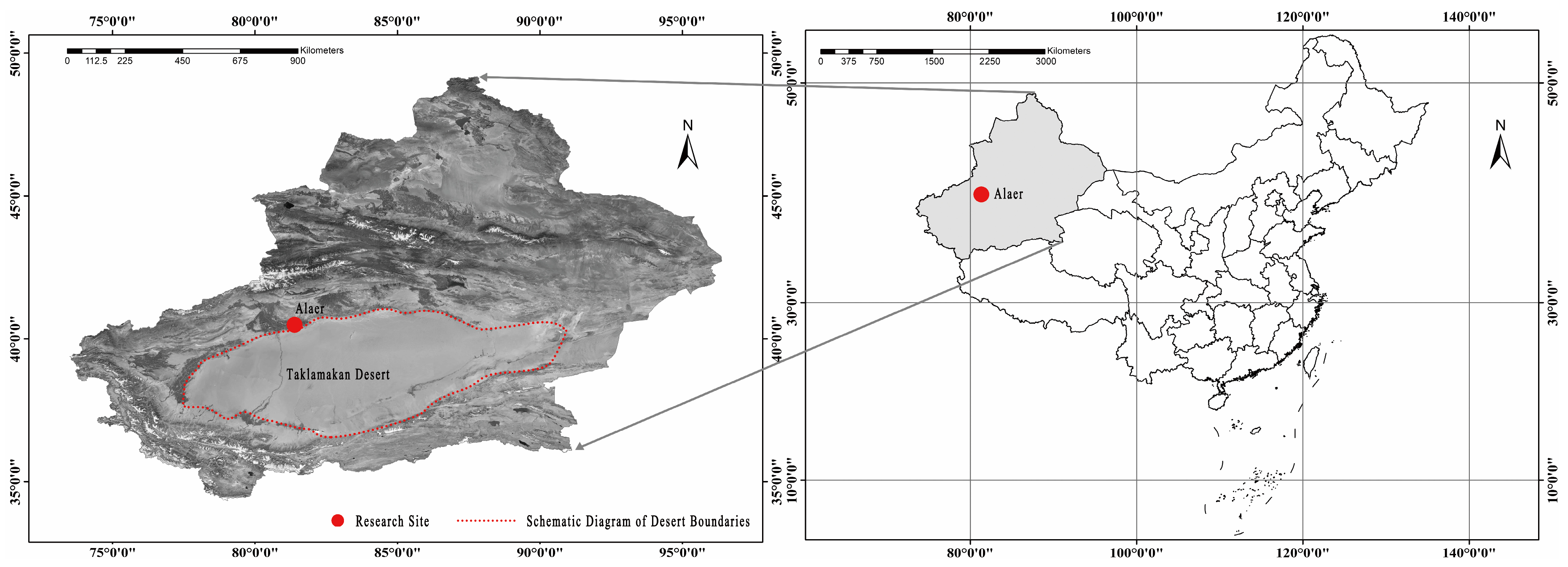
Figure 1. Location of the main urban area of Alaer City, Xinjiang.
Forests 17 00375 g001
Figure 2. Temporal variation in PM2.5 and PM10 concentrations in Alaer City over 2015–2024.
Forests 17 00375 g002
Figure 3. Schematic diagram of leaf sampling positions.
Forests 17 00375 g003
Figure 4. Dust retention per unit leaf area of different plant species. MsB: Malus spectabilis (Aiton) Borkh.; CsE: Catalpa speciosa (Warder ex Barney) Engelm.; PaW: Platanus acerifolia (Aiton) Willd; JcK: Juniperus chinensis ‘Kaizuca’; FcR: Fraxinus chinensis Roxb.; RcJ: Rosa chinensis Jacq.; Jc: Juniperus chinensis L.; PoF: Platycladus orientalis (L.) Franco; UpJ: Ulmus pumila ‘Jinye’; LoS: Ligustrum obtusifolium Siebold & Zucc.; RrT: Rosa rugosa Thunb.; PtL: Prunus triloba Lindl.; Af: Amorpha fruticosa L.; Po: Poa annua L.; Lp: Lolium perenne L. Different lowercase letters in the figure indicate significant differences in dust retention capacity among tree species (p < 0.05).
Forests 17 00375 g004
Figure 5. Dust retention capacity per unit leaf area in different months. MsB: Malus spectabilis (Aiton) Borkh.; CsE: Catalpa speciosa (Warder ex Barney) Engelm.; PaW: Platanus acerifolia (Aiton) Willd; JcK: Juniperus chinensis ‘Kaizuca’; FcR: Fraxinus chinensis Roxb.; RcJ: Rosa chinensis Jacq.; Jc: Juniperus chinensis L.; PoF: Platycladus orientalis (L.) Franco; UpJ: Ulmus pumila ‘Jinye’; LoS: Ligustrum obtusifolium Siebold & Zucc.; RrT: Rosa rugosa Thunb.; PtL: Prunus triloba Lindl.; Af: Amorpha fruticosa L.; Po: Poa annua L.; Lp: Lolium perenne L. Different lowercase letters in the figure indicate significant differences in dust retention capacity among tree species and months (p < 0.05).
Forests 17 00375 g005
Figure 6. Dust retention capacity per unit leaf area of plants in different directions. MsB: Malus spectabilis (Aiton) Borkh.; CsE: Catalpa speciosa (Warder ex Barney) Engelm.; PaW: Platanus acerifolia (Aiton) Willd; JcK: Juniperus chinensis ‘Kaizuca’; FcR: Fraxinus chinensis Roxb.; RcJ: Rosa chinensis Jacq.; Jc: Juniperus chinensis L.; PoF: Platycladus orientalis (L.) Franco; UpJ: Ulmus pumila ‘Jinye’; LoS: Ligustrum obtusifolium Siebold & Zucc.; RrT: Rosa rugosa Thunb.; PtL: Prunus triloba Lindl.; Af: Amorpha fruticosa L.; Po: Poa annua L.; Lp: Lolium perenne L.; LTS: leeward side of traffic; WTS: Windward Traffic Side.; LRS: leeward roadside; WRS: Windward Roadside. Different lowercase letters in the figure indicate significant differences in dust retention capacity among tree species and directions (p < 0.05).
Forests 17 00375 g006
Figure 7. Changes in dust retention capacity per unit leaf area in the vertical direction of trees. MsB: Malus spectabilis (Aiton) Borkh.; CsE: Catalpa speciosa (Warder ex Barney) Engelm.; PaW: Platanus acerifolia (Aiton) Willd; JcK: Juniperus chinensis ‘Kaizuca’; FcR: Fraxinus chinensis Roxb.
Forests 17 00375 g007
Figure 8. Dust retention capacity per unit leaf area for different plant types. Different lowercase letters in the figure indicate significant differences in dust retention capacity among different plant types (p < 0.05).
Forests 17 00375 g008
Figure 9. Leaf surface microstructures of different plant species. 1(a,b). Platanus acerifolia (Aiton) Willd; 2(a,b). Catalpa speciosa (Warder ex Barney) Engelm.; 3(a,b). Malus spectabilis (Aiton) Borkh.; 4(a,b). Fraxinus chinensis Roxb.; 5(a,b). Juniperus chinensis ‘Kaizuca’; 6(a,b). Ulmus pumila ‘Jinye’; 7(a,b). Rosa rugosa Thunb.; 8(a,b). Prunus triloba Lindl.; 9(a,b). Ligustrum obtusifolium Siebold & Zucc.; 10(a,b). Rosa chinensis Jacq.; 11(a,b). Amorpha fruticosa L.; 12(a,b). Platycladus orientalis (L.) Franco; 13(a,b). Juniperus chinensis L.; 14(a,b). Lolium perenne L.; 15(a,b). Poa annua L.; a represents the upper surface of the leaf; b represents the lower surface of the leaf. The arrow indicates “Groove width,” and the circle indicates “Wax layer”.
Forests 17 00375 g009
Figure 10. Dust retention capacity of individual plants of different species. PaW: Platanus acerifolia (Aiton) Willd; CsE: Catalpa speciosa (Warder ex Barney) Engelm.; MsB: Malus spectabilis (Aiton) Borkh.; FcR: Fraxinus chinensis Roxb.; JcK: Juniperus chinensis ‘Kaizuca’; UpJ: Ulmus pumila ‘Jinye’; RrT: Rosa rugosa Thunb.; PtL: Prunus triloba Lindl.; LoS: Ligustrum obtusifolium Siebold & Zucc.; Rc: Rosa chinensis Jacq.; Af: Amorpha fruticosa L.; PoF: Platycladus orientalis (L.) Franco; Jc: Juniperus chinensis L.; Lp: Lolium perenne L.; Po: Poa annua L. Different colors represent different types of plants.
Forests 17 00375 g010
Figure 11. Dust retention capacity of different plant communities. Different colors represent different types of plant arrangements.
Forests 17 00375 g011
Figure 12. Correlation analysis of factors affecting dust retention capacity per plant. X1: Dust retention per unit leaf area; X2: Dust retention per individual tree; CH: Crown height; PH: Plant height; CW: Crown width; BH: Branch height; LAI: Leaf area index; CD: Canopy density; LAR: Leaf aspect ratio. ** correlation is significant at the 0.01 level (two-tailed); * correlation is significant at the 0.05 level (two-tailed).
Forests 17 00375 g012
Table 1. Statistical overview of plant coverage in 12 roadside green spaces within Alaer City.
Plant NameLocationPercentage Distribution
Fraxinus chinensis Roxb.R1; R2; R3; R4; R5; R617.14%
Acer negundo L.R72.86%
Salix babylonica L.R82.86%
Styphnolobium japonicum (L.) SchottR5; R7; R9; R10; R1114.29%
Malus spectabilis (Aiton) Borkh.R1; R3; R4; R5; R6; R11; R1220.00%
Populus euphratica Oliv.R62.86%
Catalpa speciosa (Warder ex Barney) Engelm.R12.86%
Juniperus chinensis ‘Kaizuca’R8; R115.71%
Koelreuteria paniculata Laxm.R72.86%
Populus alba var. pyramidalis BungeR22.86%
Platanus acerifolia (Aiton) WilldR2; R3; R8; R10; R11; R1217.14%
Ginkgo biloba L.R32.86%
Ulmus densa Litw.R92.86%
Prunus cerasifera ‘Atropurpurea’R102.86%
R1: Ban Chao Avenue; R2: Jinggangshan Avenue; R3: Military Reclamation Avenue; R4: Kungang Avenue; R5: Victory Avenue; R6: General Avenue; R7: Autumn Harvest Avenue; R8: Jinyinchuan Road; R9: Nan Ni Wan Avenue; R10: Tarim Avenue; R11: Happiness Road; R12: University Road.(All Latin botanical names were found on iPlant.)
Table 2. Information on study plots for dust retention in different plant communities.
Community StructurePlot NumberPlot SizePlant NameCrown Density
Tree-Shrub-Herbaceous1#6 m × 10 mMalus spectabilis (Aiton) Borkh.0.91
Ulmus pumila ‘Jinye’
Ligustrum obtusifolium Siebold & Zucc.
Juniperus chinensis L.
Poa annua L.
2#7 m × 10 mMalus spectabilis (Aiton) Borkh.0.94
Rosa rugosa Thunb.
Lolium perenne L.
3#6 m × 10 mFraxinus chinensis Roxb.0.92
Amorpha fruticosa L.
Lolium perenne L.
4#7 m × 10 mPlatanus acerifolia (Aiton) Willd0.94
Malus spectabilis (Aiton) Borkh.
Prunus triloba Lindl.
Ligustrum obtusifolium Siebold & Zucc.
Rosa chinensis Jacq.
Poa annua L.
Tree-Shrub5#6 m × 10 mMalus spectabilis (Aiton) Borkh.0.87
Juniperus chinensis ‘Kaizuca’
Platycladus orientalis (L.) Franco
Rosa chinensis Jacq.
6#7 m × 10 mPlatanus acerifolia (Aiton) Willd0.93
Malus spectabilis (Aiton) Borkh.
Juniperus chinensis ‘Kaizuca’
Ulmus pumila ‘Jinye’
Tree-Herbaceous7#6 m × 10 mMalus spectabilis (Aiton) Borkh.0.92
Catalpa speciosa (Warder ex Barney) Engelm.
Lolium perenne L.
8#6 m × 10 mFraxinus chinensis Roxb.0.91
Malus spectabilis (Aiton) Borkh.
Lolium perenne L.
Table 3. Leaf surface microstructural characteristics of roadside green space plant communities.
Plant NameGroove Width
(μm)
Stomatal Parameters
Density (mm−2)Aspect RatioProtrusion
Platanus acerifolia (Aiton) Willd3.30 ± 0.42314.49 ± 16.472.13 ± 0.45protrusion
Catalpa speciosa (Warder ex Barney) Engelm.1.99 ± 0.32442.62 ± 98.846.43 ± 1.94level
Malus spectabilis (Aiton) Borkh.3.39 ± 0.41267.90 ± 16.477.39 ± 1.03level
Fraxinus chinensis Roxb.4.05 ± 0.33407.68 ± 16.478.34 ± 2.46protrusion
Juniperus chinensis ‘Kaizuca’2.93 ± 0.86244.61 ± 16.473.04 ± 0.55level
Ulmus pumila ‘Jinye’3.47 ± 0.61372.73 ± 32.953.13 ± 0.31protrusion
Rosa rugosa Thunb.3.97 ± 0.58209.66 ± 32.956.74 ± 2.46level
Prunus triloba Lindl.3.75 ± 0.19361.09 ± 16.475.33 ± 1.05level
Ligustrum obtusifolium Siebold & Zucc.4.01 ± 0.45361.09 ± 16.473.30 ± 0.82protrusion
Rosa chinensis Jacq.12.49 ± 0.58186.37 ± 32.955.61 ± 0.47level
Amorpha fruticosa L.5.77 ± 0.55128.13 ± 16.4724.34 ± 10.35Indentation
Platycladus orientalis (L.) Franco3.27 ± 0.67221.31 ± 16.472.51 ± 0.30level
Juniperus chinensis L.4.57 ± 0.32337.79 ± 16.475.86 ± 1.66protrusion
Lolium perenne L.3.05 ± 0.35151.42 ± 16.47143.65 ± 56.87level
Poa annua L.2.14 ± 0.50174.72 ± 16.4729.27 ± 5.26Indentation
Table 4. Regression coefficient results.
ModelUnstandardized CoefficientStandardized CoefficienttSignificance
BStandard ErrorRegression Coefficient
(Constant)0.1840.131 1.3990.174
Leaf aspect ratio0.0270.0040.5836.0090
Aspect ratio of stomatals−0.0050.001−0.448−4.3290
Stomatals protrusion0.0830.0360.2352.3180.029
Groove width0.0220.0090.2662.4920.02
Roughness0.1990.0510.4213.9310.001
Note: Significance (p < 0.05).
Table 5. Analysis of dust retention capacity per unit leaf area and leaf surface structural stomatal diameter.
FactorDirect Passage CoefficientIndirect Passage Coefficient
Leaf Aspect RatioAspect Ratio of Stomatals Stomatals ProtrusionGroove WidthRoughness
Leaf aspect ratio0.583 0.104−0.015−0.0870.099
Aspect ratio of stomatals−0.448−0.080 0.1510.084−0.049
Stomatals protrusion0.235−0.006−0.079 −0.0010.028
Groove width0.266−0.040−0.050−0.001 −0.118
Roughness0.4210.0710.0460.051−0.187
Table 6. Variation in Dust Retention Capacity per Unit Leaf Area (g/m2) of the Same Tree Species Across Different Roadside Green Spaces.
Plant TypePlant NameX1 (g/m2)Standard DeviationCoefficient of VariationCoefficient of Variation for Plant Types
TreesFraxinus chinensis Roxb.3.36 0.17 5.10%11.59%
Malus spectabilis (Aiton) Borkh.4.15 0.62 15.05%
Platanus acerifolia (Aiton) Willd6.40 0.94 14.63%
ShrubsUlmus pumila ‘Jinye’8.13 0.26 3.15%11.03%
Ligustrum obtusifolium Siebold & Zucc.6.72 0.81 12.01%
Juniperus chinensis L.21.14 0.56 2.66%
Rosa chinensis Jacq.7.52 1.98 26.29%
HerbaceousLolium perenne L.4.40 0.92 20.94%25.80%
Poa annua L.4.13 1.27 30.65%
Table 7. Weighted evaluation indicators for selecting comprehensive dust retention capacity models in typical roadside green space communities using the entropy method.
IndicatorStandardization MatrixEntropy Values and Weights
Community1#2#3#4#5#6#7#8#ejgjwj
X10.64420.55900.00010.40380.91521.00010.25770.22630.87650.12350.0884
X20.00010.13410.18660.43220.05611.00010.22470.34530.78270.21730.1556
CDRC0.35090.07020.00010.22890.41301.00010.11170.21810.78820.21180.1517
PS0.66680.00010.00011.00010.33340.33340.00010.00010.61490.38510.2758
CM1.00011.00011.00011.00010.50010.50010.00010.00010.84080.15920.1140
T1.00010.30000.15440.65760.56770.50920.40660.00010.87720.12280.0880
RH1.00010.35190.19770.34320.44450.03720.53970.00010.82320.17680.1266
Si0.62250.26580.18160.62870.40730.59410.17870.1068
X1: Dust retention per unit leaf area; X2: Dust retention capacity per plant; CDRC: Community dust retention capacity; PS: Plant species; CM: Configuration Mode; T: Community cooling rate; RH: Community Humidification Rate; Si: Comprehensive Score; ej: Information entropy; gj: Coefficient of Variation; wj: Weight.
Disclaimer/Publisher’s Note: The statements, opinions and data contained in all publications are solely those of the individual author(s) and contributor(s) and not of MDPI and/or the editor(s). MDPI and/or the editor(s) disclaim responsibility for any injury to people or property resulting from any ideas, methods, instructions or products referred to in the content.