


Abstract
Idesia polycarpa Maxim. is an important woody oilseed species and is dioecious; however, systematic evidence for sex-specific differences in leaf physico-chemical traits and their spectral responses remains limited. In this study, mature female and male trees were investigated. Leaves were sampled throughout the growing season (May–October), and FTIR-ATR spectra were acquired to derive peak height and peak area metrics for diagnostic bands. In parallel, leaf antioxidant enzyme activities (SOD, CAT, POD, and APX), biomass-related traits, leaf nutrient concentrations, and rhizosphere soil nutrient indices were measured. Differences between sexes, seasonal dynamics, and spectrum–trait coupling were evaluated using repeated-measures analysis and correlation analyses. The results showed that the positions of major absorption bands were largely consistent between sexes, indicating broadly similar chemical composition, whereas the male plants lacked an obvious band near 1671 cm−1 in May. Several spectral peak parameters were significantly correlated with leaf pH, leaf dry matter content, total phosphorus, and APX activity. Female and male plants exhibited month-dependent differences in enzyme activities, dry matter content, and leaf N and K, and leaf–soil nutrient linkages were also detected, suggesting sex-specific resource allocation patterns. Overall, FTIR-ATR peak metrics provide a rapid means to characterize seasonal variation in leaf physico-chemical properties of I. polycarpa and offer supporting evidence for studies of sexual dimorphism.
1. Introduction
Idesia polycarpa Maxim. is a dioecious species widely distributed across multiple provinces in China [1]. It is one of the most important woody oilseed trees in the country, with high development value and promising prospects for cultivation and utilization. The fruits have high yield and oil content and can be processed into high-quality edible oil [2]. The press cake can be further used to produce bio-organic fertilizer or feed [3], and the species also has potential for cosmetic, health-care, pharmaceutical, and chemical products [4,5]. Consequently, female trees generally have greater economic value than male trees, whereas male trees serve as essential pollinizers. At present, I. polycarpa is mainly propagated by seed or clonal nursery stock. Under natural conditions, seed germination is extremely low, and seedlings usually require several years after field establishment before flowering. Because the sex of juvenile plants cannot be distinguished visually [6], reliable sex identification remains unavailable, which constrains production and practical deployment of this species [7]. In dioecious plants, sexual dimorphism is commonly associated with differences in reproductive costs and resource-use strategies. Therefore, investigating sex-related differences in I. polycarpa is of both economic and ecological significance. However, studies on sex-specific traits in I. polycarpa are still limited, and the underlying mechanisms remain unclear. Clarifying sex differences in this dioecious species will improve our understanding of sexual differentiation processes and sex determination, and will also provide a theoretical basis for orchard management and optimized sex-ratio configuration, thereby supporting stable and high fruit yield and maximizing economic benefits.
Fourier transform infrared spectroscopy (FTIR) is an advanced analytical technique based on molecular vibrational spectroscopy. By identifying characteristic infrared absorption bands, FTIR enables elucidation of chemical structures and qualitative or quantitative assessment of components in mixtures [8]. Owing to its rapidity, high sensitivity, minimal sample requirement, and broad applicability to solid, liquid [9], and gaseous samples [10], FTIR has become an indispensable tool in structural and analytical chemistry. During spectral acquisition, covalent bonds within molecules (e.g., C–H, O–H, and C=O) absorb infrared radiation at specific frequencies and undergo stretching or bending vibrations. These vibrational modes depend on bond type, functional-group conformation, and intermolecular interactions [11]. For example, researchers have developed diagnostic models to classify anthracnose severity with 100% accuracy [12]. Plant nutrient deficiency or environmental stress can alter foliar protein content and ester compounds [13]. Accordingly, changes in diagnostic bands—such as the amide I band (~1650 cm−1; proteins), C–H stretching (~2920 cm−1; lipids), and polysaccharide-related features (~1150 cm−1)—have been used to discriminate among different nutrient-stress types [14,15]. FTIR can also characterize functional groups in soil organic matter, including those associated with benzoic and stearic acids (e.g., carbonyl and hydrocarbon moieties in carboxylic compounds), and has been used to estimate soil mass fractions with a reported fitting coefficient of 0.88 [16]. Compared with conventional chemical assays, FTIR-ATR provides integrative spectral information that can help identify spectral regions or peak metrics associated with key physico-chemical traits, and can offer chemical-level evidence to support interpretation of physiological differences. Beyond FTIR, other spectroscopic approaches such as VIS/NIR and Raman spectroscopy have also shown strong potential for leaf-based phenotyping. VIS/NIR spectroscopy has been successfully used to estimate foliar nitrogen and other physiological or chemical traits, including chlorophyll, water status, specific leaf area, and potassium content [17]. Recent studies have further shown that leaf spectroscopy can assist in sex-related discrimination in dioecious plants. For instance, non-destructive optical leaf indices were able to separate papaya sexual types in seedling-stage phenotyping [18], and Raman-based leaf spectral fingerprints have been used to identify sex in Litsea cubeba (Lour.) Pers. [19] and mature Amaranthus palmeri S. Watson [20]. These studies suggest that spectroscopy can provide a useful bridge between leaf chemistry and sexual dimorphism, because sex-related differences in nutrient allocation, pigments, lipids, and defense-associated compounds may be reflected in leaf spectral signatures. However, for the dioecious woody oilseed tree Idesia polycarpa, it remains unclear whether female and male leaves exhibit stable or stage-dependent differences in FTIR-ATR spectral characteristics across the growing season, and whether spectral variation is coupled with leaf physiological traits, nutrient status, and rhizosphere soil conditions. Against this background, we investigated mature female and male I. polycarpa trees and conducted monthly sampling throughout the growing season (May–October). FTIR-ATR spectra were acquired from dried leaf powder samples, and peak height and peak area metrics for diagnostic bands were extracted. In parallel, antioxidant enzyme activities (SOD, CAT, POD, and APX), biomass-related traits (e.g., specific leaf area and leaf dry matter content), and nutrient indices of both leaves and rhizosphere soils were determined. Using significance tests and correlation analyses, we characterized FTIR-ATR spectral features and their seasonal dynamics in female and male leaves; quantified sex-by-month patterns in leaf physiological traits, nutrients, and biomass-related traits, with reference to concurrent changes in rhizosphere soil nutrients; and identified key spectral peak metrics most strongly coupled with core leaf traits. This study provides spectral evidence for understanding sexual dimorphism and sex-specific resource allocation in I. polycarpa, and offers a basis for rapid spectral characterization of seasonal variation in leaf physico-chemical properties.
2. Materials and Methods
2.1. Experimental Site
All seedlings used in this study were planted at the Teaching and Practice Base of the Henan Engineering Technology Research Center for I. polycarpa in Jinshui District, Zhengzhou, Henan Province, China (113°42′ E, 34°43′ N; mean elevation 96 m). The site is located in the southern North China Plain and has a temperate monsoon climate, characterized by pronounced seasonality with concurrent heat and rainfall. Spring and autumn are relatively short with large temperature fluctuations, whereas summer and winter are comparatively long. The mean annual temperature is 16–18 °C, and the long-term mean annual precipitation is approximately 640.8 mm, with about 65% occurring in summer. The mean frost-free period is 212 days.
2.2. Experimental Materials and Design
Twenty 10-year-old mature female trees and twenty 10-year-old mature male trees of I. polycarpa with known sex were selected (sex was confirmed during flowering based on floral morphology). From May to October 2024, leaves and rhizosphere soil were collected monthly. Leaf samples were taken from healthy, pest- and disease-free leaves at the same height and with a consistent orientation. Rhizosphere soil was sampled within a 1 m radius of the trunk after removing surface debris; soil cores were collected from the 20–40 cm layer using a soil auger.
2.3. FTIR Spectrometry on Leaf Samples
Leaves were thoroughly washed with clean water to remove surface dust and impurities, then dried (kill-green at 105 °C for 30 min, followed by drying at 65 °C for 48 h until constant weight). The dried leaves were ground through a 100-mesh standard sieve (0.15 mm). The resulting leaf powder was stored in a glass vacuum desiccator for later use and required thorough regrinding prior to each application. Fourier transform infrared (FTIR) spectra were acquired using an FTIR spectrometer (ALPHA II, Bruker, Ettlingen, Germany) equipped with an attenuated total reflectance (ATR) accessory. Spectra were recorded over 4000–400 cm−1 at a resolution of 4 cm−1, with 32 scans collected per sample. To ensure uniform contact between the leaf powder and the ATR crystal, a constant pressure was applied to all samples using the integrated pressure applicator. To mitigate inherent variations associated with the ATR technique, the raw spectral data were subjected to a rigorous preprocessing pipeline using OMNIC 8.2 software. The preprocessing steps included: (1) ATR correction to compensate for wavelength-dependent penetration depth changes; (2) Automatic baseline correction to eliminate baseline drift; (3) Savitzky–Golay smoothing to reduce instrumental noise; and (4) Min-Max normalization (or Vector Normalization) to correct for path length variations and contact-related inconsistencies. Peak heights and areas were solely extracted from these fully preprocessed and normalized spectra to ensure reliable quantitative comparisons.
2.4. Determination of Leaf Area and Leaf Dry Matter Content
Leaf area was measured using Leafbyte software 1.3.0. After cleaning, leaves were rinsed 1–2 times with distilled water and dried. They were dark-treated at 5 °C for 12 h, then weighed to determine saturated fresh mass (g). After drying, leaves were weighed again to determine dry mass (g). The formula is as follows:
Leaf dry matter content (LDMC) = (leaf dry mass/saturated fresh mass) × 1000 (g·kg−1)
Specific leaf area (SLA) = leaf area/leaf dry mass (m2·kg−1)
2.5. Measurement of Leaf Enzyme Activity
Determine ascorbate peroxidase (APX) and catalase (CAT) activity using the method described in Chen, J.X. et al.’s Guide to Plant Physiology Experiments [21]. Following the methods described by Wang Xuekui et al.: Superoxide dismutase (SOD) activity was measured using the nitroblue tetrazolium (NBT) assay, while peroxidase (POD) activity was determined using the guaiacol method [22].
2.6. Determination of Nutrient Content in Leaves and Rhizosphere Soil
The pH of soil and leaves was determined using the potentiometric method. Samples were mixed with deionized water at specific ratios and shaken for 2 min. The soil-to-water ratio was 2.5:1 [23], while the leaf-to-water ratio was 1:10 [24]. After standing for 30 min, pH was measured using a pH meter (PHS-3E; Shanghai Yidian Scientific Instrument Co., Ltd., Shanghai, China). Potassium dichromate oxidation with external heating was employed to oxidize carbon in soil organic matter, determining soil organic carbon and total leaf carbon content. Ammonium acetate extraction yielded the test solution, with flame photometry (WGH6400; Shanghai Lichen Instrument Technology Co., Ltd., Shanghai, China) measuring total leaf potassium and soil available potassium. The test solution was obtained through the H2SO4-H2O2 digestion method. Total nitrogen content was determined using an automatic Kjeldahl nitrogen analyzer (K9840; Haineng Future Technology Group Co., Ltd., Jinan, China). Total phosphorus content in soil and leaves was measured using the molybdenum–antimony colorimetric method [25].
2.7. Experimental Indicators and Measurement Methods
FTIR spectral preprocessing was performed in OMNIC 8.2. After ATR correction, baseline correction, Savitzky–Golay smoothing, and normalization, the processed spectra were used for subsequent analyses. Peak height and peak area of the selected characteristic bands were extracted in OriginPro 2025. In addition, principal component analysis (PCA) was performed on the fully preprocessed FTIR spectra using the whole spectral dataset to evaluate overall spectral variation among samples and to assess the effects of sampling month and sex at the multivariate level. The data were analyzed using a two-way repeated-measures ANOVA, with sex as the between-subject factor and month as the within-subject factor. All data are presented as mean ± standard deviation (SD). Pearson correlation analysis was used to evaluate the relationships among FTIR peak parameters, leaf physicochemical traits, and rhizosphere soil nutrient variables. Statistical analyses were performed in SPSS 13.0, and significance was set at p < 0.05. Figures were prepared in OriginPro 2025.
3. Results
3.1. Dynamic Characteristics of Leaf Infrared Spectra in Female and Male I. polycarpa
3.1.1. Infrared Spectral Characterization of Leaves from Female and Male Plants
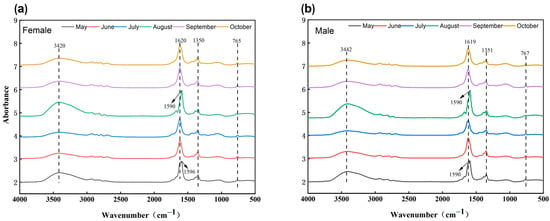
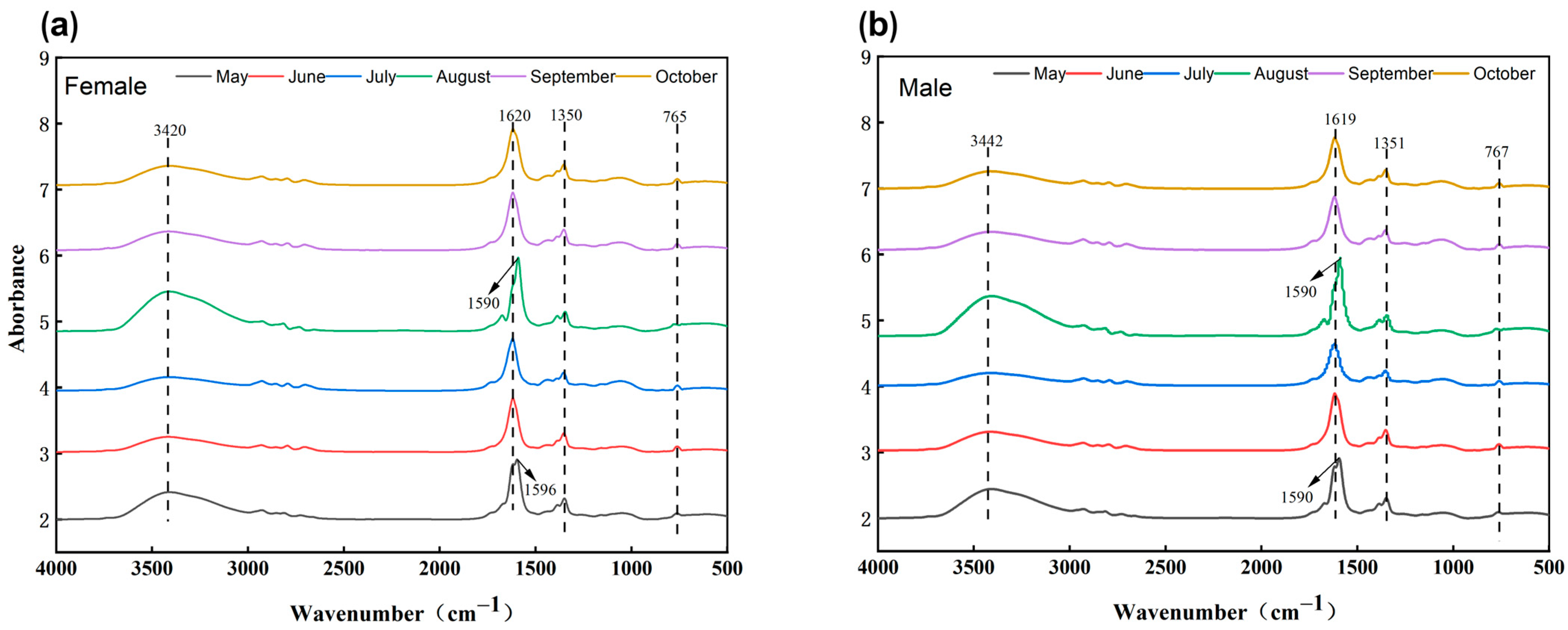
FTIR spectra of leaves from female and male I. polycarpa collected in different months are shown in Figure 1. The positions and intensities (peak heights) of the main absorption bands were generally similar between sexes, and the characteristic band positions and peak heights were also largely consistent across months. Among these bands, a pronounced sharp peak was consistently observed near 1620 cm−1.
Figure 1.
Average infrared absorbance spectrogram of leaves from male and female I. polycarpa plants. In the figure, “(a)” represents female plants and “(b)” represents male plants. n = 20. The spectral diagram is an average curve.
After converting the original reflectance spectra to absorbance spectra, the data were preprocessed (including baseline correction and smoothing), yielding the spectra shown below. Four characteristic spectral regions were identified and annotated, mainly centered at 3420, 1620, 1350, and 765 cm−1.
3.1.2. Principal Component Analysis of Whole FTIR Spectra
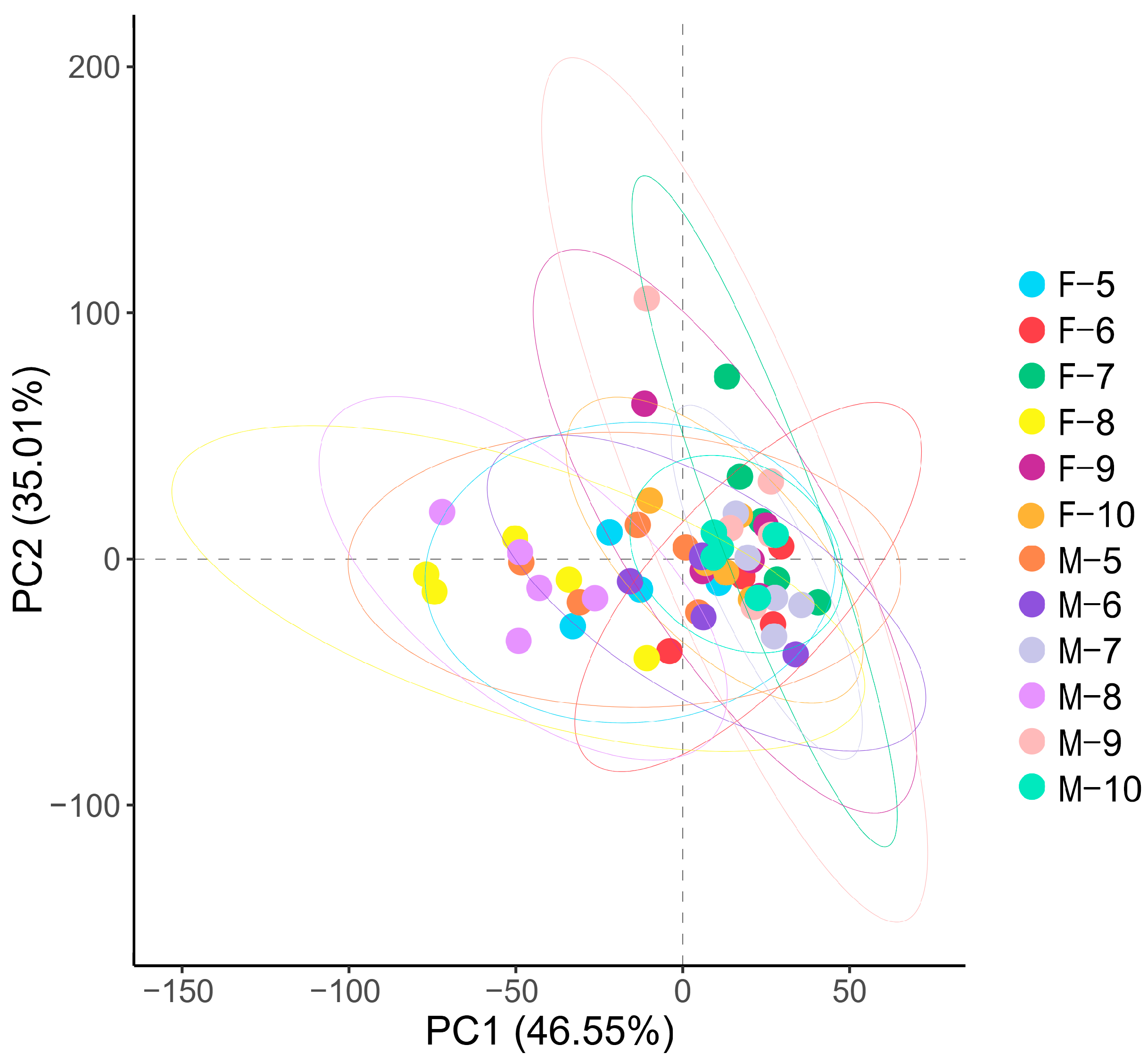
To further evaluate the multivariate structure of the FTIR dataset, principal component analysis (PCA) was performed using the fully preprocessed spectra of female and male I. polycarpa leaves collected from May to October (Figure 2). The first two principal components explained 46.55% and 35.01% of the total variance, respectively, accounting for 81.56% of the overall spectral variation. The PCA score plot showed that samples from different sex–month groups exhibited partial separation in the reduced multivariate space, indicating that both seasonal and sex-related variation were reflected to some extent in the whole-spectrum FTIR data. However, substantial overlap among several groups was also observed, suggesting that the spectral differences were not sufficiently strong to produce complete group discrimination. Overall, the PCA results indicate that FTIR spectra captured broad seasonal structure in leaf chemical variation, whereas sex-related differences appeared to be more limited and stage-dependent.
Figure 2.
Principal component analysis (PCA) of the preprocessed FTIR spectra of female and male Idesia polycarpa leaves collected from May to October. Each point represents one leaf sample, colored by sex–month group. n = 20. F represents female plants, and M represents male plants. The numbers indicate the sampling months. PC1 and PC2 explained 46.55% and 35.01% of the total spectral variance, respectively. Ellipses indicate the distribution tendency of each group in the PCA space.
3.1.3. Analysis and Comparison of Characteristic Absorption Peaks in Leaves of Female and Male Plants
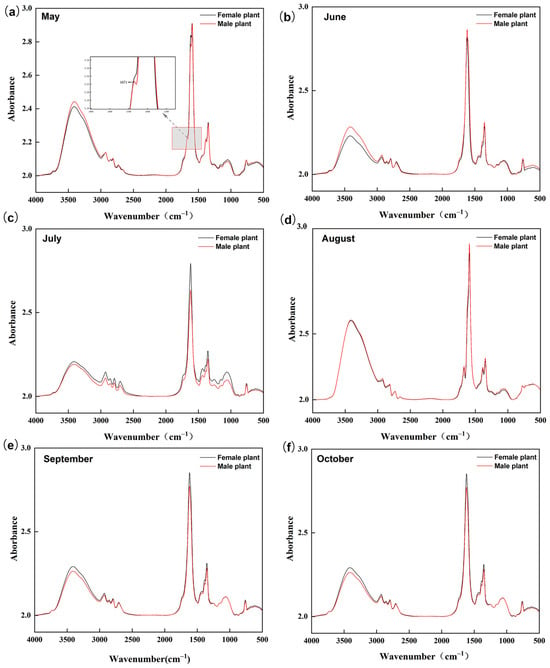
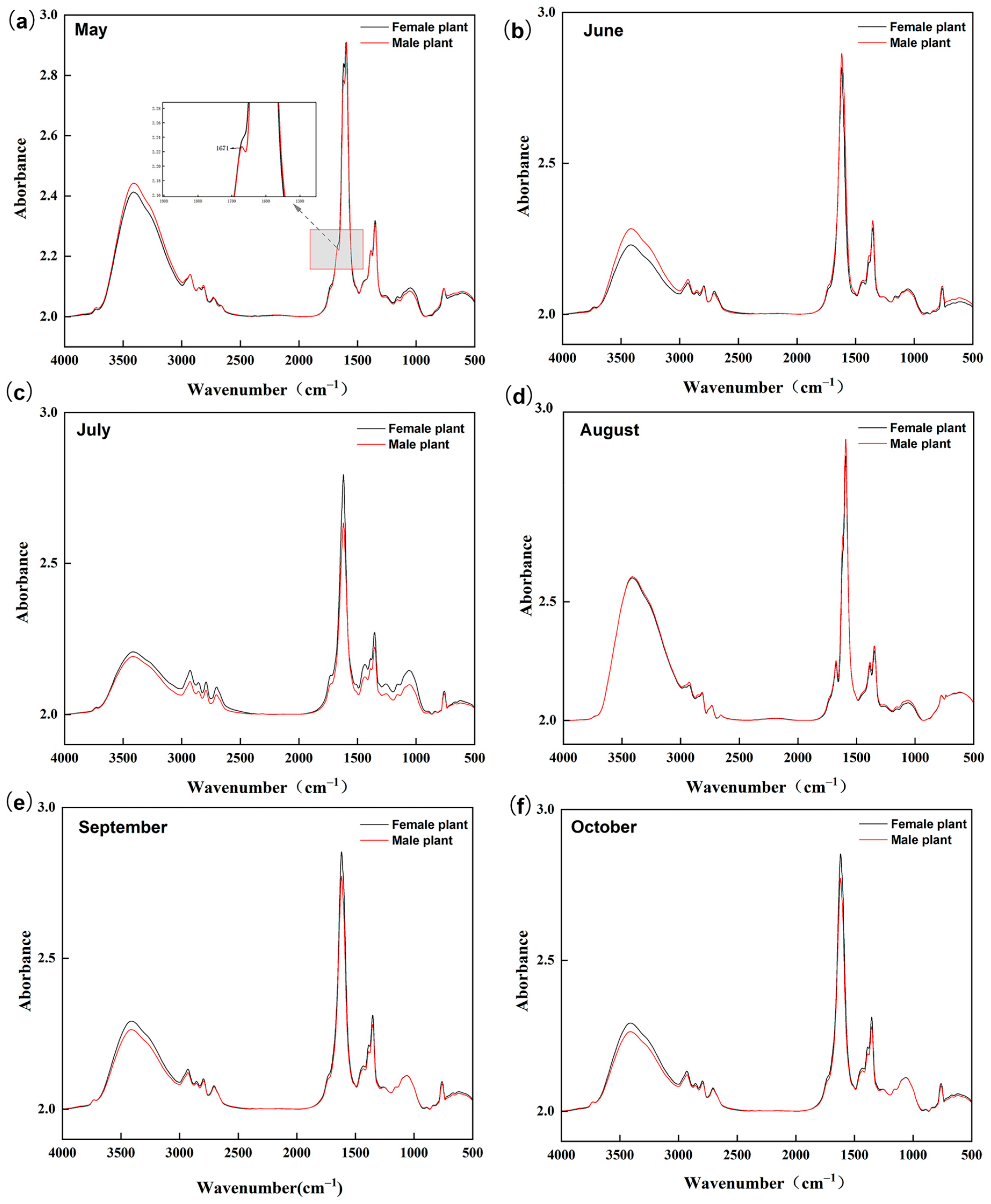
Comparison of the infrared absorption peaks of female and male I. polycarpa leaves across months (Figure 3) showed clear seasonal variation in peak intensity. During May, June and August, male plants exhibited higher peaks. During July, September and October, female plants exhibited higher peaks. In addition, in May, the characteristic band near 1671 cm−1 was not detected in male leaves.
Figure 3.
Infrared absorbance spectrogram of leaves from male and female I. polycarpa in different months. In the figure, the letters (a−f) represent May, June, July, August, September, and October, respectively. n = 20. The spectral diagram is an average curve.
Based on ANOVA, the peak heights of the four characteristic FTIR bands (3420, 1620, 1350, and 765 cm−1) in leaves of female and male I. polycarpa differed significantly among months, whereas no significant differences were detected between sexes for any band. As shown in Table 1, for females, peak height at 3420 cm−1 in May, August, and October differed significantly from that in the other months, while values in June, July, and September were similar. Male plants exhibited the same pattern of monthly variation for this band.
Table 1.
Analysis of the differences in infrared characteristic peak heights of leaves of male and female I. polycarpa in different months.
At 1620 cm−1, female peak heights in June and August differed significantly from those in the other months, whereas in males, significant differences were observed in July and August relative to the other sampling months. At 1350 cm−1, the female peak height in May differed significantly from those in June, July, and September; in males, peak heights in May, June, and August were collectively and significantly different from those in the remaining months.
At 765 cm−1, the female peak height in August differed significantly from those in all other months. In males, significant differences were detected for the values in May and August, and both months also differed significantly from the remaining months.
Based on ANOVA, the peak areas of the four characteristic FTIR bands (3420, 1620, 1350, and 765 cm−1) in leaves of female and male I. polycarpa differed significantly among months, whereas no significant differences were detected between sexes for any band. As shown in Table 2, for females, the peak area at 3420 cm−1 differed significantly between May and August, and these values also differed from those in the other months; in males, a significant difference at this band was observed between June and August.
Table 2.
Analysis of the differences in infrared characteristic peak areas of leaves of male and female I. polycarpa in different months.
At 1620 cm−1, significant differences were detected in July, as the peak area in this month differed significantly from those in all other months in females; the same pattern was also observed in males. At 1350 cm−1, significant differences were detected in July in females, whereas in males, the peak area in May differed significantly from those in July, September, and October.
At 765 cm−1, the peak area in August in females differed significantly from those in all other months. In males, significant differences were detected in May and August, and the values in both months also differed significantly from those in the remaining months.
3.2. Dynamic Differences in Leaf Traits Between Female and Male I. polycarpa
3.2.1. Seasonal Dynamics of Leaf Enzyme Activities
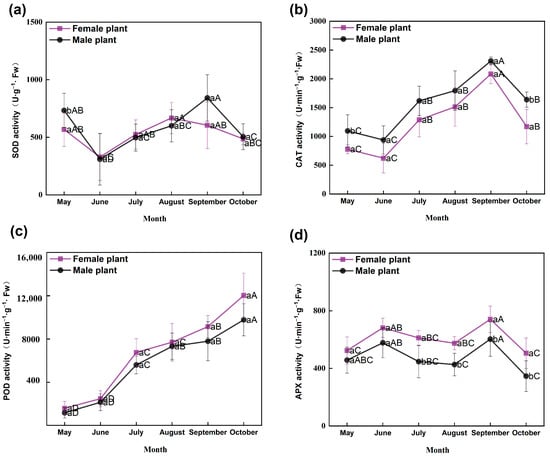
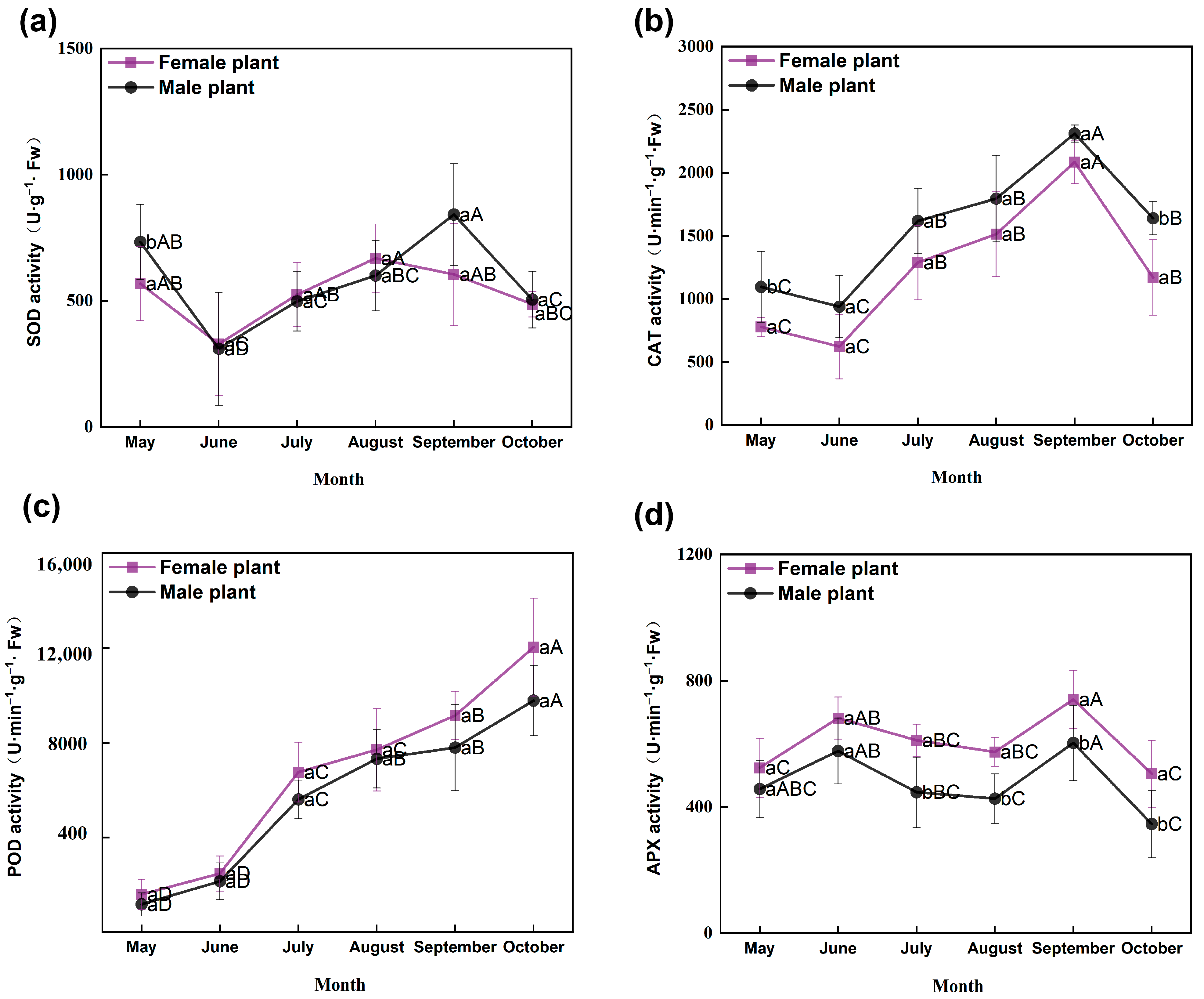
According to the two-way repeated-measures ANOVA followed by post hoc multiple comparisons, the activities of the four antioxidant enzymes varied significantly across sampling months, whereas sex differences were enzyme-specific (Figure 4). For SOD (Figure 4a), a significant sex difference was detected only in May, when male plants showed higher activity than female plants. For CAT (Figure 4b), significant sex differences were observed in May and October, with higher values in male plants in both months. For POD (Figure 4c), activity increased markedly from May to October in both sexes, but no significant differences between sexes were detected in any month. For APX (Figure 4d), significant sex differences were observed from July to October. Overall, these results indicate that antioxidant enzyme activities were primarily shaped by seasonal variation, whereas sex-related differences were restricted to specific enzymes and months.
Figure 4.
Seasonal dynamics of leaf enzyme activities in male and female I. polycarpa from May to October. (a) SOD activity. (b) CAT activity. (c) POD activity. (d) APX activity. Symbols represent the mean values of 20 plants for each sex in each month (n = 20), and error bars indicate the standard deviation (SD). Different lowercase letters indicate significant differences between female and male plants within the same month, whereas different uppercase letters indicate significant differences among months within the same sex, based on two-way ANOVA followed by post hoc multiple comparisons at p < 0.05.
3.2.2. Seasonal Dynamics of Biomass-Related Leaf Traits in Female and Male I. polycarpa
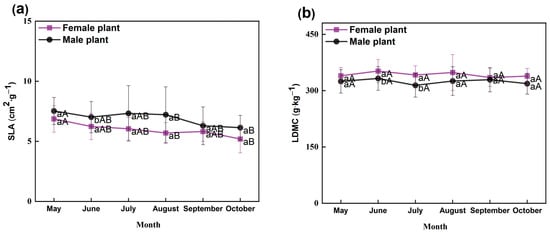
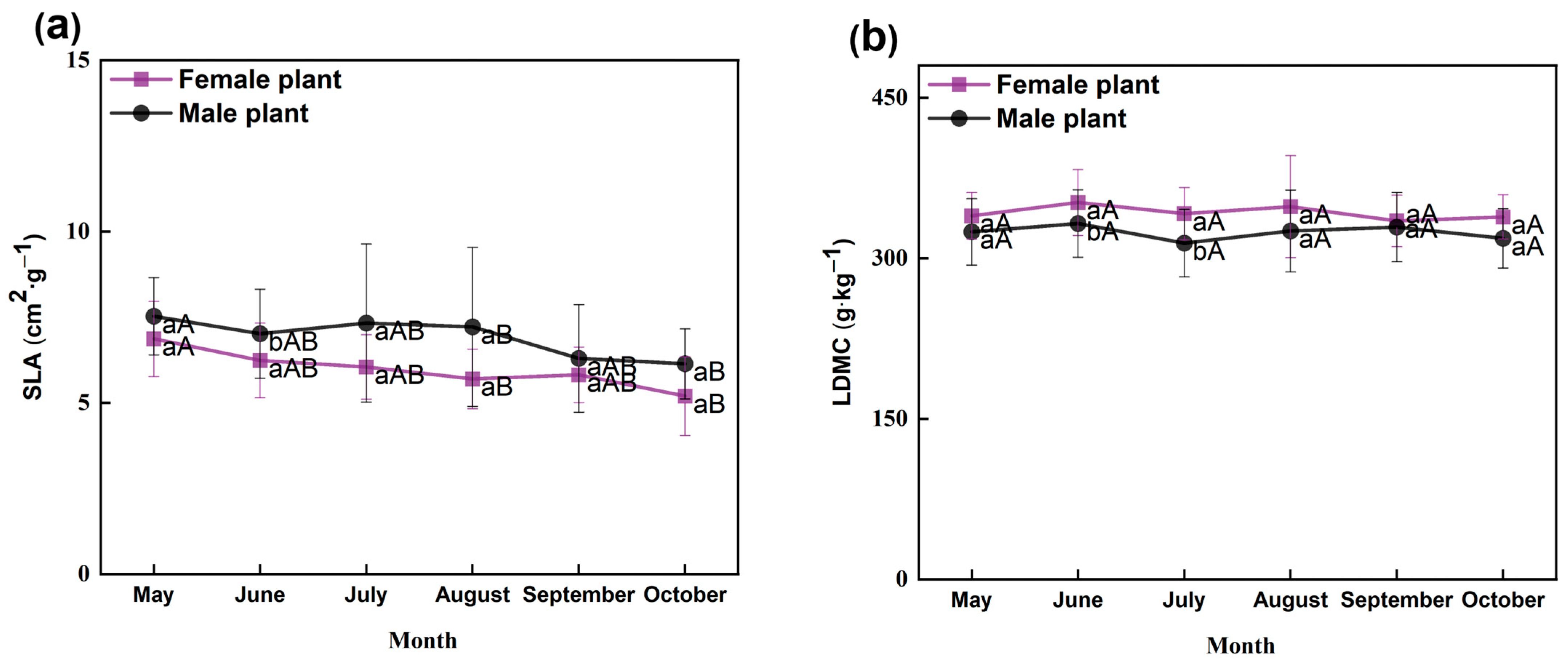
Biomass-related leaf traits also showed temporal variation during the growing season (Figure 5). For SLA (Figure 5a), a significant sex difference was detected only in June, when male plants showed higher values than female plants. Within both sexes, SLA tended to be higher in the early growing season and lower in the later months. In contrast, LDMC (Figure 5b) showed no significant month-to-month variation within either sex, but female plants had significantly higher LDMC than male plants in June and July. These results suggest that seasonal effects were more evident for SLA, whereas sex differences in biomass-related traits were limited to specific sampling stages.
Figure 5.
Seasonal dynamics of leaf biomass in male and female I. polycarpa from May to October. (a) SLA. (b) LDMC. Symbols represent the mean values of 20 plants for each sex in each month (n = 20), and error bars indicate the standard deviation (SD). Different lowercase letters indicate significant differences between female and male plants within the same month, whereas different uppercase letters indicate significant differences among months within the same sex, based on two-way ANOVA followed by post hoc multiple comparisons at p < 0.05.
3.2.3. Seasonal Dynamics of Leaf Nutrient Traits in Female and Male I. polycarpa
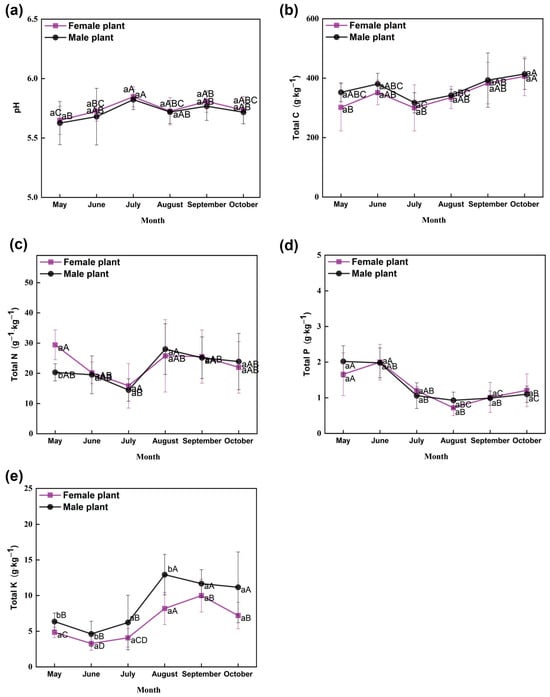
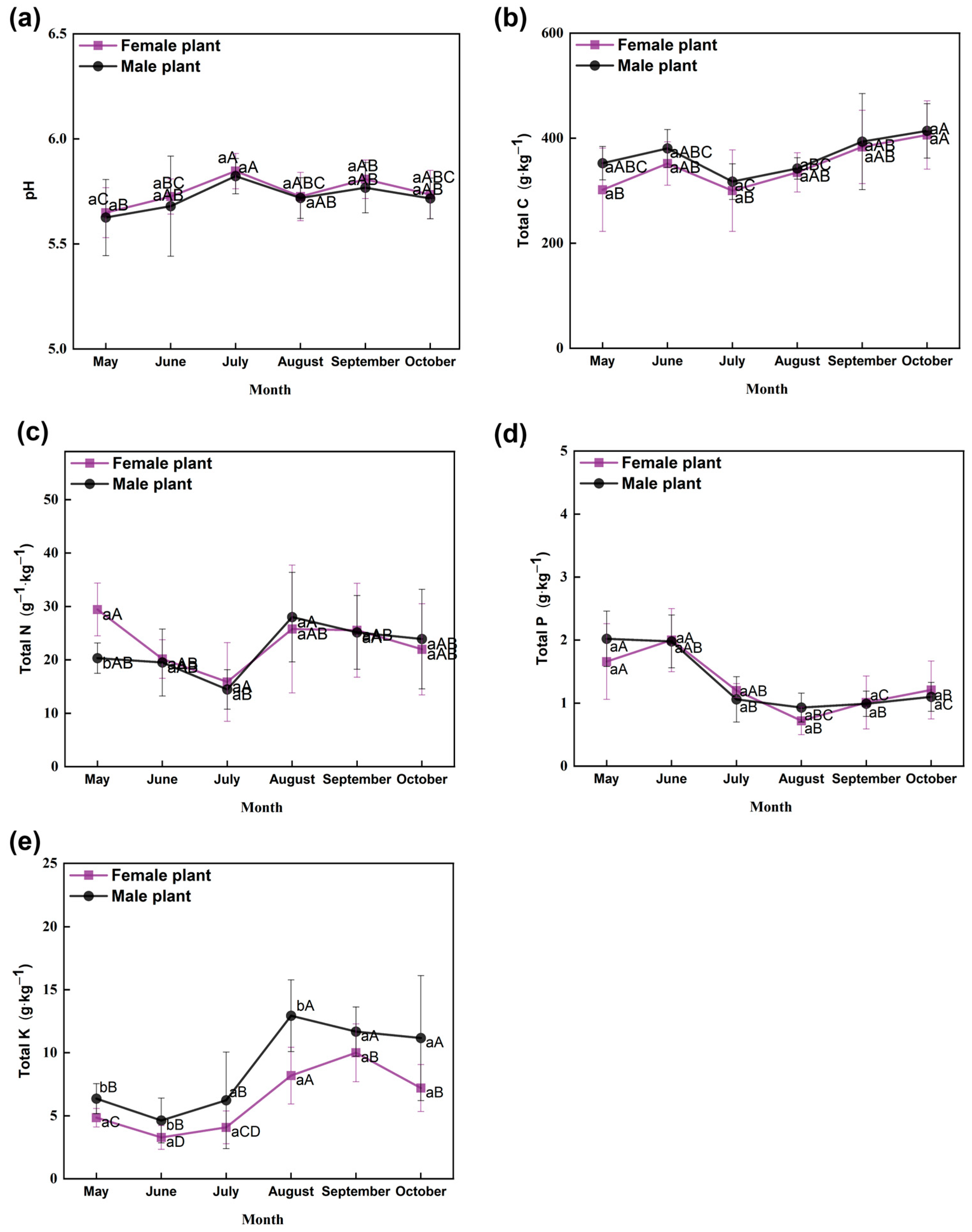
Leaf nutrient traits exhibited clear month-dependent variation, although sex-related differences were limited to specific variables and time points (Figure 6). Leaf pH (Figure 6a), total carbon (Figure 6b), and total phosphorus (Figure 6d) varied across months, but no significant differences between female and male plants were detected within individual months. For total nitrogen (Figure 6c), a significant sex difference was observed only in May, when female plants had higher total N than male plants. For total potassium (Figure 6e), male plants showed significantly higher values than female plants in May, June, and August, whereas no significant sex differences were detected in the remaining months. Taken together, these results indicate that seasonal progression was the primary source of variation in leaf nutrient status, while sex differences were mainly evident for N and K at particular stages of the growing season.
Figure 6.
Seasonal dynamics of leaf nutrient concentrations in male and female I. polycarpa from May to October. (a) pH. (b) C. (c) N. (d) P. (e) K. Symbols represent the mean values of 20 plants for each sex in each month (n = 20), and error bars indicate the standard deviation (SD). Different lowercase letters indicate significant differences between female and male plants within the same month, whereas different uppercase letters indicate significant differences among months within the same sex, based on two-way ANOVA followed by post hoc multiple comparisons at p < 0.05.
3.3. Seasonal Dynamics of Rhizosphere Soil Nutrients in Female and Male I. polycarpa
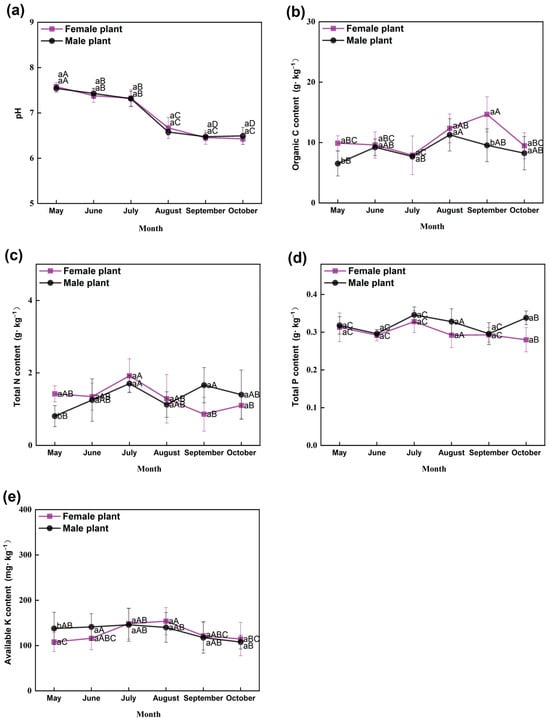
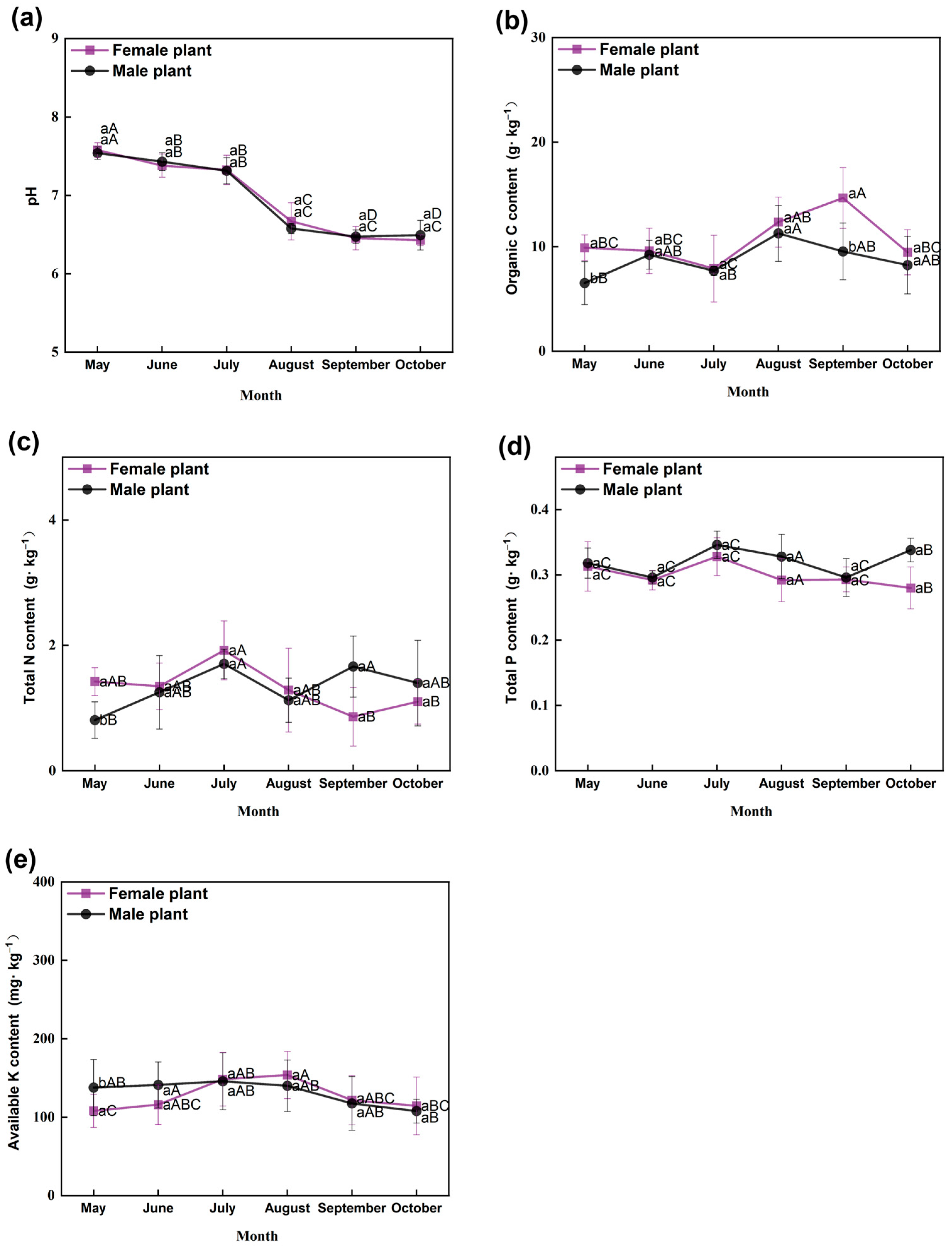
Rhizosphere soil properties also showed pronounced seasonal variation during the study period (Figure 7). Soil pH (Figure 7a) changed significantly across months in both sexes, but no significant differences between female and male plants were detected within any month. Similarly, no significant sex differences were observed for rhizosphere soil total phosphorus (Figure 7d). In contrast, soil organic carbon (Figure 7b) differed significantly between sexes in May and September, with higher values in the rhizosphere of female plants. Rhizosphere soil total nitrogen (Figure 7c) showed a significant sex difference only in May, when female plants had higher values than male plants. Available potassium (Figure 6e) also differed significantly between sexes only in May, with higher values in the rhizosphere of male plants. Overall, these results indicate that rhizosphere soil nutrient variation was primarily associated with sampling month, whereas sex-related differences were restricted to a limited number of variables and time points.
Figure 7.
Seasonal dynamics of rhizosphere soil nutrient contents associated with male and female I. polycarpa from May to October. (a) pH. (b) C. (c) N. (d) P. (e) K. Symbols represent the mean values of 20 plants for each sex in each month (n = 20), and error bars indicate the standard deviation (SD). Different lowercase letters indicate significant differences between female and male plants within the same month, whereas different uppercase letters indicate significant differences among months within the same sex, based on two-way ANOVA followed by post hoc multiple comparisons at p < 0.05.
3.4. Associations Between FTIR Peak Parameters and Leaf/Soil Traits
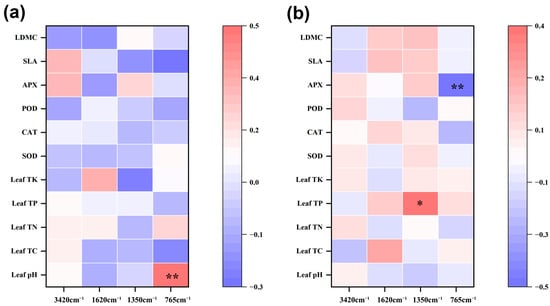
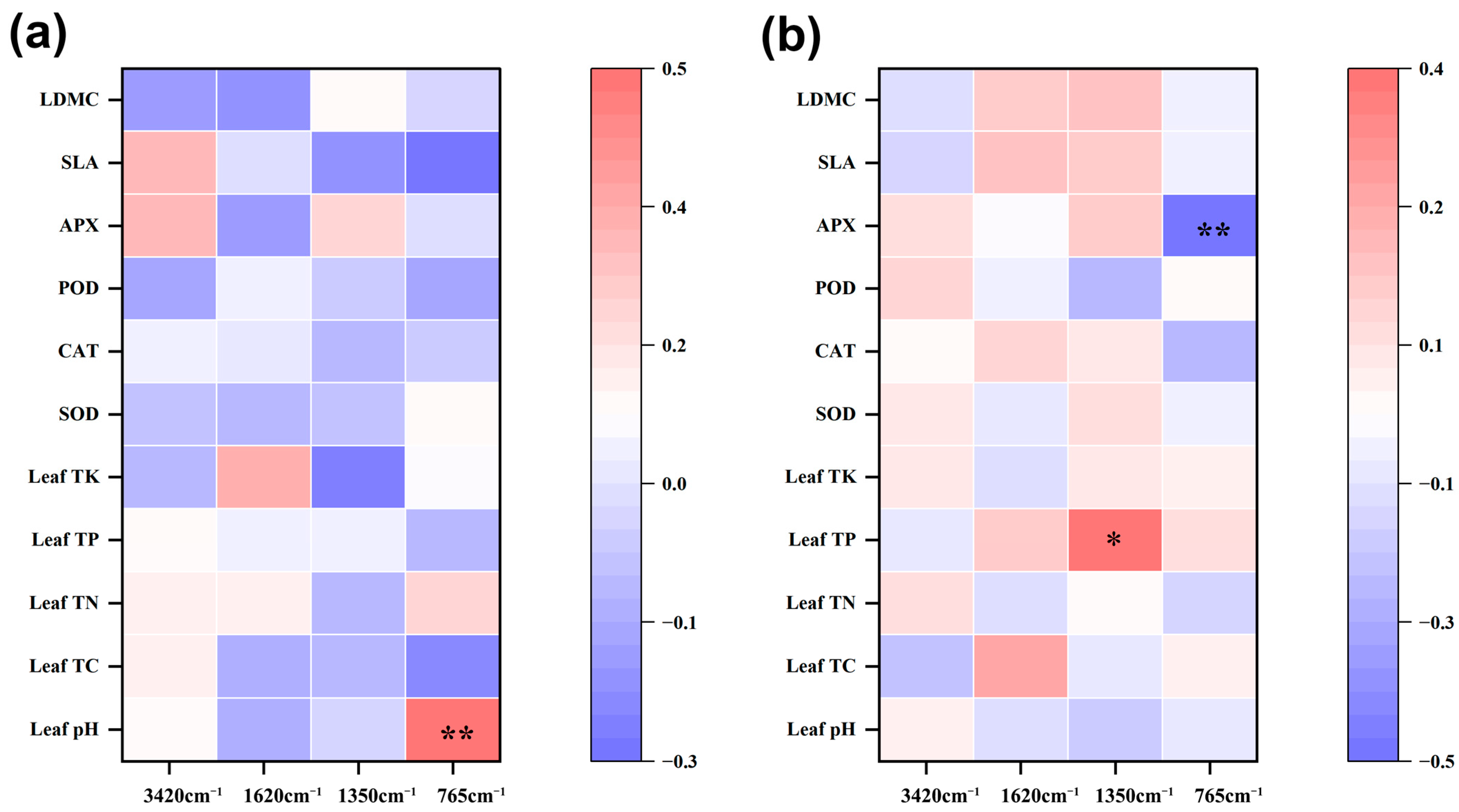
3.4.1. Correlations Between Leaf Physicochemical Traits and FTIR Peak Height in Female and Male I. polycarpa
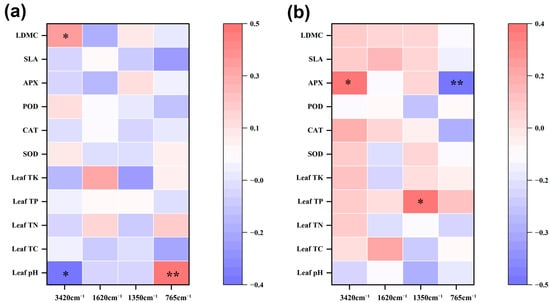
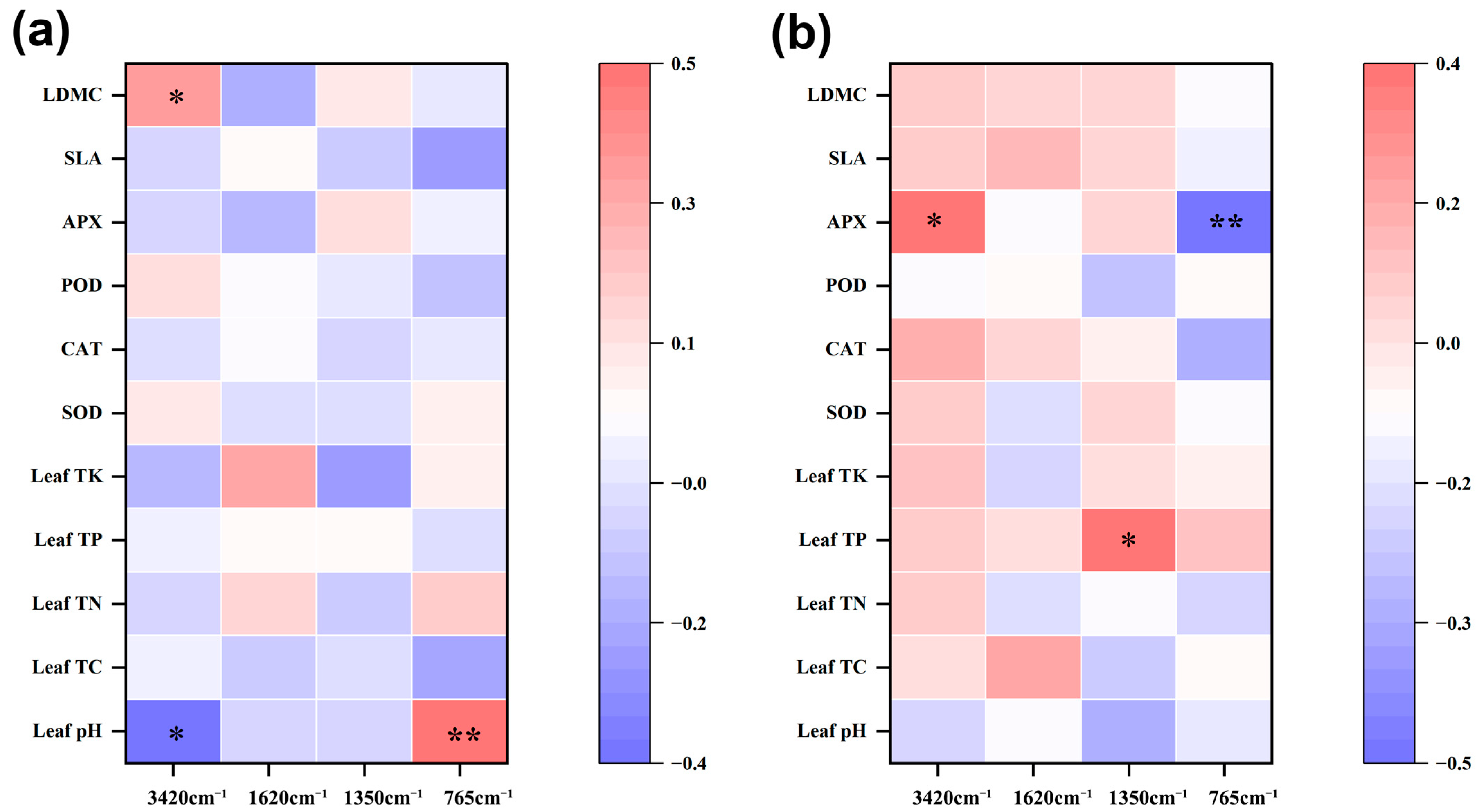
Correlation analyses were conducted to examine relationships between the peak heights of four diagnostic FTIR bands (3420, 1620, 1350, and 765 cm−1) and leaf physicochemical traits (biomass-related traits, enzyme activities, and nutrient indices) in female and male I. polycarpa.
As shown in Figure 8a, for female I. polycarpa, peak heights at 3420, 1620, and 1350 cm−1 were not significantly correlated with any leaf physicochemical trait. Nevertheless, the overall pattern suggested predominantly negative associations between these peak heights and the measured leaf traits. In contrast, the peak height at 765 cm−1 showed a highly significant positive correlation with leaf pH (r = 0.506).
Figure 8.
Correlation analysis of physicochemical traits and characteristic band peak heights of leaves from male and female I. polycarpa. n = 20. * indicates a significant correlation (p < 0.05) and ** indicates a highly significant correlation (p < 0.01)—the same notation is applied in Figure 9, Figure 10 and Figure 11. In the figure, “(a)” represents female plants and “(b)” represents male plants.
As shown in Figure 8b, for male I. polycarpa, peak heights at 3420 and 1620 cm−1 were not significantly correlated with leaf physicochemical traits, although the overall associations were generally positive. Peak height at 1350 cm−1 was significantly positively correlated with leaf total phosphorus (r = 0.444), whereas peak height at 765 cm−1 was highly significantly negatively correlated with APX activity (r = −0.531).
3.4.2. Correlations Between Leaf Physicochemical Traits and FTIR Peak Area in Female and Male I. polycarpa
Correlation analyses were performed to evaluate the relationships between the peak areas of four diagnostic FTIR bands (3420, 1620, 1350, and 765 cm−1) and leaf physicochemical traits (biomass-related traits, enzyme activities, and nutrient indices) in female and male I. polycarpa.
As shown in Figure 9a, for female I. polycarpa, peak areas in the 3420 and 1620 cm−1 regions were not significantly correlated with most leaf physicochemical traits, and the overall pattern indicated predominantly negative associations between peak area and the measured traits. However, the peak area in the 3420 cm−1 region was significantly negatively correlated with leaf pH (r = −0.383) and significantly positively correlated with LDMC (r = 0.500). In addition, the peak area in the 765 cm−1 region showed a highly significant positive correlation with leaf pH (r = 0.376).
Figure 9.
Correlation analysis of physicochemical traits and characteristic band peak areas of leaves from male and female I. polycarpa. n = 20. In the figure, “(a)” represents female plants and “(b)” represents male plants.
As shown in Figure 9b, for male I. polycarpa, peak area in the 1620 cm−1 region was not significantly correlated with leaf physicochemical traits, although overall associations were generally positive. The peak area in the 1350 cm−1 region was significantly positively correlated with leaf total phosphorus (r = 0.376). The peak area in the 3420 cm−1 region was significantly positively correlated with APX activity (r = 0.395), whereas another association involving the 3420 cm−1 peak area and APX activity was highly significantly negative (r = −0.519).
3.4.3. Correlations Among Leaf Physicochemical Traits in Female and Male I. polycarpa
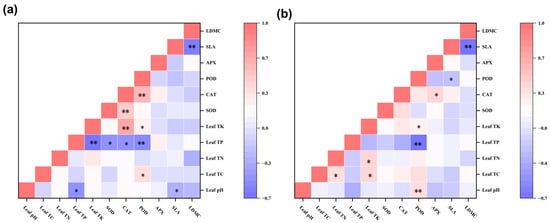
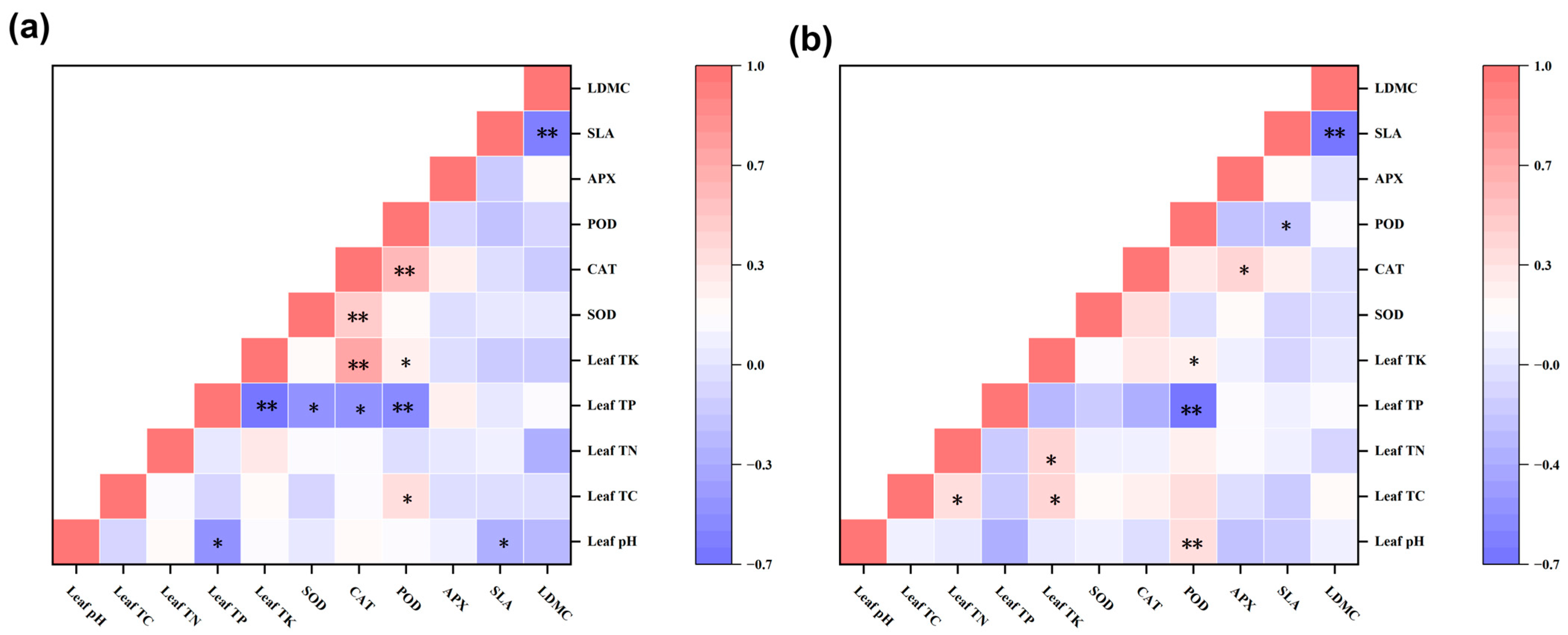
Correlation analyses among leaf traits are summarized in Figure 10. As shown in Figure 10a, in female I. polycarpa, LDMC was highly significantly negatively correlated with leaf area (r = −0.566). Leaf area was also significantly negatively correlated with leaf pH (r = −0.279). For enzyme activities, APX activity showed significant correlations with the other measured leaf traits. POD activity was highly significantly positively correlated with CAT (r = 0.599), and was significantly positively correlated with total K and total C (r = 0.263 and 0.369, respectively), but highly significantly negatively correlated with total P (r = −0.506). CAT activity was highly significantly positively correlated with SOD and total K (r = 0.452 and 0.676, respectively), and significantly negatively correlated with total P (r = −0.456). SOD activity was significantly negatively correlated with total P (r = −0.499). Total K was highly significantly negatively correlated with total P (r = −0.653), and total P was significantly negatively correlated with leaf pH (r = −0.459).
Figure 10.
Correlation analysis of physicochemical traits of leaves from male and female I. polycarpa. n = 20. “(a)” represents female plants and “(b)” represents male plants.
As shown in Figure 10b, in male I. polycarpa, LDMC was highly significantly negatively correlated with leaf area (r = −0.668). Leaf area was significantly negatively correlated with POD activity (r = −0.246). In terms of enzyme activities, APX activity was significantly positively correlated with CAT (r = 0.414). POD activity was highly significantly positively correlated with leaf pH (r = 0.367), highly significantly negatively correlated with total P (r = −0.708), and significantly positively correlated with total K (r = 0.231). Total K was significantly positively correlated with total C and total N (r = 0.389 and 0.414, respectively), and total N was significantly positively correlated with total C (r = 0.371).
3.4.4. Correlations Between Leaf Nutrient Traits and Rhizosphere Soil Nutrients in Female and Male I. polycarpa
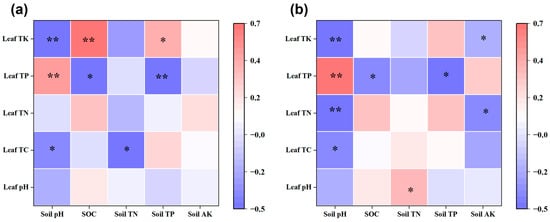
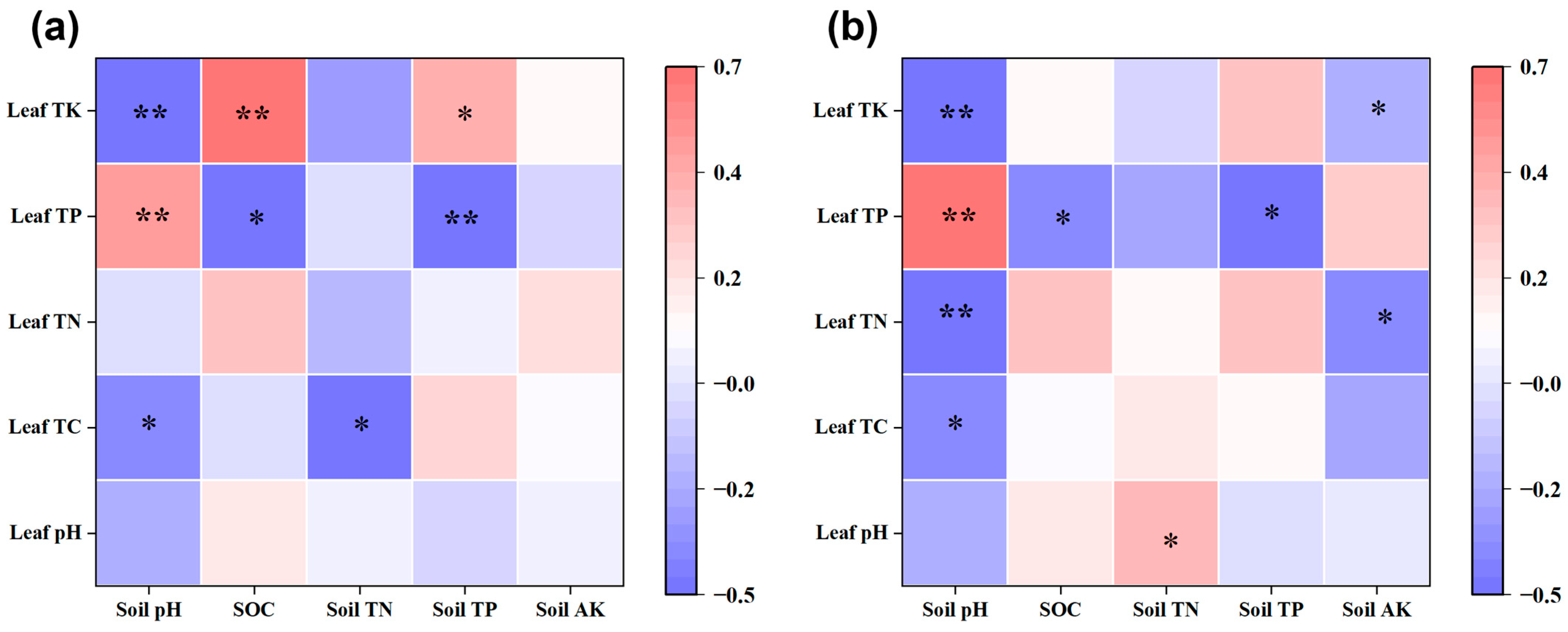
Correlations between aboveground leaf nutrient traits and belowground rhizosphere soil nutrients were analyzed separately for female and male I. polycarpa (Figure 11). As shown in Figure 11a, in female I. polycarpa, rhizosphere soil pH was highly significantly negatively correlated with leaf total K (r = −0.472), and highly significantly positively correlated with leaf total P (r = 0.495). Soil pH was also significantly negatively correlated with leaf total C (r = −0.388). Soil organic carbon (SOC) was highly significantly positively correlated with leaf total K (r = 0.659) and significantly negatively correlated with leaf total P (r = −0.455). Rhizosphere soil total N (TN) was significantly negatively correlated with leaf total C (r = −0.499). Rhizosphere soil total P (TP) was significantly positively correlated with leaf total K (r = 0.415) and highly significantly negatively correlated with leaf total P (r = −0.472).
Figure 11.
Correlation analysis of nutrients of male and female I. polycarpa leaf and rhizosphere soil nutrients. n = 20. In the figure, “(a)” represents female plants and “(b)” represents male plants.
As shown in Figure 11b, in male I. polycarpa, rhizosphere soil pH was highly significantly negatively correlated with leaf total K and leaf total N (r = −0.465 and −0.464, respectively), and highly significantly positively correlated with leaf total P (r = 0.652). Soil pH was also significantly negatively correlated with leaf total C (r = −0.390). Soil organic carbon was significantly negatively correlated with leaf total P (r = −0.377). Rhizosphere soil total N was significantly positively correlated with leaf pH (r = 0.388). Rhizosphere soil total P was significantly negatively correlated with leaf total P (r = −0.459). In addition, soil available K was significantly negatively correlated with leaf total K and leaf total N (r = −0.215 and −0.381, respectively).
4. Discussion
FTIR–ATR provides an integrative characterization of the overall chemical composition of plant tissues by capturing information on functional-group vibrations. In this study, the principal peak positions of female and male leaves were broadly consistent, indicating that the major classes of chemical constituents were generally similar between sexes. Based on the preprocessed spectra, four diagnostic spectral regions were identified and can be assigned to common functional groups in plant materials. The characteristic band of I. polycarpa is associated with O–H stretching vibrations; because hydroxyl groups are highly polar, the corresponding absorption is typically strong. A comparable pattern was reported for Cinnamomum chekiangense, whose leaf spectra showed an absorbance of up to 91% near 3420 cm−1, suggesting broadly similar chemical features to those of I. polycarpa [26]. The second characteristic band, around 1620 cm−1, corresponds to aromatic C=C stretching. In Houttuynia cordata, comparison of absorption peaks among three organs indicated that roots contained the highest abundance of aromatic compounds in second-derivative spectra; the corresponding band was similar to that observed in I. polycarpa leaves and exhibited the greatest peak height [27]. The third characteristic band near 1350 cm−1 is related to C–N stretching; in tea leaves, the band around 1350 cm−1 has also been assigned to the stretching vibration of aliphatic –NO2 groups in plant compounds [28]. The fourth characteristic band at 765 cm−1 is mainly attributed to out-of-plane bending vibrations of aromatic C–H bonds; the absorption band was markedly weakened at this position. Previous work has suggested that C–H bending vibrations are associated with starch content [29]. Notably, in the early growing season (May), no corresponding absorption feature was observed in male leaves near 1671 cm−1. This finding implies that components contributing to this band may differ between sexes early in the season, although the specific chemical origin requires validation using quantitative chemical analyses. Previous studies have shown that shifts in peak position or changes in band shape in infrared spectra can reflect sample handling and/or compositional variation [30]; therefore, the stage-specific signal detected here provides a useful clue for more targeted chemical verification. In addition to the peak-based analysis, PCA of the full FTIR spectra provided a multivariate view of spectral variation among samples. The first two principal components explained more than 80% of the total variance, indicating that the major patterns of whole-spectrum variation were effectively captured in the reduced-dimensional space. The PCA score distribution suggested that seasonal variation contributed substantially to the spectral structure of the samples, whereas sex-related separation was more limited and overlapped among several groups. This result implies that whole-spectrum FTIR data are informative for tracking seasonal changes in leaf chemical composition, but their ability to discriminate sexual dimorphism is moderate and appears to depend on the sampling stage. Therefore, the multivariate analysis complements the characteristic-band analysis by showing that seasonal spectral dynamics are detectable at the whole-spectrum level, while sex-related differences are better interpreted as stage-dependent rather than universally distinct.
With respect to leaf functional traits, female and male plants exhibited pronounced month-dependent variation during the growing season, and significant sex differences were detected in certain months, suggesting sex-specific physiological–ecological expressions in this dioecious species. The antioxidant enzyme system is a key pathway by which plants scavenge reactive oxygen species and maintain cellular homeostasis [31]. In the present study, sex differences in SOD and CAT were observed in May and September, consistent with reports that many dioecious species exhibit sex-specific responses under stress or seasonal environmental fluctuations [32,33,34,35]. POD and APX also showed dynamic seasonal patterns; APX differed between sexes from July to October, aligning with findings that APX responses can be inconsistent across species and stress contexts [36,37]. Moreover, SLA and LDMC—two traits widely used to indicate leaf growth strategies and resource-use efficiency [38]—showed pronounced seasonal variation in this study, while sex differences were detected only at specific sampling stages. The direction of sex differences in SLA/LDMC is not uniform across dioecious species [39,40,41], further highlighting that sexual dimorphism is both species-specific and season-dependent. Regarding leaf nutrients, dioecious plants often differ in nutrient status because of sex-specific reproductive investment and resource allocation [42,43]. Here, leaf C, N, P, and K differed between sexes in some months; these patterns were partly consistent with, yet also distinct from, those reported in other species [44,45,46,47,48], suggesting that female and male I. polycarpa may adopt different strategies of nutrient acquisition and allocation across the growing season.
Rhizosphere soil nutrients likewise exhibited clear seasonal dynamics and sex differences in certain months. However, the direction of rhizosphere nutrient differences between sexes varies among dioecious species [49,50,51], likely due to the combined effects of phenological stage, root activity, microenvironmental conditions, and management practices. Consequently, in this study, soil variables are more appropriately interpreted as environmental context for understanding leaf nutrient status and sex-related differences rather than as a single determining factor.
Correlation analyses further revealed coupling among internal leaf traits and between leaf and soil variables. LDMC was significantly negatively correlated with leaf area, consistent with the classic resource-acquisitive versus resource-conservative axis in the leaf economics spectrum and with previous reports [52]. Significant correlations were also detected among antioxidant enzymes and between enzymes and nutrient variables; for example, the relationships of POD with CAT and with total P were consistent with the findings of Yue Jianhua [53]. In addition, trade-offs between K and P are commonly observed across plant taxa [54]. In terms of aboveground–belowground coupling, leaf nutrient variables were predominantly negatively correlated with rhizosphere soil nutrients, and these relationships exhibited a degree of sex-specific structuring. Existing evidence indicates tight linkages among soil pH, organic matter, and available nutrients, which can influence plant uptake and utilization of elements such as K [55,56]. Meanwhile, relationships between soil total N and leaf nutrient/carbon status may differ among ecosystems and experimental contexts [57,58]. Collectively, these results suggest that resource allocation and environmental responses of female and male I. polycarpa may differ at the growing-season scale, although the underlying mechanisms require further testing through refined measurements of root processes, microhabitat factors, and long-term observations.
From a methodological perspective, our results indicate that FTIR–ATR peak parameters (peak height and peak area) are significantly correlated with several key physicochemical leaf variables, suggesting that these spectral metrics may serve as rapid indicators of leaf physicochemical variation. Previous studies have likewise demonstrated that FTIR can be used to rapidly discriminate among sample types or to establish relationships with physicochemical traits [59,60,61], supporting its feasibility for characterizing leaf constituents. Nonetheless, it should be emphasized that the present study is primarily based on correlational evidence between peak parameters and traits. To further develop FTIR–ATR into a quantitative estimation or classification tool, future work should incorporate chemometric modeling, independent validation datasets, and spatiotemporal out-of-sample testing to enhance robustness and generalizability.
5. Conclusions
FTIR–ATR characterization showed that the major diagnostic absorption bands of female and male leaves were generally coincident, indicating broadly similar classes of chemical constituents between sexes (with identifiable signals attributable to functional groups associated with alcohols/phenolics, polysaccharides, aromatics, and amines). Notably, in the early growing season (May), no corresponding absorption feature was observed in male leaves near 1671 cm−1. Overall, neither peak height nor peak area differed significantly between sexes, suggesting that sexual differences are expressed mainly as month-specific shifts in relative band intensity and in the coupling between spectral features and functional traits.
Leaf antioxidant enzyme activities, dry matter content, and nutrient indices (e.g., N and K) exhibited pronounced seasonal dynamics and significant sex differences in certain months, implying sex-specific strategies of resource allocation and physiological regulation during the growing season. Rhizosphere soil nutrient variables also showed clear seasonal variation and sex differences in some months, providing an environmental context for interpreting leaf-trait variation. Spectral–trait association analyses further indicated significant relationships between peak height/area and leaf pH and dry matter content in females, as well as between peak height/area and leaf total P and APX activity in males, suggesting that FTIR–ATR peak parameters can serve as useful spectral proxies for changes in leaf physicochemical properties. Leaf nutrient variables were predominantly negatively correlated with rhizosphere soil nutrient indices, and the correlation structure differed between sexes, implying that aboveground–belowground nutrient allocation may exhibit sex-dependent patterns. Collectively, these findings provide evidence for sexual dimorphism and sex-related differences in resource allocation in I. polycarpa.
Author Contributions
Conceptualization, Z.L.; methodology, Z.L., Y.Z. (Yigeng Zhu), W.Z., S.W. and T.Z.; software, Y.Z. (Yanhan Zhou), Y.Z. (Yigeng Zhu) and Z.L.; validation, Z.L., Y.Z. (Yigeng Zhu), T.Z., C.C., W.Z. and Z.H.; formal analysis, Z.L., C.C., Y.Z. (Yigeng Zhu), T.Z., W.Z., H.H., Y.Z. (Yanhan Zhou) and Z.H.; investigation, Z.L., C.C., W.Z., S.W. and Z.H.; resources, Z.L., C.C., W.Z., Z.H. and T.Z.; data curation, Z.L., Y.Z. (Yigeng Zhu), C.C., H.H., Y.Z. (Yanhan Zhou), W.Z. and Z.H.; writing—original draft preparation, Z.L., Y.Z. (Yigeng Zhu), W.Z., S.W. and T.Z.; writing—review and editing, Z.L., C.C., Y.Z. (Yigeng Zhu), T.Z., W.Z., H.H., Y.Z. (Yanhan Zhou) and Z.H.; visualization, Z.L. and C.C.; supervision, Z.L.; project administration, Z.L.; funding acquisition, Z.L. All authors have read and agreed to the published version of the manuscript.
Funding
This research was funded by the Specialized Flower Research and Development Project of Horticultural Therapy Type in the University-Enterprise Cooperation Park of Zhejiang Shuren University (2025330101003917). Key Specialty Project of Ordinary Colleges and Universities in Shaoxing City, Zhejiang Province, “Landscape Architecture” (SXSZY202412); the Henan Province Science and Technology Research Project (252102110234 & 262102110271); the Postgraduate Education Reform and Quality Improvement Project of Henan Province (YJS2025AL63), the Henan Agricultural University’s “Millions of Science and Education Service Action” Fund Project (2024SFBQW30), the Henan Provincial College Student Innovation and Entrepreneurship Training Program (S202510466013X), the China Central Financial Forestry Science and Technology Promotion Project (GTH[2026]02), the Key Research Project of Higher Education Institutions in Henan Province, China (25CY017), Henan Province Provincial Finance Science and Technology Afforestation Project: Study on the Occurrence Mechanism and Green Prevention and Control Technologies of Idesia polycarpa Stem Canker (2026-01).
Data Availability Statement
The datasets generated during and/or analyzed during the current study is available from the corresponding author upon reasonable request.
Acknowledgments
We thank all our laboratory members for their help with this experiment. Our gratitude extends to our lab team members, who assisted with this endeavor.
Conflicts of Interest
The authors declare no conflicts of interest.
References
- Liu, F.R.; Luo, J.X.; Yang, M.J. Geographic distribution of Idesia polycarpa and zoning of its potential suitable cultivation areas. For. Res. 2017, 30, 1028–1033. [Google Scholar] [CrossRef]
- Zhang, S.Y.; Huang, X.F.; Dou, L. Optimization of ultrasound-assisted compound enzymolysis for extracting Idesia polycarpa oil and evaluation of oil quality. J. Chin. Cereals Oils Assoc. 2025, 40, 141–149. [Google Scholar] [CrossRef]
- Dou, L.; Wang, Z.Y.; Yang, W.Q. Preparation of antioxidant peptides from Idesia polycarpa and characterization of their functional properties. China Oils Fats 2025, 50, 74–83. [Google Scholar] [CrossRef]
- Wu, L.L.; Deng, W.F.; Lu, X.Y. Research progress on the development and utilization of Idesia polycarpa. Nonwood For. Res. 2023, 41, 242–252. [Google Scholar] [CrossRef]
- Zhao, M.H.; Xu, J.Y.; Liu, Y.L. Fruit quality of Idesia polycarpa at different harvest stages. J. Henan Agric. Univ. 2024, 58, 69–77. [Google Scholar] [CrossRef]
- Zhou, Y.C.; Jia, S.J.; Li, X. Sowing and nursery seedling production techniques for Idesia polycarpa. Liaoning For. Sci. Technol. 2021, 6, 69–71. [Google Scholar]
- Chen, J.X.; Shan, D.D.; Dun, C.Y. Research advances in propagation techniques of Idesia polycarpa. Cent. South Agric. Sci. Technol. 2022, 43, 180–183. [Google Scholar]
- Khan, S.A.; Khan, S.B.; Khan, L.U. Fourier transform infrared spectroscopy: Fundamentals and application in functional groups and nanomaterials characterization. In Handbook of Materials Characterization; Sharma, S.K., Ed.; Springer International Publishing: Cham, Switzerland, 2018; pp. 317–344. [Google Scholar]
- Kumar, H.; Katal, A.; Rawat, P. FT-IR spectroscopic and micellization studies of cetyltrimethylammonium bromide in aqueous and aqueous solution of ionic liquid (1-butyl-3-methylimidazolium bromide) at different temperatures. J. Mol. Liq. 2018, 249, 227–232. [Google Scholar] [CrossRef] [Scilit]
- Coenen, K.; Gallucci, F.; Mezari, B. An in-situ IR study on the adsorption of CO2 and H2O on hydrotalcites. J. CO2 Util. 2018, 24, 228–239. [Google Scholar] [CrossRef] [Scilit]
- Itoh, Y.; Nakashima, Y.; Tsukamoto, S. N+-C-H···O hydrogen bonds in protein–ligand complexes. Sci. Rep. 2019, 9, 767. [Google Scholar] [CrossRef] [Scilit]
- Wang, Q.; Li, B.; Han, Z.Y. Grading of anthracnose severity in oil-tea (Camellia oleifera) based on LIBS combined with Fourier-transform NIR spectroscopy. Spectrosc. Spectr. Anal. 2023, 43, 1450–1458. [Google Scholar]
- Chen, C.; Yang, K.B.; Wang, K.P. Effects of different stresses on plant growth and development and mechanisms of plant stress resistance: A review. Jiangsu Agric. Sci. 2024, 52, 15–24. [Google Scholar] [CrossRef]
- Che, Q.; Liu, G.; Tian, X. Infrared spectroscopic study on the effects of low-temperature stress on cereal seed germination. Laser Optoelectron. Prog. 2023, 60, 411–420. [Google Scholar]
- Xue, X.X.; Wang, W.B.; Luo, X.H. FTIR characterization of changes in leaf chemical composition of rubber (Hevea brasiliensis) seedlings under potassium and magnesium stress. Spectrosc. Spectr. Anal. 2022, 42, 74–79. [Google Scholar]
- Zhang, M.Y.; Zhu, Z.L.; Li, H.H. Comparison and application of different Fourier-transform infrared spectroscopy methods for investigating soil spectral characteristics. Res. Soil Water Conserv. 2022, 29, 121–128. [Google Scholar] [CrossRef]
- Ge, Y.; Atefi, A.; Zhang, H. High-throughput analysis of leaf physiological and chemical traits with VIS-NIR-SWIR spectroscopy: A case study with a maize diversity panel. Plant Methods 2019, 15, 66. [Google Scholar] [CrossRef] [Scilit]
- Trancoso, I.; de Souza, G.A.R.; de Souza, J.V.P. Water stress promotes secondary sexual dimorphism in ecophysiological traits of papaya seedlings. Plants 2025, 14, 2445. [Google Scholar] [CrossRef] [Scilit]
- Wang, C.; Xu, P.; Wang, H. An efficient strategy for early sex identification in Litsea cubeba based on portable Raman technology combined with machine learning algorithms. J. Food Compos. Anal. 2025, 140, 107242. [Google Scholar] [CrossRef] [Scilit]
- Holman, A.P.; Goff, N.K.; Juárez, I.D. Elucidation of sex from mature Palmer amaranth (Amaranthus palmeri) leaves using a portable Raman spectrometer. RSC Adv. 2024, 14, 1833–1837. [Google Scholar] [CrossRef] [Scilit]
- Chen, J.X.; Wang, X.F. Experimental Guide to Plant Physiology; South China University of Technology Press: Guangzhou, China, 2015. [Google Scholar]
- Wang, X.K. Principles and Techniques of Plant Physiological and Biochemical Experiments; Higher Education Press: Beijing, China, 2006. [Google Scholar]
- Wang, R.K. Determination of soil pH by potentiometry. Shanxi Chem. Ind. 2018, 38, 64–65, 76. [Google Scholar] [CrossRef]
- Liu, S.; Chen, J.; Han, W. Comparison of pretreatment, preservation and determination methods for foliar pH of plant samples. J. Plant Ecol. 2022, 15, 673–682. [Google Scholar] [CrossRef] [Scilit]
- Ma, X.F. Soil Science Experiments; China Forestry Publishing House: Beijing, China, 2020. [Google Scholar]
- Tang, Y.X.; Wang, Q.C.; Chen, J. Quantitative and structural characteristics of soluble organic carbon in leaves and fine roots of seedlings of 13 tree species in the mid-subtropics. Acta Ecol. Sin. 2022, 42, 4882–4891. [Google Scholar]
- Chen, J.; Li, Z.; Li, J. Infrared spectrum analysis of different parts of Houttuynia cordata. Adv. Anal. Chem. 2019, 9, 127–131. [Google Scholar] [CrossRef]
- Zhan, K. Effects and Mechanisms of Foliar Application of Different Selenium Sources on Selenium and Fluorine Transport and Accumulation in Tea Plants. Ph.D. Thesis, Anhui Agricultural University, Hefei, China, 2021. [Google Scholar] [CrossRef]
- Ren, J.; Zhao, X.X.; Zhao, S.Q. Fourier transform infrared spectroscopic study of lotus root and arrowhead. In Proceedings of the 18th National Conference on Molecular Spectroscopy, Kunming, China, 16–17 August 2014; pp. 177–178. [Google Scholar]
- Chen, Y.; Liu, H.; Li, P.L. Infrared spectral characteristics of Scutellaria baicalensis decoction pieces processed by different methods. Chin. J. Exp. Tradit. Med. Formulae 2015, 21, 77–81. [Google Scholar] [CrossRef]
- Aires, E.; Aragão, C.; Dantas, B. Light intensity modulates the accumulation of carbohydrates, antioxidant enzymes and production of iceberg lettuce under tropical conditions. Horticulturae 2021, 7, 553. [Google Scholar] [CrossRef] [Scilit]
- Sun, L.; Liu, M.H.; Yilita, E. Effects of exogenous calcium on growth and physiological characteristics of Populus deltoides under cadmium stress. Asian J. Ecotoxicol. 2024, 19, 390–403. [Google Scholar]
- Jin, J. Responses and Cold-Resistance Differences between Male and Female Plants of Actinidia arguta Under Low-Temperature Stress. Master’s Thesis, Changchun Normal University, Changchun, China, 2023. [Google Scholar]
- Feng, X.; Wang, B.X. Effects of chromium stress on antioxidant enzyme activities and malondialdehyde content in male and female leaves of Humulus scandens. J. China West Norm. Univ. (Nat. Sci.) 2016, 37, 390–395. [Google Scholar] [CrossRef]
- Wang, X.R.; Qiu, H.; Zhang, Q.X. Sex-related physiological differences in rooting of cuttings and drought responses in Torreya grandis. J. Zhejiang A&F Univ. 2024, 41, 478–485. [Google Scholar]
- Jiao, P.P.; Wang, Y.Q.; Li, Z.J. Relationship between sex expression and POD isozymes in Populus euphratica and Populus pruinosa. J. Tarim Univ. 2017, 29, 8–14. [Google Scholar]
- Tan, L.J.; Hu, X.W.; Wang, X.J. Effects of arbuscular mycorrhizal fungal pretreatment on physiological and biochemical traits of male and female Populus deltoides under lead stress. Acta Bot. Boreali-Occident. Sin. 2017, 37, 1559–1568. [Google Scholar]
- Zhang, Z.G.; Wei, H.X. Specific leaf area and leaf dry matter content of dominant plant species in the Weishan Lake red lotus wetland. Acta Agric. Jiangxi 2021, 33, 63–69. [Google Scholar] [CrossRef]
- Ma, C.Q.; Huang, H.L.; Peng, Z.L. Responses of compound leaf types and photosynthetic function of male and female Fraxinus mandshurica to different habitats. Chin. J. Plant Ecol. 2023, 47, 1287–1297. [Google Scholar] [CrossRef] [Scilit]
- Liu, J.P.; You, M.H.; Zhang, L.H. Effects of different supports on photosynthetic characteristics and biomass structure of male and female Humulus scandens. Acta Ecol. Sin. 2015, 35, 6032–6040. [Google Scholar]
- Wu, C.F.; Guo, J.; Wang, G.B. Morphological and physiological responses of male and female Ginkgo biloba to temperature variation. J. Nanjing For. Univ. (Nat. Sci. Ed.) 2024, 48, 150–158. [Google Scholar]
- Zhang, S.; Liu, Z.B.; Xu, X. Column review: Physiological ecology of dioecious plants. J. Sichuan Univ. (Nat. Sci. Ed.) 2025, 62, 257–258. [Google Scholar] [CrossRef]
- Zheng, L.L.; Yu, L.L.; Dai, P. Leaf nutrient characteristics and adaptive strategies of plants in the Guangxi Dashiwei Tiankeng groups. Chin. J. Plant Ecol. 2024, 48, 872–887. [Google Scholar]
- Chen, L.; Dong, T.; Duan, B. Sex-specific carbon and nitrogen partitioning under N deposition in Populus cathayana. Trees 2014, 28, 793–806. [Google Scholar] [CrossRef] [Scilit]
- Fu, H.; Ren, Y.; Chen, Z.X. Nutrient differences between male and female Zanthoxylum schinifolium and their effects on soil nutrient status. Nonwood For. Res. 2022, 40, 192–199, 207. [Google Scholar] [CrossRef]
- Mao, X.; Li, X.C.; Liu, G.H. Morphological and physiological differences between male and female Vernicia montana. South China For. Sci. 2022, 50, 24–29, 57. [Google Scholar] [CrossRef]
- Gao, M.; Chen, Y.C.; Wu, L.W. Sex-specific dynamics of water and nitrogen use efficiency in Litsea cubeba. Sci. Silvae Sin. 2019, 55, 62–68. [Google Scholar]
- Li, X.; Zhai, J.T.; Song, Z.L. Sex differences in branch–leaf morphology and stoichiometric traits of Populus euphratica. Chin. J. Ecol. 2023, 42, 1586–1594. [Google Scholar] [CrossRef]
- Xia, Z.; He, Y.; Yu, L. Sex-specific strategies of phosphorus (P) acquisition in Populus cathayana as affected by soil P availability and distribution. New Phytol. 2020, 225, 782–792. [Google Scholar] [CrossRef] [Scilit] [PubMed]
- Song, H.; Cai, Z.; Liao, J. Sexually differential gene expressions in poplar roots in response to nitrogen deficiency. Tree Physiol. 2019, 39, 1614–1629. [Google Scholar] [CrossRef] [Scilit]
- Lan, Q. Clonal Propagation of Male and Female Salix gordejevii and Characteristics of Rhizosphere Microbial Communities. Master’s Thesis, Inner Mongolia Agricultural University, Hohhot, China, 2024. [Google Scholar] [CrossRef]
- Wang, M.J.; Rong, L.; Li, T.T. Leaf functional traits of nine woody liana species in the karst region of central Guizhou. J. Trop. Subtrop. Bot. 2021, 29, 455–464. [Google Scholar]
- Yue, J.H.; Wei, Z.; Dong, Y. Effects of carbon sources on physiological traits during callus induction and proliferation of Agapanthus praecox. Acta Bot. Boreali-Occident. Sin. 2021, 41, 439–449. [Google Scholar]
- Tian, C.; Li, Y.S.; Ma, Y. Effects of different concentrations of Sophora alopecuroides extracts on continuous-cropping tomato growth and soil fertility. Xinjiang Agric. Sci. 2024, 61, 2203–2210. [Google Scholar]
- Yang, L.; Lin, Q.H.; Hua, Y.G. Correlation analysis between soil pH and nutrient contents in rubber plantations at Yangjiang Farm. Trop. Agric. Sci. 2013, 33, 30–32, 37. [Google Scholar]
- Gao, L.; Hu, J.H.; Li, K.N. Mineral element characteristics of citrus leaves and their correlations with soil nutrients in a Shaoguan Gonggan orchard. J. Shaoguan Univ. 2023, 44, 52–57. [Google Scholar]
- Fan, Z.Y. Responses of Leaf Traits, Soil Nutrients, and Fruit Quality of ‘Lingwu Changzao’ Jujube (Ziziphus jujuba) to Nitrogen Application. Master’s Thesis, Ningxia University, Yinchuan, China, 2021. [Google Scholar] [CrossRef]
- Li, D.D.; Fang, Z.; Du, H.T. Leaf–soil carbon and nitrogen distribution patterns of herbaceous plants across vegetation zones on the Loess Plateau. J. Plant Nutr. Fertil. 2019, 25, 841–850. [Google Scholar]
- Li, Y.F.; Yang, Y.R.; Sang, H.Y. Rapid identification of Cyperus rotundus and its processed products using FT-IR combined with chemometric analysis. Chin. Arch. Tradit. Chin. Med. 2025, 43, 220–222, 322–324. [Google Scholar] [CrossRef]
- Miao, C.; Xu, S.; Zhang, J.X. Prediction of foliar total nitrogen in secondary forests of Northeast China using Fourier-transform mid-infrared spectroscopy. Chin. J. Ecol. 2019, 38, 3864–3869. [Google Scholar] [CrossRef]
- He, X.; Li, A.X.; Zhang, J. Simultaneous determination of and in soils using diffuse reflectance Fourier-transform infrared spectroscopy. Anal. Lab. 2015, 34, 1428–1431. [Google Scholar] [CrossRef]

Disclaimer/Publisher’s Note: The statements, opinions and data contained in all publications are solely those of the individual author(s) and contributor(s) and not of MDPI and/or the editor(s). MDPI and/or the editor(s) disclaim responsibility for any injury to people or property resulting from any ideas, methods, instructions or products referred to in the content. |
© 2026 by the authors. Licensee MDPI, Basel, Switzerland. This article is an open access article distributed under the terms and conditions of the Creative Commons Attribution (CC BY) license.