



Int. J. Environ. Res. Public Health, Volume 14, Issue 9 (September 2017) – 143 articles
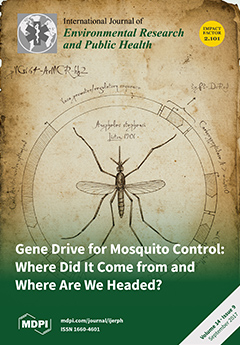
Cover Story (view full-size image):
Mosquitoes spread devastating human diseases including malaria, dengue and Zika. Mosquito control has historically relied on insecticides as the primary means to reduce disease burdens. Harnessing the power of genome-editing, scientists are developing genetic alternatives to insecticides, including field releases of genetically-modified insects. These technologies are relatively new to mosquito control, especially gene-drives, which have improved immensely with the recent use of CRISPR/Cas9, but these technologies are rooted in a long history of research in both mosquitoes and other insects and an improved understanding of mosquito genomes. To highlight the utility of genetic tools in the context of mosquito control, Macias et al. review the history of gene-drive for insect pest control and the development of site-specific gene-editing for the future of vector-borne disease control. (Artwork by
[...] Read more.
- Issues are regarded as officially published after their release is announced to the table of contents alert mailing list.
- You may sign up for e-mail alerts to receive table of contents of newly released issues.
- PDF is the official format for papers published in both, html and pdf forms. To view the papers in pdf format, click on the "PDF Full-text" link, and use the free Adobe Reader to open them.
Previous Issue
Next Issue
