
Journal Description
International Journal of Environmental Research and Public Health
(IJERPH) is a transdisciplinary, peer-reviewed, open access journal that covers global health, healthcare sciences, behavioral and mental health, infectious diseases, chronic diseases and disease prevention, exercise and health related quality of life, environmental health and environmental sciences, and is published monthly online by MDPI. The International Society Doctors for the Environment (ISDE), Italian Society of Environmental Medicine (SIMA) and Environmental Health Association of Québec (ASEQ‑EHAQ) are affiliated with IJERPH and their members receive discounts on the article processing charges.
- Open Access— free for readers, with article processing charges (APC) paid by authors or their institutions.
- High Visibility: indexed within Scopus, PubMed, MEDLINE, PMC, Embase, GEOBASE, CAPlus / SciFinder, and other databases.
- Journal Rank: CiteScore - Q1 (Public Health, Environmental and Occupational Health)
- Rapid Publication: manuscripts are peer-reviewed and a first decision is provided to authors approximately 29.5 days after submission; acceptance to publication is undertaken in 3.9 days (median values for papers published in this journal in the second half of 2025).
- Recognition of Reviewers: reviewers who provide timely, thorough peer-review reports receive vouchers entitling them to a discount on the APC of their next publication in any MDPI journal, in appreciation of the work done.
- Testimonials: See what our editors and authors say about IJERPH.
- Sections: published in 7 topical sections.
- Journal Cluster of Healthcare Sciences and Services: Geriatrics, Journal of Ageing and Longevity, Healthcare, Hospitals, Hygiene, International Journal of Environmental Research and Public Health and Nursing Reports.
Latest Articles
From Willingness to Readiness: Caregiver Activation for Cancer Care in Singapore
Int. J. Environ. Res. Public Health 2026, 23(5), 661; https://doi.org/10.3390/ijerph23050661 (registering DOI) - 15 May 2026
Abstract
Background: Family caregivers are essential partners in the outpatient care of older adults with cancer, yet the knowledge, skills, and confidence, collectively, of caregiver activation are not well characterized in Asian settings. Understanding activation can inform tailored support to sustain effective caregiving. Accordingly,
[...] Read more.
Background: Family caregivers are essential partners in the outpatient care of older adults with cancer, yet the knowledge, skills, and confidence, collectively, of caregiver activation are not well characterized in Asian settings. Understanding activation can inform tailored support to sustain effective caregiving. Accordingly, this study assessed the overall activation levels among cancer caregivers in the three most common cancer diagnoses in Singapore by using the Caregiver-Patient Activation Measure (CG-PAM). Methods: A total of 103 informal caregivers of patients ≥60 years (lung, GI, or myeloma) at Singapore’s largest public cancer hospitals completed the 13-item CG-PAM, scored 0–100 and classified into four activation levels. Descriptive statistics summarized characteristics and CG-PAM responses, and logistic regression analyses assessed the degree of activation for individual demographic and other characteristics (p < 0.05). Results: Caregivers showed moderate–high activation (mean 65.9 ± 16.1) and the following levels: L1, 4.9%; L2, 23.3%; L3, 38.8%; L4, 31.1%. They strongly endorsed personal responsibility and active engagement, reporting confidence in key self-management tasks, but struggled to sustain behaviors under stress. Activation was not significantly associated with demographic factors or any other measured characteristics. Conclusion: Caregivers of older adults with cancer in Singapore included in this study showed moderate–high activation and strong self-management confidence but struggled to sustain behaviors under stress. Routine activation assessment and tailored support (education, coaching) could strengthen outpatient care. Longitudinal and interventional research, alongside follow-up interviews, is needed to identify unmet needs, existing support systems, and inform scalable, sustainable models.
Full article
(This article belongs to the Section Health Care Sciences)
Open AccessArticle
Bayesian Multivariate Modelling of Lone Star (Amblyomma americanum) Tick Life Stage Abundance and Temporal Trends to Inform Public Health Risk in Virginia
by
Thabo Lephoto, Henry Mwambi, Oliver Bodhlyera and Holly Gaff
Int. J. Environ. Res. Public Health 2026, 23(5), 660; https://doi.org/10.3390/ijerph23050660 (registering DOI) - 15 May 2026
Abstract
►▼
Show Figures
The increasing abundance of ticks poses a growing public health concern due to heightened human exposure to tick bites. The lone star tick (Amblyomma americanum: Ixodida: Ixodidae), a common human-biting species in the United States, has expanded its range in recent
[...] Read more.
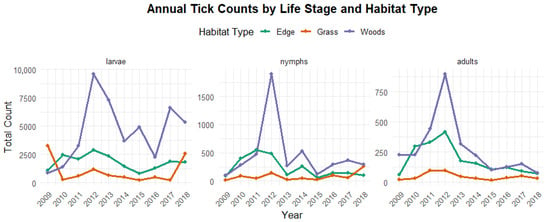
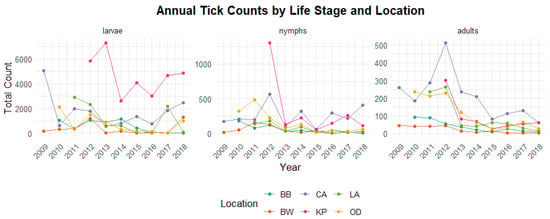
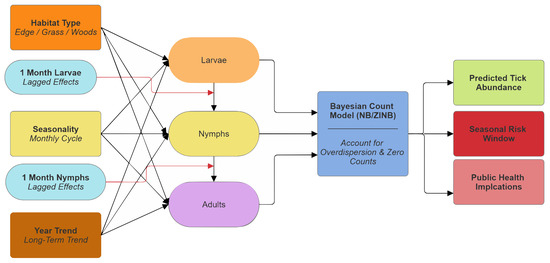
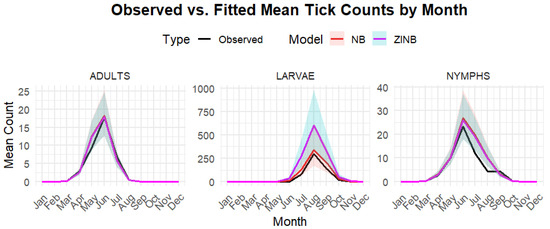
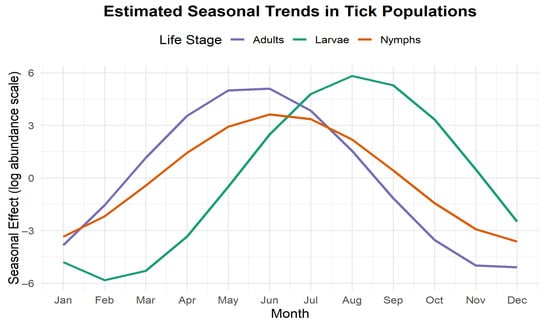
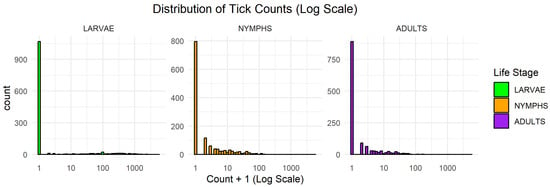
The increasing abundance of ticks poses a growing public health concern due to heightened human exposure to tick bites. The lone star tick (Amblyomma americanum: Ixodida: Ixodidae), a common human-biting species in the United States, has expanded its range in recent years. However, how its different life stages vary across time, habitats, and locations remains insufficiently understood. We analyzed tick abundance data collected in southeastern Virginia between 2009 and 2018, focusing on larval, nymphal, and adult life stages. A Bayesian multivariate modelling framework was used to examine seasonal patterns, habitat effects, spatial variation, and biological links between life stages. Two commonly used count models were compared to determine which best described the observed tick abundance patterns. Tick abundance showed strong and distinct seasonal patterns across life stages. Adult ticks were most abundant in late spring to early summer (May–June), nymphs peaked in early to mid-summer (June–July), and larvae peaked later in summer (August). Wooded habitats consistently supported higher tick abundance than grassy areas. Although both models captured these trends, the negative binomial model provided a more stable and biologically meaningful representation of tick dynamics. Several counties, including Chesapeake, York, Portsmouth, and Northampton, were identified as areas of elevated tick abundance, indicating increased tick bite exposure risk. This study highlights clear seasonal and habitat-specific windows of increased tick activity that are relevant for surveillance and control planning. By clarifying when and where different tick life stages are more abundant, the findings support targeted public health interventions aimed at reducing human exposure to tick bites in Virginia. The modelling approach is also applicable to other regions, including settings where ticks affect livestock health and food security.
Full article

Figure 1
Open AccessArticle
Burden of Disease Due to Consumption of Alcohol and Other Drugs in Colombia, 2016–2022: A Subnational Regional Analysis
by
Oscar Alexander Gutiérrez-Lesmes, Emilce Salamanca Ramos and Karen Julieth Quintero Díaz
Int. J. Environ. Res. Public Health 2026, 23(5), 659; https://doi.org/10.3390/ijerph23050659 (registering DOI) - 15 May 2026
Abstract
Alcohol and psychoactive substance use represent a major burden for global public health, increasing the risk of non-communicable diseases, violence, road traffic injuries, dependence, and mental disorders, and generating impacts on productivity and social welfare. This study aimed to estimate the burden of
[...] Read more.
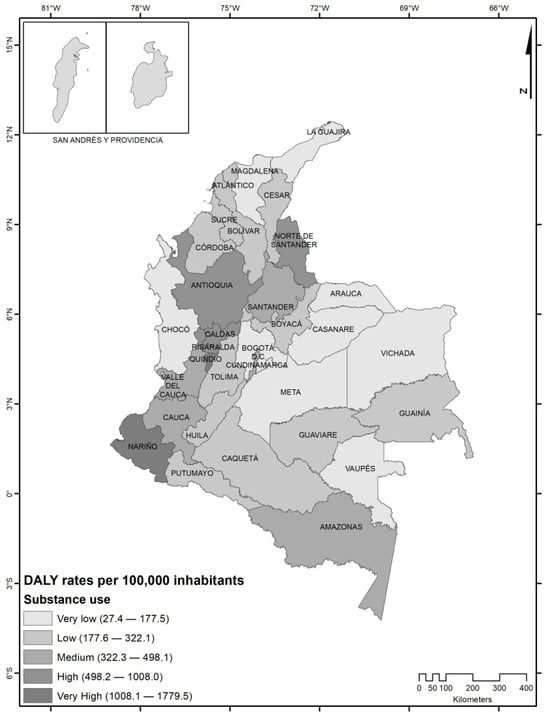
Alcohol and psychoactive substance use represent a major burden for global public health, increasing the risk of non-communicable diseases, violence, road traffic injuries, dependence, and mental disorders, and generating impacts on productivity and social welfare. This study aimed to estimate the burden of disease attributable to alcohol and other psychoactive substances in the departments of Colombia from 2016 to 2022. A burden-of-disease study was conducted using the Disability-Adjusted Life Years (DALYs) indicator, following the methodology of the World Health Organization Global Health Estimates. Official morbidity and mortality databases were used. An estimated 236,154.42 DALYs were attributable to alcohol and psychoactive substance use in Colombia during the study period, increasing from 14,158.7 DALYs in 2016 to 40,190.7 DALYs in 2022. The burden was heterogeneous across departments, with values above 1000 DALYs in Quindío (1779.5), Nariño (1624.3), and Norte de Santander (1008.0) and below 132 DALYs in La Guajira, Casanare, and Vaupés. Men accounted for 73.5% of total DALYs. The mean age of morbidity records associated with alcohol and psychoactive substance use disorders was 30.67 years in men and 32.37 years in women. The burden associated with psychoactive substance use is increasing in Colombia, with differences by sex and department of residence.
Full article
(This article belongs to the Section Global Health)
►▼
Show Figures

Figure 1
Open AccessArticle
Primary Care Career Perceptions: Comparing Temperament and Character Inventory Profiles of Medical Students with General Practitioners
by
Anna Nánási, Viktor Rekenyi, Csongor István Szepesi, Eszter Kovács, Nóra Horváth, Armand Kun and László Róbert Kolozsvári
Int. J. Environ. Res. Public Health 2026, 23(5), 658; https://doi.org/10.3390/ijerph23050658 (registering DOI) - 15 May 2026
Abstract
The structural integrity of the Hungarian healthcare system is threatened by a systemic shortage of General Practitioners (GPs), with 1021 districts remaining vacant as of March 2026. This study assessed demographic characteristics, perceived career attributes, and temperament and character traits of 144 medical
[...] Read more.
The structural integrity of the Hungarian healthcare system is threatened by a systemic shortage of General Practitioners (GPs), with 1021 districts remaining vacant as of March 2026. This study assessed demographic characteristics, perceived career attributes, and temperament and character traits of 144 medical students and 72 practicing GPs, achieving an overall response rate of 91.5%, using the TCI-55 inventory to identify factors influencing professional pathways. Statistical analysis utilized Mann–Whitney U, Chi-square, and Fisher’s exact tests. Results showed only 6 students indicated family medicine as their first choice, compared to 49 GPs (p < 0.001). Students frequently perceived the field as “boring” (82 students vs. 1 GP, p < 0.001) and burdened by “trivial patient problems” (44 students vs. 7 GPs, p = 0.001), while GPs highlighted “stress” (15 GPs vs. 4 students, p < 0.001) as a primary disadvantage. Students scored significantly higher in the temperament dimensions of Novelty Seeking (p < 0.001) and Reward Dependence (p < 0.001). Addressing these educational misperceptions and urgently mitigating the structural drivers of occupational stress and workforce fatigue are critical public health priorities required to ensure the sustainability of primary care, maintain the continuity of preventive services, and safeguard equitable population health outcomes.
Full article
Open AccessArticle
Strategies to Raise Awareness About Screening and Vaccination for the Human Papillomavirus Among Women in Limpopo Province, South Africa
by
Matodzi Pertunia Mushasha and Lebitsi Maud Modiba
Int. J. Environ. Res. Public Health 2026, 23(5), 657; https://doi.org/10.3390/ijerph23050657 (registering DOI) - 15 May 2026
Abstract
Background: Human papillomavirus (HPV) is a serious infection which is primarily transmitted through sexual intercourse. Almost 100% of cervical cancers are caused by HPV. Limited awareness of HPV leads to delayed cancer diagnoses, significantly increasing mortality and morbidity rates. Aim: The purpose of
[...] Read more.
Background: Human papillomavirus (HPV) is a serious infection which is primarily transmitted through sexual intercourse. Almost 100% of cervical cancers are caused by HPV. Limited awareness of HPV leads to delayed cancer diagnoses, significantly increasing mortality and morbidity rates. Aim: The purpose of this study was to develop strategies to increase awareness of human papillomavirus screening and vaccination among women in Limpopo Province, South Africa. Setting: This study was carried out in the Vhembe District of the Thulamela Municipality of Limpopo Province. Methods: The E-Delphi method was used, and the researcher used a quantitative approach. A total population of 15 nursing managers was part of the study. Questionnaires were used to collect data. Data were analysed using the statistical package for the social sciences version 26. Results: In Round 1, 8 (53.3%) of the 15 participants strongly supported the strategy of updating women with the most recently revised HPV screening guidelines. In Round 2, consensus was achieved, with 14 (93.3%) of the participants strongly agreeing that the development of teaching programmes in healthcare facilities is necessary. This indicates a strong convergence of expert opinion on the importance of structured educational interventions to support the implementation of the strategy. The consensus in this study was defined as ≥70% agreement between participants on each item. Conclusions: The lack of awareness of HPV is concerning because early detection and treatment can prevent serious health problems. The study used the E-Delphi method to assess the effectiveness of strategies to increase awareness of HPV screening and vaccination in women. Contribution: Health policy initiatives may improve public awareness of HPV and vaccination, especially by focusing on educating nurses, which could improve women’s awareness and encourage HPV screening and vaccination.
Full article
Open AccessPerspective
Preservation-to-Precision in Severe Early Childhood Caries: A Narrative Review of Silver Diamine Fluoride—When “Buying Time” Must Not Become “Selling Time”
by
Ziad D. Baghdadi
Int. J. Environ. Res. Public Health 2026, 23(5), 656; https://doi.org/10.3390/ijerph23050656 (registering DOI) - 14 May 2026
Abstract
Severe early childhood caries (SECC) in preschool children is a progressive, multifactorial disease with far-reaching consequences for child health, family functioning, and health systems. Minimally invasive dentistry (MID), particularly 38% silver diamine fluoride (SDF), is increasingly used to arrest lesions and “buy time”
[...] Read more.
Severe early childhood caries (SECC) in preschool children is a progressive, multifactorial disease with far-reaching consequences for child health, family functioning, and health systems. Minimally invasive dentistry (MID), particularly 38% silver diamine fluoride (SDF), is increasingly used to arrest lesions and “buy time” when definitive restorative care is delayed. This narrative review synthesizes current evidence-based guidelines and real-world utilization data to clarify the appropriate role and limits of SDF in SECC management. Professional guidance supports SDF for lesion arrest within an ongoing caries management plan, but does not endorse it as a universal long-term substitute for durable restorative care. Observational studies show that many SDF-treated primary teeth receive additional intervention within approximately 2 years, and any delay in sedation/general anesthesia is typically measured in weeks to months. A large recent private practice study found that 35% of children with caries progressed to higher-intensity treatment (restoration or extraction) over a median of 547 days, reinforcing the time-limited nature of interim stabilization. We propose a “preservation-to-precision” framework that prioritizes child-centered outcomes—freedom from pain and infection, durable function, and acceptable psychosocial impact—through risk-based, tooth- and child-specific planning, realistic follow-up assessment, and clear exit criteria for transition to definitive care. In high-income settings, the ethical value of “buying time” depends on whether systems use that time to advance children toward timely, definitive care rather than normalizing prolonged temporization as routine practice.
Full article
(This article belongs to the Special Issue 2nd Edition of Oral Diseases: Prevention, Diagnosis and Treatment)
Open AccessArticle
Prevalence of Use, Impact on Oral Health, and Knowledge Regarding Tobacco Smoking: Findings from a Cross-Sectional Survey in Military Marines
by
Siti Sopiatin, Yun Mukmin Akbar, Irvan Nur Wachid, Sharifa Ezat Wan Puteh, Neily Zakiyah, Amaliya Amaliya and Achmad Syawqie
Int. J. Environ. Res. Public Health 2026, 23(5), 655; https://doi.org/10.3390/ijerph23050655 (registering DOI) - 14 May 2026
Abstract
Background: Despite well-documented adverse impact on both systemic and oral health, tobacco smoking remains a persistent issue in military populations. It contributes to the global burden of tobacco use and is often perceived as a means of coping with stress in military
[...] Read more.
Background: Despite well-documented adverse impact on both systemic and oral health, tobacco smoking remains a persistent issue in military populations. It contributes to the global burden of tobacco use and is often perceived as a means of coping with stress in military settings. Purpose: This study aimed to assess the prevalence of tobacco use among military marines, its impact on oral health, and their level of knowledge regarding smoking, as well as to identify variables associated with their smoking habits. Thus, it provides a basis for implementing appropriate tobacco cessation and harm reduction strategies, particularly within the military. This study demonstrated a high prevalence of tobacco use among military marines, despite generally high levels of knowledge regarding tobacco smoking. A knowledge gap was still evident in relation to smoking behavior. The most frequently reported oral health impacts among smokers were tooth staining, halitosis, and taste impairment. Duration of military service and level of knowledge were significantly associated with smoking behavior. Materials and methods: A validated and reliable online survey was administered to collect socio-demographic data, including age, education level, and length of military service. The survey also assessed smoking status, smoking behavior, its impact on oral health, and participants’ knowledge of smoking-related risks. Data were analyzed descriptively, and associated factors were examined using multivariate analysis. Results: A total of 475 military marines participated in the study. Of these, 44.8% were current smokers, 25.7% were former smokers, and 29.5% had never smoked. Overall, 71% of participants demonstrated good knowledge of smoking-related risks. The most commonly reported oral health impacts were halitosis, tooth staining, and impaired taste. Smoking status did not differ significantly by age (p = 0.095) or education level (p = 0.610), but differed significantly by length of military service (p < 0.05) and level of knowledge (p < 0.05). Multivariate analysis using multinomial logistic regression indicated that length of military service was a significant predictor of smoking behavior (p = 0.005; 95% CI: 0.282–0.800), with 1–5 years of service emerging as the most influential category. Based on the odds ratio, individuals with 11–15 years of service had a 1.8-fold higher likelihood of smoking. Conclusions: Despite a generally good level of knowledge regarding the health risks of smoking, the prevalence of tobacco use remains high among military marines. The most commonly reported oral health impacts were tooth staining, halitosis, and impaired taste. Length of military service and level of knowledge regarding smoking were identified as significant factors associated with smoking status.
Full article
(This article belongs to the Section Global Health)
Open AccessArticle
Predictors of Depression and Death Anxiety Among Filipino Older Adults: The Roles of Meaning in Life, Self-Esteem, and Life Satisfaction
by
Gil P. Soriano, Mark Edllin R. Rafol, Ezekiel Zachary C. Samonte, Reena C. Asturias, Carissa Juliana R. Balaria, Mars Ian A. Silud, Feni Betriana and Kathyrine A. Calong Calong
Int. J. Environ. Res. Public Health 2026, 23(5), 654; https://doi.org/10.3390/ijerph23050654 (registering DOI) - 14 May 2026
Abstract
In sociocultural situations where aging is firmly associated with family roles, spirituality, and reliance, depression and death anxiety are prevalent mental health issues among older individuals. Although their functions may vary depending on the situation, psychological resources, such as purpose in life, self-worth,
[...] Read more.
In sociocultural situations where aging is firmly associated with family roles, spirituality, and reliance, depression and death anxiety are prevalent mental health issues among older individuals. Although their functions may vary depending on the situation, psychological resources, such as purpose in life, self-worth, and life satisfaction, are often considered protective in later life. This descriptive–correlational study examined the relationships between meaning in life, self-esteem, life satisfaction, depression, and death anxiety among 119 community-dwelling older Filipinos aged 60 years and older. Data were analyzed using descriptive statistics, Pearson correlation, and multiple linear regression in JAMOVI version 2.7.6. The standardized instruments included the Meaning in Life Questionnaire, Rosenberg Self-Esteem Scale, Satisfaction with Life Scale, Revised Death Anxiety Scale, and Beck Depression Inventory. Regression analysis revealed that while meaning in life and life satisfaction independently predicted higher death anxiety, they independently predicted lower depression. After adjustment, self-esteem predicted neither outcome. These results suggest that psychological resources have distinct effects on mental health in later life, acting as protective factors against depressive symptoms and raising awareness of mortality. To promote healthy aging among older individuals, culturally responsive therapies that address existential factors and emotional well-being are necessary.
Full article
Open AccessArticle
Facing Dementia in Primary Care: Applying the COM-B Model to Develop a Complex Intervention to Improve Dementia Diagnosis Rates in General Practice
by
Caroline Gibson, Mark Yates, Constance Dimity Pond, Stephanie Daly, Jessica Jebramek, Lyn Phillipson, Kate Laver, Meredith Gresham, Edwin Tan, Henry Brodaty, Jamie Swann, Shahana Ferdousi and Lee-Fay Low
Int. J. Environ. Res. Public Health 2026, 23(5), 653; https://doi.org/10.3390/ijerph23050653 (registering DOI) - 14 May 2026
Abstract
As the population ages and new therapies become available, general practitioners will have a significant role in the early detection, diagnosis, and management of dementia. However, both in Australia and globally, dementia remains under-recognised and under-diagnosed in primary care. The aim of this
[...] Read more.
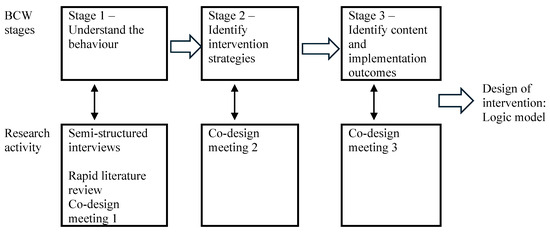
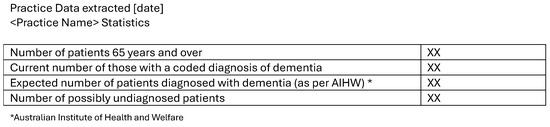
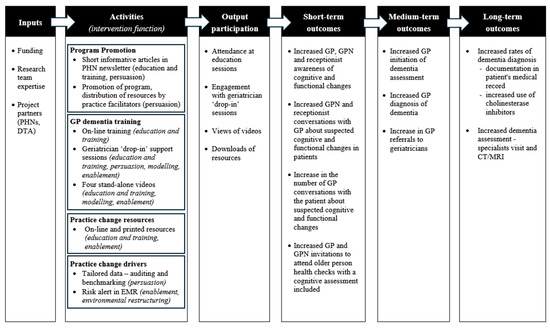
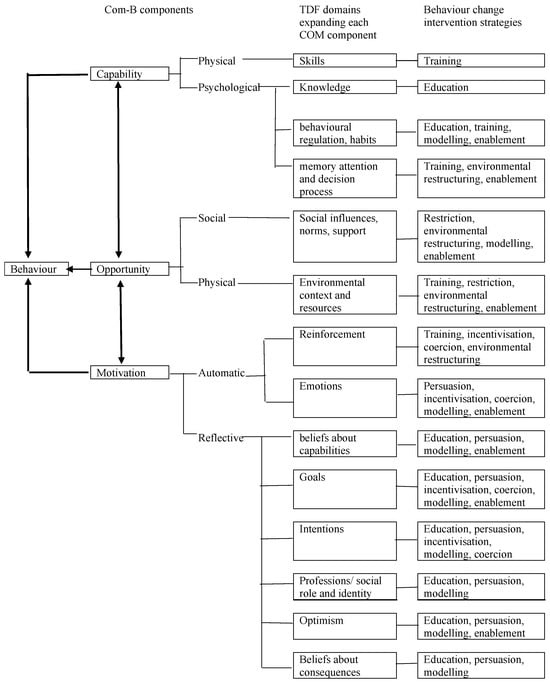
As the population ages and new therapies become available, general practitioners will have a significant role in the early detection, diagnosis, and management of dementia. However, both in Australia and globally, dementia remains under-recognised and under-diagnosed in primary care. The aim of this study is to develop a complex intervention, informed by behaviour change theory, to improve rates of dementia diagnoses in Australian primary care. Co-design participants included GPs, general practice nurses, practice managers and reception staff. A program logic model was used to describe the essential activities and mechanisms of the intervention. Six behaviour changes—education, training, enablement, modelling, persuasion, and environmental restructuring—were identified to address the identified barriers to dementia diagnosis in primary care. The intervention comprises seven activities—peer-led online dementia education and training, geriatrician ‘drop-in’ online support sessions, quality improvement in dementia care sessions, stand-alone videos, auditing and benchmarking, a dementia risk alert tool and a set of dementia diagnosis and management decision-making resources. Using behaviour change theory can assist in the development of complex interventions aimed at changing clinical practice and may assist in their evaluation.
Full article
(This article belongs to the Special Issue Interventions to Improve the Care of People Living with Dementia)
►▼
Show Figures

Figure 1
Open AccessArticle
Cultural, Societal, and Behavioral Contributors to Delays in Seeking Care for Postmenopausal Bleeding Among Disaggregated Populations of Black Women
by
Maurice J. Chery, Wilmar B. Mondestin, LaShae D. Rolle, Alejandra Casas, Sara M. St. George, Frank J. Penedo, Kallia O. Wright, Patricia I. Moreno, Nadine Philogene-Vincent, Sophia H. L. George and Matthew P. Schlumbrecht
Int. J. Environ. Res. Public Health 2026, 23(5), 652; https://doi.org/10.3390/ijerph23050652 (registering DOI) - 14 May 2026
Abstract
Background: Endometrial cancer outcomes differ among Black women when examined by nativity, and timely evaluation of postmenopausal bleeding (PMB), the most common presenting symptom, may contribute to these disparities. Methods: This qualitative study explored cultural, societal, and behavioral factors shaping PMB appraisal and
[...] Read more.
Background: Endometrial cancer outcomes differ among Black women when examined by nativity, and timely evaluation of postmenopausal bleeding (PMB), the most common presenting symptom, may contribute to these disparities. Methods: This qualitative study explored cultural, societal, and behavioral factors shaping PMB appraisal and anticipated care-seeking among US-born Black, Caribbean-born Black, and Haitian Creole-speaking women in South Florida, guided by the Safer–Andersen Model of Total Patient Delay. Ten focus groups were conducted with 55 Black women aged ≥50 years recruited through purposive and snowball sampling. Discussions were held in English or Haitian Creole, audio-recorded, professionally transcribed, translated when needed, and analyzed thematically using a hybrid deductive–inductive approach. Reporting followed the Consolidated Criteria for Reporting Qualitative Research. Results: Three themes emerged: limited awareness and information-seeking regarding menopause and PMB; cultural and societal influences, including faith-based coping, traditional remedies, and limited family discussion of health history; and healthcare system barriers, including cost, lack of insurance, distrust, and communication challenges with providers. Subgroup differences were noted in preferred information sources, perceived susceptibility, and the role of religion in care-seeking. Conclusions: Findings suggest that PMB appraisal and anticipated care-seeking vary by nativity and language among Black women. Nativity- and language-tailored community education and navigation strategies may improve symptom recognition and support timely evaluation, but future quantitative studies are needed to test whether these approaches reduce pre-diagnostic intervals for endometrial cancer.
Full article
(This article belongs to the Special Issue Cancer Health Disparities in Prevention and Care)
Open AccessArticle
Clinical Workload, Demographic Patterns, and Correlations in Neurology Ambulatory Care: A Single-Center Study from Bulgaria
by
Christiyan Kirilov Naydenov and Antoaneta Petrova Yordanova
Int. J. Environ. Res. Public Health 2026, 23(5), 651; https://doi.org/10.3390/ijerph23050651 (registering DOI) - 14 May 2026
Abstract
►▼
Show Figures
Background: Neurological disorders are a leading cause of disability worldwide, placing increasing strain on healthcare systems. In Eastern Europe, and specifically Bulgaria, there is a significant lack of granular data regarding how ambulatory neurology services are utilized and how clinical workloads are distributed
[...] Read more.
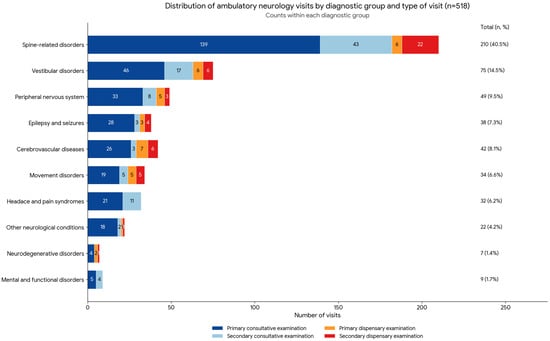
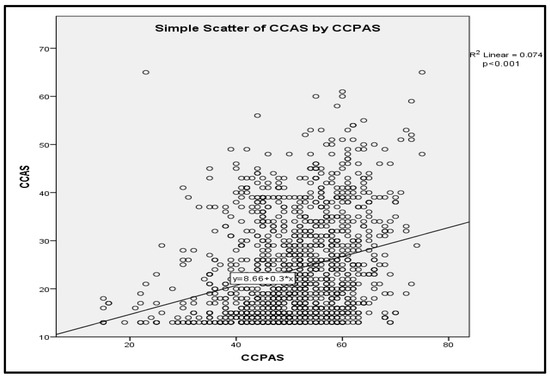
Background: Neurological disorders are a leading cause of disability worldwide, placing increasing strain on healthcare systems. In Eastern Europe, and specifically Bulgaria, there is a significant lack of granular data regarding how ambulatory neurology services are utilized and how clinical workloads are distributed across different diagnostic groups. Objective: In this study, we aimed to analyze the clinical workload, demographic patterns, and diagnostic distribution within a single-center ambulatory neurology setting in Bulgaria, while identifying the primary determinants of patient age stratification. Methods: We conducted a retrospective observational study of 518 consecutive clinical encounters recorded over a one-year period in a specialized outpatient neurology clinic. Data on age, gender, visit type (ambulatory vs. dispensary), and ICD-10 diagnostic groups were analyzed. Inferential analyses included a one-way ANOVA for age differences and multivariable linear regression to identify independent predictors of age patterns, with age modeled as a continuous variable. Results: The clinical workload was highly concentrated, with spine-related disorders accounting for over 40% of all visits, and primary consultative examinations were the predominant service type (65.4%). Statistical analysis revealed significant age differences across diagnostic categories (p < 0.001), with neurodegenerative and cerebrovascular diseases associated with the highest mean age, while spine and headache syndromes involved significantly younger populations. Multivariable modeling confirmed that diagnostic category is the sole independent determinant of age distribution (p < 0.001), whereas gender and visit type showed no significant independent associations. Conclusions: Ambulatory neurology utilization in this setting is characterized by a high-turnover primary consultation model and a heavy concentration of musculoskeletal neurological conditions. These findings suggest that outpatient neurology functions as a critical diagnostic filter and pain management hub. The study underscores the need for diagnosis-specific clinical pathways and targeted resource allocation to optimize service efficiency and improve long-term management of chronic neurological morbidity in a public insurance-driven framework.
Full article

Figure 1
Open AccessArticle
Visible Helmet Presence Among Motorcycle Riders and Passengers at a Thai University: A CCTV-Based Cross-Sectional Observational Study
by
Pakpoom Chaisiriprasit, Manaporn Chatchumni, Nuengruthai Petmeedee, Duangnapha Bunsong, Wassana Chaeypinij, Tanakon Asasing, Uma Khumwong and Nitthanet Natthakunlanan
Int. J. Environ. Res. Public Health 2026, 23(5), 650; https://doi.org/10.3390/ijerph23050650 (registering DOI) - 13 May 2026
Abstract
Motorcycle-related injuries remain a major public health concern in Thailand, particularly among adolescents and young adults, yet evidence on actual helmet-related behavior in university settings remains limited. This study assessed visible helmet presence among motorcycle riders and passengers at a Thai university using
[...] Read more.
Motorcycle-related injuries remain a major public health concern in Thailand, particularly among adolescents and young adults, yet evidence on actual helmet-related behavior in university settings remains limited. This study assessed visible helmet presence among motorcycle riders and passengers at a Thai university using real-world CCTV observations. A cross-sectional observational study was conducted at a large private university in Thailand using CCTV footage from two campus gates over seven consecutive days during peak commuting periods (07:00–09:00 and 16:00–18:00). Motorcycle-user observation events were coded for visible helmet presence, rider/passenger role, university affiliation, and time of observation. Descriptive statistics, chi-square tests, and 95% confidence intervals were used. A total of 19,363 motorcycle-user observation events were recorded. Overall visible helmet presence was 18.8% (3646/19,363). Visible helmet presence was 21.8% (1956/8985) among student riders, 3.1% (230/7505) among student passengers, 58.6% (1299/2217) among staff riders, and 24.5% (161/656) among staff passengers. Morning observation periods showed higher values than evening periods across most groups. Visible helmet presence was low overall and especially low among student passengers. These findings should be interpreted as event-based estimates rather than person-based prevalence or verified protective helmet use, and they support universities as priority settings for targeted road-safety interventions.
Full article
(This article belongs to the Topic Smart Multi-Modal Sensing for Environmental Health: Integrating Smart Technologies, IoT, and the Human Exposome for Public Health Advancement)
Open AccessArticle
Climate Change Perceptual Awareness, Climate-Related Anxiety, and Perceived Impacts of Climate Change Among University Students in Jordan: Findings from a Multi-University Cross-Sectional Study
by
Ala’a B. Al-Tammemi, Hindya O. Al-Maqableh, Mohammad Aljarrah, Sami A. Alhallaq, Ahmad W. A. AlKhyat, Hanan Hasan, Dua’a Al Tamimi, Malak T. Alnatsheh, Hedaya R. Hina, Eman Mohammad Qudah, Baraa Joudeh, Muayyad Islam Abusido, Mus’ab Banat, Abrar Omari, Dana Jamal Suboh, Sahar H. AlAhmad, Redab Al-Ghawanmeh, Dalia Kashef Zayed, Salam Momani, Haitham Khatatbeh, Ibrahim Ayasreh, Rabaa Y. Athamneh, Moawiah Khatatbeh, Muna Barakat, Fayez Abdulla, Mohammad Al-Qudah and Tareq L. Mukattashadd
Show full author list
remove
Hide full author list
Int. J. Environ. Res. Public Health 2026, 23(5), 649; https://doi.org/10.3390/ijerph23050649 (registering DOI) - 13 May 2026
Abstract
Background: Jordan is increasingly recognized as a climate-vulnerable setting in the region, yet evidence on the psychosocial dimensions of climate change among young adults remains limited. Led by the Jordan Center for Disease Control, this study assessed climate change perceptual awareness and
[...] Read more.
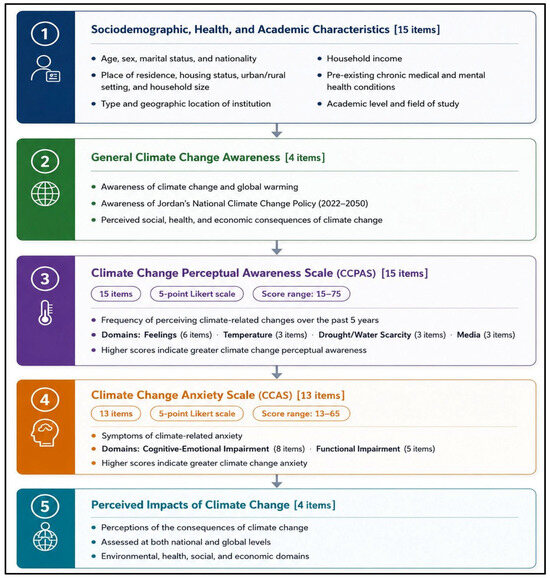
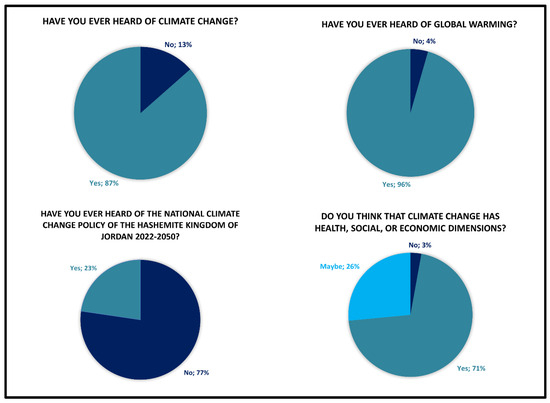
Background: Jordan is increasingly recognized as a climate-vulnerable setting in the region, yet evidence on the psychosocial dimensions of climate change among young adults remains limited. Led by the Jordan Center for Disease Control, this study assessed climate change perceptual awareness and climate-related anxiety among university students and explored perceptions of climate impacts at global and national levels. Methods: In a cross-sectional survey conducted between April and May 2025, 1305 students were recruited from universities across Jordan using a questionnaire incorporating the 15-item Climate Change Perceptual Awareness Scale and the 13-item Climate Change Anxiety Scale. Results: Awareness of climate change and global warming was high (87% and 96%, respectively), yet only 23% were familiar with Jordan’s National Climate Change Policy 2022–2050. In regression analyses, higher climate anxiety was associated with female sex, married status, larger household size, diagnosed mental health conditions, and central-region university enrolment. Higher perceptual awareness was associated with female sex, older age, and the recognition of multidimensional climate impacts. Students identified heatwaves, drought, and forest fires as principal environmental threats, and respiratory and heat-related illnesses as foremost health concerns. Conclusions: Our findings position climate change as not only an environmental concern, but also as an educational, psychological, and public health priority. To support effective adaptation and resilience, climate awareness must be translated into informed engagement and action. Integrating climate and climate-health education into university curricula, improving youth-responsive communication of national climate strategies, and creating formal pathways for youth participation in climate governance are essential investments in Jordan’s climate resilience, health security, and long-term sustainable development.
Full article
(This article belongs to the Section Environmental Health)
►▼
Show Figures

Figure 1
Open AccessArticle
From Waste to Health: Landfill Biogas Recovery as a Strategy for Greenhouse Gas Mitigation and Public Health Co-Benefits in Brazil
by
Estefane Caetano Nazzari, Gredson Keiff Souza, Fernanda Nayara Campos de Almeida, Anderson Rafael Igarashi, Alexandre Diorio, Djeine Cristina Schiavon Maia and Nehemias Curvelo Pereira
Int. J. Environ. Res. Public Health 2026, 23(5), 648; https://doi.org/10.3390/ijerph23050648 (registering DOI) - 13 May 2026
Abstract
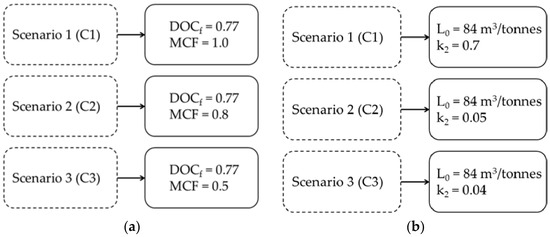
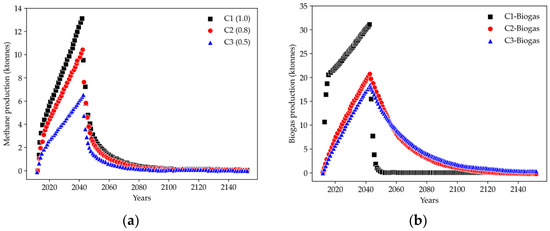
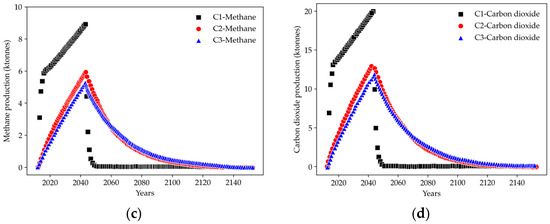
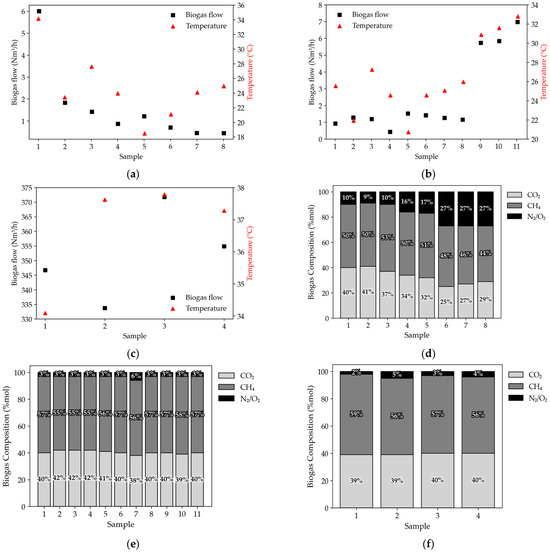
Biogas from municipal solid waste is a promising pathway for renewable energy production while mitigating environmental pollution and public health risks. In this study, biogas emissions from a sanitary landfill in Maringá, southern Brazil, were evaluated using three models (IPCC, LandGEM, and CETESB
[...] Read more.
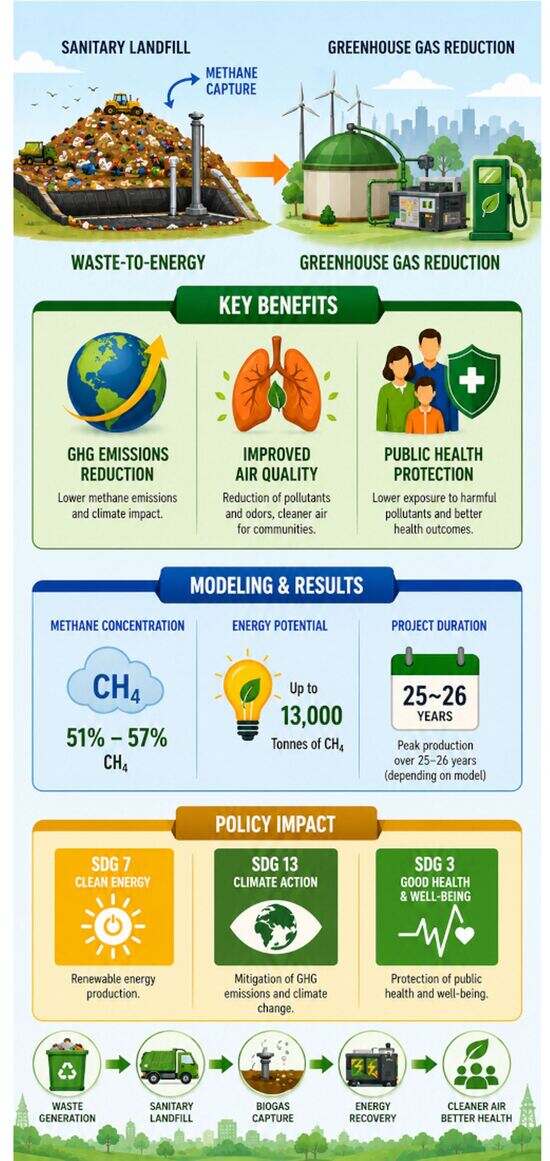
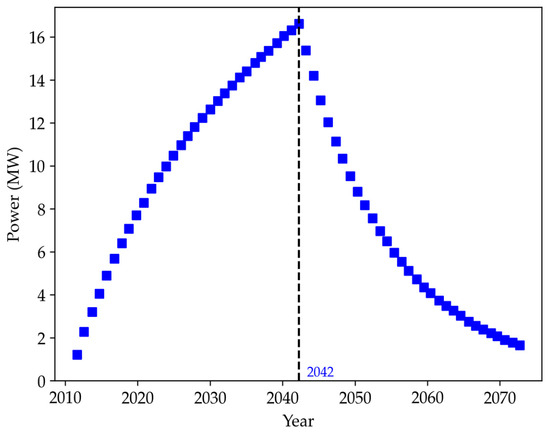
Biogas from municipal solid waste is a promising pathway for renewable energy production while mitigating environmental pollution and public health risks. In this study, biogas emissions from a sanitary landfill in Maringá, southern Brazil, were evaluated using three models (IPCC, LandGEM, and CETESB tool) to estimate methane generation and energy recovery potential. Experimental analysis revealed methane concentrations from 51.10 ± 8.89% to 57.06 ± 1.19% across collection drains, indicating favorable conditions for energy utilization. Methane generation was estimated under different scenarios, reaching up to 1.30 × 10⁴ tonnes of CH4, with peak production projected over 25–26 years depending on the model. Beyond energetic relevance, controlled biogas recovery can substantially reduce methane emissions, a key precursor of tropospheric ozone, and limit hazardous trace gas release, improving air quality and reducing population exposure to harmful pollutants. These findings are particularly relevant in developing countries, where insufficient waste management infrastructure leads to uncontrolled emissions, posing elevated environmental and health risks. This study supports integrating landfill biogas recovery into waste management and climate strategies, contributing to Sustainable Development Goals related to clean energy (SDG 7), climate action (SDG 13), and health (SDG 3), demonstrating it as a scalable solution for sustainable urban development.
Full article
(This article belongs to the Special Issue Energy Sector Pollution and Health Promotion)
►▼
Show Figures

Graphical abstract
Open AccessArticle
Improving Health Outcomes in Women Who Use Traditional Open Fire Cookstoves by Addressing Cooking Behaviors: A Longitudinal Cohort Study
by
Amy C. Buckenmeyer, Kevin L. Jantzi, Deanna Marriott, Jeri M. Antilla, Vanesa Abad, Emily Barnes, Katelyn Blackmon, Claire E. Burman, Carly Crave, Christina E. Roembke, Tricia Stathakis, Paige A. Takalamingan, Madison M. Wood, Eve Goddard and Beatrice Hunt
Int. J. Environ. Res. Public Health 2026, 23(5), 647; https://doi.org/10.3390/ijerph23050647 (registering DOI) - 13 May 2026
Abstract
Approximately one-third of the global population cooks over open fires in the home, which are responsible for millions of deaths per year globally. The aim of this longitudinal cohort study was to develop, implement, and evaluate an intervention to improve the cooking behaviors
[...] Read more.
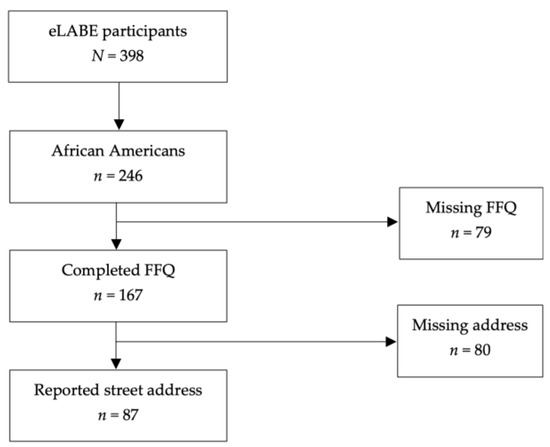
Approximately one-third of the global population cooks over open fires in the home, which are responsible for millions of deaths per year globally. The aim of this longitudinal cohort study was to develop, implement, and evaluate an intervention to improve the cooking behaviors of women in a rural Nicaraguan community. The study employed the Community Health Action Model for Participatory Behavior Change (CHAMP-BC) framework to develop a novel approach to improving cooking behaviors and reducing symptoms associated with household air pollution. The study was conducted from October 2007 to March 2018. Community health needs assessments and community forums were conducted. Readiness to change surveys were administered. Pre- and post-test cookstove implementation surveys were conducted. One hundred sixty-seven primary cooks, primarily women (99%), consented to participate in the improved cookstove program and were followed from baseline for up to seven years post-intervention. There were significant improvements in cough (p < 0.0001), chest illness (p < 0.0001), shortness of breath (p < 0.0001), headaches (p < 0.0001), and eye irritation (p < 0.0001). The novel CHAMP-BC framework enhanced the research approach by empowering women to change their cooking behaviors while providing them with the autonomy and agency necessary for decision-making regarding evidence-based methods to improve their health.
Full article
Open AccessArticle
African American Food Environments and Anti-Inflammatory Intake in Pregnancy
by
Najjuwah Walden, Rachel Tabak, Derek S. Brown, Joan Luby, Barbara Warner, Tara Smyser, Cynthia Rogers, Deanna Barch, Sarah K. England, Tonni Oberly, Christopher Smyser and Lora Iannotti
Int. J. Environ. Res. Public Health 2026, 23(5), 646; https://doi.org/10.3390/ijerph23050646 (registering DOI) - 13 May 2026
Abstract
►▼
Show Figures
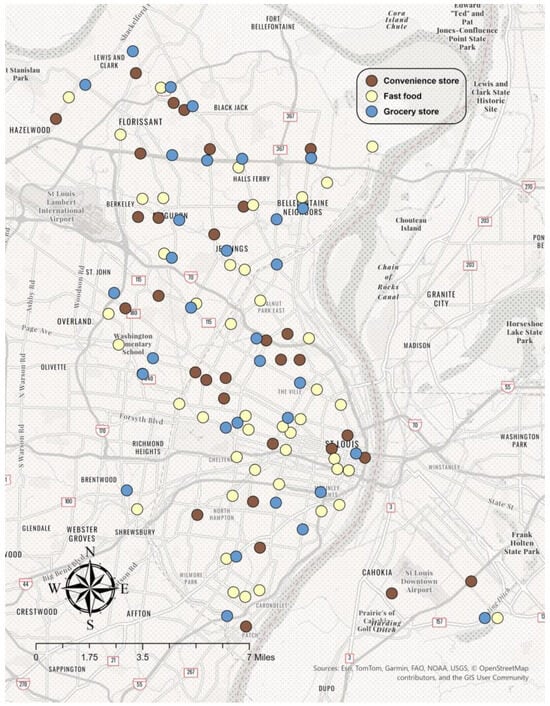
Understanding the spatial determinants of food intake is crucial for establishing links between maternal food environments, diet, and health outcomes. Therefore, this study aimed to identify how the distance and density of built food environments in proximity to African American pregnant women living
[...] Read more.
Understanding the spatial determinants of food intake is crucial for establishing links between maternal food environments, diet, and health outcomes. Therefore, this study aimed to identify how the distance and density of built food environments in proximity to African American pregnant women living in urban settings are associated with nutrient-dense, anti-inflammatory food intake. We hypothesized that living closer to grocery stores and farther from fast-food restaurants and convenience stores is associated with increased intake. We also hypothesized that higher grocery-store density and a lower density of fast-food restaurants and convenience stores is associated with increased intake. Using cross-sectional data from the Early Life Adversity, Biological Embedding (eLABE) and Risk for Developmental Precursors of Mental Disorders Study, as well as geographic information system (GIS) data and linear regression analyses, we examined the relationships between the built food environment and food intake in the St. Louis metropolitan area, adjusting for covariates. This analysis revealed that shorter distance to fast-food restaurants and longer distance to grocery stores were associated with higher legume intake in adjusted models. These findings highlight nuanced and counterintuitive associations, underscoring the need for additional research to understand why more distant grocery stores and closer fast-food restaurants are linked to higher legume intake among African Americans.
Full article

Figure 1
Open AccessArticle
Description of a Pharmacist-Led Mobile Health Clinic to Fill Primary Care Coverage in a Medically Underserved Rural Area
by
Emily Eddy, Stuart Beatty, David Nau, Karen L. Kier, Michelle Musser and Michael Rush
Int. J. Environ. Res. Public Health 2026, 23(5), 645; https://doi.org/10.3390/ijerph23050645 (registering DOI) - 12 May 2026
Abstract
Objective: Describe a mobile health clinic program led by pharmacists to provide services in a primary care shortage area. Methods: ONU HealthWise is a comprehensive pharmacy service offered by Ohio Northern University Raabe College of Pharmacy with a mobile clinic initiated in 2015.
[...] Read more.
Objective: Describe a mobile health clinic program led by pharmacists to provide services in a primary care shortage area. Methods: ONU HealthWise is a comprehensive pharmacy service offered by Ohio Northern University Raabe College of Pharmacy with a mobile clinic initiated in 2015. ONU HealthWise is located in an HRSA-designated medically underserved and primary care shortage area and the mobile health clinic visits 11–18 locations monthly plus additional sites for screening or vaccinations. Medical residents from a health-system attend some locations and collaborative practice agreements allow pharmacists to initiate and adjust medications. Student pharmacists rotate through the mobile clinic to gain experiential training toward their Doctor of Pharmacy. The mobile clinic is an integral part of the learning and precepting for ONU HealthWise PGY-1 residents. Results: Over a 12-month period (July 2024–June 2025), the mobile clinic held 148 clinics across 7 rural counties in northwest Ohio. A total of 1265 screenings were conducted at 713 patient encounters (604 unique patients). Of the screenings, 38.1% of blood glucose, 21.6% of cholesterol, and 60.1% of blood pressures were abnormal. All abnormal tests resulted in either a medication adjustment, scheduled follow-up at future mobile clinic, or referral to a provider. Student pharmacists spent more than 3670 h on the mobile health clinic in experiential education. Conclusion: Pharmacists can be an integral healthcare provider by increasing access to primary care services through a mobile health clinic in a medically underserved area. The service provides learners with vital patient experiences.
Full article
(This article belongs to the Special Issue Advances and Trends in Mobile Healthcare)
Open AccessArticle
Leveraging Machine Learning to Assess Post-COVID-19 Glycemic Control in Diabetic Patients
by
Marie Lluberes-Contreras, Eduardo Figueroa-Santiago, Hamid-Reza Kohan-Ghadr, Angel Ortiz-Ortega and Abiel Roche-Lima
Int. J. Environ. Res. Public Health 2026, 23(5), 644; https://doi.org/10.3390/ijerph23050644 (registering DOI) - 12 May 2026
Abstract
Hemoglobin A1c is a central biomarker for long-term glycemic control and a key predictor of diabetes-related complications. The COVID-19 pandemic disrupted routine healthcare delivery and introduced potential metabolic effects of SARS-CoV-2 infection, yet the long-term impact of COVID-19 on glycemic trajectories in individuals
[...] Read more.
Hemoglobin A1c is a central biomarker for long-term glycemic control and a key predictor of diabetes-related complications. The COVID-19 pandemic disrupted routine healthcare delivery and introduced potential metabolic effects of SARS-CoV-2 infection, yet the long-term impact of COVID-19 on glycemic trajectories in individuals with diabetes remains unclear. In this retrospective study, we leveraged harmonized electronic health record data from the National Clinical Cohort Collaborative to evaluate changes in HbA1c before and after documented SARS-CoV-2 infection in adults with diabetes (n = 93,320). Patients were required to have repeated HbA1c measurements pre- and post-infection and stable exposure to key antihyperglycemic medications. A paired statistical analysis was used to identify individuals with statistically significant post-infection changes in HbA1c. We then developed and evaluated multiple supervised machine learning classifiers using an 80/20 train–test split and cross-validation to assess demographic, clinical, and structural factors associated with significant glycemic change. Most patients (71%) did not experience a statistically significant change in average HbA1c following COVID-19 infection, and among those who did, decreases were more common than increases. A random forest classifier achieved the best overall performance, and feature importance and SHAP analyses highlighted body mass index, insulin use, age, and socioeconomic proxies as key contributors. These findings suggest that while COVID-19 infection does not substantially alter long-term glycemic control for most patients with diabetes, individual-level clinical and structural factors influence post-infection glycemic variability.
Full article
Open AccessArticle
Effectiveness of Traditional vs. Modern Contraception According to the 2017 IDHS: The Urgent Need for Rights-Based Counseling in Indonesia’s Family Planning Program
by
Siti Dariyani, Budi Utomo, Eflita Meiyetriani, Sudibyo Alimoeso, Maria Gayatri, Sukma Rahayu and Restu Octasila
Int. J. Environ. Res. Public Health 2026, 23(5), 643; https://doi.org/10.3390/ijerph23050643 (registering DOI) - 12 May 2026
Abstract
Introduction: The increasing use of traditional contraceptive methods in Indonesia may raise the risk of unintended pregnancies, while modern contraceptive use has stagnated and often experiences discontinuation. Nevertheless, contraceptive choice is an individual right and should guide family planning programs. This study aimed
[...] Read more.
Introduction: The increasing use of traditional contraceptive methods in Indonesia may raise the risk of unintended pregnancies, while modern contraceptive use has stagnated and often experiences discontinuation. Nevertheless, contraceptive choice is an individual right and should guide family planning programs. This study aimed to estimate contraceptive effectiveness based on pregnancy risk and dropout rates and to examine the socio-demographic characteristics of users. Methods: This cross-sectional study with a retrospective cohort approach used calendar data from the 2017 Indonesia Demographic and Health Survey (IDHS). The study population included all contraceptive use episodes within five years, resulting in 46,461 episodes. Data were obtained from the 2017 IDHS socio-demographic questionnaire and contraceptive calendar. Multivariate logistic regression was used for analysis. Results: There was no significant difference in dropout rates between traditional and modern contraceptive users (OR = 0.92; 95% CI = 0.79–1.05). However, users of traditional methods had a 2.46-times higher risk of pregnancy compared with modern method users (95% CI = 2.19–2.76). Traditional contraceptive use was more common among women aged 40–49 years, with parity ≥ 5, higher education, and higher economic status, living in urban areas, and residing in Sumatra, Kalimantan, and Sulawesi (p = 0.001). Conclusions: Traditional contraceptive use is associated with a higher risk of pregnancy. Strengthening counseling services through comprehensive, pluralistic, and participatory approaches is essential while respecting individuals’ rights in contraceptive choice.
Full article
(This article belongs to the Section Health Care Sciences)
Open AccessReview
Organization and Integration of Care in the HIV–Non-Communicable Disease Syndemic: A Rapid Scoping Review
by
Ketyllem Tayanne da Silva Costa, Maria Francisca da Conceição Maciel Targino, Pedro Ivo Torquato Ludugerio, Gidyenne Christine Bandeira Silva de Medeiros, Grasiela Piuvezam and Richardson Augusto Rosendo da Silva
Int. J. Environ. Res. Public Health 2026, 23(5), 642; https://doi.org/10.3390/ijerph23050642 (registering DOI) - 12 May 2026
Abstract
Advances in antiretroviral therapy have transformed infection with HIV into a manageable chronic disease, increasing the survival of people living with HIV, who are also undergoing a demographic aging process marked by the emergence of non-communicable chronic diseases. This study aims to map
[...] Read more.
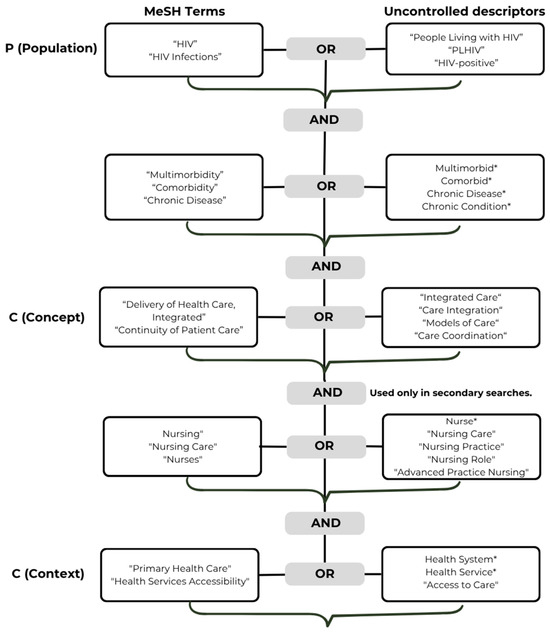
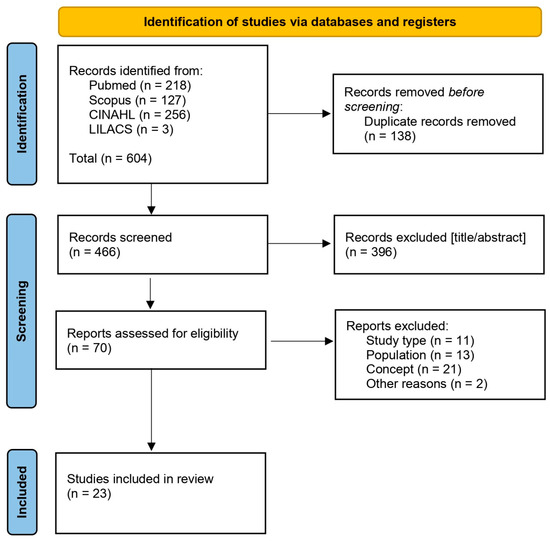
Advances in antiretroviral therapy have transformed infection with HIV into a manageable chronic disease, increasing the survival of people living with HIV, who are also undergoing a demographic aging process marked by the emergence of non-communicable chronic diseases. This study aims to map and analyze how the scientific literature addresses the organization and integration of care in the HIV-NCD syndemic, identifying implications for nursing and for health systems. This is a Rapid Scoping Review, using the databases PubMed, Scopus, CINAHL, and LILACS. Data synthesis was conducted using Microsoft Excel. The research was structured using the PCC framework: Population—people living with HIV (≥18 years); Concept—organization and integration of care in the HIV-NCD syndemic, including care models, care coordination, service integration, and the role of nursing; and Context—health services and systems. Twenty-three studies were included, most of which used qualitative methodology, were conducted in sub-Saharan Africa, and had predominantly female samples. This study demonstrated that the organization of care in the HIV-NCD syndemic remains predominantly characterized by fragmented models, which are insufficient to address the complexity of multimorbidity. Integrated care models emerge as a promising strategy; however, their effects remain limited in settings marked by health inequalities.
Full article
(This article belongs to the Section Health Care Sciences)
►▼
Show Figures

Figure 1
Journal Menu
► ▼ Journal Menu-
- IJERPH Home
- Aims & Scope
- Editorial Board
- Reviewer Board
- Topical Advisory Panel
- Instructions for Authors
- Special Issues
- Topics
- Sections & Collections
- Article Processing Charge
- Indexing & Archiving
- Editor’s Choice Articles
- Most Cited & Viewed
- Journal Statistics
- Journal History
- Journal Awards
- Society Collaborations
- Conferences
- Editorial Office
Journal Browser
► ▼ Journal Browser-
arrow_forward_ios
Forthcoming issue
arrow_forward_ios Current issue - Vol. 23 (2026)
- Vol. 22 (2025)
- Vol. 21 (2024)
- Vol. 20 (2023)
- Vol. 19 (2022)
- Vol. 18 (2021)
- Vol. 17 (2020)
- Vol. 16 (2019)
- Vol. 15 (2018)
- Vol. 14 (2017)
- Vol. 13 (2016)
- Vol. 12 (2015)
- Vol. 11 (2014)
- Vol. 10 (2013)
- Vol. 9 (2012)
- Vol. 8 (2011)
- Vol. 7 (2010)
- Vol. 6 (2009)
- Vol. 5 (2008)
- Vol. 4 (2007)
- Vol. 3 (2006)
- Vol. 2 (2005)
- Vol. 1 (2004)
Highly Accessed Articles
Latest Books
E-Mail Alert
News
Topics
Topic in
IJERPH, Microplastics, Polymers, Toxics
Plastic Contamination (Plastamination): An Environmental and Public Health-Related Concern
Topic Editors: Rosaria Meccariello, Antonino Testa, Francesco Cappello, Antonietta SantoroDeadline: 30 June 2026
Topic in
IJERPH, Medicina, Hospitals, Healthcare, Safety, Geriatrics
The Imperative of Patient Safety and Safety Culture in Contemporary Healthcare
Topic Editors: Hana Brborović, Ognjen Brborovic, Reinhard StrametzDeadline: 8 July 2026
Topic in
Behavioral Sciences, Children, Healthcare, IJERPH, JFMK, Obesities
The Effect of Physical Activity on the Population's Health
Topic Editors: Stefania Paduano, Federica ValerianiDeadline: 31 August 2026
Topic in
Behavioral Sciences, Children, EJIHPE, IJERPH, Healthcare
Mental Health and the 2030 Sustainable Development Agenda: Old Problems and New Perspectives
Topic Editors: Carlos Laranjeira, Ana QueridoDeadline: 31 October 2026
Conferences
Special Issues
Special Issue in
IJERPH
Beyond Gaming: Vulnerability to Digital Addictions in the Age of Social Media
Guest Editors: Raquel Suriá-Martínez, Álvaro García del Castillo-LópezDeadline: 30 May 2026
Special Issue in
IJERPH
Leveraging AI-Powered Tools and Big Data for Global Health Surveillance
Guest Editors: Elena Naumova, Kristin E. LeonbergDeadline: 30 May 2026
Special Issue in
IJERPH
Health and Safety Promotion at the Workplace
Guest Editor: Elizabeth StrattonDeadline: 30 May 2026
Special Issue in
IJERPH
Public Mental Health Promotion for Vulnerable Populations: Opportunities in the Digital Era
Guest Editors: Eleni Hatzidimitriadou, Theo FotisDeadline: 30 May 2026
Topical Collections
Topical Collection in
IJERPH
2nd Edition of Achieving Environmental Health Equity: Great Expectations
Collection Editors: Timothy E. Ford, Margaret J. Eggers
Topical Collection in
IJERPH
Prevent Obesity in the First 1000 Days
Collection Editors: María M. Morales Suárez-Varela, Angelo Pietrobelli, Massimo Agosti, Gianvincenzo Zuccotti
Topical Collection in
IJERPH
Health Behaviors, Risk Factors, NCDs and Health Promotion
Collection Editor: Stefano Campostrini