


Journal Menu
► ▼ Journal Menu-
- Molecules Home
- Aims & Scope
- Editorial Board
- Reviewer Board
- Topical Advisory Panel
- Early Career Editorial Board
- Instructions for Authors
- Special Issues
- Topics
- Sections & Collections
- Article Processing Charge
- Indexing & Archiving
- Editor’s Choice Articles
- Most Cited & Viewed
- Journal Statistics
- Journal History
- Journal Awards
- Society Collaborations
- Conferences
- Editorial Office
- 30th Anniversary
Journal Browser
► ▼ Journal Browser-
arrow_forward_ios
Forthcoming issue
arrow_forward_ios Current issue - Vol. 31 (2026)
- Vol. 30 (2025)
- Vol. 29 (2024)
- Vol. 28 (2023)
- Vol. 27 (2022)
- Vol. 26 (2021)
- Vol. 25 (2020)
- Vol. 24 (2019)
- Vol. 23 (2018)
- Vol. 22 (2017)
- Vol. 21 (2016)
- Vol. 20 (2015)
- Vol. 19 (2014)
- Vol. 18 (2013)
- Vol. 17 (2012)
- Vol. 16 (2011)
- Vol. 15 (2010)
- Vol. 14 (2009)
- Vol. 13 (2008)
- Vol. 12 (2007)
- Vol. 11 (2006)
- Vol. 10 (2005)
- Vol. 9 (2004)
- Vol. 8 (2003)
- Vol. 7 (2002)
- Vol. 6 (2001)
- Vol. 5 (2000)
- Vol. 4 (1999)
- Vol. 3 (1998)
- Vol. 2 (1997)
- Volumes not published by MDPI
Need Help?
Announcements
31 July 2026
Ursula Röthlisberger Receives the Inaugural Michele Parrinello Award

We are pleased to announce that the inaugural Michele Parrinello Award has been conferred upon Prof. Ursula Röthlisberger, in recognition of her outstanding contributions to computational chemistry and molecular simulation, particularly through her pioneering work in ab initio molecular dynamics and QM/MM multiscale simulation methods. This award celebrates researchers whose work embodies the spirit of scientific innovation and rigor that Professor Parrinello has championed throughout his career. We warmly congratulate Prof. Röthlisberger on this well-deserved recognition.
The achievements of Prof. Ursula Röthlisberger highlight the profound impact of computational methods on our understanding of complex chemical, biological, and materials systems. We invite the global scientific community to join us in celebrating her outstanding contributions to computational science.
“Professor Ursula Röthlisberger has been recognized by the 2026 Michele Parrinello Award Committee as an exceptional leader in computational chemistry and molecular simulation. Her innovative research has significantly advanced the predictive modeling of complex chemical and biological systems and has created lasting impact across multiple scientific disciplines. Through her outstanding scientific achievements, dedication to education, and leadership in the international research community, she has played a vital role in shaping the development of modern computational science.”
—Prof. Dr. Xin-Gao Gong, Chair of the Award Committee
2026 Michele Parrinello Award Laureate
|
Ursula Röthlisberger |
Prof. Ursula Röthlisberger is a professor at the Institute of Chemical Sciences and Engineering, EPFL, Switzerland, where she leads the Laboratory of Computational Chemistry and Biochemistry. Her research focuses on developing computational methods for molecular simulation, including ab initio molecular dynamics and quantum mechanical/molecular mechanical (QM/MM) multiscale approaches, to study complex chemical, biological, and materials systems. Her work has contributed to the advancement of computational frameworks for understanding molecular processes at the atomic level. She has also applied computational approaches to investigate next-generation photovoltaic materials, including dye-sensitized and perovskite solar cells, providing insights into material properties, stability, and performance through collaboration with experimental researchers. |

2026 Award Committee
Committee Chair:
- Prof. Dr. Xin-Gao Gong, Fudan University, China.
Committee Members (listed in alphabetical order):
- Prof. Alessandro Laio, Scuola Internazionale Superiore di Studi Avanzati, Italy;
- Prof. Michiel Sprik, University of Cambridge, UK;
- Prof. David J. Srolovitz, the University of Hong Kong, China;
- Prof. Mark E. Tuckerman, New York University, USA;
- Prof. Su-Huai Wei, Eastern Institute of Technology, Ningbo, China.
Note: The 2026 Award Committee comprises six members, including one anonymous member.
2026 Award Ceremony
The inaugural Michele Parrinello Award Ceremony will take place on 7 November 2026, at the Southern University of Science and Technology (SUSTech) in Shenzhen, China, as part of the 2026 MDPI Materials Science Conference. Further information and updates will be available on the official Michele Parrinello Award website.
About the Michele Parrinello Award
The Michele Parrinello Award was established in November 2025 to honor Professor Michele Parrinello’s enduring legacy in advancing computational science. This biennial international award recognizes senior researchers who have made outstanding contributions to computational physical sciences, encompassing physics, chemistry, and materials science. The recipient will receive a monetary prize of 50,000 EUR, a commemorative medal, and a certificate.
For further information about the award and the laureate, please visit the Michele Parrinello Award website.
9 September 2026
Empowering Academic Growth with MDPI Academic Publishing Workshop at Faculty of Science, Naresuan University, 13 November 2026
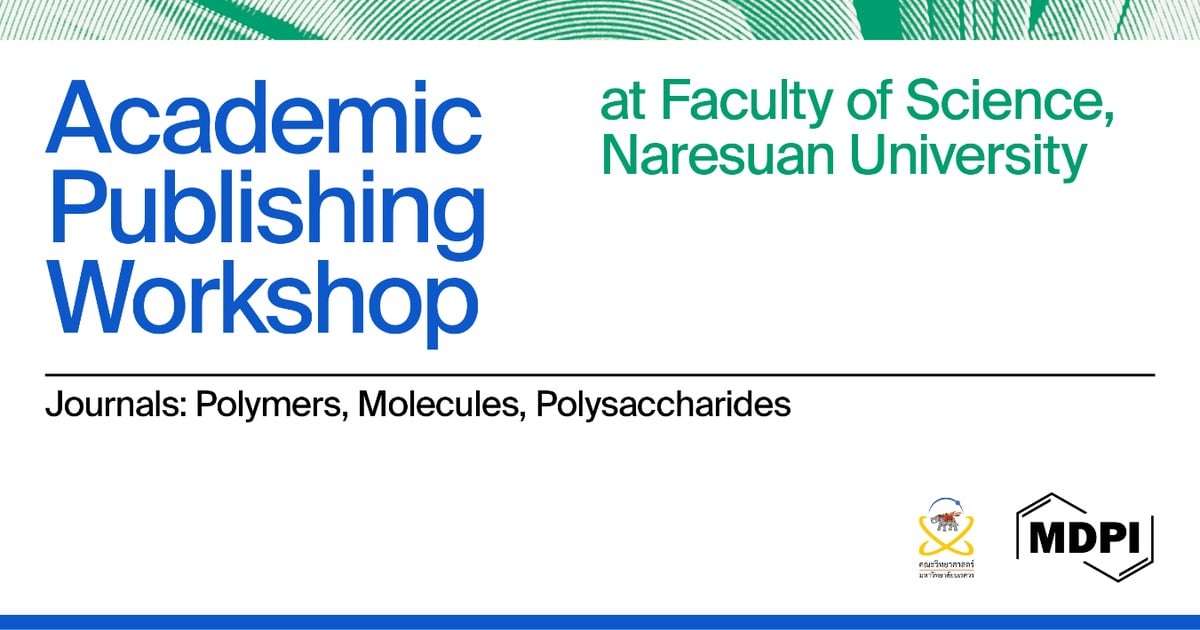
We are delighted to announce the MDPI Academic Publishing Workshop, organized in partnership with the Faculty of Science, Naresuan University, Phitsanulok. This collaborative initiative reflects a shared commitment to strengthening research capacity and supporting the academic community in navigating the evolving landscape of scholarly publishing.
As part of our ongoing dedication to researcher development, the workshop is designed for young investigators, PhD and master’s students, and early career researchers. Participants will gain practical guidance on writing scientific papers in English, selecting the right journal for their work, and understanding how artificial intelligence is shaping scientific publishing today. The session also offers a direct opportunity to engage with MDPI editors and to build lasting connections between authors and the Editorial Office.
Date: 13 November 2026
Time: 13:00–16:00
Location: SC4 210, Faculty of Science, Naresuan University, Phitsanulok, Thailand
Language: English
Registration: https://www.surveymonkey.com/r/6R2WDF5
| Time | Program | Speaker |
| 13:00–13:10 | Opening Speech | Assoc. Prof. Dr. Uthai Wichai |
| 13:10–13:30 | MDPI and Journal Introduction | Dr. Sawarot Phetsuk and Dr. Krit Inthajak |
| 13:30–14:20 | How to Write Scientific Papers in English | Dr. Krit Inthajak |
| 14:20–14:30 | Q&A Session | |
| 14:30–15:00 | Journal Selection (How to Find the Right Journal) | Dr. Siriporn Tantiwatcharothai |
| 15:00–15:10 | Q&A Session | |
| 15:10–15:40 | Artificial Intelligence in Scientific Publishing | Ms. Ploy Assavajamroon |
| 15:40–15:50 | Q&A Session |
Chair:
 |
Assoc. Prof. Dr. Gareth Ross is a polymer and biomaterials researcher in the Department of Chemistry at Naresuan University, Thailand. He earned his BSc (Hons) in chemistry and PhD in biomaterials and polymer science from Aston University, UK, where his doctoral research examined ocular biotribology and contact-lens lubrication mechanisms. He has worked at Naresuan University since 2012. His research focuses on hydrogel synthesis and characterization, macromer technology, polymer–surfactant interactions, and the controlled entrapment and release of hydrophilic compounds for materials and biomedical applications. |
Opening Speaker:
 |
Assoc. Prof. Dr. Uthai Wichai is Dean of the Faculty of Science and a chemist in the Department of Chemistry at Naresuan University, Thailand. He holds a BSc in chemistry from Mahidol University and MS and PhD degrees in chemistry from the University of Alabama, USA. His research focuses on the synthesis and applications of capsaicinoids, capsinoids, and related derivatives, alongside broader work involving functional polymeric and bioactive materials. Before becoming Dean, he held several university leadership roles, including Head of the Department of Chemistry; Vice Dean for Policy, Strategy, and Planning; and Vice President for Strategic and Planning Affairs. |
MDPI Speakers:
 |
Dr. Sawarot Phetsuk graduated from Chiang Mai University with a PhD in chemistry. She joined MDPI as an Assistant Editor for Polymers in the Polymer Science Section and later progressed to become a Section Managing Editor for Polymers. Since 2023, she has also served as a Group Leader, overseeing editorial operations and supporting the development of editorial teams. |
 |
Dr. Krit Inthajak obtained his PhD in engineering and technology from Sirindhorn International Institute of Technology, Thammasat University. He joined MDPI in March 2020 as an Assistant Editor for Molecules. He was appointed as a Section Managing Editor in 2021 and worked as a Group Leader from 2021 to 2024. He is now one of MDPI’s Regional Engagement Editors for the Asia–Pacific region. |
 |
Dr. Siriporn Tantiwatcharothai obtained her PhD in applied chemistry from the Faculty of Science, King Mongkut’s Institute of Technology Ladkrabang, Thailand. She joined MDPI in December 2022 as an Assistant Editor for Catalysts. In 2024, she was promoted to Section Managing Editor, later becoming a Chief Section Managing Editor in April 2025. Currently, she is one of MDPI’s Regional Engagement Editors for the Asia–Pacific region. |
 |
Ms. Ploy Assavajamroon obtained her master’s degree in chemistry from Thammasat University in 2020 and joined MDPI as an Assistant Editor for Crystals in the same year. She became a Section Managing Editor in 2021 and a Group Leader in 2022. She is currently one of MDPI’s Regional Engagement Editors for the Asia–Pacific region. |
Organizer:

MDPI – Multidisciplinary Digital Publishing Institute
Website: www.mdpi.com
9 September 2026
Meet Us at the 2nd National Conference on Analytical Science and Instrumentation, 30 October–2 November 2026, Wuhan, China
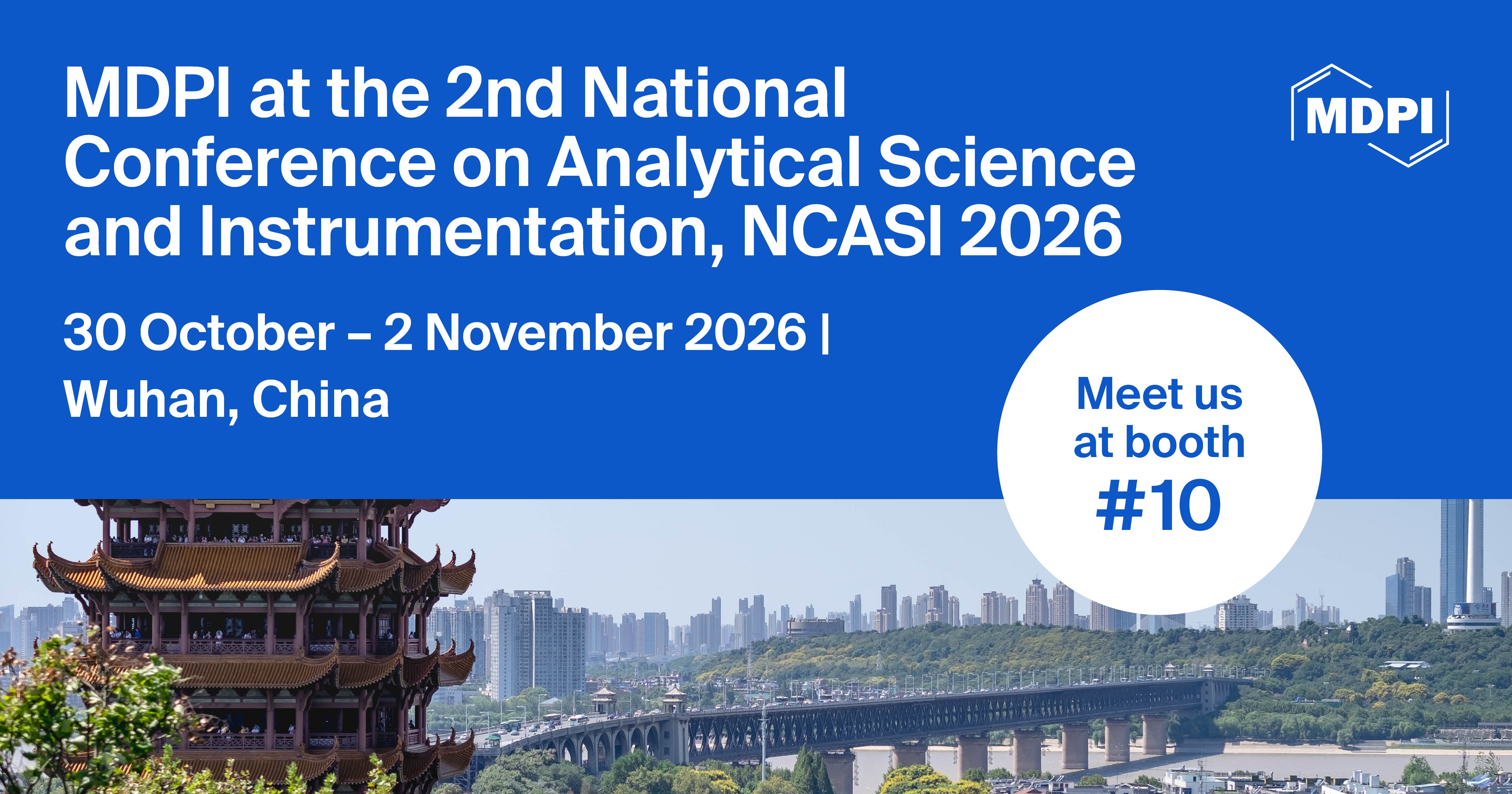
We are pleased to announce that MDPI will be participating as an exhibitor at the 2nd National Conference on Analytical Science and Instrumentation, which will be held from 30 October to 2 November 2026 in Wuhan, China.
This conference will uphold the core concept of “Analytical Science, Creating the Future” and closely follow the conference theme of “AI Assisting Scientific Instruments, Innovating and Reshaping Analytical Science”. It will support a variety of research exchange formats, such as plenary reports, parallel sessions, poster presentations, and special forums, focusing on hot topics such as artificial intelligence, biological sciences, chemistry and materials science, and ecological and environmental sciences, as well as create a high-level exchange platform integrating academic discussion, technology demonstration, and achievement transformation.
The following open access journals will be represented at the conference:
- Analytica;
- Biosensors;
- Molecules;
- Separations;
- Liquids;
- Micro;
- Micromachines;
- Purification;
- Chemosensors;
- Instruments;
- Sensors;
- Spectroscopy Journal.
If you are planning to attend this event, please feel free to contact us online. Our delegates look forward to meeting you in person at our booth and answering any questions you may have. For more information about the conference, please visit the following website: https://ncasi2026.scimeeting.cn/.
2 September 2026
Molecules | A Special Collection—”30 Years, 30 Papers”

This year marks the 30th anniversary of Molecules (ISSN 1420-3049), a remarkable milestone for our readers and authors alike. To celebrate this occasion, we are delighted to present a special collection of 30 representative papers published over the past 30 years, highlighting key academic progress in chemistry and paying tribute to the continuous efforts and innovative contributions of our global author community over the past three decades.
All articles published in our journal are available in an open access format, granting you unrestricted access to the full free text. We welcome you to read the 30 representative papers, which are listed below:
1. “Preserving and Exploiting Molecular Diversity: Deposit and Exchange of Chemical Information and Chemical Samples”
by Shu-Kun Lin
Molecules 1997, 2(1), 1-2; https://doi.org/10.3390/jan97p1
Available online: https://www.mdpi.com/1420-3049/2/1/1
2. “Glutathione Peroxidase-like Activities of Oxygen-Containing Diselenides”
by Thomas Wirth
Molecules 1998, 3(7), 164-166; https://doi.org/10.3390/30700164
Available online: https://www.mdpi.com/1420-3049/3/7/164
3. “Benzothiazole Derivatives. 48. Synthesis of 3-Alkoxycarbonylmethyl-6-bromo-2-benzothiazolones and 3-Alkoxycarbonylmethyl-6-nitro-2-benzothiazolones as Potential Plant Growth Regulators”
by Dusan Loos, Eva Sidoova and Viktor Sutoris
Molecules 1999, 4(4), 81-93; https://doi.org/10.3390/40400081
Available online: https://www.mdpi.com/1420-3049/4/4/81
4. “Design and Synthesis of a Conformationally Rigid Mimic of the Dihydropyrimidine Calcium Channel Modulator SQ 32,926”
by Birgit Jauk, Tetiana Pernat and C. Oliver Kappe
Molecules 2000, 5(3), 227-239; https://doi.org/10.3390/50300227
Available online: https://www.mdpi.com/1420-3049/5/3/227
5. “Determining the Antimicrobial Actions of Tea Tree Oil”
by Sean D. Cox, Cindy M. Mann, Julie L. Markham, John E. Gustafson, John R. Warmington and S. Grant Wyllie
Molecules 2001, 6(2), 87-91; https://doi.org/10.3390/60100087
Available online: https://www.mdpi.com/1420-3049/6/2/87
6. “Virtual Screening in Lead Discovery: A Viewpoint”
by Tudor Ionel Oprea
Molecules 2002, 7(1), 51-62; https://doi.org/10.3390/70100051
Available online: https://www.mdpi.com/1420-3049/7/1/51
7. “The Chemistry of Isocyanides, their MultiComponent Reactions and their Libraries”
by I. Ugi, B. Werner and A. Dömling
Molecules 2003, 8(1), 53-66; https://doi.org/10.3390/80100053
Available online: https://www.mdpi.com/1420-3049/8/1/53
8. “Quantitative Structure – Antioxidant Activity Relationships of Flavonoid Compounds”
by Orsolya Farkas, Judit Jakus and Károly Héberger
Molecules 2004, 9(12), 1079-1088; https://doi.org/10.3390/91201079
Available online: https://www.mdpi.com/1420-3049/9/12/1079
9. “Biodegradable Polymers for Microencapsulation of Drugs”
by J. Park, M. Ye and K. Park
Molecules 2005, 10(1), 146-161; https://doi.org/10.3390/10010146
Available online: https://www.mdpi.com/1420-3049/10/1/146
10. “2,6-Dichloro-9-thiabicyclo[3.3.1]nonane: Multigram Display of Azide and Cyanide Components on a Versatile Scaffold”
by David Díaz Díaz, Antonella Converso, K. Barry Sharpless and M. G. Finn
Molecules 2006, 11(4), 212-218; https://doi.org/10.3390/11040212
Available online: https://www.mdpi.com/1420-3049/11/4/212
11. “Biological Activities of Hydrazone Derivatives”
by Sevim Rollas and S. Güniz Küçükgüzel
Molecules 2007, 12(8), 1910-1939; https://doi.org/10.3390/12081910
Available online: https://www.mdpi.com/1420-3049/12/8/1910
12. “Marine Derived Polysaccharides for Biomedical Applications: Chemical Modification Approaches”
by Giovanna Gomez D’Ayala, Mario Malinconico and Paola Laurienzo
Molecules 2008, 13(9), 2069-2106; https://doi.org/10.3390/molecules13092069
Available online: https://www.mdpi.com/1420-3049/13/9/2069
13. “Ionic Liquids in Tribology”
by Ichiro Minami
Molecules 2009, 14(6), 2286-2305; https://doi.org/10.3390/molecules14062286
Available online: https://www.mdpi.com/1420‑3049/14/6/2286
14. “Plant Phenolics: Extraction, Analysis and Their Antioxidant and Anticancer Properties”
by Jin Dai and Russell J. Mumper
Molecules 2010, 15(10), 7313-7352; https://doi.org/10.3390/molecules15107313
Available online: https://www.mdpi.com/1420‑3049/15/10/7313
15. “Silver Nanoparticles as Potential Antiviral Agents”
by Stefania Galdiero, Annarita Falanga, Mariateresa Vitiello, Marco Cantisani, Veronica Marra and Massimiliano Galdiero
Molecules 2011, 16(10), 8894-8918; https://doi.org/10.3390/molecules16108894
Available online: https://www.mdpi.com/1420‑3049/16/10/8894
16. “The Artemisia L. Genus: A Review of Bioactive Essential Oils”
by María José Abad, Luis Miguel Bedoya, Luis Apaza and Paulina Bermejo
Molecules 2012, 17(3), 2542-2566; https://doi.org/10.3390/molecules17032542
Available online: https://www.mdpi.com/1420-3049/17/3/2542
17. “Techniques for Analysis of Plant Phenolic Compounds”
by Ali Khoddami, Meredith A. Wilkes and Thomas H. Roberts
Molecules 2013, 18(2), 2328-2375; https://doi.org/10.3390/molecules18022328
Available online: https://www.mdpi.com/1420-3049/18/2/2328
18. “A Review on Visible Light Active Perovskite-Based Photocatalysts”
by Pushkar Kanhere and Zhong Chen
Molecules 2014, 19(12), 19995-20022; https://doi.org/10.3390/molecules191219995
Available online: https://www.mdpi.com/1420-3049/19/12/19995
19. “Molecular Docking and Structure-Based Drug Design Strategies”
by Leonardo G. Ferreira, Ricardo N. Dos Santos, Glaucius Oliva and Adriano D. Andricopulo
Molecules 2015, 20(7), 13384-13421; https://doi.org/10.3390/molecules200713384
Available online: https://www.mdpi.com/1420-3049/20/7/13384
20. “Applications of the Conceptual Density Functional Theory Indices to Organic Chemistry Reactivity”
by Luis R. Domingo, Mar Ríos-Gutiérrez and Patricia Pérez
Molecules 2016, 21(6), 748; https://doi.org/10.3390/molecules21060748
Available online: https://www.mdpi.com/1420-3049/21/6/748
21. “Covalent Organic Frameworks—Organic Chemistry Beyond the Molecule”
by Christian S. Diercks, Markus J. Kalmutzki and Omar M. Yaghi
Molecules 2017, 22(9), 1575; https://doi.org/10.3390/molecules22091575
Available online: https://www.mdpi.com/1420-3049/22/9/1575
22. “Response of Plant Secondary Metabolites to Environmental Factors”
by Li Yang, Kui-Shan Wen, Xiao Ruan, Ying-Xian Zhao, Feng Wei and Qiang Wang
Molecules 2018, 23(4), 762; https://doi.org/10.3390/molecules23040762
Available online: https://www.mdpi.com/1420-3049/23/4/762
23. “Hydrogels and Their Applications in Targeted Drug Delivery”
by Radhika Narayanaswamy and Vladimir P. Torchilin
Molecules 2019, 24(3), 603; https://doi.org/10.3390/molecules24030603
Available online: https://www.mdpi.com/1420-3049/24/3/603
24. “Anthocyanins: A Comprehensive Review of Their Chemical Properties and Health Effects on Cardiovascular and Neurodegenerative Diseases”
by Roberto Mattioli, Antonio Francioso, Luciana Mosca and Paula Silva
Molecules 2020, 25(17), 3809; https://doi.org/10.3390/molecules25173809
Available online: https://www.mdpi.com/1420-3049/25/17/3809
25. “Aggregation-Induced Generation of Reactive Oxygen Species: Mechanism and Photosensitizer Construction”
by Juechen Ni, Yijia Wang, Haoke Zhang, Jing Zhi Sun and Ben Zhong Tang
Molecules 2021, 26(2), 268; https://doi.org/10.3390/molecules26020268
Available online: https://www.mdpi.com/1420-3049/26/2/268
26. “G Protein-coupled Receptor (GPCR) Reconstitution and Labeling for Solution Nuclear Magnetic Resonance (NMR) Studies of the Structural Basis of Transmembrane Signaling”
by Haoyi Ge, Huixia Wang, Benxun Pan, Dandan Feng, Canyong Guo, Lingyun Yang, Dongsheng Liu and Kurt Wüthrich
Molecules 2022, 27(9), 2658; https://doi.org/10.3390/molecules27092658
Available online: https://www.mdpi.com/1420-3049/27/9/2658
27. “Chitosan-Based Nanoparticles as Effective Drug Delivery Systems—A review”
by Karolina Jafernik, Agata Ładniak, Eliza Blicharska, Katarzyna Czarnek, Halina Ekiert, Agnieszka E. Wiącek and Agnieszka Szopa
Molecules 2023, 28(4), 1963; https://doi.org/10.3390/molecules28041963
Available online: https://www.mdpi.com/1420-3049/28/4/1963
28. “Innovative Adsorbents for Pollutant Removal: Exploring the Latest Research and Applications”
by Muhammad Saeed Akhtar, Sajid Ali and Wajid Zaman
Molecules 2024, 29(18), 4317; https://doi.org/10.3390/molecules29184317
Available online: https://www.mdpi.com/1420-3049/29/18/4317
29. “Application of Fourier Transform Infrared (FTIR) Spectroscopy in Characterization of Green Synthesized Nanoparticles”
by Sylwia Pasieczna-Patkowska, Marcin Cichy and Jolanta Flieger
Molecules 2025, 30(3), 684; https://doi.org/10.3390/molecules30030684
Available online: https://www.mdpi.com/1420-3049/30/3/684
30. “Molecules Editorial: 30 Years of Molecules—An Editor’s Experiences and Visions for the Future”
by Thomas J. Schmidt
Molecules 2026, 31(5), 905; https://doi.org/10.3390/molecules31050905
Available online: https://www.mdpi.com/1420-3049/31/5/905
1 September 2026
MDPI INSIGHTS: The CEO’s Letter #38 – 2 Million Published Articles, Outstanding Reviewers, Michele Parrinello Award, AIS 2026 & WSF-12

Welcome to the MDPI Insights: The CEO's Letter.
In these monthly letters, I will showcase two key aspects of our work at MDPI: our commitment to empowering researchers and our determination to facilitating open scientific exchange.
Opening Thoughts

MDPI Reaches 2 million Published Articles
This month, MDPI reached an important milestone: the publication of our two-millionth article.
It is a number that would have been difficult to imagine in 1996, when MDPI’s first journal, Molecules, published its first volume of 74 papers. It took 25 years to reach our first million published articles in December 2022, and less than four years to reach the second million in August 2026.
From 74 Papers to Two Million Articles
The milestone also comes during our 30th anniversary year, providing another opportunity to reflect on how both MDPI and Open Access publishing have developed over the past three decades. Today, more than half of the world’s published research is Open Access, while MDPI has grown into a portfolio of journals supported by more than 70,000 Editorial Board Members. In 2025 alone, articles published in MDPI journals received 1.9 billion views and downloads.
While two million is an impressive number, what matters most is what sits behind it. Every article represents research conducted and shared by authors, editorial decisions made by academic editors, expertise contributed by reviewers, and the work of colleagues across MDPI supporting the publication and dissemination of research.
Many of the stories in this month’s CEO Letter reflect these communities. We recognize the contributions of the more than 209,000 reviewers who supported MDPI journals in 2025, celebrate scientific excellence through the inaugural Michele Parrinello Award, and look at how communities continue to develop through AIS 2026 and the 12th World Sustainability Forum.
“In 2025 alone, articles published in MDPI journals received 1.9 billion views and downloads”
Publishing at Scale, with Purpose
Reaching two million articles is an important milestone in MDPI’s history, but it is also a reminder of the responsibility that comes with publishing at this scale. As we look ahead, our focus remains on quality, research integrity, strong editorial standards, and providing researchers with reliable and efficient ways to share their work openly with the world.
Thank you to our authors, editors, reviewers, institutional partners, and colleagues around the world who have contributed to this journey.
Impactful Research

Recognizing Scientific Excellence: The Michele Parrinello Award
Supporting researchers means more than publishing and disseminating scientific work. It also means recognizing the researchers, editors, reviewers, and scholars whose contributions advance their fields.
I’m pleased to highlight the inaugural Michele Parrinello Award, which has been awarded to Prof. Ursula Röthlisberger of the École Polytechnique Fédérale de Lausanne (EPFL), Switzerland. Prof. Röthlisberger was recognized for her contributions to computational chemistry and molecular simulation, particularly her pioneering work in ab initio molecular dynamics and quantum mechanical/molecular mechanical (QM/MM) multiscale simulation methods.
Prof. Röthlisberger leads the Laboratory of Computational Chemistry and Biochemistry at EPFL, developing computational approaches to understand complex chemical, biological, and materials systems at the atomic level. Her work also extends to next-generation photovoltaic materials, demonstrating the interdisciplinary reach of computational science.
The Michele Parrinello Award was established in 2025 to honor Prof. Michele Parrinello's pioneering contributions to atomistic simulation and computational science. Presented biennially, it recognizes senior researchers who have made significant contributions across physics, chemistry, and materials science. The recipient receives a EUR 50,000 prize, commemorative medal, and certificate.
Awarding Scientific Excellence
The selection was overseen by an international Award Committee, chaired by Prof. Dr. Xin-Gao Gong of Fudan University and a group of researchers from institutions in China, Italy, the UK, and the USA. Nominations were evaluated based on rigor, integrity, and academic excellence. In announcing the winner, Prof. Gong highlighted the impact of Prof. Röthlisberger’s research across multiple scientific disciplines, alongside her contributions to education and leadership within the international research community.
Recognizing Contributions Across the Research Community
The Michele Parrinello Award is part of MDPI’s broader commitment to recognizing excellence across different disciplines, contributions, and career stages.
Our journal awards include:
- Best Paper Awards – recognizing outstanding published research
- Young Investigator Awards – supporting exceptional early-career researchers
- Best PhD Thesis Awards – recognizing promising emerging scholars
- Outstanding Reviewer Awards – acknowledging the essential contribution of peer reviewers
- Travel Awards – helping early-career researchers participate in international conferences
- Editor of Distinction Awards – recognizing exceptional contributions from Editorial Board Members.
Alongside these journal awards, MDPI supports flagship initiatives including the Tu Youyou Award, the World Sustainability Award, the Emerging Sustainability Leader Award, and now the Michele Parrinello Award.
Learn More:
Inside MDPI

Recognizing the People Behind Peer Review: MDPI’s 2025 Outstanding Reviewer Awards
Behind every published article is a network of people contributing their expertise to the scholarly record. Among them, reviewers play an essential role, providing independent assessment, feedback, and subject expertise that help editors make informed decisions and authors build on their research.
In 2025, more than 209,000 individuals contributed their expertise as reviewers for MDPI journals. This represents an enormous contribution of time and knowledge from researchers around the world, occurring often alongside their own research, teaching, and professional responsibilities.
I’m pleased to share the recipients of MDPI’s 2025 Outstanding Reviewer Awards, recognizing reviewers who have shown great dedication, expertise, and responsiveness throughout the peer-review process.
Outstanding Reviewers
As at July 2026, 181 MDPI journals have presented Outstanding Reviewer Awards to 412 recipients, highlighting their work across disciplines ranging from biology, chemistry, engineering, and medicine to environmental sciences, public health, and the social sciences. To learn more about the list of outstanding reviewers, please visit the following pages:
- Biology and Life Sciences;
- Business and Economics;
- Chemistry and Materials Science;
- Computer Science and Mathematics;
- Engineering;
- Environmental and Earth Sciences;
- Medicine and Pharmacology;
- Physical Sciences;
- Public Health and Healthcare;
- Social Sciences, Arts and Humanities.
While these awards highlight a select group of outstanding contributors, they also create an opportunity to acknowledge our entire reviewer community. Peer review depends on researchers sharing their knowledge and experience with others. Their feedback can improve manuscripts, support editors in making informed decisions, and contribute to maintaining the quality and integrity of the scientific record.
“Reviewers play an essential role, providing independent assessment, feedback, and subject expertise”
Supporting the Academic Community
The Outstanding Reviewer Awards are part of MDPI’s awards program, through which our journals recognize contributions across the academic community, including those from researchers, early-career scholars, reviewers, and Editorial Board Members.
Bringing these contributions to the forefront is important because much of the work that supports scholarly publishing happens behind the scenes. The time, expertise, and critical feedback provided by reviewers are essential to a rigorous and constructive peer-review process.
As MDPI celebrates its 30th anniversary, I would like to thank the more than 209,000 reviewers who contributed to our journals in 2025 and to congratulate the 412 Outstanding Reviewer Award recipients recognized for going above and beyond in supporting their respective research communities.
Coming Together for Science

AIS 2026: Growing a Community Around AI and Sensor Research
One of the most rewarding aspects of our conference program is seeing scientific communities develop over time. A conference may begin by bringing together researchers around an emerging field, but with each edition it can create new relationships, collaborations, and opportunities for researchers to reconnect and exchange ideas.
The 3rd International Conference on AI Sensors and Transducers (AIS 2026) is a good example of this growth.

“What stands out is the community developing around AIS”
This year’s conference took place from 2 to 7 August in Jeju, South Korea, welcoming over 560 participants – an increase of 225 attendees compared with 2025 and 160 compared with the inaugural conference of 2024. Across the program, participants contributed 373 presentations and 109 poster displays, including four plenary presentations, 52 keynote speeches, 192 invited talks, and 125 oral presentations.
Building an International Research Community
Beyond the numbers, what stands out is the community developing around AIS. Many researchers have now participated in all three editions of the conference, with delegates already expressing their intention to return for AIS 2027. The program also brought together established researchers from across the field for discussions on AI sensors and emerging sensing technologies.
 |
 |
Building Engagement in South Korea
This year’s conference reflects our continued engagement with the research community in South Korea. AIS 2026 welcomed 150 participants from the Korean academic community and strengthened our cooperation with the Korean Sensors Society.

This is an important part of what our conferences can achieve. By bringing researchers together in person, we create opportunities to present the latest research and build relationships between scholars, institutions, societies, and at MDPI that can continue after an event concludes.
Looking Ahead
With this momentum, AIS 2027 is planned for 29 July to 3 August 2027 in Kunming, Yunnan, China, with the participation of an international group of Conference Chairs already confirmed from institutions in Europe, North America, and Asia-Pacific.
Three editions into AIS, the continued growth of this conference shows what is possible when we invest consistently in scientific communities. The objective is not simply to organize larger conferences each year but to create spaces where researchers return, new collaborations develop, and scientific communities become stronger.
Many thanks to the Conference Chairs, speakers, sponsors, supporting organizations, participants, and all MDPI colleagues who contributed to AIS 2026. Growing an international event takes years of relationship-building and considerable work behind the scenes, and this year’s conference reflects that collective effort.

Closing Thoughts

World Sustainability Forum 12: Coming Together for a More Sustainable Future
Sustainability challenges rarely sit within a single discipline, institution, or country. Addressing them requires researchers, policymakers, industry, and communities to exchange ideas and work across traditional boundaries.
This is one of the ideas behind the World Sustainability Forum (WSF), which has now reached its 12th edition.
 |
 |
From 21 to 24 August, the 12th World Sustainability Forum (WSF-12) took place in Hong Kong, bringing together more than 300 experts, scholars, policymakers, and industry representatives from over 100 universities and research institutions across 53 countries and regions. The Forum received 543 abstract submissions, showcasing international interest in sustainability research.
Connecting Research, Policy, and Industry
Across four days, the scientific program featured 230 onsite presentations, including plenary, keynote, invited and oral presentations, together with 53 poster presentations. The program also included a plenary panel discussion, Connecting Sustainability Solutions Across Sectors, presenting perspectives from academia, government, and industry.
 |
 |
This interdisciplinary exchange is particularly important in sustainability research. Challenges relating to our cities, environment, energy systems, economies, and societies are increasingly interconnected, and progress depends on creating opportunities for different disciplines and sectors to learn from one another.
WSF-12 also generated opportunities for industry participation. As a Strategic Partner, the China National Petroleum Corporation (CNPC) E-Light International Communication Brand contributed to industry engagement throughout the Forum.

MDPI Sustainability Foundation Awards
Another highlight of WSF-12 was the presentation of three MDPI Sustainability Foundation Awards, celebrating the 2025 and 2026 winners of the World Sustainability Award and the 2026 winner of the Emerging Sustainability Leader Award.
 |
 |
 |
Recognizing researchers and emerging leaders in their fields is an important part of supporting scientific communities. These awards are an opportunity to celebrate individual achievements and highlight research that contributes to a more sustainable future.
Looking Ahead to WSF-13
After twelve editions, WSF is a great example of how a scientific community can develop over time. This is also what we hope to achieve through MDPI’s broader conference program. Scientific meetings should be more than individual events: by investing consistently in research communities, we can create spaces where people return, new relationships develop, different perspectives meet, and collaboration continues beyond the conference itself.

The next chapter is already taking shape. The 13th World Sustainability Forum(WSF-13) will take place from 8 to 11 June 2027 in Nice, France. Chaired by Prof. Dr. Adel Ben Youssef and organized by MDPI and the journal Sustainability in collaboration with Université Côte d’Azur, WSF-13 will continue the Forum’s interdisciplinary approach across the natural sciences, engineering, and social sciences.
Thank You
Many thanks to the Conference Chairs, speakers, strategic partners, sponsors, supporting organizations, participants, and all MDPI colleagues who contributed to WSF-12. Events of this scale require considerable coordination and collaboration behind the scenes, and the continued growth of WSF reflects the collective efforts of the MDPI Conference Department and a global community committed to sustainability research, innovation, and collaboration.

Chief Executive Officer
MDPI AG
28 August 2026
Meet Us at the 27th IUPAC International Conference on Physical Organic Chemistry (ICPOC-27), 6–9 September 2026, Munich, Germany

Conference: 27th IUPAC International Conference on Physical Organic Chemistry
Date: 6–9 September 2026
Location: Munich, Germany
MDPI will be attending the 27th IUPAC International Conference on Physical Organic Chemistry, taking place from 6 to 9 September 2026, as an exhibitor. We welcome researchers from various backgrounds to visit our booth and share their latest ideas with us.
ICPOC-27 will bring together scientists from academia and industry to share cutting-edge research on the structure, reactivity, mechanisms, thermodynamics, and kinetics of organic systems. The conference will highlight quantitative, molecular-level insights into the properties of chemical compounds—from small molecules and polymers to catalysts, functional materials, and supramolecular assemblies, as well as novel techniques and methods, including machine learning approaches. Contributions bridging materials science, biology, systems chemistry, and prebiotic chemistry are warmly welcomed, underscoring the multidisciplinary nature of our field.
The conference will be held on LMU’s High-Tech-Campus Großhadern, offering an excellent environment for scientific exchange. Beyond the scientific program, Munich awaits you with its vibrant cultural life, rich history, and unique traditions. We warmly encourage you to register and join us for ICPOC-27 at LMU Munich in September 2026.
The following MDPI journals will be represented at this conference:
If you are planning to attend this conference, please do not hesitate to start an online conversation with us. Our delegates look forward to meeting you in person at the booth and answering any questions that you may have. For more information, please visit https://icpoc27.de/.
27 August 2026
Meet Us Virtually at The 2nd International Online Conference on Photochemistry, 10–11 June 2027

We are delighted to share that The 2nd International Online Conference on Photochemistry is occurring from 10 to 11 June 2027! You are invited to submit your abstract and join us for this exciting virtual event, hosted by MDPI’s Photochem (ISSN 2673-7256; Impact Factor: 2.8). The conference will take place online, offering a vibrant platform for connection, inspiration, and scientific exchange.
Conference Chair:
- Prof. Dr. Dirk M. Guldi, Department of Chemistry and Pharmacy, Interdisciplinary Center for Molecular Materials, Friedrich-Alexander-Universität, Erlangen-Nürnberg, Germany.
Topics of interest:
S1. Photovoltaics and Solar Energy Conversion;
S2. Photocatalysis;
S3. Natural and Artificial Photosynthesis;
S4. Photophysics and Photochemistry;
S5. Photoluminescent Materials.
Important dates:
Abstract submission deadline: 31 January 2027;
Abstract acceptance notification: 28 February 2027;
Registration deadline: 6 June 2027.
Guide for authors:
To submit your abstract, please click on the following link: https://sciforum.net/submissions/IOCPC2027/1.
To register for the event, please click on the following link: https://sciforum.net/registration/IOCPC2027/tickets.
For details regarding abstract submission, poster and slide submission, and publication opportunities, you may refer to the “Instructions for Authors” section: https://sciforum.net/event/IOCPC2027/instructions-for-authors.
For any enquiries regarding the event, please contact iocpc@mdpi.com.
We look forward to seeing you at The 2nd International Online Conference on Photochemistry.
Prof. Dr. Dirk M. Guldi (Conference Chair)
IOCPC2027 Organizing Team (iocpc@mdpi.com)
20 August 2026
Meet Us at the 77th Annual Meeting of the International Society of Electrochemistry, 6–11 September 2026, Sydney, Australia

Conference Name: 77th Annual Meeting of the International Society of Electrochemistry
Conference Date: 6–11 September 2026
Location: Sydney, Australia
MDPI will attend the 77th Annual Meeting of the International Society of Electrochemistry as an exhibitor. This meeting will be held in Sydney, Australia, from 6 to 11 September 2026.
Sydney is a global leader in technology: it ranks as the seventh most significant digital city in the world, and is the home of major technology-based companies such as the hearing implant pioneer Cochlear and the medical equipment company ResMed. Sydney is also home to the top-ranking start-up ecosystem in the southern hemisphere. The conference is held within 6 km from three of the world’s top-ranking universities, with world-leading programs in solar cell technology, quantum computing and medical technologies. The local scientific community is keen to engage with our ISE visitors. We look forward to welcoming you to Sydney in 2026!
The scientific program offers plenary lectures, symposia, and tutorials related to the following fields of electrochemistry:
- Electroanalytical chemistry;
- Electrocatalysis;
- Batteries;
- Fuel cells;
- Corrosion;
- Single-entity electrochemistry (molecular, analytical, and physical);
- Scanning probe electrochemical microscopy;
- Energy;
- Ammonia synthesis;
- Hydrogen generation;
- Electrochemiluminescence;
- Photoelectrocatalysis;
- Minerals electrochemistry;
- Ionic liquid electrochemistry;
- Liquid/liquid electrochemistry;
- Solar cells;
- Microbial electrochemical systems;
- Electrochemistry for medicine/point of care;
- Devices/manufacturing;
- Wearables.
The following MDPI journals will be represented at the conference:
- Batteries;
- Energies;
- Sci;
- Electrochem;
- Analytica;
- Physchem;
- Solids;
- Biosensors;
- Chemistry;
- Molecules;
- Solar;
- Clean Technol.;
- Electronic Materials;
- Fuels;
- Reactions;
- Surfaces.
If you are planning to attend the conference, please feel free to start an online conversation with us. Our delegates look forward to meeting you in person at booth #14 and answering any questions that you may have. For more information about the conference, please visit the following website: https://www.ise-online.org/meetings/annual77/#gsc.tab=0.
17 August 2026
Recruiting Early Career Editorial Board Members for Molecules
In order to further enhance the international influence of the journal Molecules (ISSN 1420-3049), promote the academic exchange of young scientists, and support the Editorial Board with additional expertise, Molecules is inviting interested and eligible early career researchers to apply for Early Career Editorial Board (ECEB) membership.
A total of 200 Early Career Editorial Board Members are planned to be recruited. Early Career Editorial Board (ECEB) members will hold the position for two years with the possibility of renewal for a second term.
Application eligibility:
- Completed their doctorate/PhD degree in the past 10 years (considering exceptions for career interruptions, including medical and family leave);
- Evidence of significant research achievements in the field of chemistry;
- Willingness to dedicate their time to the development of the journal with passion and enthusiasm;
- Researchers that are active and engaged in their community (e.g., experienced at presenting at academic conferences or involved in professional organizations).
Benefits of an Early Career Editorial Board Member:
- A certificate of appointment as an Early Career Editorial Board Member will be provided;
- The achievements of Early Career Editorial Board Members are publicized on journal media platforms to improve academic visibility;
- An opportunity to be promoted to Editorial Board Member based on contributions;
- The journal will regularly acknowledge those who participated in the peer-review process on the journal website;
- Opportunities to participate in or host annual meetings and online seminars organized by the Editor-in-Chief and the Editorial Board Members.
Responsibilities of an Early Career Editorial Board Member:
- Publicizing and promoting the journal at academic conferences and among peers;
- Selecting high-quality articles and preparing bilingual media content for promotion;
- Reviewing at least four manuscripts per year;
- Providing input on any new initiatives of journal development;
- Inviting submissions from local and overseas world-leading scientists in respective research fields.
Applications:
Please fill in the application form here.
Please send the application form and your academic resume to molecules@mdpi.com with the subject of “Molecules Early Career Editorial Board Application + Name + Institute + Research Expertise”.
Application deadline: 30 June 2027.
Selection process and announcement:
The selection process: initial screening of application materials → selection by the Editor-in-Chief and Editorial Board Members → email notification → issuing a certificate of appointment.
The selection will be made within one month of the application deadline, and the results will be announced on the journal website.
14 August 2026
Meet Us at the 33rd CSCST-SCI Conference, 1–2 September 2026, Cambridge, UK

Conference: The 33rd CSCST-SCI Conference
Organization: The Chinese Society of Chemical Science and Technology (UK); University of Cambridge
Date: 1–2 September 2026
Place: Cambridge, UK
Welcome to the 33rd CSCST-SCI Conference that will take place from 1 to 2 September 2026 in Cambridge, UK.
The CSCST-SCI Annual Conference offers a valuable opportunity to engage with a dynamic network of Chinese chemists and chemical engineers working across academia and industry in the UK. The event brings together researchers at all career stages to exchange ideas, explore emerging trends and foster collaboration in chemical science and technology.
The following open access journals will be represented:
- Batteries;
- Sustainable Chemistry;
- Molbank;
- Solar;
- Molecules;
- AppliedChem;
- Clean Technologies;
- Fuels;
- Nanoenergy Advances;
- ChemEngineering;
- Laboratories;
- Methane.
If you are attending the 33rd CSCST-SCI Conference, we invite you to visit us at our booth. Our representatives will be available to discuss publishing opportunities, the benefits of open access, and answer any questions that you may have.
Join us in Cambridge to discover what is next in CSCST-SCI! For more information about the conference, please visit its official website at https://www.cscstuk.org/english/.
