

Livestock Reproductive Physiology and Assisted Reproductive Technologies
This special issue belongs to the section "Veterinary Reproduction and Obstetrics".
Special Issue Information
Dear Colleagues,
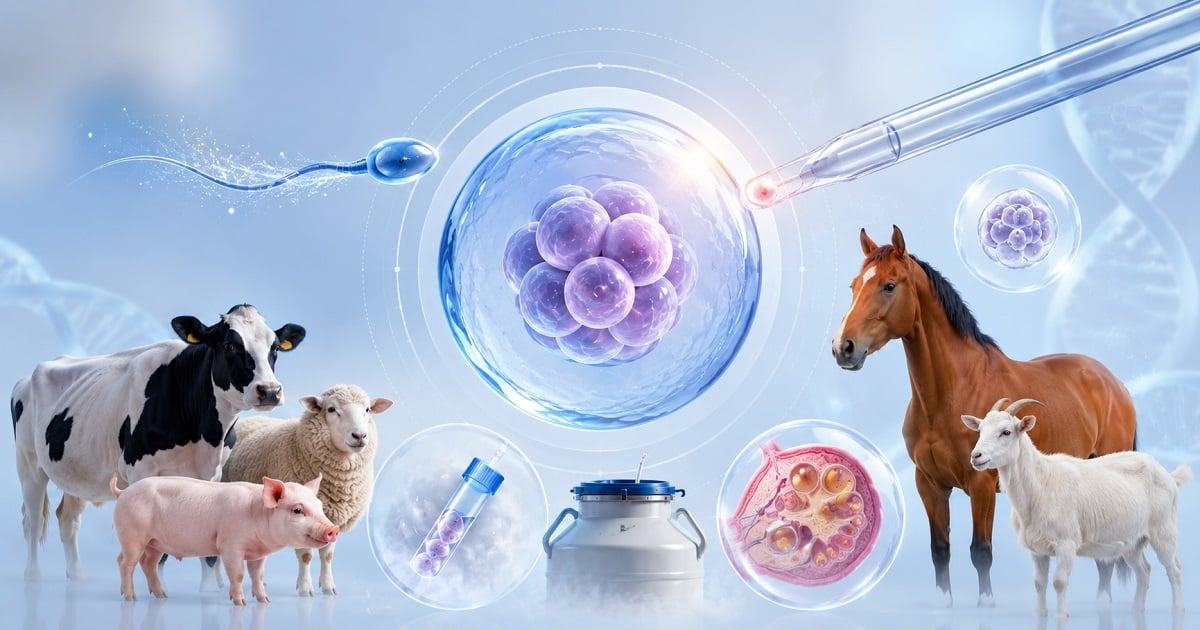
Propelled by global imperatives for sustainable ruminant and monogastric livestock production, high-priority animal genetic resource preservation, and climate-resilient reproductive management paradigms, livestock reproductive physiology and assisted reproductive technologies (ARTs) have established themselves as central disciplinary pillars to resolve long-unaddressed industrial bottlenecks: progressive subfertility of high-genetic-merit livestock lines, suboptimal genetic gain rates in conventional breeding systems, and inadequate utilization of indigenous endangered livestock germplasm. Interdisciplinary breakthroughs encompassing reproductive organoid systems, next-generation biomanipulation methodologies, and functional biomaterials in animal reproduction, alongside technical advances in sperm/embryo sex sorting and in vitro gametogenesis, are now translating fundamental physiological insights into industry-scalable, on-farm deployable solutions that substantially elevate reproductive efficiency and underpin global food security of animal-derived protein.
This Special Issue aims to disseminate cutting-edge original empirical research and rigorously validated translational innovations spanning basic reproductive physiology and applied ARTs across all domestic livestock and poultry species. We invite submissions that systematically bridge bench-scale discoveries and commercial livestock production deployment, encompassing mechanistic investigations, standardized protocol refinement, and on-farm reproductive performance validation.
Topics of interest include, but are not limited to, the following:
Gametogenic physiology and molecular/physiological regulation of gamete quality in major livestock species (pigs, cattle, sheep, horses, donkeys and other domestic livestock).
Standardized optimization protocols for semen processing, artificial insemination, in vitro fertilization, embryo transfer, and reproductive organoid culture workflows.
Innovative sex-preselected reproduction systems and precision strategies for accelerated livestock genetic improvement.
Cryopreservation and germplasm rescue technologies for threatened indigenous livestock genetic resources.
Multi-omics and functional validation of maternal reproductive tract microenvironment adaptation mechanisms.
Dr. Feng Yang
Dr. Tong Yu
Guest Editors
Manuscript Submission Information
Manuscripts should be submitted online at www.mdpi.com by registering and logging in to this website. Once you are registered, click here to go to the submission form. Manuscripts can be submitted until the deadline. All submissions that pass pre-check are peer-reviewed. Accepted papers will be published continuously in the journal (as soon as accepted) and will be listed together on the Special Issue website. Research articles, review articles as well as short communications are invited. For planned papers, a title and short abstract (about 250 words) can be sent to the Editorial Office for assessment.
Submitted manuscripts should not have been published previously, nor be under consideration for publication elsewhere (except conference proceedings papers). All manuscripts are thoroughly refereed through a single-anonymized peer-review process. A guide for authors and other relevant information for submission of manuscripts is available on the Instructions for Authors page. Veterinary Sciences is an international peer-reviewed open access monthly journal published by MDPI.
Please visit the Instructions for Authors page before submitting a manuscript. The Article Processing Charge (APC) for publication in this open access journal is 2100 CHF (Swiss Francs). Submitted papers should be well formatted and use good English. Authors may use MDPI's English editing service prior to publication or during author revisions.
Keywords
- animal reproduction
- reproductive organoids
- livestock sex control
- reproductive technology
- semen preservation
Benefits of Publishing in a Special Issue
- Ease of navigation: Grouping papers by topic helps scholars navigate broad scope journals more efficiently.
- Greater discoverability: Special Issues support the reach and impact of scientific research. Articles in Special Issues are more discoverable and cited more frequently.
- Expansion of research network: Special Issues facilitate connections among authors, fostering scientific collaborations.
- External promotion: Articles in Special Issues are often promoted through the journal's social media, increasing their visibility.
- Reprint: MDPI Books provides the opportunity to republish successful Special Issues in book format, both online and in print.
Published Papers


Vet. Sci. - ISSN 2306-7381