Skip to Content
  • 3.7
    Impact Factor
  • 7.0
    CiteScore
  • 15 days
    Submission to First Decision
  • 4 days
    Acceptance to Publication

Materials

Materials is an international peer-reviewed, open access journal on materials science and engineering published semimonthly online by MDPI. The Spanish Materials Society (SOCIEMAT), Manufacturing Engineering Society (MES) and Chinese Society of Micro-Nano Technology (CSMNT) are affiliated with Materials and their members receive discounts on the article processing charges.

Get Alerted

Add your email address to receive forthcoming issues of this journal.

All Articles (58,224)

  • Article
  • Open Access

To address the issue that a single soybean oil rejuvenator weakens the high-temperature performance of aged SBS-modified asphalt, soybean oil and crumb rubber (CR) were used to construct a synergistic composite rejuvenation system for long-term aged SBS-modified asphalt (ASMA). Conventional property tests, dynamic shear rheometer (DSR) tests, bending beam rheometer (BBR) tests, and microstructural characterization were performed to investigate the macroscopic rheological properties and microscopic mechanisms of rejuvenated asphalt. The results indicate that soybean oil can restore the low-temperature performance of ASMA, yet it weakens its high-temperature deformation resistance. Incorporating CR into the 5 wt% soybean oil rejuvenated system effectively compensates for this drawback. As the CR content increases, the high-temperature deformation resistance, low-temperature crack resistance, fatigue life, and thixotropy of the rejuvenated asphalt improve significantly. Specifically, as the CR content increases from 0 wt% to 25 wt%, the rutting factor at 64 °C increases 14.7-fold, the fatigue life at 5% strain increases 13.7-fold, the low-temperature creep stiffness at −24 °C decreases by 17.1%, and the creep rate increases by 51.8%. The balanced optimization of high- and low-temperature rheological performance of the rejuvenated asphalt can be interpreted from multi-scale characterization results. On the one hand, weak interfacial chemical reactions occur during soybean oil rejuvenation, while CR mainly exerts physical swelling and filling effects. On the other hand, the system gradually evolves from dispersed-phase filling to a continuous network as the CR content increases. In addition, the likely competitive adsorption of soybean oil between CR and residual SBS modifiers promotes the formation of the continuous phase. This study provides a feasible technical reference for the synergistic rejuvenation of aged SBS-modified asphalt using bio-oil and CR.

Materials

9 October 2026
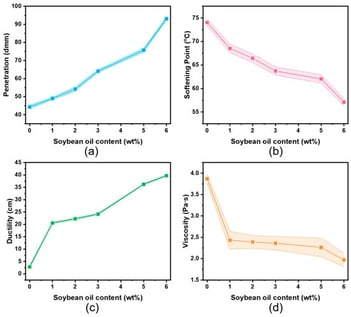
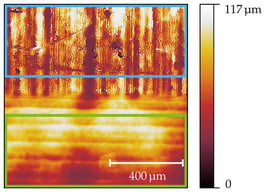
The (a) penetration at 25 °C, (b) softening point, (c) ductility at 5 °C and (d) Brookfield viscosity at 135 °C of ASMA-S.
  • Article
  • Open Access

Cu2O nanoparticles (0–4 g/L) were incorporated into the electrolyte to fabricate coatings on TA2 pure titanium via micro-arc oxidation. The effects of different Cu2O nanoparticle concentrations on the microstructure, antibacterial performance, formation, and antibacterial mechanisms of the coatings were investigated. Microstructural characterization indicated that Cu2O nanoparticles were incorporated into the coating through the combined action of electrophoretic forces and micro-discharges. At 4 g/L Cu2O, the incorporation of Cu2O nanoparticles shifted from uniform incorporation to particle aggregation. Compared with coatings fabricated using 1 and 2 g/L Cu2O nanoparticles, those fabricated using 3 and 4 g/L exhibited superior antibacterial efficacy. Copper ion release was the primary antibacterial mechanism. Micro-arc oxidation coatings modified with 3 g/L Cu2O nanoparticles achieved the best compromise between microstructural uniformity and antibacterial performance among the tested concentrations.

Materials

9 October 2026

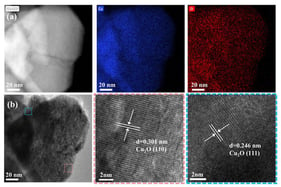
Crystal structure of Cu2O nanoparticles: (a) EDS elemental maps; (b) HR-TEM image.
  • Article
  • Open Access

Preliminary selection of bracing systems in high-rise steel buildings requires comparing many configurations, each demanding computationally intensive minimum-weight design. This study uses machine learning to estimate the best-observed feasible weight directly from building-level configuration parameters. A full factorial dataset of 45 configurations covered three storey numbers (17, 24, and 30), three bracing types (V, X, and K), and five brace-placement layouts. Each configuration was optimized in a coupled SAP2000–MATLAB procedure with Particle Swarm, Grey Wolf, Honey Badger, and Aquila optimization (180 runs in total); no single algorithm was best for every configuration. Mean weight increased from 2537 kN at 17 storeys to 7103 kN at 30 storeys. X-bracing gave the highest mean weight at all heights and K-bracing the lowest at 17 and 24 storeys, whereas V- and K-bracing differed by only 2.4% at 30 storeys. Bracing type changed the mean weight by up to about 30%, and brace placement by about 10–15%. Among six regression models, Ridge achieved the highest mean five-fold cross-validated R2 (0.914; 0.904 over 1000 repeated partitions), while Random Forest gave the lowest RMSE (511.7 kN); in leave-one-out prediction, Ridge ordered 90.3% of configuration pairs correctly. The resulting Ridge equation offers an interpretable screening tool within the investigated design domain.

Materials

9 October 2026

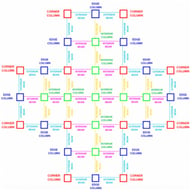
Grouping of structural members adopted for the optimization.
  • Review
  • Open Access

The cement and concrete industry now has access to a wider variety of cementitious material options than at any point in its history, yet only a subset of these materials are deployed at scale. Current construction practices are evolving from traditional cements towards Portland limestone cements and blended systems such as Limestone Calcined Clays (LC3), alongside expanded use of established and emerging supplementary cementitious materials (SCMs) and alternative SCMs (ASCMs). Industrial by-products, including changing fly ash and slag streams, electric arc furnace slag, reclaimed ash, waste glass, mine tailings, and recycled concrete fines for enhanced carbonation are emerging as feedstock options to supplement demand for SCMs. This review provides a materials-centric synthesis of cementitious material options that could contribute to the U.S. cement and concrete supply through approximately 2035–2040. The materials are organized into two broad readiness classes: readily available materials and blended systems with existing feedstock streams and credible near-term adoption pathways, and emerging material concepts for which processing, logistics, or qualification frameworks are not yet sufficiently mature for industry-wide deployment. Readily available options include calcined clays, limestone calcined clay cement (LC3) systems, ground lightweight aggregate fines, and reclaimed ash, while emerging options include mine tailings, recycled concrete fines, electric arc furnace slag, waste glass pozzolans, carbonation-cured binders, and biocementation approaches. For each material family, the review evaluates availability, technical performance, and standards and adoption status, including feedstock volumes and geographic distribution, processing requirements, reported strength and durability performance, and compatibility with existing production and construction practices. Across both readiness classes, broader deployment will require robust reactivity and performance test methods, long-term durability and field-performance evidence, supply-chain readiness, and staged qualification and specification pathways. The review concludes by identifying practical priorities for researchers, standards bodies, and major buyers seeking to advance next-generation cementitious materials from laboratory evaluation and demonstration toward routine use.

Materials

9 October 2026

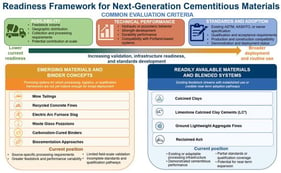
Readiness framework grouping next-generation cementitious materials into emerging and readily available categories based on availability, technical performance, and standards and adoption.

Highly Accessed Articles

News & Conferences

Latest Issues

Open for Submission

Journal Sections

Advanced Dental Materials
Reprint

Advanced Dental Materials

From Design to Application, Second Edition
Editors: Tina Poklepovic Pericic, Josip Kranjčić
Circular Economy in Interdisciplinary Perspective
Reprint

Circular Economy in Interdisciplinary Perspective

Valorization of Raw Materials, Sustainable Products, and Pro-Ecological Industrial Developments
Editors: Krzysztof Pielichowski, Piotr Duda, Michał Łach, Tomasz Mariusz Majka, Tomasz Zdeb, Giovanni De Feo
XFacebookLinkedIn
Materials - ISSN 1996-1944