


Exclusive Review Papers in 'Cell Signaling'
This special issue belongs to the section "Cell Signaling".
Special Issue Information
Dear Colleagues,
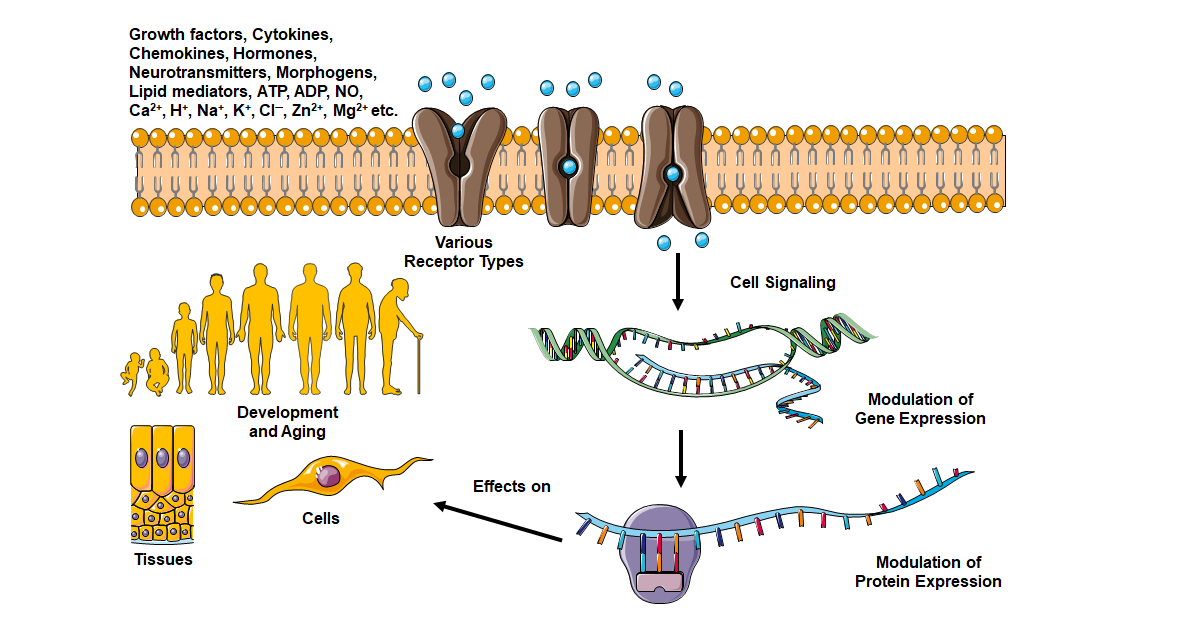
Cell signaling is the fundamental language by which cells perceive, process, and respond to their internal state and external environment. Through intricately regulated networks of receptors, second messengers, kinases, phosphatases, transcription factors, and non-coding RNAs, signals are integrated in space and time to control proliferation, differentiation, metabolism, migration, and cell death. Perturbations of these signaling pathways underlie a broad spectrum of human diseases, including cancer, metabolic and cardiovascular disorders, neurodegeneration, and immune dysfunction. Conversely, many of the most successful therapeutic strategies of the past decades have emerged from a precise understanding of signal transduction mechanisms and their points of vulnerability.
This Special Issue of Cells, entitled “Exclusive Review Papers in 'Cell Signaling',” is devoted to authoritative and forward-looking review articles that synthesize current knowledge and highlight emerging concepts in the field. Contributions will cover classical pathways such as receptor tyrosine kinases, GPCRs, TGF-β\betaβ, Wnt, Notch, NF-κ, and Hippo, as well as more recently appreciated layers of regulation, including mechanotransduction, spatial signaling, phase separation, and organelle-specific signaling circuits. Particular emphasis will be placed on crosstalk between pathways, quantitative and systems-level analyses, and the translation of signaling insights into diagnostics and targeted therapies. By bringing together comprehensive and critical overviews from leading experts, this Special Issue aims to provide a valuable resource for researchers and clinicians, stimulate interdisciplinary discussion, and identify key challenges and opportunities that will shape the next generation of discoveries in cell signaling.
Prof. Dr. Ralf Weiskirchen
Guest Editor
Manuscript Submission Information
Manuscripts should be submitted online at www.mdpi.com by registering and logging in to this website. Once you are registered, click here to go to the submission form. Manuscripts can be submitted until the deadline. All submissions that pass pre-check are peer-reviewed. Accepted papers will be published continuously in the journal (as soon as accepted) and will be listed together on the Special Issue website. Research articles, review articles as well as communications are invited. For planned papers, a title and short abstract (about 250 words) can be sent to the Editorial Office for assessment.
Submitted manuscripts should not have been published previously, nor be under consideration for publication elsewhere (except conference proceedings papers). All manuscripts are thoroughly refereed through a single-anonymized peer-review process. A guide for authors and other relevant information for submission of manuscripts is available on the Instructions for Authors page. Cells is an international peer-reviewed open access semimonthly journal published by MDPI.
Please visit the Instructions for Authors page before submitting a manuscript. The Article Processing Charge (APC) for publication in this open access journal is 2700 CHF (Swiss Francs). Submitted papers should be well formatted and use good English. Authors may use MDPI's English editing service prior to publication or during author revisions.
Keywords
- signal transduction
- receptor tyrosine kinases
- G protein-coupled receptors (GPCRs)
- intracellular signaling networks
- systems biology
- pathway crosstalk
- targeted therapies
Benefits of Publishing in a Special Issue
- Ease of navigation: Grouping papers by topic helps scholars navigate broad scope journals more efficiently.
- Greater discoverability: Special Issues support the reach and impact of scientific research. Articles in Special Issues are more discoverable and cited more frequently.
- Expansion of research network: Special Issues facilitate connections among authors, fostering scientific collaborations.
- External promotion: Articles in Special Issues are often promoted through the journal's social media, increasing their visibility.
- Reprint: MDPI Books provides the opportunity to republish successful Special Issues in book format, both online and in print.
Published Papers


Cells - ISSN 2073-4409