Skip to Content
  • 2.9
    Impact Factor
  • 6.1
    CiteScore
  • 16 days
    Submission to First Decision
  • 3 days
    Acceptance to Publication

Applied Sciences

Applied Sciences is an international, peer-reviewed, open access journal on all aspects of applied natural sciences published semimonthly online by MDPI. The International Society for Plasma Medicine (ISPM) and the Polish Society of Applied Electromagnetics (PTZE) are affiliated with Applied Sciences and their members receive a discount on the article processing charges.

Get Alerted

Add your email address to receive forthcoming issues of this journal.

All Articles (93,837)

  • Article
  • Open Access

The International Roughness Index (IRI) is a crucial indicator of rigid pavement performance and distress, and artificial neural networks (ANNs) have made pavement management system (PMS) forecasting more cost-effective. However, purely data-driven ANN models are not constrained to follow known physical trends and can behave unpredictably outside their training range. This study developed a physics-informed neural network (PINN) for predicting IRI in jointed plain concrete pavements (JPCPs) by incorporating an empirical equation from the Mechanistic-Empirical Pavement Design Guide (MEPDG) into the training loss, intended to bias predictions toward physically consistent trends. A total of 2705 observations from 394 U.S. and 6 Canadian pavement sections were used to train the model and compare it against a conventional ANN, standard regression, and the standalone MEPDG equation. The PINN achieved a coefficient of determination (R2) of 0.695 and a root mean square error (RMSE) of 11.79 in./mi. Its performance was comparable to the ANN (R2 = 0.698, RMSE = 11.71 in./mi), and both outperformed the MEPDG equation and conventional regression. A closed-form equation was extracted from the trained ANN weights and biases. While the physics constraint did not improve predictive accuracy in this study, it offers a transparent, interpretable tool that agencies can apply directly to prioritize JPCP maintenance and rehabilitation without proprietary model files.

Appl. Sci.

22 October 2026
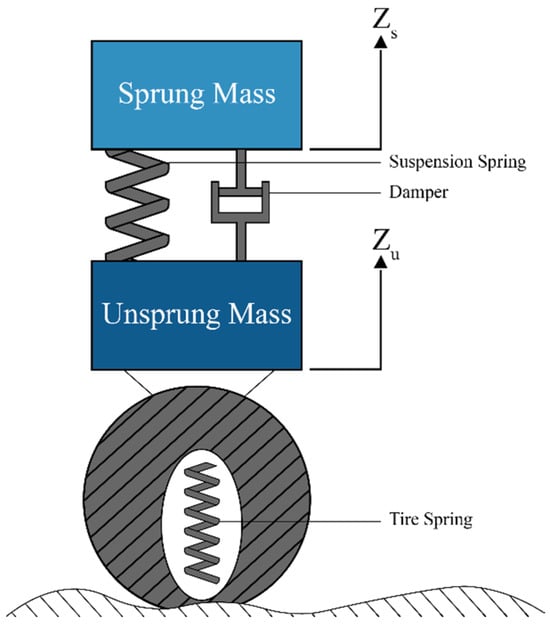
Quarter-car simulation.
  • Review
  • Open Access

This review surveys the mathematical theory and methods of state estimation for stochastic dynamical systems when the Gaussian-linear-least-squares paradigm fails, focusing on the role of sparsity-promoting and constraint-encoding regularization. The exposition is organized around a single regularized estimation functional in which the weighted least-squares terms of classical filtering and smoothing are augmented by nonsmooth penalty functions and indicator functions of constraint sets. Bayesian recursion, Gaussian approximation, sequential Monte Carlo, and moving-horizon optimization emerge as different structural assumptions on this common objective. Recent work is reviewed through five relaxations of the classical assumptions: heavy-tailed and non-Gaussian noise, unknown or misspecified models, distributed and networked architectures, unused structural prior information such as sparsity and safety constraints, and switching or unknown external inputs. Emphasis is placed on variable-splitting and augmented-Lagrangian techniques that interface Gaussian recursions with nonsmooth optimization, on convergence and stability guarantees, and on the mathematical challenges that remain open, including convergence rates for alternating minimization, statistical efficiency relative to least-squares baselines, and provable guarantees for learning-enhanced filters.

Appl. Sci.

22 October 2026

  • Article
  • Open Access

Federated black-box prompt tuning enables organizations to adapt a proprietary frozen language model without centralizing their labeled data, but local search-state aggregation does not directly define a shared pooled-data objective, and client-specific feedback can expose private signals. We propose FedSTIP-Tuning, which composes a three-party permutation-based protected forward propagation with a common-candidate population and pairwise-masked loss aggregation in a cross-silo setting. All participating clients evaluate the same prompt candidates, and the coordinator ranks their sample-weighted aggregate losses, thereby optimizing the empirical objective over the fixed union of client shards under full participation. Under the stated semi-honest and non-collusion assumptions, the aggregation layer hides each released loss vector’s client-level decomposition, while the aggregate values and execution metadata remain observable to their authorized parties. On RoBERTa-large, FedSTIP-Tuning exceeds the strongest evaluated FedBPT configuration by 6.40, 2.66, and 7.60 percentage points on AG News, SST-2, and DBpedia, respectively, under matched forward budgets. Its protected forward preserves all candidate rankings across 600 paired generations and is 861× and 957× faster than a generic interactive two-party computation reference on the RoBERTa-base warm and cold paths, and 694× and 578× on RoBERTa-large.

Appl. Sci.

22 October 2026

  • Article
  • Open Access

Design of a LoRa Network and Characterization of IoT Sensors for Environmental Monitoring of Potato Crops

  • Roberto Ferro-Escobar,
  • Carlos Andrés Martínez-Alayón and
  • David Nicolas Murillo-Nova
  • + 1 author

The monitoring of agroclimatic variables is one of the fundamental pillars for anticipating and mitigating frost phenomena in potato crops, especially in the rural mountain area located in the municipality of La Calera (Colombia). Low-power, long-range communication technologies such as LoRa and LoRaWAN allow the creation of low-cost solutions for the acquisition and remote transmission of environmental data in agricultural production. This work presents the design and validation of a wireless sensor node and a LoRaWAN network oriented towards climate monitoring in a real agricultural production environment. This study aimed to design and validate a low-cost environmental monitoring system based on LoRa and LoRaWAN technology for measuring temperature and relative humidity as the most relevant variables for the early detection of frost in potato crops in the municipality of La Calera. A sensor node was developed using the Heltec LoRa 32 V3 microcontroller and the AM2305B sensor. The node was configured to transmit data through LoRaWAN technology in the US-915 MHz band, using an SX1302 Gateway integrated into The Things Network, where the devices and data reception were managed. A total of 70 measurements were carried out over three days in a controlled environment, covering a temperature range from 20 °C to 50 °C and from 70% to 20% RH, and the measurements were compared with a PeakTech-5035 reference instrument through statistical analysis. The statistical analysis confirmed that the developed node presents an accuracy of ±0.7 °C in temperature and ±5% RH in relative humidity, with a Pearson correlation coefficient of r = 0.99 for temperature and r = 0.96 for relative humidity compared with the reference sensors. Additionally, the root mean square error (RMSE) was 0.82 °C for temperature and 4.6% RH for relative humidity, supporting the quality of the generated data. Furthermore, urban and rural propagation tests were conducted to evaluate the communication performance of the LoRaWAN infrastructure through RSSI and SNR measurements under real deployment conditions. The communication analysis demonstrated stable connectivity in both dense urban and rural agricultural environments, maintaining operational wireless communication at distances approaching 1 km under low power conditions. The results demonstrate that the prototype offers performance comparable to commercial sensors at an approximately 50% lower cost, establishing it as a viable alternative for building wireless sensor networks (WSN) based on LPWAN technology. In this way, the proposed solution facilitates access to climate monitoring technologies in rural areas and strengthens farmers’ ability to anticipate frost events in potato crops.

Appl. Sci.

22 October 2026

Featured Articles of Last Quarter

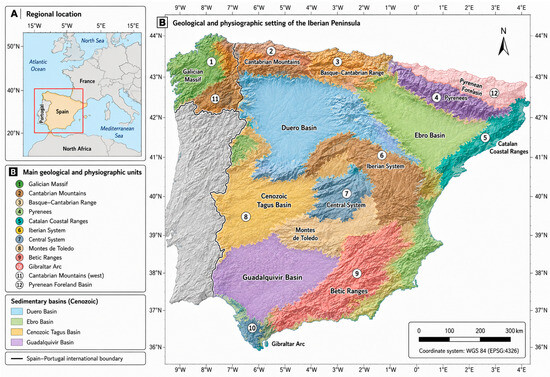
Geographical and geological setting of the study area: (A) Regional location of the Iberian Peninsula in southwestern Europe. (B) Main geological and physiographic units and major Cenozoic sedimentary basins of the Iberian Peninsula. The Spain–Portugal international boundary is also shown. Coordinates are referenced to WGS 84.
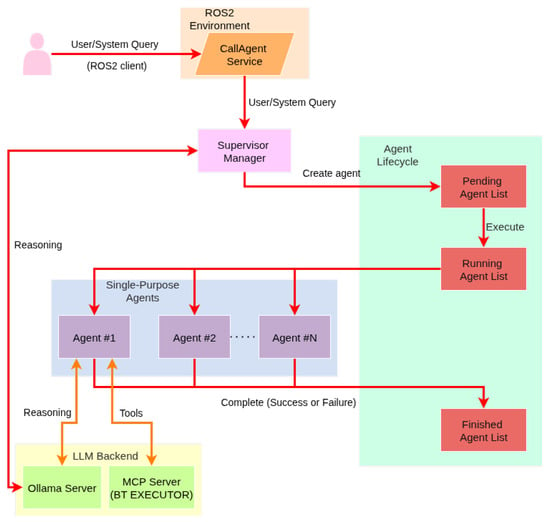
Overview of System Architecture.

Highly Accessed Articles

News & Conferences

Latest Issues

Open for Submission

Journal Sections

XFacebookLinkedIn
Appl. Sci. - ISSN 2076-3417