AppliedPhys 2026, 2(3), 8; https://doi.org/10.3390/appliedphys2030008 - 5 Aug 2026
Abstract
►
Show Figures
Periodic grating structures allow for the excitation of surface plasmon resonance (SPR) by matching the momentum of incident light to the plasmon mode. Herein, we investigate Au-coated sinusoidal gratings with depths from 50 nm to 280 nm using transmission and reflection spectroscopy. For
[...] Read more.
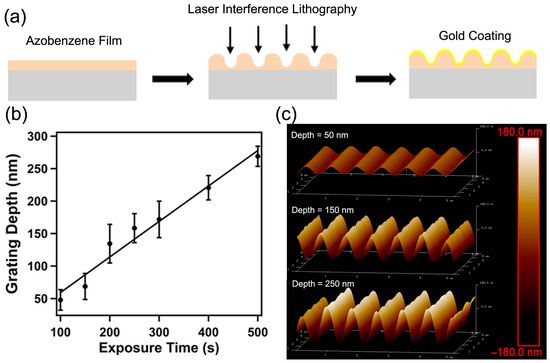
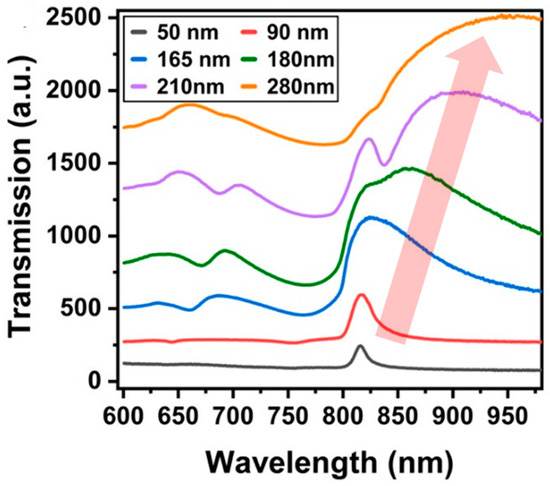
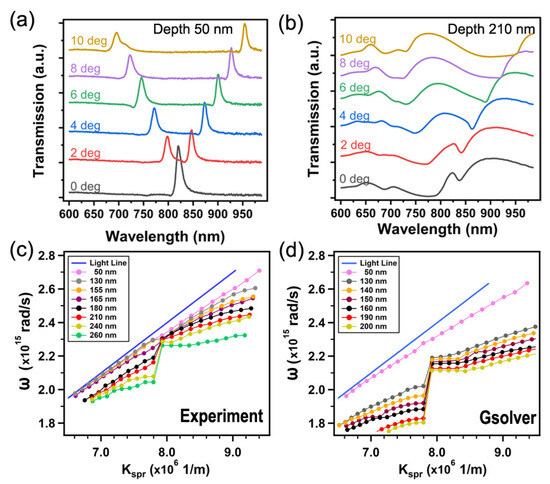
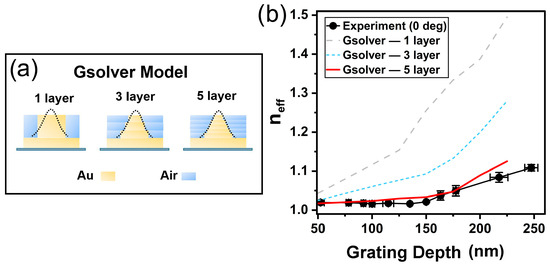
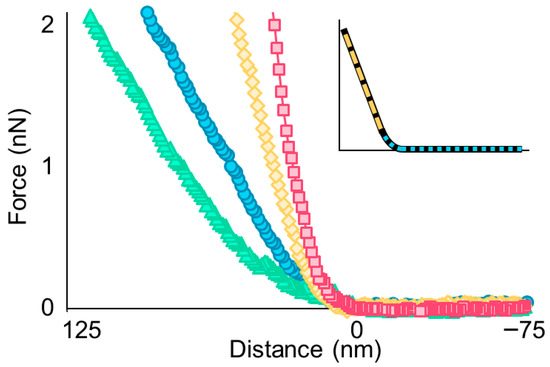
Periodic grating structures allow for the excitation of surface plasmon resonance (SPR) by matching the momentum of incident light to the plasmon mode. Herein, we investigate Au-coated sinusoidal gratings with depths from 50 nm to 280 nm using transmission and reflection spectroscopy. For gratings with an 806 nm period, increasing the modulation depths results in an SPR red shift of more than 125 nm, spectral broadening, and branch separation in the SPR dispersion. Rigorous coupled-wave analysis simulations using Gsolver (v5.2) reproduced the experimentally observed depth-dependent spectral trends. These results suggest that the grating modulation depth is a key structural parameter for tuning the SPR wavelength, bandwidth, and dispersion characteristics of a grating-coupled SPR system.
Full article
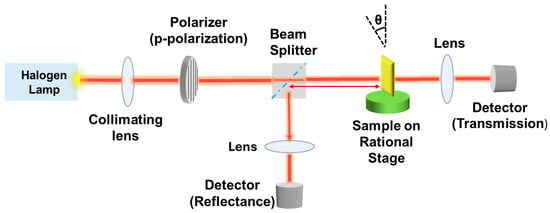
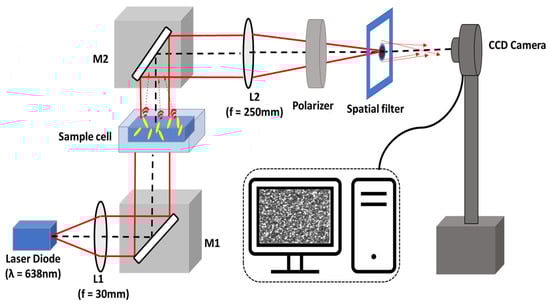
Figure 1