- Perspective

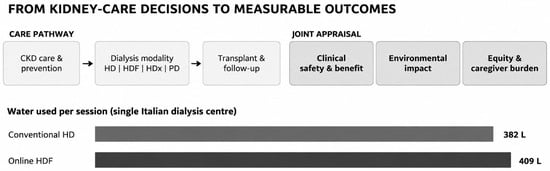
Chronic kidney disease (CKD) requires long-term care with substantial demands of services and resources. Efforts to reduce the environmental burden of nephrology have largely concentrated on haemodialysis, particularly water, energy, consumables and transport. Previous works have also addressed prevention, transplantation and broader questions of equitable access. We propose an operational framework for comparing kidney-care pathways on the basis of three outcome domains: clinical value, environmental impact, and equity and social value. The framework is enabled by digital technologies, in the aim to generate impact in terms of governance effectiveness and economic feasibility. More specifically, it compares clinically appropriate care options by considering their clinical, environmental and social implications, including potential trade-offs. A hypothetical comparison between in-centre and telemedicine-supported home haemodialysis illustrates how reduced travel and environmental impact may be accompanied by additional organisational costs or caregiver responsibilities. The framework is intended to offer a shared basis for service evaluation and local decision making for more sustainable care, from CKD prevention and outpatient follow-up to dialysis, transplantation and remote monitoring.
13 November 2026