



Climate, Volume 14, Issue 1 (January 2026) – 27 articles
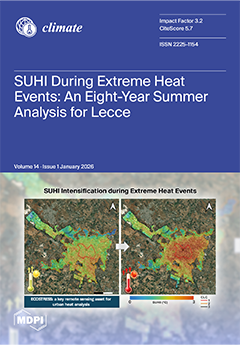
Cover Story (view full-size image):
This study shows how extreme summer heat reshaped the Surface Urban Heat Island Intensity (SUHII) in Lecce (southern Italy) between 2018 and 2025. The analysis is based on ECOSTRESS land surface temperature data. During extremely hot days, the thermal contrast between city and countryside changes markedly. In daytime, dry soils and sparse vegetation in rural areas often cause higher temperatures than in the city, leading to a stronger “cool island” effect over urban surfaces. At night, the situation reverses: urban areas, especially dense neighborhoods, remain warmer than their surroundings because buildings store and slowly release heat. As heat waves become more frequent and persistent, nighttime warming intensifies, increasing thermal stress for urban populations and highlighting a growing thermal vulnerability of Mediterranean cities. View this paper
- Issues are regarded as officially published after their release is announced to the table of contents alert mailing list.
- You may sign up for e-mail alerts to receive table of contents of newly released issues.
- PDF is the official format for papers published in both, html and pdf forms. To view the papers in pdf format, click on the "PDF Full-text" link, and use the free Adobe Reader to open them.
Previous Issue
Next Issue
