1. Introduction
1.1. AIoT: Concept, Benefits, and Applicability
The interest in ‘Artificial Intelligence of Internet of Things’ (AIoT) has recently increased due to the accelerated connection of the Artificial Intelligence (AI) and Internet of Things (IoT). The proposed theme captures the dynamic intersection of AI and the IoT, a combination referred to as AIoT. AIoT leverages the decision-making capabilities of AI with the data-gathering abilities of IoT, creating intelligent systems that can analyze data, make predictions, and automate actions in various domains. By combining AI with IoT, data collected by distributed nodes can be used by applying AI techniques, such as machine learning and deep learning, to process data generated and collected by IoT systems. Machine learning models, data analytics and decision-making techniques of AI systems are combined with the connectivity and data transfer capabilities of the IoT. As a result, machine learning capabilities are moved closer to the data source. This concept is called Edge AI, or Edge Intelligence, and it enables greater scalability, robustness, and efficiency [
1]. With the incorporation of AI into IoT systems, their functioning is not limited to the collection and transfer of information, but to the effective understanding and analysis of data [
2]. AIoT systems process massive volumes of sensor data, extract meaningful patterns, and enable context-aware, predictive, and autonomous action [
3]. This results in real-time, data-driven decisions that improve responsiveness and resource allocation across domains. To understand the need to combine AI and IoT, we must first analyze the advantages of the two concepts. AI, is a field of computer science that deals with the development of intelligent systems that can simulate human intelligence. Simply, AI aims to enable computers to replicate human capabilities such as perception, reasoning, understanding, etc. Therefore, the highly disruptive capabilities of AI are the foundation of intelligent systems in a wide range of industries to increase efficiency and develop new products and services.
The IoT, on the other hand, is a system of connected objects or devices that can collect and transfer data in real time using software or sensors embedded in them. The application of IoT helps to achieve a high level of automation in a wide range of tasks across all industries. Through sensors or user input, IoT devices create a massive amount of data. AIoT is a transformative force in industry, agriculture, and society, offering unprecedented capabilities for automation, efficiency, and data-driven decision-making. In industry, AIoT enables intelligent supply chains, predictive maintenance, and automated production through the integration of sensing, analytics, and edge intelligence [
4]. In agriculture, AIoT integrates AI-based image recognition with IoT environmental monitoring to support real-time pest detection [
5], and irrigation time prediction [
6], improving accuracy while reducing pesticide use, water requirement and environmental impact. In societal contexts, AIoT contributes to sustainable development by supporting SDG-oriented digital transformation, emphasizing trust, security, and responsible integration of intelligent systems into public and societal infrastructures [
7]. However, addressing challenges related to integration, security, ethical issues, and regulatory compliance will be essential to realizing the full potential of AIoT technologies. As these technologies continue to evolve, continued research, innovation, and collaboration among stakeholders will be essential to overcoming these challenges and shaping a sustainable and connected future.
In increasingly complex and dynamic real-world environments, such as urban infrastructure, environmental protection, and industrial operations, timely and optimized decision-making is critical for improving efficiency, sustainability, and public safety. Traditional decision-making approaches often struggle with data fragmentation, latency, and the inability to respond in real time to rapidly changing contexts [
8]. This creates an urgent need for systems that can autonomously interpret data and make intelligent decisions.
Beyond its technological innovation, AIoT can play an essential role in addressing the global challenges and management of climate change combining the power of connected smart sensors with the advanced analytical capabilities of AI algorithms, detecting patterns, identifying major sources of emissions and anticipating extreme events such as heat waves or severe pollution episodes. In addition, AIoT optimizes urban and industrial processes with climate impact, such as traffic, energy networks or waste management, reducing unnecessary resource consumption and associated emissions. AIoT functions as a strategic tool for data-driven decisions, supporting both authorities and companies in the development and implementation of effective and adaptive climate policies. Through precise environmental monitoring, predictive modeling, and adaptive control, AIoT systems support both climate mitigation and adaptation efforts. They can help reduce greenhouse gas emissions by improving energy efficiency and optimizing resource use, while also strengthening resilience to extreme weather events through better prediction and real-time response. The convergence of AI, IoT, and big data technologies supports the development of environmentally sustainable smart cities [
9]. This integration enables data-driven strategies for achieving carbon neutrality, advancing circular economy practices, and designing climate-resilient infrastructure. By embedding these technologies into urban and industrial systems, AIoT becomes a key driver of the digital and green transition that underpins long-term sustainability.
In smart cities, for instance, AIoT can support environmental monitoring systems that detect air pollution, noise levels, or abnormal weather conditions and automatically trigger mitigation strategies [
10]. In waste management, AIoT can optimize collection schedules and routes based on fill-level predictions, traffic data, and weather conditions, reducing operational costs and carbon emissions [
11].
Ultimately, AIoT fosters a shift from reactive, manual systems to proactive, adaptive infrastructures, accelerating the transformation toward resilient and sustainable real-world applications. This research is motivated by the growing need to develop such intelligent solutions for managing urban complexity and environmental challenges more effectively.
This research aligns directly with the goals of the European Green Deal and the United Nations Sustainable Development Goals (SDGs), especially SDG 7 (Affordable and Clean Energy), SDG 9 (Industry, Innovation and Infrastructure), SDG 11 (Sustainable Cities and Communities), and SDG 13 (Climate Action) [
12]. By advancing digital control and monitoring technologies, it supports the transition to clean energy systems while safeguarding environmental ecosystems. In addition, integrating life-cycle analysis (LCA) into the design and operation of AIoT-enabled systems ensures that sustainability is addressed throughout the full value chain: from manufacturing industrial equipment and electric vehicles, to operating waste-collection networks and air-quality sensors. Embedding LCA thinking in AIoT deployments promotes responsible innovation, avoids shifting environmental burdens, and aligns technological advances with long-term environmental stewardship [
13].
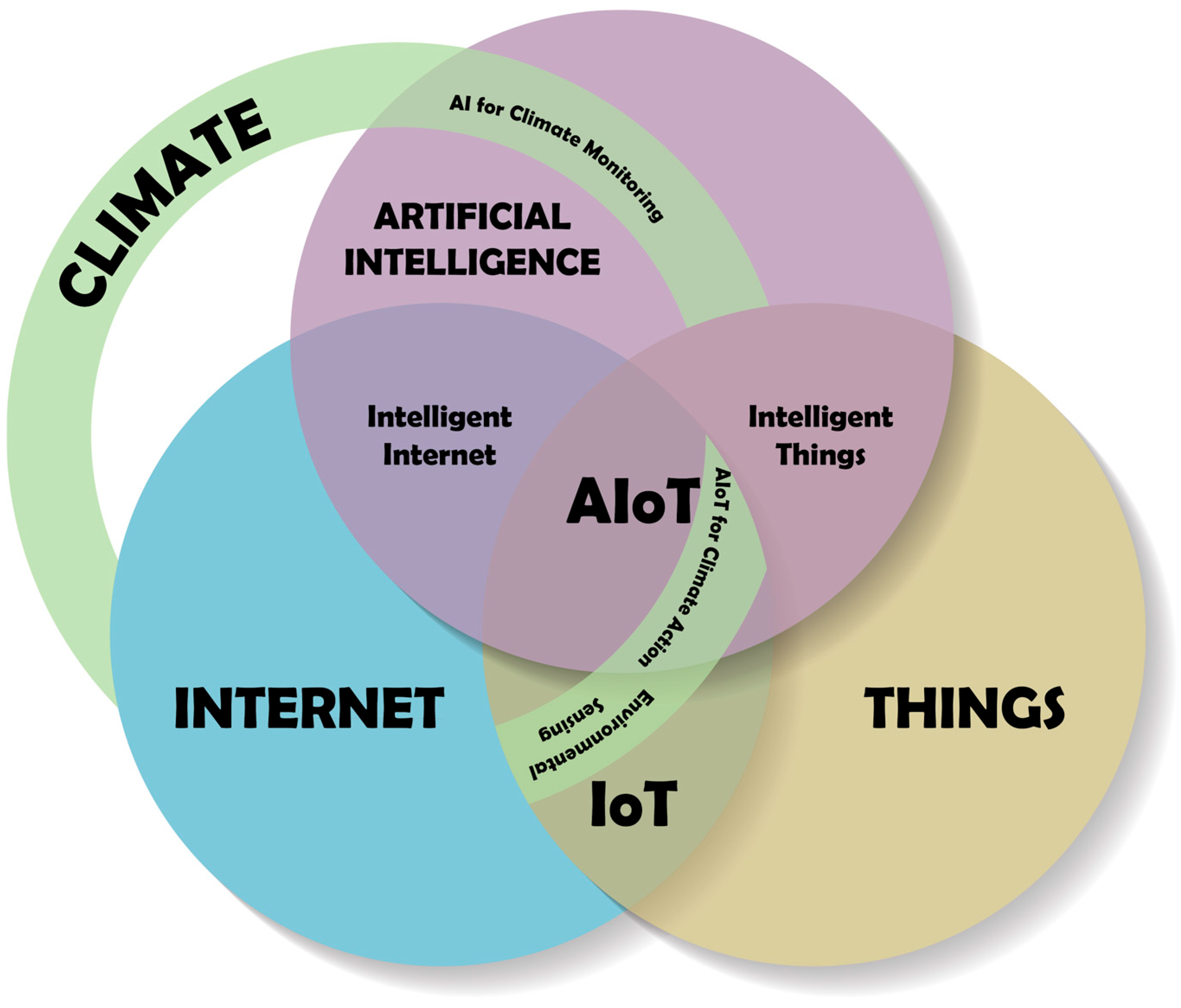
The following diagram (
Figure 1) represents the concept of AIoT and contains four overlapping circles, each representing a different domain:
Things: physical connected devices;
Intelligent things: devices that have processing capabilities and can make decisions;
Artificial intelligence: technologies that allow machines to learn and make decisions;
Internet: global connectivity that allows communication between devices.
In the center, where all four circles overlap, is the term AIoT, indicating the convergence of these concepts to create smart, internet-connected devices capable of using AI to improve functionality and efficiency.
The inclusion of the Climate domain highlights the application of AIoT for environmental monitoring, resource optimization, and climate actions, reinforcing its role in supporting sustainable and resilient smart city systems.
Climate change, waste management and air quality monitoring problems form an interdependent system in a smart city. Smart waste management reduces emissions and improves air quality, and air monitoring data helps combat climate change and design more effective urban policies.
1.2. Research Objectives
The main objective of this research is to explore, design and develop AIoT solutions that improve and optimize decision-making processes in real-world scenarios, focusing on two critical application areas with direct impact on climate changes: waste management and environmental monitoring in smart cities.
In the field of waste management, AI models are combined with IoT sensors to predict bin fill levels, optimize collection routes, and reduce operational costs and environmental impact. The system uses machine learning algorithms and real-time data from smart bins to support efficient and sustainable waste collection.
For the smart cities’ component, the focus is on environmental monitoring through a network of sensors measuring air quality, noise, temperature and humidity. The collected data is analyzed using AI techniques to detect anomalies, forecast trends and support timely decision-making by city authorities.
The study has been built around the following questions (RQs):
- RQ1:
What are the most frequently explored directions/topics related to AIoT?
- RQ2:
Which are the most frequent keywords/terms in studies related to AIoT, waste management and air quality monitoring?
- RQ3:
What machine learning techniques are most effective for forecasting environmental or urban metrics (e.g., pollution levels, bin fill levels) based on heterogeneous IoT data?
- RQ4:
How can AIoT architectures be designed to support real-time, context-aware decision-making in waste management and air quality monitoring systems?
- RQ5:
What are the main technical, ethical, and security challenges in implementing AIoT systems for autonomous decision-making in public sector infrastructure?
The answers to these research questions are discussed in the following sections, each focusing on key technological, methodological, and application-specific aspects of AIoT in smart city environments.
While existing studies have examined AIoT technologies and smart city applications from either technical or domain-specific perspectives, they often address waste management and air quality monitoring in isolation and lack an explicit climate-oriented synthesis. The novelty of this work lies in combining bibliometric analysis with an application-level review that frames waste management and air quality monitoring as interconnected, climate-relevant AIoT domains within smart cities. By jointly analyzing publication trends, dominant thematic clusters, and representative application architectures, this review provides a structured understanding of how AIoT contributes to climate-responsive urban systems and identifies open challenges related to scalability, governance, and real-world deployment.
The structure of the remainder of the paper is as follows:
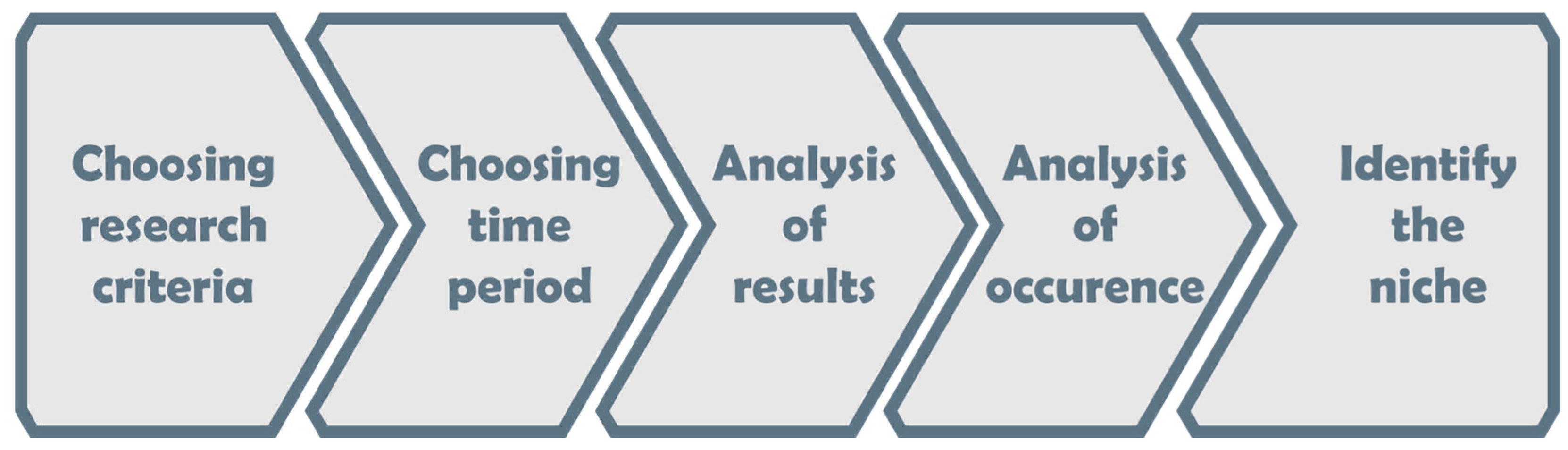
Section 2 presents the research design of the bibliometric study, the data sources and search strategy.
Section 3 presents the results of the bibliometric study, reflecting the evolution of AIoT research, dominant thematic clusters, and emerging research trends within the smart city. The most referenced works in the field of AIoT and AIoT in Waste Management and Air Quality Monitoring, which served as the foundation of our bibliometric analysis, are examined.
Section 4 shows the importance of AIoT in smart city highlighting its potential to support climate-responsive solutions with a particular focus on air quality monitoring and waste management, as well as the associated technical challenges.
Section 5 provides a discussion of the findings, interpreting the bibliometric results and application insights in the context of climate action, resource efficiency, and circular economy objectives. Finally,
Section 6 concludes the paper by summarizing the main findings of the review, outlining the key contributions of the study, and discussing the implications and directions for future research.
3. Results
3.1. Bibliometric Study
This section aims to answer research question 1 (RQ1) stated in the Introduction “What are the most frequently explored directions/topics related to AIoT?”.
The current state of the art in the field of AIoT is characterized by significant advances in integrating AI capabilities with IoT devices, leading to smarter and more autonomous systems. Recent developments have focused on improving connectivity, improving data processing speed, and increasing the efficiency of machine learning algorithms, which collectively contribute to more sophisticated and responsive AIoT applications [
15].
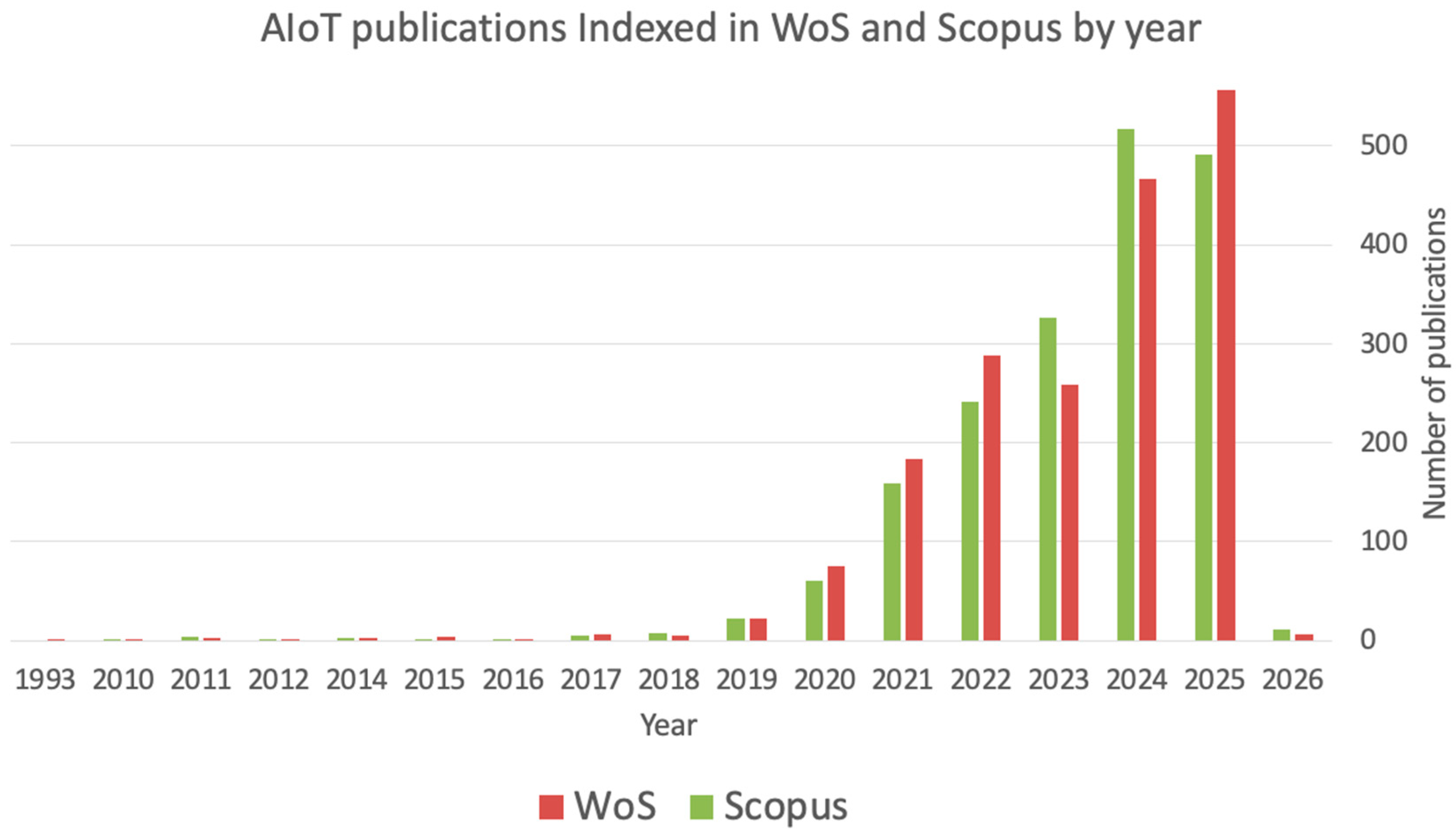
The graph in
Figure 3 illustrates the bibliometric study on the Web of Science (WoS) and Scopus databases and shows the growing academic interest in AIoT from 1993 to 2026. Between 1993 and 2020, the total number of publications was relatively low, with only 124 articles indexed in WoS and 108 in Scopus, recording modest annual values, most often under 10 papers. However, starting in 2021, an accelerated increase in the volume of publications is observed, culminating in 2025 with an absolute maximum: 557 papers in WoS and 491 in Scopus. Although 2026 is still underway, there are already 6 publications in WoS and 11 in Scopus, suggesting a continued upward trend. In total, 1761 papers were published in WoS and 1746 in Scopus between 2021 and 2026, almost 15 times more than in all previous years combined.
The limited number of focused results demonstrates a significant research gap in the integration of AIoT technology into these two critical smart city application areas. Despite the evident importance of waste management and air quality monitoring in urban sustainability, their representation in AIoT literature is limited. This finding emphasizes the need for more research, innovation, and interdisciplinary collaboration to promote AIoT-based solutions suited to environmental and public health concerns. In the next sections, we further examine these fields and outline future research directions aimed at addressing identified gaps and strengthening scientific contributions in these key areas.
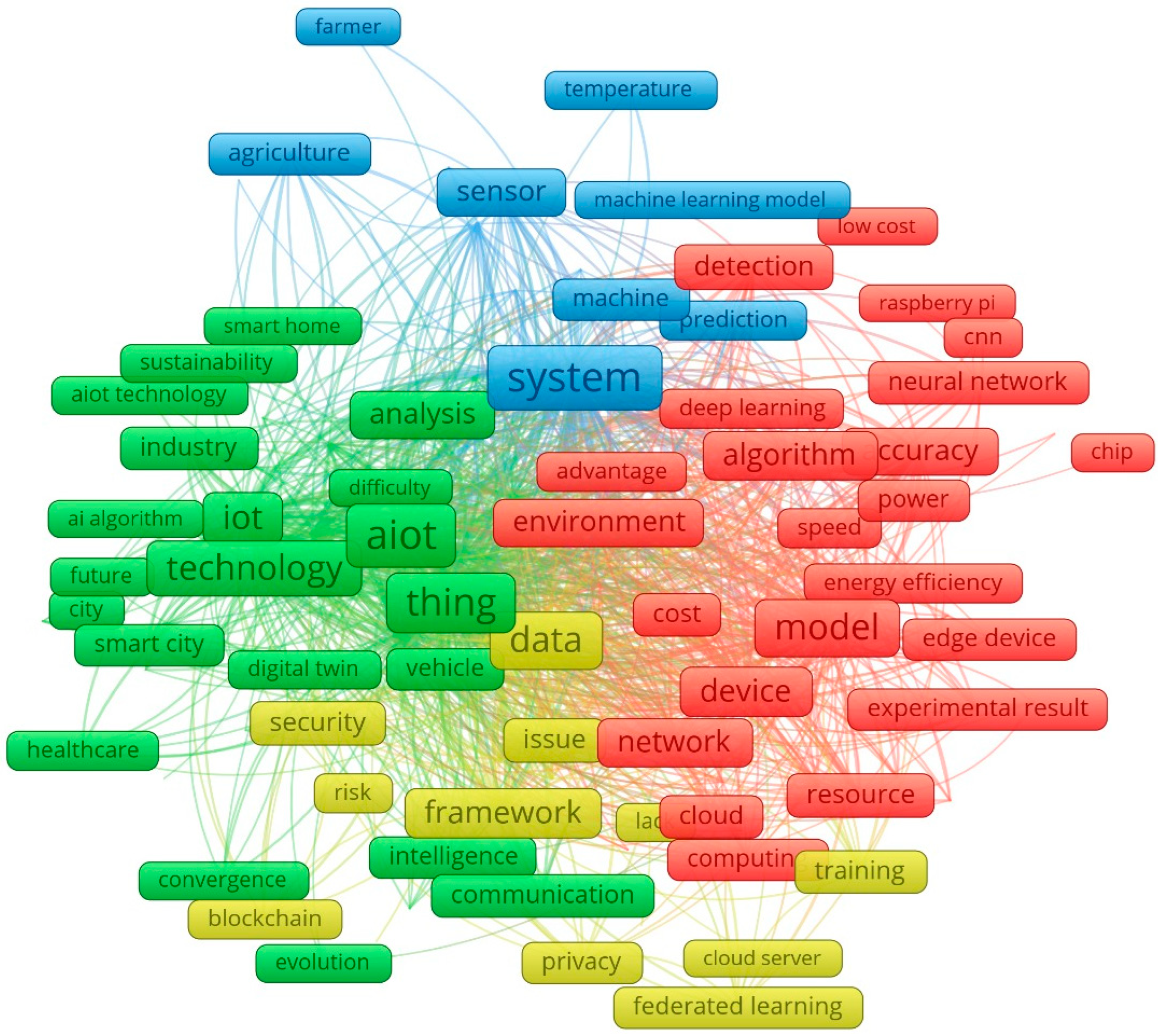
Figure 4 present a map of the current research trends in scientific literature using the VOS tool. The 4 clusters obtained are presented in
Table 1,
Table 2,
Table 3 and
Table 4. The results outline 4 clusters of applications and related branches:
The first cluster (green): captures the application-oriented integration of AIoT across smart infrastructure, healthcare, and environmental monitoring, showcasing its role in developing sustainable, data-driven urban ecosystems.
The second cluster (red): highlights the algorithmic and computational foundations of AIoT, emphasizing advances in learning methods that improve efficiency, reliability, and real-time performance.
The third cluster (yellow): emphasizes the combination of distributed learning with secure and privacy-focused mechanisms, ensuring trustworthy, decentralized, and resilient AIoT environments.
The fourth cluster (blue): focuses on sensor networks and monitoring systems, underlining the role of real-time data collection and predictive analytics in agriculture, environmental management, and health applications.
Based on the clustering analysis from VOSviewer and the frequent co-occurring terms, we chose two dominant and emerging application areas within the AIoT smart city research landscape: waste management and air quality monitoring, aiming to answer the second research question (RQ2) “Which are the most frequent keywords/terms in studies related to AIoT, waste management and air quality monitoring?”.
The second stage of the bibliometric analysis aimed to determine how these two essential topics are represented in the AIoT research landscape. Using the same methodology (VOSviewer for keyword co-occurrence and clustering analysis), we were able to display developing themes, identify research gaps, and highlight the limited but growing academic interest in these application areas. The findings highlight the need for additional research and multidisciplinary development, as this specialty is underrepresented despite its importance for sustainable smart cities.
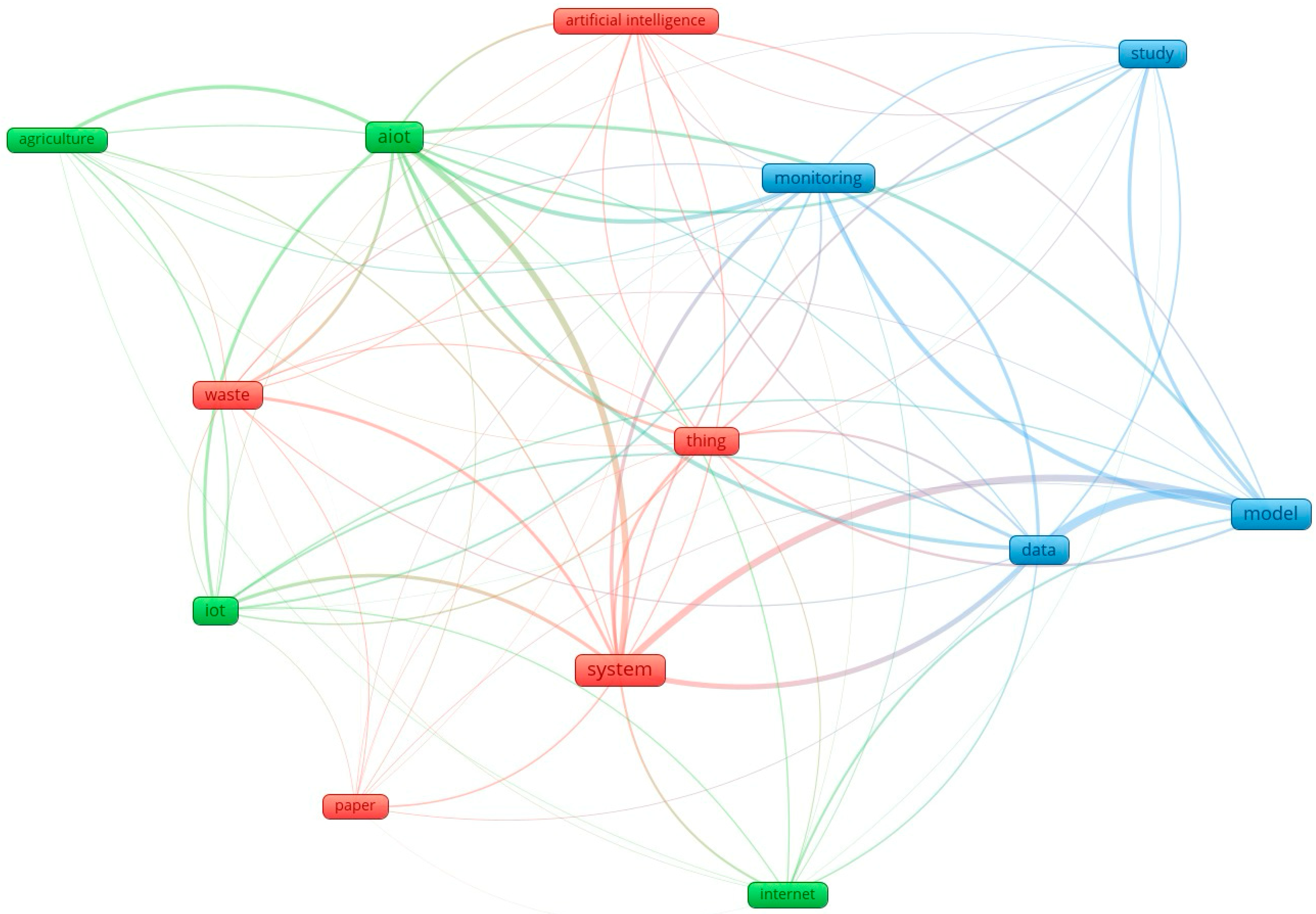
Figure 5 presents the visualization generated using VOSviewer for this bibliometric study, illustrating the keyword co-occurrence network and the thematic clustering of the 34 selected articles related to AIoT applications in waste management and air quality monitoring. From a total of 1458 terms, we selected only the keywords that occurred at least 10 times, resulting that only 13 meet the threshold.
The results outline 3 clusters of applications and related branches, and they are presented in
Table 5,
Table 6 and
Table 7.
The first cluster (red) indicates a strong focus on the integration of AI and IoT technologies into smart city infrastructures, particularly for monitoring and managing real-world processes like waste collection, environmental sensing, and agricultural applications. The connections indicate a systems-oriented perspective, where AIoT is used to automate and optimize urban and environmental functions.
The second cluster (green) represents the analytical and methodological foundation of AIoT research. It emphasizes the use of machine learning models, data gathering methodologies, and empirical investigations in designing and validating AIoT applications.
The third cluster (blue) reflects the data-centric and computational perspective of AIoT research, emphasizing the importance of data modeling, real-time monitoring, and performance analysis.
Overall, the visualization confirms that the current body of research combines system-level AIoT implementations with data-centric modeling approaches, but it also reveals a low topic density and fragmentation, emphasizing the need for deeper integration, expanded applications, and more comprehensive research efforts in this area.
3.2. Literature Review of the Most Cited Work
To better understand the current landscape of AIoT research, we first compiled a table listing the top 10 most cited papers from the Scopus database based on the keyword “AIoT.” The results obtained are presented in
Table 8. This initial selection provides insight into the most influential and widely referenced contributions within the general AIoT domain.
Based on the bibliometric results, the most highly cited studies in the AIoT domain define AIoT as a core enabling paradigm for smart city development, emphasizing the integration of large-scale IoT sensing with machine learning techniques to support real-time monitoring, predictive analytics, and intelligent decision-making in urban environments.
The adoption of artificial intelligence in construction engineering, highlighting a transition toward data-driven solutions and identifying AIoT, digital twins, and block-chain as important enablers of intelligent and efficient project management is examined in [
16]. Other studies focus on AIoT systems, emphasizing deep learning-based perception and decision-making, cloud-fog-edge architectures, and major scalability challenges [
17]. Research on smart eco-cities illustrates how AI and AIoT contribute to sustainable urban development through data-driven management, while also outlining key drivers and limitations [
9]. Further research examines end-edge-cloud AIoT systems, highlighting the function of edge computing in resolving scalability and latency problems, as well as pertinent ap-plications and potential future research avenues [
18]. Reviews of self-powered AIoT sensors highlight triboelectric and wearable systems combined with AI-based data processing and autonomous decision-making [
19]. Federated learning enhances privacy and data security in AIoT-enabled smart city systems, identifying representative use cases, challenges, and future research opportunities [
20]. Reinforcement learning applied in AIoT and general models for autonomous sensing and control alongside major applications and challenges are discussed in [
21]. AIoT-enabled digital twins that integrate smart robotic sensors and machine learning facilitate accurate item detection and real-time human–machine interaction in industrial and virtual contexts [
22]. Architectural proposals address privacy-preserving data sharing and secure model training in smart grid systems through federated learning and edge-cloud collaboration [
23]. Integrated approaches combining AI-based image recognition with IoT-based environmental monitoring enable real-time pest detection and prediction, improving accuracy while reducing pesticide use and environmental impact [
5].
The reviewed literature shows that AIoT has become a key paradigm for enabling intelligent and sustainable systems by integrating IoT sensing, artificial intelligence, and distributed computing. While AIoT is applied across many domains, this review focuses on two high-impact niches: waste management and air quality monitoring, where AIoT directly supports climate-responsive smart city applications.
Therefore, we narrowed our search to include only studies that explicitly link AIoT with waste management and air quality monitoring. This more targeted query, which covered the period from 2020 to the present, returned only 34 relevant articles, in stark contrast to the wider corpus. The result is presenting in
Table 9 below.
The cited papers reflect a strong research focus on AIoT-enabled environmental monitoring, waste management, and edge intelligence, highlighting the transition from conceptual AIoT frameworks to practical, deployable smart city solutions. Collectively, these studies emphasize real-time sensing, power-efficient architectures, edge-cloud collaboration, and machine learning-based prediction as key enablers for sustainable urban systems, particularly in air quality monitoring and waste management.
The literature provides a comprehensive review of AIoT applications for particulate matter monitoring, outlining recent advances, system architectures, and open challenges in pollution control [
24]. Other contributions propose AIoT-based smart bin systems for real-time waste monitoring, applying fuzzy logic to optimize bin placement and enhance urban cleanliness while reducing labor, cost, and health risks [
25]. The Edge MLOps platform for AIoT, which automates machine learning deployment and retraining at the edge, is demonstrated using an air quality forecasting use case [
26]. Additional studies present AIoT-based multi-source sensor models that combine signal decomposition and deep learning to improve air quality and emission forecasting, achieving higher accuracy for pollution prediction and environmental decision support [
27]. Energy-efficient AIoT-based particulate matter prediction models that lower computational cost and carbon footprint while maintaining strong forecasting performance for air quality monitoring were developed [
28]. AIoT-based edge video analytics systems were proposed for detecting plastic contamination in waste, enabling automated recycling support with improved accuracy and reduced labor and operational costs [
29]. Research on AIoT vehicular networks proposes multi-agent deep reinforcement learning methods for edge–cloud collaboration, improving task offloading efficiency, reducing latency, and optimizing resource utilization [
30]. Food monitoring systems combine camera and gas sensor data with deep learning in AIoT-based to accurately assess meat freshness in real time [
31]. Solutions leveraging AIoT technologies are proposed in smart garbage bin to enhance waste collection efficiency and urban cleanliness [
32]. Machine learning-based IoT frameworks for fine particulate matter prediction are proposed in environmental monitoring solutions [
33].
The bibliometric study confirms that AIoT represents a central integrative technology in studies of smart city sustainability, as shown by its strong co-occurrence with themes related to environmental monitoring, urban infrastructure, and resource optimization. The reviewed literature highlights air quality monitoring and efficient waste collection management as dominant and rapidly expanding research areas, reflecting their direct relevance to climate action and urban resilience. Several influential works demonstrate how AIoT-based solutions enhance real-time pollution assessment, optimize waste collection processes, reduce operational costs, and mitigate environmental impact through intelligent automation and predictive modeling. In addition, the referenced studies [
9,
19,
20,
24,
25,
27,
28,
32,
33] identify air quality monitoring and efficient waste collection management as prominent research themes in this field. This work, by
Section 4.2. AIoT in Waste Management and
Section 4.3 AIoT in Air Quality Monitoring, with results partially disseminated in [
34,
35], describe our own research contributions in this field.
4. AIoT in Smart City
Based on our bibliometric analysis of the AIoT research landscape, one prominent application area has emerged: smart cities. These domains reflect a growing scholarly and practical interest in leveraging the convergence of AI and the IoT to address critical urban challenges related to environmental sustainability, public health, and operational efficiency. The bibliometric trends highlight not only an increase in publication volume over recent years but also a shift toward interdisciplinary approaches that integrate sensor networks, data analytics, predictive modeling, and intelligent decision-making systems. In the following sections, we explore how AIoT technologies (see some examples in
Table 10) are being applied to these two domains, outlining the current state of the art, practical implementations, and emerging research directions.
AIoT enhances urban environments by enabling intelligent automation, predictive analytics, and adaptive decision-making. As highlighted in [
36], smart cities rely on connected sensors, big data, and AI-driven insights to improve efficiency and sustainability.
By integrating AIoT, cities can achieve
Smart infrastructure with automated monitoring and maintenance [
37].
Efficient transportation through AI-powered traffic management [
38].
Optimized energy consumption using predictive analytics [
39].
Enhanced public safety with AI-driven surveillance and emergency response [
40].
Improved healthcare via real-time patient monitoring and AI-assisted diagnostics [
41].
As technology continues to advance, AIoT will play a pivotal role in shaping the future of smart cities. Smart cities leverage advanced technologies to optimize infrastructure, services, and sustainability, while traditional urban areas rely on conventional systems that may lack automation and real-time insights. Digitalization processes based on AIoT must be connected with sustainability goals to avoid increasing resource consumption and environmental impact. The green and digital transition of smart cities is not just a technological direction, but a profound social and economic transformation, which involves collaboration, communication, and co-creation between different actors to help decision-makers at all levels develop and implement effective, legitimate, and better-informed policies. To effectively respond to climate change and environmental degradation, public policy frameworks must address mitigation and adaptation concerns at many scales and sectors [
42].
AIoT is also becoming increasingly significant in promoting climate-responsive urban design and sustainable resource management. According to recent research, AIoT aids to climate change mitigation and adaptation by enabling large-scale environmental monitoring, predictive analytics, and intelligent control systems. AIoT-enabled sensor networks, for example, are being used to monitor air quality, greenhouse gas emissions, temperature, humidity, and particulate matter in real time, creating high-resolution datasets to support early-warning systems and adaptive policies. These applications highlight how AIoT serves as the digital backbone of climate-smart cities by combining data streams from energy, transportation, and waste systems, improving resilience and sustainability [
43].
The energy–resources–waste nexus further reinforces the climate relevance of AIoT. This nexus describes the interdependent relationship between how energy is produced and consumed, how resources are extracted and transformed, and how waste is generated and managed. Efficient management in one domain positively affects the others, while mismanagement amplifies environmental and economic pressure [
44]. Within smart cities, AIoT technologies enable continuous data exchange among these sectors, allowing for optimized energy use, resource recovery, and waste minimization. For example, intelligent waste-collection systems that integrate route-optimization algorithms and fill-level sensors can reduce CO
2 emissions by over 50% compared with conventional operations [
34]. At the same time, predictive analytics can balance energy demand and recovery from waste streams, supporting circular-economy objectives and reducing resource depletion.
In the context of a smart city, climate change, air quality monitoring and waste management issues are interconnected areas that directly influence urban sustainability. Inefficient waste management contributes to increased greenhouse gas emissions, especially methane, amplifying climate change and degrading air quality. At the same time, climate variations accentuate pollution episodes, affecting the health of the population and the functioning of urban infrastructure. By integrating IoT technologies and advanced monitoring systems, a smart city can collect and analyze data in real time, facilitating informed decisions on reducing emissions, optimizing waste management and improving air quality. Thus, the integrated approach of these three components becomes essential for the development of a sustainable and resilient city. This interdependence framework underpins the application-level discussions in
Section 4.2 and
Section 4.3, where waste management and air quality monitoring are examined as interconnected AIoT-enabled services contributing jointly to climate-aware decision-making in smart cities.
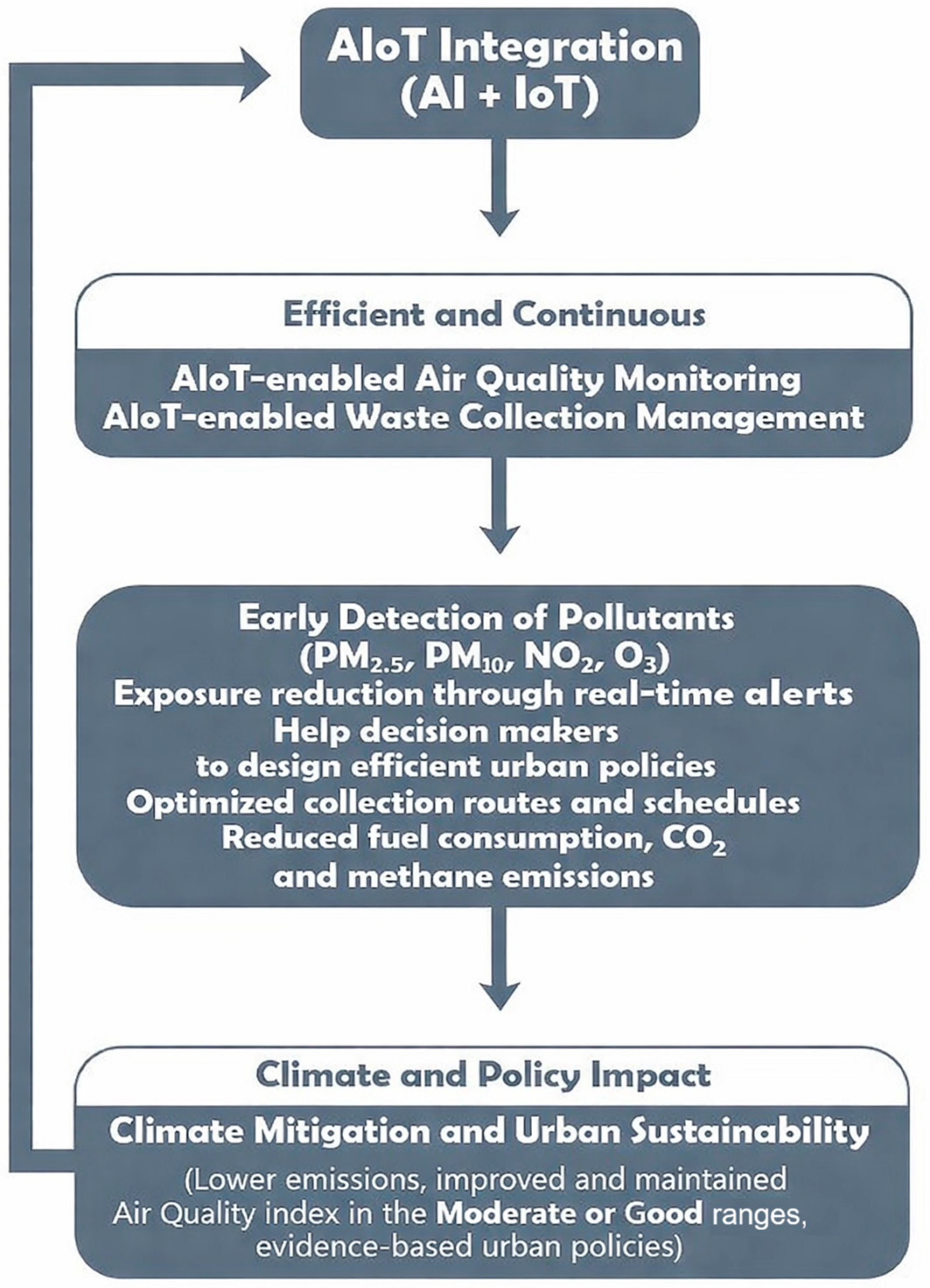
Figure 6 provides a visual synthesis of this relationship by illustrating how AIoT enables coordinated monitoring and management processes, supports data-driven urban policies, and contributes to emission reduction and climate change mitigation within smart city ecosystems. The AIoT-driven framework from
Figure 6 reflects daily smart-city operations for waste collection management and air quality monitoring. An unoptimized route for waste collection will produce high levels of pollutants, generating a high level of air quality index (AQI), which negatively influences human health [
35]. AI and machine learning models can identify trends, detect anomalies, and provide early warnings, making them invaluable for forecasting pollution levels and helping to mitigate health risks. In addition, using AI algorithms for optimizing waste collection routes will reduce the emissions and fuel [
34], and these measures directly contribute to climate change mitigation by lowering the city’s overall carbon footprint. The mechanism is continuous because it is applied on every weekday in different neighborhoods of the cities.
4.1. Metrics and AI Algorithms
The effectiveness of AIoT systems in real-world applications such as waste management and air quality monitoring depends largely on the choice of algorithms and the metrics used to evaluate them. This section provides an overview of the most relevant artificial intelligence algorithms applied in the context of smart city environments, including classification, regression, and optimization techniques. These algorithms form the core of intelligent decision-making systems, enabling accurate predictions, efficient resource management, and adaptive control mechanisms. Following the discussion on algorithms, the section introduces key evaluation metrics that are essential for assessing model performance. By selecting the right combination of models and metrics, developers and researchers can ensure that AIoT solutions are not only technically sound but also aligned with operational goals such as accuracy, robustness, and sustainability. The integration of appropriate algorithms and their rigorous evaluation is crucial for the development of reliable, transparent, and high-impact AIoT systems.
In order to answer to RQ3, “What machine learning techniques are most effective for forecasting environmental or urban metrics (e.g., pollution levels, bin fill levels) based on heterogeneous IoT data?”, it is essential to examine both the algorithms used for prediction and classification and the metrics employed to assess their performance. In this context, we analyzed some recent and relevant studies that apply machine learning and AI models to air quality data. The first [
45] applies classical classification algorithms, specifically XGBoost and k-Nearest Neighbors (KNN), to model air quality categories based on sensor data. It then employs XAI techniques LIME and SHAP to enhance interpretability by identifying the most influential features driving the model’s predictions. The classification performance of the models was assessed using accuracy, precision, recall and F1-Score.
The second [
35], focuses on regression-based models, particularly Random Forest Regressor and Linear Regression, trained on sensor-collected environmental data. This work evaluates model performance using a wide range of regression metrics including MAE, RMSE, R
2, and MSE. In addition, the models are evaluated using MAPE, RMSLE, SMAPE, MDA, and MedAE. Together, these studies provide a valuable foundation for understanding how AI algorithms and evaluation strategies can be selected and applied to AIoT systems in environmental monitoring, particularly within smart city frameworks.
The third [
46] proposes a hybrid deep learning framework combining Generative Adversarial Networks (GANs) with the Neural Turing Machine (NTM) to predict particulate pollution levels. The model leverages GANs for synthetic data generation and NTM’s external memory to enhance sequence modeling and long-term dependency handling. This approach improves the prediction of fine particulate matter (e.g., PM
2.5) and is evaluated using performance metrics such as accuracy, precision, RMSE, and MAPE, demonstrating superior forecasting accuracy compared to baseline models. The integration of generative and memory-augmented architectures offers a novel pathway for handling noisy, incomplete, or sparse environmental datasets in air quality prediction.
Together, these studies provide a robust foundation for understanding how diverse AI techniques, ranging from classical models and explainability to generative and memory-based neural architectures, can be evaluated and applied in AIoT systems for environmental monitoring within smart city frameworks.
Table 11 outlines the primary advantages and disadvantages of each method, providing a comparative perspective that aids in determining the most suited models depending on prediction goals, data characteristics, and implementation restrictions.
Table 12 presents a summary of the AI algorithms along with the evaluation metrics used to assess their performance in various predictive and classification tasks.
The optimum algorithm is chosen based on the air quality monitoring task’s specific objectives and characteristics. XGBoost stands out as a top overall performance due to its high accuracy, speed, and ability to tolerate missing values, making it perfect for structured sensor data categorization jobs. For instances involving missing or imbalanced data, Generative Adversarial Networks (GANs) provide excellent data augmentation and imputation capabilities. Meanwhile, Neural Turing Machines (NTMs) are excellent at modeling long-term temporal dependencies, making them ideal for anticipating air quality changes. Random Forests and Linear Regression, on the other hand, make excellent interpretable or baseline models. Finally, the optimum option is determined by whether prediction accuracy, data completeness, interpretability, or sequential forecasting are the primary objectives.
4.2. AIoT in Waste Management
To address RQ4, “How can AIoT architectures be designed to support real-time, context-aware decision-making in waste management and air quality monitoring systems?”, the following research demonstrates that AIoT designs provide real-time, context-aware decision-making by integrating distributed sensing, edge intelligence, cloud-based analytics, and optimization algorithms into a cohesive workflow. Contextual information such as location, time, environmental conditions, and system status are continually recorded by IoT sensors and analyzed using AI models deployed in the cloud in waste management (
Section 4.2) and air quality monitoring (
Section 4.3), respectively.
Waste management is a critical component of urban infrastructure that impacts environmental sustainability, operational cost, and resource efficiency. Traditional waste collection methods rely on static schedules and predefined service modes or subscription plans, which do not consider the dynamic nature of bin fill levels, variations that can occur from month to month or especially during holidays and vacation periods. This rigid approach often leads to inefficiencies, including unnecessary fuel consumption, excessive travel distances, and increased carbon emissions. Given the trend of agglomeration of smart cities (over 80% in developed countries [
47]), there is a requirement for data-driven solutions that optimize waste collection processes.
The use of the IoT has shown significant potential in addressing these inefficiencies. IoT-enabled waste management systems utilize smart sensors to monitor bin fill levels, real-time location tracking, and traffic conditions to optimize collection routes dynamically [
48]. Such systems can reduce operational costs, enhance environmental sustainability, and improve waste collection efficiency [
49].
One of the most effective methods for route optimization methods in waste management is the Travelling Salesman Problem (TSP) [
50]. Several studies have demonstrated that optimization techniques such as TSP and other vehicle routing problem (VRP) techniques significantly reduce waste collection distances and fuel consumption [
51]. With the application of TSP, waste collection vehicles can dynamically adjust their routes based on real-time data, minimizing redundant travel and reducing carbon emissions [
52].
Fuel consumption in regional public transport can be predicted using operational features such as bus route length, number of stops, average speed, and elevation profile, which are known to influence fuel usage and can be extracted from operational records and geographic data sources. Multivariate regression techniques, including linear regression and more advanced statistical methods, are applied to model fuel consumption per kilometer using an 80/20 training-testing split and cross-validation to ensure robustness. Feature selection methods such as LASSO are used to eliminate redundant variables and reduce multicollinearity. The resulting model achieves strong predictive performance, with an R
2 value of 0.933, indicating that 93.3% of the variance in fuel consumption is explained by the selected characteristics. The analysis identifies the number of stops and route gradient as the most influential factors, as frequent stops and steeper inclines lead to higher fuel usage. These results demonstrate the method’s potential to support route optimization, improve transport efficiency, and inform sustainable urban mobility policies [
53]. This research supports AIoT-driven smart city mobility systems by showcasing how environmental and route parameters can be leveraged for efficient and low-emission transit planning.
IoT devices, such as smart sensors implanted in waste bins and pickup vehicles, continuously collect data on bin fill levels, geographic coordinates, temperature, and usage trends. These data are communicated to centralized or edge-based platforms using microcontrollers and communication modules that use technologies like LoRaWAN or cellular networks [
54].
Once collected, AI algorithms such as classical machine learning models and advanced deep learning approaches process the data to derive meaningful insights. For example, supervised classification models, using deep learning can detect full or overflowing bins [
55], whereas regression models may forecast future fill levels using temporal patterns and external factors such as weather or public events [
56]. Optimization algorithms, particularly solutions for the Traveling Salesman Problem (TSP), are used to develop effective collection routes that minimize distance, reduce fuel usage, and so lessen CO
2 emissions.
AIoT also makes it easier to build Edge AI, which involves deploying models closer to the data source, allowing for real-time processing with lower latency and more resilience. This architecture is especially useful in urban and semi-urban settings where connectivity may be intermittent. Furthermore, intelligent route planning with AIoT improves operational logistics by dynamically modifying truck paths based on real-time bin status and traffic data. This not only increases fleet efficiency but also helps to achieve environmental goals by cutting vehicle emissions and operational expenses.
The addition of predictive maintenance based on sensor feedback improves the system’s reliability and longevity. From a strategic standpoint, AIoT in waste management provides local governments and private operators with the necessary tools for data-driven planning, policy development, and public engagement [
57]. However, the deployment of such systems is not without difficulties. Sensor calibration, system scalability, data privacy, and cybersecurity are all issues that require strong design, ethical principles, and cross-sector collaboration to tackle.
Nonetheless, current study confirms the growing importance of AIoT in this domain. For example, the authors of [
58] investigated scalable AIoT architectures for environmental management, and in [
59] the authors conducted a thorough analysis of smart trash systems that use AI to optimize logistics and reduce emissions. In [
60] the authors proved the usefulness of wireless sensor-based bin monitoring in minimizing trash overflow and enhancing urban hygiene. These advances highlight the importance of AIoT in altering trash management as part of larger smart city projects.
Reference [
61] conducted a comprehensive review of AI and IoT-driven architectures for municipal waste management in smart cities. Their work emphasizes the role of intelligent systems in automating waste collection, monitoring, and route planning, with particular focus on integrating sensor data and decision-making frameworks. The paper outlines architectural models that enhance efficiency and sustainability in urban environments through the use of real-time data and machine learning techniques.
To enhance the efficiency and transparency of waste management systems, blockchain technology can be integrated to create a decentralized, tamper-proof ledger for tracking waste from collection to disposal. By documenting each stage of the waste management process, such as collection, sorting, recycling, and disposal, on a blockchain, stakeholders can verify data accuracy, improve traceability, and foster participant confidence. Smart contracts can automate procedures such as waste collection payments and recycling compliance verification, lower operational expenses and preventing fraud. This strategy not only simplifies trash management, but it also promotes sustainability by allowing for reliable monitoring of waste streams and increasing accountability in resource recovery initiatives [
62].
Building on our research, we present an original study on applying AIoT technologies to optimize urban waste collection combined with air quality–enabled weather stations widely used in smart cities for air quality monitoring. In addition to operational data, environmental parameters required to compute air quality index (AQI) and meteorological conditions are incorporated into the waste management workflow. Route prioritization and collection timing will influence emissions, enabling waste collection strategies that are responsive to accepted local pollution levels, ensuring smart city sustainability.
The system was validated on 735 real-world waste collection points distributed across three operational routes. Results showed that algorithmic optimization, particularly using high-generation GA setups, reduced travel distance by up to 52% and cut estimated CO2 emissions by over 14 kg per route. These findings underscore the potential of combining IoT infrastructure with intelligent algorithms to build sustainable, data-driven waste management systems, while also contributing to smart city goals such as environmental monitoring, route optimization, and energy efficiency.
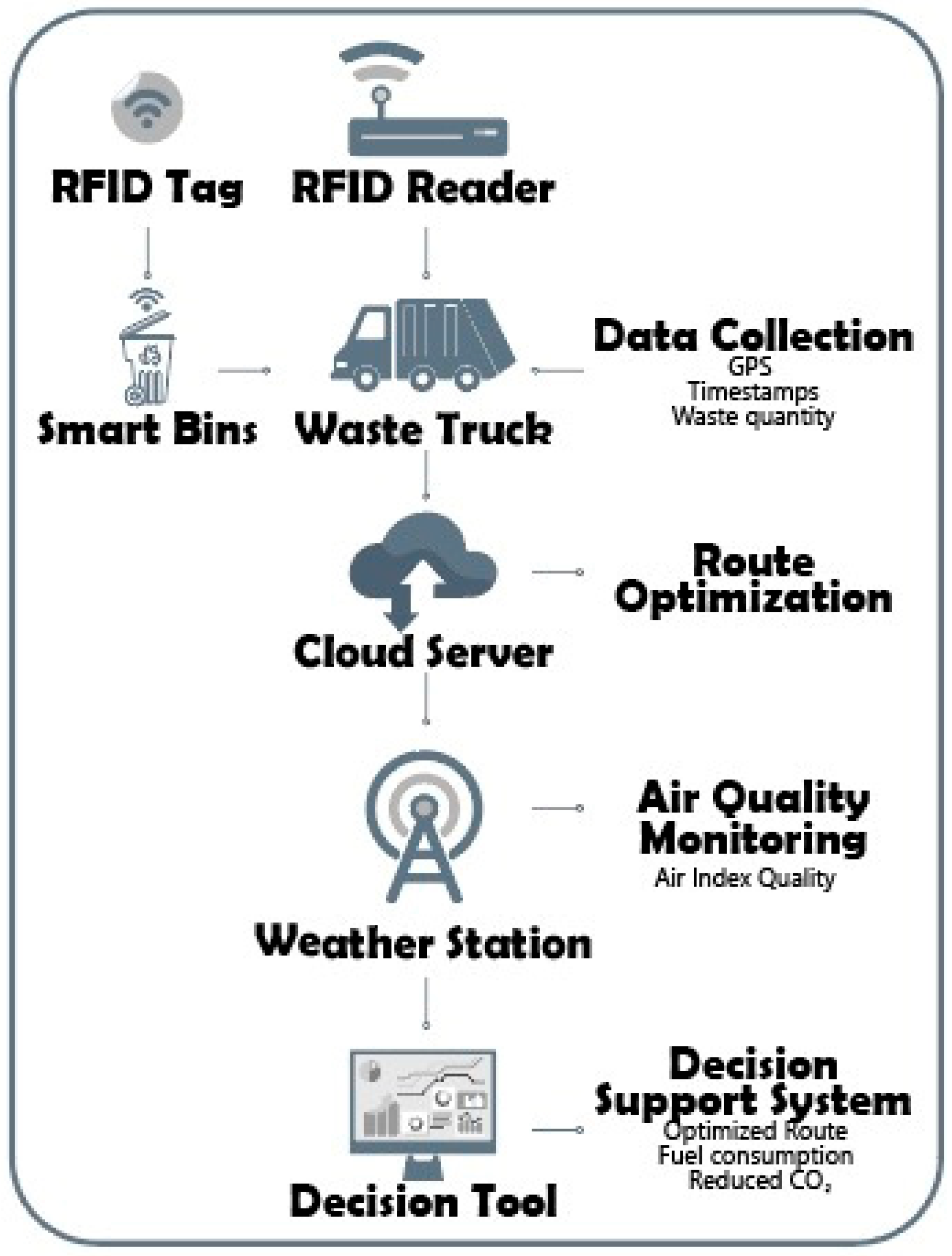
The diagram below presented in
Figure 7 describes a high-level view of the AIoT-based waste management workflow, showing how information moves from smart bins during collection to the point where it supports decision-making. The system automatically captures data from the field, sends it to a central platform, and applies optimization methods to improve collection efficiency. Based on each optimized route generated for waste collection, air quality–enabled weather stations measure air quality index (AQI) [
35]. To mitigate climate change, the AQI levels of concern should be moderate or good. The results are then displayed through a decision-support interface that helps operators plan routes and manage resources more effectively. This streamlined architecture demonstrates how AIoT can simplify operations, improve service quality, and support more sustainable waste management practices.
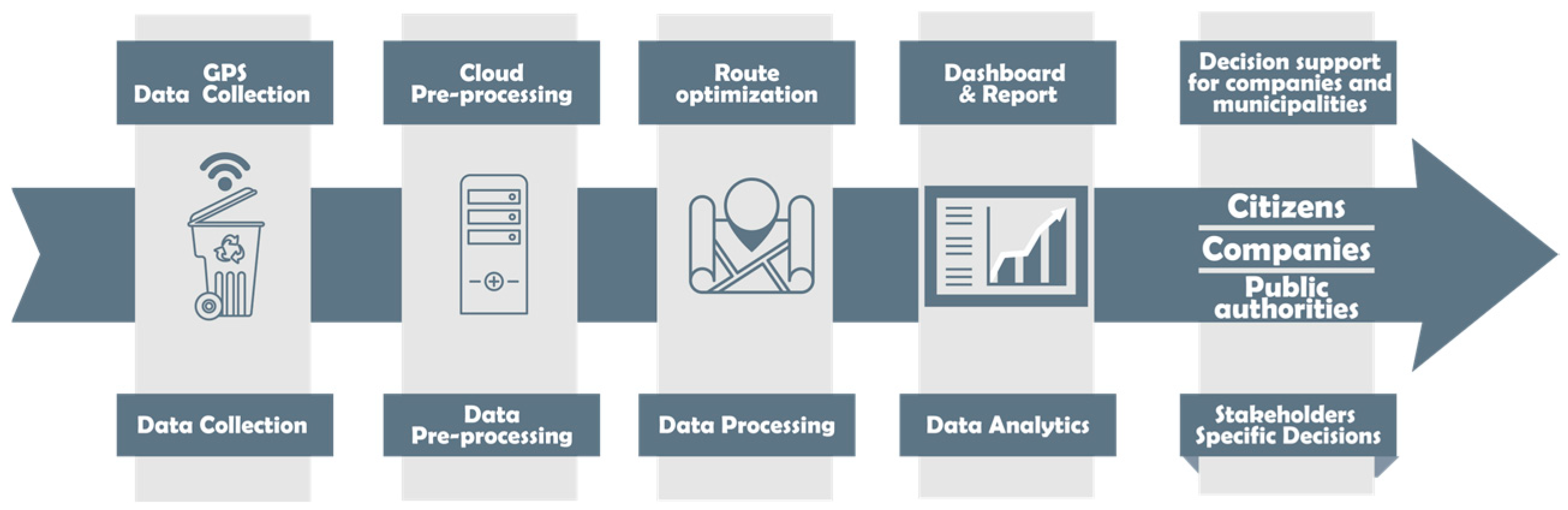
As shown in
Figure 8 below, the workflow begins when GPS data is collected from the bins as they are emptied. This data is transferred to the cloud, where it is cleaned and analyzed to extract only the most significant geographical elements. By removing the noises, the system concentrates on true collection spots and prepares the data for the next stage. Following this pre-processing stage, the cleaned dataset is passed through TSP-based optimization algorithms to determine the most effective collection route. The results provide an organized list of bins, the total distance to cover, and estimated fuel consumption and CO
2 emissions.
These findings are displayed on an analytics dashboard, providing stakeholders with a comprehensive picture of route performance, environmental indicators, and operational trends. The waste collection assistant is designed to provide businesses and municipalities with an easy-to-use interface that displays efficient routes on a map, complete with sequence numbers and efficiency markers. Environmental data, including CO2 emissions and fuel usage, are incorporated to support overall sustainability goals.
The tool can generate daily, weekly, or monthly reports to assist with planning, regulatory compliance, and performance assessment. It has been designed with scalability in mind, allowing future extensions such as real-time fill levels, traffic-aware dynamic routing, and predictive analytics for demand forecasting.
Importantly, the system serves different decision-making needs: companies can refine fleet management and costs, public authorities can evaluate service quality and environmental compliance, and citizens indirectly benefit from better services and a lower environmental footprint. By bringing together advanced optimization techniques and intuitive visual tools, the system supports both efficient daily operations and informed long-term planning.
4.3. AIoT in Air Quality Monitoring
For environmental sustainability, AIoT frameworks leverage IoT sensors to monitor air quality, noise levels, and resource consumption, while AI models predict environmental trends and recommend strategies for energy efficiency and pollution mitigation, aligning with sustainable urban development goals.
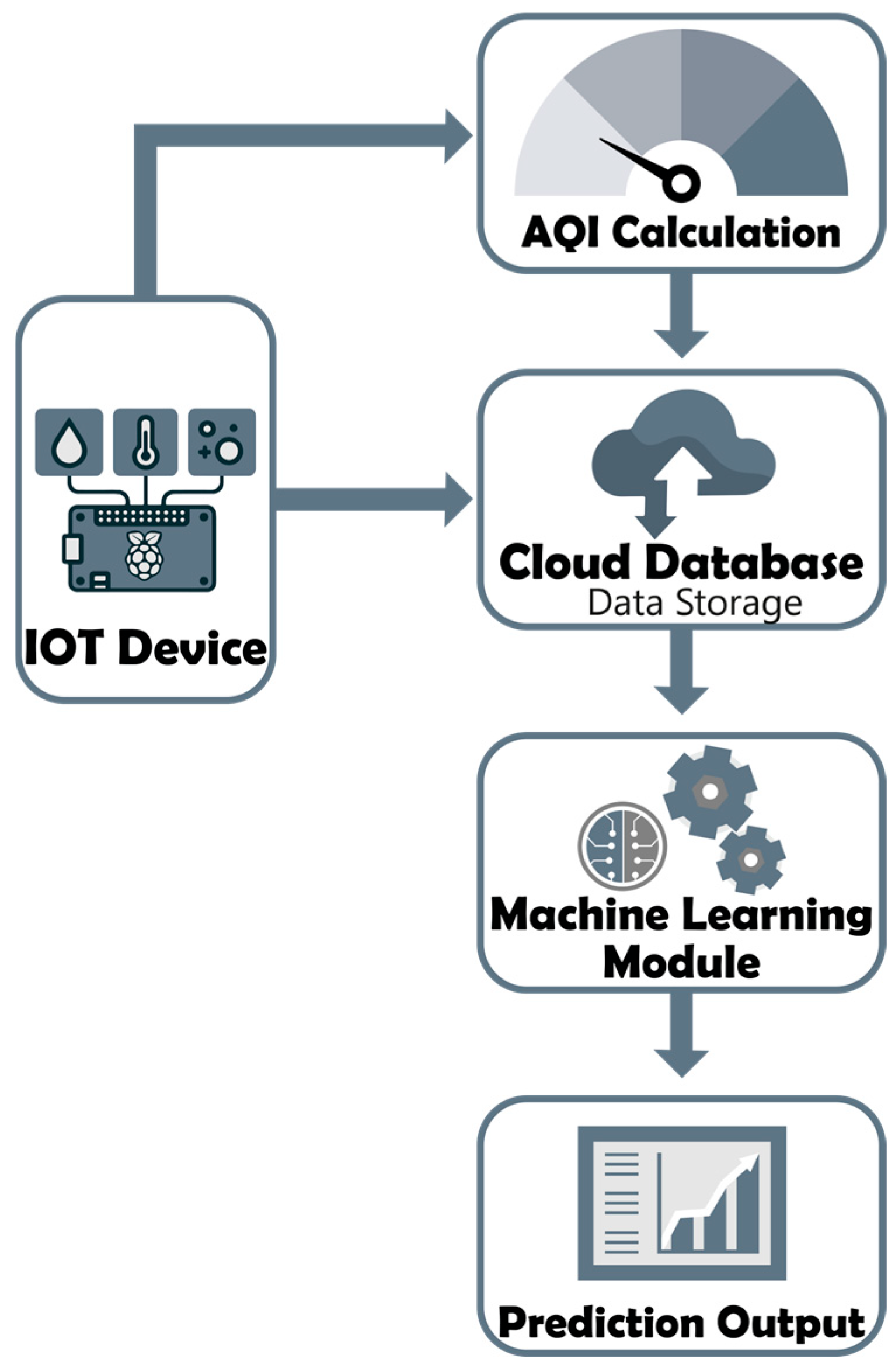
A concrete example of such an approach is demonstrated through the development of a system for monitoring and predicting air quality using IoT sensors and machine learning algorithms. The analysis is based on a dataset of 5869 records encompassing six key parameters vital for reliable air quality prediction. Environmental sensors are employed to collect real-time data on pollutants including PM2.5 and PM10, which are then analyzed using predictive models to forecast air quality levels. This enables more immediate actions, improves public health responses, and promotes data-driven environmental stewardship. The study highlights the practical application of AIoT in developing more resilient and responsive smart city infrastructures that prioritize sustainability and citizen well-being [
35].
The system architecture, which reflects the flow of data from collection to prediction, integrating the export of data from ThingSpeak as a CSV file for analysis with TensorFlow is represented in
Figure 9. This provides a streamlined process for real-time air quality monitoring and forecasting.
Implementation Challenges
Despite the promising results of AIoT-based solutions in real-world applications, several restrictions exist that require consideration. High performance metrics provided by machine learning models can occasionally obscure underlying concerns such as overfitting or data leaking, especially when validation procedures are not clearly described or rigorously followed.
Transparency in model architectures, particularly in complicated components such as generative models, is critical to ensuring repeatability, robustness, and confidence. Furthermore, when synthetic data is evaluated, quality and diversity checks should be included to avoid issues like redundancy or training instabilities. The absence of external influencing variables, such as weather, population density, or policy actions, limits the model’s generalizability and application in real-world decision-making. The imputation and backfilling approaches used to manage missing data may induce bias, particularly in time-sensitive datasets, and the potential distortion of temporal and spatial patterns was not well investigated. These constraints underscore the importance of transparent model validation, rigorous feature selection, and greater integration of domain expertise in future research [
63].
A representative example of the converging function of AI, IoT, and big data in smart cities is presented in article [
64], where the authors conducted a comprehensive literature analysis to investigate how these technologies collectively contribute to urban systems’ environmental sustainability. The study underlines the importance of combining AIoT and big data analytics to produce intelligent solutions in areas such as energy efficiency, mobility management, air quality monitoring, and trash reduction. Their integrated approach emphasizes that deploying AIoT in smart cities is about more than just technology; it is also about attaining long-term urban growth through data-driven insights and predictive modeling. The authors advocate for the implementation of comprehensive frameworks in which AIoT technologies support circular economy practices, low-carbon policies, and adaptive governance mechanisms. This confirms the premise that smart cities, powered by AIoT, can evolve into environmentally responsive ecosystems capable of dealing with the grave concerns of urbanization and climate change.
Beyond standalone monitoring, air quality data can directly support other urban services, such as waste collection, by identifying pollution-sensitive zones where emission-intensive operations should be minimized or rescheduled.
4.4. Integrating Blockchain in AIoT Solutions
In order to answer to the RQ5, “What are the main technical, ethical, and security challenges in implementing AIoT systems for autonomous decision-making in public sector infrastructure?”, the reviewed literature indicates that the implementation of AIoT systems for autonomous decision-making in public sector infrastructure involves interconnected technical, ethical, security, and emerging-computing challenges. To address these concerns, new research emphasizes the need of blockchain technology (
Section 4.4) in improving data quality, traceability, and trust across decentralized AIoT infrastructures, notably for public governance and environmental monitoring. Furthermore, the increasing reliance on cryptographic processes raises worries about long-term security in the context of quantum computing (
Section 4.5), prompting early research into quantum-resistant encryption and post-quantum security measures for AIoT systems.
Blockchain is a decentralized, distributed ledger technology that enables secure, transparent, and tamper-resistant recording of digital transactions across a network of computers. Unlike traditional centralized databases, blockchain eliminates the need for a trusted intermediary by relying on cryptographic techniques and consensus mechanisms to validate and permanently store data in linked blocks. Each block contains a timestamp and a cryptographic hash of the previous block, forming an immutable chain that makes historical data verifiable and resilient to manipulation [
65].
Originally popularized through cryptocurrencies like Bitcoin, blockchain has since expanded into various sectors, including supply chain management, healthcare, finance, and more recently, the IoT and AI. When integrated with AIoT systems, blockchain plays a pivotal role in enhancing data integrity, traceability, and security, making it a promising enabler for trustworthy and decentralized smart city applications.
Recent advancements in blockchain technology have increasingly focused on integrating AI to enhance its capabilities, resulting in more adaptive, intelligent, and secure distributed systems. In their comprehensive review, the authors explore this convergence, highlighting how AI can augment various aspects of blockchain, such as scalability, energy efficiency, data analysis, and anomaly detection. The authors emphasize that AI-enhanced blockchains are particularly promising in applications that demand high reliability and transparency—such as those found in smart cities and environmental monitoring [
66].
For example, machine learning models can be embedded within blockchain-based infrastructures to predict data anomalies, assess transaction risks, and improve consensus protocols. In the context of AIoT for waste management and air quality monitoring, this synergy can enable autonomous, decentralized decision-making. Blockchain ensures the traceability and immutability of sensor data, while AI analyzes patterns to forecast bin fill levels or detect pollution hotspots. The review underscores the potential for blockchain and AI to work in tandem to address trust, privacy, and operational efficiency, factors critical for large-scale deployment of AIoT solutions.
This integrated approach opens new avenues for sustainable and intelligent urban systems, where real-time data from IoT devices can be securely processed and acted upon using decentralized AI logic, all maintained within a blockchain infrastructure.
In [
67] the author presents a system that combines Blockchain and AI to make IoT networks more secure, efficient, and trustworthy. By using deep learning to detect abnormal patterns in sensor data and blockchain to record this information transparently, the framework ensures that environmental and operational data cannot be altered or lost. Such an approach is highly relevant for climate-smart cities, where reliable data are essential for monitoring air quality, managing energy and waste systems, and supporting transparent decision-making for sustainability and energy reduction.
In their comprehensive review, the authors investigate how blockchain can effectively enable secure, trustworthy, and decentralized data dissemination within smart city ecosystems [
68]. Focusing on key domains such as transportation, healthcare, education, energy, and building management, they explore architectural models, consensus protocols, and security enhancements tailored to the unique demands of each sector [
69].
The authors emphasize that smart city applications generate vast amounts of heterogeneous sensor data, such as real-time traffic streams, energy consumption metrics, waste bin alerts, and air quality indices, requiring efficient and tamper-resistant distribution mechanisms. Traditional, centralized data-sharing platforms often introduce single points of failure and trust bottlenecks, whereas blockchain offers a decentralized alternative ensuring data integrity and transparency.
A key contribution of this work is its classification of blockchain-based solutions based on consensus mechanisms (e.g., proof-of-work, proof-of-stake, Practical Byzantine Fault Tolerance) and the distinction between permissioned and permissionless architectures. The paper further evaluates how these frameworks address scalability, latency, privacy, and energy consumption, noting that many existing implementations lack a balanced approach across these dimensions.
Ref. [
68] propose a reference framework for a secure smart city data dissemination system, leveraging permissioned blockchain to manage sensitive data shares and smart contracts to automate trust enforcement. They conclude by identifying open research challenges, including the need for lightweight protocols, IoT-friendly consensus, and hybrid solutions (e.g., combining on-chain records with off-chain data storage) to meet performance and scalability demands in smart city environments.
4.5. Integrating Quantum Computing in AIoT Solutions
Quantum computing has emerged as a transformative computational paradigm, offering novel approaches to solving complex optimization problems that are often intractable for classical computers. Its ability to process vast solution spaces using principles like superposition and entanglement makes it particularly attractive for enhancing AIoT systems. One of the early foundational studies in this field is the work presented here [
70], where the authors explore quantum algorithms for combinatorial optimization, specifically addressing quantum minimum finding. This early contribution laid the groundwork for subsequent research into quantum-enhanced optimization methods, which are increasingly relevant today in AIoT contexts requiring efficient decision-making under complex constraints.
Quantum computing represents a transformative computational paradigm that complements the capabilities of AIoT by offering unprecedented processing power for complex problem-solving. Unlike classical computing, which relies on binary bits, quantum computing utilizes quantum bits (qubits) that exploit quantum phenomena such as superposition and entanglement, enabling the simultaneous exploration of multiple solution paths [
71]. In the context of AIoT, quantum computing holds promise for significantly accelerating machine learning tasks, optimizing real-time decision-making processes, and solving combinatorial challenges such as route optimization in smart logistics or resource allocation in energy grids.
As AIoT systems generate increasingly large and complex datasets from distributed IoT sensors, quantum-enhanced algorithms could improve pattern recognition, predictive modeling, and anomaly detection in domains like waste management, smart mobility, and environmental monitoring. Furthermore, quantum cryptography could offer enhanced security for data transmission within AIoT networks. Although still in early stages of development and integration, quantum computing is expected to play a critical role in the future scalability and performance of intelligent, data-driven systems in smart cities and industrial IoT infrastructures.
Quantum random number generation (QRNG) represents a powerful yet often overlooked application of quantum computing within AIoT systems, particularly in enhancing security and trust [
72]. Traditional pseudorandom number generators (PRNGs) rely on deterministic algorithms or physical noise sources, which are susceptible to bias or prediction, especially concerning with the rise of AI-driven and quantum-based attacks. In contrast, QRNGs harness fundamental quantum phenomena, such as photon behavior at beam splitters or quantum vacuum fluctuations, to generate truly unpredictable numbers [
73].
Reference [
74] provides a comprehensive overview of quantum random number generation (QRNG), highlighting its theoretical foundations, physical implementations, and practical relevance. It emphasizes that unlike pseudorandom number generators, which rely on deterministic algorithms and are ultimately predictable, QRNG leverages the inherent randomness of quantum mechanics, such as quantum superposition and measurement collapse to produce truly unpredictable sequences. In the context of AIoT, this article supports the integration of QRNG as a trusted entropy source for tasks like secure communication, authentication, and cryptographic key generation across IoT networks. The paper reviews experimental setups using photon beam splitters, quantum vacuum fluctuations, and phase noise in lasers, discussing both the generation rate and quality assurance of randomness. These characteristics are crucial for scalable AIoT applications, where security must be guaranteed even on resource-constrained edge devices.
In the context of sustainable smart cities, quantum technologies, particularly quantum random number generators, can complement AIoT by improving cybersecurity, optimizing resource management algorithms, and enhancing system resilience through advanced computation and randomness mechanisms. In their study, the authors propose a novel approach to solving the Pollution-Routing Problem (PRP) by integrating a Genetic Algorithm (GA) with a Quantum Random Number Generator (QRNG). The PRP, a variation of the vehicle routing problem, aims to minimize not only transportation costs but also fuel consumption and emissions, aligning with the goals of sustainable logistics. Traditional GAs often relies on pseudo-random number generators, which may limit their ability to explore the search space effectively. By contrast, QRNGs exploit the inherent unpredictability of quantum mechanics to produce truly random numbers, enhancing the diversity and unpredictability of the GA’s solution candidates.
The hybrid GA-QRNG algorithm demonstrated superior performance in finding high-quality solutions compared to conventional GAs. Specifically, it achieved better optimization results in terms of reduced total travel distance and lower fuel consumption, contributing directly to the goal of minimizing carbon emissions in logistics networks. The study also highlighted the robustness of the QRNG-enhanced GA in avoiding premature convergence, a common issue in evolutionary algorithms. These findings illustrate how quantum technologies can complement AI and IoT in the context of sustainable urban logistics, making the approach particularly relevant for smart cities that aim to integrate environmental intelligence with route optimization strategies [
75].
A significant advancement in evolutionary computation is the integration of quantum-inspired mechanisms into traditional genetic algorithms, notably by introducing two additional stages, observation and update, that mimic principles from quantum mechanics to enhance solution diversity and convergence speed. This approach was developed by the authors who proposed a novel quantum evolutionary algorithm that demonstrated promising performance in complex optimization problems by leveraging quantum probability amplitudes to guide evolutionary operations. They introduced a significant enhancement to conventional genetic algorithms by embedding quantum-inspired mechanisms, effectively creating a Quantum Evolutionary Algorithm (QEA) [
76]. Their design extends the classical evolutionary workflow by adding two distinct stages, observation and update, that draw directly from quantum-mechanical principles. In the observation stage, individuals are encoded as quantum chromosomes composed of qubits, which exist in superposition and represent probabilistic populations. Measuring these qubits “collapses” them into classical solutions, which are then evaluated for fitness. The update stage utilizes a quantum rotation gate to adjust the probability amplitude of each qubit based on fitness feedback, guiding the population toward the most promising regions of the search space. This approach achieves a natural balance between exploration (via superposition) and exploitation (via amplitude adjustment), enhancing diversity and convergence speed compared to traditional genetic strategies. While the algorithm itself runs on classical hardware, it is quantum-inspired rather than quantum-implemented, it elegantly captures the benefits of quantum representation and operator dynamics. This foundational work has since inspired a wide array of quantum-inspired metaheuristics that leverage qubit representation, rotation-based updating, and probabilistic population mechanisms to improve optimization across various domains [
77].
5. Discussion
The proposed solutions aim to demonstrate how AIoT can improve operational efficiency, sustainability and data-driven policies in urban environments. The article presents the architecture, methodologies and future implementation strategies for both application areas: waste management and air quality monitoring. The bibliometric analysis shows a distinct evolution from conceptual models of AIoT to domain-specific, applied solutions, especially in the areas of air quality monitoring and waste management. These use cases demonstrate how AIoT facilitates operational optimization, predictive capabilities, and data-driven decision-making, each of which are critical to attaining environmental sustainability and resource efficiency.
The current bibliometric analysis shows that although AIoT technologies have advanced significantly, there is still a lack of research on how to apply them to climate-related urban challenges. A promising route to improving data privacy, traceability, and scalability, all essential components for environmental monitoring systems and circular economy infrastructures (e.g., smart waste collection systems, energy recovery infrastructure, urban resource monitoring platforms), will involve the integration of AIoT with blockchain, federated learning, and edge computing. By maximizing energy use, cutting carbon emissions, and guaranteeing transparency throughout waste and resource management cycles, these technologies work together to facilitate the shift from linear to circular resource flows.
Future studies should concentrate on creating integrative AIoT models that support climate-neutral and circular urban systems by fusing life-cycle assessment (LCA) principles, blockchain-based verification, and predictive analytics in domains such as smart waste management, urban air quality monitoring, low-emission mobility, and circular resource management.
In summary, this research highlights the strong interdependence between AIoT and two complementary areas: waste management and air quality monitoring, demonstrating how the technology can be applied to optimize operations, reduce environmental impact, and facilitate smarter, faster, and more transparent decision-making in real-world applications.
6. Conclusions
This review focuses on the critical role of AIoT in enabling intelligent, adaptive, and sustainable urban ecosystems. The analysis demonstrates that AIoT has become a key technological enabler for data-driven decision-making, real-time monitoring, and operational optimization in complex urban environments.
Based on the bibliometric analysis and application-level review, the results indicate that AIoT research in smart cities is predominantly concentrated on environmental sensing, predictive analytics, and decision-support systems, with waste management and air quality monitoring emerging as the most frequently studied and operationalized domains.
The findings reveal a clear interdependence between IoT, AI, waste management, and air quality monitoring, with direct implications for smart city sustainability. These domains are not isolated; rather, they form an integrated system in which inefficient waste management and poor air quality contribute to increased emissions, public health risks, and climate-related challenges. AIoT provides the technological means to monitor, analyze, and manage these interconnected processes in a coordinated manner.
The reviewed literature shows a rapidly accelerating research trend in recent years, indicating growing scientific and practical interest in AIoT technologies. Industry, smart cities, and healthcare emerge as key application domains, reflecting the broad relevance of AIoT across societal and economic sectors. Within this broader landscape, the contribution of this review is intentionally focused on smart city applications, with particular emphasis on air quality monitoring and waste management. The analyses presented in
Section 4.2 and
Section 4.3 illustrate how AIoT architectures can support real-time sensing, predictive analytics, and context-aware decision-making in these two climate-relevant domains.
Although AIoT technologies continue to evolve, the results confirm that air quality monitoring and waste management remain essential application areas due to their direct impact on environmental sustainability, public health, and urban resilience. The sustained and growing interest in AIoT is further supported by the bibliometric evidence, as the ten most cited papers alone have accumulated a substantial number of citations (3510) and were all published within the last five years, underscoring the maturity and relevance of this research field. This is consistent with other studies that emphasize the research publication trend in IoT-enabled smart cities has shown a consistent upward trajectory in recent years [
78].
Overall, the bibliometric findings support an emerging research trend that connects AIoT with climate action, resource optimization, and environmental governance; however, more work is needed to reconcile theoretical breakthroughs and real-world deployment.
Integrating emerging technologies such as blockchain enhances AIoT’s contribution to climate-smart cities by providing data transparency, integrity, and accountability. When applied to the energy–resources–waste nexus, AIoT promotes circular economy objectives and reduces emissions by enabling better, interconnected decision systems. Future advances should seek to create interoperable, human-centric AIoT infrastructures that are consistent with the European Green Deal and the United Nations Sustainable Development Goals, establishing AIoT as a key component of the digital transition to climate-neutral and resilient urban societies.