
Article

Deep Diving into the “Post 1.5 °C Climate” Heatwave Events in Ouagadougou During Spring 2024

by
Wendkuni Ghislain Noba
1,*,
Dazangwende Emmanuel Poan
2,
Kiswendsida Hyacinth Guigma
2,
Martha Marie Vogel
2 and
Thomas Rakiswende Béré
3
1
Laboratory of Materials and Environment (LA.M.E), Department of Physics, Joseph Ki-Zerbo University, Ouagadougou 03 BP 7021, Burkina Faso
2
Red Cross Red Crescent Climate Centre, 28120 The Hague, The Netherlands
3
Burkina Faso National Meteorological Agency (ANAM), Ouagadougou 10010, Burkina Faso
*
Author to whom correspondence should be addressed.
Climate 2026, 14(1), 5; https://doi.org/10.3390/cli14010005
Submission received: 13 September 2025 / Revised: 11 December 2025 / Accepted: 19 December 2025 / Published: 25 December 2025
(This article belongs to the Section Weather, Events and Impacts)

Abstract

The West African Sahel suffered an unprecedented hot season during spring 2024 especially marked by noticeable heatwave episodes in the urban context of Burkina Faso’s capital, Ouagadougou, where significant impacts were reported. These heat events are analyzed to link hazards with impacts and improve early warning systems in the under-recognized Sahel context. Using observational data from the Burkina Faso National Meteorological Agency and the European reanalysis, ERA5, anomalies of both daily maximum (Tmax) and minimum (Tmin) temperatures were analyzed. The results show that, during the first half of 2024, monthly Tmax and Tmin anomalies were highly positive compared to the reference period 1991–2020. A total of four daytime and one nighttime heatwave events were detected. The longest daytime heatwave lasted six days with observed Tmax reaching 44.5 °C. The unique nighttime heatwave was at least twice as long as the longest daytime heatwave, persisting 13 days between late April and early May. In addition, the heat was not evenly distributed spatially as some districts were significantly hotter than the rest of the city, suggesting possible urban/local effects. These results underscore the occurrence of exceptional heat in 2024 and the need for efforts towards heatwave risk mapping and management in African cities.

1. Introduction

Climate change is one of the biggest threats faced by humanity in the 21st century [1]. Both globally and regionally, it has increased the intensity, duration., frequency, and spatial extent of high-impact weather events [2]. These changes are observed not only in countries and regions that have historically contributed the most to greenhouse gas emissions, but also in those whose contributions have been minimal. The latter are often even more affected because of their high vulnerability and limited capacity to cope with climate shocks [3]. West Africa provides a good illustration for this contrast. A country like Burkina Faso contributes to just 0.08% of global emissions, yet it has seen in recent years an increasing trend of floods, dry spells, and heatwaves [4]. Although they are among the most visible manifestations of climate change, they have remained overlooked in many countries, especially in tropical regions which are usually hot, even without climate change [5,6].
However, climate change has pushed temperatures further upward, bringing them to levels that increasingly threaten the well-being of local populations [7].
In Burkina Faso, heat risks are still insufficiently addressed in disaster risk management policies and programs, both at central and sectoral levels [8].
Neither governmental nor non-governmental disaster risk agencies have devoted adequate efforts towards heat risk management. This situation is partly due to the limited understanding of the heatwave hazard in the country. Heatwaves have also received very little attention in the scientific literature. Their characteristics and dynamics are still poorly understood, constraining the ability to design effective mitigation and preparedness measures.
During the 2024 hot season (March–June), unusually intense and impactful heatwaves affected the Sahel, including Ouagadougou, the capital city of Burkina Faso [9]. For example, between mid-March and mid-April, an average of four people arrived dead from heatstroke each day at Yalgado Hospital [10].
The 2024 heatwaves offer a unique opportunity to dissect and understand the hazard better to help close the gap in proactive risk management. The year 2024 is further relevant for study as it marked the first year where the 1.5 °C global warming target agreed in Paris was exceeded [11,12]. It therefore provides an early glimpse into what a post-1.5 °C world could look like. The main objective of this study is to conduct an in-depth observational analysis of the 2024 heatwaves and shed light on their climatological characteristics and to provide insight into their climatological characteristics. To the best of the authors’ knowledge, no previous publication has provided such a detailed assessment of these events. The rest of the manuscript is organized as follows. Section 2 describes the data and methods used in the study. Section 3 presents the results, and Section 4 discusses them in relation to the existing literature. Section 5 concludes the paper and outlines directions for future research.

2. Materials and Methods

2.1. Study Area

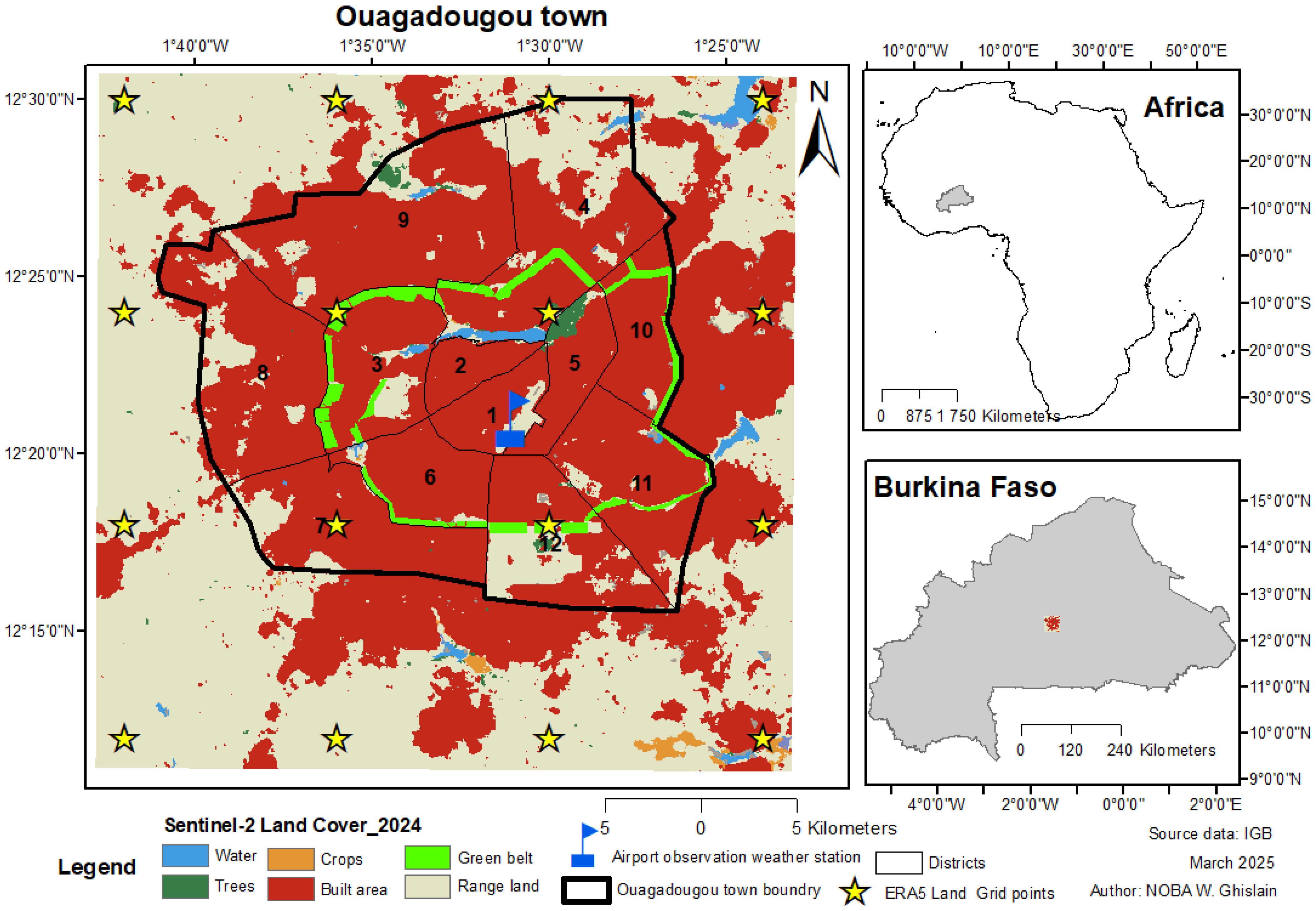
The study area is Burkina Faso with a focus on the capital city, Ouagadougou (Figure 1). The Sahelian climate type of Burkina Faso is characterized by a dry season lasting from November to May (with a cool and dry period from November to February, and a hot period from March to May) and a monsoon season from June to October. The average annual temperature is around 32 °C, with monthly lows of 17 °C in December and January and peaks reaching 40 °C and more in March and April [13]. Ouagadougou city, which is our focus area, is located at the center of the country. It totaled 3.4 million inhabitants in 2024 [14]. It is divided into 12 districts and covers an area of 518 square kilometers [15]. The town is occupied at 80 percent by buildings following Sentinel-2 Land Cover 2024. The climate in Ouagadougou is monitored by many weather stations, with the ones located at the airport and at the headquarters of the National Meteorological Agency (ANAM) being the most closely monitored. In this study, we have chosen to work with time series data of the airport weather station which has the best quality of data and is more representative for the town. This can be a limit but due to the lack of observational stations in the town providing high-quality records, it appears to be a good option.

2.2. Data

Two main datasets were used in this study. (i) Observed weather data of airport weather station provided by the ANAM. The parameters used for this assessment include daily minimum (Tmin) and maximum (Tmax) temperatures covering the 1991–2020 historical period (used as a reference) and the first half of 2024. (ii) The second observation time series data are the ERA5-Land which is a high-resolution land-only replay of the fifth version of the European reanalysis ERA5. ERA5 data are well suited to overcoming the problem of data sparsity in the Sahel region [16]. Further studies indicate that ERA5 provides the most accurate representation of several near-surface meteorological variables including temperature in West Africa [17]. ERA5-Land has a spatial resolution of 9 km and is derived from downscaled ERA5 meteorological data with elevation-corrected near-surface conditions, making it well suited for local-scale studies [18].
The ERA5-Land data used were available for a longer time period, but only the period overlapping with ANAM data was considered in this study for consistency purposes. Daily maximum and minimum temperature observed data at the grid points ERA5-Land (Figure 1) have been considered for 2024.

2.3. Assessment Methods

Temperature Anomalies
Monthly temperature anomaly refers to the deviation of a specific month’s temperature from the average monthly value calculated using a long-term dataset. It allows comparison across various time periods and locations [19].
To compute monthly temperature anomalies, monthly means from the historical period of 1991–2020 (as defined by WMO) were subtracted from monthly average temperature values. The first semester of the year was considered in order to focus on the hot season. Even though 2024 is not part of the historical period, anomalies of Jan–Jun 2024 were also computed, allowing us to evaluate the deviation of the 2024 heat from the climatological normal.
Spread of temperature distribution in 2024
The spread of the temperature distribution is assessing the variability of temperature within a month or a year. The spread here is assessed using the minimum, mean, maximum, first quartile, and third quartiles of the distribution of daily temperature over the months of January to June. Boxplots are used for visualization purposes.
The heatwave threshold determination
There is no commonly accepted definition for a heatwave [20]. This study uses the definition of the Burkina Faso Red Cross Heatwave Early Action Protocol for the city of Ouagadougou [21]. This definition itself is relatively similar to those suggested by [22,23,24]. Heatwaves correspond to spells where three or more consecutive daily Tmax or Tmin values exceed the 90th percentile of their April distribution (the hottest month of the year for both Tmax and Tmin) within the historical period (1991–2020). In practice, the 90th percentile of April of Tmax and Tmin have been determined here using ANAM data over the 1991–2020 period recorded at Ouagadougou airport synoptic weather station. Only the observational data from this station were used to define the heat thresholds, instead of data from other weather stations of the town (Figure 1). This station has high-quality historical data covering the period 1991–2024 and is representative of the majority of the weather conditions in the city of Ouagadougou [25].
2024 heatwaves characteristics
The characteristics investigated in this study include the duration, intensity, and severity.
The duration refers to the length of an event, measured by the number of days it lasts [26]. The intensity of a heatwave event is defined as the highest temperature value of the event [27]. The severity is related to the combination of intensity and duration of the heatwave. In this study, it has been computed by adapting the method proposed by [28] and described in Equation (1).
The spatial representation of the heatwaves in the Ouagadougou boundary has been made by the kriging method through the ERA5-Land reanalysis data download on [29]. The kriging method is an interpolation technique based on the theory of regionalized variables. It models the spatial variability of the property through the variogram and aims to minimize prediction errors, which are themselves estimated [30].
S e v e r i t y = N ( T a s p 90 ) p 99 p 90
Tas: Daily temperature (Tmax or Tmin);
p90: 90th percentile value;
p99: 99th percentile value;
N: Length of the corresponding heatwave.

3. Results

3.1. Temperature Anomalies

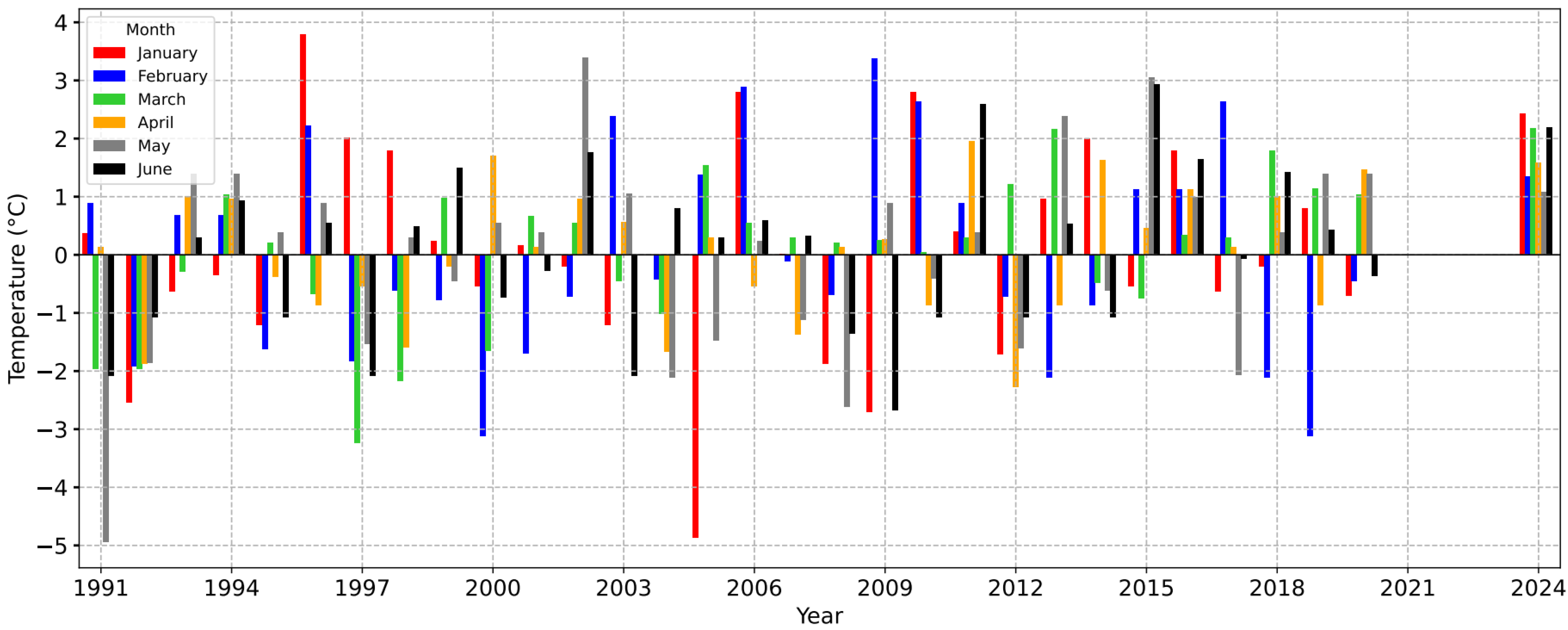
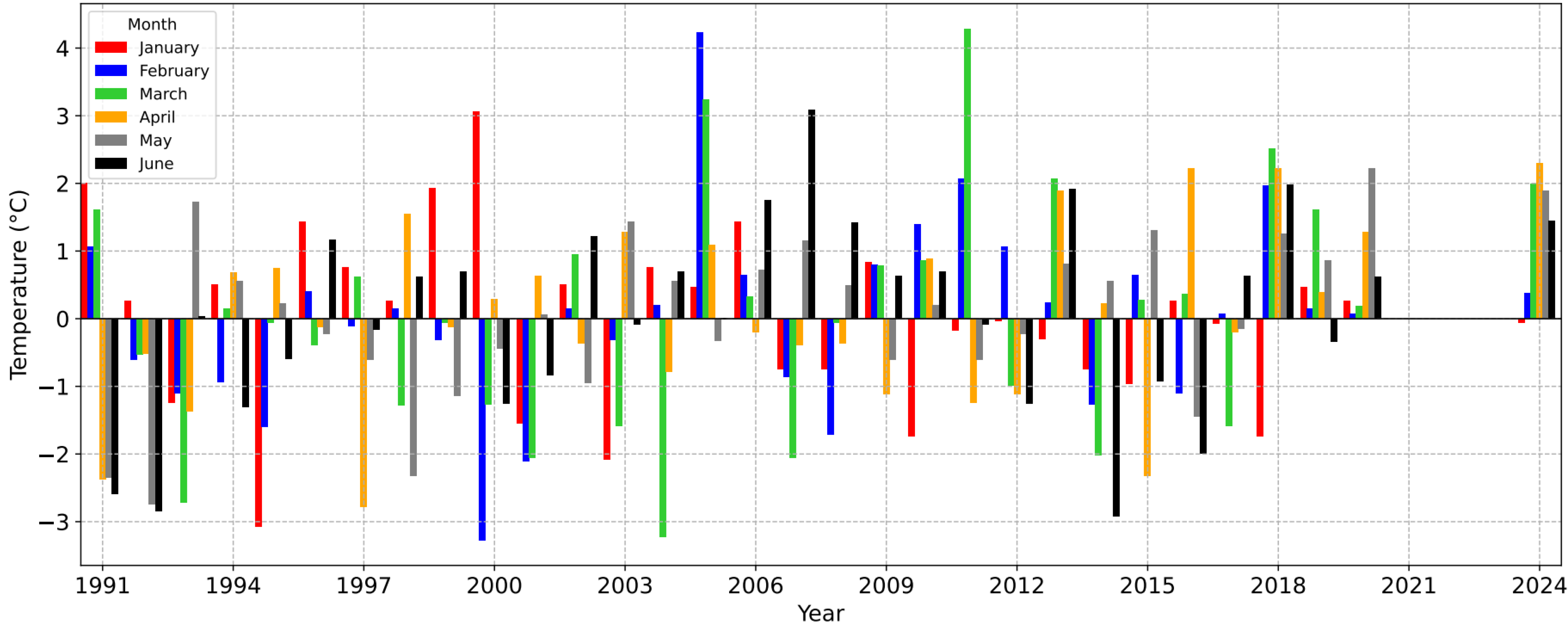
The 2024 maximum and minimum temperature anomalies are presented in Figure 2 and Figure 3.Except for a few months, recent years (the 2010s) were consistently warmer than the climatological average, in line with ongoing global warming (Figure 2). More specifically, the first six months of 2024 were hotter than those recorded in the historical baseline from 1991 to 2020. This suggests that, on average, the days were warmer compared to historical years. In view of the different values of Tmax anomalies, the months of January, March, and June are +2 °C hotter than the historical mean and those of February and April are +1 °C above the historical average. Only the month of May falls below 1 °C. On the other hand, minimum temperature anomalies of June 2024 are +2 °C higher than the historical mean of the month June. These temperatures are below 1 °C for February, March, May, and June (Figure 3).
The months of January, however, have negative anomalies, indicating cooler nights than the reference period.

3.2. Monthly Temperature Spread Analysis

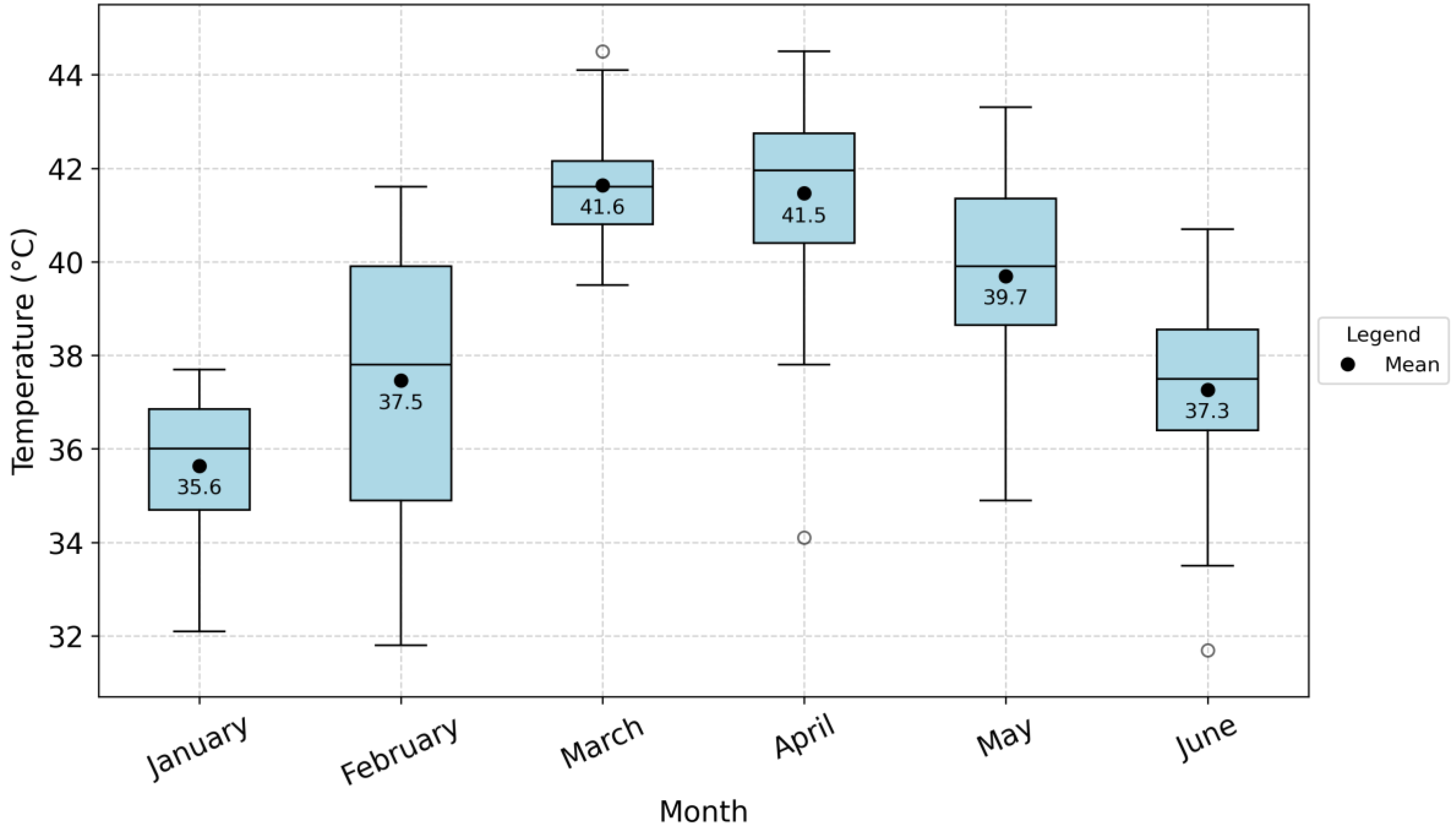
An analysis of the 2024 Tmax distribution (Figure 4) shows that the months of January and June have the lowest mean value of Tmax, respectively, of 35.6 °C and 37.0 °C. They are followed by February and May which present, respectively, a mean of 37.7 °C and 37.0 °C. May, however, shows a higher variability because during that pre-onset period, the monsoon flow is trending up northward [31] and the first rainy events are taking place. The highest Tmax values during the first semester of 2024 are registered during the months of March and April. The mean values for these months were, respectively, 41.6 °C and 41.5 °C, showing how hot these months have been. March specifically displays very hot temperatures with the smallest spread meaning that most days were equivalently hot during that whole month. Focusing on the value between the first and third quartiles of these hottest months, the month of April can be considered as having the single hottest days because its 75th percentile value reaches 42.5 °C, compared to 42 °C in March.
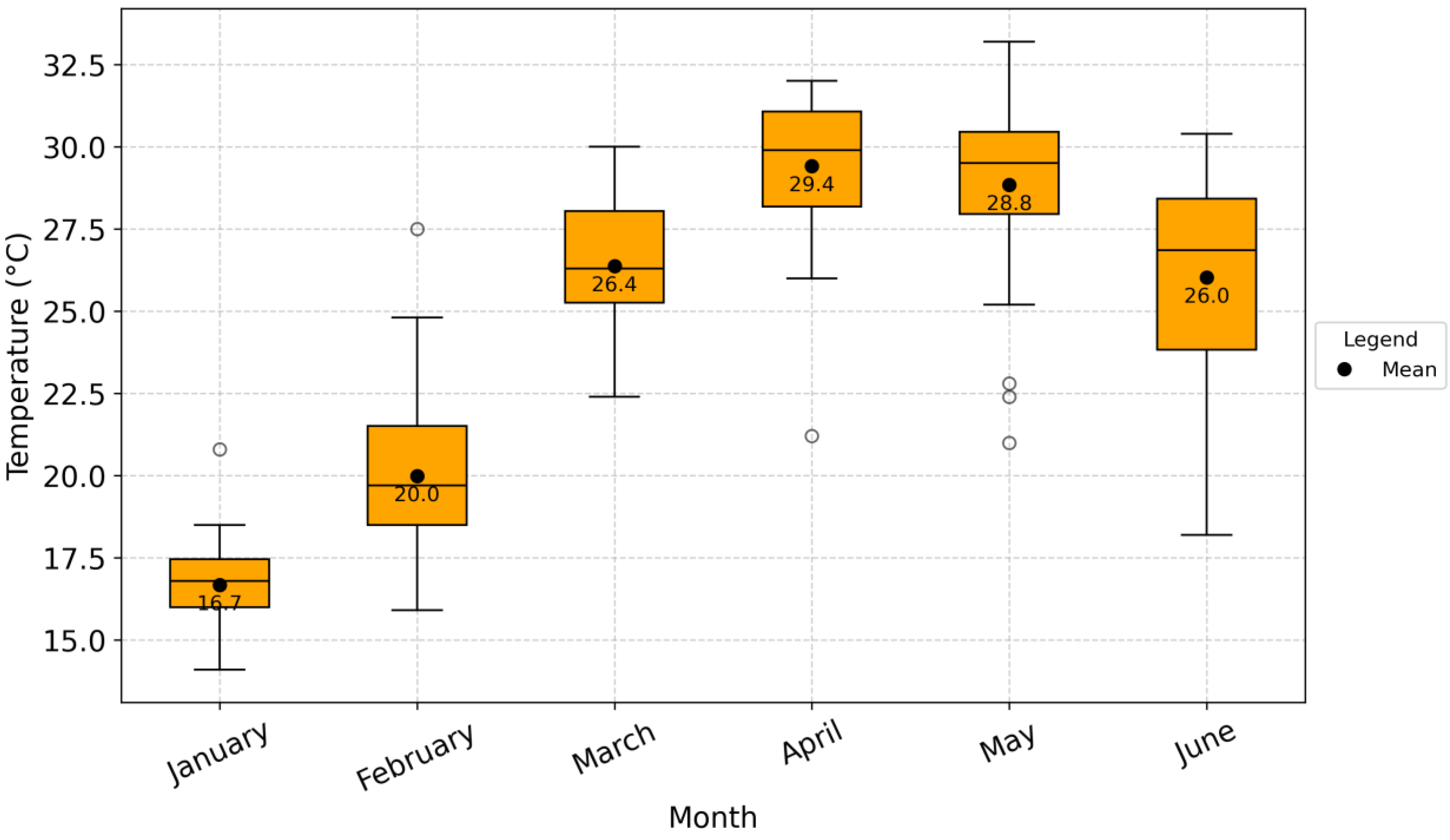
The 2024 monthly Tmin distribution presented in Figure 5 shows that the average monthly minimum temperatures from January to June are within 16.7 °C to 29.4 °C. These averages are increasing from January to April before starting to decrease in May. The months of April and May are those which present the highest average monthly Tmin. The means of the minimum temperatures in April and May are, respectively, 29.4 °C and 28.8 °C.

3.3. Daily Temperature Threshold for Heatwave Identification

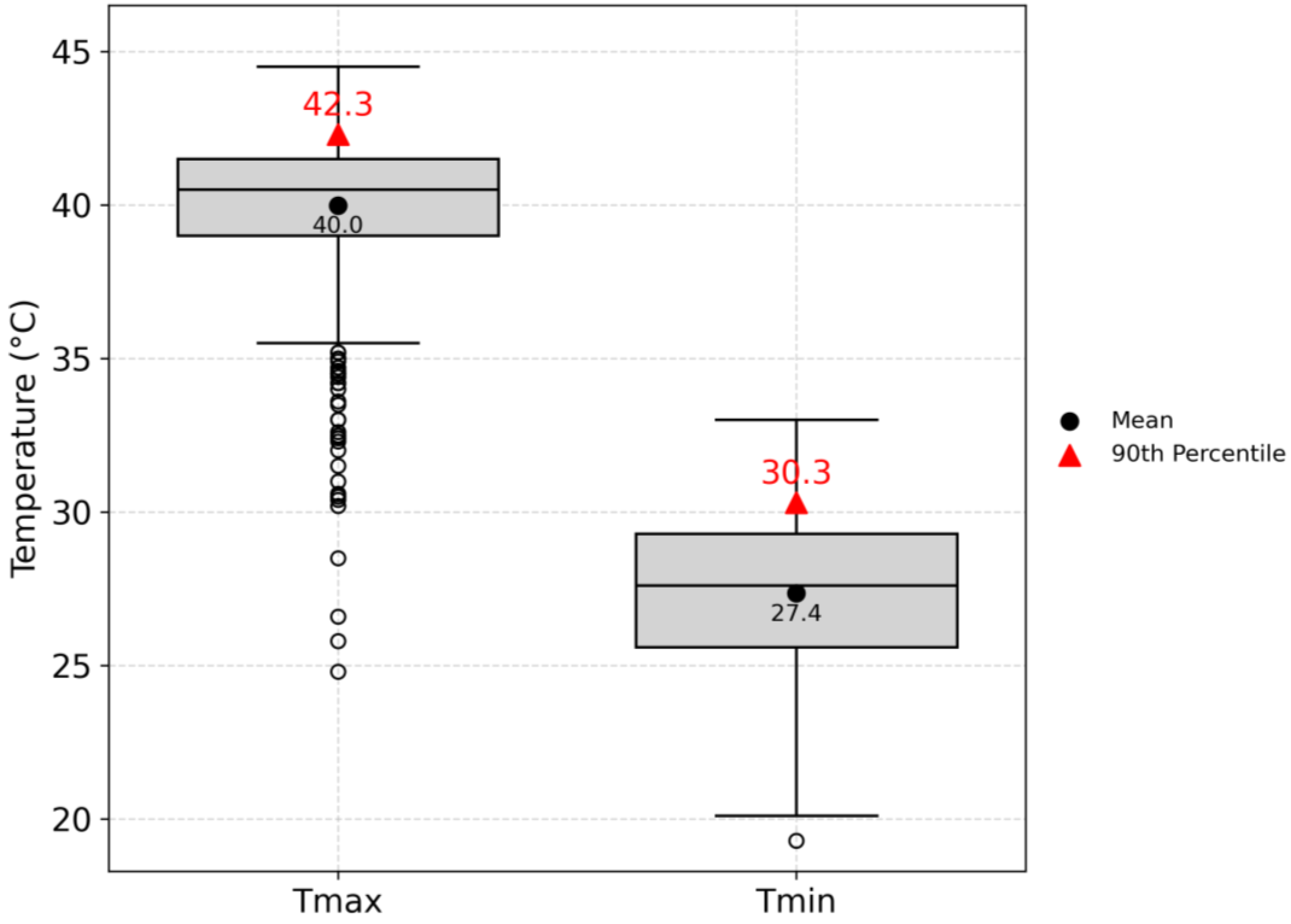
Figure 6 represents in a boxplot form the historical (1991–2020) temperature distribution of the daily maximum and minimum temperature during the hottest month of the year in Ouagadougou (April). This representation also highlights the mean value and 90th percentile value of Tmax and Tmin.
The Tmax (Tmin) distribution in April presents an average of 40 °C (27.4 °C) while the 90th percentile reaches 42.3 °C (30.3 °C).

3.4. Heatwaves Identification

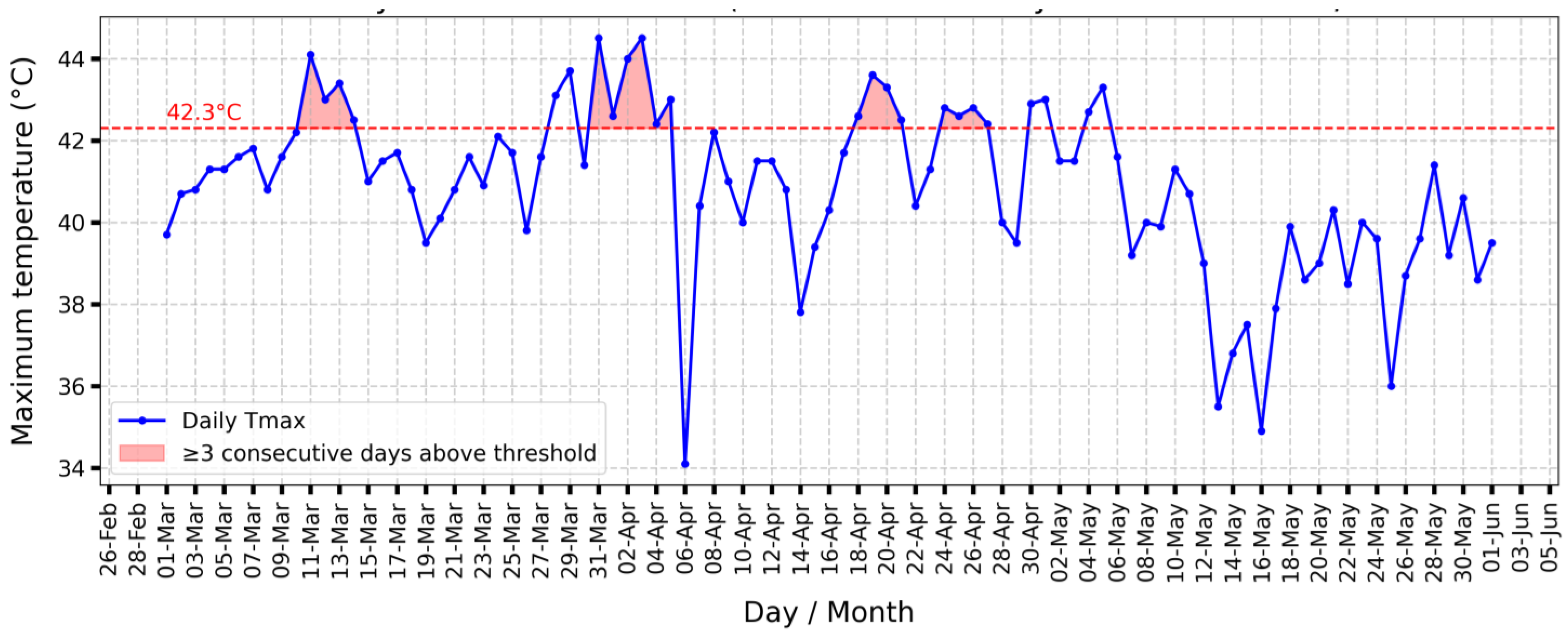
Using the heatwave definition of the Burkina Faso Red Cross (Section 2.3) which highlighted the values of 42.3 °C and 30.3 °C as the thresholds, respectively, for daytime and nighttime, four (04) daytime (i.e., Tmax-based) heatwaves were detected during the first half of 2024 (Figure 7): 11 to 14 March (DHW1), 31 March–5 April (DHW2), 18–21 April (DHW3), and 24–27 April (DHW4).
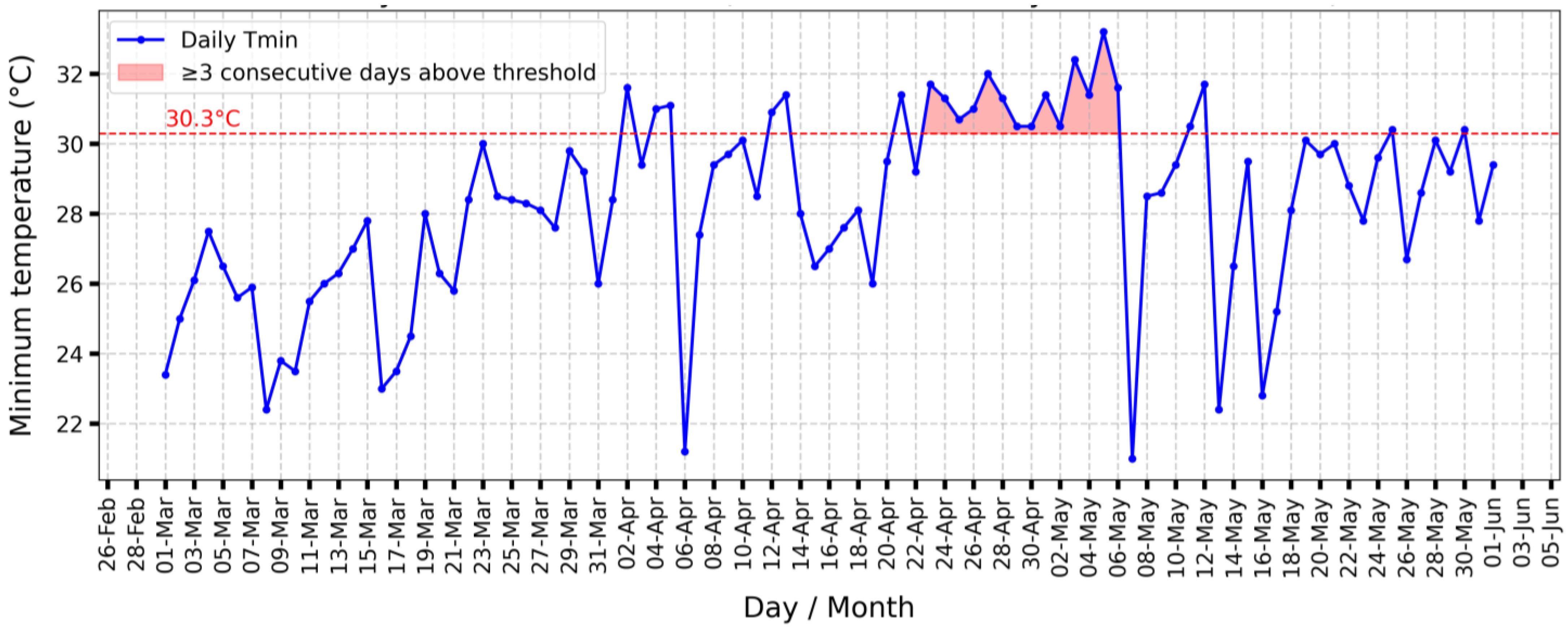
Conversely, one single nighttime (Tmin-based) heatwave (NHW) was detected in the same period of 2024 (Figure 8). It began on 23 April and ended on 5 May 2024.

3.5. Heatwaves Characteristics

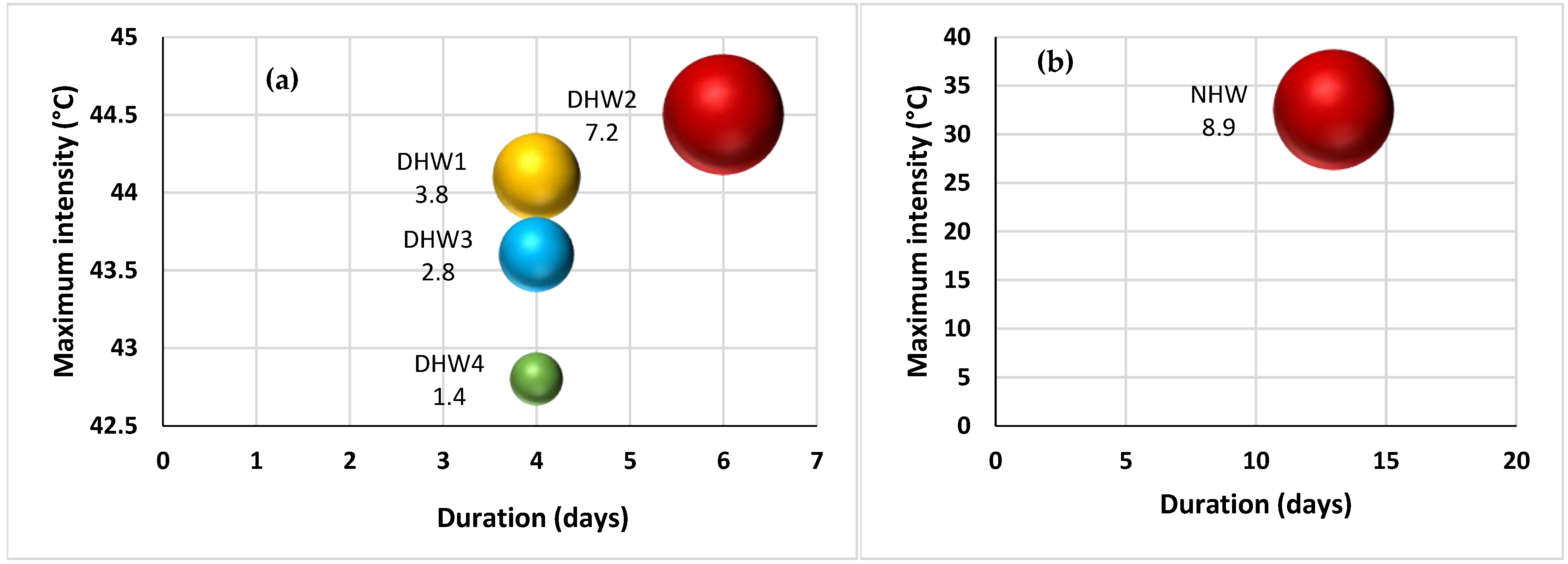
The maximum intensity, duration, and severity of the identified heatwaves are highlighted in this section. Figure 9a shows that DHW1, DHW3, and DHW4 lasted four (04) days each, while DHW2 lasted 6 days. In terms of maximum intensity, the four (04) heatwaves recorded values of 44.1 °C, 44.5 °C, 43.60 °C, and 42.8 °C, respectively, making DHW2 the most intense. In terms of severity, DHW2 was again the most severe, with a value of 7.2, while the other daytime heatwave severities varied between 1.4 and 3.8. DHW2 was therefore the longest, the most intense, and the most severe daytime heatwave observed in 2024 in Ouagadougou. It should be noted that it was the one investigated by the World Weather Attribution study [32].
With regard to the characteristics of the unique nighttime heatwave recorded in this study (Figure 9b), it lasted 13 days with a maximum intensity of 32.5 °C and a severity of 8.9.

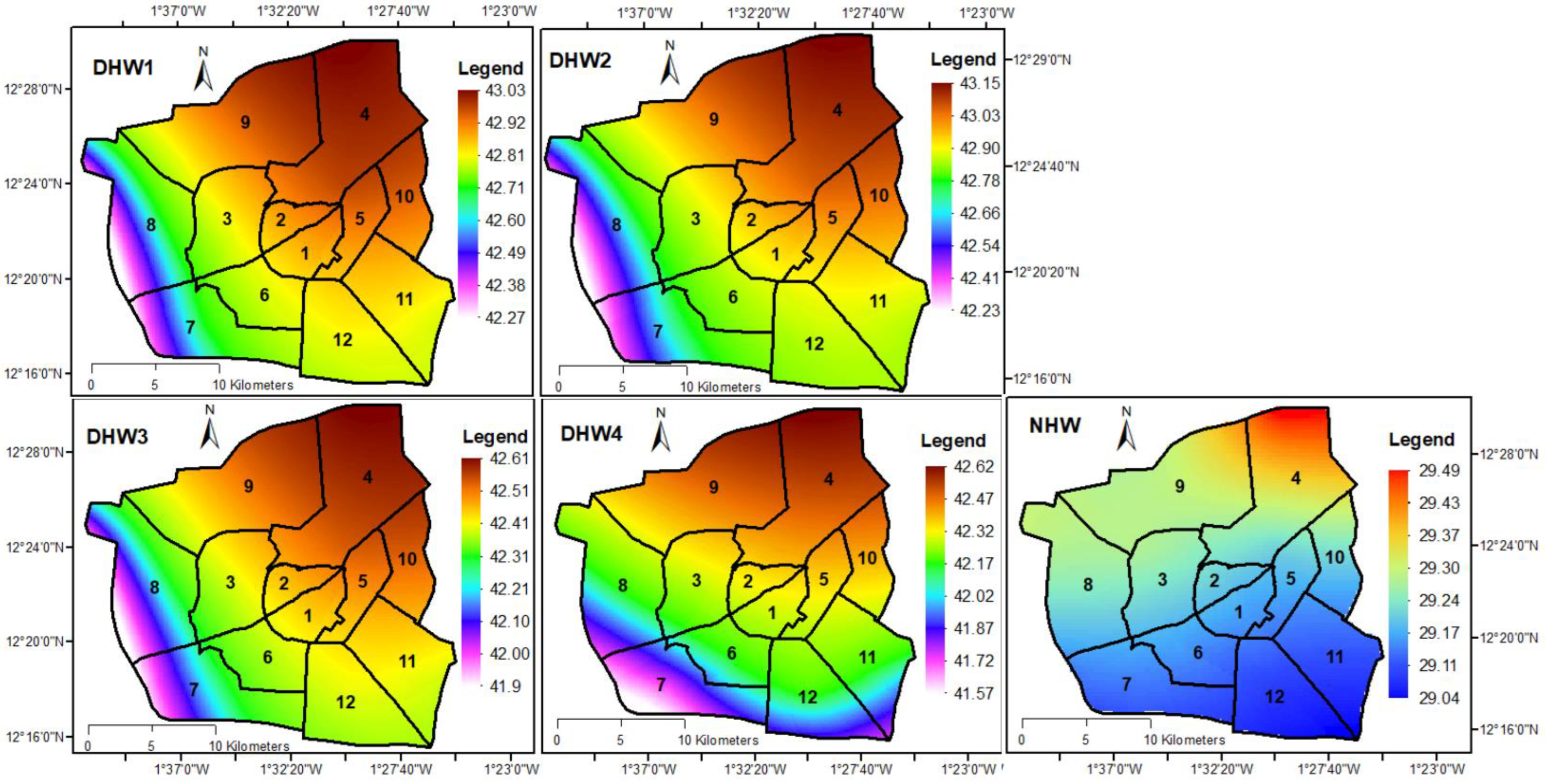
3.6. Spatial Characteristics of Heatwaves

The spatial representation of heatwaves is shown in Figure 10. It shows that during the heatwaves, the mean intensity of temperature recorded spatially for DHW1 is within 42.27 °C to 43.03 °C across the city. For DHW2, it is 42.23 °C to 43.15 °C, the DHW3 shows 41.9 °C to 42.61 °C, the DHW4 is within 41.57 °C to 42.62 °C, and the NHW 29.04 °C to 29.49 °C. The spatial representation of DHW and NHW shows that the highest temperatures during these periods are recorded in the north-eastern part of Ouagadougou city gathering mainly in districts 4 and 9. The lowest mean temperatures of the heatwaves are recorded in the south-west part of the town mainly in districts 7 and 8. The daily heatwave highest mean temperature is recorded during DHW2 with a value of 43.15 °C and the lowest during DHW4 with a value of 41.57 °C. For the NHW, the highest mean temperature is found in the northern part mainly in district 4 with a value of 29.49 °C. The lowest mean temperature of NHW is recorded mainly in districts 11 and 12.

4. Discussions

Anomalies were used to analyze the extreme heat season of spring 2024 in Ouagadougou. The positive anomalies noticed in this study are warnings on the fact that the temperature of the Ouagadougou area has increased compared to the past mean temperature. This situation confirms the remark made by [33] on the fact that the global annual temperature since 2023 has warmed by 1 °C compared to the historical mean of 1991–2020 in many regions of the world.
In the Sahelian part of Africa, the months of March, April, and May are known as the hottest months as noticed in this study. They are also known as a period of the probable occurrence of heatwaves in the Sahel region [34,35]. The heatwaves identified in this study are in line with the observations made by [32]. In fact, refs. [34,35] underlined, following their investigations, that between late March and early April 2024, a region spanning the Sahel and West Africa endured heatwaves, with maximum temperatures exceeding 45 °C and minimum temperatures reaching 32 °C. They reported that the heatwaves occurred during the Ramadan period of 2024 which was a challenge for certain social groups in view of their length and severity. The hospitals of Burkina Faso and Mali have reported an increase in death number during the period. The relatively long nighttime heatwave registered in this study is also a warning of another aspect of the heatwave threat in the Sahel. Vulnerable sociodemographic groups like the elderly, pregnant and lactating women, people with pre-existing conditions, and even those not traditionally considered vulnerable are disproportionately (though often silently) affected by heatwaves occurring at night. In fact, ref. [9] highlighted that the March-May period in Burkina Faso is characterized by power shortages, making it difficult to sleep at night even for those with access to fans or air conditioners, thereby reducing their coping capacity. The fact that the nighttime heatwave was not in co-occurrence with the daytime ones is in line with [36] who reported low day–night heatwave concomitance in the Sahel. It is however important to mention that during the daytime heatwave events, the nights were also extremely hot even though the 90th percentile over the three consecutive day threshold was not met. Ongoing work is showing that those hot nights were in co-occurrence with the high number of deaths of patients who initially suffered from high blood pressure disease.
The question of having a universal definition of a heatwave is posed here. While the current study recognized the negative role of hot nights during daytime heatwaves, the strict definition based on the threshold did not find concomitance between day- and nighttime heatwaves. On the other hand, this appears to be at odds with the recent WMO definition of heatwaves [37], which stipulates anomalous heat accumulation across both daytime and nighttime periods. This discrepancy highlights the necessity to find a rather “soft” or “agile” definition of heatwave events.
The number of the 2024 heatwaves has been above the annual average. In fact, ref. [36] using a similar definition to the WMO highlighted that most regions in the Sahel typically experience an average of one or two heatwaves per year. They have also shown that the Sahel region experiences more frequent and longer heat events. For [38], the increase in global warming will drive the increase in significant heatwaves in Africa. The continent of Africa is currently experiencing an accelerated rise in average temperature compared to the remaining regions of the world. This increase, which is 0.3 °C per decade, observed between 1991 and 2023, is one of the most pronounced [39]. This fact draws attention to the probability for the Sahel region to face heatwaves that are more severe in the future. The spatial distribution of the maximum and minimum intensities of heatwaves over the Sahel region is variable. Ref. [36] has concluded that in the Sahel region there is a considerable variability of heatwaves with the highest intensity noticed in the eastern part of Sahel.
This conclusion is in part in line with our study which shows that the highest intensity is located mostly in the north-eastern part of Ouagadougou town. The lowest intensities observed in the south-eastern part of Ouagadougou may be partly explained by the presence of rangelands, waterbodies, and section of the green belt, which likely contribute to moderate local microclimates. Factors such as rapid urbanization and the reduction of green spaces exacerbate heatwave impacts and can drive the development of urban heat islands and their associated effects [32]. The Sentinel-2 Landcover 2024 presented in Figure 1 shows an urbanization covering more than 80% of Ouagadougou town space, confirming the possibility of heat island presence. The urban heat can result in higher energy demand for cooling, an increase in heat-related illnesses, and the deterioration of air quality [39].
This situation can be a source of vulnerability, highlighting the need for early warning systems and sustainable urban planning.

5. Conclusions

Heatwaves are an increasing concern in most regions of the world and more efforts are being put into documenting them, especially in cases where impacts are particularly devastating. Documenting them is a starting point to understand their physics and characteristics and further improve their forecast and community preparedness to counter their impacts.
The study shows that the 2024 heat season in Ouagadougou has been extremely hot with March, April, and May virtually +2 °C hotter than their respective climatological Tmax means. More generally, it appears that the average maximum temperature of the first semester has increased by at least 1 °C compared to the historical mean and this is consistent with the four (04) daytime heatwaves and one nighttime heatwave.
Up to four (04) daytime heatwaves of at least (04) days duration each and a maximum intensity comprised between 42.8 °C and 44.5 °C have been identified between March and May 2024. The daily heatwave (third of the year) has been the most severe in terms of intensity, duration, and also impacts. The nighttime has been the longest, lasting up to 13 days. The spatial distribution of the intensity of these heatwaves shows that the high intensity of heatwaves is spatially located at the north and north-east part of Ouagadougou town.
This study is setting a baseline for how extreme heat events look in the Sahel in a “post +1.5 °C climate”. If meteorological forecasts are carefully combined with the current findings, they could guide the implementation of anticipatory actions to contribute to the heatwave risk management in African cities.

Author Contributions

Conceptualization, W.G.N., D.E.P., and K.H.G.; Methodology, W.G.N., D.E.P., K.H.G., and M.M.V.; Supervision, D.E.P., K.H.G., and T.R.B.; Writing—original draft, W.G.N.; Writing—review and editing, W.G.N., D.E.P., K.H.G., M.M.V., and T.R.B. All authors have read and agreed to the published version of the manuscript.

Funding

The authors have not disclosed any funding.

Data Availability Statement

The observation data analyzed in this study can be obtained from the national weather agency of Burkina Faso (ANAM). The ERA5-Land data used for spatial analysis are available at https://cds.climate.copernicus.eu/datasets/reanalysis-era5-land?tab=download (accessed on 1 November 2024).

Acknowledgments

We sincerely thank the Red Cross Red Crescent Climate Centre and the National Weather Service of Burkina Faso for their support in this research.

Conflicts of Interest

The authors declare no conflicts of interest.

References

  1. Feulner, G. Global Challenges: Climate Change. Glob. Chall. 2017, 1, 5–6. [Google Scholar] [CrossRef] [PubMed]
  2. Perkins-Kirkpatrick, S.E.; Lewis, S.C. Increasing trends in regional heatwaves. Nat. Commun. 2020, 11, 3357. [Google Scholar] [CrossRef] [PubMed]
  3. Fankhauser, S.; McDermott, T.K. Understanding the adaptation deficit: Why are poor countries more vulnerable to climate events than rich countries? Glob. Environ. Change 2014, 27, 9–18. [Google Scholar] [CrossRef]
  4. London School of Economics (LSE). Burkina Faso—Climate Change Laws of the World. Available online: https://www.climate-laws.org/geographies/burkina-faso (accessed on 28 November 2025).
  5. Harrington, L.J.; Otto, F.E.L. Reconciling theory with the reality of African heatwaves. Nat. Clim. Change 2020, 10, 796–798. [Google Scholar] [CrossRef]
  6. WHO. Heatwaves. Available online: https://www.who.int/health-topics/heatwaves#tab=tab_1 (accessed on 2 December 2025).
  7. Xu, C.; Kohler, T.A.; Lenton, T.M.; Svenning, J.-C.; Scheffer, M. Future of the human climate niche. Proc. Natl. Acad. Sci. USA 2020, 117, 11350–11355. [Google Scholar] [CrossRef]
  8. Somdakouma, R.W.D.; Sankara, B.; Sawadogo, I.; Poan, E.; Heinrich, D.; Guigma, K. Building a heat wave anticipatory action plan for the Sahelian city of Ouagadougou. In Proceedings of the EGU General Assembly 2024, Vienna, Austria, 14–19 April 2024. [Google Scholar] [CrossRef]
  9. Barnes, C.; Otto, F.; Clarke, B.; Pinto, I.; Guigma, K.; Savvadogo, I.S.; Dara, B.; Poan, D.E.; Gansané, A.; Sankara, T.B.; et al. Extreme Sahel Heatwave that Hit Highly Vulnerable Population at the End of Ramadan would not have Occurred Without Climate Change. 2024. Available online: https://spiral.imperial.ac.uk/server/api/core/bitstreams/d70623e9-db24-406d-b0bc-0015376494d9/content (accessed on 2 December 2025).
  10. LEFASO.NET. Burkina: Quatre Personnes Arrivent Décédées en Moyenne par Jour à L’hôpital Yalgado de Coup de Chaleur. Available online: https://lefaso.net/spip.php?article129517 (accessed on 2 December 2025).
  11. WMO. WMO Confirms 2024 as Warmest Year on Record at About 1.55 °C Above Pre-Industrial Level. Available online: https://wmo.int/news/media-centre/wmo-confirms-2024-warmest-year-record-about-155degc-above-pre-industrial-level (accessed on 2 December 2025).
  12. Lopez, N. Copernicus: 2024 Is the First Year to Exceed 1.5 °C Above Pre-Industrial Level, Copernicus Services European Centre for Medium-Range Weather Forecasts (ECMWF). 2024. Available online: https://climate.copernicus.eu/copernicus-2024-first-year-exceed-15degc-above-pre-industrial-level (accessed on 2 December 2025).
  13. Climate_Centre. Fiche D’information Climat: Burkina Faso. 2022. Available online: https://share.google/opFIb10zoLR1fRQrw (accessed on 14 August 2024).
  14. Ouagadougou Population. World Population Review. Available online: https://worldpopulationreview.com/cities/burkina-faso/ouagadougou#recommended-reading (accessed on 14 August 2024).
  15. INSD. Cinquième Recensement Général de la Population et de l’Habitation du Burkina Faso Résultats Préliminaires. 2020. Available online: https://www.insd.bf/sites/default/files/2023-08/INSD_Rapport_SYNTHESE%20DES%20RESULTATS%20DEFINITIFS_1.pdf (accessed on 30 July 2025).
  16. Copernicus Climate Change Service; Climate Data Store. ERA5 Hourly Data on Single Levels from 1940 to Present. 2023. Available online: https://cds.climate.copernicus.eu/datasets/reanalysis-era5-single-levels?tab=overview (accessed on 30 July 2024).
  17. Olauson, J. ERA5: The new champion of wind power modelling? Renew. Energy 2018, 126, 322–331. [Google Scholar] [CrossRef]
  18. Muñoz-Sabater, J.; Dutra, E.; Agustí-Panareda, A.; Albergel, C.; Arduini, G.; Balsamo, G.; Boussetta, S.; Choulga, M.; Harrigan, S.; Hersbach, H.; et al. ERA5-Land: A state-of-the-art global reanalysis dataset for land applications. Earth Syst. Sci. Data 2021, 13, 4349–4383. [Google Scholar] [CrossRef]
  19. Spies, R.B. Agents of Ecosystem Change. In Long-Term Ecological Change in the Northern Gulf of Alaska; Elsevier: Amsterdam, The Netherlands, 2006; pp. 171–257. [Google Scholar] [CrossRef]
  20. World Meteorological Organization; World Health Organization. Heatwaves and Health: Guidance on Warning-System Development. 2015. Available online: https://cdn.who.int/media/docs/default-source/climate-change/heat-waves-and-health---guidance-on-warning-system-development.pdf?sfvrsn=e4813084_2&download=true (accessed on 12 July 2025).
  21. IFRC. Simplified Early Action Protocol Burkina Faso|Heat Waves. 2024. Available online: https://adore.ifrc.org/Download.aspx?FileId=840522 (accessed on 12 July 2025).
  22. Ngoungue Langue, C.G.; Lavaysse, C.; Flamant, C. Subseasonal forecasts of heat waves in West African cities. Nat. Hazards Earth Syst. Sci. 2025, 25, 147–168. [Google Scholar] [CrossRef]
  23. Batté, L.; Ardilouze, C.; Déqué, M. Forecasting West African Heat Waves at Subseasonal and Seasonal Time Scales. Mon. Weather Rev. 2018, 146, 889–907. [Google Scholar] [CrossRef]
  24. Barbier, J.; Guichard, F.; Bouniol, D.; Couvreux, F.; Roehrig, R. Detection of Intraseasonal Large-Scale Heat Waves: Characteristics and Historical Trends during the Sahelian Spring. J. Clim. 2018, 31, 61–80. [Google Scholar] [CrossRef]
  25. Amooli, J.A.; Hackman, K.O.; Nana, B.; Westervelt, D.M. Fine particulate air pollution estimation in Ouagadougou using satellite aerosol optical depth and meteorological parameters. Environ. Sci. Atmos. 2024, 4, 1012–1025. [Google Scholar] [CrossRef]
  26. Guigma, K.H. Heat Waves in the West African Sahel: Nature, Drivers and Predictabilty. 2021. Available online: https://sussex.figshare.com/articles/thesis/Heat_waves_in_the_West_African_Sahel_nature_drivers_and_predictabilty/23482199?file=41191130 (accessed on 20 August 2024).
  27. Soubeyroux, J.-M.; Ouzeau, G.; Schneider, M.; Cabanes, O.; Kounkou-Arnaud, R. Les vagues de chaleur en France: Analyse de l’été 2015 et évolutions attendues en climat futur. La Météorologie 2016, 8, 45. [Google Scholar] [CrossRef]
  28. Sambou, M.G.; Pohl, B.; Janicot, S.; Landry Famien, A.M.; Roucou, P.; Badiane, D.; Gaye, A.T. Heat waves in spring from Senegal to Sahel: Evolution under climate change. Int. J. Climatol. 2021, 41, 6238–6253. [Google Scholar] [CrossRef]
  29. Copernicus Climate Change Service; Climate Data Store. ERA5-Land Hourly Data from 1950 to Present. 2019. Available online: https://cds.climate.copernicus.eu/datasets/reanalysis-era5-land?tab=overview (accessed on 20 August 2024).
  30. Oliver, M.A.; Webster, R. Kriging: A method of interpolation for geographical information systems. Int. J. Geogr. Inf. Syst. 1990, 4, 313–332. [Google Scholar] [CrossRef]
  31. Couvreux, F.; Guichard, F.; Bock, O.; Campistron, B.; Lafore, J.-P.; Redelsperger, J.-L. Synoptic variability of the monsoon flux over West Africa prior to the onset. Q. J. R. Meteorol. Soc. 2010, 136, 159–173. [Google Scholar] [CrossRef]
  32. ECMWF. The 2023 Annual Climate Summary: Global Climate Highlights 2023. Available online: https://climate.copernicus.eu/global-climate-highlights-2023 (accessed on 5 February 2025).
  33. Sambou, M.G.; Janicot, S.; Pohl, B.; Badiane, D.; Dieng, A.L.; Gaye, A. Heat wave occurrences over Senegal during spring: Regionalization and synoptic patterns. Int. J. Climatol. 2020, 40, 440–457. [Google Scholar] [CrossRef]
  34. Bouniol, D.; Guichard, F.; Barbier, J.; Couvreux, F.; Roehrig, R. Sahelian Heat Wave Characterization From Observational Data Sets. J. Geophys. Res. Atmos. 2021, 126, e2020JD034465. [Google Scholar] [CrossRef]
  35. Guigma, K.H.; Todd, M.; Wang, Y. Characteristics and thermodynamics of Sahelian heatwaves analysed using various thermal indices. Clim. Dyn. 2020, 55, 3151–3175. [Google Scholar] [CrossRef]
  36. Nairn, J.; Mason, S.J. Extreme heat and heatwaves: Hazard awareness and impact mitigation. Lancet Planet. Health 2025, 9, 101282. [Google Scholar] [CrossRef]
  37. Dosio, A.; Mentaschi, L.; Fischer, E.M.; Wyser, K. Extreme heat waves under 1.5 °C and 2 °C global warming. Environ. Res. Lett. 2018, 13, 054006. [Google Scholar] [CrossRef]
  38. Menye, S.E. L’Afrique Face au Cynisme Climatique. L’Harmatta. 2023. Available online: https://www.torrossa.com/en/resources/an/5655350 (accessed on 26 September 2024).
  39. Yadav, N.; Rajendra, K.; Awasthi, A.; Singh, C.; Bhushan, B. Systematic exploration of heat wave impact on mortality and urban heat island: A review from 2000 to 2022. Urban Clim. 2023, 51, 101622. [Google Scholar] [CrossRef]
Figure 1. Map of the study area.
Climate 14 00005 g001
Figure 2. Tmax anomalies within historical period (1991–2020) and the first half of 2024.
Climate 14 00005 g002
Figure 3. Tmin anomalies within historical period (1991–2020) and the first half of 2024.
Climate 14 00005 g003
Figure 4. 2024 monthly Tmax value distribution and their mean value in Ouagadougou town.
Climate 14 00005 g004
Figure 5. 2024 monthly Tmin value distribution and their mean value in Ouagadougou town.
Climate 14 00005 g005
Figure 6. Threshold values identified through the historical temperature daily data.
Climate 14 00005 g006
Figure 7. Daily heatwaves identified during the first semester of 2024.
Climate 14 00005 g007
Figure 8. Nighttime heatwave identified during the first semester of 2024.
Climate 14 00005 g008
Figure 9. Heatwaves characteristics: (a) representing the daily heatwaves and (b) the nighttime heatwave with their duration, their maximum intensity, and their severity (ball thickness).
Climate 14 00005 g009
Figure 10. Spatial distribution of temperature within the heatwaves computed with ERA5 data.
Climate 14 00005 g010
Disclaimer/Publisher’s Note: The statements, opinions and data contained in all publications are solely those of the individual author(s) and contributor(s) and not of MDPI and/or the editor(s). MDPI and/or the editor(s) disclaim responsibility for any injury to people or property resulting from any ideas, methods, instructions or products referred to in the content.