Review

Climate Change and Health Systems: A Scoping Review of Health Professionals’ Perceptions and Readiness for Action


by
Vasileios Gkouliaveras
1,*,
Stavros Kalogiannidis
1,
Dimitrios Kalfas
1,*,
Apostolia Papaklonari
2 and
Stamatis Kontsas
1
1
Department of Business Administration, School of Economic Sciences, University of Western Macedonia, 51100 Grevena, Greece
2
Pedagogical Department of Primary Education, School of Social Sciences and Humanities, University of Western Macedonia, 53100 Florina, Greece
*
Authors to whom correspondence should be addressed.
Climate 2026, 14(1), 12; https://doi.org/10.3390/cli14010012
Submission received: 4 November 2025 / Revised: 10 December 2025 / Accepted: 12 December 2025 / Published: 4 January 2026
(This article belongs to the Special Issue Climate Change, Health and Multidisciplinary Approaches)

Abstract

Climate change is one of the greatest challenges of our time, with direct implications for sustainable development, the physical and mental health of populations, and the functioning of health systems. Strengthening the resilience and sustainability of health systems through mitigation and adaptation strategies requires the active involvement of health professionals. This scoping review explores health professionals’ perceptions of climate change and its impacts on public health and health systems, as well as their operational preparedness and the barriers to adaptation. The literature review was conducted in three phases (20 December 2024, 20 January 2025, and 20 March 2025) using the Web of Science, Scopus, and PubMed databases, covering the period 2016–2025 and following PRISMA guidelines. Of the 1888 studies initially identified, 36 met the predefined inclusion and exclusion criteria. The findings showed that while health professionals recognize climate change as a current threat to public health and health systems, they are not adequately prepared to address its impacts. The main barriers to addressing climate change are related to a lack of information and awareness, inadequate training, limited time, lack of supportive leadership, failure to integrate sustainable practices into daily clinical practice and, above all, inadequate funding. Based on these findings, there is an urgent need to develop policies that promote the active participation of health professionals in the design and implementation of climate change mitigation and adaptation strategies. At the same time, there is a need to strengthen research activity through both synchronous and diachronic studies in order to gather information on the sustainability and resilience of health systems.

1. Introduction

Climate change has demonstrably been linked to long-term changes in weather patterns (extreme weather events), i.e., variations in the distribution of weather conditions [1]. Research indicates that this is largely due to human activities [2], which have increased exponentially since the 1970s [3], thanks to increased urbanization, deforestation [4], and the burning of fossil fuels [3].
According to the Intergovernmental Panel on Climate Change (IPCC) [5], global warming has increased by 1.1 °C, contributing to the melting of ocean ice, rising sea levels [4], and more extreme weather events (droughts, rainfall, heat waves, hurricanes, floods) [4,6,7]. Therefore, climate change is one of the most urgent and complex global challenges of the 21st century [8]. Specifically, it poses a serious threat to environmental sustainability, sustainable development [9], the economy [10], and human health [11].
A milestone was reached in 2015, with three global binding agreements: the Paris Agreement, the Sendai Framework, and the 2030 Agenda, which laid the foundations for the development of climate change mitigation and adaptation policies and strengthened the commitment of states to take action in various sectors, including health [12]. However, despite these international commitments and agreements, most national health strategies still lack specific mechanisms for integrating health professionals into climate change adaptation governance. This omission undermines system resilience and public trust—especially in vulnerable regions where health services are already strained. In particular, the climate crisis affects people’s well-being and their physical and mental health, both directly through extreme weather events [13] and indirectly [14] or with a time lag through non-communicable diseases [10,15].
These impacts vary depending on vulnerability (urbanization, aging population, prevalence of chronic diseases [16] and the international, political, economic, and environmental [4] and demographic context) [17]. Moreover, extreme weather events (fires, floods) can affect access to health services and facilities, particularly for vulnerable social groups [18,19] due to their increased biological sensitivity, limited ability to protect themselves, or greater exposure to environmental hazards [20,21].
Climate change is expected to put significant pressure on health systems through climate variability [13], increased demand for services, and rising operating costs [22] [], impacting the infrastructure and supply chain systems of healthcare facilities [23], as well as the quality of and access to services [20].
A resilient health system is therefore essential to strengthen, maintain, and restore the health of the population [13]. For this reason, the WHO encourages, supports, and provides guidance on the adoption of policies that prepare health systems for the impacts of climate change [12]. Health professionals have a pivotal role to play in the adoption of mitigation and adaptation measures, public awareness, and the promotion of the policy agenda and climate resilience [23,24] through their reputation as a trusted source of information for both their colleagues and the general public, ultimately contributing to the development and implementation of mitigation and adaptation strategies [25]. The major contribution of human resources also entails their involvement in research, management, and response to the impacts of climate change [18]. Therefore, informing, educating, and empowering health professionals and vulnerable populations is essential for protecting public health [26]. However, studies on health professionals’ perceptions of climate change [18], preparedness, and evaluation of interventions are limited [27].
In this study, the perceptions of health professionals generally refer to opinions and attitudes towards the impacts of climate change on health and health systems [26,28], while the concept of “readiness” refers to the extent to which health professionals believe they have the necessary resources and support to address the impacts of climate change on health and health systems [29,30].
In this context, existing reviews examine either the integration of climate change into student education or the resilience of health systems, but there has not yet been a detailed examination of whether and how professionals perceive or are prepared for these issues.
A better understanding of health professionals’ perceptions can contribute to improving educational strategies as well as operational readiness and the resilience of the health system to climate change. Therefore, this review aims to map existing knowledge on health professionals’ perceptions of climate change and health system preparedness. To this end, the study is guided by the following research questions:
  • How do health professionals perceive the impacts of climate change on health and health systems?
  • How do health professionals assess their role, as well as the preparedness, resilience, and sustainability of the health system to address climate change?

2. Methods

This study is a scoping review, conducted in accordance with the methodological framework of Arksey and O’Malley [31] and strengthened by the recommendations of Levac et al. [32] and the guidelines of the Joanna Briggs Institute. This scoping review also includes a narrative synthesis of the findings, with the aim of highlighting patterns and gaps in the literature and supporting policy and clinically useful conclusions. Although no formal protocol was registered in PROSPERO, as this is not required for a scoping review according to the PRISMA-ScR guidelines, the methodology follows specific, established scientific standards and procedures. Specifically, the field review was conducted in accordance with the PRISMA-ScR checklist (MMAT_Quantitative methods in Supplementary Materials) and an internal protocol prior to the study’s commencement.

2.1. Search Strategy

We searched the PubMed, Scopus and Web of Science databases for studies. However, we did not search other databases (CINAHL, Embase, and Google Scholar) and excluded gray literature, which may raise issues of bias. The databases were selected because of their established reliability and extensive coverage of the relevant literature in medical and scientific fields. Specifically, PubMed covers a wide range of medical literature, Scopus provides a wide range of content on all scientific topics, and Web of Science includes high-quality journals [33].
The search, Table 1, was conducted in the aforementioned databases by combining keywords (climate change, health professionals, opinion, and preparedness) using Boolean operators (AND/OR) and corresponding MeSH terms, as well as appropriate filters (language, years, relevant studies—research studies). The Population-Concept-Context (PCC) framework was used to design the search strategy and define the inclusion criteria (Table 2). The search strategy is presented in detail in Appendix A Table A1 and Table A2, and Appendix B Table A3. Gray literature was excluded because the study focused on primary studies. In order to minimize bias and include as many recent studies as possible, the searches were repeated three times (20 December 2024, 20 January 2025, and 20 March 2025) from 2016 to 2025, and the selection of studies was carried out independently by two reviewers. Disagreements were resolved by a third researcher.
The inclusion criteria were based on the official PCC framework to guide the systematic selection of relevant studies (Table 2).

2.2. Inclusion and Exclusion Criteria

The selection and rejection criteria for the study are presented in Table 3 and are as follows:
Table 4 presents indicative studies that have been excluded on the basis of the inclusion criteria set. The studies that have been included meet the above criteria and are presented in Table A1 in Appendix A.

2.3. Study Selection and Evaluation Process

The selection of studies was carried out in three stages. First, duplicates were automatically removed using Mendeley Reference Manager, based on title, authors, and DOI. Subsequently, a check was carried out by two reviewers to ensure that no duplicate files were overlooked. Then, the titles and abstracts were evaluated by two independent researchers. For those that met the criteria, the full text of the studies was read and researchers’ decisions regarding the inclusion or exclusion of each article were recorded. The researchers’ agreement was calculated using Cohen’s kappa coefficient. Specifically, the result was k = 0.81 at the title and abstract stage and k = 0.87 at the full text stage. Disagreements were resolved by consulting a third researcher and through discussion, resulting in a consensus. A total of 52 studies were excluded during the screening process due to language (non-English), representing 2.75% of the total files retrieved. Of these, 47 were excluded during the initial evaluation of titles and abstracts, and the remaining 5 were excluded during the evaluation of the full texts. The year 2016 was chosen as the starting point for the search because it is a landmark year for climate change and the fight against it. In 2015, the Paris Agreement marked the point at which the international community committed to developing policies on climate and health. The majority of studies have been published since then, as reflected in the 215 studies published before 2016 (Pubmed 89, Scopus 47, Web of Science 79). These data show the small impact that may influence the study’s findings. The selection process is diagrammatically presented in Figure 1 (PRISMA-ScR).

2.4. Study Quality Assessment

This review does not require a critical appraisal of the selected studies (according to the PRISMA-ScR guidelines and the JBI framework). However, an optional qualitative assessment was performed using the Mixed Methods Appraisal Tool (MMAT) to improve the completeness of the synthesis. This tool is used for the critical, qualitative, valid, and reliable assessment of qualitative, quantitative, and mixed methods [39]. The results of the assessment were used only for interpretative purposes and were not a criterion for exclusion. Specifically, the studies were evaluated independently by three authors, and disagreements were resolved through discussion. Two evaluators independently scored the MATT criteria (depending on the type of study—qualitative, quantitative, and mixed methods) per category as Yes/No/Can’t say, and disagreements were resolved by a third party. An overall score was calculated as a percentage of ‘Yes’ (0–100%) and quality was categorized as high (80–100%), moderate (60–79%), low (<60%). All qualitative and mixed studies fully met the tool criteria. Quantitative studies showed variability in the representativeness of their samples and in the reliability and validity of the measurement tools. Furthermore, the response rate was not reported in the majority of studies, which could potentially lead to bias. Therefore, the articles can be classified as of moderate to high quality. MMAT_Mixed_Methods in Supplementary Materials presents a table with all responses for each criterion for each study in the MMAT criteria.

2.5. Data Extraction and Synthesis

Data analysis was performed using narrative synthesis, in accordance with the guidelines of Popay et al. [40]. Specifically, data from the quantitative, qualitative, and mixed methods studies were presented and combined through a thematic and narrative approach. This process involves identifying the key findings of the studies and integrating them through a narrative to answer the research questions [40]. The application of the synthesis was preferred to convergent synthesis and meta-analysis due to the high heterogeneity of the studies in terms of population (physicians, nurses, pharmacists) and methodological approaches (quantitative: variety of measurement tools and scales, qualitative: different theoretical frameworks). The detailed review, compilation, and analysis of the studies were performed with the use of Mendeley software v. 1.19.8, and the detailed extractions and thematic mapping are provided in Table 5 and Table 6.

2.6. Ethics

No special permission was required to conduct the study. However, it should be noted that the general scientific approach to the conduct of the study was based on objectivity and ethical rules.

3. Results

3.1. Study Characteristics

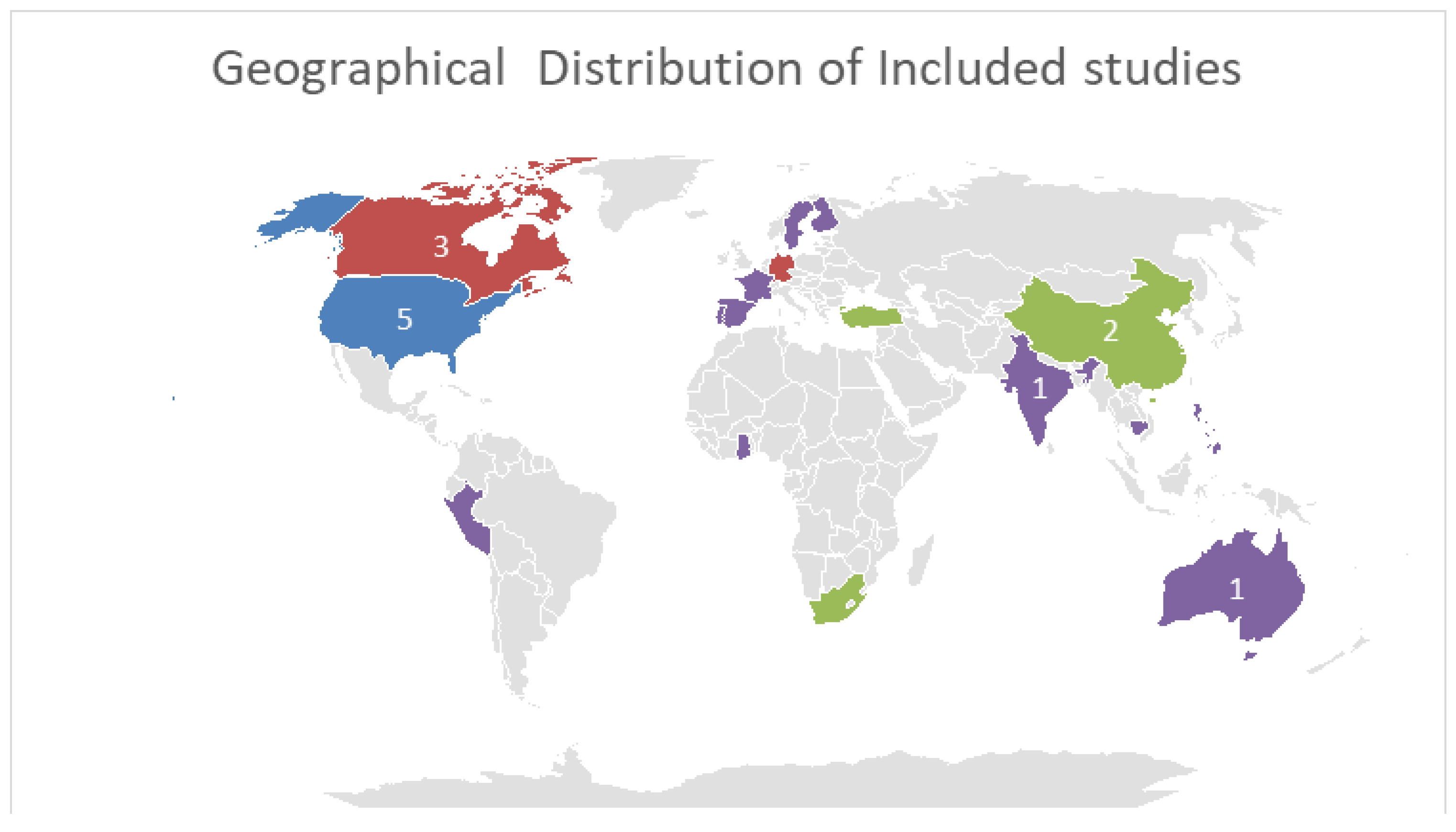
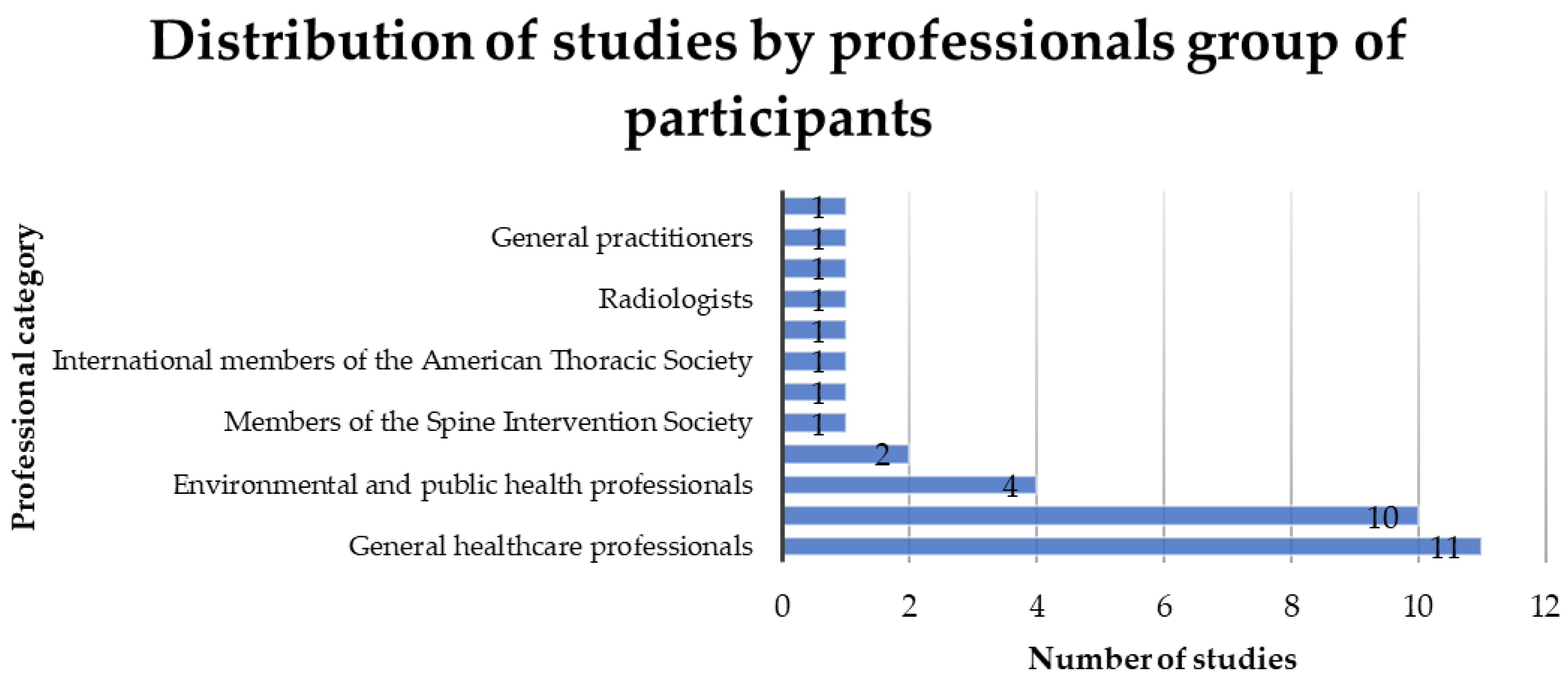
In this scoping review after the appraisal process, as presented in Table A3 in Appendix B, 36 studies [14,41,42,43,44,45,46,47,48,49,50,51,52,53,54,55,56,57,58,59,60,61,62,64,65,66,67,68,69,70,71,72,73,74,75,76] were included, of which 20 were quantitative [14,41,42,43,49,50,51,52,53,54,55,56,57,58,59,64,65,66,67,68], 13 were qualitative [46,47,48,60,61,62,69,70,71,72,73,74,76] and 3 were mixed [44,45,75]. The studies span from 2016 to 2025, with an increasing trend in recent years, particularly in 2023–2024. Most, as shown in Figure 2, were conducted in North America and Europe, while others were conducted in Asia, Africa, Oceania, and Latin America. Participants included general healthcare professionals, nurses, physicians, pharmacists, and other specialized health workers (Figure 3).

3.2. Health Professionals’ Views on Climate Change and Its Public Health Implications

A total of 29 studies [14,41,42,43,44,45,46,47,48,49,50,51,52,53,54,55,56,57,58,59,60,61,62,64,65,66,70,71,76] addressed the research question presented in Table 5 concerning health professionals’ perceptions of climate change and its impacts on public health. Among these, 18 were quantitative, 9 qualitative, and 2 employed mixed methods.

3.2.1. Awareness of Climate Change and Its Causes

The majority of the studies included in the review indicate a trend toward high levels of awareness and knowledge among health professionals related to climate change and its impact on human health. At the same time, the majority of studies recognize that climate change is real and primarily anthropogenic, and acknowledge the contribution of healthcare to global warming, highlighting the need to adopt sustainable practices in healthcare [14,41,42,43,44,45,46,47,48,49,50,51,52,53,54,55,56,57].
In addition, there appear to be differences between various professional groups. Studies show that pharmacists are less willing to accept anthropogenic climate change [55]. Similarly, less than half of radiographers expressed concern about the global consequences of climate change. However, they also expressed concern about local impacts associated with an increase in extreme weather events and pollution growth [53]. The study by Sambath et al. [57] found that awareness of climate change was high (concerning disease vectors, heat and cold), while awareness of indirect effects such as malnutrition was lower.
The majority of professionals reported increased awareness of the impacts of climate change due to extreme weather events such as droughts and floods [49,51,76].

3.2.2. Perceived Impact on Health and Health Systems

Nineteen studies (Table 5) examined health professionals’ perceptions of the impacts of climate change on public health. The majority of these studies concluded that professionals anticipate negative impacts on population health, mainly through the reemergence or exacerbation of infectious diseases [51,53,59].
However, differences were found between developing and developed countries. Specifically, studies in Africa found that just over half of the participants had observed the effects of climate change on health [41,49]. In contrast, in developed countries, the vast majority believe that climate change affects health both globally and at the patient level [55,56,58,59]. This divergence may indicate different socio-political conditions or perceptions of vulnerability in each country.
It is worth noting that two studies [43,58] reported that the majority of professionals are already observing the effects of climate change on their patients’ health. In contrast, Speck et al. [55] reported that only 45.4% of pharmacists stated that they had lower awareness of the importance of the issue in this professional group. Finally, although some professionals already perceive the impact on their daily work [52,58], there is still a lack of understanding of the broader implications for public health [58].

3.2.3. Perceptions of Training and Education

Seventeen studies (Table 5) examine the educational and training level of health professionals on climate change issues. Only one of these studies reported that participants had received education or training on environmental issues [49]. However, several studies found that most participants wanted more information and education on climate change and its impacts [50,54,56,57,59,66], as well as on how they could raise awareness and address it [57].
Mixed studies confirm a lack of education: participants recognized the environmental and health impacts of climate change but reported not having received education on the risks or adoption of good sustainability practices [44,45]. Nurses felt that they had not received adequate training to deal with the effects of climate change and guide their patients [76]. In contrast, in the study by Luo et al. [60], physicians who were more aware of the consequences of climate change were also more willing to engage in environmental actions, as they recognized the link with health and biodiversity. A study by Zhao et al. [48] conducted in Canada found that participants underestimated the severity of climate change because their attention was focused on other issues. They stated that their education was inadequate and that no one was aware of the environmental impacts of certain pharmaceutical preparations. However, most said they wanted to learn more—especially community pharmacists [48]. In contrast, in Africa, the lack of training is not due to a lack of priorities but to insufficient resources, such as a lack of specialized staff and inadequate training on climate change issues [41]. Finally, the study by Brooks et al. [62] revealed significant differences between clinical and non-clinical staff in their perception of the effects of heatwaves, highlighting the unequal distribution of knowledge within health services [62].

3.3. Health Professionals’ Perceptions of Their Role and Preparedness, Sustainability and Resilience to Face the Challenges Posed by Climate Change

Of the 36 studies included in this scoping review, 29 specifically address healthcare professionals’ perceptions regarding their role, preparedness, sustainability, and resilience in confronting the challenges posed by climate change [41,42,43,44,45,46,48,49,51,52,53,54,55,58,59,60,61,64,65,67,68,69,70,71,72,73,74,75]. Of these, sixteen are quantitative studies, three employ mixed-methods, and ten are qualitative. One quantitative study specifically investigates factors influencing environmental sustainability. Furthermore, twenty-four studies focus on the health system and healthcare professionals’ preparedness to address climate change; among these, thirteen are quantitative, nine qualitative, and two mixed methods. Finally, eight studies explore the adoption of measures aimed at adaptation and mitigation of climate change impacts, with three quantitative, two mixed methods, and three qualitative studies (Table 6).

3.3.1. Factors Affecting Environmental Sustainability

Only one study [67] identified key factors influencing environmental sustainability, which include workplace attitudes, interest in climate issues, and motivation to adopt sustainable practices.

3.3.2. Readiness of Health Systems and Health Workers

The preparedness of health systems and healthcare professionals to face the challenges posed by climate change is examined in 25 studies (Table 6). These studies explore various dimensions of readiness, including infrastructure, training, resource allocation, and adaptive capacity.
Health Professionals’ Views Health Systems’ on Weaknesses in Addressing the Impacts of Climate Change
The limited capacity of primary healthcare (PHC) systems to address the impacts of climate change remains a critical concern. In Germany, general practitioners reported insufficient preparedness, low awareness, and weak inter-unit communication within PHC, highlighting the urgent need for workforce training and the development of clear operational guidelines [71]. Similarly, Litke et al. [72] point out the lack of centralized planning mechanisms, noting that localized and fragmented initiatives tend to dominate the response landscape.
In Cambodia, although emergency preparedness plans were in place, health professionals reported inadequate resources and insufficient training to address flood-related risks effectively [73]. Similarly, in their study, Opoku et al. [41] identified key structural deficits, including a shortage of human resources, limited climate-related training, and inadequate funding for infrastructure and medical equipment [41].
In addition, awareness gaps were evident across institutions, and differences in awareness between institutions were evident. Studies have pointed out that the majority of participants were unaware of national climate change mitigation strategies and their unit’s disaster response plans [42,54]. This suggests systemic weaknesses in communication and preparedness among institutions [41].
Attitudes and Perceptions of Health Professionals Regarding Their Participation in Adaptation and Mitigation Strategies
The attitudes and perceptions of health professionals constitute a critical determinant of their engagement in climate-related health adaptation and mitigation strategies. In a recent study conducted in Korea, Park et al. [50] underline the acute need for enhancing awareness and education with regard to the health consequences of climate change. While the majority of professionals acknowledge the severity of the issue, insufficient training and knowledge inhibit their active involvement in relevant interventions. Byron and Akerlof [51] similarly identify a significant gap between the recognition of climate-related threats and the capacity to implement appropriate responses.
Rangel et al. [64] highlight a widespread concern among health professionals regarding the absence of clear policy direction and leadership in integrating climate considerations into public health practice. This lack of institutional support contributes to low self-efficacy and diminished motivation [64]. Speck et al. [55] report that many health professionals feel inadequately prepared to address climate-related health risks, primarily due to limited training and insufficient resources. The absence of explicit guidelines and organizational support exacerbates this uncertainty. Nonetheless, findings by Carsuzaa et al. [65] reveal a strong willingness among professionals to upskill, provided that appropriate incentives and support mechanisms are available.
Studies aimed at specific professional groups, such as nurses and radiographers, further emphasize the importance of institutional reinforcement and targeted knowledge enhancement [53,68]. Tong et al. [59] point out that shortages in human resources negatively influence professionals’ perceptions regarding the capacity and readiness of healthcare systems to respond to climate-induced challenges. Doctors, according to Sarfaty et al. [43], recognize their potential role in addressing climate change but often report feeling unsupported by their health institutions. This sentiment is echoed in Hussey and Arku’s [45] study in Canada, which highlights institutional shortcomings as the primary factor behind perceived unpreparedness.
Furthermore, Luque-Alcaraz et al. [75] indicate that professionals with heightened environmental awareness are more inclined to adopt sustainable workplace behaviors. However, the lack of leadership endorsement substantially limits the effectiveness of such individual efforts [75]. Anåker et al. [46] similarly observe that nurses often perceive environmental sustainability as a low organizational priority, thereby diminishing their involvement in relevant initiatives. Finally, several studies converge on the critical role of institutional commitment and leadership in motivating action. The lack of policy frameworks and managerial support functions as a major deterrent. In contrast, supportive leadership and a clearly defined institutional strategy appear to serve as catalysts in enhancing professional engagement and fostering confidence in the health system’s climate responsiveness [6,61,69].

3.3.3. Ways to Address Barriers to Adoption of Adaptation and Mitigation Measures

The adoption of climate change adaptation and mitigation measures is hampered by various structural and operational barriers. These include inadequate infrastructure, lack of resources (material and especially financial) [44], knowledge [44,69], appropriate information [58], policy and institutional interventions [44], and lack of incentives [77]. Health professionals report in several studies that a significant barrier to the adoption of adaptation measures is lack of time [44,55,58,69,75].
In a study by Luque-Alcaraz et al. [75], nurses cited the pandemic and a lack of environmental awareness on the part of management as key barriers to incorporating sustainable practices into their daily work. Similarly, in a study by Anåker et al. [46], high costs were cited as a significant deterrent.
In another study, community pharmacists reported that lack of time, stress, increased workload, cost-effectiveness, and bureaucracy were barriers to adopting sustainable practices. Finally, they suggested collective and legislative interventions, as they considered individual initiatives to be insufficient [48]. Similarly, in the study by Litke et al. [72], health professionals argued that PHC is not adequately prepared to address the impacts of climate change, which are exacerbated by a lack of resources and training.
It is worth noting that although health professionals recognize the importance of action to address the effects of climate change, a lack of training and support from leadership limits their effective participation. Finally, all studies mention the lack of integration of health professionals into national climate and health strategies.

4. Discussion

4.1. Contribution of Study Findings and Discussion with Findings from Other Studies

This scoping review contributes to the existing literature by presenting the results of primary research conducted between 2016 and 2025 on health professionals’ perceptions of climate change, the impacts of climate change on health and health systems, and the preparedness and barriers of health professionals and health systems to address it. Ιt was found that most health professionals recognize the existence of climate change and its consequences for health and health systems. In addition, health professionals stated that they are not sufficiently prepared and operationally ready to address the consequences of climate change. Inadequate training, ineffective leadership, lack of time, coordination, communication, materials, and, above all, financial resources were highlighted as barriers to taking mitigation and adaptation measures.
At the same time, the findings support the need to adopt sustainable practices. Strengthening the operational readiness of the health system is considered essential for effectively managing the impacts of climate change.
A useful framework for interpreting these findings is the “Framework of Core Pillars of the Health System” [78], which identifies six fundamental components: service delivery, human resources, health information systems, access to technology and medicines, financing, and governance/leadership. The findings of this review indicate that barriers to addressing climate change are found in several of these pillars: inadequate staff training (human resources), lack of plans and incentives (governance), inadequate funding and technical support (funding/infrastructure), and limited communication and collaboration (information systems). In this context, it is argued that developing resilience can be an opportunity for human development, strengthening the aforementioned fundamental building blocks [12,13]. At the same time, according to Mosadeghrad et al. [13], multisectoral cooperation between the environmental, economic, financial, energy, and education sectors must be strengthened. On this basis, human resources play a critical role, with support for their education and active participation in climate policies [79,80].
In addition, the findings of this scoping review are consistent with those of previous studies. The international literature supports that health professionals largely recognize that climate change is real, that it is caused by human activities, and that it has health implications [26,65]. In contrast, according to Ihsan et al. [81], health professionals do not consider climate change to be their responsibility, despite the fact that activities in the health sector contribute significantly to the increase in CO2 emissions. Nurses recognize the impact of climate change on human health and its link to the emergence of new diseases [82,83] yet studies highlight ongoing uncertainty regarding nurses’ professional role and readiness to act on climate change [83,84,85,86].
Furthermore, in this review, nurses stated that they did not consider climate change issues to be a priority, preferring to focus on providing immediate care and saving lives [46]. Studies report that both nurses and doctors say they are not adequately prepared to deal with the effects of climate change, while recognizing that vulnerable groups are at greater risk [59,86,87]. The Ebi & Hess [12] recommend “the use of an equality lens that would facilitate moving beyond gradual adaptation to increase resilience and sustainability.”
Therefore, integrating climate change issues into the curricula of health professionals plays an important role [88]. The need for training of health professionals is also supported by the WHO, which states that strategies to strengthen governance and collaboration should include the development of training courses for health professionals on climate change-related health and the integration of curricula on climate change and health into secondary and/or tertiary education [80].
Indeed, education should target both undergraduate health science students and practicing health professionals in order to provide them with the knowledge, skills, and values necessary to achieve SDGs [89]. It is worth noting that a study by Hamilton et al. [90] found that after health professionals participated in educational seminars, their knowledge of the causes of climate change and its health impacts, climate-related diseases, and vulnerable populations increased significantly.
Additionally, studies from various countries show that the operational readiness of health systems to respond to the coronavirus (COVID-19) pandemic was inadequate [71,91]. At the same time, there is limited knowledge of disaster and emergency management plans in health facilities, and few participate in preparedness exercises [54,89].
However, Baykara Mat’s study [92] found that nurses can play an active role in both preventing and mitigating the effects of climate change and natural disasters, such as fires. Therefore, health professionals must promote measures to reduce carbon dioxide emissions and mitigate climate change through both collective actions and individual initiatives [93].
In terms of their role, both doctors and nurses are considered among the most reliable sources of information on the health impacts of climate change [77,94] and can act as a link between the scientific community and the public in promoting sustainable practices [95]. In the study by Lattanzio et al. [96], the authors proposed the creation of an “ecological environmental group to increase knowledge, change attitudes and behaviors, and promote effective and cost-efficient sustainable practices (waste, water, energy). Similar findings are reported in this systematic review [50,59,62].
The systematic review by Ward et al. [78] emphasized that an effective response by the health system to extreme weather events requires the strengthening of key pillars, namely service delivery, financing, good governance, availability of medical products and technologies, adequate human resources, and reliable information systems. At the same time, there are barriers for health professionals in adopting adaptation practices. These barriers are mainly related to workload, lack of institutional support [83], lack of time, and knowledge gaps, which leave them inadequately prepared to take a leading role in implementing adaptation and mitigation strategies [88].
Finally, the study by Sepetis et al. [97] found that healthcare facility management does not give due attention to environmental issues, while employees have limited in-volvement in sustainability-related activities. The main barriers identified include ineffective communication, lack of training, and insufficient awareness within healthcare structures. Similarly, the studies included in the review identified and a lack of environmental awareness on the part of management [75], lack of time [44,55,58,69,75], knowledge [44,69], communication [55], information [58], financial resources, infrastructure, policies [44], and incentives [69] as key barriers.
In summary, climate change poses major challenges to public health and health systems, making the development and implementation of resilience-strengthening policies an urgent priority.
Therefore, strengthening the resilience of health systems to climate change requires comprehensive interventions that strengthen all key pillars of the system—not only at the technical level, but also organizationally and politically.

4.2. Policy Implications and Recommendations

The findings of thee review underscore the urgent need to effectively integrate health into national and international policies on climate change and health system resilience [29]. However, despite the international commitment that emerged from the Paris Agreement, the majority of countries do not adequately integrate health into their strategies and national action plans.
In this context, integration of that national public health strategies with specific, quantitative, and distinct targets aimed at increasing the resilience of health professionals and health service providers is recommended [29]. In addition, it would be beneficial to introduce a compulsory course on climate change and public health in all health professionals training programs [98]. It is also recommended that a climate and environment strategy officer be appointed in each healthcare organization, with clear responsibilities and links to local civil protection mechanisms [99].
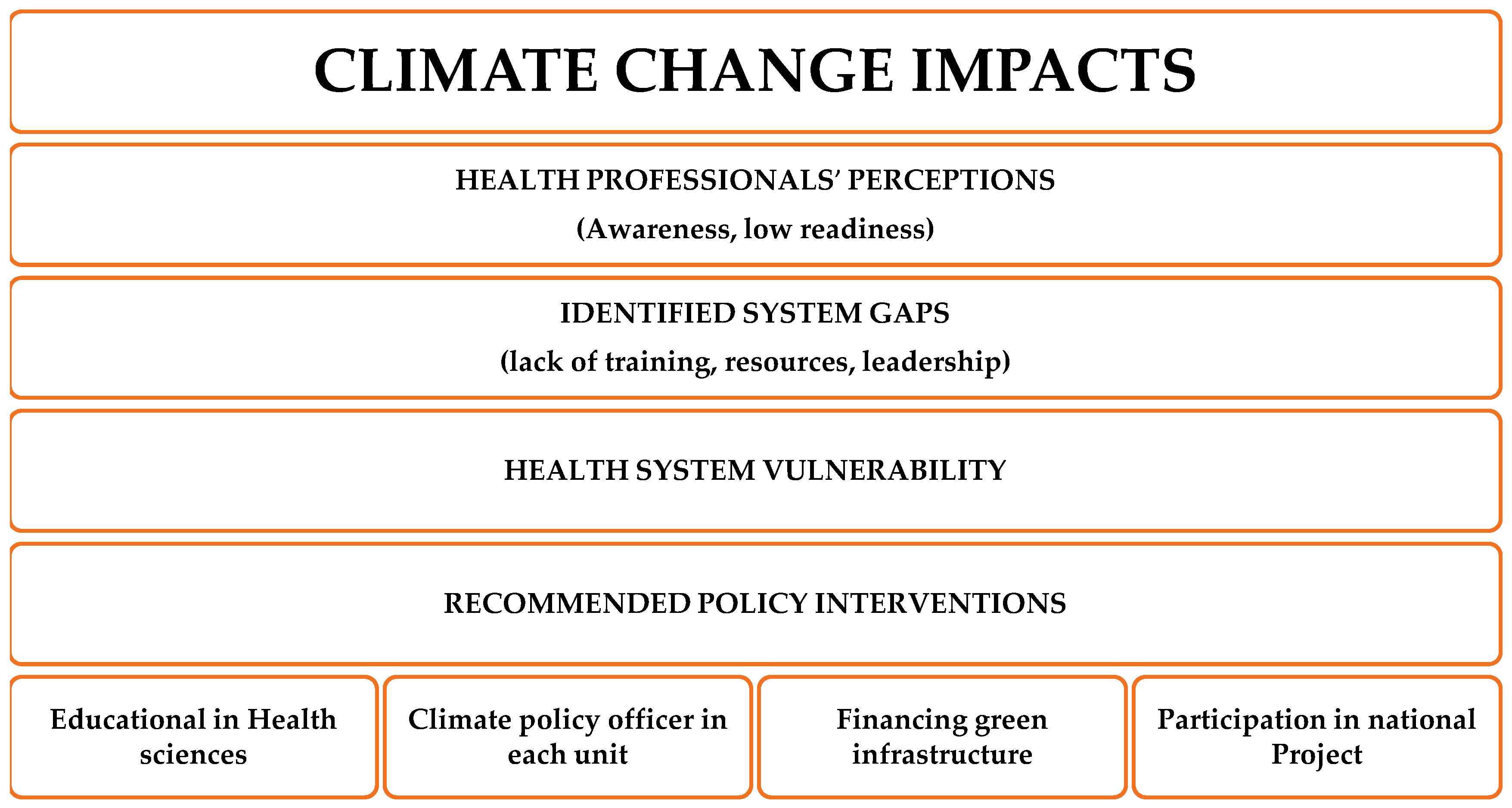
It is recommended that a funding mechanism (e.g., through European Social Fund Plus projects or green funds) be established to support sustainable practices in health services (e.g., recycling, green procurement, energy upgrading) [29]. It would be useful to develop a national awareness-raising campaign for health professionals to increase their awareness of their role in climate change adaptation, both as professionals and as citizens [100,101]. Figure 4 presents a conceptual policy framework derived from the findings of this review.
These should align with the WHO’s Operational Framework for Climate-Resilient Health Systems and support commitments under the Paris Agreement. In this context, the health sector can contribute by setting an example in reducing carbon dioxide emissions and participating in the development of national response strategies [102]. At the same time, building a resilient health system requires identifying its vulnerabilities [103] and investing in costly measures to reduce new CO2 emissions [104].
Strategies for health systems should therefore include measures to reduce the environmental footprint of health services (mitigation), while providing better quality healthcare. They should also include initiatives to prepare health systems and their infrastructure to respond to new health needs and the physical and socioeconomic impacts of accelerated climate change (adaptation). Specifically, health system resilience is strengthened in six areas (components): governance and leadership, financing, health information systems and key medical products and technologies, service delivery, and workforce [105]. These interventions are related to the creation and development of national action plans [13], the establishment of surveillance, alert and information systems using new technologies (digital, artificial intelligence) [11], the adoption of prevention and health promotion policies [106], the promotion of reusable materials; and the adoption of the use and proper distribution of recyclable materials [107].
In addition, eHealth can play an important role in achieving green growth goals [108]. Health information technology contributes to reducing the carbon footprint by saving resources (human, physical and raw materials such as plastic and paper), time, energy and fuel [109]. E-Health applications can be divided into two categories: (a) the use of technology for healthcare delivery (telemedicine, telehealth, home telehealth) and (b) the use of electronic health records (e-prescribing, electronic health record) [108]. In addition, balancing and optimizing the use of water and energy is an important intervention for the good functioning of structures [110].
At the same time, it is recommended that sustainability policies such as those implemented by the National Health Service (NHS) in the United Kingdom be adopted. The NHS has developed a comprehensive framework that combines legislation, strategy, governance and accountability. Between 2010 and 2017, these measures have resulted in a 18.5% reduction in carbon dioxide emissions and a 21% reduction in water consumption [111]. In addition, major health organizations such as Medibank Australia, the Australian Hospital Contributions Fund, and the U.S. Public Health Service have committed to divesting $33.6 billion from fossil fuels [112]. Furthermore, at EU level, more than €5 billion will be invested over seven years (2021–2027) through the EU4Health program in order to strengthen the resilience of health systems in the face of contemporary and complex challenges, such as the COVID-19 pandemic [113]. In addition, the WHO’s contribution and guidance is important, with an emphasis on strengthening the structural elements of health systems [29,102].
Based on the above, specific quantitative and qualitative targets are proposed to strengthen the preparedness, resilience, and sustainability of health systems, effectively addressing the challenges posed by climate change. More specifically, cooperation and coordination of policy actions between the Ministries of Health, Civil Protection, and Energy with academic institutions, local authorities, and international organizations, such as the WHO, is required.
This cooperation requires the development of a National Adaptation and Mitigation Plan with an annual progress report and monitoring of indicators (protocols, disaster response plans for floods and fires). At the same time, the plan must provide for an increase in the use of recyclable materials and supplies in each organization. Consumables must be eco-certified with the ultimate goal of reducing clinical waste by 30% by 2030.
An important intervention is the integration of compulsory education on climate change and health into the curricula of undergraduate and postgraduate students by 2027, with a minimum of 3 ECTS. Also, within the same timeframe, training should be provided to active health professionals by a competent person in each organization with the necessary basic knowledge. This employee should also be responsible for ongoing cooperation with the relevant local civil protection authorities, coordinating the adaptation and mitigation actions of the health services unit, monitoring environmental indicators and informing the organization’s management. A sustainability committee should be set up directly in each health service unit and protocols should be established to deal with situations such as heat waves. It is recommended that by 2030, special financial instruments be created and absorbed with the aim of upgrading energy efficiency and increasing the use of renewable energy sources in health organizations.

4.3. Strengths and Limitations of the Study and Suggestions for Future Research

This study relates to a contemporary, topical, and complex issue, which concerns healthcare professionals’ perceptions of climate change and its impact on healthcare systems. The findings, combined with the policy recommendations described, give it significant political and practical importance for academic institutions, health systems, politicians, and health professionals. Furthermore, the methodological framework used in the study is a significant advantage because it adopts established guidelines for conducting scoping reviews.
As with any research, this study has certain limitations that may introduce bias, and these should therefore be taken into account. First, the time frame of 2016–2025 was selected because the Paris Agreement was a turning point in the global conversation about climate change and health. Since then, there has been a significant increase in research into the effects of climate change on health and the preparedness of health professionals. This makes studies after 2016 more representative of current trends and challenges in this field. The current year was included in the search because of the importance of the topic and to reduce the likelihood of important data being omitted. Nevertheless, the exclusion of older studies may have led to a loss of useful information, although the growing research interest in recent years probably mitigates this risk. Second, only studies published in English were included, which limits the geographical and cultural heterogeneity of the findings. This decision was necessary due to the language constraints of the researchers. However, this choice may introduce language bias and limit the representativeness of the findings. This limitation is mitigated by the fact that scientific publications are predominantly in English. Third, heterogeneity appears in the methodology and samples of the selected studies, which makes it difficult to directly compare results and draw generalizable conclusions. Fourth, the failure to submit an official protocol to PPROSPERO could potentially create a problem of bias. This possibility was mitigated by the use of an internal protocol prior to the review and strict adherence to the established steps taken in reviews. Fifth, the selection of specific databases may skew the inclusion of studies and create bias in the selection of studies. However, this limitation is mitigated by the fact that PubMed, Scopus, and Web of Science are the most widely used and reliable databases. Finaly, the exclusion of gray literature may have led to the omission of important information from organizations and unpublished studies.
Future reviews should take these limitations into account (without linguistic exclusions and incorporating gray literature). In addition, both contemporary and diachronic research should be conducted in countries with limited scientific coverage. Particular emphasis should be placed on areas of Southeast Europe and especially on developing countries, where both funding and material and technological infrastructure and modern digital capabilities are limited. It is recommended that methodologies include studies with qualitative, quantitative, and mixed approaches in order to capture in depth the perceptions, experiences, and attitudes of health professionals, while it is also recommended that prospective intervention studies be conducted to evaluate educational and policy interventions.

5. Conclusions

This review shows that climate change is an undeniable reality with far-reaching repercussions for public health and health systems. Although health professionals acknowledge the severity of the circumstances, they are not adequately prepared to effectively respond to emergencies brought on by extreme weather events owing to a lack of training in environmental issues as well as a shortage in human, material, technological, and financial resources.
In addition, health professionals are pressed for time to become more actively involved by raising awareness among patients, among their colleagues, and among policymakers concerning the health impacts of climate change and the indicative actions for adaptation and mitigation.
The findings underscore the need for immediate/urgent policy action. Specifically, as stated by the WHO, strengthening the structural elements of health systems is considered essential. In addition, continuing education programs are imperative for health professionals throughout their careers, from undergraduate level onwards. Ministries of health and health facility management teams should develop preparedness plans, encouraging the participation of health professionals in climate governance. At the same time, policies that promote sustainable practices to mitigate the effects of climate change must be strengthened. These actions require increased public funding and assistance from developed to developing countries. Finally, ongoing collaboration must be established between governments, educational institutions, and international organizations such as the World Health Organization.

Supplementary Materials

The following supporting information can be downloaded at: https://zenodo.org/records/17772189 (accessed 30 November 2025). Appendix A.docx, Appendix B.docx, Figure 1.docx, Figure 4.docx, Graphical abstract (1).jpg, PRISMA-ScR-Fillable-Checklist.docx, Supplementary Material.xlsx ‘MMAT_Quantitative methods, MMAT_Mixed_Methods, MMAT_Qualitative_Studies’.

Author Contributions

Conceptualization, S.K. (Stavros Kalogiannidis) and V.G.; methodology, V.G., A.P. and D.K.; software, V.G. and D.K.; validation, S.K. (Stavros Kalogiannidis), A.P. and V.G.; formal analysis, D.K. and V.G.; investigation, V.G., A.P. and S.K. (Stamatis Kontsas); resources, S.K. (Stavros Kalogiannidis) and A.P.; data curation, D.K., AP. and S.K. (Stamatis Kontsas); writing—original draft preparation, V.G. and S.K. (Stavros Kalogiannidis); writing—review and editing, D.K., A.P. and S.K. (Stamatis Kontsas); visualization, D.K. and V.G.; supervision, S.K. (Stavros Kalogiannidis) and S.K. (Stamatis Kontsas); project administration, S.K. (Stavros Kalogiannidis); funding acquisition, S.K. (Stavros Kalogiannidis) and D.K. All authors have read and agreed to the published version of the manuscript.

Funding

This research received no external funding.

Data Availability Statement

The original data presented in the study are openly available in https://zenodo.org/records/17772189. (accessed 30 November 2025).

Acknowledgments

The authors would like to thank the editor and the anonymous reviewers for their feedback and insightful comments on the original submission. All errors and omissions remain the responsibility of the authors.

Conflicts of Interest

The authors declare no conflicts of interest.

Abbreviations

The following abbreviations are used in this manuscript:
WHOWorld Health Organization
CO2Carbon dioxide
IPCCIntergovernmental Panel on Climate Change
COVID-19Coronavirus disease
MMATMixed Methods Appraisal Tool

Appendix A

Table A1. Search criteria of studies.
Research DatabaseSearch String-(Run: 20 January 2025)
PubMed(“climate change”[MeSH Terms] OR “global warming”[MeSH Terms]
OR “climate crisis” OR “extreme weather” OR “environmental change”)
AND
(“health personnel”[MeSH Terms] OR “health professionals”
OR “healthcare workers” OR nurses OR physicians OR “public health staff”)
AND
(percept * OR attitude * OR belief * OR knowledge OR awareness OR experience
OR practice * OR readiness OR prepare * OR opinion OR response OR competency)
ScopusTITLE-ABS-KEY (
(“climate change” OR “climate crisis” OR “global warming” OR “extreme weather”)
AND
(“health professionals” OR “healthcare personnel” OR “health workers” OR nurses OR physicians OR “public health staff”)
AND
(percept * OR awareness OR knowledge OR belief * OR attitude * OR preparedness OR readiness OR prepare * OR experience OR opinion OR response OR practice *))
Web of ScienceTS = (
(“climate change” OR “global warming” OR “climate crisis” OR “extreme weather”)
AND
(“health professionals” OR “health personnel” OR nurses OR physicians OR “public health workers”)
AND
(percept * OR awareness OR knowledge OR attitude * OR belief * OR opinion OR readiness OR preparedness OR response OR experience OR practice *))
(*) denotes truncation and was used to retrieve all possible variants of the terms (e.g., percept*, attitude*, practice*).
Table A2. Database search strategies and filters (Run: 20 January 2025).
Research DatabaseFields SearchedMeSH Explosion/NotesFilters/LimitsYearsSearch DateHits
PubMedTitle/AbstractMeSH explosion: EnabledLanguage: English; Humans; Article type: Peer-reviewed journal articles2016–202520 March 2025375
ScopusTitle/Abstract Language: English; Document type: Article2016–202520 March 2025924
Web of ScienceTitle/Abstract Language: English; Document type: Article2016–202520 March 2025617
Source: Authors’ elaboration.

Appendix B

Table A3. Characteristics of studies.
A/ATitleAuthorYearCountryStudy DesignSample
Size
Key Findings
1.“Factors affecting environmental sustainability attitudes among nurses–Focusing on climate change cognition and behaviors: A cross-sectional study”Chung et al. [67]2024KoreaQuantitative, Synchronic studyn = 352 NursesThe key factors influencing nurses’ attitudes toward environmental sustainability are: (1) environmental attitudes at work (2) interest in climate issues and, (3) motivation to adopt sustainable practices.
2.“Knowledge, attitudes and practices related to climate change and its health aspects among the healthcare workforce in India—A cross-sectional study”Sambath et al. [57]2022IndiaQuantitative, Synchronic studyn = 3185 Healthcare professionals
-
Health professionals’ knowledge of the direct effects of climate change was high, while of the indirect (malnutrition) it was lower.
-
72.7% wanted more information on the health impacts of climate change.
-
43.9% wanted to learn more about their role in raising awareness and informing the public.
3.“Climate Change and Health Preparedness in Africa: Analysing Trends in Six African Countries”Opoku et al. [41]2021Ghana, Nigeria, South Africa, Namibia, Ethiopia, Ethiopia and KenyaQuantitative, Synchronic studyn = 122
Healthcare professionals
-
63.1% of health professionals have seen the effects of climate change.
-
50.8% have seen a major impact on health and 38.5% have seen some impact (infections being a major challenge).
-
76.4% believe that the number and severity of climate-related diseases will increase in the coming years if public health measures are not taken—There is a shortage of qualified staff, inadequate education and training on climate change.
-
The need to increase funding, develop infrastructure, and strengthen medical and technological equipment is emphasized.
4.“Environmental health practitioners potentially play a key role in helping communities adapt to climate change”Shezi et al. [49]2019South AfricaQuantitative, Synchronic studyn = 66 Environmental health professionals
-
57% of participants have observed the effects of climate change (droughts, floods).
-
The majority have received training and education on environmental and health issues.
-
39% participated in a climate change working group.
-
47% reported having a climate change and health officer in their department.
-
62.2% considered their role to be supportive, while 37.8% considered their role to be proactive.
5.“Climate-specific health literacy in health professionals: an exploratory study”Albrecht et al. [58]2023GermanyQuantitative, Synchronic studyn = 142 Health professionals
-
93% of respondents believe climate change will have a significant impact on their work.
-
Only 12% say they are well informed about the impact of climate change.
-
The majority believe that climate change affects health both globally and at the patient level.
-
The main barriers to taking action in clinical practice are: (a) lack of time (79%), (b) lack of information (42%), and (c) lack of materials (39%).
6.“Nurses’ Perceptions and Behaviors Regarding Climate Change and Health: A Quantile Regression Analysis”Park et al. [50]2024KoreaQuantitative, Synchronic studyn = 499 Nurses
-
The majority of nurses had experienced extreme weather events.
-
Access to information was limited.
-
Participation in climate-smart activities was limited (mean 2.64 out of 10 possible actions).
-
Almost half (42.7% and 43.5%) had experience in setting climate change and health goals and strategies.
-
Factors that increased environmental awareness included: (a) experience with climate change, (b) access to information, (c) family circumstances (children, high income, religious belief), (d) work environment oriented towards sustainable climate practices, and (e) participation in formulating and setting strategic goals.
7.“Climate and health concerns of Montana’s public and environmental health professionals: a cross-sectional study”Byron & Akerlof [51]2021USA, MontanaQuantitative, Synchronic studyn = 479 Environmental and Public Health Professionals
-
86% of participants recognize the occurrence of extreme weather events in their area.
-
57–74% believe that climate change is affecting health, while 68–80% believe that health impacts will worsen in the future.
-
69% see climate change as a result of human activity.
-
73% believe that tackling climate change must be a priority in their workplace
-
93% believe that immediate action is needed, while 73% believe that this should be collective (government, business, public health officials, health professionals, citizens).
8.“Interventional pain physician beliefs on climate change: A Spine Intervention Society (SIS) survey”Fogarty et al. [14]2023USAQuantitative, Synchronic studyn = 175 members of Spine Intervention Society
-
87% of respondents recognize that climate change is real.
-
78% believe it is important to them, but only 47% believe it is important to their patients.
-
Perceptions of the importance of climate change do not vary by geographic region or age.
-
Physicians who are not in leadership positions are less likely to rate climate change as important.
-
Physicians outside the U.S. are more likely to feel they have a responsibility to provide information about the health effects of climate change.
9.“Comparisons of healthcare personnel relating to awareness, concern, motivation, and behaviors of climate and health: A cross-sectional study”Rangel et al. [64]2024Western USAExploratory-observational-contemporary studyn = 1363 Healthcare professionals
-
Health professionals had moderate to high levels of awareness and concern about the health impacts of climate change, with low and moderate levels of participation in activities at work and home, respectively.
-
61.3% had not been informed about their organization’s commitment to reduce carbon emissions by 2030.
10.“Perception of environmental issues in the head-and-neck surgery room: A preliminary study”Carsuzaa et al. [65]2024FranceObservational pilot studyn = 267 Healthcare professionals working in head and neck surgery
-
66% of participants are concerned about climate change and its effects.
-
85% believe they have sufficient knowledge about the issue.
-
93% said they were willing to adopt practices to mitigate climate change (reduce waste and increase recycling).
11.“Keeping Sane in a Changing Climate: Assessing Psychologists’ Preparedness, Exposure to Climate-Health Impacts, Willingness to Act on Climate Change, and Barriers to Effective Action”Stilita & Charlson [52]2024AustraliaQuantitative, Synchronic studyn = 59 Psychologists
-
Climate change is perceived as critical by 95% of psychologists, and as a personal problem by 78%.
-
44% report that extreme weather events have affected their work.
-
50% have treated patients with mental disorders related to climate change.
-
85% wanted more training to prepare them for the health effects of climate change.
-
46.8% did not feel prepared to help patients with mental health problems related to climate change.
-
90% believe that climate change requires immediate action, while 85% believe that the community needs to be informed.
-
68% believe that psychologists can play an important role in addressing climate change by communicating with the community.
12.“Nurses’ Environmental Practices in Northern Peruvian Hospitals”Rojas-Perez et al. [68]2024PeruQuantitative, Synchronic studyn = 106 Nurses
-
Nurses showed positive attitudes toward adopting sustainable environmental practices at home and work.
-
53% reported that they recycle
-
51% reported that they use energy rationally.
-
There was an association between age and years of experience with adopting sustainable practices to mitigate climate change (recycling, reducing medication waste, energy use) in clinical practice.
13.“Green radiography: Exploring perceptions, practices, and barriers to sustainability”Rawashdeh et al. [53]202414 countriesQuantitative, Synchronic studyn = 104 Radiographers
-
42.3% of respondents were concerned about the impact of climate change worldwide.
-
The main causes, according to participants, are pollution (68%) and population growth (66%).
-
88% believe that extreme climate events will increase.
-
91% believe there will be an impact on population health and 83% believe infectious diseases will emerge or reappear.
-
74% stressed the need to adopt sustainable practices at work (reducing energy consumption in lighting and heating systems).
14.“Perceptions of capacity for infectious disease control and prevention to meet the challenges of dengue fever in the face of climate change: A survey among CDC staff in Guangdong Province, China”Tong et al. [59]2016ChinaQuantitative, Synchronic studyn = 260 CDC professionals
-
80.7% of respondents believe that climate change has a negative impact on health
-
98.4% noted an increase in dengue cases.
-
85% said that more information is needed on the health effects of climate change.
-
The majority of respondents believe that the ability to detect epidemics is excellent, that laboratories can provide rapid and efficient diagnostic support, and that human resources are adequate in the event of an epidemic.
15.‘Awareness, worry, and hope regarding climate change among nurses: A cross-sectional study”Fertelli et al. [66]2023TurkeyQuantitative, Synchronic studyn = 511 Nurses
-
−62.5% of participants would like to be educated about climate change.
-
Nurses reported moderate levels of awareness, concern, and hope about climate change.
16.“Assessing the role of education level on climate change belief, concern and action: a multinational survey of healthcare professionals in nephrology”Sandal et al. [54]2025107 CountriesQuantitative, Synchronic studyn = 849 Healthcare professionals
-
97.9% of healthcare professionals recognize climate change as a real fact.
-
73.3% are concerned about its effects.
-
62.2% have taken action to combat it.
-
Only 34% of participants have been informed about national plans to combat climate change.
-
In low-income countries, barriers included a lack of technology, financial constraints, and limited research.
17.“Pharmacists’ perception of climate change and its impact on health”Speck et al. [55]2023USA, OhioQuantitative, Synchronic studyn = 70 Registered pharmacists
-
78.3% of pharmacists believe climate change is real.
-
72.7% believe it has a global health impact, but only 45.4% think it will directly affect patients in their community.
-
54.5% believe that pharmacy operations contribute to climate change.
-
48.5% believe pharmacists can contribute to the sustainability of the healthcare system.
-
Barriers to communicating with the public include: a) lack of time, b) lack of knowledge, and c) belief that being informed would not make a difference.
18.“Public health professionals’ views on climate change, advocacy, and health”Kish-Doto & Francavillo [56]2024USAQuantitative, Synchronic studyn = 173 Public health professionals
-
97.1% of public health professionals recognize climate change as a critical issue.
-
93.3% are concerned about the impacts
-
57.8% want to be educated about climate change.
-
83.2% believe that extreme weather events are caused by human activity.
19.“Climate change, climate disasters and oncology care: a descriptive global survey of oncology healthcare professionals”Elia et al. [42]2024Participation of a sample of 26 countriesQuantitative, Synchronic studyn = 154 Healthcare professionals for oncology patients
-
98.7% were aware of the significant increase in global warming and its contribution to increased healthcare utilization (98.6%).
-
88.3% wanted to be educated and learn more about climate change and its impact on cancer treatment.
-
50.4% are aware of the weather disaster response plan of the organization they work for.
20.“Survey of International Members of the American Thoracic Society on Climate Change and Health”Sarfaty et al. [43]2016Participant sample from 68 countriesQuantitative, Synchronic studyn = 489 International Members of the American Thoracic Society
-
96% said climate change is happening and 70% said it is the result of human activity.
-
The majority said that climate change was already affecting the health of patients. Specifically, (a) 69% reported a health burden due to injuries from extreme weather events, (b) 72% noted allergic symptoms, and (c) 88% noted an increase in chronic diseases related to air pollution.
-
Participants emphasized that physicians should play a central role in educating the community, policymakers, and patients about the health impacts of climate change.
21.“South African Healthcare Professionals’ Knowledge, Attitudes, and Practices Regarding Environmental Sustainability in Healthcare: A Mixed-Methods Study”Lister et al. [44]2022South AfricaMixed method (Quantitative and Qualitative Study)n = 100 Health professionals (questionnaire) N = 18 Health professionals (semi-structured interviews)
-
Participants reported limited knowledge of environmental sustainability and were concerned about its impact on health.
-
They have positive attitudes and are interested in education, implementation, and leadership in adopting good sustainability practices.
-
The majority do not implement environmental sustainability practices in daily clinical practice.
-
According to their perception, the main barriers to not adopting environmental sustainability in healthcare are: (a) lack of resources (financial, infrastructure), (b) limited knowledge, (c) lack of time, and (d) inadequate policies.
22.“The environmental awareness of nurses as environmentally sustainable health care leaders: a mixed method analysis”Luque-Alcaraz et al. [75]2024Spain, AndalusiaMixed method (Quantitative and Qualitative Study)n = 314 Nurses (questionnaire) N = 10 Nurses (semi-structured interviews)
-
70.4% of nurses were moderately environmentally aware and had limited sustainable workplace practices.
-
Those with higher levels of environmental awareness were more likely to engage in sustainable practices such as energy conservation and waste reduction.
-
Their environmental behaviors at work were dependent on their behaviors and habits outside of work.
-
The results of the qualitative study highlighted barriers to adopting sustainable practices in everyday life, including: (a) lack of time, (b) environmental attitudes of management, and (c) pandemic disease.
23.“Are we ready for it? Health systems preparedness and capacity towards climate change-induced health risks: perspectives of health professionals in Ghana”Hussey & Arku [45]2020GhanaMixed method (Quantitative and Qualitative Study)n = 99 Health professionals (questionnaire) N = 20 Health professionals (interviews)
-
Health professionals recognized that climate change has an impact on health and the health system.
-
Although many respondents had received information on climate change, less than 10% had personally researched the impacts and risks to the health system.
-
The majority of respondents had not received training on the risks of climate change.
-
Interviewees reported that they had not received training on climate change and its impacts.
-
The preparedness of both health facilities and health professionals to respond to climate-related emergencies was assessed as limited and weak.
24.“We are not ready for this”: physicians’ perceptions on climate change information and adaptation strategies qualitative study in Portugal”Ponte et al. [69]2024PortugalQualitative Study (case study)n = 13 Doctors
-
Physicians believe they can play a key role in changing the behavior of patients and organizations by promoting sustainable health practices
-
Knowledge and education are key factors for behavior change and awareness.
-
Almost half of the participants (7) expressed dissatisfaction with the political system and believed that they could only influence it through organized efforts.
-
Organized action and the involvement of health professionals are essential for mitigation and decision-making.
-
The main barriers to adopting sustainable practices are: (a) lack of time, (b) lack of knowledge, and (c) lack of patient motivation and interest.
25.“Nurses’ perceptions of climate and environmental issues: a qualitative study”Anåker et al. [46]2015SwedenDescriptive, exploratory qualitative studyn = 18 Nurses
-
Nurses did not consider environmental issues a priority because their priority was to provide immediate care and save lives.
-
Dealing with environmental issues required time and energy that they did not have due to increased professional demands.
-
The organizations they worked for did not consider investing in green initiatives a priority, as the cost was a significant barrier.
-
Discussions about climate change were considered to be of secondary importance, while environmental actions were mainly of local importance.
-
Although no one mentioned specific initiatives, all recognized the importance of workplace waste management in protecting the environment.
26.“A qualitative study of what motivates and enables climate-engaged physicians in Canada to engage in health-care sustainability, advocacy, and action”Luo et al. [60]2023CanadaDescriptive, exploratory qualitative studyn = 19 Doctors dealing with climate
-
All respondents were motivated to participate in climate action because they recognize its impacts and biodiversity.
-
Supportive leadership (political and administrative) and adequate budgets are seen as critical factors for health system resilience to climate change.
-
Some participants argued that teamwork can influence health facility leadership to promote sustainability.
-
Other participants argued for the need for top-down (government) leadership to create social norms that reinforce low-carbon policies
-
Expertise and collaboration of multidisciplinary teams can enhance the resilience of the health system to climate change.
-
Addressing knowledge gaps about the impacts of climate change is an important aspect.
27.“Finnish nurses’ perceptions of the health impacts of climate change and their preparation to address those impacts”Iira et al. [61]2021FinlandQualitative descriptive studyn = 6 Nurses
-
Nurses identified the elderly, children, refugees, and healthcare workers as the most vulnerable to the effects of climate change.
-
They reported an increase in respiratory diseases, such as asthma and allergies, occurring earlier and lasting longer than in the past.
-
They observed an increase in mental illness, as well as skin and gastrointestinal disorders.
-
Nurses said they were not adequately trained to deal with the effects of climate change and to guide their patients.
-
They reported that the Finnish healthcare system is not sufficiently prepared and that appropriate workplace policies have not been developed to address the effects of climate change.
28.“Filipino nurses’ experiences and perceptions of the impact of climate change on healthcare delivery and cancer care in the Philippines: a qualitative exploratory survey”Tanay et al. [76]2023PhilippinesDescriptive qualitative exploratory studyn = 46 Nurses
-
Climate change is manifested in heavy rainfall, floods, and extreme heat.
-
The majority of nurses consider their work to be affected by climate change (difficulty in accessing health structures, reduction in human resources).
-
The quality of services provided is decreasing due to staff exhaustion, and the care of cancer patients is also affected, with delays or even interruption of care due to evacuations.
-
Flooding in the facilities poses risks to the safety of patients and staff.
-
Mental health is affected and access to fresh food is reduced which affects the health of cancer patients (prone to respiratory infections).
29.“There’s Not Really Much Consideration Given to the Effect of the Climate on NCDs”—Exploration of Knowledge and Attitudes of Health Professionals on a Climate Change-NCD Connection in Barbados”Springer & Elliott [47]2019Barbados, CaribbeanQualitative Study
Case Study
n = 10 Healthcare professionals
-
There are differences in the understanding of the relationship between climate change and health professionals.
-
Professionals working in structures at the regional level are more knowledgeable and able to link climate change to noncommunicable diseases, while community workers have a lower level of knowledge.
-
Socio-economic factors affect the prevention and management of noncommunicable diseases, making it more difficult to adapt to the effects of climate change.
30.“The perspectives of nurses, as prominent advocates in sustainability, on the global climate crises and its impact on mental health”Ediz & Uzun [70]2024TurkeyQualitative studyn = 35 Nurses
-
Participants expressed concern about the global climate crisis, citing both physical impacts (increased natural disasters, impacts on animals, hunger, melting ice, changing seasons) and psychological impacts (stress, anger, depression, burnout, suicide).
-
The impacts of climate change can be direct (hurricanes, floods, malnutrition), indirect (air pollution, water pollution, migration), and psychosocial (anger, reduced quality of life, post-traumatic stress disorder).
-
Mental health impacts can be both direct (panic, aggression, mood disorders) and indirect (anxiety or anger due to heat, due to allergic conditions).
-
Nurses believe that addressing these impacts requires action: (a) at the personal level (water and energy conservation, recycling, plastic reduction), (b) at the national level (public awareness, educational programs through media and social networks), and (c) at the international level (ending war conflicts, preventing marine pollution).
31.“Climate-conscious pharmacy practice: An exploratory study of community pharmacists in Ontario”Zhao et al. [48]2024Canada, OntarioExploratory qualitative studyn = 24 Community pharmacists
-
Pharmacists recognize that climate change is happening, is caused by human activities, and has long-term health implications.
-
Its severity is underestimated because they are distracted by other issues.
-
Their education on climate change issues is inadequate and none were aware of the climate impact of pharmaceutical formulations (inhalers).
-
Despite their lack of awareness, they expressed a desire to learn more.
-
Adoption of sustainable practices is hindered by: (a) lack of time, (b) stress, (c) workload, (d) cost-effectiveness, and e) bureaucracy.
-
They suggested collective and legislative interventions, as they felt that individual initiatives were not enough.
32.“General Practitioners’ Perceptions of Heat Health Impacts on the Elderly in the Face of Climate Change—A Qualitative Study in Baden-Württemberg, Germany”Herrmann & Sauerborn [71]2018Germany, Baden-WürttembergQualitative studyn = 24 General Practitioners
-
Excessive heat and heat waves increase morbidity and mortality in older people.
-
Preparation, awareness, and communication between health professionals and primary health care (PHC) facilities are considered insufficient.
-
The protection of older people requires clear guidelines and training of human resources.
33.“Building resilience in German primary care practices: a qualitative study”Litke et al. [72]2022GermanyQualitative Observation Studyn = 40 Healthcare professionals
-
Health professionals have varying levels of awareness of the impacts of climate change, although they recognize the health implications.
-
PHC is perceived to be inadequately prepared to deal with the impacts of climate change, exacerbated by a lack of resources and training to strengthen the resilience of the health system.
-
Actions and measures are being taken without planning, through initiatives at the local level.
34.“Heatwaves, hospitals and health system resilience in England: a qualitative assessment of frontline perspectives from the hot summer of 2019”Brooks et al. [62]2023UKQualitative studyn = 14 Healthcare professionals
-
The 2019 heatwave had a significant impact on the health services provided, increasing patient admissions and straining human resources, infrastructure, and equipment at health facilities.
-
There were differences in perceptions of the impact of the heatwave between clinical and non-clinical staff.
35.‘”We have a plan for that’: a qualitative study of health system resilience through the perspective of health workers managing antenatal and childbirth services during floods in Cambodia”Saulnier et al. [73]2022CambodiaQualitative studyn = 34 Healthcare professionals
-
Emergency and contingency plans are in place.
-
There is a lack of resources and a need for appropriate training of health professionals to prepare them to respond to flood events.
36.“Experts’ Perceptions on China’s Capacity to Manage Emerging and Re-emerging Zoonotic Diseases in an Era of Climate Change”Hansen et al. [74]2017ChinaQualitative studyn = 30 specialists in infectious diseases
-
Satisfaction with the existing system of disease prevention and control.
-
Confidence in the country’s ability to manage disease in the future.
-
Recommendations for informing and raising awareness among the population about communicable diseases, and among health professionals and policymakers about the health impacts of climate change.

References

  1. Wu, X.; Lu, Y.; Zhou, S.; Chen, L.; Xu, B. Impact of Climate Change on Human Infectious Diseases: Empirical Evidence and Human Adaptation. Environ. Int. 2016, 86, 14–23. [Google Scholar] [CrossRef]
  2. Al-Marwani, S. Climate Change Impact on the Healthcare Provided to Patients. Bull. Natl. Res. Cent. 2023, 47, 51. [Google Scholar] [CrossRef]
  3. Covert, H.H.; Abdoel Wahid, F.; Wenzel, S.E.; Lichtveld, M.Y. Climate Change Impacts on Respiratory Health: Exposure, Vulnerability, and Risk. Physiol. Rev. 2023, 103, 2507–2522. [Google Scholar] [CrossRef] [PubMed]
  4. Agache, I.; Sampath, V.; Aguilera, J.; Akdis, C.A.; Akdis, M.; Barry, M.; Bouagnon, A.; Chinthrajah, S.; Collins, W.; Dulitzki, C.; et al. Climate Change and Global Health: A Call to More Research and More Action. Allergy Eur. J. Allergy Clin. Immunol. 2022, 77, 1389–1407. [Google Scholar] [CrossRef] [PubMed]
  5. Patel, L.; Conlon, K.C.; Sorensen, C.; McEachin, S.; Nadeau, K.; Kakkad, K.; Kizer, K.W. Climate Change and Extreme Heat Events: How Health Systems Should Prepare. NEJM Catal. 2022, 3, CAT-21. [Google Scholar] [CrossRef]
  6. Semenza, J.C.; Ebi, K.L. Climate Change Impact on Migration, Travel, Travel Destinations and the Tourism Industry. J. Travel Med. 2019, 26, taz026. [Google Scholar] [CrossRef]
  7. Neira, M.; Erguler, K.; Ahmady-Birgani, H.; DaifAllah AL-Hmoud, N.; Fears, R.; Gogos, C.; Hobbhahn, N.; Koliou, M.; Kostrikis, L.G.; Lelieveld, J.; et al. Climate Change and Human Health in the Eastern Mediterranean and Middle East: Literature Review, Research Priorities and Policy Suggestions. Environ. Res. 2023, 216, 114537. [Google Scholar] [CrossRef]
  8. van Baal, K.; Stiel, S.; Schulte, P. Public Perceptions of Climate Change and Health—A Cross-Sectional Survey Study. Int. J. Environ. Res. Public Health 2023, 20, 1464. [Google Scholar] [CrossRef]
  9. Lokmic-Tomkins, Z.; Block, L.J.; Davies, S.; Reid, L.; Ronquillo, C.E.; von Gerich, H.; Peltonen, L.M. Evaluating the Representation of Disaster Hazards in SNOMED CT: Gaps and Opportunities. J. Am. Med. Inform. Assoc. 2023, 30, 1762–1772. [Google Scholar] [CrossRef]
  10. Kalogiannidis, S.; Spinthiropoulos, K. Integration of Remote Sensing and GIS for Urban Sprawl Monitoring in European Cities. Eur. J. Geogr. 2025, 16, 75–90. [Google Scholar]
  11. Gkouliaveras, V.; Kalogiannidis, S.; Kalfas, D.; Kontsas, S. Effects of Climate Change on Health and Health Systems: A Systematic Review of Preparedness, Resilience, and Challenges. Int. J. Environ. Res. Public Health 2025, 22, 232. [Google Scholar] [CrossRef]
  12. Ebi, K.L.; Hess, J.J. Health Risks Due to Climate Change: Inequity in Causes and Consequences. Health Aff. 2020, 39, 2056–2062. [Google Scholar] [CrossRef] [PubMed]
  13. Mosadeghrad, A.M.; Isfahani, P.; Eslambolchi, L.; Zahmatkesh, M.; Afshari, M. Strategies to Strengthen a Climate-Resilient Health System: A Scoping Review. Global Health 2023, 19, 62. [Google Scholar] [CrossRef]
  14. Fogarty, A.E.; Godambe, M.; Duszynski, B.; McCormick, Z.L.; Steensma, J.; Decker, G. Interventional Pain Physician Beliefs on Climate Change: A Spine Intervention Society (SIS) Survey. Interv. Pain Med. 2023, 2, 100287. [Google Scholar] [CrossRef] [PubMed]
  15. Tuyet Hanh, T.T.; Huong, L.T.T.; Huong, N.T.L.; Linh, T.N.Q.; Quyen, N.H.; Nhung, N.T.T.; Ebi, K.; Cuong, N.D.; Van Nhu, H.; Kien, T.M.; et al. Vietnam Climate Change and Health Vulnerability and Adaptation Assessment, 2018. Environ. Health Insights 2020, 14, 1178630220924658. [Google Scholar] [CrossRef] [PubMed]
  16. Madani Hosseini, M.; Zargoush, M.; Ghazalbash, S. Climate Crisis Risks to Elderly Health: Strategies for Effective Promotion and Response. Health Promot. Int. 2024, 39, daae031. [Google Scholar] [CrossRef]
  17. Frumkin, H.; Hess, J.; Luber, G.; Malilay, J.; McGeehin, M. Climate Change: The Public Health Response. Am. J. Public Health 2008, 98, 435–445. [Google Scholar] [CrossRef]
  18. Shrikhande, S.; Merten, S.; Cambaco, O.; Lee, T.T.; Lakshmanasamy, R.; Röösli, M.; Dalvie, M.A.; Utzinger, J.; Cissé, G. Barriers to Climate Change and Health Research in India: A Qualitative Study. BMJ Open 2023, 13, e073381. [Google Scholar] [CrossRef]
  19. Ebi, K.L.; Vanos, J.; Baldwin, J.W.; Bell, J.E.; Hondula, D.M.; Errett, N.A.; Hayes, K.; Reid, C.E.; Saha, S.; Spector, J.; et al. Extreme Weather and Climate Change: Population Health and Health System Implications. Annu. Rev. Public Health 2020, 42, 293–315. [Google Scholar] [CrossRef]
  20. Theron, E.; Bills, C.B.; Calvello Hynes, E.J.; Stassen, W.; Rublee, C. Climate Change and Emergency Care in Africa: A Scoping Review. Afr. J. Emerg. Med. 2022, 12, 121–128. [Google Scholar] [CrossRef]
  21. Kreslake, J.M.; Sarfaty, M.; Roser-Renouf, C.; Leiserowitz, A.A.; Maibach, E.W. The Critical Roles of Health Professionals in Climate Change Prevention and Preparedness. Am. J. Public Health 2018, 108, S68–S69. [Google Scholar] [CrossRef] [PubMed]
  22. Generoso, S.V.; Viana, M.L.; Santos, R.G.; Arantes, R.M.E.; Martins, F.S.; Nicoli, J.R.; Machado, J.A.N.; Correia, M.I.T.D.; Cardoso, V.N. Protection against Increased Intestinal Permeability and Bacterial Translocation Induced by Intestinal Obstruction in Mice Treated with Viable and Heat-Killed Saccharomyces Boulardii. Eur. J. Nutr. 2011, 50, 261–269. [Google Scholar] [CrossRef]
  23. Linares-Espinós, E.; Hernández, V.; Domínguez-Escrig, J.L.; Fernández-Pello, S.; Hevia, V.; Mayor, J.; Padilla-Fernández, B.; Ribal, M.J. Metodología de Una Revisión Sistemática. Actas Urológicas Españolas 2018, 42, 499–506. [Google Scholar] [CrossRef] [PubMed]
  24. Scheyvens, R.; Banks, G.; Hughes, E. The Private Sector and the SDGs: The Need to Move Beyond ‘Business as Usual’. Sustain. Dev. 2016, 24, 371–382. [Google Scholar] [CrossRef]
  25. Scheidt, S.; Vavken, P.; Jacobs, C.; Koob, S.; Cucchi, D.; Kaup, E.; Wirtz, D.C.; Wimmer, M.D. Systematic Reviews and Meta-Analyses. Z. Orthop. Unfall. 2019, 157, 392–399. [Google Scholar] [CrossRef]
  26. Hathaway, J.; Maibach, E.W. Health Implications of Climate Change: A Review of the Literature About the Perception of the Public and Health Professionals. Curr. Environ. Health Rep. 2018, 5, 197–204. [Google Scholar] [CrossRef]
  27. Dupraz, J.; Burnand, B. Role of Health Professionals Regarding the Impact of Climate Change on Health—An Exploratory Review. Int. J. Environ. Res. Public Health 2021, 18, 3222. [Google Scholar] [CrossRef]
  28. Akerlof, K.; DeBono, R.; Berry, P.; Leiserowitz, A.; Roser-Renouf, C.; Clarke, K.-L.; Rogaeva, A.; Nisbet, M.C.; Weathers, M.R.; Maibach, E.W. Public Perceptions of Climate Change as a Human Health Risk: Surveys of the United States, Canada and Malta. Int. J. Environ. Res. Public Health 2010, 7, 2559–2606. [Google Scholar] [CrossRef]
  29. World Health Organization. Operational Framework for Building Climate Resilient Health Systems; World Health Organization: Geneva, Switzerland, 2021. [Google Scholar]
  30. Salas, R.N.; Friend, T.H.; Bernstein, A.; Jha, A.K. Adding A Climate Lens To Health Policy In The United States. Health Aff. 2020, 39, 2063–2070. [Google Scholar] [CrossRef]
  31. Arksey, H.; O’Malley, L. Scoping Studies: Towards a Methodological Framework. Int. J. Soc. Res. Methodol. 2005, 8, 19–32. [Google Scholar] [CrossRef]
  32. Levac, D.; Colquhoun, H.; O’Brien, K.K. Scoping Studies: Advancing the Methodology. Implement. Sci. 2010, 5, 69. [Google Scholar] [CrossRef] [PubMed]
  33. Sarfaty, M. How Physicians Should Respond to Climate Change. J. Am. Board Fam. Med. 2024, 37, 7–10. [Google Scholar] [CrossRef]
  34. Huffling, K. Nurses Drawdown: Building a Nurse-Led, Solutions-Based Quality Improvement Project to Address Climate Change. Creat. Nurs. 2021, 27, 245–250. [Google Scholar] [CrossRef]
  35. Yang, L.; Liu, C.; Hess, J.; Phung, D.; Huang, C. Health Professionals in a Changing Climate: Protocol for a Scoping Review. BMJ Open 2019, 9, e024451. [Google Scholar] [CrossRef]
  36. Ediz, Ç.; Uzun, S. Exploring Nursing Students’ Metaphorical Perceptions and Cognitive Structures Related to the Global Climate Crisis’s Impact on Nursing. Public Health Nurs. 2025, 42, 192–204. [Google Scholar] [CrossRef]
  37. Olde Rikkert, M.; Jambroes, M.; Opstelten, W. Health professionals for the climate. Ned. Tijdschr. Geneeskd. 2021, 165, D6317. [Google Scholar] [PubMed]
  38. Tanner, A.; Perdrix, J. Changement Climatique et Santé: Le Point de Vue Des Professionnels de Santé Aux Quatre Coins Du Monde. Rev. Med. Suisse 2021, 17, 1903. [Google Scholar] [CrossRef]
  39. Hong, Q.N.; Fàbregues, S.; Bartlett, G.; Boardman, F.; Cargo, M.; Dagenais, P.; Gagnon, M.-P.; Griffiths, F.; Nicolau, B.; O’Cathain, A.; et al. The Mixed Methods Appraisal Tool (MMAT) Version 2018 for Information Professionals and Researchers. Educ. Inf. 2018, 34, 285–291. [Google Scholar] [CrossRef]
  40. Popay, J.; Roberts, H.; Sowden, A.; Petticrew, M.; Arai, L.; Rodgers, M.; Britten, N.; Roen, K.; Duffy, S. Guidance on the Conduct of Narrative Synthesis in Systematic Reviews: A Product from the ESRC Methods Programme; Lancaster University: London, UK, 2006. [Google Scholar]
  41. Opoku, S.K.; Filho, W.L.; Hubert, F.; Adejumo, O. Climate Change and Health Preparedness in Africa: Analysing Trends in Six African Countries. Int. J. Environ. Res. Public Health 2021, 18, 4672. [Google Scholar] [CrossRef] [PubMed]
  42. Elia, M.R.; Toygar, I.; Tomlins, E.; Bagcivan, G.; Parsa, S.; Ginex, P.K. Climate Change, Climate Disasters and Oncology Care: A Descriptive Global Survey of Oncology Healthcare Professionals. Support. Care Cancer 2024, 32, 764. [Google Scholar] [CrossRef]
  43. Sarfaty, M.; Kreslake, J.; Ewart, G.; Guidotti, T.L.; Thurston, G.D.; Balmes, J.R.; Maibach, E.W. Survey of International Members of the American Thoracic Society on Climate Change and Health. Ann. Am. Thorac. Soc. 2016, 13, 1808–1813. [Google Scholar]
  44. Lister, H.E.; Mostert, K.; Botha, T.; van der Linde, S.; van Wyk, E.; Rocher, S.-A.; Laing, R.; Wu, L.; Müller, S.; des Tombe, A.; et al. South African Healthcare Professionals’ Knowledge, Attitudes, and Practices Regarding Environmental Sustainability in Healthcare: A Mixed-Methods Study. Int. J. Environ. Res. Public Health 2022, 19, 10121. [Google Scholar] [CrossRef] [PubMed]
  45. Hussey, L.K.; Arku, G. Are We Ready for It? Health Systems Preparedness and Capacity towards Climate Change-Induced Health Risks: Perspectives of Health Professionals in Ghana. Clim. Dev. 2020, 12, 170–182. [Google Scholar] [CrossRef]
  46. Anåker, A.; Nilsson, M.; Holmner, Å.; Elf, M. Nurses’ Perceptions of Climate and Environmental Issues: A Qualitative Study. J. Adv. Nurs. 2015, 71, 1883–1891. [Google Scholar] [CrossRef]
  47. Springer, R.A.; Elliott, S.J. “There’s Not Really Much Consideration Given to the Effect of the Climate on NCDs”—Exploration of Knowledge and Attitudes of Health Professionals on a Climate Change-NCD Connection in Barbados. Int. J. Environ. Res. Public Health 2019, 17, 198. [Google Scholar] [CrossRef]
  48. Zhao, A.; Gregory, P.A.M.; Austin, Z. Climate-Conscious Pharmacy Practice: An Exploratory Study of Community Pharmacists in Ontario. Can. Pharm. J. Rev. Pharm. Can. 2024, 157, 324–333. [Google Scholar] [CrossRef]
  49. Shezi, B.; Mathee, A.; Siziba, W.; Street, R.A.; Naicker, N.; Kunene, Z.; Wright, C.Y. Environmental Health Practitioners Potentially Play a Key Role in Helping Communities Adapt to Climate Change. BMC Public Health 2019, 19, 54. [Google Scholar] [CrossRef]
  50. Park, M.K.; Baek, S.; Jeong, D.W.; Kim, G.S. Nurses’ Perceptions and Behaviours Regarding Climate Change and Health: A Quantile Regression Analysis. J. Adv. Nurs. 2024, 81, 8218–8229. [Google Scholar] [CrossRef] [PubMed]
  51. Byron, L.; Akerlof, K.L. Climate and Health Concerns of Montana’s Public and Environmental Health Professionals: A Cross-Sectional Study. BMC Public Health 2021, 21, 1778. [Google Scholar] [CrossRef]
  52. Stilita, G.; Charlson, F. Keeping Sane in a Changing Climate: Assessing Psychologists’ Preparedness, Exposure to Climate-Health Impacts, Willingness to Act on Climate Change, and Barriers to Effective Action. Int. J. Environ. Res. Public Health 2024, 21, 218. [Google Scholar] [CrossRef]
  53. Rawashdeh, M.; Ali, M.A.; McEntee, M.; El-Sayed, M.; Saade, C.; Kashabash, D.; England, A. Green Radiography: Exploring Perceptions, Practices, and Barriers to Sustainability. Radiography 2024, 30, 62–73. [Google Scholar] [CrossRef]
  54. Sandal, S.; Onu, U.; Fung, W.; Pippias, M.; Smyth, B.; De Chiara, L.; Bajpai, D.; Bilchut, W.H.; Hafiz, E.; Kelly, D.M.; et al. Assessing the Role of Education Level on Climate Change Belief, Concern and Action: A Multinational Survey of Healthcare Professionals in Nephrology. J. Nephrol. 2025, 38, 925–934. [Google Scholar] [CrossRef]
  55. Speck, C.L.; Mager, N.A.D.; Mager, J.N. Pharmacists’ Perception of Climate Change and Its Impact on Health. J. Am. Pharm. Assoc. 2023, 63, 1162–1167. [Google Scholar] [CrossRef]
  56. Kish-Doto, J.; Francavillo, G.R. Public Health Professionals’ Views on Climate Change, Advocacy, and Health. J. Commun. Healthc. 2024, 18, 73–82. [Google Scholar] [CrossRef]
  57. Sambath, V.; Narayan, S.; Kumar, P.; Kumar, P.; Pradyumna, A. Knowledge, Attitudes and Practices Related to Climate Change and Its Health Aspects among the Healthcare Workforce in India–A Cross-Sectional Study. J. Clim. Chang. Health 2022, 6, 100147. [Google Scholar] [CrossRef]
  58. Albrecht, L.; Reismann, L.; Leitzmann, M.; Bernardi, C.; von Sommoggy, J.; Weber, A.; Jochem, C. Climate-Specific Health Literacy in Health Professionals: An Exploratory Study. Front. Med. 2023, 10, 1236319. [Google Scholar] [CrossRef] [PubMed]
  59. Tong, M.X.; Hansen, A.; Hanson-Easey, S.; Xiang, J.; Cameron, S.; Liu, Q.; Liu, X.; Sun, Y.; Weinstein, P.; Han, G.-S.; et al. Perceptions of Capacity for Infectious Disease Control and Prevention to Meet the Challenges of Dengue Fever in the Face of Climate Change: A Survey among CDC Staff in Guangdong Province, China. Environ. Res. 2016, 148, 295–302. [Google Scholar] [CrossRef] [PubMed]
  60. Luo, O.D.; Razvi, Y.; Kaur, G.; Lim, M.; Smith, K.; Carson, J.J.K.; Petrin-Desrosiers, C.; Haldane, V.; Simms, N.; Miller, F.A. A Qualitative Study of What Motivates and Enables Climate-Engaged Physicians in Canada to Engage in Health-Care Sustainability, Advocacy, and Action. Lancet Planet. Health 2023, 7, e164–e171. [Google Scholar] [CrossRef]
  61. Iira, T.; Ruth, M.-L.; Hannele, T.; Jouni, J.; Lauri, K. Finnish Nurses’ Perceptions of the Health Impacts of Climate Change and Their Preparation to Address Those Impacts. Nurs. Forum 2021, 56, 365–371. [Google Scholar] [CrossRef]
  62. Brooks, K.; Landeg, O.; Kovats, S.; Sewell, M.; OConnell, E. Heatwaves, Hospitals and Health System Resilience in England: A Qualitative Assessment of Frontline Perspectives from the Hot Summer of 2019. BMJ Open 2023, 13, e068298. [Google Scholar] [CrossRef]
  63. Leblanc, N.; Légaré, A.-G.; Diallo, T.; Sasseville, M.; Gadio, S.; Lessard, L. Knowledge, Attitudes, and Perceptions of Quebec Nurses Relating to Climate Change in the Context of Their Practice with Children Aged 0 to 5 Years: A Cross-Sectional Descriptive Study. Can. J. Nurs. Res. 2024, 57, 306–313. [Google Scholar] [CrossRef]
  64. Rangel, T.; Johnson, S.E.; Joubert, P.; Timmerman, R.; Smith, S.; Springer, G.; Schenk, E. Comparisons of Healthcare Personnel Relating to Awareness, Concern, Motivation, and Behaviours of Climate and Health: A Cross-sectional Study. J. Adv. Nurs. 2024, 81, 8191–8199. [Google Scholar] [CrossRef] [PubMed]
  65. Carsuzaa, F.; Fieux, M.; Bartier, S.; Fath, L.; Alexandru, M.; Legré, M.; Favier, V. Perception of Environmental Issues in the Head-and-Neck Surgery Room: A Preliminary Study. Eur. Ann. Otorhinolaryngol. Head Neck Dis. 2024, 141, 13–19. [Google Scholar] [CrossRef] [PubMed]
  66. Fertelli, T.K. Awareness, Worry, and Hope Regarding Climate Change among Nurses: A Cross-Sectional Study. Arch. Environ. Occup. Health 2023, 78, 413–422. [Google Scholar] [CrossRef]
  67. Chung, S.J.; Lee, H.; Jang, S.J. Factors Affecting Environmental Sustainability Attitudes among Nurses–Focusing on Climate Change Cognition and Behaviours: A Cross-sectional Study. J. Adv. Nurs. 2024; in press. [Google Scholar] [CrossRef] [PubMed]
  68. Rojas-Perez, H.L.; Díaz-Vásquez, M.A.; Díaz-Manchay, R.J.; Zeña-Ñañez, S.; Failoc-Rojas, V.E.; Smith, D. Nurses’ Environmental Practices in Northern Peruvian Hospitals. Workplace Health Saf. 2024, 72, 68–74. [Google Scholar] [CrossRef]
  69. Ponte, N.; Alves, F.; Vidal, D.G. “We Are Not Ready for This”: Physicians’ Perceptions on Climate Change Information and Adaptation Strategies-Qualitative Study in Portugal. Front. Public Health 2024, 12, 1506120. [Google Scholar] [CrossRef]
  70. Ediz, Ç.; Uzun, S. The Perspectives of Nurses, as Prominent Advocates in Sustainability, on the Global Climate Crises and Its Impact on Mental Health. J. Adv. Nurs. 2024, 81, 8266–8280. [Google Scholar] [CrossRef]
  71. Herrmann, A.; Sauerborn, R. General Practitioners’ Perceptions of Heat Health Impacts on the Elderly in the Face of Climate Change—A Qualitative Study in Baden-Württemberg, Germany. Int. J. Environ. Res. Public Health 2018, 15, 843. [Google Scholar] [CrossRef]
  72. Litke, N.; Weis, A.; Koetsenruijter, J.; Fehrer, V.; Koeppen, M.; Kuemmel, S.; Szecsenyi, J.; Wensing, M. Building Resilience in German Primary Care Practices: A Qualitative Study. BMC Prim. Care 2022, 23, 221. [Google Scholar] [CrossRef]
  73. Saulnier, D.D.; Thol, D.; Por, I.; Hanson, C.; von Schreeb, J.; Alvesson, H.M. ‘We Have a Plan for That’: A Qualitative Study of Health System Resilience through the Perspective of Health Workers Managing Antenatal and Childbirth Services during Floods in Cambodia. BMJ Open 2022, 12, e054145. [Google Scholar] [CrossRef]
  74. Hansen, A.; Xiang, J.; Liu, Q.; Tong, M.X.; Sun, Y.; Liu, X.; Chen, K.; Cameron, S.; Hanson-Easey, S.; Han, G.-S.; et al. Experts’ Perceptions on China’s Capacity to Manage Emerging and Re-emerging Zoonotic Diseases in an Era of Climate Change. Zoonoses Public Health 2017, 64, 527–536. [Google Scholar] [CrossRef]
  75. Luque-Alcaraz, O.M.; Aparicio-Martínez, P.; Gomera, A.; Vaquero-Abellán, M. The Environmental Awareness of Nurses as Environmentally Sustainable Health Care Leaders: A Mixed Method Analysis. BMC Nurs. 2024, 23, 229. [Google Scholar] [CrossRef] [PubMed]
  76. Tanay, M.A.; Quiambao-Udan, J.; Soriano, O.; Aquino, G.; Valera, P.M. Filipino Nurses’ Experiences and Perceptions of the Impact of Climate Change on Healthcare Delivery and Cancer Care in the Philippines: A Qualitative Exploratory Survey. Ecancermedicalscience 2023, 17, 1622. [Google Scholar] [CrossRef] [PubMed]
  77. Adlong, W.; Dietsch, E. Nursing and Climate Change: An Emerging Connection. Collegian 2015, 22, 19–24. [Google Scholar] [CrossRef] [PubMed]
  78. Ward, A.; Martin, S.; Richards, C.; Ward, I.; Tulleners, T.; Hills, D.; Wapau, H.; Levett-Jones, T.; Best, O. Enhancing Primary Healthcare Nurses’ Preparedness for Climate-Induced Extreme Weather Events. Nurs. Outlook 2024, 72, 102235. [Google Scholar] [CrossRef]
  79. Mulu, M.M.; Kivuva, M.M. Climate Change Education for Environmental Sustainability among Health Professionals: An Integrative Review. SAGE Open Nurs. 2025, 11, 23779608251351116. [Google Scholar] [CrossRef]
  80. World Health Organization. Operational Framework for Building Climate Resilient and Low Carbon Health Systems; World Health Organization: Geneva, Switzerland, 2023. [Google Scholar]
  81. Ihsan, F.R.; Bloomfield, J.G.; Monrouxe, L.V. Triple Planetary Crisis: Why Healthcare Professionals Should Care. Front. Med. 2024, 11, 1465662. [Google Scholar] [CrossRef]
  82. Turzáková, J.; Kohanová, D.; Solgajová, A.; Sollár, T. Association between Climate Change and Patient Health Outcomes: A Mixed-Methods Systematic Review. BMC Nurs. 2024, 23, 900. [Google Scholar] [CrossRef]
  83. Bérubé, A.; Diallo, T.; Roberge, M.; Audate, P.-P.; Leblanc, N.; Jobin, É.; Moubarak, N.; Guillaumie, L.; Dupéré, S.; Guichard, A.; et al. Practicing Nurses’ and Nursing Students’ Perceptions of Climate Change: A Scoping Review. Nurs. Open 2024, 11, e70043. [Google Scholar] [CrossRef]
  84. Diallo, T.; Bérubé, A.; Roberge, M.; Audate, P.-P.; Larente-Marcotte, S.; Jobin, É.; Moubarak, N.; Guillaumie, L.; Dupéré, S.; Guichard, A.; et al. Nurses’ Perceptions of Climate Change: Protocol for a Scoping Review. JMIR Res. Protoc. 2023, 12, e42516. [Google Scholar] [CrossRef]
  85. Vandenberg, S.Y.; Chircop, A.; Sedgwick, M.; Scott, D. Nurses’ Perceptions of Climate Sensitive Vector-borne Diseases: A Scoping Review. Public Health Nurs. 2023, 40, 468–484. [Google Scholar] [CrossRef]
  86. Portela Dos Santos, O.; Perruchoud, É.; Pereira, F.; Alves, P.; Verloo, H. Measuring Nurses’ Knowledge and Awareness of Climate Change and Climate-Associated Diseases: Systematic Review of Existing Instruments. Nurs. Rep. 2024, 14, 2850–2876. [Google Scholar] [CrossRef]
  87. Chersich, M.F.; Wright, C.Y. Climate Change Adaptation in South Africa: A Case Study on the Role of the Health Sector. Global Health 2019, 15, 22. [Google Scholar] [CrossRef]
  88. Alvero, R. Climate Change and Human Health: A Primer on What Women’s Health Physicians Can Do on Behalf of Their Patients and Communities. Curr. Opin. Obstet. Gynecol. 2024, 36, 228–233. [Google Scholar] [CrossRef] [PubMed]
  89. SteelFisher, G.K.; Blendon, R.J.; Brulé, A.S.; Lubell, K.M.; Brown, L.J.; Batts, D.; Ben-Porath, E. Physician Emergency Preparedness: A National Poll of Physicians. Disaster Med. Public Health Prep. 2015, 9, 666–680. [Google Scholar] [CrossRef]
  90. Hamilton, W.; Philippe, C.; Hospedales, J.; Dresser, C.; Colebrooke, B.; Hamacher, N.; Humphrey, K.; Sorensen, C. Building Capacity of Healthcare Professionals and Community Members to Address Climate and Health Threats in The Bahamas: Analysis of a Green Climate Fund Pilot Workshop. Dialogues Health 2023, 3, 100141. [Google Scholar] [CrossRef] [PubMed]
  91. Tran, B.X.; Hoang, M.T.; Pham, H.Q.; Hoang, C.L.; Le, H.T.; Latkin, C.A.; Ho, C.S.; Ho, R.C. The Operational Readiness Capacities of the Grassroots Health System in Responses to Epidemics: Implications for COVID-19 Control in Vietnam. J. Glob. Health 2020, 10, 011006. [Google Scholar] [CrossRef]
  92. Baykara Mat, S. The Role of Nurses in Addressing Health Effects of Climate Change and Wildfires. Health Probl. Civiliz. 2022, 16, 31–36. [Google Scholar] [CrossRef]
  93. Akore Yeboah, E.; Adegboye, A.R.A.; Kneafsey, R. Nurses’ Perceptions, Attitudes, and Perspectives in Relation to Climate Change and Sustainable Healthcare Practices: A Systematic Review. J. Clim. Chang. Health 2024, 16, 100290. [Google Scholar] [CrossRef]
  94. Sorensen, C.J.; Salas, R.N.; Rublee, C.; Hill, K.; Bartlett, E.S.; Charlton, P.; Dyamond, C.; Fockele, C.; Harper, R.; Barot, S.; et al. Clinical Implications of Climate Change on US Emergency Medicine: Challenges and Opportunities. Ann. Emerg. Med. 2020, 76, 168–178. [Google Scholar] [CrossRef]
  95. He, Q.; Silliman, B.R. Climate Change, Human Impacts, and Coastal Ecosystems in the Anthropocene. Curr. Biol. 2019, 29, R1021–R1035. [Google Scholar] [CrossRef]
  96. Lattanzio, S.; Stefanizzi, P.; D’ambrosio, M.; Cuscianna, E.; Riformato, G.; Migliore, G.; Tafuri, S.; Bianchi, F.P. Waste Management and the Perspective of a Green Hospital—A Systematic Narrative Review. Int. J. Environ. Res. Public Health 2022, 19, 15812. [Google Scholar] [CrossRef] [PubMed]
  97. Sepetis, A.; Rizos, F.; Parlavantzas, I.; Zaza, P.N.; Nikolaou, I.E. Environmental Costs in Healthcare System: The Case Studies of Greece Health Care. BMC Health Serv. Res. 2025, 25, 522. [Google Scholar] [CrossRef]
  98. Shea, B.; Knowlton, K.; Shaman, J. Assessment of Climate-Health Curricula at International Health Professions Schools. JAMA Netw. Open 2020, 3, e206609. [Google Scholar] [CrossRef] [PubMed]
  99. Health Service Executive. Climate Action Strategy 2023–2050; Health Service Executive: Dublin, Ireland, 2023.
  100. World Health Organization. Communicating on Climate Change and Health: Toolkit for Health Professionals; World Health Organization: Geneva, Switzerland, 2024. [Google Scholar]
  101. Kotcher, J.; Maibach, E.; Montoro, M.; Hassol, S.J. How Americans Respond to Information About Global Warming’s Health Impacts: Evidence From a National Survey Experiment. GeoHealth 2018, 2, 262–275. [Google Scholar] [CrossRef]
  102. Kendrovski, V.; Schmoll, O. Priorities for Protecting Health from Climate Change in the WHO European Region: Recent Regional Activities. Bundesgesundheitsblatt Gesundheitsforsch. Gesundheitsschutz 2019, 62, 537–545. [Google Scholar] [CrossRef]
  103. Karstila, H.; Ruuhela, R.; Rajala, R.; Roivainen, P. Recognition of Climate-Related Risks for Prehospital Emergency Medical Service and Emergency Department in Finland–A Delphi Study. Int. Emerg. Nurs. 2024, 73, 101421. [Google Scholar] [CrossRef]
  104. Thomson, D.; Varangu, L.; Webster, R.J. A Climate Resilience Maturity Matrix for Canadian Health Systems. Healthc. Manag. Forum 2023, 36, 217–223. [Google Scholar] [CrossRef]
  105. Tsakonas, K.; Badyal, S.; Takaro, T.; Buse, C.G. Rapid Review of the Impacts of Climate Change on the Health System Workforce and Implications for Action. J. Clim. Change Health 2024, 19, 100337. [Google Scholar] [CrossRef]
  106. Borg, F.H.; Greibe Andersen, J.; Karekezi, C.; Yonga, G.; Furu, P.; Kallestrup, P.; Kraef, C. Climate Change and Health in Urban Informal Settlements in Low- and Middle-Income Countries–a Scoping Review of Health Impacts and Adaptation Strategies. Glob. Health Action 2021, 14, 1908064. [Google Scholar] [CrossRef]
  107. Tsagkaris, C.; Saeed, H.; Laubscher, L.; Eleftheriades, A.; Stavros, S.; Drakaki, E.; Potiris, A.; Panagiotopoulos, D.; Sioutis, D.; Panagopoulos, P.; et al. Eco-Friendly and COVID-19 Friendly? Decreasing the Carbon Footprint of the Operating Room in the COVID-19 Era. Diseases 2023, 11, 157. [Google Scholar] [CrossRef] [PubMed]
  108. Holmner, Å.; Rocklöv, J.; Ng, N.; Nilsson, M. Climate Change and EHealth: A Promising Strategy for Health Sector Mitigation and Adaptation. Glob. Health Action 2012, 5, 18428. [Google Scholar] [CrossRef] [PubMed]
  109. Yellowlees, P.M.; Chorba, K.; Burke Parish, M.; Wynn-Jones, H.; Nafiz, N. Telemedicine Can Make Healthcare Greener. Telemed. E-Health 2010, 16, 229–232. [Google Scholar] [CrossRef] [PubMed]
  110. Corvalan, C.; Villalobos Prats, E.; Sena, A.; Campbell-Lendrum, D.; Karliner, J.; Risso, A.; Wilburn, S.; Slotterback, S.; Rathi, M.; Stringer, R.; et al. Towards Climate Resilient and Environmentally Sustainable Health Care Facilities. Int. J. Environ. Res. Public Health 2020, 17, 8849. [Google Scholar] [CrossRef]
  111. Hensher, M.; McGain, F. Health Care Sustainability Metrics: Building A Safer, Low-Carbon Health System. Health Aff. 2020, 39, 2080–2087. [Google Scholar] [CrossRef]
  112. Watts, N.; Amann, M.; Arnell, N.; Ayeb-Karlsson, S.; Belesova, K.; Berry, H.; Bouley, T.; Boykoff, M.; Byass, P.; Cai, W.; et al. The 2018 Report of the Lancet Countdown on Health and Climate Change: Shaping the Health of Nations for Centuries to Come. Lancet 2018, 392, 2479–2514. [Google Scholar] [CrossRef]
  113. European Commission. SWD(2024) 223 Final–Commission Staff Working Document: EU4Health Programme–Performance Monitoring and Evaluation Framework 2024; European Commission: Brussels, Belgium, 2024. [Google Scholar]
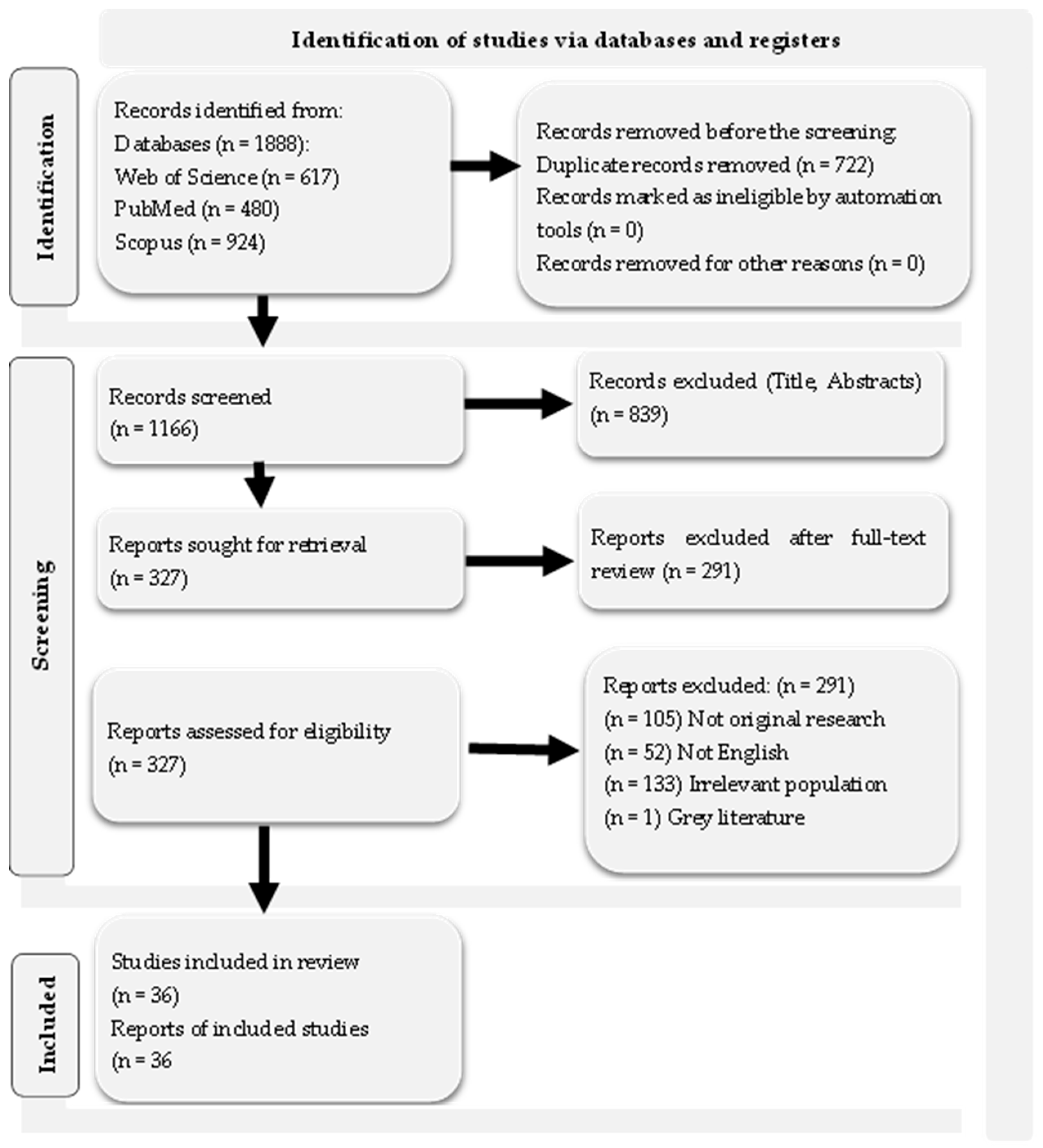
Figure 1. PRISMA ScR Flow Diagram.
Climate 14 00012 g001
Figure 2. Global Distribution of Included Studies by Country. The numbers indicate the number of studies conducted in each country with the same color.
Climate 14 00012 g002
Figure 3. Distribution of included studies by professional group of participants (written review).
Climate 14 00012 g003
Figure 4. Policy Framework: From Health Professionals’ Perceptions to Systemic Resilience in the Face of Climate Change.
Climate 14 00012 g004
Table 1. Query strategy.
Research DatabaseInformation Retrieval StrategySearch Period
PubMed(“climate change” [MeSH Terms] OR “global warming” [MeSH Terms] OR “climate crisis” OR “extreme weather” OR “environmental change”) AND (“health personnel” [MeSH Terms] OR “health professionals” OR “healthcare workers” OR “nurses” OR “physicians” OR “public health staff”) AND (percept * OR attitude * OR belief * OR knowledge OR awareness OR experience OR practice * OR readiness OR prepare * OR opinion OR response OR competency)20 December 2024, 20 January 2025, and 20 March 2025
ScopusTITLE-ABS-KEY ((“climate change” OR “climate crisis” OR “global warming” OR “extreme weather”) AND (“health professionals” OR “healthcare personnel” OR “health workers” OR “nurses” OR “physicians” OR “public health staff”) AND (percept * OR awareness OR knowledge OR belief * OR attitude * OR preparedness OR readiness OR prepare * OR experience OR opinion OR response OR practice *)
Web of ScienceTS = ((“climate change” OR “global warming” OR “climate crisis” OR “extreme weather”) AND (“health professionals” OR “health personnel” OR “nurses” OR “physicians” OR “public health workers”) AND (percept * OR awareness OR knowledge OR attitude * OR belief * OR opinion OR readiness OR preparedness OR response OR experience OR practice *))
Source: Authors’ elaboration. (*) denotes truncation and was used to retrieve all possible variants of the terms.
Table 2. Definition of PCC in this review.
PCC ElementDefinition in This Review
PopulationHealth professionals (e.g., physicians, nurses, public health staff)
ConceptPerceptions, awareness, preparedness, experiences, engagement, knowledge, attitudes regarding climate change
ContextHealth systems, service delivery, and policy challenges related to climate change (e.g., resilience, adaptation, readiness)
Source: Authors’ elaboration.
Table 3. Inclusion/exclusion criteria and rationale.
CriteriaJustification
1.
Choice of primary studies
i.
Contributed to addressing the research questions qualitatively and quantitatively
2.
Studies published in the English language
ii.
Preferred as inclusion language due to its dominance in peer-reviewed scientific publications.
3.
Published surveys between 2016–2025
iii.
Facilitated consideration of the most current data.
4.
Choice of population: healthcare
professionals, public health, and healthcare administration staff
iv.
Represented the research question and the subject of the study more thoroughly.
5.
Exclusion of gray literature (dissertations)
v.
Displayed ambiguity in evaluation
Source: Authors’ elaboration.
Table 4. Indicative studies that have been rejected.
AuthorsStudyReason for Exclusion
[33]American Thoracic Society member survey on climate change and health. Published before 2016
[34]Nurses Drawdown: Building a Nurse-Led, Solutions-Based Quality Improvement Project to Address Climate Change.Not relevant to the research questions
[35]Health professionals in a changing climate: protocol for a scoping reviewThis is not a primary study.
[36]Exploring Nursing Students’ Metaphorical Perceptions and Cognitive Structures Related to the Global Climate Crisis’s Impact on NursingRelated to students
[37]Zorgprofessionals voor het klimaat [Health professionals for the climate].It is not in English and is not directly related to the research questions.
[38]Changement climatique et santé: le point de vue des professionnels de santé aux quatre coins du monde.Not in English
Source: Authors’ elaboration.
Table 5. Thematic categorization of studies on health professionals’ perceptions of climate change and health.
PerceptionsStudies
Recognizing Climate Change and linking it to human activities[14,41,42,43,44,45,46,47,48,49,50,51,52,53,54,55,56]
Understanding the impact of climate change on human health[14,41,42,43,44,45,46,47,48,51,52,53,54,56,57,58,59,60,61,62]
Stressing awareness raising, training and education[44,45,48,49,50,53,54,56,57,59,60,61,62,63,64,65,66]
Source: Authors’ elaboration.
Table 6. Perceptions of factors influencing environmental sustainability and actions and barriers to preparedness of the health system and health professionals.
PerceptionsStudies
Factors Affecting Environmental Sustainability[67]
Readiness of health systems and health workers[41,42,43,44,45,46,48,49,50,51,52,53,54,59,60,61,64,65,68,69,70,71,72,73,74]
Barriers to Adoption of Adaptation and Mitigation Measures[44,46,48,54,55,58,69,75]
Source: Authors’ elaboration.
Disclaimer/Publisher’s Note: The statements, opinions and data contained in all publications are solely those of the individual author(s) and contributor(s) and not of MDPI and/or the editor(s). MDPI and/or the editor(s) disclaim responsibility for any injury to people or property resulting from any ideas, methods, instructions or products referred to in the content.