Next Article in Journal
Seasonal Drought Dynamics in Kenya: Remote Sensing and Combined Indices for Climate Risk Planning
Previous Article in Journal
Climate Change and Health Systems: A Scoping Review of Health Professionals’ Perceptions and Readiness for Action
error_outline You can access the new MDPI.com website here. Explore and share your feedback with us.
 
 
Article

Developing an Adaptive Capacity Framework for Women Market Vendors in Vanuatu

School of the Environment, The University of Queensland, Brisbane, QLD 4072, Australia
*
Author to whom correspondence should be addressed.
Climate 2026, 14(1), 13; https://doi.org/10.3390/cli14010013
Submission received: 21 November 2025 / Revised: 19 December 2025 / Accepted: 23 December 2025 / Published: 5 January 2026
(This article belongs to the Section Climate Adaptation and Mitigation)

Abstract

Pacific Island communities have long navigated the challenges of climate change. Supporting adaptation options is critical for protecting livelihoods, especially given that these countries will continue to unfairly bear the brunt of global climate change impacts. Understanding and strengthening the capacity of individuals and communities to adapt is vital to ensure effective options are available. However, adaptive capacity is highly context-specific and explicit examples, particularly from the Pacific, remain limited. This study focuses on the experiences of women market vendors, for whom marketplaces are integral to food security, income generation, and cultural and social life. Building on existing global and regional frameworks, we assess the adaptive capacity of market vendors across Vanuatu through interviews with women market vendors (n = 69) and key informants (n = 18). The findings informed the development of a new, tailored adaptive capacity framework that identifies six key drivers: access to tangible resources, human assets, social assets, livelihood diversity and flexibility, systems of influence and mindsets, and decision-making capacity. This study presents a context-specific framework grounded in empirical evidence, offering insights for development and adaptation initiatives that aim to strengthen adaptive capacity. We encourage further research to apply and refine this framework across diverse Pacific contexts and sectors to deepen understanding of adaptive capacity and inform effective adaptation strategies.

1. Introduction

Pacific Island countries continue to experience a range of climate change impacts. Rising temperatures, significant rainfall variability, droughts, sea-level rise, and increasingly intense tropical cyclones are already affecting livelihoods across the region [1]. In 2023 alone, Vanuatu experienced two consecutive cyclones that made landfall within days of each other, creating a major humanitarian crisis and affecting over 80 percent of the population through widespread flooding and damage to infrastructure, homes, crops, and communication networks [2]. These impacts have far-reaching implications for people who rely heavily on subsistence or semi-subsistence agriculture to meet food needs and earn income through market selling [3].
Marketplaces throughout the Global South play a vital role in food security, with estimates suggesting that produce grown for marketplaces feeds approximately 25 percent of the global population [4,5]. In the Pacific region, marketplaces hold significant social and cultural value, connecting rural and urban populations with a variety of fresh and culturally appropriate foods [6,7]. These marketplaces supply fresh food to thousands of people who cannot or choose not to grow their own [7,8]. In the Pacific, around 75 to 90 percent of market vendors are women, underscoring the importance of these spaces for women’s economic participation [9].
Climate change will continue to affect food security in the Pacific, profoundly impacting women’s roles in food production for families and communities [10,11]. Extreme events such as cyclones are already impacting marketplaces, both the infrastructure and the ecosystem services necessary for crop production. These events also disrupt roads and transport systems, which are essential for moving food from rural areas to urban markets [10,12,13].
Adaptive capacity is increasingly recognised as a key concept for understanding how people respond to climate change and disaster risk [14]. Effectively assessing adaptive capacity at any scale requires a tailored approach to identify what enhances or hinders it in a specific context [15]. Given the significance of marketplaces for women in terms of income generation and food security, and the context-specific nature of adaptive capacity, there is an urgent need to better understand the adaptation options available to women vendors and the broader factors that influence these options. Moreover, there is a critical gap in understanding how gender at the local level shapes adaptive capacity [16]. Using existing adaptive capacity frameworks, this paper explores the experiences of women market vendors (n = 69) to examine how marketplaces enhance or constrain their ability to adapt. From this, a tailored framework is developed to provide valuable insights for development and adaptation initiatives implemented by government and non-governmental organisations, so that finite resources and funding deliver the most effective outcomes.
This paper begins with a literature review to establish the research context, followed by an overview of existing adaptive capacity frameworks that inform key determinants used in the methods. The findings section presents a tailored framework and its six key drivers for women market vendors, followed by a discussion of broader influencing conditions and concluding remarks.

2. Literature Review

2.1. The Importance of Marketplaces in the Pacific

Marketplaces in the Pacific Islands are important cultural spaces where local populations can access traditional, healthy, and fresh foods [6,7]. In Vanuatu, approximately 75 percent of the population maintain their livelihoods through subsistence and semi-subsistence farming [17]. Marketplaces provide a rare opportunity for many to convert this livelihood strategy into cash, which is often a sole source of income for families [4,7,8,18,19,20,21,22,23,24,25].
As part of the informal economy, marketplaces offer flexible income and working conditions, particularly for women [26]. While their position within the informal economy can mean limited social protection and legal rights [27], marketplaces also provide opportunities to earn cash in an environment that offers autonomy and flexibility [26]. They are often the lifeblood of informal economies [5] and, in some cases, provide a greater source of income than formal employment [26]. Income from marketplaces is critical for women, supporting household management, community contributions, and school-related costs [7,22,28,29]. Because women vendors earn the income themselves, they often have greater control over its use [5,22,30,31]. This income can also enable diversification into other activities such as handicrafts or tourist accommodation, reducing risk and contributing to sustainable livelihoods [12,28,32].
Climate change poses a significant challenge to marketplace trading and livelihoods [7,21]. It will continue to affect Pacific Island communities through coastal erosion, saltwater intrusion, storms, heat stress, drought, increased precipitation, and sea-level rise, all of which limit agricultural capacity [1]. The Pacific Islands are particularly vulnerable due to their geographic location, exposure to climatic stressors such as cyclones, and the prevalence of low-lying coastal areas [1]. These impacts affect marketplace infrastructure and the ecosystem services that support crop production [13]. They also disrupt roads and transport systems essential for moving food to domestic markets [10].
Research in Madang, PNG, found that market sellers are already observing climate impacts on food quality due to increased temperatures and rainfall variability [13]. Similarly, Westoby, Clissold, and McNamara [12] reported that cyclones have caused considerable disruptions to marketplace selling by damaging infrastructure and gardens where produce is grown. Supporting adaptation efforts is urgently needed to protect vulnerable populations from these impacts [33,34].

2.2. Adaptation, Adaptive Capacity, and Marketplaces

The IPCC [1] defines adaptation in human systems as “the process of adjustment to actual or expected climate and its effects, in order to moderate harm or exploit beneficial opportunities” (p. 2898). Adaptive capacity is described as “the ability of systems, institutions, humans and other organisations to take advantage of opportunities or to respond to consequences” [1] (p. 2899). Brooks [35] further defines adaptive capacity in human systems as “the potential of the system to reduce its social vulnerability and thus to minimise the risk associated with a given hazard” (p. 13). Adaptive capacity is a prerequisite for adaptation [36] and underpins the design and implementation of effective strategies [15]. Individuals who can access and utilise effective adaptation options are better equipped to manage exposure to hazards, resulting in greater adaptive capacity [36].
To date, there has been limited research into the enablers of adaptive capacity, particularly at local and household levels [14]. In the Pacific, the literature and practical examples remain scarce [33]. This is concerning because assessments based on Western ideals often overlook intangible factors such as beliefs, worldviews, and values. Consequently, elements of Pacific culture that have historically enabled people to maintain livelihoods amidst climate and disaster risks may not be adequately considered [33].
Adaptive capacity is not universal; it varies across individuals, communities, and institutions and is shaped by social, political, economic, and institutional factors over time and space [36]. Determinants used to assess adaptive capacity must therefore be tailored to each unique context [15]. Practical assessments to identify specific drivers that enhance or hinder adaptation options remain an urgent research priority [14,15].
Given the need for tailored frameworks and the importance of marketplaces in the Pacific—both for women and for local food security—there is a critical need to understand what factors enhance or constrain the adaptation options of women vendors and their overall adaptive capacity. Marketplaces have been identified as important sites for development interventions [28]; therefore, context-specific findings will be valuable for guiding NGOs and governments in designing programmes that support adaptation and strengthen adaptive capacity [14].

3. Conceptual Frameworks

This research draws on existing adaptive capacity frameworks to guide the method and assist in interpreting and analysing findings. These frameworks include the Adaptive Capacity Framework [37,38], the Local Adaptive Capacity (LAC) framework [14], and the Pacific Adaptive Capacity Analysis Framework (PACAF) [33].

3.1. The Adaptive Capacity Framework

The Adaptive Capacity Framework was developed to help governments, developmental agencies, and NGOs build community capacity to adapt more effectively [37,38]. It emphasises the need to consider both the capabilities and willingness of communities, households, and individuals, as well as the assets required to strengthen adaptive capacity [37,38]. The framework identifies five key dimensions: (1) assets, (2) flexibility, (3) organisation, (4) learning, and (5) agency [37,38].

3.2. The Local Adaptive Capacity (LAC) Framework

The LAC framework focuses on understanding how intangible and dynamic dimensions influence adaptive capacity at the local level [14]. Its aim is to identify needs and guide resource allocation to strengthen a system’s ability to adapt [14]. This is achieved by analysing five interrelated characteristics: (1) asset base, (2) institutions and entitlements, (3) knowledge and information, (4) innovation, and (5) flexible forward-looking decision-making and governance [14].

3.3. The Pacific Adaptive Capacity Analysis Framework (PACAF)

The PACAF was developed to address a knowledge gap on how adaptive capacity is shaped in the Pacific and how it can be assessed [33]. It supports community-based adaptation interventions by providing a context-specific assessment to strengthen adaptive capacity and help communities respond to changing risks [33]. The PACAF considers seven factors: (1) human capital, (2) social capital, (3) belief systems, worldviews, and values, (4) resources and their distribution, (5) options for adaptation, livelihood, and food supply, (6) information and awareness, and (7) history of dealing with climate stress [33].

3.4. Framework for Assessing Adaptive Capacity of Market Vendors in Vanuatu

This research integrates elements from the three frameworks to develop a methodological approach suited to assessing the adaptive capacity of women market vendors. From these three frameworks, seven determinants were identified as critical for understanding what enables or constrains adaptive capacity and for highlighting interactions between these determinants (see Table 1).

4. Study Sites and Methods

4.1. Study Sites

Located in the southwestern Pacific Ocean, Vanuatu is made up of 83 individual islands approximating around 12,190 square kilometres [40]. The population exceeds 300,000, with around 79 percent living in rural areas [41]. Vanuatu has three official languages: Bislama, English, and French, and 138 distinct Indigenous languages [40]. The population is predominately ni-Vanuatu (the people of Vanuatu; 99%), with the remainder mostly European, Asian, and Pacific Islander [41]. Religion plays a central role in daily life, with over 94 percent of the population identifying with a Christian denomination such as Presbyterian (27.2%), Seventh Day Adventist (14.8%), Catholic (12.1%), or Anglican (12%) [41].
Vanuatu maintains a rich cultural heritage through Indigenous knowledge upheld via oral traditions [42]. Pre-colonial practices centred on kastom, which uses storytelling to preserve cultural practices and ensure history is passed down through the generations [42]. A key feature of kastom is respect and honour to others [43]. Every language spoken in Vanuatu has at least one word for respect, underscoring its cultural importance [43]. While women maintain their own sense of kastom through practices such as weaving and textiles, kastom was historically, and continues to, be linked to male-dominated practices [43].
Vanuatu has rich natural resources including forests, uplands, corals, and atolls [40]. Its unique biodiversity supports agriculture, which sustains around 80 percent of the population [40]. The country experiences two seasons: a hot, wet season from November to April, and a cooler, drier season from May to October, with annual temperatures ranging from 21 °C to 27 °C [40]. Annual rainfall varies from about 2000 mm in the south to 4000 mm in the north [40]. Like many small islands, Vanuatu faces multiple climatic stressors; for example, cyclones pose a significant threat and are expected to increase in intensity [1]. In 2015, TC Pam (3 March 2015, Category 5) caused extensive economic and non-economic damage [1]. This research was conducted shortly after twin cyclones, TC Judy (1 March 2023, Category 4) and TC Kevin (3 March 2023, Category 4), made landfall and devastated many parts of Vanuatu [44].
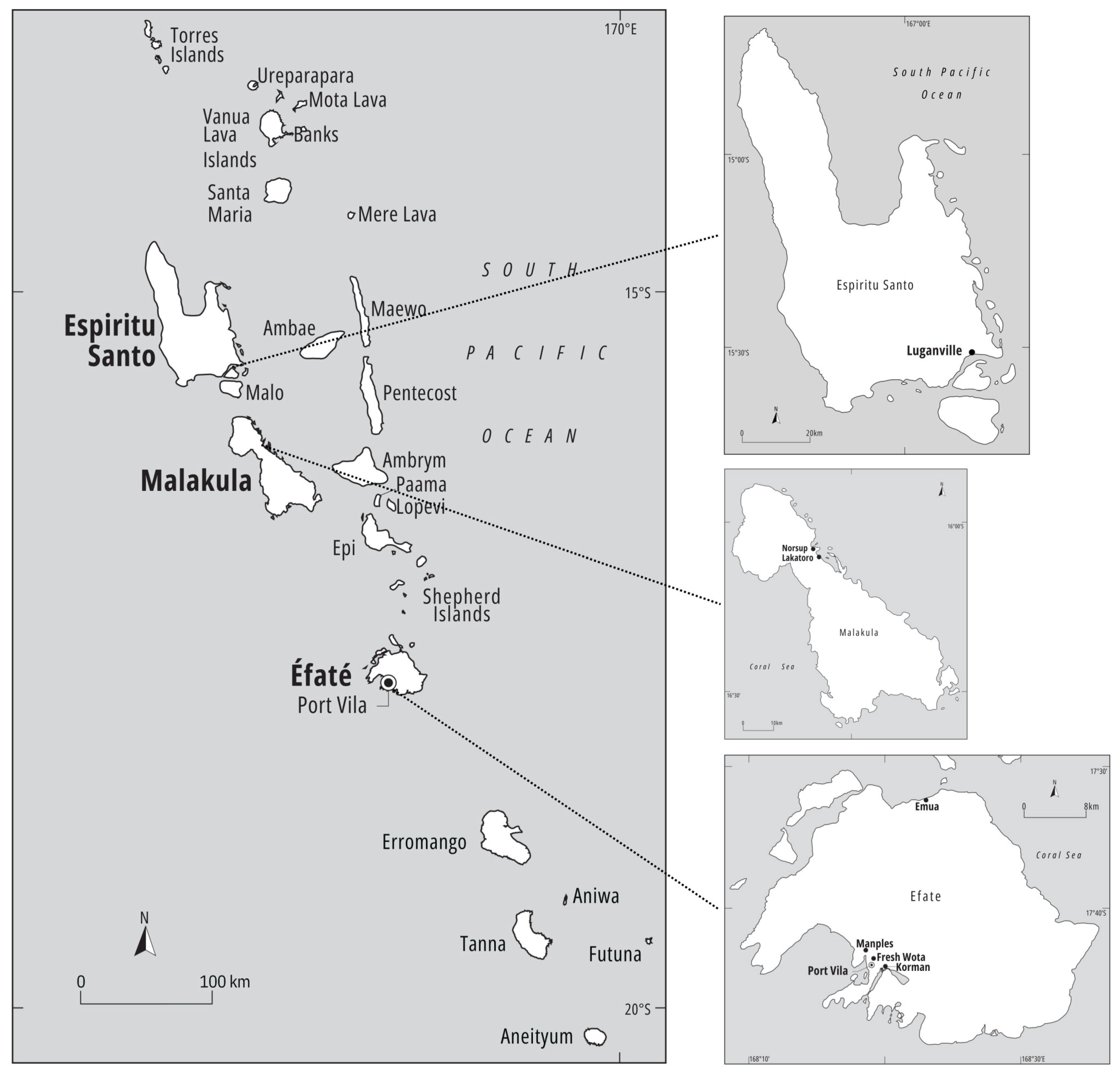
Fieldwork was conducted across three islands: Efate (Shefa Province), Malakula (Malampa Province), and Espiritu Santo (Sanma Province) (see Figure 1). These sites were selected to: (1) compare and contrast rural and urban markets, (2) study the country’s two largest urban markets (Efate and Espiritu Santo), and (3) examine marketplaces managed by government, privately operated, and ad hoc arrangements. This approach provided a diverse and comprehensive understanding of the barriers, risks, challenges, and opportunities influencing the adaptive capacity of women market vendors.

4.2. Methods

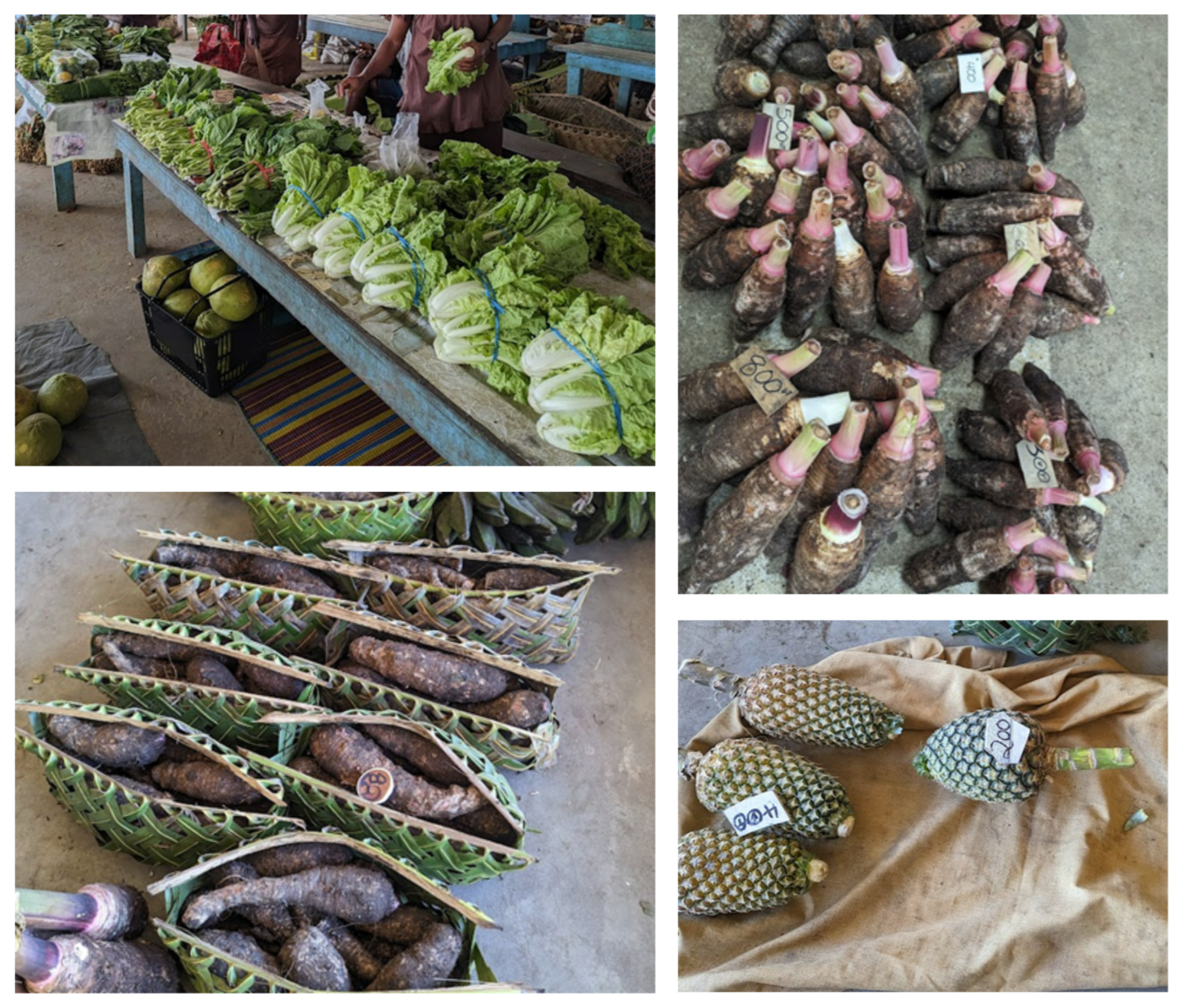
This research draws on the experiences of 69 women market vendors from eight marketplaces across Vanuatu. Small group interviews, involving two to three women, were conducted between April and June 2023. These vendors sold fresh produce such as taro, manioc, peanuts, pineapples, and green leafy vegetables (see Figure 2). Additional interviews were undertaken with key informants (n = 18), including government officials and civil society representatives, to provide broader perspectives and insights.
The small group interviews combined structured questions with participatory activities, creating space for participants to share stories and experiences while allowing the researcher and local research assistant to prompt and ask follow-up questions. Principles of Talanoa were applied, creating “the space and conditions” (noa) by intermingling “researchers’ and participants’ emotions, knowing and experiences” (tala) [45] (p. 24). This approach fostered conversation, information exchange, and emotional connectedness, enabling trust and rapport and positioning participants as subjects rather than objects of research [45]. Participatory research prioritises active involvement of participants in the research process and includes them in achieving outcomes [46]. Activities included assets tables [39], institutional mapping analyses [47], and climate and disaster impact tables [46].
Small group interviews were conducted in marketplaces. Women were recruited through face-to-face introductions, invitations via Market Vendor Associations or market managers, and word-of-mouth referrals among vendors. Interviews were conducted in Bislama (Vanuatu’s national language), translated into English in real time, and later transcribed in English. Transcripts were coded inductively using NVivo (version 20) to identify key themes [48]. Ethics approval was granted by The University of Queensland (Project Number 2022/HE002120), and a research permit was obtained through the Vanuatu Cultural Centre.

5. An Adaptive Capacity Framework for Women Market Vendors

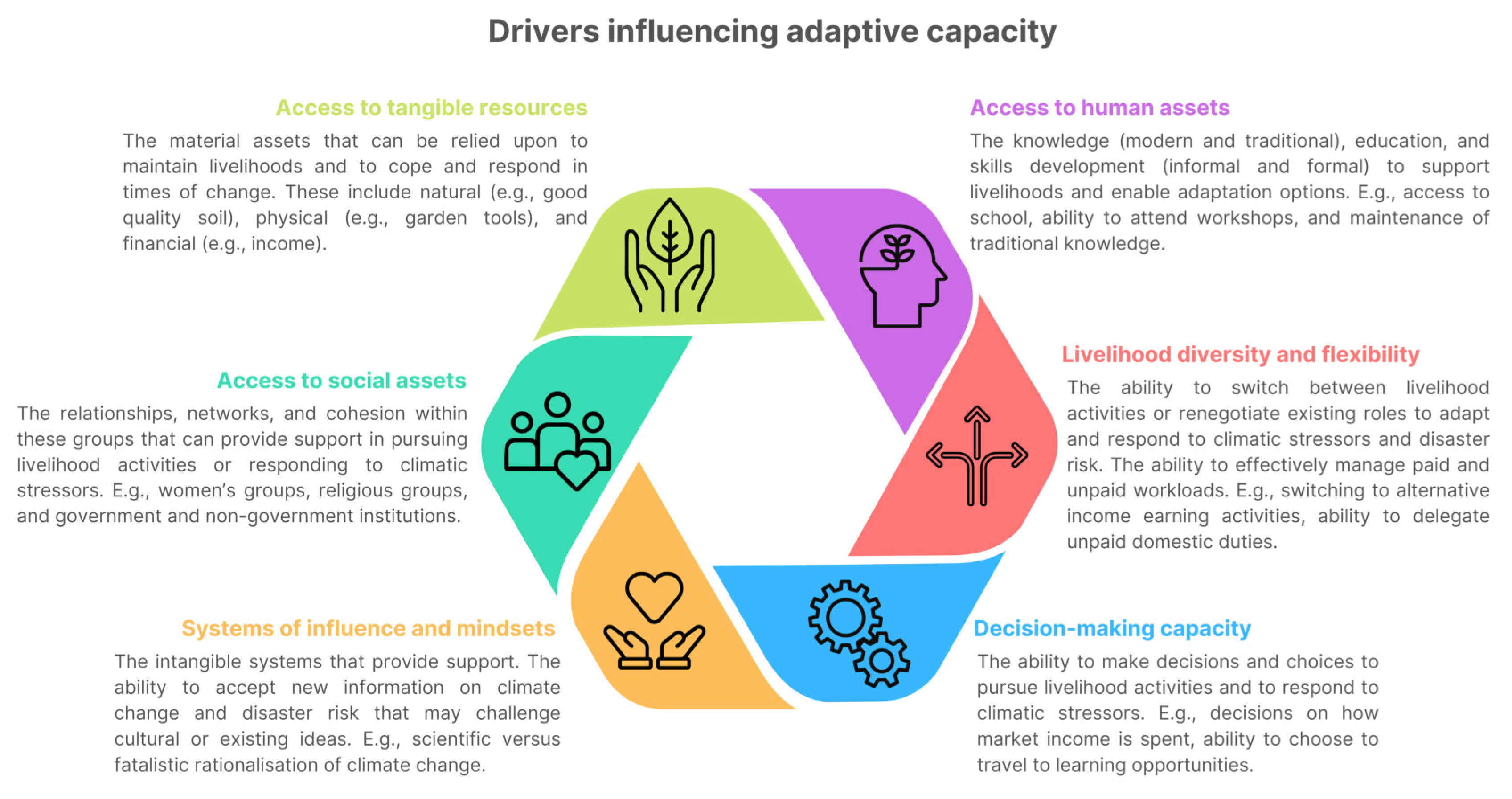
Given the context-specific nature of adaptive capacity, a framework that highlights how marketplaces enhance and/or hinder the ability of market vendors to adapt is essential. Such a framework can inform development and government initiatives, funding priorities, and resource allocation to better support these vital spaces. This research explored the lived experiences of women vendors to understand their capacity to adapt to a range of climatic stressors. While women market vendors are presented here as a homogenous group, we acknowledge that adaptive capacity varies by individual, is not static, and will change over time and space [36]. Being mindful of this, the research identified six key themes influencing the adaptive capacity of women market vendors (see Figure 3). These themes are defined in this framework as drivers, incorporating both tangible (physical) and intangible (process-based) components that shape adaptive capacity. The six drivers are: (1) access to tangible resources, (2) access to human assets, (3) access to social assets, (4) livelihood diversity and flexibility, (5) systems of influence and mindsets, and (6) decision-making capacity. These six drivers are interrelated and can both enable and constrain adaptive capacity, influencing resilience and vulnerability [38]. Figure 3 illustrates these interdependencies; for example, decision-making capacity strongly shapes an individual’s ability to access tangible resources [14].

5.1. Access to Tangible Resources

This driver refers to the natural, physical, and financial assets available to women vendors to maintain their livelihoods and cope in times of change. Assets are an important component of adaptive capacity, as individuals with access to a diverse range of resources generally cope better with changing conditions [37]. Given the nature of market selling, tangible assets were found to be a significant driver influencing the adaptive capacity of women.
Women noted a range of natural assets available for growing food. Most vendors reported good access to gardens, although these were often located on land owned by husbands or male family members, or on customary or leased land. Few issues were reported with short-term access:
The council is providing the space for us to do our gardening, but when the rightful owners comes and the land is being sold out, we will have to move, but at least we will have some money with us.
(Port Vila Central Market vendor)
Some women also reported having rich and fertile soil, “we have good soil for planting” (Korman Market vendor), which enabled them to grow a range of crops. However, women discussed perceived declines in soil quality over time, now affecting crop growth:
We think the soil quality is no longer enough. It’s not too fertile to support the growing and the regrowth of these things. With cabbage shoots, it doesn’t grow, only a few grow. And when we do our seedlings only a few grow. The seedlings aren’t as fast-growing as they used to be and some of them will only grow up to this height and then they just die.
(Korman Market vendor)
One vendor described using fertiliser to address soil quality issues: “the change I did to my garden is that we tried using liquid fertiliser. We did this to the soil, so it is richer to support the plants” (Port Vila Central Market vendor). Women also reported access to natural assets such as seeds through various methods:
We preserve seeds, so when we’re harvesting some of the crops, we keep some behind so that we can collect the seeds… sometimes we share seeds amongst ourselves. If you need a seed, you can ask, and I can provide, and we also buy seeds.
(Lakatoro Market vendor)
Women discussed irregular rainfall patterns increasing the need to save seeds:
Because a lot of rain really damages the seeds and affects the growth of the seeds, so we have to save a lot of seeds so that when there is so much rain and it damages the seeds, we have more to plant.
(Lakatoro Market vendor)
However, season variability was impacting their ability to store seeds: “to save seeds you’ll need a lot of sunlight to dry the seeds and then preserve them, but with the weather we can’t save any seeds. You try to save seeds; they’ll all just get damaged” (Lakatoro Market vendor). This increased the need to purchase seeds, but vendors noted significant price increases over time: “the seeds used to be 800 vatu or 950 [USA$7–$8], around that range, but now it increases up to 1500 to 2000 vatu [USA$12–$16]” (Luganville Market vendor).
Women also reported good access to physical resources such as bush knives, spades, grass cutters, and wheelbarrows. Some women used market income to finance household solar systems, water tanks, or storage systems. However, issues with distribution were evident. Those unable to finance or access water tanks faced challenges during prolonged periods of drought: “we don’t have a good water source, only when it rains our garden is being watered. If it doesn’t rain, our garden is not being watered” (Port Vila Central Market vendor). Further issues existed around tools for gardening or income diversification (e.g., value-addition). While many women had basic tools, few reported access to small machinery such as ploughs: “we focus on our kids school fees, so we don’t buy good gardening tools, but we have the common ones like knives and spades” (Port Vila Central Market vendor). Additionally, women lacked physical assets needed to save seeds effectively or diversify incomes: “the farmers need simple technology for drying and storage. That way they can sell the produce, or the produce can last for a long time” (Spokesperson, Department of Agriculture).
A key strength of the marketplaces was the income they provided. Marketplace income was often the sole source for households, and women relied heavily on gardens to earn money: “my assets are very important because that’s how I make my money. My garden is where I plant to make money” (Port Vila Central Market vendor). However, many women described limited opportunities to earn elsewhere: “we have limited options of making money, just market” (Fresh Wota Market vendor). The growing importance of cash was noted as a major challenge, with market income covering diverse needs: “the food at home, school fees, transportation for my kids to go to school, their lunch money, I save some, and all the vendor fees, the market fees, the table fee every day” (Port Vila Central Market vendor).
The substantial range of costs funded from market income meant little reinvestment into gardens to improve production:
They [vendors] are rural dwellers. They depend entirely on gardening. So, the underlying reason why farming is not improving is because the money is used on healthcare, school fees, [but] it should return to generate a farm. But instead, it’s going out to other applications.
(Spokesperson, Department of Agriculture)
Finally, women faced challenges in accessing loans and savings: “it’s hard to get a loan, and when they offer it’s just to all the men” (Korman Market vendor).

5.2. Access to Human Assets

This driver refers to the knowledge, education, and skills development available that enable new ways of doing and strengthen adaptation options. Enabling learning, whether formal or informal, is critical for building adaptive capacity because it helps people understand and manage uncertainty around climate change and disaster risk [37,38].
Vendors described the marketplace as an important site to access learning opportunities through informal modes. Women vendors were found to maintain a wide range of skills, including baking, fishing, cooking, weaving, sewing, and painting, and shared these skills within the marketplace: “if I notice a weaving pattern that I’m interested in, I can ask my market friend, and she can help me” (Norsup Market vendor). Vendors also discussed learning informally from fellow vendors on how to improve crops for sale:
When we come into the market a lot of women are saying our seeds are not growing, we’ve tried planting them but they’re not growing—it’s something with the weather. And then so we advise them on a technique on how to do it. We gave them the idea that what they should do is after preparing your [garden] bed and bearing the seeds, you cut a taro leaf or banana leaf and cover the bed and then count your days, after three days you can remove the leaf, and your seeds will be growing. So, they all did it and they came the next time thanking us.
(Fresh Wota Market vendor)
Further, women described maintaining traditional knowledge through informal information sharing passed down through generations: “we maintain culture through practicing. It’s been our practice since our ancestors and we’re practicing, and our children are also practicing it” (Port Vila Central Market vendor). However, women noted declining effectiveness of traditional methods due to climate change: “people are no longer using the cultural methods because it’s no longer working. It’s not really that effective anymore” (Emua Market vendor). Women also described the influence of modern education and skills development, which often sidelined traditional practices:
Right now, the belief systems are no longer very helpful. Because we know why things are happening. It’s no longer what you believe, it’s more of what you see and what can help you. We learn a lot so it’s different now. Old people are still believing the seasons, but it’s no longer reliable.
(Emua Market vendor)
Additionally, some women accessed formal learning opportunities provided within marketplaces through organisations such as UN Women (value-addition training, market management), Oxfam (financial training), the Vanuatu Women’s Centre (sexual reproduction and safety), and the Department of Agriculture (planting techniques). However, several challenges with formal learning emerged. Vendors discussed the appropriateness of some trainings. For example, one vendor who learned crop rotation found the increased workload outweighed the benefits: “it’s more products than before but the quantity I’m producing is not so much because I’m working alone” (Port Vila Market vendor). Some vendors also noted a lack of formal training explicitly on climate change: “none of these groups taught me anything. I only observe [my garden] and do what I think is right” (Port Vila Central Market vendor).
Furthermore, women reported that formal learning opportunities were not equally available across marketplaces: “ethically it’s just not right that we are helping this set of women because they come under the system that works with us [UN Women] and then we don’t help these women who are in privately owned [marketplaces]” (Spokesperson, UN Women). Women also described barriers such as poor health, family obligations, and distance from rural to urban areas limiting access to training. Additionally, intangible factors further constrained access. Husbands were widely discussed as limiting mobility for learning opportunities: “our husband don’t allow us to attend workshops; it stops us from learning” (Luganville Market vendor). Women also described feelings of inadequacy, shame, and lack of confidence restricting their ability to seek knowledge and develop skills: “we don’t know where to go and even so we are afraid or ashamed to ask for anything” (Korman Market vendor).

5.3. Access to Social Assets

This driver refers to the relationships, social networks, and cohesion within these groups that women vendors can access to support their livelihoods and enable adaptation options. Strong relationships can enable collective action and facilitate access to knowledge and resources, thereby strengthening access to tangible resources and human assets [37,39].
Women vendors described church, family, and community groups as the most important sources of support: “my family is very important to me because they’re always there for me. They’re my first support group” (Korman Market vendor). The family and church were considered integral for re-establishing their gardens post-disaster, reducing reliance on external or formal assistance: “the church is very supportive to me in terms of cleaning up after the cyclone and for sharing food” (Korman Market vendor).
Women also described social groups within the marketplace as a source of support: “the market mama group is very important because sometimes just socialising helps each other out in a group” (Fresh Wota Market vendor). In some cases, women relied on fellow vendors to sell on their behalf: “whenever I am sick or can’t make it to the market, my mama friends are really important to me because they can sell for me and give me the money they make” (Korman Market vendor). These groups also helped women avoid costs associated with selling at the market: “some people don’t pay for the permit to sell here…they just give their food to someone and them she comes and sells their food and takes their money back home to them” (Port Vila Central Market vendor). Women described relationships formed in the marketplace as improving access to human assets through informal learning opportunities: “in the marketplace, we socialise a lot and so we get to know each other. We feel it’s easy to ask each other information or to teach each other something” (Norsup Market vendor). Some women noted that travel to the marketplace increased their confidence and allowed them to socialise outside their households: “when you’re back at home by yourself, you’re just alone and it’s very lonely. I feel that coming to the market helps me a lot especially when I’m talking to other women” (Lakatoro Market vendor).
However, women observed that increased demand for cash had changed these networks: “if I need help, even from a family or close relative, I have to pay. So, I clean, I make the garden, I do everything by myself, no help” (Port Vila Central Market vendor). While women found the church to be a source of comfort and support, most vendors described substantial financial contributions required to participate in these networks:
We experience that paying our tithe [10% of all earnings] is very helpful. We receive a lot of blessings after paying tithe. When we go home this is compulsory, this is not something to be decided on. We have to pay the tithe, so it’s automatically removed.
(Port Vila Central Market vendor)
Issues with social assets were also linked to societal changes that increased workloads and responsibilities for sustaining community groups and social cohesion:
What’s limiting, is that in Vanuatu we live as a community a lot. And you can’t say you’re making your own money, because what you’re making, you know full well that it belongs to the community, not directly but indirectly. Because you have to contribute so much to your family [and] so much to the community in different ways, with different responsibilities.
(Norsup Market vendor)
This had further implications for women’s time:
When he [the chief] calls us to do work for the community, he doesn’t say let’s do something for this family or go clean their garden. He just asks us to do work for the community and for him, then we have to go do our own things.
(Port Vila Central Market vendor)

5.4. Livelihood Diversity and Flexibility

Livelihood diversity and flexibility refer to the ability to switch between livelihood activities in the face of climate change and disaster risk. This is important because people or communities with greater flexibility are more able to cope with change, adapt effectively to climate impacts, respond to disasters, and in some instances even take advantage of new opportunities [37].
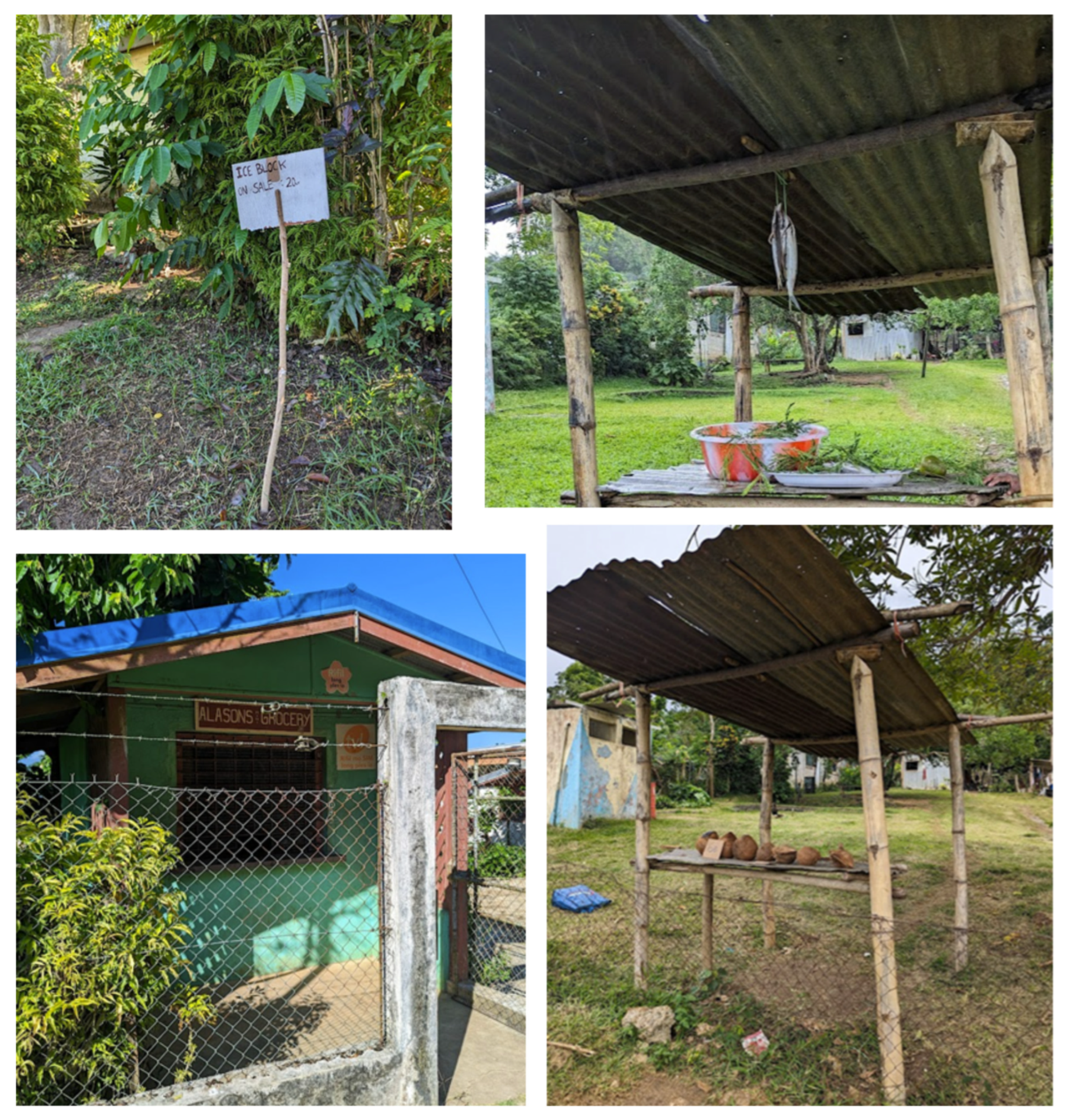
Most notably, the marketplace and the income earned allowed some women to diversify into a range of alternative livelihood activities. These activities included sewing, operating small household shops, weaving, fishing, baking bread and making gato (doughnuts), selling ice blocks, and cooking hot food to sell at roadside stalls (see Figure 4):
When the market is closed, I try to use my sewing skills to sew, and I sell at the cheapest price possible so I can earn money. And I can also weave mats so that I can also sell to earn money.
(Port Vila Central Market vendor)
Women reported that the need to diversify was driven by financial pressures: “we are being pushed by the fact that we need money, so we have to find ways, and we have to come up with ideas and to make money, because after the cyclone especially, everything was destroyed” (Port Vila Central Market vendor). However, women described economic restrictions as limiting their ability to diversify:
It’s very hard to be flexible because I don’t have any other methods of earning another income. And I also don’t have a good storage area for food. So, after the cyclone, it just damages most of the food. And I’m not very flexible in new planting methods, I just use the same as before. That’s how I function after [the] cyclone.
(Korman Market vendor)
Additionally, training such as the value-addition workshop was noted by those who attended as difficult to implement due to a lack of resources:
We have the value-added products plan. We’ve tried that out, but after the cyclone came and destroyed a lot of our crops, we could it for just a while. Now we have run out of food products to carry on with that.
(Port Vila Central Market vendor)
Women also reported that the perceived increase in climatic stressors reduced their motivation to implement diversification strategies: “I’m not very enthusiastic about trying to do something else. The cyclone really discourages me from anything. It’s very hard to be motivated to do something else” (Korman Market vendor). In a few instances, the marketplace had increased women’s flexibility at the household level by challenging existing domestic roles. Some vendors discussed receiving more support at home with domestic and care duties from family members and, in some cases, husbands: “I think it’s changing because before men usually don’t do much but now, they really help” (Port Vila Central Market vendor). However, this was not the universal, as many vendors still reported having to perform multiple roles: “at home we have a lot of responsibilities to carry out like clean-up, cooking, and gardening” (Lakatoro Market vendor).

5.5. Systems of Influence and Mindsets

This driver refers to the intangible systems that provide support and the ability to accept new information on climate change and disaster risk that may challenge existing ideas. This is important in the Pacific context, as the cognitive and social aspects of adaptive capacity are crucial to understanding what is enabling adaptive capacity and what can further support it [33,49].
For many women, the church and family were the most important sources of leadership and guidance. Women described religious groups as a critical source of emotional support and comfort:
The church encourages me. Mentally they are encouraging me to strengthen my mental health. When I am feeling discouraged or alone the church is always there to push me and help me go through my challenges in life and situations.
(Port Vila Central Market vendor)
Women also reported the church to be a source of comfort in relation to the challenges of growing crops in a changing climate:
God is always here providing for me and because this is nature… we don’t have control over what’s going to happen to the plant we are growing we can’t say if it’s going to bear, we can’t control how big it [will grow]. Because of my belief in Christ and because God is always providing, he allows my maniocs to produce and my flowers to be beautiful.
(Port Vila Central Market vendor)
While the church was valuable in terms of comfort and support, these belief systems were found to have implications on women’s mindsets regarding climate change and disasters. For example, when discussing what is causing climate change and disasters, many women believed it to have biblical implications: “these are the signs of the end time, and these are warnings that Christ is showing us so that we come back to him. We’re going too far; we have to repent” (Port Vila Central Market vendor).
Women also discussed the lack of perceived control they felt in addressing or responding to climate change:
We can’t control it, it’s all in God’s hands, the climate is in God’s hands, it’s not in our control. He controls everything and only he can change it but after how much we’ve destroyed everything there’s no going back now there’s no looking back now we can’t do anything about it.
(Fresh Wota Market vendor)

5.6. Decision-Making Capacity

Decision-making capacity refers to the ability to make decisions and choices to pursue livelihood activities and respond to climatic stressors. This means that people have the power and freedom to enact the other components of adaptive capacity [37].
A key strength of the marketplace was the decision-making capacity it enabled through the income earned from selling. Market income was often the sole source of income available to households, and for some, it provided autonomy regarding how the money was used, based on an understanding of: “I made it, I earned it” (Korman Market vendor). In some instances, this was further enhancing decision-making capacity within the home:
After selling, after earning money I collect the money and pay for whatever I think we need in the house. If he [husband] asks how I spend the money, I’m gonna say I’m paying for the things we need. So, he doesn’t really have a say.
(Port Vila Central Market vendor)
While market income enabled decision-making capacity for some women, others were still affected by male-dominated decision-making at the household level. This was attributed to patriarchal systems: “we discuss together, but my husband is also the firstborn son in his family. So, he is the leader in his family and also in my family” (Lakatoro Market vendor). Though some women reported the ability to discuss issues with their husbands, men typically had the final decision: “we discuss together, but the husband is the head of the house so has final say” (Lakatoro Market vendor). Women described their roles as wives as significantly restricting their agency:
Husbands in Vanuatu are very strict, and they want you to do this, do this, do this. You are better off alone, you are better off deciding for yourself when you are alone. But when you are married, and you have kids it is very hard. When I tell my husband, I am going to the market to earn money because we don’t have any money he is going to say, ‘no you have to stay here’.
(Port Vila Central Market vendor)
Women also reported that the church or chief was still the ultimate decision-maker at the community level, and that it was difficult for them to have a say or participate in community decision-making: “the chief makes decisions, calls everyone on the big shell. We don’t have the right to speak during that time just the men” (Lakatoro Market vendor). In some instances, this was further compounded by women’s limited decision-making capacity in their households: “sometimes the chief is more supportive towards the man more than to the woman especially in terms of family issues or issues in the home” (Korman Market vendor). Finally, women faced issues with limited decision-making within the marketplace. Decisions made at an institutional level were often taken without consultation with market vendors. These decisions around pricing produce and restrictions on sleeping overnight in the marketplaces had substantial implications for vendors, particularly financially:
Recently, after the cyclone, the management team came out and did most of the decision-making for us in terms of pricing. We usually sell coconut for 250 [vatu] because we are charging the labour of how we collected the coconut, and the clearing, and then the transportations particularly carrying it over to the market area. And then we put our prices. But after the cyclone the management team came around and said everyone has to price their coconuts below 150 vatu.
(Port Vila Central Market vendor)

6. Discussion

Marketplaces are a vital part of Pacific life and have been identified as sites that can strengthen adaptation and disaster risk reduction [28]. However, their specific influence on the adaptive capacity of women market vendors has, until now, been less observed. Because adaptive capacity is highly context-specific, tailored frameworks like the one presented here are needed to identify adaptation options that enable or constrain market vendors’ capacity to adapt. As identified above, the key drivers of adaptive capacity for women vendors are: (1) access to tangible resources, (2) access to human assets, (3) access to social assets, (4) livelihood diversity and flexibility, (5) systems of influence and mindsets, and (6) decision-making capacity. Detailed examination revealed that each driver encompasses both barriers and enablers influencing women’s adaptive capacity. These factors are ultimately shaped by environmental conditions, economic pressures, institutions and networks, and socio-cultural norms. These are explored further below.
Local environmental conditions have shaped the adaptive capacity of women vendors by influencing their access to tangible resources. Favourable growing conditions meant women reported good access to a range of natural assets (e.g., access to land, good quality soil), which have enabled them to grow food despite facing a range of climatic stressors. However, changes in local environmental conditions were perceived to be diminishing soil quality over time and increasing challenges in food production. Declines in soil quality and limited access to natural resources hindering adaptive capacity have also been documented elsewhere [33,38]. While some frameworks and assessments of adaptive capacity have been criticised for focusing too heavily on tangible assets, natural assets remain an essential element in supporting adaptive capacity, particularly in fostering resilience during times of change [33,37,50]. Strengthening adaptive capacity requires people to be able to access natural resources to respond and adapt to climate change [51].
Women’s access to physical and financial resources has been affected by broader economic conditions. Women reported adequate access to a range of physical resources such as bush knives and spades, but there were challenges around financing larger-scale resources needed to respond to climatic stressors (e.g., water tanks, drying equipment). Access to physical and financial resources in the Pacific is also influenced by gender, due to conditions that limit women’s access and control over resources, which hinders adaptive capacity [38,52]. A significant strength of marketplaces for women vendors was their ability to access financial capital through selling. Vendors often prioritised this cash for household and community needs rather than reinvestment into gardens, which has been noted elsewhere [53]. Market income is a vital, and often sole, source of income available to households; however, economic pressures, such as the increased need for cash, meant this income was needed to cover a wide range of needs (e.g., school costs, tithe, labour, household supplies). Other studies have observed that the growing reliance on cash in the Pacific is contributing to challenging economic conditions [54,55,56].
The ability of women to diversify livelihoods and enable flexibility has also been influenced by broader economic conditions. Livelihood diversification is essential for people to better adapt to the impacts of climate change [37]. The need for cash was the main driver of women’s livelihood diversification. Women maintained a range of skills, and some were able to rely on these skills in times of need. The marketplace also supported flexibility and diversification by enabling the necessary funds to support disaster recovery, such as purchasing materials to rebuild houses and paying labour to clear and replant gardens. However, ongoing climatic stressors were reducing women’s ability to access resources required for diversification activities. Restrictions were also found around accessing loans and savings for diversification strategies during times of disaster. Limited access to finance and resources significantly hinders adaptive capacity [33,37,38,54]. Enhancing adaptive capacity requires consideration of wider barriers that may marginalise or exclude certain groups (e.g., rural women) from accessing the tangible assets needed to support their livelihoods [54].
Institutions and networks have also shaped the adaptive capacity of women vendors. Social assets, such as groups and networks, were identified as key enablers of adaptive capacity. Gendered differences in the Pacific can mean women feel more comfortable participating in informal networks due to restrictions in other spaces [57]. The social networks accessed by women vendors allowed them to sell on behalf of others during times of illness and facilitated information sharing and learning. The importance of social networks in enabling collective action and economic empowerment has been noted in other studies [28,58]. Strong social networks allow communities to organise and act collectively without relying on external support [11].
Women further identified family and church groups as valuable sources of support, particularly in post-disaster situations, as noted elsewhere [57]. The church was identified as a vital institution for women vendors, providing a strong support network for emotional wellbeing, especially in response to climatic stressors. The significant relationship between Pacific communities and religious institutions has been documented in other contexts [59,60]. However, the strong connection to the church influenced vendors’ understanding and awareness of climate change, with many women referencing biblical ideas to describe these events. This presents a challenge, as enhancing adaptive capacity requires a clear understanding of climate risks, knowledge of adaptation options, and the ability to implement them [37,38].
Many respondents expressed the belief that addressing climate change was futile, as it was perceived as God’s will. Effective adaptation strategies depend on a willingness to adapt [15], which means religious beliefs may influence individual agency in adopting measures to address these challenges [60]. Enhancing this driver of adaptive capacity requires initiatives that consider the influence of the church and its role in shaping views and beliefs about the causes of climate change [60]. Knowledge derived from religious institutions also shapes people’s ability to adapt and respond to climate uncertainty and disaster risk [60].
Village governance was identified as a barrier to the adaptive capacity of women vendors. The church and the chief were identified as the primary decision-makers within the community. This meant that women faced constraints and limitations in managing their time, particularly in accessing their gardens or the marketplace. Despite women’s vital roles in growing and selling food, village governance structures restrict their time and ability to engage in these spaces [54,61,62]. Furthermore, societal shifts and the increased importance of cash meant that women were now needing to finance additional support needed for their gardens. Many women vendors also prioritised a portion of their market income to the church, potentially at the expense of reinvesting into their gardens. The giving of tithe, at the expense of initiatives to increase adaptation options, has been recognised elsewhere as a barrier to improving individual livelihoods [60]. Addressing broader barriers at the community and governance levels is essential to ensure that governance decisions do not hinder adaptive capacity at the individual or household level [37].
Finally, socio-cultural factors were shown to significantly influence women’s capacity for decision-making. Although all drivers of adaptive capacity are important, the ability to make decisions is the ultimate enabler for people to enact change and actively enhance their livelihoods [37]. For women vendors, slight improvements in agency have been observed at the household level, particularly concerning decisions on spending their own earnings. For these vendors, the ability to earn money independently had resulted in a gradual shift from economic participation toward greater economic empowerment, as they gained the power to make financial decisions [63]. Higher levels of participation at the household level have been noted in other studies; however, this does not always translate to improved decision-making with broader institutions, such as agriculture or government groups [57,62,64]. This was indeed the case for many women vendors who felt uncertain about where to seek learning or skills development and experienced fear and shame in accessing institutions. Restrictions on women’s agency concerning mobility have been noted as a key challenge in enhancing adaptive capacity [65,66]. This means women often prefer to rely on informal networks and information sharing, which has also been noted elsewhere [57]. Enhancing adaptive capacity means power relations need to shift in order to increase women’s access to information and knowledge [54].
Barriers to women’s agency were further highlighted by decisions made within governmental market structures that excluded them from participation. For example, decisions that altered sleeping and childcare arrangements in certain marketplaces impacted women’s ability to earn an income while taking care of family members. Notably, a marketplace with a female government official recently enhanced the capacity for vendors to remain overnight at the market with their children, underscoring the importance of decision-making that addresses the specific needs of women. Power dynamics that limit women’s decision-making capabilities are significant challenges that hinder adaptive capacity, as noted in other studies [14,38].

7. Concluding Remarks

The marketplace is an important site for enhancing the adaptive capacity of women market vendors. It provides opportunities for income generation and serves as a space where women can access informal groups to share information and learn. The marketplace also plays a role in increasing women’s mobility and confidence to travel beyond their communities. This research developed a tailored framework specific to market vendors to understand the key drivers influencing adaptive capacity. This is important because examples of adaptive capacity remain limited, particularly in the Pacific. Applying this framework highlights how broader context and conditions, including environmental factors, economic circumstances, institutions and networks, and socio-cultural norms, ultimately shape the adaptive capacity of market vendors.
Women vendors are vital to Pacific culture and demonstrate substantial resilience in maintaining their livelihoods despite increasing climatic stressors. However, these existing contexts and conditions impose limitations and barriers to women’s adaptive capacity. Development and policy initiatives must address structural barriers that hinder adaptive capacity and tackle broader power imbalances and gender inequality to effectively support the livelihoods of women market vendors and the many local people who depend on them for food security. Given these findings and their implications for women, we encourage further application of this framework across diverse Pacific contexts to better understand how adaptive capacity can be strengthened.

Author Contributions

Conceptualization, J.K. and K.E.M.; methodology, J.K. and K.E.M.; formal analysis, J.K.; writing—original draft preparation, J.K.; writing—review and editing, J.K., K.E.M. and B.W.; supervision, K.E.M. and B.W. All authors have read and agreed to the published version of the manuscript.

Funding

This research was funded by The University of Queensland, and the Australian Research Council Future Fellowship under the title ‘Working through loss from climate change in the Pacific Islands’ (FT190100114).

Data Availability Statement

The study was conducted in accordance with the Declaration of Helsinki, and the protocol was approved by the Ethics Committee of The University of Queensland (2022/HE002120) on 6 March 2023. The data in this research has been anonymised to protect the participants of this research. As such the data will not be made publicly available due to privacy and ethical restrictions.

Acknowledgments

Sincere gratitude goes to the women market vendors who generously gave their time to participate in this research and share their experiences. We are also grateful to Savianah Raynes for providing such valuable research assistance in the field.

Conflicts of Interest

The authors declare no conflicts of interest. The funders had no role in the design of the study; in the collection, analyses, or interpretation of data; in the writing of the manuscript; or in the decision to publish the results.

References

  1. IPCC. Climate Change 2022: Impacts, Adaptation and Vulnerability. In Working Group II Contribution to the Sixth Assessment Report of the Intergovernmental Panel on Climate Change; IPCC: Cambridge, UK; New York, NY, USA, 2022; pp. 1–3056. [Google Scholar]
  2. Asian Development Bank. Tropical Cyclone Judy and Tropical Cyclone Kevin Emergency Response Project; Asian Development Bank: Mandaluyong City, Philippines, 2023; pp. 1–12. [Google Scholar]
  3. Georgeou, N.; Hawksley, C.; Wali, N.; Lountain, S.; Rowe, E.; West, C.; Barratt, L. Food security and small holder farming in Pacific Island countries and territories: A scoping review. PLoS Sustain. Transform. 2022, 1, e0000009. [Google Scholar] [CrossRef]
  4. Sharp, T.L.M. Intermediary trading and the transformation of marketplaces in Papua New Guinea. J. Agrar. Change 2021, 21, 522–544. [Google Scholar] [CrossRef]
  5. Upadhyaya, S.; Rosa, J.A. Resilience in Social Innovation: Lessons from Women Market Traders. Soc. Sci. Q. 2019, 100, 2115–2133. [Google Scholar] [CrossRef]
  6. Brookfield, H.C. Pacific Market-Places: A Collection of Essays; Brookfield, H.C., Ed.; Australian National University Press: Canberra, Australia, 1969. [Google Scholar]
  7. Dewey, S. Markets and women’s market trading in the pacific islands: An overview of social contexts and ongoing challenges. Asian Women 2011, 27, 1–23. [Google Scholar] [CrossRef]
  8. Underhill-Sem, Y.; Cox, E.; Lacey, A.; Szamier, M. Changing market culture in the Pacific: Assembling a conceptual framework from diverse knowledge and experiences. Asia Pac. Viewp. 2014, 55, 306–318. [Google Scholar] [CrossRef]
  9. UN Women. In Brief: Women’s Economic Empowerment; UN Women: New York, NY, USA, 2018; pp. 1–2. [Google Scholar]
  10. Barnett, J. Dangerous climate change in the Pacific Islands: Food production and food security. Reg. Environ. Change 2010, 11, 229–237. [Google Scholar] [CrossRef]
  11. UN Women. Building Market Resilience to Climate Change: Vanuatu Assessment Report; UN Women: New York, NY, USA, 2016; pp. 1–66. [Google Scholar]
  12. Westoby, R.; Clissold, R.; McNamara, K.E. Alternative entry points for adaptation: Examples from Vanuatu. Weather. Clim. Soc. 2020, 13, 11–22. [Google Scholar] [CrossRef]
  13. McKenna, K.; Yakam, L.T. Signs of “The End of Times”: Perspectives on Climate Change Among Market Sellers in Madang, Papua New Guinea. In Beyond Belief: Opportunities for Faith-Engaged Approaches to Climate-Change Adaptation in the Pacific Islands; Nunn, P.D., Luetz, J.M., Eds.; Springer: Cham, Switzerland, 2021; pp. 139–155. [Google Scholar]
  14. Jones, L.; Ludi, E.; Levine, S. Towards a Characterisation of Adaptive Capacity: A Framework for Analysing Adaptive Capacity at the Local Level; Overseas Development Institute: London, UK, 2010; pp. 1–8. [Google Scholar]
  15. Brooks, N.; Adger, W.N. Assessing and Enhancing Adaptive Capacity. In Adaptation Policy Frameworks for Climate Change: Developing Strategies, Policies, and Measures; Lim, B., Spanger-Siegfried, E., Eds.; Cambridge University Press: Cambridge, UK, 2005; pp. 165–181. [Google Scholar]
  16. Dev, D.S.; Manalo, J.A. Gender and adaptive capacity in climate change scholarship of developing countries: A systematic review of literature. Clim. Dev. 2023, 15, 829–840. [Google Scholar] [CrossRef]
  17. Vanuatu Bureau of Statistics. Vanuatu National Agriculture Census: Preliminary Report; Vanuatu Bureau of Statistics: Port Vila, Vanuatu, 2022.
  18. Barbara, J.; Baker, K. Addressing collective action problems in Melanesia: The Northern Islands Market Vendors’ Association in Vanuatu. Dev. Pract. 2020, 30, 994–1004. [Google Scholar] [CrossRef]
  19. Busse, M.; Sharp, T.L.M. Marketplaces and Morality in Papua New Guinea: Place, Personhood and Exchange. Oceania 2019, 89, 126–153. [Google Scholar] [CrossRef]
  20. Curry, G.N.; Koczberski, G.; Inu, S.M. Women’s and Men’s Work: The Production and Marketing of Fresh Food and Export Crops in Papua New Guinea. Oceania 2019, 89, 237–254. [Google Scholar] [CrossRef]
  21. Dewey, S.; Bolabola, C. Feeding the City and Financing the Family. In Diversity, Social Justice, and Inclusive Excellence: Transdisciplinary and Global Perspectives; Asumah, S.N., Nagel, M., Eds.; State University of New York Press: New York, NY, USA, 2014; pp. 309–326. [Google Scholar]
  22. Georgeou, N.; Hawksley, C. Challenges for sustainable communities in Solomon Islands: Food production, market sale and livelihoods on Savo Island. Portal 2017, 14, 67–86. [Google Scholar] [CrossRef]
  23. Keen, M.; Ride, A. Trading places: Inclusive cities and market vending in the Pacific Islands. Asia Pac. Viewp. 2019, 60, 239–251. [Google Scholar] [CrossRef]
  24. Koczberski, G.; Curry, G.N.; Bue, V. Oil palm, food security and adaptation among smallholder households in Papua New Guinea: Oil palm, food security and adaptation. Asia Pac. Viewp. 2012, 53, 288–299. [Google Scholar] [CrossRef]
  25. Underhill, S.J.R.; Joshua, L.; Zhou, Y. A preliminary assessment of horticultural postharvest market loss in the Solomon Islands. Horticulturae 2019, 5, 5. [Google Scholar] [CrossRef]
  26. Anderson, T. Women roadside sellers in Madang. Pac. Econ. Bull. 2008, 23, 59–73. [Google Scholar]
  27. Chen, M. The Informal Economy: Definitions, Theories and Policies; Women in Informal Employment: Globalizing and Organizing (WIEGO): Cambridge, UK; Manchester, UK, 2012; pp. 1–26. [Google Scholar]
  28. McNamara, K.E.; Clissold, R.; Westoby, R. Marketplaces as sites for the development-adaptation-disaster trifecta: Insights from Vanuatu. Asia Pac. Viewp. 2020, 61, 566–576. [Google Scholar] [CrossRef]
  29. Singh-Peterson, L.; Iranacolaivalu, M. Barriers to market for subsistence farmers in Fiji—A gendered perspective. J. Rural. Stud. 2018, 60, 11–20. [Google Scholar] [CrossRef]
  30. Addinsall, C.; Rihai, N.; Nasse, A. Agroecology and Sustainable Livelihoods as a Framework to Empower Rural Ni Vanuatu Women. In Integrating Gender in Agricultural Development; Singh-Peterson, L., Carnegie, M., Eds.; Emerald Publishing Limited: Leeds, UK, 2019; pp. 105–120. [Google Scholar]
  31. Chang, H.-S.; Be’Soer, L.; Wali, C.; Anjan, J.; Ramita, I. Women in Sweet Potato Marketing in Papua New Guinea; Australian Centre for International Agricultural Research: Canberra, Australia, 2010.
  32. McNamara, K.E.; Clissold, R.; Westoby, R. Women’s capabilities in disaster recovery and resilience must be acknowledged, utilized and supported. J. Gend. Stud. 2021, 30, 119–125. [Google Scholar] [CrossRef]
  33. Warrick, O.; Aalbersberg, W.; Dumaru, P.; McNaught, R.; Teperman, K. The ‘Pacific Adaptive Capacity Analysis Framework’: Guiding the assessment of adaptive capacity in Pacific island communities. Reg. Environ. Change 2017, 17, 1039–1051. [Google Scholar] [CrossRef]
  34. Smith, J.B.; Klein, R.J.T.; Huq, S. Introduction. In Climate Change, Adaptive Capacity and Development; Smith, J.B., Klein, R.J.T., Huq, S., Eds.; Imperial College Press: London, UK, 2003; pp. 1–347. [Google Scholar]
  35. Brooks, N. Vulnerability, risk and adaptation: A conceptual framework. In Tyndall Centre for Climate Change Research; Centre for Social and Economic Research on the Global Environment (CSERGE): Norwich, UK, 2003; pp. 1–20. [Google Scholar]
  36. Smit, B.; Wandel, J. Adaptation, adaptive capacity and vulnerability. Glob. Environ. Change 2006, 16, 282–292. [Google Scholar] [CrossRef]
  37. Cinner, J.E.; Adger, W.N.; Allison, E.H.; Barnes, M.L.; Brown, K.; Cohen, P.J.; Gelcich, S.; Hicks, C.C.; Hughes, T.P.; Lau, J.; et al. Building adaptive capacity to climate change in tropical coastal communities. Nat. Clim. Change 2018, 8, 117–123. [Google Scholar] [CrossRef]
  38. Cohen, P.J.; Lawless, S.; Dyer, M.; Morgan, M.; Saeni, E.; Teioli, H.; Kantor, P. Understanding adaptive capacity and capacity to innovate in social-ecological systems: Applying a gender lens. Ambio 2016, 45, S309–S321. [Google Scholar] [CrossRef]
  39. McNamara, K.E.; Smithers, S.; Westoby, R. Identification of limits and barriers to climate change adaptation: Case study of two islands in Torres Strait, Australia. Geogr. Res. 2011, 55, 438–455. [Google Scholar] [CrossRef]
  40. World Bank. Vanuatu. Available online: https://climateknowledgeportal.worldbank.org/country/vanuatu (accessed on 14 November 2022).
  41. Vanuatu Bureau of Statistics. Vanuatu: 2020 National Population and Housing Census; Vanuatu Bureau of Statistics: Noumea, New Caledonia, 2020.
  42. Walshe, R.A.; Nunn, P.D. Integration of indigenous knowledge and disaster risk reduction: A case study from Baie Martelli, Pentecost Island, Vanuatu. Int. J. Disaster Risk Sci. 2012, 3, 185–194. [Google Scholar] [CrossRef]
  43. Bolton, L. Unfolding the Moon: Enacting Women’s Kastom in Vanuatu; University of Hawaii Press: Honolulu, HI, USA, 2002; Volume 1, p. 275. [Google Scholar]
  44. Government of Vanuatu. Tropical Cyclones Judy & Kevin Recovery and Resilience Plan 2023–2027; Government of Vanuatu: Port Vila, Vanuatu, 2023.
  45. Vaioleti, T.M. Talanoa research methodology: A developing position on Pacific research. Waikato J. Educ. 2006, 12, 21–34. [Google Scholar] [CrossRef]
  46. Kumar, S. Methods for Community Participation: A Complete Guide for Practitioners; Practical Action Publishing: Warwickshire, UK, 2002; pp. 1–335. [Google Scholar]
  47. Geilfus, F. 80 Tools for Participatory Development: Appraisal, Planning, Follow-Up and Evaluation; Inter-American Institute for Cooperation on Agriculture (IICA): San José, Costa Rica, 2008; pp. 1–203. [Google Scholar]
  48. Richards, L. Using NVivo in Qualitative Research; SAGE: Newcastle upon Tyne, UK, 1999. [Google Scholar]
  49. Kuruppu, N.; Liverman, D. Mental preparation for climate adaptation: The role of cognition and culture in enhancing adaptive capacity of water management in Kiribati. Glob. Environ. Change 2011, 21, 657–669. [Google Scholar] [CrossRef]
  50. Adger, W.N.; Vincent, K. Uncertainty in adaptive capacity. Comptes Rendus Geosci. 2005, 337, 399–410. [Google Scholar] [CrossRef]
  51. Prakash, P.; Mishra, P.K. Sustainable Development Practices Using Geoinformatics; Kanga, S., Singh, S.K., Mishra, V.N., Eds.; John Wiley & Sons, Incorporated: Hoboken, NJ, USA, 2020; pp. 205–214. [Google Scholar]
  52. Ensor, J.E.; Park, S.E.; Hoddy, E.T.; Ratner, B.D. A rights-based perspective on adaptive capacity. Glob. Environ. Change 2015, 31, 38–49. [Google Scholar] [CrossRef]
  53. Busse, M. Urban Food Security and the Goroka Fresh Food Market. J. Post. Grad. Stud. Res. 2014, 1, 30–47. [Google Scholar]
  54. Ensor, J.E. Adaptation and Resilience in Vanuatu: Interpreting Community Perceptions of Vulnerability, Knowledge and Power for Community-Based Adaptation Programming; Oxfam: Melbourne, Australia, 2015. [Google Scholar]
  55. Jackson, G.; McNamara, K.; Witt, B. A Framework for Disaster Vulnerability in a Small Island in the Southwest Pacific: A Case Study of Emae Island, Vanuatu. Int. J. Disaster Risk Sci. 2017, 8, 358–373. [Google Scholar] [CrossRef]
  56. Barnett-Naghshineh, O. Global Warming or Cash Economy? Discourses of Climate Change and Food in Eastern Highlands Province, Papua New Guinea. In Climate Change, Culture, and Economics: Anthropological Investigations; Wood, D.C.E., Ed.; Emerald Group Publishing Limited: Leeds, UK, 2015; Volume 35, pp. 107–133. [Google Scholar]
  57. Friedman, R.S.; Mackenzie, E.; Sloan, T.; Sweaney, N. Networking for gender equitable climate-smart agriculture. Clim. Dev. 2022, 15, 229–239. [Google Scholar] [CrossRef]
  58. Udas, P.B.; Tamang, D.D.; Unni, A.; Hamal, M.; Shrestha, K.; Pandit, A. Basin level gendered vulnerabilities and adaptation: A case of Gandaki River Basin. Environ. Dev. 2019, 31, 43–54. [Google Scholar] [CrossRef]
  59. Fletcher, S.M.; Thiessen, J.; Gero, A.; Rumsey, M.; Kuruppu, N.; Willetts, J. Traditional Coping Strategies and Disaster Response: Examples from the South Pacific Region. J. Environ. Public Health 2013, 2013, 264503. [Google Scholar] [CrossRef]
  60. Kuruppu, N. Adapting water resources to climate change in Kiribati: The importance of cultural values and meanings. Environ. Sci. Policy 2009, 12, 799–809. [Google Scholar] [CrossRef]
  61. Alston, M.; Fuller, S.; Kwarney, N. Women and climate change in Vanuatu, Pacific Islands Region. Gend. Place Cult. A J. Fem. Geogr. 2023, 32, 83–104. [Google Scholar] [CrossRef]
  62. Peralta, A. The role of men and women in agriculture and agricultural decisions in Vanuatu. Asia Pac. Policy Stud. 2022, 9, 59–80. [Google Scholar] [CrossRef]
  63. Gurney, I. From participation to power—Pacific approaches to women’s economic empowerment. Gend. Dev. 2022, 30, 177–200. [Google Scholar] [CrossRef]
  64. Rao, N.; Mishra, A.; Prakash, A.; Singh, C.; Qaisrani, A.; Poonacha, P.; Vincent, K.; Bedelian, C. A qualitative comparative analysis of women’s agency and adaptive capacity in climate change hotspots in Asia and Africa. Nat. Clim. Change 2019, 9, 964–971. [Google Scholar] [CrossRef]
  65. Anugwa, I.Q.; Obossou, E.A.R.; Onyeneke, R.U.; Chah, J.M. Gender perspectives in vulnerability of Nigeria’s agriculture to climate change impacts: A systematic review. GeoJournal 2023, 88, 1139–1155. [Google Scholar] [CrossRef]
  66. Lawless, S.; Cohen, P.; McDougall, C.; Orirana, G.; Siota, F.; Doyle, K. Gender norms and relations: Implications for agency in coastal livelihoods. Marit. Stud. 2019, 18, 347–358. [Google Scholar] [CrossRef]
Figure 1. Map of Vanuatu showing study sites (created by Chandra Jayasuriya).
Climate 14 00013 g001
Figure 2. Fresh produce for sale: An array of green leafy vegetables (top left), taro (top right), manioc (bottom left), and pineapples (bottom right) (Photographs by Jessica Kilroy).
Climate 14 00013 g002
Figure 3. Drivers influencing the adaptive capacity of market vendors in Vanuatu (© Canva.com).
Climate 14 00013 g003
Figure 4. Diversification in action: home-made ice blocks for sale (top left), fish for sale at a roadside stall (top right), household store (bottom left), and roadside stall selling coconuts (bottom right). (Photographs by Jessica Kilroy).
Climate 14 00013 g004
Table 1. Integrated framework for assessing the adaptive capacity of market vendors in Vanuatu.
Determinant 1—Assets
Control over and access to key assets/capitals that are tangible (e.g., natural, physical, financial) and intangible (e.g., human, social) [14,33,37,38,39].
Determinant 2—Social organisation
Leadership, community governance structures, support groups, social capital, and social networks for learning [33,37,38,39].
Determinant 3—Learning
Participation in training, ability to seek new information, awareness raising, and capacity to trial new techniques and innovations to improve livelihoods [14,33,37,38].
Determinant 4—Flexibility
Ability to access a range of adaptation options and to shift between these strategies despite climate and disaster risks [14,33,37,38].
Determinant 5—History of dealing with climate stress
Ability to draw on past experiences of climate and disaster risk to manage present and future impacts [33].
Determinant 6—Belief systems, worldviews, and values
Adherence to traditional or modern value systems, willingness to accept change, belief in self-agency versus determinism, short-term versus long-term thinking, and reliance on external organisations versus independence [33].
Determinant 7—Agency
Ability of individuals to make choices about their lives and participate in decision-making that improves wellbeing or enables coping during crises [37,38].
Disclaimer/Publisher’s Note: The statements, opinions and data contained in all publications are solely those of the individual author(s) and contributor(s) and not of MDPI and/or the editor(s). MDPI and/or the editor(s) disclaim responsibility for any injury to people or property resulting from any ideas, methods, instructions or products referred to in the content.