


Abstract
Agro-industrial facilities host processes and products that are highly sensitive to thermal fluctuations. Given the projected increase in air temperatures in tropical regions due to climate change, improving indoor thermal conditions in these facilities has become critically important. Conventional cooling systems are widely used to maintain adequate indoor temperatures; however, they are associated with high energy consumption. In this context, Ground Source Heat Pump (GSHP) technology emerges as a promising alternative to reduce cooling loads by exchanging heat with the ground. This study evaluates the reductions in cooling energy consumption and the return on investment of a GSHP system integrated with conventional cooling system, considering a prototype agro-industrial room located in two ecotones of the Brazilian Midwest: the Amazon Forest (AF) and Brazilian Savanna (BS). Building energy simulations were performed using EnergyPlus software v. 9 under current climate conditions and climate change scenarios for 2050 and 2080. Initially, the prototype room was conditioned using a conventional HVAC system; subsequently, a GSHP system was integrated to enhance energy efficiency and reduce energy demand. Under current conditions, cooling energy demand in the BS and AF ecotones is projected to increase by 16.5% and 18.3% by 2050, and by 24.5% and 23.5% by 2080, respectively. The payback analysis indicates that the average return on investment improves under future climate scenarios, decreasing from 14.5 years under current conditions to 10.13 years in 2050 and 9.86 years in 2080. The findings contribute to understanding the thermal resilience and economic feasibility of ground-coupled heat exchangers as a sustainable strategy for mitigating climate change impacts in the agro-industrial sector.
1. Introduction
According to projections by the Food and Agriculture Organization of the United Nations (FAO), the global population is expected to reach 9 billion by 2050, with approximately 70% residing in urban areas. This demographic shift will require a substantial expansion in food production, estimated at nearly one billion metric tons of cereals and over 470 million metric tons of meat [1]. Furthermore, the FAO anticipates that developing countries will account for 72% of global meat consumption by mid-century, representing an increase of 12 percentage points relative to current levels.
In this context, Brazil presents exceptional conditions to meet the growing global demand for food, given its vast agricultural and livestock areas and its position as one of the world’s leading producers and exporters of grains and beef. Despite this significant potential, agricultural production must advance in a sustainable manner, ensuring environmental protection while maintaining food security for future generations. For example, Flach et al. [2] estimated that temperature increases associated with historical deforestation between 1985 and 2012 resulted in a 12% reduction in soybean yields in the Amazon region and a 6% reduction in the Savanna biome. Consequently, one of the main challenges currently faced by the sector is the need to reduce greenhouse gas emissions and integrate sustainability across all stages of the production chain [3].
A wide range of agro-industrial facilities located on rural properties and within corporate environments is required for storage and processing agricultural products. These structures vary in scale and function according to the type of crop or agro-industrial activity involved and represent a viable opportunity for the sector to invest in sustainable practices. As highlighted by Cogato et al. [4], understanding the actual requirements of agro-industrial buildings enables optimization of the production chain, thereby improving the production, storage, and commercialization of agricultural and livestock products. Poorly planned facilities tend to be inefficient and of limited support for sustaining rural activity. Agro-industrial buildings may therefore be as critical as production itself, as they host essential activities ranging from the storage of inputs and products to the processing and preserving food, fibers, grains, seeds, and other materials. In light of current environmental challenges, energy efficiency in buildings and the increasing impacts of global warming have become essential considerations for sustainable development, particularly in context increasingly shaped by climate change [5].
Among the Brazilian states, Mato Grosso—located in the Midwest region and covering an area of 903,357 km2—stands out as the country’s leading agricultural producer, accounting for approximately 37% of national output, with a string emphasis on soybean, corn, and cotton production [6]. The region is characterized by tropical climate, with persistently high temperatures and humidity levels throughout the year, as well as substantial annual rainfall [7]. Considering that the frequency of hot days is projected to increase in the tropics regions, the potential effects of climate change represent a significant concern not only for agricultural production but also for the built environment, particularly regarding building design and operational performance. Global warming is expected to directly affect the thermal behavior of buildings by increasing cooling demand during hot seasons and reducing heating demand during colder periods, thereby increasing energy consumption during the operational phase [8].
Projected climate change in the region constitutes a challenge that can be addressed through the appropriate application of sustainable design measures and bioclimatic strategies aimed at adapting buildings to global warming, particularly those intended for agro-industrial activities. In this context, this research focuses on production rooms within agro-industrial buildings that require continuous cooling systems due to indoor processes that demand controlled thermo-hygrometric conditions. In such environments, indoor air temperature must not exceed 26 °C, while relative humidity should remain close to 60% [9].
To address these requirements, Ground Source Heat Pump (GSHP) systems exploit the relatively stable temperatures of the Earth’s shallow subsurface to provide efficient heating and cooling for buildings by circulating fluid through underground pipes to exchange heat with the ground [10]. These systems have the potential to significantly reduce energy consumption and the carbon footprint associate with conventional electricity-based heating and cooling technologies. Several studies conducted in Brazil have investigated GSHP applications [11,12,13], primarily demonstrating the feasibility of system implementation for cooling or stabilizing indoor temperatures, given that subsurface soil temperatures remain relatively constant at depths of approximately 2.5 to 3.0 m [14,15]. However, existing research has largely overlooked the implications of climate change–induced variations in soil temperature on the performance and long-term viability of GSHP systems.
Considering the economic and social impacts of global warming in Brazil’s Midwest region, particularly its effects on agricultural production and agro-industrial infrastructure, it is essential to evaluate technologies and strategies that enhance sustainability while reducing operational costs. Accordingly, this article aims to assess the payback period of investments in GSHP systems designed to stabilize indoor temperatures in agro-industrial facilities located in two distinct ecotones within a tropical climate in Brazil. The analysis is based on a representative prototype room within an agro-industrial building. Specifically, the study pursues two objectives: (i) to compare the energy consumption profiles of HVAC systems with and without the integration of GSHP technology, and (ii) to evaluate the technical and economic feasibility of installing and operating air-conditioning systems equipped with buried pipes under both baseline climate conditions and projected future scenarios for 2050 and 2080.
2. Materials and Methods
This research is classified as applied, aiming to generate practical knowledge to address specific problems. A baseline scenario approach was adopted, developed using both primary and secondary climate data files to represent conditions with and without the potential influence of global warming. Climate data from the 1985–2014 period served as the basis for projecting future trends and defining representative scenarios that reflect climatic conditions influenced by climate change [5].
The methodological framework comprised the following steps: (a) climatic characterization of the study zone; (b) preparation of future weather files; (c) characterization of building materials and envelope components; (d) definition of assumptions for building energy simulation modeling; (e) establishment of representative parameters for building thermal simulations considering air-conditioning systems with and without GSHP integration; (f) evaluation of energy consumption; and (g) assessment of the payback period of the investments.
2.1. Study Location
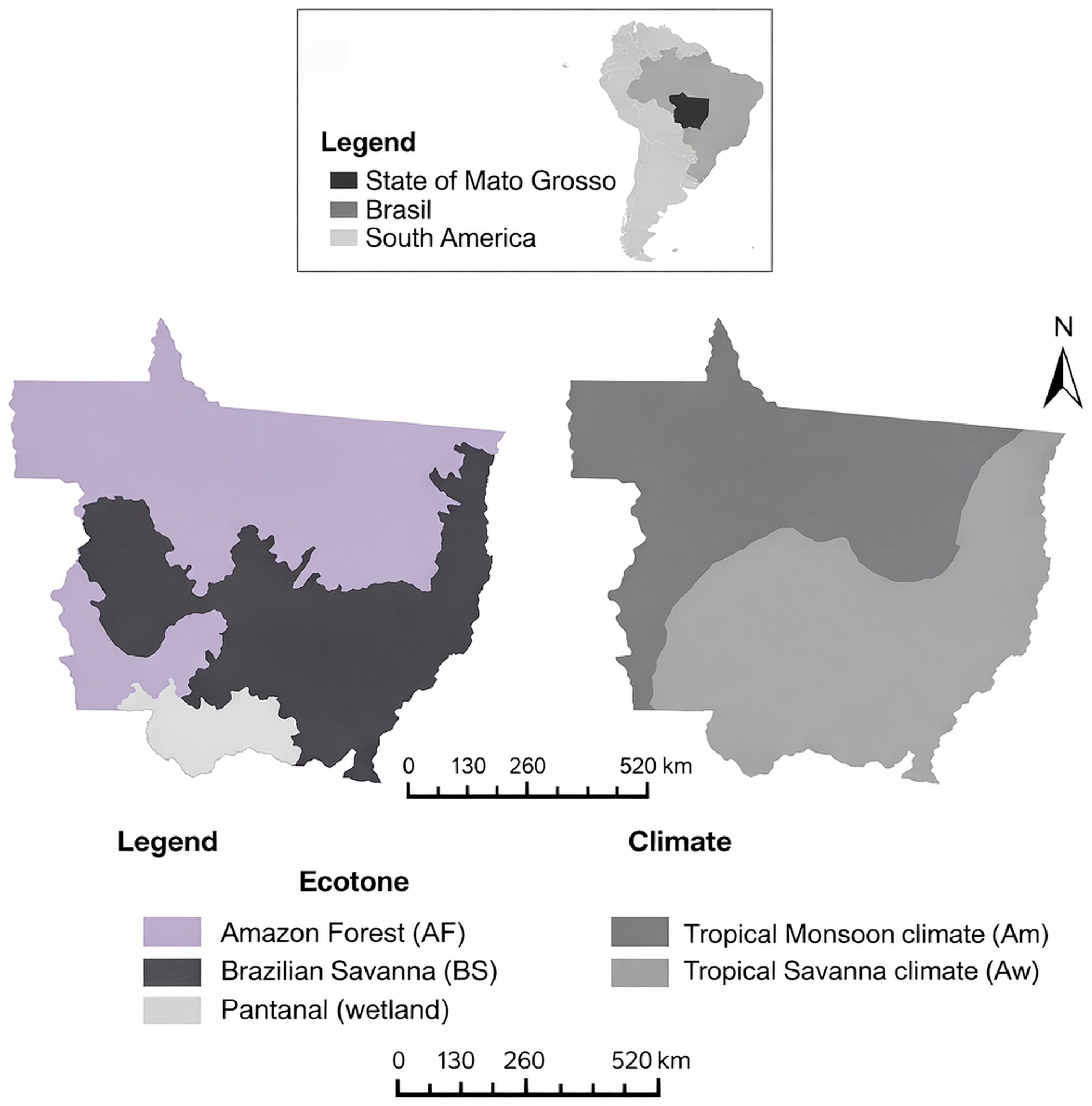
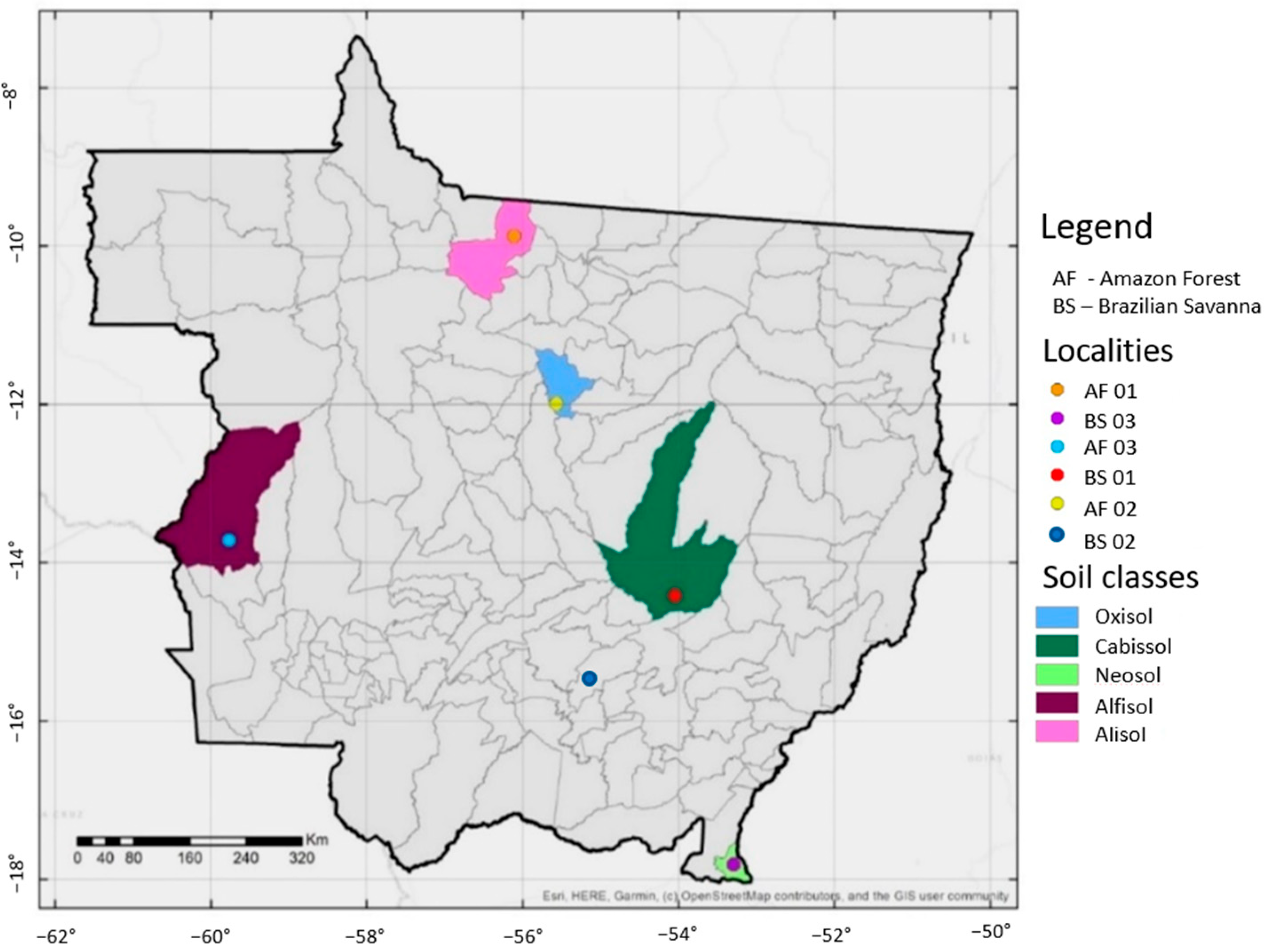
The study sites are located in the state of Mato Grosso, in the Brazilian Midwest, and encompass two ecologically significant biomes: the Cerrado (Brazilian savanna), in the central region, and the Amazon rainforest, in the northern region. These areas are influenced by two predominant climate types according to the Köppen–Geiger classification: Tropical monsoon (Am) and Tropical savanna (Aw), which account for 47.2% and 52.8% of the land area of Mato Grosso, respectively [16] (Figure 1).
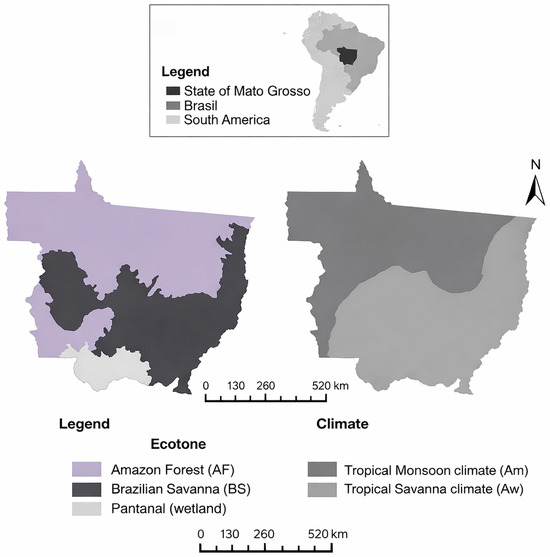
Figure 1.
Location of Mato Grosso State in Brazil and its ecotones and climates.
Six sites within the state were carefully selected based on data related to their agro-industrial vocation and production potential. The selection process also considered the diversity of soil and climate types (Am and Aw), recognizing that subsurface temperature is influenced not only by external air temperature but also by the physical and thermal properties of the soil. In addition, the availability of historical climate data for each region from the Solar and Wind Energy Resource Assessment (SWERA) database https://openei.org/wiki/Solar_and_Wind_Energy_Resource_Assessment_(SWERA) (accessed on 28 December 2025) was taken into account, as these data are essential for developing climate change scenario–based approaches.
This phase employed a cluster sampling method guided by the following selection criteria:
- (a)
- In the first stage, municipalities were selected based on the presence of meteorological stations, since subsurface temperature data are fundamental for the design of GSHP systems. Municipalities with a clear agribusiness vocation were prioritized, while those with incomplete meteorological records were excluded. This criterion reduced the initial sample size from 141 municipalities to 34 potential candidates;
- (b)
- In the second stage, municipalities were screened according to their pedological characteristics. Planosols were excluded due to the absence of meteorological stations in areas with this soil type; Plinthosols were excluded because they cover only 7% of the state’s territory; and Gleysols were excluded because municipalities dominated by this soil type—typically located in wetland ecotones—are primarily focused on extensive livestock farming and mineral extraction, which offer limited potential for GSHP system applications. As a result, the analysis focused on five representative soil types;
- (c)
- In the final stage, the selection incorporated economic vocation, soil characteristics, local altitude—given its significant influence on regional climate—and the main ecotone types within the state. This procedure resulted in the identification of six key sites for geothermal assessment, with three located in the Amazon Forest (AF) ecotone and three in the Brazilian Savanna (BS) ecotone.
Table 1 summarizes the main characteristics of the selected sites, including annual average air and soil temperatures derived from historical climate data obtained from the SWERA database. The sites are labeled in ascending order of latitude and altitude within each ecotone analyzed. Figure 2 illustrates the spatial distribution of the selected sites within the state of Mato Grosso.

Table 1.
Main information of the selected sites: altitude, vocation, Ecotone, soil and climate types.
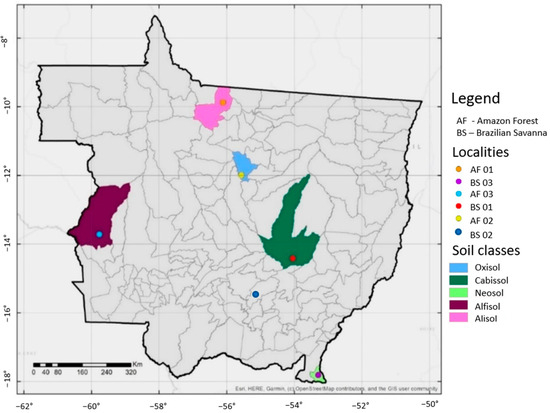
Figure 2.
Selected locations for evaluating geothermal potential.
The thermophysical properties of the analyzed soils—namely thermal conductivity (W/m·°C), specific heat capacity (J/kg·°C), and heat transfer capacity (W/m)—did not exhibit significant variations among the soils at the investigated sites (±5%). These variations did not affect the sizing or performance of the heat pumps; therefore, the influence of soil variability was disregarded in the analysis.
2.2. Generation of Future Climatic Data
The Morphing method was employed to mathematically transform current weather files for the selected localities into future climate conditions, considering climate change scenarios [18]. This approach applies a morphing methodology to introduce climatic anomalies by modifying a set of historical climatic variables at an hourly resolution (8760 h per year), thereby incorporating the effects of global warming into climate archives and enabling the generation of future climate projections. The method is based on the EC-Earth3 General Circulation Model (GCM), which is part of the CMIP6 project and underpins the Intergovernmental Panel on Climate Change Sixth Assessment Report (AR6) [19].
The tool adopts a baseline climatic period from 1985 to 2014 and generates future climate files for 2050 (2036–2065) and 2080 (2066–2095) under the emission scenarios defined in the IPCC reports. The outputs are provided as future climate files in EPW format, which is widely used for building thermal and energy performance simulations. In this study, the SSP5-8.5 scenario, classified as “pessimistic” in AR6 [19], was selected for the 2050 and 2080 projections. The baseline climate files for the selected municipalities were obtained from the Solar and Wind Energy Resource Assessment (SWERA) database, as it aligns more closely with the historical period adopted for the projections, as indicated in the tool documentation.
2.3. Building Materials and Envelope Characterization
A field survey was conducted to identify the existing agro-industrial building stock in the region. Based on the constructive characteristics observed in these facilities, a generic indoor room was defined to implement the horizontal buried tube configuration of the GSHP system. The aim was to investigate the application of GSHP technology in typical production spaces, such as storage areas, which are commonly found in this type of facility.
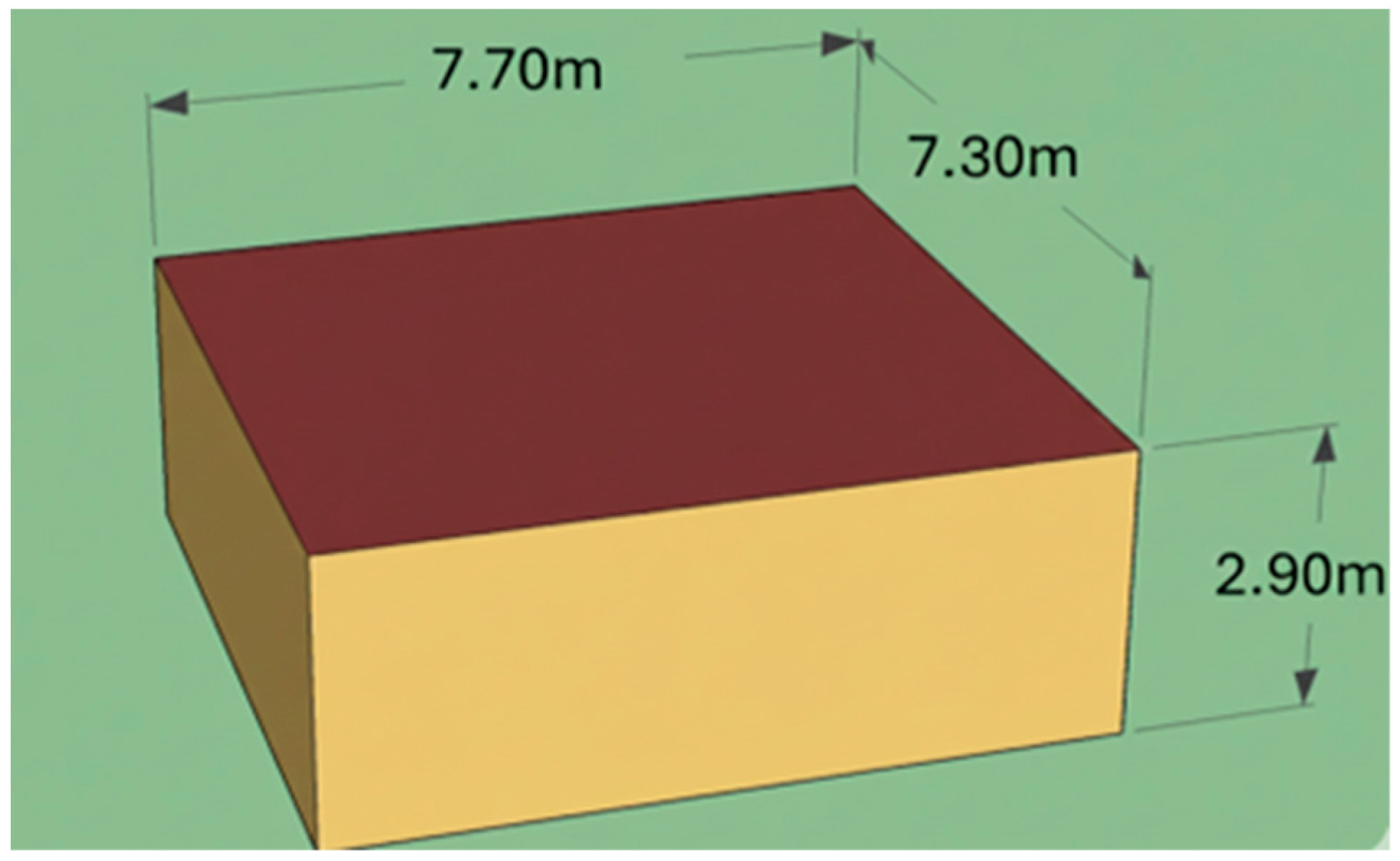
The selected prototype room was idealized with dimensions of 7.30 × 7.70 m and an average ceiling height of 2.90 m, representing the rooms observed during the field survey. The prototype was modeled using the three-dimensional modeling software SketchUp v. 2024, as illustrated in Figure 3. For this environment, a representative process was assumed that requires maintaining indoor conditions at a constant temperature of 24 °C. The thermophysical properties of the room envelope are presented in Table 2.
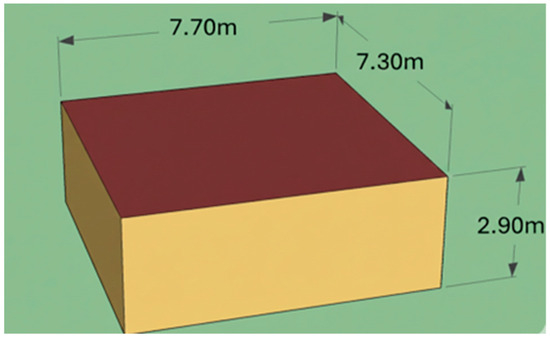
Figure 3.
Prototype 3D Model.
Table 2.
Thermo-physical properties of the generic environment room envelope.
2.4. Computer Simulation
The OpenStudio plugin was used to model the analyzed room, and building energy simulations were performed using EnergyPlus software, v. 9.6 [20]. A conventional HVAC system designed to condition the indoor space was adopted, consisting of an alternative compressor and air-cooled condenser, with a coefficient of performance (COP) of 3.3, indicating its energy efficiency. The system operates based on a vapor-compression refrigeration cycle, comprising a compressor, condenser, expansion valve, and evaporator. The alternative compressor increases efficiency by compressing the refrigerant gas and raising its pressure and temperature, while the air-cooled condenser dissipates heat from the refrigerant to the outdoor air. Subsequently, the refrigerant passes through the expansion valve, which reduces its pressure before entering the evaporator coil inside the room, where heat is absorbed and the indoor air is cooled. The thermostat setpoint was defined as 24 °C, with an allowable variation of ±1 °C. As the study focuses on evaluating the combined performance of HVAC and GSHP systems, all other internal loads—such as equipment, lighting, and occupancy—were intentionally excluded from the energy consumption analysis.
Subsequently, a GSHP system was integrated into the HVAC configuration to reduce cooling energy demand and quantify potential energy savings. In the modeling process, the adopted soil type was classified as “heavy and saturated,” while the soil surface condition was categorized as “bare and wet,” based on characteristics observed in the surveyed regions. Using the EnergyPlus utility CalcSoilSurfTemp, the average soil surface temperature, amplitude, and phase constant were calculated considering the climate files for each region under current and future scenarios (2050 and 2080). Monthly soil temperatures were then determined and incorporated into the GroundDomain input following the methodology proposed by Kusuda and Achenbach [21]. In this study, the assumption of constant soil thermophysical properties was adopted across the simulated time horizon, without consideration of potential long-term modifications in soil characteristics that may arise from extended GSHP operation.
The buried tubes were specified as high-density polyethylene (HDPE), with a diameter of 0.05 m, a wall thickness of 0.0038 m, and installation at a depth of 3.0 m. For the simultaneous operation of both systems, the temperature setpoint was maintained at 24 °C, with an allowable variation of ±1 °C. The total pipe length required for the GSHP system was calculated using the methodology described by Kavanaugh and Rafferty [22], considering the simulated space volume and the specified air-conditioning requirements, as detailed in Table 3. The main equation of the adopted methodology is:
where Lc is the required bore length for cooling (m); PLFm is the part-load factor during design month; qa is the net annual average heat transfer to the ground (W); Rga is the effective thermal resistance of the ground for the annual pulse (m·K/W); Rgst is the effective thermal resistance of the ground for the short-term pulse (m·K/W); Rgm is the effective thermal resistance of the ground for the monthly pulse (m·K/W); Rb is the thermal resistance of the bore (m·K/W); tg is the undisturbed ground temperature (°C); tp is the long-term ground temperature penalty caused by heat transfer imbalance (°C); ELT is the heat pump entering liquid temperature (°C); and, LLT is the heat pump leaving liquid temperature (°C).
Table 3.
Cost of implementing the GSHP system in the current 2050 and 2080 scenarios, in the six sites researched.
2.5. Economic Feasibility Analysis
The feasibility analysis assessed the payback period based on the investment required to implement the GHSP system in conjunction with a conventional cooling system. The parameters of the conventional system were kept constant across all locations, maintaining identical specifications for pipe length, material, and excavation volume, as detailed in Table 3. To streamline the analysis across the six surveyed cities, uniform costs were assumed for HDPE piping, excavation per cubic meter, and system installation, with installation costs encompassing labor and system components. For the purposes of this analysis, cost parameters were treated as invariant across the evaluated time horizon, encompassing both present and prospective scenarios. Accordingly, the modeling framework did not incorporate potential fluctuations in future cost trajectories.
The electricity tariffs adopted in this study are presented in Table 4, in accordance with the rates applied by the local energy utility (https://ajuda.energisa.com.br/tipos-de-tarifa/ (accessed on 28 December 2025) (Table 4). Energy consumption was distributed unevenly between off-peak and peak periods.
Table 4.
Energy tariffs considered for payback period analysis purposes.
The study adopts the payback period as the metric for evaluating the economic benefits of the proposed GSHP systems [23]. The payback period represents the number of years required to recover the initial investment. It was calculated using Equation (1), where PB is the simple payback (years), I is the investment made in the GSHP system (U$), and CA is the annual energy cost savings achieved through the use of GSHP system (U$/year).
PB = I/CA
The payback period for each of the six locations under current and future scenarios (2050 and 2080) was calculated following these steps: (a) definition of the GSHP system implementation costs; (b) quantification of the annual energy consumption required to maintain the prototype room within the established thermal conditioning parameters; (c) quantification of the annual energy consumption when operating the GSHP system under the same thermal conditioning parameters; (d) determination of the energy cost savings achieved through the combined operation of both systems, based on regional electricity tariffs; and (e) application of Equation (2) to calculate the payback period using the previously defined inputs.
3. Results
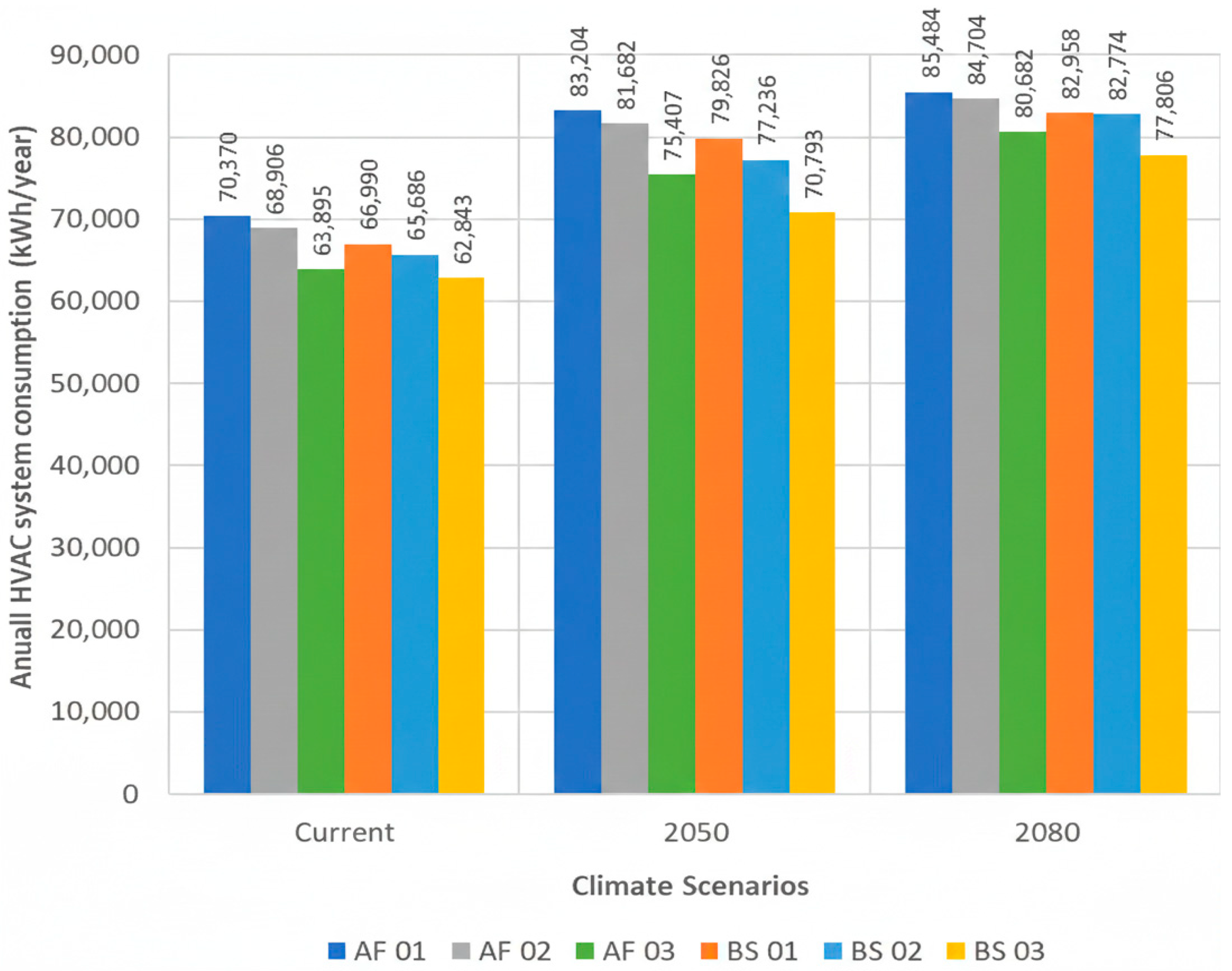
Figure 4 presents the annual energy consumption profiles of conventional cooling systems across the six surveyed sites. Under current climate conditions, sites locates within the Amazon Forest (AF) ecotone exhibit a slightly higher average annual HVAC energy consumption (67,723.77 kWh/year) than those situated in the Brazilian Savanna (BS) ecotone (65,172.95 kWh/year). Regression analysis indicates that energy consumption is positively correlated with latitude and negatively correlated with altitude, suggesting a progressive decrease in consumption at lower latitudes and higher elevations (Table 5). Variance analysis confirms that the linear trends are statistically significant (p < 0.05) [24].
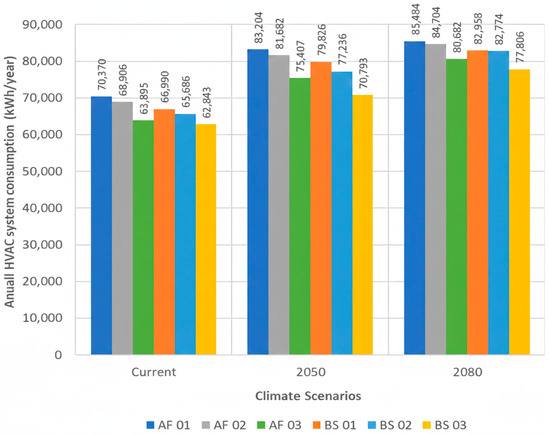
Figure 4.
Annual energy consumption in conventional system (HVAC + GSHP).
Table 5.
Slope coefficient, intercept and Pearson coefficient (r-squared) of the corresponding regression equation models between the annual HVAC energy consumption (EC) and Latitude/Altitude.
Incorporating latitude and altitude into a multiple linear regression model substantially improved the prediction of energy consumption, as evidenced by an increase in the coefficient of determination (R2) and an almost 50% reduction in the standard error. However, the altitude coefficient was not statistically significant (p > 0.05), indicating that it can be excluded from the model without a meaningful loss of accuracy. Consequently, latitude emerges as the primary factor influencing cooling energy demand in the study region.
Building energy simulation indicates an increase in energy consumption for conventional cooling systems across all surveyed locations under the projected climate scenarios for 2050 and 2080. Compared with the current scenario, the Amazon Forest (AF) regions exhibit a higher average increase in energy consumption in 2050 (12,373.94 kWh/year) than the Brazilian Savanna (BS) regions (10,778.87 kWh/year). By 2080, however, energy consumption levels become nearly equivalent between the two ecotones, reaching 15,899.89 kWh/year in AF and 16,006.54 kWh/year in BS. These results indicate that the impact of climate warming on cooling energy demand is more pronounced in the 2050 scenario, with a relatively smaller incremental effect observed by 2080.
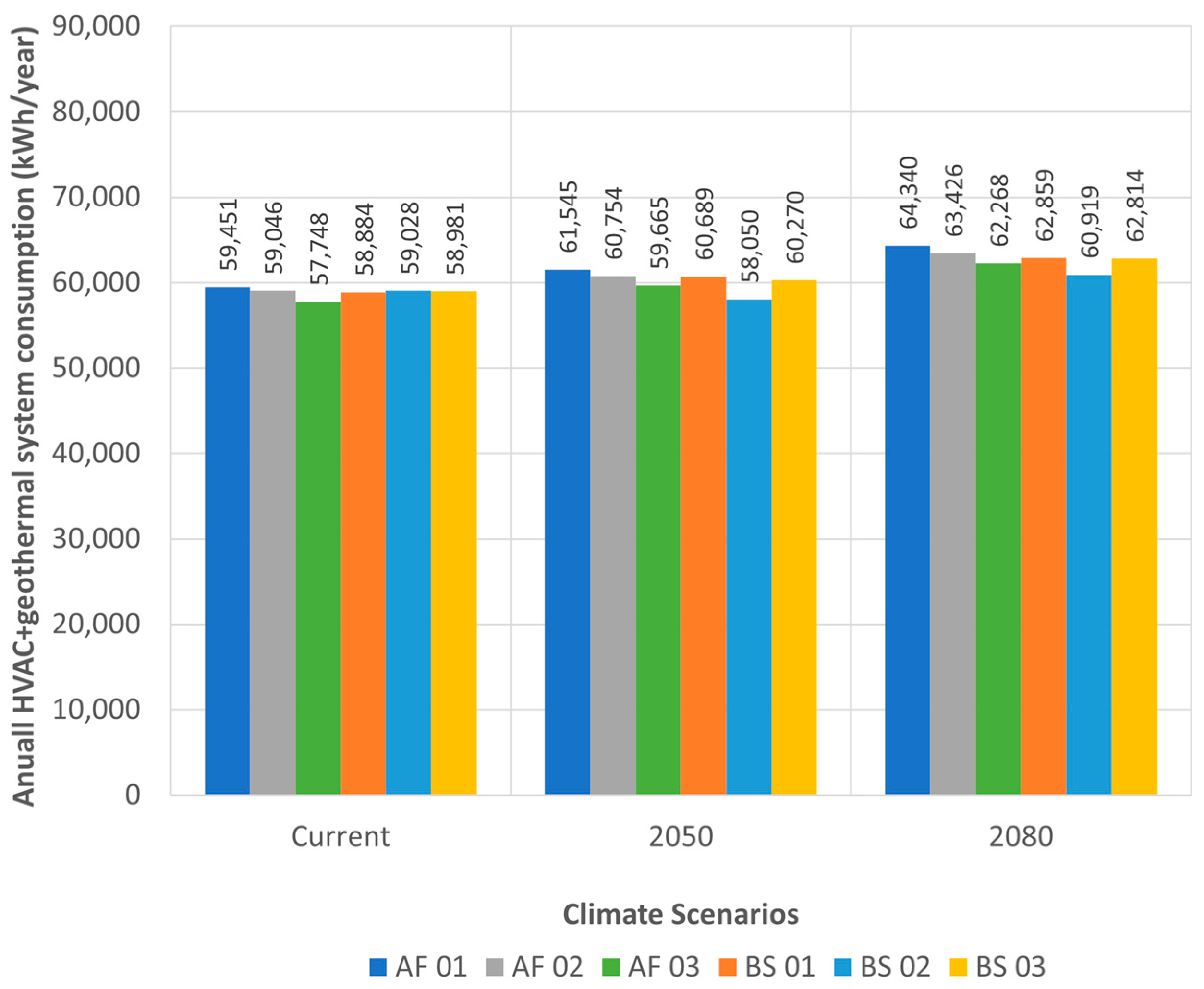
When evaluating the HVAC system integrated with geothermal technology (Figure 5), the proposed strategy demonstrates a clear potential for reducing cooling-related energy consumption. Under current conditions, the average annual reduction is slightly higher in the Amazon Forest (AF) regions (8975.44 kWh/year) than in the Brazilian Savanna (BS) regions (6208.48 kWh/year). Looking ahead, the contribution of the ground source heat pump (GSHP) system becomes increasingly significant. By 2050, reductions relative to the current scenario are projected to reach 19,443.05 kWh/year in AF and 16,282.18 kWh/year in BS. By 2080, although energy savings continue to increase, the difference between the two ecotones narrows, with projected reductions of 20,278.99 kWh/year in AF and 18,982.16 kWh/year in BS.
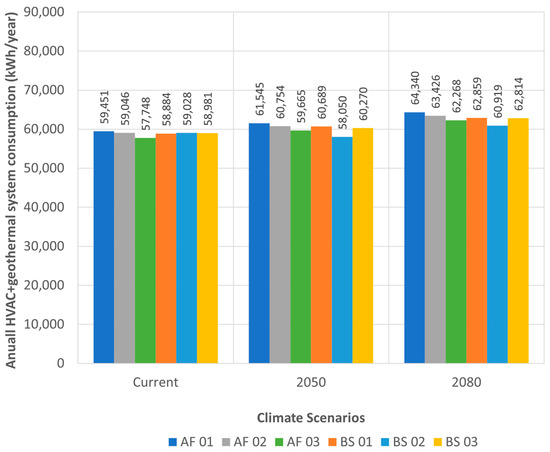
Figure 5.
Annual energy consumption in combined systems (HVAC + GSHP).
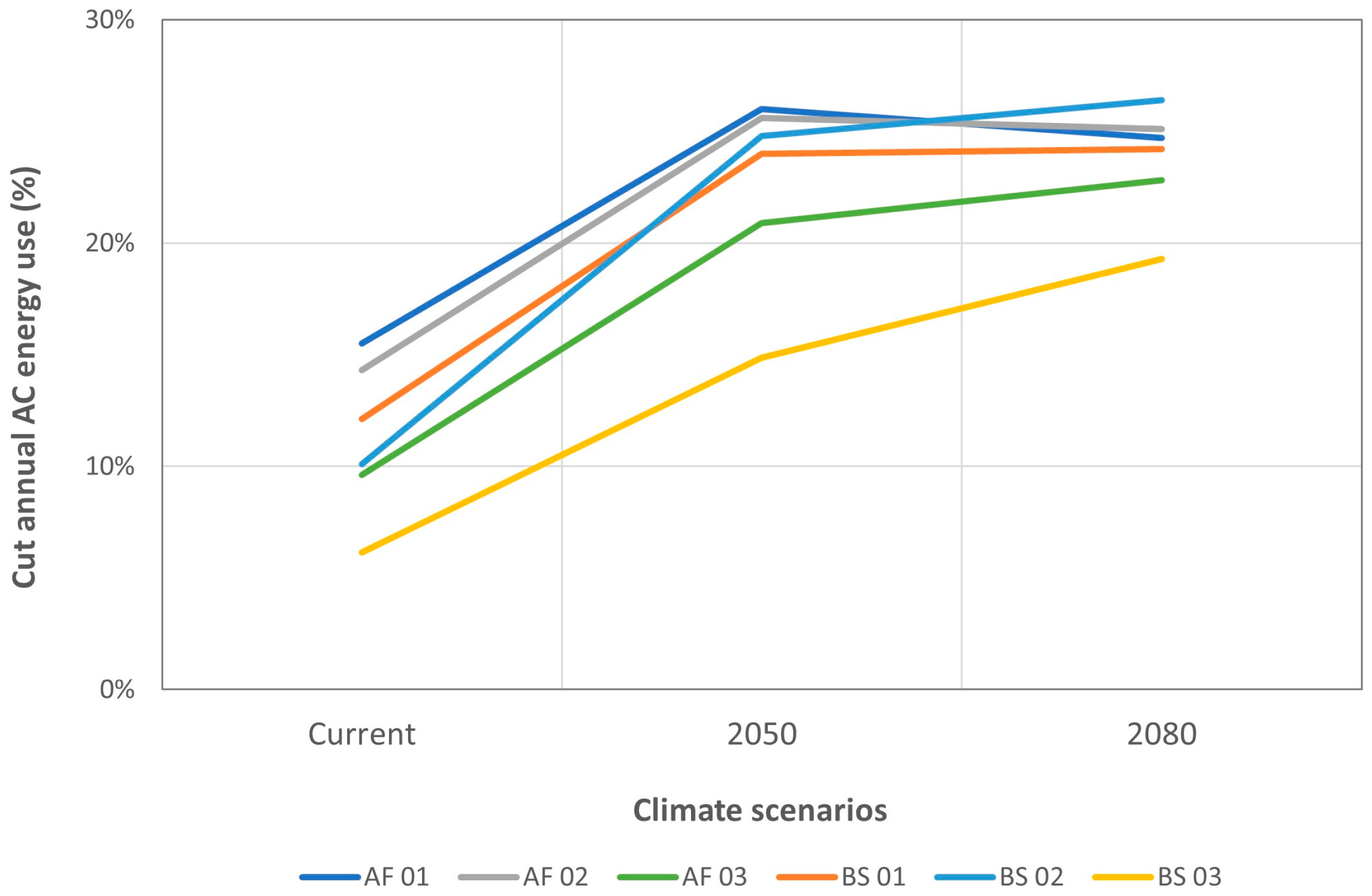
The annual percentage reduction in cooling energy consumption is higher at sites located in the Brazilian Savanna (BS) ecotone (13.1%) than at those in the Amazon Forest (AF) ecotone (9.4%), reflecting the influence of distinct regional climatic conditions (Figure 6). In addition, the effects of latitude and altitude, as discussed previously, remain relevant. The impact of the GSHP system becomes more pronounced under climate change scenarios, particularly in 2050, with average reductions of 21.2% and 24.2% in the AF and BS ecotones, respectively. In 2080, the reductions increase to 23.3% and 24.3% in the same regions. In this context, rising soil temperatures associated with climate change may adversely affect the efficiency and long-term feasibility of GSHP systems. The following section presents a detailed analysis of the economic implications of GSHP deployment.
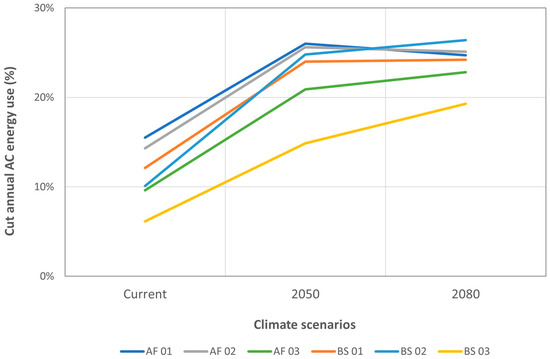
Figure 6.
Percentage cut in annual AC energy use by the integration of the GHSP system.
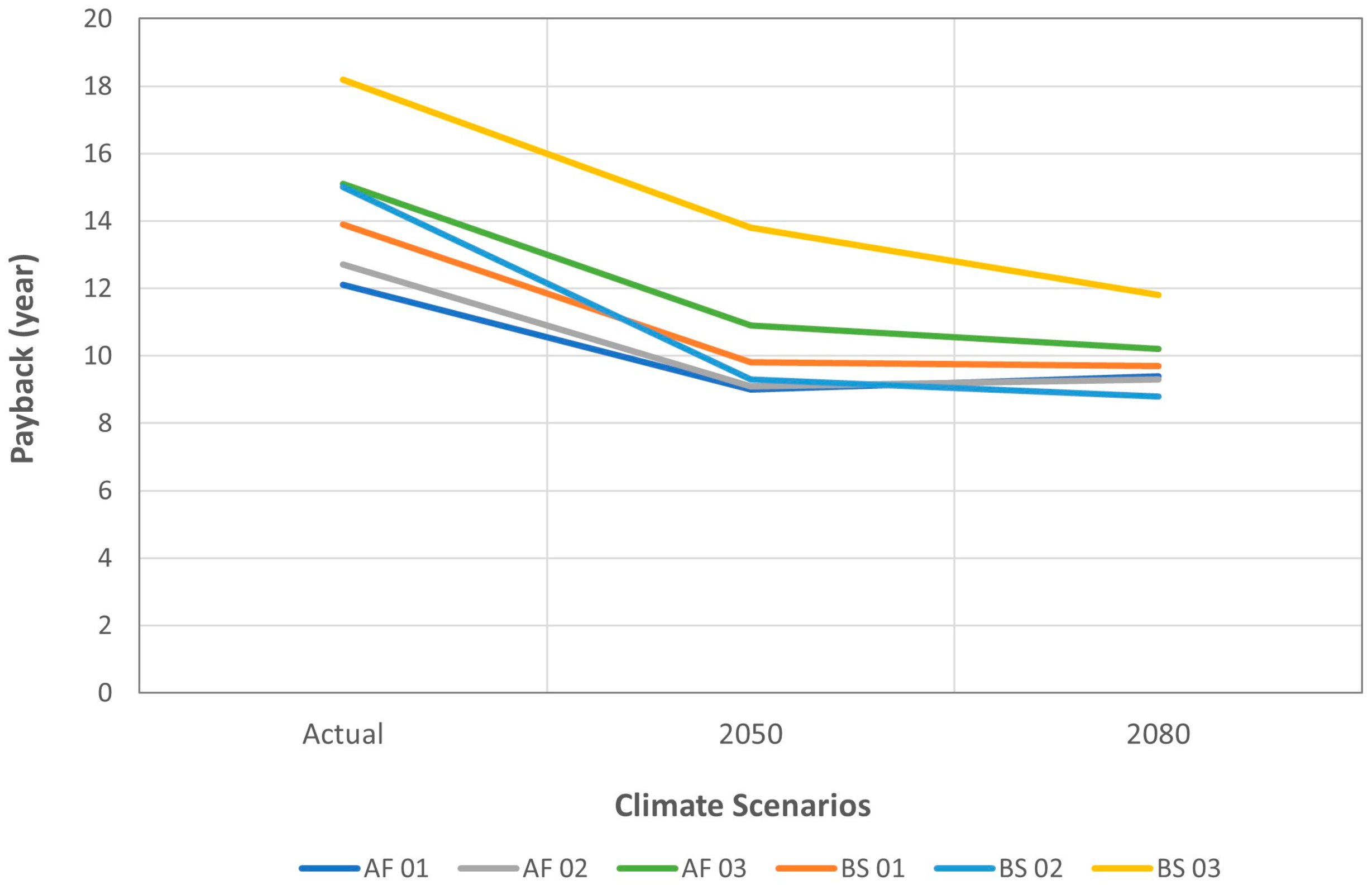
Analysis of Figure 7 illustrates the payback periods associated with investments in GSHP system. Under current climate conditions, the average payback period is 14.5 years, with shorter durations observed in Amazon Forest (AF) (13.3 years) compared to Brazilian Savanna (BS) regions (15.5 years). In contrast, the projected climate scenarios indicate more favorable economic performance, with average payback periods decreasing to 10.13 years in 2050 and 9.86 years in 2080. This reduction is primarily attributed to the projected increase in average air temperatures relative to soil temperatures at the surveyed sites.
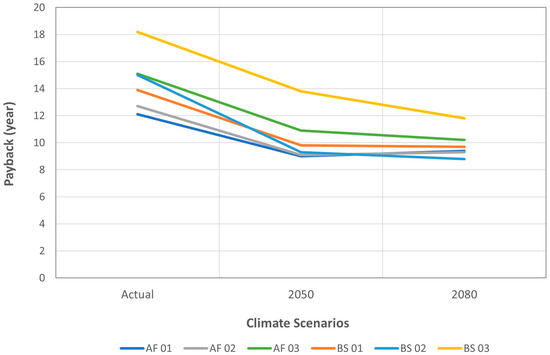
Figure 7.
Payback period of GSHP systems in the actual and future scenarios (2050 and 2080).
When comparing installations in the Amazon Forest (AF) and Brazilian Savanna (BS) regions, the geothermal solution demonstrates greater economic feasibility in the former. Specifically, payback periods in AF are shorter than those in BS for both 2050 (9.66 years versus 10.96 years) and 2080 (9.63 years versus 10.10 years). Although GSHP systems involve higher initial installation costs than conventional cooling systems, they offer advantages in terms of reduced maintenance requirements and a longer operational lifespan.
4. Discussion
The energy consumption patterns observed across the investigated sites indicate that geographical position and altitude are influential factors in building energy performance. Katsoulakos and Kaliampakos [24] examined the effects of latitude and altitude on energy demand in Greece and found that both variables tend to reduce cooling degree-hours, with altitude exerting a more pronounced influence. A similar trend is observed in the present study, where energy consumption exhibits a stronger correlation with altitude (r = 0.827) than with latitude (r = 0.768). Furthermore, the inclusion of both variables in the multiple linear regression model (r = 0.910) reduced the standard error of the estimates and confirmed that latitude is the primary geographic factor influencing energy consumption at the analyzed sites under tropical climate conditions.
A more detailed analysis of the room’s energy consumption could not be conducted due to the absence of national energy benchmarks for agro-industrial buildings in Brazil. This limitation highlights the urgent need for comprehensive studies aimed at quantifying energy consumption in agro-industrial facilities, a sector that remains underrepresented in Brazilian energy efficiency initiatives. Substantial efforts have been devoted to establishing energy performance benchmarks for residential, commercial, and institutional buildings [25,26], as evidenced by tools such as the Operational Energy Performance Platform (Plataforma DEO) (https://plataformadeo.cbcs.org.br/ (accessed on 28 December 2025) and the Interactive Guide for Energy Efficiency in Buildings [27]. However, these instruments do not yet include agro-industrial facilities, which commonly depend on energy-intensive systems such as refrigeration, forced ventilation, and automated processing lines. The lack of specific benchmarks and datasets for this sector constrains the development and implementation of targeted energy efficiency strategies, despite the sector’s growing economic relevance worldwide. Therefore, expanding public policies and benchmarking platforms to encompass agro-industrial buildings is essential to promote sustainability and reduce operational costs in this strategic segment.
Due to the socioeconomic assumptions embedded in the GCM, energy demand is projected to increase by approximately 16.5% in the Brazilian Savanna (BS) ecotone and 18.3% in the Amazon Forest (AF) ecotone by 2050. This upward trend persists in 2080, although at a slower rate, with estimated increases ranging from 24.5% to 23.5%. These values are comparable to projections reported for hot–humid climate regions in the United States, such as Miami. For instance, a study that simulated the energy consumption of office building prototypes under Representative Concentration Pathway (RCP) 8.5 scenarios for 2050 and 2080 identified an average increase of 21.2% in energy demand for medium-sized office buildings [28]. Similarly, a comprehensive assessment based on multiple Earth System Models projected climate-driven increases in energy demand between 2010 and 2050 under the SSP5-8.5 scenario, with tropical regions expected to experience growth exceeding 25% by 2050, primarily due to the increasing frequency of hot days [29]. In this context, the adoption of sustainable design and energy-efficient strategies for agro-industrial buildings located in tropical regions becomes particularly critical, as climate-induced shifts in energy demand are expected to be substantial.
The integration of geothermal technology with HVAC systems yields increasingly significant benefits under future climate change scenarios, positioning it as a relevant strategy for mitigating the impacts of global warming in tropical regions. Although the observed reductions in energy consumption were more modest, remaining below 24.5%, they are consistent with the findings of Farzanehkhameneh et al. [30], who reported cooling-related energy savings ranging from 20% to 50% when conventional HVAC systems were replaced with ground source heat pump (GSHP) systems. The comparatively lower impact observed in the present study is attributed to the pronounced increase in soil temperatures projected for tropical climates, as reported by Callejas et al. [17], which may reduce the efficiency of geothermal systems over time. Elevated soil temperatures decrease the thermal gradient between the ground and the heat exchange system, limiting heat transfer effectiveness. In cooling applications, this phenomenon reduces the capacity of the ground to absorb heat and may constrain the geographic and economic feasibility of GSHP deployment in tropical regions.
The payback analysis indicates that the return on investment improves under future climate scenarios, although the payback period obtained in this study remain longer than those typically reported in previous research on geothermal cooling applications, which generally range between 7 and 11 years [30,31]. Nevertheless, the observed trends underscore the potential of geothermal technologies to mitigate the impacts of climate change, positioning them as a sustainable alternative for adoption in the agro-industrial sector to support greenhouse gas emission reduction efforts.
It is important to note that, as global temperatures continue to rise, greater energy input is required to maintain the specified thermal conditions within built environments. This trend highlights the need to retrofit existing spaces with more efficient and higher-capacity HVAC systems capable of meeting future energy demand. An alternative solution often considered in such contexts is the implementation of solar energy systems, which generally offer shorter payback periods. However, recent studies indicate that the operational lifespan of photovoltaic (PV) power plants frequently falls short of projected expectations. According to Libra et al. [32], the effective service life is often approximately half of the anticipated 20–25 years, with a marked increase in critical failures observed after only a decade of operation. In this context, GSHP systems emerge as a robust and resilient alternative for addressing climate change–driven increases in energy demand.
5. Conclusions
The study identifies significant variations in cooling energy consumption across distinct ecological zones, with sites located in the Amazon Forest (AF) ecotone exhibiting slightly higher energy demand than those in the Brazilian Savanna (BS). Geographical factors, particularly latitude and altitude, exert a clear influence on the thermal performance of agro-industrial buildings, as demonstrated by regression analyses, with latitude emerging as the primary determinant of energy demand in the study region.
Projections for 2050 and 2080 indicate a substantial increase in cooling energy demand, with the most pronounced rise occurring in the 2050 scenario. When GSHP systems are integrated with conventional HVAC systems, the results demonstrate their effectiveness in mitigating energy demand, particularly under future climate conditions. These systems achieve significant reductions in energy consumption, with more pronounced effects observed in Amazon Forest (AF) regions than in Brazilian Savanna (BS) regions as climate change intensifies.
While increasing soil temperatures may adversely affect the thermal efficiency of geothermal technologies, the economic analysis reveals favorable outcomes. Payback periods decrease under future climate scenarios, and GSHP systems demonstrate strong viability across both analyzed regions. Despite higher initial installation costs, their extended operational lifespan and low maintenance requirements reinforce their practical applicability. Moreover, when compared with photovoltaic systems—which may face reliability issues and reduced service lifetimes—geothermal technologies emerge as a more resilient option for long-term deployment. As global temperatures continue to rise, the strategic adoption of geothermal cooling represents a compelling and sustainable pathway for the agro-industrial sector to reduce greenhouse gas emissions and adapt to climate-related challenges.
The absence of a Life Cycle Assessment represents a limitation of the present study and is highlighted as a priority for subsequent research efforts. Future research should include the development of a Life Cycle Assessment (LCA) to provide a more comprehensive evaluation of GSHP systems. In the present study, this aspect was not addressed due to the lack of reliable data on emissions associated with GSHP systems that could serve as robust inputs for an LCA, given that this technology is still rarely applied in Brazil. Under such conditions, an LCA could rely on unrealistic or distorted assumptions, potentially compromising the reliability of the results.
As the payback period in this study was calculated exclusively based on energy-related aspects—namely, operational energy consumption—it is expected that a more robust assessment of greenhouse gas (GHG) emissions would further enhance the perceived benefits of GSHP systems. With improved emissions data, the overall impact of GSHP adoption would likely be more significant, potentially leading to a shorter investment payback period.
Future research should further investigate the long-term thermal dynamics of soils across diverse ecotones under evolving climate conditions, as these variations critically influence the operational efficiency of GSHP systems. Expanded field studies covering broader geographic regions—particularly those incorporating real-time monitoring of subsurface temperatures and soil properties—would improve the accuracy of system performance predictions. In addition, the exploration of hybrid energy solutions that integrate geothermal systems with other renewable sources may provide more adaptive and resilient strategies for agro-industrial applications. Finally, economic modeling that accounts for fluctuating energy prices, technological advancements (such as hybrid configurations or higher-efficiency systems), and maintenance patterns will be essential to refine feasibility assessments and support sustainable investment planning.
In the investigated locations, the energy matrix is predominantly hydroelectric, which is renewable and low carbon. In addition, high solar radiation availability makes photovoltaic energy a viable alternative, whereas wind energy potential is limited due to insufficient wind resources. In this context, geothermal systems emerge as a low–environmental-impact option in the region, with considerable potential for deployment and integration into the local energy mix.
Author Contributions
L.C.D. and I.J.A.C., Supervision, Resources, Project administration, Funding acquisition; I.J.A.C., Formal analysis, Conceptualization, Writing—original draft; A.H.N. and E.L.A.d.G., Methodology, Investigation, Simulation analyses; L.C.D. and I.J.A.C., Writing—review and editing. All authors have read and agreed to the published version of the manuscript.
Funding
The APC was funded by Vice-Rectorate for Research (PROPESQ) Call for Proposals nº 03/2025—Federal University of Mato Grosso—Brazil and the research was funded by the Mato Grosso Research Support Foundation (FAPEMAT)—Brazil, by Proposal nº 10/2022.
Data Availability Statement
The raw data supporting the conclusions of this article will be made available by the authors on request.
Acknowledgments
This research was supported by the Federal University of Mato Grosso, Brazil and Research Support Foundation of the State of Mato Grosso (FAPEMAT).
Conflicts of Interest
The authors declare no conflicts of interest.
References
- Food and Agriculture Organization of the United Nations (FAO). The Future of Food and Agriculture—Alternative Pathways to 2050; FAO: Rome, Italy, 2018; 224p. [Google Scholar]
- Flach, R.; Abrahão, G.; Bryant, B.; Scarabello, M.; Soterroni, A.; Ramos, F.; Valin, H.; Obersteiner, M.; Cohn, A. Conserving the Cerrado and Amazon biomes of Brazil protects the soy economy from damaging warming. World Dev. 2021, 146, 105582. [Google Scholar] [CrossRef]
- World Wildlife Fund (WWF). Deforestation Increases the Cost of Climate Change for Agribusiness. A Technical Report by WWF-Brazil Compiles Studies Demonstrating How Deforestation Negatively Impacts Productivity in the Agricultural Sector. 2022. Available online: https://www.wwf.org.br/en/?84321/Deforestation-increases-the-costs-of-climate-change-for-agribusiness (accessed on 28 December 2025).
- Cogato, A.; Cei, L.; Marinello, F.; Pezzuolo, A. The Role of Buildings in Rural Areas: Trends, Challenges, and Innovations for Sustainable Development. Agronomy 2023, 13, 1961. [Google Scholar] [CrossRef]
- Callejas, I.J.A.; Guarda, E.L.A.; Durante, L.C. Constructive measures to counterbalance climate change impacts on low-income housing in the Brazilian Savannah climate. In Green Energy and Technology; Springer: Cham, Switzerland, 2023; Volume 1, pp. 371–385. [Google Scholar] [CrossRef]
- Instituto Brasileiro de Geografia e Estatística (IBGE). Cities and States. 2022. Available online: https://www.ibge.gov.br/cidades-e-estados/mt.html (accessed on 28 December 2025).
- Callejas, I.J.A.; Biudes, M.S.; Machado, N.G.; Durante, L.C.; Lobo, F.A. Patterns of Energy Exchange For Tropical Urban and Rural Ecosystems Located in Brazil Central. J. Urban Environ. Eng. 2019, 13, 69–79. [Google Scholar] [CrossRef]
- Levesque, A.; Pietzcker, R.A.; Baumstark, L.; De Stercke, S.; Grübler, A.; Luderer, A. How much energy will buildings consume in 2100? A global perspective within a scenario framework. Energy 2018, 148, 514–527. [Google Scholar] [CrossRef]
- Bale, J.S.; van Lenteren, J.C.; Bigler, F. Biological control and sustainable food production. Philos. Trans. R. Soc. B 2008, 363, 761–776. [Google Scholar] [CrossRef] [PubMed]
- Department of Energy—DoE. Geothermal Heat Pumps. Available online: https://www.energy.gov/energysaver/geothermal-heat-pumps (accessed on 15 September 2025).
- Sanches, Í.S. Evaluation of the Potential for Using Shallow Geothermal Energy from Tupi Paulista-SP for Air Conditioning in Built Environments. Undergraduate Thesis, Federal University of Grande Dourados, Dourados, Brazil, 2019. Available online: https://repositorio.ufgd.edu.br/jspui/bitstream/prefix/2335/1/ItaloSabiaoSanches.pdf (accessed on 15 September 2025).
- Santana, B.G.; Ribeiro, M.E. Implementation of a Soil-Air Heat Exchanger (SAHE) to Improve the Thermal Comfort of Buildings. Undergraduate Thesis, University of Brasília, Brasília, Brazil, 2019. Available online: https://bdm.unb.br/bitstream/10483/25169/1/2019_BrunoGarciaSantana_Mateus%20EduardoSantosRibeiro_tcc.pdf (accessed on 28 December 2025).
- Díaz-Hernández, H.P.; Macias-Melo, E.V.; Aguilar-Castro, K.M.; Xamán, J.; Serrano-Arellano, J.; López-Manrique, L.M. Experimental study of an earth to air heat exchanger (EAHE) for warm humid climatic conditions. Geothermics 2020, 84, 101741. [Google Scholar] [CrossRef]
- Ômido, A.R.; Barboza, C.S.; Sanches, É.S.; Sanches, Í.S.; Omido, T.V. Parameters for using surface geothermal energy for the climatization of buildings: Thermal behavior of red oxisol soil in the Southeastern and Midwestern Regions of Brazil. Obs. Econ. Latinoam. 2023, 21, 2672–2697. [Google Scholar] [CrossRef]
- Ferreira, A.C.; Durante, L.C.; Callejas, I.J.A.; Vera, L.F. Geothermy for Cooling Purposes: A patent prospect. Cad. Prospecção 2025, 18, 263–275. [Google Scholar] [CrossRef]
- Álvares, C.; Stape, J.; Sentelhas, P.; Gonçalves, J.L.M.; Sparovek, G. Köppen’s climate classification map for Brazil. Meteorol. Z. 2013, 22, 711–728. [Google Scholar] [CrossRef] [PubMed]
- Callejas, I.J.A.; Guarda, E.L.A.; Durante, L.C.; Arêdes, F.M.B.; Rosseti, K.A.C. Investigation of ground temperatures for the implementation of geothermal systems in historical and future periods. Mix Sustentável 2024, 10, 153–161. [Google Scholar] [CrossRef]
- Belcher, S.; Hacker, J.; Powell, D. Constructing design weather data for future climates. Build. Serv. Eng. Res. Technol. 2005, 26, 49–61. [Google Scholar] [CrossRef]
- Intergovernmental Panel on Climate Change (IPCC). Climate Change 2022—Impacts, Adaptation and Vulnerability: Working Group II Contribution to the Sixth Assessment Report of the Intergovernmental Panel on Climate Change; Cambridge University Press: Cambridge, UK, 2023. [Google Scholar] [CrossRef]
- Department of Energy (DoE). EnergyPlus. 2022. Available online: https://www.energy.gov/eere/buildings/articles/energyplus (accessed on 15 September 2025).
- Kusuda, T.; Achenbach, P. Earth Temperature and Thermal Diffusivity at Selected Stations in the United States; National Institute of Standards and Technology: Gaithersburg, MD, USA, 1965. [Google Scholar] [CrossRef]
- Kavanaugh, S.; Rafferty, K. Geothermal Heating and Cooling—Design of Ground Source Heat Pump Systems; ASHRAE: Peachtree Corners, Georgia, 2024; ISBN 978-1-936504-85. [Google Scholar]
- Dincer, I.; Abu-Rayash, A. (Eds.) Chapter 6—Sustainability modeling. In Energy Sustainability; Academic Press: Cambridge, MA, USA, 2020; pp. 119–164. [Google Scholar] [CrossRef]
- Dowdy, S.; Wearden, S.; Chilko, D. Statistics for Research, 3rd ed.; John Wiley & Sons: Hoboken, NJ, USA, 2004. [Google Scholar]
- Rodrigues, T.T.V.; Carlo, J.C. Benchmark energético para supermercados de médio porte naturalmente ventilados. PARC Pesqui. Arquitetura Construção 2024, 15, e024013. [Google Scholar] [CrossRef]
- Garcia, M.S.G.; Souza, R.V.G.; Reis, I.A. Electricity consumption of university campuses with buildings of different uses. Natl. Meet. Comf. Built Environ. 2023, 17, 1–10. [Google Scholar] [CrossRef]
- Schinazi, A.; Fukuoka, R.; Jordan, M.; Ortiz, M.; Ferronato, B.; Issa, I. Interactive Guide to Energy Efficiency in Buildings; MITSIDI: São Paulo, Brazil, 2024; 348p, Available online: https://www.guiaenergiaedificacoes.com.br/wp-content/themes/sinduscon/pdfs/Guia_Compilado_Atualizado_V3.pdf (accessed on 28 December 2025).
- Niknia, S.; Ghiai, M. Simulation-Based Prediction of Office Buildings Energy Performance Under RCP Scenarios Across All U.S. Climate Zones. Architecture 2025, 5, 34. [Google Scholar] [CrossRef]
- van Ruijven, B.J.; De Cian, E.; Sue Wing, I. Amplification of future energy demand growth due to climate change. Nat. Commun. 2019, 10, 2762. [Google Scholar] [CrossRef] [PubMed]
- Farzanehkhameneh, P.; Soltani, M.; Kashkooli, F.M.; Ziabasharhagh, M. Optimization and energy-economic assessment of a geothermal heat pump system. Renew. Sustain. Energy Rev. 2020, 133, 110282. [Google Scholar] [CrossRef]
- Zhang, L.; Feng, G.; Li, A.; Huang, K.; Chang, S. Comprehensive evaluation and analysis of a nearly zero-energy building heating system using a multi-source heat pump in severe cold region. Build. Simul. 2023, 16, 1949–1970. [Google Scholar] [CrossRef]
- Libra, M.; Mrázek, D.; Tyukhov, I.; Severová, L.; Poulek, V.; Mach, J.; Šubrt, T.; Beránek, V.; Svoboda, R.; Sedláček, J. Reduced real lifetime of PV panels—Economic consequences. Sol. Energy 2023, 259, 229–234. [Google Scholar] [CrossRef]
Disclaimer/Publisher’s Note: The statements, opinions and data contained in all publications are solely those of the individual author(s) and contributor(s) and not of MDPI and/or the editor(s). MDPI and/or the editor(s) disclaim responsibility for any injury to people or property resulting from any ideas, methods, instructions or products referred to in the content. |
© 2025 by the authors. Licensee MDPI, Basel, Switzerland. This article is an open access article distributed under the terms and conditions of the Creative Commons Attribution (CC BY) license.