Next Issue
Volume 14, August
Previous Issue
Volume 14, June


Fibers, Volume 14, Issue 7 (July 2026) – 12 articles

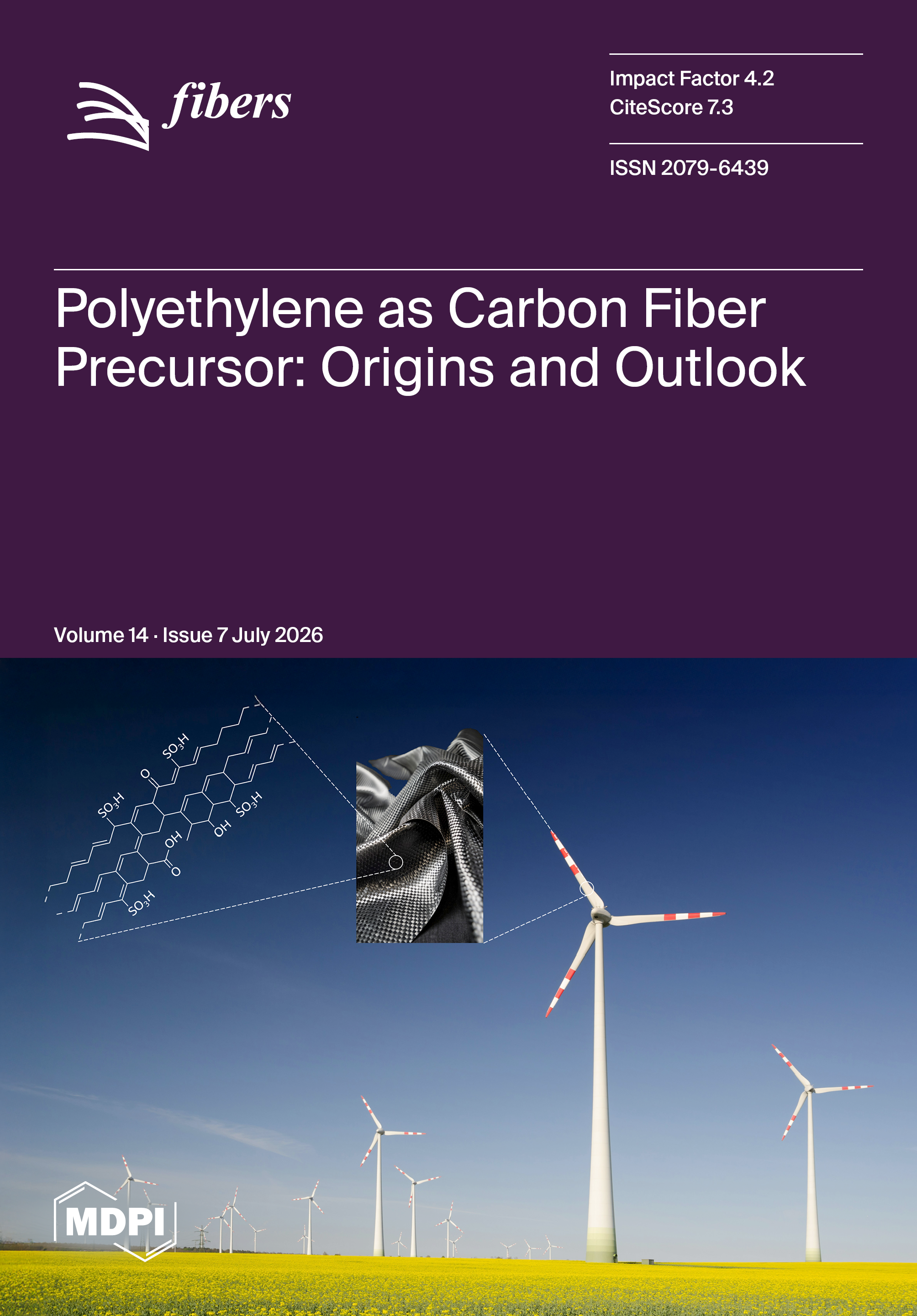
Cover Story (view full-size image):  
  • Issues are regarded as officially published after their release is announced to the table of contents alert mailing list.
  • You may sign up for e-mail alerts to receive table of contents of newly released issues.
  • PDF is the official format for papers published in both, html and pdf forms. To view the papers in pdf format, click on the "PDF Full-text" link, and use the free Adobe Reader to open them.
Order results
Result details
Select all
Export citation of selected articles as:
23 pages, 9956 KB  
Article
An Experimental Study of the Flexural Behavior of Continuous RC Beams Strengthened with Plates of Different Concrete Types, Dimensions and Bonding Techniques
by Ahid Zuhair Hamoodi, Zaid Ali Kadhim Alzaidi, Mustafa Shareef Zewair and Hawraa S. Malik
Fibers 2026, 14(7), 88; https://doi.org/10.3390/fib14070088 - 20 Jul 2026
Viewed by 662
Abstract
An experimental study was conducted to investigate the flexural behavior of continuous beams strengthened with precast concrete plates. Ten rectangular concrete beams with a cross-section of 210 × 150 mm and a total length of 2400 mm were tested under four-point loads. One [...] Read more.
An experimental study was conducted to investigate the flexural behavior of continuous beams strengthened with precast concrete plates. Ten rectangular concrete beams with a cross-section of 210 × 150 mm and a total length of 2400 mm were tested under four-point loads. One specimen, without any strengthening, acted as the control, while the remaining nine were strengthened at both the positive and negative moment zones. The variables in this study were: strengthening plate thickness, length, type of bonding (epoxy or mechanical connector), bonding method (surface bonding or 10 mm grooving), type of concrete used (UHPC, SFRC, or SIFCON), and finally, the steel fiber ratio. The failure mode, cracking modes, ultimate load, load–deflection curve, stiffness and ductility were analyzed. The results showed the effectiveness of the strengthening methods, as they improved the flexural strength of the beams by 15.7% to 53%, as well as their stiffness by 15% to 173.8%, and reduced crack propagation. Also, decreasing the thickness and length of plates reduced the flexural strength by 7.28% and 23.5%, respectively. When the bonding methods were compared, the beam with mechanical bonding showed 5.7% more flexural strength than the one using epoxy. However, it was noted that all cracks in the strengthening plates were located at the bolt positions. Additionally, the use of SIFCON plates enhanced flexural strength more than UHPC and SFRC plates. However, for the SFRC plate, increasing the steel fiber content from 1.5% to 2% improved the strength by 1.2%, but this high percentage also caused cracking in the SFRC plate due to the inhomogeneity of the concrete mixture. As for the initial stiffness, the sample in which epoxy was used showed the highest value, with an increase of 173.8%, due to the uniform bonding at the connection surface. Finally, it was observed that the reference beam had the highest ductility due to the high ultimate displacement resulting from the numerous cracks that occurred in the beam, which were reduced in the strengthened beams. Full article
(This article belongs to the Topic Advances in Fiber-Reinforced Composites)
►▼ Show Figures

Figure 1

18 pages, 2431 KB  
Article
Experimental Study of the Aging Effect on the Mechanical Properties of Hemp Fiber Cementitious Composite
by Miquel Ángel Chamorro, Jaume Font, Irieix Costa, Jordi Soler and Joan Llorens
Fibers 2026, 14(7), 87; https://doi.org/10.3390/fib14070087 - 17 Jul 2026
Viewed by 429
Abstract
The degradation of the natural fibers in the hydraulic binder alkaline matrix is widely known. This study investigates the effect of two fiber treatments, namely immersion in sodium hydroxide (NaOH) solution and hornification, in two types of alkaline environmental ordinary Portland cement (OPC) [...] Read more.
The degradation of the natural fibers in the hydraulic binder alkaline matrix is widely known. This study investigates the effect of two fiber treatments, namely immersion in sodium hydroxide (NaOH) solution and hornification, in two types of alkaline environmental ordinary Portland cement (OPC) and a mixture of OPC and natural hydraulic lime (NHL). After curing for 28 days, the specimens were subjected to 25 and 50 dry–wet aging cycles to evaluate their degradation behavior. Subsequently, the specimens underwent flexural and compressive strength tests. This study reveals that the specimens with the mixed binder of ordinary Portland cement (OPC) and natural hydraulic lime (NHL), after 50 aging cycles, reached toughness values in the descending branch compared to the total toughness obtained in the flexural–displacement diagram, of 17% and 27% for the treatment with NaOH and hornification fiber, compared to 3% and 10% obtained for the matrix with an OPC binder. Therefore, the inclusion of NHL as a matrix binder provided better softening behavior than those with only the OPC binder, providing better protection of the fibers against environmental alkalinity due to matrix alkalinity. In addition, the hornification treatment better preserved the fibers throughout the aging process. Full article
►▼ Show Figures

Figure 1

27 pages, 2854 KB  
Article
Drying Process Development for Lignocellulosic Water Hyacinth Fibers: Design and Performance Evaluation of an Innovative Dryer Machine for Small-Scale Craft Industry
by Khakam Ma’ruf, Rizal Justian Setiawan, Taufik Akbar, Rheina Khaisa Rhehani Putri, Zaky Ahmad Aditya, Afan Sutopo, Muhamad Yogi and Yu-Tzu Chen
Fibers 2026, 14(7), 86; https://doi.org/10.3390/fib14070086 - 17 Jul 2026
Viewed by 816
Abstract
Water hyacinth (Eichhornia crassipes) is an invasive aquatic plant with high lignocellulosic content, offering potential as a natural fiber resource for craft-based industries. However, its extremely high initial moisture content (≈95%) presents a major challenge in fiber processing, particularly for small-scale [...] Read more.
Water hyacinth (Eichhornia crassipes) is an invasive aquatic plant with high lignocellulosic content, offering potential as a natural fiber resource for craft-based industries. However, its extremely high initial moisture content (≈95%) presents a major challenge in fiber processing, particularly for small-scale industries that rely on traditional sun-drying methods. These methods are highly dependent on weather conditions, prone to contamination, and produce inconsistent fiber quality. This study adopts a research and development (R&D) approach to design and evaluate an innovative dryer machine specifically for water hyacinth fiber processing. The proposed system utilizes LPG-based heating and controlled airflow to achieve stable drying conditions. Experimental results show that the dryer machine can process 10 kg of wet water hyacinth within 280 min, significantly shorter than the approximately four days required for manual drying. The system reduces the moisture content to below 10%, resulting in improved fiber cleanliness, uniformity, and usability. Although the dried mass produced by the machine is slightly lower compared to manual drying, this is attributed to more effective moisture removal, leading to lower residual water content in the final product. Productivity analysis indicates improved operational consistency and higher processing capacity over extended periods (30–180 days), particularly under varying weather conditions. These findings demonstrate that controlled drying technology provides a reliable and efficient solution for lignocellulosic fiber processing in small-scale industries, contributing to improved material utilization and sustainable biomass management. Full article
(This article belongs to the Special Issue Research on Wood and Lignocellulosic Materials)
►▼ Show Figures

Figure 1

17 pages, 9287 KB  
Article
An Efficient Method for Recycling Polypropylene with the Antioxidant Additive Propyl Gallate
by Rinat Iskakov, Gulbarshin Shambilova, Zhanar Kadasheva, Danagul Kalimanova, Meirbek Naukenov, Alexander Korshunov, Igor Makarov, Markel Vinogradov and Georgy Makarov
Fibers 2026, 14(7), 85; https://doi.org/10.3390/fib14070085 - 17 Jul 2026
Cited by 1 | Viewed by 741
Abstract
In this study, a new approach to stabilizing polypropylene (PP) melts using the bio-based antioxidant propyl gallate (PG) is considered. Since PG is extensively used in the food and cosmetics fields and its low doses do not cause reactions in humans, producing PP [...] Read more.
In this study, a new approach to stabilizing polypropylene (PP) melts using the bio-based antioxidant propyl gallate (PG) is considered. Since PG is extensively used in the food and cosmetics fields and its low doses do not cause reactions in humans, producing PP melts with PG is an interesting approach. Furthermore, PG is already actively used in the processing of natural polymers, for example, in the NMMO process. It is shown that introducing up to 0.2 wt.% PG into the system is sufficient to significantly reduce the decrease in melt viscosity during repeated PP processing. After five processing cycles, the viscosity of systems with PG decreases by less than an order of magnitude, while for melts without the antioxidant the viscosity drops by almost three orders of magnitude to 10 Pa s. For melts with antioxidant additives, the crossover point position in the frequency dependences remains virtually unchanged, indicating the preservation of the system’s elastic properties. Macrofibers were spun from the resulting melts, which can then be used for concrete reinforcement. For the spun fibers with PG, the strength decreased to 68.1 MPa after five passes, whereas for the PP fibers, the values did not exceed 31 MPa. The structure and properties of the fibers were studied using X-ray diffraction and IR spectroscopy, and contact angles were determined. Full article
►▼ Show Figures

Figure 1

36 pages, 4347 KB  
Article
Feed-Controlled Filament Extrusion of High-Loading Micronized Soy Hull Fiber/PLA Biocomposites for Fused Deposition Modeling
by Muneeb Tahir, Tri Vu and Abdel-Fattah M. Seyam
Fibers 2026, 14(7), 84; https://doi.org/10.3390/fib14070084 - 16 Jul 2026
Cited by 1 | Viewed by 601
Abstract
This study reports the filament-making stage of a sequential single-screw process-development pathway for compatibilizer- and plasticizer-free soy hull fiber (SHF)/PLA biocomposites used in fused deposition modeling. Thirty-three filament-making trials were interpreted through an event-linked process chain, and 14 trials were evaluated using phase-resolved [...] Read more.
This study reports the filament-making stage of a sequential single-screw process-development pathway for compatibilizer- and plasticizer-free soy hull fiber (SHF)/PLA biocomposites used in fused deposition modeling. Thirty-three filament-making trials were interpreted through an event-linked process chain, and 14 trials were evaluated using phase-resolved in-line diameter records and capability-style Cp/Cpk metrics. Filament-making converged on a single-mixing-zone screw, a 3.85 mm orifice/5.75 mm land die, 10 rev/min, and a 160/170/180/195 °C barrel profile for 10–30 wt.% SHF, whereas neat PLA required 180/185/200/205 °C. The strongest sustained benchmark was a 10SHF filament produced under converged settings, with a mean diameter of 1.7411 mm, a standard deviation of 0.0236 mm, 95.45% of readings within 1.70–1.80 mm, and only 0.013% above 1.89 mm. Feed replenishment, depletion, irregular pellets, recycled material, and fines-rich feed shifted the same nominal configuration among controlled and unstable states. The highest reliably spool-fed formulation was 30 wt.% SHF. The 35SHF filament remained nozzle-depositable from loose coils but fractured repeatedly during take-up and direct spool unwinding in 3D printing. Operational validation of all four converged filament formulations comprised 720 printed mechanical-test specimens over approximately 936 h. The reported conditions define platform-specific operating windows, but the process insights hold global relevance for pellet-based extrusion systems. Full article
►▼ Show Figures

Graphical abstract

47 pages, 5846 KB  
Review
A Concise Review of Carbon Fibers Focused on Polyethylene as Precursor: From Discovery to Origin of Mechanical Properties and Application Potential
by Jochen Straetmans and Mario Smet
Fibers 2026, 14(7), 83; https://doi.org/10.3390/fib14070083 - 15 Jul 2026
Viewed by 1259
Abstract
Carbon fibers, whose origins are closely intertwined with precursor chemistry and processing conditions, have become indispensable structural lightweight materials due to their exceptional combination of low density, high tensile strength, and high stiffness. This review aims to provide a combined overview of the [...] Read more.
Carbon fibers, whose origins are closely intertwined with precursor chemistry and processing conditions, have become indispensable structural lightweight materials due to their exceptional combination of low density, high tensile strength, and high stiffness. This review aims to provide a combined overview of the mechanical properties of carbon fibers by tracing their development from the historically dominant polyacrylonitrile (PAN) and mesophase pitch systems to emerging polyethylene (PE)-based alternatives. Based on decades of fundamental and applied research, this review outlines how precursor molecular structure, stabilization pathways, and carbonization conditions direct microstructural growth and thereby mechanical performance. Established structure/property relationships in PAN and mesophase pitch fibers are discussed alongside recent insights into the sulfonation, crosslinking, and carbonization behavior of PE-based precursor systems. Additionally, this review presents current knowledge on production costs, market dynamics, and the environmental impact of carbon fiber manufacturing, highlighting how energy-intensive processing remains a key barrier to broader industrial adoption. Combined, the findings presented in this review provide an integrated basis describing how precursor selection, processing strategy, and resulting morphology shape mechanical behavior and clarify the position of PE-based carbon fibers within the broader landscape of cost, performance, and sustainability. Full article
►▼ Show Figures

Figure 1

28 pages, 10207 KB  
Article
Parametric Influence of Yarn Microstructure on Coupled Heat and Moisture Transport
by Wang Xu, Yunchu Yang and Abdel-Fattah Seyam
Fibers 2026, 14(7), 82; https://doi.org/10.3390/fib14070082 - 15 Jul 2026
Viewed by 470
Abstract
This study examines how yarn microstructure influences isothermal water-vapor transport and the associated evaporative heat loss under ISO 11092 skin-model conditions. Sweating guarded hotplate experiments were performed on PET yarn-array specimens to measure evaporative heat flux and moisture resistance. A fiber-level two-dimensional finite [...] Read more.
This study examines how yarn microstructure influences isothermal water-vapor transport and the associated evaporative heat loss under ISO 11092 skin-model conditions. Sweating guarded hotplate experiments were performed on PET yarn-array specimens to measure evaporative heat flux and moisture resistance. A fiber-level two-dimensional finite element model was then developed to reproduce the same boundary conditions and simulate transport through a PET fiber/air matrix. Using a full-factorial design, denier per filament, the number of filaments, and packing factor were varied independently, with multiple random filament arrangements used for each parameter combination to account for microstructural variability. The model reproduced the main experimental trends and gave predictions consistent with measured heat flux and moisture resistance for representative yarn configurations. Over the investigated design space, packing factor had the strongest influence: higher packing reduced heat and moisture flux and increased moisture resistance. Denier per filament and the number of filaments showed smaller but systematic effects, mainly through changes in pore connectivity and tortuosity. Statistical analysis indicated that main effects accounted for most response variation, while interaction effects were limited within the studied ranges. Flow-field results further showed a shift from internal flow penetration at low packing to bypass-dominated transport at high packing. These findings provide a validated framework for linking yarn-level structural parameters with heat–moisture transport performance in fibrous assemblies. Full article
►▼ Show Figures

Graphical abstract

25 pages, 4460 KB  
Article
Study on Dry Shrinkage Cracking and Shear Strength of Expansive Soils Synergistically Improved with Biochar and Sisal Fibers
by Long Ling, Aijun Chen, Yifan Zhou and Yanping Liu
Fibers 2026, 14(7), 81; https://doi.org/10.3390/fib14070081 - 13 Jul 2026
Viewed by 705
Abstract
Expansive soil is highly susceptible to water-softening and desiccation cracking under alternating wet–dry conditions, often resulting in severe geotechnical and geological hazards. To mitigate these undesirable engineering properties, a composite improvement approach utilizing biochar and sisal fiber was employed. The shear strength and [...] Read more.
Expansive soil is highly susceptible to water-softening and desiccation cracking under alternating wet–dry conditions, often resulting in severe geotechnical and geological hazards. To mitigate these undesirable engineering properties, a composite improvement approach utilizing biochar and sisal fiber was employed. The shear strength and cracking characteristics of the improved expansive soil were systematically investigated through direct shear tests and desiccation cracking tests on specimens prepared with varying biochar contents, sisal fiber contents, and fiber lengths. Scanning electron microscopy (SEM) was further conducted to elucidate the underlying microstructural mechanisms. The results indicated that the individual addition of biochar or sisal fiber enhanced the shear strength of the expansive soil. Increasing the biochar content from 4% to 10% yielded an 8–19% strength gain, whereas raising the sisal fiber content from 1.5‰ to 6‰ led to a more substantial 36–110% improvement. Conversely, extending the fiber length from 10 mm to 30 mm diminished the shear strength by 11–21%. Higher biochar contents progressively increased the internal friction angle (from 14.84° to 18.52°) but were accompanied by a decline in cohesion (from 9.0 kPa to 4.0 kPa). In contrast, increasing the sisal fiber content markedly enhanced cohesion (from 4.7 kPa to 50.3 kPa) while marginally reducing the internal friction angle (from 15.2° to 12.8°). In terms of crack suppression, a 10% biochar content achieved an 86.8% reduction in crack ratio, while 6‰ sisal fiber yielded a 72.4% reduction. Range analysis revealed that crack length and crack ratio were most sensitive to biochar content, whereas crack width was predominantly governed by fiber content. Notably, surface cracking was completely eliminated in the composite specimen prepared with 10% biochar, 4.5‰ sisal fiber, and a fiber length of 20 mm. Microstructural analysis revealed that biochar particles featured rough surfaces and abundant internal pores, while the sisal fibers formed a randomly interwoven network within the soil matrix. The synergistic interplay between the rigid biochar skeleton and the flexible fiber network contributed to the substantial enhancement in both mechanical strength and crack resistance. Full article
►▼ Show Figures

Figure 1

19 pages, 2864 KB  
Article
Intra and Inter-Specimen Strain Heterogeneity in Filament–Wound Carbon Fiber Composites Revealed by Digital Image Correlation
by Javier Pisonero, Enrique González-González, Manuel Rodríguez-Martín and Roberto García-Martín
Fibers 2026, 14(7), 80; https://doi.org/10.3390/fib14070080 - 3 Jul 2026
Viewed by 689
Abstract
Filament–wound carbon fiber composites are widely used in lightweight structural applications, where their mechanical performance is strongly affected by manufacturing-induced heterogeneities. In this study, the tensile behavior of carbon fiber composite specimens produced by filament winding was investigated using Digital Image Correlation (DIC) [...] Read more.
Filament–wound carbon fiber composites are widely used in lightweight structural applications, where their mechanical performance is strongly affected by manufacturing-induced heterogeneities. In this study, the tensile behavior of carbon fiber composite specimens produced by filament winding was investigated using Digital Image Correlation (DIC) to obtain full-field strain measurements. Uniaxial tensile tests were performed while monitoring the spatial distribution of strain over the specimen surface. Beyond conventional global stress–strain characterization, DIC enabled the identification of significant strain heterogeneity both within individual specimens and among different specimens manufactured under the same nominal conditions. Localized strain concentrations were observed to develop in specific regions, revealing non-uniform deformation patterns that were not captured by global measurements alone. The results demonstrate that, despite similar global mechanical responses, substantial variability exists at the local scale. This intra and inter-specimen heterogeneity highlights the influence of filament winding architecture and local variability on tensile performance. The study underscores the limitations of relying solely on global measurements and emphasizes the capability of DIC to provide deeper insight into strain distribution and damage initiation mechanisms. These findings support the use of full-field optical techniques as a powerful tool for the mechanical characterization and quality assessment of filament–wound composite structures. Full article
►▼ Show Figures

Figure 1

19 pages, 1400 KB  
Review
Steam Explosion Processing of Bast Fibers: Effects on Fiber Structure and Performance in Textile and Composites Applications
by Peter El Hage, Roland El Hage, César Segovia, Jingjing Liao, Didilia Ileana Mendoza-Castillo, Nicolas Brosse and Henri Vahabi
Fibers 2026, 14(7), 79; https://doi.org/10.3390/fib14070079 - 2 Jul 2026
Viewed by 914
Abstract
In response to the increasing needs for environmentally friendly products, lignocellulosic natural fibers have been of interest as potential replacements for synthetic reinforcement materials in textiles, composites, and related applications. Among these resources, bast fibers derived from plant stems (flax, hemp, nettle, jute, [...] Read more.
In response to the increasing needs for environmentally friendly products, lignocellulosic natural fibers have been of interest as potential replacements for synthetic reinforcement materials in textiles, composites, and related applications. Among these resources, bast fibers derived from plant stems (flax, hemp, nettle, jute, hop), which contain a high cellulose content, have good mechanical properties, low density, and are renewable, are highly promising. Steam explosion has emerged as a green fiber extraction, defibrillation, and surface modification pretreatment technology. Despite the growing number of studies on steam-exploded natural fibers, a comprehensive understanding of the relationships between processing conditions, fiber modifications, mechanisms, and end-use performance remains limited. This review investigates the structural, chemical, and morphological influences of steam explosion on bast fibers. Specifically, it focuses on the mechanism of steam explosion including the solubilization of hemicellulose, partial lignin redistribution or removal, fiber individualization, and cellulose enrichment. The literature indicates that steam explosion can improve fiber separation, fineness, surface morphology, and interfacial adhesion of the composite materials and reduce the use of hazardous chemicals compared with conventional extraction methods. Nonetheless, conflicting results have also been documented, where the same steam explosion conditions can yield distinct fiber characteristics according to biomass type, composition of biomass, moisture concentration, and the amount of processing involved. Excessive treatment severity may lead to fiber shortening, cellulose degradation, and deterioration of fiber quality, particularly for textile applications requiring long fibers. This review highlights current knowledge gaps regarding the optimization of processing conditions, the understanding of steam explosion mechanisms, and the scale-up of the technology for industrial applications. Full article

►▼ Show Figures

Figure 1

23 pages, 7259 KB  
Article
Influence of Local Fiber Orientation Deviations on the Dynamic and Mechanical Response of CFRP Laminates for UAV Structures
by Maciej Milewski
Fibers 2026, 14(7), 78; https://doi.org/10.3390/fib14070078 - 2 Jul 2026
Viewed by 701
Abstract
This study examines the effect of small ply angle deviations on the structural response of carbon fiber-reinforced polymer laminates representative of structures used in unmanned aerial vehicles (UAVs). A combined experimental and numerical approach was applied, including cantilever bending tests and experimental modal [...] Read more.
This study examines the effect of small ply angle deviations on the structural response of carbon fiber-reinforced polymer laminates representative of structures used in unmanned aerial vehicles (UAVs). A combined experimental and numerical approach was applied, including cantilever bending tests and experimental modal analysis, supported by finite element simulations. Laminates with nominal ply orientations of 0°, 5°, and 10° were manufactured using a manual hand lay-up process to reflect typical production variability. The results show that the numerical model accurately captures the observed trends in both bending deformation and natural frequencies, with discrepancies up to 12.5%. A consistent tendency to slightly overestimate stiffness was observed, leading to lower predicted deflections and higher natural frequencies compared to experimental data. The findings confirm that finite element modeling can reliably detect and predict the structural effects of small fiber misalignment, supporting its use in the assessment and design of lightweight composite structures used in UAV applications. Full article
►▼ Show Figures

Figure 1

22 pages, 1328 KB  
Article
Dynamic Parameters of Fiber-Reinforced Soils at Very Small Strains
by Konstantinos E. Bantralexis, Eleni S. Boura, Ioannis N. Markou and Evangelos D. Evangelou
Fibers 2026, 14(7), 77; https://doi.org/10.3390/fib14070077 - 29 Jun 2026
Viewed by 642
Abstract
Improvement of the engineering properties of soils by reinforcing them with fibers, at an appropriate percentage of the weight of dry soil, is frequently selected to ensure the safe construction and operation of many structures. However, the published information regarding the investigation of [...] Read more.
Improvement of the engineering properties of soils by reinforcing them with fibers, at an appropriate percentage of the weight of dry soil, is frequently selected to ensure the safe construction and operation of many structures. However, the published information regarding the investigation of the dynamic properties of fiber-reinforced soils at very small strains is very limited. Toward this end, the dynamic behavior of fiber-reinforced soils is investigated experimentally by conducting Bender Element tests under different confining pressures. The effect of polypropylene fiber reinforcement on the shear wave velocity (Vs), the velocity of the primary wave (Vp), the initial Young’s modulus (E0) and the initial shear modulus (G0) of sand and sand–clay mixtures with varying compositions is examined in this study. The soils were reinforced with five different types of polypropylene fibers having lengths from 9 mm to 50 mm, at fiber contents from 0.5% to 2% by weight of dry soil. The results indicate that the dynamic and the small-strain stiffness parameters of fiber-reinforced soils increase with increasing confining pressure, while also being affected by the soil type, the fiber type, and content. Although fiber inclusion resulted generally in a reduction of the dynamic properties of soils, increases ranging from 5% to 55% were observed in certain soil–fiber combinations in comparison with the unreinforced soils. Full article
►▼ Show Figures

Figure 1

Previous Issue
Next Issue
Back to TopTop