Next Issue
Volume 13, December
Previous Issue
Volume 13, October


Vaccines, Volume 13, Issue 11 (November 2025) – 98 articles

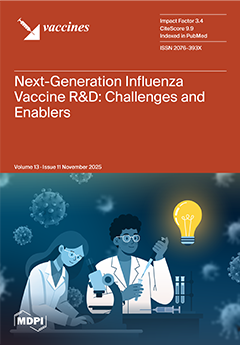
Cover Story (view full-size image): The influenza vaccine R&D landscape is robust but faces persistent scientific, regulatory, and financial constraints. Drawing on insights from next-generation vaccine developers, this study identifies key factors that enable or prevent innovation and progress. By documenting these determinants, this article provides an evidence base to guide policy, programme, and investment decisions, strengthening pandemic preparedness and increasing accessibility of life-saving vaccines. View this paper
  • Issues are regarded as officially published after their release is announced to the table of contents alert mailing list.
  • You may sign up for e-mail alerts to receive table of contents of newly released issues.
  • PDF is the official format for papers published in both, html and pdf forms. To view the papers in pdf format, click on the "PDF Full-text" link, and use the free Adobe Reader to open them.
Order results
Result details
Section
Select all
Export citation of selected articles as:
19 pages, 308 KB  
Article
HPV Vaccination in the U.S. Midwest: Barriers and Facilitators of Initiation and Completion in Adolescents and Young Adults
by Kristyne D. Mansilla Dubon, Edward S. Peters, Shinobu Watanabe-Galloway and Abraham Degarege
Vaccines 2025, 13(11), 1175; https://doi.org/10.3390/vaccines13111175 - 20 Nov 2025
Viewed by 706
Abstract
Background/Objectives: HPV vaccination uptake among adolescents and young adults in the US remains low, and coverage in the Midwest falls short of the Healthy People 2030 goal of 80%. Methods: A cross-sectional survey of adolescents and young adults was conducted to [...] Read more.
Background/Objectives: HPV vaccination uptake among adolescents and young adults in the US remains low, and coverage in the Midwest falls short of the Healthy People 2030 goal of 80%. Methods: A cross-sectional survey of adolescents and young adults was conducted to identify facilitators and barriers to HPV vaccination uptake among adolescents and young adults in the Midwest. Results: Out of 1306 individuals aged 13–26 years, 397 (30.4%) were fully vaccinated (2–3 doses), 124 (9.5%) had received one dose, 324 (24.8%) were unvaccinated, and 461 (35.3%) were unsure of their vaccination status. Awareness of HPV vaccines (OR: 2.4, 95% CI: 1.6, 3.6), beliefs about vaccine effectiveness (OR: 1.8, 95% CI: 1.1, 2.9), family support (OR: 2.3 95% CI: 1.4, 3.8) and knowing someone with cervical cancer (OR: 1.8, 95% CI: 1.2, 2.7) were associated with increased odds of full vaccination. Beliefs in vaccine safety (OR: 2.0, 95%CI: 1.0, 3.9) and having health insurance coverage (OR: 1.9, 95% CI: 1.0, 3.5) were associated with increased odds of initiated vaccination (i.e., receiving at least one dose). Concerns about vaccine side effects (OR: 0.5, 95% CI: 0.3, 0.8) and not receiving recommendations from doctors were significantly associated with decreased odds of full vaccination (OR: 0.5, 95% CI: 0.3, 0.8) or initiated vaccination (OR: 0.5% CI: 0.2, 0.9). Clinician recommendations and awareness also reduced the likelihood of unknown vaccination status. Race-stratified analyses suggested heterogeneity in predictors across racial/ethnic groups. Conclusions: Our findings support the need for multi-level interventions aimed at increasing HPV vaccination initiation and completion in the Midwest. Full article
(This article belongs to the Special Issue Acceptance and Hesitancy in Vaccine Uptake: 2nd Edition)
24 pages, 3154 KB  
Review
Hepatitis Vaccines: Recent Advances and Challenges
by Mei Lu, Yakun Liu, Lele Li, Xueke Liu, Bin Wu and Yingping Wu
Vaccines 2025, 13(11), 1174; https://doi.org/10.3390/vaccines13111174 - 20 Nov 2025
Viewed by 1042
Abstract
Viral hepatitis constitutes a substantial global public health challenge. The etiological agents, referred to as hepatitis viruses, are primarily categorized into five types: hepatitis A virus (HAV), hepatitis B virus (HBV), hepatitis C virus (HCV), hepatitis D virus (HDV), and hepatitis E virus [...] Read more.
Viral hepatitis constitutes a substantial global public health challenge. The etiological agents, referred to as hepatitis viruses, are primarily categorized into five types: hepatitis A virus (HAV), hepatitis B virus (HBV), hepatitis C virus (HCV), hepatitis D virus (HDV), and hepatitis E virus (HEV). Among the various preventive strategies, vaccination is widely acknowledged as the most cost-effective and efficient method for controlling viral hepatitis and its related hepatic complications. To date, numerous countries have initiated extensive vaccination programs targeting hepatitis A and hepatitis B. Advances in biotechnology have facilitated substantial progress in vaccine formulation design, the development of innovative adjuvants, and the utilization of novel vectors. However, significant challenges persist, including inadequate vaccination coverage, inconsistent immune responses among vulnerable populations, and concerns regarding vaccine safety. This article presents a systematic review of recent advancements, the current status of vaccination efforts, and ongoing challenges associated with hepatitis vaccines, with the objective of providing critical insights to support the World Health Organization’s goal of eliminating viral hepatitis as a public health threat by 2030. Full article
(This article belongs to the Special Issue Vaccination Against Viral Hepatitis for Prevention and Treatment)
Show Figures

Figure 1

21 pages, 1692 KB  
Article
HPV Vaccine Uptake and Cervical Cancer Trends in Panama: A Reference Point for Future Impact Studies
by Arlene Calvo, Sabrina Hall, Verónica B. Melgar Cossich, Jonathan Andreadakis, Humberto López Castillo, Dalys Pinto and Itzel de Hewitt
Vaccines 2025, 13(11), 1173; https://doi.org/10.3390/vaccines13111173 - 19 Nov 2025
Viewed by 661
Abstract
Background: Cervical cancer (CC) continues to be an important public health concern in Latin America, where it is the second cause of cancer-related deaths among women. With its strong culture of vaccination, Panama was the first country to implement the HPV vaccine [...] Read more.
Background: Cervical cancer (CC) continues to be an important public health concern in Latin America, where it is the second cause of cancer-related deaths among women. With its strong culture of vaccination, Panama was the first country to implement the HPV vaccine as part of its Essential Program on Immunization (EPI). Recently, the government implemented the 90:70:90 PAHO/WHO strategy to reach milestones toward CC elimination. Objective: This analysis triangulates and assesses national data on HPV vaccination coverage, screening practices, and cervical cancer incidence and mortality in Panama, to understand historical tendencies to date and establish a comprehensive foundation for future impact evaluations and research studies. The analysis aims to identify trends and gaps in prevention efforts and to serve as a reference point for future research on HPV-associated cancers. Methods: Population-based, descriptive, observational, ecological study where four, aggregate, de-identified data sources by various curators in Panama were match-merged by year, sex, and administrative division. Reported outcomes include HPV vaccine coverage, CC incidence and mortality rates, screening Pap tests, and CC behavior at diagnosis (in situ vs. invasive). Results: Panama has high HPV vaccine uptake (≥85% most years) in spite of low Pap test coverage (~10%). A decreasing trend in CC incidence has been observed continuously since the 1990s, counterintuitively to significantly increasing CC mortality rates, with most cases diagnosed as invasive and among younger women (30–69 years old). Conclusions: This report provides a comprehensive foundation for understanding trends in HPV vaccination coverage, cervical cancer incidence and mortality, and screening practices in Panama. While high vaccine uptake and declining incidence trends are encouraging, persistent low screening rates and elevated mortality—particularly at invasive stages among younger women—highlight critical gaps in prevention efforts. The need for integrated strategies that strengthen data systems, improve early detection, and address structural and sociocultural barriers are discussed, framed within Panama’s progress toward achieving the 90:70:90 targets. Future studies should focus on understanding non-medical influences on health and further vaccine impact with patient-level data, and other forms of HPV-related cancers in immunosuppressed populations. Public strategies would benefit from the implementation of real-life data and efficient data management, consolidation systems, systematic health promotion interventions, and an increase in resource allocation for women at the highest risk. Full article
(This article belongs to the Collection HPV-Vaccines)
Show Figures

Figure 1

30 pages, 7254 KB  
Article
Pilot Studies Testing Novel Minimized Pan-Coronavirus (CoV) Vaccines in Feline Immunodeficiency Virus-Infected Cats With or Without Feline CoV Serotype-1 (FCoV1) Coinfection and in Specific-Pathogen-Free Cats Against Pathogenic FCoV2
by Pranaw Sinha, Marco B. Prevedello, Ananta P. Arukha, Valentina Stevenson, Karen F. Keisling, Taylor G. Nycum, Nina M. Beam, Elise D. Barras, Bikash Sahay and Janet K. Yamamoto
Vaccines 2025, 13(11), 1172; https://doi.org/10.3390/vaccines13111172 - 18 Nov 2025
Viewed by 489
Abstract
Background: The minimized pan-coronavirus (CoV) vaccine-1 developed by our laboratory contained pDNA sequences of feline coronavirus serotype-1 (FCoV1) and SARS-CoV2 (SCoV2) spike B-cell epitopes plus FCoV/SCoV2-conserved, CoV-specific polymerase cytotoxic T-lymphocyte (CTL) epitopes formulated in lipid nanoparticle (LNP). Only FCoV2 infects feline cell [...] Read more.
Background: The minimized pan-coronavirus (CoV) vaccine-1 developed by our laboratory contained pDNA sequences of feline coronavirus serotype-1 (FCoV1) and SARS-CoV2 (SCoV2) spike B-cell epitopes plus FCoV/SCoV2-conserved, CoV-specific polymerase cytotoxic T-lymphocyte (CTL) epitopes formulated in lipid nanoparticle (LNP). Only FCoV2 infects feline cell lines needed for developing native challenge inoculum that causes feline infectious peritonitis (FIP). Hence, Pilot Study 1 evaluated the therapeutic efficacy and safety of the pan-CoV vaccine-1 in feline immunodeficiency virus (FIV)-infected cats, with or without FCoV1 coinfection. Pilot Study 2 evaluated the cross-protective effect of pan-CoV vaccines in specific-pathogen-free (SPF) cats against intranasal challenge with FIP virus serotype 2 (FIPV2). Methods: In Study 1, we vaccinated two FIV-infected cats (one negative and another positive for FCoV1 coinfection) intramuscularly twice with CTL epitopes-LNP vaccine and later twice with pan-CoV vaccine-1. Controls included two unvaccinated FIV-infected cats with or without FCoV1 coinfection. Study 2 assessed the sequential vaccinations of three pan-CoV vaccines in four SPF cats. The first two vaccinations were with pan-CoV vaccine-2, followed by pan-CoV vaccine-3 (twice), and lastly with pan-CoV vaccine-1 (once). Three SPF controls included two cats immunized with LNP and one lacking any immunization. Pan-CoV vaccine-2 contained pDNAs with modified FCoV1/SCoV2 B-cell epitopes plus CTL epitopes in LNP. Pan-CoV vaccine-3 contained only pDNAs with FCoV1 B-cell epitopes plus CTL epitopes in LNP. Results: Study 1 demonstrated no adverse effect with 25 μg and 50 μg CTL epitopes-LNP vaccine and 50 μg pan-CoV vaccine-1. However, 100 μg pan-CoV vaccine-1 caused fever 24 h later, which was resolved by a single Meloxicam treatment. Both vaccinees developed cross-FCoV2 neutralizing antibodies (XNAbs), immunoblot binding antibodies (bAbs) to FCoV1 receptor-binding domain (RBD), and T-cell responses to FCoV1 RBD, whereas one vaccinee also developed bAbs to SCoV2 RBD. Study 2 demonstrated no adverse effects after each vaccination. Three vaccinees developed low-titer XNAbs and bAbs to FCoV2 spike-2 by the fourth vaccination. Upon challenge, all cats developed FCoV2 NAbs and bAbs to FCoV2 nucleocapsid and RBD. High vaccine-induced T-cell responses to FCoV1 RBD and T-cell mitogen responses declined with an increase in responses to FCoV2 RBD at three weeks post-challenge. Two of the three controls died from FIP, whereas one vaccinee, with the lowest vaccine-induced immunity, died from skin vasculitis lesions and detection of FIPV2 infection by semi-nested RT-snPCR in feces. Conclusions: In Pilot Study 1, the pan-CoV vaccine-LNP dose of 50 μg had no adverse effects, but adverse effects were observed at 100 μg dose. In Pilot Study 2, the FCoV1-based B-cell vaccine(s) induced low levels of XNAbs against FIPV2 and delayed challenge infection against high-dose FIPV2. The high-dose FIPV2 infections in the vaccinated and control cats started to clear, by single housing at 23–26 weeks post-challenge, whereas two cats in Pilot Study 1 cleared natural FCoV1 transmission by 26 weeks post-infection. Full article
(This article belongs to the Special Issue Next-Generation Vaccines for Animal Infectious Diseases)
Show Figures

Figure 1

19 pages, 1166 KB  
Article
Factors Associated with Influenza Vaccination Among Urban Community-Dwelling Chinese Elderly: Results from a Multicity Cross-Sectional Study
by Jiayue Guo, Xitong Jiao, Shuai Yuan and Lili You
Vaccines 2025, 13(11), 1171; https://doi.org/10.3390/vaccines13111171 - 18 Nov 2025
Viewed by 599
Abstract
Background: Influenza vaccination reduces morbidity and mortality in older adults. This study identifies characteristics and reasons for vaccination uptake among the elderly to inform strategies to improve coverage. Methods: We conducted a cross-sectional survey in December 2024 among community-dwelling adults aged ≥ 60 [...] Read more.
Background: Influenza vaccination reduces morbidity and mortality in older adults. This study identifies characteristics and reasons for vaccination uptake among the elderly to inform strategies to improve coverage. Methods: We conducted a cross-sectional survey in December 2024 among community-dwelling adults aged ≥ 60 years across six Chinese cities. Data collected included socio-demographic and health characteristics, influenza vaccine awareness and uptake, reasons for vaccination or non-vaccination, and intentions for future vaccination. Univariate and multivariable logistic regression were used to identify factors associated with vaccination. To explore motivation patterns, co-occurrence networks of vaccination reasons were constructed, and k-medoids clustering was applied. Results: Among 13,363 adults aged ≥ 60 years, influenza vaccination coverage was 34.0%. Higher education and income, being married, having health insurance, poor self-care ability, and chronic obstructive pulmonary disease were independently associated with vaccination. Vaccinated individuals reported more positive attitudes and were mainly motivated by family and doctor recommendations as well as perceived vaccine effectiveness, with four motivation profiles discovered: social recommendation, comprehensive confidence, clinician-guided, and self-reliant confidence. Among unvaccinated participants, the main reasons for non-vaccination were mild influenza symptoms and the influence of family and friends, forming four motivation profiles: safety concern, low-perceived risk, social influence, and perceived ineffectiveness. Conclusions: Influenza vaccination among older Chinese adults remains suboptimal. Tailored interventions leveraging healthcare provider endorsement, family and social support, and policy-driven strategies such as free or subsidized vaccination are needed, particularly for high-risk populations. Full article
Show Figures

Figure 1

16 pages, 2292 KB  
Article
Evaluation of the Safety and Efficacy of the Respiratory Syncytial Virus FG Chimeric Vaccine KD-409 in Rodent Models for Maternal and Pediatric Vaccination
by Ryo Yamaue, Madoka Terashima, Kenji Soejima and Masaharu Torikai
Vaccines 2025, 13(11), 1170; https://doi.org/10.3390/vaccines13111170 - 18 Nov 2025
Viewed by 642
Abstract
Background/Objectives: Respiratory syncytial virus (RSV) causes severe infection in neonates and infants. However, a suitable RSV vaccine for children is yet to be approved. The development of KD-409 is focused on creating an effective and safe RSV vaccine for newborns and children. The [...] Read more.
Background/Objectives: Respiratory syncytial virus (RSV) causes severe infection in neonates and infants. However, a suitable RSV vaccine for children is yet to be approved. The development of KD-409 is focused on creating an effective and safe RSV vaccine for newborns and children. The safety and efficacy of the RSV FG chimeric protein KD-409 were evaluated in several rodent models. Methods/Results: The effect of vaccine-induced antibody transfer was verified in a guinea pig model. Next, the exacerbation of infection was evaluated in a BALB/c mouse model of passive immunity designed to mimic the vaccination of pregnant women. KD-409 did not exacerbate infection when administered with alum, unlike pre-F with alum. Our active immunization model of BALB/c mice, which involved stimulating vaccination with a pediatric vaccine, suggested that KD-409 with alum was less likely to exacerbate inflammation than FI-RSV or pre-F with alum. The efficacy was evaluated in a cotton rat model, in which KD-409 demonstrated greater protection against infection than pre-F without adjuvant, the only currently approved formulation for immunizing pregnant women. Conclusions: KD-409 eliminated concerns about vaccine-enhanced disease in pediatric vaccination and demonstrated superior efficacy to current vaccines in rodent models. The safety in mice during passive and active immunization, and efficacy in cotton rats demonstrate the high potential of KD-409 as a safe and effective next-generation RSV vaccine candidate that can cover the neonatal-to-pediatric age range. Full article
Show Figures

Figure 1

12 pages, 476 KB  
Article
Long-Term Immunogenicity of Rabies Pre-Exposure Prophylaxis in Japanese Adult Travelers: Comparison of Dosing Regimens
by Shinji Fukushima, Akira Nishizono, Takehiro Hashimoto and Atsuo Hamada
Vaccines 2025, 13(11), 1169; https://doi.org/10.3390/vaccines13111169 - 17 Nov 2025
Viewed by 1029
Abstract
Background/Objectives: Japan is a rabies-free country; therefore, pre-exposure prophylaxis (PrEP) is primarily recommended for travelers to rabies-endemic regions. However, no prior studies in Japan have assessed long-term immunogenicity after PrEP vaccination. Methods: This descriptive study evaluated the long-term persistence of rabies virus-neutralizing antibodies [...] Read more.
Background/Objectives: Japan is a rabies-free country; therefore, pre-exposure prophylaxis (PrEP) is primarily recommended for travelers to rabies-endemic regions. However, no prior studies in Japan have assessed long-term immunogenicity after PrEP vaccination. Methods: This descriptive study evaluated the long-term persistence of rabies virus-neutralizing antibodies among Japanese adult travelers who had received PrEP. Neutralizing antibody levels were measured using the rabies rapid fluorescent focus inhibition test more than two years post-vaccination. Results: Among 97 participants, 86.6% remained seropositive, with a median interval of 8.5 years since vaccination. Individuals who received three or more doses had significantly higher geometric mean titers than those who received only two doses. A notable proportion of those vaccinated with PCECV-KMB, an older subcutaneous formulation, were seronegative after a long interval. Conclusion: Antibody levels were strongly influenced by the number of vaccine doses, with reduced persistence in those who received only two. If testing confirms sufficient titers, PrEP booster doses may not be needed. However, for individuals with only two doses, older vaccinations, or those given PCECV-KMB, a risk-based assessment is recommended—especially for travelers to rabies-endemic areas. Full article
(This article belongs to the Section Vaccines Against Tropical and Other Infectious Diseases)
Show Figures

Figure 1

47 pages, 3011 KB  
Review
Current Status and Challenges of Vaccine Development for Seasonal Human Coronaviruses
by Bin Zhang, Yaoming Liu, Tao Chen, Jintao Lai, Sen Liu, Xiaoqing Liu, Yiqiang Zhu, Haiyue Rao, Haojie Peng and Xiancai Ma
Vaccines 2025, 13(11), 1168; https://doi.org/10.3390/vaccines13111168 - 16 Nov 2025
Viewed by 1100
Abstract
Seasonal human coronaviruses (HCoVs), including HCoV-229E, HCoV-NL63, HCoV-OC43, and HCoV-HKU1, circulate globally in an epidemic pattern and account for a substantial proportion of common cold cases, particularly in infants, the elderly, and immunocompromised individuals. Although clinical manifestations are typically mild, these HCoVs exhibit [...] Read more.
Seasonal human coronaviruses (HCoVs), including HCoV-229E, HCoV-NL63, HCoV-OC43, and HCoV-HKU1, circulate globally in an epidemic pattern and account for a substantial proportion of common cold cases, particularly in infants, the elderly, and immunocompromised individuals. Although clinical manifestations are typically mild, these HCoVs exhibit ongoing antigenic drift and have demonstrated the potential to cause severe diseases in certain populations, underscoring the importance of developing targeted and broad-spectrum vaccines. This review systematically examines the pathogenesis, epidemiology, genomic architecture, and major antigenic determinants of seasonal HCoVs, highlighting key differences in receptor usage and the roles of structural proteins in modulating viral tropism and host immunity. We summarize recent advances across various vaccine platforms, including inactivated, DNA, mRNA, subunit, viral-vectored, and virus-like particle (VLP) approaches, in the development of seasonal HCoV vaccines. We specifically summarize preclinical and clinical findings demonstrating variable cross-reactivity between SARS-CoV-2 and seasonal HCoV vaccines. Evidence indicates that cross-reactive humoral and cellular immune responses following SARS-CoV-2 infection or vaccination predominantly target conserved epitopes of structural proteins, supporting strategies that incorporate conserved regions to achieve broad-spectrum protection. Finally, we discuss current challenges in pathogenesis research and vaccine development for seasonal HCoVs. We propose future directions for the development of innovative pan-coronavirus vaccines that integrate both humoral and cellular antigens, aiming to protect vulnerable populations and mitigate future zoonotic spillover threats. Full article
Show Figures

Figure 1

12 pages, 387 KB  
Article
Immune Responses to SARS-CoV-2 Variants WT and XBB.1.9: Assessing Vulnerabilities and Preparedness
by Limor Kliker, Michal Mandelboim, Menucha Jurkowicz, Neta S. Zuckerman, Enosh Tomer, Yaniv Lustig, Lital Keinan-Boker, Victoria Indenbaum and Ravit Bassal
Vaccines 2025, 13(11), 1167; https://doi.org/10.3390/vaccines13111167 - 16 Nov 2025
Viewed by 769
Abstract
Objectives: The emergence of SARS-CoV-2 variants with enhanced immune evasion capabilities poses ongoing challenges for maintaining population-level immunity. This study aim to evaluate neutralizing antibody responses to the wild-type (WT) strain and the Omicron sublineage XBB.1.9 in the Israeli population using serum samples [...] Read more.
Objectives: The emergence of SARS-CoV-2 variants with enhanced immune evasion capabilities poses ongoing challenges for maintaining population-level immunity. This study aim to evaluate neutralizing antibody responses to the wild-type (WT) strain and the Omicron sublineage XBB.1.9 in the Israeli population using serum samples collected between August 2022 and January 2023, prior to widespread circulation of XBB.1.9. Methods: Pseudovirus-based microneutralization assays incorporating variant-specific spike proteins were employed to measure neutralizing geometric mean titers (GMTs) across subgroups categorized by age, gender, socioeconomic status, and geographic region. Results: Neutralizing titers against XBB.1.9 were significantly lower than those against WT across all demographic groups, with a 29-fold reduction in neutralization activity against XBB.1.9, underscoring the immune escape potential of XBB.1.9. For WT, older adults (≥65 years) exhibited higher titers than younger individuals (p < 0.01), whereas no significant age-related differences were observed for XBB.1.9 (p > 0.05). Regional disparities in WT immunity were identified, with higher titers in Northern Israel compared to Jerusalem and Southern regions. By contrast, XBB.1.9 neutralization showed no significant regional variation. Conclusions: These findings demonstrate substantially reduced neutralization of XBB.1.9 compared to WT and reveal disparities in WT immunity by age and region. The results emphasize the need for updated vaccines targeting immune-evasive variants and for tailored vaccination strategies to address regional and demographic gaps in protection. Full article
(This article belongs to the Section COVID-19 Vaccines and Vaccination)
Show Figures

Figure 1

12 pages, 376 KB  
Article
Seroprevalence and Vaccination Determinants of Varicella Zoster Virus Among Pediatric and Adolescent Populations in Northern Lebanon
by Nourhan Farhat, Dima El Safadi, Jana Massoud and Sara Khalife
Vaccines 2025, 13(11), 1166; https://doi.org/10.3390/vaccines13111166 - 15 Nov 2025
Viewed by 613
Abstract
Background: Varicella zoster virus (VZV) remains a significant cause of pediatric morbidity in populations in Lebanon, yet comprehensive data on population immunity and vaccination uptake are limited. This study aimed to estimate VZV seroprevalence and identify factors associated with immunity and vaccine uptake [...] Read more.
Background: Varicella zoster virus (VZV) remains a significant cause of pediatric morbidity in populations in Lebanon, yet comprehensive data on population immunity and vaccination uptake are limited. This study aimed to estimate VZV seroprevalence and identify factors associated with immunity and vaccine uptake among children and adolescents in Northern Lebanon. Methods: A cross-sectional study was conducted among 180 participants aged 1–18 years recruited from urban and rural settings in North Lebanon. After receiving informed parental consent, sociodemographic and clinical information were collected via structured questionnaires. Anti-VZV IgG and IgM antibodies were measured using validated Enzyme-Linked Immunosorbent Assays (ELISA). Associations with seropositivity and vaccination uptake were analyzed using multivariable logistic regression. Results: IgG seroprevalence was 79.4% (95% CI: 72.7–85.1), indicating prior exposure or immunization, while IgM antibodies, reflecting recent infection, were detected in 5.0% (95% CI: 2.3–9.4) of participants. Among vaccinated participants, IgG seropositivity was 63.6% (95% CI: 43.5–83.7) in the one-dose group and 89.5% (95% CI: 83.0–96.0) in the two-dose group. Completing the two-dose regimen was significantly associated with a higher IgG seropositivity (OR = 0.110, 95% CI: 3.2–52.4, p = 0.002). Parental reporting of history of varicella showed high sensitivity (99.0%) and overall accuracy (90.8%) in predicting seropositivity. Primary vaccination barriers included preference for natural infection (67%), perceived non-necessity (19%), and cost (10%). Regular pediatric follow-up strongly predicted vaccination (OR = 15.239, p < 0.001), whereas low parental awareness was associated with decreased vaccine uptake (OR = 0.027, p = 0.015). Conclusions: Suboptimal VZV vaccination coverage and persistent susceptibility underscore the need to integrate varicella vaccination into Lebanon’s national immunization schedule. Targeted educational efforts and enhanced pediatric healthcare engagement are critical to increasing vaccine uptake and reducing disease burden. Full article
Show Figures

Figure 1

16 pages, 274 KB  
Article
Effectiveness of an Active Offer of Influenza Vaccination to Hospitalized Frail Patients
by Alessandra Fallucca, Davide Anzà, Claudio Costantino, Cristina Genovese, Giovanni Genovese, Caterina Elisabetta Rizzo, Tania Vitello, Luigi Zagra and Vincenzo Restivo
Vaccines 2025, 13(11), 1165; https://doi.org/10.3390/vaccines13111165 - 15 Nov 2025
Viewed by 488
Abstract
Background/Objectives: Following the COVID-19 pandemic, the influenza season returned to its typical pre-pandemic circulation patterns. The category of people most vulnerable to severe influenza was older adults, and frail individuals, confirming their central role as a priority group for vaccination. The objective [...] Read more.
Background/Objectives: Following the COVID-19 pandemic, the influenza season returned to its typical pre-pandemic circulation patterns. The category of people most vulnerable to severe influenza was older adults, and frail individuals, confirming their central role as a priority group for vaccination. The objective of this study was to evaluate the impact of an active influenza vaccination program in an area with low influenza vaccination rates and propensity to vaccine co-administration. Methods: People recruited were hospitalized frail individuals, patients over the age of 60, and those with chronic illnesses or comorbidities. It was administered a questionnaire to investigate adherence to influenza vaccination and the Health Action Process Approach was used to evaluate the propensity to co-administration. Results: A total of 418 hospitalized patients were enrolled in the study, of whom 58.4% (n = 244) received the influenza vaccine and 17.9% (n = 75) had a higher propensity to have co-administration of influenza and other recommended vaccines. The factors associated with influenza vaccination acceptance were received advice from hospital healthcare workers (aOR = 10.6 p < 0.001) and previous influenza vaccination (aOR = 18.1; p < 0.001). Propensity to vaccine co-administration was associated with a higher educational level (aOR = 4.21; p = 0.002), receiving vaccination advice from hospital healthcare workers (aOR = 2.80; p = 0.03), perceived positive outcome (aOR = 1.29; p = 0.02) and perceived self-efficacy (aOR = 1.48; p < 0.001). Conslusions: This study explored the impact on influenza vaccination coverage in implementing in hospital vaccination offer. The reliability of this strategy, together with the standard vaccination offer, could allow reaching the recommended vaccination coverage, particularly among at-risk people. Full article
17 pages, 633 KB  
Review
Brief Comparison of Novel Influenza Vaccine Design Strategies
by Shiqi Chai, Chuantao Ye, Chao Fan and Hong Jiang
Vaccines 2025, 13(11), 1164; https://doi.org/10.3390/vaccines13111164 - 15 Nov 2025
Viewed by 903
Abstract
Influenza viruses remain a major global public health concern, causing significant morbidity and mortality annually despite widespread vaccination efforts. The limitations of current seasonal vaccines, including strain-specific efficacy and manufacturing delays, have accelerated the development of next-generation candidates aiming for universal protection. This [...] Read more.
Influenza viruses remain a major global public health concern, causing significant morbidity and mortality annually despite widespread vaccination efforts. The limitations of current seasonal vaccines, including strain-specific efficacy and manufacturing delays, have accelerated the development of next-generation candidates aiming for universal protection. This review comprehensively summarizes the recent progress in universal influenza vaccine research. We first outline the key conserved antigenic targets, such as the hemagglutinin (HA) stem, neuraminidase (NA), and matrix proteins (M2e, NP, and M1), which are crucial for eliciting broad cross-reactive immunity. We then delve into advanced antigen design strategies, including immunofocusing, multi-antigen combinations, computationally optimized broadly reactive antigens (COBRA), and nanoparticle-based platforms. Furthermore, we evaluate evolving vaccine delivery systems, from traditional inactivated and live-attenuated vaccines to modern mRNA and viral vector platforms, alongside the critical role of novel adjuvants in enhancing immune responses. The convergence of these disciplines—structural biology, computational design, and nanotechnology—is driving the field toward a transformative goal. We conclude that the successful development of a universal influenza vaccine will likely depend on the strategic integration of these innovative approaches to overcome existing immunological and logistical challenges, ultimately providing durable and broad-spectrum protection against diverse influenza virus strains. Full article
(This article belongs to the Special Issue The Recent Development of Influenza Vaccine: 2nd Edition)
Show Figures

Figure 1

14 pages, 2116 KB  
Article
Two-Year Follow-Up of Humoral and Cellular Immune Responses to SARS-CoV-2 in Healthcare Professionals
by Silvie Ostřížková, Jan Martinek, Denisa Budirská, Hana Zelená, Alena Kloudová, Eduard Ježo, Rastislav Maďar and Hana Tomášková
Vaccines 2025, 13(11), 1163; https://doi.org/10.3390/vaccines13111163 - 14 Nov 2025
Viewed by 641
Abstract
Background/Objectives: Following the global spread of SARS-CoV-2, there was an urgent need for vaccine development to support immune protection. This study aimed to evaluate the impact of active and hybrid immunity on the durability of immunoglobulin G (IgG), neutralizing antibodies, and cellular immune [...] Read more.
Background/Objectives: Following the global spread of SARS-CoV-2, there was an urgent need for vaccine development to support immune protection. This study aimed to evaluate the impact of active and hybrid immunity on the durability of immunoglobulin G (IgG), neutralizing antibodies, and cellular immune responses over a two-year period. Methods: This longitudinal study was conducted from February 2021 to December 2023 at the Public Health Institute in Ostrava, Czech Republic. Anti-S IgG was measured using ELISA (Euroimmun), neutralizing antibodies via an in-house virus neustralization test (VNT), and cellular immune response using the IGRA test (ELISA, Euroimmun). Participants also completed a questionnaire on demographics, COVID-19 history, symptoms, and vaccination. Statistical analysis included descriptive and non-parametric tests (Mann–Whitney U, Kruskal–Wallis) at a 5% significance level. Results: The cohort included 149 individuals, 97.3% of whom were vaccinated with Comirnaty (Pfizer/BioNTech). A total of 17% had confirmed infection prior to vaccination and showed up to two-fold higher neutralizing antibody levels (p < 0.001) within 2–6 weeks postvaccination. Postvaccination infection was reported in 35% of participants. Although antibody levels declined over the 2–100 week period, participants remained seropositive across all three parameters. Cellular immune response (interferon-γ) remained consistently high throughout follow-up. Conclusions: The study demonstrates long-term durability of IgG and neutralizing antibodies and confirms durable cellular immunity up to two years postvaccination. Hybrid immunity significantly enhanced neutralizing antibody levels, supporting its added value in protective immunity against SARS-CoV-2. Full article
(This article belongs to the Special Issue Humoral and Cellular Response After Vaccination)
Show Figures

Figure 1

18 pages, 6383 KB  
Article
Adjuvanted Recombinant Hemagglutinin Vaccine Provides Durable and Broad-Spectrum Immunogenicity in Mice
by Rui Yu, Yan Guo, Senyan Zhang, Yuanbao Ai, Rui Wei, Yan Li, Hang Chen, Shuyun Liu, Caixia Zhang, Yuanfeng Yao, Meng Lv, Yingying Li, Yulin Chen, Peng Zhou, Siting Tu, Meijuan Fu, Yongshun Su, Yu Lin, Min Yang, Yanbin Ding, Siyu Tian, Cai Jing, Hang Chen, Tao Ma, Chunping Deng, Yu Zhou, Yuanyuan Li and Jing Jinadd Show full author list remove Hide full author list
Vaccines 2025, 13(11), 1162; https://doi.org/10.3390/vaccines13111162 - 14 Nov 2025
Viewed by 608
Abstract
Background: Seasonal influenza vaccines must be reformulated annually due to the high genetic variability and antigenic drift of circulating influenza viruses. The annual update, guided by World Health Organization (WHO) recommendations, results in significant challenges, including compressed production time periods, elevated manufacturing [...] Read more.
Background: Seasonal influenza vaccines must be reformulated annually due to the high genetic variability and antigenic drift of circulating influenza viruses. The annual update, guided by World Health Organization (WHO) recommendations, results in significant challenges, including compressed production time periods, elevated manufacturing costs, and global distribution pressures. Moreover, mismatches between vaccine strains and circulating viruses can severely reduce protective efficacy, underscoring the urgent need for broadly protective and long-lasting influenza vaccines. Methods: In this study, we developed an adjuvanted trivalent recombinant influenza virus-like particle vaccine (a-RIV) using the baculovirus–insect cell expression system and formulated it with an AS01-like adjuvant. The vaccine comprises full-length hemagglutinin (HA) proteins from WHO-recommended seasonal influenza strains: A/H1N1 (AH1), A/H3N2 (AH3), and B/Victoria (B/vic) lineages. The purified HA proteins were subsequently formulated with a liposomal adjuvant to enhance the immunogenicity. Results: In mouse immunization studies, the a-RIV vaccine elicited significantly stronger humoral and cellular immune responses than the licensed recombinant vaccine Flublok and the conventional inactivated influenza vaccine (IIV). High levels of functional anti-HA antibodies and antigen-specific T cell responses persisted for at least six months post-vaccination. Moreover, a-RIV induced broadly reactive antibodies capable of cross-binding to heterologous AH1 and AH3 influenza strains. Conclusions: Our data demonstrate that the a-RIV elicits enhanced, durable, and broadly cross-reactive immune responses against multiple influenza subtypes. These findings support the potential of adjuvanted recombinant HA-based vaccine as a promising candidate for the development of next-generation influenza vaccine. Full article
(This article belongs to the Special Issue Safety and Immunogenicity of Vaccination)
Show Figures

Figure 1

14 pages, 955 KB  
Brief Report
Evaluating the Immune Response in Rabbits to an Escalating Dose of mRNA-Based HIV-1 Env Immunogens
by Shamim Ahmed, Durgadevi Parthasarathy, Tashina C. Picard, Gary R. Matyas, Mangala Rao and Alon Herschhorn
Vaccines 2025, 13(11), 1161; https://doi.org/10.3390/vaccines13111161 - 14 Nov 2025
Viewed by 573
Abstract
Background: The development of an effective HIV-1 vaccine remains a major challenge due to HIV-1’s extraordinary diversity, high mutation rate, and the rarity of broadly neutralizing antibody (bnAb) precursors. To address these challenges, we have previously immunized rabbits with mRNA-LNPs encoding for HIV-1 [...] Read more.
Background: The development of an effective HIV-1 vaccine remains a major challenge due to HIV-1’s extraordinary diversity, high mutation rate, and the rarity of broadly neutralizing antibody (bnAb) precursors. To address these challenges, we have previously immunized rabbits with mRNA-LNPs encoding for HIV-1 envelope glycoproteins (Envs), together with mRNA-LNPs encoding for HIV-1 Gag, which likely mediated the generation of virus-like particles presenting HIV-1 Envs to the immune system in vivo. Methods: Here, we investigated whether an escalating dose (ED) immunization using mRNA-LNP priming, followed by boosts with synthetic, protein-based, virus-like particles (synVLPs) displaying HIV-1 SOSIP trimers via SpyTag/SpyCatcher conjugation (group 1), could improve the quality and durability of the antibody responses compared to conventional bolus immunization (group 2). Previous studies have shown that, in contrast to single bolus immunization, the ED priming strategy could enhance B cell activation and prolong affinity maturation, resulting in higher-quality antibody responses. Results: Upon vaccination, rabbits from both groups developed strong homologous anti-Env antibody responses, with an increasing ability of sera from immunized rabbits to bind Envs following subsequent boosts. Antibodies in rabbit sera bound heterologous Envs, but there was no statistically significant difference in binding between the two groups. Overall, antibody responses were comparable across all animals and declined similarly over time in both groups, indicating that neither the adjuvants nor the ED priming led to any marked differences within this small sample size. Neutralization activity against homologous tier-2 HIV-1AD8 (mRNA prime) and tier-2 HIV-11059 (protein boost) was generally low across both groups; however, a higher neutralization titer was observed for the ED group against HIV-1AD8 following the final boost. One of the rabbits from the bolus group exhibited exceptionally high neutralization titers that correlated with elevated Env-specific binding against HIV-11059. Conclusions: These results highlight the challenges in eliciting broad and potent neutralizing antibody (nAb) responses. Our findings underscore the need for the continued development and refinement of immunogen design and delivery strategies to guide the elicitation of nAb. Full article
(This article belongs to the Special Issue Advances in HIV Vaccine Development, 2nd Edition)
Show Figures

Figure 1

18 pages, 1422 KB  
Article
Sustaining Local Production of Influenza Vaccines: A Global Study of Enabling Factors Among Vaccine Manufacturers
by Christopher Chadwick, Claudia Nannei, Erin Sparrow, William Ampofo, Antoine Flahault and Seth Berkley
Vaccines 2025, 13(11), 1160; https://doi.org/10.3390/vaccines13111160 - 14 Nov 2025
Viewed by 764
Abstract
Background/Objectives: Local production is a global priority for increasing access to routine, outbreak, and pandemic vaccines and leads to a variety of direct and indirect benefits for countries. This study aimed to characterize the enabling environment for the sustainable production of influenza vaccines, [...] Read more.
Background/Objectives: Local production is a global priority for increasing access to routine, outbreak, and pandemic vaccines and leads to a variety of direct and indirect benefits for countries. This study aimed to characterize the enabling environment for the sustainable production of influenza vaccines, including for epidemic and pandemic preparedness. Methods: National/local vaccine manufacturers were surveyed to capture data on influenza vaccine market contributions, government support for local production, and involvement in national pandemic preparedness activities. Using a conceptual framework for sustainable local production of influenza vaccines for epidemic and pandemic preparedness, manufacturers described 41 global/regional, national, and institutional sustainability factors across policy, health system, research and development (R&D), and regulatory thematic domains. In addition to the survey, key findings from country-level sustainability assessments of vaccine production in Bangladesh, Brazil, Indonesia, Serbia, and Viet Nam were analyzed to complement survey results. Results: This study included 12 participants representing 11 manufacturers from 10 countries. Of the 11 manufacturers, six reported that their countries have policies that support local production, but most manufacturers reported benefiting from some level of direct or indirect support by the government. Manufacturers considered 40/41 factors as important for sustainable production of influenza vaccines, and among the four domains, influenza prevention and control policies, influenza burden data, quality management, and regulatory filing capacity ranked highly. Additionally, manufacturers ranked factors related to cohesive policies for local production promotion and business/strategic planning at the manufacturer level as the top sustainability factors. Conclusions: Manufacturers broadly agreed on the importance of cohesive policies, evidence-based public health priorities, robust R&D and manufacturing investments, and regulatory readiness, though perceptions varied across contexts and company characteristics. Sustainable local production of influenza vaccines should be driven by the alignment of policies, investments, and demand. Full article
(This article belongs to the Special Issue Pandemic Influenza Vaccination)
Show Figures

Figure 1

13 pages, 1133 KB  
Article
Evaluation of Cholera Toxin B Subunit as a Novel Carrier Protein for Polysaccharide Conjugate Vaccines
by Chathuranga Siriwardhana, Aakriti Bajracharya, Florence Seal, Anup Datta and Subhash Kapre
Vaccines 2025, 13(11), 1159; https://doi.org/10.3390/vaccines13111159 - 13 Nov 2025
Viewed by 638
Abstract
Background: The immunogenicity of polysaccharide conjugate vaccines is critically influenced by the choice of carrier protein, which promotes a T-cell-dependent immune response mechanism leading to strong antibody production. In this study, the cholera toxin B subunit (CTB), a non-toxic pentameric protein, was evaluated [...] Read more.
Background: The immunogenicity of polysaccharide conjugate vaccines is critically influenced by the choice of carrier protein, which promotes a T-cell-dependent immune response mechanism leading to strong antibody production. In this study, the cholera toxin B subunit (CTB), a non-toxic pentameric protein, was evaluated as a novel carrier protein for pneumococcal polysaccharide antigens. Methods: Recombinant CTB was produced in Escherichia coli and purified using scalable chromatographic methods. Pneumococcal polysaccharides from serotypes 7F, 22F, and 33F were chemically activated with CDAP and conjugated to CTB. Results: The resulting glycoconjugates were characterized by SEC-MALS, confirming successful conjugation, high molecular weights, consistent polysaccharide-to-protein ratios, and acceptable endotoxin levels. Immunogenicity was assessed in rabbits following immunization with alum-adjuvanted formulations. Conclusions: Robust IgG responses were elicited by all CTB-based conjugates, with antibody levels found to be comparable to those induced by CRM197 conjugates, demonstrating the potential of CTB as a promising alternative for the next generation of conjugate vaccines. Full article
(This article belongs to the Section Vaccines, Clinical Advancement, and Associated Immunology)
Show Figures

Figure 1

14 pages, 1397 KB  
Article
Influenza Vaccination in the Elderly in Three Cities in China: Current Status and Influencing Factors Under Different Funding Policies
by Rina Su, Hongting Zhao, Xiaokun Yang, Ying Qin, Jiandong Zheng, Xinyi Liu, Xinwei Du and Zhibin Peng
Vaccines 2025, 13(11), 1158; https://doi.org/10.3390/vaccines13111158 - 12 Nov 2025
Viewed by 741
Abstract
Background: Influenza is a major health threat to the elderly in China. Despite this, influenza vaccination rates still remain low and vary across regions that have different funding policies. In this study, we compare the vaccination status and influencing factors among older [...] Read more.
Background: Influenza is a major health threat to the elderly in China. Despite this, influenza vaccination rates still remain low and vary across regions that have different funding policies. In this study, we compare the vaccination status and influencing factors among older adults under the free, partial reimbursement, and self-paid vaccination strategies. Methods: Three cities with free, partial reimbursement, and self-paid influenza vaccination policies were selected. A cross-sectional, anonymous survey was then conducted. A total of 2265 elderly individuals aged 60 years and above were recruited using probability proportionate to size sampling. A standardized questionnaire was used during face-to-face interviews to collect data regarding the influenza vaccination status and influencing factors. The statistical analyses included chi-square tests, a multivariate logistic regression, and random forest models. Results: Among the 2265 participants (free policy region: n = 426; partial reimbursement region: n = 633; self-paid region: n = 1206), vaccination rates during the 2023–2024 season were significantly higher in the free policy region (53.29%) than in the partial reimbursement (20.85%) and self-paid (13.60%) regions (p < 0.001). The intention to vaccinate for the 2024–2025 season was also highest in the free policy region (68.78%), followed by partial reimbursement (47.71%) and self-paid (37.15%) regions (p < 0.001). This result demonstrated the same trend as the vaccination behavior. Cues to action (e.g., healthcare worker or family member recommendations) positively influenced vaccinations across all of the regions. In the self-paid region, perceived barriers, such as vaccine cost and side effect concerns, significantly reduced both behaviors and the next-season intention to vaccinate. Healthcare worker recommendations were key positive factors, while misconceptions and costs were major barriers to vaccination. Conclusions: Vaccination rates varied significantly across regions with different influenza vaccine subsidy policies. The free policy region demonstrated the highest coverage rate, while the self-paid region exhibited the lowest, suggesting that financial policies are a key determinant of vaccination uptake. Furthermore, free vaccination policies were associated with improved influenza vaccine knowledge among the elderly. Analysis of other influencing factors revealed that healthcare workers’ recommendations played a crucial role across all policy regions, though their impact on current-season vaccination behavior and next-season vaccination intention differed by subsidy context. Further studies are needed to explore the best approaches for optimizing region-specific subsidy strategies for promoting influenza vaccination among the elderly in China. Full article
(This article belongs to the Section Epidemiology and Vaccination)
Show Figures

Figure 1

13 pages, 379 KB  
Article
Cost-Effectiveness Analysis of Universal Rotavirus Vaccination Schedules in Syria
by Mania Mershed, Razan Altarabishi, Rasha Mohamed, Lamia Abu ajaj, Dima Alrashee, Manar Kamel and Salah Al Awaidy
Vaccines 2025, 13(11), 1157; https://doi.org/10.3390/vaccines13111157 - 12 Nov 2025
Viewed by 563
Abstract
Background: Rotavirus (RV) continues to be the leading cause of acute gastroenteritis (AGE) globally among children under five. National RV vaccination efforts have lowered morbidity and mortality. Vaccination is a key public health tool to alleviate this substantial burden of RV in middle- [...] Read more.
Background: Rotavirus (RV) continues to be the leading cause of acute gastroenteritis (AGE) globally among children under five. National RV vaccination efforts have lowered morbidity and mortality. Vaccination is a key public health tool to alleviate this substantial burden of RV in middle- and low-income countries. In Syria, RV morbidity accounts for 27% of severe GE. We conducted a cost-effectiveness analysis of introducing rotavirus vaccinations (RVV) into Syria’s National Immunization Program. Methods: A decision tree model was developed to assess the cost-saving of two-dose rotavirus vaccinations (Rotarix®) compared to no vaccination. A birth cohort of 573,944 newborns was simulated throughout a 5-year time frame to capture the near-term health and economic effects. The analysis adopted an incremental cost-saving approach, evaluating a hypothetical 2023 birth cohort from the government’s perspective. Outcomes included the cost per disability-adjusted life year (DALY) prevented and the cost per death averted. Model inputs were derived from local data, specifically including healthcare and vaccination costs and deaths attributable to RVGE, the scientific literature, and national/international databases. The incremental cost-effectiveness ratio (ICER) measures the cost of avoiding one disability-adjusted life year (DALY) adopted. Results: Over five years, the two-dose RV strategy would avert 77,500 RVGE cases, reduce outpatient visits by 59%, and reduce severe RV hospitalizations by 41%. The vaccination program would cost $21,817,918 USD and avert $3,239,907 USD in healthcare costs, resulting in a net cost of $18,578,011 USD. The incremental cost-effectiveness ratio (ICER) was $2098 USD per DALY averted, which is below three times Syria’s GDP per capita ($753.6 USD), indicating high cost-effectiveness according to WHO benchmarks. Conclusions: Introducing rotavirus vaccination is highly cost-saving and will result in a substantial reduction in healthcare burdens and lives lost. Policy planners must ensure its inclusion in the National Immunization Programs, ensuring sustainable financing and equitable access. Full article
(This article belongs to the Special Issue Childhood Immunization and Public Health)
Show Figures

Figure 1

19 pages, 5627 KB  
Systematic Review
Immunogenicity of a 20-Valent Pneumococcal Conjugate Vaccine Versus a 13-Valent Vaccine in Infants: A Systematic Review and Meta-Analysis
by María-Dolores Pacheco-Haro, Sergio Núñez de Arenas-Arroyo, Valentina Díaz-Goñi, Elisa-Janeth Velasco-Lucio, Carol-Ingrid Castellares-González, Valeria Reynolds-Cortez, Adriana Simeón-Prieto, Elsa Ignateva and Vicente Martínez-Vizcaíno
Vaccines 2025, 13(11), 1156; https://doi.org/10.3390/vaccines13111156 - 12 Nov 2025
Viewed by 1299
Abstract
Background/Objectives: The 20-valent pneumococcal conjugate vaccine (PCV20) was approved for use in children and infants on the basis of studies comparing its safety and immunogenicity with those of the 13-valent vaccine (PCV13). PCV20 offers expanded coverage of seven additional serotypes. This meta-analysis aimed [...] Read more.
Background/Objectives: The 20-valent pneumococcal conjugate vaccine (PCV20) was approved for use in children and infants on the basis of studies comparing its safety and immunogenicity with those of the 13-valent vaccine (PCV13). PCV20 offers expanded coverage of seven additional serotypes. This meta-analysis aimed to summarize the available evidence on the comparative immunogenicity between PCV20 and PCV13. Methods: A systematic search of the PubMed, Web of Science, Scopus, Cochrane, and ClinicalTrials.gov databases was conducted in September 2024. The following inclusion criteria were used: (i) design: randomized clinical trials; (ii) outcomes: studies that included immunogenicity outcomes; (iii) compared vaccines: any study directly comparing the immunogenicity of PCV20 and PCV13; and (iv) population: infant population <2 years of age. No language or temporal restrictions were applied in the study. A random-effects meta-analysis was conducted via the Hartung–Knapp–Sidik–Jonkman method, with subgroup analyses according to the serotype and vaccination schedule (3 + 1 and 2 + 1). We used the revised Cochrane risk of bias 2 tool (RoB 2.0) to assess the risk of bias. The following parameters of immunogenicity were estimated: (i) the pooled geometric mean ratio (GMR PCV20/PCV13) of serotype-specific pneumococcal anticapsular antibodies, (ii) the pooled difference (PCV20-PCV13) in the percentage (DP) of participants who achieved predefined antibody levels for each serotype, and (iii) the pooled geometric mean titres (GMTs) of serotype-specific opsonophagocytic activity (OPA) in PCV20 and PCV13, along with their 95% confidence intervals (95% CIs). Results: Four studies (4093 infants aged 42–180 days) that compared the PCV20 and PCV13 vaccines, published between 2021 and 2024, were included in this meta-analysis. The immunogenicity of both groups was compared one month after the primary series and one month after the booster dose. The pooled results indicated that PCV20 elicited lower immune responses for the 13 serotypes shared with PCV13, according to the GMR and OPA outcomes. For the DP outcome, no statistically significant differences were observed between the two groups. Immune responses were higher for the additional serotypes in the PCV20 group; however, these differences were not statistically significant for all serotypes. Conclusions: This meta-analysis offers an overview of the evidence on the comparative immunogenicity of PCV20 and PCV13. Although some outcomes indicate that PCV20 elicits lower immune responses for the 13 serotypes shared with PCV13, it provides immunity against seven additional serotypes associated with IPD. Further studies are warranted to strengthen the evidence base, and continuous IPD surveillance remains essential to monitor shifts in serotype prevalence, assess the impact of current and future vaccines, and guide vaccine policy recommendations. Full article
(This article belongs to the Special Issue Safety and Immunogenicity of Vaccination)
Show Figures

Figure 1

15 pages, 1201 KB  
Article
Preparation and Immunological Efficacy Evaluation of mRNA Vaccines Targeting the Spike Protein of Bovine Coronavirus
by Shuyue Liu, Zhen Gong, Ping Wang, Fu Chen, Xiulong Fu, Haoyu Fan, Yue Li, Xiangshu Han, Junli Chen, Lixue Zhang, Lijun Xue, Hangfei Bai, Shufan Liu, Lulu Huang, Wei Du, Ang Lin and Jun Xia
Vaccines 2025, 13(11), 1155; https://doi.org/10.3390/vaccines13111155 - 12 Nov 2025
Viewed by 548
Abstract
Objectives: Bovine coronaviruses (BCoV) are endemic worldwide, causing diarrhea, winter dysentery, and bovine respiratory disease in newborn calves. These lead to higher calf mortality, reduced growth of fattening cows, and lower milk production in adult cows, resulting in significant losses to the cattle [...] Read more.
Objectives: Bovine coronaviruses (BCoV) are endemic worldwide, causing diarrhea, winter dysentery, and bovine respiratory disease in newborn calves. These lead to higher calf mortality, reduced growth of fattening cows, and lower milk production in adult cows, resulting in significant losses to the cattle industry. Since commercial preventive drugs are not available in China, and existing treatments can only reduce the mortality of sick calves without fundamental control, the development of safe and effective vaccines is crucial. Methods: Two mRNA vaccines targeting the BCoV spiny receptor-binding domain (S-RBD) were prepared: XBS01 and XBS02. These two mRNAs, optimized for coding by AI and encapsulated in lipid nanoparticles (LNPs), were injected intramuscularly into mice (10 μg per mouse, twice, 2 weeks apart); a blank control group was not immunized. Serum antibodies, memory B/T cell activation and cytokine secretion were assessed by ELISA, flow cytometry and ELISpot. Results: Both vaccines induced humoral and cellular immunity:anti-S-RBD IgG titers were higher than those of the control group, and there was memory B-cell production and T-cell activation. XBS02 was superior to XBS01 in terms of peak antibody, memory B-cell frequency, T-cell activation rate, and IFN-γ/IL-2 secretion, and showed a stronger Th 1 response. Conclusions: Both BCoV S-RBD mRNA vaccines had good immunogenicity, with XBS02 providing better protection. This study supports the optimization and application of BCoV mRNA vaccines and accumulates data for mRNA technology in veterinary practice. Full article
(This article belongs to the Special Issue Vaccine and Vaccination in Veterinary Medicine)
Show Figures

Figure 1

14 pages, 232 KB  
Article
Active Surveillance of Adverse Events Following Influenza Immunization in Jiangsu Province, China: A 2019–2023 Retrospective Study
by Zhiguo Wang, Sufang Wu, Xun Li, Ran Hu, Jing Yu, Borong Xu, Yuanyuan Zhu and Poning Liu
Vaccines 2025, 13(11), 1154; https://doi.org/10.3390/vaccines13111154 - 11 Nov 2025
Viewed by 703
Abstract
Background: Influenza vaccines have been administered in Jiangsu Province. This study aimed to conduct a comprehensive retrospective analysis of influenza vaccine safety in the region from 2019 to 2023. Methods: Data were sourced from the Chinese National Adverse Events Following Immunization Information System [...] Read more.
Background: Influenza vaccines have been administered in Jiangsu Province. This study aimed to conduct a comprehensive retrospective analysis of influenza vaccine safety in the region from 2019 to 2023. Methods: Data were sourced from the Chinese National Adverse Events Following Immunization Information System (CNAEFIS) and Jiangsu Provincial Electronic Immunization Registries System (JSEIRS) systems. A comprehensive retrospective analysis was performed to calculate the incidence rates of adverse events following immunization (AEFI) and to identify potential safety signals through disproportionality analysis. Results: Out of 4,906,905 administered doses, 2080 AEFI cases were reported, yielding an overall incidence rate of 42.39 per 1,000,000 doses. Significantly higher rates were observed in children aged 6–35 months (71.03 per 1,000,000) and among recipients of trivalent vaccines (52.79 per 1,000,000) compared to quadrivalent vaccines (36.03 per 1,000,000). The vast majority of AEFIs were mild, common adverse reactions (94.47%, predominantly fever and local reactions), occurring predominantly within one day post-vaccination, while disproportionality analysis identified expected signals for common adverse reactions and rare local purulent infections. Conclusions: Overall, the findings affirm the vaccine’s favorable safety profile, align with pre-marketing data, and underscore the critical role of continuous post-marketing surveillance in maintaining public confidence and monitoring the safety of both established and new vaccine formulations. Full article
(This article belongs to the Section Influenza Virus Vaccines)
35 pages, 1508 KB  
Article
Estimating the Global, Regional, and National Economic Costs of COVID-19 Vaccination During the COVID-19 Pandemic
by Yansheng Chen, Haonan Zhang, Chaofan Wang and Hai Fang
Vaccines 2025, 13(11), 1153; https://doi.org/10.3390/vaccines13111153 - 11 Nov 2025
Viewed by 794
Abstract
Background: The COVID-19 pandemic led to an unprecedented global health and economic crisis, and vaccination emerged as a critical intervention to control the spread of the virus and mitigate its impact on health systems and economies. Despite the rapid development and deployment of [...] Read more.
Background: The COVID-19 pandemic led to an unprecedented global health and economic crisis, and vaccination emerged as a critical intervention to control the spread of the virus and mitigate its impact on health systems and economies. Despite the rapid development and deployment of vaccines, the financial commitments required for these vaccination programs are substantial, necessitating a comprehensive understanding of the associated costs to inform future public health strategies and resource allocation. Method: This analysis estimates the global, regional, and national economic costs of COVID-19 vaccination across 234 countries and regions in the period 2020–2023, consisting of vaccine procurement costs and administration costs. Result: As of 31 December 2023, the global costs of COVID-19 vaccination programs were estimated at USD 246.2 billion, with vaccine procurement accounting for approximately USD 140.2 billion and administration costs totaling USD 96.4 billion. Globally, a cumulative total of 136.9 billion doses of COVID-19 vaccines had been administered. Factoring in an estimated wastage rate of 10%, it is projected that approximately 150.6 billion doses were used. On a global scale, the average number of vaccine doses administered per capita was estimated at 1.73. The mean cost per capita was USD 17.70 (95% CI: USD 15.84–19.56) for vaccine procurement and USD 12.16 (95% CI: USD 10.29–14.02) for administration, resulting in a total average cost of USD 29.85 (95% CI: USD 26.33–33.37) per capita. Significant disparities in costs were observed across income groups and regions. High-income countries incurred a notably higher average cost per capita of USD 76.90 (95% CI: USD 72.38–81.41) in contrast to low-income countries, where the per capita cost was USD 7.20 (95% CI: USD 5.38–9.02). For middle-income countries, the average per capita costs were USD 15.02 (95% CI: USD 10.64–19.40) in lower-middle-income countries and USD 28.21 (95% CI: USD 23.60–32.83) in upper-middle-income countries. Regionally, the Americas (AMR) reported the highest total cost at USD 70.8 billion, with an average per capita cost of USD 65.23 (95% CI: USD 56.18–74.28). The Western Pacific Region (WPR) followed with a total cost of USD 63.9 billion and an average per capita cost of USD 31.93 (95% CI: USD 20.35–43.51). Conversely, the African Region (AFR) had the lowest total spending at USD 10.8 billion and a per capita cost of USD 8.85 (95% CI: USD 5.34–12.37), reflecting both lower vaccine procurement and administration costs. The European Region (EUR) recorded a high average per capita cost of USD 53.36 (95% CI: USD 46.79–59.94), with procurement costs at USD 31.28 (95% CI: USD 27.41–35.14) and administration costs of USD 22.09 (95% CI: USD 19.31–24.87). Conclusions: The global rollout of COVID-19 vaccination revealed substantial variation in cost structures across income groups. Procurement costs imposed greater burdens on low- and lower-middle-income countries, whereas delivery and administration costs dominated in higher-income settings. These disparities highlight persistent fiscal inequities and emphasize the need for stronger international coordination and cost transparency to enhance equity, efficiency, and preparedness in future vaccination efforts. Full article
(This article belongs to the Section COVID-19 Vaccines and Vaccination)
Show Figures

Figure 1

18 pages, 1913 KB  
Article
Primary and Booster COVID-19 Vaccination in Patients with Sjögren’s Disease: Data from the Longitudinal SAFER Cohort Study
by Maressa Barbosa Beloni Lirio, Ketty Lysie Libardi Lira Machado, Olindo Assis Martins-Filho, Samira Tatiyama Miyamoto, Yasmin Gurtler Pinheiro de Oliveira, Érica Vieira Serrano, José Geraldo Mill, Karina Rosemarie Lallemand Tapia, Lunara Baptista Ferreira, Juliana Ribeiro de Oliveira, Maria da Penha Gomes Gouvea, Laura Gonçalves Rodrigues Aguiar, Barbara Oliveira Souza, Vitor Alves Cruz, Ricardo Machado Xavier, Andréa Teixeira Carvalho, Viviane Angelina de Souza, Gilda Aparecida Ferreira, Odirlei André Monticielo, Edgard Torres dos Reis Neto, Emilia Inoue Sato, Gecilmara Salviato Pileggi and Valéria Valimadd Show full author list remove Hide full author list
Vaccines 2025, 13(11), 1152; https://doi.org/10.3390/vaccines13111152 - 11 Nov 2025
Viewed by 491
Abstract
Introduction: The COVID-19 pandemic posed additional challenges for this vulnerable population, such as Sjögren’s disease (SjD), underscoring the need for effective and safe vaccination strategies. Objective: To evaluate the immunogenicity and safety of COVID-19 vaccines in patients with SjD. Methods: This prospective, observational, [...] Read more.
Introduction: The COVID-19 pandemic posed additional challenges for this vulnerable population, such as Sjögren’s disease (SjD), underscoring the need for effective and safe vaccination strategies. Objective: To evaluate the immunogenicity and safety of COVID-19 vaccines in patients with SjD. Methods: This prospective, observational, longitudinal study included SjD patients from the SAFER cohort. Immunogenicity was assessed via anti-spike IgG (IgG-S) titers using chemiluminescence reported as geometric mean titers (GMT) and fold increase in GMT (FI-GMT). Disease activity was evaluated using the ESSDAI score. Adverse events and COVID-19 infections were also monitored. Assessments were conducted at four time points: pre-first dose (T1), pre-second dose (T2), pre-booster (T3), and four weeks post-booster (T4). Primary vaccination involved ChAdOx1 nCoV-19 or inactivated vaccine (CoronaVac), and boosters were either homologous (ChAdOx1 nCoV-19) or heterologous (BNT162b2). Results: Among 51 participants (mean age 46 years; 90% female), 41% had comorbidities and 27% (n = 14/51) were highly immunosuppressed. Among those 73% (n = 37/51) under low immunosuppression, n = 8/51 (13%) were not using any medication. At baseline, 11% (n = 4/35) showed moderate/high disease activity, which decreased to 6.5% (n = 2/31) at T4. Primary vaccination was ChAdOx1 in 94% (n = 48/51) and CoronaVac in 6% (n = 3/51); 73% (n = 37/51) received heterologous and 27% (n = 14/51) homologous boosters. COVID-19 infection post-booster occurred in 20% (n = 10/51). Seroconversion rates reached nearly 100% across all medication subgroups except for biologic users, who showed delayed but stable seroconversion by T4. IgG-S titers increased progressively through T4. Primary immunization induced an ascending GMT in both vaccine types. At T4, the GMT was significantly higher in the BNT162b2 group (2148.03 [1452.05–3155.84]; p < 0.001; 95% CI) than in the ChAdOx1 group (324.29 [107.92–974.48]; p < 0.001; 95% CI); the fold-increase in immune response was six times greater with BNT162b2 (5.98 [2.97–12.03]; p = 0.001; 95% CI). Seroconversion was 100% in the heterologous group versus 83% in the homologous group (p > 0.01). Those with prior infection showed significantly higher titers, particularly at T2 and T3 (p < 0.001 for T1–T3). Adverse events were mild and not statistically significant. Multivariate regression confirmed BNT162b2 as an independent factor for higher antibody titers. Conclusion: COVID-19 vaccination in patients with SjD was safe and induced high anti-spike antibody titers and seropositivity. Heterologous boosting, particularly with BNT162b2, demonstrated superior immunogenicity. No association was found between vaccination and SjD disease flares or worsening activity. Full article
(This article belongs to the Section COVID-19 Vaccines and Vaccination)
Show Figures

Figure 1

15 pages, 947 KB  
Article
Correlation of HPV Status with Colposcopy and Cervical Biopsy Results Among Non-Vaccinated Women: Findings from a Tertiary Care Hospital in Kazakhstan
by Talshyn Ukybassova, Gulzhanat Aimagambetova, Kuralay Kongrtay, Kuat Kassymbek, Milan Terzic, Sanimkul Makhambetova, Makhabbat Galym and Nazira Kamzayeva
Vaccines 2025, 13(11), 1151; https://doi.org/10.3390/vaccines13111151 - 11 Nov 2025
Viewed by 674
Abstract
Background/Objectives: Cervical cancer is one of the most frequent malignancies among women in Kazakhstan, where human papillomavirus (HPV) vaccination was initiated in 2024. Despite the implementation of vaccination and cytology-based screening programs, diagnostic limitations remain, and local evidence linking HPV infection to [...] Read more.
Background/Objectives: Cervical cancer is one of the most frequent malignancies among women in Kazakhstan, where human papillomavirus (HPV) vaccination was initiated in 2024. Despite the implementation of vaccination and cytology-based screening programs, diagnostic limitations remain, and local evidence linking HPV infection to clinical outcomes is scarce. This study aimed to evaluate the correlation between HPV status, cervical cytology results, colposcopic impression, and biopsy results in a non-vaccinated female population. Methods: A cross-sectional study was conducted at the University Medical Center, Astana, between November 2024 and March 2025. A total of 396 women of reproductive age were enrolled. Cervical samples underwent liquid-based cytology and high-risk HPV testing with the RealBest assay. Colposcopy was performed following abnormal cervical cytology results, and colposcopy-guided biopsies were obtained where indicated. Sociodemographic characteristics were assessed, and associations between HPV genotype and clinical outcomes were analyzed using descriptive and inferential statistics. Results: HPV infection was detected in 140 women (35.4%). HPV-16 was the most common genotype (11.4%), followed by HPV-52 (6.6%) and HPV-33 (5.3%). Among 198 women evaluated by colposcopy, abnormal findings were observed in 72.2%, with HPV-16 showing a significant association with higher-grade abnormalities (p < 0.001). Biopsies were available for 40 participants: 12 had CIN I, 12 had CIN II, 10 had CIN III, and 4 had carcinoma in situ. HPV-16 was the only genotype significantly linked to CIN II/III lesions. Conclusions: HPV-16 was strongly associated with abnormal colposcopic findings and high-grade histology, underscoring its oncogenic importance. The prevalence of HPV-52 and HPV-33 further supports the need for HPV nonavalent vaccination. These findings highlight the importance of HPV-based screening, genotype-specific triage, and expanded vaccination to reduce cervical cancer incidence in Kazakhstan. Full article
Show Figures

Figure 1

18 pages, 1162 KB  
Review
Shaping Antitumor Immunity with Peptide Vaccines: Implications of Immune Modulation at the Vaccine Site
by Amrita Sarkar, Emily Pauline Rabinovich and Craig Lee Slingluff, Jr.
Vaccines 2025, 13(11), 1150; https://doi.org/10.3390/vaccines13111150 - 11 Nov 2025
Viewed by 580
Abstract
Cancer vaccines have emerged as a class of therapeutics designed to harness the immune system to stimulate durable anti-tumor responses with lower systemic toxicity than conventional therapies. Many platforms have been explored, including protein, peptide, DNA, RNA, and cell-based vaccines. Within this landscape, [...] Read more.
Cancer vaccines have emerged as a class of therapeutics designed to harness the immune system to stimulate durable anti-tumor responses with lower systemic toxicity than conventional therapies. Many platforms have been explored, including protein, peptide, DNA, RNA, and cell-based vaccines. Within this landscape, peptide vaccines remain a promising approach. Most clinical trials have examined peripheral immune responses and clinical outcomes, but there is growing interest in the vaccine site microenvironment (VSME) as a window to understand local immune activation and its implications for systemic immunity and tumor control. Studies of the VSME have investigated the effects of adjuvants, local immune cell dynamics, and their correlation with systemic responses and outcomes. Local adjuvants typically enhance immune cell infiltration, though there are concerns regarding VSME sequestration or dysfunction of immune cells, which could impact systemic efficacy. Repeated vaccination at a single site may improve antigen presentation and immune responses, but factors such as injection site location may be linked to variability in clinical outcomes. Current studies are limited by substantial variability in sampling, timing, and analyses used in VSME assessment. This limits the comparability of findings and broader inferences regarding the influence of vaccine site dynamics on therapeutic efficacy. Standardized VSME assessment as part of future vaccine trials may improve evaluation of immune responses and provide a more consistent surrogate for vaccine effectiveness. This refinement may inform optimal vaccine strategies and further support the development of next-generation cancer immunotherapies. Full article
(This article belongs to the Special Issue The Development of Peptide-Based Vaccines)
Show Figures

Figure 1

16 pages, 1819 KB  
Article
Immunogenicity and Safety of Half and Full Doses of Heterologous and Homologous COVID-19 Vaccine Boosters After Priming with ChAdOx1 in Adult Participants in Indonesia: A Single-Blinded Randomized Controlled Trial
by Nina Dwi Putri, Aqila Sakina Zhafira, Pratama Wicaksana, Hindra Irawan Satari, Eddy Fadlyana, Vivi Safitri, Nurlailah Nurlailah, Edwinaditya Sekar Putri, Nidya Putri, Devi Surya Iriyani, Yunita Sri Ulina, Frizka Aprilia, Evi Pratama, Indri Nethalia, Rita Yustisiana, Erlin Qur’atul Aini, Rini Fajarani, Adityo Susilo, Mulya Rahma Karyanti, Ari Prayitno, Hadyana Sukandar, Emma Watts, Nadia Mazarakis, Pretty Multihartina, Vivi Setiawaty, Krisna Nur Andriana Pangesti, Agnes Rengga Indrati, Julitasari Sundoro, Dwi Oktavia Handayani, Cissy B. Kartasasmita, Sri Rezeki Hadinegoro and Kim Mulhollandadd Show full author list remove Hide full author list
Vaccines 2025, 13(11), 1149; https://doi.org/10.3390/vaccines13111149 - 11 Nov 2025
Viewed by 435
Abstract
Background: Numerous studies have proved the efficacy of vaccination in reducing Severe Acute Respiratory Syndrome Coronavirus 2 (SARS-CoV-2) transmission and the coronavirus disease (COVID-19) burden. However, even though the COVID-19 vaccination coverage is high for primary doses, a booster dose is needed [...] Read more.
Background: Numerous studies have proved the efficacy of vaccination in reducing Severe Acute Respiratory Syndrome Coronavirus 2 (SARS-CoV-2) transmission and the coronavirus disease (COVID-19) burden. However, even though the COVID-19 vaccination coverage is high for primary doses, a booster dose is needed to sustain protection. Continuing our previous research, this study evaluates the immunogenicity and safety of full and half doses of two COVID-19 booster vaccines, ChAdOx1-S (AstraZeneca) and BNT162b2 (Pfizer-BioNTech), in individuals primed with ChAdOx1-S. Methods: This study was an observer-blind randomized controlled trial to evaluate the immunogenicity and safety of half and full doses of two COVID-19 booster vaccine types, BNT162b2 and ChAdOx1-S, among fully vaccinated, ChAdOx1-S-primed individuals in Jakarta, Indonesia. A total of 329 participants were randomized to receive either full or half doses of the booster vaccines, namely the ChAdOx1-S and BNT162b2 COVID-19 vaccines. Immunogenicity was assessed through SARS-CoV-2 antibody titers and neutralizing antibodies (NAbs) at 28 days post-booster, while safety was monitored via adverse event reporting. Results: The results showed that both vaccines demonstrated increased geometric mean titers (GMTs) post-booster. In the ChAdOx1-S booster group, at the baseline visit (day 0) and third visit (day 28), no statistically significant differences in GMT between the half- and full-dose groups were observed (p = 0.970 and 0.539, respectively). In the BNT162b2 group, no statistically significant difference was noted at the baseline visit, while the full dose was higher than the half dose at 28 days (Day 28, p = 0.011). Surrogate virus neutralization tests (sVNTs) and NAbs assays also revealed no significant differences between the half and full dose groups for both the Wuhan strain and the Delta variant. The BNT162b2 group compared to the ChAdOx1-S group revealed a statistically significant increase in IgG levels compared to ChAdOx1-S, with p-values of <0.001 and <0.001 for the half dose and full dose, respectively. This was also reflected in the NAbs test results, where BNT162b2 showed significantly higher levels against both the Wuhan strain and Delta variant. Adverse events were predominantly mild: 79.6% (n = 86/108) in the ChAdOx1-S full-dose group, 75.4% (n = 43/57) in the ChAdOx1-S half-dose group, 84.2% (n = 101/120) in the BNT162b2 full-dose group, and 92.6% (n = 88/95) in the BNT162b2 half-dose group, with pain at the injection site being the most common local reaction and myalgia and headache the most frequent systemic reactions. One serious adverse event was reported, assessed as unrelated to the vaccine. Conclusions: This study confirms that half doses of ChAdOx1-S and BNT162b2 are as immunogenic and safe as full doses, and a heterologous booster is more immunogenic than a homologous booster. Full article

(This article belongs to the Section COVID-19 Vaccines and Vaccination)
Show Figures

Figure 1

13 pages, 830 KB  
Article
Genomic Analysis of Glycosyltransferases Responsible for Galactose-α-1,3-Galactose Epitopes in Streptococcus pneumoniae: Implications for Broadly Protective Vaccination Strategy
by Xinjia Mai, Nian Wang, Chenxi Zhu, Yue Ma, Zhongrui Ma, Lan Yin and Dapeng Zhou
Vaccines 2025, 13(11), 1148; https://doi.org/10.3390/vaccines13111148 - 10 Nov 2025
Viewed by 468
Abstract
Background: The origin of natural anti-galactose-α-1,3-galactose (anti-Gal) antibodies in humans is only partially understood. The gut microbiome has been proposed as an important source of galactose-α-1,3-galactose (αGal) epitopes that drive the maturation of anti-Gal–reactive B cells. Certain bacteria expressing αGal epitopes, notably Escherichia [...] Read more.
Background: The origin of natural anti-galactose-α-1,3-galactose (anti-Gal) antibodies in humans is only partially understood. The gut microbiome has been proposed as an important source of galactose-α-1,3-galactose (αGal) epitopes that drive the maturation of anti-Gal–reactive B cells. Certain bacteria expressing αGal epitopes, notably Escherichia coli O86:B7, have been shown to elicit anti-Gal antibody responses in α1,3-galactosyltransferase knockout (α3GalT1 KO) mice. In this study, we investigated the interaction between currently widely used bacteria polysaccharide vaccine, the 23-valent pneumococcal polysaccharide vaccine (PPV23), which contains capsular polysaccharides (CPS) from multiple Streptococcus pneumoniae serotypes, and host anti-Gal antibodies. Methods: We conducted a genomic analysis to identify α1,3-galactosyltransferase (α3GalT1) genes in S. pneumoniae strains. Binding of PPV23 to anti-Gal monoclonal antibodies was evaluated by ELISA, and αGal epitope content in PPV23 was estimated using a four-parameter logistic (4PL) model fitted to the ELISA calibration data. To assess in vivo immunogenicity, we immunized α3GalT1 KO mice with PPV23 and measured serum anti-Gal IgG and IgM titers before and after vaccination. Results: Genomic analysis revealed the presence of α3GalT1 genes in S. pneumoniae strains. PPV23 showed specific binding to anti-Gal monoclonal antibodies as detected by ELISA. Quantitative modeling indicated that αGal epitopes are present at low abundance within PPV23, consistent with limited expression of αGal among a minority of included serotypes. Immunization of α3GalT1 KO mice with PPV23 induced a significant rise in anti-Gal IgG titers (mean value from 124 to 384), whereas anti-Gal IgM titers remained relatively unchanged (mean value at the range of 6500–7500). High baseline anti-Gal IgM levels observed in α3GalT1 KO mice are consistent with age-dependent induction by the gut microbiota. Conclusions: These results provide genetic and immunological evidence that αGal epitopes derived from S. pneumoniae are present in PPV23 and can engage pre-existing anti-Gal antibodies. Our findings underscore a complex interplay among bacterial glycosyltransferase genes, vaccine polysaccharide composition, and host anti-Gal antibody repertoires, which may influence vaccine immunogenicity. Consideration of host natural antibody profiles may therefore be important for interpreting responses to carbohydrate-based vaccines and for guiding vaccine design. Full article
(This article belongs to the Section Pathogens-Host Immune Boundaries)
Show Figures

Figure 1

12 pages, 526 KB  
Article
HPV Vaccination and CIN3+ Among Women Aged 25–29 Years in Northern Norway, 2010–2024: A Population-Based Time-Series Analysis
by Sveinung Wergeland Sørbye, Mona Antonsen and Elin Synnøve Mortensen
Vaccines 2025, 13(11), 1147; https://doi.org/10.3390/vaccines13111147 - 9 Nov 2025
Viewed by 991
Abstract
Background/Objectives: Cervical intraepithelial neoplasia grade 3 and worse (CIN3+) is a robust surrogate for cervical cancer risk. In Norway, organized cervical screening starts at 25 years of age (25–69 years). Norway introduced school-based HPV vaccination with the quadrivalent vaccine for 12-year-old girls in [...] Read more.
Background/Objectives: Cervical intraepithelial neoplasia grade 3 and worse (CIN3+) is a robust surrogate for cervical cancer risk. In Norway, organized cervical screening starts at 25 years of age (25–69 years). Norway introduced school-based HPV vaccination with the quadrivalent vaccine for 12-year-old girls in 2009 (birth cohorts ≥ 1997) with high 3-dose completion, and a catch-up program with the bivalent vaccine for women born 1991–1996 in 2016–2019 with lower uptake. We assessed whether increasing birth-cohort vaccination coverage (defined as ≥1 dose) was followed by reductions in CIN3+ at the age of entry to organized screening (25–29 years). Methods: We conducted a retrospective, population-based time-series of women aged 25–29 years in Troms and Finnmark screened in 2010–2024. CIN3+ was counted per unique woman and expressed per 1000 screened women per year. Cohort-level vaccination exposure was proxied by birth-year eligibility and national coverage (≥1 dose) by calendar year. Temporal trends were assessed using segmented linear regression (2010–2017; 2017–2024). Results: Among 42,253 screening tests, 865 women had CIN3+. CIN3+ rates were stable in 2010–2016 (≈15–24 per 1000), peaked in 2017–2018 (≈26–28 per 1000), and declined to 6.6 per 1000 in 2024 (~75% reduction from the peak). The 2010–2017 trend was not significant (p = 0.244), whereas 2017–2024 showed a significant annual decline (slope −3.04 per 1000 per year; p = 7.4 × 10⁻⁵). The decline coincided with an increase in the vaccinated share of the age group from an estimated 12% in 2017 to 78% in 2024. Cervical cancer was rare throughout and absent in 2024, and the 2023 transition to primary HPV testing did not interrupt the downward trend. Conclusions: As vaccinated birth cohorts—especially those vaccinated before sexual debut—entered organized screening at age 25, CIN3+ in women aged 25–29 years fell markedly. Estimates are based on coverage defined as ≥1 dose; future linkage to individual dose data and HPV type–specific CIN3+ is warranted. Full article
(This article belongs to the Special Issue HPV Vaccination and Primary HPV Screening)
Show Figures

Figure 1

16 pages, 7666 KB  
Article
In-Situ Self-Assembling Oligomeric Collagen Scaffold Enhances Vaccine Retention and Vaccine-Induced Humoral Immunity
by Juan F. Hernandez-Franco, Sushma Gude, Rachel A. Morrison, Daniela Castillo Perez, Sherry L. Voytik-Harbin and Harm HogenEsch
Vaccines 2025, 13(11), 1146; https://doi.org/10.3390/vaccines13111146 - 8 Nov 2025
Viewed by 767
Abstract
Background/Objectives: Subunit vaccines composed of purified proteins and adjuvants offer excellent safety, but often generate short-lived immunity due to rapid antigen clearance and limited antigen-presenting cell engagement. Sustained, localized delivery of antigen and adjuvant may improve the magnitude and durability of the [...] Read more.
Background/Objectives: Subunit vaccines composed of purified proteins and adjuvants offer excellent safety, but often generate short-lived immunity due to rapid antigen clearance and limited antigen-presenting cell engagement. Sustained, localized delivery of antigen and adjuvant may improve the magnitude and durability of the immune response without compromising safety. This study evaluated an in-situ polymerizing type I oligomeric collagen (Oligomer) scaffold to localize antigen/adjuvant at the injection site and prolong antigen presentation. Methods: Mice were immunized intramuscularly with ovalbumin (OVA) and CpG oligonucleotide adjuvant delivered alone or co-formulated with Oligomer. Antibody response and inflammation at the injection site were assessed post-booster at early (Day 32) and late (Day 68) time points. Antigen retention and dendritic cell trafficking to draining lymph nodes were evaluated using fluorescently labeled OVA. Results: The Oligomer scaffold retained vaccine antigen at the injection site without eliciting a material-mediated foreign body response. Co-delivery of OVA and CpG within the scaffold enhanced germinal center activity, increased follicular helper T cells and germinal center B cells, and skewed CD4+ T cells toward a Th1 phenotype. Humoral responses were greater and more durable, with higher OVA-specific IgG, IgG1, and IgG2a titers and an increased number of bone marrow antibody-secreting cells persisting through Day 68. Antigen-positive dendritic cells, including both resident and migratory subsets, were elevated in draining lymph nodes, indicating enhanced antigen transport. No anti-mouse collagen I antibodies were detected, confirming the maintenance of collagen self-tolerance. Conclusions: The Oligomer delivery platform functioned as a localized, immunotolerant vaccine depot, sustaining antigen availability and immune cell engagement. This spatiotemporal control enhanced germinal center responses and generated a more robust, durable humoral immune response, supporting its potential to improve subunit vaccine efficacy while maintaining an excellent safety profile. Full article
(This article belongs to the Special Issue Vaccine Design and Development)
Show Figures

Figure 1

Previous Issue
Next Issue
Back to TopTop