




Pathogens, Volume 15, Issue 4 (April 2026) – 108 articles
Cover Story (view full-size image):
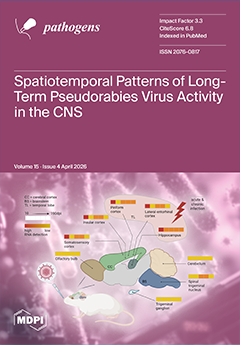
Alphaherpesviruses, including HSV-1, establish lifelong infections with the capacity for reactivation and recurrent disease. While latency has long been linked to peripheral ganglia, the central nervous system (CNS) is increasingly recognized as a site of viral persistence. Using a neurotropic pseudorabies virus mutant, we investigated regional and temporal patterns of viral transcription and neuropathology in the murine brain following intranasal infection. We reveal marked heterogeneity in viral RNA signals, particularly in mesiotemporal regions, accompanied by a transition from acute encephalitis to chronic low-grade inflammation. Spatial association with immune cell infiltration suggests ongoing immune surveillance and intermittent viral activity, highlighting the complexity of virus–host interactions in the CNS. View this paper
- Issues are regarded as officially published after their release is announced to the table of contents alert mailing list.
- You may sign up for e-mail alerts to receive table of contents of newly released issues.
- PDF is the official format for papers published in both, html and pdf forms. To view the papers in pdf format, click on the "PDF Full-text" link, and use the free Adobe Reader to open them.
Previous Issue
Next Issue
