Occurrence and Genetic Diversity of Trichomonas gallinae in Captive Synanthropic Birds in Southeastern Brazil
 , ,
, ,  , , , , and
Abstract
1. Introduction
2. Materials and Methods
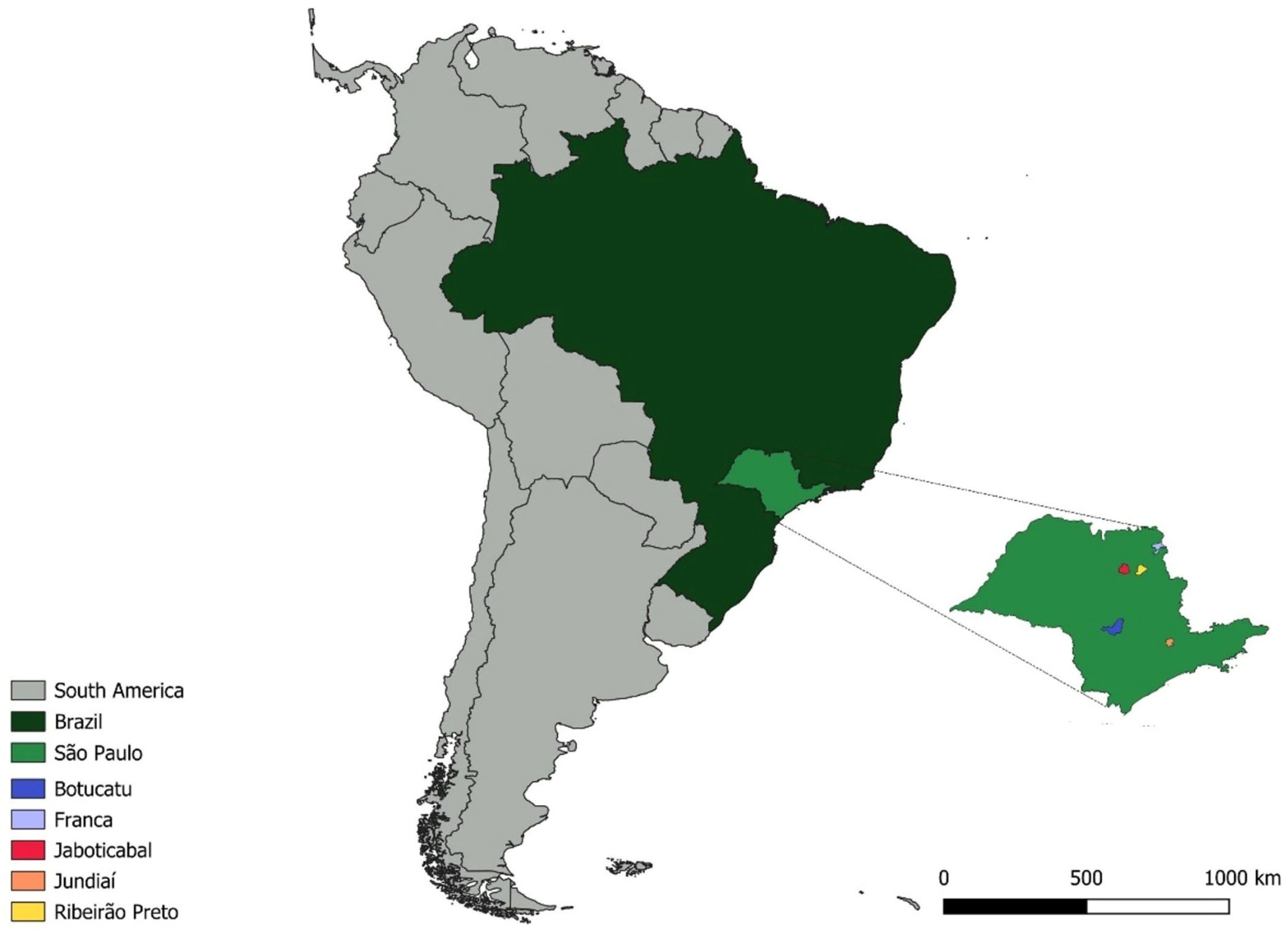
2.1. Study Site and Samples
2.2. Ethical Statement
2.3. Trichomonas spp. Culture
2.4. Oropharyngeal Swab Smears
2.5. DNA Extraction
2.6. Endogenous β-Actin PCR and DNA Electrophoresis in Agarose Gel
2.7. PCR Assay for Trichomonas spp. and Subsequent Sequencing and BLASTn Analysis
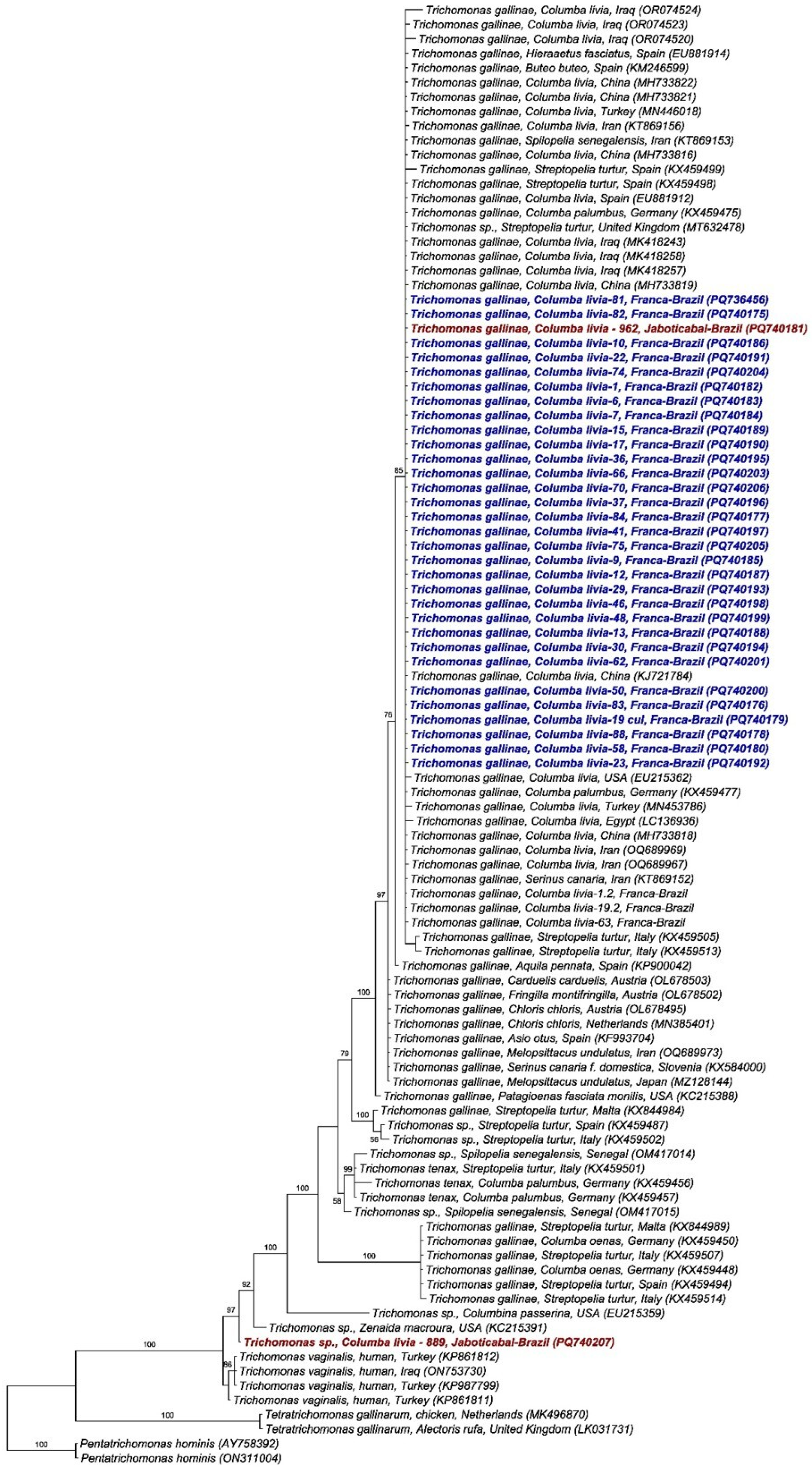
2.8. Phylogenetic Analyses
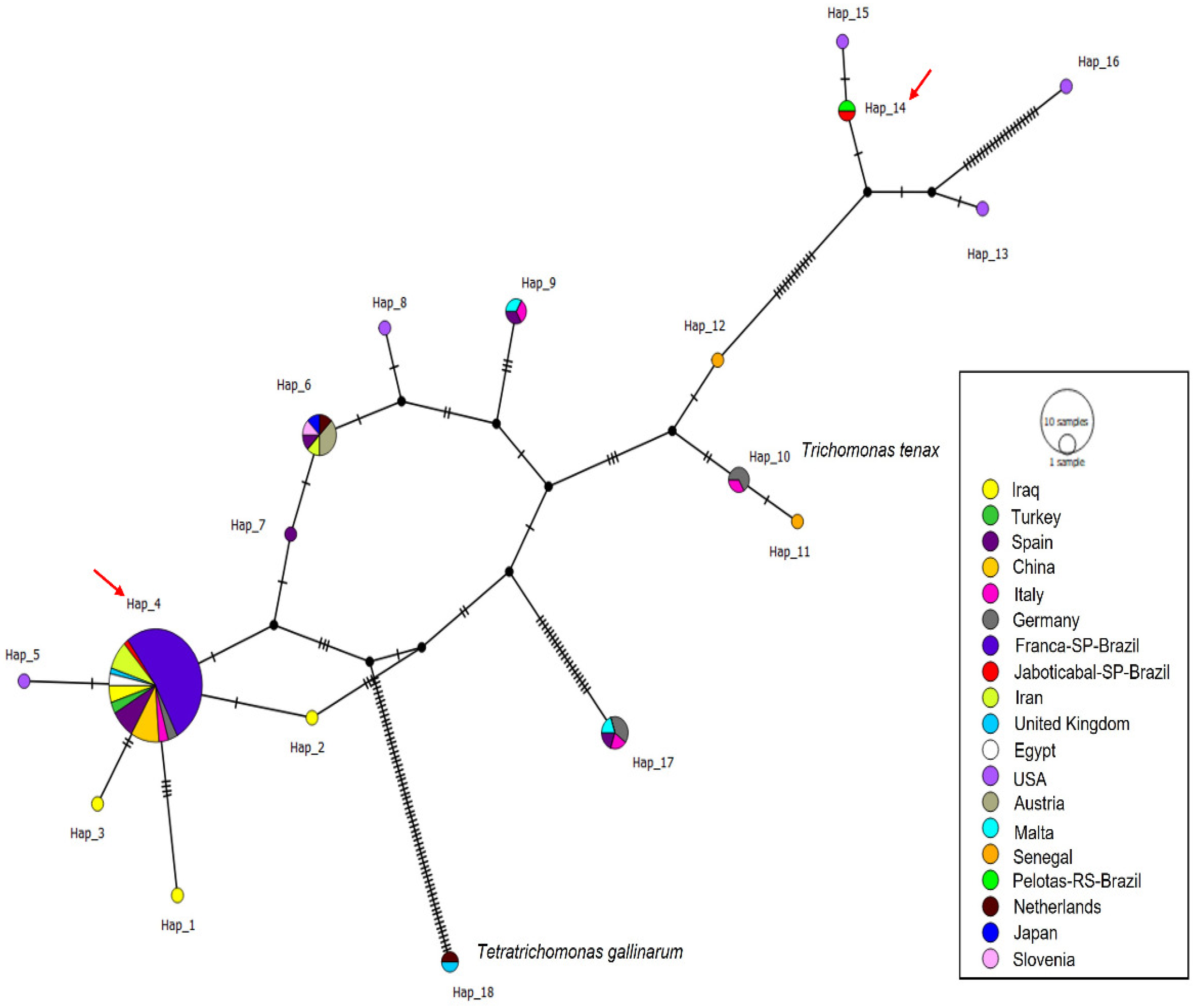
2.9. Diversity Analysis and Haplotype Network
3. Results
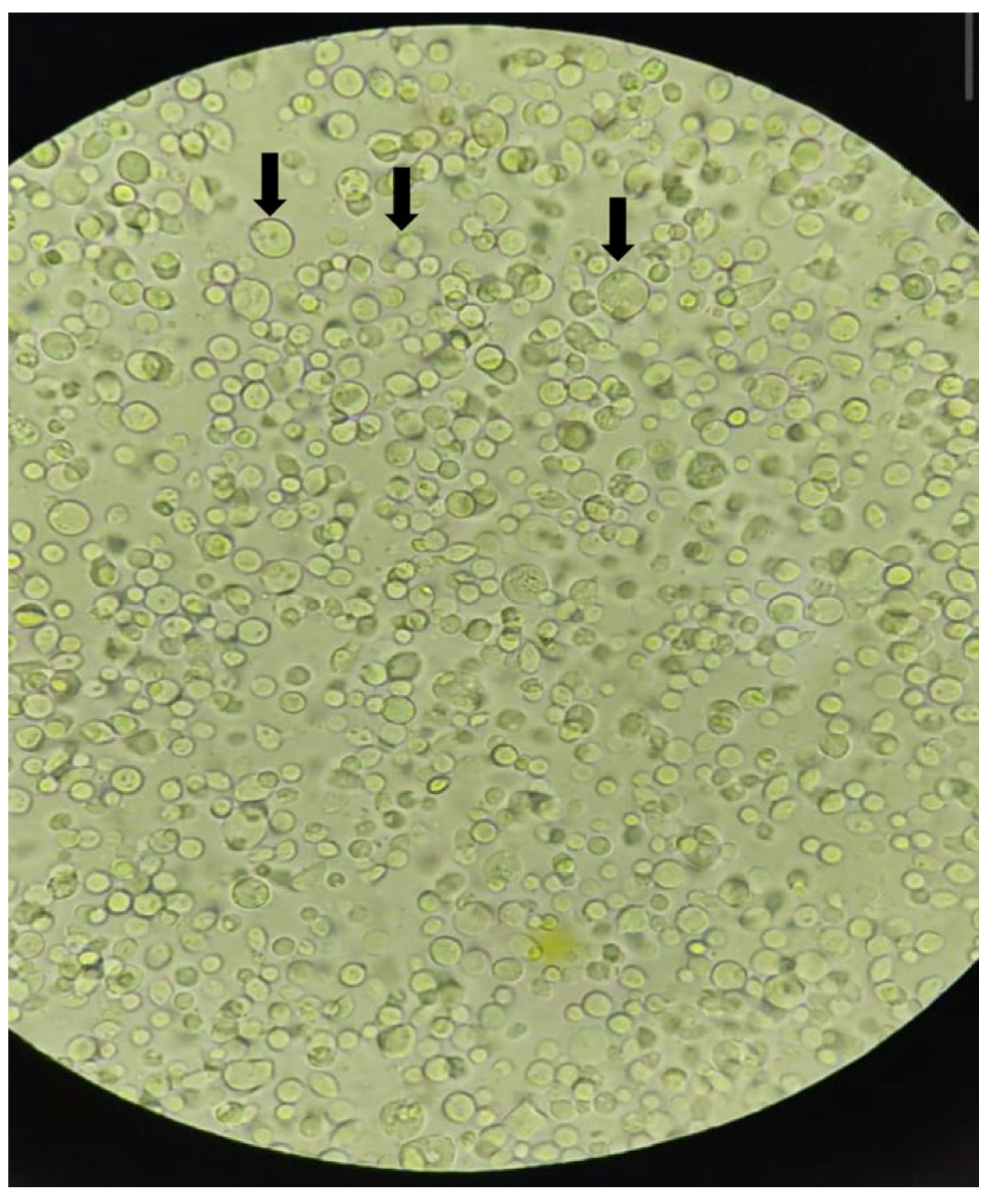
3.1. Trichomonas spp. Culture
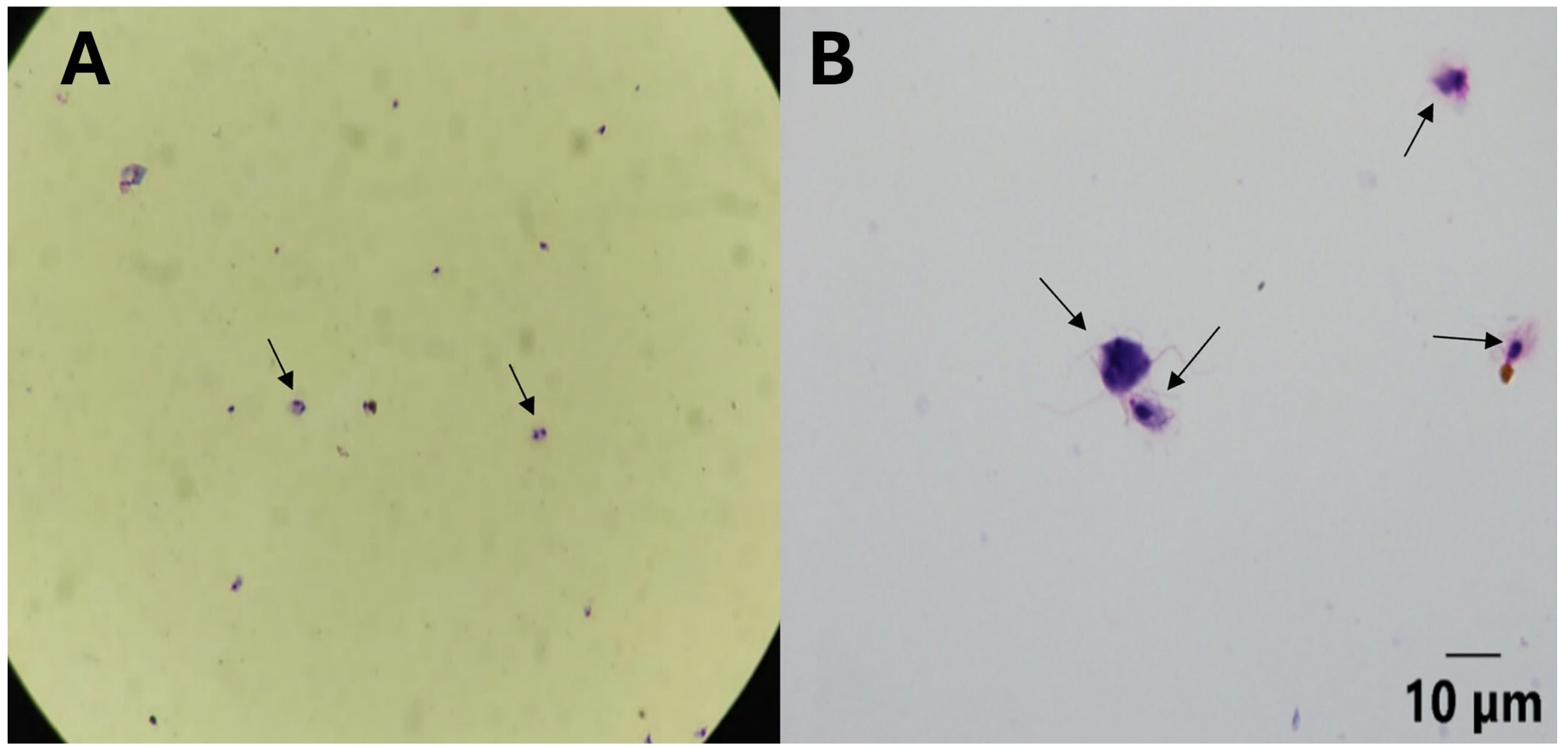
3.2. Giemsa-Stained Oropharyngeal Swab Smears
3.3. DNA Extraction and PCR for Endogenous Gene
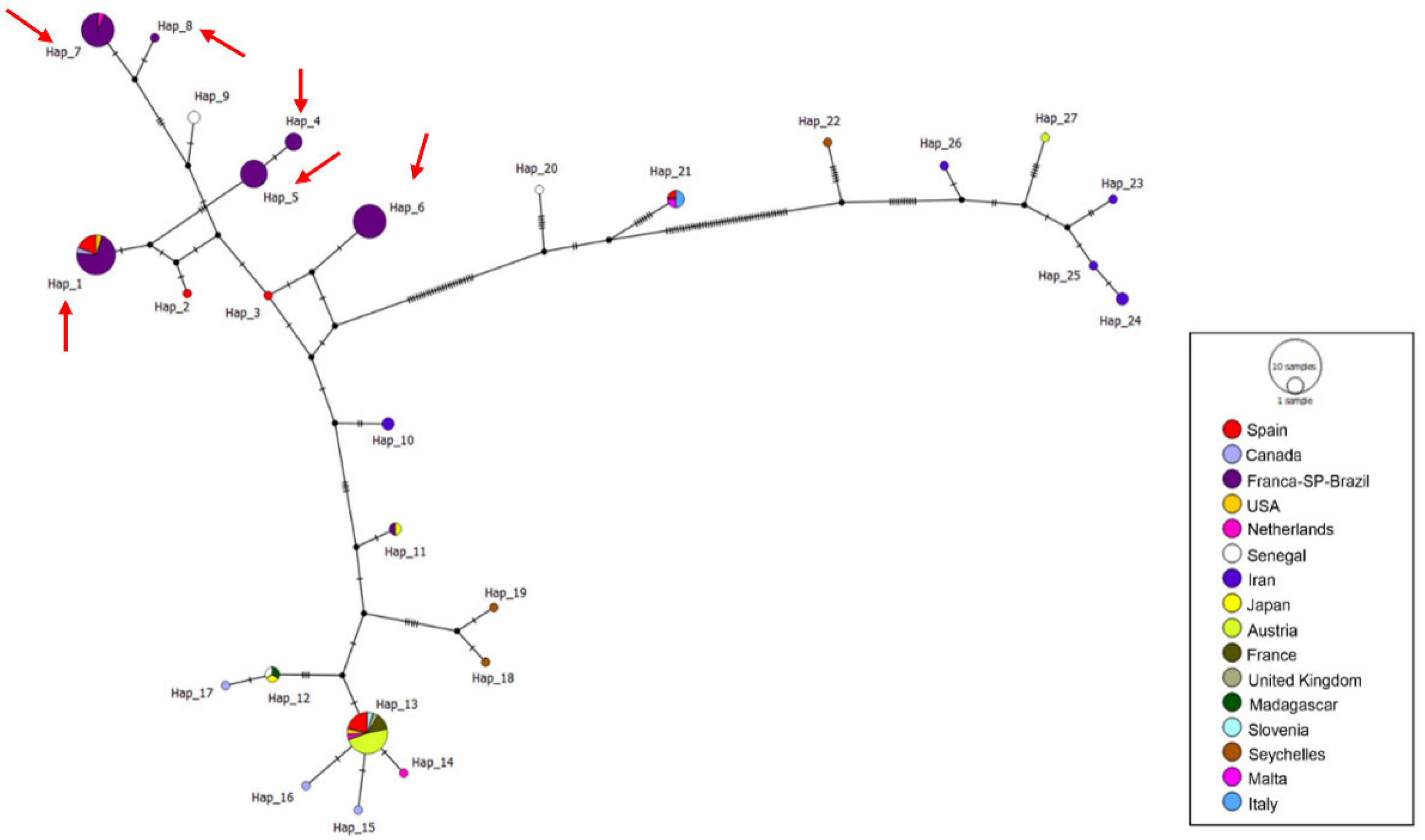
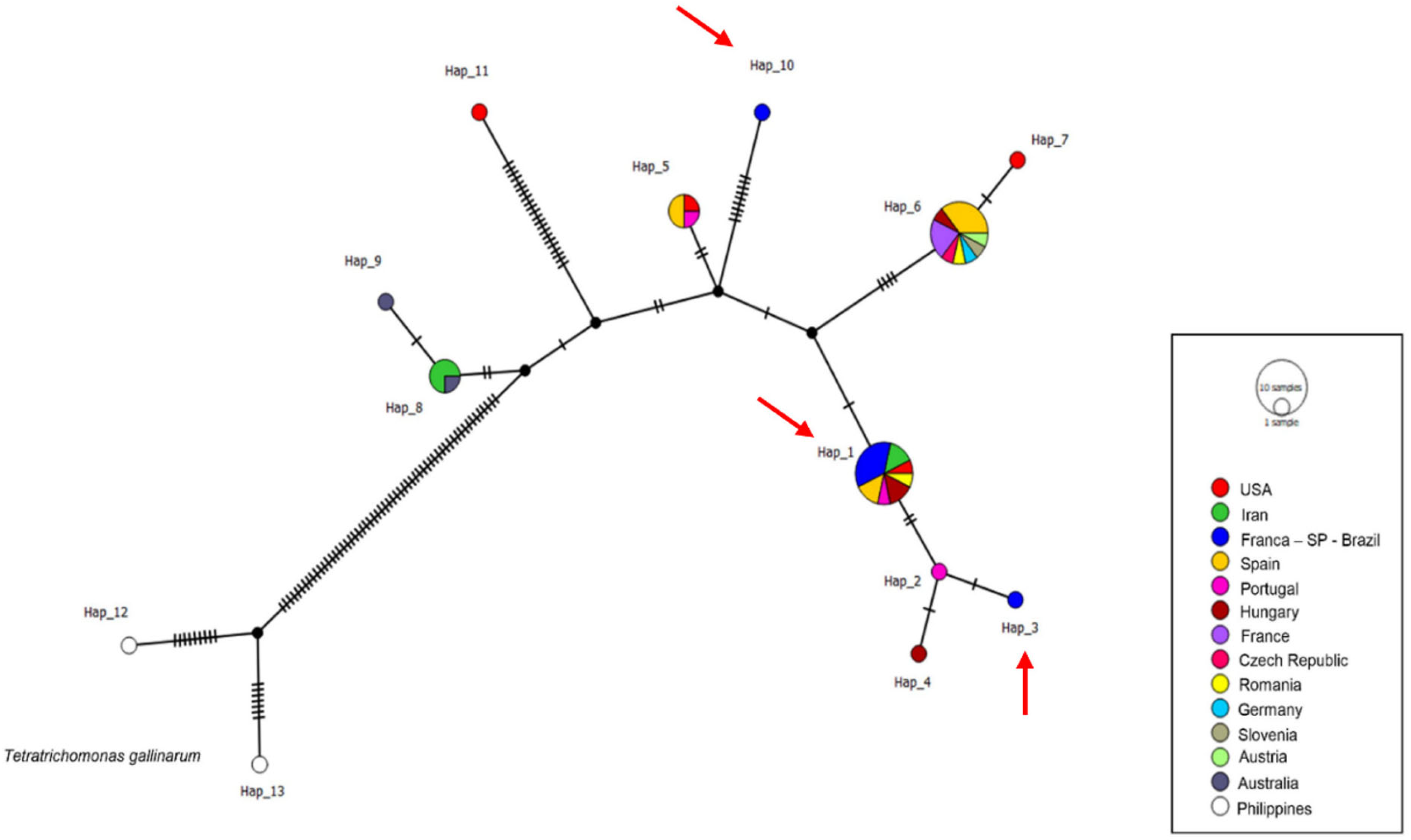
3.4. PCR and Sequence Analysis of the ITS1/5.8S/ITS2 Regions of Trichomonas spp.
3.5. PCR and Analysis of the Fe-Hydrogenase Gene Sequences of Trichomonas spp.
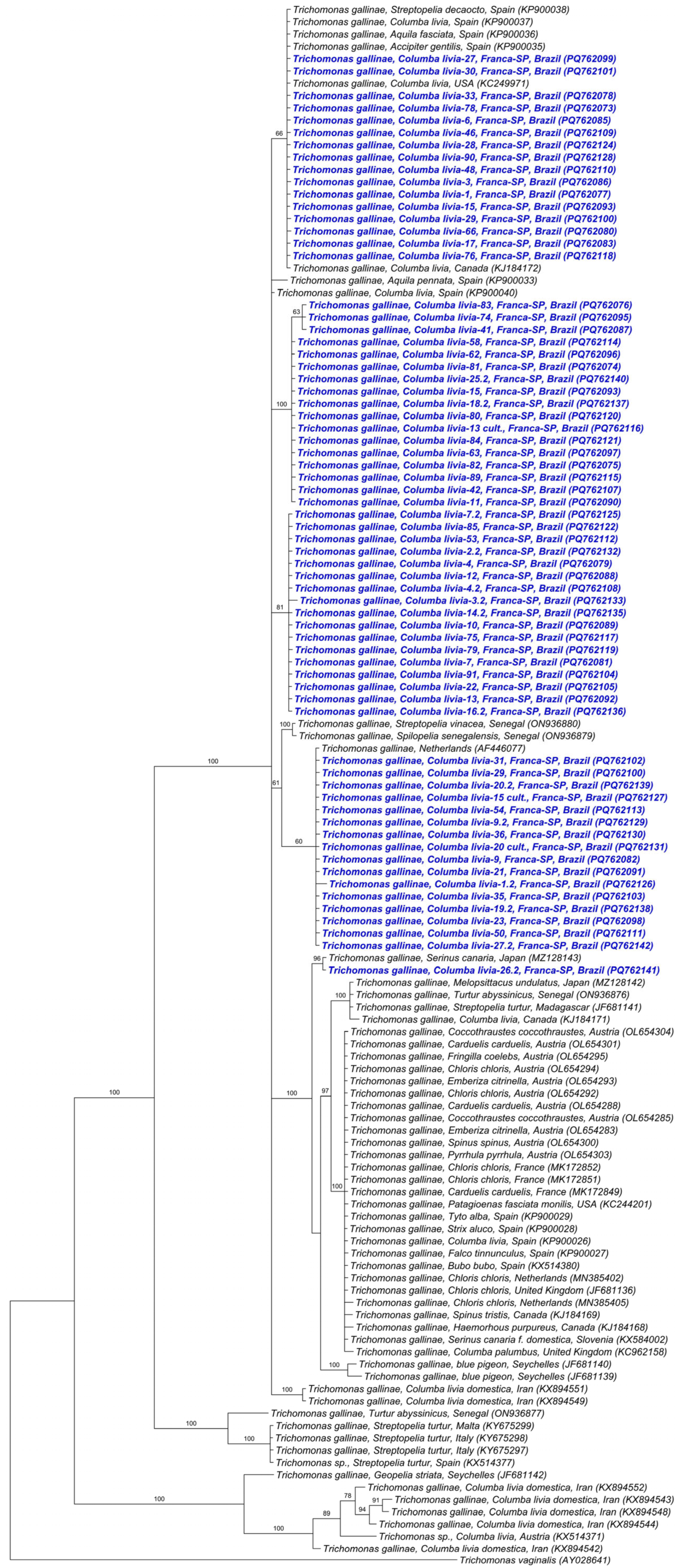
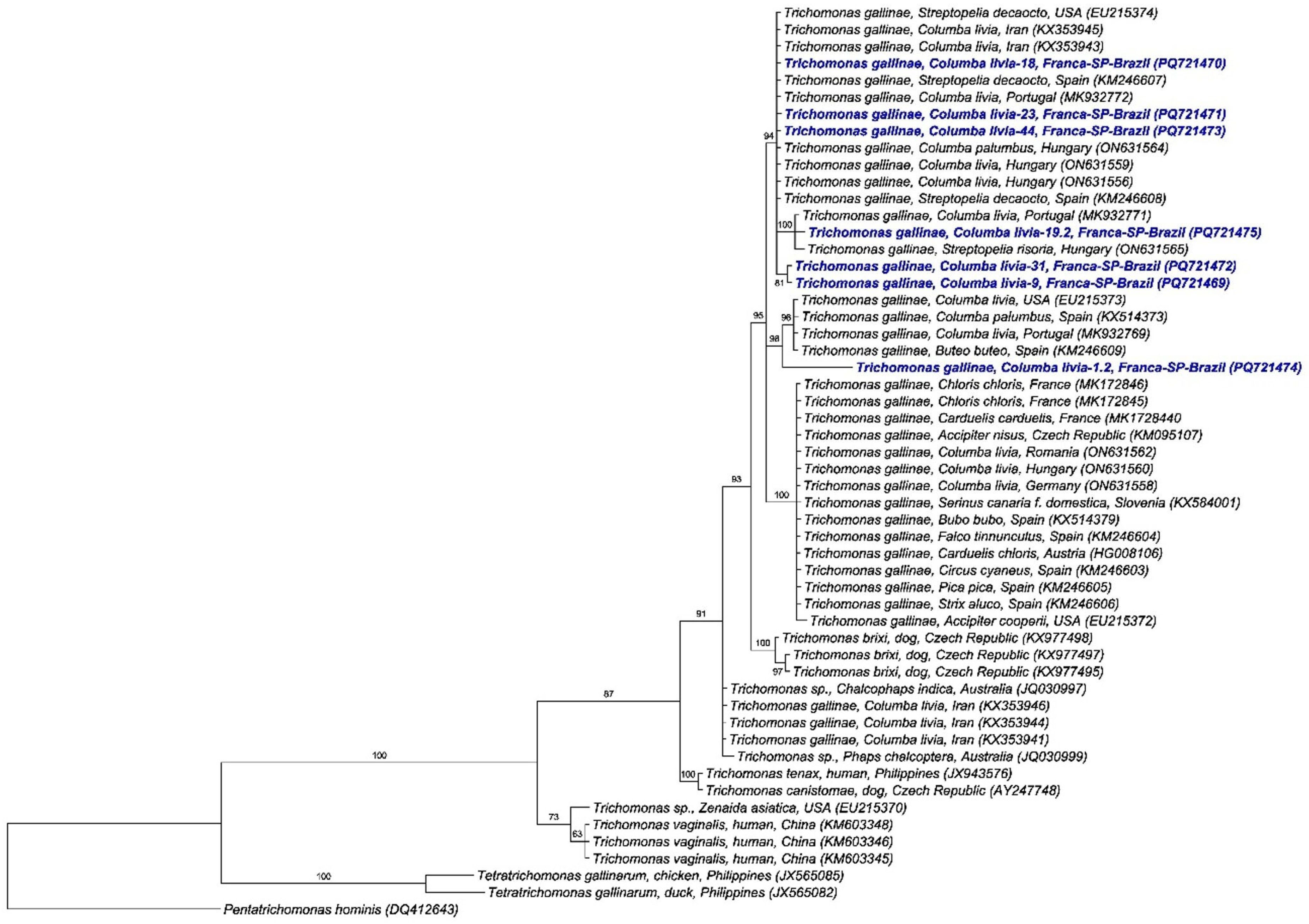
3.6. PCR and Sequence Analysis of the 18S rRNA Gene of Trichomonas spp.
4. Discussion
5. Conclusions
Supplementary Materials
Author Contributions
Funding
Institutional Review Board Statement
Informed Consent Statement
Data Availability Statement
Acknowledgments
Conflicts of Interest
References
- Chou, S.; Hadano, S.; Kojima, A.; Yorisaki, M.; Yasuda, M.; Ike, K.; Tokiwa, T. Genetic characterization of Trichomonas gallinae (Rivolta, 1878) in companion birds in Japan and the genotypical relationship in the Asia region. J. Microbiol. Immunol. Infect. 2022, 55, 527–534. [Google Scholar] [CrossRef] [Scilit] [PubMed]
- Mehlhorn, H.; Al-Quraishy, S.; Aziza, A.; Hess, M. Fine structure of the bird parasites Trichomonas gallinae and Tetratrichomonas gallinarum from cultures. Parasitol. Res. 2009, 105, 751–756. [Google Scholar] [CrossRef] [Scilit]
- Amin, A.; Bilic, I.; Liebhart, D.; Hess, M. Trichomonads in birds—A review. Parasitology 2014, 141, 733–747. [Google Scholar] [CrossRef] [Scilit] [PubMed]
- Gupta, S.D.; Islam, M.; Kamal, T.; Faruque, M.R.A.L.; Faruk, M.S. The confirmatory diagnosis and therapeutic management of canker in pigeons. Res. J. Vet. Pract. 2023, 11, 20–25. [Google Scholar]
- Grunenwald, C.; Sidor, I.; Mickley, R.; Dwyer, C.; Gerhold, R. Tetratrichomonas and trichomonas spp.-associated disease in free-ranging common Eiders (Somateria mollissima) from Wellfleet Bay, MA and description of ITS1 region genotypes. Avian Dis. 2018, 62, 117–123. [Google Scholar] [CrossRef] [Scilit]
- Forzán, M.J.; Vanderstichel, R.; Melekhovets, Y.F.; Mcburney, S. Trichomoniasis in finches from the Canadian Maritime provinces—An emerging disease. Can. Vet. J. 2010, 51, 391–396. [Google Scholar]
- Mcburney, S.; Kelly-Clark, W.K.; Forzan, M.J.; Lawson, B.; Tyler, K.M.; Greenwood, S.J. Molecular characterization of Trichomonas gallinae isolates recovered from the Canadian Maritime provinces’ wild avifauna reveals the presence of the genotype responsible for the European finch trichomonosis epidemic and additional strains. Parasitology 2015, 142, 1053–1062. [Google Scholar] [CrossRef] [Scilit]
- Da Silva, D.G.; Barton, E.; Bunbury, N.; Lunness, P.; Bell, D.J.; Tyler, K.M. Molecular identity and heterogeneity of trichomonad parasites in a closed avian population. Infect. Genet. Evol. 2007, 7, 433–440. [Google Scholar] [CrossRef] [Scilit] [PubMed]
- De Carli, G.A.; Pansera, M.C.G.; Guerrero, J. Trichomonas gallinae (Rivolta, 1878) Stabler, 1938, no trato digestivo superior de pombos domestics Columba livia no Rio Grande do Sul. Primeiro Registro. Acta Biol. Leopoldensia 1979, 1, 85–95. [Google Scholar]
- Tasca, T.; De Carli, G.A. Hemolytic activity of fresh isolates and clones of Trichomonas gallinae. Parasitol. Día 1999, 23, 69–73. [Google Scholar] [CrossRef] [Scilit]
- Arenales, A.; Almeida, A.C.O.; Prado, L.F.; Garcia, S.; Luvizotto, M.C.R. Cytopathology in the diagnosis of oral trichomoniasis in a rock pigeon (Columba livia). Braz. J. Vet. Pathol. 2014, 7, 98–99. [Google Scholar] [CrossRef] [Scilit]
- Joppert, A.M. Estudo Prospectivo das Causas de Morte de Falconiformes e Strigiformes de Vida Livre no Município de São Paulo. Doctoral Dissertation, Universidade de São Paulo, São Paulo, Brazil, 2007. [Google Scholar]
- Godoy, S.N.; Matushima, E.R. A survey of diseases in passeriform birds obtained from illegal wildlife trade in São Paulo City, Brazil. J. Avian Med. Surg. 2010, 24, 199–209. [Google Scholar] [CrossRef] [Scilit]
- Ecco, R.; Preis, I.S.; Vilela, D.A.; Luppi, M.M.; Malta, M.C.; Beckstead, R.B.; Stimmelmayr, R.; Gerhold, R.W. Molecular confirmation of Trichomonas gallinae and other parabasalids from Brazil using the 5.8S and ITS-1 rRNA regions. Vet. Parasitol. 2012, 190, 36–42. [Google Scholar] [CrossRef] [Scilit] [PubMed]
- Gerhold, R.W.; Yabsley, M.J.; Smith, A.J.; Ostergaard, E.; Mannan, W.; Cann, J.D.; Fischer, J.R. Molecular characterization of the Trichomonas gallinae morphologic complex in the United States. J. Parasitol. 2008, 94, 1335–1341. [Google Scholar] [CrossRef] [Scilit] [PubMed]
- Bruni, M.P.; Echenique, J.V.Z.; Dos Santos, C.C.; de Macedo, M.R.P.; Bandarra, P.M.; Timm, C.D.; Pereira Schild, A.L.; Lopes Ruas, J.; Pereira Soares, M.; da Rosa Farias, N.A. The raptor Chimango Caracara (Milvago chimango) (Aves: Falconiformes)—A new host for Trichomonas gallinae (Protozoa: Trichomonadidae). Int. J. Parasitol. Parasites Wildl. 2019, 10, 310–313. [Google Scholar] [CrossRef] [Scilit]
- Soulsby, R.L.; Smallman, J.V. A Direct Method of Calculating Bottom Orbital Velocity Under Waves; The Ministry of Agriculture, Fisheries and Food: London, UK, 1986. [Google Scholar]
- Van Borm, S.; Steensels, M.; Ferreira, H.L.; Boschmans, M.; DE Vriese, J.; Lambrecht, B.; Van Den Berg, T. Its Application to Avian Influenza Diagnosis and Quantification. Avian Dis. 2007, 50, 213–220. [Google Scholar] [CrossRef] [Scilit] [PubMed]
- Alabí Córdova, A.S.; Fecchio, A.; Calchi, A.C.; Dias, C.M.; Machado, R.Z.; André, M.R. Molecular evidence of Bartonella spp. in tropical wild birds from the Brazilian Pantanal, the largest wetland in South America. Vet. Res. Commun. 2024, 48, 1631–1640. [Google Scholar] [CrossRef] [Scilit]
- Felleisen, R.S.J. Comparative sequence analysis of 5·8S rRNA genes and internal transcribed spacer (ITS) regions of trichomonadid protozoa. Parasitology 1997, 115, 111–119. [Google Scholar] [CrossRef] [Scilit]
- Ganas, P.; Jaskulska, B.; Lawson, B.; Zadravec, M.; Hess, M.; Bilic, I. Multi-locus sequence typing confirms the clonality of Trichomonas gallinae isolates circulating in European finches. Parasitology 2014, 141, 652–661. [Google Scholar] [CrossRef] [Scilit]
- Lawson, B.; Cunningham, A.A.; Chantrey, J.; Hughes, L.A.; John, S.K.; Bunbury, N.; Bell, D.J.; Tyler, K.M. A clonal strain of Trichomonas gallinae is the aetiologic agent of an emerging avian epidemic disease. Infect. Genet. Evol. 2011, 11, 1638–1645. [Google Scholar] [CrossRef] [Scilit]
- Ewing, B.; Green, P. Base-calling of automated sequencer traces using phred. II. Error probabilities. Genome Res. 1998, 8, 186–194. [Google Scholar] [CrossRef] [Scilit] [PubMed]
- Hall, T.A. BioEdit: A user-friendly biological sequence alignment editor and analysis program for Windows 95/98/NT. Nucleic Acids Symp. Ser. 1999, 41, 95–98. [Google Scholar]
- Ronquist, F.; Huelsenbeck, J.P. MrBayes 3: Bayesian phylogenetic inference under mixed models. Bioinformatics 2003, 19, 1572–1574. [Google Scholar] [CrossRef] [Scilit]
- Miller, M.A.; Pfeiffer, W.; Schwartz, T. The CIPRES science gateway: A community resource for phylogenetic analyses. In Proceedings of the 2011 TeraGrid Conference: Extreme Digital Discovery, Salt Lake City, UT, USA, 18–21 July 2011; pp. 1–8. [Google Scholar]
- Darriba, D.; Taboada, G.L.; Doallo, R.; Posada, D. jModelTest 2: More models, new heuristics and parallel computing. Nat. Methods 2012, 9, 772. [Google Scholar] [CrossRef] [Scilit]
- Stover, B.C.; Muller, K.F. TreeGraph 2: Combining and visualizing evidence from different phylogenetic analyses. BMC Bioinform. 2010, 11, 7. [Google Scholar] [CrossRef] [Scilit]
- Librado, P.; Rozas, J. DnaSP v5: A software for comprehensive analysis of DNA polymorphism data. Bioinformatics 2009, 25, 1451–1452. [Google Scholar] [CrossRef] [Scilit] [PubMed]
- Leigh, J.W.; Bryant, D. Popart: Full-feature software for haplotype network construction. Methods Ecol. Evol. 2015, 6, 1110–1116. [Google Scholar] [CrossRef] [Scilit]
- McDougald, L.R. Diseases of Poultry, 10th ed.; Iowa State University Press: Ames, IA, USA, 1991. [Google Scholar]
- Girard, Y.A.; Rogers, K.H.; Woods, L.W.; Chouicha, N.; Miller, W.A.; Johnson, C.K. Dual-pathogen etiology of avian trichomonosis in a declining band-tailed pigeon population. Infect. Genet. Evol. 2014, 24, 146–156. [Google Scholar] [CrossRef] [Scilit]
- Timm, C.D.; Timm, V.F. Avifauna Gaúcha: Guia de Identificação; USEB: Pelotas, Brazil, 2021. [Google Scholar]
- St Leger, J.; Shivaprasad, H.L. Passerine protozoal sinusitis: An infection you should know about. In Proceedings of the Association of Avian Veterinarians (AAV) Annual Conference and Expo, St Paul, MN, USA, 26–28 August 1998; pp. 157–160. [Google Scholar]
- Dorrestein, G.M. Bacterial and parasitic diseases of passerines. Vet. Clin. N. Am. Exot. Anim. Pract. 2009, 12, 433–451. [Google Scholar] [CrossRef] [Scilit]
- Narcisi, E.M.; Sevoian, M.; Honigberg, B.M. Pathologic changes in pigeons infected with a virulent Trichomonas gallinae strain (Eiberg). Avian Dis. 1991, 35, 55–61. [Google Scholar] [CrossRef] [Scilit]
- Forrester, D.J.; Foster, D.W. Trichomonosis. In Parasitic Diseases in Wild Birds; Atkinson, C.T., Thomas, N.J., Hunter, D.B., Eds.; Blackwell Publishing: Hoboken, NJ, USA, 2008; pp. 120–153. [Google Scholar]
- Villanúa, D.; Höfle, U.; Pérez-Rodríguez, L.; Gortázar, C. Trichomonas gallinae in wintering common wood pigeons Columba palumbus in Spain. IBIS 2006, 148, 641–648. [Google Scholar] [CrossRef] [Scilit]
- Sansano-Maestre, J.; Garijo-Toledo, M.M.; Gómez-Muñoz, M.T. Prevalence and genotyping of Trichomonas gallinae in pigeons and birds of prey. Avian Pathol. 2009, 38, 201–207. [Google Scholar] [CrossRef] [Scilit]
- Schulz, J.H.; Bermudez, A.J.; Millspaugh, J.J. Monitoring presence and annual variation of trichomoniasis in mourning doves. Avian Dis. 2005, 49, 387–389. [Google Scholar] [CrossRef] [Scilit] [PubMed]
- Conti, J.A.; Forrester, D.J. Interrelationships of parasites of white-winged doves and mourning doves in Florida. J. Wildl. Dis. 1981, 17, 529–536. [Google Scholar] [CrossRef] [Scilit] [PubMed]
- Höfle, U.; Gortázar, C.; Ortiz, J.A.; Knispel, B.; Kaleta, E.F. Outbreak of trichomoniasis in a woodpigeon (Columba palumbus) wintering roost. Eur. J. Wildl. Res. 2004, 50, 73–77. [Google Scholar] [CrossRef] [Scilit]
- Alrefaei, A.F.; Gerhold, R.W.; Nader, J.L.; Bell, D.J.; Tyler, K.M. Improved subtyping affords better discrimination of Trichomonas gallinae strains and suggests hybrid lineages. Infect. Genet. Evol. 2019, 73, 234–241. [Google Scholar] [CrossRef] [Scilit]
- Grabensteiner, E.; Bilic, I.; Kolbe, T.; Hess, M. Molecular analysis of clonal trichomonad isolates indicate the existence of heterogenic species present in different birds and within the same host. Vet. Parasitol. 2010, 172, 53–64. [Google Scholar] [CrossRef] [Scilit]
- Mohamed, H.M.; Saad, A.S.; Khalifa, M.M.; Abdel-Maogood, S.Z.; Awadalla, S.M.; Mousa, W.M. Detection and molecular characterization of Trichomonas gallinae recovered from domestic pigeons in Egypt. Parasitol. Res. 2023, 122, 257–263. [Google Scholar] [CrossRef] [Scilit]
- Fouts, A.C.; Kraus, S.J. Trichomonas vaginalis: Reevaluation of its clinical presentation and laboratory diagnosis. J. Infect. Dis. 1980, 141, 137–143. [Google Scholar] [CrossRef] [Scilit]
- Cooper, J.E.; Petty, S.J. Trichomoniasis in free-living goshawks (Accipiter gentilis gentilis) from Great Britain. J. Wildl. Dis. 1988, 24, 80–87. [Google Scholar] [CrossRef] [Scilit] [PubMed]
- Raza, A.; Qamar, M.F.; Rubtsova, N.; Saneela, S. Pathogenicity and diagnostic sensitivity of culture media for identifcation of Trichomonas gallinae in Domestic Pigeons of Lahore, Pakistan. J. Protozool. Res. 2018, 28, 11–21. [Google Scholar]
- Saikia, M.; Bhattacharjee, K.; Sarmah, P.C.; Deka, D.K.; Upadhyaya, T.N.; Konch, P. Prevalence and pathology of Trichomonas gallinae in domestic pigeon (Columba livia domestica) of Assam, India. Indian J. Anim. Res. 2021, 55, 84–89. [Google Scholar] [CrossRef] [Scilit]
- Diamond, L.S. A comparative study of 28 culture media for Trichomonas gallinae. Exp. Parasitol. 1954, 3, 251–258. [Google Scholar] [CrossRef] [Scilit] [PubMed]
- Kocan, R.M.; Knisley, J.O. Challenge infection as a means of determining the rate of disease resistant Trichomonas gallinae-free birds in a population. J. Wildl. Dis. 1970, 6, 13–15. [Google Scholar] [CrossRef] [Scilit]
- Lennon, R.J.; Dunn, J.C.; Stockdale, J.E.; Goodman, S.J.; Morris, A.J.; Hamer, K.C. Trichomonad parasite infection in four species of Columbidae in the UK. Parasitology 2013, 140, 1368–1376. [Google Scholar] [CrossRef] [Scilit]
- Kelly-Clark, W.K.; McBurney, S.; Forzán, M.J.; Desmarchelier, M.; Greenwood, S.J. Detection and characterization of a Trichomonas isolate from a rehabilitated bald eagle (Haliaeetus leucocephalus). J. Zoo Wildl. Med. 2013, 44, 1123–1126. [Google Scholar] [CrossRef] [Scilit]
- Martínez-Díaz, R.A.; Ponce-Gordo, F.; Rodríguez-Arce, I.; del Martínez-Herrero, M.C.; González, F.G.; Molina-López, R.Á.; Gómez-Muñoz, M.T. Trichomonas gypaetinii n. sp., a new trichomonad from the upper gastrointestinal tract of scavenging birds of prey. Parasitol. Res. 2015, 114, 101–112. [Google Scholar] [CrossRef] [Scilit]







| City | Quantity | Order | Quantity/Species |
|---|---|---|---|
| Jaboticabal | 12 | Columbiformes | 12 Columba livia domestica |
| 3 | Piciformes | 3 R. toco | |
| 1 | Strigiformes | 1 Tyto furcata | |
| 2 | Psittaciformes | 1 A. arauna, 1 F. xanthopterygius | |
| 1 | Charadriiformes | 1 Vanellus chilensis | |
| Franca | 121 | Columbiformes | 121 Columba livia domestica |
| Ribeirão Preto | 5 | Accipitriformes | 4 R. magnirostris e 1 F. sparverius |
| 5 | Cathartiformes | 5 C. atratus | |
| 10 | Columbiformes | 10 Columbina talpacoti | |
| 1 | Nyctibiiformes | 1 Nyctibius griseus | |
| 10 | Passeriformes | 3 Saltator similis, 1 Cacicus cela, 3 Turdus rufiventris, 1 Thraupis sayaca, 1 Mimus saturninus, 1 Pitangus sulphuratus | |
| 2 | Piciformes | 2 R. toco | |
| 8 | Psittaciformes | 1 A. arauna, 3 A. auricapillus, 1 Eupsittula aurea, 3 Pyrrhura frontalis | |
| 10 | Strigiformes | 5 T. furcata, 4 A. cunicularia, 1 Megascops choliba | |
| Botucatu | 19 | Passeriformes | 1 Sicalis flaveola, 2 Oryzoborus maximiliani, 2 Cyanocompsa brissonii, 2 C. cucullatus, 1 O. angolensis, 1 S. similis, 1 Gnorimopsar chopi, 3 Sporophila caerulescens, 2 P. sulphuratus, 2 Tachornis squamata, 1 Thraupis sayaca and 1 Guira guira |
| 2 | Columbiformes | 2 Zenaida auriculata | |
| 3 | Piciformes | 3 R. toco | |
| 1 | Psittaciformes | 1 Brotogeris chiriri | |
| 1 | Anseriformes | 1 Anas bahamensis | |
| 6 | Strigiformes | 4 Ciccaba virgata, 1 Tyto furcata 1 Athene cunicularia | |
| Jundiaí | 11 | Piciformes | 11 R. toco |
| 1 | Nyctibiiformes | 1 Nyctibius griseus | |
| 10 | Strigiformes | 6 C. virgata, 2 A. cunicularia, 1 Asio clamator, 1 P. perspicillata | |
| 11 | Columbiformes | 2 Zenaida auriculata, 3 C. livia, 6 Columbina talpacoti | |
| 12 | Falconiformes | 2 C. plancus, 7 Falco sparverius, 1 Ictinia plumbea, 2 Rupornis magnirostris | |
| 4 | Cathartiformes | 4 C. atratus | |
| 2 | Pelecaniformes | 1 Tigrisoma lineatum, 1 Ardea cocoi | |
| 1 | Tinamiformes | 1 Rhynchotus rufescens | |
| 6 | Psittaciformes | 4 Psittacara leucophthalmus, 1 Brotogeris tirica, 1 Amazona aestiva |
| Primer Names | Primer Sequences | Thermal Conditions | References | Fragment Size |
|---|---|---|---|---|
| Endogenous gene | ||||
| β-actin-F | 5′-CCTCATGAAGATCCTGACAGA3′ | 95 °C for 5 min, followed by 35 cycles at 95 °C for 30 s, 54 °C for 30 s and 72 °C for 1 min and final extension at 72 °C for 5 min | [18] | 700 bp |
| β-actin-R | 5′-TCTCCTGCTCYAAYTCCA-3′ | |||
| ITS1/5.8S/ITS2 | ||||
| TRF1 | (5′-TGCTTCAGCTCAGCGGGTCTTCC-3′) | 94 °C for 2 min followed by 40 cycles at 94 °C for 20 s, 66 °C for 20 s and 72 °C for 30 s, final extension at 72 °C for 5 min | [20] | 369 bp |
| TRF2 | (5′-CGGTAGGTGAACCTGCCGTTGG-3′) | |||
| 18S rRNA | ||||
| Hm-Long-f | (5′-AGGAAGCACACTATGGTCATAG-3′) | 95 °C for 15 min, followed by 40 cycles of 94 °C for 30 s, 55 °C for 1 min and 72 °C for 2 min, final extension at 72 °C for 10 min | [21] | 1500 bp |
| Hm-Long-r | (5′-CGTTACCTTGTTACGACTTCTCCTT-3′) | |||
| Fe-hydrogenase | ||||
| TrichhydFOR | (5′-GTTTGGGATGGCCTCAGAAT-3′) | 95 °C for 10 min followed by 36 cycles at 96° for 5 s, 53° for 3 s and 68° for 15 s, and final extension at 72 °C for 10 s. | [22] | 1000 bp |
| TrichhydREV | (5′-AGCCGAAGATGTTGTCGAAT-3′) | |||
| Molecular Marker | bp | N | VS | GC% | H | hd (Mean ± SD) | π (Mean ± SD) | K |
|---|---|---|---|---|---|---|---|---|
| ITS1-5.8S-ITS2 intergenic region | 321 | 96 | 100 | 34 | 18 | 0.588 ± 0.059 | 0.03375 ± 0.00705 | 9.75417 |
| Fe-hydrogenase | 851 | 118 | 107 | 53.9 | 27 | 0.893 ± 0.013 | 0.02159 ± 0.00305 | 17.40417 |
| 18S rRNA | 1351 | 45 | 98 | 48.9 | 13 | 0.804 ± 0.040 | 0.00927 ± 0.00302 | 11.80 |
Disclaimer/Publisher’s Note: The statements, opinions and data contained in all publications are solely those of the individual author(s) and contributor(s) and not of MDPI and/or the editor(s). MDPI and/or the editor(s) disclaim responsibility for any injury to people or property resulting from any ideas, methods, instructions or products referred to in the content. |
© 2026 by the authors. Licensee MDPI, Basel, Switzerland. This article is an open access article distributed under the terms and conditions of the Creative Commons Attribution (CC BY) license.
Share and Cite
Pereira, A.G.; Simões, S.R.J.S.; Silva, M.C.C.d.; Calchi, A.C.; Bassini-Silva, R.; Castro-Santiago, A.C.; Machado, R.Z.; André, M.R.; Werther, K. Occurrence and Genetic Diversity of Trichomonas gallinae in Captive Synanthropic Birds in Southeastern Brazil. Pathogens 2026, 15, 428. https://doi.org/10.3390/pathogens15040428
Pereira AG, Simões SRJS, Silva MCCd, Calchi AC, Bassini-Silva R, Castro-Santiago AC, Machado RZ, André MR, Werther K. Occurrence and Genetic Diversity of Trichomonas gallinae in Captive Synanthropic Birds in Southeastern Brazil. Pathogens. 2026; 15(4):428. https://doi.org/10.3390/pathogens15040428
Chicago/Turabian StylePereira, Amanda Garcia, Sarah Raquel Jesus Santos Simões, Maitê Cardoso Coelho da Silva, Ana Cláudia Calchi, Ricardo Bassini-Silva, Ana Carolina Castro-Santiago, Rosangela Zacarias Machado, Marcos Rogério André, and Karin Werther. 2026. "Occurrence and Genetic Diversity of Trichomonas gallinae in Captive Synanthropic Birds in Southeastern Brazil" Pathogens 15, no. 4: 428. https://doi.org/10.3390/pathogens15040428
APA StylePereira, A. G., Simões, S. R. J. S., Silva, M. C. C. d., Calchi, A. C., Bassini-Silva, R., Castro-Santiago, A. C., Machado, R. Z., André, M. R., & Werther, K. (2026). Occurrence and Genetic Diversity of Trichomonas gallinae in Captive Synanthropic Birds in Southeastern Brazil. Pathogens, 15(4), 428. https://doi.org/10.3390/pathogens15040428