




Next Issue
Volume 15, August
Previous Issue
Volume 15, June


Pathogens, Volume 15, Issue 7 (July 2026) – 121 articles
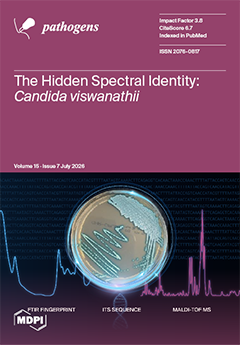
Cover Story (view full-size image): When a blood culture turns yeast-positive but a syndromic panel remains negative, rare pathogens can hide in plain sight. We investigated seven Candida viswanathii isolates recovered from two paediatric centres using three MALDI-TOF MS platforms: ITS sequencing, FTIR spectroscopy, and antifungal susceptibility testing. Updated MALDI-TOF MS databases enabled species-level identification, while ITS sequencing confirmed the result and FTIR differentiated C. viswanathii from related Candida species. Our findings highlight the need for explicit diagnostic algorithms for panel-negative candidemia and show how integrated spectral and molecular workflows can reveal uncommon but clinically relevant yeasts. View this paper
  • Issues are regarded as officially published after their release is announced to the table of contents alert mailing list.
  • You may sign up for e-mail alerts to receive table of contents of newly released issues.
  • PDF is the official format for papers published in both, html and pdf forms. To view the papers in pdf format, click on the "PDF Full-text" link, and use the free Adobe Reader to open them.
Order results
Result details
Section
Select all
Export citation of selected articles as:
17 pages, 1612 KB  
Article
Effect of Methyl Gallate on Physiological and Gut Microbiota-Associated Responses Following a Single Intramuscular Administration of Tylosin in Weaned Piglets
by Hae-Yeon Cho, Syed Al Jawad Sayem, Ga-Yeong Lee, Jonghyun Park, Eon-Bee Lee, Mi-Hyang Hwangbo and Seung-Chun Park
Pathogens 2026, 15(7), 778; https://doi.org/10.3390/pathogens15070778 - 22 Jul 2026
Viewed by 295
Abstract
Tylosin (TYL), a macrolide antibiotic, is commonly used to treat respiratory infections in weaned piglets. Despite its utility, TYL administration is associated with adverse side effects, including immune dysregulation and gut microbiota imbalance. This study evaluated whether methyl gallate (MG), a natural polyphenolic [...] Read more.
Tylosin (TYL), a macrolide antibiotic, is commonly used to treat respiratory infections in weaned piglets. Despite its utility, TYL administration is associated with adverse side effects, including immune dysregulation and gut microbiota imbalance. This study evaluated whether methyl gallate (MG), a natural polyphenolic compound with antimicrobial and immunomodulatory properties, could mitigate these side effects of TYL. Forty weaned piglets were randomly assigned to a saline control group, a TYL (10 mg/kg) group, an MG (10 mg/kg) group, and a TYL + MG (10 mg/kg each) group. Changes in body weight, hematological parameters, plasma cytokines, culturable fecal bacterial populations, and 16S rRNA-based gut microbiota composition were evaluated in all weaned piglets. There were no significant differences (p > 0.05) in ADG, ADFI, or FE among the treatment groups. Hematological analysis revealed significant changes in neutrophil and eosinophil counts, showing significant fluctuations in the MG-treated group compared with the control. TYL administration significantly decreased TNF-α and IL-1β levels while increasing IL-10 and IL-1ra concentrations, indicating immunomodulatory effects. In contrast, MG significantly increased adaptive immune-associated cytokines, including IL-2, IL-4, IL-6, and IL-12. Culture-based fecal microbiological analysis revealed that TYL reduced Lactobacillus abundance and lowered the culture-based Lactobacillus/Enterobacteriaceae ratio, suggesting acute dysbiosis. Co-administration of MG partially attenuated these microbiota-associated alterations and promoted the recovery of bacterial populations. Moreover, 16S rRNA sequencing demonstrated that similar relative abundances of Proteobacteria were observed in the TYL and TYL + MG groups. Therefore, no clear reduction in relative abundance of Proteobacteria was demonstrated under the present experimental conditions. These findings support the possibility that MG may partially attenuate selected TYL-associated immunological and gut microbiota-related changes under the conditions of the present exploratory study. A graphical summary of the study design and the principal findings is presented in the Graphical Abstract. Full article
Show Figures

Figure 1

11 pages, 866 KB  
Article
Two Diagnostic Challenges in Hepatitis B Serology: Low HBsAg S/CO Values and Isolated Anti-HBc Positivity
by Şerife Yılmaz Gürbüz, Oğuzhan Yağdı and Erhan Başar
Pathogens 2026, 15(7), 777; https://doi.org/10.3390/pathogens15070777 - 22 Jul 2026
Viewed by 454
Abstract
Hepatitis B surface antigen (HBsAg) signal-to-cutoff (S/CO) values and isolated anti-HBc positivity represent two significant diagnostic challenges in hepatitis B virus (HBV) serology. This retrospective study, conducted in Karabuk between 2021 and 2025, aimed to evaluate the correlation between these profiles and HBV [...] Read more.
Hepatitis B surface antigen (HBsAg) signal-to-cutoff (S/CO) values and isolated anti-HBc positivity represent two significant diagnostic challenges in hepatitis B virus (HBV) serology. This retrospective study, conducted in Karabuk between 2021 and 2025, aimed to evaluate the correlation between these profiles and HBV DNA positivity to determine the optimal S/CO thresholds for confirmatory testing and clarify the clinical relevance of isolated anti-HBc reactivity. Among 17,356 patients screened for anti-HBc, isolated anti-HBc positivity was identified in 506 patients (2.9%), of whom 3.2% had detectable HBV DNA. Positivity was significantly higher in patients older than 50 years and in the Gastroenterology department. Separately, 213 specimens with HBsAg S/CO values between 1.0 and 10.0 underwent HBV DNA confirmation testing. ROC analysis yielded an excellent area under the curve of 0.937, with an S/CO threshold of ≥3.04, achieving 100% sensitivity for HBV DNA detection. All specimens with S/CO values between 1.0 and 3.0 were HBV DNA-negative. In this study population, no serum HBV DNA positivity was detected among samples with S/CO values below 3.04, suggesting that HBV DNA testing may help avoid unnecessary confirmatory work-up in this range. Anti-HBc screening should be prioritized in older patients. S/CO-based confirmatory algorithm using HBV DNA testing may improve diagnostic accuracy and reduce unnecessary clinical interventions in routine hepatitis B screening programs. Full article
Show Figures

Graphical abstract

12 pages, 375 KB  
Article
High Prevalence of Occult Hepatitis B Virus Co-Infection Identified in Treponema Pallidum-Positive Blood Donations: Implications for HBV Risk Reduction
by Xianlin Ye, Xiaoxuan Xu, Jinfeng Zeng, He Xie, Jujun Sun, Baoren He and Limin Chen
Pathogens 2026, 15(7), 776; https://doi.org/10.3390/pathogens15070776 - 22 Jul 2026
Viewed by 419
Abstract
Over the past decade, the incidence of infectious syphilis has been on the rise in the general Chinese population. Consequently, Treponema Pallidum (TP) testing has been proposed as a surrogate marker for sexually transmitted pathogens and for monitoring risky sexual behaviors among blood [...] Read more.
Over the past decade, the incidence of infectious syphilis has been on the rise in the general Chinese population. Consequently, Treponema Pallidum (TP) testing has been proposed as a surrogate marker for sexually transmitted pathogens and for monitoring risky sexual behaviors among blood donors globally. In addition, sexual contact with individuals chronically infected with hepatitis B virus (HBV) is recognized as one of the primary routes of HBV transmission. Blood donors may acquire HBV infection through sexual contact with chronically infected partners, particularly with occult hepatitis B infections (OBIs), which are characterized by intermittent and extremely low viral loads. Therefore, the prevalence of OBIs among syphilis-positive blood donations and the corresponding risks to blood safety require further investigation. This study aimed to investigate the prevalence of OBIs among syphilis-positive blood donors and assess the surrogate value of TP testing for evaluating OBI-related risks to blood supply. After routine screening using serological assays and nucleic acid testing (NAT), blood donation samples with positive anti-TP enzyme-linked immunosorbent assay (ELISA) results were collected and further confirmed by the Treponema Pallidum Particle Agglutination Assay (TPPA). For blood donations confirmed positive for syphilis, further tests were performed to characterize whether the donations had HBV co-infection, including electrochemiluminescence immunoassay (ECLI) for the detection of hepatitis B surface antigen (HBsAg), anti-hepatitis B surface antibody (anti-HBs), hepatitis B e antigen (HBeAg), anti-hepatitis B e antibody (anti-HBe), and anti-hepatitis B core antibody (anti-HBc). Additionally, quantitative real-time polymerase chain reaction (qPCR) was used for HBV DNA quantification, and nested PCRs for the S and basal core promoter/precore (BCP/PC) region were conducted in combination with high-volume nucleic acid extraction. Subsequently, molecular characterization of HBV DNA in these co-infected samples was carried out by DNA sequencing to analyze the viral genetic features. Of 252 anti-TP ELISA+ donations screened from 64,871 blood samples, 138 (138/250, 55.2%) donations were confirmed syphilis-positive but NAT−, among which 78 (78/138, 56.5%) were anti-HBc-positive, and 88 (88/138, 63.7%) had anti-HBs. Notably, seven donations (7/138, 5.1%) were diagnosed as OBI co-infections, and available sequence analysis revealed that three cases were genotype B and one case was genotype C. In addition, several mutations in the S region of the HBV genome were identified, including Q101R, K122R, Q129H, T131N, M133T, G145R, and Y161F mutations. Furthermore, nucleotide mutations such as T1719G, A1752T, G1896A, and A1762T/G1764A in the BCP/PC regions were also detected in these OBI donations. These mutations may contribute to the extremely low HBV viral loads and/or failure in HBsAg detection, collectively leading to OBIs. These data indicate that syphilis screening of blood donors has potential to serve as an additional safeguard measure for excluding donations co-infected with OBIs. The high prevalence of undetected OBIs in syphilis-positive blood donors further supports that syphilis screening has the potential to serve as a surrogate marker for HBV-related risks in the blood supply. Full article
(This article belongs to the Special Issue Advances in the Epidemiology of Human Infectious Diseases)
Show Figures

Figure 1

19 pages, 15583 KB  
Article
Distribution and Genetic Diversity of Borrelia from Lyme Borreliosis and Relapsing Fever Groups in Ixodidae Ticks in the Russian Far East
by Yuliya Sabitova, Vera Rar, Valeria Fedorets, Yana Igolkina, Tamara Epikhina, Aleksey Nikitin, Yulia Verzhutskaya, Valentina Kolesnikova, Natalia Gordeiko, Natalya Pukhovskaya and Nina Tikunova
Pathogens 2026, 15(7), 775; https://doi.org/10.3390/pathogens15070775 - 22 Jul 2026
Viewed by 504
Abstract
Ixodidae ticks are vectors of pathogenic spirochetes from the Borrelia burgdorferi sensu lato (s.l.) complex and the relapsing fever (RF) group. The Russian Far East is endemic for borrelioses, yet data on the distribution and genetic diversity of Borrelia spp. in this region [...] Read more.
Ixodidae ticks are vectors of pathogenic spirochetes from the Borrelia burgdorferi sensu lato (s.l.) complex and the relapsing fever (RF) group. The Russian Far East is endemic for borrelioses, yet data on the distribution and genetic diversity of Borrelia spp. in this region remain scarce. We examined 3107 Ixodidae ticks (Ixodes spp., Haemaphysalis spp., and Dermacentor silvarum), collected from two mainland provinces and five islands of the Russian Far East in 2005–2023. A total of 86 Borrelia afzelii, 297 Borrelia bavariensis, 81 Borrelia garinii, 44 Borrelia miyamotoi, and 33 unclassified RF borreliae were identified. Borrelia burgdorferi s.l. and B. miyamotoi were strongly associated with Ixodes spp., whereas unclassified RF borreliae were associated with Haemaphysalis spp. Among B. burgdorferi s.l. isolates, B. afzelii and B. bavariensis were found significantly more frequently in I. persulcatus compared to I. pavlovskyi, whereas B. garinii was significantly more common in I. pavlovskyi. Genetic characterization of B. burgdorferi s.l. revealed high haplotypic diversity, particularly within B. bavariensis and B. garinii. Among RF borreliae, all B. miyamotoi isolates were highly conserved and belonged to the Asian type. In contrast, unclassified RF borreliae were genetically variable and clustered with RF borreliae previously found in Haemaphysalis and Rhipicephalus ticks. The obtained results expand the understanding of the distribution and genetic diversity of Borrelia spp. in the Russian Far East. Full article
(This article belongs to the Special Issue Ticks and Tick-Borne Pathogens in a Changing World)
Show Figures

Figure 1

17 pages, 15663 KB  
Case Report
Mycobacterium tuberculosis and Mycobacterium avium Complex Cutaneous Co-Infection: Diagnostic and Therapeutic Challenges
by Minhua Weng, Guizhong Zhou, Qiuping Wu, Qiong Chen, Jiabin Li, Zheng Wang and Wenting Li
Pathogens 2026, 15(7), 774; https://doi.org/10.3390/pathogens15070774 - 22 Jul 2026
Viewed by 525
Abstract
Cutaneous co-infection with Mycobacterium tuberculosis (MTB) and Mycobacterium avium complex (MAC) is extremely rare and easily missed due to overlapping histopathological features. We report a previously healthy, HIV-negative middle-aged woman who presented with a progressive destructive mass in the left inguinal-perineal region. Imaging [...] Read more.
Cutaneous co-infection with Mycobacterium tuberculosis (MTB) and Mycobacterium avium complex (MAC) is extremely rare and easily missed due to overlapping histopathological features. We report a previously healthy, HIV-negative middle-aged woman who presented with a progressive destructive mass in the left inguinal-perineal region. Imaging revealed sinus tract formation, osteolytic bone lesions, and chronic inflammation in the right middle lobe of the lung. Initial metagenomic next-generation sequencing (mNGS) detected 3756 reads of the Mycobacterium tuberculosis complex (MTBC) and 111 reads of Mycobacterium intracellulare (M. intracellulare); the latter was interpreted as possible colonization or contamination because of its low abundance. Empirical anti-tuberculosis therapy produced only transient partial improvement, followed by paradoxical worsening, local recurrence, and new bone destruction. After a high suspicion of mixed infection, a MAC-directed combination regimen (including azithromycin and a short course of amikacin) was added, leading to complete clinical cure; subsequent repeat cultures confirmed the presence of MAC. This is the first report of cutaneous MTB-MAC co-infection in the inguinal-perineal region of an adult without overt immune abnormalities, accompanied by disseminated bone lesions. This case highlights that in regions where nontuberculous mycobacteria (NTM) are co-endemic, atypical destructive skin lesions with paradoxical worsening despite initial response to anti-tuberculosis therapy should raise suspicion of MAC co-infection. The combination of mNGS and conventional culture facilitates identification of mixed infections and guides precision therapy, but mNGS results must be interpreted cautiously in the clinical context. Full article
(This article belongs to the Section Bacterial Pathogens)
Show Figures

Figure 1

15 pages, 689 KB  
Article
Investigation of the Anti-Toxoplasma gondii Potential of Loratadine
by Stephanie Ortega Alves, Ingrid de Oliveira Dias, Gabriel Candido Moura, Samuel Cota Teixeira and Juliana Quero Reimão
Pathogens 2026, 15(7), 773; https://doi.org/10.3390/pathogens15070773 - 22 Jul 2026
Viewed by 425
Abstract
Toxoplasmosis remains a major global health concern, particularly in immunocompromised individuals and pregnant women, while currently available therapies are associated with significant toxicity and limited efficacy against chronic infection. Drug repurposing represents an attractive strategy for the identification of safer and more effective [...] Read more.
Toxoplasmosis remains a major global health concern, particularly in immunocompromised individuals and pregnant women, while currently available therapies are associated with significant toxicity and limited efficacy against chronic infection. Drug repurposing represents an attractive strategy for the identification of safer and more effective anti-Toxoplasma gondii agents. This study investigated the antiparasitic potential of loratadine, a second-generation antihistamine, using an integrated in silico, in vitro, and in vivo approach. The anti-T. gondii activity of loratadine was evaluated through β-galactosidase-based proliferation assays, reversibility assays, and experiments using pretreated tachyzoites. In vivo efficacy was assessed in murine models of acute and chronic toxoplasmosis. Disease progression, survival, parasite burden, and cerebral cyst formation were analyzed following treatment. Loratadine inhibited the intracellular proliferation of T. gondii tachyzoites in a concentration-dependent manner and induced partially irreversible effects on parasite viability after drug withdrawal. Pretreatment of extracellular tachyzoites produced limited effects, suggesting that loratadine predominantly acts during the intracellular stage of infection. In the acute toxoplasmosis model, loratadine treatment delayed disease progression, prolonged animal survival, and significantly reduced the number of tachyzoites recovered from the peritoneal cavity. In the chronic infection model, treatment significantly decreased both the number and size of cerebral cysts, although these findings do not demonstrate cyst eradication or direct bradyzoite killing. Despite its measurable biological activity, loratadine exhibited a relatively low in vitro selectivity index, highlighting the need for further optimization. These exploratory findings identify loratadine as a promising lead compound (hit) for further optimization rather than an immediately translatable therapeutic candidate. Additional medicinal chemistry, pharmacokinetic, mechanistic, and confirmatory preclinical studies will be required to determine its potential for anti-T. gondii drug development. Full article
Show Figures

Graphical abstract

12 pages, 1403 KB  
Article
Acaricidal Activity of Liquid Culture Filtrates from Nematophagous Fungi Against Rhipicephalus microplus Ticks
by Oscar Guadalupe Barrón-Bravo, Pedro Mendoza-de Gives, César Andrés Ángel-Sahagún, Ricardo Avilés-Ruiz, Rubén D. Garza-Cedillo, José L. Arispe-Vázquez, Juan Patishtan-Pérez and Gustavo Pérez-Anzúrez
Pathogens 2026, 15(7), 772; https://doi.org/10.3390/pathogens15070772 - 22 Jul 2026
Viewed by 353
Abstract
Rhipicephalus microplus ticks harm cattle health and productivity. Frequent use of ixodicides can result in resistant tick populations and environmental contamination, as residues enter soil. Nematophagous (NF) and entomopathogenic fungi (EF) are natural enemies of nematodes and insect pests. This study tested the [...] Read more.
Rhipicephalus microplus ticks harm cattle health and productivity. Frequent use of ixodicides can result in resistant tick populations and environmental contamination, as residues enter soil. Nematophagous (NF) and entomopathogenic fungi (EF) are natural enemies of nematodes and insect pests. This study tested the in vitro lethal effects of liquid culture filtrates (LCFs) from selected NF on R. microplus. Fungi were grown in Czapek-Dox broth for 30 days at room temperature to obtain LCFs, which were tested using the immersion method. Experimental groups included: (1) Arthrobotrys musiformis, (2) Purpureocillium lilacinum, (3) Flavocillium subprimulinum, (4) Lecanicillium psalliotae, (5) ixodicide mixture (permethrin and chlorpyrifos), (6) negative control (water), and (7) negative control (Czapek-Dox broth). Differences in tick mortality among filtrate treatments starting on day 10 were observed. Filtrates from L. psalliotae and A. musiformis caused the highest mortality, with A. musiformis reaching 40% and L. psalliotae 33.3% on days 14, 16, and 18 (p < 0.01). We anticipated that combining ixodicides would lead to substantial tick mortality; however, the ixodicidal compounds (chlorpyrifos and permethrin) resulted in 33.3% mortality by day 18, which was similar to that observed for L. psalliotae during the same period. Filtrates from P. lilacinum and F. subprimulinum had no effect. The ixodicide treatment led to a significant reduction in oviposition, averaging 69.8% (p < 0.05). LCFs of selected NF could be used against either nematodes or R. microplus ticks. Full article
(This article belongs to the Section Parasitic Pathogens)
Show Figures

Figure 1

14 pages, 1590 KB  
Article
Salmonella enterica in Northern Italy: Insights from a Historical Collection
by Priscilla Pasutto, Antonella Amendola, Maria Gori, Clara Fappani, Marta Gusmeroli, Daniela Colzani, Elisa Borghi, Mirella Pontello, Elisabetta Tanzi and Silvia Bianchi
Pathogens 2026, 15(7), 771; https://doi.org/10.3390/pathogens15070771 - 22 Jul 2026
Viewed by 348
Abstract
Historical microbiological collections linked to epidemiological and clinical metadata represent a valuable resource for retrospective investigation of long-term changes in pathogen populations. In this retrospective study, we analyzed the epidemiological, clinical, and microbiological information recorded in the datasheets accompanying Salmonella enterica isolates archived [...] Read more.
Historical microbiological collections linked to epidemiological and clinical metadata represent a valuable resource for retrospective investigation of long-term changes in pathogen populations. In this retrospective study, we analyzed the epidemiological, clinical, and microbiological information recorded in the datasheets accompanying Salmonella enterica isolates archived in a historical collection assembled in Lombardy, Italy, between 2001 and 2016. Overall, metadata associated with 6624 salmonellosis cases with confirmed serovar identification were included to describe serovar distribution, bloodstream infections, and antimicrobial resistance (AMR) patterns within the collection. Four serovars (S. Typhimurium, S. Enteritidis, S. 1,4,[5],12:i:-, S. Napoli) accounted for approximately 80% of all cases. The relative representation of S. Napoli increased over the study period, whereas S. Choleraesuis showed the highest proportion of bloodstream isolates and predominantly affected adults. Overall, resistance to penicillins (46.9%) and tetracyclines (48.0%) was common, whereas resistance to fluoroquinolones (2.9%) and third-generation cephalosporins (<2%) remained low. Among invasive non-typhoidal Salmonella (iNTS) infections, 69.3% of isolates were resistant to at least one antimicrobial class, and 34.7% exhibited multidrug resistance (MDR), with fluoroquinolone resistance increasing to 13.9%. These findings highlight the value of historical microbiological collections and their associated metadata for documenting long-term changes in serovar distribution, invasive infections, and AMR, while emphasizing their importance as a resource for future molecular epidemiology and One Health surveillance. Full article
(This article belongs to the Section Bacterial Pathogens)
Show Figures

Figure 1

15 pages, 1773 KB  
Article
Low-Dose Interleukin-2 Enhances Activated Suppressor Regulatory T Cells and CTLA-4 and HLA-DR Expression in Chronic Chikungunya Arthritis
by Sarah R. Tritsch, Jose Forero Mejia, Evelyn Mendoza-Torres, Alfonso Sucerquia, Abebawork Adem, Juan David Alzate-Alvarez, Rimjhim Agarwal, Daniela Weiskopf, Edna Acosta, Estefanie Osorio-Llanes, Andres Orozco González, Alberto Panza Pallares, Marianna Carrillo Encinales, Victor Cañas Paez, Maria Jose Viera Contreras, Maria Jose Sarmiento Alvarez, Nicolle Suarez Otero, Diego Garcia Bañol, Lin Tan Kuang, Lucia Suárez Maestre, Belkis Meneses Rueda, Camilo Badel, Gary L. Simon, Gary S. Firestein, Liliana Encinales, Christopher Mores, Andres Cadena and Aileen Y. Changadd Show full author list remove Hide full author list
Pathogens 2026, 15(7), 770; https://doi.org/10.3390/pathogens15070770 - 22 Jul 2026
Viewed by 478
Abstract
Chronic chikungunya arthritis is a debilitating post-viral inflammatory arthritis with no established evidence-based therapy. Regulatory T cell (Treg) dysfunction may contribute to persistent inflammation, and low-dose interleukin-2 (IL-2) may restore immune regulation. We evaluated the immunomodulatory effects of low-dose IL-2 using peripheral blood [...] Read more.
Chronic chikungunya arthritis is a debilitating post-viral inflammatory arthritis with no established evidence-based therapy. Regulatory T cell (Treg) dysfunction may contribute to persistent inflammation, and low-dose interleukin-2 (IL-2) may restore immune regulation. We evaluated the immunomodulatory effects of low-dose IL-2 using peripheral blood mononuclear cells from adults with laboratory-confirmed chronic chikungunya arthritis in Atlántico, Colombia. Cells were treated ex vivo with recombinant IL-2 or an IL-2/anti-IL-2 monoclonal antibody complex in the presence of CD2/CD3/CD28 stimulation beads, followed by flow cytometric assessment of effector T cells and Tregs. Low-dose IL-2 treatments ex vivo did not increase total Treg frequency but selectively increased activated suppressor Tregs while decreasing activated T effector cells, enhancing Treg CTLA-4 and HLA-DR expression, and reducing Ki67 expression in effector T cells. IL-2 complex treatment decreased cytokine-secreting Tregs, and IL-10 and TGF-β were not associated with IL-2 treatment status or with Teff/Treg balance, suggesting limited utility as pharmacodynamic biomarkers of low-dose IL-2 treatments. These findings support the use of activated suppressor Tregs, Treg CTLA-4, and HLA-DR expression as candidate biologic endpoints for evaluation in future trials of low-dose IL-2 in chikungunya arthritis. Full article
Show Figures

Figure 1

8 pages, 389 KB  
Brief Report
Effect of Cup Material on S-Methoprene Bioavailability and Susceptibility Estimates in Larval Mosquito Bioassays
by Sarah S. Wheeler, Kara Kelley and Mario Novelo
Pathogens 2026, 15(7), 769; https://doi.org/10.3390/pathogens15070769 - 22 Jul 2026
Viewed by 338
Abstract
Mosquito control programs rely on larvicides such as S-methoprene to suppress vector populations and prevent mosquito-borne diseases including West Nile virus (WNV). Resistance surveillance is essential for maintaining the long-term effectiveness of larvicide active ingredients and is typically conducted using cup bioassays to [...] Read more.
Mosquito control programs rely on larvicides such as S-methoprene to suppress vector populations and prevent mosquito-borne diseases including West Nile virus (WNV). Resistance surveillance is essential for maintaining the long-term effectiveness of larvicide active ingredients and is typically conducted using cup bioassays to evaluate larval susceptibility. Disposable Styrofoam cups are commonly used for these assays because they minimize adsorption of S-methoprene under standard testing conditions. However, recent restrictions on expanded polystyrene products in California necessitated the identification and evaluation of suitable replacement cup materials for larval resistance bioassays. Four alternative cup materials, high-density polyethylene (HDPE), polyethylene terephthalate (PET), polypropylene (PP), and paper cups, were compared to Styrofoam cups. Cup bioassays were conducted using a laboratory colony of Culex quinquefasciatus exposed to S-methoprene concentrations of 1–40 ppb. Emergence inhibition data were analyzed using probit regression to estimate the concentrations causing 50% and 90% emergence inhibition (LC50 and LC90, respectively) for each cup type. Cup material significantly affected concentration-response relationships. HDPE and paper cups produced significantly higher LC50 and LC90 estimates than Styrofoam, whereas PET and PP produced responses more comparable to the Styrofoam reference. Concentration-response slopes were similar among cup materials, indicating that cup material primarily shifted the concentration required to achieve a given level of emergence inhibition. These findings demonstrate that cup material can significantly influence estimated S-methoprene LC values. Replacement assay cups should therefore be validated before implementation in larval resistance monitoring programs. Full article
Show Figures

Graphical abstract

18 pages, 1474 KB  
Brief Report
Genetic Determinants Analysis of PB1 and PB2 Genes in H5N1 Avian Influenza Strains from Romania
by Maria Rodica Gurău, Florica Bărbuceanu, Alexandru Gligor, Cosmin Șonea, Georgeta Ștefan, Doina Daneș, Elena Negru, Iosif Nicodim Fiț, Kalmár Zsuzsa, Doru Valentin Hristescu, Vlad Barbu Vuță, Raluca Burlacu, Ionica Iancu, Viorel Herman and Stelian Bărăităreanu
Pathogens 2026, 15(7), 768; https://doi.org/10.3390/pathogens15070768 - 21 Jul 2026
Viewed by 342
Abstract
Avian influenza is a highly contagious viral disease affecting domestic and wild birds, caused by influenza A viruses of the family Orthomyxoviridae. Continuous genetic surveillance is essential for monitoring viral evolution and identifying molecular determinants associated with pathogenicity and host adaptation. In this [...] Read more.
Avian influenza is a highly contagious viral disease affecting domestic and wild birds, caused by influenza A viruses of the family Orthomyxoviridae. Continuous genetic surveillance is essential for monitoring viral evolution and identifying molecular determinants associated with pathogenicity and host adaptation. In this study, the PB1 and PB2 polymerase genes of highly pathogenic avian influenza (HPAI) H5N1 viruses detected in Romania between 2017 and 2024 were genetically characterized. A total of 18 organ samples collected from domestic and wild birds in several Romanian counties were analyzed by real-time RT-PCR, followed by conventional RT-PCR, Sanger sequencing, mutational analysis, and phylogenetic reconstruction. High-quality sequence data were obtained for six PB1 and eight PB2 gene fragments. Sequence analysis revealed a high degree of conservation within the PB1 gene, particularly across regions involved in viral replication, indicating strong evolutionary constraints. In contrast, the PB2 gene exhibited several amino acid substitutions, including changes at positions 464 and 678 in selected isolates. Notably, all analyzed strains lacked the mammalian adaptation marker E627K. Phylogenetic analysis clustered the Romanian isolates within Eurasian H5N1 lineages and demonstrated close genetic relationships with contemporary strains circulating in Eastern Europe and Russia. These findings highlight the genetic stability of PB1, the ongoing diversification of PB2, and the importance of continuous molecular surveillance for the early detection of viral variants with potential implications for host adaptation and zoonotic risk. Full article
Show Figures

Figure 1

19 pages, 13107 KB  
Systematic Review
Clinical Predictors of Mortality in Severe Fever with Thrombocytopenia Syndrome: An Updated Systematic Review and Meta-Analysis
by Ke-Xin Wang, Guo-Mei Xia, Yu-Han Liu, Shuai-Ru Jiao, Yu-Feng Gao and Sheng-Qun Deng
Pathogens 2026, 15(7), 767; https://doi.org/10.3390/pathogens15070767 - 21 Jul 2026
Viewed by 544
Abstract
Severe fever with thrombocytopenia syndrome (SFTS) is an emerging tick-borne disease with a high case fatality rate and no specific treatment. Identifying robust clinical predictors of mortality is crucial for improving patient outcomes. This systematic review and meta-analysis aimed to comprehensively evaluate the [...] Read more.
Severe fever with thrombocytopenia syndrome (SFTS) is an emerging tick-borne disease with a high case fatality rate and no specific treatment. Identifying robust clinical predictors of mortality is crucial for improving patient outcomes. This systematic review and meta-analysis aimed to comprehensively evaluate the association of underlying diseases, hemorrhagic symptoms, neurological signs, and complications with fatal outcomes in SFTS patients. We systematically searched PubMed, Web of Science, CNKI, and Wan Fang databases up to 1 March 2026 for observational studies. Pooled odds ratios (ORs) with 95% confidence intervals (CIs) were calculated using fixed- or random-effects models. Forty-five studies, encompassing 8078 patients (1729 deaths), were included. Underlying diabetes (OR = 1.77) and hypertension (OR = 2.38) were significant risk factors. Among hemorrhagic symptoms, systemic manifestations (OR = 4.19), melena (OR = 4.26), and petechiae (OR = 3.20) were strong predictors. Neurological symptoms, particularly coma (OR = 55.07), were the most powerful predictors of death. Complications like multiple organ dysfunction syndrome (MODS, OR = 19.77) and disseminated intravascular coagulation (DIC, OR = 12.02) also significantly increased mortality risk. The findings confirm that a range of clinical features, from underlying conditions to severe neurological and organ complications, are strongly associated with SFTS mortality. These predictors can guide clinicians in early risk stratification and intensive monitoring, especially in high-risk patients, to potentially reduce the high case-fatality rate. Full article
Show Figures

Figure 1

15 pages, 5313 KB  
Perspective
Hiding in Plain Sight: HIV-1 Membraneless Organelles as Nuclear Hubs—Host Hijacking, Replication, Immune Evasion, and Drug-Access Implications
by Francesco Broccolo, Alessandro Sannino, Mauro Pollini, Federica Paladini, Thierry Mourer and Francesca Di Nunzio
Pathogens 2026, 15(7), 766; https://doi.org/10.3390/pathogens15070766 - 21 Jul 2026
Viewed by 505
Abstract
Theories on the early steps of the HIV-1 life cycle have been radically revised over the past five years. The long-held assumption that the capsid fully disassembles in the cytoplasm has given way to a more nuanced view: Cytoplasmic disassembly does occur and, [...] Read more.
Theories on the early steps of the HIV-1 life cycle have been radically revised over the past five years. The long-held assumption that the capsid fully disassembles in the cytoplasm has given way to a more nuanced view: Cytoplasmic disassembly does occur and, in several myeloid systems, is increasingly linked to cytosolic cDNA sensing and to abortive infection. However, a substantial fraction of intact or nearly intact capsid cores instead traverse the nuclear pore complex (NPC) and, upon interacting with the host factor CPSF6, induce liquid–liquid phase separation. This leads to the formation of biomolecular condensates, termed HIV-1 membraneless organelles (HIV-1-MLOs), which subsequently merge with nuclear speckles (NSs). In this Perspective we read these condensates along five interlocking axes. First, the virus drives the host phase separation of cleavage and polyadenylation specificity factor 6 (CPSF6), which quickly fuses with another MLO: the NS composed of the speckle scaffold factors, SON and SRRM2. Second, the resulting condensate behaves as a catalytic site that concentrates the reverse-transcription machinery and thereby promotes integration of the viral DNA into speckle-associated chromatin (SPADs). Third, the same compartment is the final layer of a stratified programme of innate immune evasion, shielding nascent double-stranded DNA from cGAS–STING after cytoplasmic restriction factors and sensors have been outmanoeuvred. Fourth, although demonstrated only in vitro, stable HIV-1-MLOs can maintain the viral RNA genome in the presence of a reverse-transcription inhibitor. Upon removal of the inhibitor, reverse transcription resumes, mirroring, to some extent, the situation in individuals undergoing interruption of antiretroviral therapy and suggesting that these structures may act as a pre-integration reservoir. Fifth, and still largely unexplored, the sanctuary has a pharmacological dimension: anatomical lymphoid compartments, and possibly the condensate itself through selective small-molecule partitioning, may limit antiretroviral drug access. We situate HIV-1-MLOs within the convergent condensate strategies of SARS-CoV-2 and other viruses, and we discuss the clinical, diagnostic, therapeutic, and vaccine implications, including capsid inhibitors as “block-and-expose” tools. Full article
Show Figures

Figure 1

15 pages, 1363 KB  
Article
Machine Learning-Based Detection of Anaplasma spp. Using Dielectric Properties of Host Cells
by Hossein Valishirin, Sai Deepika Reddy Yaram, Negar Farhang Doost, Soumya K. Srivastava and Shira L. Broschat
Pathogens 2026, 15(7), 765; https://doi.org/10.3390/pathogens15070765 - 21 Jul 2026
Viewed by 411
Abstract
Tick-borne bacterial infections such as those caused by Anaplasma phagocytophilum are difficult to diagnose, particularly at early stages, because they rely on specialized laboratory tests. Dielectric-based measurements provide a label-free way to probe cellular state and may offer useful information. In this study, [...] Read more.
Tick-borne bacterial infections such as those caused by Anaplasma phagocytophilum are difficult to diagnose, particularly at early stages, because they rely on specialized laboratory tests. Dielectric-based measurements provide a label-free way to probe cellular state and may offer useful information. In this study, we explored whether A. phagocytophilum-infected and uninfected HL-60 human promyelocytic leukemia cells can be distinguished using dielectric measurements collected under controlled in vitro conditions. Measurements were performed at two medium conductivities (100 and 300 µS/cm), and three dielectric properties were examined: cytoplasmic conductivity, specific membrane conductance, and specific membrane capacitance. We used exploratory analysis, statistical tests, and interpretable linear classifiers, with performance evaluated using leave-one-out cross-validation. Membrane-related properties, especially specific membrane conductance, showed the clearest separation between infection states and were consistently the most informative across models. Both classification performance and effect sizes were stronger at the higher medium conductivity condition. These results are encouraging, but because the sample size was small and consisted only of technical replicates, they should be interpreted as preliminary measurement-level evidence. This study is intended as a pilot and supports further work with larger datasets, additional cell types, and broader experimental conditions. Full article
Show Figures

Figure 1

19 pages, 3020 KB  
Article
Bovine Brucellosis in Dairy Herds in Mali and Niger, 2024: Apparent Seroprevalence and Epidemiological Factors
by Abel S. Biguezoton, Chaka Traore, Haladou Gagara, Der Dabire, Zakaria Bengaly, Mahaman Maaouia Abdou Moussa, Raïssa Bakinahe Ntamukunzi, Kader Issoufou, Maïmouna Ousmane, Claude Saegerman and Marcella Mori
Pathogens 2026, 15(7), 764; https://doi.org/10.3390/pathogens15070764 - 21 Jul 2026
Viewed by 320
Abstract
As part of the PRISMA project, which promotes research and innovation for productive, resilient, and healthy agro-pastoral systems in West Africa, a cross-sectional survey was conducted to assess the apparent seroprevalence and investigate epidemiological factors associated with bovine brucellosis in dairy herds. The [...] Read more.
As part of the PRISMA project, which promotes research and innovation for productive, resilient, and healthy agro-pastoral systems in West Africa, a cross-sectional survey was conducted to assess the apparent seroprevalence and investigate epidemiological factors associated with bovine brucellosis in dairy herds. The survey was carried out in Mali (Bamako, Koulikoro, Mopti, and Sikasso regions) and Niger (Tahoua, Dosso, and Tillabéry regions). A total of 1230 animals from 82 herds were tested, including 645 animals from 43 herds in Mali and 585 animals from 39 herds in Niger. At the herd level, apparent seroprevalence was significantly higher in Mali than in Niger (37.21% vs. 15.38%). Within each country, animal-level seroprevalence varied across region, with the highest levels observed in Bamako (11.11%) and Mopti (7.62%) in Mali, and Dosso (6.67%) in Niger. High within-herd prevalence (>20%) was identified in only one herd per country. The higher overall herd-level seroprevalence in Mali was primarily driven by a greater number of herds with low (≤10%) within-herd seroprevalence. Univariate risk factor analysis at the animal level identified a borderline trend toward higher odds of seropositivity in crossbred cattle than other breeds (OR = 1.95, 95% CI: 1.00–3.81, p = 0.0503). In addition, a classification tree analysis highlighted seven exploratory signals of the positive herd status. These included four animal/management-level factors—herd region, environmental disposal of aborted placentas, the number of lactating cows (as a proxy for animal density), and reported herd abortions—as well as three human-level signals within the household: a history of miscarriage, experiencing heavy night sweats, and suffering from undulant fever. In conclusion, this survey provides new insights into bovine brucellosis and its epidemiology in dairy herds in Mali and Niger, confirming established high-prevalence areas such as Bamako and identifying new zones of concern, such as Mopti and Dosso. Our findings underscore that bovine brucellosis remains an important public health and economic threat in both countries. Given that the identified positive regions are hubs for milk production and consumption, these data may support health authorities in implementing targeted surveillance, control, and prevention strategies under a One Health approach. Full article
Show Figures

Figure 1

12 pages, 667 KB  
Article
An Evaluation of Novel Inflammatory Biomarkers in Children with Kingella kingae Osteoarticular Infections
by Matteo Fortunato, Anne Tabard-Fougère, Giacomo De Marco, Oscar Vazquez, Christina Steiger, Elio Paris, Ardian Ramadani, Andreas Tsoupras, Romain Dayer and Dimitri Ceroni
Pathogens 2026, 15(7), 763; https://doi.org/10.3390/pathogens15070763 - 20 Jul 2026
Viewed by 367
Abstract
Kingella kingae is now recognised as the leading cause of osteoarticular infections (OAIs) in young children. Because these infections typically produce mild symptoms and a weak inflammatory response, early diagnosis remains challenging. Complete blood count-derived immune-inflammatory biomarkers (IIBs) have recently gained interest as [...] Read more.
Kingella kingae is now recognised as the leading cause of osteoarticular infections (OAIs) in young children. Because these infections typically produce mild symptoms and a weak inflammatory response, early diagnosis remains challenging. Complete blood count-derived immune-inflammatory biomarkers (IIBs) have recently gained interest as accessible, low-cost indicators of systemic inflammation, with potential diagnostic value in several fields, including oncology, rheumatology, cardiology, and infectious diseases. This study therefore aimed to assess whether IIBs could support the screening of K. kingae OAIs. We retrospectively reviewed the medical records of 209 children admitted to our hospital between 2007 and 2025 with confirmed or highly suspected K. kingae OAIs. Complete blood counts were analysed for each patient, including leukocyte subtypes such as neutrophils, lymphocytes, monocytes, eosinophils, and basophils. We then calculated biomarkers (NLR, MLR, PLR, SII, SIRI, and PIV) and interpreted them using age-adjusted reference values. As expected, most children were younger than 48 months, and septic arthritis was the predominant clinical presentation. Classical acute-phase reactants (WBC, CRP, and ESR) were frequently normal or only mildly elevated. Likewise, most IIBs remained within or near reference ranges; the platelet-to-lymphocyte ratio was the most commonly abnormal marker, exceeding the threshold in only 59.3% of patients. These results indicate that, like conventional inflammatory markers, CBC-derived IIBs have limited standalone screening utility for K. kingae OAIs. Further studies are needed to determine whether systemic IIBs can help distinguish OAIs caused by K. kingae from those caused by pyogenic bacteria. Full article
(This article belongs to the Special Issue Infections and Bone Damage—2nd Edition)
Show Figures

Figure 1

19 pages, 798 KB  
Article
Autonomic Dysfunction in Patients with Bartonella henselae IgM Seroreactivity: A Cross-Sectional Study
by Branislav Milovanović, Nikola Marković, Elizabeta Ristanović, Nikoleta Đorđevski, Sonja Atanasievska Kujović, Sulin Bulatović, Vasko Žugić, Maša Petrović and Milovan Bojić
Pathogens 2026, 15(7), 762; https://doi.org/10.3390/pathogens15070762 - 20 Jul 2026
Viewed by 290
Abstract
BackgroundBartonella henselae infection has been associated with a broad spectrum of neurological and autonomic manifestations, although its impact on autonomic nervous system function remains insufficiently characterized, and the aim of this study was to evaluate autonomic function in patients with polymorphic [...] Read more.
BackgroundBartonella henselae infection has been associated with a broad spectrum of neurological and autonomic manifestations, although its impact on autonomic nervous system function remains insufficiently characterized, and the aim of this study was to evaluate autonomic function in patients with polymorphic symptoms and Bartonella henselae IgM seroreactivity. Methods: In this cross-sectional study, 75 patients were compared with 75 age- and sex-matched healthy controls, and all participants underwent cardiovascular autonomic reflex testing, short-term (5 min) and long-term (24 h) heart rate variability analysis, and 24 h ambulatory blood pressure monitoring, while head-up tilt testing was performed in the Bartonella group. Results: Abnormal autonomic reflex tests were significantly more frequent in the Bartonella IgM-seroreactive group, particularly those reflecting parasympathetic function, while heart rate variability analysis demonstrated reduced high-frequency components and lower long-term variability indices, and head-up tilt testing revealed heterogeneous hemodynamic responses including orthostatic hypotension and pronounced blood pressure variability, with ambulatory monitoring additionally showing higher nighttime blood pressure values and reduced nocturnal dipping. Conclusions: These findings indicate a consistent pattern of autonomic imbalance characterized predominantly by parasympathetic impairment and altered blood pressure regulation in patients with Bartonella henselae IgM seroreactivity, although further studies are required to clarify underlying mechanisms and clinical implications. Full article
(This article belongs to the Special Issue Flea-Borne Pathogens and Their Impact on Infectious Diseases)
Show Figures

Figure 1

26 pages, 3945 KB  
Review
AI-Driven Approaches for the Detection, Classification, and Surveillance of Viral Pathogens: Current Advances, Challenges, and Future Directions
by Hathem Khelil, Rosanna Palumbo and Giovanni N. Roviello
Pathogens 2026, 15(7), 761; https://doi.org/10.3390/pathogens15070761 - 20 Jul 2026
Viewed by 1072
Abstract
Artificial intelligence (AI) has rapidly emerged as a transformative tool in virology, offering new opportunities for the detection, classification, and surveillance of viral pathogens. Recent advances in machine learning, deep neural networks, and multimodal data analysis now enable the identification of viral signatures [...] Read more.
Artificial intelligence (AI) has rapidly emerged as a transformative tool in virology, offering new opportunities for the detection, classification, and surveillance of viral pathogens. Recent advances in machine learning, deep neural networks, and multimodal data analysis now enable the identification of viral signatures from genomic sequences, medical images, environmental samples, and social-media-derived epidemiological signals. This review provides a comprehensive overview of state-of-the-art AI methodologies applied to viral pathogen research, with a particular focus on image-based diagnostics, automated quality assessment of virology-related digital content, and predictive modelling for outbreak monitoring. We discuss how convolutional and transformer-based architectures are being used to classify infected tissues, detect viral particles, and support laboratory workflows. Furthermore, we highlight the emerging role of AI in evaluating the reliability of user-generated images and short videos related to infectious diseases, an area increasingly relevant in the age of misinformation. Challenges such as dataset bias, limited annotated virological images, ethical concerns, and the need for standardized quality-assessment pipelines are critically examined. Finally, we outline future research directions, including hybrid AI–biological models, AI-supported viral surveillance in healthcare environments, and the integration of explainable AI to enhance clinical trust. Full article
(This article belongs to the Section Viral Pathogens)
Show Figures

Figure 1

14 pages, 1643 KB  
Article
NTD Remodeling in the SARS-CoV-2 BA.3.2 Variant May Influence Spike Stability and Immune Escape
by Miriana Quaranta, Alessandra Ciccozzi, Francesco Branda, Leonardo Sernicola, Massimo Ciccozzi, Stefano Pascarella, Alessandra Borsetti and Fabio Scarpa
Pathogens 2026, 15(7), 760; https://doi.org/10.3390/pathogens15070760 - 20 Jul 2026
Viewed by 350
Abstract
In November 2024, a highly mutated descendant of the Omicron BA.3 subvariant, designated BA.3.2, emerged in South Africa carrying 39 spike mutations, two large N-terminal domain (NTD) deletions and a novel four-amino acid insertion. A key feature of BA.3.2 is extensive NTD remodeling, [...] Read more.
In November 2024, a highly mutated descendant of the Omicron BA.3 subvariant, designated BA.3.2, emerged in South Africa carrying 39 spike mutations, two large N-terminal domain (NTD) deletions and a novel four-amino acid insertion. A key feature of BA.3.2 is extensive NTD remodeling, including a major deletion spanning residues 135–148 affecting the β-hairpin region and contributing to the loss of most of the N1 loop. This study compares the evolutionary dynamics and structural features of BA.3.2 with BA.3. Phylodynamic analyses show that BA.3 underwent early demographic stability followed by a decline in genetic diversity, consistent with limited circulation, whereas BA.3.2 displays recent emergence and a progressive reduction in effective population size without rapid expansion. Selection analyses indicate BA.3 evolution is mainly driven by changes in the receptor-binding domain, while BA.3.2 shows dispersed signals across spike regions, including codon 1162. Structural and molecular dynamic analyses reveal increased flexibility and a broader conformational landscape in the BA.3.2 NTD, driven by the deletion and resulting loss of stabilizing interactions. Overall, BA.3.2 follows a distinct evolutionary trajectory characterized by antigenic remodeling of the spike NTD, underlining the need for continued surveillance of emerging SARS-CoV-2 descendant lineages. Full article
(This article belongs to the Section Viral Pathogens)
Show Figures

Figure 1

13 pages, 2606 KB  
Article
Regional and Seasonal Dynamics of Leptospirosis in Ukraine, 2023–2025
by Pavlo Petakh, Iryna Halabitska, Oleh Lushchak and Oleksandr Kamyshnyi
Pathogens 2026, 15(7), 759; https://doi.org/10.3390/pathogens15070759 - 20 Jul 2026
Viewed by 293
Abstract
Background: Ukraine has substantial regional differences in climate, landscape, forest cover, and river networks, which may influence leptospirosis transmission. However, recent monthly oblast-level variation in leptospirosis incidence has not been systematically described. We used newly available surveillance data for 2023–2025 to assess [...] Read more.
Background: Ukraine has substantial regional differences in climate, landscape, forest cover, and river networks, which may influence leptospirosis transmission. However, recent monthly oblast-level variation in leptospirosis incidence has not been systematically described. We used newly available surveillance data for 2023–2025 to assess seasonal and regional patterns of leptospirosis and their associations with weather, climatic zone, forest cover, and river network density. Methods: We analyzed surveillance data from 23 Ukrainian oblasts. Incidence was assessed by month, oblast, and climatic zone. Weather data were aggregated monthly; forest cover and river network density were included as predictors. Associations were assessed using correlation, cross-correlation, and Random Forest ML models. Results: Incidence showed a clear seasonal increase, reaching its highest levels in late summer and autumn, approximately one to three months after seasonal peaks in temperature and precipitation. The highest incidence was observed in Zakarpattia, Chernihiv, and Ternopil oblasts, while incidence by climatic zone was highest in the Carpathian group and lowest in the Steppe zone. Among weather variables, average temperature showed the clearest delayed association with leptospirosis incidence. River network density was the leading ecological predictor in the adjusted models. The positive unadjusted association between forest cover and incidence became negative after adjustment for river network density, suggesting that these variables captured overlapping ecological characteristics. In the Random Forest analysis, river network density was the top-ranked predictor, and the best-performing model achieved an AUC of 0.795. Conclusions: Leptospirosis incidence in Ukraine varied substantially by season and region. Delayed temperature effects, river network density, and forest cover were associated with regional risk. Monthly oblast-level surveillance with climatic and ecological data may help monitor leptospirosis risk, but war-related disruption to diagnosis and reporting should be considered. Full article
(This article belongs to the Special Issue Leptospira and Leptospirosis: New Insights into an Old Disease)
Show Figures

Figure 1

22 pages, 1575 KB  
Article
Fosfomycin Resistance Dynamics in Major Uropathogens: A 2013–2025 Integrated Disease Surveillance of Multidrug-Resistant, Extended-Spectrum Beta-Lactamase-Producing, Non-Extended-Spectrum Beta-Lactamase, and Enterococcal Urinary Isolates
by Umar Saeed, Rizwan Uppal, Gohar Zaman, Muhammad Rehan Uppal, Zsolt Jenő Szepesváry, Aftab Ahmad Khan, Muhammad Usman Qamar, Zuhaib Ali and Zahra Zahid Piracha
Pathogens 2026, 15(7), 758; https://doi.org/10.3390/pathogens15070758 - 20 Jul 2026
Viewed by 338
Abstract
Urinary tract infections are among the most common bacterial infections encountered in clinical practice, with Escherichia coli representing the dominant urinary pathogen. Increasing detection of multidrug-resistant and extended-spectrum beta-lactamase (ESBL)-producing uropathogens has narrowed empirical treatment options and renewed interest in fosfomycin. However, local [...] Read more.
Urinary tract infections are among the most common bacterial infections encountered in clinical practice, with Escherichia coli representing the dominant urinary pathogen. Increasing detection of multidrug-resistant and extended-spectrum beta-lactamase (ESBL)-producing uropathogens has narrowed empirical treatment options and renewed interest in fosfomycin. However, local long-term surveillance data on fosfomycin susceptibility remain limited in Pakistan. This study evaluated temporal changes in major urinary isolate categories and fosfomycin susceptibility patterns within a diagnostic laboratory network in Pakistan from 2013 to 2025. An exploratory molecular sub-analysis was also performed to assess selected resistance-associated transcript patterns in archived fosfomycin-susceptible and fosfomycin-resistant isolates. A retrospective laboratory-based, isolate-level analysis was conducted using anonymized urine culture records. The source database included 34,230 urine sample records, from which eligible culture-positive urinary isolates with required organism classification and fosfomycin susceptibility data were included in the final analytical dataset. Analyses were performed across predefined mutually exclusive study intervals. Organism categories included non-ESBL E. coli, ESBL-producing E. coli, laboratory-coded ESBL E. coli 24 variant, Klebsiella spp., and Enterococcus spp. The ESBL E. coli 24 variant was treated as a laboratory reporting category, not as a genomically confirmed clone or sequence type. Fosfomycin resistance was evaluated using interval-based comparisons and odds ratios. A selected subset of 24 archived isolates, including fosfomycin-susceptible and fosfomycin-resistant E. coli and Klebsiella pneumoniae, was analyzed by RT-qPCR for glpT, uhpT, murA, fosA, fosA3, and blaCTX-M transcript abundance. The final isolate-level analytical dataset included 17,978 eligible urinary isolates. Among urine records with available sex data, female-associated records represented the majority throughout the study period, but this finding reflects laboratory record distribution rather than patient-level UTI prevalence. E. coli remained the predominant urinary isolate category. Non-ESBL E. coli declined across study intervals, whereas ESBL-associated E. coli categories represented a larger proportion of isolates in later years. The laboratory-coded ESBL E. coli 24 variant increased in later intervals, although this finding requires cautious interpretation because confirmatory molecular typing was not performed. Fosfomycin resistance showed a non-linear temporal pattern: resistance decreased from the early to the middle interval and then increased markedly to 23.8% during 2021–2025, while susceptibility declined to 60.6% in the same interval. Compared with the middle interval, isolates from 2021–2025 had higher odds of fosfomycin resistance (OR = 3.64, 95% CI: 3.23–4.12; p < 0.001). In the exploratory molecular subset, resistant isolates showed lower transcript abundance of selected uptake-associated genes, particularly glpT and uhpT, and higher expression of selected fosfomycin- and ESBL-associated genes, including fosA, fosA3, and blaCTX-M. These findings represent transcriptional associations in selected isolates and do not establish definitive resistance mechanisms. Urinary isolates in this diagnostic-network dataset showed a temporal shift toward greater representation of laboratory-reported ESBL-associated E. coli categories and a marked increase in fosfomycin resistance during 2021–2025. The findings support continued local surveillance of urinary pathogens and periodic reassessment of fosfomycin susceptibility for antimicrobial-stewardship guidance. The molecular findings should be interpreted as exploratory transcriptional observations because they were based on a small selected isolate subset and were not supported by genomic, mutational, uptake, or functional validation. Full article
Show Figures

Figure 1

15 pages, 4651 KB  
Article
Detection of Aelurostrongylus spp. Infection in the Neozoan American Mink (Neogale vison) in Southern Chile
by Joaquín Saavedra, Marcelo Gómez, Pamela Muñoz, Valentina Bernal, Pedro Aburto, Eduardo Raffo, Brandon Aristizabal, Manuel Moroni, Gisella Paredes, Andrea Monterroza, Rodrigo Arancibia, Anja Taubert and Carlos Hermosilla
Pathogens 2026, 15(7), 757; https://doi.org/10.3390/pathogens15070757 - 20 Jul 2026
Viewed by 402
Abstract
Background: The American mink (Neogale vison) is an invasive mustelid in Chile that serves as a natural reservoir host for several pathogens. Cardiorespiratory nematodes of the superfamily Metastrongyloidea, including Aelurostrongylus spp., have been reported in carnivores worldwide but remain poorly documented [...] Read more.
Background: The American mink (Neogale vison) is an invasive mustelid in Chile that serves as a natural reservoir host for several pathogens. Cardiorespiratory nematodes of the superfamily Metastrongyloidea, including Aelurostrongylus spp., have been reported in carnivores worldwide but remain poorly documented in South American wildlife and invasive species. This study reports the first detection of Aelurostrongylus spp. infection in American minks in Southern Chile. Methods: Between 2024 and 2025, 27 American mink carcasses were collected from the Los Ríos and Los Lagos regions, Southern Chile. Complete necropsies were performed, and cardiorespiratory organs were examined for presence of parasites. Nematode larvae identified in bronchoalveolar lavage were characterized both morphologically and molecularly through PCR amplification, confirming their classification within the superfamily Metastrongyloidea. Results: Metastrongyloid nematodes were detected in 33.3% (9/27) of examined mink. Histopathological examination of lung tissue in some specimens identified adult parasite specimens. Morphological examination revealed Aelurostrongylus spp. first-stage larvae (L1) with characteristic morphology and morphometry. Molecular analysis confirmed the presence of Aelurostrongylus spp., with sequences showing 99% identity to Aelurostrongylus abstrusus. Most of the infected individuals were adults collected from freshwater environments. Conclusions: This study provides the first evidence of patent Aelurostrongylus spp. infection in neozoan American minks in South America, highlighting the role of this invasive species as a potential reservoir for cardiorespiratory parasites and emphasizing the need for continued surveillance of parasitic infections originating from invasive carnivores. Full article
(This article belongs to the Section Parasitic Pathogens)
Show Figures

Figure 1

11 pages, 539 KB  
Article
Long-Term Outcomes After Hepatectomy for Alveolar Echinococcosis in Immunosuppressed Patients
by Djana Rrupa, Christelle Kaiser, Emmanuel Melloul, Emilie Uldry, Nermin Halkic, Guido Beldi, Severin Gloor, Anja Lachenmayer and Gaëtan-Romain Joliat
Pathogens 2026, 15(7), 756; https://doi.org/10.3390/pathogens15070756 - 19 Jul 2026
Viewed by 278
Abstract
Long-term outcomes after hepatectomy for alveolar echinococcosis (AE) in immunosuppressed patients remain poorly investigated. This study evaluated recurrence rates and recurrence-free/overall survivals (RFS/OS) after AE resection in immunocompromised and immunocompetent patients. Consecutive patients operated for liver AE in two university hospitals were retrospectively [...] Read more.
Long-term outcomes after hepatectomy for alveolar echinococcosis (AE) in immunosuppressed patients remain poorly investigated. This study evaluated recurrence rates and recurrence-free/overall survivals (RFS/OS) after AE resection in immunocompromised and immunocompetent patients. Consecutive patients operated for liver AE in two university hospitals were retrospectively collected (2000–2021). Immunosuppressed patients were defined as patients who had a reduced ability to fight infection due to certain diseases or treatments. 195 patients had hepatectomy for liver AE. Preoperative albendazole was given in 111 cases (57%). Fifty-two patients (27%) were considered immunosuppressed. Patients in the immunosuppressed and immunocompetent cohorts had similar preoperative characteristics. Recurrences occurred in 10 patients (immunosuppressed group: 4, non-immunosuppressed group: 6) within a median follow-up of 58 months (95%CI 48–68). No significant differences in RFS and OS were found between the immunosuppressed and immunocompetent groups (212 vs. 206 months, p = 0.625 and 236 vs. 210 months, p = 0.282). Two-year recurrence rates were 0% in the immunosuppressed cohort and 1% (1/142) in the immunocompetent patients (p = 0.466). Absence of preoperative albendazole and lesion size were predictive of recurrence after hepatectomy. Immunosuppression was not found to be a risk factor for recurrence (HR 1.4, p = 0.626). In this bicentric study, immunocompromised patients did not have significantly different recurrence rates, RFS, and OS than immunocompetent patients. Full article
(This article belongs to the Special Issue Alveolar Echinococcosis: From Exposure to Outcome)
Show Figures

Figure 1

15 pages, 7684 KB  
Systematic Review
Cytokine Indicators Associated with Disease Severity in Severe Fever with Thrombocytopenia Syndrome: A Systematic Review and Meta-Analysis
by Yaqi Xie, Quanman Hu, Shuaiyin Chen and Baoqin Zhang
Pathogens 2026, 15(7), 755; https://doi.org/10.3390/pathogens15070755 - 17 Jul 2026
Viewed by 288
Abstract
Objective: The purpose of this study is to study cytokine indicators for the identification of severe fever with thrombocytopenia syndrome (SFTS) severity. Methods: We searched the literature in PubMed, Embase, and Web of Science published before 7 April 2026. The main results are [...] Read more.
Objective: The purpose of this study is to study cytokine indicators for the identification of severe fever with thrombocytopenia syndrome (SFTS) severity. Methods: We searched the literature in PubMed, Embase, and Web of Science published before 7 April 2026. The main results are presented as forest plots. Subgroup analyses, sensitivity analyses, and publication bias were also performed. Results: A total of 22 articles were eventually included in our study. Our findings demonstrate that circulating concentrations of Interleukin-6 (IL-6) (SMD = 2.02, 95% CI: 1.53–2.51, I2 = 95.2%), Interleukin-10 (IL-10) (SMD = 1.18, 95% CI: 0.92–1.44, I2 = 71.3%), Interleukin-8 (IL-8) (SMD = 0.91, 95% CI: 0.61–1.20, I2 = 69%), Tumor necrosis factor-alpha (TNF-α) (SMD = 0.70, 95% CI: 0.43–0.96, I2 = 64.6%), Interferon-gamma (IFN-γ) (SMD = 1.32, 95% CI: 0.69–1.95, I2 = 89.1%), Interleukin-1 beta (IL-1β) (SMD = 1.78, 95% CI: 0.85–2.71, I2 = 94.8%), Monocyte chemoattractant protein-1 (MCP-1) (SMD = 1.15, 95% CI: 0.80–1.50, I2 = 46.1%), Interferon-alpha (IFN-α) (SMD = 1.53, 95% CI: 0.38–2.68, I2 = 89.6%), Granulocyte Colony-Stimulating Factor (G-CSF) (SMD = 1.79, 95% CI: 0.99–2.59, I2 = 68.1%) and Inducible protein 10 (IP-10) (SMD = 1.11, 95% CI: 0.60–1.62, I2 = 58.3%) are significantly elevated in patients with severe SFTS compared with those with mild disease, whereas Transforming Growth Factor-beta (TGF-β) (SMD = −0.51, 95% CI: −0.78–−0.24, I2 = 6.0%) and RANTES (SMD = −0.10, 95% CI: −0.40–0.20, I2 = 0.0%) levels are reduced in the severe group. Conclusions: By analyzing the cytokine indicators of SFTS patients, we have found some indicators that are representative of SFTS severity. Our findings provide a clinically actionable basis for early severity prediction and further useful evidence for clinicians to manage severe patients efficiently. Full article
Show Figures

Figure 1

20 pages, 1911 KB  
Review
Phosphoproteomics of WHO-Priority Fungal Pathogens: Conserved Signaling Architecture, Pathogen-Specific Outputs, and Therapeutic Vulnerabilities
by Yuhan Ding, Chao Huang, Shuo Ning, Jingxian Liu, Yiyue Ge and Ying Chi
Pathogens 2026, 15(7), 754; https://doi.org/10.3390/pathogens15070754 - 17 Jul 2026
Viewed by 302
Abstract
Protein phosphorylation is a central post-translational modification. In pathogenic fungi, it dynamically governs morphogenesis, stress adaptation, and antifungal drug resistance. Using high-resolution mass spectrometry-based phosphoproteomics, researchers have systematically mapped phosphorylation dynamics in WHO-priority pathogens—Candida albicans, Aspergillus fumigatus, Cryptococcus neoformans, [...] Read more.
Protein phosphorylation is a central post-translational modification. In pathogenic fungi, it dynamically governs morphogenesis, stress adaptation, and antifungal drug resistance. Using high-resolution mass spectrometry-based phosphoproteomics, researchers have systematically mapped phosphorylation dynamics in WHO-priority pathogens—Candida albicans, Aspergillus fumigatus, Cryptococcus neoformans, and the multidrug-resistant Candidozyma auris (formerly Candida auris). These studies reveal that thousands of phosphorylation events are coordinately reprogrammed in response to antifungal drug exposure, host-derived oxidative stress, and temperature shifts. Integration of available datasets suggests a “conserved-core/divergent-output” organization. Shared kinase hubs like cAMP-PKA, HOG-MAPK and calcineurin are broadly conserved across species. Downstream substrate networks, however, have diverged, producing distinct virulence outputs in each pathogen. Notably, C. auris remains completely uncharacterized at the phosphoproteomic level. This review provides a comprehensive synthesis of the phosphoproteomic landscape across these pathogens, and discusses how phosphoproteomic data are guiding the rational prioritization of kinases and phosphatases as next-generation antifungal drug targets—with direct implications for clinical surveillance and public health. Full article
(This article belongs to the Section Fungal Pathogens)
Show Figures

Graphical abstract

41 pages, 3863 KB  
Systematic Review
Nucleic Acid Amplification Tests for Candida Species Identification: A Systematic Review of Diagnostic Performance
by Karolina M. Czajka, Asma Bilgasem, Yamamah A. Al-Jumaili, Denver Kitching, Graham Buchan, Anu Nair, Michael Reich, Chibike Ijomah, Gopi E. Saikrishna, Chris Verschoor, Stacey A. Santi, Danielle Brabant-Kirwan, Ravi Singh, Vasu Appanna, Deborah Saunders and Sujeenthar Tharmalingam
Pathogens 2026, 15(7), 753; https://doi.org/10.3390/pathogens15070753 - 17 Jul 2026
Viewed by 598
Abstract
Rapid and accurate identification of Candida species is critical for guiding antifungal therapy, especially with the emergence of intrinsically resistant pathogens. However, diagnostics using culture-based methods remain slow and labor-intensive, limiting timely treatment decisions. This systematic review evaluated the diagnostic performance and clinical [...] Read more.
Rapid and accurate identification of Candida species is critical for guiding antifungal therapy, especially with the emergence of intrinsically resistant pathogens. However, diagnostics using culture-based methods remain slow and labor-intensive, limiting timely treatment decisions. This systematic review evaluated the diagnostic performance and clinical applicability of nucleic acid amplification tests (NAATs) for Candida species identification using a PubMed search completed on 23 June 2025. A total of 888 records were screened, 333 full-text articles were assessed, and 158 studies were included based on criteria including comparison with standard diagnostic methods, diagnostic performance reporting, and involvement of clinical samples. PCR-based approaches were the most widely used, including conventional, nested, multiplex, real-time, and droplet digital PCR. Isothermal methods such as loop-mediated isothermal amplification (LAMP) and recombinase polymerase amplification (RPA) were increasingly represented. Common molecular targets included the ITS and 18S/28S rDNA regions. The risk of bias assessment was completed with the QUADAS-2 tool. Diagnostic performance varied depending on assay design, specimen type, gene target, and reference method. Excellent specificity and low limits of detection were achieved, especially with isothermal platforms offering the shortest turnaround times and greatest potential for point-of-care implementation. Multiplex assays were particularly advantageous for detecting mixed-species samples, while highly specific assays were optimal for distinguishing clinically important species such as Candidozyma auris, Nakaseomyces glabratus, and Pichia kudriavzevii. Overall, NAATs represent a promising diagnostic tool for Candida species identification, but broader clinical adoption will require improved standardization, validation across diverse patient populations, and clearer interpretation of fungal burden in the context of colonization versus infection. Full article
Show Figures

Figure 1

17 pages, 2817 KB  
Article
PABPC1 Restricts Bat-Origin Swine Acute Diarrhea Syndrome Coronavirus Infection via TOLLIP-Mediated Degradation of Viral Nucleocapsid Protein
by Maowen Sun, Cong Yuan, Yu Zhang, Xueliang Zhu, Lei Shi, Yueyue Duan, Wenquan Mao, Luyao Li, Yanghe Liu and Qi Wang
Pathogens 2026, 15(7), 752; https://doi.org/10.3390/pathogens15070752 - 17 Jul 2026
Viewed by 369
Abstract
The emergence of swine acute diarrhea syndrome coronavirus (SADS-CoV), an alpha-coronavirus that causes fatal enteric disease in neonatal piglets with mortality rates up to 90%, demonstrates that bat-origin coronavirus has expanded its host range to pigs. Although SADS-CoV exhibits significant pandemic potential and [...] Read more.
The emergence of swine acute diarrhea syndrome coronavirus (SADS-CoV), an alpha-coronavirus that causes fatal enteric disease in neonatal piglets with mortality rates up to 90%, demonstrates that bat-origin coronavirus has expanded its host range to pigs. Although SADS-CoV exhibits significant pandemic potential and capacity for cross-species transmission, the replication mechanisms of SADS-CoV remain largely unexplored. Identifying host factors responsible for SADS-CoV replication and elucidating its underlying mechanisms is essential for advancing fundamental knowledge of coronavirus biology and developing antiviral therapies. Here, we identified PABPC1 as a novel interactor of the SADS-CoV nucleocapsid (N) protein. Overexpression of PABPC1 restricted SADS-CoV infection, whereas knockdown of PABPC1 enhanced viral replication. Further study indicated PABPC1 as a host restriction factor of SADS-CoV in a manner dependent on its PABC domain. Mechanistically, PABPC1 enhances the ubiquitination of the N protein, therefore facilitating its recognition by the cargo receptor TOLLIP for selective autophagic degradation. This study systematically analyzes the interaction of host factors and the SADS-CoV N protein and identifies PABPC1 as a host restriction factor that limits viral replication via TOLLIP-mediated selective autophagy degradation of the N protein. These findings expand our knowledge of the SADS-CoV replication mechanism and provide additional antiviral strategies for controlling SADS-CoV. Full article
Show Figures

Figure 1

13 pages, 1787 KB  
Article
Serological Survey and Initial Control of Mycoplasma gallisepticum and Mycoplasma synoviae Infections in Breeder Flocks of Chinese Native Chickens
by Yan Yu, Mei Liu, Ying Zhang, Xinyue Shen, Jianmei Li, Qin Yang, Mei Xue and Yabin Dai
Pathogens 2026, 15(7), 751; https://doi.org/10.3390/pathogens15070751 - 17 Jul 2026
Viewed by 360
Abstract
Mycoplasma gallisepticum (MG) and Mycoplasma synoviae (MS) are regarded as the most clinically and economically important avian Mycoplasma species, posing significant challenges to the poultry industry worldwide. In this study, MG and MS antibodies were detected by ELISA in 857 unvaccinated Chinese native [...] Read more.
Mycoplasma gallisepticum (MG) and Mycoplasma synoviae (MS) are regarded as the most clinically and economically important avian Mycoplasma species, posing significant challenges to the poultry industry worldwide. In this study, MG and MS antibodies were detected by ELISA in 857 unvaccinated Chinese native chickens from 21 breeder flocks on four multi-age farms. The overall seropositive rates were 86.3% for MG and 98.4% for MS. Offspring from an infected breeder flock were reared under different environmental conditions, and serological monitoring was conducted over a 68-week production cycle. The antibody titers and seropositive rates of both mycoplasmas in birds reared in an isolation room were significantly lower than those in birds reared on the farm after maternal antibodies vanished. By adopting strict biosecurity measures, MG and MS infections were effectively controlled in an offspring flock derived from infected breeders, as evidenced by a substantial decrease in seropositive rates. The results suggested that MG and MS infections were prevalent in the breeder flocks of Chinese native chickens. Horizontal rather than vertical infection was the primary cause of high flock infection levels under field conditions. Strict biosecurity measures could be adopted to initially control MG and MS infections in offspring from the breeder flocks with high infection levels. Full article
Show Figures

Figure 1

14 pages, 1599 KB  
Article
Gastrointestinal Parasites in Pigs in Southern Mozambique: Prevalence, Diversity and Their Importance in Public and Animal Health
by Célio Alfredo, Lurdes Delgado, Lúcel Fernandes, Omar Manito Mavilingue, Ilídio Filipe Manuel, António Castro and Helder Cortes
Pathogens 2026, 15(7), 750; https://doi.org/10.3390/pathogens15070750 - 17 Jul 2026
Viewed by 556
Abstract
Background: Pigs serve as reservoir hosts for various gastrointestinal parasites, posing significant implications for livestock productivity and public health. Data on gastrointestinal parasites in pigs in Mozambique are scarce, while previous studies have focused mainly on porcine cysticercosis. This study aimed to assess [...] Read more.
Background: Pigs serve as reservoir hosts for various gastrointestinal parasites, posing significant implications for livestock productivity and public health. Data on gastrointestinal parasites in pigs in Mozambique are scarce, while previous studies have focused mainly on porcine cysticercosis. This study aimed to assess the prevalence and diversity of gastrointestinal parasites in pigs of southern Mozambique. Methods: A cross-sectional epidemiological study was conducted with 339 fecal samples, corresponding to the same number of pigs, one sample per animal. Ritchie concentration and Ziehl-Neelsen staining methods were used to detect parasites. Results: An overall prevalence of 88.5% (300/339; 95% CI: 85.1–91.9) was obtained. Eight distinct parasites were identified, with Coccidia exhibiting the highest prevalence at 64.3% (218/339), Strongyle-type eggs at 32.5% (109/339), Cryptosporidium spp. at 26.6% (90/339), Entamoeba spp. at 25.1% (85/339), Balantioides coli at 22.7% (77/339), Ascaris suum at 17.4% (59/339), Giardia spp. at 14.2% (48/339), and Trichuris spp. at 5.6% (19/339). None of the variables analyzed showed a significant association with the infection of pigs (p > 0.05). Conclusions: This is the first large-scale, multi-parasitic epidemiological investigation of gastrointestinal parasites in pigs across southern Mozambique. The detection of Giardia spp., Cryptosporidium spp., Balantioides coli, and Entamoeba spp. underscores the need for molecular methods to clarify the zoonotic potential of these parasites in the region. Full article
(This article belongs to the Section Parasitic Pathogens)
Show Figures

Figure 1

23 pages, 1135 KB  
Article
Antibacterial, Phytochemical, and Antioxidant Properties of Propolis Extracts Obtained Using Different Solvents Against Multidrug-Resistant Bacteria
by Jesús Humberto Reyna-Fuentes, Pablo González-Alanis, Zeferino Blanco-Martínez, Flaviano Benavides-González, Ana Lucía Urbizu-González, María de la Luz Vázquez-Sauceda and Mirelly Venecia Mireles-Villanueva
Pathogens 2026, 15(7), 749; https://doi.org/10.3390/pathogens15070749 - 17 Jul 2026
Viewed by 422
Abstract
The emergence of multidrug-resistant (MDR) bacteria has increased the need for alternative antimicrobial agents from natural sources. Propolis, a resinous bee product produced by honey bees (Apis mellifera) from plant resins, is rich in bioactive compounds with recognized antimicrobial and antioxidant [...] Read more.
The emergence of multidrug-resistant (MDR) bacteria has increased the need for alternative antimicrobial agents from natural sources. Propolis, a resinous bee product produced by honey bees (Apis mellifera) from plant resins, is rich in bioactive compounds with recognized antimicrobial and antioxidant properties. This study evaluated the phytochemical composition, antioxidant capacity, and antibacterial activity of propolis extracts obtained using ethanol, methanol, acetone, and water against clinically relevant MDR bacterial isolates. Total phenolic content was determined using the Folin–Ciocalteu assay, total flavonoid content by the aluminum chloride colorimetric method, and condensed tannin content by the butanol–HCl assay. Antioxidant activity was assessed using the 2,2′-azinobis-(3-ethylbenzothiazoline-6-sulfonic acid) (ABTS), 2,2-diphenyl-1-picrylhydrazyl (DPPH), and ferric reducing antioxidant power (FRAP) assays. Antibacterial activity was evaluated through minimum inhibitory concentration (MIC), minimum bactericidal concentration (MBC), MBC/MIC ratio, biofilm formation inhibition, and bacterial growth inhibition assays against MDR isolates of Escherichia coli, Staphylococcus aureus, Pseudomonas aeruginosa, Enterococcus faecium, and Enterobacter cloacae. Significant differences among extraction solvents were observed for all phytochemical and antioxidant parameters (p < 0.0001). Ethanolic extracts exhibited the highest concentrations of total phenolics, flavonoids, and condensed tannins, as well as the greatest antioxidant activity. MIC values ranged from 3.13 to 25 mg/mL, whereas MBC values ranged from 6.25 to >50 mg/mL depending on bacterial species and extraction solvent. E. coli and E. faecium were the most susceptible isolates, while P. aeruginosa and E. cloacae showed greater tolerance. Most MBC/MIC ratios indicated bactericidal activity. Biofilm inhibition was significantly affected by bacterial strain and extraction solvent (p < 0.001), with ethanolic extracts producing the highest inhibition percentages. These findings demonstrate that ethanolic propolis extracts exhibit strong antioxidant activity, as well as bacteriostatic, bactericidal, and biofilm-formation-inhibitory effects, supporting their potential as complementary antimicrobial agents within a One Health framework. Full article
Show Figures

Figure 1

Previous Issue
Next Issue
Back to TopTop
