


Skip to Content

Cancers, Volume 11, Issue 3

2019 March - 162 articles

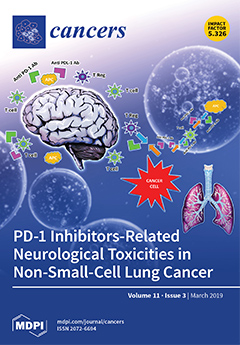
Cover Story: The increasing use of PD-1 inhibitors is causing immune-related adverse events that have never been observed with conventional chemotherapies. Their exact pathophysiology remains unclear, but their early recognition and treatment are crucial both for the resolution of symptoms and for treatment management. Immune-related neurological toxicities associated with PD-1 inhibitors are rarely reported, but as the use of these agents increases, it is important for clinicians to be aware of such serious potential side effects, which may have lasting consequences. Even if these side effects are rare and often respond well to steroid treatment, they can appear in different patterns and not always have a favorable outcome. Consultations with different specialists are necessary to classify and successfully treat these conditions, as many patients have a reasonable chance of long-term disease control. View this paper
  • Issues are regarded as officially published after their release is announced to the table of contents alert mailing list .
  • You may sign up for email alerts to receive table of contents of newly released issues.
  • PDF is the official format for papers published in both, html and pdf forms. To view the papers in pdf format, click on the "PDF Full-text" link, and use the free Adobe Reader to open them.

Articles (162)

  • Article
  • Open Access
46 Citations
16,968 Views
18 Pages

The Flavonoid Metabolite 2,4,6-Trihydroxybenzoic Acid Is a CDK Inhibitor and an Anti-Proliferative Agent: A Potential Role in Cancer Prevention

  • Ranjini Sankaranarayanan,
  • Chaitanya K. Valiveti,
  • D. Ramesh Kumar,
  • Severine Van slambrouck,
  • Siddharth S. Kesharwani,
  • Teresa Seefeldt,
  • Joy Scaria,
  • Hemachand Tummala and
  • G. Jayarama Bhat

26 March 2019

Flavonoids have emerged as promising compounds capable of preventing colorectal cancer (CRC) due to their anti-oxidant and anti-inflammatory properties. It is hypothesized that the metabolites of flavonoids are primarily responsible for the observed...

  • Article
  • Open Access
88 Citations
5,648 Views
11 Pages

A Pilot Clinical Study on the Prognostic Relevance of Plasmatic Exosomes Levels in Oral Squamous Cell Carcinoma Patients

  • Samuel Rodríguez Zorrilla,
  • Mario Pérez-Sayans,
  • Stefano Fais,
  • Mariantonia Logozzi,
  • Mercedes Gallas Torreira and
  • Abel García García

26 March 2019

Background: To evaluate the relationship between the plasmatic CD63 and CAV1 positive exosome levels, in patients with OSCC before and after surgical treatment and to correlate it with their overall survival. Methods: A double-blind pilot study over...

  • Review
  • Open Access
27 Citations
6,503 Views
21 Pages

An Insight into the Roles of MicroRNAs and Exosomes in Sarcoma

  • Isaku Kohama,
  • Nobuyoshi Kosaka,
  • Hirotaka Chikuda and
  • Takahiro Ochiya

26 March 2019

Sarcomas are rare solid tumors, but at least one-third of patients with sarcoma die from tumor-related disease. MicroRNA (miRNA) is a noncoding RNA that regulates gene expression in all cells and plays a key role in the progression of cancers. Recent...

  • Article
  • Open Access
47 Citations
4,668 Views
12 Pages

Store-Operated Calcium Entry Contributes to Cisplatin-Induced Cell Death in Non-Small Cell Lung Carcinoma

  • Roberta Gualdani,
  • Marie de Clippele,
  • Ikram Ratbi,
  • Philippe Gailly and
  • Nicolas Tajeddine

26 March 2019

Cisplatin (CDDP) is one of the principal chemotherapeutic agents used for the first-line treatment of many malignancies, including non-small cell lung carcinoma (NSCLC). Despite its use for over 40 years, its mechanism of action is not yet fully unde...

  • Article
  • Open Access
72 Citations
7,883 Views
10 Pages

Validation of miRNAs as Breast Cancer Biomarkers with a Machine Learning Approach

  • Oneeb Rehman,
  • Hanqi Zhuang,
  • Ali Muhamed Ali,
  • Ali Ibrahim and
  • Zhongwei Li

26 March 2019

Certain small noncoding microRNAs (miRNAs) are differentially expressed in normal tissues and cancers, which makes them great candidates for biomarkers for cancer. Previously, a selected subset of miRNAs has been experimentally verified to be linked...

  • Article
  • Open Access
11 Citations
3,454 Views
12 Pages

Validation of Neutrophil Count as An Algorithm-Based Predictive Factor of Progression-Free Survival in Patients with Metastatic Soft Tissue Sarcomas Treated with Trabectedin

  • Alexandre de Nonneville,
  • Dominique Barbolosi,
  • Maeva Andriantsoa,
  • Raouf El-Cheikh,
  • Florence Duffaud,
  • François Bertucci and
  • Sebastien Salas

26 March 2019

Introduction: Based on a mathematical model of trabectedin-induced neutropenia, we assessed the predictive value of absolute neutrophil count (ANC) on progression-free survival (PFS) in an independent validation cohort of patients treated with trabec...

  • Review
  • Open Access
11 Citations
3,967 Views
12 Pages

Novel Therapies and Approaches to Relapsed/Refractory HL Beyond Chemotherapy

  • Alain Antoine Mina,
  • Chetan Vakkalagadda and
  • Barbara Pro

25 March 2019

Although Hodgkin lymphoma (HL) is highly curable with first-line therapy, relapses occur in approximately 10–20% of patients with early stage disease and 30–40% of patients with advanced stage disease. The standard approach for relapsed o...

  • Article
  • Open Access
5 Citations
4,969 Views
15 Pages

A Simple and Highly Specific MassARRAY-Based Stool DNA Assay to Prioritize Follow-up Decisions in Fecal Immunochemical Test-Positive Individuals

  • Pi-Yueh Chang,
  • Chia-Chun Chen,
  • Jy-Ming Chiang,
  • Shih-Cheng Chang,
  • Mei-Chia Wang,
  • Jinn-Shiun Chen,
  • Wen-Sy Tsai,
  • Jeng Fu You and
  • Jang-Jih Lu

25 March 2019

Background: Seventy-five percent of fecal immunochemical test (FIT)-positive individuals are false positives and undergo unnecessary colonoscopies. Here, we established a stool DNA (sDNA) test that uses the Single Allele Base Extension Reaction (SABE...

  • Article
  • Open Access
32 Citations
3,966 Views
12 Pages

25 March 2019

Background: Neoadjuvant imatinib therapy has been proposed for routine practice with favorable long-term results for patients with locally advanced gastrointestinal stromal tumors (GISTs). However, clarification of the optimal duration, safety, and o...

  • Article
  • Open Access
10 Citations
4,002 Views
14 Pages

25 March 2019

The severity of liver fibrosis can be noninvasively evaluated by measuring liver stiffness (LS) using transient elastography. This study aimed to evaluate the prognostic value of achieving low liver stiffness measurement (LSM) in patients with cirrho...

  • Commentary
  • Open Access
52 Citations
6,997 Views
5 Pages

Renal Cell Carcinoma with Sarcomatoid Features: Finally New Therapeutic Hope?

  • Renate Pichler,
  • Eva Compérat,
  • Tobias Klatte,
  • Martin Pichler,
  • Wolfgang Loidl,
  • Lukas Lusuardi and
  • Manuela Schmidinger

25 March 2019

Renal cell carcinoma (RCC) with sarcomatoid differentiation belongs to the most aggressive clinicopathologic phenotypes of RCC. It is characterized by a high propensity for primary metastasis and limited therapeutic options due to its relative resist...

  • Perspective
  • Open Access
14 Citations
3,858 Views
3 Pages

25 March 2019

In this perspective, we congratulate the international efforts to highlight critical challenges in brain tumor research through a recent Consensus Statement. We also illustrate the importance of developing more accurate and clinically relevant early...

  • Review
  • Open Access
19 Citations
6,247 Views
18 Pages

Lentiviral Vectors as Tools for the Study and Treatment of Glioblastoma

  • Claudia Del Vecchio,
  • Arianna Calistri,
  • Cristina Parolin and
  • Carla Mucignat-Caretta

24 March 2019

Glioblastoma (GBM) has the worst prognosis among brain tumors, hence basic biology, preclinical, and clinical studies are necessary to design effective strategies to defeat this disease. Gene transfer vectors derived from the most-studied lentivirus&...

  • Review
  • Open Access
80 Citations
10,512 Views
17 Pages

24 March 2019

A successful anti-cancer vaccine construct depends on its ability to induce humoral and cellular immunity against a specific antigen. Targeting receptors of dendritic cells to promote the loading of cancer antigen through an antibody-mediated antigen...

  • Article
  • Open Access
16 Citations
5,356 Views
22 Pages

Targeting FER Kinase Inhibits Melanoma Growth and Metastasis

  • Iordanka A. Ivanova,
  • Shinthujah Arulanantham,
  • Kevin Barr,
  • Mario Cepeda,
  • Katie M. Parkins,
  • Amanda M. Hamilton,
  • Danielle Johnston,
  • Silvia Penuela,
  • David A. Hess and
  • Lina Dagnino
  • + 1 author

24 March 2019

Melanoma is one of the most aggressive types of tumors and exhibits high metastatic potential. Fes-related (FER) kinase is a non-receptor tyrosine kinase that has been implicated in growth and metastasis of various epithelial tumors. In this study, w...

  • Article
  • Open Access
20 Citations
5,850 Views
17 Pages

Engagement with tNOX (ENOX2) to Inhibit SIRT1 and Activate p53-Dependent and -Independent Apoptotic Pathways by Novel 4,11-Diaminoanthra[2,3-b]furan-5,10-diones in Hepatocellular Carcinoma Cells

  • Chia-Yang Lin,
  • Atikul Islam,
  • Claire J. Su,
  • Alexander S. Tikhomirov,
  • Andrey E. Shchekotikhin,
  • Show-Mei Chuang,
  • Pin Ju Chueh and
  • Yao Li Chen

24 March 2019

Hepatocellular carcinoma (HCC) is the most frequent primary malignancy of the liver and is among the top three causes of cancer-associated death worldwide. However, the clinical use of chemotherapy for HCC has been limited by various challenges, emph...

  • Article
  • Open Access
16 Citations
4,138 Views
17 Pages

23 March 2019

Cancer associated fibroblasts (CAFs) play a main role in breast cancer progression and metastasis. Estrogens modulate in breast CAFs the expression of microRNAs (miRNAs) that are involved in the development of many tumors. In order to provide novel i...

  • Article
  • Open Access
16 Citations
5,751 Views
19 Pages

New Phosphorylation Sites of Rad51 by c-Met Modulates Presynaptic Filament Stability

  • Thomas Chabot,
  • Alain Defontaine,
  • Damien Marquis,
  • Axelle Renodon-Corniere,
  • Emmanuelle Courtois,
  • Fabrice Fleury and
  • Yvonnick Cheraud

23 March 2019

Genomic instability through deregulation of DNA repair pathways can initiate cancer and subsequently result in resistance to chemo and radiotherapy. Understanding these biological mechanisms is therefore essential to overcome cancer. RAD51 is the cen...

  • Review
  • Open Access
19 Citations
6,267 Views
19 Pages

Chasing the FOXO3: Insights into Its New Mitochondrial Lair in Colorectal Cancer Landscape

  • Valentina Grossi,
  • Candida Fasano,
  • Valentina Celestini,
  • Martina Lepore Signorile,
  • Paola Sanese and
  • Cristiano Simone

23 March 2019

Colorectal cancer (CRC) poses a formidable challenge in terms of molecular heterogeneity, as it involves a variety of cancer-related pathways and molecular changes unique to an individual’s tumor. On the other hand, recent advances in DNA seque...

  • Review
  • Open Access
38 Citations
5,681 Views
21 Pages

Circulating MicroRNA Biomarkers for Lung Cancer Detection in East Asian Populations

  • Haixin Yu,
  • Zhong Guan,
  • Katarina Cuk,
  • Yan Zhang and
  • Hermann Brenner

23 March 2019

Background: Lung cancer (LC) is the leading cause of cancer-related death in Eastern Asia. The prognosis of LC highly depends on tumor stages and early detection could substantially reduce LC mortality. Accumulating evidence suggested that circulatin...

  • Review
  • Open Access
63 Citations
13,301 Views
32 Pages

Tailoring Ovarian Cancer Treatment: Implications of BRCA1/2 Mutations

  • Ainhoa Madariaga,
  • Stephanie Lheureux and
  • Amit M. Oza

23 March 2019

High grade serous ovarian cancer (HGSOC) is the most common epithelial ovarian cancer, harbouring more than 20% germline or somatic mutations in the tumour suppressor genes BRCA1 and BRCA2. These genes are involved in both DNA damage repair process v...

  • Article
  • Open Access
39 Citations
6,210 Views
13 Pages

Identification of Targetable Lesions in Anaplastic Thyroid Cancer by Genome Profiling

  • Naveen Ravi,
  • Minjun Yang,
  • Sigurdur Gretarsson,
  • Caroline Jansson,
  • Nektaria Mylona,
  • Saskia R. Sydow,
  • Eleanor L. Woodward,
  • Lars Ekblad,
  • Johan Wennerberg and
  • Kajsa Paulsson

22 March 2019

Anaplastic thyroid cancer (ATC) is a rare and extremely malignant tumor with no available cure. The genetic landscape of this malignancy has not yet been fully explored. In this study, we performed whole exome sequencing and the RNA-sequencing of fou...

  • Article
  • Open Access
44 Citations
30,409 Views
12 Pages

Impact of Curcumin (with or without Piperine) on the Pharmacokinetics of Tamoxifen

  • Koen G.A.M. Hussaarts,
  • Daan P. Hurkmans,
  • Esther Oomen-de Hoop,
  • Leonie J. van Harten,
  • Stan Berghuis,
  • Robbert J. van Alphen,
  • Leontine E.A. Spierings,
  • Quirine C. van Rossum-Schornagel,
  • Mijntje B. Vastbinder and
  • Ron H.J. Mathijssen
  • + 4 authors

22 March 2019

Tamoxifen is a prodrug that is primarily metabolized into the pharmacologically active metabolite endoxifen and eventually into inactive metabolites. The herb curcumin may increase endoxifen exposure by affecting phase II metabolism. We compared endo...

  • Review
  • Open Access
11 Citations
5,588 Views
10 Pages

22 March 2019

Historically restrained to immune defense against parasite infections, allergic inflammation has been recently rediscovered to protect from a wide array of environmental triggers, such as xenobiotics and carcinogens, which can induce DNA damage and u...

  • Article
  • Open Access
25 Citations
4,198 Views
11 Pages

22 March 2019

Transarterial chemoembolization (TACE) is the recommended first-line treatment for intermediate-stage hepatocellular carcinoma (HCC). In patients who became refractory to TACE, a treatment switch to tyrosine kinase inhibitors (TKIs) needs to be consi...

  • Article
  • Open Access
36 Citations
4,766 Views
15 Pages

Alpha6-Integrin Regulates FGFR1 Expression through the ZEB1/YAP1 Transcription Complex in Glioblastoma Stem Cells Resulting in Enhanced Proliferation and Stemness

  • Aline KOWALSKI-CHAUVEL,
  • Valerie GOUAZE-ANDERSSON,
  • Laurent BARICAULT,
  • Elodie MARTIN,
  • Caroline DELMAS,
  • Christine TOULAS,
  • Elizabeth COHEN-JONATHAN-MOYAL and
  • Catherine SEVA

22 March 2019

Glioblastoma (GBM) is the most lethal primary brain tumor in adults and is known to be particularly aggressive and resistant to anti-cancer therapies, mainly due to the presence of GBM stem cells (GBMSC). By in vitro approaches supported by analysis...

  • Review
  • Open Access
47 Citations
7,069 Views
20 Pages

Mechanisms of Anticancer Drug Resistance in Hepatoblastoma

  • Jose J. G. Marin,
  • Candela Cives-Losada,
  • Maitane Asensio,
  • Elisa Lozano,
  • Oscar Briz and
  • Rocio I. R. Macias

22 March 2019

The most frequent liver tumor in children is hepatoblastoma (HB), which derives from embryonic parenchymal liver cells or hepatoblasts. Hepatocellular carcinoma (HCC), which rarely affects young people, causes one fourth of deaths due to cancer in ad...

  • Article
  • Open Access
12 Citations
4,855 Views
17 Pages

Overactive IGF1/Insulin Receptors and NRASQ61R Mutation Drive Mechanisms of Resistance to Pazopanib and Define Rational Combination Strategies to Treat Synovial Sarcoma

  • Cinzia Lanzi,
  • Laura Dal Bo,
  • Enrica Favini,
  • Monica Tortoreto,
  • Giovanni Luca Beretta,
  • Noemi Arrighetti,
  • Nadia Zaffaroni and
  • Giuliana Cassinelli

22 March 2019

Pazopanib is approved for treatment of advanced soft tissue sarcomas, but primary and secondary drug resistance limits its clinical utility. We investigated the molecular mechanisms mediating pazopanib resistance in human synovial sarcoma (SS) models...

  • Review
  • Open Access
26 Citations
5,111 Views
11 Pages

The Role of MicroRNAs in Hepatoblastoma Tumors

  • Ion Cristóbal,
  • Marta Sanz-Álvarez,
  • Melani Luque,
  • Cristina Caramés,
  • Federico Rojo and
  • Jesús García-Foncillas

22 March 2019

Hepatoblastoma is the most common hepatic malignancy during childhood. However, little is still known about the molecular mechanisms that govern the development of this disease. This review is focused on the recent advances regarding the study of mic...

  • Article
  • Open Access
34 Citations
5,096 Views
9 Pages

Safety and Usefulness of Cryobiopsy and Stamp Cytology for the Diagnosis of Peripheral Pulmonary Lesions

  • Tatsuya Imabayashi,
  • Junji Uchino,
  • Akihiro Yoshimura,
  • Yusuke Chihara,
  • Nobuyo Tamiya,
  • Yoshiko Kaneko,
  • Tadaaki Yamada and
  • Koichi Takayama

22 March 2019

Reports on the use of cryobiopsy (CB) for lung cancer diagnosis are limited. The aims of the present study were to evaluate the safety and usefulness of CB using radial endobronchial ultrasonography, without a guide sheath, for the diagnosis of perip...

  • Article
  • Open Access
28 Citations
7,395 Views
26 Pages

Dysregulation of Macropinocytosis Processes in Glioblastomas May Be Exploited to Increase Intracellular Anti-Cancer Drug Levels: The Example of Temozolomide

  • Margaux Colin,
  • Cédric Delporte,
  • Rekin’s Janky,
  • Anne-Sophie Lechon,
  • Gwendoline Renard,
  • Pierre Van Antwerpen,
  • William A. Maltese and
  • Véronique Mathieu

22 March 2019

Macropinocytosis is a clathrin-independent endocytosis of extracellular fluid that may contribute to cancer aggressiveness through nutrient supply, recycling of plasma membrane and receptors, and exosome internalization. Macropinocytosis may be notab...

  • Review
  • Open Access
36 Citations
4,760 Views
16 Pages

21 March 2019

Head and neck squamous cell carcinoma (HNSCC) affects 650,000 people worldwide and has a dismal 50% 5-year survival rate. Recurrence and metastasis are believed the two most important factors causing this high mortality. Understanding the biological...

  • Article
  • Open Access
27 Citations
4,729 Views
10 Pages

Limited Sensitivity of Circulating Tumor DNA Detection by Droplet Digital PCR in Non-Metastatic Operable Gastric Cancer Patients

  • Luc Cabel,
  • Charles Decraene,
  • Ivan Bieche,
  • Jean-Yves Pierga,
  • Mostefa Bennamoun,
  • David Fuks,
  • Jean-Marc Ferraz,
  • Marine Lefevre,
  • Sylvain Baulande and
  • Christophe Louvet
  • + 5 authors

21 March 2019

This study was designed to monitor circulating tumor DNA (ctDNA) levels during perioperative chemotherapy in patients with non-metastatic gastric adenocarcinoma. Plasma samples were prospectively collected in patients undergoing perioperative chemoth...

  • Article
  • Open Access
19 Citations
4,585 Views
13 Pages

Non-Metastatic Esophageal Adenocarcinoma: Circulating Tumor Cells in the Course of Multimodal Tumor Treatment

  • Jasmina Kuvendjiska,
  • Peter Bronsert,
  • Verena Martini,
  • Sven Lang,
  • Martha B. Pitman,
  • Jens Hoeppner and
  • Birte Kulemann

21 March 2019

Background: Isolation of circulating tumor cells (CTC) holds the promise to improve response-prediction and personalization of cancer treatment. In this study, we test a filtration device for CTC isolation in patients with non-metastatic esophageal a...

  • Article
  • Open Access
11 Citations
3,822 Views
18 Pages

21 March 2019

Emerging evidence reveals crucial roles of wild type RAS in liver cancer. The delta subunit of rod-specific photoreceptor cGMP phosphodiesterase (PDE6D) regulates the trafficking of RAS proteins to the plasma membrane and thereby contributes to RAS a...

  • Feature Paper
  • Review
  • Open Access
69 Citations
6,716 Views
21 Pages

Perioperative Treatment in Resectable Gastric Cancer: Current Perspectives and Future Directions

  • Angelica Petrillo,
  • Luca Pompella,
  • Giuseppe Tirino,
  • Annalisa Pappalardo,
  • Maria Maddalena Laterza,
  • Marianna Caterino,
  • Michele Orditura,
  • Fortunato Ciardiello,
  • Eva Lieto and
  • Ferdinando De Vita
  • + 2 authors

21 March 2019

Gastric cancer (GC) is the fifth-most common cancer worldwide and an important cause of cancer-related-death. The growing knowledge of its molecular pathogenesis has shown that GC is not a single entity, but a constellation of different diseases, eac...

  • Article
  • Open Access
8 Citations
3,831 Views
9 Pages

21 March 2019

Fecal immunochemical tests (FITs) for hemoglobin (Hb) are increasingly used for colorectal cancer (CRC) screening. Most FIT manufacturers instruct that fecal samples from multiple parts of one bowel movement should be obtained. Our aim was to compare...

  • Article
  • Open Access
5 Citations
3,726 Views
15 Pages

Genes Located on 18q23 Are Epigenetic Markers and Have Prognostic Significance for Patients with Head and Neck Cancer

  • Kiyoshi Misawa,
  • Takeharu Kanazawa,
  • Daiki Mochizuki,
  • Atsushi Imai,
  • Masato Mima,
  • Satoshi Yamada,
  • Kotaro Morita,
  • Yuki Misawa,
  • Kazuya Shinmura and
  • Hiroyuki Mineta

21 March 2019

Loss of heterozygosity (LOH) on chromosome 18q23 is associated with significantly decreased survival in head and neck cancer. In agreement with such tumor suppressive roles, the loss of function of genes located in this region can be achieved through...

  • Article
  • Open Access
15 Citations
4,567 Views
15 Pages

Targeting the mDia Formin-Assembled Cytoskeleton Is an Effective Anti-Invasion Strategy in Adult High-Grade Glioma Patient-Derived Neurospheres

  • Krista M. Pettee,
  • Kathryn N. Becker,
  • Arthur S. Alberts,
  • Kevin A. Reinard,
  • Jason L. Schroeder and
  • Kathryn M. Eisenmann

20 March 2019

High-grade glioma (HGG, WHO Grade III–IV) accounts for the majority of adult primary malignant brain tumors. Failure of current therapies to target invasive glioma cells partly explains the minimal survival advantages: invasive tumors lack easi...

  • Review
  • Open Access
47 Citations
7,832 Views
20 Pages

FOXK2 Transcription Factor and Its Emerging Roles in Cancer

  • Gabriela Nestal de Moraes,
  • Luciana da Torre Carneiro,
  • Raquel Ciuvalschi Maia,
  • Eric Wing-Fai Lam and
  • Andrew David Sharrocks

20 March 2019

Forkhead box (FOX) transcription factors compose a large family of regulators of key biological processes within a cell. FOXK2 is a member of FOX family, whose biological functions remain relatively unexplored, despite its description in the early ni...

  • Review
  • Open Access
125 Citations
13,319 Views
17 Pages

Acquired Resistance to Antibody-Drug Conjugates

  • Denis M. Collins,
  • Birgit Bossenmaier,
  • Gwendlyn Kollmorgen and
  • Gerhard Niederfellner

20 March 2019

Antibody-drug conjugates (ADCs) combine the tumor selectivity of antibodies with the potency of cytotoxic small molecules thereby constituting antibody-mediated chemotherapy. As this inherently limits the adverse effects of the chemotherapeutic, such...

  • Article
  • Open Access
15 Citations
7,337 Views
17 Pages

A Systematic Pan-Cancer Analysis of Genetic Heterogeneity Reveals Associations with Epigenetic Modifiers

  • Mafalda Ramos de Matos,
  • Ioana Posa,
  • Filipa Sofia Carvalho,
  • Vanessa Alexandra Morais,
  • Ana Rita Grosso and
  • Sérgio Fernandes de Almeida

20 March 2019

Intratumor genetic heterogeneity (ITH) is the main obstacle to effective cancer treatment and a major mechanism of drug resistance. It results from the continuous evolution of different clones of a tumor over time. However, the molecular features und...

  • Review
  • Open Access
69 Citations
10,152 Views
24 Pages

Contribution of Anoctamins to Cell Survival and Cell Death

  • Karl Kunzelmann,
  • Jiraporn Ousingsawat,
  • Roberta Benedetto,
  • Ines Cabrita and
  • Rainer Schreiber

19 March 2019

Before anoctamins (TMEM16 proteins) were identified as a family of Ca2+-activated chloride channels and phospholipid scramblases, the founding member anoctamin 1 (ANO1, TMEM16A) was known as DOG1, a marker protein for gastrointestinal stromal tumors...

  • Article
  • Open Access
8 Citations
3,957 Views
10 Pages

Clinical Management of Blood–Brain Barrier Disruptions after Active Raster-Scanned Carbon Ion Re-Radiotherapy in Patients with Recurrent Head-and-Neck Cancer

  • Thomas Held,
  • Sati Akbaba,
  • Kristin Lang,
  • Semi Harrabi,
  • Denise Bernhardt,
  • Christian Freudlsperger,
  • Steffen Kargus,
  • Peter Plinkert,
  • Stefan Rieken and
  • Sebastian Adeberg
  • + 2 authors

19 March 2019

Purpose: The aim of the current evaluation was to assess central nervous system necrosis (CNSN) after re-irradiation with carbon ions (CR) in two-hundred seventeen (n = 217) patients with recurrent head-and-neck cancer (HNC). Methods: Thirty-six (n =...

  • Editorial
  • Open Access
14 Citations
3,445 Views
4 Pages

19 March 2019

The transforming growth factor-β (TGF-β) family of secreted growth factors controls many aspects of cell and tissue physiology in multicellular eukaryotes. Dysregulation of its pathway contributes to a broad variety of pathologies, includin...

  • Article
  • Open Access
31 Citations
7,432 Views
18 Pages

Perilipin 5 and Lipocalin 2 Expression in Hepatocellular Carcinoma

  • Anastasia Asimakopoulou,
  • Mihael Vucur,
  • Tom Luedde,
  • Silvia Schneiders,
  • Stavroula Kalampoka,
  • Thomas S. Weiss and
  • Ralf Weiskirchen

19 March 2019

Hepatocellular carcinoma (HCC) is one of the most prevalent and deadly cancers worldwide. Therefore, current global research focuses on molecular tools for early diagnosis of HCC, which can lead to effective treatment at an early stage. Perilipin 5 (...

  • Article
  • Open Access
17 Citations
4,806 Views
17 Pages

19 March 2019

Translationally controlled tumor protein (TCTP) is a ubiquitous multifunctional protein that is essential for cell survival. This study reveals that the regulation of radiosensitivity of cancer cells is yet another function of TCTP. The relationship...

  • Article
  • Open Access
6 Citations
4,896 Views
14 Pages

Influence of Tea Consumption on the Development of Second Esophageal Neoplasm in Patients with Head and Neck Cancer

  • Yao-Kuang Wang,
  • Wei-Chung Chen,
  • Ying-Ho Lai,
  • Yi-Hsun Chen,
  • Ming-Tsang Wu,
  • Chie-Tong Kuo,
  • Yen-Yun Wang,
  • Shyng-Shiou F. Yuan,
  • Yu-Peng Liu and
  • I-Chen Wu

19 March 2019

Alcohol is an important risk factor for the development of second esophageal squamous-cell carcinoma (ESCC) in head and neck squamous-cell carcinoma (HNSCC) patients. However, the influence of tea consumption is uncertain. We prospectively performed...

  • Article
  • Open Access
14 Citations
3,729 Views
14 Pages

NAB 2-Expressing Cancer-Associated Fibroblast Promotes HNSCC Progression

  • So-Young Choi,
  • Su Young Oh,
  • Soo Hyun Kang,
  • Sung-Min Kang,
  • Jinkyung Kim,
  • Heon-Jin Lee,
  • Tae-Geon Kwon,
  • Jin-Wook Kim and
  • Su-Hyung Hong

19 March 2019

Cancer-associated fibroblast (CAF)-specific proteins serve as both prognostic biomarkers and targets for anticancer drugs. In this study, we investigated the role of NGFI-A-binding protein (NAB)2 derived from CAFs in the progression of head and neck...

  • Article
  • Open Access
19 Citations
4,336 Views
11 Pages

Immunohistochemical Expression of Autophagy-Related Proteins in Advanced Tubular Gastric Adenocarcinomas and Its Implications

  • Antonio Ieni,
  • Roberta Cardia,
  • Giuseppe Giuffrè,
  • Luciana Rigoli,
  • Rosario Alberto Caruso and
  • Giovanni Tuccari

19 March 2019

In neoplastic conditions, autophagy may act as a tumor suppressor avoiding the accumulation of damaged proteins and organelles or as a mechanism of cell survival promoting the tumor growth. Although ultrastructural analysis has been considered the tr...

of 4

Get Alerted

Add your email address to receive forthcoming issues of this journal.

XFacebookLinkedIn
Cancers - ISSN 2072-6694