
Journal Description
Actuators
Actuators
is an international, peer-reviewed, open access journal on the science and technology of actuators and control systems, published monthly online by MDPI.
- Open Access— free for readers, with article processing charges (APC) paid by authors or their institutions.
- High Visibility: indexed within SCIE (Web of Science), Scopus, Inspec, and other databases.
- Journal Rank: JCR - Q2 (Engineering, Mechanical) / CiteScore - Q1 (Control and Optimization)
- Rapid Publication: manuscripts are peer-reviewed and a first decision is provided to authors approximately 20.9 days after submission; acceptance to publication is undertaken in 2.7 days (median values for papers published in this journal in the second half of 2025).
- Recognition of Reviewers: reviewers who provide timely, thorough peer-review reports receive vouchers entitling them to a discount on the APC of their next publication in any MDPI journal, in appreciation of the work done.
- Journal Cluster of Instruments and Instrumentation: Actuators, AI Sensors, Instruments, Metrology, Micromachines and Sensors.
Impact Factor:
2.3 (2024);
5-Year Impact Factor:
2.4 (2024)
Latest Articles
Robust Trajectory Tracking Control of an Unmanned Surface Vehicle via a Sliding-Mode Dynamic Neural Network Identifier
Actuators 2026, 15(5), 273; https://doi.org/10.3390/act15050273 - 13 May 2026
Abstract
The trajectory tracking problem of underactuated unmanned surface vehicles (USVs) with unknown physical parameters arising from hydrodynamic effects is addressed using a robust control strategy based on a sliding-mode dynamic neural network identifier. To handle the unknown physical parameters, a dynamic neural network
[...] Read more.
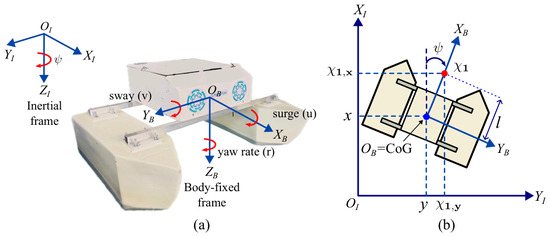
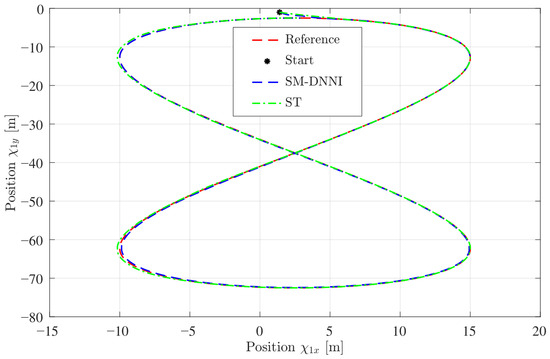
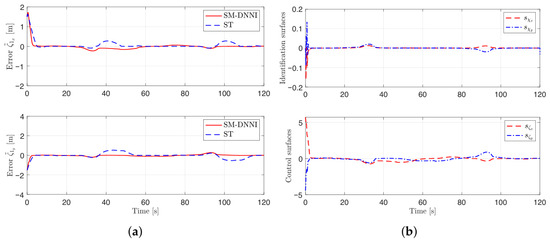
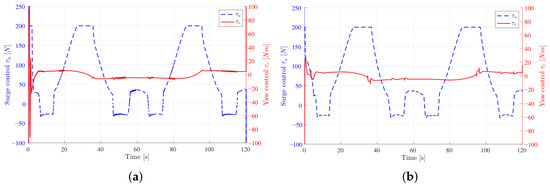
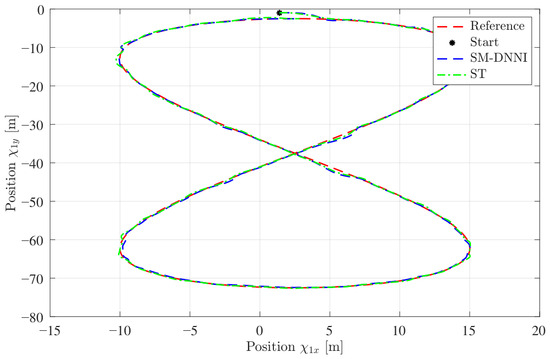
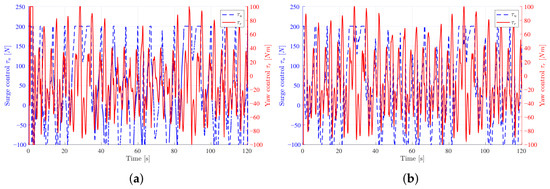
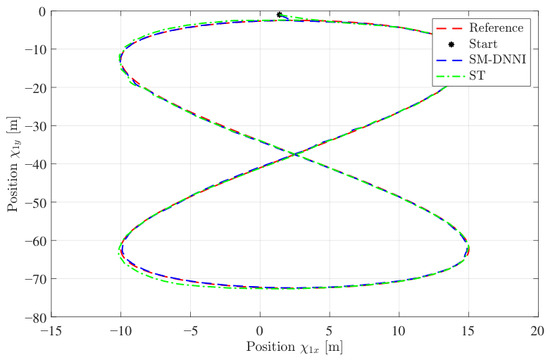
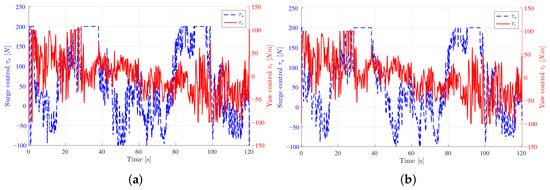
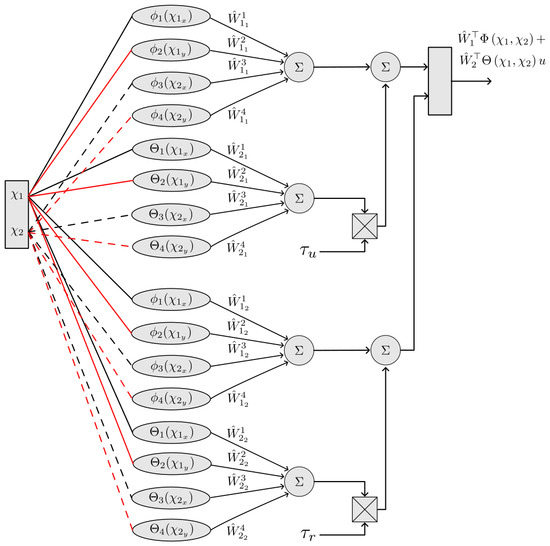
The trajectory tracking problem of underactuated unmanned surface vehicles (USVs) with unknown physical parameters arising from hydrodynamic effects is addressed using a robust control strategy based on a sliding-mode dynamic neural network identifier. To handle the unknown physical parameters, a dynamic neural network identifier with a novel structure is developed, enabling the construction of an equivalent mathematical model of the USV dynamics. To compensate for the underactuated nature of the system, a coordinate transformation is introduced. Using this transformation, together with the proposed identifier, a nonsingular sliding-mode controller is designed. Lyapunov-based analysis establishes finite-time convergence of the neural weight estimation errors to zero and convergence of the identification errors to a bounded neighborhood of zero. Furthermore, once the identification errors enter this bounded region, they asymptotically converge to zero. In addition, the closed-loop stability analysis guarantees finite-time convergence of the tracking errors. The effectiveness of the proposed identifier–controller framework is validated through simulation studies that incorporate explicit actuator saturation constraints and external disturbances to emulate realistic operating conditions. These results demonstrate the practical applicability of the proposed control strategy, as the commanded inputs remain within the physical limits of the propulsion system. Comparative results with a state-of-the-art model-based super-twisting controller show that the proposed approach achieves comparable tracking performance while eliminating the need for prior knowledge of the system’s dynamic parameters.
Full article
(This article belongs to the Special Issue Nonlinear Control of Mechanical and Robotic Systems)
►
Show Figures
Open AccessArticle
Design and Control of a 1/5th Scaled X-by-Wire Multi-Actuated Research Vehicle (MARV)
by
Benjamin DeBoer, Jeremy B. Kimball and Kush Bubbar
Actuators 2026, 15(5), 272; https://doi.org/10.3390/act15050272 - 12 May 2026
Abstract
The automotive industry is transitioning to software-defined vehicles, enabled by the integration of X-by-wire technologies into modern vehicle systems. This shift enables the application of advanced vehicle control systems that bridge the gap between the driver’s intention and the vehicle’s optimal dynamic response,
[...] Read more.
The automotive industry is transitioning to software-defined vehicles, enabled by the integration of X-by-wire technologies into modern vehicle systems. This shift enables the application of advanced vehicle control systems that bridge the gap between the driver’s intention and the vehicle’s optimal dynamic response, realized by employing multiple drive, steer, brake, and suspension-by-wire actuators. In practice, a sim-to-real gap is present between simulation and full-scale validation of these advanced control systems. This article presents the Multi-Actuated Research Vehicle, a novel 1:5 scale over-actuated X-by-wire ground vehicle test platform with independent wheel drive, steer, brake, and suspension-by-wire capabilities. The scaled platform creates an intermediate step within the sim-to-real gap, enabling a low-risk hardware and software in the loop alternative for control system testing and validation. This article presents the design and capability of the scaled vehicle platform, serving as a blueprint for developing a scaled X-by-wire research vehicle for advanced vehicle dynamics and control research. The presented platform design is constructed and validated against the vehicle’s dynamic requirements, showcasing the platform as an advantageous step between simulation and full-scale testing.
Full article
(This article belongs to the Special Issue Actuator Fault Diagnosis, State Detection and Fault Tolerant Control for Ground and Rail Vehicles)
Open AccessFeature PaperArticle
Kinematic Decoupling and α-TDE-NTSM Control for Single-Tendon-Driven Manipulators
by
Fei Yan, Jianhua Li, Huawei Han, Qiwang Xu and Linfeng Hu
Actuators 2026, 15(5), 271; https://doi.org/10.3390/act15050271 - 9 May 2026
Abstract
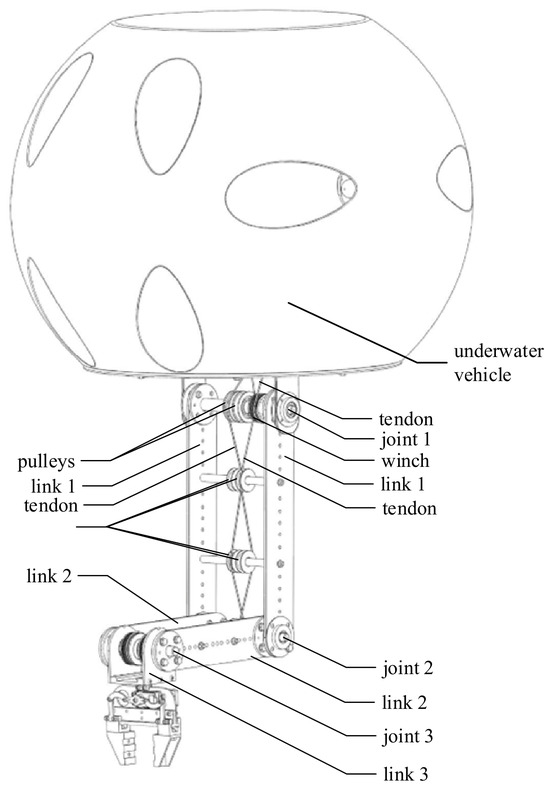
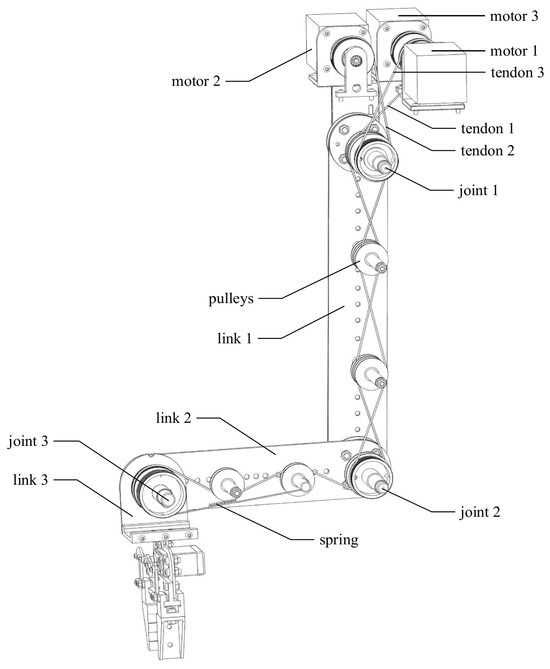
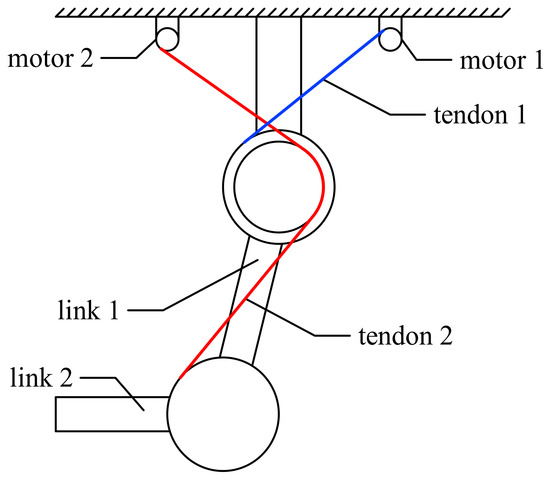
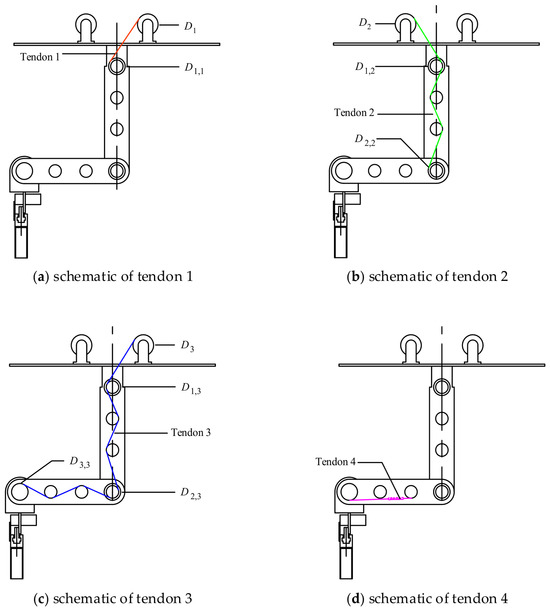
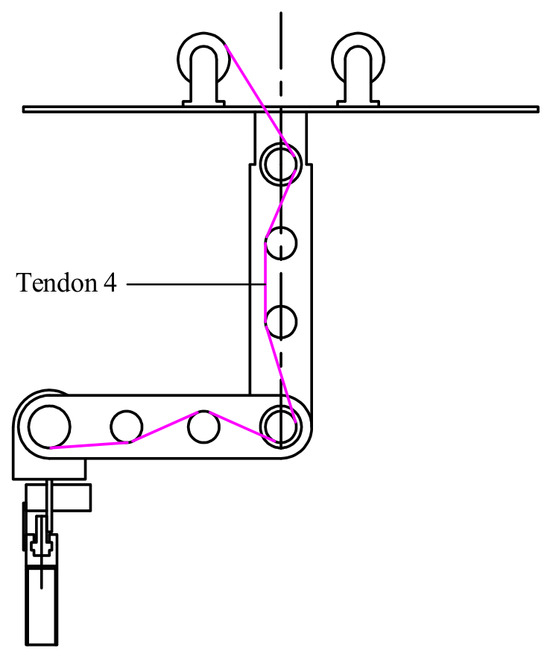
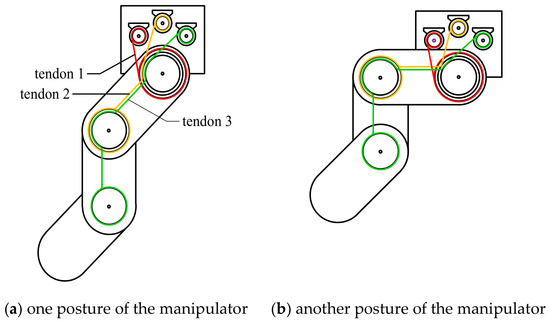
Tendon-driven manipulators possess obvious advantages compared to rigid-link manipulators, such as lighter weight, greater flexibility, and adaptability to confined spaces. To solve the problems of backlash and improve the accuracy of motion in specific application environments, this paper proposes a novel single-tendon-driven design
[...] Read more.
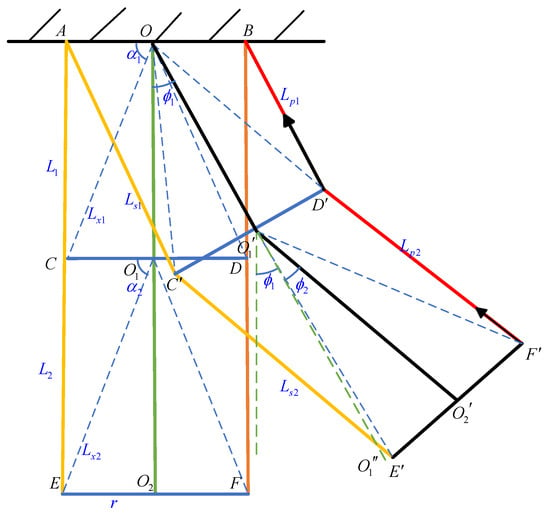
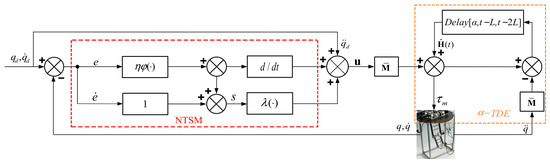
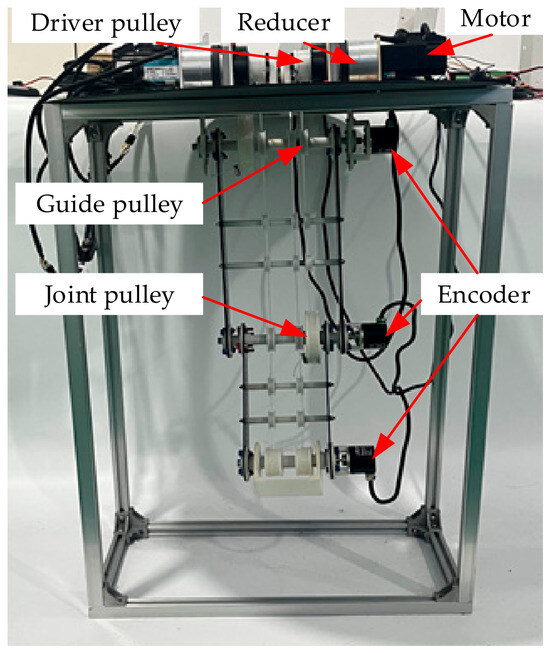
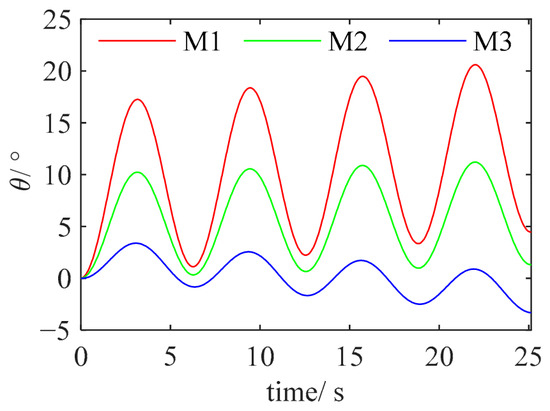
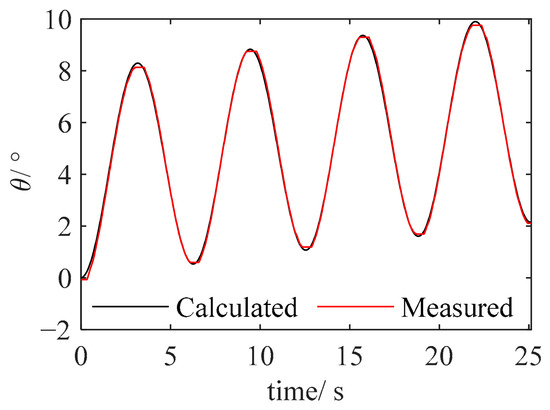
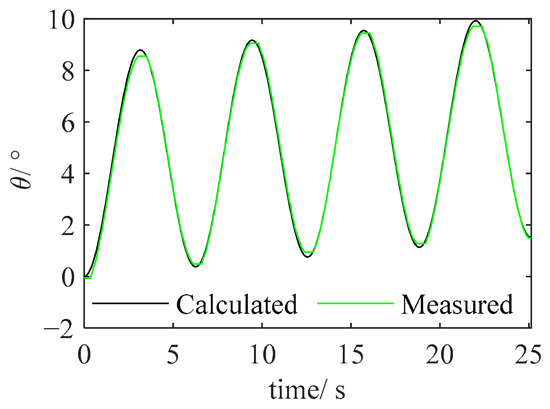
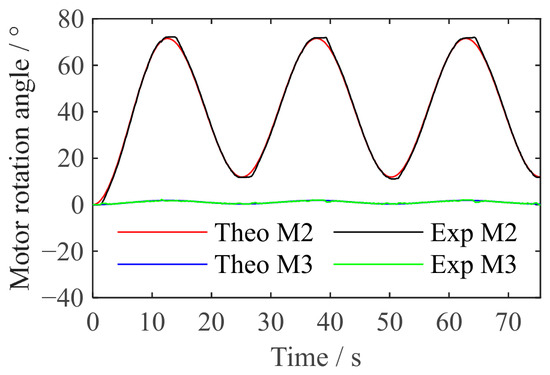
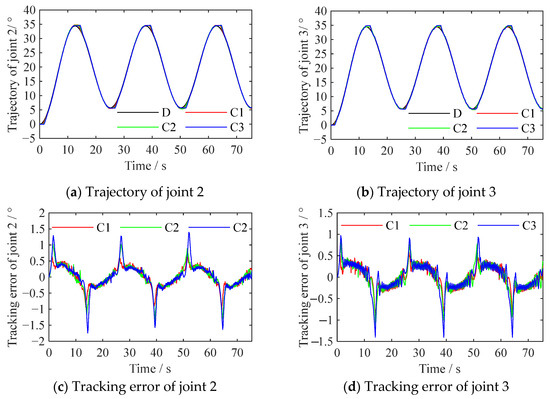
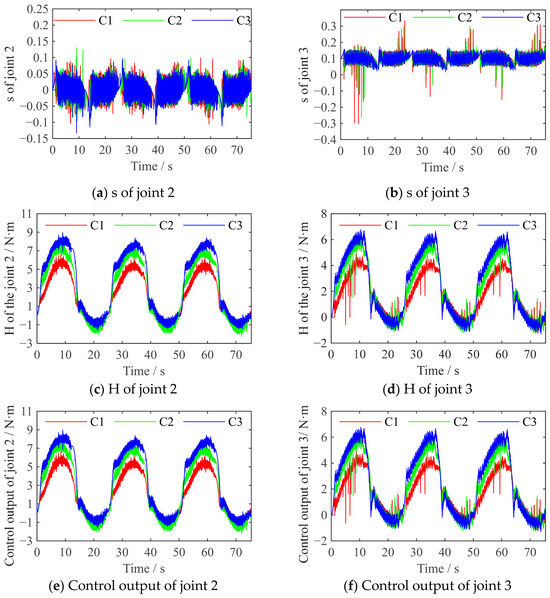
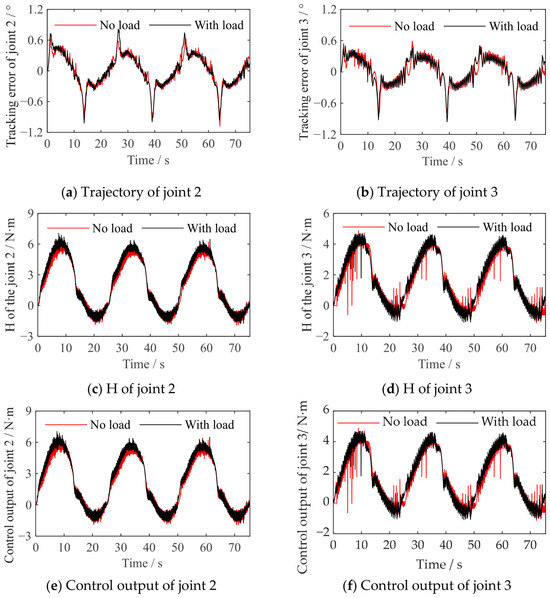
Tendon-driven manipulators possess obvious advantages compared to rigid-link manipulators, such as lighter weight, greater flexibility, and adaptability to confined spaces. To solve the problems of backlash and improve the accuracy of motion in specific application environments, this paper proposes a novel single-tendon-driven design for each joint of the manipulator. Kinematic modeling of the manipulator is systematically derived. Then, a decoupling algorithm is designed to mitigate motion coupling effects and enable accurate mapping between motor inputs and joint motions. Moreover, to improve the accuracy of trajectory tracking control for the tendon-driven manipulator, this paper proposes a nonsingular terminal sliding mode (NTSM) control scheme based on time-delay estimation (TDE). TDE is used to estimate unknown disturbances. An adjustable parameter was introduced based on TDE technology, which can enhance the system’s robustness against uncertainties and external disturbances. The stability of the closed-loop control system is verified through Lyapunov stability theory. Finally, decoupling experiments are conducted to validate the kinematic model and the feasibility of the proposed design. And comparative experiments are performed to prove the advantages of the proposed control scheme.
Full article
(This article belongs to the Special Issue Nonlinear Control of Mechanical and Robotic Systems)
►▼
Show Figures

Figure 1
Open AccessArticle
Fixed-Time Tracking Control for Underactuated Quadrotor UAVs with User-Defined Time Constraints
by
Jie Wang, He Li, Xing Zhuang, Yaohua Shen and Zheng Qiu
Actuators 2026, 15(5), 270; https://doi.org/10.3390/act15050270 - 9 May 2026
Abstract
This paper investigates the fixed-time tracking control problem for underactuated quadrotor unmanned aerial vehicle systems subject to mass parameter uncertainties and user-defined time constraints. For the parameter uncertainties inherent in the system, the approximation capability of neural networks is exploited for compensation. Combined
[...] Read more.
This paper investigates the fixed-time tracking control problem for underactuated quadrotor unmanned aerial vehicle systems subject to mass parameter uncertainties and user-defined time constraints. For the parameter uncertainties inherent in the system, the approximation capability of neural networks is exploited for compensation. Combined with the backstepping technique, this work proposes a new adaptive control strategy to ensure that the error variable converges within a small region near zero within a fixed time, and the designed controller effectively avoids singularity issues. Furthermore, a unified constraint framework with a shift function is introduced into the controller design, thereby providing a unified framework for user-defined time constraints that can flexibly handle different constraint scenarios without altering the control architecture. Finally, simulations are conducted to validate the effectiveness of the proposed method.
Full article
(This article belongs to the Special Issue Intelligent Planning and Collaborative Control for Unmanned Swarm Systems)
Open AccessArticle
Asymptotic Motion Control of Motor Servo Systems with Disturbance Compensation and Time-Varying Asymmetric Output Constraints
by
Tianhao Liu and Guichao Yang
Actuators 2026, 15(5), 269; https://doi.org/10.3390/act15050269 - 8 May 2026
Abstract
This paper proposes a novel asymptotic secure tracking controller for motor servo systems. By introducing a novel asymptotic disturbance observer, the system uncertainties can be asymptotically estimated and compensated. Furthermore, by introducing a tracking error-based barrier function, it can achieve that the system
[...] Read more.
This paper proposes a novel asymptotic secure tracking controller for motor servo systems. By introducing a novel asymptotic disturbance observer, the system uncertainties can be asymptotically estimated and compensated. Furthermore, by introducing a tracking error-based barrier function, it can achieve that the system output remains within the prescribed time-varying constraint boundaries. Additionally, a nonlinear asymptotic filter is incorporated into the design, which effectively circumvents the inherent “explosion of complexity” issue and achieves asymptotic tracking performance. Finally, the stability of the system is demonstrated through Lyapunov-based theoretical analysis, and the effectiveness of the proposed controller is validated by simulation results.
Full article
(This article belongs to the Special Issue High-Performance Control of Electromechanical Servo Systems Based on Motor/Hydraulic Actuators—2nd Edition)
Open AccessArticle
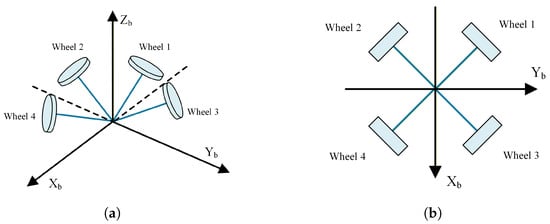
A Reconfigurable Dual-Motor Compound-Planetary Electric Drive Axle for an Expanded Torque-Vectoring Envelope
by
Jianyuan Liu, Mengjian Tian, Haoyang Lyu, Delin Xu, Zhouyi Zhen, Dehai Li, Jinlong Hong and Bingzhao Gao
Actuators 2026, 15(5), 268; https://doi.org/10.3390/act15050268 - 8 May 2026
Abstract
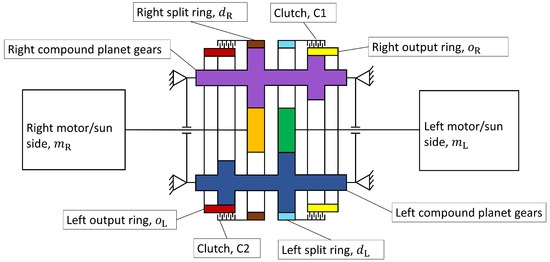
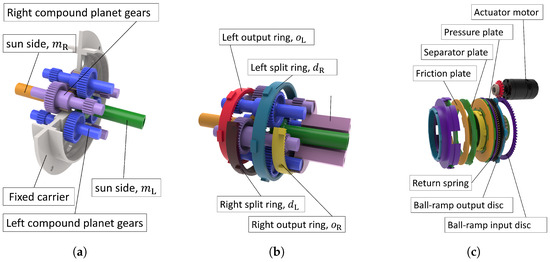
Dual-motor electric drive axles (e-axles) can realize basic torque vectoring through motor-torque allocation. However, without an inter-wheel power-transfer path, they still face structural limitations under motor torque–speed envelopes and severe left–right adhesion asymmetry. To address this issue, this paper proposes a reconfigurable dual-motor
[...] Read more.
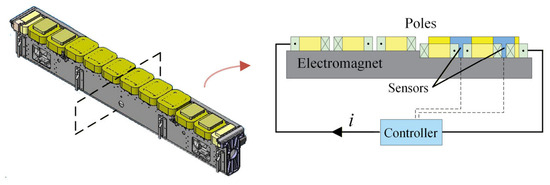
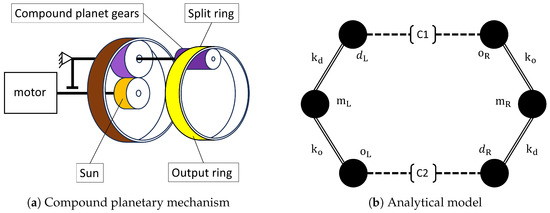
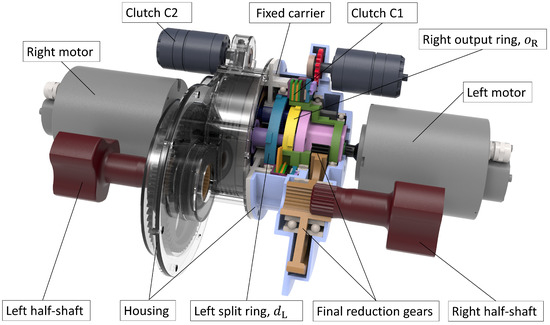
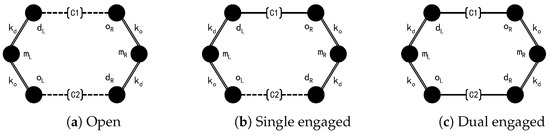
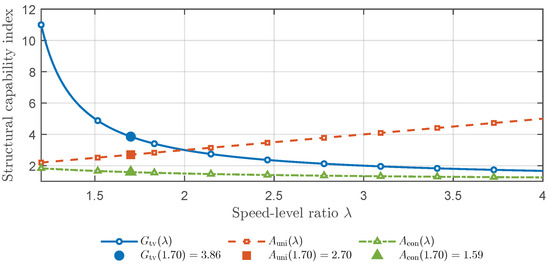
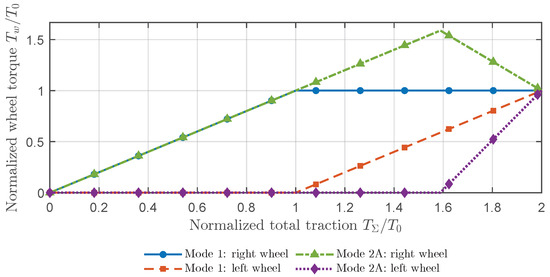
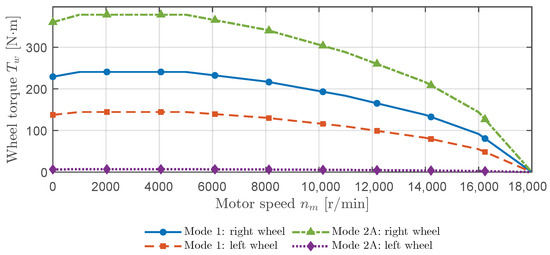
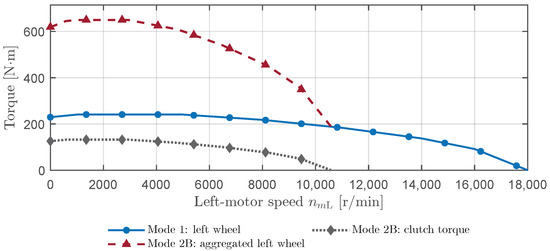
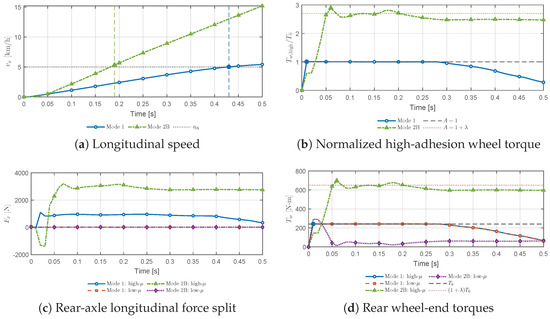
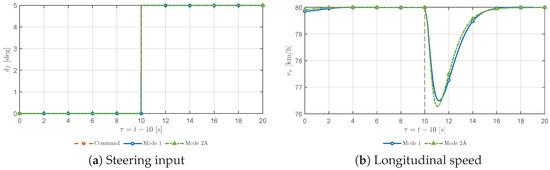
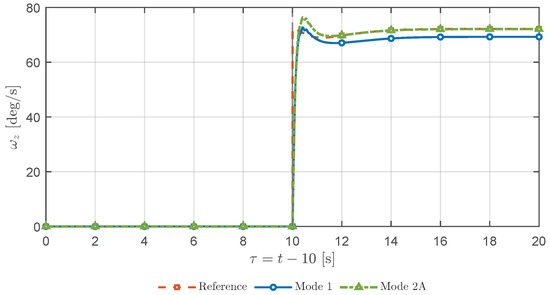
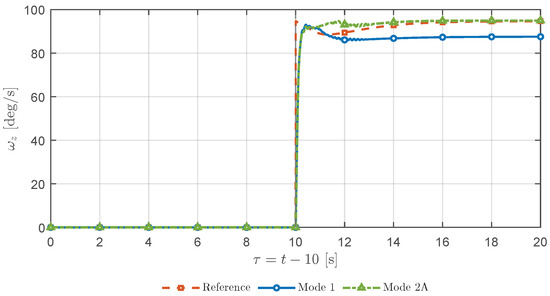
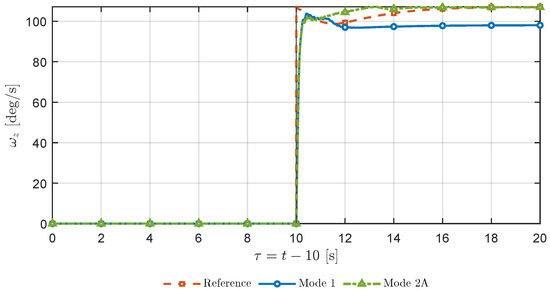
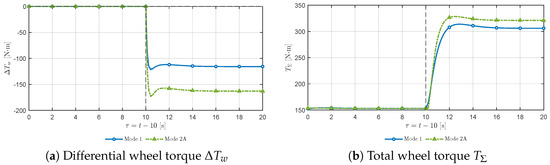
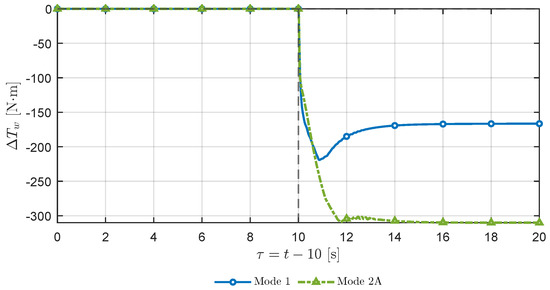
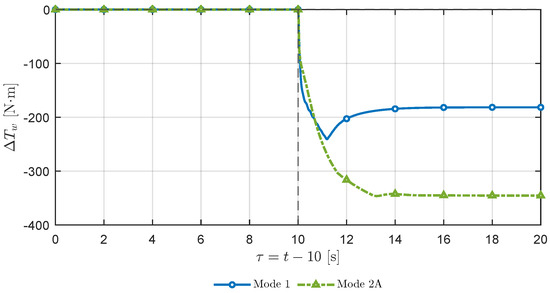
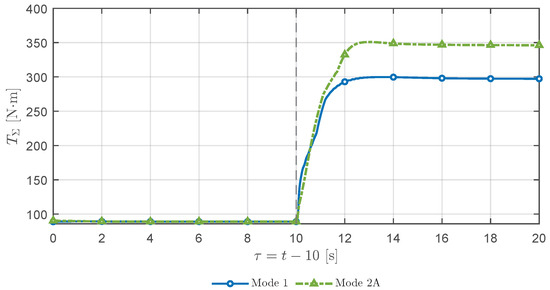
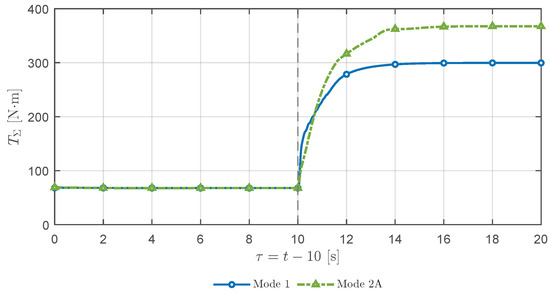
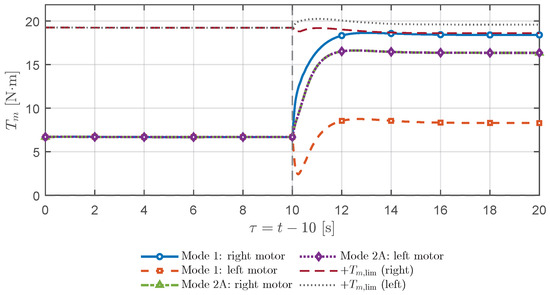
Dual-motor electric drive axles (e-axles) can realize basic torque vectoring through motor-torque allocation. However, without an inter-wheel power-transfer path, they still face structural limitations under motor torque–speed envelopes and severe left–right adhesion asymmetry. To address this issue, this paper proposes a reconfigurable dual-motor e-axle based on fixed-carrier compound planetary gear trains and two cross-axle clutches. By switching between controlled-slip and lock-coupled states, the proposed topology creates a switchable inter-wheel power-transfer path. As a result, it enhances yaw-rate regulation capability under high-adhesion conditions and improves escape capability under severe adhesion asymmetry. A unified kinematic–static analytical framework is established to derive closed-form capability boundaries and compact structural indices for parameter matching. Vehicle-level co-simulation on a representative rear-wheel-drive platform is then carried out for validation. Under severe split- conditions, the peak high-adhesion wheel torque increases from 241.72 to 695.57 N·m, and the escape time decreases from 0.43 to 0.19 s. In a representative high-adhesion step-steer case, the mean yaw-rate tracking error is reduced from 6.75 to 0.20 deg/s, while the mean differential wheel torque reaches 1.83 times that of the baseline mode. The other high-adhesion cases show the same trend. These results verify the vehicle-dynamics significance and engineering feasibility of the proposed architecture.
Full article
(This article belongs to the Section Actuators for Surface Vehicles)
►▼
Show Figures

Figure 1

Open AccessArticle
Multi-Agent Cooperative Control of CAVs in Toll Plaza Diverging Areas: A Target-Path Approach
by
Siyu Long, Lili Zheng and Yi Fei
Actuators 2026, 15(5), 267; https://doi.org/10.3390/act15050267 - 8 May 2026
Abstract
Existing research on cooperative control of connected and autonomous vehicles (CAVs) has primarily focused on structured freeway environments. Most existing approaches adopt lane-based modeling and discrete lane-change actions. These assumptions are unsuitable for toll plaza diverging areas without lane markings, where vehicles move
[...] Read more.
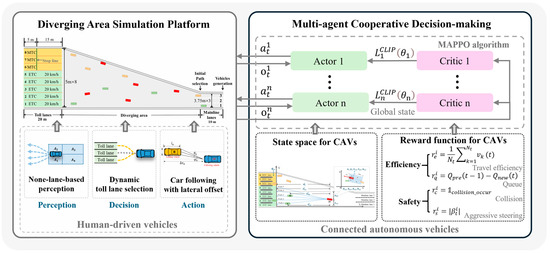
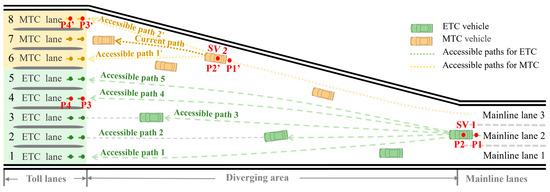
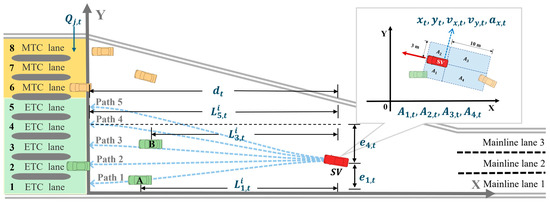
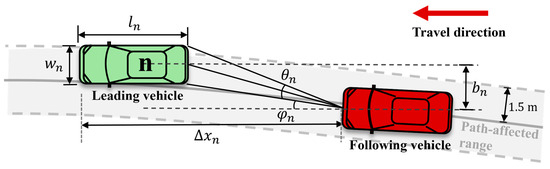
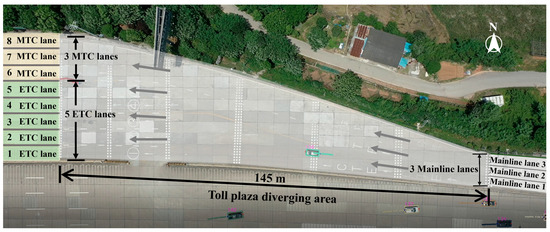
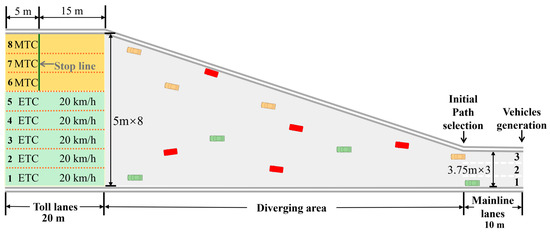
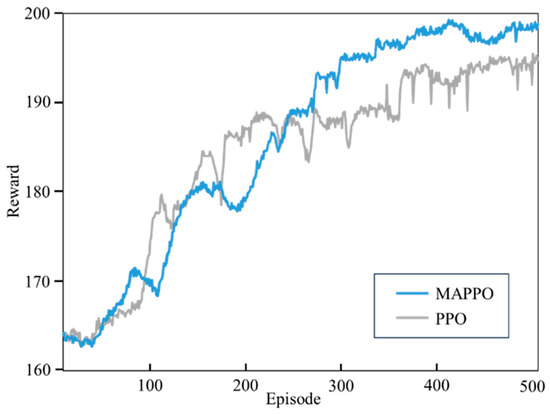
Existing research on cooperative control of connected and autonomous vehicles (CAVs) has primarily focused on structured freeway environments. Most existing approaches adopt lane-based modeling and discrete lane-change actions. These assumptions are unsuitable for toll plaza diverging areas without lane markings, where vehicles move toward multiple tollbooths. The absence of predefined lanes leads to continuous trajectory evolution, dense interactions, and increased safety risk. To address this limitation, this study proposes a multi-agent cooperative control framework based on Multi-Agent Proximal Policy Optimization (MAPPO) under a Centralized Training and Decentralized Execution (CTDE) architecture. The multi-agent formulation captures multi-vehicle interaction in toll plaza diverging areas, while centralized training improves learning stability. A target-path-oriented action space is introduced to replace the discrete lane-change action, enabling flexible tollbooth selection and continuous trajectory generation. The proposed cooperative strategy is trained and evaluated on a simulation platform structured under a Perception-Decision-Action framework, which provides a high-fidelity environment for weak-constraint traffic interactions. Simulation results based on real-world traffic data show that the proposed method improves traffic efficiency and enhances collision avoidance. Furthermore, comparative analyses are conducted to evaluate the model performance under varying traffic environments.
Full article
(This article belongs to the Special Issue Intelligent Planning and Collaborative Control for Unmanned Swarm Systems)
►▼
Show Figures

Figure 1

Open AccessArticle
Time-Delay Estimation-Based Sliding Mode Control for 7-DOF Overhead Crane with Variable Cable Length and Double Spherical Pendulum Dynamics
by
Rui Li, Gang Li, Haixing Qin and Kairui Cao
Actuators 2026, 15(5), 266; https://doi.org/10.3390/act15050266 - 5 May 2026
Abstract
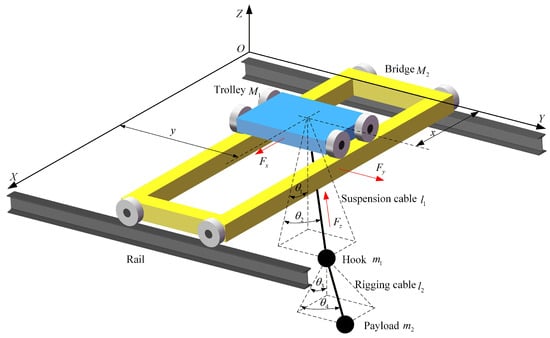
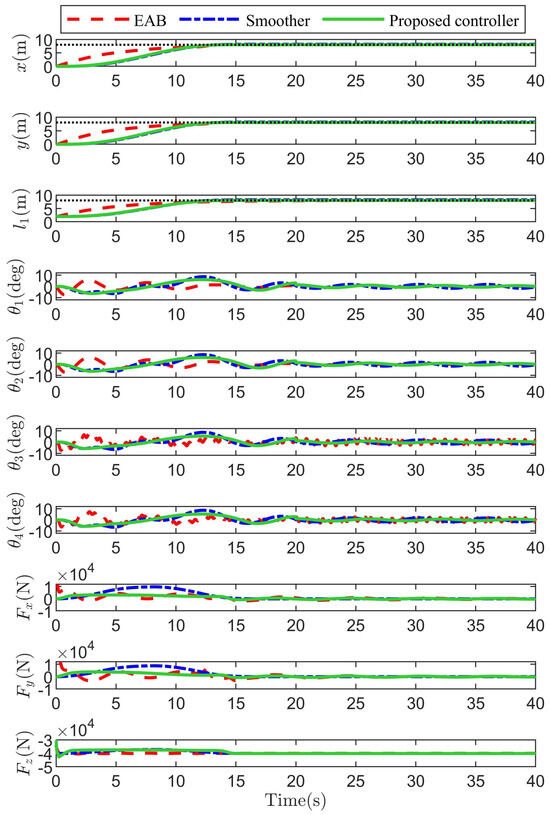
Overhead cranes are underactuated systems with significant model uncertainties that pose major challenges for precise anti-swing control. These uncertainties, including unknown parameters and varying dynamics, severely limit the performance of conventional controllers. To address the control challenge of 7-degree-of-freedom (7-DOF) overhead cranes with
[...] Read more.
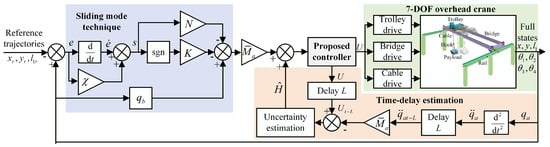
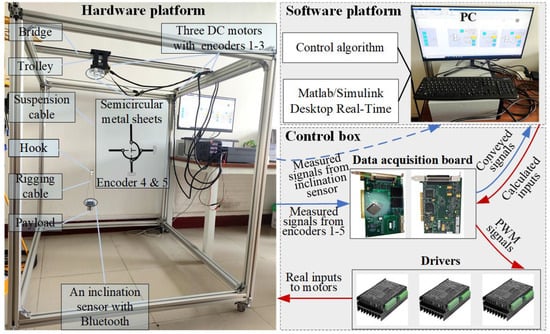
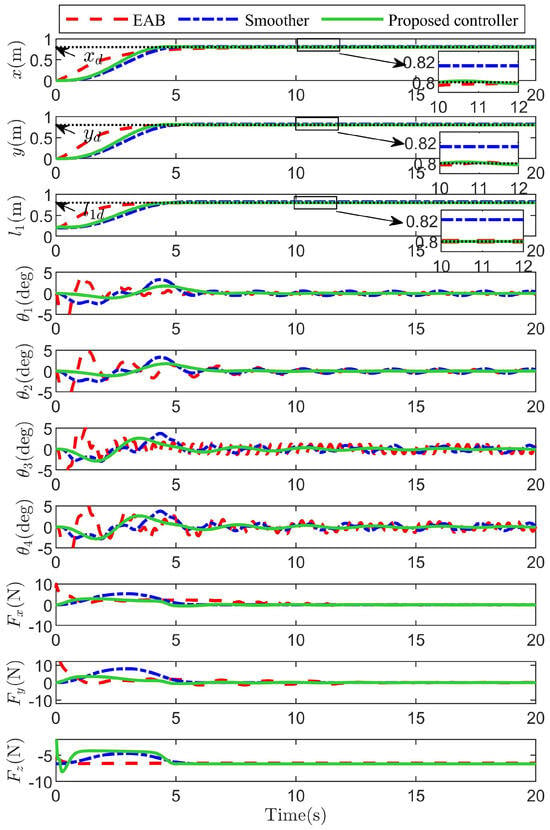
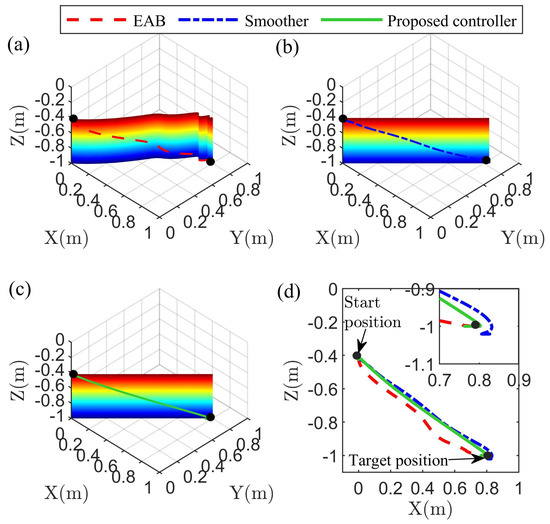
Overhead cranes are underactuated systems with significant model uncertainties that pose major challenges for precise anti-swing control. These uncertainties, including unknown parameters and varying dynamics, severely limit the performance of conventional controllers. To address the control challenge of 7-degree-of-freedom (7-DOF) overhead cranes with variable cable length and double spherical pendulum dynamics, this paper proposes an adaptive sliding mode control method integrated with time-delay estimation. First, a comprehensive dynamic model that accounts for bridge movement, trolley travel, hoisting motion, and spherical swings of both the hook and the payload is established. Then, a sliding surface is constructed based on the coupling analysis between actuated and unactuated dynamics. The core innovation lies in the integration of time-delay estimation with adaptive sliding mode control, where the time-delay estimator provides accurate approximation of unknown system dynamics, while the adaptive mechanism compensates for estimation errors and parameter variations. This dual approach ensures robust performance despite model inaccuracies. Lyapunov stability analysis rigorously confirms the uniform ultimate boundedness of all closed-loop signals under model uncertainties. Experimental tests further show that the designed controller achieves accurate positioning and robust swing suppression, outperforming conventional controllers in challenging working conditions.
Full article
(This article belongs to the Section Control Systems)
►▼
Show Figures

Figure 1

Open AccessArticle
Electromagnetic Analysis and Optimization Design of a Composite Anti-Time-Delay Current Loop for High-Speed Maglev Suspension System
by
Peichen Han, Junqi Xu, Chen Chen and Dinggang Gao
Actuators 2026, 15(5), 265; https://doi.org/10.3390/act15050265 - 3 May 2026
Abstract
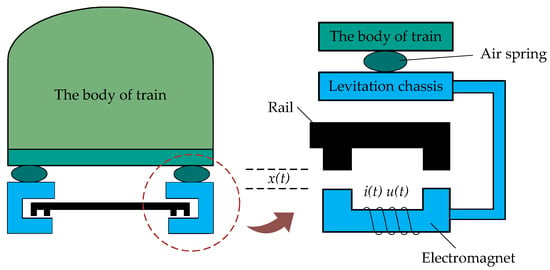
The suspension system of high-speed maglev trains has composite time-delay factors, such as inductance delay and control circuit latency, which lead to a decrease in the tracking and robustness of the current control loop. Based on the study of electromagnetic characteristics of suspension
[...] Read more.
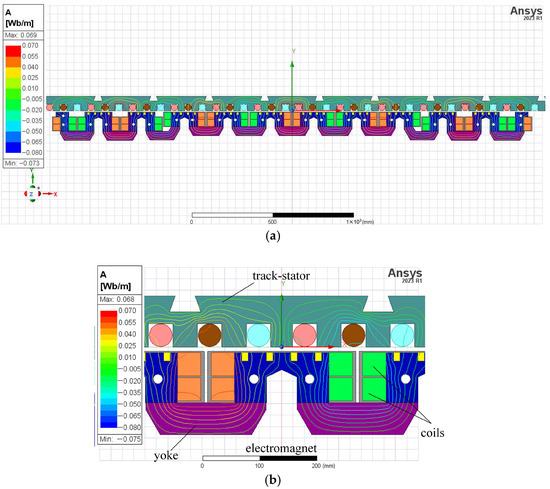
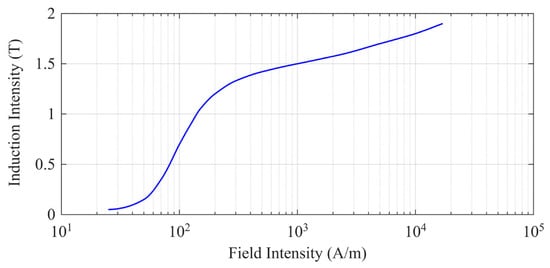
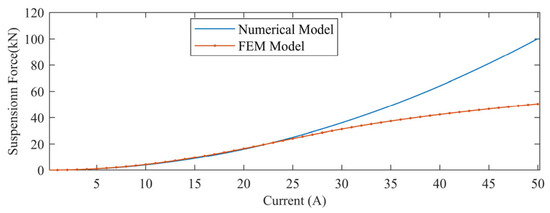
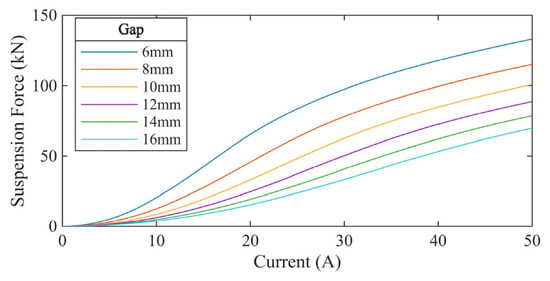
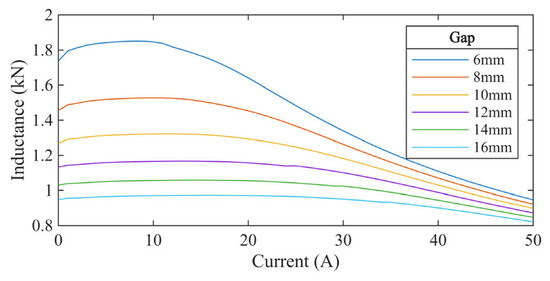
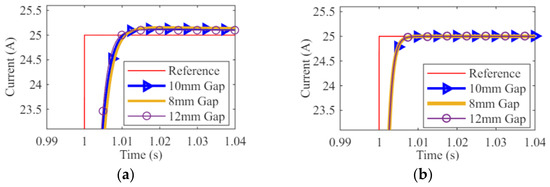
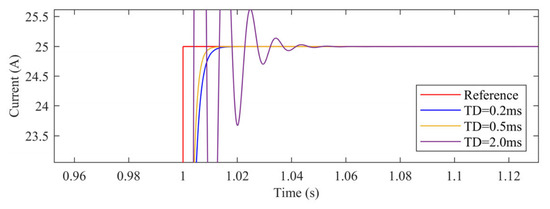
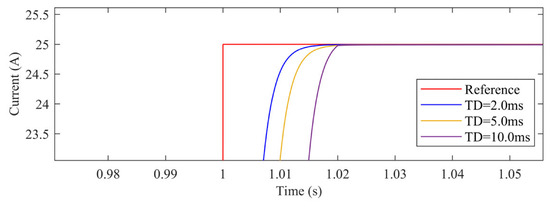
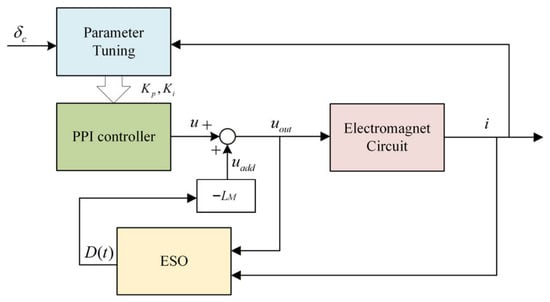
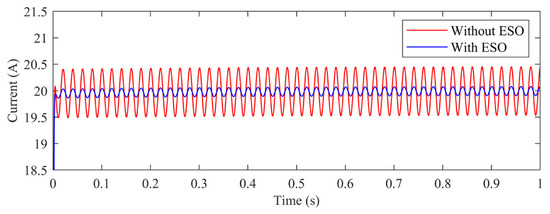
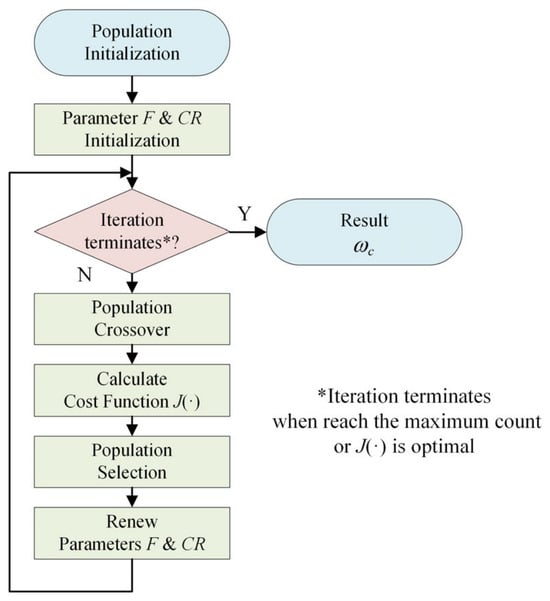
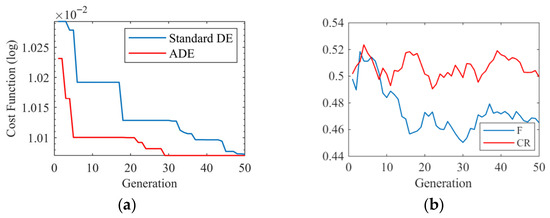
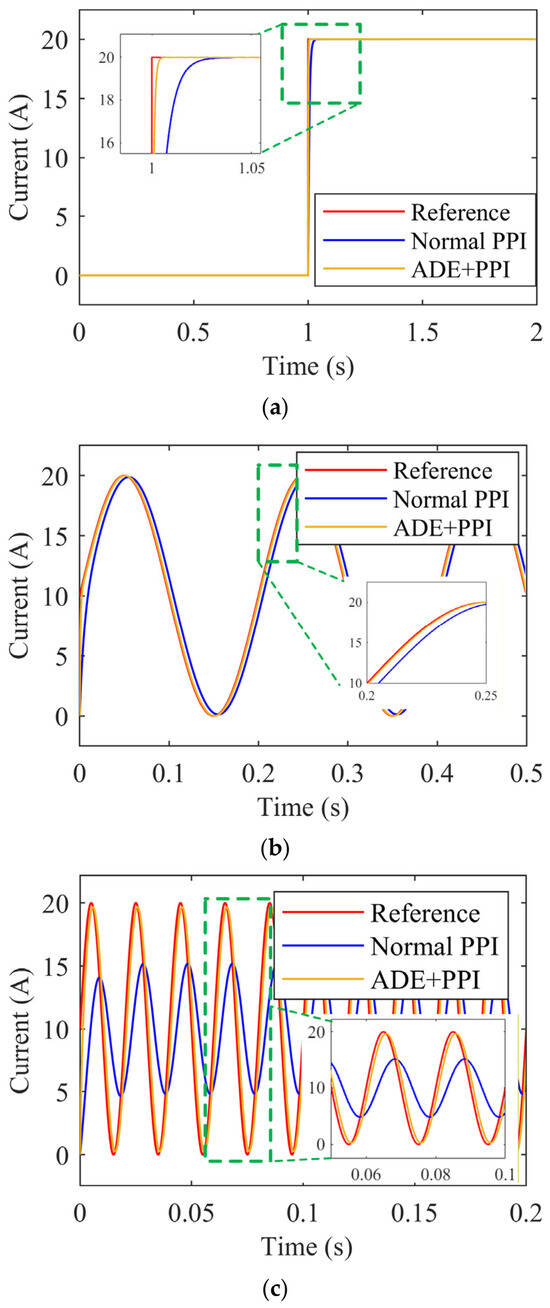
The suspension system of high-speed maglev trains has composite time-delay factors, such as inductance delay and control circuit latency, which lead to a decrease in the tracking and robustness of the current control loop. Based on the study of electromagnetic characteristics of suspension systems, this paper proposes a composite anti-time-delay current loop based on adaptive parameter optimization. First, a finite element analysis model of the suspension electromagnet is constructed to analyze the changes in suspension force and inductance of the suspension electromagnet. A self-tuning PI current loop is constructed to achieve time-varying parameter matching. Second, to tackle the inherent time delays and disturbances in the control loop, a predictive PI control algorithm combined with an extended state observer (ESO) is introduced, which effectively estimates and compensates for disturbances and phase lags. Furthermore, a parameter optimization strategy based on the adaptive differential evolution (ADE) algorithm is proposed to address the difficulties in current loop tuning. The results demonstrate that compared to traditional current loop strategies, the dynamic performance of the designed composite anti-time-delay current loop is significantly improved, enhancing the current following control capability of the suspension system under complex operating conditions.
Full article
(This article belongs to the Special Issue Advanced Theory and Application of Magnetic Actuators—3rd Edition)
►▼
Show Figures

Figure 1
Open AccessArticle
Model Predictive Position Control of Tubular Permanent Magnet Linear Synchronous Motor for Precision Positioning Based on Neural Network Model Reference Adaptive Disturbance Observer
by
Yuzhe Zhao, Zhitai Liu and Rengui Qiu
Actuators 2026, 15(5), 264; https://doi.org/10.3390/act15050264 - 3 May 2026
Abstract
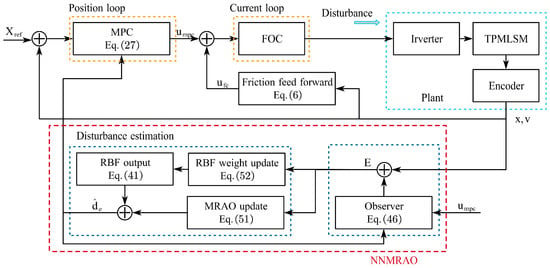
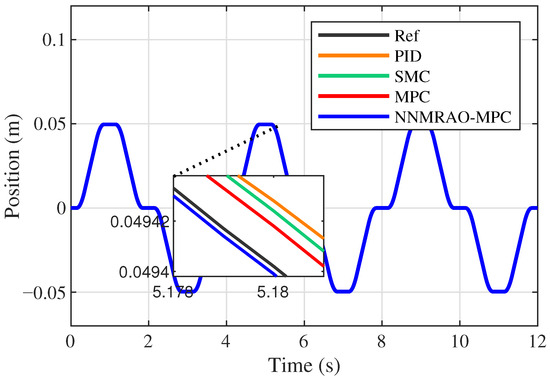
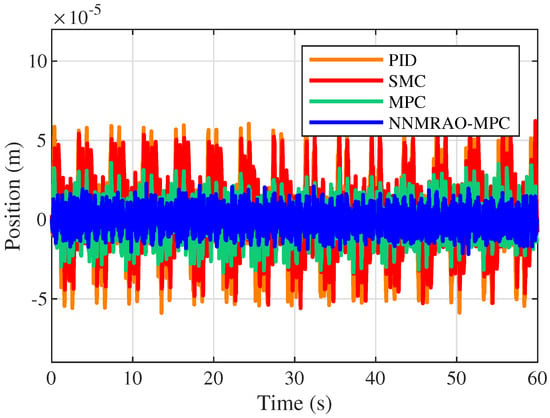
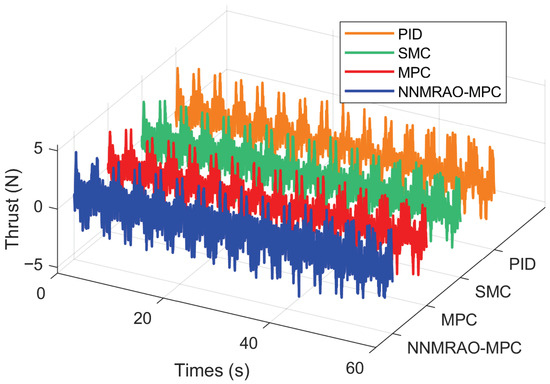
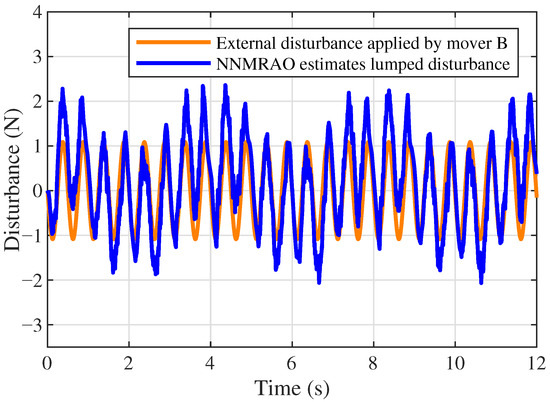
To improve the dynamic performance of position tracking in permanent magnet synchronous linear motors, a model predictive position control method based on disturbance observer is proposed. Firstly, a novel neural network enhanced model reference adaptive observer is designed to estimate the lumped disturbance
[...] Read more.
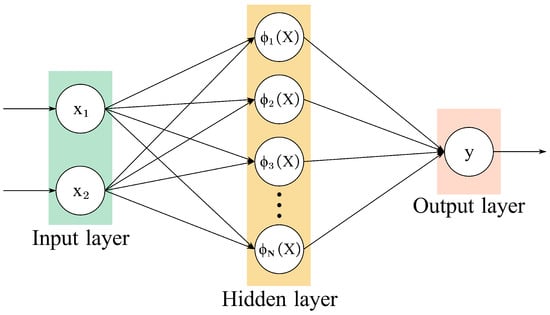
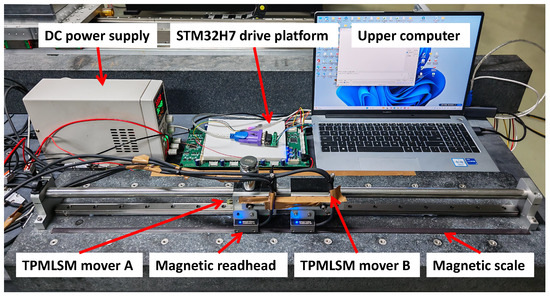
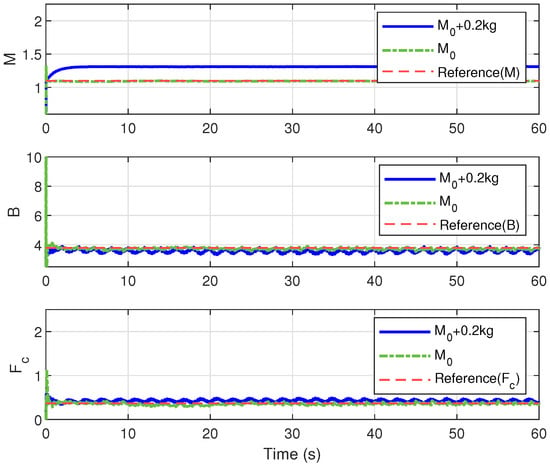
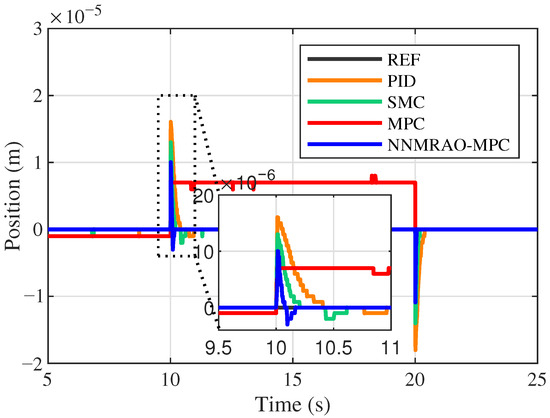
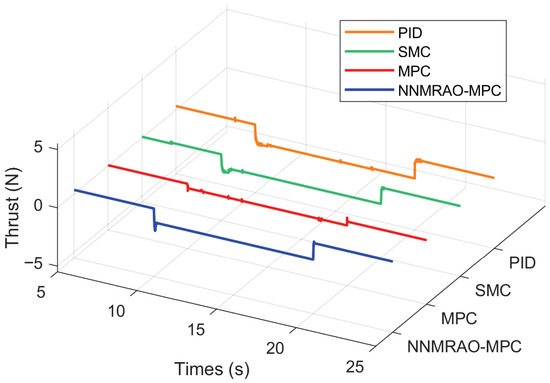
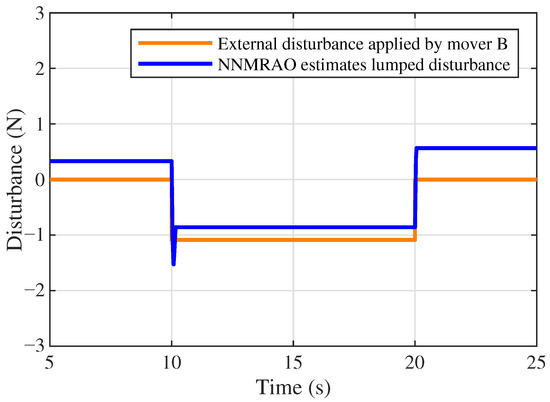
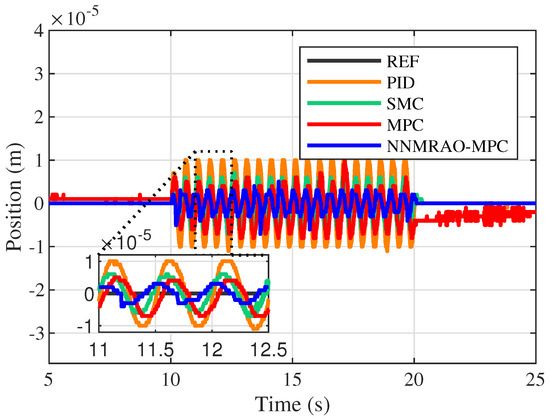
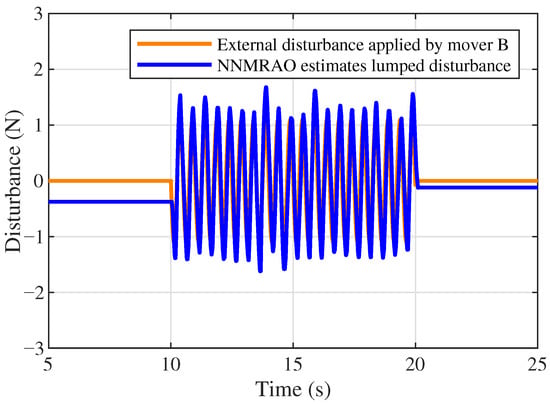
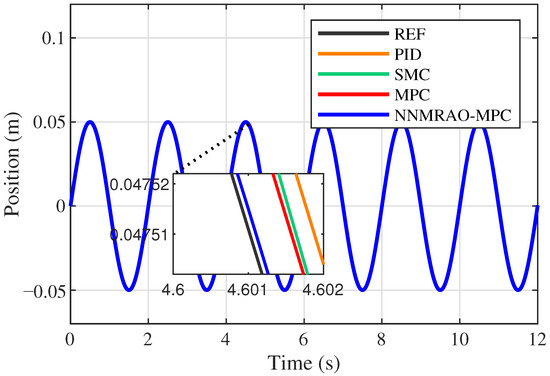
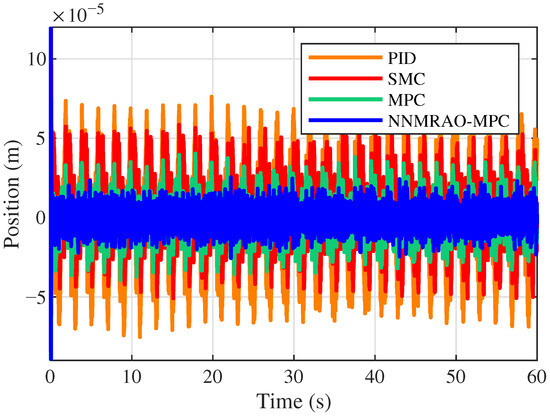
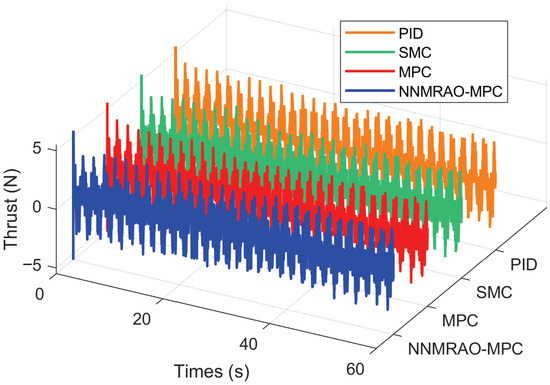
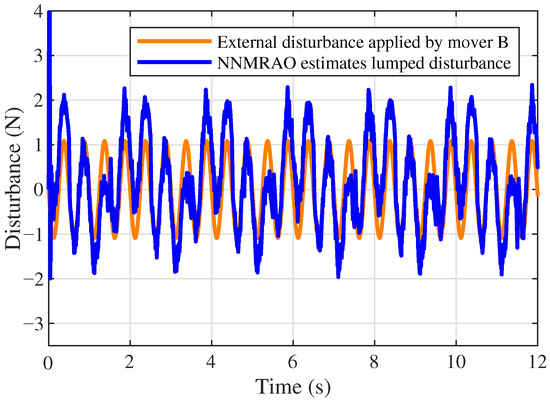
To improve the dynamic performance of position tracking in permanent magnet synchronous linear motors, a model predictive position control method based on disturbance observer is proposed. Firstly, a novel neural network enhanced model reference adaptive observer is designed to estimate the lumped disturbance of the system. Taking the estimated disturbance as a new state variable, it is explicitly embedded in the framework of model prediction, which realizes the online estimation and compensation of disturbance, and effectively solves the deterioration of control performance caused by inaccurate system parameters and unknown disturbance in model prediction method. The increment of the control input is used as the input of the prediction equation, which makes the control input smoother and avoids drastic changes. The adaptive gain of the observer is designed by Lyapunov theory and the stability of the system is analyzed. A large number of experiments and analysis are carried out on the tubular permanent magnet linear synchronous motor platform, which proves the effectiveness of the proposed method.
Full article
(This article belongs to the Special Issue Industrial and Biomechanical Applications of Actuators and Robots and Eco-Sutstainability—2nd Edition)
►▼
Show Figures

Figure 1
Open AccessArticle
Reliable L2 − L∞ Control for Discrete-Time Descriptor Systems with Data Dropouts and Actuator Faults
by
Qian Yang, Xiao-Heng Chang and Ming-Yang Qiao
Actuators 2026, 15(5), 263; https://doi.org/10.3390/act15050263 - 3 May 2026
Abstract
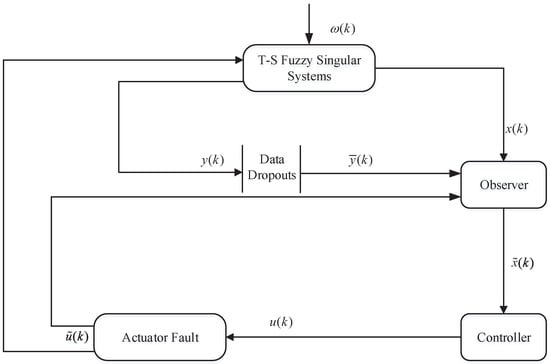
This paper investigates the reliable stabilization and performance control problem for discrete-time descriptor systems described by Takagi–Sugeno (T-S) fuzzy models under stochastic data dropouts and actuator faults. In view of the practical situation that system states are usually
[...] Read more.
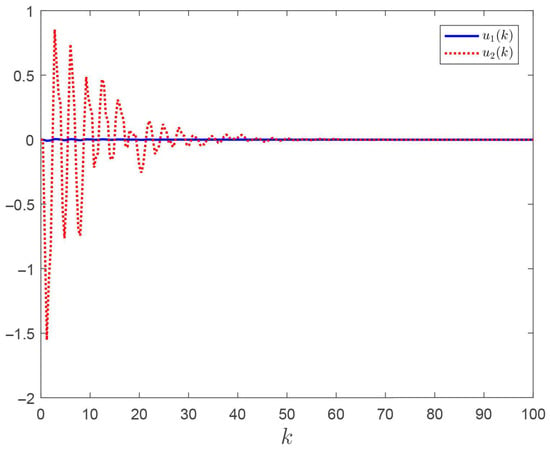
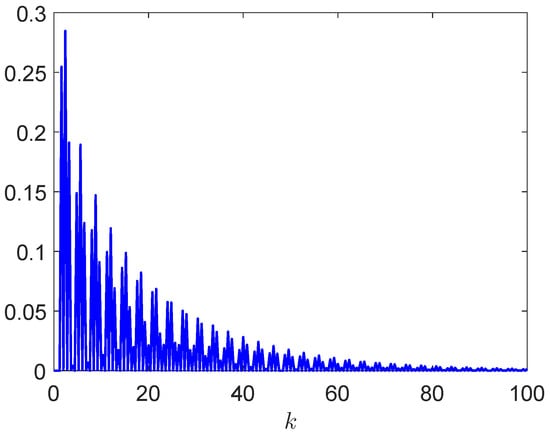
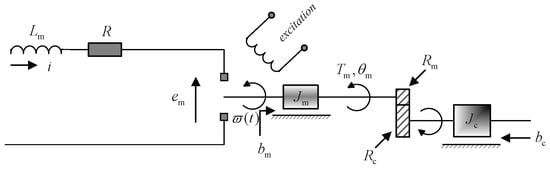
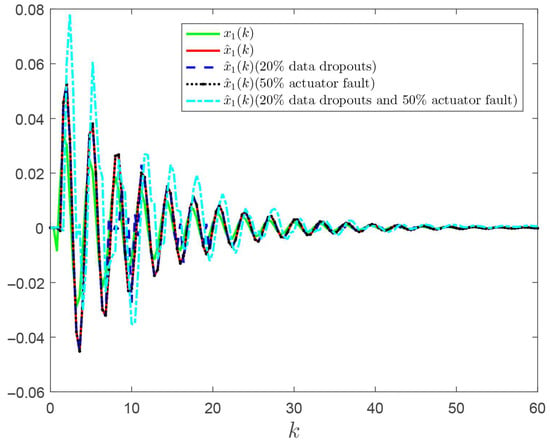
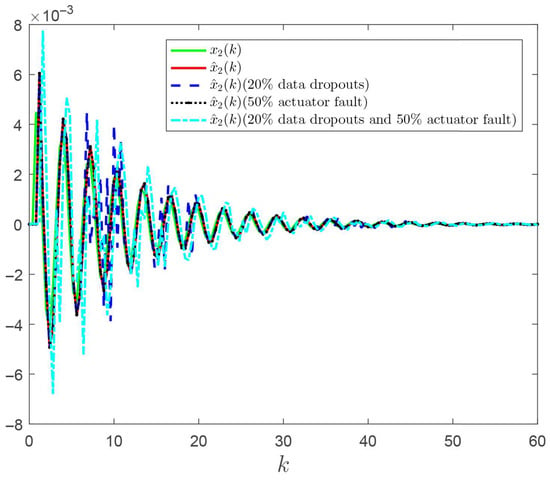
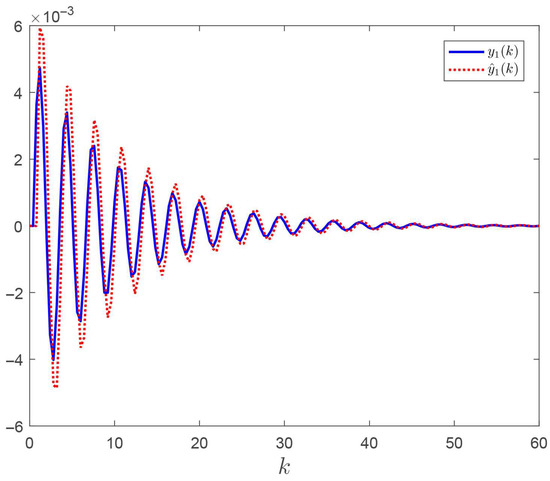
This paper investigates the reliable stabilization and performance control problem for discrete-time descriptor systems described by Takagi–Sugeno (T-S) fuzzy models under stochastic data dropouts and actuator faults. In view of the practical situation that system states are usually unmeasurable, a novel observer-based proportional–derivative (PD) control strategy is proposed. Different from traditional state feedback, the PD structure effectively alleviates the inherent structural constraints of descriptor systems and relaxes the conditions for system regularity and causality. By constructing a parameter-dependent Lyapunov functional and using the Schur complement lemma, sufficient conditions are derived in the form of linear matrix inequalities (LMIs) to guarantee the stochastic stability of the closed-loop system and the prescribed performance. The effectiveness and superiority of the proposed methodology are verified through extensive numerical simulations on two practical case studies, namely, a bio-economic system and a DC motor system. In the case of actuator faults and data dropouts the observer achieves accurate state tracking, and the peak value of the system output is strictly constrained. The research results confirm that the method has strong robustness against data dropouts and actuator faults.
Full article
(This article belongs to the Section Control Systems)
►▼
Show Figures

Figure 1
Open AccessArticle
Precise Control of MIMO Motion Under the Torque Disturbances of the Gap Flow Field
by
Jin Luo, Xiaodong Ruan, Jing Wang, Rui Su and Liang Hu
Actuators 2026, 15(5), 262; https://doi.org/10.3390/act15050262 - 3 May 2026
Abstract
The control of multiple-input–multiple-output (MIMO) motion under a mesoscale gap flow field has important applications. A wideband time-varying disturbance is caused on the control object due to the flow field; in particular, when the control object moves horizontally, the flow field is introduced
[...] Read more.
The control of multiple-input–multiple-output (MIMO) motion under a mesoscale gap flow field has important applications. A wideband time-varying disturbance is caused on the control object due to the flow field; in particular, when the control object moves horizontally, the flow field is introduced relative to the centroid changes and torque disturbance. The torque disturbance and inter-axis coupling effect of MIMO control make achieving submicron level accuracy a significant challenge when using traditional control methods. This study adopts a MIMO system identification method based on closed-loop control to identify plants under the gap flow field and subsequently proposes a composite hierarchical disturbance rejection and decoupling control method. First, we combine the nominal control decoupling matrix and feedback compensation correction method to decouple the MIMO system. Second, we design a disturbance rejection control approach based on Disturbance Observer Control (DOBC) and H-infinity (H∞) control. Ultimately, the proposed method achieves submicron-level accuracy, comprising an important advance toward solving the control problem for semiconductor equipment.
Full article
(This article belongs to the Section Control Systems)
Open AccessArticle
Vision Inertial Stabilized Platform-Based Finite-Time Target Tracking Control for Multi-Rotor UAVs
by
Jing Zhang, Zhiyong Yang, Wenwu Zhu and Jian Xiao
Actuators 2026, 15(5), 261; https://doi.org/10.3390/act15050261 - 2 May 2026
Abstract
This paper proposes a finite-time target tracking control for multi-rotor unmanned aerial vehicles (UAVs) based on a vision-inertial-stabilized platform. To address the challenge of stable and accurate moving target tracking, the sliding mode control (SMC) technique is used to overcome limitations of conventional
[...] Read more.
This paper proposes a finite-time target tracking control for multi-rotor unmanned aerial vehicles (UAVs) based on a vision-inertial-stabilized platform. To address the challenge of stable and accurate moving target tracking, the sliding mode control (SMC) technique is used to overcome limitations of conventional control algorithms, such as poor robustness and slow convergence speed. First, by computing the pixel deviation between the target and the image center, a kinematic model of the tracking target is established. Then, by introducing homogeneous system theory into the sliding mode surface design, a non-singular fast integral terminal sliding mode control (NFITSMC) is designed for target tracking via regulating the rotational angular acceleration of dual actuators in the vision inertial stabilized platform, thereby driving the pixel deviation to converge to zero in a finite time. Strict theoretical analysis is given to prove the finite-time stability and robustness of the closed-loop control system. Furthermore, simulation results demonstrate that the proposed method maintains higher tracking accuracy than SMC, ISMC, and TSMC.
Full article
(This article belongs to the Special Issue Advanced Learning and Intelligent Control Algorithms for Robots)
Open AccessArticle
Trajectory Control for Car-like Mobile Robots via Frugal Predictive Control with Integrated Disturbance Rejection
by
Luis Angel Martínez-Ramírez, Rafael Isaac Vasquéz-Cruz, German Ardul Munoz-Hernandez, Gerardo Mino-Aguilar, Wuiyevaldo Fermín Guerrero-Sánchez, Roberto Carlos Ambrosio-Lázaro and José Fermi Guerrero-Castellanos
Actuators 2026, 15(5), 260; https://doi.org/10.3390/act15050260 - 2 May 2026
Abstract
This paper presents a hierarchical control architecture for high-precision trajectory tracking of a car-like mobile robot (CLMB) operating under external disturbances arising from normal and tangential wheel forces. The proposed solution addresses the critical challenge of simultaneously rejecting disturbances and accurately following a
[...] Read more.
This paper presents a hierarchical control architecture for high-precision trajectory tracking of a car-like mobile robot (CLMB) operating under external disturbances arising from normal and tangential wheel forces. The proposed solution addresses the critical challenge of simultaneously rejecting disturbances and accurately following a predefined path at a determined cruise velocity. Since the vehicle is equipped with an electronic differential at the low level, a nonlinear dynamic control (NDC) scheme is implemented to regulate the speed in each wheel. This controller actively estimates and compensates for differential traction losses and other lumped disturbances in real time, ensuring robust wheel velocity tracking across varying terrain conditions. The compensated system is then governed by a high-level frugal model predictive controller (FMPC) that leverages a dynamic vehicle model to compute optimal steering and velocity commands, thereby minimizing future trajectory-tracking errors. To achieve a precise and reliable state estimation necessary for feedback control, an Extended Kalman Filter (EKF) is designed to fuse high-frequency data from wheel encoders with absolute pose measurements from a motion capture system, mitigating the drift inherent in odometry alone. Experimental results on a physical robotic platform demonstrate tracking accuracy and robust disturbance rejection under different operating conditions.
Full article
(This article belongs to the Special Issue Nonlinear Control of Mechanical and Robotic Systems)
Open AccessArticle
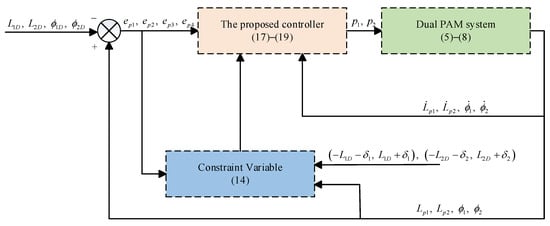
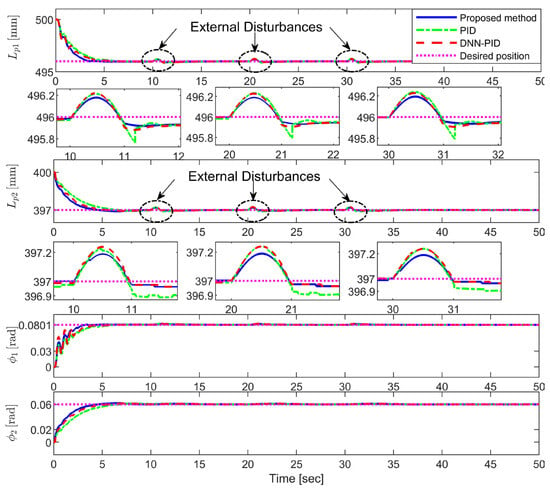
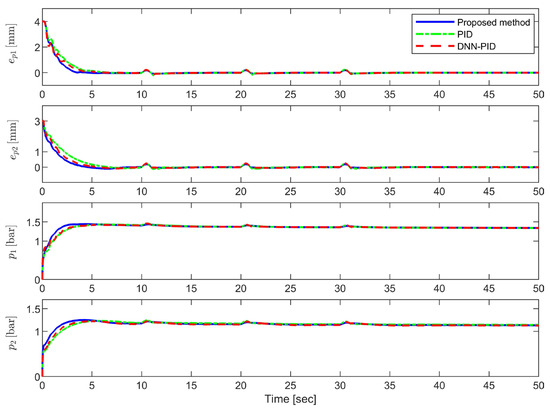
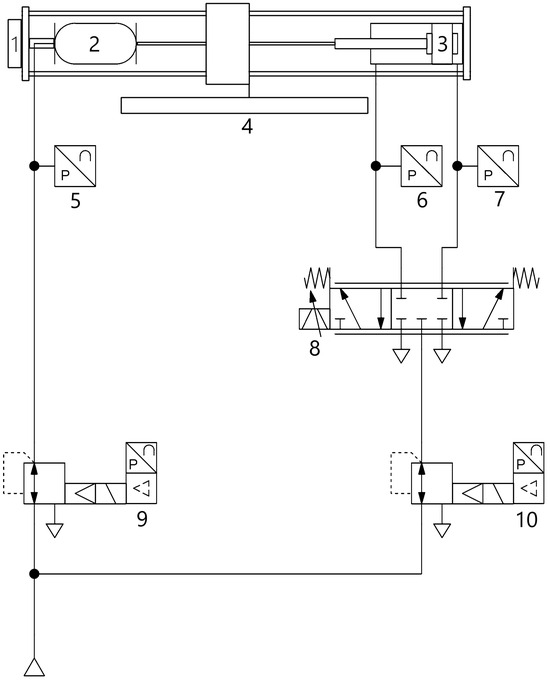
Robust Controller Design for Dual Pneumatic Artificial Muscles with Overshoot Constraints
by
Jiaxi Pei, Zengcheng Zhou, Haokun Geng, Huimin Ouyang and Menghua Zhang
Actuators 2026, 15(5), 259; https://doi.org/10.3390/act15050259 - 2 May 2026
Abstract
Recent advancements in flexible robotic mechanisms have drawn great attention in dual pneumatic artificial muscle (PAM) applications. However, the complex inherent characteristics of dual PAMs, particularly highly nonlinear and time-varying properties, may cause state variables to exceed allowable constraints. Furthermore, the dual PAM
[...] Read more.
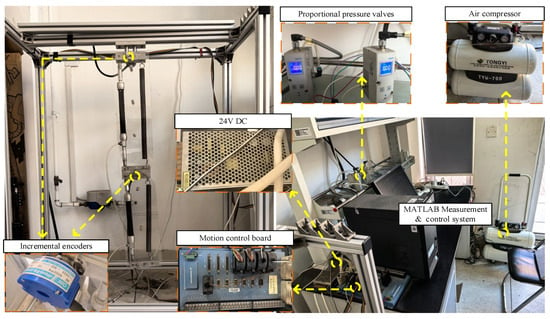
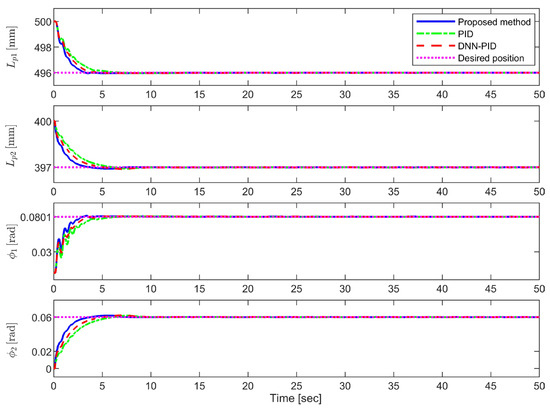
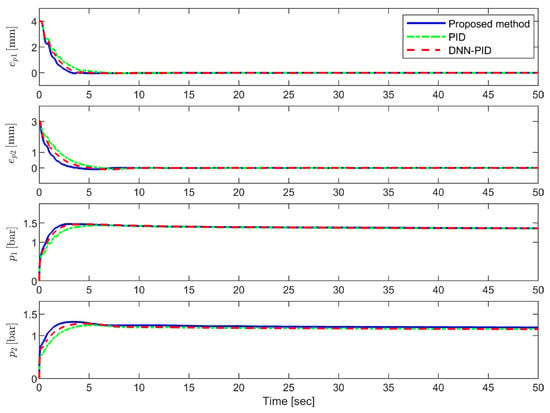
Recent advancements in flexible robotic mechanisms have drawn great attention in dual pneumatic artificial muscle (PAM) applications. However, the complex inherent characteristics of dual PAMs, particularly highly nonlinear and time-varying properties, may cause state variables to exceed allowable constraints. Furthermore, the dual PAM control system faces additional challenges from potential singularity issues arising from multiple control variables. To solve the singularity issues and satisfy the overshoot constraints, a novel robust control approach for dual PAMs is suggested. Comparative experimental results on the dual PAM platform are posed to confirm the robustness and efficacy of the suggested control. To our knowledge, this is the first control methodology for PAMs that effectively addresses overshoot limitations and input singularities.
Full article
(This article belongs to the Special Issue Modeling and Nonlinear Control for Complex MIMO Mechatronic Systems—2nd Edition)
►▼
Show Figures

Figure 1
Open AccessArticle
Indirect Fault Estimation and Active Fault-Tolerant Control for Spacecraft
by
Junyong Yin, Jiarui Sun, Guangfu Ma and Guangtao Ran
Actuators 2026, 15(5), 258; https://doi.org/10.3390/act15050258 - 2 May 2026
Abstract
As spacecraft on-orbit environments become increasingly complex, actuator efficiency degradation and faults occur more frequently, severely compromising operational safety. For reaction wheel-configured spacecraft subject to additive and multiplicative actuator faults, a fault detection mechanism and active fault-tolerant control system are designed. First, an
[...] Read more.
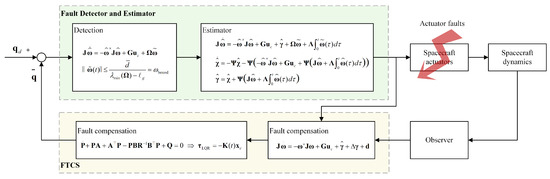
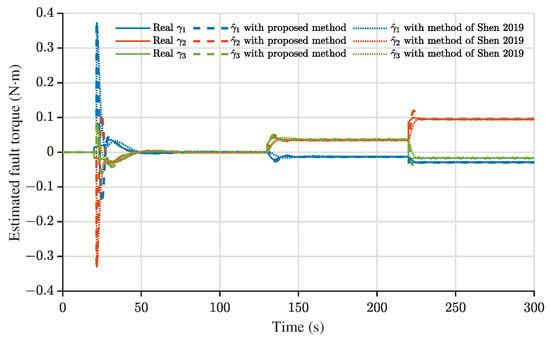
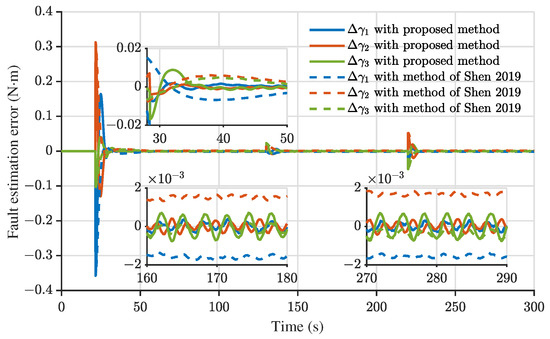
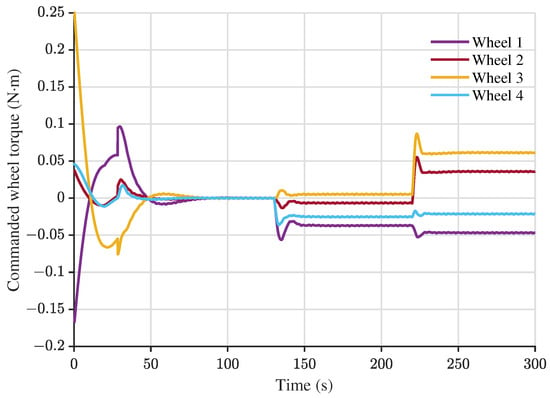
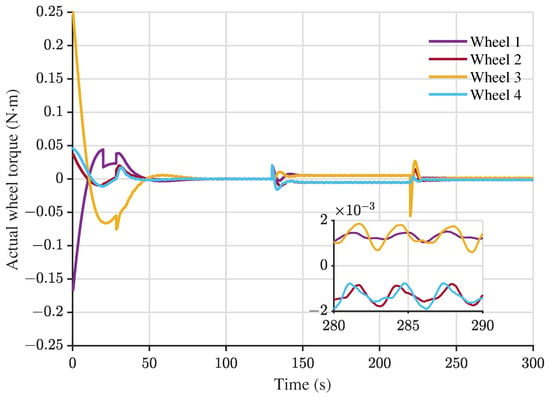
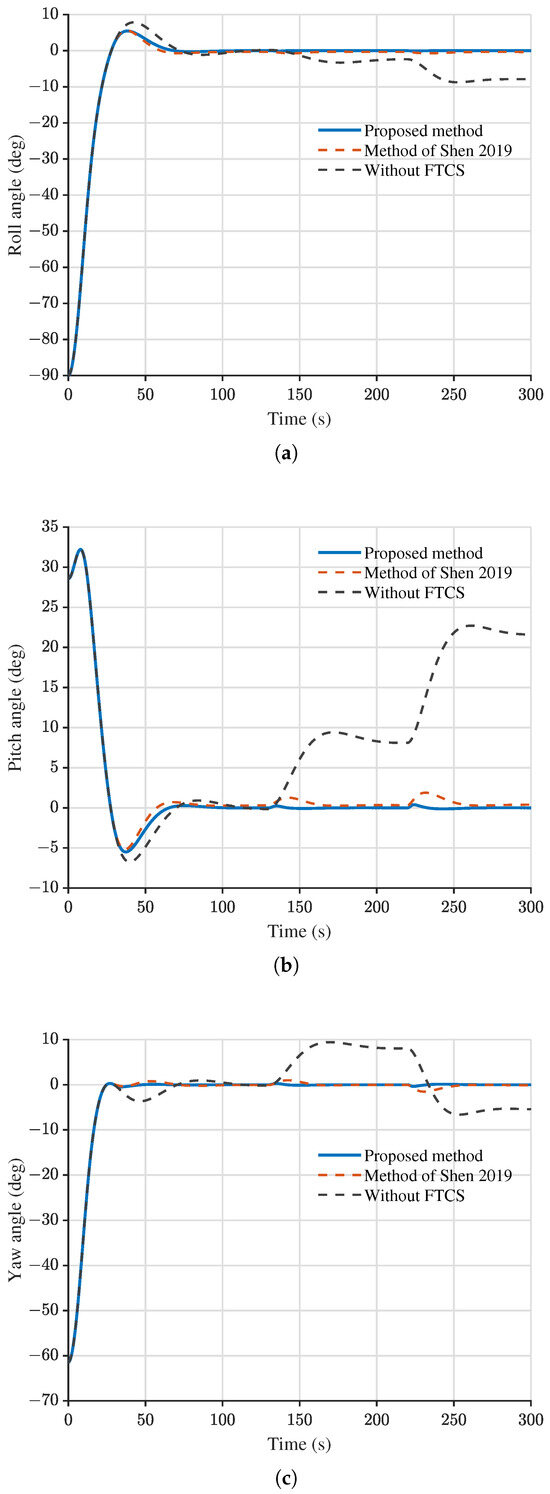
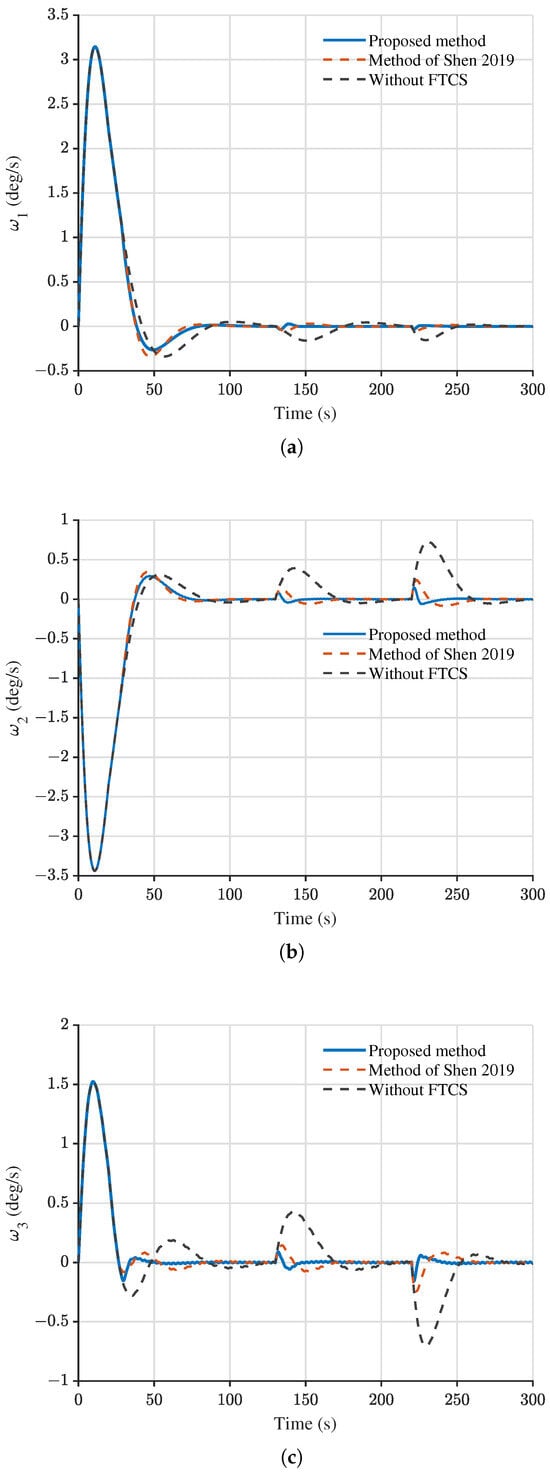
As spacecraft on-orbit environments become increasingly complex, actuator efficiency degradation and faults occur more frequently, severely compromising operational safety. For reaction wheel-configured spacecraft subject to additive and multiplicative actuator faults, a fault detection mechanism and active fault-tolerant control system are designed. First, an actuator fault detection scheme based on an angular velocity observer is proposed, along with sufficient conditions for fault detection. Second, by introducing an auxiliary variable, an indirect fault estimator with angular velocity integral compensation is designed, ensuring the estimation error converges exponentially to an origin-containing invariant set. Upon fault detection, the indirect estimator compensates the fault, and linear quadratic regulator-based fault-tolerant control is applied to compensate for torque deviations induced by faults without identifying individual actuator failures. Numerical simulations validate that the proposed fault-tolerant control approach effectively detects and reconstructs actuator faults, achieving robust fault-tolerant performance.
Full article
(This article belongs to the Special Issue Intelligent Planning and Collaborative Control for Unmanned Swarm Systems)
►▼
Show Figures

Figure 1
Open AccessArticle
A Memristive-System-Based Hysteresis Model for a Compact Pneumatic Artificial Muscle
by
Sándor Csikós and József Sárosi
Actuators 2026, 15(5), 257; https://doi.org/10.3390/act15050257 - 2 May 2026
Abstract
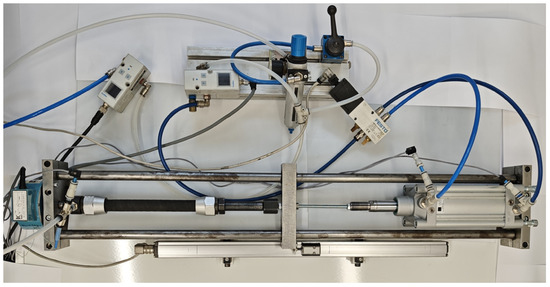
Pneumatic artificial muscles exhibit pronounced hysteresis in the force-contraction domain, which complicates accurate force modeling under pressure-dependent operation. This work presents a discrete-time quasi-static hysteresis model for a compact pneumatic artificial muscle using a memristive system-based branch-memory formulation. The model combines separate loading
[...] Read more.
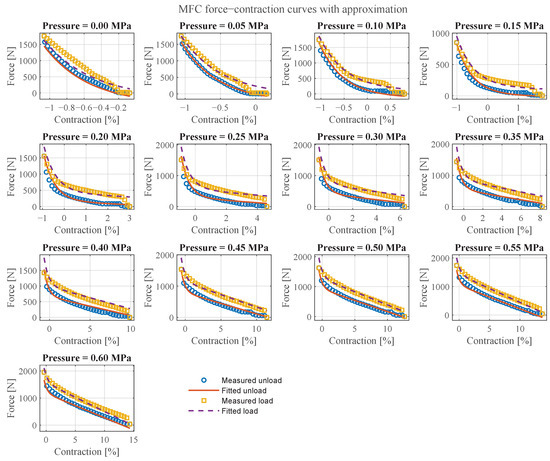
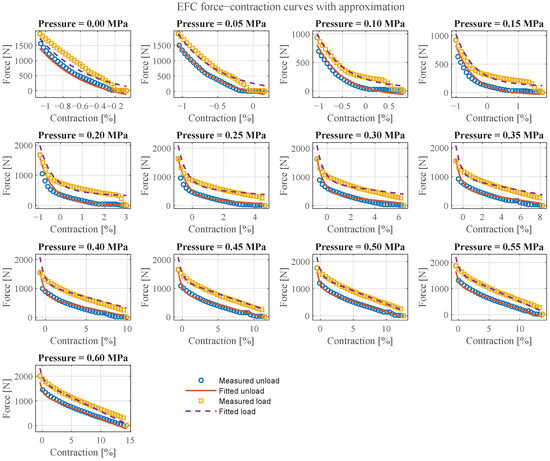
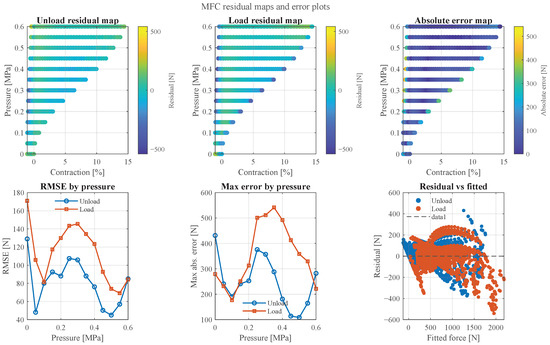
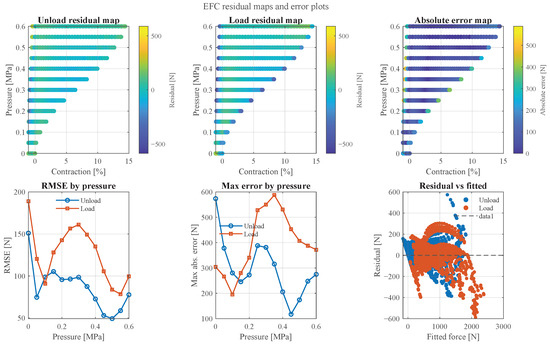
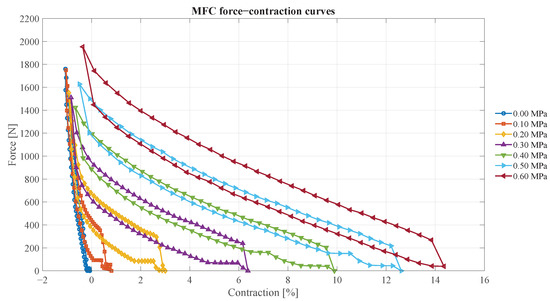
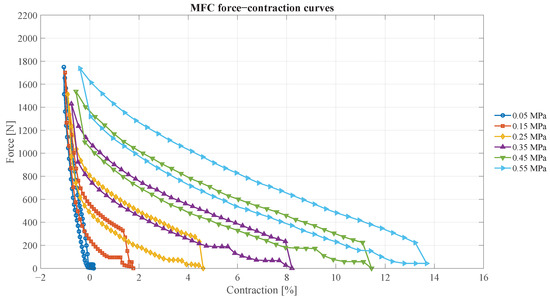
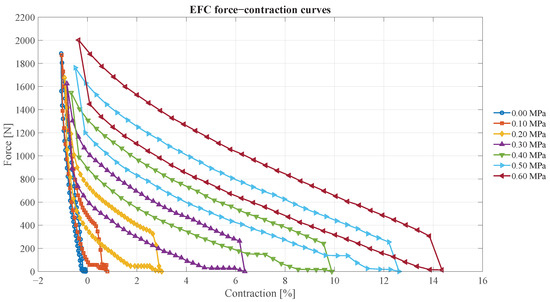
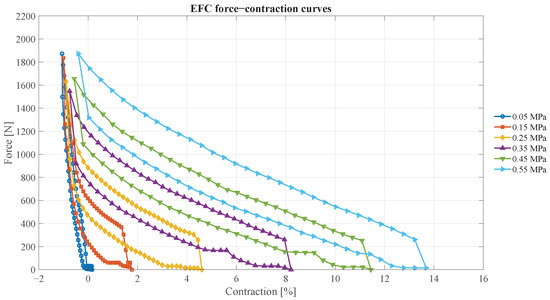
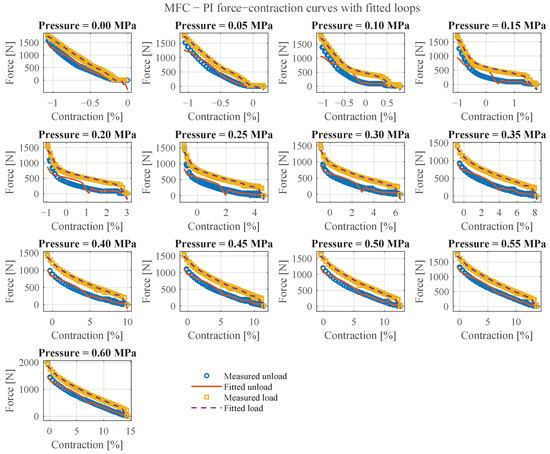
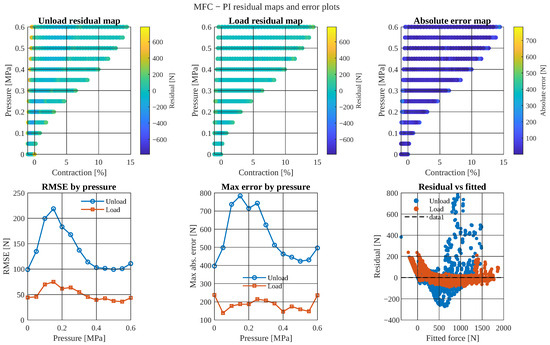
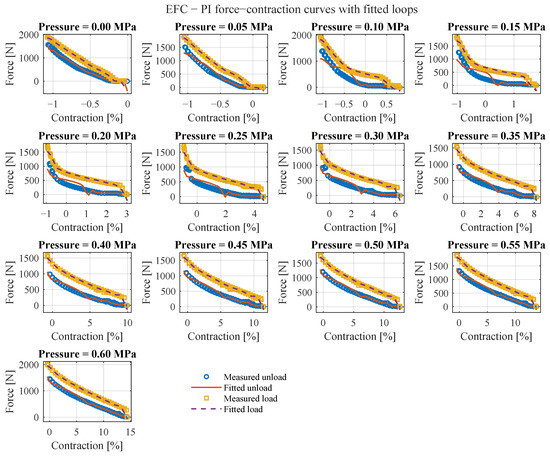
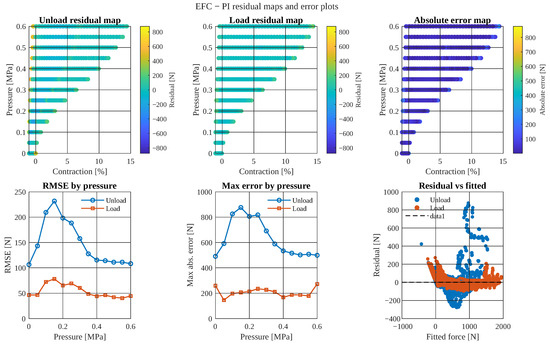
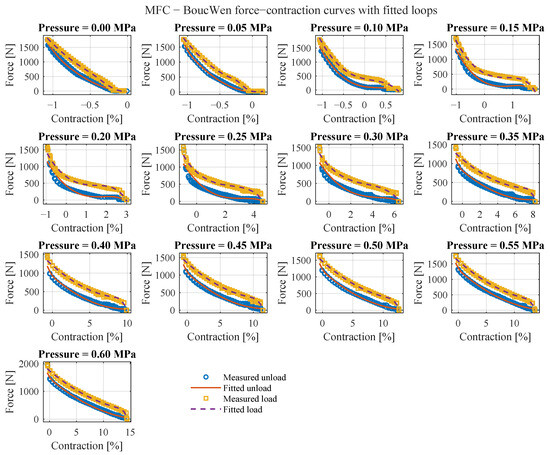
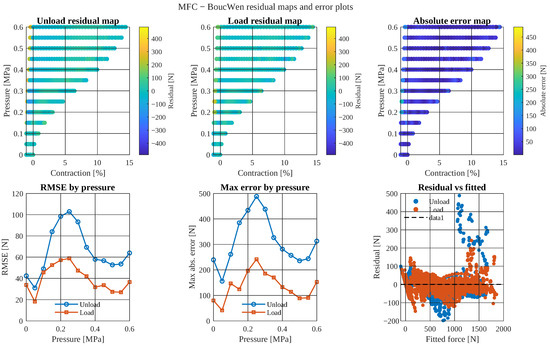
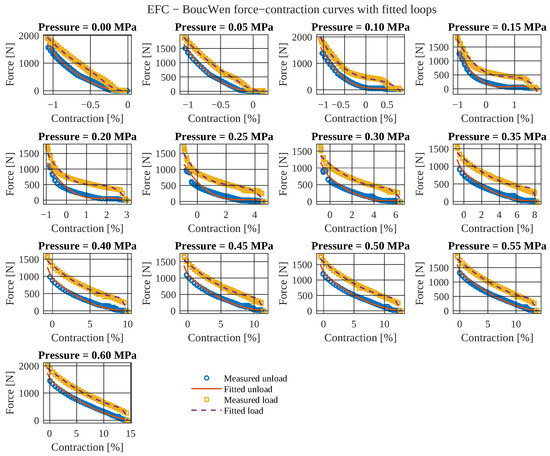
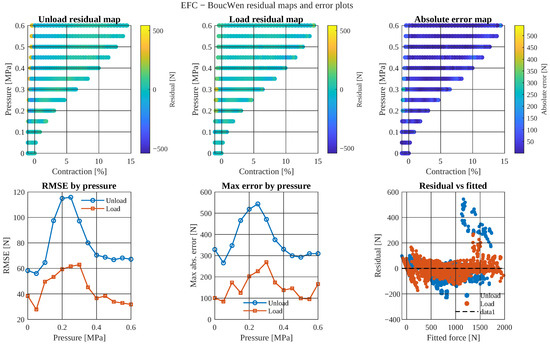
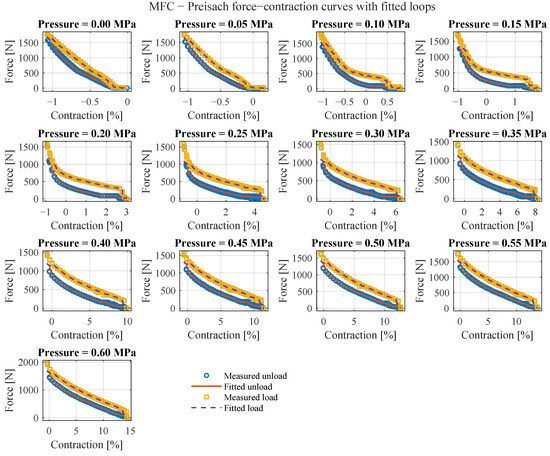
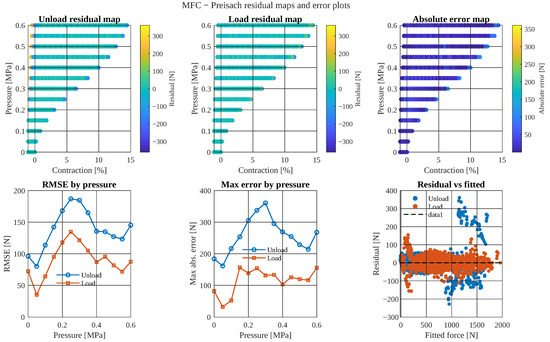
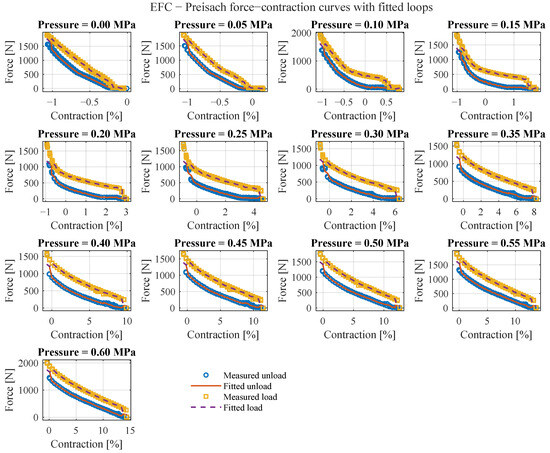
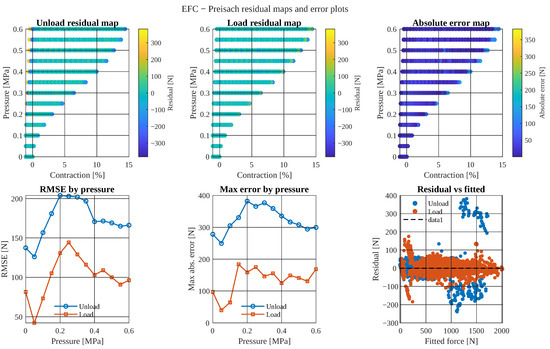
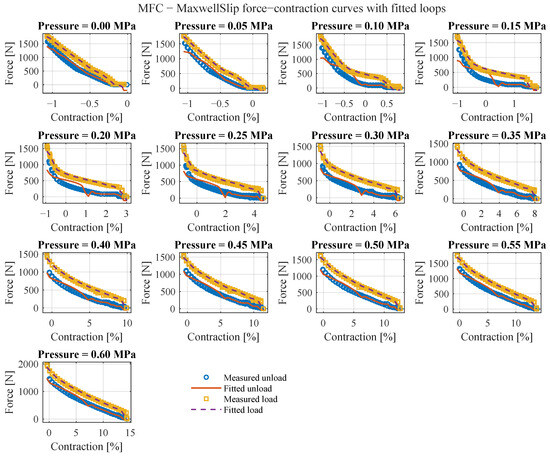
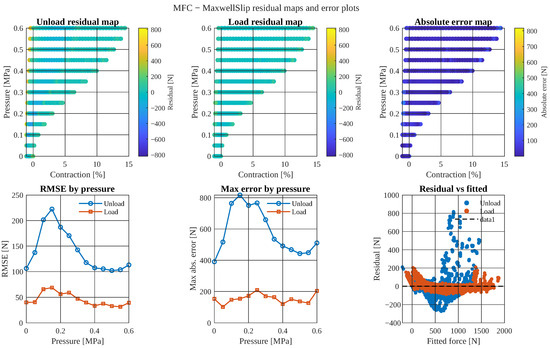
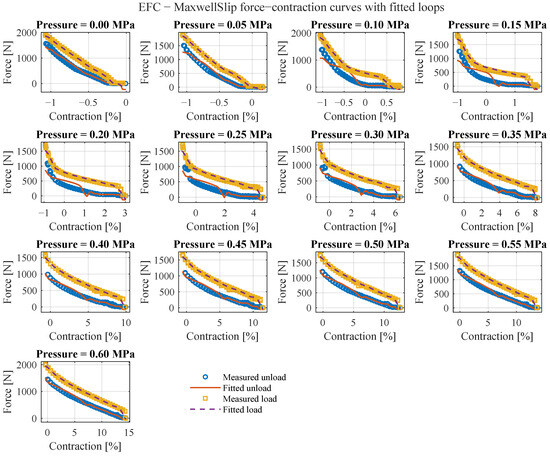
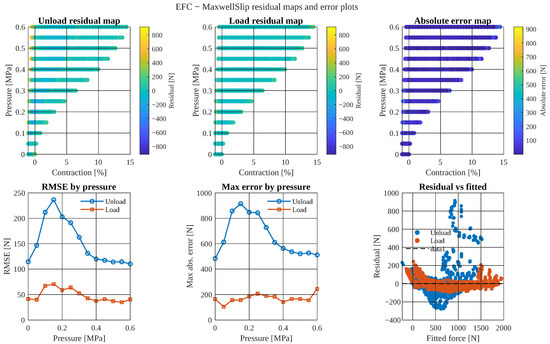
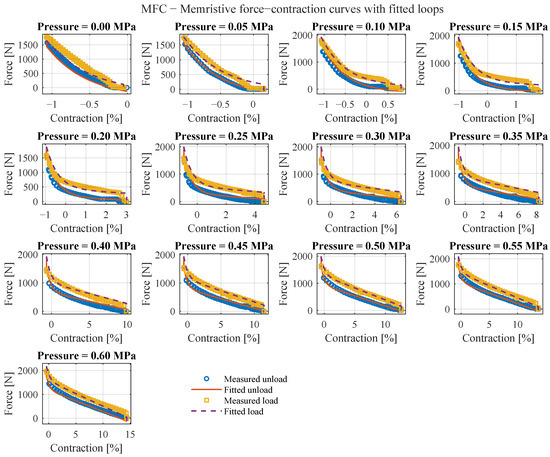
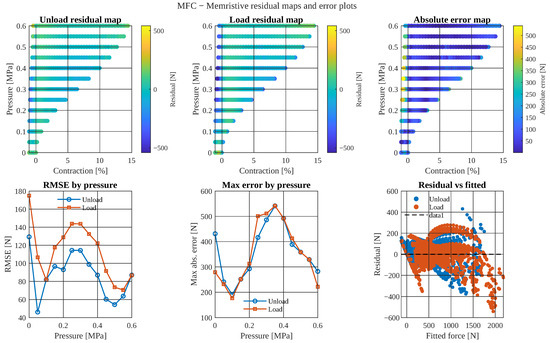
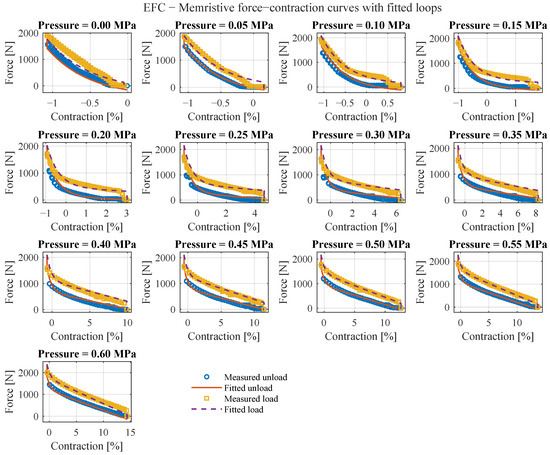
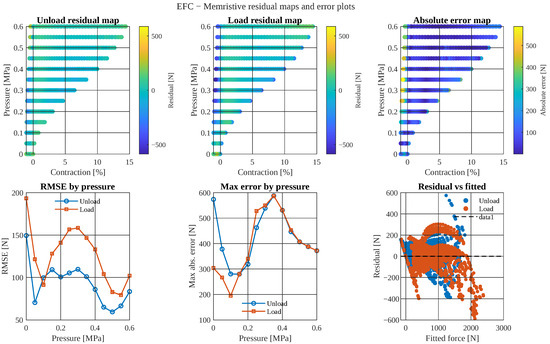
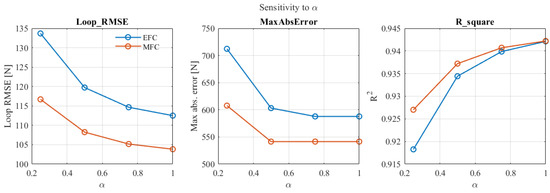
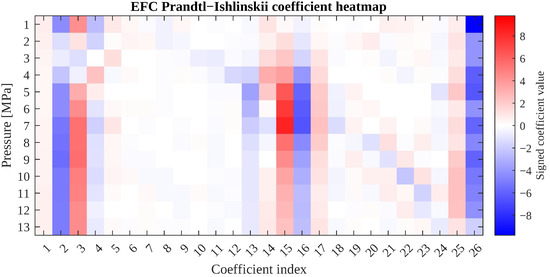
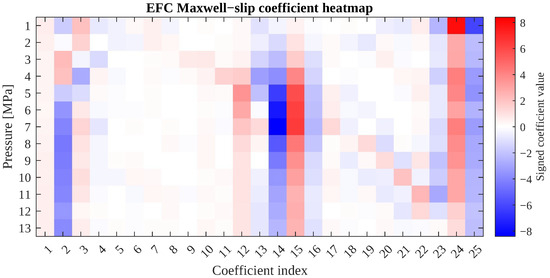
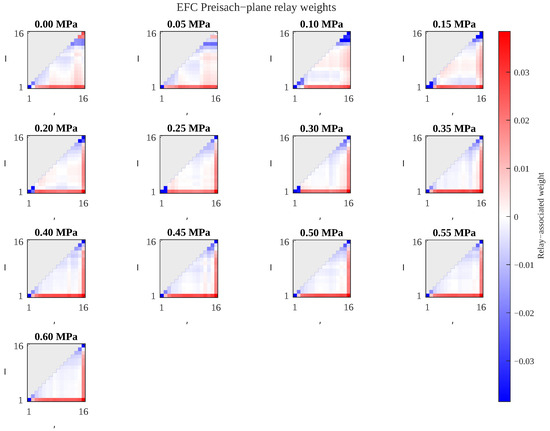
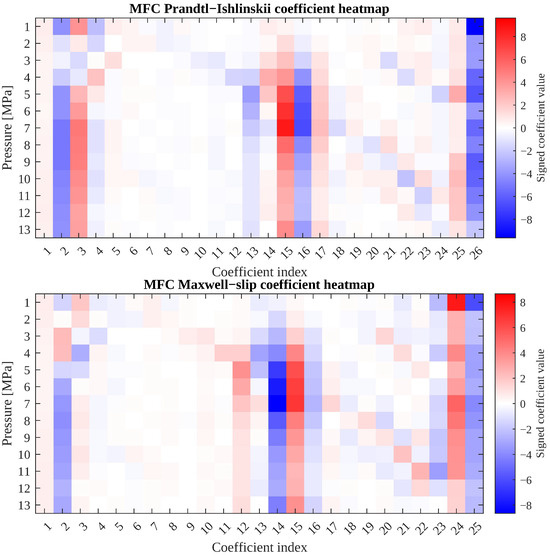
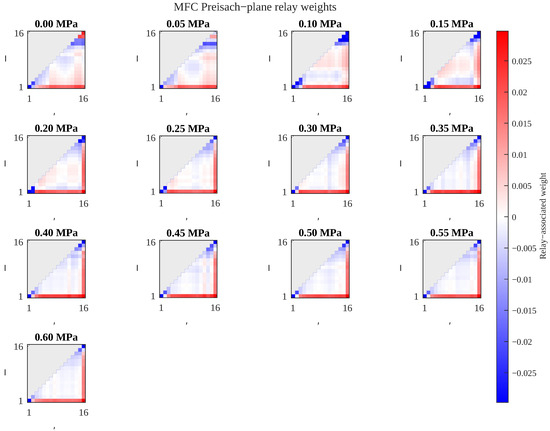
Pneumatic artificial muscles exhibit pronounced hysteresis in the force-contraction domain, which complicates accurate force modeling under pressure-dependent operation. This work presents a discrete-time quasi-static hysteresis model for a compact pneumatic artificial muscle using a memristive system-based branch-memory formulation. The model combines separate loading and unloading force surfaces through a bounded internal state and is evaluated on experimental data acquired at a force-change rate of . Measurements were performed at 13 pressure levels from 0 to 0.6 MPa in 0.05 MPa increments, with 32 unloading points and 32 loading points per pressure level and five repetitions for each operating condition. Representative branch curves were obtained by median reduction in the repeated measurements, and the loading and unloading surfaces were identified with the five-parameter Sárosi–Fabulya exponential-bilinear function. The state update parameter was evaluated over a fixed grid, and the best loop reconstruction on the present dataset was obtained for the hard-switching case . Benchmark comparisons with Prandtl–Ishlinskii, discrete Preisach, Maxwell-slip, and sampled Bouc–Wen-type models show that Preisach and Bouc–Wen provide higher loop-reconstruction accuracy. The proposed memristive formulation should not be interpreted as a best-fit benchmark model, but as a low-order global branch-memory representation that preserves pressure dependence and branch asymmetry within a single analytical framework over the investigated quasi-static operating range.
Full article
(This article belongs to the Special Issue Hardware Foundations of Embodied Artificial Intelligence: Actuators, Sensors, and Mechanical Design for Physical Intelligence and Robot Learning)
►▼
Show Figures

Figure 1
Open AccessArticle
Intelligent State-Constrained Control for Servo Valves via Neural Network-Based Real-Time Compensation
by
Jichun Chen, Xiaowei Yang, Jianyong Yao and Chuanjie Lu
Actuators 2026, 15(5), 256; https://doi.org/10.3390/act15050256 - 2 May 2026
Abstract
Rotary direct-drive servo valves (RDDSVs) have gained significant attention in high-performance electro-hydraulic servo systems due to their compact structure, rapid dynamic response, and high power density. However, improving the transient performance and steady-state accuracy of RDDSVs remains a challenge, primarily owing to inherent
[...] Read more.
Rotary direct-drive servo valves (RDDSVs) have gained significant attention in high-performance electro-hydraulic servo systems due to their compact structure, rapid dynamic response, and high power density. However, improving the transient performance and steady-state accuracy of RDDSVs remains a challenge, primarily owing to inherent strong nonlinearities and disturbances characterized by high-frequency fluctuations and unmodeled uncertainties. To address these issues, this paper proposes an intelligent state-constrained control strategy with neural network-based real-time compensation for RDDSVs. Specifically, a nonlinear constraint function is introduced to directly restrict the range of state variables, thereby enhancing the system’s transient response. Subsequently, the universal approximation property of adaptive neural networks is exploited to estimate unmodeled disturbances, which significantly improves steady-state precision. Furthermore, nonlinear filtering technology is integrated to mitigate the computational burden on the controller while enhancing overall robustness. The stability of the closed-loop system is rigorously proven using Lyapunov theory. Finally, comparative simulations are carefully conducted to apply different control algorithms. The results validate the effectiveness and superiority of the proposed control algorithm.
Full article
(This article belongs to the Special Issue High-Performance Control of Electromechanical Servo Systems Based on Motor/Hydraulic Actuators—2nd Edition)
Open AccessArticle
A Comprehensive Evaluation Method for the Medium- and Low-Speed Maglev Trains Suspension System Based on Gaussian Mixture Model
by
Mengcheng Li, Xingyu Zhou and Xiaolong Li
Actuators 2026, 15(5), 255; https://doi.org/10.3390/act15050255 - 1 May 2026
Abstract
Maglev trains, as an emerging transportation modality, have attracted significant attention with respect to their safety and ride comfort. In this study, the improved R index and τ-distance index are incorporated into the evaluation framework, and a data-driven comprehensive evaluation method for
[...] Read more.
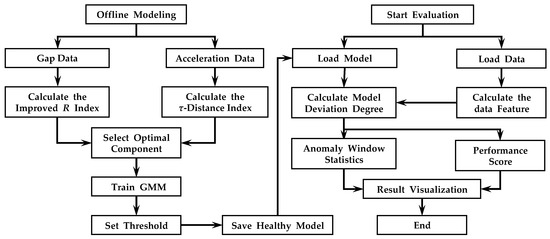
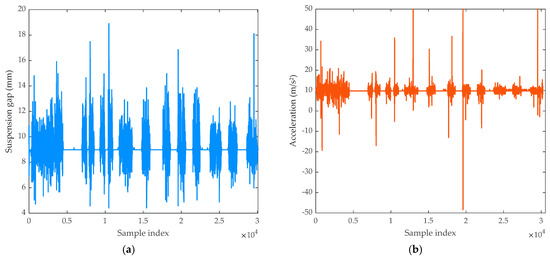
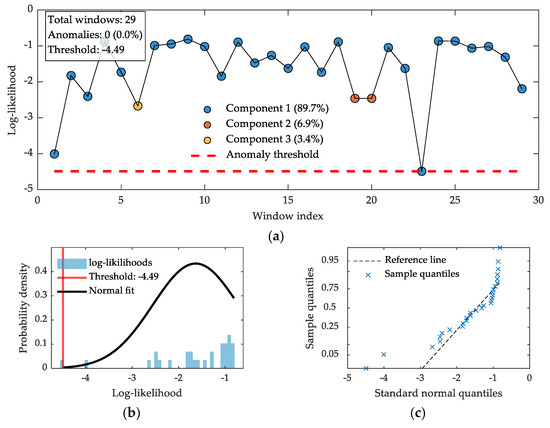
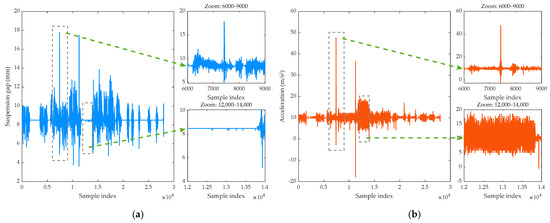
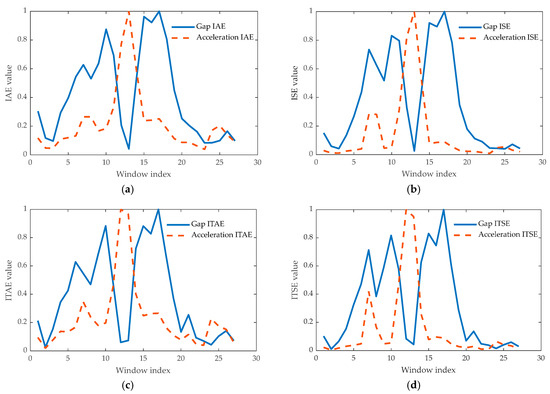
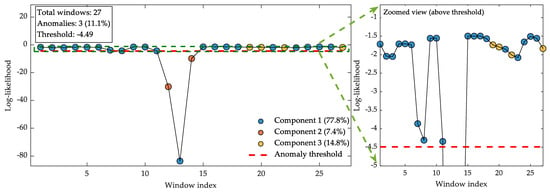
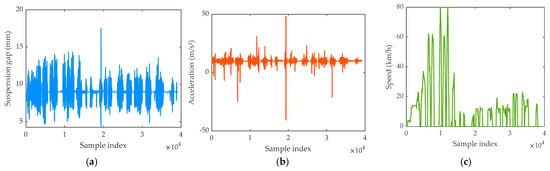
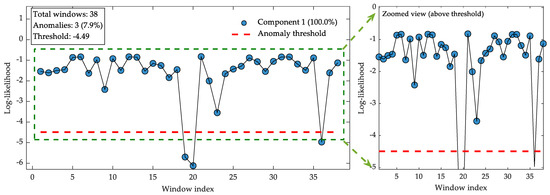
Maglev trains, as an emerging transportation modality, have attracted significant attention with respect to their safety and ride comfort. In this study, the improved R index and τ-distance index are incorporated into the evaluation framework, and a data-driven comprehensive evaluation method for the suspension system of medium- and low-speed maglev trains is developed based on a Gaussian mixture model, enabling a comprehensive assessment of suspension gap stability and operational smoothness. Experimental results demonstrate that the proposed method can accurately identify various motion modes of the suspension system and provide effective early warnings of abnormal operational states. Compared with conventional error integral performance indices, this method exhibits superior anomaly detection sensitivity and enhanced interpretability of the results. Computational efficiency analysis indicates that the proposed method meets the requirements for online real-time monitoring. Under different operating conditions, the GMM trained on normal operational data maintains stable evaluation performance, demonstrating favorable robustness.
Full article
(This article belongs to the Section Control Systems)
►▼
Show Figures

Figure 1
Open AccessArticle
Generalized High-Order LADRC Tracking Control for VICTS Hollow Annular Direct-Drive Motor Considering Non-Stationary Disturbances
by
Xinlu Yu, Jiacheng Lu, Ping Gao, Pingfa Feng and Lin Jia
Actuators 2026, 15(5), 254; https://doi.org/10.3390/act15050254 - 1 May 2026
Abstract
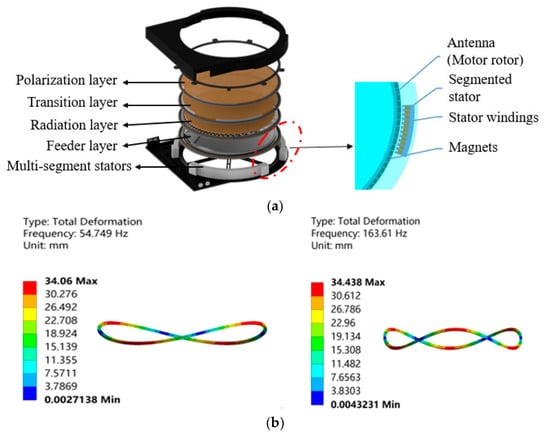
This paper proposes a generalized high-order linear active disturbance rejection control (GHO-LADRC) method to suppress non-stationary disturbances in VICTS antenna direct-drive motors during high-dynamic scanning. First, a fourth-order generalized extended state observer is constructed, in which the derivative of the total disturbance is
[...] Read more.
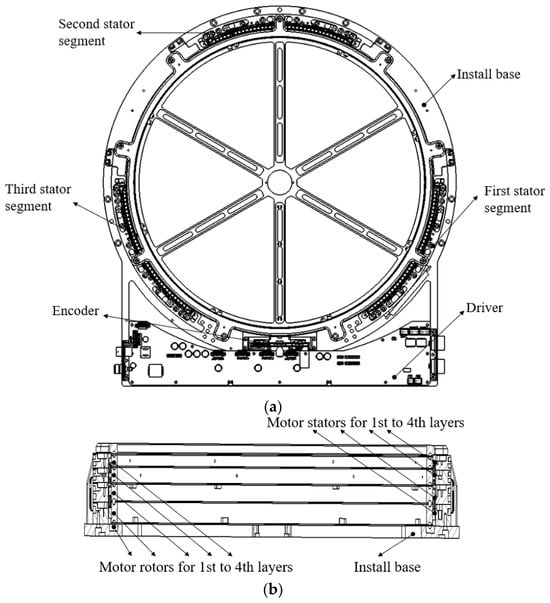
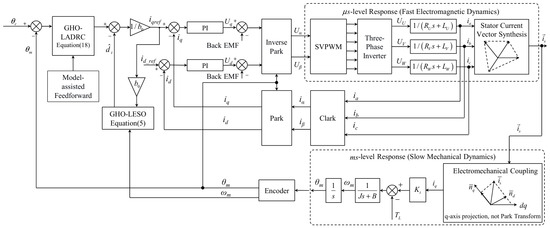
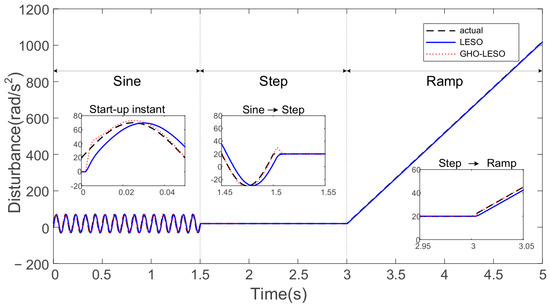
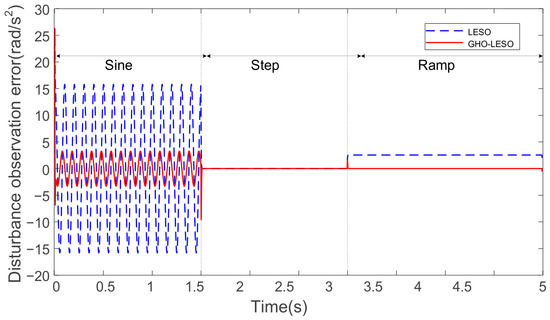
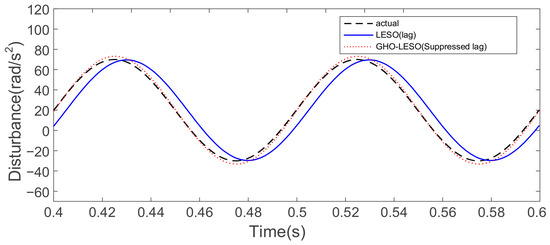
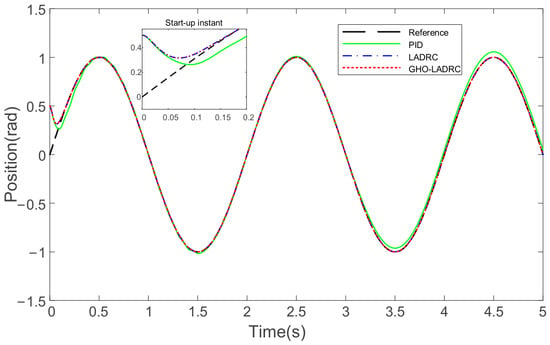
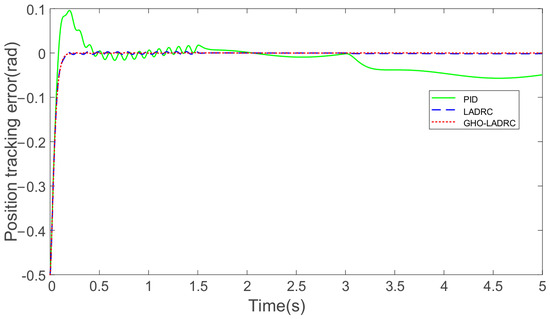
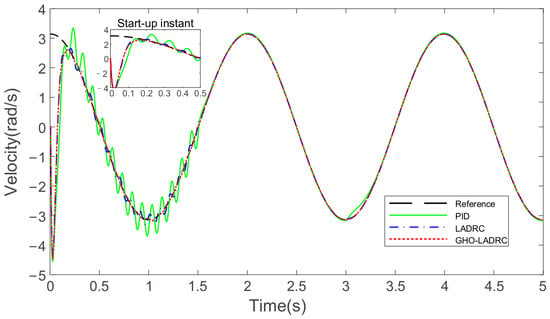
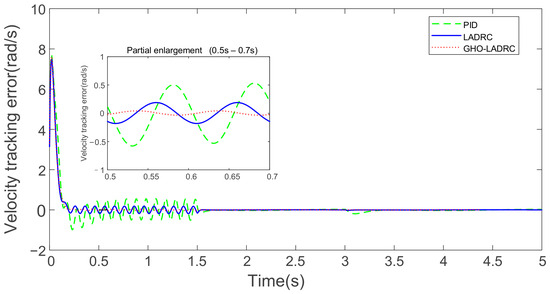
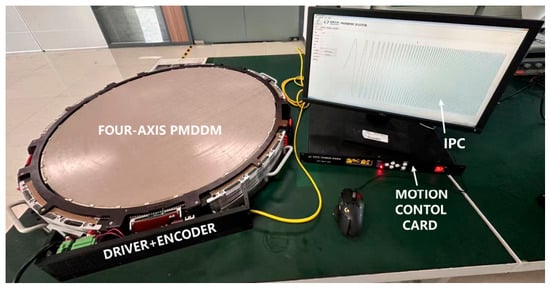
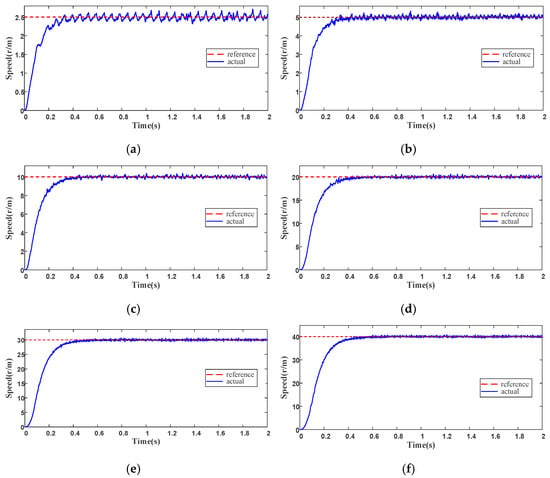
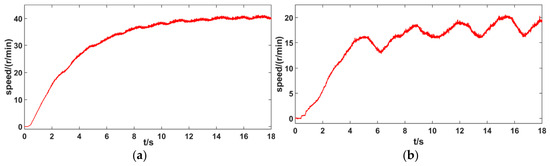
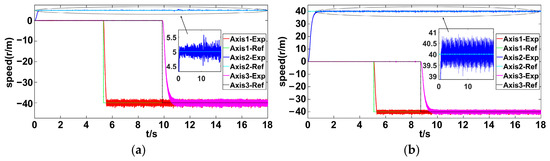
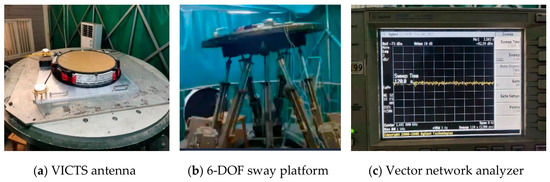
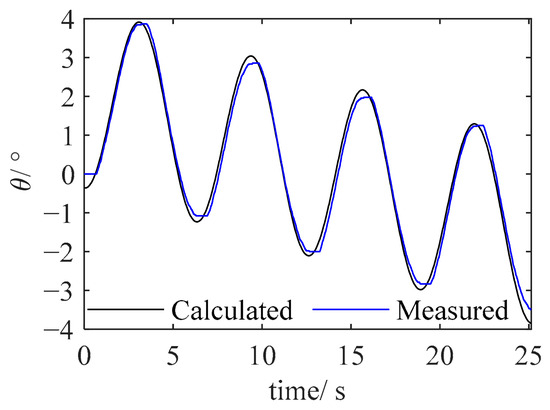
This paper proposes a generalized high-order linear active disturbance rejection control (GHO-LADRC) method to suppress non-stationary disturbances in VICTS antenna direct-drive motors during high-dynamic scanning. First, a fourth-order generalized extended state observer is constructed, in which the derivative of the total disturbance is explicitly modeled as an extended state. This configuration enables real-time observation of the disturbance rate of change and suppresses the phase lag inherent in traditional ADRC during rapid disturbance variations through disturbance feedforward compensation. Secondly, drawing on singular perturbation theory and the motor’s dual-time-scale characteristics, this work precisely decouples and explicitly extracts the nonlinear friction and electromagnetic damping terms during the modeling stage. By integrating the extracted electromagnetic damping terms and the disturbance variation rate, an improved model-assisted control law is formulated, enabling active compensation for intense dynamic interference. Theoretical analysis and experimental results demonstrate that the proposed method significantly enhances disturbance rejection capability and satellite communication accuracy. As the first application of GHO-LADRC in the field of direct-drive VICTS antenna control, this work validates its effectiveness in improving system robustness within complex dynamic environments.
Full article
(This article belongs to the Section Aerospace Actuators)
►▼
Show Figures

Figure 1
Journal Menu
► ▼ Journal Menu-
- Actuators Home
- Aims & Scope
- Editorial Board
- Reviewer Board
- Topical Advisory Panel
- Instructions for Authors
- Special Issues
- Topics
- Sections
- Article Processing Charge
- Indexing & Archiving
- Editor’s Choice Articles
- Most Cited & Viewed
- Journal Statistics
- Journal History
- Journal Awards
- Conferences
- Editorial Office
Journal Browser
► ▼ Journal BrowserHighly Accessed Articles
Latest Books
E-Mail Alert
News
Topics
Topic in
Actuators, Algorithms, BDCC, Future Internet, JMMP, Machines, Robotics, Systems
Smart Product Design and Manufacturing on Industrial Internet
Topic Editors: Pingyu Jiang, Jihong Liu, Ying Liu, Jihong YanDeadline: 30 June 2026
Topic in
Actuators, Gels, JFB, Polymers, MCA, Materials
Recent Advances in Smart Soft Materials: From Theory to Practice
Topic Editors: Lorenzo Bonetti, Giulia Scalet, Silvia Farè, Nicola FerroDeadline: 31 December 2026
Topic in
Actuators, Automation, Electronics, Machines, Robotics, Eng, Technologies
New Trends in Robotics: Automation and Autonomous Systems
Topic Editors: Maki Habib, Fusaomi NagataDeadline: 31 January 2027
Topic in
Machines, Actuators, Applied Sciences
Intelligent Mechatronics System Modeling, Control and Evaluation
Topic Editors: Hongyu Zheng, Yong LiDeadline: 31 May 2027
Conferences
Special Issues
Special Issue in
Actuators
Human-Centered Actuation: Algorithms, Design, and Robotic Applications
Guest Editors: Wojciech Wolanśki, Andrzej BurghardtDeadline: 20 May 2026
Special Issue in
Actuators
Magnetic Levitation and Actuator Integration: From Fundamental Research to Emerging Applications
Guest Editors: Junqi Xu, Zhiqiang Long, Jin Zhou, Feng Sun, Chunfa Zhao, Yougang SunDeadline: 30 May 2026
Special Issue in
Actuators
Advances in Piezoelectric Actuators and Materials
Guest Editors: Dalius Mažeika, Piotr Vasiljev, Andrius ČeponisDeadline: 31 May 2026
Special Issue in
Actuators
Dynamics and Design of Aerospace Actuators
Guest Editors: Mohammad H. Sadraey, Musavir BashirDeadline: 31 May 2026