Skip to Content

Nanomaterials

Nanomaterials is an international, interdisciplinary, peer-reviewed, open access journal published semimonthly online by MDPI, and that publishes reviews, regular research papers, communications, and short notes that are relevant to any field of study that involves nanomaterials with respect to their science and applications. The Spanish Carbon Group (GEC) and The Chinese Society of Micro-Nano Technology (CSMNT) are affiliated with Nanomaterials and their members receive discounts on the article processing charges.
  • Open Access— free for readers, with article processing charges (APC) paid by authors or their institutions.
  • High Visibility: indexed within Scopus, SCIE (Web of Science), PubMed, PMC, CAPlus / SciFinder, Inspec, and other databases.
  • Journal Rank: JCR - Q2 (Physics, Applied) / CiteScore - Q1 (General Chemical Engineering )
  • Rapid Publication: manuscripts are peer-reviewed and a first decision is provided to authors approximately 12.5 days after submission; acceptance to publication is undertaken in 2.7 days (median values for papers published in this journal in the first half of 2026).
  • Recognition of Reviewers: Reviewers whose reports are timely and of high quality receive an APC discount voucher for a future publication in an MDPI journal. Become a reviewer.
  • Companion journals for Nanomaterials include: Nanomanufacturing and Applied Nano.

Get Alerted

Add your email address to receive forthcoming issues of this journal.

All Articles (22,680)

The diffusion characteristics of CH4 and CO2 in micro–nanopores of shale gas reservoirs exert a significant impact on the production performance of supercritical CO2-enhanced shale gas recovery. High-temperature and high-pressure experimental investigations on shale gas diffusion are still relatively limited compared with abundant laboratory studies under conventional conditions. To investigate the diffusion kinetic behavior of CH4 and CO2 in shale micro–nanopores under high-temperature and high-pressure conditions, a series of isobaric diffusion experiments across variable pressure and temperature conditions were performed on marine shale samples from the Longmaxi Formation in the Sichuan Basin, China. A diffusion coefficient model that incorporates both bulk diffusion and surface diffusion mechanisms was adopted to fit the experimental data, and the influences of shale pore size, temperature, and pressure on the diffusion behaviors of CH4 and CO2 in shale reservoirs were systematically analyzed. The results indicate the following: (1) Under identical high-temperature and high-pressure conditions, the diffusion coefficient of CH4 in shale nanopores is larger than that of CO2. (2) The diffusion coefficients of CH4 and CO2 exhibit a positive correlation with temperature and a negative correlation with pressure. (3) Under the coupled influence of temperature and pressure, the diffusion coefficients of CH4 and CO2 generally exhibit a decreasing trend as both temperature and pressure increase simultaneously. (4) The pore size distribution of shale samples has a significant effect on the diffusion characteristics of both gases. The larger the overall pore size of the shale, the greater the diffusion coefficients of CH4 and CO2 under identical temperature and pressure conditions. The research findings provide valuable insights for the dynamic prediction of supercritical CO2 enhanced shale gas recovery.

Nanomaterials

17 September 2026
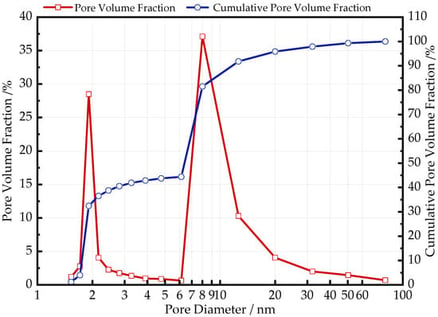
Pore size distribution of the shale sample obtained by combining MIP and LTNA.

With advancements in space exploration, the extreme conditions of space—such as ionizing radiation, temperature gradients, and micrometeoroid impacts—pose significant challenges to the operational stability and longevity of space-based detection systems. Therefore, the development of detectors with enhanced resilience and reliability has become imperative. Recent advancements in synthetic diamond detectors fabricated through chemical vapor deposition (CVD) have demonstrated high radiation tolerance, favorable thermal stability, and reliable radiation-detection performance. These attributes position diamond detectors as promising candidates for space radiation monitoring applications. This study systematically analyzed the physical properties, fabrication methodologies, radiation detection principles, and prospective applications of diamond detectors within the context of space environments, highlighting their advantages in comparison to conventional detection technologies.

Nanomaterials

17 September 2026

X-ray white beam topography of high-purity single crystal diamond, slightly nitrogen-doped single crystal diamond, and reference sample [34]: (a) high-purity monocrystalline diamond, (b) slightly nitrogen-doped monocrystalline diamond, (c) reference sample. Adapted with permission from Ref. [34]. Copyright 2020, the copyright owner.

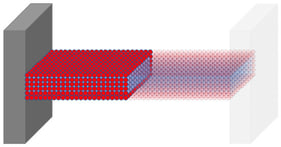
The quality factor is a key metric for evaluating the performance of micro-electro-mechanical and nano-electro-mechanical system resonators. Although reducing device dimensions enhances resonator sensitivity, it also intensifies energy dissipation, thereby degrading the quality factor. Among the dominant dissipation mechanisms in micro-/nano-resonators, support loss is strongly influenced by surface effects at small scales, particularly the surface elastic modulus and initial surface stress. In this study, support loss in a double-clamped micro-/nano-beam resonator with surface effects incorporated is investigated. A dynamic model incorporating the surface elastic modulus and initial surface stress is developed based on Euler–Bernoulli beam theory and Gurtin–Murdoch surface elasticity theory. A quality-factor calculation method is then established by combining elastic wave radiation in the supports with an energy-based formulation. The theoretical predictions are validated using a three-dimensional finite element model comprising the resonator with a surface layer, supports, and a perfectly matched layer. Further, the effects of the surface elastic modulus, initial surface stress, characteristic size, and dimensionless geometric parameters on support loss are examined. The results show that the surface elastic modulus and initial surface stress increase support loss and reduce the quality factor, with the initial surface stress exhibiting the stronger influence. The influence of these parameters becomes more pronounced as the characteristic size decreases, and variations in the length-to-thickness and width-to-thickness ratios further modify their contribution to support loss. Mechanistically, surface effects alter the effective bending stiffness and axial force, thereby changing the dynamic loads transmitted to the supports and resulting elastic-wave radiation. These findings provide theoretical insights for the design of high-quality-factor micro-/nano-devices.

Nanomaterials

17 September 2026

Schematic of the molecular composition of a micro-/nanoscale resonator (the red region indicates the surface-layer molecules).

The rapid development of electric vehicles, portable electronics, and renewable energy storage has stimulated the demand for Lithium-Ion Batteries (LIBs) with higher energy density, better rate capabilities, enhanced cycling stability, improved safety, and fast-charging capabilities. Nanomaterials have emerged as an effective approach to address the limitations of traditional LIB components owing to their high surface area, shortened ion diffusion pathways, adjustable structures, and improved electrochemical performance. This review critically evaluates recent developments in nanomaterials for LIBs, focusing on their applications in anodes, cathodes, and electrolytes. Anodes including silicon, carbon-based nanomaterials, transition-metal oxides, binary metal oxides (BMOs), and binary transition-metal oxides (BTMOs) are discussed in terms of capacity, reaction kinetics, and structural stability. Nanostructured cathodes, including lithium iron phosphate, nickel–manganese–cobalt oxides, transition-metal sulfides, and zinc–manganese oxides, are evaluated with respect to lithium-ion transport, rate capability, capacity retention, and structural stability. Nanomaterial-modified liquid and solid-state electrolytes are further examined. Moreover, this review discusses also the challenges that accompany the use of nanomaterials. Consequently, future research should prioritize the need to overcome the challenges to translating nanoscale materials advances into safe, durable, high-performance, and commercially viable next-generation LIBs.

Nanomaterials

17 September 2026

A typical schematic of a LIB. Data from Ref. [15].

Highly Accessed Articles

News & Conferences

Latest Issues

Open for Submission

Journal Sections

Advanced Nanomaterials and Energetic Application
Reprint

Advanced Nanomaterials and Energetic Application

Experiment and Simulation
Editors: Weiqiang Pang, Djalal Trache, Kaili Zhang
XFacebookLinkedIn
Nanomaterials - ISSN 2079-4991