
Skip to Content
  • 3.8
    Impact Factor
  • 5.8
    CiteScore
  • 21 days
    Submission to First Decision
  • 4 days
    Acceptance to Publication

Colloids and Interfaces

Colloids and Interfaces is an international, peer-reviewed, open access journal on colloids and interfaces chemistry published bimonthly online by MDPI.
  • Open Access— free for readers, no limits on space and color.
  • High Visibility: indexed within Scopus, ESCI (Web of Science), CAPlus / SciFinder, Inspec, and other databases.
  • Journal Rank: JCR - Q2 (Chemistry, Physical) / CiteScore - Q2 (Chemistry (miscellaneous)).
  • Rapid Publication: manuscripts are peer-reviewed and a first decision is provided to authors approximately 20.4 days after submission; acceptance to publication is undertaken in 3.7 days (median values for papers published in this journal in the first half of 2026).
  • Recognition of Reviewers: Reviewers whose reports are timely and of high quality receive an APC discount voucher for a future publication in an MDPI journal. Become a reviewer.

Get Alerted

Add your email address to receive forthcoming issues of this journal.

All Articles (665)

  • Article
  • Open Access

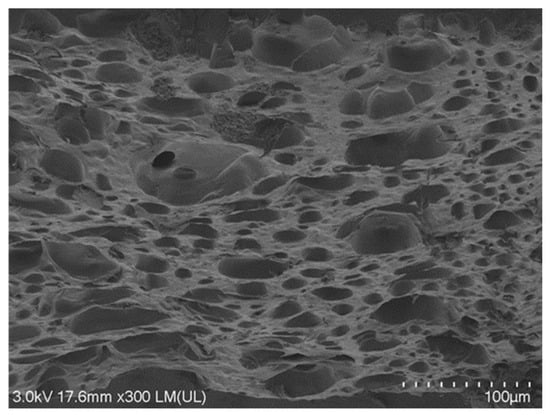
Traditional single-network hydrogels suffer from unbalanced mechanical and self-healing properties, limited multifunctionality and poor environmental adaptability, severely restricting their applications in flexible wearable sensors. Herein, a multifunctional hydrogel with a semi-interpenetrating network was fabricated via a synergistic multi-crosslinking strategy. The interpenetrating network contains three functional systems: the primary crosslinked network was formed by electrostatic interaction between poly(acrylic acid) (PAA) and cationized guar gum (QGG), a dynamic physical network was constructed by carboxymethyl chitosan (CMCS), and a reinforced reversible crosslinking network was regulated by AlCl3 and naringenin. L-proline was introduced to endow the hydrogel with anti-freezing performance. The reversible imine bonds generated by the Schiff-base reaction between naringenin and carboxymethyl chitosan further enhanced the network dynamic reversibility. The optimized hydrogel exhibited a uniform three-dimensional porous structure that facilitates ion transport and structural deformation. It achieved a tensile strength of 129.3 kPa, a 15 h self-healing efficiency of 98.4%, and reliable adhesion to diverse substrates. With excellent conductivity and sensitive strain sensing capability, the developed hydrogel holds great promise for flexible wearable sensing devices.

Colloids Interfaces

25 November 2026

Cross-sectional morphology of PAA/CMCS/QGG hydrogel.
  • Review
  • Open Access

Solid Particles in Foam Stabilization: Principles, Formulations, and Application Perspectives

  • Fariza Amankeldi,
  • Miras Issakhov and
  • Reinhard Miller
  • + 2 authors

Foams play a crucial role in various industries such as food, cosmetics, pharmaceuticals, and oil recovery, where their stability significantly impacts functionality. There has been growing interest in using solid particles for foam stabilization, primarily due to their advantages over traditional surfactants. Unlike surfactant-stabilized foams, particle-stabilized foams show enhanced stability due to the strong adsorption energy of particles at the air–liquid interface. Different factors influence the effectiveness of solid particles as foam stabilizers, including particle size, shape, wettability, surface energy, and their arrangement during film drainage. Also, recent works highlight the role of particles as stabilizers in forming robust interfacial layers to significantly increase foam stability under diverse environmental conditions. Several studies have established different stabilization mechanisms by comparing the performance of surfactants, polymers, and solid particles in foam formation and stability. A critical analysis of the mechanisms of particle-stabilized foams and their potential applications is discussed, and future research directions for optimizing foam properties in various industries are proposed.

Colloids Interfaces

19 November 2026

  • Article
  • Open Access

Anthocyanin-Loaded Silk Fibroin Films for Visual Detection of Volatile Bases

  • Nejra Omerović,
  • Marija Kostić and
  • Jaroslav Katona
  • + 2 authors

The reliability of conventional food labeling is often limited, as storage conditions during distribution cannot always be controlled, creating a need for intelligent packaging systems capable of providing real-time information on product quality. Among these, pH-responsive colorimetric indicators have attracted increasing attention, particularly those based on natural pigments such as anthocyanins, due to their biocompatibility, safety, and pronounced color changes over a wide pH range. Red cabbage extract (RCE), rich in anthocyanins, represents a promising, low-cost natural indicator, while silk fibroin (SF), a biodegradable and biocompatible protein, offers a suitable matrix for sustainable packaging materials. In this study, SF-based films incorporating water-extracted RCE were developed as pH-sensitive indicators, with polyethylene glycol 200 added as a plasticizer to enhance film performance. The films were characterized in terms of morphology, chemical and thermal properties, and colorimetric response to ammonia vapors and changes in the headspace atmosphere during chicken meat storage. The plasticized film exhibited improved structural uniformity and a more pronounced and rapid color response. Furthermore, during chicken meat storage, the film demonstrated a clear visual response that correlated with ammonia concentration in the headspace. These findings indicate that plasticized films have potential as environmentally friendly, on-package colorimetric indicators responsive to ammonia.

Colloids Interfaces

18 November 2026

Featured Articles of Last Quarter

Highly Accessed Articles

News & Conferences

Latest Issues

Open for Submission

Journal Sections

XFacebookLinkedIn
Colloids Interfaces - ISSN 2504-5377