
Skip to Content
  • Indexed in
    Scopus
  • 34 days
    Submission to First Decision
  • 3 days
    Acceptance to Publication

Challenges — Journal of Planetary Health

Challenges — Journal of Planetary Health is a transdisciplinary, peer-reviewed, open access journal focused on planetary health and the interconnected Grand Challenges affecting human wellbeing and flourishing of all life on Earth. Published quarterly online by MDPI, it accelerates cross-sectoral solutions for sustainable, just, and regenerative futures by integrating insights from the natural, social and health sciences, and the humanities. The journal welcomes contributions that address the social, economic, political, and spiritual dimensions of global challenges, as well as biophysical threats to planetary boundaries. The Nova Network is affiliated with Challenges — Journal of Planetary Health, and the journal supports the global agenda of the Planetary Health Alliance (PHA).

Get Alerted

Add your email address to receive forthcoming issues of this journal.

All Articles (566)

  • Viewpoint
  • Open Access

The optimistic approach to science and progress that is associated with positivism is questioned as we face up to the environmental consequences of an industrial civilization that compromises the sustainable basis of our continued survival. As planetary boundaries are crossed and our opportunities to continue our current consumerist lifestyles are diminished, we have to face the systemic risk of civilizational collapse. Building resilience against systemic risk means that we need to stop privatizing gains and socializing risks and as communities we need to start taking accountability for the declining planetary health that is caused by the prevailing economic systems. This requires ‘deep adaptation’, and in this paper, it is explained what this means for the sciences. Knowledge development should be useful in the context of a simpler society that is in direct interaction with its environment, rather than for the development of new technology that necessitates an industrial civilization to maintain it. The relevance of research should be guided by the question whether the research benefits Indigenous communities that are currently living on the margins of industrialized society as an approximation of how people will survive after the potential collapse of industrial supply chains. An overview over current research programs suggests that we should prioritize research fields such as low-energy technology, sustainable agriculture, holistic healthcare, biodiversity and medicine, ecosystem services and management, psychology for human well-being and cognitive development, and sociology of collaboration and institution-building.

Challenges

31 October 2026
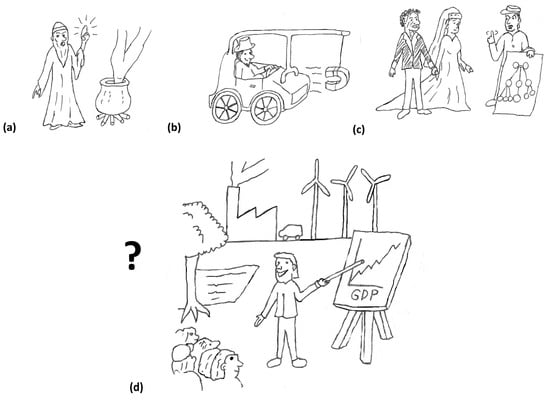
Three episodes in the history of science where a large number of people within the scientific community got caught up in a research paradigm that was based on misguided or wishful thinking: (a) the philosopher’s stone, (b) the perpetuum mobile, (c) eugenics. The question is whether the sustainable industrial civilization is going to be a viable research paradigm in the long term (d).
  • Editorial
  • Open Access

Climate usually brings to mind air, temperature, and precipitation [...]

Challenges

23 October 2026

  • Review
  • Open Access

Although South Africa has achieved near-universal grid electrification, many connected households experience inadequate, unreliable, and unaffordable energy. This review asks why energy poverty persists despite improved access, a question at the intersection of social inequality, human health, and environmental sustainability, the core concerns of planetary health. Drawing on 143 sources (peer-reviewed studies, reports, and theses) from a structured search of Scopus and Google Scholar (1994–2026) and citation tracking, the review examines conceptual foundations, drivers, and disparities of household energy poverty by income, gender, location, and province; its associations with welfare, health, education, livelihoods, and the environment; and South Africa’s policy responses. Building on South African reviews that addressed measurement within the Just Energy Transition or focused on rural households, it makes three contributions: it covers urban, peri-urban, informal, and rural settings; it proposes a conceptual framework linking structural drivers, household energy conditions, well-being and environmental outcomes, and policy responses through multidimensional energy poverty, energy justice, and planetary health; and it appraises where the evidence is consistent, mixed, or limited. Evidence of the persistence and unequal distribution of energy poverty after connection is consistent, whereas evidence of its consequences is weaker. Energy transitions are not driven by electrification or decarbonization alone but by household energy well-being: whether households can obtain adequate, affordable, reliable, and safe energy that supports health and livelihoods while reducing environmental harm. Limitations include purposive source selection and mostly cross-sectional evidence; most reported relationships should therefore be read as associations rather than demonstrated causal effects.

Challenges

20 October 2026

  • Article
  • Open Access

Malnutrition in Nepal’s Eastern Terai is shaped by food access, caregiving, water and sanitation, agricultural livelihoods, and local institutions. This mixed-methods evaluation describes the implementation patterns and endline nutrition, WASH, and food-system practices of an integrated Nutrition Education and Rehabilitation Program (NERP) and Linking Agriculture and Natural Resource Management towards Nutrition (LANN+) programme implemented in Karjanha, Kalyanpur, and Siraha municipalities from 2021 to 2024. The final evaluation included a household survey of 365 participating households, six focus group discussions with 69 participants, 19 key informant interviews, document review, and a partner reflection workshop. Because endline households were selected sequentially from accessible participating households until municipality/community quotas were met, municipality comparisons are presented descriptively rather than as population-level statistical inference. Project-supported community screening conducted by health-facility staff used MUAC and weight-for-height criteria for children aged 6–59 months. The Phase II evaluation source records reported a GAM prevalence of 20.0% at the initial project screening and 8.38% (1038/12,392 screening records) at the final screening; because the initial numerator/denominator, individual anthropometric records, exact screening coverage, and seasonal comparability were not available for secondary verification, these values are not interpreted as a verified longitudinal reduction. At endline, MDD-W was 79.3% (242/305), and the project-defined SIFS criterion was met by 92.7% (294/317) and the project-defined hygiene criterion by 95.6% (349/365). After correcting age-inconsistent breastfeeding records, a breastfeeding-related project criterion was met by 84.5% (125/148) of households with children aged 0–59 months; a corrected complementary-feeding criterion was met by 73.8% (104/141) of households with children aged 6–59 months. The qualitative findings indicated that nutrition gardens, diversified production, nutrition learning, women’s economic participation, and municipal planning were perceived as mutually reinforcing, while COVID-19 disruptions, procurement delays, seasonal water constraints, and weak routine water treatment constrained implementation. This study provides descriptive implementation evidence; climate resilience and planetary-health benefits remain plausible pathways rather than directly measured outcomes.

Challenges

16 October 2026

Highly Accessed Articles

News & Conferences

Latest Issues

Open for Submission

Journal Sections

XFacebookLinkedIn
Challenges - ISSN 2078-1547