Special Issue "Poultry Feeding and Gut Health"

A special issue of Animals (ISSN 2076-2615). This special issue belongs to the section "Poultry".

Deadline for manuscript submissions: 31 December 2021.

Special Issue Editors

Dr. Paweł Konieczka
E-Mail
Guest Editor
Department of Poultry Science, University of Warmia and Mazury, Oczapowskiego 5, 10-718 Olsztyn, Poland
Dr. Dorota Bederska-Łojewska
E-Mail
Co-Guest Editor
Department of Animal Nutrition and Feed Science, National Research Institute of Animal Production, 32-083 Balice n. Kraków, Poland

Special Issue Information

Dear Collogues!

Advances in the genetic selection of birds supported via precise nutritional programs have been the main

drivers underlying the growth of the poultry sector in recent decades. However, a negative consequence of genetic selection performed to achieve faster growth rates, better feed utilization and higher product yield is compromised welfare, which is manifested in increased health abnormalities and gut-associated issues, decreased resistance against stress factors, and impaired metabolic features of the final product; these consequences represent the main concerns in poultry production. Therefore, effective means that can limit or prevent multiple types of infectious agents by targeting prevention methods to improve avian welfare and ensure consumer safety are urgently required.

This special issue seeking to publish original research papers, case studies, and review articles focusing on the latest advances in poultry nutrition toward strengthening the gut functional status.

Researchers are invited to submit papers investigated cross-talk between the feed ingredients and the host gut response with their further implication in mediation birds health.

Dr. Paweł Konieczka
Dr. Dorota Bederska-Łojewska
Guest Editors

Manuscript Submission Information

Manuscripts should be submitted online at www.mdpi.com by registering and logging in to this website. Once you are registered, click here to go to the submission form. Manuscripts can be submitted until the deadline. All papers will be peer-reviewed. Accepted papers will be published continuously in the journal (as soon as accepted) and will be listed together on the special issue website. Research articles, review articles as well as short communications are invited. For planned papers, a title and short abstract (about 100 words) can be sent to the Editorial Office for announcement on this website.

Submitted manuscripts should not have been published previously, nor be under consideration for publication elsewhere (except conference proceedings papers). All manuscripts are thoroughly refereed through a single-blind peer-review process. A guide for authors and other relevant information for submission of manuscripts is available on the Instructions for Authors page. Animals is an international peer-reviewed open access monthly journal published by MDPI.

Please visit the Instructions for Authors page before submitting a manuscript. The Article Processing Charge (APC) for publication in this open access journal is 1800 CHF (Swiss Francs). Submitted papers should be well formatted and use good English. Authors may use MDPI's English editing service prior to publication or during author revisions.

Keywords

  • poultry nutrition
  • gut health
  • feed additives
  • immunomodulation
  • meat quality
  • gut microbiota
  • enzymes, antimicrobe
  • antibiotic substitutes
  • prophylaxis

Published Papers (11 papers)

Order results
Result details
Select all
Export citation of selected articles as:

Research

Article
Increased Dietary Inclusion Levels of Lysine Are More Effective than Arginine in Supporting the Functional Status of the Gut in Growing Turkeys
Animals 2021, 11(8), 2351; https://doi.org/10.3390/ani11082351 - 09 Aug 2021
Viewed by 555
Abstract
Arginine (Arg) and lysine (Lys) may be important for the overall health of turkeys. The aim of this study was to determine whether low (consistent with the guidelines) and high (10% higher than recommended) levels of dietary Arg and Lys can modulate performance [...] Read more.
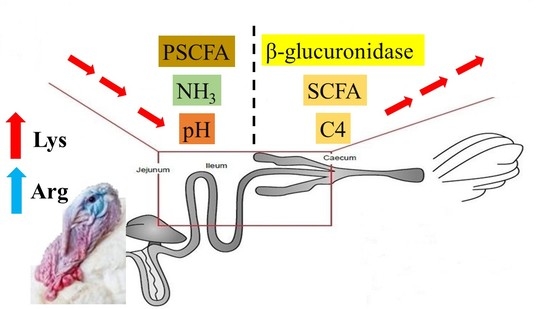
Arginine (Arg) and lysine (Lys) may be important for the overall health of turkeys. The aim of this study was to determine whether low (consistent with the guidelines) and high (10% higher than recommended) levels of dietary Arg and Lys can modulate performance and the functional status of the gut. Female turkeys were allocated to four dietary treatments (two levels of Lys (low or high) and two levels of Arg (low or high)) for a 16 wk feeding period. The treatments did not affect turkey performance determined separately for four feeding phases and for the entire 16 wk experiment (p > 0.05). They had no significant influence on carcass yield, meat characteristics or the associated traits either (p > 0.05). High-Lys diets contributed to a decrease in cecal pH, a significant increase in the concentrations of short-chain fatty acids (SCFA) and a decrease in the concentrations of putrefactive SCFA and ammonia in the cecum. High dietary levels of both amino acids significantly enhanced the activity of cecal microbiota evaluated based on extracellular enzyme activity. These findings indicate that the higher dietary level of Lys was more effective in modulating the physiological status of the gut in turkeys than Arg. Full article
(This article belongs to the Special Issue Poultry Feeding and Gut Health)
Show Figures

Graphical abstract

Article
Impact of Different Durations of Fasting on Intestinal Autophagy and Serum Metabolome in Broiler Chicken
Animals 2021, 11(8), 2183; https://doi.org/10.3390/ani11082183 - 23 Jul 2021
Viewed by 730
Abstract
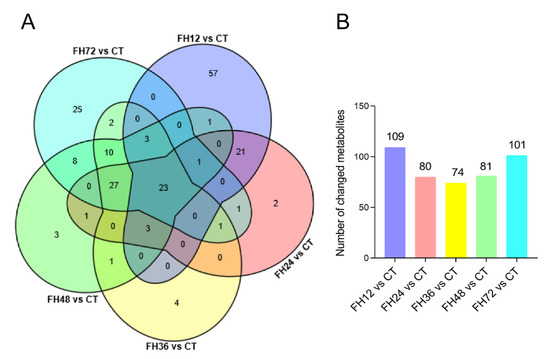
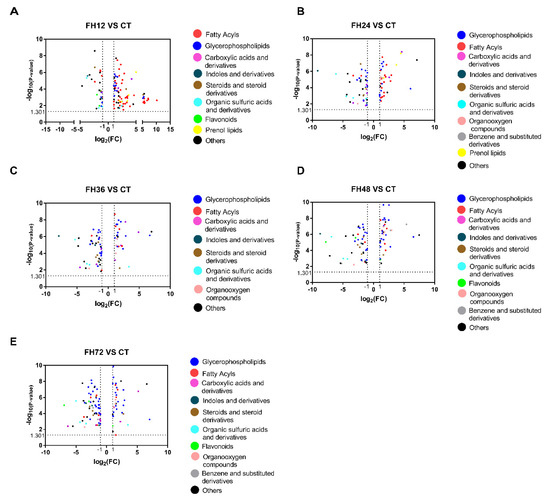
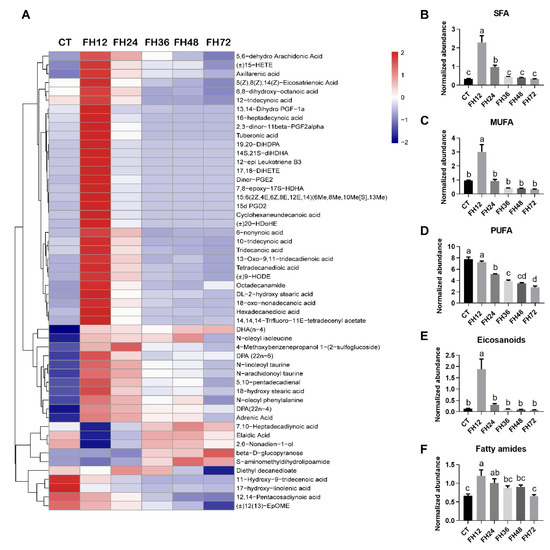
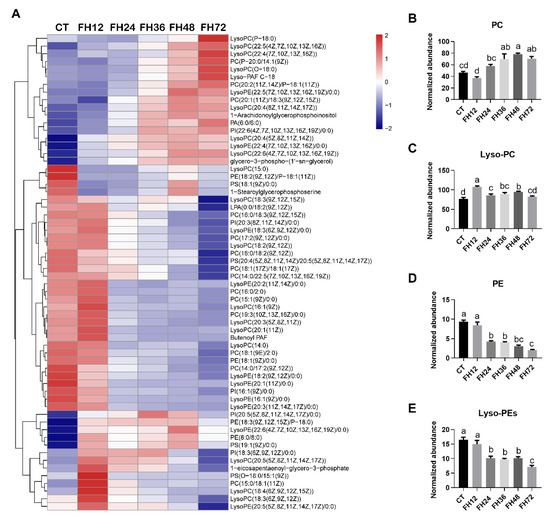
Fasting-induced autophagy in the intestine is beneficial for body health. This study was designed to explore the relationship between the host metabolism and intestinal autophagy. Broilers were randomly assigned into 48 cages. At 0 (CT), 12 (FH12), 24 (FH24), 36 (FH36), 48(FH48), and [...] Read more.
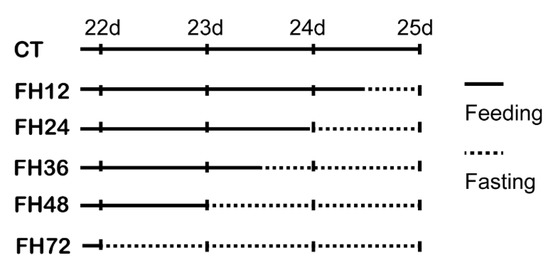
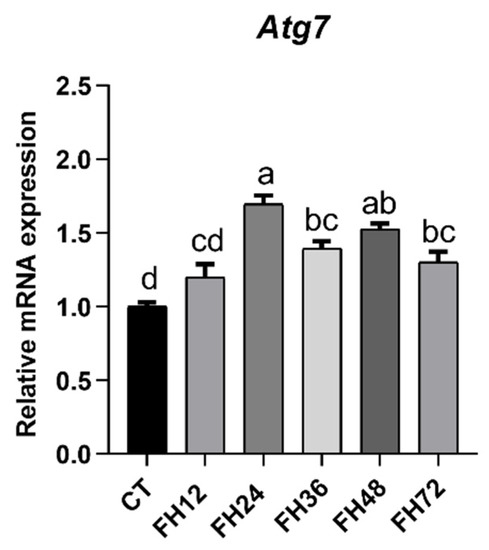
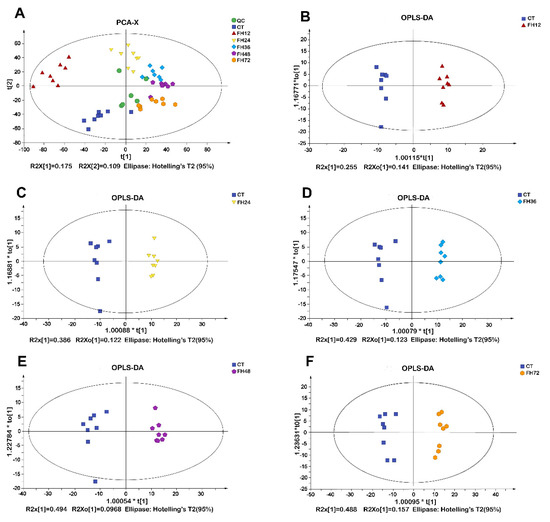
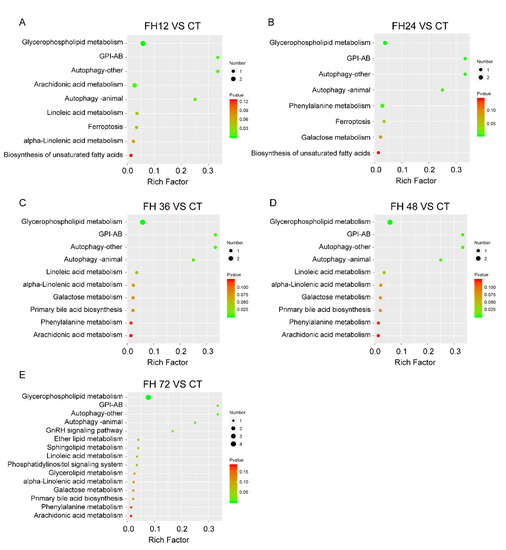
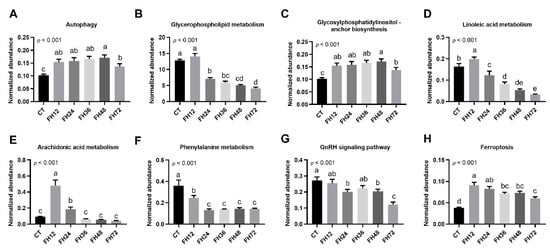
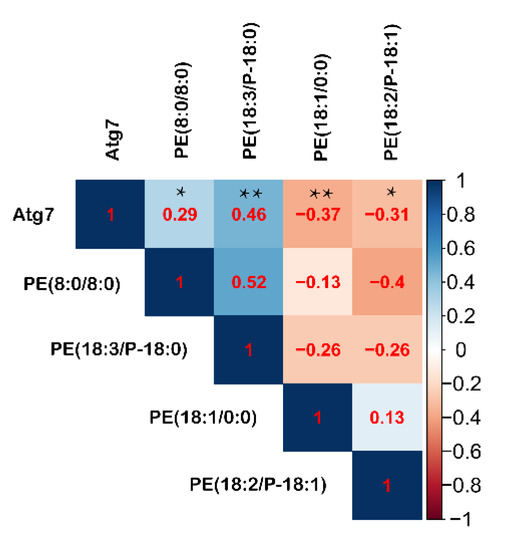
Fasting-induced autophagy in the intestine is beneficial for body health. This study was designed to explore the relationship between the host metabolism and intestinal autophagy. Broilers were randomly assigned into 48 cages. At 0 (CT), 12 (FH12), 24 (FH24), 36 (FH36), 48(FH48), and 72 h (FH72) before 09:00 a.m. on day 25, eight cages of birds were randomly allotted to each fasting time point using completely random design, and their food was removed. At 09:00 a.m. on day 25, the blood and jejunum were sampled for serum metabolome and autophagy gene analyses, respectively. The results showed that the autophagy gene Atg7 has a good quadratic fit with fasting duration (R2 = 0.432, p < 0.001). Serum phosphatidylethanolamine (PE) and lyso-PE were decreased in the birds that were fasted for 24 h or longer. Conversely, the serum phosphatidylcholine (PC) and lyso-PC were increased in the birds that were fasted for 36 h or longer. Metabolism pathway analysis showed that the serum glycerophospholipid, phenylalanine, and GnRH signaling pathways were downregulated with the extended fasting duration. The serum metabolites involved in glycosylphosphatidylinositol anchor biosynthesis, autophagy, and ferroptosis were upregulated in all of the fasted groups. Correlation analysis showed that serum PE (18:3(9Z,12Z,15Z)/P-18:0) was a potential biomarker for intestinal autophagy. Our findings provide a potential biomarker related to intestinal autophagy. Full article
(This article belongs to the Special Issue Poultry Feeding and Gut Health)
Show Figures

Figure 1
Article
Effect of Nanosilica and Bentonite as Mycotoxins Adsorbent Agent in Broiler Chickens’ Diet on Growth Performance and Hepatic Histopathology
Animals 2021, 11(7), 2129; https://doi.org/10.3390/ani11072129 - 17 Jul 2021
Viewed by 957
Abstract
Mycotoxins are toxic secondary metabolites produced by different strains of fungi, such as aspergillus, fusarium, and penicillium that can contaminate feed ingredients or the entire feed of poultry and animals. Mycotoxins can cause many serious complications to both humans and animals due to [...] Read more.
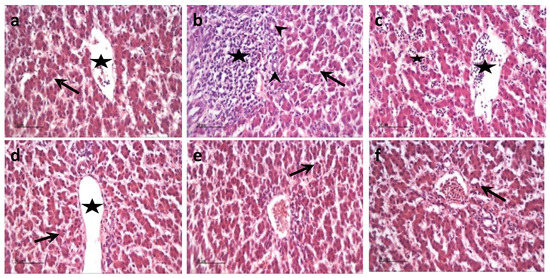
Mycotoxins are toxic secondary metabolites produced by different strains of fungi, such as aspergillus, fusarium, and penicillium that can contaminate feed ingredients or the entire feed of poultry and animals. Mycotoxins can cause many serious complications to both humans and animals due to carcinogenic, mutagenic, and immunosuppressive disorders. Therefore, the present experiment aims to investigate the effect of broiler chickens’ diets supplemented with different levels of nanosilica (NS) as an adsorbent agent of mycotoxins on their growth performance and hepatic histopathology. Detectable levels of toxins were present in the feed before feeding, and all levels of mycotoxins were above the normal limit. A total of 180 one-day-old male Arbor Acres broiler chickens were allocated randomly to six treatment groups with three replicates per group, including ten chickens per replicate. The experiment lasted for five weeks, and dietary treatments included control diet and diets with four levels of nanosilica as 0.05%, 0.10%, 0.15%, and 0.20% as well as 0.50% bentonite (fixfin® Dry) diet. Bodyweight, body weight gain, average daily feed intake, and feed conversion ratio were measured weekly. At the end of the fifth week, six chickens per treatment were sacrificed to investigate the effects of NS and bentonite on carcass characteristics and hepatic histopathology. The results showed that providing broiler chickens’ diets with an adsorbent agent, such as NS or bentonite, can reduce the side effects of mycotoxins and enhance their growth performance. The best record was achieved with NS at 0.20%, compared with the control group and other dietary treatment groups. Accordingly, 0.20% of NS could be used in broiler chickens’ diets to minimize the harmful effects of mycotoxins. Full article
(This article belongs to the Special Issue Poultry Feeding and Gut Health)
Show Figures

Figure 1
Article
The Effect of Dietary Halloysite Supplementation on the Performance of Broiler Chickens and Broiler House Environmental Parameters
Animals 2021, 11(7), 2040; https://doi.org/10.3390/ani11072040 - 08 Jul 2021
Viewed by 894
Abstract
The aim of the study was to determine the effect of supplementing broiler chickens’ diets with halloysite on daily body weight gain (BWG), feed conversion ratio (FCR), daily water consumption (DWC), and some broiler house hygiene parameters. The trial was conducted on 18,000 [...] Read more.
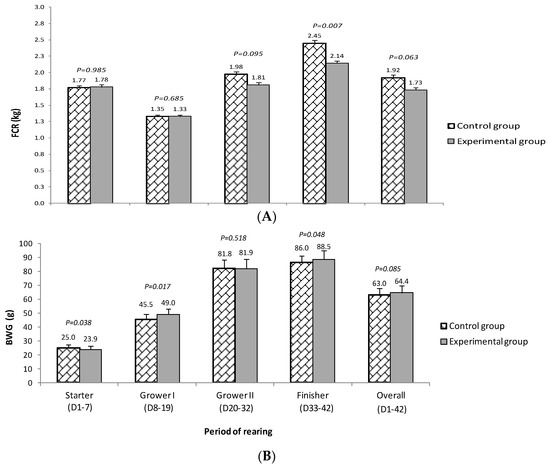
The aim of the study was to determine the effect of supplementing broiler chickens’ diets with halloysite on daily body weight gain (BWG), feed conversion ratio (FCR), daily water consumption (DWC), and some broiler house hygiene parameters. The trial was conducted on 18,000 broiler chickens divided into two groups throughout the 42-day (D) rearing period. The birds were fed complete diets without (group C) or with halloysite addition (1%, group E) from D8 of rearing. No difference in the mortality rate was observed between groups C and E. Birds from group E had a tendency (0.05 < p < 0.10) towards a higher body weight at D32 and D42, a higher BWG, and a lower FCR compared to group C during the entire rearing period. Average DWC differed only in the finisher period, with a tendency towards lower overall DWC in group E. The concentration of ammonia in the air from D21 to D35 was increased more than 5-fold in group C but only 1.5-fold in group E. In conclusion, the use of halloysite as a feed additive in the diet of broiler chickens resulted in a reduction in feed consumption per unit of BWG and higher utilisation of crude protein, which led to improved environmental conditions. Full article
(This article belongs to the Special Issue Poultry Feeding and Gut Health)
Show Figures

Figure 1
Communication
Feeding Malic Acid to Chickens at Slaughter Age Improves Microbial Safety with Regard to Campylobacter
Animals 2021, 11(7), 1999; https://doi.org/10.3390/ani11071999 - 05 Jul 2021
Viewed by 1081
Abstract
This study supplied malic acid-supplemented drinking water to flocks that were naturally Campylobacter-positive and assessed the effect of feeding malic acid to chickens on Campylobacter reduction and poultry production. In Experiment 1, chickens were provided with malic acid-supplemented drinking water for three [...] Read more.
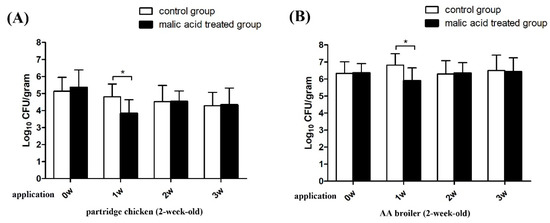
This study supplied malic acid-supplemented drinking water to flocks that were naturally Campylobacter-positive and assessed the effect of feeding malic acid to chickens on Campylobacter reduction and poultry production. In Experiment 1, chickens were provided with malic acid-supplemented drinking water for three weeks. The contamination loads of Campylobacter were decreased by 0.91–0.98 log after the first week of use (p < 0.05). However, this effect did not persist over time and significant decontamination could not be found in the second and third weeks of application. Thus, in Experiment 2 malic acid-supplemented drinking water was given to chickens for a period of five days at slaughter age. The Campylobacter carriage was found to be effectively decreased by 1.05–1.55 log (p < 0.05). Malic acid had no adverse effects on chicken body weight, weight gain, intestinal indices, or the microbiota. In addition, it could change the composition of chicken meat since the moisture content was increased by 5.12–5.92% (p < 0.05) and the fat content was decreased by 1.60% (p < 0.05). Our study provides an effective means for reducing the contamination of Campylobacter during the chicken rearing period and this method can be applied to promote the safe development of poultry farming and its products. Full article
(This article belongs to the Special Issue Poultry Feeding and Gut Health)
Show Figures

Figure 1
Article
Effects of Dietary Rapeseed Meal on Growth Performance, Carcass Traits, Serum Parameters, and Intestinal Development of Geese
Animals 2021, 11(6), 1488; https://doi.org/10.3390/ani11061488 - 21 May 2021
Viewed by 534
Abstract
The use of inexpensive nonconventional feed materials, such as rapeseed meal (RSM), could help alleviate the shortage of feed materials in the poultry industry. This study was to investigate the effects of dietary double-low RSM on growth performance, carcass traits, serum parameters, and [...] Read more.
The use of inexpensive nonconventional feed materials, such as rapeseed meal (RSM), could help alleviate the shortage of feed materials in the poultry industry. This study was to investigate the effects of dietary double-low RSM on growth performance, carcass traits, serum parameters, and intestinal development of geese. A total of 270 healthy 35-day-old male Jiangnan White geese were randomly divided into five treatments, with six replicate pens of nine geese each. The geese were fed five isonitrogenous and isocaloric diets containing 0%, 4%, 8%, 12%, and 16% RSM replacing dietary soybean meal for 35 days. At 35, 49, and 70 d, the BW and feed intake were recorded. All Samples were collected at 70 d of age. The results showed that dietary RSM up to 16% did not affect the BW, ADFI, ADG, and feed/gain ratio (F/G) during 35 to 49 d, 49 to 70 d, and 35 to 70 d periods (p > 0.05). At 70 d, no difference was observed in carcass yield or serum biochemical parameters among groups (p > 0.05). Dietary 12% and 16% RSM significantly increased the concentration of serum GH compared with 0%, 4%, 8% groups (p < 0.01), but serum TSH, T3 and T4 were unaffected (p > 0.05). The relative weights of heart, liver, spleen, proventriculus, gizzard, and small intestine were similar among groups (p > 0.05). However, the geese fed dietary 16% RSM had greater bursa of Fabricius than geese in the 8% group (p < 0.05). Intestinal morphology was unaffected by treatments (p > 0.05). According to the findings, dietary RSM up to 16% can be used in geese diets without impact on production performance. Full article
(This article belongs to the Special Issue Poultry Feeding and Gut Health)
Article
Impact of Xylanase and Glucanase on Oligosaccharide Formation, Carbohydrate Fermentation Patterns, and Nutrient Utilization in the Gastrointestinal Tract of Broilers
Animals 2021, 11(5), 1285; https://doi.org/10.3390/ani11051285 - 29 Apr 2021
Viewed by 961
Abstract
This study aimed at determining how the degradation of cereal non-starch polysaccharides (NSP) by dietary enzymes during feed digestion can influence nutrient digestibility and NSP fermentability in broilers. Ninety-six one-day-old male broilers were assigned to 4 different treatments: control and enzyme-supplemented wheat-based (WC, [...] Read more.
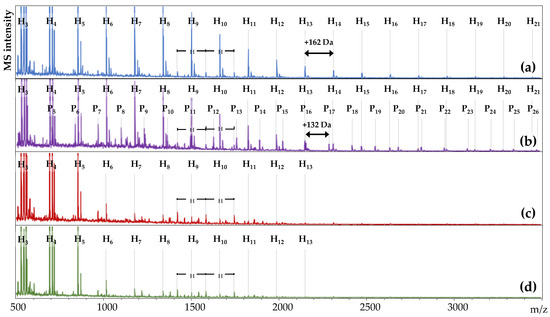
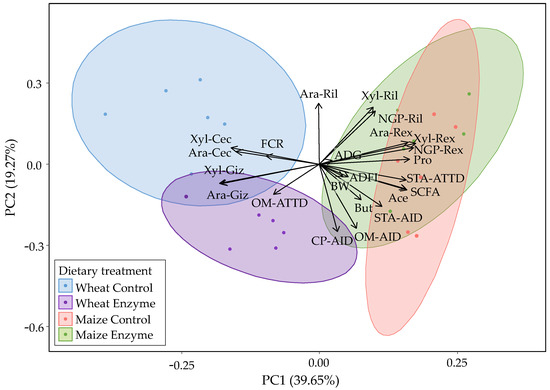
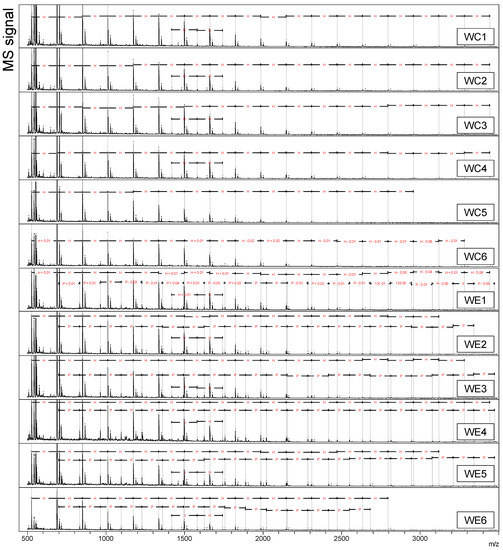
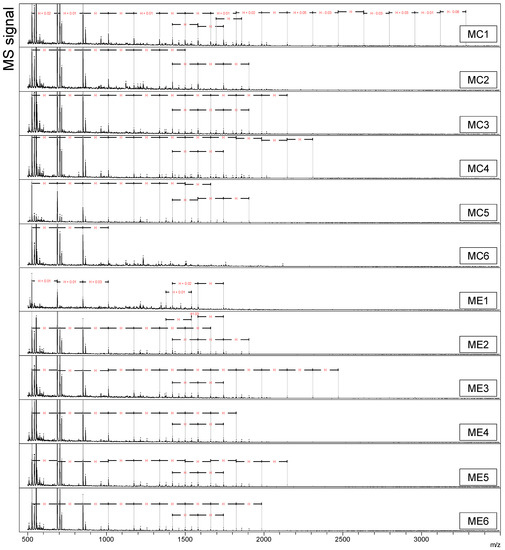
This study aimed at determining how the degradation of cereal non-starch polysaccharides (NSP) by dietary enzymes during feed digestion can influence nutrient digestibility and NSP fermentability in broilers. Ninety-six one-day-old male broilers were assigned to 4 different treatments: control and enzyme-supplemented wheat-based (WC, WE) or maize-based (MC, ME) treatments. Enzyme supplementation with endo-xylanase and endo-glucanase occurred from day 20 onwards. On day 28, digesta samples were collected. Nutrient digestibility, NSP recovery, oligosaccharide profile, and short-chain fatty acids (SCFA) content were determined. Enzyme supplementation in WE resulted in a higher starch (3%; p = 0.004) and protein (5%; p = 0.002) digestion in the ileum compared to WC. Xylanase activity in WE led to in situ formations of arabinoxylan-oligosaccharides consisting of 5 to 26 pentose units in the ileum. This coincided with decreased arabinose (p = 0.059) and xylose (p = 0.036) amounts in the ceca and higher acetate (p = 0.014) and butyrate (p = 0.044) formation in WE compared to WC. Conversely, complete total tract recovery of arabinoxylan in MC and ME suggested poor maize NSP fermentability. Overall, enzyme action improved nutrient digestibility and arabinoxylan fermentability in the wheat-based diet. The lower response of the maize-based diet to enzyme treatment may be related to the recalcitrance of maize arabinoxylan as well as to the high nutritive value of maize. Full article
(This article belongs to the Special Issue Poultry Feeding and Gut Health)
Show Figures

Figure 1
Article
Effect of Biscuit Flour and Fermented Defatted “Alperujo” Co-Administration on Intestinal Mucosa Morphology and Productive Performance in Laying Hens
Animals 2021, 11(4), 1075; https://doi.org/10.3390/ani11041075 - 09 Apr 2021
Viewed by 677
Abstract
In this study, the effects of co-administration with biscuit flour and fermented defatted “alperujo” (FDA) on gut health were evaluated in a batch of laying hens (Hy-Line 2015) on a commercial farm. Animals were divided into two groups: control group and treatment group; [...] Read more.
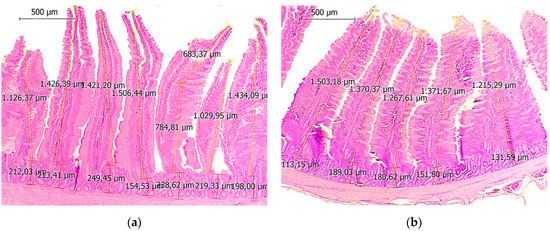
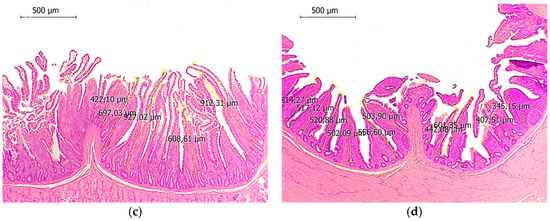
In this study, the effects of co-administration with biscuit flour and fermented defatted “alperujo” (FDA) on gut health were evaluated in a batch of laying hens (Hy-Line 2015) on a commercial farm. Animals were divided into two groups: control group and treatment group; and histological and morphometric analyses of all sections of the intestine (duodenum, jejunum, ileum, cecum and rectum) were performed at 10, 18, 25, 50 and 75 weeks of age. During the whole productive period, a decrease in the mortality rate (p = 0.01) was observed in treated hens, as well as an increase in the number of eggs produced (p < 0.001), their size (p < 0.025), and weight (p < 0.024). In the early and late stages of production (10, 18 and 50 weeks), a significant increase (p < 0.001) in the height and depth of the intestinal villi was observed in the treatment group. Villi height was also significantly higher (p < 0.001) in the treatment group up to week 50 in the cecum, and at weeks 18 and 50 in the rectum. We concluded that an economical and sustainable feeding system with less environmental impact, such as co-supplementation with biscuit flour and FDA, could maintain gut health without negatively impacting laying hens’ productive performance. Full article
(This article belongs to the Special Issue Poultry Feeding and Gut Health)
Show Figures

Figure 1
Communication
A Preliminary Study of Chemically Preserved and High-Moisture Whole Maize (Zea mays L.) Usage in Pekin Duck Nutrition: Effect on Growth Performance and Selected Internal Organ Traits
Animals 2021, 11(4), 1018; https://doi.org/10.3390/ani11041018 - 04 Apr 2021
Viewed by 494
Abstract
This study aimed to investigate the effect of chemically preserved, high-moisture whole maize grain addition in Pekin duck diets on their growth performance and selected internal organ and gastrointestinal tract measurements and digesta pH values. A total of 300 29-d-old male Pekin ducks [...] Read more.
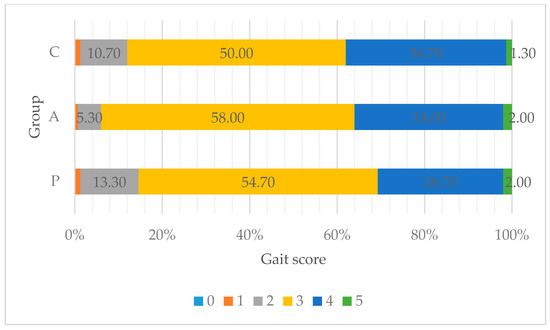
This study aimed to investigate the effect of chemically preserved, high-moisture whole maize grain addition in Pekin duck diets on their growth performance and selected internal organ and gastrointestinal tract measurements and digesta pH values. A total of 300 29-d-old male Pekin ducks were randomly distributed into three dietary treatments using five replicate pens per group and 20 birds per pen. The following treatment groups were applied: CON—basal diet, 5HM—5% of high-moisture, chemically preserved whole maize (HM) inclusion, and 10HM—10% of HM addition. The experiment lasted 21 d. The implementation of 5HM or 10HM did not affect (p > 0.05) the growth performance parameters, selected internal organ weights, and the gastrointestinal tract segment weights and lengths. However, significant changes in terms of the gizzard (p = 0.005), ileum (p = 0.030), and caecal (p < 0.001) digesta pH were observed, especially in the case of the 10HM group, which exhibited the greatest increase in pH in the gizzard and caecal digesta and decrease in the ileal digesta pH. The implementation of whole wet maize may be used in waterfowl diets from 29 d of age. Additionally, chemical preservation can efficiently reduce the cost of maize preparation in duck nutrition. Full article
(This article belongs to the Special Issue Poultry Feeding and Gut Health)
Article
Ducks’ Growth, Meat Quality, Bone Strength, and Jejunum Strength Depend on Zeolite in Feed and Long-Term Factors
Animals 2021, 11(4), 1015; https://doi.org/10.3390/ani11041015 - 03 Apr 2021
Cited by 1 | Viewed by 684
Abstract
The safety of production and the high quality of meat are important aspects of rearing poultry, especially when natural solutions are used. Because of the increasing popularity of duck meat, the aim of the present study was to assess the effect of a [...] Read more.
The safety of production and the high quality of meat are important aspects of rearing poultry, especially when natural solutions are used. Because of the increasing popularity of duck meat, the aim of the present study was to assess the effect of a diet with an inclusion of zeolite on the growth performance, meat quality, and strength of the bones and jejunum in ducks of different origin, sex, and age at slaughter. The study was conducted on 320 Orvia and Cherry Valley ducks. Birds were allocated to eight groups, according to their sex and origin. Half of the birds received feed with a 4% inclusion of zeolite. Body weight gain, feed intake, and feed conversion ratio per kilogram of gain were calculated. After six or seven weeks, five birds from each group were selected and slaughtered. After dissection, meat quality (pH, water-holding capacity, colour) and the strength of the bones and gut were analysed. The analysis revealed that zeolite was associated with reduced body weight gains and increased feed conversion ratio, but with a higher water-holding capacity of breast muscles in seven-week-old ducks, and with a higher yellowness and water-holding capacity of leg muscles in six-week-old ducks. A positive effect of long-term factors (age, sex, origin) and the interaction with zeolite was found for most of the analysed traits. Findings on the effect of 4% inclusion of zeolite in duck diet were inconclusive. The study implies the need for further research, since zeolite has potential as a natural sanitizing agent and can improve the quality of produced duck meat. Full article
(This article belongs to the Special Issue Poultry Feeding and Gut Health)
Article
The Laetiporus sulphureus Fermented Product Enhances the Antioxidant Status, Intestinal Tight Junction, and Morphology of Broiler Chickens
Animals 2021, 11(1), 149; https://doi.org/10.3390/ani11010149 - 11 Jan 2021
Cited by 1 | Viewed by 582
Abstract
The Laetiporus sp. is a fungal species that is traditionally used for medicinal purposes. This study investigated the effects of the Laetiporus sulphureus fermented product (FL) as a feed supplementation on the antioxidant activities, the intestinal Tight Junction (TJ) mRNA expression, and the [...] Read more.
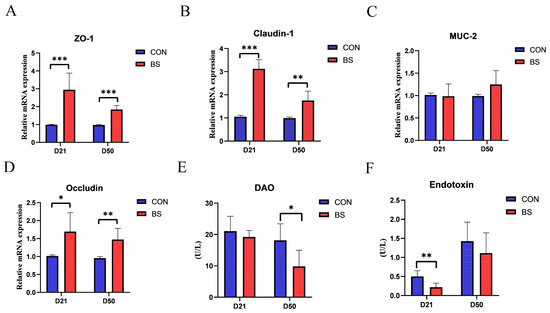
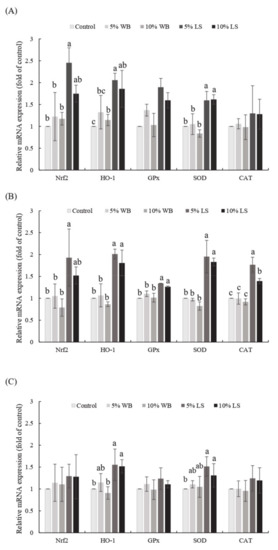
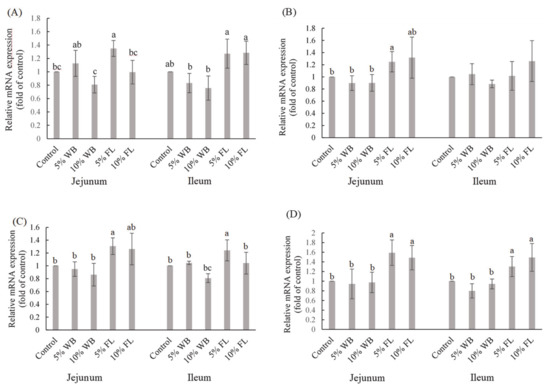
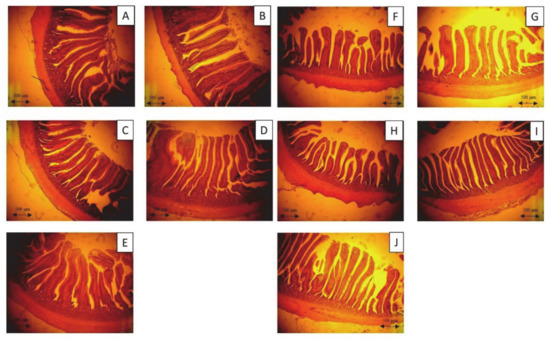
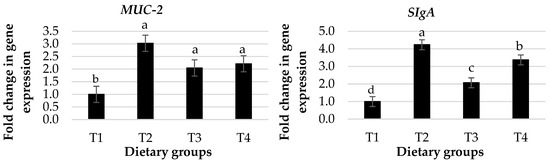
The Laetiporus sp. is a fungal species that is traditionally used for medicinal purposes. This study investigated the effects of the Laetiporus sulphureus fermented product (FL) as a feed supplementation on the antioxidant activities, the intestinal Tight Junction (TJ) mRNA expression, and the intestinal morphology of broiler chickens. Four-hundred one-day-old male broilers (Ross 308) were randomly allocated to five experimental diets: (1) a corn-soybean meal basal diet (control), (2) a basal diet replaced with 5% Wheat Bran (5% WB), (3) a basal diet replaced with 10% WB (10% WB), (4) a basal diet replaced with 5% FL (5% FL), and (5) a basal diet replaced with 10% FL (10% FL). The FL-supplemented groups exhibited a better feed conversion ratio in the overall experimental period compared to the WB and control groups. The serum antioxidant profiles of 35-day-old broilers showed that, compared to the control and 10% WB groups, the 5% FL supplementation group had a significantly increased superoxide dismutase activity, while it down-regulated the concentration of malondialdehyde in the serum (p < 0.05). The assessment of selected antioxidant gene expression showed that the 5% FL group significantly elevated heme oxygenase-1 and nuclear factor erythroid 2–related factor 2 expression, compared to the control and WB groups (p < 0.05). Furthermore, both of the FL supplemented groups had a significantly higher expression of glutathione peroxidase and catalase, compared to that of the WB and control groups in the jejunum (p < 0.05). The TJ mRNA expression in the jejunum showed that 5% FL significantly elevated the zonula occludens-1, claudin-1, and mucin-2 expression (p < 0.05), while 5% and 10% FL supplementation significantly improved OCLN expression in both the jejunum and ileum, compared to control group (p < 0.05). The intestinal morphology of 35-day-old broilers showed that a 5% FL supplementation significantly increased the villus height in the ileum and jejunum, compared to the WB and control groups (p < 0.05). Moreover, the 5% and 10% FL supplementation groups had a significantly higher villi:crypt ratio in the ileum, compared to the WB and control groups (p < 0.05). To conclude, FL supplementation improved the antioxidative status, the TJ mRNA expression, and the intestinal morphology, and it was accompanied by a lowered feed conversion ratio in broilers. Finally, 5% supplementation had the overall best results in improving the antioxidant status, TJ mRNA expression, and intestinal morphology of broilers. Full article
(This article belongs to the Special Issue Poultry Feeding and Gut Health)
Show Figures

Figure 1
Back to TopTop