



Next Issue
Volume 9, August
Previous Issue
Volume 9, June


Heritage, Volume 9, Issue 7 (July 2026) – 46 articles
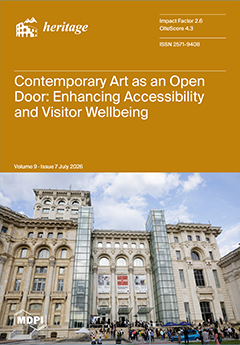
Cover Story (view full-size image): The paper entitled Contemporary Art as an Open Door: Enhancing Accessibility and Visitor Wellbeing focuses on the representative case of the National Museum of Contemporary Art (MNAC) in Bucharest, Romania, as an illustrative example of enhancing visitor accessibility in heritage institutions. Contemporary art is part of societal transformations reflecting socio-economic challenges within specific geographical environments. Results show an important attractiveness of art for educated and informed audiences with further gaps to be addressed for people with different types of impairments. The exploratory factor analysis underscores the relevance of adopting a holistic accessibility paradigm including wellbeing elements in the design and optimization of museum products. View this paper
  • Issues are regarded as officially published after their release is announced to the table of contents alert mailing list.
  • You may sign up for e-mail alerts to receive table of contents of newly released issues.
  • PDF is the official format for papers published in both, html and pdf forms. To view the papers in pdf format, click on the "PDF Full-text" link, and use the free Adobe Reader to open them.
Order results
Result details
Section
Select all
Export citation of selected articles as:
25 pages, 89675 KB  
Article
Interpreting Urban Heritage in the Digital Age: Semiotic Approaches to Representation
by Silvia La Placa and Justyna Borucka
Heritage 2026, 9(7), 291; https://doi.org/10.3390/heritage9070291 - 22 Jul 2026
Viewed by 404
Abstract
Starting from a semiotic understanding of the city as a stratified and continuously rewritten palimpsest, this paper investigates the relationship between urban heritage, graphic representation, and cultural translation within the current digital scenario. The study introduces and develops a theoretical framework, the “translation [...] Read more.
Starting from a semiotic understanding of the city as a stratified and continuously rewritten palimpsest, this paper investigates the relationship between urban heritage, graphic representation, and cultural translation within the current digital scenario. The study introduces and develops a theoretical framework, the “translation triangle” (TT), articulated around three mutually co-determining domains: the cognitive, concerned with the critical identification of relevant signs within the urban text; the technical–digital, concerned with their formalisation through survey instruments, three-dimensional modelling, and visualisation pipelines; and the socio-anthropological, concerned with the mediation of translated content towards its recipient. The framework is tested through two urban contexts: Pavia, Italy, and Gdańsk, Poland, different in scale and research advancement. Both demonstrate that the quality of urban heritage representation depends not solely on geometric accuracy or visual effectiveness, but on the capacity to make explicit the interpretative choices embedded in each translational act and to produce forms of knowledge that are comprehensible, interrogable, and culturally shareable. The paper concludes that every digital representation of urban heritage constitutes a semiotic act, not a neutral technical operation, and that the future of the discipline lies in constructing translations that are conscious, verifiable, and culturally grounded, capable of preserving the historical meaning of heritage without reducing it to spectacle or data infrastructure. Full article
(This article belongs to the Special Issue Past for the Future: Digital Pathways in Cultural Heritage)
Show Figures

Figure 1

16 pages, 36918 KB  
Article
Maritime Cultural Landscapes of the Colombian Caribbean: Community Perspectives and Collective Memory
by Juan Guillermo Martín, William Gomez Pretel, Roberto E. Lastra-Mier, Ángela Posada-Swafford and Hernando Salcedo Fidalgo
Heritage 2026, 9(7), 290; https://doi.org/10.3390/heritage9070290 - 21 Jul 2026
Viewed by 490
Abstract
This article examines the Maritime Cultural Landscape (MCL) of the Colombian Caribbean (CC) through a participatory and interdisciplinary approach that integrates historical cartography, a legal framework, images, collective memory, and community-based knowledge. Using case studies from Cartagena de Indias, Barú Island, and the [...] Read more.
This article examines the Maritime Cultural Landscape (MCL) of the Colombian Caribbean (CC) through a participatory and interdisciplinary approach that integrates historical cartography, a legal framework, images, collective memory, and community-based knowledge. Using case studies from Cartagena de Indias, Barú Island, and the Archipelago of San Andrés and Old Providence, the research combines workshops with young participants and academic discussion sessions with local communities to explore how maritime spaces are interpreted and socially constructed. The findings show that MCL cannot be understood only as archaeological remains, but as a dynamic framework shaped by the relationship between communities and the sea. Participatory cartography proved effective in activating local memory and revealing multiple maritime landscapes, while also highlighting tensions between formal coastal representations and lived territorial experiences. The study also incorporates legal and environmental perspectives, including public goods, coastal governance, and climate change. One of its contributions is the concept of “Cultural and Legal Maritime Landscapes” (CLML), which interprets legal frameworks as part of the relationship between maritime landscapes, local communities, and the sea. This research contributes to more inclusive approaches to maritime heritage and introduces a conceptual and methodological framework for understanding the CC as a socially constructed and contested seascape. Full article
Show Figures

Figure 1

18 pages, 2788 KB  
Article
Major and Trace Element Characteristics of Bronze Mirrors Excavated in Linzi and Their Implications for the Study of ‘Jin liuJi
by Jinxuan Li, Xiang Wang, Wenbin Dong and Jun Gao
Heritage 2026, 9(7), 289; https://doi.org/10.3390/heritage9070289 - 21 Jul 2026
Viewed by 282
Abstract
Linzi was a pivotal bronze mirror production centre during the Western Han dynasty (202 BCE–8 CE). This study analyses 71 excavated bronze mirrors from Linzi via pXRF, PCA, and geometric median statistics to investigate elemental characteristics, ore provenance, and the ‘Jin liuji [...] Read more.
Linzi was a pivotal bronze mirror production centre during the Western Han dynasty (202 BCE–8 CE). This study analyses 71 excavated bronze mirrors from Linzi via pXRF, PCA, and geometric median statistics to investigate elemental characteristics, ore provenance, and the ‘Jin liuji’ (Six Recipes of Bronze). Their alloy compositions exhibit continuity throughout the Warring States (475 BCE–221 BCE) and Western Han periods and are distinct from those in other regions of China during the same period, suggesting that the ‘Jin liuji’ possesses strong regional characteristics specific to the Qi state. Trace element analysis reveals that the copper ore supply experienced three stages, namely diverse and scattered sources (or recycling) during the Warring States period, a transition during the early Western Han, and a concentrated supply during the middle and late Western Han. This study demonstrates the strong intervention of the Han dynasty’s state economic policies in the allocation of local metal resources, providing empirical evidence for reconstructing the economic control network of the unified empire. Full article
Show Figures

Figure 1

25 pages, 4066 KB  
Article
From Material Silos to Thematic Pillars: Designing a Virtual Community of Practice for European Craft Heritage
by Madina Benvenuti, Jelena Krivokapic, Nikolaos Partarakis and Xenophon Zabulis
Heritage 2026, 9(7), 288; https://doi.org/10.3390/heritage9070288 - 21 Jul 2026
Viewed by 243
Abstract
The European crafts ecosystem faces critical structural threats, declining practitioner numbers, weakening intergenerational transmission, limited digital literacy, and competition from industrial imitation. Existing online craft communities are narrowly material-specific and structurally ill-suited to the cross-disciplinary dialogue required for systemic sector transformation. This paper [...] Read more.
The European crafts ecosystem faces critical structural threats, declining practitioner numbers, weakening intergenerational transmission, limited digital literacy, and competition from industrial imitation. Existing online craft communities are narrowly material-specific and structurally ill-suited to the cross-disciplinary dialogue required for systemic sector transformation. This paper presents the design, iterative development, and pilot evaluation of the Craeft Community, a multi-stakeholder Virtual Community of Practice (VCoP) developed within the Horizon Europe CRAEFT project. Three research questions guided the study: how a multi-stakeholder VCoP should be structured to overcome disciplinary fragmentation; to what extent a stewarded digital forum can operationalize Situated Learning and Communities of Practice theory; and what factors facilitate or inhibit engagement and post-funding sustainability. Using design-based research, the platform evolved through four iterative phases, culminating in restructuring from a material-based architecture into five transversal thematic pillars, driven by survey evidence from 151 European craft professionals and systematic stakeholder feedback. The pilot phase yielded 86 registered members, 31 posts, and 27 interactions, with Transmission & Training as the most engaged pillar. Qualitative analysis reveals substantive cross-disciplinary discourse alongside a structural Effort-Engagement Gap, a persistent tension between forum participation demands and the gravitational pull of mainstream social media. The study demonstrates that a thematically organized, stewarded VCoP can meaningfully operationalize apprenticeship-based learning in digital settings, advancing craft heritage preservation, economic resilience, and hybrid professional identity formation at the intersection of craft and technology. Full article
(This article belongs to the Section Materials and Heritage)
Show Figures

Figure 1

22 pages, 9682 KB  
Article
Object-Centric 3D Gaussian Splatting for Traditional Carving Reconstruction
by Jiahao Liu, Liyu Tang, Maozhang Ye, Dayu Yu, Wenhao Zeng and Han Hong
Heritage 2026, 9(7), 287; https://doi.org/10.3390/heritage9070287 - 21 Jul 2026
Viewed by 266
Abstract
Traditional carvings, such as stone and wooden carvings, are important material carriers of intangible cultural heritage craftsmanship. High-quality three-dimensional (3D) digital replicas of these carvings provide essential support for their preservation, inheritance, interpretation, and dissemination. Owing to their intricate geometries, fine surface details, [...] Read more.
Traditional carvings, such as stone and wooden carvings, are important material carriers of intangible cultural heritage craftsmanship. High-quality three-dimensional (3D) digital replicas of these carvings provide essential support for their preservation, inheritance, interpretation, and dissemination. Owing to their intricate geometries, fine surface details, diverse materials, and complex acquisition backgrounds, high-fidelity 3D reconstruction of traditional carvings remains a challenging issue. In this study, we propose an object-centric 3D Gaussian Splatting (3DGS) framework for traditional craft carving reconstruction. Built upon the baseline 3DGS model, the proposed framework leverages the advanced segmentation capability of Segment Anything Model 2 (SAM-2) to extract foreground masks and generate alpha-channel inputs, enabling the reconstruction process to focus on the target carving. In addition, depth priors are used to guide local densification in regions with insufficient Gaussian coverage, providing auxiliary support for weakly textured or locally blurred carving details. Experiments were conducted on a self-built image dataset of stone and wooden carvings collected from Hui’an County, Quanzhou, Fujian Province, China. The experimental results show that the proposed object-centric strategy effectively preserves the original visual textures and local geometric features of traditional carvings while improving rendering efficiency. Furthermore, the optimized 3D Gaussian models are exported as lightweight digital assets and integrated into Unreal Engine 5, enabling multi-perspective visualization and interactive virtual exhibition in a contextualized digital environment. These results suggest that the proposed workflow is more suitable for producing compact object-level Gaussian assets for carving exhibition, while the depth-guided module mainly improves local details in weakly textured or shallow-relief regions. Full article
(This article belongs to the Section Digital Heritage)
Show Figures

Figure 1

11 pages, 1437 KB  
Article
Construction Tools in the Pre-Hispanic Andes: A Review from the Perspective of Architecture and Material Culture
by Henry Eduardo Torres, Fernando Vegas López-Manzanares and Camilla Mileto
Heritage 2026, 9(7), 286; https://doi.org/10.3390/heritage9070286 - 21 Jul 2026
Viewed by 251
Abstract
This article examines the extent to which it is possible to reconstruct part of the technical knowledge employed in pre-Hispanic Andean constructions. Drawing on chronicles, colonial representations, linguistic studies, ethnography and direct architectural analysis, it demonstrates that Andean societies possessed specialised trades and [...] Read more.
This article examines the extent to which it is possible to reconstruct part of the technical knowledge employed in pre-Hispanic Andean constructions. Drawing on chronicles, colonial representations, linguistic studies, ethnography and direct architectural analysis, it demonstrates that Andean societies possessed specialised trades and a wider repertoire of tools than is commonly recognised. A central finding is the identification of gaveras—wooden moulds for making adobe bricks—whose recognition here shows that carpentry techniques were more developed than has been assumed. The poor documentation of these objects—several of them miscatalogued in Peruvian museums—has reinforced the mistaken assumption that complex construction tools were not used in ancient Peru. The study combines three approaches: direct observation of the built fabric (marks, imprints and textures that reveal construction processes), review of the Quechua vocabulary associated with tools and trades—drawn from three sixteenth- and seventeenth-century dictionaries consulted in the Langas repository of the CNRS—and comparison with current practices in Andean communities. This is complemented by a comparison with records from other cultures and a systematic search of the database of the Ministry of Culture of Peru, where plumb bobs, floats, shovels, axes, chisels and other instruments rarely analysed from a constructive perspective were located. Taken together, the article demonstrates that pre-Hispanic architecture was neither intuitive nor improvised, but the outcome of a technical tradition carried out by specialists, tools that are little known today, and construction methods based on measurement, alignment control, mortar transfer and careful surface finishing. Full article
Show Figures

Figure 1

15 pages, 57419 KB  
Article
Dino-Lite Micro-Photogrammetry: A Versatile Tool for Multi-Material Applications in Cultural Heritage
by Daniela Porcu, Emma Vannini, Alice Dal Fovo, Monica Galeotti and Raffaella Fontana
Heritage 2026, 9(7), 285; https://doi.org/10.3390/heritage9070285 - 20 Jul 2026
Viewed by 306
Abstract
Portable digital microscopy (PDM) has become standard equipment in archaeological and restoration campaigns. In recent years, several studies have proposed combining PDM and micro-photogrammetry for preliminary documentation and in situ three-dimensional (3D) digitization, testing its applicability on a variety of materials and artifacts, [...] Read more.
Portable digital microscopy (PDM) has become standard equipment in archaeological and restoration campaigns. In recent years, several studies have proposed combining PDM and micro-photogrammetry for preliminary documentation and in situ three-dimensional (3D) digitization, testing its applicability on a variety of materials and artifacts, including stone, bone, mural paintings, and small jewelry. However, limited data is available on its use with some of the most common types of artworks, such as paintings on canvas and wooden panels. In this study, the performance of micro-photogrammetry using a Dino-Lite digital microscope (Dino-Lite Europe, Almere, The Netherlands) was evaluated on five representative artistic materials: metal, stone, and paintings, including mural, canvas, and panel works. Textured mesh models were generated from the acquired datasets, and the quality of the 3D reconstruction was assessed through analysis of dense cloud confidence and Digital Elevation Model (DEM) accuracy. The metrical reliability of the micro-photogrammetric results was validated by comparing the 3D data obtained with the digital microscope against height measurements acquired using an optical microprofilometer. The results indicate that the performance of the method is strongly influenced by the physical properties of the substrates examined. Accurate and metrically consistent reconstructions were achieved for matte and textured surfaces (e.g., fresco and stone), whereas significant limitations emerged on dark or glossy painted surfaces, such as canvas and panel paintings. Full article
Show Figures

Figure 1

26 pages, 8825 KB  
Article
A Scan-to-HBIM Workflow for the Digital Documentation of Umayyad Desert Architecture: The Case of Qasr Harrana, Jordan
by Ahmad Baik and Yahya Alshawabkeh
Heritage 2026, 9(7), 284; https://doi.org/10.3390/heritage9070284 - 20 Jul 2026
Viewed by 319
Abstract
The documentation and management of heritage structures in arid environments present significant challenges due to environmental deterioration, limited historical records, and the complexity of capturing irregular architectural forms. This study presents a structured Scan-to-HBIM workflow integrating terrestrial laser scanning (TLS), photogrammetry, and Heritage [...] Read more.
The documentation and management of heritage structures in arid environments present significant challenges due to environmental deterioration, limited historical records, and the complexity of capturing irregular architectural forms. This study presents a structured Scan-to-HBIM workflow integrating terrestrial laser scanning (TLS), photogrammetry, and Heritage Building Information Modelling (HBIM) for the digital documentation of Qasr Harrana, one of the most significant examples of Umayyad desert architecture in Jordan. The proposed workflow combines reality-capture technologies with parametric modelling to generate an information-rich HBIM model that supports the systematic organization of geometric, architectural, and condition-related data. The methodology includes field data acquisition using TLS and digital photography, point cloud processing and registration, photogrammetric image integration, geometric reconstruction, and the development of parametric HBIM components representing key architectural elements of the monument. The resulting model was assessed through geometric verification procedures and was used to document architectural features, spatial organization, and visible deterioration conditions. The study demonstrates how established reality-capture technologies can be integrated within a coherent documentation framework to support the creation of accurate and reusable digital heritage records. Rather than proposing new acquisition algorithms or modelling techniques, the contribution of this research lies in the structured adaptation and implementation of existing Scan-to-HBIM methods for the documentation of desert heritage architecture. The resulting HBIM model provides a comprehensive digital archive that can facilitate future conservation, management, and research activities while improving the accessibility and long-term usability of heritage documentation data. Full article
Show Figures

Figure 1

24 pages, 4273 KB  
Article
GYRO3DSCOPE: A Bring Your Own Device Interactive Kiosk for Enhancing 3D Geoheritage Engagement
by Andrei Ionuț Apopei
Heritage 2026, 9(7), 283; https://doi.org/10.3390/heritage9070283 - 18 Jul 2026
Viewed by 428
Abstract
Preserving non-renewable geological assets for future generations requires balancing physical geoconservation with engaging public outreach. Digital twins provide an excellent method for protecting delicate geological specimens. Unfortunately, traditional on-site interactive displays rely on expensive, high-maintenance proprietary hardware that small museums can rarely afford. [...] Read more.
Preserving non-renewable geological assets for future generations requires balancing physical geoconservation with engaging public outreach. Digital twins provide an excellent method for protecting delicate geological specimens. Unfortunately, traditional on-site interactive displays rely on expensive, high-maintenance proprietary hardware that small museums can rarely afford. This study introduces GYRO3DSCOPE, a free, multi-tenant Bring Your Own Device (BYOD) platform built to widen public access to digital collections. Scanning a dynamic QR code lets visitors use their own smartphones as remote spatial controllers. This allows them to rotate and manipulate high-fidelity 3D models in real time without downloading or installing local apps. The system is an open-access aggregator, enabling curators to stream site-specific content directly from existing repositories like Sketchfab or 3DBigDataSpace. The platform was evaluated at the Geology Museum of the “Alexandru Ioan Cuza” University of Iași (Romania) during the May 2026 Night of Museums public exhibition. The installation featured a collection of 149 digital twins of rocks, minerals, and fossils. Automated tracking across 276 unique visitor sessions showed excellent engagement, recording an average dwell time of 91.3 s and a user satisfaction score of 4.9 out of 5.0. This approach gives underfunded venues an affordable, scalable tool to encourage public engagement with geosciences and complement the sustainable management of ex situ geoheritage collections without adding maintenance liabilities. Full article
Show Figures

Figure 1

31 pages, 5842 KB  
Article
Challenges and Multidisciplinary Approaches for Cultural Heritage Information Management: The Marquis’s Palace of Botrugno Case Study in Southern Italy
by Mattia Mangia, Carla di Biccari, Daniela Fico, Daniela Rizzo and Carola Esposito Corcione
Heritage 2026, 9(7), 282; https://doi.org/10.3390/heritage9070282 - 17 Jul 2026
Viewed by 269
Abstract
Cultural Heritage (CH) is becoming increasingly vulnerable to the impacts of climate change, aging, and environmental decay, necessitating advanced preventive conservation strategies. This study presents the results of the SPIDER project, focused on Marquis’s Palace in Botrugno, a small but representative case study [...] Read more.
Cultural Heritage (CH) is becoming increasingly vulnerable to the impacts of climate change, aging, and environmental decay, necessitating advanced preventive conservation strategies. This study presents the results of the SPIDER project, focused on Marquis’s Palace in Botrugno, a small but representative case study in Southern Italy of a municipality overwhelmed with the management of valuable CH sites. The approach integrates multi-sensor surveys, subsurface diagnostics, HBIM modeling, and IoT microclimatic monitoring into a lightweight information model designed for operational flexibility. In addition to that, the possibility of producing new, eco-friendly filaments for Fused Filament Fabrication (FFF) printing from industrial stone dust waste was explored through a preliminary morphological, structural, and chemical–physical investigation of the stone material historically used in construction, with the aim of identifying materials similar to the original using a simplified, low-cost process. The findings highlight that economic and social factors such as limited resources and the “digital divide” hinder effective technology transfer. Consequently, this study investigates whether a “lightweight” Asset Information Model (AIM) can provide a more sustainable alternative to complex Digital Twins for small municipalities and other public bodies. For this reason, this research proposes a scalable, wide but basic framework of information management tools and methods aimed at enhancing territorial capacity building, fostering technology integration and social inclusion, and valorizing multidisciplinary approaches to address the challenges affecting CH. Full article
Show Figures

Figure 1

56 pages, 22740 KB  
Article
On the Trail of the “Trembling” Pompeii (Italy): Superimposition of Building Damage and Repairs as Evidence of the Seismic History from the 62 CE Earthquake to the 79 CE Plinian Eruption
by Domenico Sparice, Fabrizio Galadini, Valeria Amoretti, Marina Covolan, Domenico Esposito, Emanuela Falcucci, Nicola Ruggieri, Paolo Zimmaro, Chiara Comegna, Sara D’Annibale, Saverio De Rosa, Giuseppe Di Giulio, Stefano Gori, Marika Mariani, Luca Minarelli, Giuseppe Scarpati, Antonella Terracciano, Maurizio Vassallo, Mauro A. Di Vito, Gabriel Zuchtriegel and Fabio Florindoadd Show full author list remove Hide full author list
Heritage 2026, 9(7), 281; https://doi.org/10.3390/heritage9070281 - 17 Jul 2026
Viewed by 1214
Abstract
Ancient Pompeii is known worldwide for having been destroyed by the Plinian eruption of Vesuvius in 79 CE. However, the city experienced a prolonged period of seismicity preceding the catastrophe, beginning with a major earthquake in 62 CE, the effects of which are [...] Read more.
Ancient Pompeii is known worldwide for having been destroyed by the Plinian eruption of Vesuvius in 79 CE. However, the city experienced a prolonged period of seismicity preceding the catastrophe, beginning with a major earthquake in 62 CE, the effects of which are identifiable in the archaeological structures. This study examines multiple lines of evidence for superimposed, ancient seismic damage in four contexts excavated between 2018 and 2025, through an integrated multidisciplinary approach. The archaeoseismological investigation includes the stratigraphic analysis of elevations, the identification of construction techniques, building materials, and decorative styles, geoarchaeological stratigraphy, geotechnical aspects, and the characterization of the potential site effects through ambient vibration (Horizontal-to-Vertical Spectral Ratio) measurements. The results reveal building damage attributable to up to three seismic episodes (designated as early, intermediate and final) separated by phases of repair/reconstruction/reinforcement. A seismic episode may be represented by a single event or, alternatively, by multiple undistinguishable events, collectively designated as a damaging phase. The final episode is consistently associated with the seismicity accompanying the eruption. Volcanological evidence further indicates that syn-eruptive seismic shaking caused significant damage during the Plinian phase, consistent with the earthquakes reported by Pliny the Younger. Overall, the recurrence of seismic events, in addition to the 79 CE eruption, played a fundamental role in shaping the archaeological heritage preserved within the Pompeii Archaeological Park. Full article
(This article belongs to the Section Archaeological Heritage)
Show Figures

Figure 1

28 pages, 9237 KB  
Article
An Invisible Archive: Multi-Analytical Investigation of Medieval Manuscript Production in Benevento
by Francesco Di Concilio, Annalaura Casanova Municchia, Maria Catrambone, Alessandra Chirivì, Myriam Fiore, Marco Ferretti, Margherita Giugni, Mario Iadanza, Costanza Miliani and Gemma Teresa Colesanti
Heritage 2026, 9(7), 280; https://doi.org/10.3390/heritage9070280 - 16 Jul 2026
Viewed by 455
Abstract
The twelfth-century Beneventan manuscripts of the Cathedral Chapter Library of Benevento constitute a largely understudied corpus of medieval illumination, whose material composition has not yet been investigated. This paper presents an in situ non-invasive multi-analytical investigation of three of these codices: Ms. 7 [...] Read more.
The twelfth-century Beneventan manuscripts of the Cathedral Chapter Library of Benevento constitute a largely understudied corpus of medieval illumination, whose material composition has not yet been investigated. This paper presents an in situ non-invasive multi-analytical investigation of three of these codices: Ms. 7 and Ms. 17 (Sanctorale), and Ms. 19 (Missal–Breviary) assigned to two different production environments, through a workflow combining elemental/molecular spectroscopy with point-based and Vis-NIR hyperspectral imaging and high-resolution microscopy. The study examines pigments, binders, and inks, across the three manuscripts, with the aim of establishing an exploratory research protocol that combines autoptic observations and diagnostic analyses to characterising and comparing manuscript production environments. The principal pigments identified across the three manuscripts are cinnabar, natural ultramarine (lapis lazuli), a copper-based green, and lead white, with iron-gall ink consistently present for text writing. Notable differences between the two production environments include the use of orpiment versus an unidentified organic lake for yellow, and the presence of minium, a red–purple lake, and gold exclusively in Ms. 19. A particularly significant finding is the use of iron gall ink, employed across all three manuscripts as a writing medium and as a pigment for modulating tonal values. Moreover, a brown ink was identified in preparatory underdrawings and decorative details, but its composition remains undetermined. Full article
(This article belongs to the Special Issue Deterioration and Conservation of Ancient Writing Supports)
Show Figures

Figure 1

18 pages, 30957 KB  
Article
The Collaborative Treatment of Four 1969 Joan Mitchell Oil Paintings with Crumbling Yellow Impasto
by Ana Alba, Roxane Sperber, Laura Bergemann and Gregory Dale Smith
Heritage 2026, 9(7), 279; https://doi.org/10.3390/heritage9070279 - 14 Jul 2026
Viewed by 286
Abstract
Four unvarnished oil paintings by the abstract expressionist artist Joan Mitchell were studied and conserved at the Carnegie Museum of Art (CMOA) and the Indianapolis Museum of Art at Newfields (IMA). These paintings, Sans Neige, Sans Neige II, Low Water, [...] Read more.
Four unvarnished oil paintings by the abstract expressionist artist Joan Mitchell were studied and conserved at the Carnegie Museum of Art (CMOA) and the Indianapolis Museum of Art at Newfields (IMA). These paintings, Sans Neige, Sans Neige II, Low Water, and Diabolo (neige et fleurs), all dating to 1969, share a similar color palette and degradation phenomenon in thickly applied cadmium yellow brushstrokes. Samples from three works were studied using Raman and FTIR spectroscopies, stereo microscopy, and scanning electron microscopy with energy dispersive spectrometry. A protocol was developed at CMOA for the consolidation of the crumbling yellow matte impasto through the careful application of funori with gentle manipulation of the paint. Acrylic fills were used to mimic Mitchell’s paint handling in areas of loss, and the fills were textured and inpainted using funori with ground original paint samples that had detached and could not be reattached to the painting’s surface. The treatment was successfully repeated at the IMA through online collaboration with CMOA during the COVID-19 pandemic. Samples were analyzed to identify, for the first time, the artist’s late 1960s palette. Waxy nodules observed in cross sections of the crumbling yellow paint were determined to be zinc stearate agglomerates, focused along break edges and incipient cracks, strongly suggesting a relationship between the instability of the paint and these zinc soaps. Full article
(This article belongs to the Section Materials and Heritage)
Show Figures

Figure 1

22 pages, 3390 KB  
Article
Periostitis as an Indicator of the Impact of Subadult Stress: An Analysis of Late Antique Sites in Southern Pannonia
by Marijana Jukić, Mario Šlaus and Tomislav Kizivat
Heritage 2026, 9(7), 278; https://doi.org/10.3390/heritage9070278 - 14 Jul 2026
Viewed by 282
Abstract
Subadult physiological stress and non-specific infectious conditions are key bioarchaeological indicators of health and mortality risk. This study examines the impact of periostitis (PO), along with multiple subadult stress indicators, on adult age at death in Late Antique Southern Pannonia. The sample comprises [...] Read more.
Subadult physiological stress and non-specific infectious conditions are key bioarchaeological indicators of health and mortality risk. This study examines the impact of periostitis (PO), along with multiple subadult stress indicators, on adult age at death in Late Antique Southern Pannonia. The sample comprises 400 adults (>15 years) from four archaeological sites (Osijek–Mursa, Vinkovci–Cibalae, Štrbinci–Certissa, and Tekić–Incerum). Previously analyzed for subadult stress, the dataset is reexamined here with a focus on periostitis. Cribra orbitalia (CO) and linear enamel hypoplasia (LEH) were recorded as markers of early-life physiological stress, and their interaction with periostitis was assessed. Age at death was estimated using standard osteological methods based on degenerative skeletal changes, and mean ages at death were compared by sex and combinations of pathological conditions. Periostitis was associated with a reduced mean age at death in both sexes, with a stronger effect in females. The lowest ages at death were observed in individuals exhibiting all three indicators (CO, LEH, PO), suggesting the cumulative effect of multiple stressors. Males showed greater inter-site variability, while the negative impact among females was more consistent. These findings indicate that periostitis, especially when combined with subadult stress markers, is associated with increased mortality risk and highlights sex-specific patterns in long-term survival. Full article
Show Figures

Figure 1

34 pages, 1161 KB  
Article
The Role of Community-Based Heritage Tourism in Advancing Sustainable Development Goals Among Nomadic Communities in Mongolia
by Jakkawat Laphet, Waraphon Klinsreesuk, Warawan Chuwiruch, Duangrat Tandamrong and Karun Kidrakarn
Heritage 2026, 9(7), 277; https://doi.org/10.3390/heritage9070277 - 14 Jul 2026
Viewed by 501
Abstract
Community-based heritage tourism plays an important role in promoting sustainable development while preserving cultural heritage in indigenous and traditional communities. However, limited empirical evidence exists regarding its contribution to sustainable development within Mongolia’s nomadic communities. Grounded in Social Exchange Theory (SET), this study [...] Read more.
Community-based heritage tourism plays an important role in promoting sustainable development while preserving cultural heritage in indigenous and traditional communities. However, limited empirical evidence exists regarding its contribution to sustainable development within Mongolia’s nomadic communities. Grounded in Social Exchange Theory (SET), this study examines the relationships among Community Participation, Heritage Interpretation, Tourism Management, Cultural Identity Preservation, and Sustainable Development. Data were collected from 250 international tourists who participated in community-based heritage tourism experiences in Mongolia and analyzed using Partial Least Squares Structural Equation Modeling (PLS-SEM). The results indicate that Heritage Interpretation and Tourism Management positively influence Cultural Identity Preservation, while Community Participation, Tourism Management, and Cultural Identity Preservation significantly enhance Sustainable Development. Community Participation, however, does not significantly influence Cultural Identity Preservation. Furthermore, Cultural Identity Preservation partially mediates the relationship between Tourism Management and Sustainable Development. These findings highlight the importance of effective tourism management and meaningful heritage interpretation in strengthening cultural preservation and promoting sustainable development. The study extends the application of Social Exchange Theory in the context of community-based heritage tourism and provides practical implications for policymakers and destination managers seeking to balance cultural heritage conservation with sustainable tourism development. Full article
Show Figures

Figure 1

16 pages, 2110 KB  
Article
AI Avatar Storytelling as a Mediator of Visual Folk Heritage in Early Childhood Education
by Eliza Pitri, Argyro Fella, Antonia Michaelidou, Mariangela Mirra, Alba Caiazzo and Michele Domenico Todino
Heritage 2026, 9(7), 276; https://doi.org/10.3390/heritage9070276 - 13 Jul 2026
Viewed by 895
Abstract
This paper presents the design and pedagogical rationale of an AI-powered avatar developed to mediate Cypriot woven heritage for preschool education. The study is conceptual and design-oriented, focusing on how visual motifs from Cypriot traditional weaving can be reinterpreted through an LLM-based conversational [...] Read more.
This paper presents the design and pedagogical rationale of an AI-powered avatar developed to mediate Cypriot woven heritage for preschool education. The study is conceptual and design-oriented, focusing on how visual motifs from Cypriot traditional weaving can be reinterpreted through an LLM-based conversational system grounded in retrieval-augmented generation (RAG). The system, named Sophia, transforms textile patterns from the fythiotiko tradition into dialogic narrative prompts that support storytelling, visual exploration, and creative expression in early childhood contexts. The proposed framework is intended to illustrate how artificial intelligence can support the reinterpretation of cultural artifacts as pedagogical resources when embedded within guided-play and museum-based learning approaches. It integrates visual analysis, dialogic storytelling, and artmaking into a structured learning sequence that moves from observation to interpretation and creative transformation. Rather than claiming empirical outcomes, the study positions AI-supported storytelling as a design hypothesis for culturally responsive early childhood education. It argues that AI systems can function as mediational tools between material heritage and children’s imaginative engagement, provided they are developed with pedagogical intentionality, cultural sensitivity, and ethical oversight. The paper concludes by outlining design principles for implementing AI-driven storytelling systems in museums and classroom contexts and identifies the need for future empirical validation in real educational settings. Full article
(This article belongs to the Special Issue Past for the Future: Digital Pathways in Cultural Heritage)
Show Figures

Figure 1

16 pages, 17232 KB  
Article
Investigation on the Chemical and Physical Characteristics of Ancient Tower Bricks from Shaanxi and Sichuan Province, China
by Yue Wang, Yuheng Wang, Ruiqi Chong, Jialiang Luo, Biwei Li and Yihang Zhou
Heritage 2026, 9(7), 275; https://doi.org/10.3390/heritage9070275 - 13 Jul 2026
Viewed by 347
Abstract
Towers, as monumental structures with profound cultural and religious significance, have been constructed throughout Chinese history. These buildings are now undergoing natural deterioration and anthropogenic damage, making detailed material studies essential for their conservation. Technical analysis of ancient bricks not only reveals historical [...] Read more.
Towers, as monumental structures with profound cultural and religious significance, have been constructed throughout Chinese history. These buildings are now undergoing natural deterioration and anthropogenic damage, making detailed material studies essential for their conservation. Technical analysis of ancient bricks not only reveals historical manufacturing techniques but also helps in the evaluation of seismic performance, thereby providing vital information for the protection and restoration of ancient towers. This study investigated bricks from 13 ancient towers located in Shaanxi and Sichuan Provinces, China, particularly within the Guanzhong Basin, spanning approximately a millennium from the Sui to the Ming Dynasties. Utilizing techniques like SEM, XRF and XRD, we analyzed the microstructure and composition of the bricks to provide reference data for historical research and future restoration. The results indicate that regional variations had a significantly greater influence on the bricks than temporal changes during this period. Bricks from Shaanxi’s ancient towers exhibit higher Ca content and a more porous, loose microstructure compared to those from Sichuan’s towers. These characteristics merit careful consideration when assessing the weathering resistance of these historic towers and planning future conservation and restoration efforts. Full article
Show Figures

Figure 1

17 pages, 11432 KB  
Article
The Roles of Stewardship and Public Participation in the Conservation of Architectural Heritage from the Perspective of the Theory of Complex Property Rights: The Cases of Farnsworth House and the Buzludzha Monument
by Aleksandar D. Slaev, Boriana Nozharova and Peter Nikolov
Heritage 2026, 9(7), 274; https://doi.org/10.3390/heritage9070274 - 11 Jul 2026
Viewed by 303
Abstract
This article examines the roles of stewardship, ownership, and public participation in the conservation of architectural heritage from the perspective of the Theory of Complex Property Rights (TCPR). The analysis addresses three research questions: (1) What is the role of property rights and [...] Read more.
This article examines the roles of stewardship, ownership, and public participation in the conservation of architectural heritage from the perspective of the Theory of Complex Property Rights (TCPR). The analysis addresses three research questions: (1) What is the role of property rights and private owners in the conservation of architectural heritage? (2) Who can be the best-suited owner or serve as the best steward of architectural heritage, how should such an owner or steward be selected, and how should rights and responsibilities be allocated? (3) What role should advocates of architectural heritage play in its conservation? The study applies TCPR to two case studies involving threatened heritage assets: Mies van der Rohe’s Farnsworth House in the United States and the Buzludzha Monument in Bulgaria. The findings demonstrate that successful conservation depends less on formal ownership status than on the allocation and exercise of management and control rights. Effective conservation is most likely when such rights are exercised by actors who place a high value on architectural heritage and possess the capacity to mobilize financial, organizational, and professional resources. The article introduces the concepts of the best-suited owner and the best steward and argues that property rights should be allocated through Coasian processes that favour actors capable of ensuring the long-term preservation and sustainable use of heritage assets. The analysis also highlights the important role of heritage advocates and non-governmental organizations in heritage governance and conservation. Full article
Show Figures

Figure 1

26 pages, 6230 KB  
Article
Cochineal Dyes and Dyeing Techniques in Historical Lielvārde-Type Patterned Sashes from Latvia: Analytical and Historical Evidence
by Anete Karlsone, Jorens Kviesis and Gatis Ikaunieks
Heritage 2026, 9(7), 273; https://doi.org/10.3390/heritage9070273 - 10 Jul 2026
Viewed by 598
Abstract
Lielvārde-type patterned sashes are among the most recognisable symbols of Latvian cultural heritage, yet reliable information on their chronology, dyes, and dyeing technologies remains limited. This study investigates the red wool yarns of five historical Lielvārde-type patterned sashes from Latvian museum collections. The [...] Read more.
Lielvārde-type patterned sashes are among the most recognisable symbols of Latvian cultural heritage, yet reliable information on their chronology, dyes, and dyeing technologies remains limited. This study investigates the red wool yarns of five historical Lielvārde-type patterned sashes from Latvian museum collections. The study combines UPLC–DAD/MS dye analysis, ICP–QQQ elemental analysis, reflectance-based colourimetric measurements, experimental dyeing, and the analysis of historical sources. The analytical results identified cochineal-derived anthraquinone compounds consistent with Mexican cochineal (Dactylopius coccus Costa) in all analysed samples. Elemental analysis revealed the presence of both aluminium- and tin-based mordanting systems, while experimental dyeing demonstrated that the bright red shades characteristic of the historical textiles were achieved by combining tin mordants with cream of tartar. The identification of tin provides the first analytical evidence for the use of tin-based mordants in historical Latvian peasant textiles. Historical sources further document the availability of cochineal, mordants, and imported textile materials in the Baltic region during the nineteenth century. The combined analytical and historical evidence indicates that the production of the analysed sashes was closely connected to broader European networks of trade, knowledge exchange, and technological development. The results also call for a reassessment of previously proposed dates and support a production period in the second half of the nineteenth century, most likely between the late 1850s and the 1870s. The study contributes new knowledge on historical dyeing technologies and the circulation of imported dyestuffs in the eastern Baltic region. Full article
(This article belongs to the Special Issue Dyes in History and Archaeology 44)
Show Figures

Figure 1

20 pages, 23419 KB  
Article
Material and Technical Study of Symeon Savvidis’ Ring Around the Rosie (ca. 1908) Using VNIR Hyperspectral Imaging with Mobile Raman and h-EDXRF
by Silvia Bottura-Scardina, Eleni Kouloumpi, Anastasia Rousaki, Sylvia Lycke, Eva Vermeersch, Sara Valadas, Peter Vandenabeele and António Candeias
Heritage 2026, 9(7), 272; https://doi.org/10.3390/heritage9070272 - 10 Jul 2026
Viewed by 547
Abstract
This study presents the first technical examination of Ring Around the Rosie (ca. 1908), an easel painting by the Greek artist Symeon Savvidis (1859–1927). Despite Savvidis’ significance within Greek modernism, little is known about his materials and working practices from a scientific perspective. [...] Read more.
This study presents the first technical examination of Ring Around the Rosie (ca. 1908), an easel painting by the Greek artist Symeon Savvidis (1859–1927). Despite Savvidis’ significance within Greek modernism, little is known about his materials and working practices from a scientific perspective. To address this gap, the painting was analysed using VNIR hyperspectral imaging (HSI), portable Raman spectroscopy, and handheld energy dispersive X ray fluorescence (h-EDXRF). The integration of imaging, molecular, and elemental data enabled the identification of several pigment classes, including cobalt blue, ultramarine, lead chromates, ochres, lead white, and a tentative Cu-As green pigment, while also providing information on their spatial distribution across the surface. HSI classification and the examination of a representative NIR image revealed relationships among the coloured passages and suggested the widespread use of a cobalt-containing background paint. The results further indicate that several compositional elements may have been applied directly over previously, although the absence of stratigraphic information prevents definitive conclusions regarding paint layering and mixtures. Overall, the study demonstrates the value of combining HSI, Raman spectroscopy, and h-EDXRF for the non-invasive investigation of artists’ materials and highlights the contribution of technical studies to a broader understanding of Savvidis’ artistic practice and modern Greek painting traditions. Full article
(This article belongs to the Special Issue Advances in the Scientific Study of Painted Artworks)
Show Figures

Figure 1

32 pages, 9471 KB  
Article
The Politics of Memory in Berlin and Stockholm: A Policy Cycle Analysis of Debates on the Preservation, Demolition, and Reconstruction of Historic Buildings, 1945–2024
by Özden Bulutbeyaz and Maria Grazia Pettersson
Heritage 2026, 9(7), 271; https://doi.org/10.3390/heritage9070271 - 10 Jul 2026
Viewed by 333
Abstract
This article compares urban planning affecting historic buildings in Berlin and Stockholm. It examines some cases of preservation, demolition and reconstruction of historic buildings: the Hansa Quarter and the Palace of the Republic in Berlin, and Sergels torg with the House of Culture [...] Read more.
This article compares urban planning affecting historic buildings in Berlin and Stockholm. It examines some cases of preservation, demolition and reconstruction of historic buildings: the Hansa Quarter and the Palace of the Republic in Berlin, and Sergels torg with the House of Culture and Vällingby in Stockholm. Today, while Berlin has opted for reconstruction in several cases, Stockholm is preserving the status quo achieved by the large-scale demolitions during the 1950s and 1960s. Different historic approaches in urban planning are subsumed under the categories “architecture as wellbeing” and “the automotive city.” The policy cycle serves as a framework for a qualitative content analysis of debates on urban planning in both city councils. The article tests the hypothesis whether war destructions present in Berlin, but not in Stockholm, can explain the lack of plans for reconstruction of historic buildings in Stockholm. The examination of historic developments and current legislation on German and Swedish cultural policy and the case studies of the above-named buildings yield the result that the hypothesis is proven wrong. Instead, possible explanations for the lack of will to reconstruct in Stockholm are Swedish legal tradition since the 19th century, which provides little and weak protection to historic buildings, and the “people’s home” ideology shaping the Swedish self-perception as a modern nation. International legislation on monument protection such as the ICOMOS-ICCROM Guidance on Post-Disaster and Post-Conflict Recovery and Reconstruction (2023), which becomes ever more encompassing, will perhaps introduce a future policy change. Full article
(This article belongs to the Section Cultural Heritage)
Show Figures

Figure 1

28 pages, 26530 KB  
Article
Numerical Investigations of Timber-Reinforced Wall Constructions with Uncertain Material Parameters for the Ancient Palace Grat Be’al Gibri in Yeha, Ethiopia
by Martin Drieschner and Mike Schnelle
Heritage 2026, 9(7), 270; https://doi.org/10.3390/heritage9070270 - 9 Jul 2026
Viewed by 259
Abstract
Wood-reinforced rubble walls (so called timber-laced masonry), which were widespread in South Arabia and East Africa in the architecture of the first millennium BC, can be easily reconstructed in terms of their wall structure. They were mostly used for the construction of multi-story [...] Read more.
Wood-reinforced rubble walls (so called timber-laced masonry), which were widespread in South Arabia and East Africa in the architecture of the first millennium BC, can be easily reconstructed in terms of their wall structure. They were mostly used for the construction of multi-story buildings, as evidenced by ancient sources. However, what has been lacking until now are static analyses of the load-bearing systems, which could provide information about how the wall systems and their individual components functioned. In Yeha, in the Ethiopian highlands, the Grat Be’al Gibri palace, which was equipped with such a wall system, is being investigated as part of an Ethiopian–German archaeological research project. This is the largest known palace-like structure from the early first millennium BC in South Arabia and East Africa. The special feature of the construction of its walls is that the beams integrated into the masonry were installed exclusively horizontally. There are many indications that this must have been a multi-story building, even though only parts of the ground floor have survived. Based on its virtual three-dimensional reconstruction, investigations of two representative wall elements in the supporting structure will be carried out using the finite element method under consideration of material uncertainties and by applying various failure mechanisms of the present structural components. The load resulting from multiple factors is applied purely vertically, and the masonry is defined as a homogeneous material, taking into account uncertain material parameters. The numerical simulations show that the variation in wood parameters has very little influence on the result and that a multi-story building was feasible with the present wall constructions. It can be concluded from the carrying reserves that an exceptional load must have caused the system failure. This is consistent with the fact, that the building was completely destroyed by a devastating fire in ancient times. By this interdisciplinary collaboration and by using modern simulation techniques, key questions in archaeology and building history can be answered and assumptions can be confirmed or refuted. Even if it is not certain that the ancient builders fully exploited the structural potential of the wall construction presented here to its limits, it is certain that they were able to develop highly efficient building structures and create impressive architecture through experience and the transmission of knowledge. Further research can now follow based on these findings. Full article
Show Figures

Figure 1

18 pages, 1872 KB  
Article
TalkCorfiota: Conceptual Design of an AR and AI-Based Language Tourism Framework for the Promotion of the Corfiot Dialect
by Matina Kiourexidou, Marina Lioliou and Sofia Stamou
Heritage 2026, 9(7), 269; https://doi.org/10.3390/heritage9070269 - 9 Jul 2026
Viewed by 282
Abstract
Language tourism combines language learning with cultural exploration and offers new opportunities for engaging visitors with local linguistic heritage. Recent advances in Augmented Reality (AR) and Artificial Intelligence (AI) have enabled the development of immersive tourism experiences; however, their application to low-resource dialects [...] Read more.
Language tourism combines language learning with cultural exploration and offers new opportunities for engaging visitors with local linguistic heritage. Recent advances in Augmented Reality (AR) and Artificial Intelligence (AI) have enabled the development of immersive tourism experiences; however, their application to low-resource dialects remains limited. This paper proposes TalkCorfiota, a conceptual framework that integrates AR, conversational AI, geolocation services, and cultural storytelling to support language tourism experiences centered on the Corfiot dialect. Drawing upon situated learning, experiential learning, and digital heritage perspectives, the framework conceptualizes dialect learning as a form of heritage interpretation through which visitors engage with local identity, collective memory, and place-based cultural narratives. The proposed architecture combines location-aware cultural exploration, AR-enhanced contextual interaction, and AI-supported conversational engagement within a unified tourism ecosystem. The framework is supported by a structured linguistic resource developed during the course of this study from publicly available repositories of the Corfiot dialect. The primary contribution of this research is the conceptual design of the TalkCorfiota architectural framework, which is the foundation for future development and evaluation on AR- and AI-supported language tourism applications for low-resource dialects. Full article
(This article belongs to the Special Issue Applications of Digital Technologies in the Heritage Preservation)
Show Figures

Figure 1

20 pages, 296 KB  
Article
A UDL–ICF Framework for Inclusive Artificial Intelligence in Cultural Heritage: Exploratory Insights from an Erasmus+ Blended Intensive Programme
by Maria Concetta Carruba and Anna Siri
Heritage 2026, 9(7), 268; https://doi.org/10.3390/heritage9070268 - 8 Jul 2026
Viewed by 272
Abstract
Cultural heritage institutions continue to face significant challenges in addressing neurodivergent access needs, while a principled framework linking inclusive design and artificial intelligence in heritage remains underdeveloped. This article proposes and explores the transfer of a dual Universal Design for Learning (UDL 3.0)–International [...] Read more.
Cultural heritage institutions continue to face significant challenges in addressing neurodivergent access needs, while a principled framework linking inclusive design and artificial intelligence in heritage remains underdeveloped. This article proposes and explores the transfer of a dual Universal Design for Learning (UDL 3.0)–International Classification of Functioning, Disability and Health (ICF) framework from education to cultural heritage. The framework was examined within an Erasmus+ Blended Intensive Programme in Naples, Italy, through an exploratory mixed-methods pilot design combining pre/post questionnaires with thematic analysis of participants’ open-ended reflections. Findings suggest that the programme supported a qualitative reframing of accessibility from a predominantly physical-access model toward a broader understanding encompassing sensory, cognitive, communicative, and participatory dimensions. Site visits to Pompeii, Herculaneum, and the MANN emerged as especially important in prompting critical reflection on the gap between heritage value and accessibility practice. Quantitative patterns also indicated preliminary gains in participants’ self-efficacy in applying UDL/ICF principles and in reflecting on AI ethics in heritage, although these findings remain exploratory given the small sample size and pilot design. The article contributes a conceptual and pedagogical framework for inclusive AI in cultural heritage and discusses its implications for accessibility governance, conservation-constrained settings, and future co-designed research. Full article
(This article belongs to the Section Museum and Heritage)
23 pages, 1408 KB  
Article
Unlearning the Past: The Politics of Exclusion at the Golan Archaeological Museum in Israel–Palestine
by Ronit Milano
Heritage 2026, 9(7), 267; https://doi.org/10.3390/heritage9070267 - 7 Jul 2026
Viewed by 250
Abstract
This article examines the Golan Archaeological Museum as a site where archaeology, museum pedagogy, and political power intersect in producing historical knowledge. Established after the Six-Day War and inaugurated shortly after Israel’s 1981 annexation of the Golan Heights, the museum emerged from archaeological [...] Read more.
This article examines the Golan Archaeological Museum as a site where archaeology, museum pedagogy, and political power intersect in producing historical knowledge. Established after the Six-Day War and inaugurated shortly after Israel’s 1981 annexation of the Golan Heights, the museum emerged from archaeological practices conducted alongside military occupation and territorial consolidation. Drawing on archival documents, excavation reports, museum display analysis, and theories of visuality and heritage, the article argues that the museum functions as a continuation of wartime practices of erasure through curatorial and pedagogical means. The study shows how archaeological material is selectively transformed into a narrative of continuous Jewish presence in the region, while Islamic and Syrian histories are marginalized or rendered invisible despite their substantial presence in the archaeological record. Through exhibition design, visual framing, and educational mediation, the museum constructs a singular historical narrative that aligns archaeological evidence with contemporary territorial sovereignty. The article contends that the museum operates not only as a cultural institution but also as an agent of political visuality, shaping the boundaries of historical consciousness, democratic representation, and public memory in a contested landscape. Full article
Show Figures

Figure 1

22 pages, 1075 KB  
Article
The Brewing Industry as Cultural and Industrial Heritage in Spain: Digital Sustainability and CSR Disclosure
by María Pache-Durán, Triana Arias-Abelaira, Iris Salgado-Valverde and Ángel Sabino Mirón-Sanguino
Heritage 2026, 9(7), 266; https://doi.org/10.3390/heritage9070266 - 7 Jul 2026
Viewed by 568
Abstract
This study examines the extent to which Spanish brewing companies disclose sustainability- and CSR-related information through their corporate websites, interpreting such communication as a sustainability-oriented disclosure practice that may symbolically contribute to the institutional visibility and public recognition of culturally rooted productive activities. [...] Read more.
This study examines the extent to which Spanish brewing companies disclose sustainability- and CSR-related information through their corporate websites, interpreting such communication as a sustainability-oriented disclosure practice that may symbolically contribute to the institutional visibility and public recognition of culturally rooted productive activities. In this context, the brewing industry is understood not only as a relevant economic activity, but also as a heritage-based productive sector linked to production traditions, technical knowledge, gastronomic culture, and territorial identity. The empirical analysis applies content analysis to the websites of 106 Spanish brewing companies using 24 indicators grouped into four dimensions: general, social, environmental, and economic. The results reveal a low overall disclosure level (22.46%), suggesting that corporate websites remain underused as tools for transparency, accountability, and strategic sustainability communication. General information is the most visible dimension, while economic disclosure is the weakest; among the substantive dimensions, social information appears more frequently than environmental and economic content. These findings suggest that limited digital disclosure may reduce the institutional visibility and public projection of the brewing sector as a culturally rooted productive activity. The study contributes to the literature by linking non-financial disclosure with the recognition of heritage-based productive activities embedded in territorial identity. Full article
Show Figures

Figure 1

14 pages, 13483 KB  
Article
Study of the Patinas of an Outdoor Bronze Statue “Cesare Augusto” in Brindisi (Southern Italy)
by Giovanni Buccolieri, Antonio Serra, Elisabetta Palmiero, Fabio Paladini, Gianluca Bozzetti, Alfredo Castellano and Alessandro Buccolieri
Heritage 2026, 9(7), 265; https://doi.org/10.3390/heritage9070265 - 7 Jul 2026
Viewed by 281
Abstract
The aim of this paper is the analysis of the main elements of the patinas of an outdoor bronze monument by using portable energy-dispersive X-ray fluorescence (ED-XRF) equipment designed and assembled at the University of Salento. Thanks to the versatility of the ED-XRF [...] Read more.
The aim of this paper is the analysis of the main elements of the patinas of an outdoor bronze monument by using portable energy-dispersive X-ray fluorescence (ED-XRF) equipment designed and assembled at the University of Salento. Thanks to the versatility of the ED-XRF portable apparatus, we carried out a scan based on a limited set of measurements that was representative of the studied surface of the monument before the restoration in a relatively short time and in a completely non-invasive way. We investigated the concentrations of copper, zinc, lead, chlorine, iron, tin and sulphur in the statue dedicated to the emperor Caesar Augustum, which was created in 1935 and later placed in Brindisi (Apulia, Southern Italy). Moreover, X-ray diffraction (XRD) and Raman spectroscopy were carried out for a sample of patina in order to identify its chemical composition. The information obtained can be helpful for restoration work on this statue and possible future monitoring. Full article
(This article belongs to the Section Cultural Heritage)
Show Figures

Figure 1

23 pages, 3637 KB  
Article
Environmental Impact Assessment of Agricultural Greenhouse Systems in a Natural Heritage Site
by Gricelda Herrera-Franco, Ramón L. Espinel, Fernando Morante-Carballo, Maribel Aguilar-Aguilar, Josué Briones-Bitar, María Jaya-Montalvo, Joselyne Solórzano, Emily Sánchez-Zambrano, Rafael Guerrero, Ángel Flor, Jaime Proaño-Saraguro and Paúl Carrión-Mero
Heritage 2026, 9(7), 264; https://doi.org/10.3390/heritage9070264 - 7 Jul 2026
Viewed by 434
Abstract
Sustainable agricultural development in natural heritage sites poses a challenge, requiring food security without compromising the conservation of ecosystems and their outstanding universal values (OUV). The Galapagos Islands, recognized as a Natural World Heritage, have problems of scarce water and arable land, compounded [...] Read more.
Sustainable agricultural development in natural heritage sites poses a challenge, requiring food security without compromising the conservation of ecosystems and their outstanding universal values (OUV). The Galapagos Islands, recognized as a Natural World Heritage, have problems of scarce water and arable land, compounded by anthropogenic pressures such as high population and tourism growth and dependence on food imports. The objective of this research is to evaluate the environmental impacts of implementing agricultural greenhouses in the Galapagos by applying a traditional environmental matrix alongside a UNESCO World Heritage approach, integrated with a Strengths, Weaknesses, Opportunities, and Threats (SWOT) analysis, to formulate strategies for strengthening local agriculture without compromising ecosystems. This study employed a semi-quantitative methodological approach, integrating three key aspects: (i) a baseline of agricultural information and water availability on the islands; (ii) an integrated Environmental Impact Assessment (EIA) approach to greenhouse implementation; and (iii) sustainable agricultural development and environmental impact mitigation strategies. The results of the traditional EIA and the UNESCO approach through the OUV showed negative impacts classified as insignificant to moderately significant. For the evaluated design, these impacts can be managed through the active participation of academia, the community, and government entities. However, their scalability depends on a more in-depth analysis of the potential long-term risks associated with the availability of natural resources, microplastic pollution, and the use of agrochemicals. Among the proposed strategies, the importance of monitoring water and soil quality and of agricultural and environmental education campaigns in the community was highlighted. This study presents agricultural greenhouses as well-known alternatives for food self-sufficiency, adapted to the realities of the island territory and the objectives of ecosystem conservation. The proposed methodological approach can be applied in protected areas to promote conservation and sustainable agricultural production. Full article
Show Figures

Figure 1

29 pages, 2285 KB  
Review
Weathering of Granite-Based Stone Cultural Heritage: A Multianalytical Review of Mineralogical Alteration, Microcracking, and Decay Patterns
by Seungyeol Lee
Heritage 2026, 9(7), 263; https://doi.org/10.3390/heritage9070263 - 7 Jul 2026
Viewed by 452
Abstract
Granite is a major lithology of stone-built cultural heritage across East Asia, the Iberian Peninsula, the Indian subcontinent, Egypt and Italy. Long regarded as durable, it nonetheless undergoes mineralogical, microstructural and macroscopic alteration through pathways that are mechanistically universal yet regionally distinctive in [...] Read more.
Granite is a major lithology of stone-built cultural heritage across East Asia, the Iberian Peninsula, the Indian subcontinent, Egypt and Italy. Long regarded as durable, it nonetheless undergoes mineralogical, microstructural and macroscopic alteration through pathways that are mechanistically universal yet regionally distinctive in expression. This review synthesizes granite weathering within a multianalytical framework spanning mineralogy, microstructure, geochemistry, environmental drivers and conservation science. Mineral-specific reactions—feldspar hydrolysis, biotite oxidation coupled to clay-mineral genesis, iron-bearing transformations driving surface coloration, quartz-mediated thermal microcracking and accessory-mineral pathologies—are examined as coupled processes governing macroscopic decay. A suite of complementary analytical methods, including non-destructive, minimally invasive and laboratory-based techniques, delivers mechanistic and prognostic resolution unattainable by any single method. Two case settings—the tenth-century rock-carved Buddhas of Gyeongju Namsan and the urban granite of Jongmyo Shrine, Seoul—illustrate how integrated diagnostics resolve coupled decay on natural outcrops and how cumulative atmospheric exposure is recorded in monument-scale fabrics. Chemical weathering indices, environmental controls and conservation implications are unified into a single framework, and key gaps—standardization, time-resolved diagnostics, climate projection, multi-omics coupling, consolidant durability and machine learning—are articulated as a research agenda for granite heritage science. Full article
Show Figures

Figure 1

32 pages, 9486 KB  
Article
PVA–Borax Double-Network Gels for Sustainable and Selective Cleaning of Highly Textured Street and Urban Murals
by Michela Renna, Sara De Angelis, Giancarlo Sidoti and Paola Mezzadri
Heritage 2026, 9(7), 262; https://doi.org/10.3390/heritage9070262 - 6 Jul 2026
Viewed by 249
Abstract
The removal of spray paint vandalism from contemporary mural paintings and Street and Urban Art represents one of the most challenging operations in conservation practice, particularly when the unwanted layers are chemically similar to the original pictorial materials. Conventional cleaning methodologies often show [...] Read more.
The removal of spray paint vandalism from contemporary mural paintings and Street and Urban Art represents one of the most challenging operations in conservation practice, particularly when the unwanted layers are chemically similar to the original pictorial materials. Conventional cleaning methodologies often show limitations on rough and heterogeneous surfaces, where the risk of irreversible alteration of the original paint film increases. This study proposes tunable cleaning systems based on polyvinyl alcohol (PVA)–borax double-network hydrogels modified with biopolymers and loaded with nanostructured fluids for controlled and sustainable removal of spray-paint vandalism. Laboratory investigations, including solubility tests, qualitative assessment of mechanical properties and cleaning trials on representative mock-ups, were carried out to evaluate the stability, adaptability and cleaning performance of the most promising systems, including laboratory-prepared PVA-based formulations and commercial Peggy Nanorestore gels©. The optimized cleaning systems were successfully applied in situ on the mural Nido di Vespe in Rome, achieving a controlled reduction of the vandalism layer while preserving the integrity of the original surface and confirming the applicability of these systems under real conservation conditions. Full article
(This article belongs to the Special Issue Innovative Materials and Tools for the Cleaning of Cultural Heritage)
Show Figures

Figure 1

Previous Issue
Next Issue
Back to TopTop
