


Abstract
This article examines the Golan Archaeological Museum as a site where archaeology, museum pedagogy, and political power intersect in producing historical knowledge. Established after the Six-Day War and inaugurated shortly after Israel’s 1981 annexation of the Golan Heights, the museum emerged from archaeological practices conducted alongside military occupation and territorial consolidation. Drawing on archival documents, excavation reports, museum display analysis, and theories of visuality and heritage, the article argues that the museum functions as a continuation of wartime practices of erasure through curatorial and pedagogical means. The study shows how archaeological material is selectively transformed into a narrative of continuous Jewish presence in the region, while Islamic and Syrian histories are marginalized or rendered invisible despite their substantial presence in the archaeological record. Through exhibition design, visual framing, and educational mediation, the museum constructs a singular historical narrative that aligns archaeological evidence with contemporary territorial sovereignty. The article contends that the museum operates not only as a cultural institution but also as an agent of political visuality, shaping the boundaries of historical consciousness, democratic representation, and public memory in a contested landscape.
1. Introduction
In recent years, a growing body of scholarship and public discourse has pointed to an erosion of democratic values in the State of Israel. Noam Gidron [1], along with Yaniv Roznai and Amichai Cohen [2], identified signs of democratic crisis as early as 2023, while Erlich et al. [3] analyzed more recent anti-democratic procedures within the state. Art museums, most visibly the Tel Aviv Museum of Art, have actively responded to the unfolding political and social crisis, whereas history museums have been far less visible in this regard. This article interprets this relative silence as inextricably tied to the educational role historically attributed to history museums in Israel as institutions of ethno-national pedagogy. I argue that the entanglement of history and archaeology within the Zionist project has positioned history museums—which constitute over seventy per cent of all museums in Israel—as key agents in validating the affinity between the Jewish people and the land of Palestine (Eretz Israel).
The Golan Heights is an elevated volcanic plateau in the northeastern corner of historic Palestine/Israel, bordering Syria and Lebanon and overlooking the Sea of Galilee and the Hula Valley. Prior to 1967, the territory was part of Syria and home to a predominantly Syrian Arab and Circassian population concentrated in dozens of villages and the regional town of Quneitra. During the Six-Day War, Israeli forces captured the plateau; in the years that followed, the great majority of its approximately 130,000 inhabitants were displaced, most of the area’s villages were destroyed, and the Golan came under Israeli military administration [4]. In 1981, Israel formally annexed the territory through the Golan Heights Law [5], an act not recognized under international law by the United Nations [6], though the United States recognized Israeli sovereignty over the Golan in 2019. Since 1967, the Israeli state has established a network of Jewish settlements alongside the remaining Druze and Arab population, concentrated mainly in the northern Golan.
In what follows, I claim that the establishment of the Golan Archaeological Museum and its 1982 inauguration must be understood within a political context. Conceived as the institutional home for the region’s archaeological finds, the museum formed part of a broader assemblage of practices through which the Golan was reimagined, reorganized, and incorporated into Israeli national space—a process that culminated in the formal annexation of the territory in 1981. Scholarship has addressed the political dimensions of settlement in the Golan, and several Hebrew-language publications have documented archaeological findings from the region, including publications issued by the museum itself. By contrast, the museum’s role as a curatorial and pedagogical institution has received remarkably little critical attention, aside from a single inaugural essay in Biblical Archaeology Review [7].
Through an analysis of the Golan Archaeological Museum, this article examines how curatorial and educational practices shape historical visibility, public memory, and forms of civic belonging within a contested political landscape. I argue that the museum promotes a singular narrative of Jewish historical continuity while sidelining alternative histories embedded in the same landscape, particularly Syrian and Palestinian presences that remain materially legible in the archaeological record. In this sense, the museum offers a revealing case through which to examine how public cultural institutions may operate in relation to broader state practices of territorial legitimation, historical selection, and narrative concealment. While recent museum studies scholarship—particularly work concerned with inclusion, participation, and democratic education—has increasingly framed museums as spaces that cultivate democratic and liberal values, this framing reflects a comparatively recent and historically contingent institutional ideal rather than a universal norm. Museums have equally served imperial, nationalist, and authoritarian projects: contemporary state-sponsored museums in Turkey have been shown to construct an exclusionary national past aligned with the ruling party’s ideology [8], Russian museums have been mobilized since 2022 to consolidate official narratives regarding Ukraine and occupied territories [9], and heritage institutions in the United Arab Emirates have been analyzed as instruments of state branding and political legitimation [10]. The Golan Archaeological Museum demonstrates how curatorial and pedagogical authority may similarly function in tension with democratic expectations by constraining multiperspectival historical inquiry and limiting the encounter with competing narratives. Rather than treating the museum as a singular cause of democratic erosion, this article approaches it as a symptomatic case through which broader tensions between ethnonational historical pedagogy and democratic cultural aspirations become visible.
2. Methodological Framework
This article combines archival research, exhibition analysis, a survey of archaeological documentation, and on-site observation to examine the relationship among archaeology, museum display, and historical pedagogy at the Golan Archaeological Museum. The study draws on multiple types of source material, each analyzed in relation to the museum’s curatorial narratives and educational functions. The scope of the exhibition analysis encompasses all permanent spaces within the museum. Given the museum’s small size, a comprehensive spatial survey was feasible; no permanent hall was excluded from the analysis. Within individual spaces, objects not associated with the museum’s dominant Jewish historical narrative—such as dolmens and non-Jewish Byzantine-period tools—are not discussed in detail, as they fall outside the article’s analytical focus on the mechanisms through which a specifically ethnonational historical consciousness is produced. This focus reflects the museum’s own curatorial structure rather than an externally imposed selection: the great majority of the museum’s permanent display is, by institutional design, dedicated to narratives of Jewish historical presence in the Golan.
Archival material was surveyed broadly and without predetermined selection criteria; the sources cited in the article were identified in the course of this survey as directly evidencing key claims—regarding the circumstances of the museum’s establishment, the existence of Islamic-period archaeological findings, and the relationship between excavation decisions and military–administrative activity in the territory. Archival research was conducted in the Israeli State Archive and related documentary collections, focusing on government correspondence, Ministry of Education files, archaeological memoranda, and documents relating to the establishment of the museum and to archaeological activity in the Golan during and after the 1967 war. In parallel, all excavation reports from the Golan that are registered in the Israel Antiquities Authority (IAA) archive were systematically surveyed. Where relevant—particularly in cases in which material remains from Islamic or Arab periods were identified—these archival reports were compared with published excavation summaries in Archaeological News (Hadashot Arkheologiyot, in Hebrew) in order to assess patterns of selection, emphasis, and omission between internal archaeological documentation and publicly circulated publications.
The museum itself was studied through repeated on-site visits conducted between February and June 2023. These visits focused on exhibition design, textual framing, scenography, visitor movement, and educational programming as they unfolded in practice. Observation of guided group visits formed part of this process, alongside informal post-visit conversations with museum staff and visitors regarding their impressions of the exhibition, its emotional effects, and the historical narratives it conveyed. My characterization of the museum’s audience composition draws on observations from these site visits, informal conversations with museum staff, and my professional background in the Israeli museum sector, including prior curatorial and research experience in both peripheral and central museums, as well as ongoing professional engagement with museum practitioners nationally. This background informs a broader contextual claim made later in the article: that financial dependence on organized group visits—predominantly school groups, followed by military units and professional association outings—is common to small regional museums in Israel, where general tourism revenue is marginal. No structured interviews were conducted, and these exchanges served as contextual supplements rather than as formal interview data. Attempts to interview the museum’s original curator, Shlomit Nemlich, were unsuccessful.
Quantitative reference to Islamic-period artifacts is drawn from the official online database of the Israel Antiquities Authority, which records 1057 objects from the Golan classified under Islamic-period contexts. While this article does not undertake an object-based catalog study, this figure provides an important comparative indication of the material presence of Islamic-period finds in relation to their absence from the museum’s public display. Taken together, these materials are analyzed through a combination of visual and discourse analysis. Archival and textual sources—including correspondence, excavation reports, and museum wall texts—are read for the rhetorical strategies through which historical claims are constructed, framed, and naturalized, following an approach to museum text as a structured discursive form rather than a neutral record [11]. Exhibition spaces, object arrangement, lighting, scenography, and visitor circulation are analyzed as visual and spatial texts in their own right, attending to how meaning is produced through composition, juxtaposition, and the visitor’s embodied movement through the galleries, in line with established approaches to museums as sites of visual culture and pedagogy [12]. This combined approach allows the analysis to move between what the museum explicitly states and what it communicates through visual and spatial means, including through absence and omission.
The analytical approach underlying this study is hermeneutic: the museum’s spaces, objects, texts, and curatorial arrangements are treated as meaningful cultural constructions open to interpretive reading, and the analysis proceeds by examining how these elements produce, reinforce, and naturalize particular historical narratives. Two scope delimitations should be noted. First, this study focuses on curatorial representation—on what the museum presents and how—rather than on visitor reception or audience interpretation, which would require separate ethnographic or audience-research methodologies. Second, the institutional voice of the museum itself, including the perspectives of its curators and staff, falls outside the scope of this research and has not been sought through formal interviews or institutional correspondence.
3. Theoretical Framework
This article is situated at the intersection of three interconnected fields of scholarship. The first concerns the relationship between museums, democratic education, and civic identity—a field anchored in normative frameworks such as the Council of Europe’s Reference Framework of Competences for Democratic Culture and developed through a substantial body of museum studies literature addressing the political and pedagogical responsibilities of public cultural institutions. The second engages with theories of ethnic democracy and ethnocracy as frameworks for understanding the structural organization of Israeli society and its implications for cultural institutions that operate within it. The third draws on the growing body of scholarship on contested heritage—the study of how heritage is appropriated, manipulated, and instrumentalized by competing political, ethnic, and national actors. Taken together, these three frameworks provide the analytical vocabulary through which the case of the Golan Archaeological Museum is examined.
Drawing on the Council of Europe’s Reference Framework of Competences for Democratic Culture (RFCDC) [13], this article approaches museums not merely as spaces for transmitting historical information but as educational institutions that help shape civic and historical competencies. The RFCDC emphasizes such principles as openness to cultural otherness, multiperspectival inquiry, critical engagement with evidence, and the capacity to navigate conflicting historical narratives within democratic societies. These competencies provide a normative point of reference for assessing how museum pedagogy may either foster or constrain democratic forms of historical understanding.
Modern museums have functioned as political agents since their inception. Within the field of museum education, George Hein [14] has argued that the history of public museums has always been bound to political purposes. The opening of the Louvre during the French Revolution, for instance, operated simultaneously as a nationalistic display of power and as a critique of that power: as Tony Bennett [15] and Nathaniel Prottas [16] have shown, by seizing royal property and rendering it accessible to all citizens, the institution aligned itself with a broader democratic impulse. From the perspective of museum practice, Mark O’Neill [17] identifies the rise in neoliberalism as a decisive turning point. Prior to this shift, educational approaches in museums were largely shaped by technical and pedagogical considerations rather than by the political implications of subject matter. From the late twentieth century onwards, however, and particularly with the growing influence of postcolonial thought, museums increasingly adopted explicit positions on social and political issues, advocating inclusivity and diversity while taking progressive stances on urgent global concerns such as climate change and migration. These developments generated an ongoing debate over the tension between curatorial expertise and democratic cultural participation. Even where this balance remained contested, museums in liberal democratic contexts largely continued to function within institutional frameworks committed, at least in principle, to pluralism, inclusion, and democratic culture [18,19].
Given that the Golan Archaeological Museum was inaugurated in 1982, one might expect its curatorial language to reflect the democratic and liberal image that Israel increasingly sought to project internationally during the late twentieth century. Yet the museum was not conceived primarily for an international audience but as a state institution directed inward, toward shaping Israeli historical consciousness. More specifically, its narrative structure appears to be oriented predominantly toward Jewish visitors, despite the demographic reality of the Golan Heights at the time, where the majority of residents were Arab and Druze—approximately 11,000—compared to fewer than 2000 Jewish settlers. This disparity between the social composition of the region and the historical subject implicitly constructed by the museum is highly revealing.
The museum’s educational programming is directed primarily toward two institutional audiences. The first—and the most financially significant—consists of elementary school groups, predominantly from Israel’s northern district, for whom museum visits are part of broader curricular and extracurricular frameworks organized by local municipalities and schools. The second audience comprises groups of Israel Defense Forces soldiers who participate in organized cultural tours officially intended to cultivate historical consciousness, patriotism, and a sense of national belonging. In both cases, the museum operates not merely as a site of leisure or voluntary learning but as part of structured state educational systems through which collective identity is formed and reinforced.
This reliance on school groups and organized military visits is not unique to the Golan Archaeological Museum, but reflects a broader pattern of financial dependence common to small regional museums in Israel (see Section 2). What distinguishes the present case is the particular political charge that unshowing carries in a territory whose annexation remains internationally unrecognized and actively contested. For the generations who encounter the museum as schoolchildren or soldiers, the erasures of 1948 belong to a more distant and, for many, naturalized past; the Golan, by contrast, is widely known as a live and contested territorial question. Curatorial silence here does not operate on settled historical ground but intervenes directly in an unresolved political present, lending the museum’s selective visibility a more immediate consciousness-shaping force.
Significantly, neither of these institutional audiences substantially includes Muslim visitors. Schools serving Arab and Muslim communities generally choose alternative cultural destinations for educational excursions, while most Muslim citizens of Israel are not subject to mandatory military conscription. The result is a striking asymmetry between the populations represented—or excluded—within the museum’s historical narrative and the publics most frequently exposed to it pedagogically. The museum’s educational field is thus shaped around audiences already positioned within the dominant national framework that the exhibition seeks to affirm. In this sense, the museum does not simply narrate a particular version of history; it participates in the reproduction of a selective civic and historical consciousness through targeted pedagogical circulation.
This ethnocentric approach is evident from the moment one enters the museum. The first hall (Figure 1) presents what are framed as the collection’s most scientifically significant objects. Prehistoric figurines excavated in the Golan testify to the region’s long human history and evoke a sense of primordial spirituality, reinforced by the lyrical and contemplative language accompanying the exhibits. The title of this permanent exhibition, “The Spirit of Basalt”, is itself telling in this context. On the surface, the phrase refers to the volcanic basalt stone that geologically characterizes the landscape of the Golan Heights, and that constitutes much of the region’s archaeological material. Yet the formulation simultaneously exceeds the language of scientific classification. By attributing a “spirit” to the basalt, the exhibition symbolically transforms geological substance into a carrier of cultural and historical essence, blurring the boundary between empirical archaeology and metaphysical belonging. This effect is further intensified by the surrounding graphic environment. Three objects are displayed on pedestals at the entrance: at center, a small bronze amulet inscribed with ancient Hebrew letters, excavated at Khirbat Kanaf; to its right, a replica of the Berekhat Ram figurine, the Golan’s most significant Paleolithic find, whose original is held at the Israel Museum in Jerusalem; and to its left, a small anthropomorphic altar from the Chalcolithic period [7]. The Hebrew letters inscribed on the amulet are reproduced as a wall-sized graphic backdrop behind all three objects, visually unifying them within a single ancient Hebrew historical frame. Although the amulet itself is of authentic Golan provenance, its inscription bears no archaeological relation to either the Paleolithic figurine or the Chalcolithic altar: the gesture juxtaposes objects separated by tens of thousands of years, collapsing them into a single visual field of Hebrew historical presence. Authenticity of the source thus does not preclude curatorial fabrication of continuity; rather, the local origin of the amulet lends the projected association a documentary credibility it does not, on archaeological grounds, possess. That the Golan’s most significant prehistoric object is present only as a replica—its original held in Jerusalem, yet judged ‘too important to omit’ from the regional museum’s narrative of the territory’s deep past—further illustrates how display logic here operates independently of, and at times in tension with, archaeological fact. Together, these elements subtly intertwine the physical landscape of the Golan with a spiritualized Hebrew historical presence, encouraging visitors to perceive the territory not merely as a geological formation or archaeological site, but as a landscape imbued with ancestral and national meaning. Rather than inviting visitors to encounter the archaeological material as historically open and culturally plural, the display already channels interpretation toward a singular civilizational lineage, limiting the multiperspectival engagement that democratic history education seeks to cultivate.
Figure 1.
The Golan Archaeological Museum entrance hall. Photo: The author.
The ethnocentric logic embedded within Israeli political and cultural life since the establishment of the state has long existed in tension with the liberal and democratic aspirations articulated in the Declaration of Independence. This tension intensified significantly following the territorial occupations of 1967, which further complicated the relationship between sovereignty, citizenship, ethnicity, and democracy within Israeli society. Against this backdrop, the Israeli case renders the relationship between history museums and democratic culture particularly complex.
Although the term “democracy” itself does not appear in the Declaration of Independence, the document affirms that the new state would be founded upon principles of freedom, justice, and peace; that it would guarantee equal rights to all its citizens regardless of religion, race, or gender; and that it would safeguard freedoms of religion, conscience, language, education, and culture. As a young state grounded in Western liberal traditions, Israel sought to present itself as a democratic society while simultaneously maintaining an explicitly Jewish national character—thereby constituting a distinctive political formation often described as an ethnic democracy. In recent years, particularly since the 2022 elections and the rise in an increasingly nationalist and right-wing government, the downplaying of democratic values and liberal norms has become more explicit in public and political discourse. It is within this broader historical and ideological framework that the educational and representational role of Israeli history museums must be understood.
Sammy Smooha is the scholar most closely associated with theorizing Israel through the paradigm of “ethnic democracy.” In his essays from 1990 [20] and 1997 [21], Smooha introduced this concept as a distinct regime type—separate from liberal, consociational, and Herrenvolk democracies—that combines the formal extension of civil rights to minorities with the institutionalized dominance of a majority ethnic group. Using Israel as the primary case, he argued that although this model generates structural inequalities and persistent tensions for the Arab minority, it nevertheless constitutes a viable democratic arrangement for deeply divided societies. Smooha’s framework gained broad acceptance in subsequent decades and was echoed by Israeli scholars such as Yoav Peled [22] and Ruth Gavison [23]. It was further elaborated by Smooha himself in 2002 [24] and later applied comparatively to other societies grappling with minority relations, such as Estonia [25].
At the same time, other scholars identified a more fundamental tension between democratic principles and ethnic prioritization as constitutive of the Israeli political order. Oren Yiftachel [26], and later together with As’ad Ghanem and Nadim Rouhana [27], challenged both the conceptual coherence of “ethnic democracy” and its applicability to Israel, arguing that the structural privileging of Jewish identity produces enduring inequalities that cannot be reconciled with substantive democratic rule. In their view, terms such as “ethnocracy” or “ethnic state” more accurately capture a political system in which ethnic dominance is not merely a demographic fact but an ongoing political project, continually reproduced through citizenship policies, land regimes, territorial expansion, and the management of minority populations. Their critique also extends to the territorial dimension of Israeli sovereignty, suggesting that the instability of political boundaries and the continued entanglement of settlement with state governance complicate the very possibility of a democratic demos understood as a community of equal citizens within a clearly bounded political space.
Both of these dimensions—the dynamic production of ethnic hierarchy and the instability of territorial sovereignty—inform the analysis developed in this article of the museum as a cultural and educational institution. History museums and heritage sites in Israel frequently foreground Jewish historical, ethnographic, and cultural narratives, thereby contributing to the consolidation of Zionist collective identity and memory. The Golan Archaeological Museum offers a particularly revealing case in this regard. Situated in a territory occupied in 1967 and subsequently annexed to Israel—unlike the West Bank—it enables a closer examination of how cultural and educational institutions mediate, negotiate, and at times reinforce the tensions between democracy and ethnonationalism under conditions of contested sovereignty.
The third framework—contested heritage—has generated a substantial and methodologically diverse body of scholarship over the past two decades. Foundational contributions by Smith [28] and Graham [29] established heritage not as an inherent property of objects or places but as a social and political process through which meanings are actively constructed, authorized, and contested in the present. Silverman’s edited volume [30] demonstrated the global scope of this process, showing how religious, ethnic, national, and political actors appropriate, exclude, and erase markers of cultural heritage as instruments of power and legitimacy. Harrison [31] further developed the concept of contested narratives in the domain of heritage, arguing that competing historical claims are endemic to heritage institutions rather than exceptional. More recently, Macdonald’s work on memorylands [32] and on the evolving significance of difficult heritage [33] has shown how heritage institutions negotiate the tension between national identity formation and the public acknowledgment of difficult or suppressed pasts. The case examined in this article—a state museum in occupied territory that systematically excludes the material culture of the territory’s pre-occupation majority population—represents an extreme instance of this broader pattern: one in which the suppression of contested heritage is not incidental but constitutive of the institution’s pedagogical and political function.
4. Pedagogy and Historical Identification
Within such a framework, a fundamental question emerges regarding the museum’s pedagogical role: can a public cultural institution meaningfully educate for democratic values while simultaneously advancing an ethnocentric historical narrative? More broadly, if Israeli society is structured around an unresolved tension between democratic aspirations and ethnonational definitions of belonging, museums become among the central institutional sites in which this tension is operationalized, negotiated, taught, and normalized. In principle, such institutions could offer precisely the kind of critical and multiperspectival engagement that contributes to what the Council of Europe defines as “democratic competence”: the capacity to confront historical complexity, cultural plurality, and competing narratives within a shared civic framework.
The case examined here, however, points in the opposite direction. When the museum forecloses rather than facilitates negotiation between conflicting histories, pedagogical authority becomes aligned with exclusionary forms of historical knowledge. The result is not merely the privileging of one narrative over another, but the production of a restricted epistemic field in which alternative memories, identities, and historical presences are suppressed or excluded from view. In this sense, the museum may be understood not simply as reflecting broader democratic erosion within Israeli society, but as actively participating in its cultural reproduction. The dynamics identified by Yiftachel in his critique of Smooha’s “ethnic democracy” model thus become materially and visually manifest within the museum space itself. The RFCDC refers not only to the normative responsibilities of educational institutions but also to the dangers to democratic culture when these responsibilities are not fulfilled. As it states, “the democratic participation of all citizens within society requires measures to tackle social inequalities and structural disadvantages. In the absence of such measures, the members of disadvantaged groups will be marginalised in democratic processes” [5].
The pedagogical logic of the museum becomes particularly evident in the physical choreography of the visit itself. Groups of school pupils or soldiers entering the museum are guided from the introductory hall into the central exhibition space through an intermediate gallery that bridges prehistory and the Byzantine period, constructing a seemingly continuous chronological movement through the history of the region. This transitional gallery presents Chalcolithic domestic objects excavated in the Golan and formally maintains the scientific and archaeological tone established at the entrance. Yet the visitor’s experience is already being subtly redirected. Long before entering the explicitly Jewish section, the eye is drawn toward the striking red walls visible from the adjacent hall, whose chromatic intensity interrupts the relative neutrality of the preceding archaeological displays and anticipates the emotional and ideological shift that follows (Figure 2).
Figure 2.
The Golan Archaeological Museum, Chalcolithic collection; in the background, the Byzantine period hall. Photo: The author.
This spatial progression is significant. Rather than functioning merely as a neutral chronological sequence, the movement through the museum gradually reorganizes archaeological time into an affective narrative culminating in Jewish historical presence and belonging. The transition between galleries therefore operates pedagogically as much as curatorially, preparing visitors not simply to observe artifacts, but to experience the landscape itself through a particular historical and emotional framework.
The exhibition’s pedagogical and emotional orientation becomes fully apparent upon entering the next gallery: a striking red hall (Figure 3) where visitors are invited to sit, pause, and immerse themselves in the narrative environment. This is the first of two expansive spaces dedicated explicitly to Jewish history in the Golan. The archaeological objects displayed here originate from Byzantine-period Jewish villages and include carved depictions of the Menorah alongside Hebrew inscriptions, serving as material evidence of a flourishing Jewish presence in the region prior to the Muslim conquest.
Figure 3.
The Golan Archaeological Museum: the Byzantine-period hall. Photo: The author.
The educational dimension of the display is especially pronounced. An animated film intended primarily for young school pupils recounts the story of Rabbi Elazar HaKappar’s school and of Jewish life in the Golan during the Byzantine period. Significantly, the story is narrated from the perspective of one of the rabbi’s young students, a choice that encourages identification and emotional proximity rather than detached historical observation. This personalized narrative strategy extends into the exhibition texts themselves. Alongside the archaeological captions and object credentials, handwritten first-person texts appear, describing the spiritual and emotional experiences of the imagined young Jewish protagonist (Figure 4). The archaeological artifact is thus embedded within an intimate narrative framework that transforms historical interpretation into experiential identification. By collapsing archaeological interpretation into emotional identification and first-person narrative, the gallery privileges cultural belonging over critical engagement with historical complexity, standing in tension with the RFCDC’s emphasis on reflexive historical understanding and openness to alternative perspectives.
Figure 4.
The Golan Archaeological Museum, wall text in the hall of ancient Jewish villages. Photo: The author.
The gallery’s scenographic design further intensifies these associations. Walls and benches are covered in deep red velvet, patterned with Menorah motifs, evoking the embroidered velvet coverings of Torah arks in synagogues. Archaeological display consequently merges with liturgical aesthetics, collapsing the boundaries between museum exhibition, religious symbolism, and national memory. The gallery no longer functions merely as a space for the presentation of historical evidence, but as an environment structured around cultural identification, emotional reverence, and affective belonging.
The most visually commanding object in this room is a bas-relief depicting a human figure flanked by a lion and lioness with a cub, surrounded by two eagles (Figure 5). The museum presents the work as representing the biblical story of Daniel in the lion’s den, and the young visitors—whether schoolchildren or soldiers, who are typically between the ages of eighteen and twenty—learn that the relief formed part of the Torah ark in the ancient synagogue of Ein Nashut. Yet this claim rests on speculative grounds. As the provenance of the work reveals, the object was in fact excavated in the Syrian village of Ein Samsam, and its attribution to the nearby Byzantine Jewish settlement of Ein Nashut remains uncertain. While the story of Daniel in the lion’s den is presented in the museum as a coherent historical interpretation, scholarly publications associated with the museum adopt a considerably more cautious tone. In the survey published in the Biblical Archaeology Review, Shlomit Nemlich (who was at the time chief curator of the museum) and Ann Killebrew [7] suggest only that the object “may originally have been part” of the synagogue at Ein Nashut (p. 64). The museum display, however, does not foreground this ambiguity. Instead, the speculative interpretation—projected onto the wall in large format and granted the visual authority of institutional display—is stabilized as historical fact, reinforcing a sense of ancient Jewish rootedness in the landscape and transforming archaeological uncertainty into cultural affirmation. Here, curatorial authority operates not simply through what is displayed, but through the management of doubt itself: ambiguity is minimized in favor of historical coherence and affective identification. The result is not merely the privileging of one historical narrative over others, but the construction of a binary epistemic order in which Jewish historical presence emerges as visible, coherent, and emotionally legitimate, while alternative histories are rendered peripheral, fragmented, or excluded from the field of representation altogether.
Figure 5.
The Golan Archaeological Museum, a bas-relief from the Byzantine period and a video projection of an animated film. Attributed by the museum to the synagogue at Ein Nashut and interpreted as Daniel in the lion’s den. Photo: The author.
5. Archaeology and National Historical Legitimation
Founded in the aftermath of the 1967 war, the Golan Archaeological Museum was initially established under provisional conditions in the abandoned Syrian town of Quneitra, before being relocated to the new Israeli settlement of Katzrin, built in 1978. Its institutional development closely parallels the political and territorial consolidation of Israeli control over the Golan Heights, culminating in the formal annexation of the region in 1981. From its inception, the museum has been dedicated almost exclusively to the collection, preservation, and display of archaeological finds unearthed in the Golan, many of which were excavated in the immediate aftermath of the military conquest. As in other regional museums in Israel, the bulk of the exhibitions emphasize sites associated with Jewish habitation. Archaeological objects are presented not merely as remnants of past civilizations but as evidentiary anchors for historical continuity, spatial belonging, and cultural inheritance. At the same time, these displays function as pedagogical frameworks that introduce visitors to particular modes of historical reasoning, privileging material evidence as a primary source of historical authority.
This reliance on archaeology as a privileged mode of historical narration reflects a broader epistemic framework through which the past has been mobilized to serve national claims. Archaeology in Israel has long operated at the intersection of scientific inquiry, cultural memory, and political aspiration, functioning as a key instrument in the construction of historical legitimacy. As Ronny Reich [34] explains, right from the start, the Society for the Exploration of Eretz-Israel and Its Antiquities, which was active under the British Mandate, declared its goal to be the study of “the land of our ancestors”. Founded in 1913 by members of the Yishuv’s intellectual elite and reconstituted in 1920, the society played a foundational role in establishing Jewish-led archaeological activity in the region, organizing some of the earliest excavations conducted by a Jewish institution and laying the groundwork for later national archaeological infrastructures. Its excavations, alongside its publications and public lectures, helped articulate an emerging framework in which the material remains of the land were interpreted as evidence of a continuous Jewish historical presence. In this sense, archaeology became not only a scholarly pursuit but also a cultural practice deeply intertwined with the formation of national consciousness.
This Jewish-led archaeological narrative, however, did not develop in an institutional vacuum. Modern archaeology in the region had already developed under Ottoman antiquities legislation from the mid-nineteenth century onward, regulating excavation and the export of finds across the empire’s territories [35]. European and North American societies, most notably the Palestine Exploration Fund (founded 1865), conducted extensive surveys and excavations driven largely by biblical and antiquarian interests [36]. Following the British conquest, the Mandatory government established a Department of Antiquities in 1920, governed by an Archaeological Advisory Board that included representatives of Palestine’s major religious and ethnic communities, and which regulated excavation activity—Jewish, Christian, and Muslim alike—until 1948. Local Arab and Palestinian engagement with archaeological fieldwork, though often structurally marginalized within this colonial and Mandate-era institutional framework, persisted and would later inform the establishment of independent Palestinian archaeological institutions [37]. The relationship between archaeology, heritage-making, and nationalism has been widely discussed beyond the Israeli context. Lindsay Weiss [38], Laurajane Smith and Emma Waterton [39], and Yvonne Whelan [40] have all examined the role of heritage practices in the construction of political and national identity. In Palestine, it intensified significantly during the late Ottoman and Mandate periods and became even more pronounced following the establishment of the State of Israel in 1948. Feige and Shiloni’s [41] influential 2008 work demonstrates how archaeological research in Israel developed as part of a broader ideological project, in which the excavation of the past served to substantiate claims of historical belonging and territorial legitimacy. This dynamic is further reflected in the institutionalization of archaeology after 1948, when the Department of Antiquities—and later the Israel Antiquities Authority—was established as a state body responsible not only for preservation and research but also for regulating the interpretation and public presentation of antiquities. At the same time, the political and ideological dimensions of archaeology in the region have been widely acknowledged. Neil Silberman and David Small [42], Thomas Thompson [43], and Israel Finkelstein and Amihay Mazar [44] each demonstrate how archaeological practice in Israel/Palestine has been shaped by intertwined religious, national, and cultural interests, influencing both excavation methodologies and interpretive frameworks.
Against this background, the motivations underlying archaeological practice in Israel cannot be understood solely in terms of scientific inquiry. The field has been—and to a considerable extent remains—inflected by a Zionist ethos that frames excavation as a form of historical recovery and national affirmation. Crucially, however, this ethos is not only operative within the discipline itself but is also translated into public-facing narratives through museums, educational programs, and heritage institutions. Archaeological objects, once displayed, are thus mobilized as authoritative evidence within a broader pedagogical framework that shapes how the past is learned, interpreted, and internalized. It is precisely this movement—from excavation to exhibition, from scientific practice to public pedagogy—that renders archaeology a central mechanism for the production of historical knowledge and civic consciousness in Israel and underpins the case of the Golan Archaeology Museum.
6. Archaeology in the Battlefield
The Golan Heights is a highland region of considerable strategic military importance. During the 1948 Arab–Israeli War, Israeli forces were halted at its slopes; in June 1967, however, they captured the plateau during the Six-Day War. Archaeological activity commenced almost immediately, unfolding in parallel with the military advance. From the outset, excavation and territorial consolidation were temporally and operationally intertwined, establishing a pattern in which archaeological survey became part of the process of documenting, classifying, and transforming newly occupied landscapes.
The intersection of war and archaeology has long been recognized within broader debates on cultural heritage and preservation. Slavomil Vencl [45], Richard Fox [46], and Douglas Scott and Andrew McFeaters [47] each examine the ways in which armed conflict shapes archaeological practice, historical interpretation, and the material remains of warfare itself. Armed conflicts in regions such as Iraq and Iran, Cyprus, Bosnia and Herzegovina, and, more recently, Ukraine and Gaza, have intensified international attention to the vulnerability of cultural property in wartime and to the legal and ethical frameworks governing it. By scrutinizing these specific cases, Lynn Meskell [48], Sahera Bleibleh and Jihad Awad [49], Jorge Elices Ocón [50], González Zarandona et al. [51], and Hamdan Taha [52] have all highlighted the complex entanglement of heritage preservation, destruction, occupation, and political violence under conditions of war. The 1954 Hague Convention for the Protection of Cultural Property, formulated in the aftermath of World War II, sought to regulate the treatment of cultural heritage under conditions of armed conflict, and Israel was among its early signatories. Yet I argue that the Israeli case also reveals a distinctive configuration, in which archaeological practice was not only framed in terms of preservation but integrated into military procedures on the ground.
From 1967 onwards, archaeological surveys and excavations in newly occupied territories were frequently conducted under the auspices of the Israel Defense Forces, often at moments when the area remained under active military control or martial administration. While these operations were not formally administered by the Israel Antiquities Authority (and its predecessor institutions), in practice archaeologists affiliated with it were regularly involved—either through military service or by obtaining permits from military authorities. This hybrid arrangement by the IDF and the IAA—which continues to the present in various forms—enabled archaeological work to proceed in contested territories while maintaining a degree of institutional ambiguity, particularly regarding international legal frameworks governing occupation and cultural property [53].
The origins of this practice can be traced to the aftermath of 1948, when archaeologists associated with the Department of Antiquities operated alongside military units, surveying areas brought under Israeli control for traces of Jewish historical presence [41]. These surveys were often followed by the large-scale destruction of depopulated Palestinian villages, in which the documentation of archaeological remains coexisted with the physical erasure of more recent habitation. Archival materials from 1967 further indicate formal coordination between the Ministry of Defense and the Ministry of Education, which at the time oversaw archaeological activity [54]. State protocols preserved in the National Archives record the appointment of archaeologist Dan Urman as head of a unit tasked with both survey and demolition oversight in the Golan. Urman compiled a list of 127 villages designated for destruction. In one report, from 1 January 1969, he writes:
At the end of July 1968, we surveyed the village in question. Since no archaeological findings were found in the village or its immediate vicinity, we approved demolition of the village. About a week later, we supervised the demolition of the village. The village was demolished and levelled to the ground. No archaeological findings were discovered during the demolition.(Archive of the Society of Archaeological Survey of Israel, file 17)
This statement encapsulates a revealing logic: the presence or absence of archaeological remains functioned as a criterion for determining the fate of contemporary landscapes. In this sense, archaeology operated not only as a tool of historical inquiry but as a mechanism within a broader regime of spatial and epistemic reordering, in which certain forms of presence were rendered legible and preservable, while others were systematically effaced. The translation of such practices into museum display plays a crucial role in shaping how these processes are subsequently narrated, learned, and normalized within the public sphere.
7. From Excavation to Exhibition
The archaeological excavations conducted in the Golan brought to light a substantial body of material remains, many of which were duly registered and catalogued. Yet, the transition from excavation to exhibition was neither neutral nor comprehensive: not all recovered objects were ultimately made visible within the museum. The processes through which these materials were stored, transferred, and eventually displayed reveal the extent to which archaeological knowledge was shaped by shifting military, political, and institutional priorities.
In the immediate aftermath of the war, finds from the newly occupied Syrian territories—later constituting the core collection of the Golan Archaeological Museum—were held in an improvised storage facility in the abandoned city of Quneitra. This provisional arrangement reflects both the urgency of the archaeological operations and the unsettled status of the territory itself. Under international law, objects could not be transferred to the Israel Museum but had to remain in the occupied region. In 1973, with the outbreak of the Yom Kippur War and the intensification of military hostilities along the Syrian front, these materials were relocated from Quneitra to Kibbutz Marom Golan, one of the earliest Israeli settlements in the region. There, the collection remained in temporary conditions, awaiting the establishment of a permanent institutional framework for its preservation and display.
Archival correspondence from this period reveals that the question of where to house the future museum was itself a matter of political contestation. The leadership of Kibbutz Marom Golan actively lobbied the Ministry of Education to locate the museum within the kibbutz, seeking to anchor the archaeological collection within the pioneering settlement project (Israel State Archive, item: 000hre3, Antiquities, volume 4). Although the government ultimately pursued a different course, this episode underscores the symbolic and ideological significance ascribed to archaeological heritage within the Zionist enterprise, as well as the perceived role of material remains in consolidating territorial claims.
Following the 1974 partial Israeli withdrawal from territories captured in 1973 and the return of Quneitra to Syrian control, the remaining occupied portion of the Golan Heights entered a new phase of consolidation [45]. Despite the absence of international recognition, the Israeli government invested considerable resources in the “Hebrewization” of the region, envisaging its integration into the national landscape. Central to this process was the decision, taken in the early 1970s, to establish a major urban settlement in the Golan. The town of Katzrin, inaugurated in 1978 and subsequently designated as the regional administrative center, was—as Yigal Kipnis [4] and Uri Heitner [55] show—not only a demographic and infrastructural project but also a symbolic one.
The choice of location for Katzrin was closely tied to archaeological discovery. Excavations led by archaeologist Shmarya Gutman had identified the remains of an ancient synagogue at the site, which Urman associated with the ancient Jewish village of Kissrin [56]. The modern reconstruction of Katzrin in proximity to these ruins thus operated as a spatial and historical claim, materializing a narrative of continuous Jewish presence in the region. In this context, archaeology functioned not merely as a record of the past but as a means of legitimizing present territorial configurations.
8. Narrative Spectacle and Historical Identification
Reinforcing the formal annexation of the Golan in 1981, the museum’s inauguration in the following year constituted more than a scientific effort to document and display evidence of Jewish historical presence in the region. It also functioned as a pedagogical institution, mobilizing archaeological knowledge to produce a particular historical consciousness and inviting visitors to encounter the past not simply as an object of scholarly inquiry but as an epistemological framework in which archaeology, heritage, and national belonging converged. In this sense, the museum’s scientific authority lends historical legitimacy to narratives that operate simultaneously on the levels of historical reconstruction, cultural memory, and mythic identification.
This pedagogical logic reaches its most explicit expression in the museum’s final hall, dedicated to Gamla. While the Roman siege and destruction of Gamla in 67 CE are well attested both historically and archaeologically, the modern museological narration of Gamla has acquired a symbolic status that exceeds the historical event itself, transforming it into a site of Jewish heroic memory, sacrifice, and national identification. Beyond the museum, Gamla is familiar to many Jewish Israeli pupils through school instruction on the Roman period and the Great Revolt, as well as through broader heritage education frameworks, giving the site an established place in Israeli historical pedagogy. Within the museum, the progression through the galleries culminates in a dramatic narrative climax in which archaeology gradually recedes as material evidence and re-emerges as an emotionally charged historical spectacle.
Since the beginnings of modern archaeology in Palestine, Jewish archaeologists have been deeply invested in locating the remains of Gamla, identified with the Jewish revolt against Rome during the Second Temple period and symbolically associated with the traumatic destruction of the Temple in Jerusalem. After decades of competing hypotheses, the site was eventually identified through excavations led by Shmarya Gutman. Yet although these excavations yielded an abundance of material finds, the center of the museum display is not the archaeological corpus itself. Instead, the hall is dominated by a large-scale miniature reconstruction of the town and by a cinematic presentation dramatizing the battle over Gamla. The visitor’s attention is thus directed away from the fragmentary materiality of archaeological evidence and toward a reconstructed visual narrative that presents the past in immersive and emotionally legible form. Archaeological objects, which conventionally anchor historical interpretation in material evidence, become secondary to scenographic reconstruction and cinematic storytelling.
This shift in representational strategy invites a conceptual distinction between museum, heritage site, and visitor center. While the Golan Archaeological Museum is administratively and legally defined as a museum, the Gamla hall’s reliance on large-scale reconstruction, cinematic dramatization, and immersive scenography—rather than the display of archaeological objects themselves—aligns its representational logic more closely with the conventions of a national heritage or visitor center than with traditional museological practice. This is not an isolated phenomenon: several heritage sites in Israel similarly adopt visitor center strategies, often in compensation for a paucity of authentic archaeological material on display, as is the case at the Tower and Stockade (Homa u-Migdal) settlement museum at Gan HaShlosha [57]. A fuller comparative treatment of this pattern lies beyond the scope of the present article; what matters here is that the Gamla hall’s departure from object-based display does not merely reflect a stylistic curatorial choice, but signals a shift in the kind of historical consciousness the institution produces—from object-based interpretation, in which the visitor encounters and assesses material evidence, to scenographic immersion, in which the visitor is invited to inhabit and feel the historical narrative directly.
The film culminates in an emotionally charged parallel between Gamla and Jerusalem, transforming the local battle into a broader allegory of Jewish dispossession and return. Within the spatial and political context of the contemporary Golan Heights, this narrative acquires particular resonance. Seated inside a museum located in the very landscape where these events are said to have unfolded—this time under Israeli sovereignty—the visitor is invited to experience the present as the resolution of a historical rupture. Archaeology, cinematic reconstruction, and territorial reality converge into a single affective narrative of continuity and return. Visitors—more precisely, Jewish visitors—are encouraged not only to learn about the land, but to experience themselves as organically belonging to it: as having returned to a homeland from which they had once been violently severed, and upon which they are now once again cultivating life, culture, and sovereignty.
In this sense, the Gamla gallery marks a significant threshold in the museum’s pedagogical structure. Earlier sections of the exhibition still rely on archaeological objects, however selectively framed, to anchor historical interpretation. Here, by contrast, material evidence becomes increasingly subordinate to narrative immersion, visual reconstruction, and emotional identification. Rather than encouraging critical engagement with the ambiguities and fragmentary nature of archaeological evidence, the exhibition organizes the visitor’s encounter around a predetermined heroic narrative in which interpretation gives way to affective recognition. The museum’s ethnonational pedagogy thus reaches a culmination in which scientific history is no longer mediated primarily through objects, but through orchestrated spectacle.
The museum’s permanent display, taken as a whole, translates archaeological and political processes into a carefully staged visual and pedagogical experience. Moving through its galleries, the visitor encounters not merely a chronological presentation of artifacts, but a narrative structure that gradually constructs an emotional and historical identification between Jewish presence, archaeological evidence, and territorial belonging. The museum thus functions not only as a repository of objects, but as a pedagogical environment in which historical consciousness is cultivated through spatial design, visual symbolism, and sensory atmosphere.
9. Visualizing Absence
What remains unseen in the museum is as consequential as what is placed on display. Among the most striking absences are archaeological findings from the Mamluk period and, more broadly, objects associated with Islamic material culture. As the full excavation reports preserved in the Israel Antiquities Authority archive reveal, remains from the Islamic periods were found in almost every excavation conducted in the Golan. Yet in official publications, these findings are consistently downplayed, relegated to the margins of archaeological narration rather than incorporated into the region’s historical account.
The “Eretz Geshur” project, a long-term excavation led by Moshe Kochavi, offers a telling example of this pattern. In the annual reports published throughout the project, Kochavi foregrounded findings that could be integrated into ancient Jewish historical narratives. Islamic-period material, by contrast, appears only fleetingly. In his report on the 1987 excavation season (in Hebrew), Kochavi elaborates on Iron Age artifacts, noting only at the end of a paragraph that ceramics from the Arab period were also discovered. In the 1997 publication (in Hebrew), Mamluk remains are again compressed into a single sentence. This disproportion is significant: it does not indicate the absence of Islamic material culture, but rather its diminished interpretive status within the published and museological record.
Indeed, despite this limited textual attention, official excavations in the Golan yielded 1057 Islamic-period items, including coins, jars, various kitchen objects, and even a beautiful board game (object no. 288692, found in Hamat Gader, in storage in Beit-Shemesh) [58]. None of these objects are displayed in Israeli museums; instead, they remain in the storage facilities of the Israel Antiquities Authority, inaccessible to the public and excluded from the museum’s pedagogical field. Their absence is therefore not incidental. One might attribute it to practical constraints—limited resources, conservation considerations, or the logistical challenges facing small regional museums. Such explanations, however, cannot account for the museum’s broader curatorial logic, in which the display of Jewish historical symbols and narratives is disproportionate to the archaeological findings themselves, and is systematically enhanced through wall graphics, animated reconstructions, scenographic immersion, and cinematic dramatization. The pattern is one of active narrative construction, not passive institutional limitation. In a state whose population comprises approximately twenty percent Arab citizens, the systematic exclusion of Islamic-period material culture from public historical display carries implications that extend beyond curatorial preference. It marks the point at which archaeological abundance is transformed into curatorial invisibility, and where the material evidence of a plural regional past is withheld from the historical consciousness produced by the museum. As such, it raises broader questions regarding democratic representation within state cultural institutions and reveals the extent to which the museum’s narrative of heritage remains structured around an ethnically exclusive conception of national history. The invisibility of Islamic-period material does not merely produce an incomplete historical narrative; it also constrains the encounter with cultural difference that democratic museum pedagogy, as envisioned by the RFCDC, treats as foundational to civic learning.
The establishment of the Golan Archaeological Museum is deeply embedded in the tension between showing and erasing. The spatial erasure of conquered Arab villages is transposed into the visual and epistemic domain of the museum through practices of collection, classification, and display. Curating, as a process of selection, is inherently structured by inclusion and exclusion; it determines not only what is presented but also what is rendered invisible. In this sense, museum display does not simply reflect historical knowledge but actively produces it, delimiting the range of narratives available to public interpretation. The museum’s educational authority, however, does not diminish under these conditions; rather, it is reinforced and strategically mobilized to shape a particular, and necessarily partial, form of historical understanding.
To the intertwined questions of democracy and education is thus added a third analytical axis: visuality—what can be seen, what remains unseen, and what is precluded from visibility altogether. Within the museum context, both presence and absence acquire political significance, as they structure the conditions under which history is encountered and learned. The display of archaeological objects in the Golan Archaeological Museum must therefore be understood not only as an act of preservation but as a mode of visual governance, in which certain pasts are authorized while others are systematically obscured.
From the perspective of social and political critique, Nora Sternfeld [59] encapsulates these dynamics in The Radical Democratic Museum through questions stemming from the concept of representation:
One question addressed to the museum from a radical democratic perspective is that of representation. Who speaks in the museum? What counts as history, as art, as society? What identities and exclusions are constructed in the process? In short: Who owns the museum? Who remains excluded? And which exclusions are legitimised in the process?(Introduction, n.p.)
Scholars of visual culture have repeatedly emphasized that seeing is never a neutral or purely perceptual act, but rather a historically situated mode of knowledge shaped by relations of power and authority. Hal Foster [60], Jonathan Crary [61], and Nicholas Mirzoeff [62], for example, each demonstrate in different ways how regimes of visibility structure what becomes intelligible within a given social and political order. Within the museum, this means that visibility is never simply a matter of display. What is rendered visible, what remains unseen, and how the past is framed for public interpretation are all conditioned by institutional authority and by the power to define historical legibility itself.
These questions become particularly urgent in the context of Israel/Palestine, where heritage, territory, and political identity remain deeply entangled. Ariella Azoulay [63], Gil Hochberg [64], and Eyal Weizman [65] have each shown how visual regimes participate in shaping the political field of the conflict, while scholars such as Chiara De Cesari [66], Zoe Holman [67], Yasmeen El Khoudary [68], Nurhan Abujidi [69], and Mekarem Eljamal [70] have examined the ways in which practices of destruction, preservation, and narration govern the visibility of Palestinian history and presence. The Golan Archaeological Museum offers a revealing site in which these dynamics converge. Here, the material outcomes of wartime archaeology are reorganized into a visual and pedagogical order that renders some histories visible and authoritative, while systematically subordinating others.
Curatorial practice is, by definition, selective. Museums do not—and cannot—present the totality of the past; they classify, prioritize, frame, and narrate, transforming an abundance of objects, histories, and meanings into structured forms of public knowledge. In this sense, exclusion is not an aberration of museum practice but one of its constitutive conditions. Yet precisely because museums occupy a position of public authority, their selective practices are never merely technical: they shape the terms under which histories become publicly visible, intelligible, and pedagogically meaningful.
This tension has long animated museological debates between those who emphasize curatorial expertise and those who advocate more participatory and democratic models of cultural authority. The issue is not simply whether museums should select, but how particular forms of selection acquire political force: which narratives are stabilized as authoritative, which absences become normalized, and what kinds of historical and civic consciousness emerge from these patterned regimes of visibility and exclusion. Such questions become particularly acute in periods of political polarization, when museums may face intensified pressures regarding representation, inclusion, and national narrative.
The permanent display of the Golan Archaeological Museum was created by Shlomit Nemlich, a curator whose professional formation belonged to a generation shaped by the formative decades of the Israeli state, when archaeology, heritage-making, and nation-building were closely intertwined. Nemlich later served in the Ministry of Education and Culture’s Department of Museums, underscoring the close institutional entanglement among museology, state pedagogy, and cultural governance in Israel during this period. As Tamar Katriel [71] has shown in her study of Israeli heritage museums, such institutions frequently function not merely as repositories of historical knowledge but as performative sites in which collective memory, settlement narratives, and national belonging are actively staged and transmitted. The Golan Archaeological Museum may be read within this broader institutional and generational context—not as a singular ideological exception, but as a paradigmatic case in which curatorial selection, pedagogical authority, and political visuality converge in historically consequential ways.
10. Conclusions
The empirical analysis presented in this article demonstrates that the case of the Golan Archaeological Museum demonstrates that the relationship between archaeology, museums, and state power extends far beyond the preservation or interpretation of the past. The museum emerges here as part of a broader cultural and pedagogical apparatus through which territory is transformed into a historical landscape, and political sovereignty is endowed with historical legitimacy. The excavations conducted alongside military operations, the destruction of depopulated villages, the selective preservation of material remains, and the eventual translation of these remains into museum display should not be understood as isolated episodes, but as interconnected moments within a broader process of spatial and historical reordering. While military practices reshape the physical landscape through territorial control, demolition, and displacement, museum practices reorganize that transformed terrain into narratives of historical meaning through curatorial selection, pedagogical framing, and visual authorization. The two do not operate on the same register, yet I argue that they may be understood as participating in complementary regimes that materially and symbolically reorder landscape, memory, and belonging.
The evidence examined here shows that the significance of this process lies not only in what the museum shows, but in the relationship it constructs among visibility, knowledge, and belonging. Through exhibition design, scenography, textual framing, and educational mediation, the museum organizes archaeological material into a coherent and emotionally persuasive narrative of Jewish continuity in the Golan. At the same time, the material record of Islamic and Syrian pasts is withheld from view—its exclusion being a constitutive, not incidental, feature of the display. The museum does not simply reflect pre-existing historical erasures; the analysis suggests that it stabilizes selective forms of visibility and transforms them into publicly authorized historical knowledge.
These findings point toward a broader interpretive claim: the Golan Archaeological Museum reveals how museums may function not only as educational institutions, but also as agents in the production of political visuality. The pedagogical authority conventionally associated with museums—the authority to organize evidence, narrate the past, and shape historical understanding—is here mobilized in support of an ethnonational historical framework that constrains multiperspectival inquiry. Rather than inviting visitors to encounter the discontinuities, competing narratives, and historical complexity embedded in the landscape, the museum stabilizes a singular historical trajectory that aligns archaeological evidence with contemporary territorial belonging. Particularly in a democratic context that formally includes diverse ethnic and religious communities, such curatorial practices raise critical questions regarding representation, exclusion, and the civic responsibilities of public cultural institutions.
Taken together, these empirical and interpretive dimensions suggest that the Golan Archaeological Museum thus offers a revealing example of how visuality operates within contested political landscapes. If military interventions reshape the material terrain, museum practices shape the terrain of public memory by determining what becomes visible, narratable, and historically authoritative. Together, these distinct but intersecting mechanisms influence not only what remains materially present, but also what can be publicly remembered, historically recognized, and politically imagined. The struggle over territory, as this case suggests, is also a struggle over visibility: over which histories acquire material and visual permanence, and which gradually recede from the field of collective perception.
Funding
This research was supported by the Gerda Henkel Foundation.
Data Availability Statement
No new data were created or analyzed in this study. Data sharing is not applicable to this article.
Conflicts of Interest
The author declares no conflicts of interest.
References
- Gidron, N. Why Israeli Democracy Is in Crisis. J. Democr. 2023, 34, 33–45. [Google Scholar] [CrossRef] [Scilit]
- Roznai, Y.; Cohen, A. Populist Constitutionalism and the Judicial Overhaul in Israel. Isr. Law Rev. 2023, 56, 502–520. [Google Scholar] [CrossRef] [Scilit]
- Erlich, S.; Shenhav Sharoni, Y.; Erlich-Ginor, M.; Triest, J. Spotlighting Corruption through the Group Relations Lens: A Selfie. In Identity, Theory, and Practice in Group Relations; Archer, C., Strauss, G., Bergstein, M., Short, E.L., Eds.; Routledge: London, UK, 2026; pp. 104–112. [Google Scholar]
- Kipnis, Y. The Golan Heights: Political History, Settlement and Geography Since 1949; Routledge: London, UK, 2013. [Google Scholar]
- Efrat, E. The Golan Heights: Occupation, Annexation, Negotiation; ABC Publisher: Jerusalem, Israel, 2009. [Google Scholar]
- United Nations Security Council. Resolution 497; S/RES/497(1981); United Nations: New York, NY, USA, 1981; Available online: https://digitallibrary.un.org/record/26751?v=pdf (accessed on 30 June 2025).
- Nemlich, S.; Killebrew, A. Rediscovering the Ancient Golan: The Golan Archaeological Museum. Biblic. Archaeol. Rev. 1988, 14, 58–67. [Google Scholar]
- Posocco, L. The Politics of Nationalism in Recently Built Turkish Museums: The Case of the Kabatepe Simulation Centre and Museum. Int. J. Polit. Cult. Soc. 2020, 33, 67–87. [Google Scholar]
- Lavrenteva, K. Gatekeeping Access: Exploring Open Access Challenges for Museum Collections Held in Russia. J. Librariansh. Sch. Commun. 2025, 12, eP18274. [Google Scholar] [CrossRef] [Scilit]
- Ajana, B. Branding, Legitimation and the Power of Museums: The Case of the Louvre Abu Dhabi. Mus. Soc. 2015, 13, 316–335. [Google Scholar] [CrossRef] [Scilit]
- Bal, M. The Discourse of the Museum. In Thinking about Exhibitions; Greenberg, R., Ferguson, B.W., Nairne, S., Eds.; Routledge: London, UK, 1996; pp. 201–218. [Google Scholar]
- Hooper-Greenhill, E. Museums and the Interpretation of Visual Culture; Routledge: London, UK, 2000. [Google Scholar]
- Reference Framework of Competences for Democratic Culture; Council of Europe: Strasbourg, France, 2016; Volumes 1–3, Available online: https://www.coe.int/en/web/reference-framework-of-competences-for-democratic-culture (accessed on 17 May 2026).
- Hein, G.E. Learning in the Museum; Routledge: London, UK, 2002. [Google Scholar]
- Bennett, T. The Birth of the Museum: History, Theory, Politics; Routledge: London, UK, 2012. [Google Scholar]
- Prottas, N. Where Does the History of Museum Education Begin? J. Mus. Educ. 2019, 44, 337–341. [Google Scholar] [CrossRef] [Scilit]
- O’Neill, M. Museums, Professionalism and Democracy. Cult. Trends 2008, 17, 289–307. [Google Scholar] [CrossRef] [Scilit]
- Anderson, M. Towards Cultural Democracy: Museums and Their Communities. Mus. Int. 2019, 71, 140–149. [Google Scholar] [CrossRef] [Scilit]
- Earle, W. Cultural Education: Redefining the Role of Museums in the 21st Century. Sociol. Compass 2013, 7, 533–546. [Google Scholar] [CrossRef] [Scilit]
- Smooha, S. Minority Status in an Ethnic Democracy: The Status of the Arab Minority in Israel. Ethn. Racial Stud. 1990, 13, 389–413. [Google Scholar] [CrossRef] [Scilit]
- Smooha, S. Ethnic Democracy: Israel as an Archetype. Isr. Stud. 1997, 2, 198–241. [Google Scholar] [CrossRef]
- Peled, Y. Ethnic Democracy and the Legal Construction of Citizenship: Arab Citizens of the Jewish State. Am. Polit. Sci. Rev. 1992, 86, 432–443. [Google Scholar] [CrossRef] [Scilit]
- Gavison, R. Jewish and Democratic? A Rejoinder to the “Ethnic Democracy” Debate. Isr. Stud. 1999, 4, 44–72. [Google Scholar] [CrossRef] [Scilit]
- Smooha, S. The Model of Ethnic Democracy: Israel as a Jewish and Democratic State. Nations Natl. 2002, 8, 475–503. [Google Scholar] [CrossRef] [Scilit]
- Järve, P. Ethnic Democracy and Estonia: Application of Smooha’s Model. Nations Natl. 2000, 6, 63–80. [Google Scholar]
- Yiftachel, O. Debate: The Concept of “Ethnic Democracy” and Its Applicability to the Case of Israel. Ethn. Racial Stud. 1992, 15, 125–136. [Google Scholar] [CrossRef] [Scilit]
- Ghanem, A.; Rouhana, N.; Yiftachel, O. Questioning “Ethnic Democracy”: A Response to Sammy Smooha. Isr. Stud. 1998, 3, 253–267. [Google Scholar] [CrossRef] [Scilit]
- Smith, L. Uses of Heritage; Routledge: London, UK, 2006. [Google Scholar]
- Graham, B. Heritage as Knowledge: Capital or Culture? Urban Stud. 2002, 39, 1003–1017. [Google Scholar] [CrossRef] [Scilit]
- Silverman, H. (Ed.) Contested Cultural Heritage: Religion, Nationalism, Erasure, and Exclusion in a Global World; Springer: New York, NY, USA, 2011. [Google Scholar]
- Harrison, D. Introduction: Contested Narratives in the Domain of World Heritage. Curr. Issues Tour. 2004, 7, 281–290. [Google Scholar] [CrossRef] [Scilit]
- Macdonald, S. Memorylands: Heritage and Identity in Europe Today; Routledge: London, UK, 2013. [Google Scholar]
- Macdonald, S. Is ‘Difficult Heritage’ Still ‘Difficult’? Why Public Acknowledgment of Past Perpetration May No Longer Be So Unsettling to Collective Identities. Mus. Int. 2015, 67, 6–22. [Google Scholar] [CrossRef] [Scilit]
- Reich, R. The Israel Exploration Society (IES). In Unearthing Jerusalem: 150 Years of Archaeological Research in the Holy City; Galor, K., Avni, G., Eds.; Eisenbrauns: Winona Lake, IN, USA, 2011; pp. 117–124. [Google Scholar]
- Çelik, Z. About Antiquities: Politics of Archaeology in the Ottoman Empire; University of Texas Press: Austin, TX, USA, 2016. [Google Scholar]
- Moscrop, J.J. Measuring Jerusalem: The Palestine Exploration Fund and British Interests in the Holy Land; Leicester University Press: London, UK, 2000. [Google Scholar]
- Taha, H. The Current State of Archaeology in Palestine. Present Pasts 2010, 2, 16–25. [Google Scholar] [CrossRef] [Scilit]
- Weiss, L. Heritage-Making and Political Identity. J. Soc. Archaeol. 2007, 7, 413–431. [Google Scholar] [CrossRef] [Scilit]
- Smith, L.; Waterton, E. Heritage, Communities and Archaeology; Bloomsbury Academic: London, UK, 2013. [Google Scholar]
- Whelan, Y. Heritage, Memory and the Politics of Identity: New Perspectives on the Cultural Landscape; Routledge: London, UK, 2016. [Google Scholar]
- Feige, M.; Shiloni, Z. (Eds.) Archaeology and Nationalism in Eretz Israel; Ben-Gurion Research Institute for the Study of Israel and Zionism: Sde Boker, Israel, 2008. (In Hebrew) [Google Scholar]
- Silberman, N.A.; Small, D.B. (Eds.) The Archaeology of Israel: Constructing the Past, Interpreting the Present; Bloomsbury Academic: London, UK, 1997. [Google Scholar]
- Thompson, T.L. The Mythic Past: Biblical Archaeology and the Myth of Israel; Basic Books: New York, NY, USA, 1999. [Google Scholar]
- Finkelstein, I.; Mazar, A. The Quest for the Historical Israel: Debating Archaeology and the History of Early Israel; Schmidt, B.B., Ed.; Society of Biblical Literature: Atlanta, GA, USA, 2007. [Google Scholar]
- Vencl, S. War and Warfare in Archaeology. J. Anthropol. Archaeol. 1984, 3, 116–132. [Google Scholar] [CrossRef] [Scilit]
- Fox, R.A. Archaeology, History, and Custer’s Last Battle: The Little Big Horn Reexamined; University of Oklahoma Press: Norman, OK, USA, 1997. [Google Scholar]
- Scott, D.D.; McFeaters, A.P. The Archaeology of Historic Battlefields: A History and Theoretical Development in Conflict Archaeology. J. Archaeol. Res. 2011, 19, 103–132. [Google Scholar]
- Meskell, L. Negative Heritage and Past Mastering in Archaeology. Anthropol. Q. 2002, 75, 557–574. [Google Scholar] [CrossRef] [Scilit]
- Bleibleh, S.; Awad, J. Preserving Cultural Heritage: Shifting Paradigms in the Face of War, Occupation, and Identity. J. Cult. Herit. 2020, 44, 196–203. [Google Scholar] [CrossRef] [Scilit]
- Ocón, J.E. Heritage Destruction or Heritage Making? In International Relations and Heritage: Patchwork in Times of Plurality; Routledge: London, UK, 2021; pp. 171–191. [Google Scholar]
- González Zarandona, J.A.; Cunliffe, E.; Saldin, M. (Eds.) The Routledge Handbook of Heritage Destruction; Routledge: London, UK, 2023. [Google Scholar]
- Taha, H. Destruction of Cultural Heritage in Gaza. Jerus. Q. 2024, 97, 45–70. [Google Scholar] [CrossRef]
- Tercatin, R. Archaeologists Dig in Against Antiquities Bill Aiming to Deepen Israel’s Hold on West Bank. The Times of Israel, 23 August 2025.
- An internal correspondence within the Ministry of Education, dated 6 November 1973—shortly following the outbreak of the 1973 War—discusses the need to integrate archaeologists into military frameworks and considers possible modalities for carrying out excavations in the Golan under wartime conditions. Subsequently, a letter dated 29 January 1974 from the Ministry of Education to the IDF’s Chief Education Officer formalizes the appointment of archaeology officers and specifies the scope of their duties. Israel State Archive: Jerusalem, Israel, item: 000hre3, Antiquities, Volume 4.
- Heitner, U. Katzrin, Capital of the Golan. Horiz. Geogr. 2019, 95, 45–59. [Google Scholar]
- Dromi, U. Kissrin Is Katzrin, Not Qesaria. Haaretz, 23 March 2004.
- Elzon, M. Pioneering, Sacrifice, and Settling: Rhetoric of Displays and “Heritage Making” in the “Tower and Stockade” Museums (Hebrew). Ph.D. Dissertation, Ben-Gurion University of the Negev, Beer Sheva, Israel, 2023. [Google Scholar]
- Amitai-Preiss, N. Arabic Inscriptions, Graffiti and Games. In The Roman Baths of Hammat Gader; Hirschfeld, Y., Ed.; Israel Exploration Society: Jerusalem, Israel, 1997; pp. 267–278. [Google Scholar]
- Sternfeld, N. The Radical Democratic Museum; Routledge: New York, NY, USA, 2026. [Google Scholar]
- Foster, H. (Ed.) Vision and Visuality: Discussions in Contemporary Culture; Bay Press: Seattle, WA, USA, 1988. [Google Scholar]
- Crary, J. Techniques of the Observer; MIT Press: Cambridge, MA, USA, 1991. [Google Scholar]
- Mirzoeff, N. The Right to Look: A Counterhistory of Visuality; Duke University Press: Durham, NC, USA, 2011. [Google Scholar]
- Azoulay, A.A. From Palestine to Israel: A Photographic Record of Destruction and State Formation, 1947–1950; Pluto Press: London, UK, 2011. [Google Scholar]
- Hochberg, G.Z. From Heritage to Refugee Heritage: Notes on Temporality, Memory, and Space. Comp. Stud. S. Asia Afr. Middle East 2020, 40, 43–50. [Google Scholar] [CrossRef] [Scilit]
- Weizman, E. Hollow Land: Israel’s Architecture of Occupation; Verso: London, UK, 2007. [Google Scholar]
- De Cesari, C. Heritage and the Cultural Struggle for Palestine; Stanford University Press: Stanford, CA, USA, 2019. [Google Scholar]
- Holman, Z. A National Museum for a People Without a Land: The Palestinian Museum, Birzeit. In The Art of Minorities: Cultural Representation in Museums of the Middle East and North Africa; Rey, V., Ed.; Edinburgh University Press: Edinburgh, UK, 2020; pp. 151–180. [Google Scholar]
- El Khoudary, Y. Gaza’s Historical Cycles of Prosperity and Destruction: Is the Present an Aberration? In Routledge Handbook on Middle East Cities; Yacobi, H., Nasasra, M., Eds.; Routledge: New York, NY, USA, 2020; pp. 89–103. [Google Scholar]
- Abujidi, N. Weaponised Heritage: Urbicide by Construction and Destruction in Nablus, Palestine. In The Routledge Handbook of Heritage Destruction; González Zarandona, J.A., Cunliffe, E., Saldin, M., Eds.; Routledge: London, UK, 2023; pp. 343–356. [Google Scholar]
- Eljamal, M. A Mixed City or an Ancient Historical City? The Malleability of Heritage in Rebranding Lydd. J. Soc. Archaeol. 2024, 24, 13–32. [Google Scholar]
- Katriel, T. Performing the Past: A Study of Israeli Settlement Museums; Routledge: New York, NY, USA, 2013. [Google Scholar]
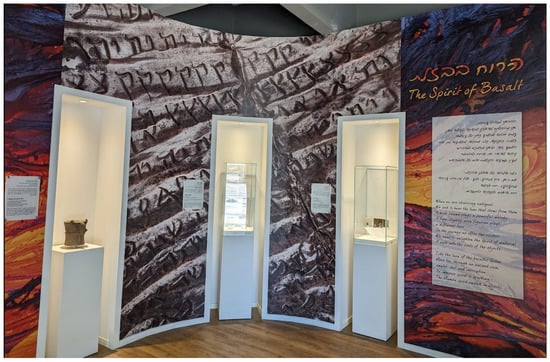
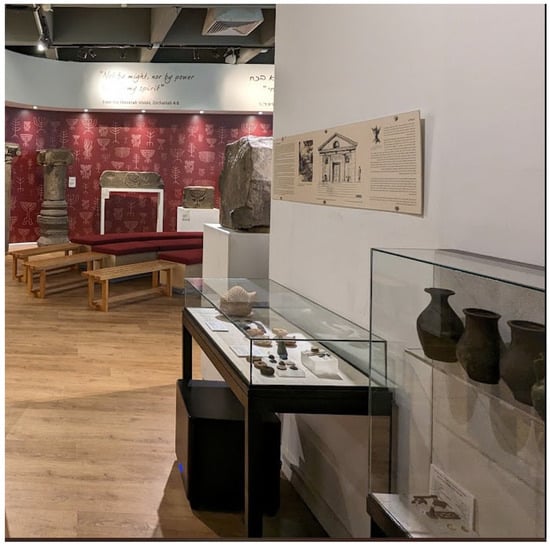
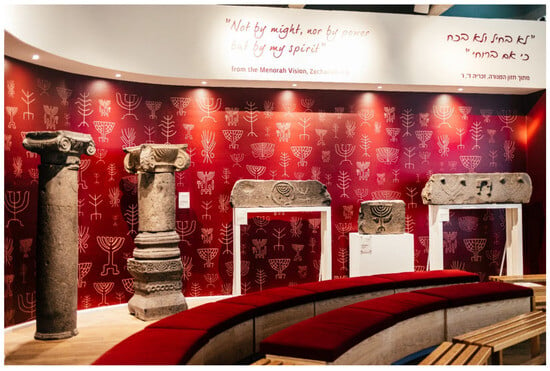
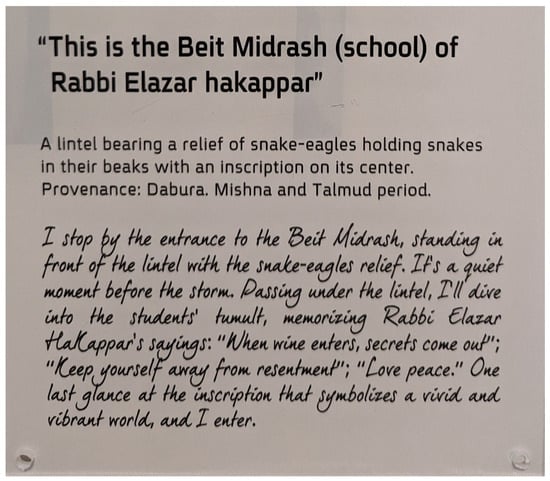
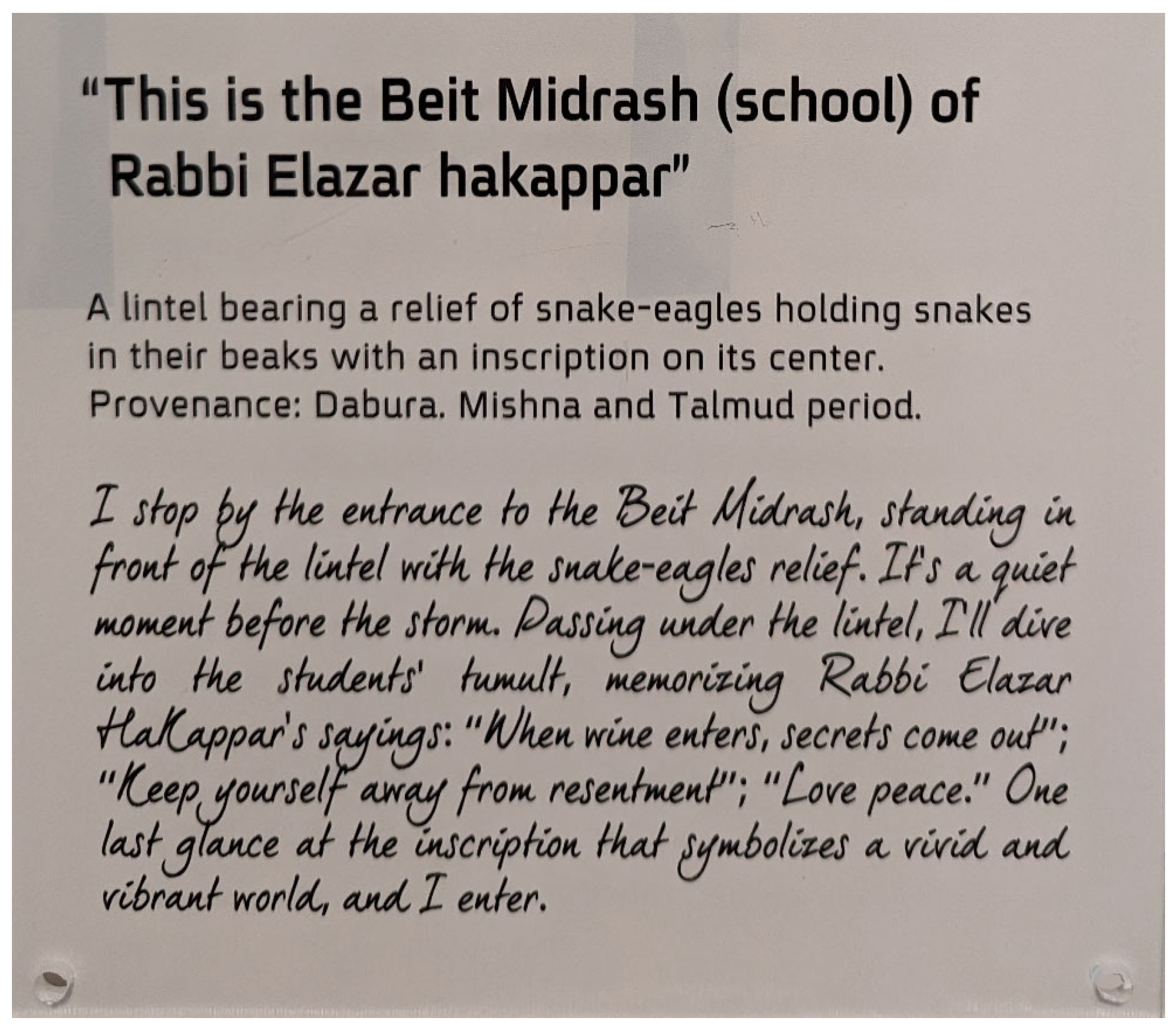
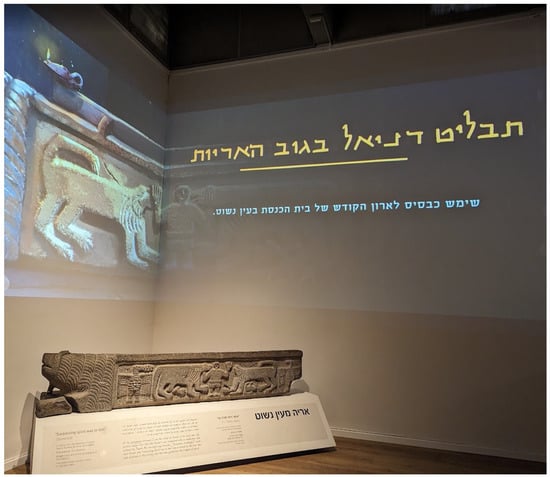
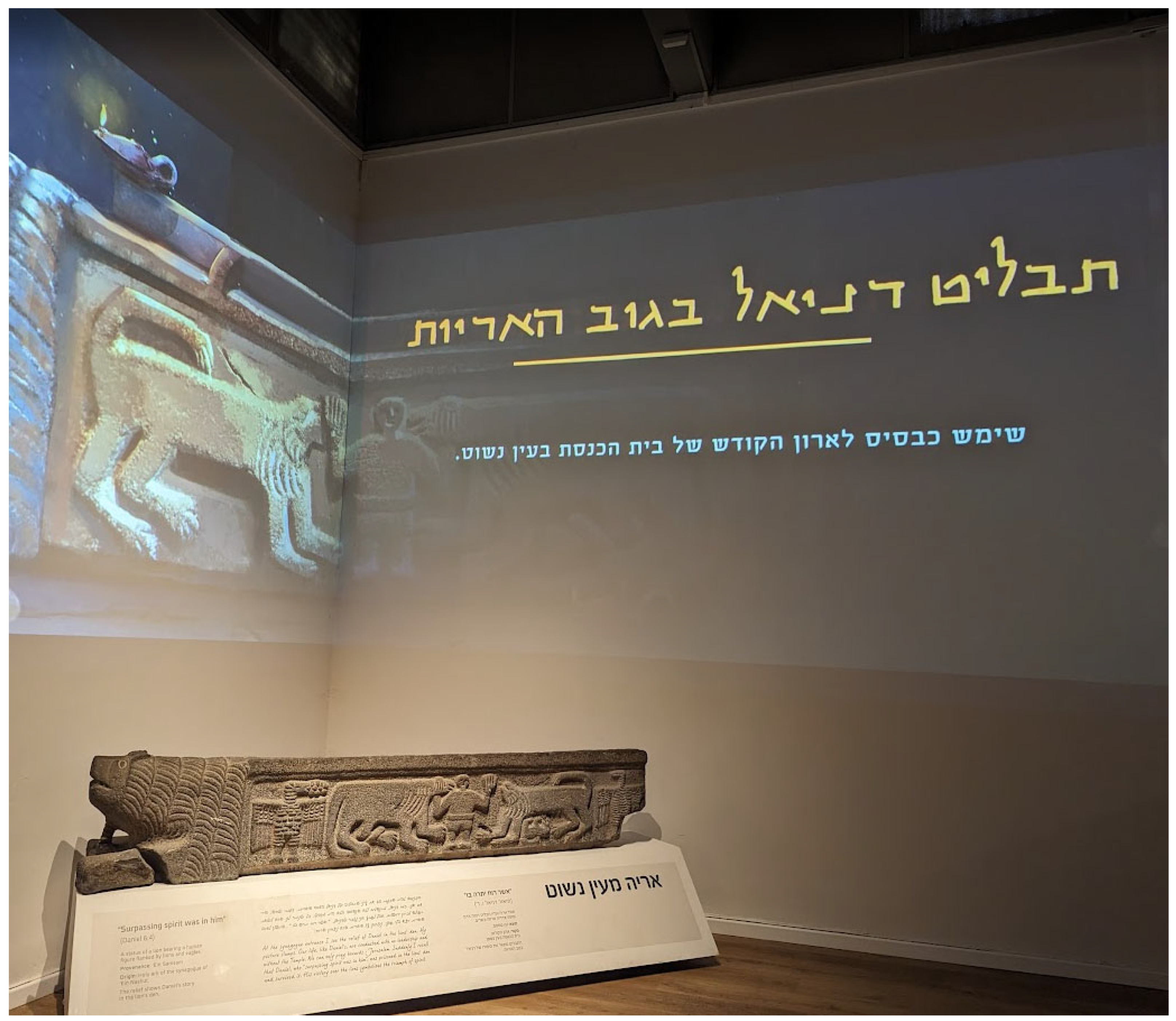
Disclaimer/Publisher’s Note: The statements, opinions and data contained in all publications are solely those of the individual author(s) and contributor(s) and not of MDPI and/or the editor(s). MDPI and/or the editor(s) disclaim responsibility for any injury to people or property resulting from any ideas, methods, instructions or products referred to in the content. |
© 2026 by the author. Licensee MDPI, Basel, Switzerland. This article is an open access article distributed under the terms and conditions of the Creative Commons Attribution (CC BY) license.