1. Introduction
Traditional European craftsmanship represents a living form of intangible cultural heritage that embodies centuries of accumulated knowledge, regional identity, and cultural expression. Yet, the sector faces a constellation of structural threats that endanger its continuity: a steady decline in the number of active practitioners, weakening intergenerational transmission of tacit skills, limited digital literacy among craft professionals, and intensifying competition from industrially produced imitations that appropriate traditional aesthetics without the underlying craft knowledge. These challenges are not confined to individual trades but affect the European craft ecosystem, requiring coordinated responses that span education, policy, economics, and digital innovation [
1].
The EU-funded CRAEFT project (Craft Understanding, Education, Training, and Preservation for Posterity and Prosperity, Grant Agreement No. 101094349, Call Topic HORIZON-CL2-2022-HERITAGE-01-04) was launched in March 2023 to address these challenges through an integrated approach combining advanced digitization, immersive learning technologies, and digital community infrastructure. The project spans eight representative craft instances across six European countries and brings together eleven partner organizations from research, education, and the craft sector [
2].
Within this broader framework, a dedicated Community Portal was designed and implemented to serve as a multi-stakeholder digital forum connecting craft professionals, researchers, educators, policymakers, and the interested public. The portal’s design followed an iterative, evidence-based process. An initial material-based community structure was developed, evaluated against stakeholder feedback and survey data from 151 European craft professionals, and subsequently restructured around five transversal thematic pillars reflecting the sector’s systemic challenges rather than its material typologies. This design evolution, documented in detail in
Section 3, represents a deliberate methodological choice grounded in Design-Based Research principles [
3,
4].
Despite the growing recognition of online communities as vehicles for knowledge exchange and professional development, the existing landscape of craft-related digital platforms remains structurally fragmented. Mono-disciplinary forums serve their specialist constituencies effectively but cannot facilitate the cross-cutting dialogue needed to address sector-wide challenges. Meanwhile, broader digital heritage platforms serve institutional stakeholders rather than craft practitioners directly. No existing platform integrates the full range of stakeholders within a single, thematically organized, stewarded digital environment. This paper addresses this gap by presenting the design, theoretical grounding, and pilot evaluation of the Craeft Community as a multi-stakeholder Virtual Community of Practice (VCoP) for European craft heritage. The study is guided by three research questions:
RQ1. How should a multi-stakeholder VCoP for European craft heritage be structured to overcome the disciplinary fragmentation and engagement limitations of material-based online community models?
RQ2. To what extent can a stewarded, thematically organized digital forum operationalize the principles of Situated Learning and Communities of Practice theory [
3,
4] in a contemporary European craft heritage context?
RQ3. What factors facilitate or inhibit community engagement in a project-based VCoP for craft heritage, and what design and governance strategies can ensure its sustainability beyond the initial funding period?
The paper makes three contributions. First, it documents an iterative design process, moving from material-based community structure to thematic pillar architecture, driven by empirical evidence from landscape mapping, stakeholder feedback, and a survey of 151 European craft professionals. Second, it provides an empirical pilot evaluation of a thematically organized, stewarded VCoP, yielding quantitative engagement data and qualitative discourse analysis across five thematic pillars. Third, it identifies and analyses the Effort-Engagement Gap, a structural tension between the investment required to sustain a dedicated forum and the habitual gravitational pull of mainstream social media platforms, as a critical finding with implications for the design of EU-funded digital communities beyond the craft sector.
The remainder of the paper is organized as follows.
Section 2 presents the theoretical background, situating the Craeft Community within Communities of Practice theory, Virtual Communities of Practice literature, the distinction between CoPs and Professional Learning Communities, and the Technology Stewardship governance model. It also reviews the existing landscape of digital craft platforms, intangible cultural heritage policy frameworks, and EU craft heritage regulations.
Section 3 describes the methodology, detailing the four-phase Design-Based Research cycle that guided the platform’s evolution.
Section 4 provides an overview of the final design of the Craeft Community Platform.
Section 5 discusses the pilot results, interpreting the Effort-Engagement Gap finding and its implications.
Section 6 concludes with a summary of contributions, limitations, and directions for future research.
3. Methodology
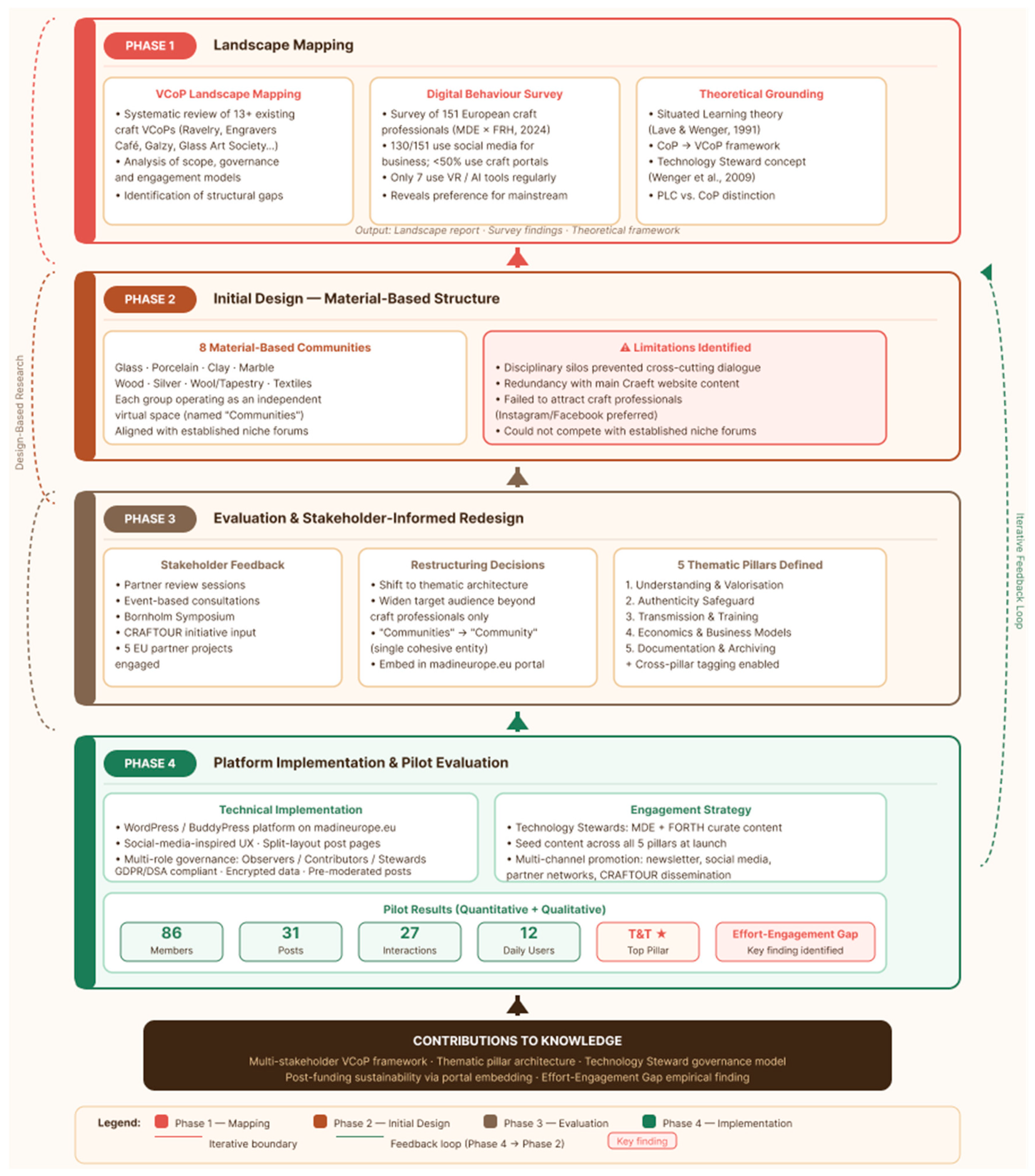
The development of the Craeft Community followed a Design-Based Research (DBR) approach, a methodology well suited to educational technology contexts in which artefacts are iteratively designed, tested, and refined in real-world settings. Rather than applying a pre-defined technical blueprint, the process integrated theoretical insights from Communities of Practice (CoP) and Virtual Communities of Practice (VCoP) with empirical evidence collected from craft professionals and heritage stakeholders across Europe. The methodology unfolded across four successive yet interlinked phases, each informing the next through reflective feedback loops (
Figure 1).
3.1. Phase 1: Landscape Mapping
Before any design decisions were made, a systematic mapping of the existing VCoP landscape in the crafts and cultural heritage sectors was conducted (see
Table 1). Thirteen English-language online communities were identified and analyzed, including Ravelry (fibre arts), Engravers Café (metal engraving), Glazy (ceramic glazing), Glass Art Society, Ganoksin Orchid Forum (metalsmithing), and the European Heritage Hub, with each platform examined for its scope, governance model, target audience, and engagement patterns. The mapping revealed a consistent structural pattern: existing craft VCoPs are predominantly mono-disciplinary, centered on a single material or technique, and serve craft professionals as their core user base. Cultural heritage platforms display greater stakeholder diversity but rarely engage with crafts as a form of intangible cultural heritage (ICH).
Parallel to the mapping exercise, a survey of 151 European craft professionals conducted by Madin Europe (MDE) in collaboration with the Future of Religious Heritage (FRH) provided empirical data on digital behavior patterns. The survey revealed that 130 of 151 respondents use social media, principally Facebook and Instagram, for professional promotion, while fewer than half use craft-dedicated portals, and only 7 respondents regularly engage with advanced digital tools such as virtual reality or generative AI. These findings shaped the strategic positioning of the Craeft Community: rather than competing with established niche platforms, the design would target an underserved space by building a multi-stakeholder, cross-disciplinary environment serving the entire crafts ecosystem.
The theoretical framework was established concurrently, grounding the design in the concept of Situated Learning and its extension into Virtual Communities of Practice [
6]. A critical distinction was drawn between organically emerging CoPs and the intentionally constructed Craeft Community, placing the latter more accurately within the category of a Professional Learning Community (PLC). The Technology Steward concept [
14] was adopted as the governance model, designating individuals responsible for understanding community needs and configuring the digital workspace accordingly.
3.2. Phase 2: Initial Material-Based Design
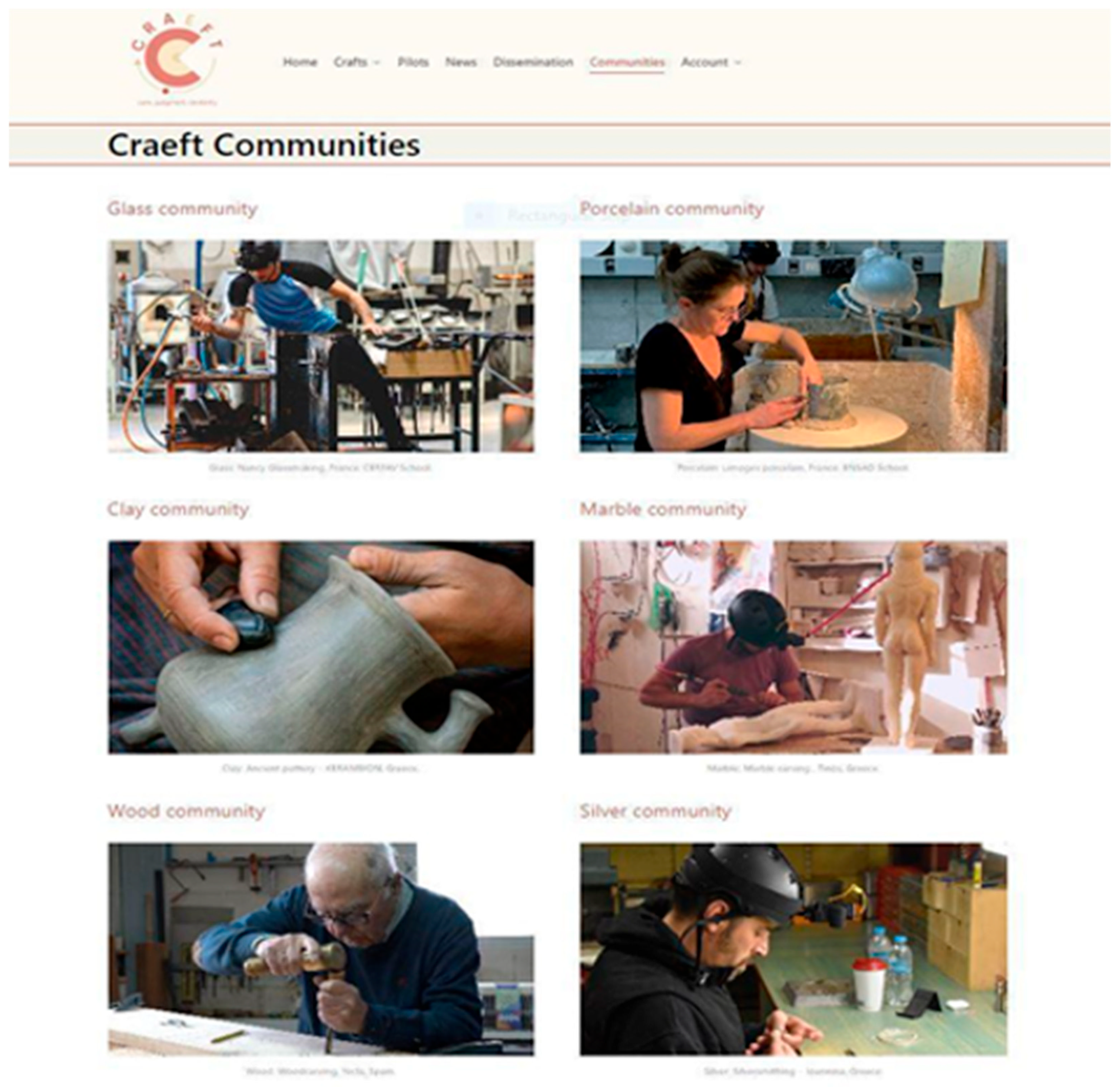
Drawing on the conventions of established craft VCoPs identified in Phase 1, the forum was initially structured around eight material-based communities: Glass, Porcelain, Clay, Marble, Wood, Silver, Wool and Tapestry, and Wool and Cotton Textiles. Named Craeft Communities in the plural, each group was designed to operate as an independent virtual space dedicated to a specific material domain, mirroring the specialist focus of platforms such as Engravers Café and intended to attract craft professionals through familiar, targeted environments.
Several structural limitations became rapidly apparent. The material-based architecture created disciplinary silos that prevented the cross-cutting dialogue needed to address systemic issues such as sustainability, education, and policy. Significant content redundancy also emerged between the forum and the main Craeft project website, reducing the platform’s perceived added value. Most critically, the structure failed to attract its intended audience: craft professionals consistently preferred established social media platforms and craft-specific forums with deep specialist expertise. The platform could neither match the singular depth of niche forums nor offer the familiarity of mainstream social media, undermining its position within the digital landscape.
3.3. Phase 3: Evaluation and Stakeholder-Informed Restructuring
Phase 3 constituted a comprehensive evaluative pivot, driven by stakeholder feedback, the survey evidence gathered in Phase 1, and internal project review. Specifically, pillar selection resulted from triangulation of three evidence sources: quantitative patterns from the 151-respondent survey, qualitative feedback gathered in stakeholder workshops, and thematic analysis of content and engagement patterns from the Phase 2 material-based forum. Convergence across these three sources, rather than reliance on any single method, guided the final selection and naming of the five thematic pillars. Two strategic decisions emerged from this process. First, the thematic organization of the forum would replace the material-based structure, with content reorganized around five transversal pillars reflecting the structural challenges of the European crafts sector rather than its material typologies. Second, the target audience would be broadened beyond craft professionals to encompass a true multi-stakeholder ecosystem, including artisans, researchers, educators, policymakers, IT and AI actors, and enthusiasts.
The five thematic pillars were defined as follows:
Understanding and Valorization—exploring the cultural, social, and economic value of crafts; fostering self-valorization among practitioners and awareness among the public;
Authenticity Safeguard—protecting genuine artisanship and territorial heritage; supporting Geographical Indications (GIs) for craft products at EU level;
Transmission and Training—mapping and promoting formal and non-formal educational pathways, including digital and hybrid learning formats, VR applications, and certification models;
Economics and Innovative Business Models—supporting sustainable economic frameworks for craft enterprises; attracting new generations into the sector;
Documentation and Archiving—preserving endangered craft knowledge through advanced documentation techniques; contributing to UNESCO intangible cultural heritage frameworks.
The platform was also designed to support cross-pillar tagging, enabling individual posts to appear across multiple pillars and operationalizing the interdisciplinary ambition of the redesign. Alongside the thematic restructuring, a sustainability strategy was enacted: rather than operating as a standalone project platform at risk of abandonment after funding ended, the forum was embedded within the pre-existing madineurope.eu portal, leveraging its established network, content infrastructure, and long-term operational capacity.
3.4. Phase 4: Platform Implementation and Pilot Evaluation
The redesigned platform was implemented using WordPress v6.8 with BuddyPress 14.4.0 social networking functionality, hosted on madineurope.eu, with a social-media-inspired interface designed to lower participation barriers for users accustomed to mainstream platforms. The design adopted a split-layout post page structure, tiered user roles (Observers, Contributors, Stewards), pre-moderation of all posts by Technology Stewards from MDE and FORTH, and GDPR/DSA-compliant data governance throughout.
A structured engagement strategy was executed across multiple channels: seed content was created by Technology Stewards to populate all five pillars at launch, and targeted dissemination was channeled through newsletters, social media, partner networks, and the broader CRAFTOUR initiative encompassing five additional EU-funded craft projects, namely Colour4crafts, Hephaestus, Culturality, MOSAIC, and Tracks4crafts.
The pilot phase yielded 86 registered members, 31 posts, 27 interactions, and an average of 12 daily users, with a mean session duration of 57 s. Evaluation was structured across two complementary dimensions:
Quantitative assessment: user registration, posting activity, interaction counts, and pillar-level traffic analysis. The Transmission and Training pillar attracted the highest engagement, confirming skill preservation and educational innovation as the sector’s most pressing concerns among participants.
Qualitative assessment: thematic discourse analysis of community discussions. High-quality exchanges emerged around Geographical Indications, the tension between formal vocational education and tacit workshop-based knowledge, the visibility gap between intangible and tangible heritage, and the integration of digital tools into craft practice. A key structural finding, termed the Effort-Engagement Gap, was identified: despite producing substantive and high-quality content, the platform experienced lower participation rates than anticipated, attributed primarily to the habitual gravitational pull of mainstream social media and the English-only interface creating linguistic barriers for European craft practitioners.
The distribution of posts and interactions across the five thematic pillar is presented in
Table 2.
Taken together, the four phases operationalize a coherent DBR cycle that moves between problem identification, design intervention, and reflective redesign, as visualized in
Figure 2. The iterative nature of the process is central to the study’s contribution: each phase generated evidence that directly shaped the next, ensuring that the final platform architecture reflects empirically grounded decisions rather than a priori assumptions.
4. The Craeft Community Platform
The Craeft Community is a multi-stakeholder digital forum hosted at madineurope.eu, designed to function as a Virtual Community of Practice for the European crafts ecosystem. Built on WordPress with BuddyPress social networking functionality, the platform adopts a social-media-inspired interface to lower participation barriers for users already accustomed to mainstream platforms, while simultaneously providing the structured, moderated environment that a professional learning community requires.
4.1. Thematic Structure and Pillars
The platform is organized around five transversal thematic pillars. Each pillar opens with an introductory text that contextualizes its scope and invites participation. The platform supports cross-pillar tagging, enabling individual posts to be associated with more than one thematic area, thereby operationalizing the interdisciplinary ambition of the redesign and reflecting the interconnected nature of contemporary craft challenges.
4.1.1. Understanding and Valorization
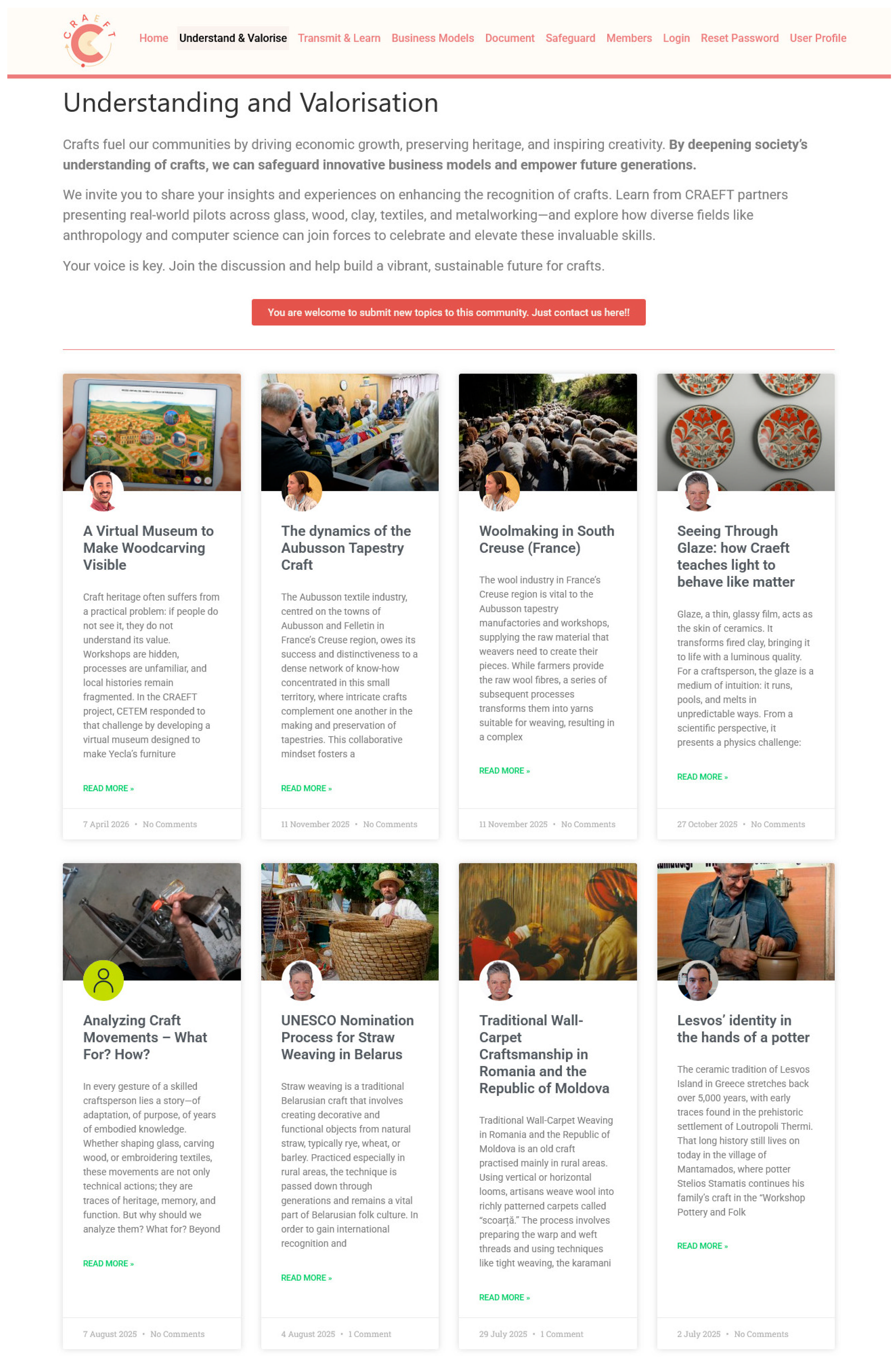
This pillar (see
Figure 3) addresses one of the most foundational yet often overlooked dimensions of the European craft crisis: the widespread undervaluation of craft as a form of knowledge, cultural practice, and economic activity. European craft professionals face a persistent recognition deficit, in which their skills are frequently perceived as artisanal rather than expert, manual rather than intellectual, and historical rather than contemporary. This pillar creates a space for exploring and challenging these perceptions, fostering a richer understanding of what crafts represent as living, socially embedded practices.
Discussions within this pillar invite participants to engage with the cultural, social, and economic value that craft practices carry, from their contribution to local and regional identity to their role in sustaining communities and supply chains for both tangible and intangible cultural heritage. A recurring theme in pilot discussions was the blurred boundary between art and craft, particularly in material traditions such as marble carving. Contributors drew on historical and cross-cultural perspectives, noting that in many linguistic and cultural traditions, including the Ancient Greek concept of techne and the Latin ars, art and craft were not separated but understood as unified forms of skilled, creative expression. References to the Arts and Crafts movement and William Morris reinforced the argument that the contemporary division between intellectual art and manual craft is historically recent and conceptually contestable. The pillar also supports the self-valorization process among craft practitioners themselves, many of whom have internalized the undervaluation of their own work. By providing a space for practitioners to articulate their expertise, receive recognition from peers across disciplines, and engage with researchers and educators who study craft value, the pillar functions as a site of professional identity formation. This aligns with the Situated Learning framework’s emphasis on identity as an integral dimension of community membership: becoming a full participant in a community of practice is not only about acquiring skills but about coming to see oneself as a practitioner whose knowledge is valued and worth transmitting.
4.1.2. Authenticity Safeguard
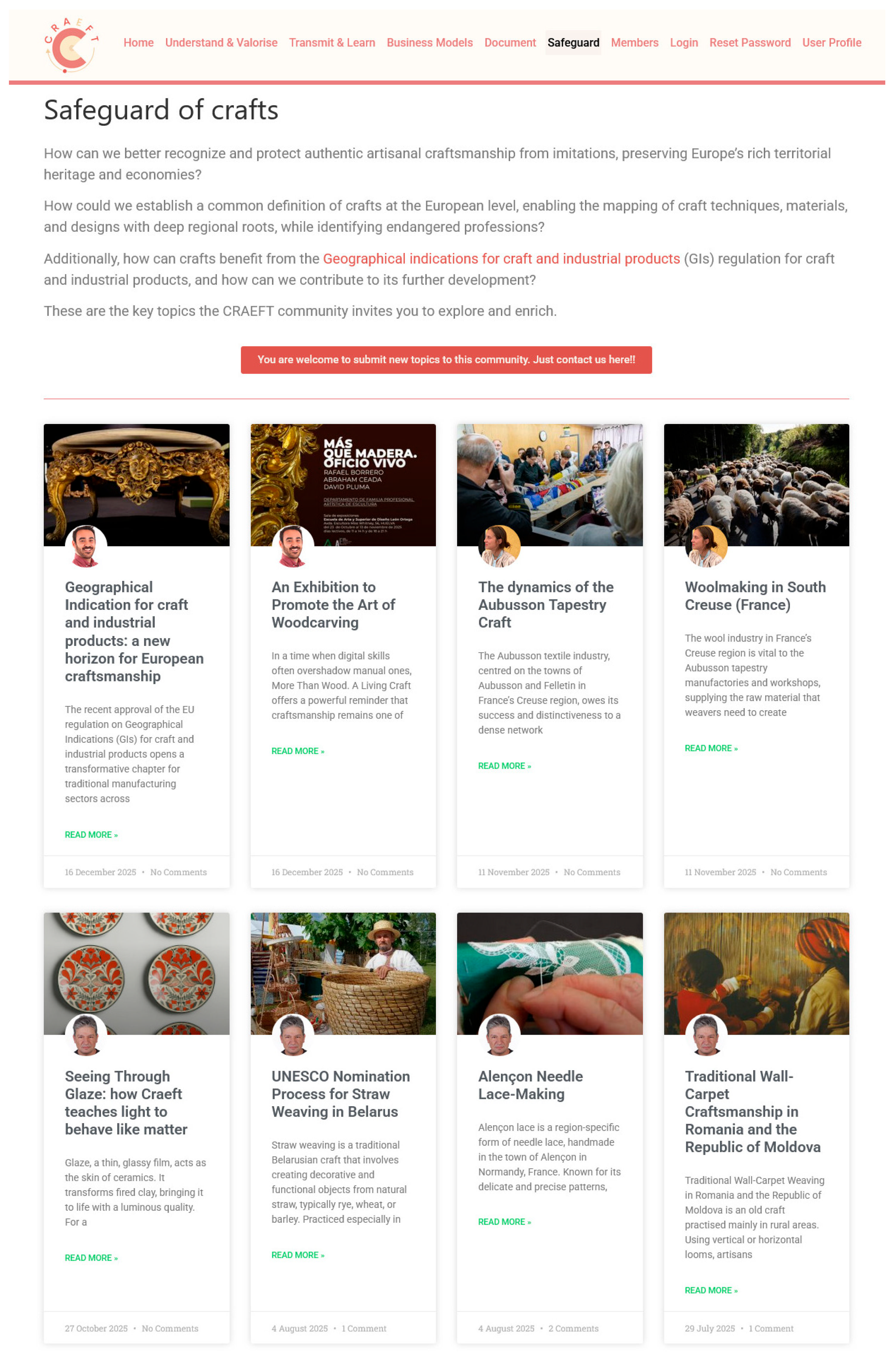
The Authenticity Safeguard pillar (see
Figure 4) responds to one of the most pressing policy and market challenges facing European craft: the proliferation of industrial imitations that appropriate the aesthetic language of traditional craft without the underlying knowledge, materials, or territorial roots. The erosion of authenticity represents not only an economic threat to individual craft enterprises but a structural risk to the entire ecosystem of knowledge that craft practices embody. This pillar provides a space for craft professionals, legal experts, policymakers, and researchers to engage with the instruments, regulatory frameworks, and community strategies available to protect genuine artisanship.
A central focus is the implementation and implications of Regulation (EU) 2023/2411 [
27], which established the first EU-wide system of Geographical Indications (GIs) for craft and industrial products. The regulation protects iconic craft traditions such as Bohemian glass, Limoges porcelain, Solingen knives, and Donegal tweed, extending to craft the same legal protection previously reserved for agricultural products [
27]. The Authenticity Safeguard pillar was designed in anticipation of this regulatory development, positioning the community as a space where practitioners can collectively interpret what GI protection means for their specific trades, what the application and certification processes entail, and how territorial heritage can be mapped and documented in ways that support future GI claims.
Pilot discussions within this pillar revealed a productive tension between regulatory enthusiasm and practitioner skepticism. Some participants welcomed GIs as a powerful tool for differentiation in a globalized market; others raised concerns about administrative burden and the risk that certification processes could divert time and resources from actual production. This discourse demonstrates the pillar’s potential as an evidence-gathering space: the grounded, practice-based perspectives of craft professionals on regulatory developments provide precisely the kind of bottom–up intelligence that policymakers need but rarely have direct access to. The cross-pillar tagging functionality allowed several Authenticity Safeguard discussions to simultaneously appear under the Economics and Innovative Business Models pillar, reflecting the inherently intersectional nature of questions around territorial protection and market sustainability.
4.1.3. Transmission and Training
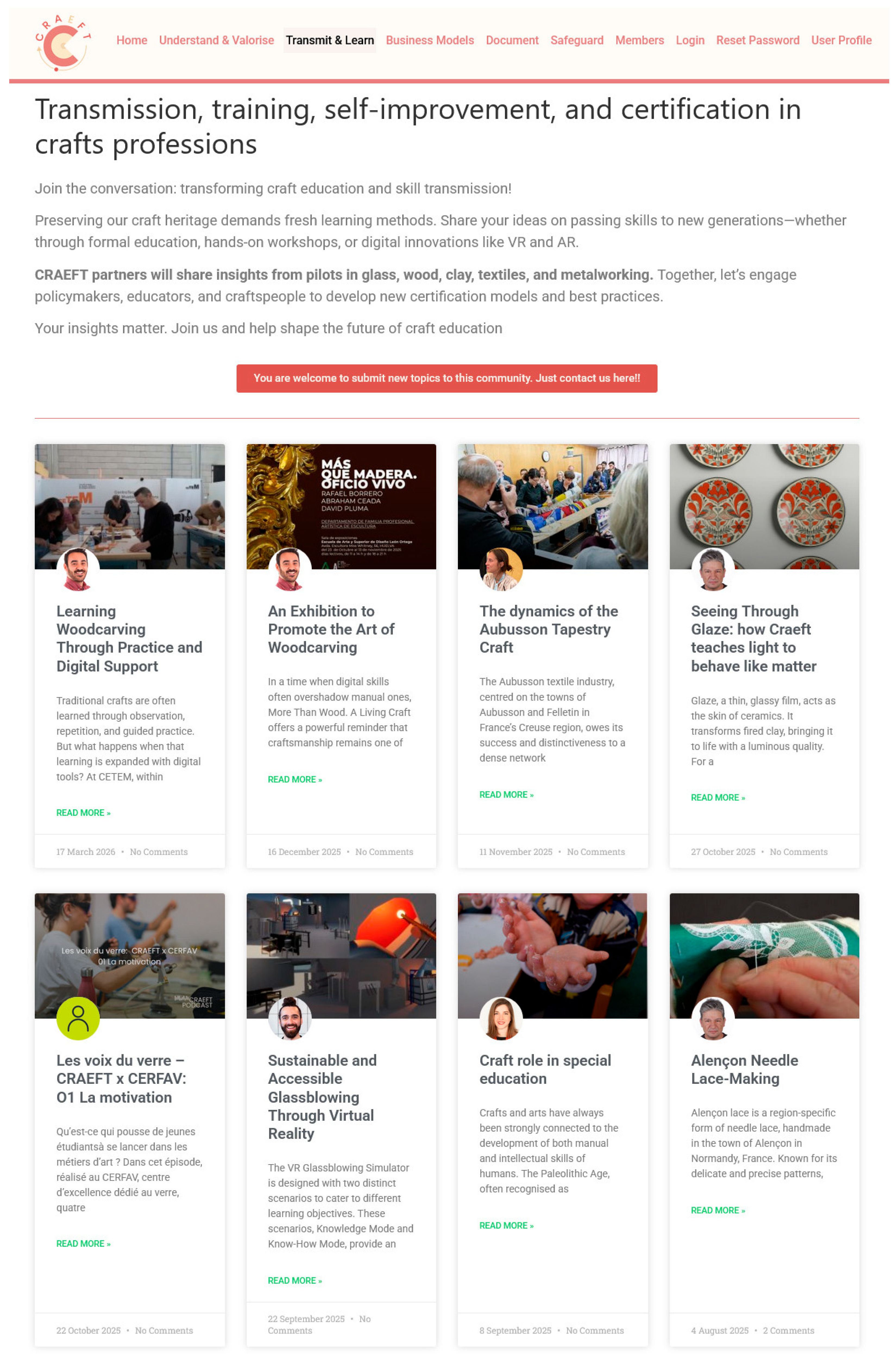
The Transmission and Training pillar (see
Figure 5) was the most engaged section of the Craeft Community throughout the pilot phase, attracting the highest volume of posts, comments, and page visits among all five thematic areas. This finding reflects a sector-wide consensus that the fragility of intergenerational knowledge transmission is the craft ecosystem’s most urgent challenge. The pillar maps and promotes the full spectrum of educational pathways available to craft practitioners and their apprentices, from traditional workshop-based learning and formal vocational education to emerging digital and hybrid formats, including e-learning platforms, virtual reality (VR), augmented reality (AR), and blended learning models.
A recurring debate within the pillar concerned the tension between tacit, embodied craft knowledge and the demands of formalized educational systems. Contributors questioned how the sensitivity to materials, the trained eye, and the gestural intelligence that define master craftsmanship can survive the transition from workshop apprenticeship to institutional classroom settings. The transition from traditional master–apprentice systems to vocational schools and public educational institutions raised concerns about the potential emergence of parallel knowledge systems: one academic and certified, the other rooted in artisanal tradition and resistant to standardization. These discussions align directly with Lave and Wenger’s observation that apprenticeship has been marginalized in dominant educational theory despite its historical centrality as a mode of knowledge production [
5].
The pillar also served as a space for sharing innovation in craft education, including the use of immersive technologies. The CRAEFT project’s own work on VR-based craft skill documentation and training was shared through this pillar, generating discussions about the potential and the limits of digital tools in replicating embodied learning experiences. The pillar additionally hosts content related to certification models and endangered skills mapping, connecting the community’s educational discussions to the broader UNESCO Intangible Cultural Heritage framework’s emphasis on identifying and supporting transmission mechanisms for at-risk practices. The cross-pillar reach of this content, frequently tagged under Documentation and Archiving as well, reflects the deeply interwoven relationship between training, preservation, and collective memory in the craft domain.
4.1.4. Economics and Innovative Business Models
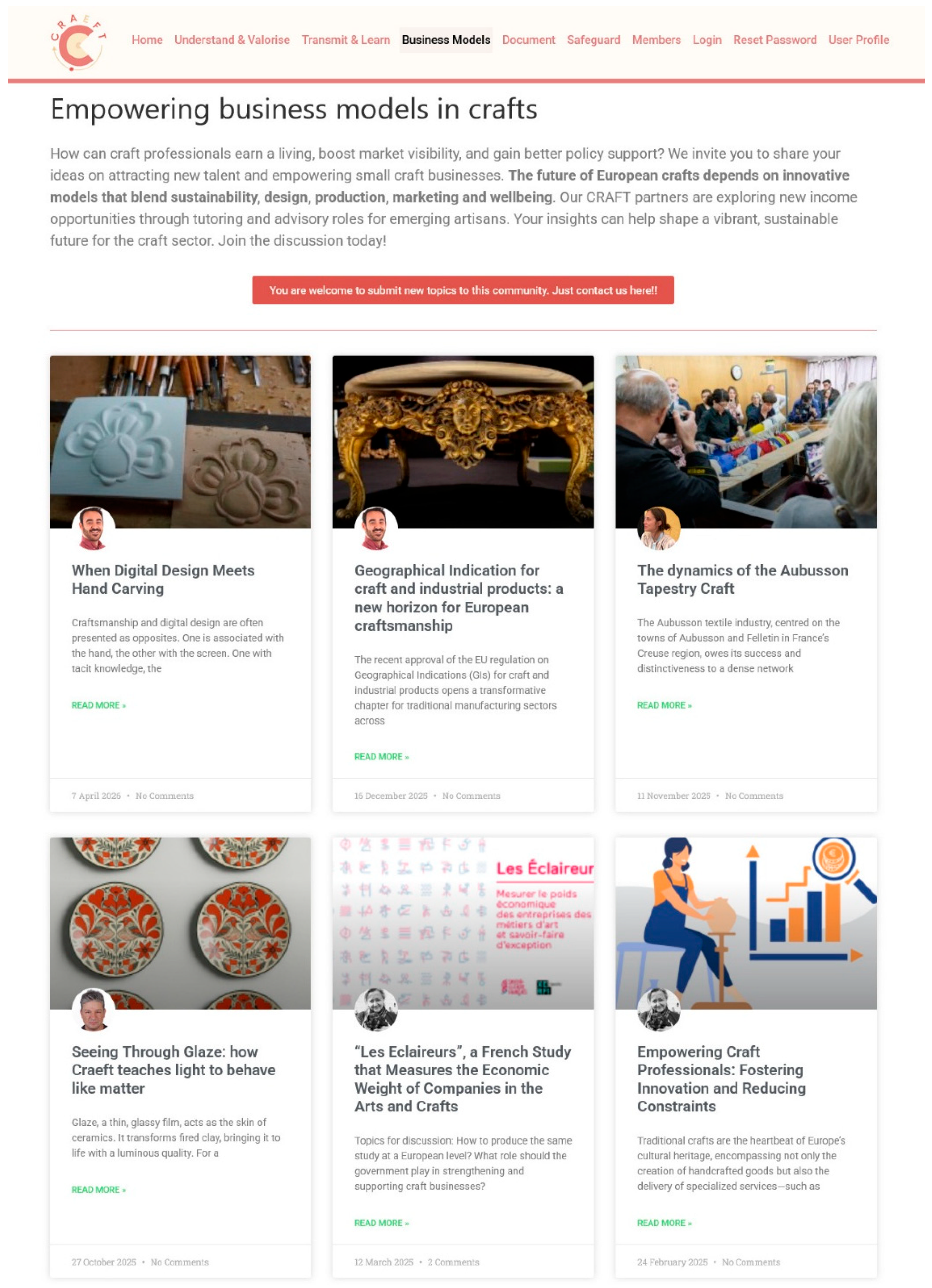
The Economics and Innovative Business Models pillar (see
Figure 6) addresses the structural economic vulnerabilities that threaten the long-term viability of craft enterprises across Europe. Small and micro craft businesses face compounding pressures: competition from industrially produced goods that appropriate traditional aesthetics at a fraction of the cost, limited access to finance and business development support, low consumer awareness of the difference between authentic craft and industrial imitation, and a pipeline challenge in attracting younger generations to careers in the craft sector. This pillar provides a space for practitioners, economists, educators, and policymakers to collectively explore the business models, policy instruments, and innovative approaches needed to make craft enterprises economically sustainable for future generations.
A central theme is the role of innovation in maintaining economic relevance without sacrificing craft identity. Community contributors engaged with questions about where the boundary lies between authentic craft innovation and the dilution of traditional practice: at what point does the integration of digital fabrication tools, new materials, or contemporary design sensibilities enrich a craft tradition, and at what point does it undermine the very expertise and distinctiveness that make craft products valuable? These debates reflect the broader tension between preservation and evolution that runs through all dimensions of the craft ecosystem.
The pillar also serves as a hub for sharing concrete business model examples, including income diversification strategies such as tutoring and workshop provision, tourism and experiential economy integration, co-production models that combine artisan skill with design or technology expertise, and digital direct-to-consumer sales. The connection between this pillar and the Authenticity Safeguard pillar is operationalized through cross-pillar tagging: discussions about Geographical Indications and their economic implications surface in both spaces, reflecting the inseparability of authenticity protection and economic resilience as strategic priorities for the craft sector’s future.
4.1.5. Documentation and Archiving
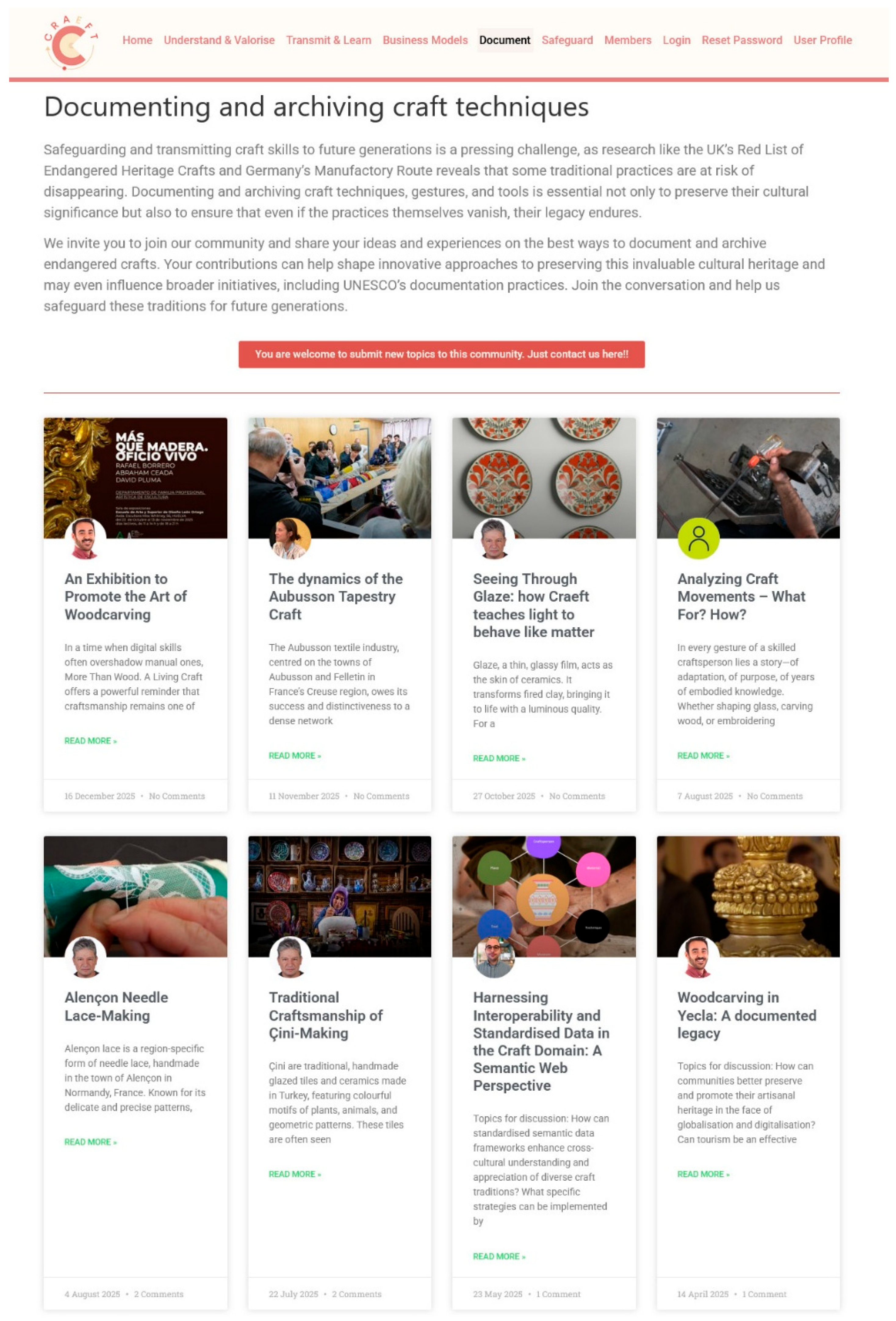
The Documentation and Archiving pillar (see
Figure 7) addresses the irreversible dimension of craft heritage loss: the recognition that some craft practices, if not systematically documented before their last practitioners retire, will be permanently lost. This urgency is empirically documented in initiatives such as the Heritage Crafts Association’s Red List of Endangered Heritage Crafts in the United Kingdom and the German Manufactory Route (Deutsche Manufakturen Straße) list, both of which confirm through ongoing research that the window for capturing living knowledge of certain craft techniques is rapidly closing. The pillar creates a space where practitioners, digital heritage specialists, researchers, and ICH policymakers can share methods, tools, and frameworks for comprehensive craft knowledge documentation.
The scope of documentation discussed within this pillar extends well beyond text-based description or photographic cataloguing. Contributors have engaged with advanced documentation approaches including three-dimensional scanning and digital modelling of craft artefacts and tools, video-based gesture capture of skilled hand movements and production sequences, semantic web and Linked Open Data approaches that connect craft knowledge to broader cultural heritage ontologies, and the use of the CRAEFT project’s own documentation protocol for capturing the full complexity of craft knowledge across its material, gestural, contextual, and transmission dimensions. A post on harnessing interoperability and standardized data in the craft domain from a Semantic Web perspective generated cross-disciplinary dialogue between digital heritage technologists and craft practitioners, illustrating the pillar’s capacity to bridge technical and artisanal expertise.
The pillar also connects to the broader UNESCO Intangible Cultural Heritage framework, exploring how advanced documentation can inform national ICH inventories, support nomination processes, and contribute to the development of more dynamic, community-centered approaches to ICH safeguarding that move beyond static listing toward active transmission support. Posts within this pillar frequently carry cross-pillar tags into Transmission and Training, reflecting the inseparability of documentation and pedagogy: a well-documented craft technique is not merely an archive but a resource for future learners, making documentation itself a form of transmission infrastructure.
4.2. Interface and User Experience
The platform’s homepage serves as a welcoming gateway, presenting an overview of all five pillars, each with a visible introductory description. Individual pillar pages display posts in reverse chronological order, with each entry represented by a prominent visual, a title, a brief teaser text, the author’s identity, a comment count, and a publication date. A split-layout post page places content and visuals on the left and the comment thread on the right, maintaining visual clarity while encouraging dialogue. All posts and discussions are publicly visible to non-registered visitors, but the ability to comment and post is reserved for registered members, a deliberate design choice to maximize reach while incentivizing registration. A dedicated Members page provides a transparent directory of all registered users, enabling peer discovery and direct messaging and fostering the interpersonal connections that are central to communities of practice.
4.3. Access, Roles, and Governance
The platform operates with three-tiered user roles, reflecting the graduated participation model central to Legitimate Peripheral Participation theory. Observers may browse all content without registering. Contributors are registered members with full posting and commenting rights. Technology Stewards, designated representatives from Madin Europe (MDE) and the Foundation for Research and Technology Hellas (FORTH), hold moderation and administrative responsibilities. All posts undergo pre-moderation by Technology Stewards before publication, ensuring content quality, community guideline adherence, and alignment with the platform’s purpose. Comments are published immediately but remain subject to retrospective steward review, balancing the need for fluid dialogue with the maintenance of a safe, high-quality knowledge space. Users may report suspicious content, distributing collective responsibility for community integrity across the membership [
7].
4.4. Privacy, Security, and Data Governance
The platform complies with the General Data Protection Regulation (GDPR) and the Privacy and Electronic Communications Directive (ePrivacy). Registration requires only minimal personal data, specifically name, email address, and password, while additional profile information, such as organizational affiliation and craft specializations, may be added voluntarily. Sensitive data, including email addresses and passwords, are not exposed to other members. All data exchanges are encrypted via secure protocols, and the platform maintains regular security audits and patch schedules. Users retain full control over their personal data, including the ability to deactivate or delete their account at any time.
4.5. Sustainability and Ecosystem Integration
A key architectural decision was the embedding of the Craeft Community within the pre-existing madineurope.eu portal rather than operating it as a standalone project platform. This integration leverages an established European network, existing content infrastructure, and long-term operational capacity, directly addressing the well-documented risk of platform abandonment following the end of EU project funding. The platform is also positioned as a central dissemination hub for the broader CRAFTOUR initiative, encompassing five additional EU-funded craft projects: Colour4crafts, Hephaestus, Culturality, MOSAIC, and Tracks4crafts, amplifying both reach and relevance beyond the CRAEFT project’s own network.
5. Discussion
This study set out to address three research questions: how a multi-stakeholder VCoP should be structured to overcome disciplinary fragmentation; to what extent a stewarded digital forum can operationalize Situated Learning and Communities of Practice theory; and what factors facilitate or inhibit engagement and post-funding sustainability. The findings from the pilot phase offer substantive, if provisional, answers to each of these questions and illuminate a set of broader tensions inherent in designing intentional digital communities for professional heritage sectors.
5.1. Thematic Organisation as a Response to Disciplinary Fragmentation
The transition from a material-based to a thematically organized architecture represents the study’s most consequential design intervention. The initial eight material-based communities replicated the structural logic of existing niche craft forums such as Engravers Café or the Glass Art Society, which achieve depth within a single discipline but are structurally incapable of addressing sector-wide challenges [
17]. The pilot data confirm that this replication strategy was misaligned with the Craeft Community’s multi-stakeholder ambition: craft professionals consistently preferred established platforms where singular expertise was already concentrated, and the broader stakeholder audience had no natural entry point into a material-categorized space.
The shift to five transversal thematic pillars resolved this by inverting the organizational logic. Rather than asking “what do you make?”, the redesigned platform asks “what challenges do you face?”, a question equally answerable by an artisan, a researcher, an educator, or a policymaker. The emergence of Transmission and Training as the most engaged pillar is theoretically significant: it confirms that knowledge transmission, the core concern of Lave and Wenger’s Situated Learning framework, is also the sector’s most acutely felt practical challenge [
5]. This convergence between the theoretical framework and empirical findings suggests that the platform’s design is well-aligned with genuine community needs rather than externally imposed research categories.
The cross-pillar tagging functionality further operationalized interdisciplinarity by allowing a single post to surface across multiple thematic contexts. Qualitative analysis of community discussions revealed substantive exchanges at precisely these intersections: debates around Geographical Indications simultaneously engaged the Authenticity Safeguard and Economics pillars, while discussions of VR-based craft training spanned Transmission and Training and Documentation and Archiving. These cross-cutting dialogues represent the kind of systemic, sector-wide reasoning that mono-disciplinary platforms cannot structurally support [
17], addressing the first research question directly.
5.2. Operationalising Situated Learning in a Digital Forum
The second research question concerns the degree to which a deliberately designed VCoP can operationalize the apprenticeship-based learning model described by Lave and Wenger. The pilot provides evidence that this operationalization is achievable, though the mechanisms differ from those of face-to-face craft apprenticeship in important ways.
The three-tier role structure of Observer, Contributor, and Technology Steward maps onto the concept of Legitimate Peripheral Participation (LPP) in a meaningful way [
5]. Observers occupy the legitimate periphery, able to witness and absorb community discourse without the commitment of active posting. Contributors represent the intermediate zone of growing participation, engaging with content, adding commentary, and beginning to shape the community’s shared repertoire. Technology Stewards embody the role of master practitioners in the digital sense, not possessors of craft skill but custodians of community knowledge, whose seed content, moderation decisions, and facilitation activities model the norms and values of the space [
14]. This layered structure creates the conditions for what Wenger describes as increasing participation, allowing members to move from peripheral observation toward fuller engagement at their own pace and on their own terms [
6].
The qualitative discourse analysis reinforces this interpretation. The discussions that emerged around formal versus tacit craft knowledge, the tension between vocational certification and workshop-based transmission, and the integration of digital tools into traditional practice all reflect the kind of reflective practitioner dialogue that Communities of Practice theory identifies as generative of shared repertoire [
6]. Participants were not merely exchanging information; they were collectively negotiating the meaning of craft knowledge in a changing technological and regulatory landscape. This is precisely the dynamic that Wenger identifies as constitutive of a CoP’s practice dimension, and its presence in the pilot data suggests that the platform is functioning as more than an information repository.
The blended nature of the Craeft Community, embedded within a portal that also organizes in-person events, hybrid workshops, and networking activities, addresses the legitimate scholarly concern that virtual environments cannot fully replicate the embodied, co-present dimensions of craft apprenticeship [
6]. Rather than claiming to substitute for face-to-face transmission, the platform functions as a complementary layer that extends and sustains community connections between physical encounters, consistent with Wenger, White, and Smith’s vision of technology stewarding a community’s full range of activities rather than replacing its human infrastructure [
14].
5.3. The Effort-Engagement Gap and Structural Inhibitors
The third research question addresses the factors that facilitate or inhibit engagement and sustainability. The pilot identified a structural tension we term the Effort-Engagement Gap: despite producing substantive and qualitatively high-value content, the platform experienced lower-than-anticipated participation rates. Two primary inhibitors account for this gap.
The first is the gravitational pull of mainstream social media. Survey data established that 130 of 151 European craft professionals use Facebook or Instagram for professional purposes, and these platforms offer a deeply habitual interaction environment with minimal friction. Contributing to a dedicated forum requires registration, navigation to a new platform, and composition of a structured post, a set of micro-efforts that represent a meaningful participation cost relative to posting on a familiar social network. This asymmetry is a well-documented challenge for purpose-built professional forums across sectors [
9] and is particularly acute for a platform targeting craft professionals whose digital engagement patterns are strongly anchored in visual, informal, social media environments.
The second inhibitor is the English-only interface. The Craeft Community serves a pan-European constituency, and many of its potential members work and communicate primarily in languages other than English. This creates a dual barrier: linguistic access for practitioners with limited English proficiency, and a cultural signal that the platform is oriented toward internationally mobile professionals rather than locally embedded artisans. This finding aligns with observations from the VCoP landscape mapping, which noted that many craft communities operate in language-specific contexts and that even internationally active forums such as Engravers Café are navigated by non-English speakers only using translation tools [
17]. Future iterations of the platform should consider multilingual introductory content and pillar descriptions, even if discussions themselves remain in English, to lower the perceived threshold for participation among non-Anglophone communities. A related but distinct concern is the digital divide within the European craft sector. As the platform shifts toward a thematic, professionalized model, it risks favoring digitally fluent, institutionally connected stakeholders over grassroots artisans with limited digital literacy. The Observer role partially mitigates this by allowing full content access without registration, and future iterations should extend this inclusivity through simplified onboarding, visual/video-based content formats requiring less text literacy, and offline or hybrid participation channels.
Facilitating factors also emerged clearly from the pilot. The Technology Steward model, distributing moderation and content-seeding responsibilities across institutional partners rather than relying on volunteer community moderation, proved essential to maintaining content quality and ensuring that all five pillars remained active from the outset [
14]. The embedding within madineurope.eu provided an immediate audience and a sustainability infrastructure that standalone project platforms consistently lack [
6]. The CRAFTOUR network amplified reach by connecting the community to five additional EU-funded craft projects, demonstrating how consortium-level dissemination can meaningfully accelerate early membership growth.
5.4. Implications for VCoP Design in Heritage Sectors
Taken together, the findings carry several design implications for researchers and practitioners developing digital communities for heritage and cultural sectors. First, thematic organization around sector challenges rather than material or disciplinary categories is more effective for multi-stakeholder communities than the specialist forum model [
17]. Second, the Technology Steward role is not a peripheral governance detail but a core design component: active, institutionally supported stewardship is what distinguishes a sustained professional community from an abandoned project platform [
14]. Third, sustainability requires embedding the VCoP within pre-existing digital infrastructure rather than launching it as a standalone artefact, particularly in the context of time-limited EU project funding [
6]. A related consideration is the long-term governance trajectory of the community once Horizon Europe funding concludes. We propose a phased stewardship handover model: during the funding period, MDE and FORTH Technology Stewards continue moderation and seeding while progressively identifying and training practitioner-volunteers to assume stewardship responsibilities. This mirrors governance transitions documented in open-source and volunteer-led digital communities. Fourth, the Effort-Engagement Gap is a structural feature of purpose-built professional forums competing with social media, and its mitigation requires community-building strategies that meet potential members on the platforms where they already spend time, using those spaces as entry points rather than competitors [
9]. Positioned this way, the Craeft Community is best understood not as a substitute for mainstream platforms like Facebook or Instagram, nor purely as a competitor to niche material-based forums, but as a specialized thematic layer that bridges practitioners across both spaces, with its long-term viability contingent on successful stewardship transition rather than on displacing existing platform use.
The Craeft Community pilot thus advances the broader argument that digital environments can meaningfully support the transmission of intangible cultural heritage, not by digitizing craft knowledge as an archive, but by maintaining the living community of practitioners, educators, and policymakers who collectively produce, negotiate, and sustain that knowledge over time [
20].
Beyond community governance, technical interoperability represents a further limitation of the current implementation. The platform does not implement established digital heritage metadata standards such as Dublin Core or the CIDOC Conceptual Reference Model (CIDOC CRM). Adopting these standards in future iterations would strengthen interoperability with institutional infrastructures such as Europeana and the ECCCH, and align the Craeft Community more closely with best practices in digital heritage curation. The majority of the work needed to achieve this, has been done by relevant works of the authors, reducing the required efforts for future amendments [
30,
31].
6. Conclusions
This paper has presented the design, iterative development, and pilot evaluation of the Craeft Community, a multi-stakeholder Virtual Community of Practice developed within the Horizon Europe CRAEFT project (Grant Agreement No. 101094349) to support the preservation, transmission, and valorization of European craft heritage. Through a Design-Based Research approach unfolding across four successive phases, the study has demonstrated that a thematically organized, institutionally stewarded digital forum can meaningfully operationalize apprenticeship-based learning principles in an online environment, advancing craft heritage preservation, economic resilience, and hybrid professional identity formation at the intersection of craft and technology.
6.1. Principal Findings
Three principal findings emerge from the study. First, the restructuring of the platform from a material-based to a thematically organized architecture was the critical design decision that enabled multi-stakeholder participation. Organizing the forum around the structural challenges of the crafts sector rather than its material typologies created a space where artisans, researchers, educators, policymakers, and technology actors could engage as equals, each bringing a distinct perspective to shared problems [
17]. The Transmission and Training pillar’s dominance in engagement metrics confirms that knowledge transmission is both the theoretical core of the Situated Learning framework [
5] and the sector’s most urgently felt practical concern.
Second, the Technology Steward model proved indispensable to the community’s early viability. Distributed stewardship responsibilities across institutional partners from MDE and FORTH ensured consistent content quality, sustained pillar activity from launch, and maintained the moderated environment necessary for substantive professional dialogue [
14]. This finding reinforces Wenger, White, and Smith’s argument that technology stewardship is not a support function but a constitutive element of a functioning digital community [
14].
Third, the Effort-Engagement Gap identified in the pilot represents a structural challenge that extends beyond this specific platform. The coexistence of high content quality with lower-than-anticipated participation rates reflects a broader tension between purpose-built professional forums and the habitual gravitational pull of mainstream social media and the English-only interface creating linguistic barriers for European craft practitioners [
9]. This asymmetry between purpose-built professional platforms and habitual social media use has been similarly documented in professional VCoPs outside the craft sector, including healthcare and education, suggesting the Effort-Engagement Gap is a structural feature of stewarded digital communities generally rather than a craft-specific limitation. Resolving this tension requires not only platform design decisions but sustained community-building strategies that engage potential members within the social media environments where they already operate.
6.2. Limitations
Several limitations of the study should be acknowledged. The pilot phase was conducted within the timeframe of an EU-funded project, which constrains both the duration of observation and the generalizability of membership growth patterns to post-funding conditions. The English-only interface introduced a systematic participation barrier for the non-Anglophone majority of European craft professionals, meaning the pilot sample likely over-represents internationally mobile, institutionally affiliated stakeholders relative to grassroots practitioners. The quantitative metrics collected, including registration counts, post numbers, and interaction counts, capture visible participation but do not account for lurking behavior among Observers, whose reading and knowledge acquisition activity remains invisible in the data. Finally, the study’s single-platform scope limits the degree to which the design principles identified can be generalized without further comparative research across different heritage community contexts. A further limitation concerns the depth of representation of intangible heritage processes. Content within pillars such as Documentation and Archiving and Transmission and Training currently tends to emphasize outcomes, technologies, and final representations (e.g., VR demonstrations of glassblowing) rather than fully capturing the dynamic, embodied, and socially situated nature of craft practice.
6.3. Future Research Directions
Several directions for future research emerge from these findings. The most immediate priority is a longitudinal evaluation of the Craeft Community’s sustainability and engagement patterns beyond the CRAEFT project funding period, to assess whether the embedding within madineurope.eu and the CRAFTOUR network provide sufficient institutional momentum for self-sustaining community activity. A second direction concerns multilingual platform development: introducing at a minimum multilingual pillar descriptions and onboarding content in the major European craft-producing languages would allow a rigorous comparative study of how linguistic accessibility affects participation rates and stakeholder diversity. Third, the integration of passive engagement metrics, including page view analytics, session depth, and content sharing behavior, would provide a richer picture of community activity that complements the visible participation data reported here. Fourth, the design principles developed in this study, particularly thematic pillar organization, distributed technology stewardship, and portal embedding, should be tested in analogous VCoP contexts within other intangible cultural heritage domains to assess their transferability and boundary conditions. Fifth, the relationship between the Craeft Community’s online interactions and the face-to-face and hybrid activities organized through madineurope.eu warrants dedicated study—to understand how digital and physical participation modes reinforce, substitute for, or transform one another in the context of craft knowledge transmission [
6]. Finally, future work should also explore documentation formats that better capture the processual and gestural dimensions of craft practice, such as embedded gesture-capture video and apprentice–practitioner dialogue recordings, to complement the current emphasis on technological outcomes.
The Craeft Community represents one model for how the European craft sector might build the shared digital infrastructure needed to address its systemic challenges collectively. Its core contribution is not technological but architectural: demonstrating that the right organizational logic, the right governance model, and the right institutional embedding can create conditions in which a diverse community of craft stakeholders begins, however gradually, to think and act together.