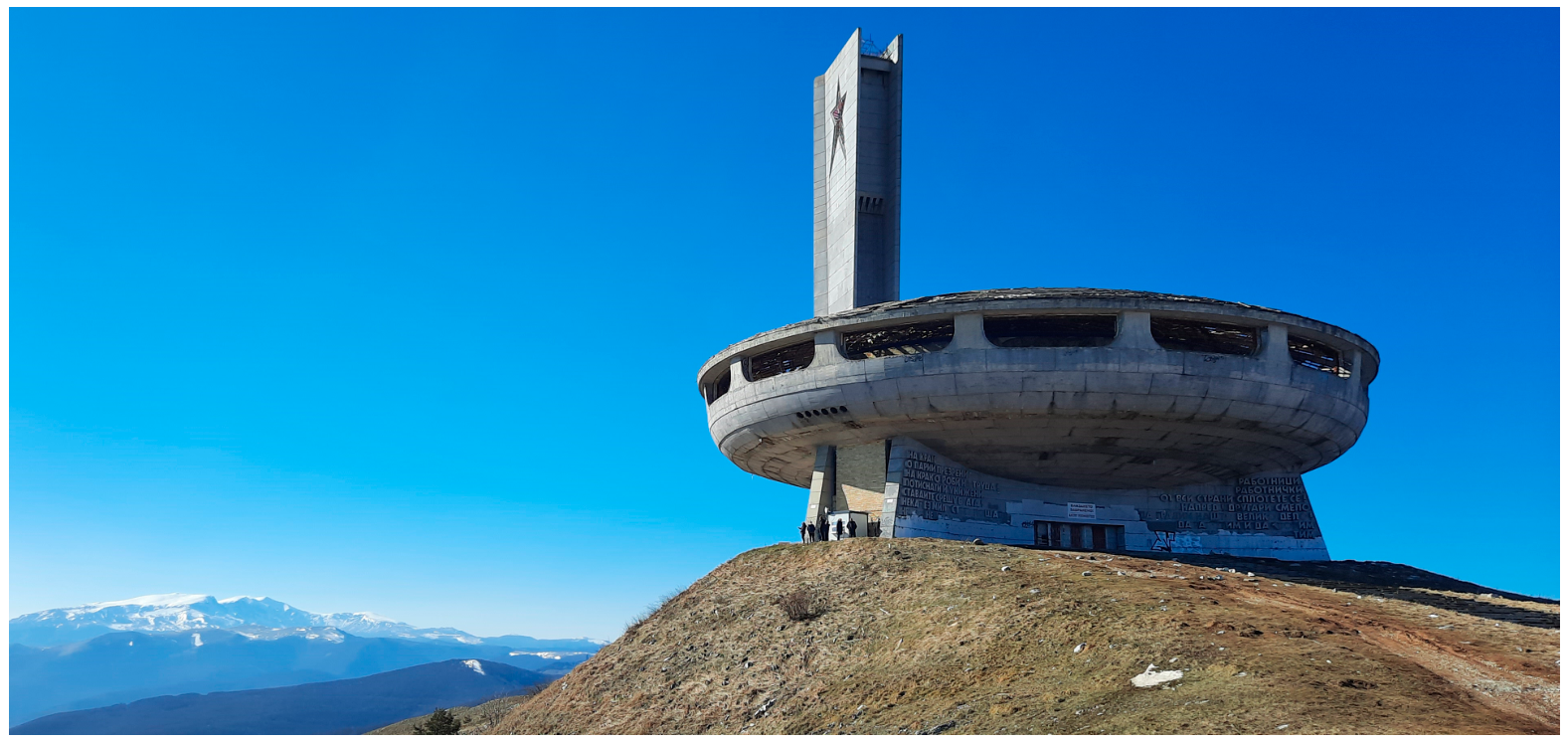



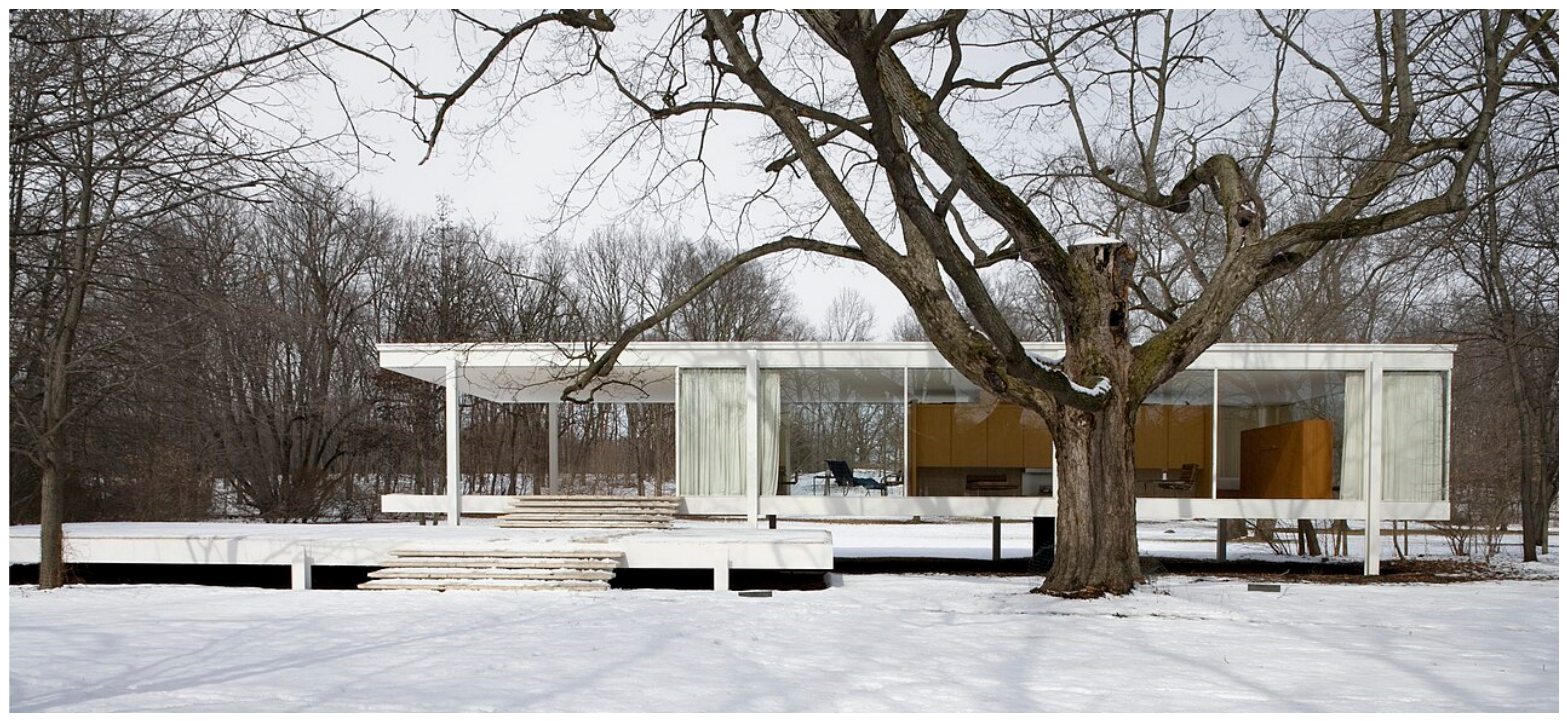
The Roles of Stewardship and Public Participation in the Conservation of Architectural Heritage from the Perspective of the Theory of Complex Property Rights: The Cases of Farnsworth House and the Buzludzha Monument



Abstract
1. Introduction
- What is the role of property rights and private owners in the conservation of architectural heritage?
- Who can be the best-suited owner or serve as the best steward of architectural heritage, how should such an owner or steward be selected, and how should rights and responsibilities be allocated?
- What role should advocates of architectural heritage play in its conservation?
2. Theoretical Framework: The Importance of Property Rights and TCPR for Heritage Conservation
2.1. General Framework
- (1)
- management rights over resources;
- (2)
- rights to consume the benefits derived from their use; and
- (3)
- obligations and responsibilities associated with their provision and use.
- Utilitarian value, which includes the principal architectural function of an asset together with the benefits derived from its use, including rental income.
2.2. The Importance of TCPR, Privateness, Publicness, Financing, and the Selection of the Best-Suited Owner (Steward)
2.3. Problems with Defining Property Rights and the Appropriate Degree of Publicness
2.4. Limitations of the Coasian Approach and the Role of Participatory Governance
3. Materials and Methods
3.1. Methodological Framework of the Comparative Study
3.2. Analysis of the Farnsworth House Case and the Sustainable Management of Architectural Heritage
3.2.1. The Complexity of Ownership Arrangements
3.2.2. The Importance of Financial Factors (Benefits, Costs, Values, and Profits) and Coasian Bargaining for the Sustainable Management of Architectural Heritage
3.2.3. Conclusions from the Farnsworth House Case
- -
- The Farnsworth House case demonstrates that architectural value may become a dominant concern for both private individuals and organizations characterized by a high degree of publicness. Both Peter Palumbo and the NGOs involved were willing to invest substantial resources in preserving the heritage asset.
- -
- The conservation of architectural heritage often requires significant capital investment. As the architectural value of Farnsworth House increased, the resources required for its acquisition and maintenance exceeded the capacity of most individuals and became more compatible with the capacities of larger organizations.
- -
- While advocates of architectural heritage often criticize profit-oriented behaviour, the Farnsworth House case demonstrates that economic efficiency and heritage conservation can reinforce one another. The market valorisation of the property generated resources essential for its preservation, while the NGOs involved demonstrated considerable innovation and flexibility in mobilizing funding.
3.3. Analysis of the Buzludzha Monument Case
3.3.1. Evolution of the Ownership Arrangement
- -
- In 1992, the Act on the Nationalization of the Property of the Bulgarian Communist Party and Other Political Organizations (National Assembly of the Republic of Bulgaria 1991) [58] formally established the monument as state property and transferred responsibility for its management to the Regional Administration of Stara Zagora.
- -
- In 2011, the Bulgarian government adopted Decision No. 731 providing for the gratuitous transfer of the monument to the Bulgarian Socialist Party (BSP) as the successor of BCP. However, BSP failed to complete the procedure and the transfer never entered into force.
- -
- In 2017, amendments to the State Property Act (National Assembly of the Republic of Bulgaria 2017) [59] prohibited the gratuitous transfer of state-owned properties to political parties. BSP subsequently sought permission to use the monument free of charge for ten years, but this proposal was not implemented.
3.3.2. The Importance of Financial Factors for the Sustainable Management of the Buzludzha Monument
3.3.3. The Importance of Coasian Competition for the Conservation of the Buzludzha Monument
3.3.4. The Tragedy of the Anticommons After 1989
3.4. Comparison of the Two Case Studies
4. Results, Discussion and Conclusions
4.1. Answers to the Three Research Questions
- What is the role of property rights and private owners in the conservation of architectural heritage?
- Who can be the best-suited owner or serve as the best steward of architectural heritage, and how should rights and responsibilities be allocated?
- What role should advocates of architectural heritageplay in its conservation?
4.2. Some Key Recommendations
Author Contributions
Funding
Data Availability Statement
Acknowledgments
Conflicts of Interest
References
- Council of Europe. European Charter of the Architectural Heritage; Council of Europe: Amsterdam, The Netherlands, 1975; Available online: https://www.getty.edu/conservation/publications_resources/research_resources/charters/charter21.html (accessed on 8 July 2026).
- Clavir, M. Preserving What Is Valued: Museums, Conservation, and First Nations; UBC Press: Vancouver, BC, USA, 2002. [Google Scholar]
- Adams, C.; Douglas-Jones, R.; Green, A.; Lewis, Q.; Yarrow, T. Building with history: Exploring the relationship between heritage and energy in institutionally managed buildings. Hist. Environ. Policy Pract. 2014, 5, 167–181. [Google Scholar] [CrossRef]
- Martínez, P.G. Built heritage conservation and contemporary urban development: The contribution of architectural practice to the challenges of modernisation. Built Herit. 2017, 1, 14–25. [Google Scholar] [CrossRef]
- Liang, W.; Ahmad, Y.; Mohidin, H.H.B. The development of the concept of architectural heritage conservation and its inspiration. Built Herit. 2023, 7, 21. [Google Scholar] [CrossRef]
- Murzyn-Kupisz, M. The socio-economic impact of built heritage projects conducted by private investors. J. Cult. Herit. 2013, 14, 156–162. [Google Scholar] [CrossRef]
- Messenger, G. The public–private distinction at the World Trade Organization: Fundamental challenges to determining the meaning of “public body”. Int. J. Const. Law 2017, 15, 60–83. [Google Scholar] [CrossRef][Green Version]
- Doğan, H.A. A critique on private ownership and protection of architectural heritage: Case study of Arpaz Tower. A|Z ITU J. Fac. Archit. 2024, 21, 99–112. [Google Scholar]
- Aigwi, I.E.; Filippova, O.; Sullivan-Taylor, B. Public perception of heritage buildings in the city centre of Invercargill, New Zealand. City Cult. Soc. 2023, 34, 100538. [Google Scholar] [CrossRef]
- Boniotti, C. The public–private–people partnership (P4) for cultural heritage management purposes. J. Cult. Herit. Manag. Sustain. Dev. 2023, 13, 1–14. [Google Scholar] [CrossRef]
- Callender, G. Public sector organizations. In International Encyclopedia of the Social & Behavioral Sciences; Smelser, N.J., Baltes, P.B., Eds.; Pergamon: Oxford, UK, 2001; pp. 12581–12585. [Google Scholar]
- Slaev, A.D.; Shahab, S. A Theory of Complex Property Rights: Institutions for Governing Natural and Built Environments; Edward Elgar Publishing: Cheltenham, UK, 2026. [Google Scholar] [CrossRef]
- Slaev, A.D. Complex private-common property rights in institutional and planning theories. Plan. Theory 2020, 19, 193–213. [Google Scholar] [CrossRef]
- Mason, R. Assessing values in conservation planning: Methodological issues and choices. In Assessing the Values of Cultural Heritage; De la Torre, M., Ed.; Getty Conservation Institute: Los Angeles, CA, USA, 2005; pp. 5–30. [Google Scholar]
- De la Torre, M. Values and heritage conservation. Herit. Soc. 2013, 6, 155–166. [Google Scholar] [CrossRef]
- Dastgerdi, A.S.; De Luca, G. The riddles of historic urban quarters inscription on the UNESCO World Heritage List. Int. J. Archit. Res. Archnet-IJAR 2018, 12, 152–163. [Google Scholar] [CrossRef]
- North, D.C. Institutions. J. Econ. Perspect. 1991, 5, 97–112. [Google Scholar] [CrossRef]
- Hodgson, G.M. What are institutions? J. Econ. Issues 2006, 40, 1–25. [Google Scholar] [CrossRef]
- Alchian, A.A. Some economics of property rights. IL Politico 1965, 30, 816–829. [Google Scholar]
- Coase, R.H. The problem of social cost. J. Law Econ. 1960, 3, 1–44. [Google Scholar] [CrossRef]
- Demsetz, H. Toward a theory of property rights. Am. Econ. Rev. 1967, 57, 347–359. [Google Scholar]
- Alchian, A.A.; Demsetz, H. The property rights paradigm. J. Econ. Hist. 1973, 33, 16–27. [Google Scholar] [CrossRef]
- Cozzolino, S.; Moroni, S. Multiple agents and self-organisation in complex cities: The crucial role of several property. Land Use Policy 2021, 103, 105297. [Google Scholar] [CrossRef]
- Owley, J. Cultural heritage conservation easements: The problem of using property law tools for heritage protection. Land Use Policy 2015, 49, 177–182. [Google Scholar] [CrossRef]
- Lai, L.W.; Davies, S.N.; Choy, L.H.; Chau, K.W. Land planning, property rights and management of built heritage: Some Hong Kong observations of colonial military buildings. Land 2022, 11, 1516. [Google Scholar] [CrossRef]
- Rasoolimanesh, S.M.; Jaafar, M.; Ahmad, A.G.; Barghi, R. Community participation in World Heritage Site conservation and tourism development. Tour. Manag. 2017, 58, 142–153. [Google Scholar] [CrossRef]
- Tweed, C.; Sutherland, M. Built cultural heritage and sustainable urban development. Landsc. Urban Plan. 2007, 83, 62–69. [Google Scholar] [CrossRef]
- Smith, L. Uses of Heritage; Routledge: London, UK, 2006. [Google Scholar]
- Chirikure, S.; Manyanga, M.; Ndoro, W.; Pwiti, G. Unfulfilled promises? Heritage management and community participation at some of Africa’s cultural World Heritage sites. Int. J. Herit. Stud. 2010, 16, 30–44. [Google Scholar] [CrossRef]
- Slaev, A.D.; Daskalova, D. Complex property rights and Coasean bargaining in natural resource management. J. Environ. Policy Plan. 2020, 22, 486–500. [Google Scholar] [CrossRef]
- Hardin, G. The tragedy of the commons. Science 1968, 162, 1243–1248. [Google Scholar] [CrossRef] [PubMed]
- Shahab, S.; Viallon, F.X. A transaction-cost analysis of Swiss land improvement syndicates. Town Plan. Rev. 2019, 90, 545–565. [Google Scholar] [CrossRef]
- Shahab, S.; Viallon, F.X. Swiss land improvement syndicates: ‘Impure’ Coasian solutions? Plan. Theory 2021, 20, 44–62. [Google Scholar]
- Sax, J.L. Playing Darts with a Rembrandt: Public and Private Rights in Cultural Treasures; University of Michigan Press: Ann Arbor, MI, USA, 2001. [Google Scholar]
- Loughran, K. Parks for Profit: Selling Nature in the City; Columbia University Press: New York, NY, USA, 2022. [Google Scholar]
- Shahab, S.; Clinch, J.P.; O’Neill, E. Estimates of transaction costs in transfer of development rights programs. J. Am. Plan. Assoc. 2018, 84, 61–75. [Google Scholar] [CrossRef]
- Lai, L.W.C. Sustainable development of heritage conservation and tourism: A Hong Kong case study on colonial heritage. Sustain. Dev. 2020, 28, 1181–1188. [Google Scholar] [CrossRef]
- Slaev, A.D. The transaction costs of sustainability: Coase’s proviso and the roles of environmentalists and the government. Sustainability 2023, 15, 3096. [Google Scholar] [CrossRef]
- Mendelson-Shwartz, E.; Alchalel, A.; Mualam, N. The impact of heritage-led transfer of development rights (TDR) on a city’s planning, bureaucracy, and administration: A view from the Middle East. Urban Res. Pract. 2026, 1–24. [Google Scholar] [CrossRef]
- Heller, M.A. The tragedy of the anticommons: Property in the transition from Marx to markets. Harv. Law Rev. 1998, 111, 621–688. [Google Scholar] [CrossRef]
- Coimbra, I.; Conceição, P.S.; Sousa, A.R.; Alves, F.B.; Tavares, D.; Breda-Vázquez, I. The management of urban World Heritage Sites: A semi-systematic literature review. npj Herit. Sci. 2025, 13, 610. [Google Scholar] [CrossRef]
- Buchanan, J.M.; Yoon, Y.J. Symmetric tragedies: Commons and anticommons. J. Law Econ. 2000, 43, 1–13. [Google Scholar] [CrossRef]
- Pincetl, S. Nonprofits and park provision in Los Angeles: An exploration of the rise of governance approaches to the provision of local services. Soc. Sci. Q. 2003, 84, 979–1001. [Google Scholar] [CrossRef]
- Pickvance, C.G. Four varieties of comparative analysis. J. Hous. Built Environ. 2001, 16, 7–28. [Google Scholar] [CrossRef]
- Barthel, D. Historic preservation: A comparative analysis. Sociol. Forum 2009, 4, 87–105. [Google Scholar]
- Beam, A. Broken Glass: Mies van der Rohe, Edith Farnsworth, and the Fight over a Modernist Masterpiece; Random House: New York, NY, USA, 2020. [Google Scholar]
- Neumann, D. Mies van der Rohe; Yale University Press: New Haven, CT, USA, 2024. [Google Scholar]
- Kamin, B. Beguiling Farnsworth House Has a Story to Tell. Chicago Tribune, 29 January 1998; p. 55.
- Hamilton, W.L. A ‘51 Mies Classic Comes down to the Wire. New York Times, 11 December 2003. Available online: https://www.nytimes.com/2003/12/11/garden/a-51-mies-classic-comes-down-to-the-wire.html (accessed on 8 July 2026).
- Rodkin, D. Edith Farnsworth returns to the center of the story about the house Mies designed for her. Crain’s Chic. Bus. 2024, 47, 3. [Google Scholar]
- Vogel, C. Landmark Mies house goes to preservationists. New York Times, 13 December 2003. Available online: https://www.nytimes.com/2003/12/13/arts/landmark-mies-house-goes-to-preservationists.html (accessed on 8 July 2026).
- Pridmore, J. House in a Bag? Chicago Magazine, 16 December 2008. Available online: https://www.chicagomag.com/chicago-magazine/december-2008/house-in-a-bag/ (accessed on 8 July 2026).
- Hilburg, J. The Farnsworth House is Renamed to Honor Edith Farnsworth. The Architect’s Newspaper, 19 October 2021. Available online: https://www.archpaper.com/ (accessed on 8 July 2026).
- Stefanova, K.; Zidarov, F.; Filipova, C.; Veneva, S.; Popova, K.; Balgarova, L. Savremenno Balgarsko Monumentalno Izkustvo 1956–1986 [Contemporary Bulgarian Monumental Art 1956–1986]; Dr. Petar Beron Publishing House: Sofia, Bulgaria, 1986. (In Bulgarian) [Google Scholar]
- Apostolova, B. The History of Buzludzha [in Bulgarian: Историята на Бузлуджа]. Stroiinfo. 2020. Available online: https://stroiinfo.com/istoriyata-na-buzludzha (accessed on 31 May 2026).
- Bosev, A. Buzludzha [in Bulgarian: Бузлуджа]. In My Childhood: Poems; Yankov, N., Ed.; Bulgarian Painter Publishing House: Sofia, Bulgaria, 1977; Volume III. [Google Scholar]
- National Assembly of the People’s Republic of Bulgaria. Property Act [Закон за собствеността]; National Assembly of the People’s Republic of Bulgaria: Sofia, Bulgaria, 1951; State Gazette No. 92/1951. [Google Scholar]
- National Assembly of the Republic of Bulgaria. Act on the Nationalization of the Property of the Bulgarian Communist Party and Other Political Organizations [Закон за национализиране на имуществото на Българската комунистическа партия и други политически организации]; 1991; National Assembly of the Republic of Bulgaria: Sofia, Bulgaria, State Gazette No. 105/1991. [Google Scholar]
- National Assembly of the Republic of Bulgaria. Act Amending and Supplementing the State Property Act [Закон за изменение и допълнение на Закона за държавната собственост]; 2017; National Assembly of the Republic of Bulgaria: Sofia, Bulgaria, State Gazette No. 13/2017. [Google Scholar]
- Foundation Project Buzludzha. 2026. Our Work. Available online: https://buzludzha-project.com/en/our-work/ (accessed on 31 May 2026).
- Milcheva, E. The “Plate” of Buzludzha and the Memory that is Being Erased Today [in Bulgarian: “Чинията” на Бузлуджа и Паметта, Която Днес се Заличава]. Deutsche Welle, 11 November 2024. Available online: https://www.dw.com/bg/ciniata-na-buzludza-i-pametta-koato-dnes-se-zalicava/a-70807267 (accessed on 8 July 2026).
- Koleva, N. “Proekt Buzludzha”: Proektyt za Konsolidaciya na Monument Buzludzha e Oficialno v Hod [“Project Buzludzha”: The Project for Consolidation of the Buzludzha Monument has Officially Begun]. Za Gabrovo, 12 October 2025. Available online: https://zagabrovo.bg/proekt-buzludzha-proekstyt-za-konsolidaciya-na-monument-buzludzha-e-oficialno-v-hod/ (accessed on 8 July 2026).
- Foundation Project Buzludzha. 2026. History. Available online: https://buzludzha-project.com/en/history/ (accessed on 31 May 2026).


| Area of Analysis | Farnsworth House | Buzludza Monument |
|---|---|---|
| Degree or privateness/publicness of the property regime | Initially: Ownership with a very high degree of privateness. After 2003: Owned by an NPO consortium with a high degree of publicness. | Initially: Imperfectly defined state ownership. After 1989: State private property administered by the Regional Administration of Stara Zagora. |
| Stakeholders and participants in the management of the object of cultural heritage | Private owners; the State of Illinois; philanthropists; art collectors and dealers; NPOs. | The Bulgarian State; the Regional Administration of Stara Zagora; Kazanlak Municipality; political parties; NPOs; professional communities. |
| Mechanisms of Coasian bargaining | Negotiations between the State of Illinois (Governor and Attorney General) and Peter Palumbo (2001–2002). Direct bargaining among three NPOs and a real estate developer during the Sotheby’s auction (12 December 2003). | Ongoing negotiations among the Regional Administration of Stara Zagora, the Council of Ministers, NINKN, Kazanlak Municipality, NPOs, professional communities, and private individuals. |
| Funding and resource mobilisation | Private donations, fundraising campaigns, foundation grants, and visitor revenue. | Public funding, EU programmes, project funding, and public fundraising campaigns. |
| Final/current distribution of management and control entitlements | Management and control rights vested in a heritage conservation organization with the commitment and financial capacity to preserve the asset. | The State retains ownership, while management and control rights are shared between public authorities and NPOs, with limited coordination. |
| Key finding | A clear allocation of management rights facilitates resource mobilisation and long-term conservation. | State ownership alone does not ensure effective management in the absence of a clear allocation of rights and responsibilities. |
Disclaimer/Publisher’s Note: The statements, opinions and data contained in all publications are solely those of the individual author(s) and contributor(s) and not of MDPI and/or the editor(s). MDPI and/or the editor(s) disclaim responsibility for any injury to people or property resulting from any ideas, methods, instructions or products referred to in the content. |
© 2026 by the authors. Licensee MDPI, Basel, Switzerland. This article is an open access article distributed under the terms and conditions of the Creative Commons Attribution (CC BY) license.
Share and Cite
Slaev, A.D.; Nozharova, B.; Nikolov, P. The Roles of Stewardship and Public Participation in the Conservation of Architectural Heritage from the Perspective of the Theory of Complex Property Rights: The Cases of Farnsworth House and the Buzludzha Monument. Heritage 2026, 9, 274. https://doi.org/10.3390/heritage9070274
Slaev AD, Nozharova B, Nikolov P. The Roles of Stewardship and Public Participation in the Conservation of Architectural Heritage from the Perspective of the Theory of Complex Property Rights: The Cases of Farnsworth House and the Buzludzha Monument. Heritage. 2026; 9(7):274. https://doi.org/10.3390/heritage9070274
Chicago/Turabian StyleSlaev, Aleksandar D., Boriana Nozharova, and Peter Nikolov. 2026. "The Roles of Stewardship and Public Participation in the Conservation of Architectural Heritage from the Perspective of the Theory of Complex Property Rights: The Cases of Farnsworth House and the Buzludzha Monument" Heritage 9, no. 7: 274. https://doi.org/10.3390/heritage9070274
APA StyleSlaev, A. D., Nozharova, B., & Nikolov, P. (2026). The Roles of Stewardship and Public Participation in the Conservation of Architectural Heritage from the Perspective of the Theory of Complex Property Rights: The Cases of Farnsworth House and the Buzludzha Monument. Heritage, 9(7), 274. https://doi.org/10.3390/heritage9070274