
Article

Cochineal Dyes and Dyeing Techniques in Historical Lielvārde-Type Patterned Sashes from Latvia: Analytical and Historical Evidence

1
Institute of Latvian History, Faculty of Humanities, University of Latvia, LV-1050 Riga, Latvia
2
Department of Environmental Science, Faculty of Science and Technology, University of Latvia, LV-1004 Riga, Latvia
3
Department of Optometry and Vision Science, Faculty of Science and Technology, University of Latvia, LV-1004 Riga, Latvia
*
Author to whom correspondence should be addressed.
Heritage 2026, 9(7), 273; https://doi.org/10.3390/heritage9070273
Submission received: 30 May 2026 / Revised: 7 July 2026 / Accepted: 7 July 2026 / Published: 10 July 2026
(This article belongs to the Special Issue Dyes in History and Archaeology 44)

Abstract

Lielvārde-type patterned sashes are among the most recognisable symbols of Latvian cultural heritage, yet reliable information on their chronology, dyes, and dyeing technologies remains limited. This study investigates the red wool yarns of five historical Lielvārde-type patterned sashes from Latvian museum collections. The study combines UPLC–DAD/MS dye analysis, ICP–QQQ elemental analysis, reflectance-based colourimetric measurements, experimental dyeing, and the analysis of historical sources. The analytical results identified cochineal-derived anthraquinone compounds consistent with Mexican cochineal (Dactylopius coccus Costa) in all analysed samples. Elemental analysis revealed the presence of both aluminium- and tin-based mordanting systems, while experimental dyeing demonstrated that the bright red shades characteristic of the historical textiles were achieved by combining tin mordants with cream of tartar. The identification of tin provides the first analytical evidence for the use of tin-based mordants in historical Latvian peasant textiles. Historical sources further document the availability of cochineal, mordants, and imported textile materials in the Baltic region during the nineteenth century. The combined analytical and historical evidence indicates that the production of the analysed sashes was closely connected to broader European networks of trade, knowledge exchange, and technological development. The results also call for a reassessment of previously proposed dates and support a production period in the second half of the nineteenth century, most likely between the late 1850s and the 1870s. The study contributes new knowledge on historical dyeing technologies and the circulation of imported dyestuffs in the eastern Baltic region.

1. Introduction

The history of Latvian textiles encompasses a wide variety of woven bands, most of which date to the nineteenth century. These objects were handwoven using different techniques and colour combinations, and many were worn as waist sashes. Among them, the Lielvārde-type patterned sashes are included in the Latvian Cultural Canon because of their sophisticated design. Today, this group is widely regarded as one of the most recognisable symbols of Latvian cultural heritage and has acquired a range of symbolic meanings in contemporary culture. The present study investigates the dyes and dyeing technologies used for the yarns of these sashes to clarify their chronology on the basis of material evidence.
The Latvian National History Museum, which holds the largest collection of such objects, contains approximately 7000 woven bands and sashes produced using various techniques [1]. Additional examples are preserved in other museums throughout Latvia. However, reliable information concerning the production and use of these textiles remains scarce. In most cases, contextual evidence suggests only a general dating to the nineteenth century. Information regarding the dating of Lielvārde-type sashes is either absent or based on unreliable sources. Likewise, no previous information exists concerning the dyes used for the sash yarns. Dye analysis, colourimetric analysis, and the study of historical written sources may therefore provide important new insights into this field.
Lielvārde-type patterned sashes represent only one category within the wide variety of woven bands used in Latvia. Approximately 100 examples are currently preserved in Latvian museum collections. These sashes were widespread in several parishes of the former Riga district on the right bank of the Daugava, the largest river in Latvia. This area is located approximately 50–55 km from Riga and historically formed part of the economic and cultural sphere of the region’s largest city and commercial centre. Since 1861, the area has been crossed by Latvia’s first railway line, which connected Riga with the St Petersburg–Warsaw railway system.
The dimensions of Lielvārde-type patterned sashes are similar to those of other Latvian woven waistbands. Their average width is approximately 5 cm and their average length is about 265 cm. The sashes are woven using red wool yarn together with white linen or cotton warp and weft threads; linen occurs more frequently than cotton. Lielvārde-type sashes were produced using the patterned pick-up technique, which was widespread throughout the Baltic Sea region and beyond [2]. The ornament consists entirely of geometric motifs created manually by the weaver. These sashes are characterised by exceptional craftsmanship and dense weaving. Each centimetre contains approximately 10–15 wool warp yarns, while the total number of warp threads may reach up to 45 per centimetre because two linen or cotton threads are woven together with each wool yarn. The ornament varies continuously along the entire length of the sash and is composed of elaborate geometric motifs. Lielvārde-type sashes are distinguished by the complex arrangement of numerous ornamental elements, asymmetrical compositions, and an overall sophisticated decorative structure.
The lack of accurate and reliable information concerning the production and use of Lielvārde-type patterned sashes is largely due to the circumstances under which many entered museum collections. Frequently, they were acquired through intermediaries who were primarily interested in their artistic value rather than their historical provenance. Only one written historical source concerning patterned sashes from the Lielvārde region is currently known. It was published in 1894 as part of a memoir describing rural women’s clothing in earlier times:
“A 2–3-inch-wide sash was worn around the waist, wrapped 3–5 times. Simpler sashes were made of pure wool, with red, green, blue, and yellow patterns; better or more prestigious ones were made only of red and white patterns, which were woven: one red yarn and two white threads alternately in the warp. Not everyone could weave sashes, but there were special sash weavers.”
[3]
This account suggests that the exceptional technical quality of these textiles may have been associated with the work of specialised professional weavers. Moreover, such waistbands were typically worn with festive clothing, which likely justified greater time, skill, and resources being devoted to their production than to everyday garments.
Lielvārde-type sashes are still woven today and remain important symbols of Latvian national culture and identity. Traditionally woven examples are regarded as evidence of exceptional weaving skill and craftsmanship. Contemporary weavers are also interested in reproducing yarn colours that closely match those of historical examples. The identification of the dyes and mordants used in Lielvārde-type sashes may contribute to a better understanding of historical dyeing technologies and of the circulation of dyeing knowledge and materials through historical trade networks.
The present study represents the first systematic analytical investigation of dyes in historical Latvian textiles conducted at the University of Latvia. In recent years, additional historical Latvian and Estonian textiles from museum collections have also been analysed within the framework of the international project Colour4Crafts [4]. Taken together, these studies represent an important contribution to the growing body of research on traditional textiles and historical dyeing practices in north-eastern Europe.
This study aims to identify the dyes and mordanting systems used in the red wool yarns of historical Lielvārde-type patterned sashes through a combination of analytical, colourimetric, experimental, and historical approaches to clarify their chronology and reconstruct the dyeing technologies used in their production.

2. Materials and Methods

2.1. Historical Textile Samples

2.1.1. Description of the Analysed Sashes

The textile samples analysed in this study were collected from three Latvian museum collections: the Andrejs Pumpurs Museum of Lielvārde, the Liepāja Museum, and the Limbaži Museum. Red wool yarn samples from five patterned sashes were examined (Table 1).
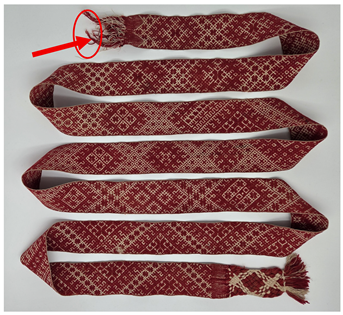
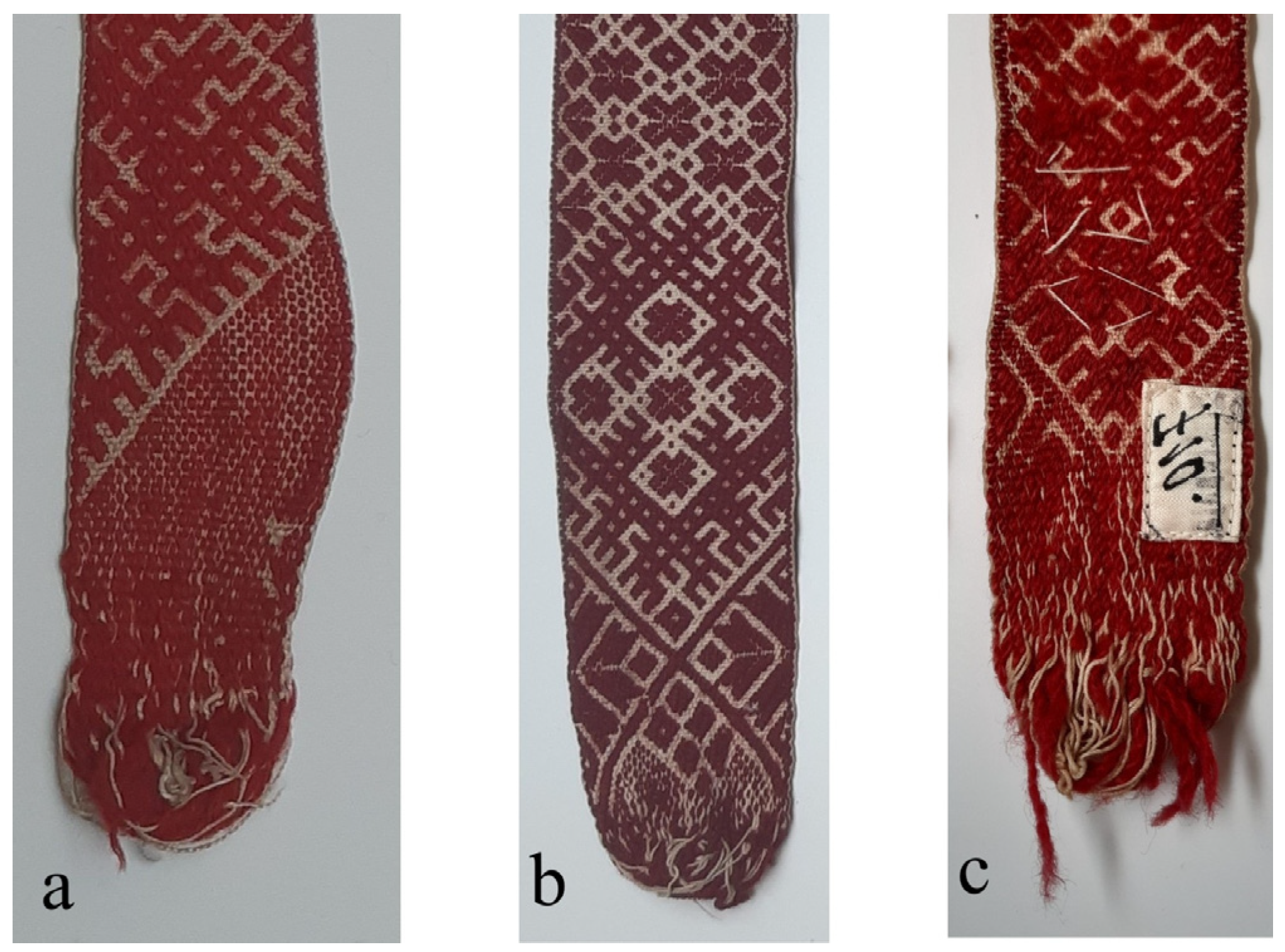
The sashes consist of red wool pattern-forming yarns woven on a linen or cotton ground. They were woven using thread heddles rather than a reed-based loom, as indicated by the preserved looped starting edge at one end of each sash (Figure 1).
All analysed artefacts are characterised by exceptional craftsmanship. They are woven from very fine yarns and threads whose texture indicates hand production rather than industrial manufacture. The textiles are densely woven, with a high number of warp and weft threads per square centimetre. The objects examined in this study contain 9–12 wool pattern warp yarns and 10–14 linen or cotton weft threads per centimetre.
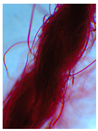
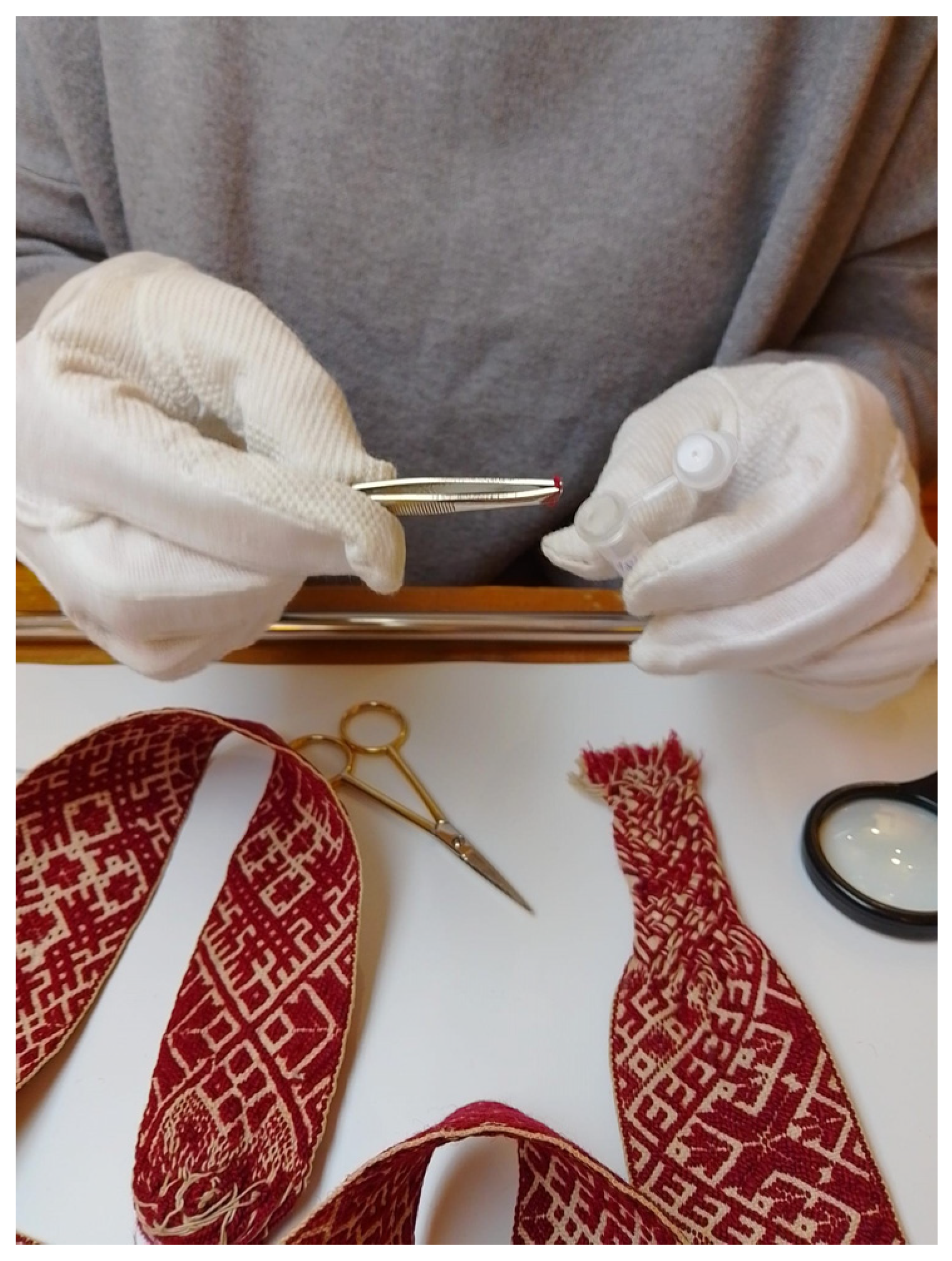
As collecting yarn samples for analysis is inherently destructive, particular care was taken when handling these unique museum objects. The artefacts were handled while wearing protective gloves, and the small yarn samples required for analysis were removed only from loose fringe threads. Scissors, tweezers, and labelled plastic containers were used during sample collection and storage. The sampling procedure is illustrated in Figure 2.

2.1.2. Provenance and Museum Documentation

The reliability of information concerning the manufacture and use of the five sashes examined in this study varies considerably. For patterned sash PM 184, preserved in the collection of the Andrejs Pumpurs Museum of Lielvārde, museum records indicate that the object was donated by Emīlija Frīde in December 1975. According to the museum record, the sash was woven around 1825 (?) and belonged to Anna Slasporte (born in 1824), the grandmother of Emīlija Frīde, who allegedly wove it herself. This information clearly contains a chronological inconsistency, since the proposed weaving date would imply that the weaver was only one year old at the time. The object had been inherited within the family, and the available information had been transmitted through oral tradition.
Information concerning the second sash, PK 1184, is extremely limited. The object was acquired in 2001 from A. Neretniece, but neither the identity of the weaver nor the production date is known. Museum staff tentatively dated the sash to the second half of the nineteenth century. Two additional Lielvārde-type sashes, LM 710 and LM 4531, from the collection of the Liepāja Museum, were dated to the eighteenth century by the former museum director, the ethnographer and ornament researcher Jānis Sudmalis, based on his own assessment that the objects were of considerable age.
The final object examined in this study, LžNM 20889:2 from the Limbaži Museum, bears an annotation stating that the sash, together with a skirt and shirt belonging to a Latvian national costume, was made in the 1920s by the family of Edīte Zeidmane or by herself. The sash was donated to the museum by her granddaughter, I. Zeidmane. This dating raises doubts because the high quality of craftsmanship, the character of the textile, and the tone of the red colour closely resemble nineteenth-century examples and differ substantially from similar objects produced during the 1920s and 1930s. Following the First World War and during the period of the independent Latvian state, imitations of Lielvārde-type sashes were woven as part of newly created national costumes. Their primary function was decorative, serving primarily as decorative accessories, and their craftsmanship was generally of a lower standard than that of earlier historical examples. In contrast, the sash examined here demonstrates exceptionally high technical quality, which is atypical of textiles produced during the 1920s–1930s. One of the aims of the present study is therefore to clarify the chronology of these sashes through the identification of dyes and dyeing technologies, thereby helping to resolve this uncertainty.

2.2. Reagents and Solvents

Methanol and acetonitrile (LC-MS grade) were purchased from Biosolve (Walkenswaard, The Netherlands). Formic acid (98–100%, LiChropurTM) from Merck (Hannover, Germany) and ammonium acetate from Sigma-Aldrich (Buchs, Switzerland) were used for LC-MS analysis. A carminic acid standard from Sigma-Aldrich (Buchs, Switzerland) was used to optimise the LC–MS conditions. Hydrochloric acid (37%, TraceMetalTM grade) and nitric acid (68%, TraceMetalTM grade) were purchased from Fisher Scientific (Loughborough, UK). The ICP multi-element standard solution VI CertipurTM (10 μg mL−1 in 6% HNO3) was obtained from Supelco (Hannover, Germany). An Agilent Technologies internal standard solution (Bi, Ge, In, Li, Sc, Tb, Y; 10 μg mL−1 in 5% HNO3) was used for ICP-MS analysis. Analytical-grade potassium alum (KAl(SO4)2·12H2O), potassium hydrogen tartrate (KHC4H4O6), tin(II) chloride (SnCl2), and sodium hydrogen carbonate (NaHCO3) were purchased from Penta (Prague, Czech Republic) and used for mordanting experiments.

2.3. Analytical Methods

Dye analyses were performed at the University of Latvia (UL), Department of Environmental Science, Faculty of Science and Technology. Chemical analyses were carried out using chromatographic and elemental analytical techniques to identify both dye compounds and inorganic elements associated with mordanting. Dye analysis was performed using ultra-performance liquid chromatography with diode-array and mass spectrometric detection (UPLC–DAD/MS), while elemental analysis was carried out using triple quadrupole ICP–MS (ICP–QQQ). Elemental analysis was undertaken to identify elements associated with historical mordanting and to compare historical and experimentally dyed samples. Colourimetric measurements were performed using a calibrated Ocean Optics USB4000 spectrometer (Ocean Optics, Dunedin, FL, USA) connected to a fibre-optic cable.

2.3.1. UPLC–DAD/MS Analysis

The chromatographic conditions, extraction procedure, and MRM transitions were based on previously published methods for the analysis of historical anthraquinone dyes [5,6] and optimised for the analytical instrumentation used in the present study.
Chromatographic separation was achieved on an analytical reverse-phase UPLC CSH Phenyl-Hexyl column (3.0 × 150 mm, 1.7 μm, ACQUITYTM) at 30 °C with a mobile-phase flow rate of 0.25 mL min−1. The UPLC system consisted of a quaternary solvent manager with a column heater, an autosampler (FTN), a photodiode array detector (PDA eλ), and a tandem quadrupole mass spectrometer (TQD MS) with an electrospray ionisation (ESI) source (ACQUITYTM, ZSpray, Waters Co., Singapore).
MS detection was performed in negative ionisation mode (ESI), with a collision energy of 25 eV, a capillary voltage of 3.5 kV, a cone voltage of 40 V, and a source temperature of 120 °C. Nitrogen was used as the desolvation and cone gas; the desolvation temperature was set to 325 °C, with cone and desolvation gas flow rates of 50 L h−1 and 800 L h−1, respectively. MRM transitions for identification were m/z 491.4 > 357.4 for carminic acid (cd), 313.3 > 269.2 for flavokermesic acid (fk), 475.3 > 341.3 for flavokermesic acid 2-C-glucopyranoside (dcII), 329.3 > 285.3 for kermesic acid (ka), and 253.0 > 225.2 for aloe-saponarin II or dideoxyerythrolaccin (ddoe).
The mobile phase consisted of 0.5% aqueous ammonium acetate (A), acetonitrile (B), and formic acid (C), the latter being maintained at a constant concentration of 0.3% throughout the gradient, with the following elution programme: 0–1 min, 11% B; 1–6 min, 11–30% B; 6–11 min, 30–38% B; 11–14 min, 38–46% B; 14–17 min, 46–54% B; 17–19 min, 54–58% B; 19–23 min, 58–94% B, followed by a 5 min equilibration to the initial composition. Anthraquinone signals were recorded at 280 nm.
Dye extraction from wool fibres was performed in 500 µL of water/methanol/37% HCl (1:1:2, v/v/v) [5] for 10 min at 100 °C in a closed vessel. An additional 5 mL of water was added to the extract, and the mixture was evaporated to dryness. The precipitate was dissolved in 250 µL of methanol/water (1:1, v/v), and 4 µL was injected into the chromatography system.

2.3.2. Elemental Analysis

Elemental analyses were performed using an Agilent 8900 Triple Quadrupole Inductively Coupled Plasma Mass Spectrometer (ICP–QQQ, Agilent Technologies, Santa Clara, CA, USA). Approximately 100–600 mg of wool fibre was digested in a mixture of 6 mL HNO3 and 3 mL HCl using a microwave digestion system (Milestone START ETM, 2450 MHz, 1200 W; Milestone Srl, Sorisole, Italy) at 160 °C for 30 min. After cooling, the digest was diluted with deionised water prior to analysis.

2.4. Colourimetric Measurements

Colourimetric measurements of yarn samples from historical textiles were performed at the UL, Department of Optometry and Vision Science. Reflectance spectra of the yarn samples were measured using a calibrated Ocean Optics USB4000 spectrometer coupled with a fibre-optic cable. Spectral data collection was performed using SpectraSuite 2.0.162. software (Ocean Optics, Dunedin, FL, USA). Before data acquisition, the spectrometer was calibrated according to the manufacturer’s recommendations, including dark and white reference correction procedures. During measurements, the fibre-optic probe was positioned perpendicular to the yarn surface. Two replicate measurements were made on each yarn sample.
The recorded reflectance spectra were used to calculate CIE 1931 xy chromaticity coordinates. The CIE 1931 chromaticity system, developed by the International Commission on Illumination (CIE), represents colour information based on tristimulus values derived from the visible reflectance spectrum. In this system, the x and y coordinates describe chromaticity independently of luminance and enable quantitative comparison of colour differences between samples.

2.5. Historical Sources and Research Approach

The historical sources used in this study consist primarily of publications from the eighteenth- and nineteenth-century Baltic German and Latvian press. Merchants’ advertisements and lists of imported goods provide particularly valuable documentary evidence concerning the availability and circulation of goods on the local market. Because the analysed sashes formed part of the material culture of the Latvian-speaking rural population, particular attention was paid to publications intended for Latvian readers, while Baltic German newspapers were used primarily to document the availability of imported dyeing materials and related goods.
Merchant advertisements in the local German-language press appeared as early as the eighteenth century, whereas advertisements in the Latvian-language press became common only from the mid-nineteenth century onward. The earliest advertisements for dyes and related materials directed specifically at Latvian consumers appeared in 1857 in the newspaper “Mājas Viesis” [7]. Although the German-language press provides evidence for the earlier availability of such goods on the local market, it does not identify their consumers, who may have included both members of the German upper classes and Latvian rural inhabitants, many of whom were also familiar with the German language. By contrast, advertisements published in the Latvian-language press provide much clearer evidence that these products were intended for Latvian-speaking rural consumers. This distinction is important because the principal objects examined in the present study—Lielvārde-type patterned sashes—formed part of the traditional festive dress of Latvian peasants.
Ethnographic expedition records preserved in the Latvian National History Museum [8], together with the historical sources described above, were used to guide the experimental reconstruction of historical dyeing procedures.
The collected documentary sources were systematically examined for references to cochineal, alum, tin compounds, cotton threads, and other materials associated with textile dyeing. The documentary evidence was analysed together with the analytical and experimental results to assess the historical availability of dyeing materials, reconstruct historical dyeing technologies, and refine the chronology of the analysed sashes.

3. Results and Discussion

3.1. Identification of Cochineal in Historical Sashes

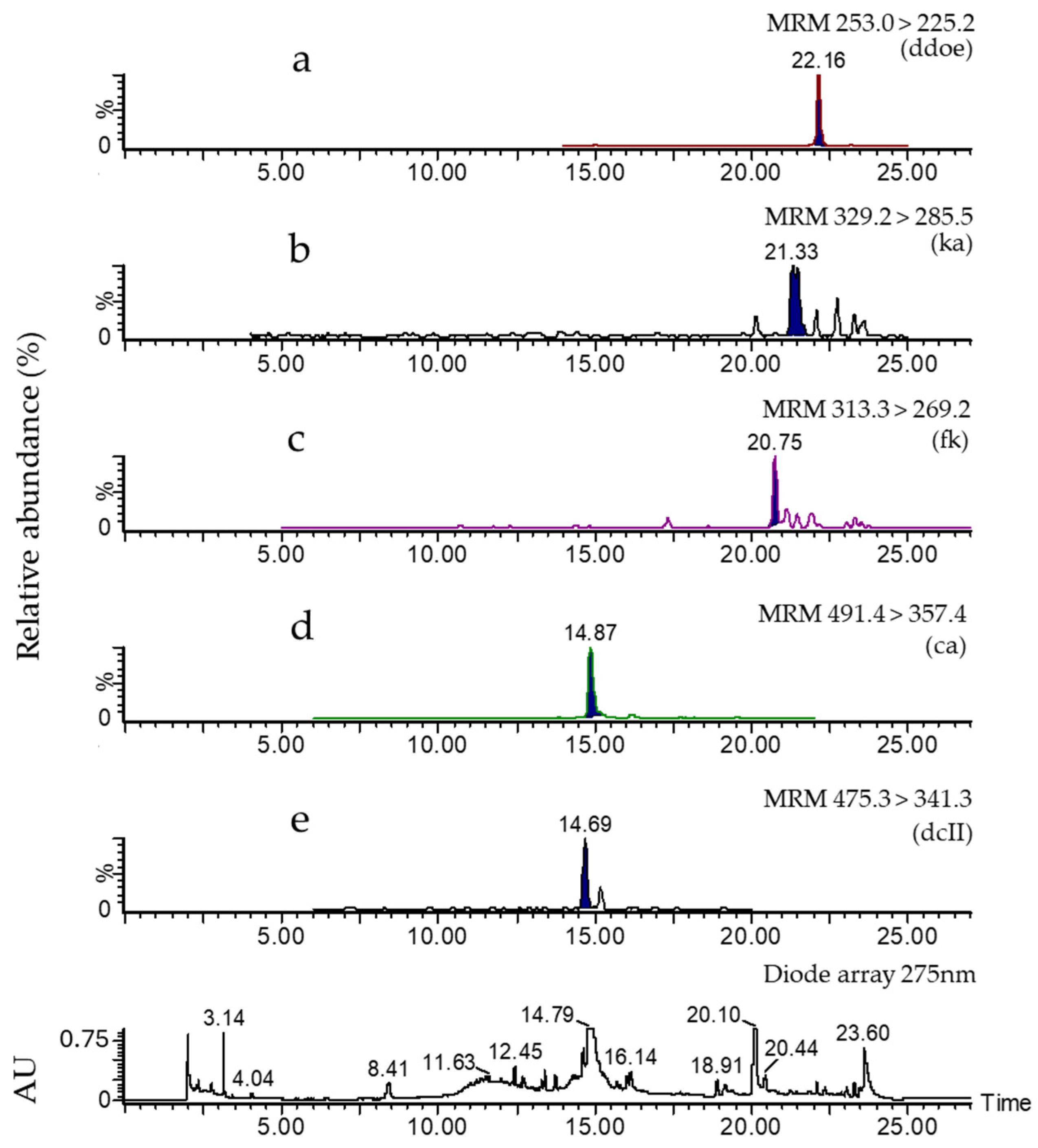
Chromatographic and spectrometric data obtained from the cochineal dye extract confirmed the presence of several anthraquinone acids and anthraquinone glucosides. At a constant cone voltage of 40 V, the fragmentation pathway [M–H–CO2–90] observed for C-glycosylated anthraquinones was used to select the MRM transitions for carminic acid (cd) and flavokermesic acid 2-C-glucopyranoside (dcII). The MRM transitions for flavokermesic acid (fk) and kermesic acid (ka) were based on the loss of CO2, forming the fragment ion [M–H–CO2], whereas the loss of CO was used to identify dideoxyerythrolaccin (ddoe), forming the fragment ion [M–H–CO]. Representative chromatograms of the identified anthraquinones recorded at the corresponding MRM transitions are shown in Figure 3. Component identification was performed according to the methodology described by Lech et al. [6].
Yarn sample LM 710 showed a relatively high content of flavokermesic acid, together with a low percentage of kermesic acid (Table 2), reflecting differences in the composition or processing of the cochineal dye source. However, this factor should not be considered the sole cause of the increased flavokermesic acid content, as the timing of mordant application, as well as the duration of heat treatment, can affect dye fixation on wool fibres [9].

3.1.1. Identification of the Cochineal Species

Several studies have shown that the ratios of flavokermesic acid and kermesic acid to flavokermesic acid 2-C-glucopyranoside in ancient textiles indicate the place of origin of cochineal [10,11,12], based on compositional differences among the most common species, D. coccus, P. polonica and P. hamelii. The characteristic compositional ranges for each insect species are defined by the percentage ratios of these components. Compositions from D. coccus samples form a cluster within 1–4% dcII and 0.1–2% fk + ka. The analysed textile samples contained 1.3–2.5% dcII and 0.2–1.0% fk + ka, values that fall within the compositional range reported for D. coccus. Although the ratios of cochineal dye compounds in textile fibres may vary depending on dyeing conditions and the type of mordant used, the identified dye profile is consistent with Mexican cochineal (Dactylopius coccus). This identification is also consistent with nineteenth-century historical sources documenting the import and commercial availability of Mexican cochineal in the Baltic provinces. No documentary evidence has been identified documenting the commercial supply of Armenian or Polish cochineal to the local market during the period relevant to the present study. By the nineteenth century, Mexican cochineal had largely replaced Armenian and Polish cochineals in the European textile dyeing trade [13].
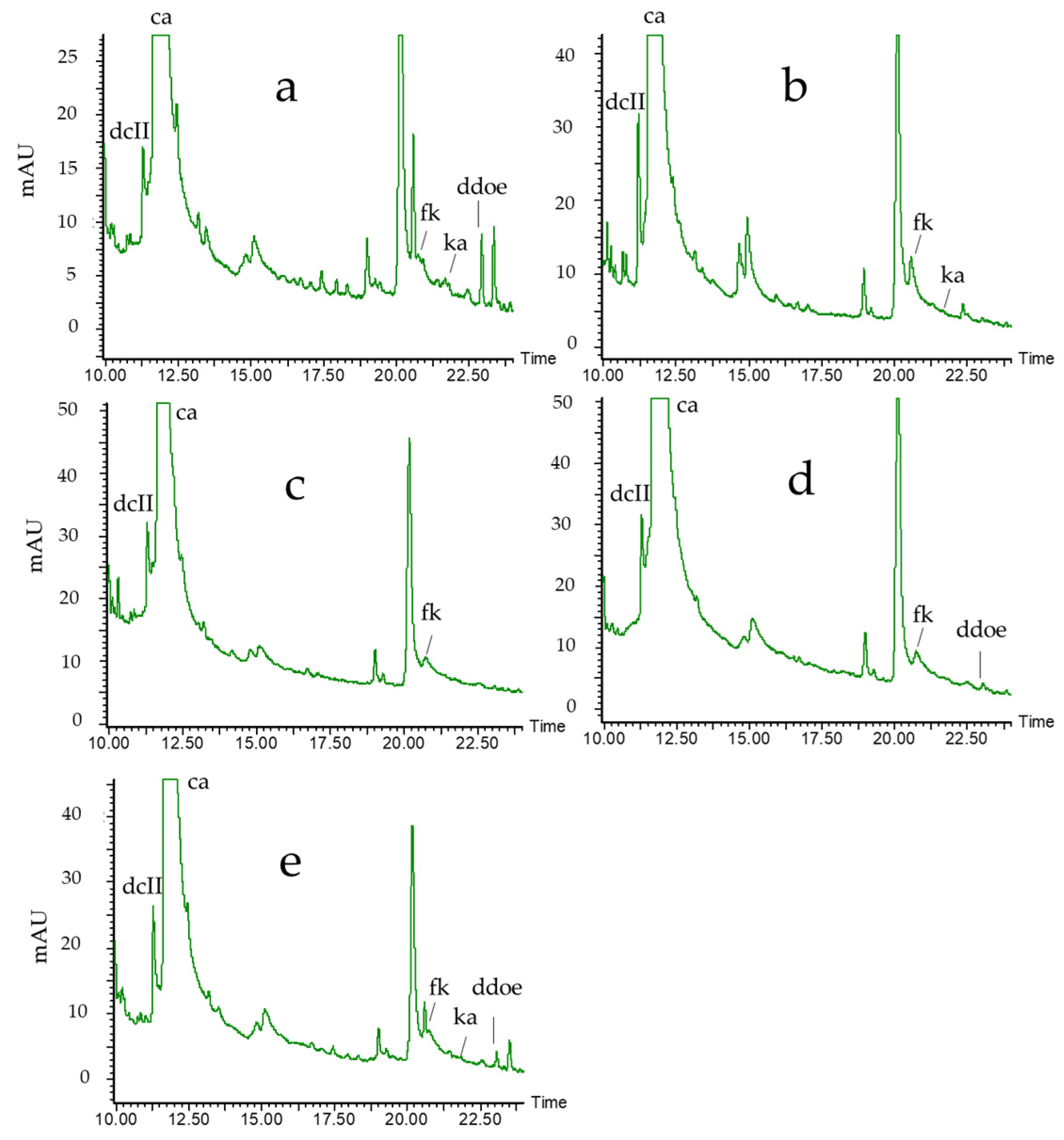
According to Dominguez-Castillo et al. [14], degraded anthraquinone compounds, including dideoxyerythrolaccin (ddoe), may serve as biomarkers of cochineal dyes in aged materials. Among the analysed textiles, PM 184 and LŽMM 20889:2 contained the highest relative amounts of ddoe, a degradation product of anthraquinone dyes, suggesting more extensive ageing than the remaining samples. Figure 4 shows the DAD chromatograms of the identified anthraquinone compounds in the historical textile extracts. The chromatograms are characterised by a dominant carminic acid peak together with smaller peaks corresponding to flavokermesic acid 2-C-glucopyranoside, kermesic acid, and flavokermesic acid. In total, five anthraquinone compounds were detected and identified. The resulting UV chromatographic profile should not be regarded as a fully intact representation of the original dye composition because the extraction procedure, involving hydrochloric acid at elevated temperature, effectively releases dye compounds from historical textile fibres but may also promote partial hydrolysis and degradation of more labile constituents.
No clear correlation was observed between the occurrence of dideoxyerythrolaccin (ddoe) and the use of linen or cotton threads in the analysed sashes. Although the replacement of linen by cotton may represent a broader chronological trend, the present dataset is too limited to demonstrate such a relationship.

3.1.2. Comparison with Experimental Dyeings

Experimentally dyed wool showed lower carminic acid content and higher flavokermesic acid 2-C-glucopyranoside content than the historical yarns, while kermesic acid was present only at trace levels or was absent (Table 3). The experimentally obtained dye profiles did not closely match those of the historical samples. Artificial ageing of the experimental samples might have provided a better basis for comparison with the historical textiles by revealing changes in anthraquinone composition during ageing.

3.2. Mordants and Dyeing Technology

3.2.1. Elemental Composition of Experimental Samples

The data presented in Table 4 allow assessment of changes in elemental composition during wool fibre processing. After pre-mordanting with alum, the reference wool showed marked decreases in the contents of Mg, Mn, Zn, and Fe, with reductions of 97%, 91%, 48%, and 38%, respectively, while Al was taken up from the mordant. During subsequent dyeing with cochineal, the wool fibres showed partial recovery of Mg, probably due to magnesium-containing components in the cochineal dye solution (Table 5). At the same time, the Al content decreased by approximately 60% relative to the pre-mordanted wool, while Zn continued to decrease, with an overall reduction of 82%.
When mordanting with tin(II) chloride was carried out simultaneously with dyeing, only moderate Sn concentrations were detected in the fibres. By contrast, in subsequent experiments in which mordanting with tin(II) chloride was performed before dyeing without additional mordants (sample 4, Table 6), Sn uptake was approximately 40% higher, even though the same tin-to-wool ratio of 5:100 owf was used in both treatments.

3.2.2. Elemental Composition of Historical Sashes

The elemental composition of the historical patterned sash fibres is presented in Table 5. The analysed samples show distinct elemental profiles, with Sn, Al, Fe, Ni, Mg and, in some cases, Mn as the major elements detected. V, Cr, Cu, Zn, and Pb were present at lower concentrations, although their distributions also varied among the samples.
Among the analysed sashes, LžNM 20889:2 showed the highest Mg content (Table 5). A similar increase in Mg content was observed in experimental sample 3 (Table 6), in which cochineal-dyed wool mordanted with tin(II) chloride and potassium hydrogen tartrate was post-treated with an NaHCO3 solution under weakly alkaline conditions. In this experiment, the Mg introduced with the cochineal dye solution was approximately 0.028% owf, whereas the estimated Mg contribution from rainwater was considerably lower (approximately 0.003% owf).
The observed darkening of the dye is unlikely to be explained by the formation of Mg2+ complexes with cochineal anthraquinone derivatives. Instead, treatment of cochineal-dyed wool under alkaline conditions may alter the ionisation state of carminic acid and modify the coordination environment of tin ions, resulting in changes in the absorption properties and consequently in the perceived colour of the fibre. The influence of dye-bath pH on the shade of cochineal dyed with different mordants has also been demonstrated in previous studies [15].
Several samples contained particularly high concentrations of tin. The highest Sn concentration was detected in LM 4531 (37,340 mg kg−1), followed by LŽMM 20889:2 (17,900 mg kg−1) and PM 184 (12,022 mg kg−1). These results indicate the use of a tin-containing mordant, most probably tin(II) chloride or another tin salt, during the dyeing process.
The highest Al concentrations were detected in PM 184 (2787 mg kg−1) and PM 1184 (1957 mg kg−1), suggesting the use of an aluminium-containing mordant, most likely alum. Aluminium concentrations were considerably lower in the remaining samples.
Iron was also present at relatively high concentrations in PM 184 (2229 mg kg−1) and PM 1184 (1500 mg kg−1). The elevated Fe concentrations may reflect iron-containing impurities in mordants, processing water, or dyeing vessels, although the deliberate use of iron-containing compounds cannot be excluded.
Nickel concentrations were particularly high in PM 184 (13,145 mg kg−1) and PM 1184 (23,650 mg kg−1), whereas substantially lower concentrations were detected in the remaining samples. These elevated concentrations suggest either a specific source of nickel or a contamination event, both of which are unusual in historical textiles. Although nickel compounds were not among the standard mordants used in routine historical dyeing practice, nineteenth-century sources indicate that nickel salts, including nickel ammonium chloride, were commercially available and occasionally employed in textile dyeing technologies, including nickel-based mordanting systems [16]. Nickel mordants were particularly recommended for producing light shades. Nickel ammonium chloride was recommended for dyeing, whereas nickel nitrate acetate was preferred for textile printing.
The historical evidence therefore demonstrates that the occurrence of Ni in a textile-processing context is plausible, although it cannot be regarded as diagnostic of deliberate nickel mordanting. The source of Ni cannot be determined unambiguously from the present dataset. In addition to possible intentional technological use, nickel may originate from impurities in raw materials or mordants [17], contact with metal equipment, or post-depositional contamination. This possibility is particularly relevant where alum-bearing raw materials originated from alum shale, which is known to contain trace elements, including Ni, even though refined alum itself consists primarily of potassium aluminium sulphate rather than a nickel compound.
Magnesium concentrations were highest in LŽMM 20889:2 (1427 mg kg−1) and PM 1184 (964 mg kg−1). The presence of Mg may be related to the mineral composition of the water, alkaline post-treatment, or magnesium-containing impurities. As demonstrated by the experimental dyeing results (Table 6), alkaline post-treatment was associated with increased Mg concentrations in the wool fibres. The highest Mg concentration (1144 mg kg−1) was recorded in the sample mordanted with SnCl2 and potassium hydrogen tartrate (KHC4H4O6) and subsequently treated with NaHCO3. These results suggest that weakly alkaline conditions promoted Mg enrichment of the fibres, most likely through secondary uptake or precipitation of magnesium-containing species originating from the cochineal dye solution. The same sample also exhibited elevated Zn concentrations and slightly higher Mn concentrations than the other tin-treated samples.

3.2.3. Comparison Between Historical and Experimental Data

Table 6 presents the elemental composition of experimentally dyed wool samples treated with different mordanting systems. The results show that both the type and the sequence of mordanting influenced the elemental composition of the fibres.
The sample mordanted with tin(II) chloride (SnCl2) showed moderate contents of Mg, Al, and Fe, along with detectable Ni, Cu, Zn, and Pb. In contrast, the sample mordanted with potassium alum showed the highest Al content, confirming the uptake of aluminium from the alum mordant. This sample also had the lowest Mg concentration among the analysed treatments.
The sample treated with tin(II) chloride and potassium hydrogen tartrate (cream of tartar) showed reduced Al and Fe contents compared with the SnCl2-only sample, but a marked increase in Zn. This suggests that the addition of cream of tartar may have influenced the retention or mobilisation of some trace elements during mordanting.
Overall, the data indicate that alum mordanting primarily increased Al uptake, whereas tin-based mordanting resulted in lower Al concentrations but variable retention of Mg, Fe, Zn and other trace elements. The NaHCO3 post-treatment had the strongest effect on Mg enrichment, supporting the interpretation that weakly alkaline conditions can promote Mg retention in cochineal-dyed wool fibres.
The experimental results reproduce several of the elemental characteristics observed in the historical yarns, particularly the elevated Sn and Al concentrations associated with different mordanting systems. This supports the interpretation that both alum- and tin-based mordants were employed in the production of the historical Lielvārde-type patterned sashes.

3.3. Colour Characteristics of the Historical Yarns

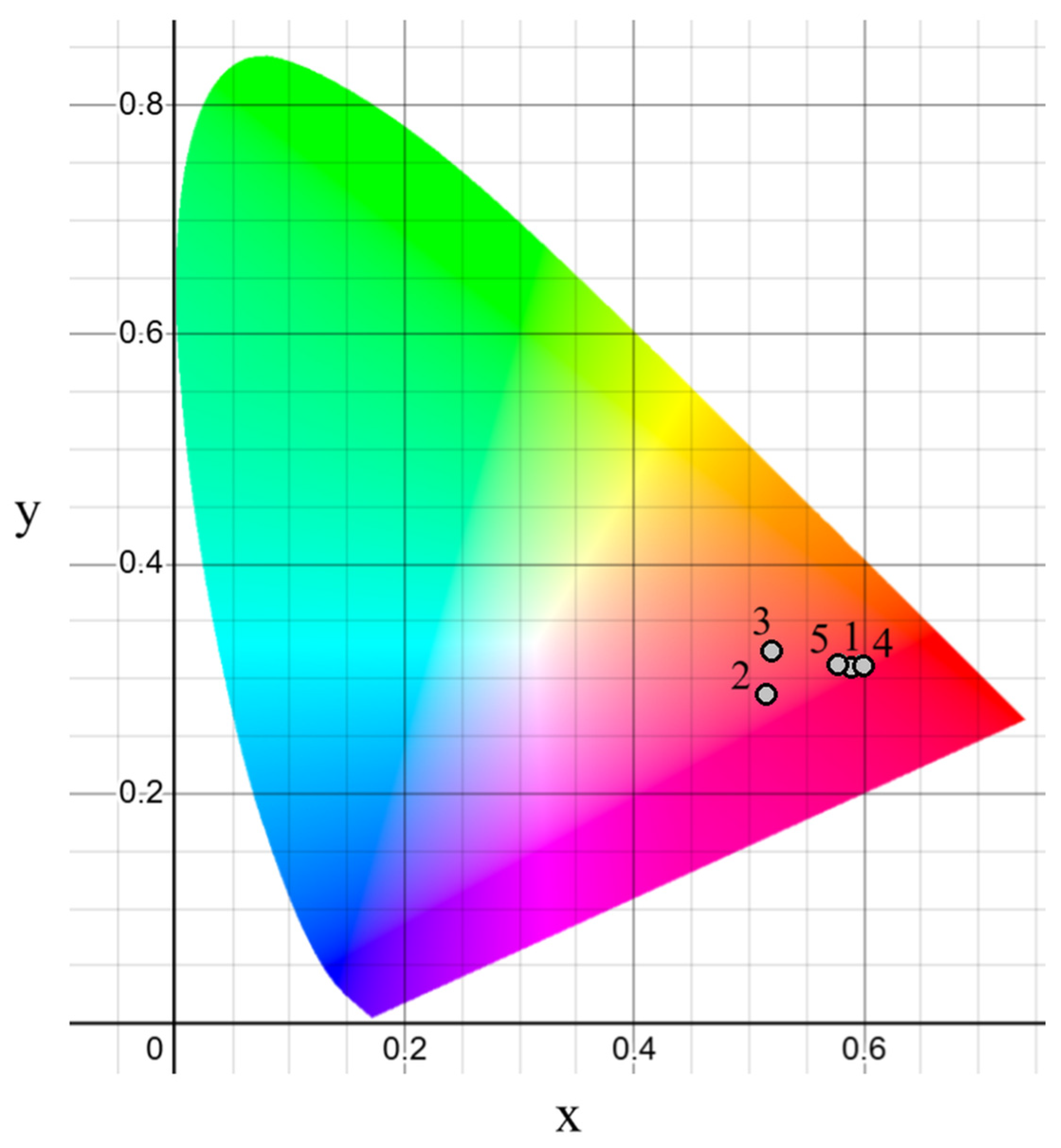
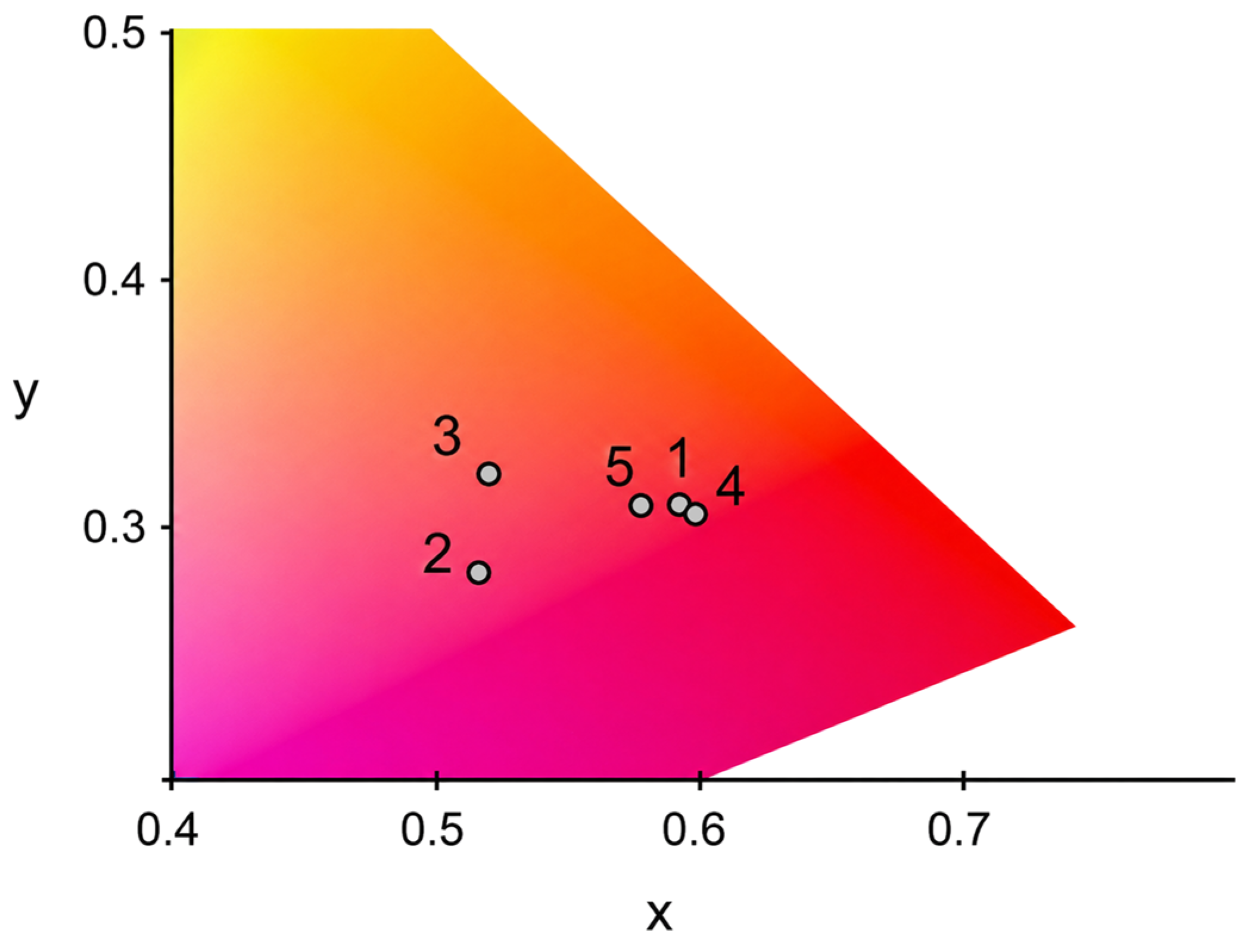
Figure 5 presents the mean chromaticity coordinates obtained from two replicate reflectance measurements performed on each yarn sample. The replicate measurements showed good agreement, with differences in both x and y coordinates not exceeding 0.005. Reflectance-based colourimetric analysis revealed measurable differences in chromaticity among the analysed yarn samples. Samples 1 (PM 184), 4 (LM 4531), and 5 (LžNM 20889:2) formed a compact cluster with inter-sample distances below 0.01, indicating highly similar chromaticities. In contrast, samples 2 (PM 1184) and 3 (LM 710) showed distances exceeding 0.05 relative to the main cluster, suggesting noticeably different colour tones.
Although prolonged exposure to light and other environmental factors may influence the colour of historical textiles, the analysed samples originated from three different museum collections, where they were stored under museum conditions without exposure to direct sunlight. Samples with similar chromaticities originated from different museums, while samples from the same museum showed different chromaticities. Therefore, the observed colour differences are unlikely to be explained by differences in museum storage conditions alone.
Despite these differences, all analysed samples remained within the red region of the CIE chromaticity space, consistent with the visual appearance of the textiles (Figure 6).

3.4. Experimental Reconstruction of Historical Dyeing Technology

3.4.1. Materials Used for Experimental Dyeing

Wool yarn obtained from local sheep raised in Latvia was used for the experimental dyeing, although the exact breed could not be identified. The yarn was spun at a small wool-spinning mill in Preiļi, eastern Latvia, using wool acquired from local sheep farms. Its appearance and texture are comparable to those of wool yarns historically used in the region.
Dried Mexican cochineal (Dactylopius coccus Costa) was used as the dye source. The material was supplied within the European Union by Kremer Pigmente (Germany).
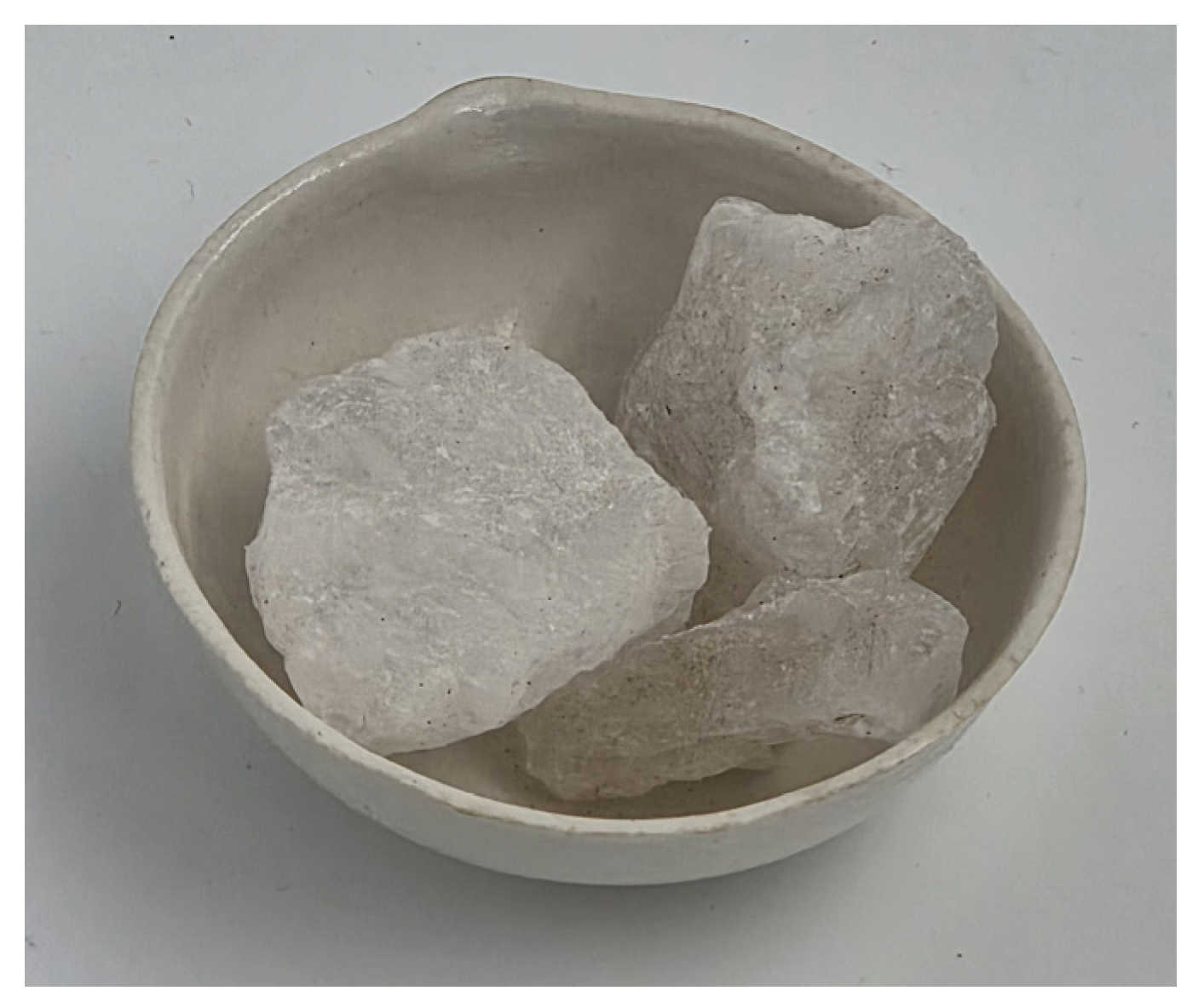
Natural alum was used in the experimental reconstruction because historical alum was a naturally occurring mineral rather than a purified industrial chemical. The mineral originated from Central Asia and was selected as a historical analogue of the naturally occurring alum that was available through nineteenth-century Eurasian trade. Because the experimental reconstruction sought to reproduce historical dyeing conditions as closely as possible, the naturally occurring alum used in the experiments is documented in Figure 7.
Chemical analysis of wool dyed with natural alum showed an elemental composition and element concentrations comparable to those obtained with commercially available potassium aluminium sulphate. Comparative dyeing experiments also showed comparable mordanting properties and dyeing performance, with only slight visual differences in colour tone between the resulting samples.
The tin(II) chloride and potassium hydrogen tartrate (cream of tartar) used in the experiments were purchased from the Latvian chemical supplier Enola. Baking soda, available in stores, was used to modify the colour tone after dyeing.
The yarn was washed prior to dyeing. Rainwater was used in the dyeing process because cochineal dyes are sensitive to water hardness and dissolved mineral content, both of which may affect the final colour.

3.4.2. Experimental Dyeing Procedure

Dyeing experiments were conducted to obtain reference samples and clarify the specific effects of various mordants on the colour tone of cochineal-dyed yarn. As no contemporary regional dyeing manuals or recipes describing cochineal dyeing in Latvia have been identified, the available historical sources provide only fragmentary information on materials and dyeing practices rather than complete recipes with quantified proportions. The selection of mordants, dye concentrations, and experimental procedures was therefore based on the analytical results obtained in the present study, ethnographic records preserved in the Latvian National History Museum [8], and historical newspaper sources [18]. Consequently, the experimental procedures were developed within a practice-based research framework, combining analytical results, historical evidence, and the tacit knowledge of experienced natural dyers. The experimental procedures should therefore be understood as historically informed reconstructions rather than exact reproductions of documented nineteenth-century recipes.
Each experimental dyeing procedure was carried out once, as the primary objective was to obtain analytical reference samples for comparison with the historical textiles rather than to investigate the reproducibility of the dyeing process through replicated experiments. Furthermore, because the historical sources provide only fragmentary descriptions rather than fully standardised recipes, the experiments were designed to explore historically plausible dyeing procedures rather than to establish statistically reproducible laboratory protocols.
Prior to mordanting and dyeing, the wool yarn was soaked in clean water for several hours. Each experimental sample consisted of a 100 g skein of wool yarn.
Experiment I
Different mordant combinations and concentrations were tested to evaluate their effect on the colour of cochineal-dyed wool. Both pre-mordanting and the addition of mordants directly to the dye bath were employed as part of the experimental procedure. The following mordant combinations were used:
Experiment I.1 Pre-mordanting with natural alum: 15 g alum per 100 g yarn;
Experiment I.2 Mordanting during dyeing with tin(II) chloride and potassium hydrogen tartrate (cream of tartar): 5 g SnCl2 + 10 g KHC4H4O6 per 100 g yarn.
Experiment I.3 Mordanting during dyeing with tin chloride and cream of tartar: 5 g SnCl2 + 10 g KHC4H4O6 per 100 g yarn, followed by post-treatment in a baking soda (sodium bicarbonate, NaHCO3) solution (pH 8.3–8.5).
Experiment I.4 Mordanting during dyeing with tin chloride: 5 g SnCl2 per 100 g yarn;
Although four different mordanting treatments were tested, all experimental variants followed the same dye preparation and dyeing procedure. Only the mordanting system differed between the treatments. The common experimental protocol is described below, whereas the individual mordanting systems are listed above.
For the pre-mordanted variant (Experiment I.1), clean, wet yarn was immersed in a mordant bath, in which the amounts of mordants were calculated relative to the dry weight of the yarn. The mordant bath was gradually heated to 80 °C and maintained at this temperature for 40 min. The yarn was then allowed to cool slowly in the solution before being thoroughly rinsed.
The following dye extraction and dyeing procedure was identical for all four experimental variants.
Dried cochineal (Dactylopius coccus Costa) was used for all dyeing experiments. Prior to use, the dried insects were manually ground using a stone mortar.
To prepare the dye bath, the crushed cochineal was soaked overnight in freshly boiled rainwater. On the following day, the suspension was boiled for 2 h, filtered, and diluted with additional rainwater to obtain a sufficient volume of dye solution.
The clean, damp yarn was immersed in the dye bath and allowed to soak for 30 min. The dye bath was then heated gradually over low heat to ensure slow and even dye uptake. When the temperature reached approximately 45 °C, the mordant, previously dissolved in hot water, was added where required (i.e., in the tin(II) chloride treatments). Heating was continued to 80 °C and maintained at this temperature for approximately 2 h. Throughout the dyeing process, the yarn was stirred regularly to ensure even dyeing. After heating, the yarn was allowed to cool in the dye bath before being thoroughly rinsed several times and left to dry.
Experiment II
As ICP–QQQ elemental analyses performed in the present study (Section 3.2.2, Table 5) revealed the simultaneous presence of aluminium and tin in the historical yarn samples, the experimental programme included mordanting systems based on both elements. Comparison of the analytical data obtained from the historical and experimentally dyed yarns further indicated that the experimental reference yarns contained lower concentrations of dye compounds than the historical textiles. Therefore, a second experiment was designed to evaluate the combined effects of aluminium- and tin-based mordanting, increased cochineal concentration, and an alternative dyeing procedure derived from historical written sources.
The second experiment was based partly on a nineteenth-century newspaper advertisement describing a dyeing process using both finely ground cochineal and a product referred to as “cochineal paste”, the exact composition of which remains unknown. As no other written source examined during this study provided quantitative information concerning the amount of cochineal used in local dyeing practice, this description was employed as a reference point for the experimental reconstruction. The advertisement stated:
“We hereby inform all our esteemed readers that we now have a dye by means of which beautiful red colours may be obtained with cochineal without hydrochloric, tin, or nitric acid. This dye is called Wetterich’s cochineal paste and has the advantage of producing red colours much more cheaply and with little effort. The dyeing process is as follows: for 1 pound [approximately 454 g] of wool, take 4 lots [approx. 56 g] of cochineal, grind and sieve it finely, soak the powder overnight in cold water and then, after adding 8 lots [approx. 112 g] of cochineal paste, bring the solution to the boil. The wool is then added and boiled thoroughly for three-quarters of an hour, after which the wool acquires a beautiful red colour.”
[18]
Assuming the weight system used in the Baltic provinces of the Russian Empire, the historical recipe corresponds to approximately 12.5% owf cochineal and 25% owf cochineal paste. However, because the composition and dyeing properties of the so-called cochineal paste remain unknown, 30% owf cochineal was used to compensate for this uncertainty and to reproduce the higher dye content suggested by the analytical results.
The experiment employed two 100 g skeins of wool yarn pre-mordanted with natural alum and potassium hydrogen tartrate in a ratio of 8 g alum and 7 g potassium hydrogen tartrate per 100 g yarn. During dyeing, 5 g of SnCl2 per 100 g yarn was added to the dye bath.
Whereas Experiment I employed a previously prepared dye extract, Latvian ethnographic sources [8] indicate that historical dyeing practice also included methods in which the dyestuff and the textile material were heated simultaneously in the same dye bath. This historical approach was therefore adopted in Experiment II.
To minimise uneven dyeing, the crushed cochineal was placed in small paper filter bags and soaked overnight in hot water.
The following day, the wet, pre-mordanted wool yarn was introduced into the dye bath and gradually heated. When the dye bath reached approximately 50 °C, tin(II) chloride was added to the dye solution after temporarily removing the yarn from the bath. Following the addition of the tin mordant, the dye solution acquired a greyish tone, which gradually shifted towards red as heating continued to 80 °C. At the same time, the yarn colour changed from greyish purple-red to a bright red shade. The total heating time exceeded 2 h (Figure 8).

3.4.3. Experimental Results

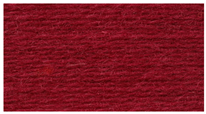
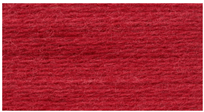
As shown by the experimental colour samples (Table 7), lighter shades were obtained when tin(II) chloride was used either alone or in combination with cream of tartar. The addition of cream of tartar shifted the colour towards a warmer hue. By contrast, the addition of alum resulted in darker, cooler shades, as did post-treatment with a weakly alkaline solution.
The experiment combining alum, tin(II) chloride, and cream of tartar with a higher cochineal concentration (sample 5, Table 7) did not produce the bright light-red shade observed in the historical textiles. This finding is consistent with the low aluminium concentrations detected in some of the historical yarn samples by elemental analysis. These results suggest that alum, where present, probably played only a minor role in producing the characteristic red colour of the Lielvārde-type patterned sashes.
The experimental dyeings demonstrated that bright scarlet shades comparable to those of the historical Lielvārde-type sashes were achieved only when cochineal was combined with tin mordants, whereas alum alone produced darker, cooler shades.
The combined analytical, experimental and historical evidence demonstrates that the red yarns of the analysed Lielvārde-type patterned sashes were dyed with Mexican cochineal using a tin-based mordanting system in which alum probably played a supplementary role. The experimental reconstructions further showed that bright scarlet shades comparable to the historical textiles could be reproduced using tin chloride together with cream of tartar, whereas alum alone produced darker tones. These observations provide a coherent reconstruction of the historical dyeing technology employed for the production of the sashes.
The analytical results, considered together with the documentary evidence for the availability of cochineal, mordants and imported cotton threads, also support a reassessment of the chronology of these textiles. Rather than representing an early nineteenth-century tradition, the analysed sashes are more consistent with the technological and commercial conditions that existed from the late 1850s onwards.

3.5. Historical Evidence for Cochineal and Dyeing Technology

3.5.1. Cochineal

Following the European colonisation of the Americas in the sixteenth century, Mexican cochineal (Dactylopius coccus Costa) became one of the most important red dyestuffs used in Europe [13]. In the Baltic German press, the term ‘Cochenille’ first appeared in merchants’ advertisements in 1782 among lists of imported colonial goods [19].
During the nineteenth century, references to cochineal became increasingly frequent in both the Baltic German- and Latvian-language press. Between 1825 and 1829, newspapers reported attempts to acclimatise cochineal cultivation in Mediterranean regions and Spain [20,21,22,23]. Evidence that cochineal was already familiar to Latvian readers before it was directly advertised to Latvian consumers is provided by an educational article on purple dyes published in the newspaper Latviešu Avīzes in 1838, in which cochineal was described as a well-known red dyestuff [24].
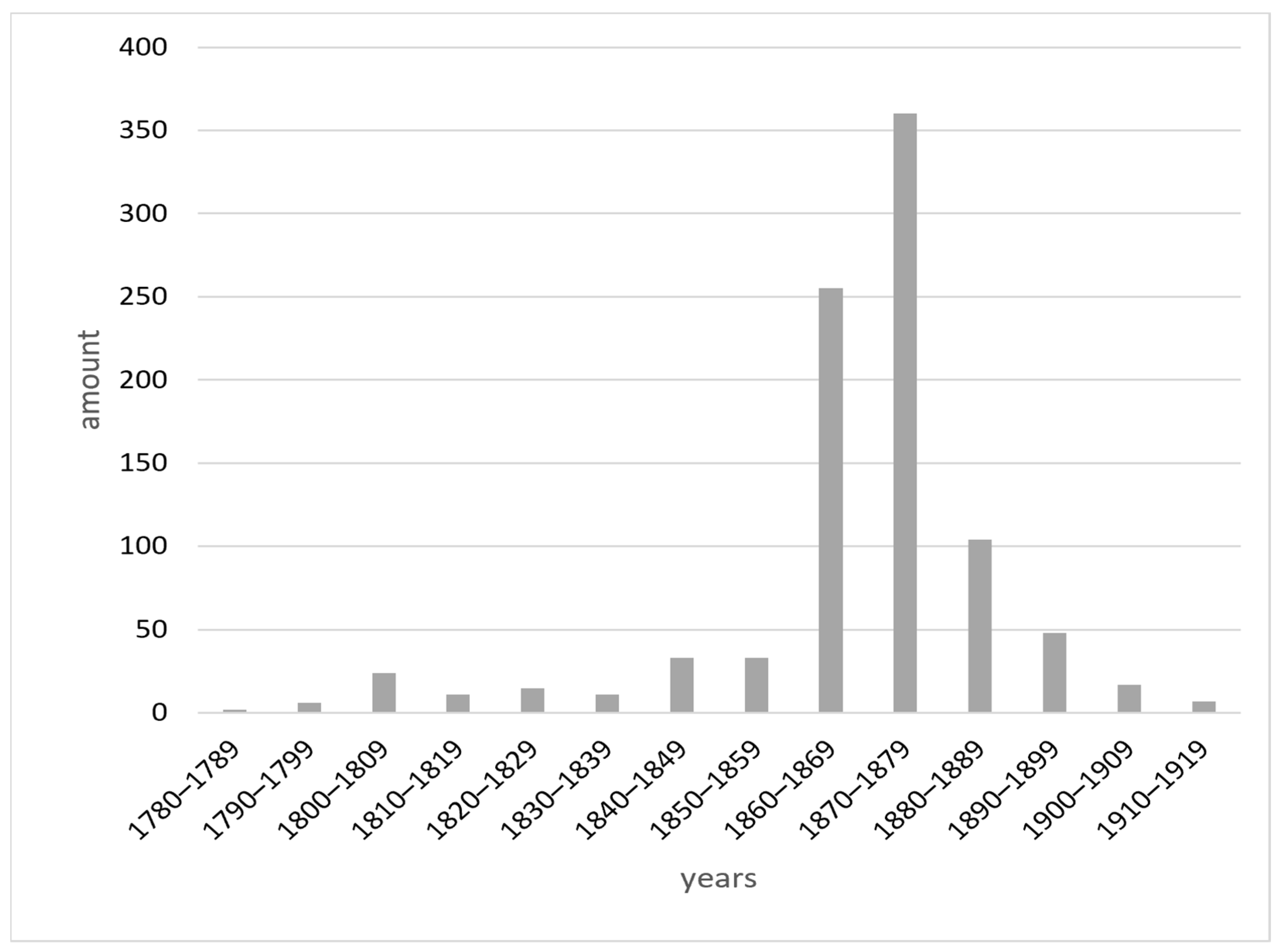
The first advertisements specifically offering cochineal to Latvian consumers appeared in 1857 in the newspaper Mājas Viesis [7]. References to cochineal increased markedly during the 1860s, both in merchants’ advertisements and in lists of goods imported through the ports of Riga and Libau (present-day Liepāja). References to cochineal continued to appear in both German- and Latvian-language publications throughout the second half of the nineteenth century, reaching their highest frequency during the 1860s and 1870s (Figure 9).
From the 1860s onwards, merchants also advertised products described as ‘Koschenille-Salve’ (“cochineal paste”). In 1861, the dye and pharmacy merchants A. and W. Weterich began offering this product to customers in Riga and smaller towns throughout the Vidzeme Province [18]. Shortly afterwards, a similar product was advertised by the Riga merchant Alfred Busch [25]. By the mid-1860s, additional merchants were also selling products under this name [26,27]. Although the composition of these preparations remains unknown, the advertisements suggest that they were marketed as convenient preparations for producing bright and durable red colours.

3.5.2. Alum and Tin Mordants

Historical written sources [7,8,18,19,25,26,27,28] indicate that the same mordants used elsewhere in Europe were also available in the Baltic provinces of the Russian Empire. Merchants’ advertisements, lists of imported goods, and ethnographic sources mention alum, iron vitriol, copper vitriol, tin compounds, cream of tartar, and other materials associated with textile dyeing.
Although alum appears to have played only a minor role in producing the characteristic colour of the Lielvārde-type patterned sash yarns, its availability on the local market cannot be overlooked. In the Baltic German press, alum (‘Alaun’) appeared regularly in lists of imported goods from the eighteenth century onwards. For example, in 1767 the newspaper Rigische Anzeigen reported the import of 12,765 pounds of alum into Riga [28]. Such quantities indicate that alum was readily available and widely used in the Baltic region.
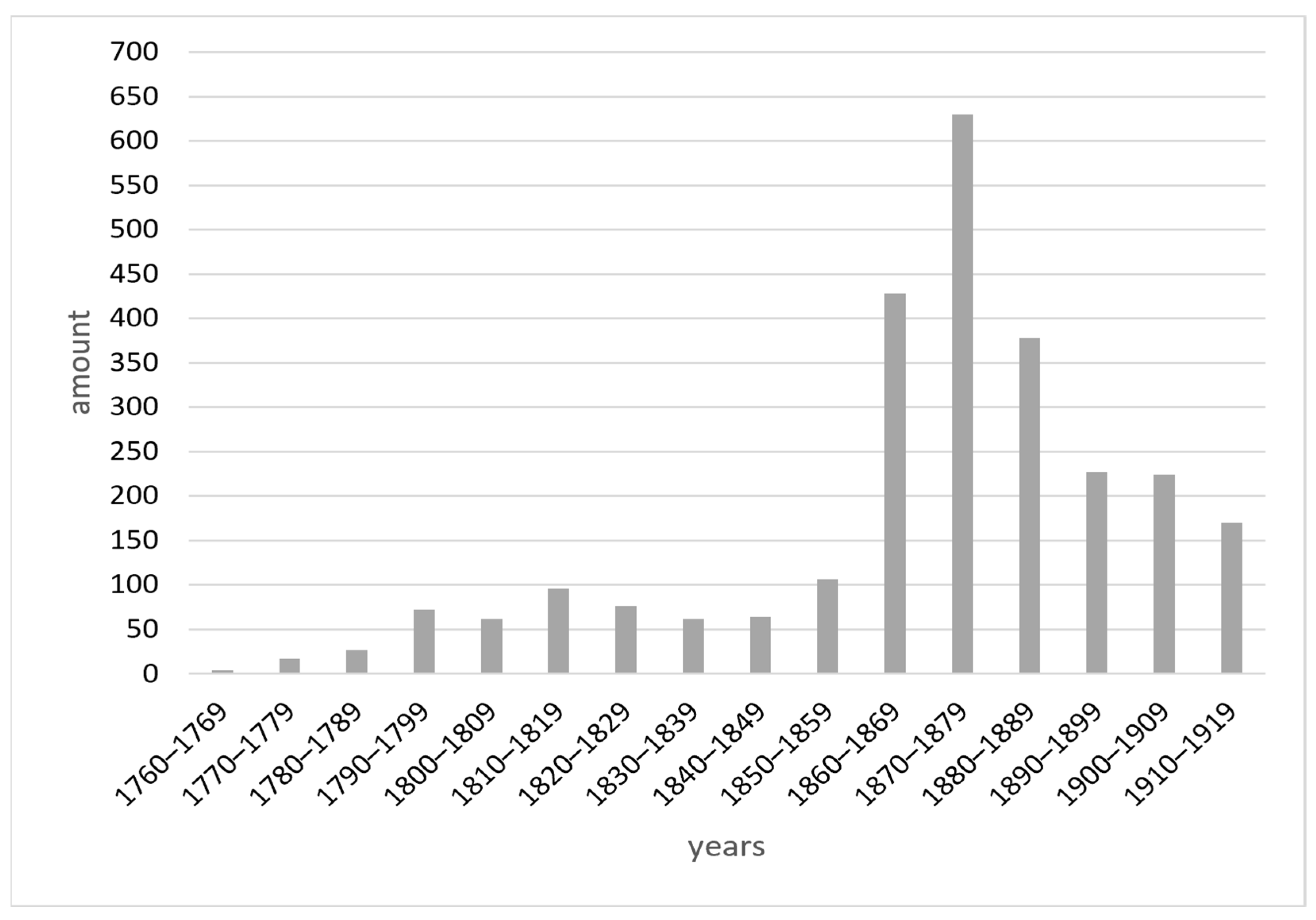
Throughout the nineteenth century, references to alum appeared frequently in both the Baltic German- and Latvian-language press and were considerably more numerous than references to cochineal (Figure 10).
Tin-based mordants became widely used in European textile dyeing from the seventeenth century onwards, particularly in combination with cochineal for producing bright scarlet shades [29,30,31]. In contrast to alum, however, tin mordants could not be identified with certainty in merchants’ advertisements or import lists from the Baltic provinces. Although imported metallic tin was occasionally mentioned, no historical terminology that can be unequivocally interpreted as referring to tin mordants has been identified in the written sources examined in the present study. The analytical identification of tin in the historical yarns therefore provides important evidence for the practical use of tin mordants, despite the limited documentary evidence available in contemporary written sources.

3.5.3. Imported Textile Materials

Cotton was imported into the Baltic provinces of the Russian Empire and processed locally in textile factories. Consumers could purchase ready-made cotton threads intended for weaving and other textile production.
The first advertisements for cotton weaving threads in the Latvian-language press appeared in 1858 [32]. Initially, these products were imported from England and were available not only in Riga but also in shops located in rural parishes [33]. From the 1860s onwards, cotton spinning also developed locally. In 1862, weaving threads produced by A. Lebedev’s flax and cotton spinning mill in Ķengarags, Riga, were advertised [34], while from 1865, similar products were offered by the cotton spinning mill in Strazdumuiža, near Riga [35]. At the same time, merchants continued to advertise warp threads spun from American cotton in England [36,37] and Germany [38]. The documentary evidence demonstrates that cotton weaving threads were commercially available in the Baltic provinces from the late 1850s onwards, consistent with the textile materials identified in the analysed sashes.

3.5.4. Trade Networks and Technology Transfer

The identification of Mexican cochineal in all five analysed Lielvārde-type patterned sashes demonstrates a remarkable consistency in the dyeing materials used for these prestigious textiles. Although the sashes formed part of the traditional festive dress of Latvian peasants, the results show that global trade networks extended far beyond urban centres and reached rural communities. Together with imported goods, knowledge, technologies, and practical skills also circulated across regions and social groups. The use of cochineal and the probable application of tin-based mordanting systems indicate that the production of Latvian peasant dress was closely connected to wider European networks of trade, material culture, and technological exchange.
Although the present study does not yet allow the historical dyeing process to be reconstructed in every detail, it provides important new evidence concerning the technology used to obtain the characteristic bright red colour of Lielvārde-type patterned sashes. Particularly significant is the analytical identification of tin in several historical yarn samples. Although alum was widely available in the Baltic region and is frequently mentioned in historical sources [8], the use of tin-based mordants in Latvian peasant textiles has not previously been demonstrated analytically. The experimental dyeing results further indicate that tin-based mordants played an important role in producing bright, saturated red shades. The composition of the product marketed as cochineal paste remains unresolved. Contemporary advertisements suggest that it may have contained substances capable of producing bright red shades without the use of conventional tin-based mordants. However, its exact composition and mode of action remain unknown.
The evidence obtained in the present study also supports the historical account published in 1894, which states that Lielvārde-type patterned sashes were woven by specialised sash weavers. At the same time, the looped starting edges preserved on the analysed sashes indicate that relatively simple weaving equipment was used. This suggests that the specialisation was based not on technological innovations or manufactory-style production, but on the exceptional skills of individual craftspeople. Such an organisation of production would also explain the remarkably high technical quality of the textiles while preserving the individuality of each woven sash.
The sophisticated dyeing technology required to produce the intense red shades observed in the historical textiles, together with the exceptional quality of the weaving, suggests the involvement of highly skilled craftspeople. Although these sashes formed part of Latvian peasant dress, their production was probably based on specialised knowledge and extensive practical experience. Whether the same individuals were responsible for both dyeing and weaving remains unknown.

3.5.5. Chronological Implications

The analytical and historical evidence obtained in the present study calls for a reassessment of the previously proposed chronology of the analysed Lielvārde-type patterned sashes. The attribution of some examples to the eighteenth century appears unlikely, as both the widespread availability of Mexican cochineal and the use of cotton threads in the Baltic provinces are more consistent with the technological and commercial conditions of the second half of the nineteenth century. Similarly, the proposed dating of another example to the 1920s–1930s is difficult to reconcile with the analytical evidence and with historical sources indicating that cochineal was no longer widely used in traditional handicraft dyeing during this period.
The similarity in weaving quality, dye composition, elemental composition, and colour characteristics among all analysed sashes suggests that they were produced within the same technological tradition and over a relatively limited chronological period. Taken together, the analytical, experimental, and historical evidence supports a production date in the second half of the nineteenth century, most likely between the late 1850s and the 1870s. This revised chronology is also consistent with the documented availability of imported cochineal, cotton threads, and mordanting materials in the Baltic provinces during this period.

4. Conclusions

This study demonstrates that Mexican cochineal was used to dye the red wool yarns of all five analysed Lielvārde-type patterned sashes. The combined results of chromatographic, elemental, colourimetric, experimental, and historical analyses indicate the use of advanced dyeing technology involving both tin- and alum-based mordanting systems. The identification of tin in the historical yarns provides the first analytical evidence for the use of tin-based mordants in historical Latvian peasant textiles.
The results demonstrate that the production of Lielvārde-type patterned sashes was closely connected to broader European networks of trade, knowledge exchange, and technological development. The use of imported cochineal and specialised dyeing techniques suggests that the manufacture of these textiles required considerable expertise and probably involved highly skilled craftspeople. The analytical, historical, and textile evidence further suggests that the wool yarns were dyed locally using imported dyeing materials. This interpretation is supported by the use of fine but non-uniform hand-spun wool yarns, which are more consistent with local yarn production followed by local dyeing than with the use of imported, pre-dyed industrial yarns.
These findings contribute to a broader understanding of the circulation of dyeing technologies and imported dyestuffs in nineteenth-century northern Europe and demonstrate the value of integrating analytical chemistry, experimental reconstruction, and historical research in textile heritage studies.
The analytical, experimental, and historical evidence also calls for a reassessment of the chronology of the analysed sashes. Previously proposed datings to the eighteenth century and the 1920s–1930s are difficult to reconcile with the identified dyes, mordants, textile materials, and historical evidence. Taken together, the available evidence supports a production date in the second half of the nineteenth century, most likely between the late 1850s and the 1870s.
Accordingly, the chronology of several museum objects can be revised. PM 184 and LŽNM 20889:2 can be dated to the late 1850s–1860s, whereas PM 1184, LM 710, and LM 4531 are more consistent with a production date in the 1870s. These findings contribute new knowledge on historical dyeing technology, the circulation of imported dyestuffs in the eastern Baltic region, and the cultural history of one of Latvia’s most important textile traditions.
Future research should focus on reconstructing historical dyeing recipes in greater detail through additional experimental work and the study of printed dyeing manuals and recipe collections from other European countries. Particular attention should be devoted to clarifying the composition and function of historical products such as the nineteenth-century cochineal paste.

Author Contributions

A.K.: conceptualization, project administration, funding acquisition, resources, validation, supervision, investigation, data curation, visualisation, and writing—original draft preparation. J.K.: investigation, methodology, software, formal analysis, visualisation, and writing—review and editing. G.I.: investigation, methodology, software, formal analysis, visualisation, and writing—review and editing. All authors have read and agreed to the published version of the manuscript.

Funding

This research received no external funding.

Data Availability Statement

The data supporting the findings of this study are contained within this published article. Additional data are available from the corresponding author upon reasonable request.

Conflicts of Interest

The authors declare no conflicts of interest. The funders had no role in the design of the study; in the collection, analyses, or interpretation of data; in the writing of the manuscript; or in the decision to publish the results.

Abbreviations

The following abbreviations are used in this manuscript:
caCarminic acid
CIECommission Internationale de l’Éclairage (International Commission on Illumination)
DADDiode Array Detection
dcIIFlavokermesic acid 2-C-glucopyranoside
ddoeDideoxyerythrolaccin
ICP–QQQInductively Coupled Plasma Triple Quadrupole Mass Spectrometry
fkFlavokermesic acid
kaKermesic acid
MRMMultiple Reaction Monitoring
MSMass Spectrometry
owfon the weight of fibre
UPLCUltra-Performance Liquid Chromatography

References

  1. Madre, I.; Ivanova, G. Jostu Raksti; Liesma: Riga, Latvia, 1968; p. 2. [Google Scholar]
  2. Karlsone, A. Latviešu austās jostas Baltijas jūras reģiona kontekstā. Latv. Vēstur. Institūta Ž. 1998, 1, 58–75. [Google Scholar]
  3. Lauva, J. Sieviešu tautiskais apģērbs Lielvārdē. Etnogrāfiskas Ziņas Par Latviešiem. Laikraksta "Dienas Lapa" Pielikums, 1 July 1894; pp. 107–109.
  4. Rammo, R.; Luhamaa, L.; Vanden Berghe, I.; Veenhoven, J.; Karlsone, A.; Pigozne, I.; Räisänen, R. Red dyes in 18th–19th-century Estonian and Latvian textiles. In Proceedings of the Dyes in History and Archaeology 44th Conference, 7–9 October, 2025, Ottawa, ON, Canada: Abstracts; National Gallery of Canada: Ottawa, ON, Canada, 2025; p. 18. [Google Scholar]
  5. Serrano, A.; van den Doel, A.; van Bommel, M.; Hallett, J.; Joosten, I.; van den Berg, K.J. Investigation of crimson-dyed fibres for a new approach on the characterization of cochineal and kermes dyes in historical textiles. Anal. Chim. Acta 2015, 897, 116–127. [Google Scholar] [CrossRef] [Scilit] [PubMed]
  6. Lech, K.; Fornal, E. A Mass Spectrometry-Based Approach for Characterization of Red, Blue, and Purple Natural Dyes. Molecules 2020, 25, 3223. [Google Scholar] [CrossRef] [Scilit] [PubMed]
  7. Schneiders, T. Sludināšanas. Mājas Viesis, 1857; Volume 19, p. 152.
  8. LNVM ZAE, 47: The National History Museum of Latvia, the Ethnographic Expedition Materials of the Monuments Board, Dyeing, Washing, Bleaching, Folder 47, Collected in 1924–1942.
  9. Ajmal, A.; Piergiovanni, P.R. Effect of Mordanting on the Adsorption Thermodynamics and Kinetics of Cochineal for Wool. Ind. Eng. Chem. Res. 2018, 57, 4462–4469. [Google Scholar] [CrossRef] [Scilit]
  10. Wouters, J.; Verhecken, A. The coccid insect dyes: HPLC and computerized diode-array analysis of dyed yarns. Stud. Conserv. 1989, 34, 189–200. [Google Scholar] [CrossRef] [Scilit]
  11. Serrano, A.; Sousa, M.M.; Hallett, J.; Lopes, J.A.; Oliveira, C.M. Analysis of natural red dyes (cochineal) in textiles of historical importance using HPLC and multivariate data analysis. Anal. Bioanal. Chem. 2011, 40, 735–743. [Google Scholar] [CrossRef] [Scilit]
  12. Mantzourisa, D.; Karapanagiotisa, I. Armenian cochineal (Porphyrophora hamelii) and purpurin-rich madder inancient polychromy. Colora Technol. 2015, 131, 370–373. [Google Scholar]
  13. Riello, G. The colour of empire. Cochineal and indigo in the pre-modern world. In A Revolution in Colour: Natural Dyes and Dress in Europe, c. 1400–1800; Hayward, M., Riello, G., Rublack, U., Eds.; Bloomsbury Academic: London, UK, 2024; pp. 64–84. [Google Scholar]
  14. Domínguez-Castillo, C.; Jiménez-Hidalgo, M.; López-Gámez, J.; Rodríguez-Hortal, A.; Alzaga-García, M.; Gallardo-Abárzuza, M.; Higueras-Milena, J.M.; Gómez-Morón, A.; García-Viñas, E.; Bernaldez-Sánchez, E.; et al. High-resolution mass spectrometry identification of dye compounds and their degradation products in American cochineal from a historic shipping cargo. Dye. Pigm. 2023, 216, 111313. [Google Scholar] [CrossRef] [Scilit]
  15. Valipour, P.; Ekrami, E.; Shams, A. Nateri, Colorimetric properties of wool dyed with Cochineal: Effect of Dye-bath pH. Prog. Color Color. Coat. 2013, 7, 129–138. [Google Scholar] [CrossRef] [Scilit]
  16. Fischer, F. Handbuch der Chemischen Technologie. 2. Band, Organischer Theil, 15th ed.; Otto Wigand: Leipzig, Germany, 1902; p. 163. [Google Scholar]
  17. Koestler, R.J.; Sheryll, R.; Indictor, N. Identification of dyeing mordants and related substances on textile fibers: A preliminary study using energy dispersive x-ray spectrometry. Stud. Conserv. 1985, 30, 58–62. [Google Scholar] [CrossRef] [Scilit]
  18. Wetterich, A.W. Wehra leekama ziņņa. Mājas Viesis, 1861; Volume 29, p. 232.
  19. Anonim. IV. Sachen, die zum Verkauf ausgeboten werden. Rigische Anzeigen, 1782; Volume 2, pp. 11–12.
  20. Anonim. Madrid, vom 9. April. Libausches Wochenblatt, 1825; Volume 33, p. 3.
  21. Anonim. Madrid, vom 24. April. Zuschauer, 1826; Volume 2815, p. 219.
  22. Anonim. Madrid, den 24. April. Rigasche Zeitung, 1826; Volume 38, p. 2.
  23. Anonim. Madrid, den 19. Februar. Rigasche Zeitung, 1829; Volume 28, p. 4.
  24. F.R. Purpuris. Latviešu Avīzes, 1838; Volume 8, pp. 30–31.
  25. Buch, A. Koschinella-salwi. Mājas Viesis, 1861; Volume 43, p. 344.
  26. Plates, E. Sludinahschanas. Mājas Viesis, 1864; Volume 3, p. 24.
  27. Zietemann, E. Sludinahschanas. Mājas Viesis, 1864; Volume 40, p. 320.
  28. Anonim. Verzeichinss derer im Jahr 1767 in Riga zur see eingekommmenen Waaren. Rigische Anzeigen, 1768; Volume 2.
  29. De Keijzer, M.; Proaño Gaibor, A.N.; Geldof, M. Cornelis Drebbel’s Scarlet. In Dyes in History and Archaeology 35/36; Kirby, J., Ed.; Archetype Publications: London, UK, 2021; pp. 1–14. [Google Scholar]
  30. Keller, V. Cornelis Drebbel (1572–1633): Fame and the Making of Modernity. Ph.D. Thesis, Princeton University, Princeton, NJ, USA, 2008. Available online: https://www.proquest.com/dissertations-theses/cornelis-drebbel-1572-1633-fame-making-modernity/docview/89133289/se-2 (accessed on 10 April 2026).
  31. Hofenk de Graaff, J.H. The Colourful Past: Origins, Chemistry and Identification of Natural Dyestuffs; Archetype Publications: London, UK, 2004. [Google Scholar]
  32. Schneidemann, A. Sludinahschanas. Mājas Viesis, 1858; Volume 40, p. 320.
  33. Hirsch, J. Sludinahschanas. Mājas Viesis, 1859; Volume 19, p. 152.
  34. Lebedev, A. Sludinahschanas. Latviešu Avīzes, 1862; Volume 11, p. 7.
  35. Pychlau, T. Sludinahschanas. Mājas Viesis, 1865; Volume 6, p. 48.
  36. Anonim. Pie Zivs. Mājas Viesis, 1864; Volume 43, p. 343.
  37. Anonim. Eņģlišu aužamu diegu magazīne. Mājas Viesis, 1866; Volume 50, p. 400.
  38. Hepķeris, C. Jelgavā. Latviešu Avīzes, 1874; Volume 49, p. 391.
Figure 1. Lielvārde-type patterned sashes showing the preserved looped starting edge (from left): (a) PM 184; (b) PM 1184; (c) LM 710.
Heritage 09 00273 g001
Figure 2. Collection and handling of yarn samples from museum artefacts prior to analytical investigation. Photo: E. Kuzmane.
Heritage 09 00273 g002
Figure 3. Reversed-phase UPLC–DAD/MS chromatograms obtained using MRM detection showing (a) dideoxyerythrolaccin (ddoe), (b) kermesic acid (ka), (c) flavokermesic acid (fk), (d) carminic acid (cd), and (e) flavokermesic acid 2-C-glucopyranoside (dcII) in a dye extract from historical patterned sash PM 184.
Heritage 09 00273 g003
Figure 4. UPLC–DAD chromatograms (monitored at 280 nm) of dye extracts from the red wool fibres of historical patterned sashes containing cochineal (D. coccus): (a) PM 184; (b) PM 1184; (c) LM 710; (d) LM 4531 (LRMK 403); (e) LžNM 20889:2.
Heritage 09 00273 g004
Figure 5. Reflectance spectra of red wool yarn samples obtained from the analysed historical Lielvārde-type patterned sashes, showing differences in spectral profiles and chromaticity among the samples. Sample numbering: 1—PM 184; 2—PM 1184; 3—LM 710; 4—LM 4531; 5—LžNM 20889:2.
Heritage 09 00273 g005
Figure 6. CIE 1931 xy chromaticity diagram showing the chromaticity coordinates of the analysed historical yarn samples. Sample numbering: 1—PM 184; 2—PM 1184; 3—LM 710; 4—LM 4531; 5—LžNM 20889:2.
Heritage 09 00273 g006
Figure 7. Naturally occurring alum mineral from Uzbekistan (Central Asia), used in the experimental reconstruction as a historical analogue of nineteenth-century trade alum (photo: A. Karlsone).
Heritage 09 00273 g007
Figure 8. Changes in yarn colour during the cochineal dyeing process following the addition of tin chloride. Photo: A. Karlsone.
Heritage 09 00273 g008
Figure 9. Frequency of references to cochineal in the Baltic German- and Latvian-language press. Chart by A. Karlsone, based on data from https://periodika.lv (accessed on 2 February 2026).
Heritage 09 00273 g009
Figure 10. Frequency of references to alum (‘Alaun’) in the Baltic German- and Latvian-language press. Chart by A. Karlsone, based on data from https://periodika.lv (accessed on 2 February 2026).
Heritage 09 00273 g010
Table 1. Analysed artefacts and samples *.
Signature Description Picture Sample Yarn
PM 184Material: wool, linen (warp)/linen (weft);
4 × 306 cm + 3 cm looped fringes, 13 cm plait;
patterned pick-up technique;
number of threads in the pattern: 37;
density: 10 pattern yarns/11 wefts 1 cm2
Heritage 09 00273 i001Heritage 09 00273 i002Heritage 09 00273 i003
PM 1184Material: wool, cotton (warp)/cotton (weft);
5.4–5.7 × 274.5 cm + 2 cm looped fringes, 9 cm plait;
patterned pick-up technique;
number of threads in the pattern: 53;
density: 9 pattern yarns/10 wefts 1 cm2
Heritage 09 00273 i004Heritage 09 00273 i005Heritage 09 00273 i006
LM 710 Material: wool, cotton (warp)/cotton (weft);
4 × 305 cm + 2 cm looped fringes, 15.5 cm plait;
patterned pick-up technique;
number of threads in the pattern: 41;
density: 10 pattern yarns/14 wefts 1 cm2
Heritage 09 00273 i007Heritage 09 00273 i008Heritage 09 00273 i009
LM 4531
(LRMK 403)
Material: wool, linen (warp)/linen (weft);
4.7–4.5 × 239 cm + 5 cm fringes, 15 cm plait;
patterned pick-up technique;
number of threads in the pattern: 55;
density: 12 pattern yarns/14 wefts 1 cm2
Heritage 09 00273 i010Heritage 09 00273 i011Heritage 09 00273 i012
LžNM 20889:2Material: wool, linen (warp)/linen (weft);
5.4 × 308 cm + 3 cm looped fringes (damaged), 9 + 2.5 cm plait;
patterned pick-up technique;
number of threads in the pattern: 63;
density: 12 pattern yarns/12 wefts 1 cm2
Heritage 09 00273 i013Heritage 09 00273 i014Heritage 09 00273 i015
* Photos of the artefacts were taken by A. Karlsone, and the yarn samples were taken by Valters Gobins.
Table 2. Dyes identified in extracts from historical patterned sashes.
Signature (Inventory Number) of Patterned SashesFlavokermesic Acid 2-C-Glucopyranoside (dcII)Carminic Acid (ca)Flavo-Kermesic Acid (fk)Kermesic Acid (ka)Dideoxyerythro-Laccin (ddoe)
Relative Abundances, % (RSD) *
PM 1841.3 (0.3)97.3 (2.1)0.1 (0.0)0.1 (0.0)1.2 (0.2)
PM 11841.1 (0.2)98.3 (2.3)0.5 (0.1)0.1 (0.0)trace
LM 7102.5 (0.4)97.0 (2.0)0.5 (0.1)tracetrace
LM 4531
(LRMK 403)
1.3 (0.2)98.1 (2.0)0.5 (0.1)trace0.1 (0.0)
LžNM 20889:22.0 (0.3)96.7 (2.4)0.8 (0.1)0.2 (0.0)0.3 (0.0)
* Values are reported as means (RSD, %) based on two independent sample preparations and a total of four replicate injections.
Table 3. Dye composition of cochineal-dyed wool yarns produced using different mordant systems.
No.MordantsFlavokermesic Acid 2-C-Glucopyranoside (dcII)Carminic Acid (ca)Flavo-Kermesic Acid (fk)Kermesic Acid (ka)Dideoxy-Erythrolaccin (ddoe)
Relative Abundances, % (RSD) *
1KAl(SO4)2 12H2O (1.5:100, w/w)3.8 (0.5)95.3 (2.5)0.8 (0.1)trace0.1 (0.0)
2SnCl2 (5:100, w/w) + KHC4H4O6 (10:100, w/w)4.7 (0.5)93.8 (2.0)1.3 (0.3)Nd **0.3 (0.0)
3SnCl2 (5:100, w/w) + KHC4H4O6 (10:100, w/w), finaly NaHCO3 (25:100, w/w)9.9 (0.7)86.9 (2.4)2.9 (0.4)Nd0.3 (0.0)
4SnCl2 2H2O (5:100, w/w)13.3 (0.7)85.4 (2.3)1.1 (0.2)trace0.2 (0.0)
5KAl(SO4)2 12H2O + KHC4H4O6 (8:8:100, w/w/w/) + SnCl2 (4:100, w/w)10.1 (0.6)89.1 (2.0)0.7 (0.1)Nd0.1 (0.0)
* Values are reported as means (RSD, %) based on two independent sample preparations and a total of four replicate injections. ** Not detected.
Table 4. Elemental composition of untreated sheep’s wool, alum-mordanted wool, cochineal dye liquor, and alum-mordanted wool dyed with cochineal in the presence of tin chloride.
ElementCochinealReferences Sheep WoolNatural Alum- and Cream of Tartar-Mordanted Wool (8:8:100, w/w/w)Mordanted Wool Dyed with Cochineal and tin(II) Salt (7.5:4:100, w/w/w)
Content, mg kg−1 (SD)
Magnesium (Mg)2299 (21)580 (13)19.8 (0.3)236 (28)
Aluminium (Al)66.4 (0.5)69.8 (1.6)2720 (270)1091 (13)
Vanadium (V)0.158 (0.004)0.070 (0.001)0.180 (0.010)0.170 (0.009)
Chromium (Cr)0.242 (0.005)0.160 (0.005)0.631 (0.050)0.720 (0.020)
Manganese (Mn)6.89 (0.08)9.62 (0.10)0.882 (0.022)1.44 (0.01)
Iron (Fe)106.4 (1.7)62.5 (0.8)38.9 (0.1)22.6 (0.75)
Nickel (Ni)0.606 (0.042)17.7 (0.1)2.21 (0.01)7.70 (0.02)
Copper (Cu)8.70 (0.11)5.82 (0.02)5.91 (0.08)8.29 (0.06)
Zinc (Zn)84.1 (0.8)92.5 (2.6)48.3 (6.47)8.56 (0.32)
Lead (Pb)0.132 (0.005)0.150 (0.001)0.021 (0.001)0.061 (0.001)
Tin (Sn)0.323 (0.231)3.15 (0.08)7.72 (0.22)12,029 (638)
Table 5. Elemental composition of wool yarns from historical Lielvārde-type patterned sashes.
ElementSignature (Inventory Number) of Patterned Sashes
PM 184PM 1184LM 710LM 4531LžNM 20889:2
Content, mg kg−1 (SD)
Mg428 (11)964 (4)373 (4)537 (25)1427 (9)
Al2787 (33)1957 (20)201 (4)189 (10)656 (41)
V1.55 (0.07)1.01 (0.06)1.71(0.22)0.693 (0.192)1.28 (0.41)
Cr61.8 (0.4)92.0 (1.3)70.5 (1.8)16.1 (1.7)5.32 (0.43)
Mn77.6 (1.70)42.8 (1.0)25.2 (0.4)33.9 (1.2)75.3 (1.7)
Fe2229 (33)1500 (24)510 (12)337 (32)364 (22)
Ni13,145 (170)23,650 (355)32.1 (1.3)18.3 (0.6)11.9 (0.2)
Cu340 (2)268 (3)100 (1)30.1 (1.6)29.9 (1.1)
Zn111 (2)151 (3)69.6 (1.7)62.2 (2.1)122 (2)
Pb56.4 (1.1)65.7 (0.3)27.1 (0.3)44.3 (0.4)67.2 (0.8)
Sn12,022 (1070)7265 (402)2298 (16)37,340 (450)17,900 (1300)
Table 6. Elemental composition of cochineal-dyed wool yarns produced using different mordant treatments.
ElementMordant
1234
KAl(SO4)2 12H2OSnCl2 + KHC4H4O6SnCl2 + KHC4H4O6 Finally NaHCO3SnCl2
Content, mg kg−1 (SD)
Mg229 (9)107 (2.1)1144 (220)90.2 (2.3)
Al1133 (26)41.4 (1.8)27.2 (8.6)202 (6.1)
V0.322 (0.054)0.284 (0.028)0.284 (0.032)0.485 (0.018)
Cr0.663 (0.022)0.454 (0.012)0.386 (0.045)0.671 (0.022)
Mn0.636 (0.020)1.12 (0.02)2.42 (0.27)1.46 (0.02)
Fe30.6 (1.6)39.0 (1.8)29.3 (3.3)51.2 (3.8)
Ni1.42 (0.24)5.64 (0.24)4.74 (0.88)6.12 (0.09)
Cu8.54 (0.33)6.86 (0.28)9.23 (0.36)7.24 (0.12)
Zn7.64 (0.22)25.3 (0.4)44.1 (6.9)6.13 (0.08)
Pb8.11 (0.20)5.42 (0.18)7.58 (0.28)8.31 (0.43)
Sn20.8 (0.5)21,304 (383)17,599 (1549)19,946 (140)
Table 7. Colour shades obtained in the experimental cochineal dyeing 1.
Nr.MordantsColour Tone
1.alum (KAl(SO4)2 12H2O)
15:100 w/w
Heritage 09 00273 i016
2.tin salt (SnCl2) + cream of tartar (KHC4H4O6),
5 w + 10:100 w/w
Heritage 09 00273 i017
3.tin salt (SnCl2) + cream of tartar (KHC4H4O6)
5 w + 10:100 w/w,
tone modification after dyeing with sodium bicarbonate solution, pH 8.3–8.5
Heritage 09 00273 i018
4.tin salt (SnCl2)
5:100 w/w
Heritage 09 00273 i019
5.natural alum + cream of tartar (KHC4H4O6) + tin salt (SnCl2),
8 w + 7 w + 5:100 w/w, more cochineal
Heritage 09 00273 i020
1 Photo of the colour samples: U. Muzikants.
Disclaimer/Publisher’s Note: The statements, opinions and data contained in all publications are solely those of the individual author(s) and contributor(s) and not of MDPI and/or the editor(s). MDPI and/or the editor(s) disclaim responsibility for any injury to people or property resulting from any ideas, methods, instructions or products referred to in the content.