



Next Issue
Volume 13, June
Previous Issue
Volume 13, April


Separations, Volume 13, Issue 5 (May 2026) – 28 articles
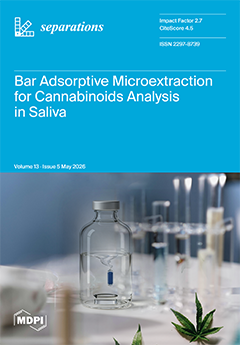
Cover Story (view full-size image): The rapid emergence of semi-synthetic cannabinoids, such as hexahydrocannabinol (HHC), has created new forensic and public health challenges that demand fast, reliable, and sustainable analytical strategies. This work presents a green analytical methodology based on bar adsorptive microextraction (BAµE), combined with GC-MS, for the simultaneous determination of natural and semi-synthetic cannabinoids in saliva. Using a miniaturized and environmentally conscious approach, the method achieved excellent sensitivity, precision, and applicability to authentic samples while reducing solvent consumption and sample preparation complexity. By integrating innovative microextraction with forensic toxicology, this study highlights saliva as a practical, non-invasive matrix for routine cannabinoid monitoring. View this paper
  • Issues are regarded as officially published after their release is announced to the table of contents alert mailing list.
  • You may sign up for e-mail alerts to receive table of contents of newly released issues.
  • PDF is the official format for papers published in both, html and pdf forms. To view the papers in pdf format, click on the "PDF Full-text" link, and use the free Adobe Reader to open them.
Order results
Result details
Section
Select all
Export citation of selected articles as:
15 pages, 3057 KB  
Article
Study on the Flow Field Characteristics and Particle Motion Behavior in the Cylindrical Hydrocyclone
by Duanxu Hou, Haihao Wang, Daqing Hou, Hongying Zhu, Hongrun Song, Jingyan Zhang and Qingguo Shao
Separations 2026, 13(5), 155; https://doi.org/10.3390/separations13050155 - 21 May 2026
Viewed by 124
Abstract
The cylindrical hydrocyclone can be regarded as a special-shaped hydrocyclone comprising entirely cylindrical sections without conical sections, featuring a unique flat-bottom design combined with central discharge, which promotes substantial particle circulation flow in the separation chamber, directly affecting separation performance. A validated TFM [...] Read more.
The cylindrical hydrocyclone can be regarded as a special-shaped hydrocyclone comprising entirely cylindrical sections without conical sections, featuring a unique flat-bottom design combined with central discharge, which promotes substantial particle circulation flow in the separation chamber, directly affecting separation performance. A validated TFM model is employed to investigate the flow field and particle motion behavior in the cylindrical hydrocyclone. The results indicate that the distributions of tangential velocity, radial velocity, pressure, and pressure gradient in the cylindrical hydrocyclone are consistent with patterns observed in the conventional hydrocyclone. The flat-bottom design combined with the central discharge configuration of the cylindrical hydrocyclone results in two distinct axial velocity transitions in the bottom region, forming downward axial velocity flow around the air core. Accordingly, particles moving toward the spigot must pass through the internal swirling flow region, facilitating the fine particles entrained by the coarse particles to enter the internal swirling flow, reducing the misplacement of fine particles in the underflow. Simultaneously, coarse particles entrained by the internal swirling flow return to the external swirling flow region under centrifugal force, forming a substantial coarse particle circulation flow. As a result, a mass of coarse particles accumulates in the separation chamber, hindering the centrifugal settling of medium particles and resulting in an enlarged cut size and severe coarse particle misplacement. Full article
(This article belongs to the Special Issue Advances in Technologies Used for Mineral Separation)
Show Figures

Figure 1

12 pages, 1407 KB  
Article
Enhanced Separation of Am(III) and Cm(III) from Nitrate Solution by Bis(isobutylphenyl)dithiophosphinic Acid
by Qiaorui Sui, Xuan Hao, Jiale Li, Jin Zhou and Suliang Yang
Separations 2026, 13(5), 154; https://doi.org/10.3390/separations13050154 - 21 May 2026
Viewed by 176
Abstract
This work reports a novel dithiophosphinic acid extractant, bis(isobutylphenyl)dithiophosphinic acid (HL), for the mutual separation of Am(III) and Cm(III) and for the separation of trivalent actinides (An(III)) from lanthanides (Ln(III)). The compound was successfully synthesized and structurally confirmed by 1H and 31 [...] Read more.
This work reports a novel dithiophosphinic acid extractant, bis(isobutylphenyl)dithiophosphinic acid (HL), for the mutual separation of Am(III) and Cm(III) and for the separation of trivalent actinides (An(III)) from lanthanides (Ln(III)). The compound was successfully synthesized and structurally confirmed by 1H and 31P NMR spectroscopy. Focusing specifically on Am(III) and Cm(III), the extraction behavior was systematically investigated as a function of pH, ligand concentration, nitrate concentration, and temperature. Compared with the conventional extractant, bis(2,4,4-trimethylpentyl)dithiophosphinic acid (HL301), HL exhibits stronger extraction efficiency (pH1/2 = 3.39 for Am(III) and 3.64 for Cm(III)) and a notably improved separation factor for Am(III) over Cm(III) (SFAm(III)/Cm(III) = 4.8), while retaining excellent separation ability for An(III) from Ln(III). The extraction proceeds via a cation-exchange mechanism, yielding a 1:3 metal-extractant complex with the release of three protons. Increasing nitrate concentration suppresses extraction due to the competition for metal ion between NO3 in the aqueous phase and the extractant. The extraction reaction is endothermic with negative entropy changes, exhibiting ΔH° values of 24.06 kJ·mol−1 for Am(III) and 27.12 kJ·mol−1 for Cm(III) at 298.15 K, along with ΔS° values of −90.63 J·mol−1·K−1 and −89.11 J·mol−1·K−1, respectively. This work offers a promising extractant for the separation of Am(III) from Cm(III) and An(III) from Ln(III), and mechanistic insights into coordination–selectivity relationships involving soft sulfur donors. Full article
Show Figures

Figure 1

19 pages, 5353 KB  
Article
Trimethylsilane-Grafted Low-Rank Coal-Based Activated Coke for Hydrophobic Adsorption of Indole and Diethyl Phthalate from Wastewater
by Shaomeng Huang, Junhan Huyan, Xinyuan Li and Haiting Zhang
Separations 2026, 13(5), 153; https://doi.org/10.3390/separations13050153 - 20 May 2026
Viewed by 147
Abstract
Poorly soluble hydrophobic organic pollutants, such as indole and diethyl phthalate (DEP), are difficult to remove efficiently from complex industrial wastewater due to low solubility and competitive adsorption. In this study, low-rank coal-based activated cokes derived from Wanli long-flame coal and Zhaotong lignite [...] Read more.
Poorly soluble hydrophobic organic pollutants, such as indole and diethyl phthalate (DEP), are difficult to remove efficiently from complex industrial wastewater due to low solubility and competitive adsorption. In this study, low-rank coal-based activated cokes derived from Wanli long-flame coal and Zhaotong lignite were modified through a combined process of acid-washing pretreatment and trimethylchlorosilane (TMCS) grafting. The acid-washing step effectively removed ash and unblocked pores, increasing the specific surface area and pore volume of the optimized Zhaotong lignite-based sample by 43.7% and 53.3%, respectively. Subsequent TMCS grafting successfully introduced hydrophobic methyl groups onto the surface, significantly enhancing hydrophobicity. The water contact angles of the composite materials (acid-washed plus TMCS-grafted) increased to 127.3° and 139.7°, compared to 117.8° and 112.6° for the original samples. The modified adsorbent derived from Zhaotong lignite exhibited high adsorption capacities, reaching 139.47 mg·g−1 for indole and 120.19 mg·g−1 for DEP in single-component systems, representing an increase of 20.1% for indole and 28.7% for DEP compared to the unmodified adsorbent. More importantly, in a competitive system containing phenol at PH = 10, the materials demonstrated superior selectivity towards the target hydrophobic pollutants. The phenol removal rate was 65.97%, and the removal rates for indole and DEP increased sharply to 98.17% and 92.17%, respectively. This work provides a feasible strategy for the advanced treatment of complex organic wastewater using coal-based adsorbents, achieving a dual enhancement in both adsorption capacity and selectivity. Full article
Show Figures

Figure 1

23 pages, 3657 KB  
Article
Vapor–Liquid Equilibrium and Design of Energy-Efficient High-Vacuum Pressure-Swing Distillation for Bio-Based Alcohol/Alkane Separation
by Chunli Li, Tianzhu Ma, Yuze Sun, Kaile Shi, Wen Liu, Rui Wang and Jiapeng Liu
Separations 2026, 13(5), 152; https://doi.org/10.3390/separations13050152 - 18 May 2026
Viewed by 223
Abstract
Fatty alcohols and aliphatic hydrocarbons occur abundantly in nature and serve as critical feedstocks for the surfactant and fuel industries, respectively. However, their industrial-scale separation and purification are significantly hampered by high boiling points and the formation of complex azeotropes. To address these [...] Read more.
Fatty alcohols and aliphatic hydrocarbons occur abundantly in nature and serve as critical feedstocks for the surfactant and fuel industries, respectively. However, their industrial-scale separation and purification are significantly hampered by high boiling points and the formation of complex azeotropes. To address these challenges, this study explores a five-column high-vacuum pressure-swing distillation (HVPSD-5C) strategy. Vapor–liquid equilibrium (VLE) analysis of the key components (n-hexanol, n-octanol, n-dodecane, and n-tridecane) validated the thermodynamic viability of the process and established optimal operating conditions. To further enhance efficiency, a heat-pump-integrated configuration (HPI-HVPSD-5C) featuring vapor recompression and heat integration was designed, optimized, and evaluated. Comparison with the baseline HVPSD-5C process demonstrates that the HPI-HVPSD-5C configuration significantly improves sustainability and economics, reducing the total annual cost (TAC) by 17.48%, CO2 emissions by 16.09%, and energy consumption cost by 12.79%. These findings provide a robust framework for the efficient separation of fatty alcohols from aliphatic hydrocarbons, offering a valuable reference for the purification of other pressure-sensitive azeotropic mixtures. Full article
(This article belongs to the Section Separation Engineering)
Show Figures

Figure 1

16 pages, 5280 KB  
Article
The Effects of Outlet Diameter on Particle Movement and Separation Performance of the Cylindrical Hydrocyclone
by Duanxu Hou, Haihao Wang, Daqing Hou, Hongying Zhu, Hongrun Song, Honghe Deng and Qingguo Shao
Separations 2026, 13(5), 151; https://doi.org/10.3390/separations13050151 - 17 May 2026
Viewed by 239
Abstract
The outlet diameter of hydrocyclones is a critical structural parameter that impacts product distribution and separation performance, drawing significant attention. In this paper, the separation efficiency and particle motion behavior in the cylindrical hydrocyclone with varying spigot diameters and vortex finder diameters are [...] Read more.
The outlet diameter of hydrocyclones is a critical structural parameter that impacts product distribution and separation performance, drawing significant attention. In this paper, the separation efficiency and particle motion behavior in the cylindrical hydrocyclone with varying spigot diameters and vortex finder diameters are systematically analyzed using a TFM model. The numerical results indicate that a larger spigot diameter and a smaller vortex finder diameter reduce the axial velocity and expand the external swirling flow region, while a smaller spigot diameter and a larger vortex finder diameter enhance the particle circulation flow ratio and the coarse particle circulation flow proportion, thereby increasing the cut size. Slightly reducing the spigot diameter and increasing the vortex finder diameter enhances the separation accuracy. Nevertheless, for Du = 0.075 D and Do ≥ 0.4 D, the recovery rate in the underflow remains below 50% for all particle sizes, exhibiting severe particle misplacement and loss of separation efficiency. For Du = 0.125 D, the reduction in coarse particle misplacement in the overflow is attributed to the abrupt changes in the coarse particle circulation flow proportion and medium particle circulation flow proportion. Generally, an appropriate coarse particle circulation flow proportion in the cylindrical hydrocyclone is beneficial for alleviating particle misplacement and improving separation accuracy. Full article
(This article belongs to the Special Issue Advances in Technologies Used for Mineral Separation)
Show Figures

Figure 1

22 pages, 8586 KB  
Article
Effects of Hydrocarbons and Ionic Impurities on Foaming and Purification of UDS Desulfurization Solvent
by Haiyang Wen, Qiyue Zhao, Yaolin Wang, Zhenwu Jiang, Yupeng Cui, Mengna Xu, Chuanlei Liu and Hui Sun
Separations 2026, 13(5), 150; https://doi.org/10.3390/separations13050150 - 16 May 2026
Viewed by 234
Abstract
Severe foaming and a significant decrease in desulfurization performance were noted in a novel UDS solvent applied in a natural gas field in western Sichuan, China. The effects of hydrocarbon and ionic impurities on foaming behavior and the purification performance of candidate adsorbents [...] Read more.
Severe foaming and a significant decrease in desulfurization performance were noted in a novel UDS solvent applied in a natural gas field in western Sichuan, China. The effects of hydrocarbon and ionic impurities on foaming behavior and the purification performance of candidate adsorbents were investigated. An extraction-gas chromatography method was established and validated for determining total hydrocarbons in amine solutions, enabling quantitative evaluation of hydrocarbon contamination. Controlled contamination experiments revealed that hydrocarbons had the strongest effect on foaming, while sulfate and chloride strongly promoted foam formation; organic acid anions showed only minor effects. Fixed-bed screening identified A-98FM anion-exchange resin as the most effective for anionic impurity removal and AC-02 activated carbon as the best candidate for hydrocarbon purification, with a cumulative adsorption capacity q0–12 of 14.86 mg/g over 12 h. Pore-structure and thermal-release analyses suggested that conventional pore descriptors alone could not fully explain the dynamic purification performance, while hydrocarbon-related loadings in spent AC-02 occupied accessible pore space and contributed to performance decay. Treatment of a field-aged UDS lean solvent further showed that reductions in target impurities were accompanied by lower foam height and shorter defoaming time. This work provides experimental support for impurity monitoring, foaming-risk identification, and adsorptive purification of UDS desulfurization solvent under flowback-contamination conditions. Full article
Show Figures

Figure 1

31 pages, 3295 KB  
Review
Determinants of CH4 Selective Adsorption and Separation Performance in Coal Mine Gas Under High-Humidity and Multi-Component Conditions: A Review
by Ruguo Dong, Yongli Liu and Lixin Li
Separations 2026, 13(5), 149; https://doi.org/10.3390/separations13050149 - 15 May 2026
Viewed by 319
Abstract
Coal mine methane (CMM) separation faces significant challenges due to high humidity and multicomponent conditions, under which the selective adsorption performance of CH4 is substantially degraded compared with idealized laboratory scenarios. This review systematically analyzes the fundamental causes of this discrepancy by [...] Read more.
Coal mine methane (CMM) separation faces significant challenges due to high humidity and multicomponent conditions, under which the selective adsorption performance of CH4 is substantially degraded compared with idealized laboratory scenarios. This review systematically analyzes the fundamental causes of this discrepancy by integrating water vapor occupation, competitive adsorption, and structural constraints into a unified framework. Water molecules preferentially occupy high-energy adsorption sites and reconstruct the interfacial energy landscape, while strongly adsorbing components such as CO2 further suppress CH4 uptake through competitive displacement. These coupled effects lead to a pronounced deviation between theoretical adsorption capacity and actual separation performance. To address this issue, this work proposes an evaluation paradigm centered on effective working capacity, which reflects the practically recoverable CH4 under cyclic operation rather than equilibrium limits. The applicability of this framework is demonstrated through comparative analysis across different adsorbent systems, highlighting the critical roles of moisture resistance, structural stability, and competitive resilience. Finally, key material design strategies and process-level optimization approaches are discussed to enhance sustainable CH4 separation under realistic conditions. This review provides a process-oriented perspective for bridging the gap between material performance and engineering application in CMM utilization. Full article
Show Figures

Figure 1

14 pages, 7683 KB  
Article
A Facile Strategy to Construct Structured Mg-Gallate Adsorbent for Post-Combustion CO2 Capture Under 80% RH
by Siyu Wang, Junyang Du, Junsu Jin and Jianguo Mi
Separations 2026, 13(5), 148; https://doi.org/10.3390/separations13050148 - 14 May 2026
Viewed by 288
Abstract
Metal–organic frameworks (MOFs) show great potential for post-combustion carbon capture, yet their practical application is often constrained by challenges such as powder handling difficulties, limited structural stability during shaping processes, and performance degradation under high-humidity conditions. In this study, Mg-gallate was structured into [...] Read more.
Metal–organic frameworks (MOFs) show great potential for post-combustion carbon capture, yet their practical application is often constrained by challenges such as powder handling difficulties, limited structural stability during shaping processes, and performance degradation under high-humidity conditions. In this study, Mg-gallate was structured into millimeter-sized Mg-gallate/CA composite beads via the ionotropic gelation method, and then a hydrophobic layer of vinyltrimethoxysilane (VTMS) was constructed on the bead surface by chemical vapor deposition. The synthesized Mg-gallate/CA and V-Mg-gallate/CA are characterized by XRD, FT-IR, and other techniques, and their CO2 adsorption behavior, adsorption–desorption kinetics, breakthrough performance, and cyclic stability are systematically evaluated. At 298 K and 0.1 bar, the CO2 adsorption capacity of Mg-gallate/CA reached 94.2% of that of Mg-gallate powder. The microporous–microporous hierarchical structure constructed by the ionotropic gelation method improved the CO2 capture efficiency of the composite beads by 16.7% at 0.1 bar. V-Mg-gallate/CA maintained a high dynamic CO2 adsorption capacity of 2.87 mmol/g for a 10 vol.% CO2/90 vol.% N2 gas mixture at 298 K under 80% RH, corresponding to 2.04 times the capacity of Mg-gallate/CA, and retained 98.8% of its initial adsorption capacity at 0.1 bar after 10 cycles. Combining ionotropic gelation shaping with surface hydrophobic modification represents an effective strategy for developing MOF-based adsorbents suitable for post-combustion CO2 capture. Full article
Show Figures

Figure 1

15 pages, 1013 KB  
Article
A Method for Separation of Elemental Sulfur from Organic Polysulfides in Their Mixtures
by Irina Zweig and Alexey Kamyshny, Jr.
Separations 2026, 13(5), 147; https://doi.org/10.3390/separations13050147 - 13 May 2026
Viewed by 207
Abstract
Elemental sulfur frequently coexists with organic polysulfides in environmental samples and laboratory sulfurization experiments, complicating the accurate analysis of sulfur speciation. Reliable methods for selective sulfur removal are therefore required to avoid analytical artifacts. In this study, we systematically evaluated commonly used chemical [...] Read more.
Elemental sulfur frequently coexists with organic polysulfides in environmental samples and laboratory sulfurization experiments, complicating the accurate analysis of sulfur speciation. Reliable methods for selective sulfur removal are therefore required to avoid analytical artifacts. In this study, we systematically evaluated commonly used chemical sulfur removal approaches, including treatment with metallic copper and silver and reaction with tetrabutylammonium sulfite, and compared them with a chromatographic separation method based on C18 reversed-phase silica gel column chromatography. Model organic polysulfides, dimethyl polysulfides, diallyl polysulfides, dibenzyl disulfide, and cyclic polysulfide lenthionine were used to assess method performance under controlled conditions. The results demonstrate that chemical treatments are non-selective and lead to substantial decomposition of organic polysulfides, particularly for longer-chain compounds. In contrast, C18 reversed-phase silica gel column chromatography enables efficient and selective removal of elemental sulfur while preserving the original composition of organic polysulfides, with recoveries in the range of ~90–107%. These findings indicate that commonly applied sulfur removal procedures may introduce significant biases in sulfur speciation analyses. The chromatographic approach presented here provides a reproducible and non-destructive alternative for sample preparation, improving the reliability of studying sulfur speciation and transformation in natural and laboratory systems. Full article
(This article belongs to the Section Environmental Separations)
Show Figures

Figure 1

24 pages, 5974 KB  
Article
Multidimensional Quality Evaluation of Drying Methods on the Bioactive Components and Antioxidant Activity of Astragalus membranaceus var. mongholicus Slices
by Feifan Leng, Jiale Wang, Lizhe Hu, Minmin Li, Yongwei Sun, Yonggang Wang, Jieyin Chen, Xiaofeng Dai, Bin Ma, Qing Lv and Zhiqiang Kong
Separations 2026, 13(5), 146; https://doi.org/10.3390/separations13050146 - 11 May 2026
Viewed by 472
Abstract
This study systematically evaluated the effects of five drying methods (sun drying, freeze drying, shade drying, and hot air drying at 40 °C and 60 °C) on the multidimensional quality of Astragalus membranaceus var. mongholicus slices using multiscale techniques and multivariate analysis. The [...] Read more.
This study systematically evaluated the effects of five drying methods (sun drying, freeze drying, shade drying, and hot air drying at 40 °C and 60 °C) on the multidimensional quality of Astragalus membranaceus var. mongholicus slices using multiscale techniques and multivariate analysis. The results showed that the drying methods significantly influenced color, microstructure, volatile organic compound profiles, the content of 13 bioactive constituents, and antioxidant activity. Among all treatments, hot air drying at 40 °C achieved the highest composite score in the comprehensive evaluation. This treatment was associated with a marked increase in surface microroughness (Ra), higher levels of the pharmacopoeial markers astragaloside IV and calycosin-7-O-β-D-glucoside, and enhanced ABTS radical scavenging activity. However, other methods performed better in individual parameters: shade drying showed higher DPPH and FRAP values, while freeze drying gave the highest total phenolic content. Based on the observed strong correlations (e.g., roughness vs. astragaloside IV: r = 0.94; astragaloside IV vs. ABTS: r = 0.83), we propose a testable hypothesis that hot air drying at 40 °C may influence bioactivity partly through physical microstructural changes. The multidimensional evaluation framework established here provides a methodological reference for quality optimization of medicinal and edible herbs. Full article
Show Figures

Graphical abstract

13 pages, 9377 KB  
Article
Direct Analysis of Silk Dyes from the Murong Zhi Tomb from the Tang Dynasty Using Desorption Electrospray Ionization High-Resolution Mass-Spectrometry Imaging (DESI-MSI)
by Qian Yu, Feng Zhang, Wenchao Lv, Yan Wang, Lei Zhong, Wenting Gu, Junmei Liu, Xinyan Liu, Donghui Xu, Guangyang Liu, Guoke Chen and Nasi Ai
Separations 2026, 13(5), 145; https://doi.org/10.3390/separations13050145 - 9 May 2026
Viewed by 461
Abstract
The identification of dyes in ancient textiles is crucial for provenance research and scientific conservation. However, the extremely significant value of these cultural relics necessitates the use of non-destructive analytical techniques. To establish a non-destructive, in-situ, accurate, and rapid method for identifying natural [...] Read more.
The identification of dyes in ancient textiles is crucial for provenance research and scientific conservation. However, the extremely significant value of these cultural relics necessitates the use of non-destructive analytical techniques. To establish a non-destructive, in-situ, accurate, and rapid method for identifying natural dyes in ancient silk fabric samples, we employed desorption electrospray ionization high-resolution mass-spectrometry imaging (DESI-MSI). By optimizing key instrumental parameters—including sample pretreatment method, DESI spray solvent composition, and DESI heated transfer line (HTL) temperature—we determined the optimal mass-spectrometry imaging conditions. The optimal conditions for achieving the highest mass-spectrometry ion peak signal intensity and the best imaging quality were as follows: employing sample pretreatment using double-sided adhesive tape; a spray solvent composed of methanol (100%, v/v) with 0.1% formic acid and 0.1 μg/mL of leucine enkephalin; and an HTL temperature of 400 °C. The characteristic compound in the G42 silk fabric sample was successfully separated. Based on the characteristic mass-to-charge ratio of the major component, the compound was preliminarily identified as berberine. This result was further verified by tandem mass-spectrometry imaging and tandem mass spectra and finally confirmed by comparison with the mass spectrum of a reference standard. Consequently, the source of the dye in the sample was determined to be amur cork tree. The experiments confirmed the applicability and accuracy of the DESI-MSI method for the non-destructive analysis of precious textiles. This work underscores the urgent need to use such non-destructive techniques to provide technical support for the identification of high-value, inaccessible, or fragile silk artifacts and guide the historical tracing and preservation of these cultural relics. Full article
Show Figures

Figure 1

20 pages, 931 KB  
Editorial
The Evolution of Chromatography in Greece: A Historical Perspective
by Victoria Samanidou
Separations 2026, 13(5), 144; https://doi.org/10.3390/separations13050144 - 9 May 2026
Viewed by 1012
Abstract
Chromatography started to grow in Greece in the 1980s and it has expanded from basic primary separation methods to a sophisticated, multidisciplinary scientific infrastructure operated today by various expert groups distributed in universities and research institutes located in several cities. Over time, chromatography [...] Read more.
Chromatography started to grow in Greece in the 1980s and it has expanded from basic primary separation methods to a sophisticated, multidisciplinary scientific infrastructure operated today by various expert groups distributed in universities and research institutes located in several cities. Over time, chromatography has become a fundamental scientific field constituting a substantial portion of Greece’s scientific output. Food authentication, environmental analysis and monitoring, biomedical and pharmaceutical research, archeological science, dentistry, veterinary medicine, etc., are, to a great extent, progressing based on advances and applications of chromatographic techniques. The contribution to the scientific field is profound, well established and globally recognized. The proof of this international recognition is reflected in the fact that Greece has been recently accepted in the Central European Group of Separation Sciences after being invited by the Steering Committee of the Group, during the 29th International Symposium on Separation Sciences (ISSS 2025) that took place in Belgrade, Serbia, in September 2025. Herein, a brief historical overview is provided briefly describing the main institutional and group contributors in chromatography all over Greece. Full article
(This article belongs to the Collection CEGSS Yesterday, Today and Tomorrow)
Show Figures

Figure 1

29 pages, 4008 KB  
Article
Simultaneous Optimization of Polyphenol Content and Antioxidant Capacity of Extracts from Habanero Pepper Leaves Obtained with Green Technologies: NADES and Ultrasound
by Yajaira Cecilia Torruco-Ortiz, Kevin Alejandro Avilés-Betanzos, Manuel Octavio Ramírez-Sucre and Ingrid Mayanin Rodríguez-Buenfil
Separations 2026, 13(5), 143; https://doi.org/10.3390/separations13050143 - 9 May 2026
Viewed by 272
Abstract
Habanero pepper leaf, annually discarded as a by-product, is a source of phenolic compounds with functional activity. However, their recovery requires sustainable strategies that overcome the limitations of conventional organic solvents and low extraction yields. In this study, a sustainable and adjustable approach [...] Read more.
Habanero pepper leaf, annually discarded as a by-product, is a source of phenolic compounds with functional activity. However, their recovery requires sustainable strategies that overcome the limitations of conventional organic solvents and low extraction yields. In this study, a sustainable and adjustable approach for phenolic compound recovery was developed using natural deep eutectic solvents (NADES) combined with ultrasound-assisted extraction and optimized by response surface methodology. Initially, different hydrogen bond donors (HBDs) like glycerol, glucose, and fructose (Fru), molar ratios (MR) of choline chloride (ChCl):HBD (1:1 mol/mol–1:2 mol/mol), and added water (Aw, 50–70%) were evaluated. The ChCl:Fru system (1:1 mol/mol, 70% Aw) was identified as the most efficient, showing the highest total polyphenol content (TPC) and antioxidant capacity (Ax). Simultaneous optimization yielded 147.30 ± 2.71 mg gallic acid equivalent/100 g dry leaf (DL) and 93.00 ± 0.14% Ax (predictive capacity, error < 5%). UPLC analysis identified protocatechuic acid (1285.98 ± 2.83 mg/100 g DL) and catechin (131.82 ± 0.99 mg/100 g DL) as the major compounds during the optimization process with Fru. These results position NADES as a sustainable tool for habanero pepper leaf valorization and targeted phenolic recovery, while designing greener extraction processes for agro-industrial residues. Full article
(This article belongs to the Special Issue Novel Solvents and Methods for Extraction of Chemicals)
Show Figures

Figure 1

21 pages, 4445 KB  
Article
Selective Adsorption and Dynamic Fractionated Separation of Mixed Rare Earth Elements by a Silane-Grafted Aminophosphonate D152 Resin
by Mixuan Huan, Wenhan Sun, Chunlin He, Xiaohao Pu, Mingzhou Li, Huawu Mo and Mingyue Fei
Separations 2026, 13(5), 142; https://doi.org/10.3390/separations13050142 - 7 May 2026
Viewed by 508
Abstract
Heavy rare earth elements (HREEs) are widely used in permanent magnets, phosphors, catalysts, and advanced electronic devices because of their unique optical, electrical, and magnetic properties. However, their efficient separation remains a major challenge in hydrometallurgy because neighboring rare earths have highly similar [...] Read more.
Heavy rare earth elements (HREEs) are widely used in permanent magnets, phosphors, catalysts, and advanced electronic devices because of their unique optical, electrical, and magnetic properties. However, their efficient separation remains a major challenge in hydrometallurgy because neighboring rare earths have highly similar ionic radii and chemical behavior. In this work, a silane-grafted aminophosphonate resin, D152-AMPA, was used to systematically investigate the adsorption behavior, adjacent-pair separation, impurity effects, and dynamic column performance of a mixed rare-earth system under different pH conditions. In the presence of Al, Fe, Ca, and Mg, the Er/Ho separation factor increased from 1.031 at pH 2 to 2.298 at pH 4, indicating that the partitioning advantage of Er over Ho was retained and further strengthened despite the presence of impurities. During elution, the purities of the Er-rich and Ho-rich fractions reached 92.79% and 94.34%, with cumulative recoveries of 88.32% and 83.05%, respectively. XPS and FT-IR analyses further indicated that Lu(III) adsorption mainly involved the oxygen donor sites of the aminophosphonate groups. These results demonstrate that D152-AMPA is capable of selective adsorption and dynamic fractionated separation in mixed and impurity-containing rare-earth systems, providing an experimental basis for greener separation and enrichment of complex rare-earth solutions. Full article
(This article belongs to the Section Separation Engineering)
Show Figures

Figure 1

22 pages, 4114 KB  
Article
Enhancement of the Wastewater Treatment Process of a PETRO System by Natural and Commercial Coagulants
by Phillimon Tlamelo Odirile and Nkgopolang Matthews Boima
Separations 2026, 13(5), 141; https://doi.org/10.3390/separations13050141 - 5 May 2026
Viewed by 421
Abstract
Water pollution due to insufficient wastewater treatment is a global concern. In this paper, coagulation and flocculation as a tertiary polishing unit process were investigated to find a solution for a non-compliant wastewater treatment facility. The Palapye Pond Enhanced Treatment and Operation (PETRO) [...] Read more.
Water pollution due to insufficient wastewater treatment is a global concern. In this paper, coagulation and flocculation as a tertiary polishing unit process were investigated to find a solution for a non-compliant wastewater treatment facility. The Palapye Pond Enhanced Treatment and Operation (PETRO) system has not been compliant for a long time with effluent characterised by high turbidity, Biological Oxygen Demand/Chemical Oxygen Demand (BOD/COD), Total Suspended Solids (TSS), Nitrates (NO3), and Phosphates (PO43−) The effluent from the plant is released into the stream that drains into the nearby Lotsane dam, posing significant danger to the water quality of the dam. The main objective of the study was to investigate the effect of coagulation and flocculation processes at the tertiary stage of the wastewater treatment process. Response Surface Methodology (RSM), Central Composite Design (CCD) and Multi Response Surface (MRS) were used to optimise the coagulation process and generate regression models to predict the coagulation and flocculation. The performance was evaluated using turbidity, Colour, COD and TSS as response variables. Response surface analysis indicated that the experimental data could be adequately fitted to quadratic polynomial models. Under optimum conditions the removal efficiency for Al2(SO4)3·18H2O: 91.1% (turbidity), 88.2% (colour), 58.9% (COD), 83.0% (TSS); for FeCl3·6H2O: 93.2%, 88.7%, 63.8%, 91.3%; for Moringa: 91.8%, 85.4%, 56.6%, 83.7%. The optimal removals based on MRS for Al2(SO4)3.18H2O, FeCl3.6H2O and Moringa oleifera were 90.7%, 89.7%, 59.9% and 88.5%; 94.7%, 90.8%, 58.1% and 93.8%; 94.0%, 87.2%, 60.1% and 82.1% for turbidity, colour, COD and TSS respectively. This research has demonstrated that the coagulation/flocculation process, operating synergistically with pH-induced precipitation softening, can be incorporated as an enhancement to the secondary treatment stage of the wastewater treatment facility. At the optimal alkaline conditions (pH 12–12.6), the dominant mechanism is the precipitation of native hardness ions (Mg2+, Ca2+) as Mg(OH)2 and CaCO3, which enmesh colloidal particles, while the added coagulants play a refining role by enhancing floc structure and settling. The study introduces a comparative evaluation of three coagulants within a single RSM-CCD optimisation framework, employing desirability functions for multi-response optimisation. Full article
(This article belongs to the Special Issue Separation Techniques for Wastewater Treatment)
Show Figures

Figure 1

22 pages, 11231 KB  
Article
Resource Recovery from High-Salinity Rare Earth Metallurgy Wastewater by Coupling Electrolysis and Membrane Processes
by Yanxin Xie, Jiuyang Lin, Yinhua Wan, Chao Wang, Kaibo Hu, Wenjing Yuan, Ning Li and Xuewei Li
Separations 2026, 13(5), 140; https://doi.org/10.3390/separations13050140 - 2 May 2026
Viewed by 611
Abstract
The treatment of high-salinity wastewater generated from the use of sodium hydroxide (NaOH) in rare-earth metallurgy poses significant environmental and resource-recovery challenges. Conventional methods are often economically unfeasible due to their high energy consumption and limited value recovery. To address these limitations, this [...] Read more.
The treatment of high-salinity wastewater generated from the use of sodium hydroxide (NaOH) in rare-earth metallurgy poses significant environmental and resource-recovery challenges. Conventional methods are often economically unfeasible due to their high energy consumption and limited value recovery. To address these limitations, this study proposes an innovative integrated electrochemical process designed not only to desalinate the wastewater efficiently but also to valorize it through the simultaneous co-production of NaOH, chlorine (Cl2), and hydrogen (H2). Systematic optimization reveals a critical trade-off between ion transport efficiency and side reactions, with optimal performance achieved at 2 mol L−1 NaCl, 80 mA cm−2 current density, 2 mm electrode spacing, 30 mL min−1 flow rate, and 5000 mg L−1 initial NaOH concentration. The system maintains exceptional long-term stability, sustaining 97.5% Cl removal over 4410 min of continuous operation without membrane fouling, a key advantage over conventional processes. Validation with authentic rare earth wastewater achieves 90.3% desalination within 5 h. Techno-economic analysis shows that the market value of recovered NaOH nearly offsets the energy cost, achieving near-cost-neutrality. This work establishes electrolysis–membrane coupling as a technically viable and economically attractive strategy for transforming high-salinity industrial waste streams into valuable resources. Full article
Show Figures

Graphical abstract

18 pages, 1103 KB  
Review
A Review on the Extraction, Purification, and Biological Activities of Polysaccharides from Elaeagnus angustifolia Fruits
by Xinhan Fan and Wei Wang
Separations 2026, 13(5), 139; https://doi.org/10.3390/separations13050139 - 1 May 2026
Viewed by 315
Abstract
Elaeagnus angustifolia L., belonging to the family Elaeagnaceae and genus Elaeagnus, which is a medicinal and edible homologous material with significant economic and ecological value. Its polysaccharides are one of its key active components, exhibiting bioactivities, including antioxidant, immunomodulatory, antitumor, anti-fatigue, and [...] Read more.
Elaeagnus angustifolia L., belonging to the family Elaeagnaceae and genus Elaeagnus, which is a medicinal and edible homologous material with significant economic and ecological value. Its polysaccharides are one of its key active components, exhibiting bioactivities, including antioxidant, immunomodulatory, antitumor, anti-fatigue, and hypolipidemic effects. This paper reviews the research progress on the extraction, purification, structural features, and bioactivities of E. angustifolia polysaccharides, aiming to provide a theoretical basis and reference for their high-value development and utilization. Full article
Show Figures

Figure 1

19 pages, 4777 KB  
Article
A Novel Hybrid Adsorbent Based on Fly Ash and Waste Flax Fibers for Efficient Separation of Rare Earth Ions from Water
by Tijana Radojičić, Katarina Trivunac, Marina Maletić, Ivona Janković-Častvan, Miloš Simić, Ana Kalijadis and Marija Vukčević
Separations 2026, 13(5), 138; https://doi.org/10.3390/separations13050138 - 1 May 2026
Viewed by 386
Abstract
In this study, carbonaceous and hybrid adsorbents were synthesized from waste flax fibers and fly ash, integrating two abundant waste streams into a single functional material. Materials were thermally modified and activated with NaOH at 500 °C in a nitrogen atmosphere. The prepared [...] Read more.
In this study, carbonaceous and hybrid adsorbents were synthesized from waste flax fibers and fly ash, integrating two abundant waste streams into a single functional material. Materials were thermally modified and activated with NaOH at 500 °C in a nitrogen atmosphere. The prepared adsorbents exhibit high efficiency for scandium ion removal, with the hybrid systems significantly outperforming the individual components. The obtained Langmuir maximum adsorption capacities for the adsorption of scandium onto hybrid adsorbents were 18.28 and 32.32 mg/g, depending on the flax fibers/fly ash ratio. The contrasting thermodynamic behavior between hybrid adsorbents of different composition highlights the significant influence of material structure on the adsorption mechanism. The results demonstrate that the synergistic integration of waste flax fibers and fly ash in hybrid materials produces efficient and environmentally sustainable adsorbents, offering a novel approach for REE recovery from aqueous systems. Full article
(This article belongs to the Special Issue Recent Advances in Rare Earth Separation and Extraction)
Show Figures

Graphical abstract

18 pages, 2677 KB  
Article
Selective Recovery of Gold Using Two Sea Algae (Ulva lactuca and Ulva pertusa) with or Without Concentrated Sulfuric Acid Treatment
by Jhapindra Adhikari, Gehui Pang, Shintaro Morisada, Hidetaka Kawakita, Keisuke Ohto, Mikihide Demura and Kazuya Urata
Separations 2026, 13(5), 137; https://doi.org/10.3390/separations13050137 - 30 Apr 2026
Viewed by 327
Abstract
Four algal adsorbents were prepared from two types of green sea algae (Ulva lactuca and Ulva pertusa), either by treatment with concentrated sulfuric acid or without treatment. A comparative study of Au(III) adsorption in an HCl medium was performed. While both [...] Read more.
Four algal adsorbents were prepared from two types of green sea algae (Ulva lactuca and Ulva pertusa), either by treatment with concentrated sulfuric acid or without treatment. A comparative study of Au(III) adsorption in an HCl medium was performed. While both untreated adsorbents showed good performance at low HCl concentrations, the treated adsorbents achieved quantitative adsorption and high selectivity for Au(III) across a broad range of HCl concentrations. The adsorption of Au(III) onto the algal biomass adsorbents followed the typical Langmuir monolayer adsorption model. At an HCl concentration of 0.010 M, the maximum adsorption capacities were 1.14, 0.86, 6.57, and 6.28 mol kg−1 for DUL, DUP, TUL, and TUP, respectively. A kinetic study conducted at different temperatures was consistent with the pseudo-first-order kinetic model and enabled estimation of the activation energy of the adsorption reaction. Structural changes before and after treatment were analyzed using FT-IR spectroscopy. Confirmation of Au(III) adsorption and its subsequent reduction to the elemental state was achieved through XRD and SEM/EDX analyses as well as digital imaging of the Au-loaded adsorbents. Finally, the adsorbed and reduced Au was successfully desorbed using an acidic thiourea solution. Full article
(This article belongs to the Section Materials in Separation Science)
Show Figures

Graphical abstract

24 pages, 6795 KB  
Article
Cobalt and Manganese Extraction of Spent Lithium–Nickel–Cobalt–Manganese Batteries Using Ascorbic Acid–Tartaric Acid as Organic Acids
by Weihui Xu, Xueying Li, Guangjin Zhao, Weishu Wang, Kun Zheng, Yulu Zhang, Yue Wang and Yunlong Duan
Separations 2026, 13(5), 136; https://doi.org/10.3390/separations13050136 - 30 Apr 2026
Viewed by 669
Abstract
The growing demand for portable power has triggered a sharp increase in end-of-life lithium–nickel–cobalt–manganese oxide (NCM) batteries. Efficient recovery of NCM cathode materials is crucial for resource security. This study investigates an ascorbic acid–tartaric acid leaching system for extracting cobalt and manganese from [...] Read more.
The growing demand for portable power has triggered a sharp increase in end-of-life lithium–nickel–cobalt–manganese oxide (NCM) batteries. Efficient recovery of NCM cathode materials is crucial for resource security. This study investigates an ascorbic acid–tartaric acid leaching system for extracting cobalt and manganese from spent NCM batteries. Temperature influences the leaching efficiencies of cobalt and manganese. Leaching efficiencies increase from 50 to 80 °C, consistent with the Arrhenius law. However, beyond 80 °C, side reactions inhibit cobalt leaching. Leaching efficiency increases with time over the range of 40 to 120 min, and then stabilizes at equilibrium. Ascorbic acid concentration plays a critical role. Within 0–1.5 mol/L, ascorbic acid promotes dissolution through reduction and coordination. At higher concentrations, excess H+ ions hinder complex formation. Similarly, tartaric acid concentration has an optimum range of 0.2–0.5 mol/L, where both H+ and ligands are supplied effectively. Outside this range, ligand availability is reduced. The solid–liquid ratio also affects performance. The optimal range of 5–15 g/L promotes mass transfer. Outside this range, efficiency declines due to solid accumulation or reduced diffusion. The results show that under optimal conditions, leaching recovery reaches 94.8% for Co and 99.3% for Mn. The optimal leaching conditions were determined as follows: tartaric acid, 0.5 M; ascorbic acid, 1.5 M; liquid-to-solid ratio, 15 g/L; stirring speed, 300 rpm; temperature, 80 °C; and leaching time, 120 min. This system represents a promising laboratory-scale approach for recovering cobalt and manganese from spent NCM batteries, pending further validation in larger-scale studies. Full article
(This article belongs to the Section Separation Engineering)
Show Figures

Graphical abstract

13 pages, 19331 KB  
Article
Rare Earth Element Occurrence and Leaching Behavior in Stone Coal Based on Synchrotron-Based Elemental Analysis
by Hong-Hu Tang, Chuan-Yu Liao, Xiong-Xing Zhang, Li Wang, Qing-Jun Guan, Yang Cao and Wei Sun
Separations 2026, 13(5), 135; https://doi.org/10.3390/separations13050135 - 30 Apr 2026
Viewed by 347
Abstract
Stone coal is an important vanadium-bearing resource and a potential source of rare earth elements (REEs). Previous studies have mainly focused on the bulk occurrence, resource potential, and leaching behavior of V or REEs in stone coal, whereas the microscale spatial relationships between [...] Read more.
Stone coal is an important vanadium-bearing resource and a potential source of rare earth elements (REEs). Previous studies have mainly focused on the bulk occurrence, resource potential, and leaching behavior of V or REEs in stone coal, whereas the microscale spatial relationships between V and REEs and their evolution during leaching remain poorly constrained. In this study, three representative stone coal samples were analyzed by synchrotron radiation micro-X-ray fluorescence (μXRF) to characterize the microscale distributions of V and REEs in raw samples and corresponding leaching residues. Pearson correlation analysis was further used to quantify changes in V–REE spatial relationships during leaching. The results showed that V–REE relationships were generally weak and were modified to different extents after leaching. In the GZ sample, the V–Eu correlation coefficient decreased from 0.63 to 0.34, indicating that the migration of V and REEs was not fully synchronized. The three samples also showed different REE distribution tendencies after leaching: GZ showed partial transfer of REEs to the leachate with residual retention, PX showed mixed behavior with appreciable retention in the residue, whereas PZ retained REEs predominantly in the residue. These results suggest that the integrated utilization of V and REEs in stone coal can be better achieved through a staged recovery route, in which the REE recovery pathway is determined according to their actual distribution between the leachate and the residue after V leaching. This study provides a microscale basis for the comprehensive utilization of coal-related critical metal resources. Full article
(This article belongs to the Special Issue Recent Advances in Rare Earth Separation and Extraction)
Show Figures

Graphical abstract

17 pages, 1975 KB  
Article
Bar Adsorptive Microextraction for Trace Determination of Natural and Semi-Synthetic Cannabinoids in Saliva
by Maria Beatriz Pereira, Joana M. N. Sá, Gonçalo C. Justino, Alexandre Quintas and Nuno R. Neng
Separations 2026, 13(5), 134; https://doi.org/10.3390/separations13050134 - 30 Apr 2026
Viewed by 484
Abstract
Cannabis is the most widely consumed illicit substance worldwide, and the rise of synthetic and semi-synthetic cannabinoids poses growing public health concerns due to their high potency and unpredictable effects. This study presents a new analytical methodology for the simultaneous determination of natural [...] Read more.
Cannabis is the most widely consumed illicit substance worldwide, and the rise of synthetic and semi-synthetic cannabinoids poses growing public health concerns due to their high potency and unpredictable effects. This study presents a new analytical methodology for the simultaneous determination of natural and semi-synthetic cannabinoids (cannabidiol (CDB), Δ8-tetrahydrocannabinol (∆8-THC), Δ9-tetrahydrocannabinol (∆9-THC), and hexahydrocannabinol (HHC)) in saliva using gas chromatography coupled with mass spectrometry (GC-MS) in combination with bar adsorptive microextraction (BAμE) as a green sample preparation. The optimized method showed satisfactory recoveries (57.3–80.6%), low detection and quantification limits (1.25 and 4.13 ng/mL, respectively), excellent linearity (r2 ≥ 0.9963), and robust precision and accuracy. Application to authentic saliva samples demonstrated cannabinoid levels consistent with literature values. Overall, the proposed methodology offers a cost-effective, miniaturized, and environmentally sustainable platform for routine oral fluid cannabinoid analysis, highlighting its potential for forensic, clinical, and toxicological applications. Full article
(This article belongs to the Section Forensic Science and Toxicology)
Show Figures

Figure 1

14 pages, 3894 KB  
Article
Environmental Heat Harvesting in 3D Gel–Sponge Evaporators for Efficient High-Salinity Solar Desalination
by Yong Bai, Xiaoli Zhao, Dengxin Li and Fang Li
Separations 2026, 13(5), 133; https://doi.org/10.3390/separations13050133 - 28 Apr 2026
Viewed by 305
Abstract
Solar interfacial evaporation is promising for freshwater production, yet thermodynamic energy limits and mass transfer attenuation in high-salinity environments restrict practical applications. To address these challenges, a 3D high-efficiency evaporator is developed by cross-linking a hydrophilic composite gel onto a macroporous sponge scaffold. [...] Read more.
Solar interfacial evaporation is promising for freshwater production, yet thermodynamic energy limits and mass transfer attenuation in high-salinity environments restrict practical applications. To address these challenges, a 3D high-efficiency evaporator is developed by cross-linking a hydrophilic composite gel onto a macroporous sponge scaffold. This spatially decoupled architecture enables fundamental water-state regulation and efficient environmental heat harvesting. Specifically, hydrophilic functional groups in the gel network reduce the equivalent enthalpy of vaporization of water to 1181.8 J g−1. Simultaneously, the 3D columnar structure induces a sidewall cold sink effect to extract additional ambient thermal energy. Through this synergy, the PCPH delivers a remarkable apparent evaporation rate of 8.59 kg m−2 h−1 under one standard sun. Furthermore, interconnected macropores within the sponge establish excellent convective pathways for rapid ion diffusion. Consequently, the device operated continuously for 8 h in a 10 wt% NaCl solution without significant blockage and decreased key metal ion concentrations in 3.5 wt% simulated seawater by 4 to 5 orders of magnitude. The purified water fully satisfies World Health Organization standards. This study offers an innovative strategy to surpass conventional photothermal bottlenecks and design highly durable water treatment materials. Full article
(This article belongs to the Section Environmental Separations)
Show Figures

Figure 1

19 pages, 11084 KB  
Article
Preferential Lithium Recovery and Temperature-Regulated Stepwise Desorption of Transition Metals from Simulated Spent NCM111 Leachate Using NaA Zeolite
by Qian Cheng, Yongxiang Wang, Xiangyu Liu, Wenxi Zhang and Panfeng Gao
Separations 2026, 13(5), 132; https://doi.org/10.3390/separations13050132 - 28 Apr 2026
Viewed by 312
Abstract
Recycling spent lithium-ion batteries (LIBs) is critical for resource sustainability and carbon neutrality. This work presents a green strategy in which NaA zeolite is used to preferentially recover lithium from leachate of spent NCM111 batteries, combined with temperature-regulated stepwise separation of transition metals. [...] Read more.
Recycling spent lithium-ion batteries (LIBs) is critical for resource sustainability and carbon neutrality. This work presents a green strategy in which NaA zeolite is used to preferentially recover lithium from leachate of spent NCM111 batteries, combined with temperature-regulated stepwise separation of transition metals. Benefiting from the distinct hydrated ionic radii and charge density between Li+ and divalent metal ions, NaA zeolite selectively adsorbs Ni2+, Co2+ and Mn2+, leaving Li+ in the raffinate. Under optimized conditions, two-stage adsorption achieves 95.6%, 96.7% and 99.7% removal of Ni2+, Co2+ and Mn2+, respectively, with 11% Li+ co-adsorption. Thermodynamic analysis reveals that the adsorption process is endothermic and thermodynamically spontaneous. The interaction strength between metal ions and NaA zeolite follows the order Ni2+ > Co2+ > Mn2+, and ion exchange is identified as the dominant mechanism. It is determined that 96.8% of Mn2+ can be recovered at 0 °C, followed by the desorption of 93.5% of Co2+ at 90 °C, and the sequential separation of Mn, Co and Ni is realized. Three consecutive adsorption–desorption cycles demonstrate the acceptable reusability of the Ni-loaded NaA adsorbent. High-purity Li2CO3 (purity 96.7%, yield 93.5%), MnO2 (purity 99.3%, yield 98.4%) and Co3O4 (purity 98.8%, yield 97.6%) are obtained from the corresponding solutions. This approach provides a scalable closed-loop pathway for full-component recovery of valuable metals from spent LIBs. Full article
(This article belongs to the Special Issue Solid Waste Recycling and Strategic Metal Extraction)
Show Figures

Graphical abstract

17 pages, 3013 KB  
Article
Step-Gradient Twin-Column Recycling Chromatography for Efficient Integrated Purification of Fidaxomicin Based on Complementary Binary Solvent Selectivity
by Haolei Wu, Feng Wei and Huagang Ni
Separations 2026, 13(5), 131; https://doi.org/10.3390/separations13050131 - 25 Apr 2026
Viewed by 344
Abstract
Crude fidaxomicin contains difficult-to-separate impurities, and conventional dual-step purification usually requires intermediate concentration and transfer, which increases process complexity and may aggravate product loss or degradation. To address this challenge, this study exploits the complementary selectivity of methanol/water (80/20, v/v) [...] Read more.
Crude fidaxomicin contains difficult-to-separate impurities, and conventional dual-step purification usually requires intermediate concentration and transfer, which increases process complexity and may aggravate product loss or degradation. To address this challenge, this study exploits the complementary selectivity of methanol/water (80/20, v/v) and acetonitrile/water (70/30, v/v) binary mobile phases and proposes two purification processes based on step-gradient twin-column recycling chromatography, namely spatial integration and system integration. In the spatial integration strategy, dual-stage separations that are conventionally performed in separate chromatographic systems are sequentially integrated into a single twin-column recycling system in combination with on-line heart-cutting, thereby eliminating intermediate off-line processing steps. In contrast, the system integration strategy merges the two binary mobile phases in defined proportions to construct a single ternary mobile phase composed of methanol/acetonitrile/water (37.5/37.5/25, v/v/v), enabling one-step complete separation. The results demonstrate that the spatial integration strategy, employing binary mobile-phase switching, produces fidaxomicin with a purity of 99.9%, recoveries ranging from 75.27% to 78.77%, and productivities ranging from 307.22 to 328.82 g·L−1·day−1, regardless of the switching sequence. The system integration strategy, based on one-step elution with the ternary mobile phase, achieves the same product purity of 99.9% without mobile-phase switching, with a recovery of 70.41% and a productivity of 246.33 g·L−1·day−1. These results confirm the applicability and flexibility of both integrated strategies for fidaxomicin purification, while indicating that the spatial integration strategy provides better overall preparative performance and the system integration strategy offers a simpler one-step operation. Full article
(This article belongs to the Section Chromatographic Separations)
Show Figures

Figure 1

12 pages, 1021 KB  
Article
Comparative Study of Atenolol Photodegradation by Fe(III)-Complex Activated Peroxydisulfate/Peroxymonosulfate Systems
by Yanlin Wu, Lanhua Luo, Yuan Li, Shanghua Shi, Xiaoning Wang, Wenbo Dong and Gilles Mailhot
Separations 2026, 13(5), 130; https://doi.org/10.3390/separations13050130 - 22 Apr 2026
Viewed by 449
Abstract
Over the past 20 years, the iron-activated persulfate systems have been widely used for removing pharmaceuticals and personal care products (PPCPs) from water. However, slow Fe(III)/Fe(II) redox cycling and precipitation of iron, unless in very acidic conditions, were the main limitations. Thus, two [...] Read more.
Over the past 20 years, the iron-activated persulfate systems have been widely used for removing pharmaceuticals and personal care products (PPCPs) from water. However, slow Fe(III)/Fe(II) redox cycling and precipitation of iron, unless in very acidic conditions, were the main limitations. Thus, two ligand-assisted Fe(III)/persulfate systems, Fe(III)-acetohydroxamic acid (AHA)/peroxydisulfate (PDS) and Fe(III)-nitrilotriacetic acid (NTA)/peroxymonosulfate (PMS), were comparatively investigated for the degradation of atenolol (ATL) in this study. The experimental results showed that the Fe(III)-NTA/PMS system worked much better than the AHA system. However, the cost of PMS is higher than that of PDS, which should be considered. The primary advantage of the NTA system was its ability to overcome the pH limitations. It worked well over a wide pH range (3.0–10.0), whereas the AHA system could only be used in a narrower pH window (pH 2.4 to 6.5). The investigation of radicals that contributed to ATL degradation revealed that sulfate radicals (SO4•−) were dominant in the NTA system, while hydroxyl radicals (OH) and SO4•− were the primary and secondary radicals in the AHA system. These results provided useful insight into the comparative behavior of two ligand-assisted Fe(III)/persulfate systems for ATL degradation, with the Fe(III)-NTA/PMS system showing clear potential under neutral or near-neutral conditions, while Fe(III)-AHA/PDS may still represent a lower-cost option under acidic conditions. Full article
Show Figures

Graphical abstract

13 pages, 969 KB  
Review
Research Progress and Prospects of Sludge Electro-Dewatering
by Song Huang, Yusong Zhang and Bingdi Cao
Separations 2026, 13(5), 129; https://doi.org/10.3390/separations13050129 - 22 Apr 2026
Viewed by 265
Abstract
Sludge electro-dewatering has emerged as a research hotspot in advanced sludge treatment due to its ability to effectively remove interstitial water that is difficult to separate by mechanical dewatering. This paper systematically reviews the fundamental principles, key influencing factors, evolution of electrode materials, [...] Read more.
Sludge electro-dewatering has emerged as a research hotspot in advanced sludge treatment due to its ability to effectively remove interstitial water that is difficult to separate by mechanical dewatering. This paper systematically reviews the fundamental principles, key influencing factors, evolution of electrode materials, and engineering applications of electro-dewatering technology. Emphasis is placed on analyzing the effects of sludge properties, electric field parameters, and electrochemical reactions on dewatering efficiency. The characteristics and applicable scenarios of three generations of electrode materials—from conventional metal electrodes and carbon-based materials to dimensionally stable anodes (DSA)—are summarized. Current challenges include insufficient electrode stability, the trade-off between energy consumption and efficiency, limited understanding of underlying micro-scale mechanisms, and difficulties in process scale-up. Future efforts should focus on the development of high-performance electrode materials, investigation of multi-field coupling enhancement mechanisms, establishment of machine learning-based intelligent control strategies, and engineering design of continuous electro-dewatering equipment to promote its large-scale application in sludge treatment and disposal. Full article
(This article belongs to the Section Purification Technology)
Show Figures

Figure 1

19 pages, 4345 KB  
Article
Enhanced Selective Adsorption of Rare Earth Ions with Ion-Imprinted Poly(hydroxamic acid) Interpenetrating Polymer Networks: Fabrication, Performance, and Mechanisms
by Miaomiao Huang, Qing Wang and Shuai Wang
Separations 2026, 13(5), 128; https://doi.org/10.3390/separations13050128 - 22 Apr 2026
Viewed by 484
Abstract
The separation of rare earth elements (REEs) is challenging due to their similar chemical properties. This study developed a series of novel polystyrene–ion-imprinted poly(hydroxamic acid) interpenetrating polymer networks (PS-IIPHAs) for the highly selective adsorption of La3+, Ce3+, and Y [...] Read more.
The separation of rare earth elements (REEs) is challenging due to their similar chemical properties. This study developed a series of novel polystyrene–ion-imprinted poly(hydroxamic acid) interpenetrating polymer networks (PS-IIPHAs) for the highly selective adsorption of La3+, Ce3+, and Y3+. The effects of the solution pH, contact time, initial concentrations, and temperature on the adsorption performance of the resins were systematically investigated. The results showed that adsorption equilibrium was reached within 4 h at a pH of 1.0, following the Langmuir isotherm, with maximum adsorption capacities of 2.425, 3.012, and 2.927 mmol/g for La3+, Ce3+, and Y3+, respectively. The resins exhibited excellent selectivity toward the template ions, with separation factors of 35.45 for Ce3+-La3+, 17.52 for Y3+-La3+, and 11.04 for Ce3+-Y3+. These results indicate PS-IIPHAs as promising adsorbents for the efficient, highly selective recovery of REEs. Full article
(This article belongs to the Special Issue Recent Advances in Rare Earth Separation and Extraction)
Show Figures

Figure 1

Previous Issue
Next Issue
Back to TopTop
