


Abstract
The separation of rare earth elements (REEs) is challenging due to their similar chemical properties. This study developed a series of novel polystyrene–ion-imprinted poly(hydroxamic acid) interpenetrating polymer networks (PS-IIPHAs) for the highly selective adsorption of La3+, Ce3+, and Y3+. The effects of the solution pH, contact time, initial concentrations, and temperature on the adsorption performance of the resins were systematically investigated. The results showed that adsorption equilibrium was reached within 4 h at a pH of 1.0, following the Langmuir isotherm, with maximum adsorption capacities of 2.425, 3.012, and 2.927 mmol/g for La3+, Ce3+, and Y3+, respectively. The resins exhibited excellent selectivity toward the template ions, with separation factors of 35.45 for Ce3+-La3+, 17.52 for Y3+-La3+, and 11.04 for Ce3+-Y3+. These results indicate PS-IIPHAs as promising adsorbents for the efficient, highly selective recovery of REEs.
1. Introduction
Rare earth elements (REEs) hold irreplaceable strategic significance in high-tech fields, such as new energy, electronic information, permanent magnet materials, catalysis, and environmental protection, due to their unique electronic structures and excellent physicochemical properties [1,2]. With the ongoing growth in demand for rare earth resources, their efficient separation and recovery have become critical topics in resource recycling and environmental governance. However, rare earth ions typically coexist and exhibit similar physicochemical characteristics, particularly their predominant trivalent oxidation states and comparable ionic radii, making their separation extremely challenging and costly [3,4]. Therefore, the development of novel functional materials with high selectivity is of great significance for the efficient separation of rare earth resources.
Current separation methods for REEs mainly include ion exchange and adsorption [5,6,7], solvent extraction [8,9], electrochemical separation [10], membrane separation [11,12], and chemical precipitation [12,13,14]. Among these, the ion exchange and adsorption method has demonstrated significant potential for REE separation, due to its operational simplicity, relatively low cost, and environmental friendliness [3,15]. It is currently the most effective approach, capable of separating all REEs [16]. The core efficacy of this method is highly dependent on the ion exchange and adsorbent materials employed. Ion exchange resins possess a three-dimensional cross-linked structure and specific functional groups, enabling the selective adsorption of rare earth ions through ion exchange or coordination interactions [17,18]. Alakhras [19] synthesized poly(amidoxime-hydroxamic acid) resins and investigated their kinetic performance for the removal of La3+, Nd3+, Sm3+, Gd3+, and Tb3+ ions from aqueous solutions. The study revealed that the adsorption process followed pseudo-second-order kinetics with correlation coefficients (R2) extremely close to unity, indicating that chemisorption is the rate-determining step. Furthermore, intraparticle diffusion analysis suggested that the sorption process is influenced by multiple steps, and the diffusion rate constants increased with the decreasing ionic radius of the lanthanide ions, following the order Tb3+ > Gd3+ > Sm3+ > Nd3+ > La3+. Iskander et al. [20] found that when hydroxamic acid monomers were directly polymerized, chain-transfer reactions of hydroxamic acid groups occurred during free-radical polymerization, resulting in only 29–32% of the hydroxamic acid groups retaining metal-complexation activity. Simultaneously, the polymers developed significant branching and cross-linking structures, severely constraining the adsorption capacity and mass transfer efficiency. Cao et al. [21,22] assembled polystyrene (PS) with poly(hydroxamic acid) (PHA) to prepare a novel polystyrene-poly(hydroxamic acid) (PS-PHA) copolymer and a novel PS-PHA interpenetrating polymer network (IPN). The PS-PHA copolymer achieved maximum adsorption capacities of 2.183, 2.592, and 2.884 mmol/g for La3+, Ce3+, and Y3+, respectively, while the PS-PHA IPN showed corresponding capacities of 2.013, 2.434, and 2.684 mmol/g for La3+, Ce3+, and Y3+, respectively. Using Fourier transform infrared spectroscopy (FTIR) and X-ray photoelectron spectroscopy (XPS), they confirmed that the nitrogen and oxygen atoms in hydroxamic acid groups (–C(=O)NHOH) can coordinate to rare earth ions, resulting in stable chemical adsorption. These results indicate that hydroxamic acid groups exhibit strong binding affinity for rare earth ions and represent a promising choice for constructing efficient rare earth adsorbents.
To overcome the limitations, ion-imprinted technology and IPN technology have been introduced into adsorbent design. Ion-imprinted technology allows for the construction of three-dimensional cavities within the polymer matrix that are highly matched to template ions (such as La3+, Ce3+, Y3+) in terms of the spatial dimensions and functional group arrangement, thereby endowing the adsorbent with exceptionally high selective recognition capability for the target ions [23,24]. IPN technology, through the mutual interpenetration and entanglement of two or more polymer networks, can significantly enhance the mechanical strength, chemical stability, and pore structure of materials, providing an effective approach to address issues such as the high mass-transfer resistance and poor accessibility of active sites [25,26]. The synergistic application of these two technologies is expected to yield novel adsorbents that combine high selectivity, high adsorption capacity, and rapid adsorption kinetics.
In this study, a series of polystyrene–ion-imprinted poly(hydroxamic acid) interpenetrating polymer networks (PS-IIPHAs) were proposed and fabricated. Using macroporous polystyrene resin as the skeleton and employing ion-imprinted technology with rare earth ions (La3+, Ce3+, and Y3+) as templates, functional monomers containing hydroxamic acid groups were introduced and immobilized within the interpenetrating networks. This study systematically investigated the synthesis process of the resins and analyzed their physicochemical properties through various characterization techniques. The adsorption performance and mechanism with respect to rare earth ions were thoroughly explored, providing new material foundations and technical references for the green and efficient separation of rare earth resources.
2. Materials and Methods
2.1. Materials and Chemicals
All chemical reagents used in this research were of analytical grade and procured from Aladdin Industrial Corporation in Shanghai, China. Benzoyl peroxide (BPO) was purified via recrystallization before use. Stock solutions of rare earth metal ions were prepared individually by dissolving lanthanum nitrate hexahydrate (La(NO3)3·6H2O), cerium nitrate hexahydrate (Ce(NO3)3·6H2O), and yttrium nitrate hexahydrate (Y(NO3)3·6H2O) in deionized water. Then, 1 mol/L nitric acid (HNO3) was used to adjust the pH of the solutions.
2.2. Experimental Methods
2.2.1. Preparation of PS-IIPHAs
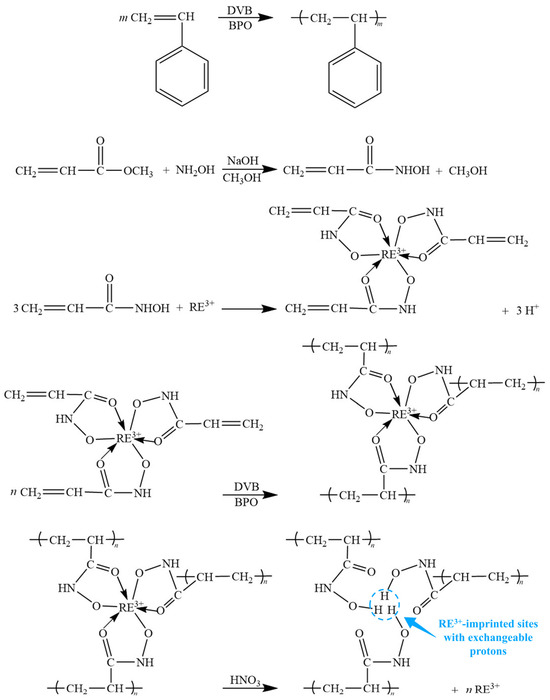
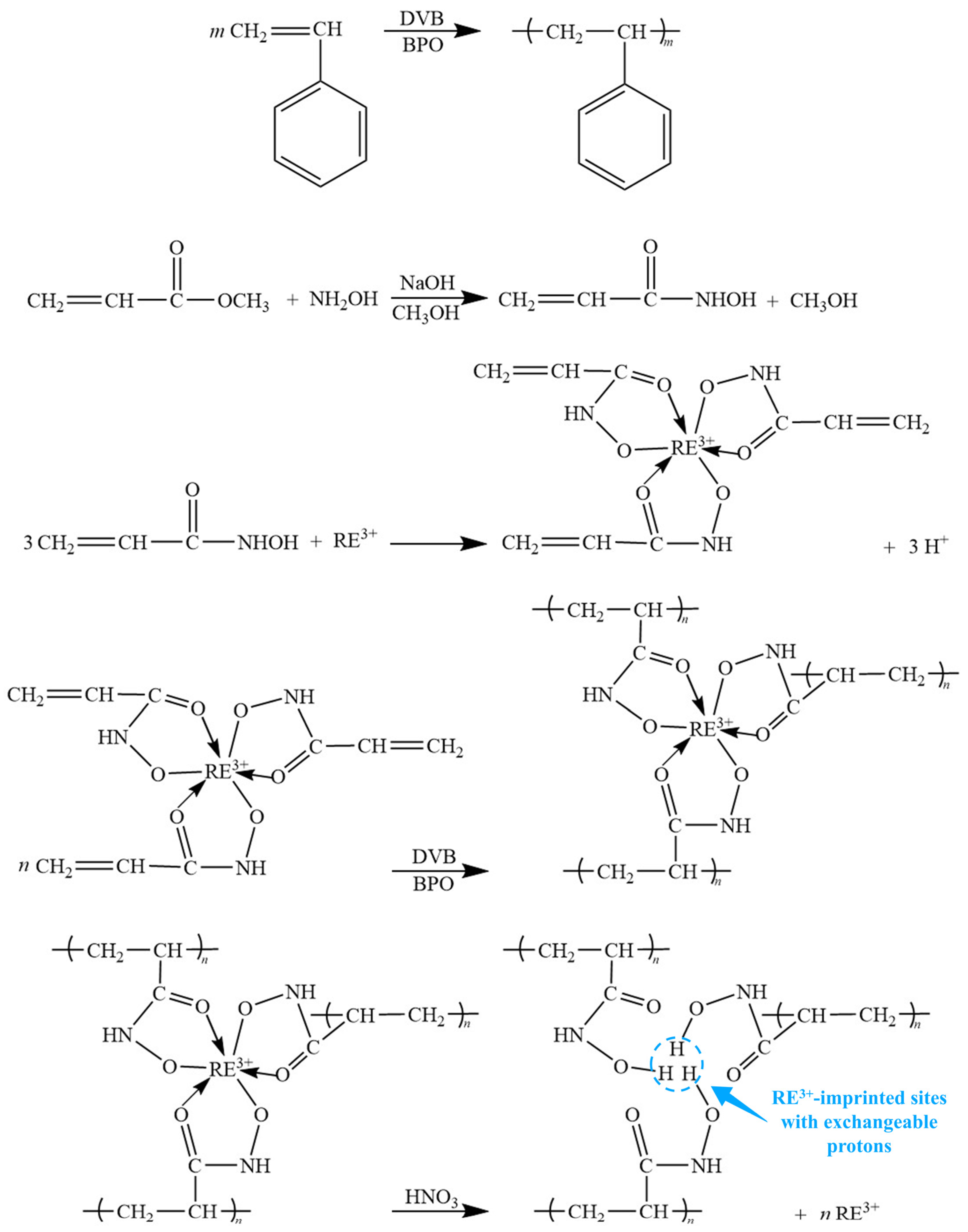
Polystyrene and allyl hydroxamic acid were synthesized according to the methods previously reported by our group [21,22]. As illustrated in Scheme 1, an excess of La(NO3)3·6H2O (8.66 g), Ce(NO3)3·6H2O (8.68 g), or Y(NO3)3·6H2O (7.66 g) was added separately to allyl hydroxamic acid (5 g) in a small amount of distilled water. The mixture was stirred at room temperature under mildly acidic conditions (pH < 5.0) for 4 h to yield ion-imprinted allyl hydroxamic acid. Subsequently, polystyrene was swollen in the ion-imprinted allyl hydroxamic acid solution for 12 h (mass ratio of polystyrene to ion-imprinted allyl hydroxamic acid = 1:1). After filtering, the polystyrene resin containing ion-imprinted allyl hydroxamic acid was transferred into a 50 mL aqueous solution comprising 0.8 g divinylbenzene (DVB), 0.5 g BPO, and 0.1 g polyvinyl alcohol (PVA). The mixture was heated to 80 °C and stirred uniformly for 2 h, then heated to 85 °C for 4 h, and finally cured at 90 °C for 2 h to obtain pale-yellow uniform spheres. The resulting spheres were washed with water until neutral and then shaken twice in 1.6 mol/L HNO3 at 30 °C for 6 h to remove the template ions. After filtration, the product was vacuum-dried to yield an ion-imprinted resin. The resins imprinted with La3+, Ce3+, and Y3+ as template ions are designated as PS-La-IIPHA, PS-Ce-IIPHA, and PS-Y-IIPHA, respectively. For the subsequent characterization and adsorption experiments, the resins were mechanically ground to a particle size of 150–250 μm.
Scheme 1.
Synthetic route of PS-IIPHAs.
2.2.2. Adsorption and Desorption Experiments
To evaluate the performance of the as-prepared PS-IIPHAs, batch adsorption experiments were conducted for La3+, Ce3+, and Y3+. The pre-swollen resin (containing 0.2 g dry resin) and the metal ion solution (50.0 mL) were mixed in a 100 mL conical flask and shaken at a temperature (T) for an appropriate contact time (t). The mixture was filtered, and the residual metal ion concentration in the filtrate was determined using a UV–Vis spectrophotometer (WFZ UV-2100, Unico (Shanghai) Instrument Co., Ltd., Shanghai, China) via a colorimetric method with specific chromogenic reagents for each rare earth ion, since the rare earth ion solutions are colorless and lack characteristic absorption bands. Calibration curves were pre-plotted using a series of standard rare earth ion solutions to ensure quantitative accuracy. Specifically, La3+ reacts with arsenazo III to form a blue complex under weakly acidic conditions (pH = 6.0–7.0), which was then colorimetrically measured at 656 nm; Ce3+ forms a blue complex with tribromoarsenazo under acidic conditions (pH = 1.0), and the determination was performed at 635 nm; Y3+ reacts with arsenazo III to generate a blue complex under acidic conditions (pH = 1.0–2.0), with the colorimetric measurement carried out at 651 nm. Each experiment was repeated at least three times to ensure measurement accuracy. The adsorption capacity of the resin was calculated according to Equation (1) [27,28].
where Q (mmol/g) represents the adsorption capacity; C0 (mol/L) and C (mol/L) are the concentrations of rare earth metal ions at the initial time and at time t, respectively; V (L) is the volume of the experimental solution; and m (g) is the mass of dry resin.
To evaluate the preferential recognition of the imprinted cavities, binary competitive adsorption experiments were carried out. Here, 0.2 g of resin was equilibrated with 50.0 mL of a binary mixture of La3+-Ce3+, Ce3+-Y3+, or La3+-Y3+ (each ion 0.01 mol/L, pH = 1.0) at 40 °C for 4 h. The concentrations of both ions in the residual solution were determined using Atomic Absorption Spectrometry (AAS, WFX-200, Beifen-Ruili Analytical Instrument Co., Ltd., Beijing, China), and the selectivity coefficient (K) of the imprinted ion (ion 1) versus the competing ion (ion 2) was calculated according to Equation (2) [29].
where Qe1 and Qe2 (mmol/g) represent the equilibrium adsorption capacities of the imprinted ion and the competing ion, respectively; Ce1 and Ce2 (mol/L) are the equilibrium concentrations of the imprinted ion and the competing ion, respectively.
Batch desorption experiments were conducted using 1.6 mol/L HNO3. The ion-imprinted resins loaded with La3+, Ce3+, or Y3+ were immersed in HNO3 at 30 °C for 4 h. Subsequently, the mixture was filtered, and the concentration of rare earth ions in the aqueous phase was measured. The desorption efficiency of rare earth ions from PS-IIPHAs was calculated according to Equation (3) [28].
where Rw (%) is the desorption efficiency, Cw (mol/L) is the concentration of rare earth metal ions in eluent solutions, Vw (L) is the volume of eluent, Q (mmol/g) is the adsorption capacity, and m (g) is the mass of dry resin.
2.2.3. Characterization Methods
The C, H, and N elemental compositions of the ion-imprinted resins were analyzed using an elemental analyzer (Vario EL III, Elementar, Langenselbold, Germany). The specific surface area, pore volume, and average pore size were tested using the JW-BK132F analyzer (JWGB Instruments, Beijing, China), adopting the Brunauer–Emmett–Teller (BET) and Barret–Joyner–Halenda (BJH) methods. The morphology of the resins was determined via scanning electron microscopy (SEM) (MIRA 3, TESCAN, Brno, Czech Republic). Thermogravimetric analysis (TGA) data were collected using an SDT-Q600 analyzer (TA Instruments, New Castle, DE, USA). FTIR spectra were recorded using a Nicolet 6700 spectroscopy (Thermo Fisher Scientific, Waltham, MA, USA) to investigate the chemical functional groups. The binding energy of the resins was determined via XPS (ESCALAB 250Xi, Thermo Fisher Scientific, Waltham, MA, USA).
3. Results and Discussion
3.1. Characterization
3.1.1. Elemental Analysis
The elemental contents of polystyrene and the ion-imprinted resins obtained after separately imprinting with La3+, Ce3+, and Y3+ were determined using an elemental analyzer, and the results are presented in Table 1. The C and H contents of the resins are almost identical, indicating that their carbon skeletons are essentially the same, whereas the nitrogen content changes markedly; in particular, nitrogen is undetectable in polystyrene, but, during the formation of the interpenetrating networks, PHA diffuses into the polystyrene pores, raising the nitrogen content to 1.05% for the PS-La-IIPHA, 0.96% for the PS-Ce-IIPHA, and 1.08% for the PS-Y-IIPHA. These results confirm that nitrogen-containing functional groups have been successfully introduced onto the resins, thereby promoting the adsorption of rare earth ions.
Table 1.
Results of the elemental analysis for PS-IIPHAs.
3.1.2. N2 Adsorption–Desorption Isotherms
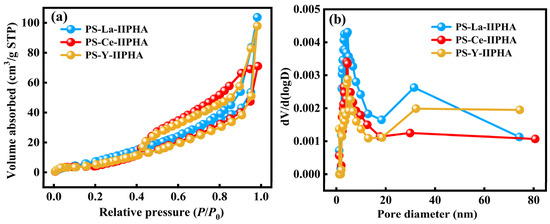
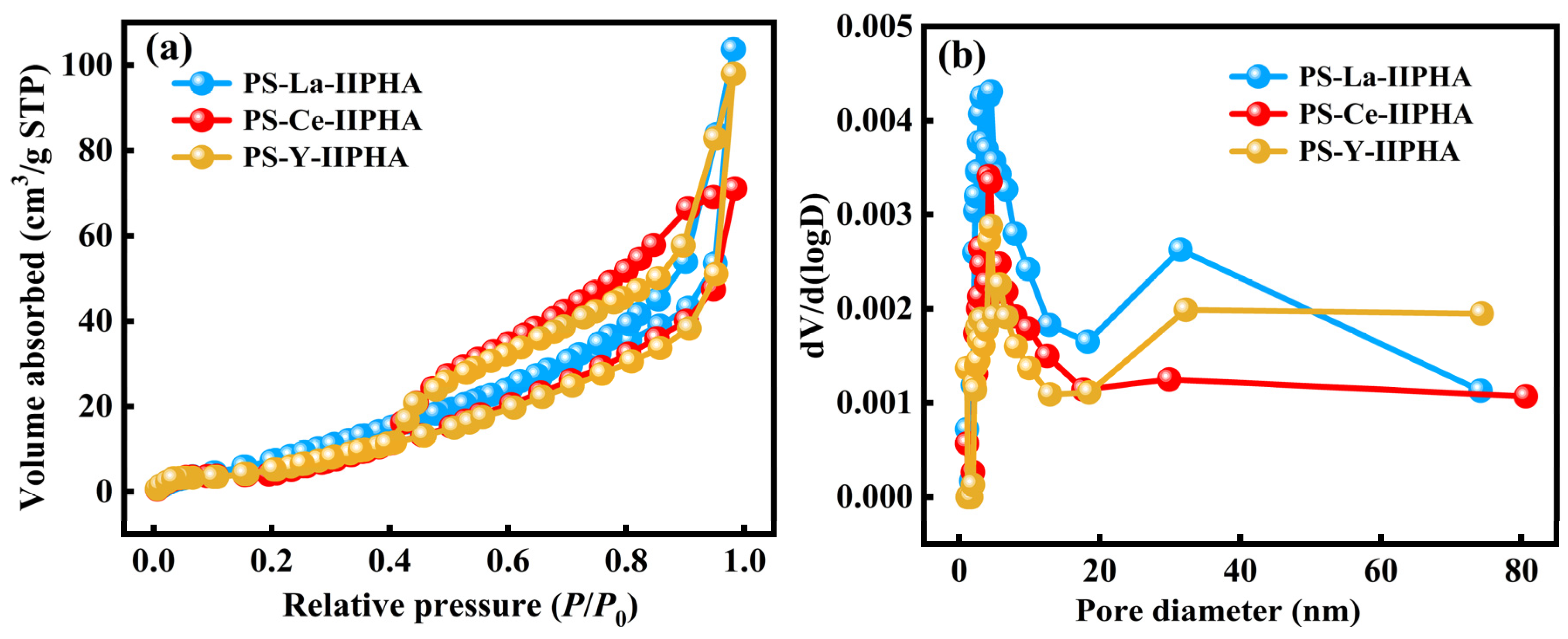
The N2 adsorption–desorption isotherms were employed to evaluate the specific surface area, pore volume, and pore-size distribution of PS-IIPHAs (Figure 1). The La3+-, Ce3+-, and Y3+-imprinted resins exhibited specific surface areas of 103.6, 82.5, and 97.3 m2/g, average pore diameters of 4.35, 3.87, and 3.46 nm, and pore volumes of 0.3164, 0.2845, and 0.3056 cm3/g, respectively. All three resins displayed typical Type IV isotherms with pronounced Type H3 loops, indicating a mesopore-dominated, structurally stable, and non-uniform pore architecture [30]. The emergence of the Type H3 loops is intimately linked to the ion-imprinting technique and the interpenetrating network structure. The imprinting process creates recognition cavities complementary to La3+, Ce3+, and Y3+ within the polymer matrix, while the interpenetrating networks enhance the pore connectivity and stability, jointly generating an adsorbent with a high surface area and well-suited pore-size distribution.
Figure 1.
(a) N2 adsorption/desorption isotherms and (b) pore-size distribution of PS-IIPHAs.
3.1.3. SEM Analysis
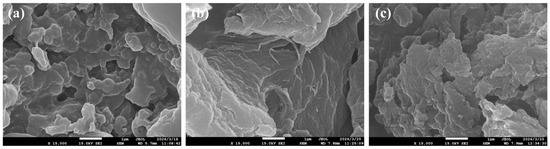
The surface morphology of the as-synthesized PS-IIPHAs was characterized via SEM. As shown in Figure 2, the polymer microspheres possess a well-developed porous structure, with a large number of cavities uniformly distributed across the surface. These cavities are characteristic of the ion-imprinted sites created during the synthesis process and serve as specific recognition elements for template ions. Furthermore, the interconnected pore channels observed in the image confirm the successful construction of the interpenetrating polymer network. These features confirm that the synthesized resin possesses an excellent mesoporous structure and a stable pore system, providing abundant active sites and fast diffusion channels for the efficient adsorption of rare earth ions.
Figure 2.
SEM images of PS-IIPHAs: (a) PS-La-IIPHA, (b) PS-Ce-IIPHA, and (c) PS-Y-IIPHA.
3.1.4. TGA Results
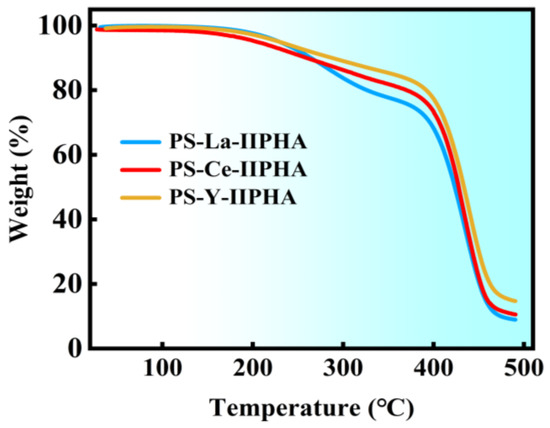
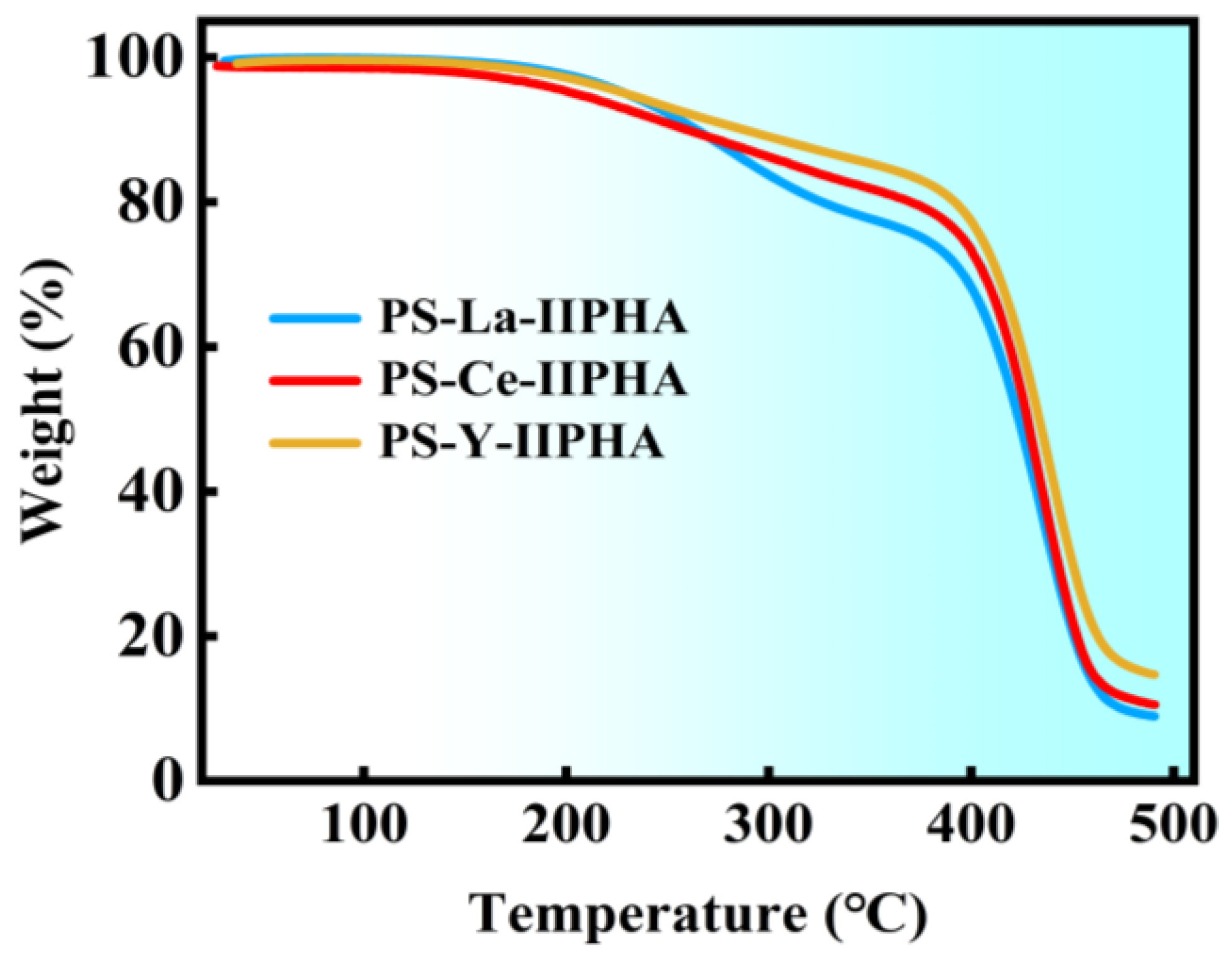
TGA was used to evaluate the thermal behavior of the prepared PS-IIPHAs. As shown in Figure 3, the slight mass loss from room temperature to 150 °C is probably due to the desorption of the surface physically adsorbed water and residual solvent. A sharp weight loss occurred between 150 °C and 500 °C, resulting from the decomposition of the hydroxamic acid functional groups and the thermal degradation of the interpenetrating networks [22,31]. The results demonstrate that PS-IIPHAs possess outstanding stability over a wide temperature range.
Figure 3.
TGA curves of PS-IIPHAs.
3.1.5. FTIR Analysis
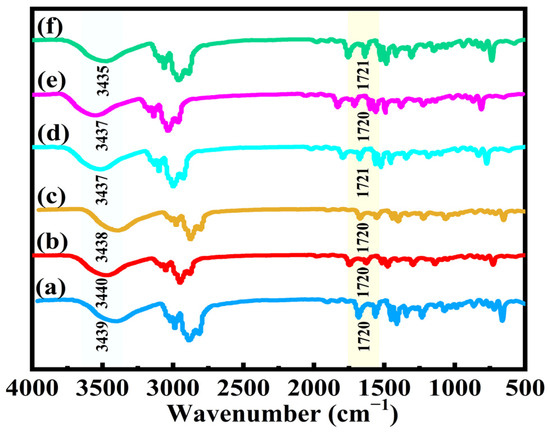
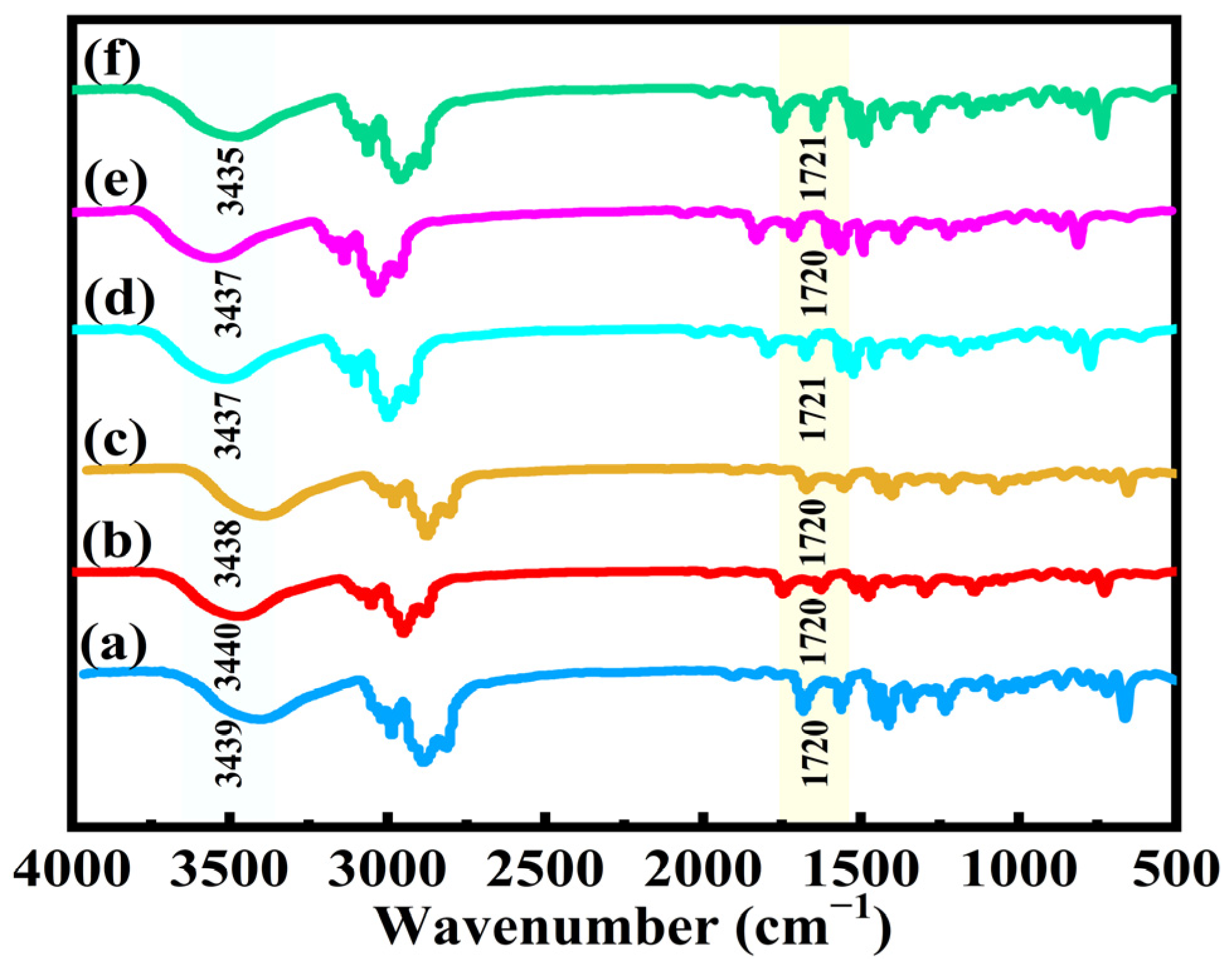
The structural changes in the La3+, Ce3+, and Y3+ ion-imprinted resins before and after adsorption of their respective template ions were characterized via FTIR, and the results are shown in Figure 4. The metal-free resin exhibits a broad intense band at 3438–3440 cm−1, assigned to the overlapping N–H and O–H stretching vibrations of the hydroxamic acid moiety, and a strong peak at 1720 cm−1 corresponding to C=O stretching, confirming that the hydroxamic acid functionality has been successfully incorporated into the polystyrene backbone [32,33]. Peaks at 3025 cm−1, 2923 cm−1, and 1601 cm−1 are attributed to saturated C–H, unsaturated C–H, and aromatic C=C stretching vibrations, respectively, corroborating the basic resin structure [34]. After the adsorption of rare earth ions, the N–H and O–H double absorption peaks shift, due to the N and O atoms of the hydroxamic acid group coordinating with the metal ions. A slight change in the carbonyl C=O stretching peak is also observed, further suggesting that the carbonyl oxygen participates in coordination with the rare earth ions, forming a stable chelate structure [31].
Figure 4.
FTIR spectra of PS-IIPHAs: (a) PS-La-IIPHA, (b) PS-Ce-IIPHA, and (c) PS-Y-IIPHA before adsorption; the corresponding PS-IIPHAs after adsorption of (d) La3+, (e) Ce3+, and (f) Y3+.
3.1.6. XPS Analysis
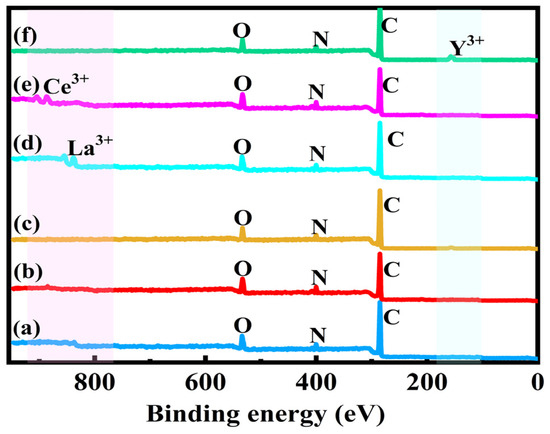
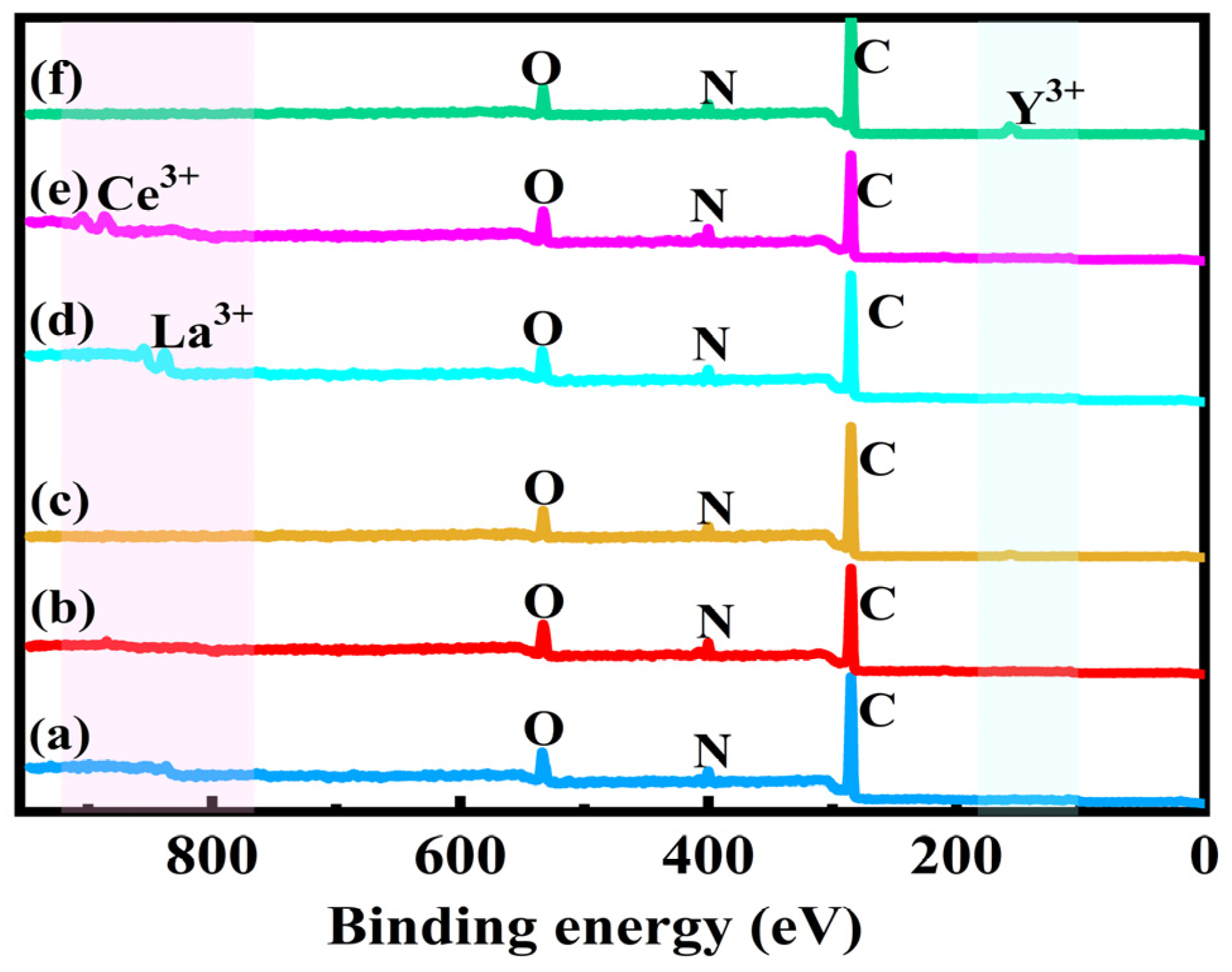
To gain deeper insight into the interaction sites between PS-IIPHAs and La3+, Ce3+, and Y3+ during adsorption, Figure 5 and Figure S1 present the XPS spectra of PS-IIPHAs before and after adsorption. Compared with the spectrum before adsorption, new signals corresponding to La, Ce, and Y appear. This trend clearly indicates that La3+, Ce3+, and Y3+ are effectively adsorbed by PS-IIPHAs. The electron binding energies of the main elements before and after adsorption are listed in Table 2. According to the table, the N 1s binding energy decreases, while the O 1s binding energy increases, after adsorption, suggesting that the resin forms stable chelates with the rare earth ions through the synergistic coordination of O and N atoms in the hydroxamic acid groups [28].
Figure 5.
XPS spectra of PS-IIPHAs: (a) PS-La-IIPHA, (b) PS-Ce-IIPHA, and (c) PS-Y-IIPHA before adsorption; the corresponding PS-IIPHAs after adsorption of (d) La3+, (e) Ce3+, and (f) Y3+.
Table 2.
Electron binding energies of the main elements in PS-IIPHAs before and after adsorption of La3+, Ce3+, and Y3+.
3.2. Adsorption and Desorption Performance
3.2.1. Effect of the Solution pH on the Adsorption
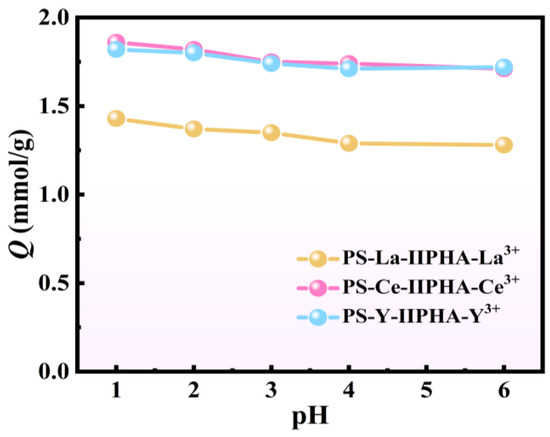
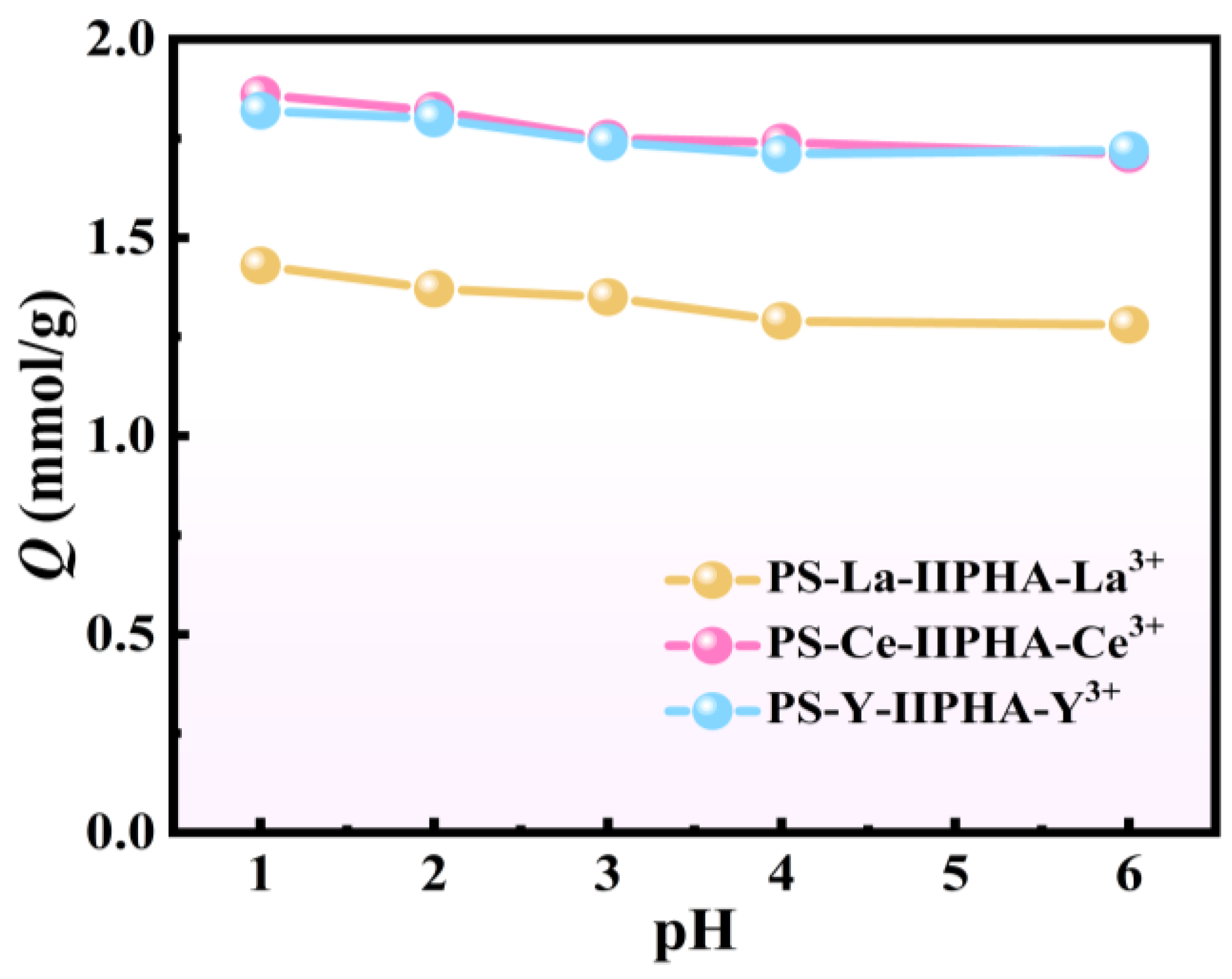
The solution pH is a critical factor influencing the adsorption of rare earth ions. It determines not only the dissociation state of hydroxamic acid functional groups, but also the speciation of rare earth ions and the surface charge of the resin. Figure 6 presents the adsorption capacities of PS-IIPHAs for their respective template ions as a function of pH. Since lanthanide elements undergo hydrolysis at a pH above 6.0 [35,36], the adsorption experiments were conducted within the pH range of 1.0 to 6.0. As shown in the figure, with an increasing pH, the adsorption capacities for La3+, Ce3+, and Y3+ exhibit an initial decrease followed by stabilization. At pH 1.0, the adsorption capacities for La3+, Ce3+, and Y3+ reached 1.43, 1.79, and 1.82 mmol/g, respectively. This phenomenon may be attributed to the pre-assembly structure formed between template ions and functional monomers under acidic conditions during the ion-imprinting process, enabling the imprinted cavities to maintain a high recognition capability for target ions even at low pH [37]. Additionally, the lower pH environment may optimize the swelling state of the resin, facilitating ion diffusion and adsorption within the imprinted cavities. As the pH increases, the adsorption of rare earth ions by PS-IIPHAs gradually stabilizes, indicating that the high electronegativity of PS-IIPHAs is favorable for REE adsorption. Therefore, pH 1.0 was selected as the optimal adsorption condition for the subsequent experiments.
Figure 6.
Effect of the solution pH on the adsorption of PS-IIPHAs (C0 = 0.01 mol/L, t = 4 h, and T = 40 °C).
3.2.2. Effect of the Contact Time on the Adsorption
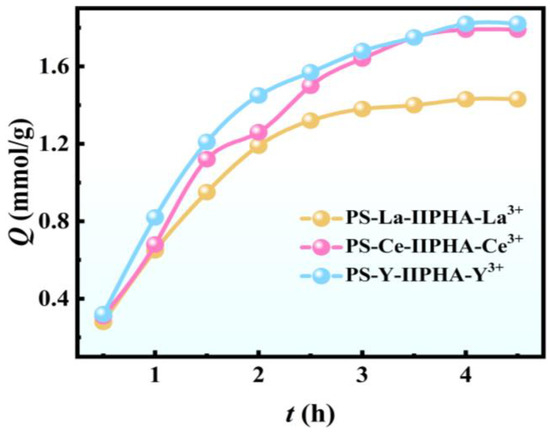
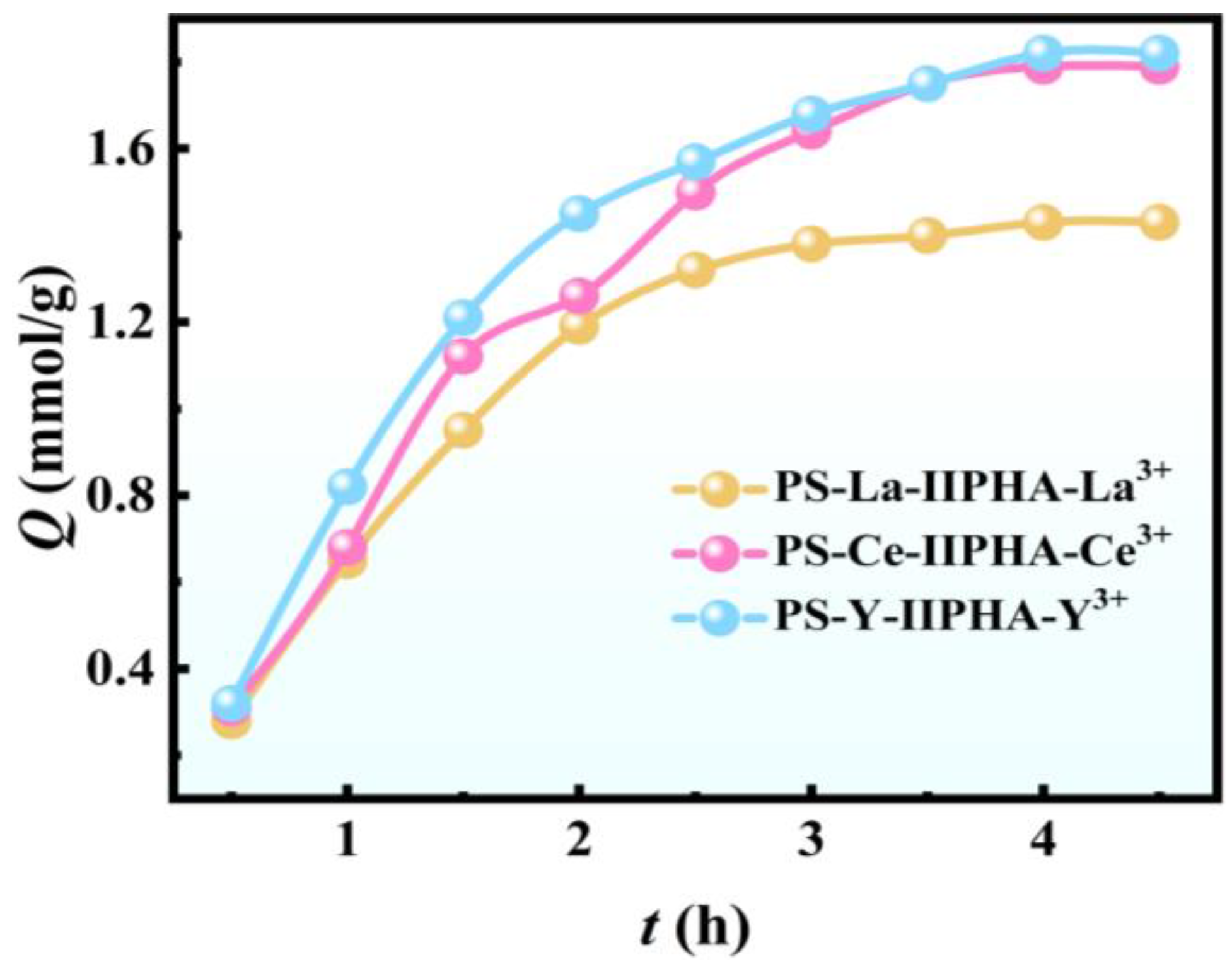
Figure 7 illustrates the effect of the contact time on the adsorption capacity of PS-IIPHAs at 40 °C. As shown in Figure 7, all three ion-imprinted resins exhibited similar adsorption trends. In the initial stage (0–2 h), the adsorption capacity increased rapidly due to abundant unoccupied active sites on the resin surface and a strong mass-transfer driving force. From 2 to 4 h, the growth rate slowed down, as the active sites became gradually occupied, and the mass transfer resistance increased. When the adsorption time reached 4 h, the adsorption capacity stabilized, indicating that dynamic equilibrium had been achieved, and the active sites were saturated. This relatively short equilibrium time reflects the rapid recognition and adsorption ability of the ion-imprinted resins, which can be attributed to the spatial configuration match between the specific adsorption sites and the target ions [38,39], thereby reducing the diffusion paths and resistance. Therefore, 4 h was selected as the optimal adsorption time for the subsequent experiments to ensure sufficient equilibrium.
Figure 7.
Effect of the contact time on the adsorption of PS-IIPHAs (C0 = 0.01 mol/L, pH = 1.0, and T = 40 °C).
3.2.3. Effect of the Initial Metal Ion Concentrations on the Adsorption
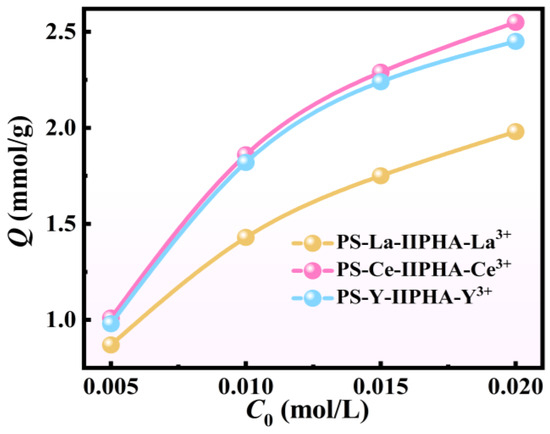
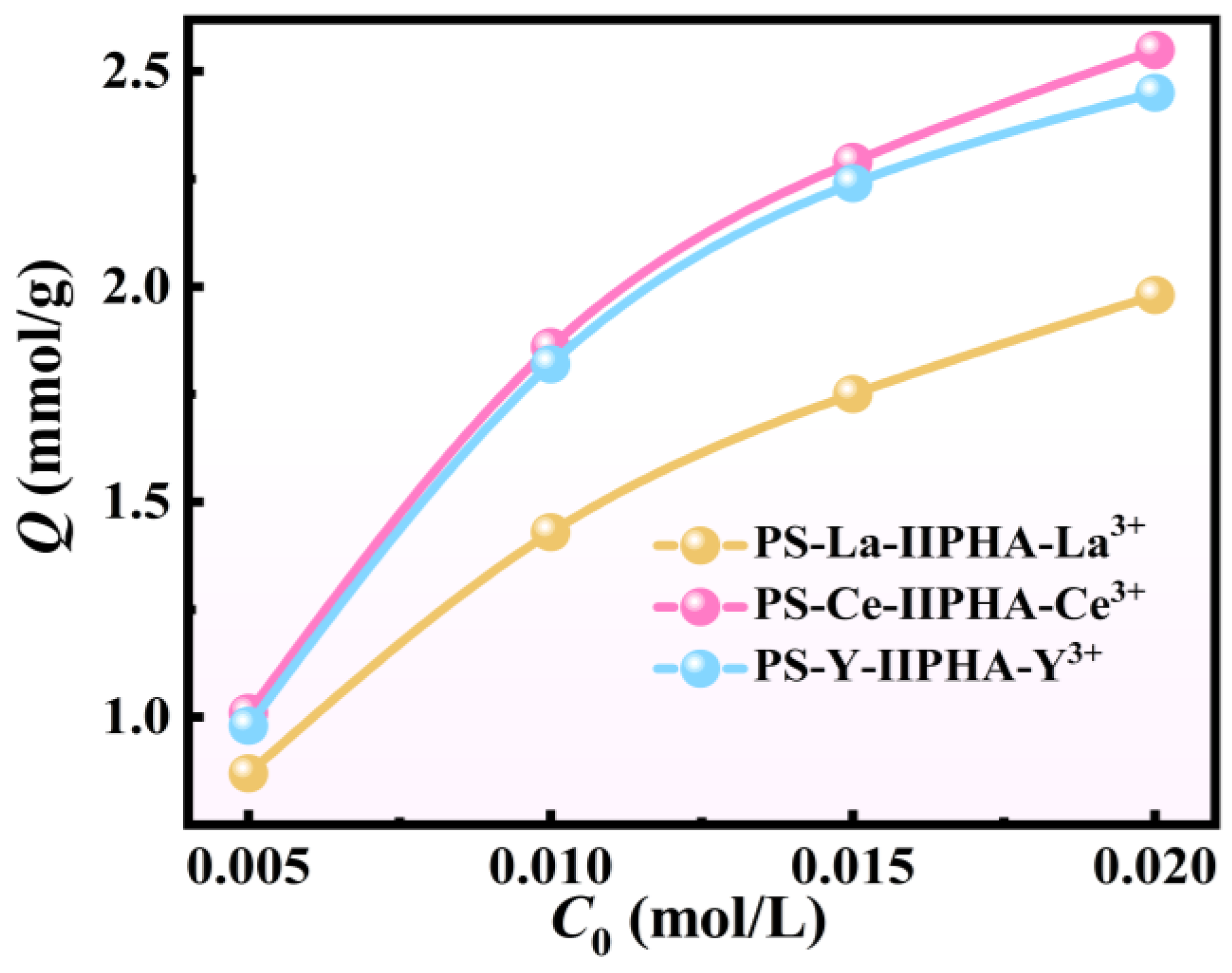
Figure 8 shows the effect of the initial concentrations of La3+, Ce3+, and Y3+ in the range of 0.005–0.020 mol/L on the adsorption capacities of the corresponding ion-imprinted resins. With increasing initial concentrations, the adsorption capacities of all three rare earth ions first increased rapidly and then gradually leveled off. When the ion concentrations rose from 0.005 mol/L to 0.01 mol/L, the adsorption capacities increased significantly. As the concentrations increased to 0.020 mol/L, the rate of growth in the adsorption capacities gradually slowed, indicating that the resin approached saturation. This phenomenon can be attributed to the increase in the initial concentrations, enhancing the mass transfer driving force at the solution–resin interface and increasing the probability of contact between ions and active sites on the resin surface, thus promoting the adsorption process. As the adsorption sites gradually became occupied, the adsorption efficiency stabilized, indicating that the resin’s adsorption capacity for rare earth ions is finite.
Figure 8.
Effect of the initial ion concentrations on the adsorption of PS-IIPHAs (t = 4 h, pH = 1.0, and T = 40 °C).
3.2.4. Effect of the Adsorption Temperature on the Adsorption
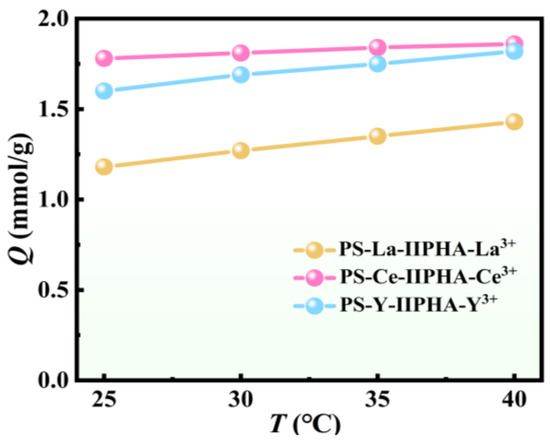
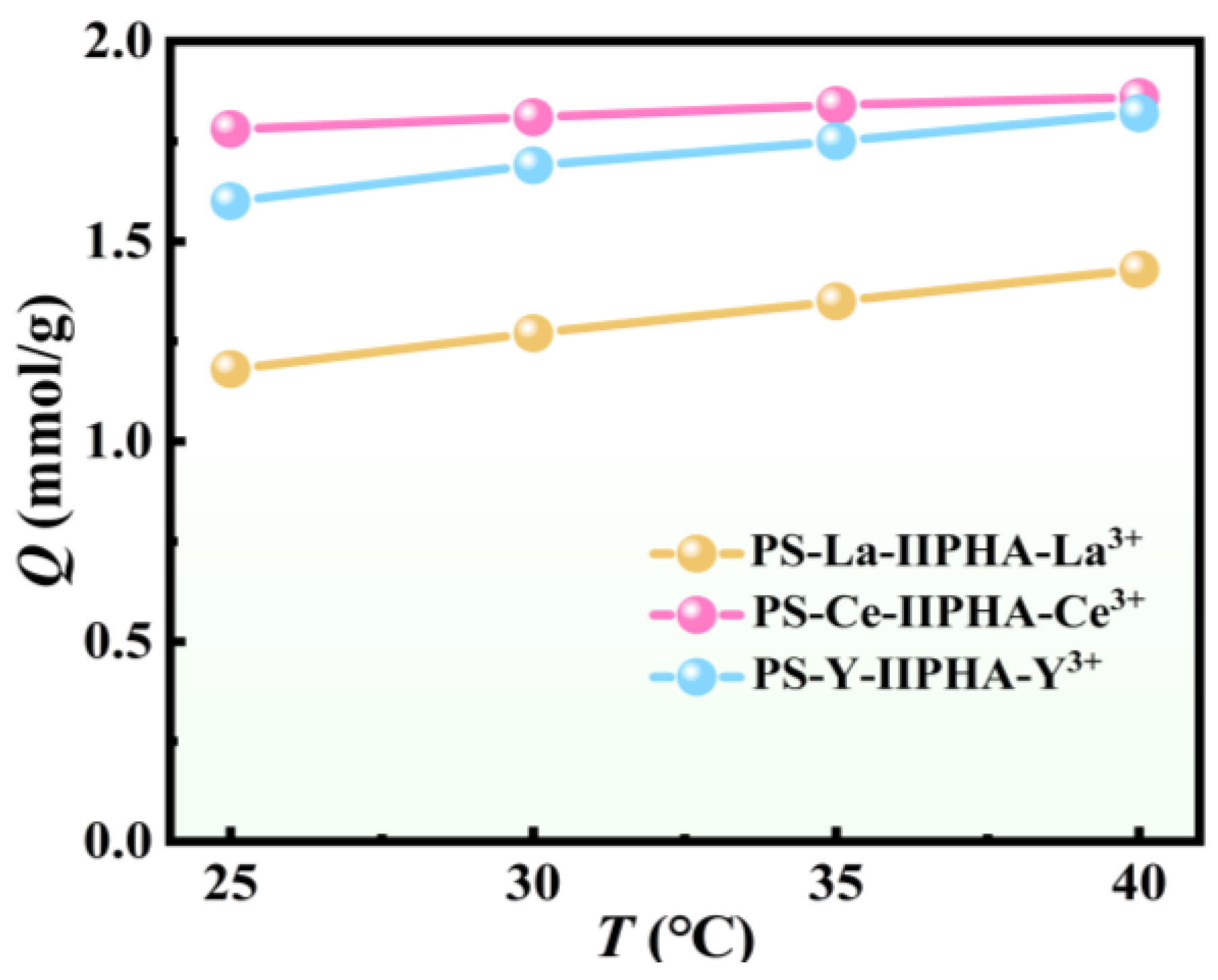
Figure 9 systematically shows the variation in the adsorption capacity of PS-IIPHAs for the respective imprinted ions within the temperature range of 25 °C to 40 °C. The study reveals that, as the adsorption temperature increases from 25 °C to 40 °C, the adsorption capacity of PS-IIPHAs for the corresponding imprinted ions shows a steady rising trend. This indicates that the adsorption process is endothermic, and elevating the temperature favors adsorption; however, the rate of increase is very gradual. This result suggests that temperature has a minor influence on the adsorption capacity for metal ions.
Figure 9.
Effect of the adsorption temperature on the adsorption of PS-IIPHAs (C0 = 0.01 mol/L, t = 4 h, and pH = 1.0).
3.2.5. Selective Adsorption Performance of PS-IIPHAs
To evaluate the selective recognition ability of the resins for rare earth ions, batch adsorption experiments were conducted in a mixed solution containing La3+, Ce3+, and Y3+, and the results are shown in Table 3. For all ion-imprinted resins, the adsorption capacity for the template ion was higher than that for competing ions, and the selectivity coefficients K were all higher than 1, indicating good selective recognition ability. The highest separation factors of binary rare earth ions were 35.45 for Ce3+-La3+, 17.52 for Y3+-La3+, and 11.04 for Ce3+-Y3+, achieved by PS-Ce-IIPHA, PS-Y-IIPHA, and PS-Ce-IIPHA, respectively. These results demonstrate that the ion-imprinting technology successfully created recognition sites in the resin that matched the template ions, significantly enhancing the adsorption selectivity toward the target ions.
Table 3.
Separation performance of PS-IIPHAs for La3+, Ce3+, and Y3+ in binary mixed solutions.
3.2.6. Desorption Performance
Batch desorption experiments were conducted on ion-imprinted resins saturated with adsorbed La3+, Ce3+, and Y3+ using 1.6 mol/L HNO3 as the desorbent. The resins were shaken for desorption at 30 °C for 4 h, and the desorption was repeated three times. The results are shown in Table 4. After three cycles, the desorption efficiencies of the La3+, Ce3+, and Y3+ ion-imprinted resins reached 97.6%, 98.7%, and 98.1%, respectively.
Table 4.
Results of the desorption experiments.
3.3. Adsorption Kinetics, Isotherms, and Thermodynamics
3.3.1. Kinetics
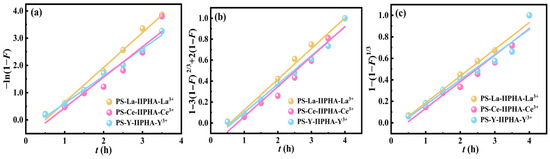
Adsorption kinetics studies are crucial for elucidating the rate laws of adsorption processes, revealing adsorption mechanisms, and identifying the rate-limiting step [40,41]. As a porous medium material, the adsorption process of resin generally consists of five stages, as follows: first, metal ions diffuse from the bulk solution to the boundary layer of the resin particle; then, they diffuse through the liquid film; subsequently, they diffuse from the resin surface to the internal active sites; forth, they undergo ion exchange or complexation with the functional groups within the resin; and, finally, if ion exchange occurs in the preceding step, the displaced ions diffuse outward [16,42]. The overall adsorption rate is influenced by the liquid film diffusion rate, the particle diffusion rate, and the chemical reaction rate, with the slowest step controlling the entire adsorption process. These models can be described by Equations (4), (5), and (6), respectively [21,22].
where F = Qt/Qe, with Qe and Qt (mmol/g) representing the adsorption capacities at equilibrium and at time t (min), respectively; k1, k2, and k3 (min−1) denote the rate constants for the liquid film diffusion, particle diffusion, and chemical reaction, respectively.
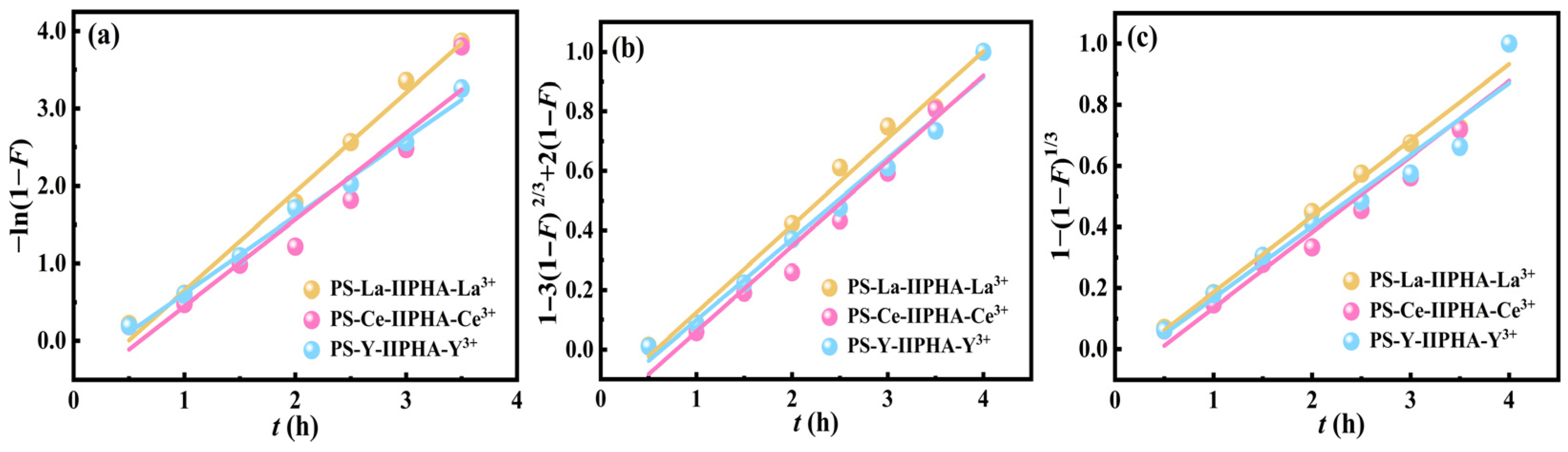
Figure 10 illustrates the adsorption kinetics of PS-IIPHAs toward their corresponding imprinted ions (La3+, Ce3+, and Y3+). The kinetic parameters obtained from the linear regression are summarized in Table 5. As shown in the table, the linear R2 values for all three kinetic models are relatively high (close to 0.98), indicating that these models can adequately describe the experimental data, and the adsorption process may be simultaneously controlled by liquid film diffusion, particle diffusion, and chemical reaction. Moreover, the rate constants of the liquid film diffusion model are generally higher than those of the particle diffusion and chemical reaction models, suggesting that the imprinted resin surface possesses abundant recognition sites, which facilitate the rapid transport of rare earth ions through the liquid film. The adsorption process exhibits a typical “fast initial, slow later” characteristic [43]. In the initial stage, due to the large concentration gradient and the “memory effect” of surface imprinted cavities, rare earth ions are quickly captured by the resin surface. Subsequently, the ions gradually diffuse into the internal network of the resin via particle diffusion and interact with the internal functional groups. This mechanism indicates that ion imprinting not only enhances the adsorption selectivity through conformational matching, but also accelerates the diffusion of target ions within the resin due to the oriented channels formed by the imprinted cavities and the reduced spatial hindrance.
Figure 10.
Linear forms of kinetic plots: (a) −ln(1 − F) vs. t, (b) 1 − 3(1 − F)2/3 + 2(1 − F) vs. t, and (c) 1 − (1 − F)1/3 vs. t.
Table 5.
Parameters of different kinetic models.
3.3.2. Isotherms
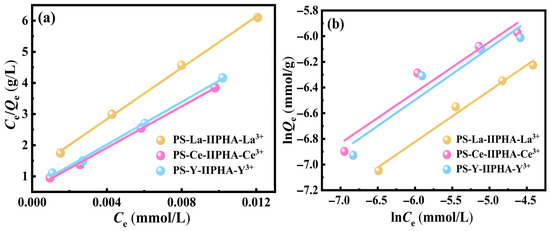
Adsorption isotherms describe the mathematical relationship between the equilibrium adsorption capacity and the concentrations of the metal ions in solution at constant temperature [44]. This relationship is significant for revealing the adsorption mechanism, evaluating the adsorbent performance, and estimating the maximum adsorption capacity [45,46]. To investigate the adsorption behavior of rare earth ions (La3+, Ce3+, and Y3+) onto PS-IIPHAs, this study employed the Langmuir and the Freundlich isotherms to fit and analyze the experimental data. Their linear forms are expressed as Equations (7) and (8) [47].
where Qe (mmol/g) is the equilibrium adsorption capacity, Qm (mmol/g) is the maximum adsorption capacity, Ce (mol/L) is the equilibrium concentration, KL (L/mol) is the Langmuir isotherm constant, and n and KF are the Freundlich isotherm coefficients.
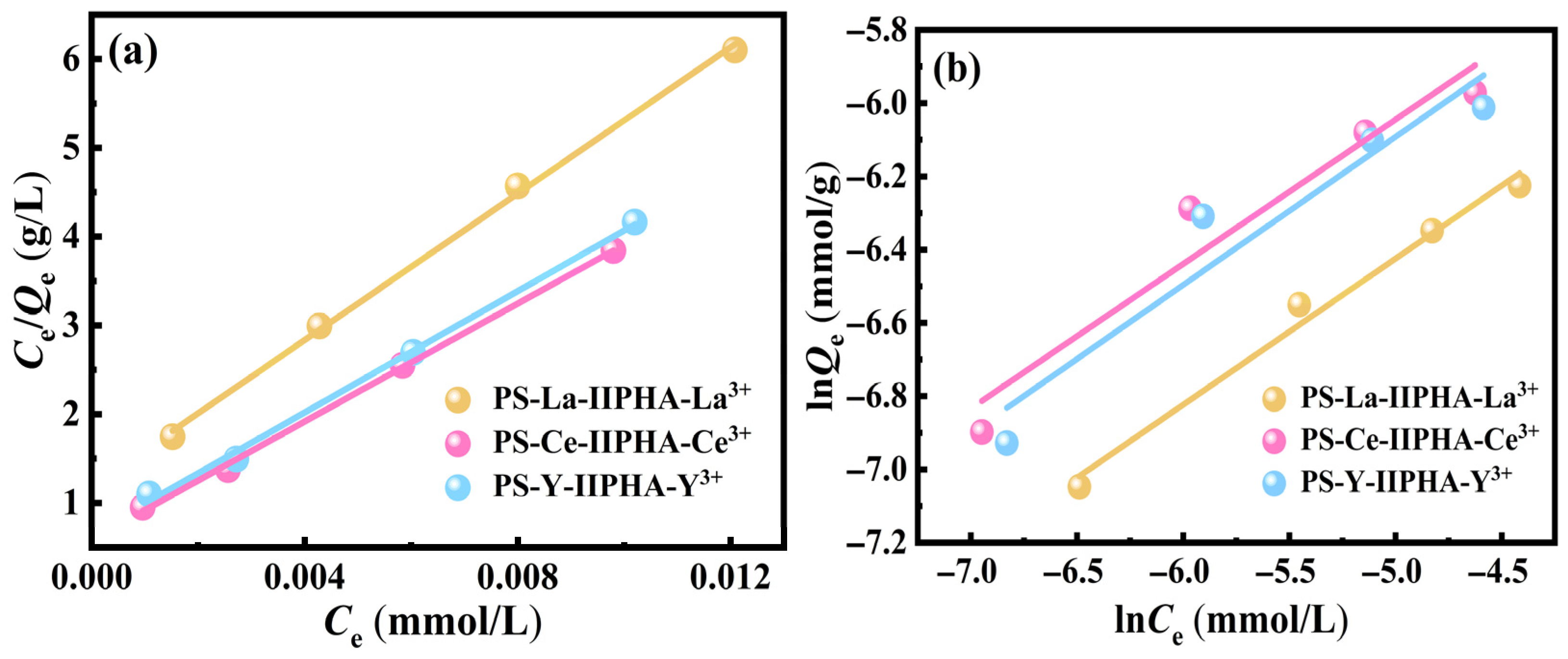
As shown in Figure 11 and Table 6, the correlation coefficients of the Langmuir isotherm for La3+, Ce3+, and Y3+ are significantly higher than those of the Freundlich isotherm, indicating that the adsorption of rare earth ions by PS-IIPHAs likely follows a monolayer adsorption mechanism. This is consistent with the adsorption behavior of most hydroxamic acid-based resins toward rare earth ions [21,22,28,31].
Figure 11.
Linear forms of (a) the Langmuir and (b) the Freundlich isotherms.
Table 6.
Parameters of the Langmuir and the Freundlich isotherms.
3.3.3. Thermodynamics
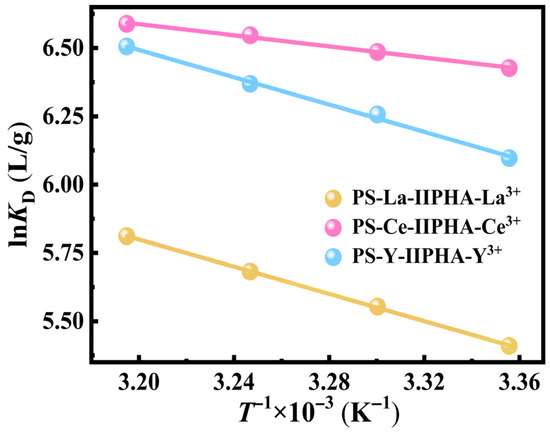
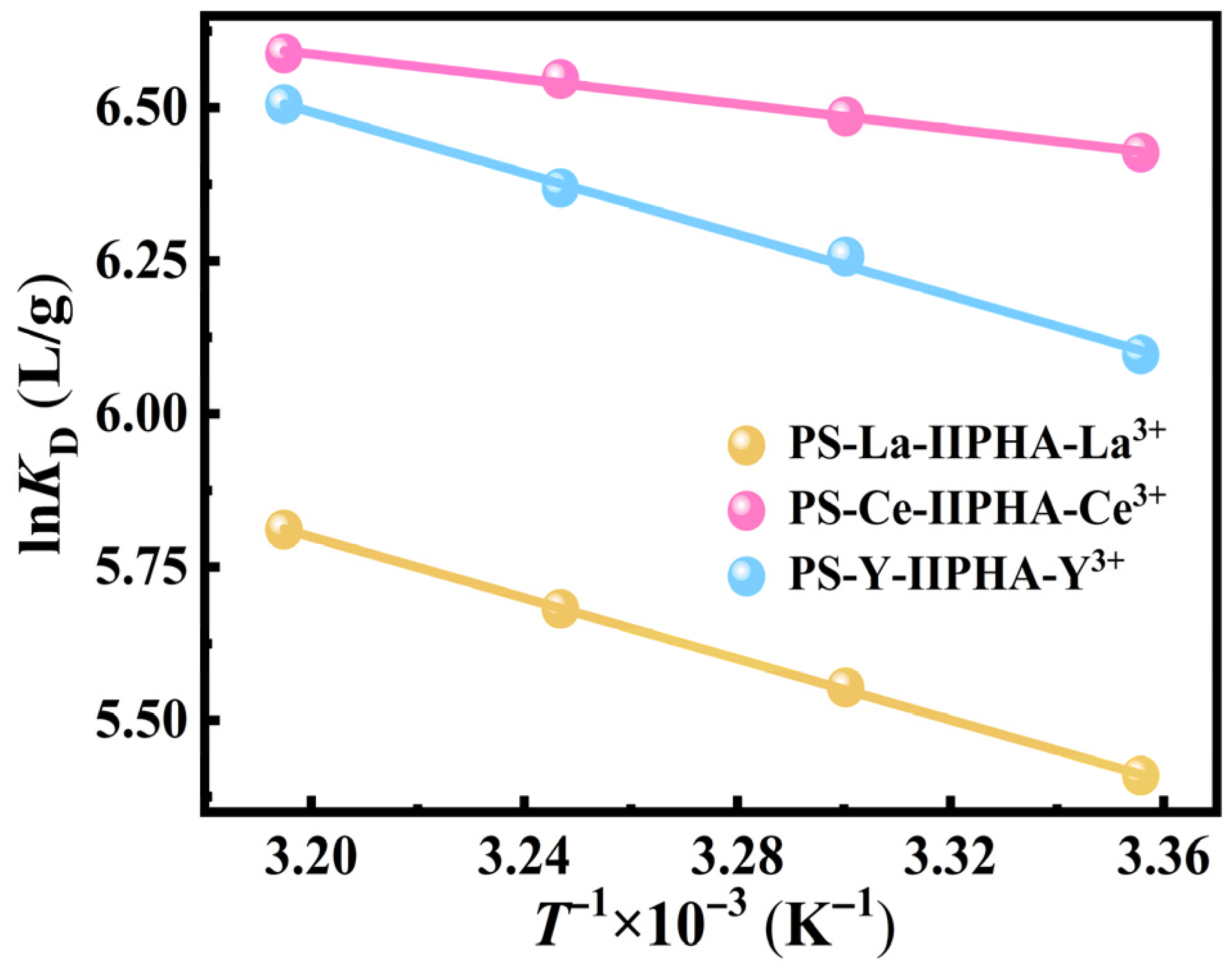
The study of adsorption thermodynamics is significant for understanding the spontaneity, energy changes, and temperature effects of the adsorption process [48]. To investigate the thermodynamic adsorption behavior of PS-IIPHAs toward La3+, Ce3+, and Y3+, we calculated the thermodynamic parameters of the adsorption process using the temperature coefficient method, including Gibbs free energy change (ΔG), enthalpy change (ΔH), and entropy change (ΔS). The thermodynamic parameters can be calculated using Equations (9)–(11) [49,50].
where KD represents the standard thermodynamic equilibrium constant, Ce (mol/L) represents the equilibrium concentration, R (8.314 J/(mol·K)) is the gas constant, and T (K) is the temperature.
By plotting lnKD versus T−1 (Figure 12), ΔH and ΔS can be calculated. The relevant parameters are listed in Table 7. As shown in the table, the ΔG values for the adsorption processes of La3+, Ce3+, and Y3+ are all negative, indicating that the adsorption processes are spontaneous. The positive ΔH indicates that the process is endothermic and that an elevated temperature is favorable for adsorption, consistent with the aforementioned conclusions. The positive ΔS indicates a high affinity between the rare earth ions and the resin [51].
Figure 12.
Linear fit plots of lnKD vs. T−1.
Table 7.
Thermodynamic parameters for La3+, Ce3+, and Y3+ adsorption by PS-IIPHAs.
3.4. Comparison of PS-IIPHAs with Other Adsorbents
In this work, the maximum adsorption capacities of PS-IIPHAs for La3+, Ce3+, and Y3+ reached 2.425, 3.012, and 2.927 mmol/g, respectively. Compared with other adsorbents reported in the literature (Table 8), our materials exhibited significantly higher adsorption capacities for rare earth ions. This advantage is attributed to the synergistic effect of the IPN and ion-imprinted technology, which provides abundant accessible sites and specific recognition cavities. These results demonstrate that PS-IIPHAs are promising adsorbents for the efficient uptake of rare earth ions from aqueous solutions.
Table 8.
Comparison of various adsorbents for La3+, Ce3+/4+, and Y3+ adsorption.
4. Conclusions
This study successfully developed novel adsorbents, PS-IIPHAs, to address the challenge of efficiently and selectively separating rare earth ions which share similar chemical properties. The material exhibited excellent comprehensive performance, and the conclusions are summarized as follows:
- (1)
- A resin with specific recognition cavities and a stable mesoporous structure was successfully prepared using polystyrene as the skeleton via ion-imprinted and IPN technology. Characterization confirmed that the interpenetrating networks provided a high specific surface area and abundant pore channels, while ion-imprinting formed sites within the polymer that matched the template ions (La3+, Ce3+, and Y3+) in terms of the spatial configuration and functional groups.
- (2)
- Under optimal conditions (pH = 1.0, t = 4 h), the maximum adsorption capacities of PS-IIPHAs for La3+, Ce3+, and Y3+ reached 2.425, 3.012, and 2.927 mmol/g, respectively, which are significantly higher than most adsorbents reported in the literature. The highest separation factors were 35.45 for Ce3+-La3+ by PS-Ce-IIPHA, 17.52 for Y3+-La3+ by PS-Y-IIPHA, and 11.04 for Ce3+-Y3+ by PS-Ce-IIPHA, demonstrating enhanced adsorption selectivity toward the target ions. Using 1.6 mol/L HNO3 as the eluent, the desorption efficiencies for the rare earth ions reached above 97% after three desorption cycles.
- (3)
- The adsorption kinetics conformed to a model jointly controlled by liquid film diffusion, particle diffusion, and chemical reaction, exhibiting a “fast-then-slow” characteristic. The adsorption was better described by the Langmuir isotherm, indicating a predominant monolayer process. The thermodynamic parameters (ΔG < 0, ΔH > 0, ΔS > 0) demonstrate that adsorption occurs as a spontaneous and endothermic process.
In summary, PS-IIPHAs are novel adsorbent materials that combine high adsorption capacity with high selectivity, demonstrating potential for application in REE separation and recovery.
Supplementary Materials
The following supporting information can be downloaded at: https://www.mdpi.com/article/10.3390/separations13050128/s1, Figure S1: High-resolution XPS spectra for (a) O 1s and (b) N 1s of PS-IIPHAs before and after adsorbing La, Ce, and Y, respectively.
Author Contributions
Conceptualization, S.W.; Writing—original draft preparation, M.H.; Investigation, M.H. and Q.W.; Data curation, S.W.; Writing—review and editing, S.W. and Q.W.; Visualization, M.H.; Project administration, S.W.; Funding acquisition, S.W.; Supervision, S.W. All authors have read and agreed to the published version of the manuscript.
Funding
This research was funded by the National Natural Science Foundation of China (No. 21206199) and the Fundamental Research Funds for the Central Universities of Central South University, China (No. 2022ZZTS0492).
Data Availability Statement
The data presented in this study are available on request from the corresponding author.
Conflicts of Interest
The authors declare that they have no known competing financial interests or personal relationships that could have appeared to influence the work reported in this paper.
References
- Laliwala, C.; Amusat, O.O.; Ojo, A.; Garciadiego, A.; Tarka, T.; Bhattacharyya, D.; Torres, A.I. Design and optimization of processes for recovering rare earth elements from end-of-life permanent magnets. AIChE J. 2026, 72, e70208. [Google Scholar] [CrossRef] [Scilit]
- Zhao, T.Y.; Li, W.L.; Kelebek, S.; Choi, Y.; Wu, C.Q.; Zhang, W.J.; Wang, C.Y.; Zhao, Z.W.; Sadri, F. A comprehensive review on rare earth elements: Resources, technologies, applications, and prospects. Rare Met. 2025, 44, 7011–7040. [Google Scholar] [CrossRef] [Scilit]
- Huang, M.M.; Tan, J.; Xia, L.Y.; Han, K.; Cai, H.Y.; Ma, X.; Wang, S. A comprehensive review of adsorbents for rare earth separation: Design, synthesis, adsorption performance, and mechanisms. Rare Met. 2026, 45, e70056. [Google Scholar] [CrossRef] [Scilit]
- Omodara, L.; Pitkäaho, S.; Turpeinen, E.M.; Saavalainen, P.; Oravisjärvi, K.; Keiski, R.L. Recycling and substitution of light rare earth elements, cerium, lanthanum, neodymium, and praseodymium from end-of-life applications—A review. J. Clean. Prod. 2019, 236, 117573. [Google Scholar] [CrossRef] [Scilit]
- Sadler, E.; Free, M.L.; Kumar, G.; Sarswat, P.K. Selective adsorption of rare-earth elements: Loading and stripping behavior of the 2D MOF NCU-1 across pH and time domains. Processes 2025, 13, 3839. [Google Scholar] [CrossRef] [Scilit]
- Zhang, L.N.; Lu, J.R.; Liu, B.X. Hierarchically ordered macroporous–mesoporous (HOM-m) MgFe2O4/MgO for highly efficient adsorption of Ce(III) and La(III): Experimental study and DFT calculation analysis. Separations 2024, 11, 333. [Google Scholar] [CrossRef] [Scilit]
- Hu, Z.X.; Zhang, C.X.; Shu, Q. Study on the adsorption characteristics of spirulina dry powder biomass for rare earth element praseodymium(III): Adsorption isotherms, kinetics, and thermodynamics analysis. Separations 2025, 12, 195. [Google Scholar] [CrossRef] [Scilit]
- Matsumiya, M.; Nomizu, D.; Tsuchida, Y.; Sasaki, Y. Separation of rare earth elements by synergistic solvent extraction with phosphonium-based ionic liquids using a β-diketone extractant and a neutral ligand. Solvent Extr. Ion Exch. 2021, 39, 764–784. [Google Scholar] [CrossRef] [Scilit]
- Wang, L.S.; Yu, Y.; Liu, Y.; Long, Z.Q. Centrifugal extraction of rare earths from wet-process phosphoric acid. Rare Met. 2011, 30, 211–215. [Google Scholar] [CrossRef] [Scilit]
- Ghosh, B.; Vapnik, H.; Kim, H.E.; Kim, Y.; Birawat, R.; Lu, Y.Q.; Su, X.; Yang, H. Electrochemical separation and clean energy applications of rare earth elements. Chem. Rev. 2025, 125, 7965–8023. [Google Scholar] [CrossRef] [Scilit]
- Bashiri, A.; Nikzad, A.; Maleki, R.; Asadnia, M.; Razmjou, A. Rare earth elements recovery using selective membranes via extraction and rejection. Membranes 2022, 12, 80. [Google Scholar] [CrossRef] [Scilit] [PubMed]
- Jun, B.M.; Kim, S.; Choi, I.; Ahn, S.H.; Jeong, C.; Kim, S.H.; Rho, H.; Yoo, C.; Yoon, Y. Recent advances in rare earth elements recovery: A comprehensive review of membrane-based pressure-driven processes and selective chemical precipitation. Chem. Eng. J. 2026, 531, 173905. [Google Scholar] [CrossRef] [Scilit]
- Liu, Y.Z.; Zhu, Z.H.; Nie, F.; Liu, L.H.; Shi, J.F.; Li, Y.X. Separation of REs from Ca and Mg ions by ammonium bicarbonate precipitation and the influence of Fe and Al ions. Metals 2025, 15, 1142. [Google Scholar] [CrossRef] [Scilit]
- Onoda, H.; Iinuma, A. Selective preparation of neodymium phosphates from iron mixed solution by two-step precipitation. J. Environ. Chem. Eng. 2020, 8, 104083. [Google Scholar] [CrossRef] [Scilit]
- El Ouardi, Y.; Virolainen, S.; Mouele, E.S.M.; Laatikainen, M.; Repo, E.; Laatikainen, K. The recent progress of ion exchange for the separation of rare earths from secondary resources—A review. Hydrometallurgy 2023, 218, 106047. [Google Scholar] [CrossRef] [Scilit]
- Du, R.L.; Li, X.Y.; Wang, S. Converting industrial inorganic solid wastes from chemical processes into high-efficiency adsorbents: A review. Separations 2026, 13, 83. [Google Scholar] [CrossRef] [Scilit]
- Cheremisina, O.V.; Ponomareva, M.A.; Mashukova, Y.A.; Nasonova, N.A.; Burtseva, M.D. Thermodynamic characteristics of the ion-exchange process involving REMs of the light group. Separations 2025, 12, 177. [Google Scholar] [CrossRef] [Scilit]
- Wang, S. Chemical processing reagent. In The ECPH Encyclopedia of Mining and Metallurgy; Xu, K.D., Ed.; Springer: Singapore, 2024. [Google Scholar]
- Alakhras, F. Kinetic studies on the removal of some lanthanide ions from aqueous solutions using amidoxime-hydroxamic acid polymer. J. Anal. Methods Chem. 2018, 2018, 4058503. [Google Scholar] [CrossRef] [Scilit]
- Iskander, G.M.; Kapfenstein, H.M.; Davis, T.P.; Wiley, D.E. Synthesis and copolymerization of methacryloyl hydroxamic acids. J. Appl. Polym. Sci. 2000, 78, 751–758. [Google Scholar] [CrossRef] [Scilit]
- Cao, X.Y.; Wang, Q.; Wang, S.; Man, R.L. Preparation of a novel polystyrene-poly(hydroxamic acid) copolymer and its adsorption properties for rare earth metal ions. Polymers 2020, 12, 1905. [Google Scholar] [CrossRef] [Scilit] [PubMed]
- Cao, X.Y.; Wang, Q.; Wang, S.; Man, R.L. A novel polystyrene-poly(hydroxamic acid) interpenetrating polymer network and its adsorption towards rare earth ions. J. Rare Earths 2022, 40, 127–134. [Google Scholar] [CrossRef] [Scilit]
- Lv, Z.F.; Yang, S.Q.; Wu, J.Y.; Fan, G.X.; Li, G.S.; Cao, Y.J.; Li, P.; Teng, D.G. Alkali-resistant ion-imprinted chitosan–mesoporous silica composite for efficient and selective gallium separation. Separations 2025, 12, 226. [Google Scholar] [CrossRef] [Scilit]
- Elsayed, N.H.; Alenazi, D.A.K.; Alnahdi, K.M.; Alshareef, S.A.; Al-Anazi, M.; Alshammari, N.A.H.; Aljowni, M.A.; Alatawi, R.A.S.; Bukhari, A.A.H.; Alnawmasi, J.S.; et al. Tailored ion-imprinted polymer for europium(III) recovery: A cellulose-based click chemistry approach. J. Water Process Eng. 2025, 76, 108061. [Google Scholar] [CrossRef] [Scilit]
- Dutta, S.; Gupta, R.S.; Pathan, S.; Bose, S. Interpenetrating polymer networks for desalination and water remediation: A comprehensive review of research trends and prospects. RSC Adv. 2023, 13, 6087–6107. [Google Scholar] [CrossRef] [Scilit] [PubMed]
- Yüce, E.; İzbudak, B.; Kocaağa, B.; Güner, S.F.; Öztürk, A.B.; Emik, S. Self-healing bioinks with β-cyclodextrin-adamantine supramolecular interpenetrating polymer networks based on alginate and hyaluronic acid methacrylates for tissue engineering. Colloid Polym. Sci. 2026. [Google Scholar] [CrossRef] [Scilit]
- Ye, Q.H.; Jin, X.Y.; Zhu, B.T.; Gao, H.F.; Wei, N. Lanmodulin-functionalized magnetic nanoparticles as a highly selective biosorbent for recovery of rare earth elements. Environ. Sci. Technol. 2023, 57, 4276–4285. [Google Scholar] [CrossRef] [Scilit] [PubMed]
- Cao, X.Y.; Zhou, C.J.; Wang, S.; Man, R.L. Adsorption properties for La(III), Ce(III), and Y(III) with poly(6-acryloylamino-hexyl hydroxamic acid) resin. Polymers 2021, 13, 3. [Google Scholar] [CrossRef] [Scilit]
- Giove, A.; Laatikainen, K.; Ibrahim, F.; El Ouardi, Y.; Sala, A.; Hietala, S.; Repo, E.; Branger, C. Synthesis and characterization of a novel bispyridylmethylamine-based copolymer for Co(II) chelation. React. Funct. Polym. 2025, 210, 106203. [Google Scholar] [CrossRef] [Scilit]
- Thommes, M.; Kaneko, K.; Neimark, A.V.; Olivier, J.P.; Rodriguez-Reinoso, F.; Rouquerol, J.; Sing, K.S.W. Physisorption of gases, with special reference to the evaluation of surface area and pore size distribution (IUPAC technical report). Pure Appl. Chem. 2015, 87, 1051–1069. [Google Scholar] [CrossRef] [Scilit]
- Duan, G.Y.; Zhou, C.J.; Li, X.Y.; Cao, Z.F.; Jiao, F.P.; Zhong, H.; Ma, X.; Wang, S. Structural modification of polyacrylic resin by hydroxamic acid to increase the adsorption performance for rare earth ions. J. Polym. Environ. 2025, 33, 1006–1021. [Google Scholar] [CrossRef] [Scilit]
- Borai, E.H.; Hamed, M.G.; El-kamash, A.M.; Siyam, T.; El-Sayed, G.O. Synthesis, characterization and application of a modified acrylamide-styrene sulfonate resin and a composite for sorption of some rare earth elements. New J. Chem. 2015, 39, 7409–7420. [Google Scholar] [CrossRef] [Scilit]
- Agrawal, Y.K.; Kaur, H.; Menon, S.K. Poly(styrene-p-hydroxamic acids): Synthesis, and ion exchange separation of rare earths. React. Funct. Polym. 1999, 39, 155–164. [Google Scholar] [CrossRef] [Scilit]
- Lelong, E.; Couturier, J.; Levard, C.; Pellet-Rostaing, S.; Arrachart, G. Extraction of rare earth elements from organic acid leachate using formo-phenolic-like resins. Recycling 2025, 10, 165. [Google Scholar] [CrossRef] [Scilit]
- Awual, M.R.; Kobayashi, T.; Shiwaku, H.; Miyazaki, Y.; Motokawa, R.; Suzuki, S.; Okamoto, Y.; Yaita, T. Evaluation of lanthanide sorption and their coordination mechanism by EXAFS measurement using novel hybrid adsorbent. Chem. Eng. J. 2013, 225, 558–566. [Google Scholar] [CrossRef] [Scilit]
- Guan, X.D.; Li, P.; Liu, W.K.; Chang, Q.Q.; Han, Y.W.; Zhang, J.K.; Zhang, H.L.; Li, Q.; Zheng, S.L. Adsorption mechanism of yttrium ions onto ion-adsorption type rare earths ore. Sep. Purif. Technol. 2022, 299, 121641. [Google Scholar] [CrossRef] [Scilit]
- Lin, S.; Wei, W.; Wu, X.H.; Zhou, T.; Mao, J.; Yun, Y.S. Selective recovery of Pd(II) from extremely acidic solution using ion-imprinted chitosan fiber: Adsorption performance and mechanisms. J. Hazard. Mater. 2015, 299, 10–17. [Google Scholar] [CrossRef] [Scilit]
- Qi, D.G.; Zhang, H.W.; Zhou, Z.Y.; Ren, Z.Q. Cadmium ion-imprinted polymers for adsorption and detection of cadmium ions. J. Environ. Chem. Eng. 2023, 11, 110804. [Google Scholar] [CrossRef] [Scilit]
- Meza López, F.d.L.; Hernández, C.J.; Vega-Chacón, J.; Tuesta, J.C.; Picasso, G.; Khan, S.; Sotomayor, M.D.P.T.; López, R. Smartphone-based rapid quantitative detection platform with imprinted polymer for Pb(II) detection in real samples. Polymers 2024, 16, 1523. [Google Scholar] [CrossRef] [Scilit]
- Da Costa, T.B.; da Silva, M.G.C.; Vieira, M.G.A. Recovery of rare-earth metals from aqueous solutions by bio/adsorption using non-conventional materials: A review with recent studies and promising approaches in column applications. J. Rare Earths 2020, 38, 339–355. [Google Scholar] [CrossRef] [Scilit]
- Tweir, R.; Zyoud, A.H.; Zyoud, S.H.; Nassar, H.; Zyoud, S.H.; Qamhieh, N.; Helal, M.H.S.; Hilal, H.S. Adsorption of tetracycline from contaminated water using ZnO, montmorillonite, and ZnO/montmorillonite composites: Adsorption kinetics and the role of pHZCP in adsorption capacity. Clays Clay Miner. 2025, 73, e29. [Google Scholar] [CrossRef] [Scilit]
- Molina-Calderón, L.; Basualto-Flores, C.; Paredes-García, V.; Venegas-Yazigi, D. Advances of magnetic nanohydrometallurgy using superparamagnetic nanomaterials as rare earth ions adsorbents: A grand opportunity for sustainable rare earth recovery. Sep. Purif. Technol. 2022, 299, 121708. [Google Scholar] [CrossRef] [Scilit]
- Xu, X.; Zou, J.; Zhao, X.R.; Jiang, X.Y.; Jiao, F.P.; Yu, J.G.; Liu, Q.; Teng, J. Facile assembly of three-dimensional cylindrical egg white embedded graphene oxide composite with good reusability for aqueous adsorption of rare earth elements. Colloids Surf. A Physicochem. Eng. Asp. 2019, 570, 127–140. [Google Scholar] [CrossRef] [Scilit]
- Xiong, C.H.; Li, Y.L.; Wang, G.T.; Fang, L.; Zhou, S.G.; Yao, C.P.; Chen, Q.; Zheng, X.M.; Qi, D.M.; Fu, Y.Q.; et al. Selective removal of Hg(II) with polyacrylonitrile-2-amino-1,3,4-thiadiazole chelating resin: Batch and column study. Chem. Eng. J. 2015, 259, 257–265. [Google Scholar] [CrossRef] [Scilit]
- Nogueira, M.; Bernardo, M.; Ventura, M.; Matos, I.; Pinto, F.; Lapa, N. Opportunities and constraints of the adsorption of rare earth elements onto pyrolytic carbon-based materials: A mini-review. Processes 2024, 12, 2257. [Google Scholar] [CrossRef] [Scilit]
- Wang, J.L.; Guo, X. Adsorption isotherm models: Classification, physical meaning, application and solving method. Chemosphere 2020, 258, 127279. [Google Scholar] [CrossRef] [Scilit]
- Hou, K.; Huang, L.; Chen, W.; Li, X.L.; He, X.; Liu, A.F.; Du, J.; Zhao, Y.J.; Yao, S.; Wei, Y.H.; et al. Rapid removal of Cr(VI) from aqueous solution by novel sepiolite/Fe3O4/nZVI nanocomposite: Material characterizations, enhanced performance in Cr(VI) removal and mechanism. J. Cent. South Univ. 2025, 32, 2071–2086. [Google Scholar] [CrossRef] [Scilit]
- Girish, C.R. Determination of thermodynamic parameters in adsorption studies: A review. Chem. Pap. 2025, 79, 5687–5706. [Google Scholar] [CrossRef] [Scilit]
- Zheng, R.W.; Bao, S.X.; Zhang, Y.M.; Chen, B. Synthesis of di-(2-ethylhexyl) phosphoric acid (D2EHPA)-tributyl phosphate (TBP) impregnated resin and application in adsorption of vanadium(IV). Minerals 2018, 8, 206. [Google Scholar] [CrossRef] [Scilit]
- Mallakpour, S.; Tabesh, F. Tragacanth gum based hydrogel nanocomposites for the adsorption of methylene blue: Comparison of linear and non-linear forms of different adsorption isotherm and kinetics models. Int. J. Biol. Macromol. 2019, 133, 754–766. [Google Scholar] [CrossRef] [Scilit]
- Maponya, T.C.; Ramohlola, K.E.; Kera, N.H.; Modibane, K.D.; Maity, A.; Katata-Seru, L.M.; Hato, M.J. Influence of magnetic nanoparticles on modified polypyrrole/m-phenylediamine for adsorption of Cr(VI) from aqueous solution. Polymers 2020, 12, 679. [Google Scholar] [CrossRef] [Scilit]
- Abu Elgoud, E.M.; Ismail, Z.H.; El-Nadi, Y.A.; Abdelwahab, S.M.; Aly, H.F. Solid-liquid extraction of rare earth elements Ce(IV), Pr(III), Er(III), and Y(III) from concentrated phosphoric acid solutions using strongly acidic cation exchange resin (SQS-6). Russ. J. Appl. Chem. 2022, 95, 601–614. [Google Scholar]
- Felipe, E.C.B.; Batista, K.A.; Ladeira, A.C.Q. Recovery of rare earth elements from acid mine drainage by ion exchange. Environ. Technol. 2021, 42, 2721–2732. [Google Scholar] [CrossRef] [Scilit]
- Zhang, Y.; Liu, D.H.; Guo, W.D.; Ding, Y.G. Enhanced selective adsorption of lanthanum(III) by dual-site polymeric ion-imprinted nanoparticles from aqueous media. ACS Appl. Polym. Mater. 2023, 5, 3315–3324. [Google Scholar] [CrossRef] [Scilit]
- Ni, C.Q.; Liu, Q.M.; Ren, Z.; Hu, H.Q.; Sun, B.H.; Liu, C.; Shao, P.H.; Yang, L.M.; Pavlostathis, S.G.; Luo, X.B. Selective removal and recovery of La(III) using a phosphonic-based ion imprinted polymer: Adsorption performance, regeneration, and mechanism. J. Environ. Chem. Eng. 2021, 9, 106701. [Google Scholar] [CrossRef] [Scilit]
- Rahman, M.L.; Biswas, T.K.; Sarkar, S.M.; Yusoff, M.M.; Sarjadi, M.S.; Arshad, S.E.; Musta, B. Adsorption of rare earth metals from water using a kenaf cellulose-based poly(hydroxamic acid) ligand. J. Mol. Liq. 2017, 243, 616–623. [Google Scholar] [CrossRef] [Scilit]
- Liu, Z.Q.; Rong, M.; Mi, Y.C.; Cai, H.; Yang, L.R. Phosphorylated porous phenolic resin for efficient extraction of low-concentration rare earth elements from tailing wastewater. Sep. Purif. Technol. 2024, 346, 127502. [Google Scholar] [CrossRef] [Scilit]
- Nishihama, S.; Kohata, K.; Yoshizuka, K. Separation of lanthanum and cerium using a coated solvent-impregnated resin. Sep. Purif. Technol. 2013, 118, 511–518. [Google Scholar] [CrossRef] [Scilit]

Disclaimer/Publisher’s Note: The statements, opinions and data contained in all publications are solely those of the individual author(s) and contributor(s) and not of MDPI and/or the editor(s). MDPI and/or the editor(s) disclaim responsibility for any injury to people or property resulting from any ideas, methods, instructions or products referred to in the content. |
© 2026 by the authors. Licensee MDPI, Basel, Switzerland. This article is an open access article distributed under the terms and conditions of the Creative Commons Attribution (CC BY) license.